Workbook 6
Client
Satisfaction
Evaluations
WHO
World Health Organization
UNDCP
United Nations International Drug Control Programme
EMCDDA
European Monitoring Center on Drugs and Drug Addiction World Health Organization, 2000
c
This document is not a formal publication of the World Health Organization (WHO) and all rights are reserved by the Organization. The document may, however, be freely reviewed, abstracted, reproduced and translated, in part or in whole but not for sale nor for use in conjunction with commercial purposes. The views expressed in documents by named authors are solely the responsibility of those authors.
(Canada) edited the workbook
se-ries in earlier stages. JoAnne
Epping-Jordan (Switzerland) wrote further
text modifications and edited the
workbook series in later stages.
Munira Lalji (WHO, Substance
Abuse Department) and Jennifer
Hillebrand (WHO, Substance Abuse
Department) also edited the
work-book series in later stages. Maristela
Monteiro (WHO, Substance Abuse
Department) provided editorial input
throughout the development of this
workbook.
The World Health Organization
gratefully acknowledges the
contri-butions of the numerous individuals
involved in the preparation of this
workbook series, including the
ex-perts who provided useful
com-ments throughout its preparation for
the Substance Abuse Department,
directed by Dr. Mary Jansen.
Finan-cial assistance was provided by
UNDCP/EMCDDA/Swiss Federal
Office of Public Health. Cam Wild
(Canada) wrote the original text for
this workbook and Brian Rush
Table of contents
Overview of workbook series
6
What is a client satisfaction evaluation?
7
Why do a client satisfaction evaluation?
7
How to do a client satisfaction evaluation?
8
Conclusion and practical recomendation
17
Comments about case examples
19
Case examples of client satisfaction evaluation
Part A: An evaluation of satisfaction with a state
drinker driver treatment program 21
Part B: Client satisfaction with residential substance
treatment programmes 26
Part C: The case of community methadons
Overview of
workbook series
This workbook is part of a series
in-tended to educate programme
plan-ners, managers, staff and other
deci-sion-makers about the evaluation of
services and systems for the treatment
of psychoactive substance use
disor-ders. The objective of the series is to
enhance their capacity for carrying out
evaluation activities. The broader goal
of the workbooks is to enhance
treat-ment efficiency and cost-effectiveness
using the information that comes from
these evaluation activities.
This workbook discusses the
assess-ment of client satisfaction. It focuses
on:
l
reasons for assessing client
satis-faction
l
the use of client satisfaction
mea-sures for programme improvement
l
measures of client satisfaction
Introductory Workbook
Framework Workbook
Foundation Workbooks
Workbook 1: Planning Evaluations
Workbook 2: Implementing Evaluations
Specialised Workbooks
Workbook 3: Needs Assessment Evaluations
Workbook 4: Process Evaluations
Workbook 5: Cost Evaluations
Workbook 6: Client Satisfaction Evaluations
Workbook 7: Outcome Evaluations
What is a client
satisfaction evaluation?
Client satisfaction evaluations are
an excellent opportunity to involve
clients or patients in the process of
evaluating your programme.
Client satisfaction evaluations can address
1. the reliability of services, or the assur-ance that services are provided in a consistent and dependable manner;
2. the responsiveness of services or the willingness of providers to meet cli-ents/customer needs;
3. the courtesy of providers; and
4. the security of services, including the security of records.
Specific questions may assess clients’ views about :
l the physical setting of services l the helpfulness of support staff l information resources
l the competence of counsellors l the costs of service
l the relevance of services to their needs l the accessibility of services
l waiting times for service components l frequency of appointments
l time spent with counsellor l the ‘humanness’ of services
l the effectiveness of services in
ame-liorating their problems
Client satisfaction occupies an ‘interme-diate’ step in establishing a healthy cul-ture for evaluation within a programme or a setting. It often follows process evaluation and cost analysis, and pre-cedes outcome and economic evalua-tions. Accordingly, measures of client satisfaction lie somewhere between ‘pro-cess’ and ‘outcome’ measures. When the concern is with the extent to which cli-ents are satisfied with the context, pro-cesses, and perhaps the costs of a treat-ment service or network, the relevant measures of satisfaction can be viewed as process measures. However, when the concern is with the extent to which cli-ents view the programme as having been helpful in resolving their problems, cli-ent satisfaction becomes a proxy out-come measure.
The assessment of client satisfaction adds an important ‘consumer’perspective to evaluations of PSU treatment services and systems. Client satisfaction evaluations can be viewed as an opportunity to ‘consult’with clients about their experi-ences in your programme. Client satisfac-tion surveys may provide the only means for clients to express concerns about the services received, and to express their views about new services that are needed. Client satisfaction ratings have been criticised as indicators of the quality of human services because they may reflect unrealistic expectations. While this criti-cism may be valid in some instances,
re-Why do a client
satisfaction evaluation?
Client satisfaction surveys may provide the only means for clients to express concerns about the services received.search with clients of mental health ser-vices suggests that they can effectively discriminate between services that are different in quality (Lebour, 1983; Sheppard, 1993). It is, however, impor-tant to recognise that evidence of posi-tive client satisfaction is not, in itself, sufficient to establish the effectiveness or accessibility of treatment. Clients with no base for comparison may be satisfied with services that are ‘ineffective’as de-termined by more objective outcome evaluations. On the other hand, clients may be displeased with services that achieve the objective of reducing their PSU but employ rigid or authoritarian approaches.
Client satisfaction with treatment pro-cesses may both influence, and be influ-enced by, treatment outcomes. Clients who are not satisfied with a service may have worse outcomes than others because they miss more appointments, leave against advice or fail to follow through on treatment plans. On the other hand, clients who do not do well after treatment may have less than favourable attitudes towards a treatment service, even if it was of high quality by other criteria. In prac-tice, these mutual influences may be dif-ficult to disentangle. It is worth keeping
in mind that satisfaction with the treat-ment processes, treattreat-ment compliance, and positive treatment outcomes are in-ter-related.
Ratings of different dimensions of satis-faction have been highly correlated in some studies, and scores on these dimen-sions have been added to yield overall satisfaction ratings. However, responses to specific items are of interest to ser-vice providers who want to find out how a particular aspect of the service could be improved. It is worth keeping in mind that satisfaction with the treatment processes, treatment compliance, and positive treatment outcomes are inter-related. ... evidence of positive client satisfaction is not, in itself, sufficient to establish the effectiveness of treatment.
How to do a client
satisfaction evaluation?
The most common method for assessingclient satisfaction is with self-adminis-tered questionnaires. These may be given to clients as they enter or leave services, or at various times in between. They can also be administered at some point after treatment has been completed, when the outcomes of treatment are more clear to the client. Client satisfaction question-naires can be completed at the time they are distributed, or at a later date selected by the client or program personnel. Stamped, return envelopes can be pro-vided if questionnaires are to be returned by mail. Satisfaction questionnaires also can be mailed to former clients with stamped, return envelopes. A cover letter should explain why the questions are be-ing asked and how the information will be used. The cover letter should also in-dicate if individual replies will be consid-ered confidential or anonymous, and what steps will be taken to ensure that this is the case. For ethical reasons, risks to cli-ents should be made clear. It should be stated that their responses will not in any way affect present or future treatment. Programme managers typically want the questionnaire to identify the respondent so that they can follow-up with these in-dividuals who express concerns about the services received. If this is the case, clear provisions for confidentiality must be made, including, for example, removal of the information identifying the client prior
to data analysis by computer or other tabu-lar means. For more information about these ethical issues, see Workbook 2 of this series, Step 1A, entitled ‘Manage Ethical Issues.’
Client satisfaction also can be assessed in face-to-face or telephone interviews or focus groups. These strategies are more expensive than self-completed questionnaires. If interviews or focus groups are used, it is preferable to have them conducted by someone who is not connected directly with the service. This may be an independent evaluator, vol-unteers or former clients themselves trained to take on this role. If interviews or focus groups must be done by a man-ager or staff member, it is best not to have the individual’s principal therapist ask about client satisfaction because clients may be reluctant to comment negatively about their treatment directly to their therapist. Interviews may be highly structured, perhaps guiding the client through the same type of questionnaire used on a self-administered basis in other situations. Other interviews, and cer-tainly focus groups, will be much less structured and the resulting information will be analysed qualitatively. Workbook 1 provides guidance for conducting fo-cus group and semi-structured/unstruc-tured interviews. Workbook 2 offers ad-vice on analysing the resulting information.
Client satisfaction surveys are most use-ful when they are designed to meet spe-cific objectives and when they use appro-priate methods and measures. This
involves choices of sampling procedures, timing, cultural acceptability, and sensi-tivity of the questions to various levels of satisfaction.
Choosing samples of clients
Your strategy for selecting clients for a satis-faction survey can influence the kinds of re-sults you obtain. If the surveys are limited to clients who complete treatment, the results will probably differ from those obtained in surveys that include people who have dropped out of the programme. There are no right or wrong ways to choose samples in client satisfaction surveys. However, it is im-portant that your sample be consistent with the evaluation objectives. If the objective is to learn about client satisfaction among those who complete treatment then there will be no need to involve treatment drop-outs. However, if the aim is to find how, in gen-eral, clients feel about the programme, a
rep-resentative sample of all clients completing the intake process would be more appropri-ate. Regardless of the sample chosen, you must be sure to clearly describe the sample in subsequent reports. Limitations to the generalizability of results must be stated. For example, are your results biased due to the exclusion of early drop outs?
Once you have decided which types of cli-ents will be involved in satisfaction surveys, you have a number of options for choosing particular clients, including a random or sys-tematic sample. These and other options for sampling are discussed in Workbook 2.
There are no right or wrong ways to choose samples in client satisfaction surveys. However, it is important that your sample be consistent with the evaluation objectives.
The timing of client satisfaction surveys can influence your results. Clients with positive views during or immediately fol-lowing treatment may change their minds if they later relapse. On the other hand, cli-ents may gain a greater appreciation of ser-vices as their value becomes evident in an increasing number of real life situations. There is no ‘best’ timing for these surveys, except to ensure consistency with the ob-jectives of the evaluation. If the objective is to find out what clients feel at the time of discharge, then ask clients to complete
There is no best timing for these surveays, except to ensure consistency with the objectives of the evaluation.
Choosing samples of clients
a satisfaction questionnaire as they are about to leave. However, if the aim is to find out if clients are satisfied as part of an outcome evaluation, wait until some pe-riod of time has passed before asking former clients to complete a satisfaction questionnaire. The timing of surveys should be clearly indicated in reports and any associated biases should be discussed. If, for example, clients complete satisfac-tion quessatisfac-tionnaires following an emosatisfac-tional ‘graduation’ ceremony this could bias at-titudes in favour of the programme.
Cultures differ with respect to expecta-tions of feedback on public and private services. In jurisdictions where ‘consum-erism’ is firmly established, frank verbal or written feedback may be freely given. However, direct negative feedback in some cultures may be considered impo-lite and complaints may only be shared with intimate acquaintances. Direct and challenging questions also may be
cultur-Culture sensituvity
ally inappropriate (NIDA, 1993). Expe-riences with (and attitudes toward) the use of questionnaires, interviews, focus groups and other methods of inquiry also differ between cultures. Methods for so-liciting client feedback must take into account the prevailing cultural norms and seek to ensure the use of appropriate methods that assess client beliefs and opinions.
Measures validated in one culture may not be appropriate in others. Simple translation of questionnaire items does not guarantee that the items will have the same meaning across cultures (Attkisson and Greenfield, 1994). Con-siderable effort may be required to gen-erate new, culturally appropriate ques-tions. Clients, or people advocating on their behalf, should be involved in this process of questionnaire design to
en-sure that the meaen-sures will provide a valid indication of client satisfaction.
Some groups of clients may also find particu-lar methods for assessing client satisfaction more acceptable than others. For example, those with poor cognitive or reading skills may prefer personal interviews over a written ques-tionnaire. However, clients who are shy or have low self-esteem may prefer question-naires over interviews.
Many satisfaction surveys of clients of health and social services have shown high levels of satisfaction partly because they have used insensitive measures (Ruggeri, 1994). An example would be using questionnaire items that only have two response options (satisfied/not satis-fied). Such items tend to invite a
‘satis-...if satisfaction is rated on a five-point scale, the proportions of clients who are very satisfied, somewhat satisfied or neutral can be better discriminated...
Sensitivity to different levels of satisfaction
fied’ response, even from those who are neutral of even mildly dissatisfied. How-ever, if satisfaction is rated on a five-point scale, the proportions of clients who are ‘very satisfied’, ‘somewhat satisfied’ or ‘neutral’ can be better discriminated, as can the proportions who are ‘somewhat’ or ‘very’ unsatisfied .
Clients of human service agencies have a tendency to be grateful for the attention they receive, and to be reluctant to criticise in the event that this leads to negative conse-quences. Clients with low self-esteem, or who are conscious of status differences between themselves and service providers, may feel especially obliged to show that they are grateful and satisfied with the ser-vices provided. These tendencies can be overcome if clients are assured that their honest feedback is being sought and that there will be no consequences for those who criticise the services in question. This can be made clear in verbal or written instruc-tions for completing satisfaction question-naires or participating in interviews or fo-cus groups. Confidentiality of the results
Seeking out expressions of dissatisfaction
Clients ... may feel especially obliged to show that they are grateful and satisfied with the services
provided.
should be assured as strongly as possible. It is desirable to actively seek out sources of discontentment by asking the following kinds of questions:
l Are there any parts of the programme
that you liked more than others?
l Have you any suggestions for ways in
which the programme can be improved? Also, look for behavioural indicators of dissatisfaction, for example, high drop-out or no-show rates within specific programmes, or for specific counsellors. While many factors may contribute to low participation, low client satisfaction may be involved.
When choosing a questionnaire for your evaluation, you first need to consider whether all dimensions of client satis-faction are relevant to the service com-ponents being evaluated. It is often the case that one treatment agency provides different types of services and activities. You will have to decide whether your client satisfaction questionnaire will provide feedback about individual ser-vice components, or whether you will focus on a more global level of programme participation. This will be an issue to resolve in the assessment of satisfaction with services received across a large network of agencies. If the intention is to use the resulting in-formation to suggest highly specific ar-eas for service or system enhancement, you may need to customise your selec-tion of client satisfacselec-tion measures to fit particular service or system compo-nents. This may ultimately involve a choice between a standardised, global measure of satisfaction available from published literature (see below), and questionnaires tailored to your specific information needs.
If you are going to use a structured, self-administered questionnaire, you may se-lect one from the published literature. Such measures in the public domain will likely have data available on reliability and validity in a particular setting. This is a big advantage, but must be consid-ered in light of cultural variations be-tween the culture in which the question-naire was validated and the culture in which you intend to use it now . In addi-tion, standardised questionnaires may be too general to give you the kind of de-tailed feedback you need for making im-provements to specific parts of the pro-gram. Feedback unique to your program can be derived from a specially-tailored questionnaire, although issues of reliabil-ity and validreliabil-ity will be of concern.
Open-ended questions can also be added to a self- administered questionnaire and then analysed qualitatively.
A questionnaire which can be used to as-sess client satisfaction is the Client Satis-faction Questionnaire (CSQ-8). This is a widely used instrument with published data on reliability and validity (Greenfield and Attkisson, 1989). The instrument is available in several languages, including English, Spanish, Dutch and French (de Brey, 1983; Roberts et al., 1984; Sabourin et al., 1987). Case examples of evalua-tions that used the CSQ-8 also are re-ported at the end of this workbook. Workbook 1, Appendix 2 also contains four other examples of questionnaires that can be used to assess client satisfaction. There are no data on the reliability and validity of these other instruments. However, they may be helpful in your situation or stimulate ideas for the development of a questionnaire unique to your needs.
A report from the National Institute on Drug Abuse (1993) entitled ‘How Good is Your Drug Abuse Treatment Program?’contains a series of client satis-faction questions used in an AIDS Risk Reduction Project. Two other measures of client satisfaction appropriate for PSU ser-vices are the Service Satisfaction Scale (SSS-30) (Attkisson and Greenfield, 1984), and the Verona Service Satisfac-tion Scale (VSSS) (Tansella, 1991). The SSS-30 is a 30-item multi-dimensional scale developed on the basis of experience with the Client Satisfaction Scale. The first case example at the end of this workbook (Part A: by Thomas Greenfield) describes the SSS-30 in greater detail. The VSSS is an 82-item scale which covers seven di-mensions — overall satisfaction, profes-sional skills and behaviours, information, access, efficacy of interventions and rela-tive improvement.
A good starting place for the develop-ment of a new client satisfaction ques-tionnaire that is tailored to your indi-vidual service or treatment system will be your programme logic model and ac-companying written descriptions of your programme (see Workbook 1). These will identify the main compo-nents, activities and treatment processes for which client satisfaction ratings could be developed. In addition, clients could be asked to rate their satisfaction with the staff, comprehensiveness of the services provided and aspects of the physical environment. It would also be useful to convene small groups of cur-rent and former clients to explore is-sues most relevant to their needs. These groups may be helpful in testing ideas for questionnaire items and response
Developing your own client satisfaction questionnaires
options. The instruments contained in Workbook 1, Appendix 2 also will be useful.
To help validate measures of client satis-faction, the ratings can be compared with verbal reports or satisfaction ratings from family members or others that are familiar with the services received. You can also compare the results using your new ques-tionnaire with the results of an instrument like the CSQ-8 completed by the same people. Client satisfaction ratings can also be compared with actual behaviours that signify satisfaction with services. Com-parisons could be made, for example, be-tween client satisfaction ratings and their record of keeping appointments, complet-ing treatment, or returncomplet-ing for further treat-ment following a relapse.
Once reliable client satisfaction mea-sures are available, they can be used for routine or periodic ‘check-ups’ on the quality of services from the clients’ perspective. They also can be used to assess client reactions to changes in service delivery being implemented.
Using client satisfaction measures during times of change in
service delivery
For example, changes may be planned to increase the efficiency of a service but there are concerns that these could lead to decreased client satisfaction. Measures of satisfaction taken before or after the changes are introduced will show if this has been the case.
It is possible to assess client satisfaction with services received across a network of programmes, rather than focusing on the client’s experience with only one ser-vice provider. Not all clients will have experience with other services in the treatment network. However, clients of all services may have useful perspectives on system-wide issues. For example,
Measuring client satisfaction in evaluations across two or
more agencies
[Clients] could be asked if they feel satisfied with the information that is available on the range of services in the community.they could be asked if they feel satisfied with the information that is available on the range of services in the community. They could also be asked to rate their satisfac-tion with recommendasatisfac-tions for referral given the options that were presented. Did they like this referral? Was it too far away for them? Do they feel satisfied with being referred to a residential service when they
might have gone to a day treatment or out-patient service (and vice versa)? A review of a logic model for the treatment system may suggest other topics to be included in client satisfaction surveys. For example, waiting times for moving from one ser-vice component to another may be of par-ticular concern. The issue of duplication of services is also important to explore, for example, whether agencies in the sys-tem duplicate the collection of assessment information when the client moves from one service to another.
Clients who have experienced two or more services in a network may have valuable perspectives on the degree to which these services are co-ordinated. Sample
ques-tions concerning client satisfaction with inter-service co-ordination are:
l How satisfied are you with the way that
(name of both services) exchanged treatment information about your prob-lems?
l How satisfied are you with the
infor-mation that (name of both services) pro-vided to you about each other’s treat-ment programmes?
l How satisfied are you with the ways
the treatment staff of (name of both ser-vices) worked together to help you with your problems?
l Based on your experience, how well do
(name of both services) work together?
Its your turn
Put the information from this workbook to use for your own organisation or treat-ment network. Complete these exercises below.
Remember to use the information from Workbooks 1 and 2 to help you complete an evaluation plan. Review that informa-tion now, if you have not already done so.
Exercise 1
Think about your treatment programme or local treatment network. List five gen-eral areas in which you want to know the views of clients or patients.
Example:
What do clients think about the helpful-ness of our clinicians?
1) 2) 3) 4) 5) Exercise 2
Using the information provided in this workbook about how to design and con-duct a client satisfaction evaluation, make the following decisions:
l Decide what modality you will use to
collect the data (questionnaires, inter-views, focus groups)
l Choose a sampling procedure for
choosing clients to survey
l Develop a procedure for ensuring
cli-ents’ confidentiality and promoting their honesty in answering questions
l Decide who will help you administer the
questionnaires/interviews/focus groups. Example (from above):
l Data will be collected using a
self-re-port questionnaire.
l All clients checking in for
appoint-ments during the week of December 10th will be handed the survey to com-plete while waiting for their appoint-ments.
l Data will be collected over a one week
period of time only, from 10-15 De-cember.
l Clients will be given envelopes in
which to place their completed ques-tionnaires before returning them to the collection box. The following state-ment will appear at the top of the ques-tionnaire:
‘Please help us improve our program-me by answering soprogram-me questions about the services you have received. We are interested in your honest opinion, whether it is positive or negative. To ensure your confidentiality, please do not write your name on this form. When you are finished, place the form in the envelope (provided) and seal it closed, then place it in the collection box in the waiting area.’
l Because the questionnaire assesses
cli-ent satisfaction with staff, it is not fea-sible for staff to be involved with dis-tributing or collecting questionnaires. A outside research assistant will be hired to hand out the introductory let-ters, consent forms, and questionnaires. The assistant also will remove the ques-tionnaires from the collection box and keep them in a safe place to ensure their confidentiality from the staff.
Now it’s your turn. Follow the same pro-cedure for your evaluation questions.
You will need to prepare an introductory letter and consent form that explains the purpose of your study. Review Section 1A of Workbook 2, entitled Manage
Ethi-cal Issues, for more information about the
important topic of participants’ rights in evaluation research.
In general, all participants should be asked permission ahead of time before being enrolled in the study. When you do this, your should explain the purpose, nature, and time involved in their participation. No person should be forced or coerced to participate in the study.
A standard practice is to have each par-ticipant sign a consent form, which:
Exercise 3
l describes the purpose and methods of
the study
l explains what they will need to do if
they participate
l explains that participation is voluntary
Note that an ethical committee may waive the requirement of a signed con-sent form if the research contains mini-mal risk. In these cases, researchers still need to provide full information to par-ticipants. A consent form is included in the following example for the sake of completeness.
Introductory Letter:
We are asking your help in improving our programme by filling out a 2 page ques-tionnaire about the services you have re-ceived here. The questions will ask about your views regarding our staff members. They will take about 10 minutes to com-plete. All information that you provide us will remain strictly private and confi-dential.
If you agree to participate, please read and sign the consent form (attached) and re-turn it to the research assistant who gave you this packet when you arrived. Thank you for your time.
Sincerely,
Dr. X
Director, Treatment Programme
Consent Form
You agree to participate in a client sur-vey of satisfaction with our staff. You will
complete a 2 page questionnaire today, which will take about 10 minutes to com-plete. Your participation is completely voluntary. You can refuse to answer any questions and/or withdraw from the study at any time without a problem to you or your treatment here. All your responses will remain strictly confidential: programme staff members will not have access to your responses , your name will not appear on your questionnaire, and your responses will not be linked to your identity at any time.
I have read the information above and agree to participate.
Signature: Date:
Now it’s your turn. Using the example above, and the additional information provided in Workbook 2, section 1A, write your own introductory letter and consent form.
Run a pilot test of your evaluation mea-surement and procedures to ensure that everything runs smoothly. Review section
IC of Workbook 2 entitled Conduct a Pilot Test for specific information about
how to do this. In general, pilot tests as-sess these questions:
l Do the questions provide useful
infor-mation?
l Can the questions be administered
prop-erly? For example, is it too long or too complicated to be filled out properly?
l Can the information be easily managed
by people responsible for compiling the data?
l Does other information need to be
col-lected?
Exercise 4
Example (from above):
A pilot test will be run during one clinic day: 3 November. During this day, 10-15 patients checking in will be given the questionnaire. Afterwards, their responses will be examined to determine whether they seemed to understand the questions and were answering honestly. All persons involved with distributing the forms and compiling the data will be interviewed to determine their views on any improve-ments that could be made in the process and/or to the forms.
Now it’s your turn. Write down how you will pilot test your evaluation study. Don’t forget to review Workbook 2 first!
Conclusion and practical
recommendation
In this workbook, we have outlined the basic principles and practices in the evaluation of client satisfaction with PSU services and systems. After com-pleting your evaluation, you want to ensure that your results are put to prac-tical use. One way is to report your re-sults in written form (described in Workbook 2, Step 4). It is equally im-portant, however, to explore what the results mean for your programme. Do changes need to happen? If so, what is the best way to accomplish this? Return to the expected user(s) of the evaluation with specific recommenda-tions based on your results. List your rec-ommendations, link them logically to your results, and suggest a period for implementation of changes. The ex-amples below illustrate how to manage two different kinds of results using this technique.
Unfavourable findings
Based on the finding that over 1/4 of cli-ents were ‘very dissatisfied’or ‘somewhat dissatisfied’with the friendliness of the clinical staff, we recommend that the
programme institute a 2 hour client satis-faction training workshop for all clinicians to attend. The workshop could happen in March, which traditionally is a low-cen-sus month for the programme, and be run by Dr. Z, who is well-liked and respected by the staff.
Favourable findings
The results indicate that clients are ‘very satisfied’ overall with the helpfulness of the clinical staff. Therefore, we recom-mend that the composition of the clinical staff remain unchanged, and that these favourable findings are publicly acknowl-edged at the next programme-wide staff meeting.
Remember, clients provide an invalu-able perspective on the success of your programme. It is important to use the information that they provide to im-prove treatment services. Through care-ful examination of your results, you can develop helpful recommendations for your programme. In this way, you can take important steps to create a ‘healthy culture for evaluation’ within your organisation.
References
Addiction Research Foundation. A Directory of Outcome Measures. Toronto: Addiction Research Foundation, undated.
Attkisson, C.C., & Greenfield, T.K. The Cli-ent Satisfaction Questionnaire-8 and the Ser-vice Satisfaction Questionnaire-30. In: Maruish, M. (ed.). Psychological testing:
treatment planning and outcome assessment.
Lawrence Erlbaum Associates: San Fran-cisco, 1994: 402-420.
de Brey, H. A cross-national validation of the Client Satisfaction Questionnaire: The Dutch experience. Evaluation and Programme
Plan-ning, 1983, 6: 395-400.
Greenfield, T.K., & Attkisson, C.C. Steps to-ward a multifactorial satisfaction scale for primary care and mental health services.
Evaluation and Programme Planning, 1989,
12:271-278.
Kurtz, L.F. Measuring member satisfaction with a self-help association. Evaluation and Programme Planning, 1990, 13: 119-124. Larsen, D.L. Enhancing client utilization of
community health services. Dissertation
Ab-stracts International, 39, 4041B. (University Microfilms No. 7904220), 1979.
Larsen, D.L., Attkisson, C.C., Hargreaves, W.A., & Nguyen, T.D. Assessment of client/
patient satisfaction: Development of a gen-eral scale. Evaluation and Programme
Plan-ning, 1979, 2: 197-207.
Lebour, J.L. Similarities and differences be-tween mental health and health care evalua-tion studies assessing consumer satisfacevalua-tion.
Evaluation and Programme Planning, 1983,
6: 237-245.
Lettieri, D.J., Nelson, J.E., & Sayers, M.A. (Eds.) NIAAA treatment handbook series: Alcoholism treatment assessment research instruments. Rockville, MA: National Insti-tute on Alcohol Abuse and Alcoholism, 1985. Levois, M., Nguyen, T.D., & Attkisson, C.C. Artifact in client satisfaction assessment: Experience in community mental health
settings.Evaluation and Program- me
Plan-ning, 1981, 4: 139-150.
Moos, R.H., & Finney, J.W. Alcoholism programme evaluations: The treatment do-main. In D.J. Lettieri (Ed.), Research strate-gies in alcoholism treatment assessment (pp.31-51). New York: Haworth Press, 1988. National Institute on Drug Abuse. How good
is your drug abuse program? Resource Manual. National Institute on Drug Abuse,
Rockville, MD, 1993.
Nguyen, T.D., Attkisson, C.C., & Stegner, B.L. Assessment of patient satisfaction: De-velopment and refinement of a Service Evalu-ation Questionnaire. EvaluEvalu-ation and Programme Planning, 1983, 6: 299-314. Roberts, R., Attkisson, C., & Mendias, R.M. Assessing the Client Satisfaction Question-naire in English and Spanish. Hispanic
Jour-nal of Behavioural Science, 1984, 6: 385-396.
Ruggeri, M. Patientsl ‘ and relatives’ satis-faction with psychiatric services; the state of the art of its measurement. Social Psychiatry
Psychiatric Epidemiology, 1994, 29: 212-227.
Sabourin, S., Gendreau, P., & Frerette, L. Le neveau de satisfaction des cas d’abandon dans un service universitaire de psychologie.
Ca-nadian Journal of Behavioural Science, 1987,
19: 314-323.
Sheppard, M. Client satisfaction, extended intervention and interpersonal skills in com-munity mental health. Journal of Advanced Nursing, 1993, 18: 246-259.
Tansella, M. (ed.) Community-based
psychia-try: Long-term patterns of care in South Verona. Psychological Medicine Supplement,
19, Cambridge University Press, Cambridge, 1993.
Zwick, R.J. The effect of pretherapy orienta-tion on client knowledge about therapy, im-provement in therapy, attendance patterns, and satisfaction with services. Masters
Ab-stracts, 1982, 20: 307. (University Microfilms
Comments about
case examples
Each of the following case examples de-scribes evaluations comparing client satisfaction across sites. The first evalu-ation (Part A) presents a client satisfac-tion evaluasatisfac-tion of a state-sponsored treatment, primarily for people con-victed of drunk driving. Satisfaction was measured using two scales discussed in this workbook: the CSQ-8 and SSS-30. Whereas the CSQ-8 provides a single satisfaction score, the SSS-30 assesses several aspects of client satisfaction. Results were used to guide site proce-dural improvements.
The second evaluation (Part B) is a good example of how client satisfaction evalu-ations can be completed with limited re-sources. In this case, a mental health in-tern wanted to examine client satisfaction across several residential PSU treatment programmes. With limited assistance, he was able to plan and successfully imple-ment his evaluation. Differences in satis-faction across sites were detected by the multidimensional SSS-30.
The third evaluation examined client sat-isfaction across three community metha-done treatment sites in Australia. Evalua-tors used the CSQ-8 and two qualitative, open-ended questions to assess
satisfac-tion. They found significant differences in satisfaction across sites. These differences were given to clinic managers to make procedural improvements.
While each of these cases generated use-ful information about client satisfaction, it is noteworthy that none attempted to provide information about client outcome or treatment effectiveness. As described earlier in this workbook, measurement of client satisfaction is useful yet distinct from measurement of client outcome or treat-ment effectiveness. On occasion, clients can be satisfied with treatment that is in-effective in reducing PSU. On the other hand, certain treatments can be effective but unpopular with clients. Evaluators must remember that client satisfaction and client outcome are distinct evaluation con-cepts.
Each of the following case examples de-scribes evaluations comparing client sat-isfaction across sites. The first evaluation (Part A) presents a client satisfaction evaluation of a state-sponsored treatment, primarily for people convicted of drunk driving. Satisfaction was measured using two scales discussed in this workbook: the CSQ-8 and SSS-30. Whereas the CSQ-8 provides a single satisfaction score, the
SSS-30 assesses several aspects of client satisfaction. Results were used to guide site procedural improvements.
The second evaluation (Part B) is a good example of how client satisfaction evalu-ations can be completed with limited re-sources. In this case, a mental health in-tern wanted to examine client satisfaction across several residential PSU treatment programmes. With limited assistance, he was able to plan and successfully imple-ment his evaluation. Differences in satis-faction across sites were detected by the multidimensional SSS-30.
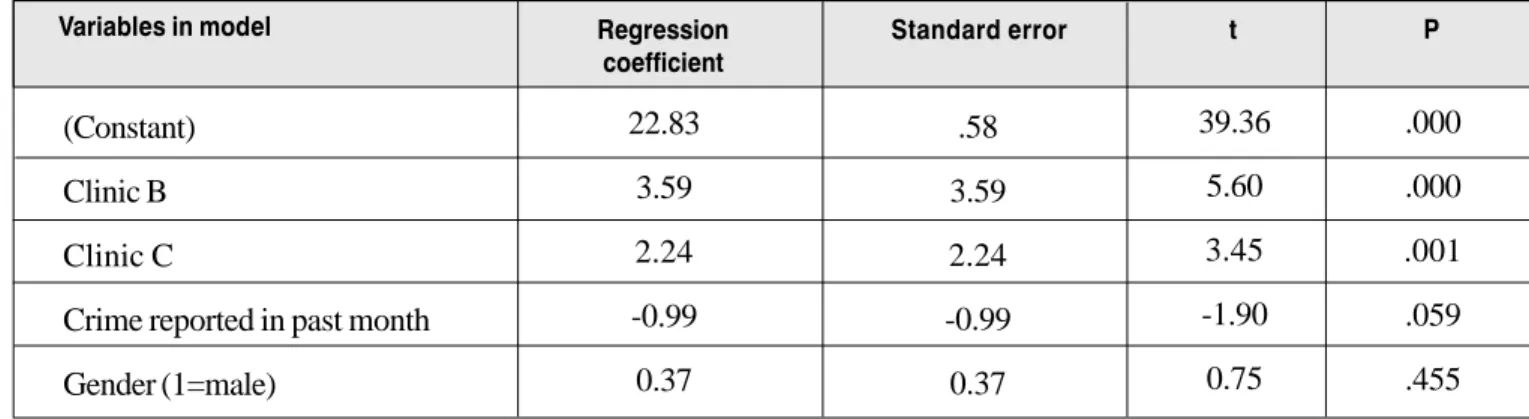
The third evaluation examined client satisfaction across three community methadone treatment sites in Austra-lia. Evaluators used the CSQ-8 and two qualitative, open-ended questions to assess satisfaction. They found
sig-nificant differences in satisfaction across sites. These differences were given to clinic managers to make pro-cedural improvements.
While each of these cases generated use-ful information about client satisfaction, it is noteworthy that none attempted to provide information about client out-come or treatment effectiveness. As de-scribed earlier in this workbook, mea-surement of client satisfaction is useful yet distinct from measurement of client outcome or treatment effectiveness. On occasion, clients can be satisfied with treatment that is ineffective in reducing PSU. On the other hand, certain treat-ments can be effective but unpopular with clients. Evaluators must remember that client satisfaction and client out-come are distinct evaluation concepts.
Case examples of client
satisfaction evaluations
Part A: An evaluation of
satisfaction with a state drinker
driver treatment program
by
Thomas K. Greenfield, Ph.D.
Senior Scientist and Area Director for Population Surveys
NIAAA National Alcohol Research Center Alcohol Research Group
2000 Hearst Ave., Suite 300
Berkeley, California 94709-2130 USA
There are a number of reasons why cli-ents’ satisfaction with services is such a critical variable in an overall substance abuse treatment outcome evaluation ef-fort. First, substance abuse treatment programme directors and managers are often required to justify their programs. They find consumer satisfaction is a con-cept readily understood by their clients, the public, government bodies, or other funding agencies (Greenfield, 1983). This was the case for a private provider in a small Eastern U.S. state licensed to
provide a brief outpatient counselling ser-vice to the ‘chemically dependent client’. The programme is licensed by the state to provide its services in response to the Driving Under the Influence (DUI) prob-lem. It of course interacts closely with courts, corrections, and the Department of Motor Vehicles (DMV).
Its managers knew that the state and in-volved agencies would need a positive response from its clientele, in addition to objective outcomes, for continued refer-rals and relicensing. In addition, the man-agers wanted data on specific aspects of their programme so that improvement ef-forts might target areas of greatest con-cern to clients. The multidimensional SSS-30 questionnaire was selected for this reason based on prior experience in giv-ing useful feedback to student services, primary care, and EAP managers (Attkisson & Greenfield, 1994; Greenfield & Attkisson, 1989a).
Who is asking the
questions and why do
they want this
information?
Purposes for the client
satisfaction evaluation
The author alone is responsible for the views expressed in this case example.
Specific programme
In the programme, referrals are pri-marily (but not exclusively) individu-als guilty of a second DUI, and re-quired by law to receive treatment. The programme operates solely on client fees totalling U.S. $495 at the time of the study. After two indi-vidual sessions, a treatment plan is developed with suitable, eligible cli-ents. Eligibility requirements include (a) willingness to explore drinking and drug taking, allowing for a ‘nor-mal degree of denial’, (b) agreement to participate and remain sober and drug free, (c) commitment to be in-volved and work toward ‘reasonable treatment goals’, and (d) no overt psychiatric difficulties implying a primary mental health problem. The programme involves approximately 25 contact hours, including four in-dividual sessions, six educationally oriented group sessions, and eight 90 minute group sessions (under 16 members in each group). Additional individual and family counselling may be included if needed. Condi-tional driving privileges may be re-stored by the court after 16 hours. The programme has some coercive elements: clients unwilling to par-ticipate meaningfully are deemed ‘noncompliant’, with paperwork in-dicating this sent back to the refer-ring agency. The court must act to clear this up before the client may again be enrolled in the programme. Upon completion of the treatment, an aftercare plan is developed in the discharge session. The programme’s offices are located in various coun-ties and the evaluation focused on three sites to assess their clients’ sat-isfaction. For a more complete de-scription of the programme and the b a s i s f o r c l i e n t s e l e c t i o n , s e e Greenfield (1989) and Greenfield (1994).
What resources were
needed to collect and
interpret the
information?
The two case studies use direct client sat-isfaction measures, providing examples of each of the two measurement strategies. Both questionnaires were designed to be broad enough to assess satisfaction with a range of human services including sub-stance abuse treatment. The two are the Client Satisfaction Questionnaire-8 (Nguyen, Attkisson & Stegner, 1983;
How were the data
collected?
Questionnaires were handed out to cli-ents upon arrival for their final session by programme staff. Completed forms were collected daily during the survey period. Thus, little additional effort was required for administration. A copier was used to duplicate the questionnaires so that the main resource needed was for data entry, accomplished by office staff using the existing dBase software. This was the software package used for main-taining client records (questionnaires were not identified, so no linkage to other client data was possible or attempted). Data entry required approximately two minutes per questionnaire and was done by the office staff responsible for the cli-ent information system. Because the programme did not have analysis soft-ware or capacity, the dBase files were sent on diskette to the scales’ authors for analysis inSPSS. (Scoring keys for in-agency use, and SPSS syntax for read-ing data from common spredsheet or re-lational database file formats, are available from the scale’s firs author). At each of the two phases, analysis time in-volved about a day of work with an ad-ditional day needed for report writing.
Attkisson & Greenfield, 1994; Attkisson & Greenfield, 1995b), a widely-used, brief (8 item), general satisfaction measure, used in the first case study, and the Ser-vice Satisfaction Scale-30 (Attkisson & Greenfield, 1994; Attkisson & Greenfield, 1995a, 1995b; Greenfield & Attkisson, 1989a) a 30-item multidimensional ver-sion with derivative forms available for case management and residential settings (Greenfield et al., 1996) including a fam-ily member version (Greenfield & Attkisson, 1989b). Italian (Ruggeri & Greenfield, 1995) and Spanish transla-tions are available.
There is evidence that these human service measures are suitable for use in substance abuse treatment. The research done suggests good psychometric performance of these two measures (SSS-30 and CSQ-8) (Attkisson & Greenfield, 1994; Greenfield, 1989; Greenfield, 1994; Greenfield & Attkisson, 1989a). The scales are both prod-ucts of the University of California, San Francisco (UCSF), Department of Psychiatry’s research programme on client satisfaction which has extended over a quar-ter of a century (Attkisson & Greenfield, 1995b). Permission to use these copyright scales may be obtained from Dr. C.C. Attkisson (CSQ-8) at the UCSF Graduate Division, 200 West Milberry Union, 513 Parnassus Avenue, San Francisco, Califor-nia 94143-0404 USA (FAX+1-415-476-9690) and Dr. Greenfield (SSS-30) at the Alcohol Research Group, 2000 Hearst Ave., Berkeley, California, 94709 USA (FAX+1-510-642-7175).
Both scales can be scored and simply analysed using common statistical programmes such as SPSS or EPI INFO, or spreadsheet or national data base man-agement software such as Lotus 1-2-3, Excel, dBase, or Paradox, among other software programmes. If programming capability is not available in-hours, or more sophisticated analyses are needed, analysis can be done by an evaluator or analyst. SPSS scoring keys and syntax are
available from the scale’s first author (Thomas Greenfield, INTERNET: [email protected]).
The CSQ has been included in a compen-dium of instruments assembled by the U.S. National Institute on Alcohol Abuse and Alcoholism (NIAAA), the NIAAA Treat-ment Handbook Series 2: Alcoholism Treatment Assessment Research Instru-ments (Attkisson, et al., 1985). Both the CSQ and the SSS have been included in Lloyd Sederer and Barbara Dickeyl ‘s Outcomes Assessment in Clinical Practice (Attkisson & Greenfield, 1995a) which includes the scales as appendices. Norms and psychometric results for the SSS-30 and CSQ-8 are available in a chapter in Mark Maruish’s useful book Psychologi-cal Testing: Treatment Planning and Out-come Assessment (Attkisson & Greenfield, 1994). A second edition of this book contains updated chapters on the CSQ-8 (Attkisson & Greenfield, in press) and the SSS-30 (Greenfield & Attkisson, in press).
Because this was a relatively new appli-cation to substance abuse treatment, the project involved two phases. In the first, it was decided to conduct factor analyses of the SSS-30 data to confirm the factor-based scales previously developed in men-tal health and primary care programmes (Attkisson & Greenfield, 1994; Greenfield & Attkisson, 1989a). In the second phase, data were collected from three programme sites in different locations. In both phases, for validation purposes, the CSQ-8 scale was administered at the same time as the SSS-30. The dimensional analyses and comparison of results with the two mea-sures may be considered to be the meth-odological aims of the study.
For practical reasons, it was only possible to obtain data for people completing the programme. The two questionnaires were to be completed during the last session and left in a box at the door prior to departure. Ques-tionnaires were filled out anonymously. In
the first phase, demographics were not col-lected due to an oversight. In the second phase, the SSS-30’s standard demographics section was added including gender, age, in-come, ethnicity, distance from programme, and number of sessions attended.
How were the data
analysed?
Analyses were done using SPSS PC and SPSS for Windows7'. Data were read in from dBase7' files provide by the programme (SPSS can read such files di-rectly). Reversed items were recoded 5=1, 4=2, 3=3, 2=4, 1=5 prior to analysis and scoring, based on the published SSS-30 subscales (scoring key and code available from T. K. Greenfield at the Alcohol Re-search Group, 2000 Hearst Ave., Berkeley, California 94709, USA). In the first psycho-metric and confirmatory phase (n=1027), item descriptive analyses, factor analyses and reliability analyses (using SPSS factor and reliability routines) of the SSS-30 items were done, comparing similarity of factor solutions using Harmonl ‘s (1970) coeffi-cient of congruence calculated using a simple spreadsheet. The SSS-30 Total Scale score was correlated (SPSS correlate) with the CSQ-8 score. These preliminary analy-ses helped assure that the scale functioned well in a substance abuse programme.
In the second evaluation phase (n=720), demographic profiles of clients at each of the three programme sites were first com-pared. Overall satisfaction was then as-sessed by examining item and subscale dis-tributions using the SPSS frequencies routine. Subscales were again scored and these scores compared across the three programme sites using SPSS anova (Analy-sis of Variance) routine. This allowed satis-faction across sites to be compared while controlling for gender differences, since men tend to be more willing to indicate lower satisfaction than women (or are ac-tually less satisfied). Finally, the CSQ-8 and SSS-30 total scores were again correlated.
What did they find out?
Phase 1
The two major SSS-30 factors found ear-lier in mental health and primary care samples (Attkisson & Greenfield,1994) were confirmed. Practitioner Manner and Skill and Perceived Outcome factors were highly congruent with equivalent ones from earlier studies (Harmon coefficients .88 - .93). These two standard factor-based subscales were, therefore, useful for as-sessing client satisfaction in this substance
Table 1: Internal reliability of the four SSS-30 subscales.
Substance
Abuse Program Published normgroups* Nº Items
Reliability coefficient (Cronbach Alpha) SSS-30 Subscale 9 8 5 4 .83 .83 .74 .60 .89 .83 .74 .67 Practicioner manner and skill
Perceived outcome Office procedures Accessibility
* Based on 3 Norm groups - Four health Clinics, a Mental Health Service, and an Employee Assistance Programme (see Attkisson & Greenfield, 1994).
abuse programme. There was also some confirmation for the earlier established Accessibility and Office Procedures fac-tors, so these subscales too were con-structed. Internal reliabilities for the four scales were acceptable (see Table 1). Finally, the SSS-30 Total score and the CSQ-8 score correlated .70, which pro-vides some added validity to the newer scale. When all items are combined to assess general satisfaction, the total scale score may be used as a general satisfac-tion measure.
Substantive findings indicated that these substance abuse programme’s court man-dated treatment clients were quite satis-fied with both their counsellor’s Manner and Skill (programme level = 38.0 + 5.4 versus the norm of 38.4 + 5.0 in mental health counselling) and a bit less so for Perceived outcome (program level = 29.6 + 5.6 versus the norm of 32.4 + 4.0 in mental health counselling). Although lower by half a standard deviation, the mean satisfaction was high (mean-item-mean=4.1), equivalent to a l ‘Mostly Sat-isfied’ response. Item-level results showed that many programme completers (41%) were dissatisfied (‘Mostly Dissatisfied’or ’Terrible’responses) with cost. It will be recalled that this coerced group of people charged with driving while intoxicated were required by the courts to pay for their substance abuse treatment programme. Facility location and accessibility were also sources of dissatisfaction to 17% and it will be recalled that many had their driv-ers licenses suspended. Otherwise few cli-ents (under 10%) were dissatisfied with remaining programme aspects although somewhat more were l ‘Mixed’in their responses.
It was important to demonstrate congru-ence between the factors found for sub-stance abuse treatment and those in earlier primary care and mental health norm groups. Although not unexpected, this comparative dimensional analysis
con-firmed the appropriateness of retaining the original subscale composition, making comparison with findings and norms from other human services realistic and appro-priate. In addition, the correlation between the widely used and well validated CSQ-8 general satisfaction measure and the SSS-30 composite scale lends construct validity to the newer instrument as a measure of cli-ent satisfaction. The SSS-30 being a multi-dimensional measure adds to its value to programme managers who find its subscales provide relevant feedback on programme strengths and weaknesses. In addition, its scaling results in less skewed item distributions, leading to more normally distributed scale scores than with the CSQ-8 (Greenfield & Attkisson, in press). It also makes the use of this outcome measure as a dependent variable in multivariate analy-ses controlling for demographics and other variables more appropriate, increasing its sensitivity to differences in programme per-formance.
Phase 2
Clientele were mostly male (84%) with modal age 26-35 years old (46%). They were predominantly of Caucasian origin (77%) with African Americans making up 10%, typically high school graduates (48%) with modal income US $20-40,000 (39%) and tended to live 6-10 miles from the programme site. Some clientele dif-ferences were seen across sites with women under-represented at one of them. In the cross-site analyses, controlling for gender (which was a significant predic-tor), Manner and Skill satisfaction did vary significantly (p<.05), though not strongly, between sites (together, gender and site ac-counted for only 3% of the variance, so programme managers were cautioned not to over interpret the statistically significant difference). For Perceived Outcome gen-der was again significant, but only a trend toward significance (p=.06) was seen by site. Contrasting these minimal differ-ences, stronger differences were found for
How were the results
used?
It is important to assure that data provided by clients are actually used to improve services, so that the commitment to the client to use her or his input for this pur-pose is carried through, justifying the small burden of completing the measure. Results were provided to programme managers in a graphic form, showing Office Procedures subscale satisfaction scores. One site had markedly higher sat-isfaction with office personnel, proce-dures, referrals, collaboration between staff, and record handling, suggesting sup-port staff were functioning well from the service consumers’ viewpoint. Accessibil-ity satisfaction, though not significantly different, favoured the same site. How-ever, one of the other two sites had cli-ents who lived further away.
overall subscale and item means, as well as cross site comparisons on the subscales for men and women client separately. Subscale score distributions, shown as averaged item means, were given so that the relative number of dissatisfied of ‘mixed’responses could readily be seen. Managers can easily share such results with staff. In this case, most of the feed-back was positive, allowing for reinforce-ment of ‘a job well done’, much needed in substance abuse services where staff burnout tends to be high. In addition, posi-tive office personnel and procedures in the one site could be identified and emulated across sites via cross-site training and se-lective procedural ’tune-ups.’ Results were also used in presenting findings to referring agencies, the courts, Department of Motor Vehicles and accreditation bod-ies. The methodological results from phase 1 were used to assure the managers and evaluators that the Service Satisfac-tion Scale was a reliable and valid tool for assessing satisfaction with substance abuse services.
Part B: Client satisfaction with
residential substance treatment
programmes
by
Thomas K. Greenfield, Ph.D.
Senior Scientist and Area Director for Population Surveys NIAAA National Alcohol Research Center
Alcohol Research Group 2000 Hearst Ave., Suite 300
Berkeley, California 94709-2130 USA
An intern in a county’s umbrella organisation responsible for funding and supervising the management of publicly funded drug and alcohol treatment programmes had concerns about how to measure client satisfaction given an earlier experience with a general satisfaction scale in the county’s community mental health centers (CMHCs). In the earlier study, the vast majority of clients in a range of CMHCs, both those thought by the county to be excellent and those deemed weaker, had indicated mostly satisfied. The client satisfaction measure was seen as
insensi-tive. In fact, the Research Director had given up on satisfaction questionnaires as a means of obtaining valid client feedback
(Nebeker, 1992, p.2). The intern knew of the newly developed, multidimensional scale, the SSS-30 (Greenfield & Attkisson, 1989a) and approached its first author to consult with him on its use in assessing cli-ent satisfaction in residcli-ential substance abuse problems. He had hopes that the mul-tidimensional measure, unlike global mea-sures that the county had given up on, might
Who is asking the
questions and why do
they want this
information?
produce sufficient variation in the data to be able to differentiate one facility from another Nebeker (1992, p.1). The intern
wanted to find a way to reduce Areactivity@ which Lebow (1983, 1983a; 1983b) has discussed as biasing satisfac-tion responses upward when therapists col-lect data, or questions are read to clients rather than answered by paper-and-pencil. He wanted to achieve high response rates and potentially study the effect of response rate on satisfaction levels. Substantively, he wished to see if there were measurable differences in satisfaction between samples of active residents in four different residen-tial programmes.
The author alone is responsible for the views expressed in this case example.
What resources were
needed to collect and
interpret the
information?
The intern reproduced the SSS-30 in-strument himself and served as the ad-ministrator. First, he secured county agreement for the pilot study. Then he obtained agreement from programme directors to administer the scale himself. He used the sampling and administra-tion method described in the next sec-tion which required a medium sized
How were the
data collected?
How were the
data analysed?
Data were analysed in the same way as described in Phase 2 of the previous case study. The standard subscale scores were computed and used to compare the mean scores for each subscale across the four residential programmes, using ANOVA, with post-hoc tests to indicate the source of any difference if found.
Client satisfaction with the programmes differed between facilities on some but not other subscales. One dimension Of-fice Procedures and Personnel showed a significant overall difference between sites (F(3m 147)= 4.79; p<.01). In post-h o c c o m p a r i s o n s , o n e s p e c i f i c programme was found to differ from an-other on this dimension (Mean-item-mean 3.8 vs 3.3). Perceived Outcome showed an overall trend toward a dif-ference (p=.11) and again post-hoc analysis showed the same two residen-tial programmes differed (M = 3.8 vs 3.4) significantly (p<.05). In terms of Accessibility, the same level of trend toward overall difference was observed. This time the post-hoc pairwise com-parisons showed a different programme provided highest satisfaction, statisti-cally (p<.05) higher (Mean-item-mean = 3.7) than the residence that had shown lower satisfaction on the other two subscales as well (M = 3.3). Only
Coun-What did they find?
cardboard box. Once obtained, he en-tered the data in a word processor, sav-ing the final file as an ASCII text file, which can be read by SPSS (or other statistical programmes). Lastly, he se-cured the services of the evaluator to assist him with data analysis using an IBM compatible microcomputer version SPSS and wrote up the results as a Mas-ters Thesis (Nebeker, 1992). Consider-able independent effort was required of him over the course of a year to accom-plish this research project.
The intern developed what he called a Agroup momentum@ method of data col-lection which he described as follows: AThrough trial and error [in pilot work] the following method emerged: (1) the staff called a meeting [of residents] for the explicit purpose of filling out the question-naire; (2) I explained that participation in the study was anonymous and voluntary; (3) the clients were instructed to place the completed forms in a cardboard box with a slit cut into the top of the box; (4) I left the room so that the clients filled out the questionnaire without the presence of staff or a test administrator; (5) I removed the box as soon as the last client had com-pleted the questionnaire (Nebeker, 1992, pp.27-28). The intern comments further that AInstances where the clients filled out the questionnaire individually, out-side the group, produced a lower re-sponse rate@ (p.28).
sellor Manner and Skill showed no sig-nificant differences between the facili-ties. Samples obtained during the pilot phase at two facilities had lower re-sponse rates than those obtained at each using the Agroup momentum@ ap-proach, which achieved 90-97% re-sponse rates. As hypothesised, the samples involving low response rates (20-41%) showed higher satisfaction l e v e l s , s i g n i f i c a n t l y s o f o r t w o subscales: Counsellor Manner and Skill (p<.01) and Accessibility (p<.05). At one of the facilities the low-response-rate sample gave a Manner and Skill mean value of 4.1, or .5 higher than the mean from the more complete sample. An important finding from this small study was the illustration of the fact that when insufficient efforts are made to as-sure the highest possible response rates in a nonreactive climate, or when data collection is haphazard and possibly left in the hands of staff, results are likely to be seriously biased toward greater satisfaction. From an ethical view point, it is essential for evaluators, whether in-ternal or exin-ternal, to help assure a neu-tral setting for completion of question-naires where there is minimal programme staff involvement and influ-ence. In other studies that have achieved excellent response rates, a volunteer has served as the individual approaching waiting room clients in an open, friendly manner, explaining the purpose of the study and encouraging candid feedback as most useful for improving the programme (Attkisson & Greenfield, 1994, Greenfield & Attkisson, 1989a).
How were the
results used?
The results were provided to programme managers and to the county umbrella group’s staff. Anecdotal evidence suggests the county personnel were not surprised by the differences observed which con-firmed informal observations of the programme sites. However, the main re-sult of the study was to demonstrate the feasibility of using a multidimensional satisfaction scale designed to have greater sensitivity than global scales in more widespread use, and to show the impor-tance of obtaining high response rates for unbiased estimates of client satisfaction, especially so if the intent is cross-programme comparison.
It is also important to select a scale that has the sensitivity needed to assess real difference in degree of client satisfaction (Greenfield & Attkisson, in press). Glo-bal scales in widespread use are brief and attractive to programme administrators, but seldom have the requisite psycho-metric qualities to allow genuine differ-ences in satisfaction to be detected, ex-cept with extremely large samples, sometimes gathered in years of routine monitoring (Greenfield, 1983). For small sample studies a sensitive instru-ment is absolutely essential.
Its your turn
What are the strengths and the weaknesses of the presented case example? List three positive aspect and three negative aspects:
Strengths of the case study
1
2
3
Weaknesses of the case study
1
2
Attkisson, C.C., & Greenfield, T.K. The Cli-ent Satisfaction Questionnaire-8 and the Service Satisfaction Scale-30. In: M.A. Maruish (Ed.). Psychological testing:
Treatment planning and outcome Assess-ment. Hillsdale, N.J.: Lawrence Erlbaum
Associates, 1994.
Attkisson, C.C., & Greenfield, T.K. The Client Satisfaction Questionnaire (CSQ) Scales and the Service Satisfaction Scale-30 (SSS-Scale-30). In: L.I a. D. Sederer (Eds.).
Outcomes Assessment in Clinical Prac-tice (pp. 120-127). Baltimore, MD.:
Wil-liams & Wilkins, 1995a.
Attkisson, C.C., & Greenfield, T.K. The Client Satisfaction Questionnaire (CSQ)
Scales: A history of scale development and a guide for users. (Unpublished Report)
Department of Psychiatry, University of California at San Francisco, 1995b. Attkisson, C.C., & Greenfield, T.K. The UCSF client satisfaction scales: I. The Client Satisfaction Questionnaire-8. In: M.A. Maruish (Ed.). Psychological
test-ing: Treatment planning and outcome Assessment (2nd ed.). Mahwah, N.J.:
Lawrence Erlbaum Associates, in press. Greenfield, T.K. The role of client satis-faction in evaluating university counsel-ling services. Evaluation and Program
Planning, 1983, 6: 315-327.
Greenfield, T.K. Consumer satisfaction
with the Delaware Drinking Driver Pro-gram in 1987-1988. Department of
Psy-chiatry, University of California, 1989. Greenfield, T.K. Consumer satisfaction
with the Delaware Drinking Driver Pro-gram in 1993. Berkeley, CA, Alcohol
Re-search Group, 1994.
Greenfield, T.K., & Attkisson, C.C. Steps toward a multifactorial satisfaction scale for primary care and mental health ser-vices. Evaluation and Program Planning, 1989, 12: 271-278.
References for case example Parts A and B
Greenfield, T.K., & Attkisson, C.C.
Fam-ily satisfaction with services (Report to
Northwest Residential services, Inc.). University California, San Francisco, Department of Psychiatry, 1989b.
Greenfield, T.K., & Attkisson, C.C. The UCSF Client client satisfaction scales: II. The Service Satisfaction Scale-30. In: M.A. Maruish (Ed.). Psychological test-ing: Treatment planning and outcome Assessment (2nd ed.) Mahwah, N.J.: Lawrence Erlbaum Associates, in press. Greenfield, T.K., Stoneking, B.C., & Sundby, E. Two community support pro-gram research demonstrations in Sacra-mento: Experiences of consumer staff as service providers. The Community
Psy-chologist, 1996, 29: 17-21.
Harmon, H.H. Modern factor analysis. Chi-cago: University of Chicago Press, 1970. Lebow, J.L. Research assessing consumer satisfaction with mental health treatment: A review of findings. Evaluation and Pro-gram Planning, 1983a, 6: 211-236. Lebow, J.L. Client satisfaction with men-tal health treatment. Evaluation Review, 1983b, 7: 729-752.
Nebeker, H. Client satisfaction in four alco-hol and drug treatment programs. masters Thesis, John F. Kennedy University, 1992. Nguyen, T.D., Attkisson, C.C., & Stegner, B.L. Assessment of patient satisfaction: Development and refinement of a Service Evaluation Questionnaire. Evaluation and Program Planning, 1983, 6: 299-313. Ruggeri, M., & Greenfield, T. The Italian version of the Service Satisfaction Scale (SSS-30) adapted for community-based psychiatric patients: Development, fac-tor analysis and application. Evaluation and Program Planning, 1995, 18: 191-202.