A Comparison of a Standard Warm-Up Model and a Dynamic Warm-Up Model on Flexibility, Strength, Vertical Jump Height, and Vertical Jump Power
By Alain J. Aguilar
A thesis submitted to the faculty of the University of North Carolina at Chapel Hill in partial fulfillment of the requirements of the degree of Master of Arts in the Department of Exercise and Sport Science (Athletic Training)
Chapel Hill 2006
Approved by
ii ABSTRACT
ALAIN J. AGUILAR: A Comparison of a Standard Up Model and a Dynamic Warm-Up Model on Flexibility, Strength, Vertical Jump Height, and Vertical Jump Power
(Under the direction of Dr. Darin A. Padua)
Objective: To compare the acute effects of a dynamic warm up and standard warm up on hamstring, quadriceps, and hip flexor flexibility, quadriceps and hamstring strength, and vertical jump height and power. Design and Setting: An experimental research design was used to compare a standard warm up (n=15), a dynamic warm up (n=15), and a control group (n=15) on acute changes after a single bout of warm up. Subjects: Forty-five physically active recreational soccer players (age = 22.13 ± 2.77 years, ht = 68.47 ± 3.77in, wt = 73.59 ± 14.53 kg) volunteered to participate. Measurements: Flexibility, strength, vertical jump height, and vertical jump power were evaluated. A mixed model analysis of variance was used for statistical analyses. Results: The dynamic warm up significantly increased hamstring flexibility from pre test measures (p < 0.0001) and significantly increased eccentric quadriceps peak torque (p = 0.012). Furthermore, a trend indicated that the dynamic warm up increased concentric quadriceps peak torque from pre to post-test measures. No other variables were significantly impacted by any warm up group.
iii
ACKNOWLEDGEMENTS
I am amazed at the amount of generosity my thesis advisor, committee, and classmates have shown me over the past two years. Thank you to my advisor, Dr. Darin Padua, for all of your guidance throughout the entire process. You were always willing to give me your time whenever I needed it and you’ve greatly enhanced my appreciation for the scientific investigation process. Thank you to Dr. Kevin Guskiewicz for your constant
iv
TABLE OF CONTENTS
Page
LIST OF TABLES……… viii
LIST OF FIGURES………...ix
ABBREVIATIONS………..………. x
Chapter 1. INTRODUCTION………...………….... 1
Statement of Purpose... 4
Dependent Variables... 4
Independent Variables... 5
Research Questions………..…. 5
Null Hypothesis……….... 6
Research Hypothesis………... 7
Definition of Terms………... 8
Operational Definitions………... 9
Assumptions………... 10
Delimitations………... 11
Limitations……...………... 11
v
2. REVIEW OF THE LITERATURE………...……….... 13
Introduction... 13
Physiology of Muscle Injury…….………... 13
Mechanism of Muscle Strain Injury………..………... 14
Rates of Muscle Strain Injury………... 14
Risk Factors of Muscle Strain Injury….………... 15
Performance…...………... 18
Active and Passive Warm-Up Methods……….... 21
Flexibility Exercises……….. 23
Standard Warm-Up……… 31
Dynamic Warm-Up………... 31
Summary……… 33
3. METHODS………... 34
Experimental Design... 34
Subjects………..………... 34
Procedures…...………... 35
Data Collection…………...………... 37
Range of Motion Assessment………. 37
Muscular Strength Assessment………... 39
Vertical Jump Height and Power……… 41
Warm-Up Procedures…….……….. 42
vi
Dynamic Warm-Up………. 43
Data Analysis…………..………...… 47
4. RESULTS……….. 48
Hamstring Flexibility...……….. 48
Eccentric Knee Extension Peak Torque………..……….. 48
Concentric Knee Extension Peak Torque..………..……….. 49
Quadriceps Flexibility …….……….. 49
Hip Flexor Flexibility………... 50
Rectus Femoris Flexibility………. 50
Concentric Knee Flexion Peak Torque……….. 50
Eccentric Knee Flexion Peak Torque……….51
Concentric Hamstring to Concentric Quadriceps ratio………...51
Eccentric Hamstring to Concentric Quadriceps ratio………..….. 52
Vertical Jump Height………. 52
Vertical Jump Power……….. 52
5. DISCUSSION……… 53
Eccentric Quadriceps Peak Torque………..…..… 53
Hamstring Flexibility…..……….………..… 56
Concentric Quadriceps Peak Torque ………..………..… 58
Quadriceps, Rectus Femoris, Hip Flexor Flexibility ……..………. 59
Hamstring Peak Torque………. 60
vii
Vertical Jump Height and Power………... 62
Limitations………. 63
Future Research………. 64
Summary……… 65
APPENCICIES... 67
Appendix A – Tables... 67
Appendix B – Figures... 82
Appendix C – Manuscript... 93
Appendix D – IRB Materials…………... 125
Appendix E – Data Collection Materials………... 138
Appendix F – Raw Data... 142
Appendix G – SPSS Outputs………. 152
viii
LIST OF TABLES
1. Means and standard deviations for subject demographics
(gender, age, height, and weight)………..……….. 68
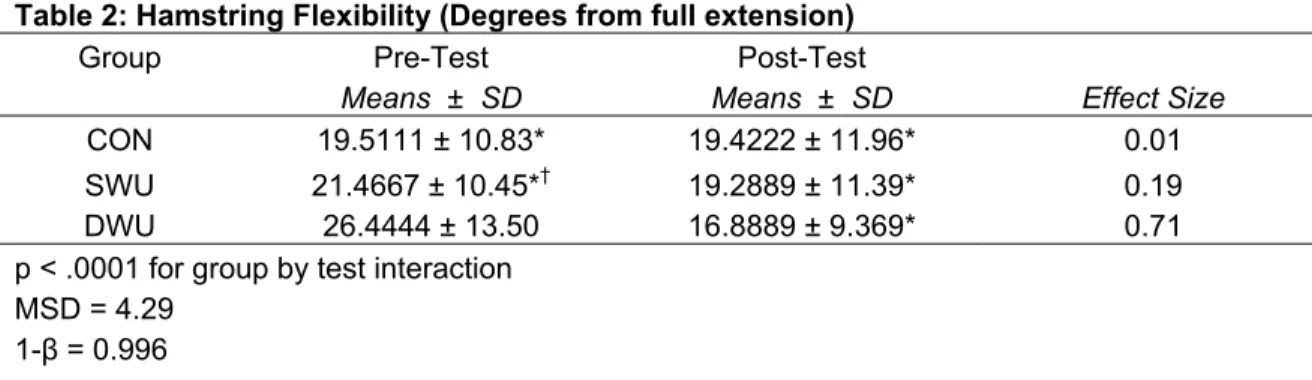
2. Means, standard deviations, and effect size for hamstring flexibility …....………...69
3. Means, standard deviations, and effect size for eccentric quadriceps strength …....…….70
4. Means, standard deviations, and effect size for concentric quadriceps strength ..……….71
5. Means, standard deviations, and effect size for quadriceps flexibility.…………..………72
6. Means, standard deviations, and effect size for hip flexor flexibility ………... 73
7. Means, standard deviations, and effect size for rectus femoris flexibility ...…..………... 74
8. Means, standard deviations, and effect size for concentric hamstrings strength. ……...75
9. Means, standard deviations, and effect size for eccentric hamstrings strength…………. 76
10. Means, standard deviations, and effect size for concentric hamstrings to concentric quadriceps ratio………..… 77
11. Means, standard deviations, and effect size for eccentric hamstrings to concentric quadriceps ratio……….. 78
12. Means, standard deviations, and effect size for vertical jump height………. 79
13. Means, standard deviations, and effect size for vertical jump power………. 80
ix
LIST OF FIGURES
1. Hamstrings Flexibility………...……… 83
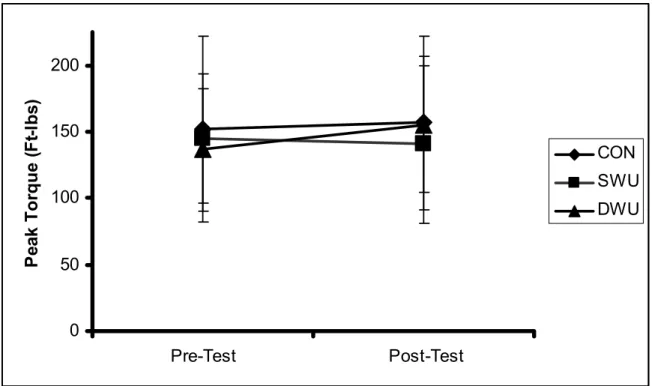
2. Eccentric Quadriceps Peak Torque…….……….. 84
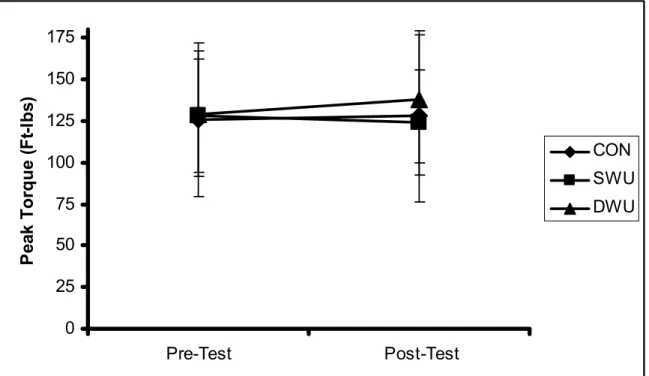
3. Concentric Quadriceps Peak Torque………...………. 85
4. Static Stretching Protocol……….. 86
5. Dynamic Warm-Up Flexibility Exercises……….. 87
6. Hamstring Flexibility Assessment Positioning……….. 89
7. Quadriceps Flexibility Assessment Positioning……….90
8. Hip Flexor Assessment Positioning………...… 91
x
ABBREVIATIONS
CHAPTER 1 – INTRODUCTION
Introduction
Warming up prior to physical activity is a commonly accepted and widely encouraged practice within the athletic and physically active populations. Although type, sequence, and duration of the warm-up vary greatly, the goals are similar: to prepare the body for the demands of physical activity. The rationale for incorporating warm-up protocols began anecdotally as coaches and athletes observed an increase in performance and a decrease in injury when using a warm-up. One major type of injury that a warm-up is thought to prevent is a lower extremity muscular strain, particularly of the hamstring, hip flexor and hip
adductor groups (Shellock and Prentice 1985; Safran, Seaber and Garrett 1989). The goal of a warm-up is to positively alter the musculoskeletal and neuromuscular system to increase performance and decrease injury risk factors (Bishop 2003).
2
eccentric strength deficits as risk factors (Parkkari 2001). Furthermore, Clark et al. links flexibility and strength together via reciprocal inhibition. This suggests that antagonist muscle group inflexibility will reduce the net force production of agonist muscles, which may lead to injury (Clark and Russell 2001). In theory, these injury risk factors will be ameliorated through the incorporation of a warm up.
One (standard) model consists of a brief period of an active warm-up (jogging), followed by a bout of static stretching. Proposed effects of the standard warm up may benefit
performance as well as reduce the injury risk. Performance is enhanced due to the active warm up which increases metabolic, hemodynamic, neuromuscular, and musculoskeletal properties (Bishop 2003). In theory, the active warm-up period will increase the ultimate strength of the musculoskeletal tissue as well as increase muscle pliability (Bishop 2003). The static stretching phase is thought to allow an increased amount of stretching of the muscle and tendon to occur before the onset of tissue damage (Evans, Knight, Draper and Parcell 2002).
3
(Kokkonen, Nelson and Cornwell 1998; Nelson, Allen, Cornwell and Kokkonen 2001; Cramer, Housh et al. 2004), power (Nelson, Cornwell and Heise 1996; Church, Wiggins et al. 2001; Young and Elliott 2001), balance, reaction and movement time (Behm, Bambury, Cahill and Power 2004), and vertical jump (Church, Wiggings et al. 2001). Thirdly, any positive effects on the neuromuscular system due to increases in body temperature would be attenuated as the body temperature returns to resting levels during the static stretching phase of the warm-up within 15-20 minutes (Bishop 2003). Finally, static stretching beyond normal range of motion may do little to decrease muscular injury since most muscular injuries occur during the eccentric contraction within a normal range of motion (Thacker, Gilchrist et al. 2004). Due to these limitations, some have ignored the standard warm-up model in search of a more effective method of warming up.
4
incorporation of functional exercises primes the neuromuscular components in a manner that may increase strength potential and peak power (Bishop 2003; Yamaguchi and Ishii 2005). These positive benefits provide evidence that a DWU may improve performance and decrease muscular injury risk, perhaps more than a SWU.
To our knowledge, no study has compared the effects of a dynamic versus a standard warm-up on muscular injury risk factors, such as muscle strength and flexibility, or on performance factors including vertical jump height and power. This information may provide clinicians and athletes with an evidentiary basis on which to create a warm-up
protocol that more effectively minimizes injury risk and has a positive effect on performance.
Statement of Purpose
The purpose of this study was to compare the acute effects of a dynamic warm up and standard warm up on hamstring, quadriceps and hip flexor flexibility, quadriceps and hamstring strength, and vertical jump height and power in club and intramural soccer athletes.
Dependant Variables:
1. Flexibility of the dominant leg as measured by a digital inclinometer. a. Maximum hamstrings flexibility
b. Maximum quadriceps flexibility c. Maximum hip flexor flexibility
5 b. Eccentric knee extension peak torque c. Concentric knee flexion peak torque d. Eccentric knee flexion peak torque
e. Concentric knee flexion to concentric knee extension ratio f. Eccentric knee flexion to concentric knee extension ratio
3. Vertical Jump Variables from a counter movement jump (CMJ) as measured by a force plate.
a. Maximum Vertical Jump Height b. Maximum Vertical Jump Power.
Independent Variables:
1. Group – Control group, standard warm-up (SWU) group, or the dynamic warm-up (DWU) group.
2. Time of testing – Prior to the warm-up treatment or immediately after completion of the warm-up.
Research Questions
1. Were there significant changes in hamstrings, quadriceps, and hip flexor flexibility from pre to post warm-up testing in the SWU, DWU, and control group in the college recreational male and female soccer athlete?
2. Were there significant changes in quadriceps and hamstrings peak torque from pre to post warm-up testing in the SWU, DWU, and control group in the college
6
3. Were there significant changes in hamstrings to quadriceps peak torque ratios from pre to post warm-up testing in the SWU, DWU, and control group in the college recreational male and female soccer athlete?
4. Were there significant changes in vertical jump height and power from pre to post warm-up testing in the SWU, DWU and control group in the college recreational male and female soccer athlete?
Null Hypotheses
1. Ho: There was no significant interaction or main effect of hamstrings, quadriceps, and
hip flexor flexibility between treatment time (pre versus post) and treatment type (SWU, DWU, control) in the college recreational male and female soccer athlete as measured by an inclinometer.
2. Ho: There was no significant interaction or main effect of concentric and eccentric
peak torque of the hamstrings and quadriceps muscles between treatment time and treatment type in the college recreational male and female soccer athlete as measured by the Biodex isokinetic dynamometer.
3. Ho: There was no significant interaction or main effect in the hamstrings to quadriceps ratio between treatment time and treatment type in the college recreational male and female soccer athletes as measured by the Biodex isokinetic dynamometer.
4. Ho: There was no significant interaction or main effect in vertical jump height or
7 Research Hypotheses
1. HA: There was a significant increase in hamstrings, quadriceps, and hip flexor
flexibility for the SWU and DWU, from pre to post treatment testing in the college recreational male and female soccer athlete as measured by an inclinometer. 2. HA: There was a significant increase in hamstrings and quadriceps concentric and
eccentric peak torque in the DWU group when compared to the SWU group at post-test in the college recreational male and female soccer athlete as measured by a Biodex isokinetic dynamometer.
3. HA: There was a significant increase in hamstrings to quadriceps peak torque ratio in
the DWU group when compared to the SWU group at post-test in the college recreational male and female soccer athlete.
4. HA1: There was a significant increase in vertical jump height and power in the DWU
group when compared to the SWU group at post-treatment testing in the college recreational male and female soccer athlete as measured by impulse generated from the jump off a force plate.
HA2: There will be a significant decrease in vertical jump height and power in the
SWU from pre to post –treatment measurements in the college recreational male and female soccer athlete as measured by a formula using body mass and impulse
8 Definition of Terms
1. Dynamic warm-up: Consisted of 5 minutes of cycling on an Airdyne Ergometer at 25% of the subjects perceived maximal effort, followed by 10 minutes of the dynamic warm up protocol. The DWU protocol consisted of 10 yards of a “walking” dynamic lower extremity flexibility exercise followed by 10 yards of progressive running, then followed by jogging back to the starting point.
2. Dynamic flexibility: Utilized agonists and synergists muscles, as well as body momentum to actively move a limb through its full available range of motion while the functional antagonists were stretched. These exercises were performed while the athlete was moving forward. See dynamic warm-up protocol for sequence (Appendix D,E)
3. Standard warm-up: Consisted of 5 minutes of cycling on an Airdyne Ergometer at 25% of the subject’s perceived maximal effort, followed by 10 minutes of static stretching. Static stretching exercises mimicked common protocols for soccer teams. See standard warm-up protocol. (Appendix D,E)
4. Static stretching: Common stretches of the lower extremity muscle groups used for pre-activity warming up. The subject lengthened a muscle group to its end range of motion until they felt a mild “stretch”, then they statically held the position for 20 seconds. Subjects performed the stretch twice for each muscle group and for both legs.
9
They are also engaged in physical activity three times a week for at least thirty minutes per session around the time of testing.
Operational Definitions
1. Healthy Subject: No history of current injury or illness that prevented them from participating in soccer activities.
2. Dominant leg: The leg with which they would kick a soccer ball for maximal distance. This leg was used for all testing.
3. Flexibility: Active range of motion to end range for the hamstrings, quadriceps, and hip flexor muscle groups of the dominant leg. A digital inclinometer (an angular measurement tool) was used to measure flexibility.
4. Peak Torque Strength: The middle three data sets of five maximal
concentric/eccentric contractions for knee extension was measured to determine the maximal peak torque for concentric knee extension and eccentric knee extension. For knee flexion, the middle three data sets of five maximal concentric/eccentric
contractions for knee flexion were evaluated to determine the maximal peak torque for concentric knee flexion and eccentric knee flexion. The isokinetic dynamometer was set at 60 degrees per second.
5. Strength Ratio: The peak torque values were taken from the previous concentric knee extension and flexion testing. These numbers will provide a ratio of knee flexion (hamstrings) to knee extension (quadriceps) strength.
10
7. Vertical Jump Height: A double leg standing counter movement jump (CMJ) with subject’s hands on their hips. Height was calculated by using the subjects body mass and the impulse to determine velocity of the subjects body (V = I/M). Then velocity is placed into this equation: height (in meters) = (V)^2 / (2*g) (Aragon-Vargas 2000) Gravity (g) is 9.81 M/s2 Impulse was computed by a Bertec force plate (Model 14060 A).
8. Vertical Jump Power: Determined by using a prediction equation, using the subject’s mass and their vertical jump height. Power (W) = 61.9 x jump height (cm) + 36.0 x mass (Kg) – 1822 (Canavan and Vescovi 2004).
9. Force plates: Used in vertical jump measurement. Bertec systems model number 4060-08A, Bertec Corp., Columbus OH).
Assumptions
1. Subjects provided accurate and truthful responses to the questionnaire.
2. Tools used in evaluation of subjects (inclinometer, isokinetic dynamometer, and force plate) provided reliable and valid measurements.
3. Subjects in all treatment groups put forth their best effort in tasks required: during flexibility testing, strength evaluation, vertical jump assessment and the warm up treatments.
4. The vertical force produced by a CMJ was an accurate indirect estimate of lower body power.
11
7. Subjects adhered to the 24-hour pre-test exercise restriction.
Delimitations
1. The subjects were men and women between the ages of 18 and 30, with at least one year of varsity soccer experience at the high school level, who performed some form of exercise 3 times a week for 30 minutes.
2. Subjects were instructed to refrain from physical activity at least 24 hours prior to testing.
3. Subjects that had any injury or illness at the time of testing, which prevented them from giving their best effort were excluded from the study.
4. The same investigator performed all measurements.
5. Post treatment testing occurred within the window of temperature increase benefit (15-20 minutes) after the warm-up (Bishop 2003).
6. Treatment times for the control, dynamic, and standard warm-up were similar in duration.
7. Subjects in the DWU group underwent two training/familiarization sessions of a dynamic warm-up prior to testing.
Limitations
1. Treatment and measurements only apply to college club and intramural recreational athletes. Findings may only be applied to this population.
12
3. For the standard warm up protocol there may not be enough time to create noted changes in flexibility, strength, and vertical jump as in previous studies.
4. Differences may not be seen due to the lower intensity of the standard warm-up as compared to the dynamic warm-up.
Significance of the Study
CHAPTER2 – REVIEW OF THE LITERATURE
Introduction
Warming-up prior to activity is postulated to decrease injury risk as well as improve performance. Performance improves secondary to the body’s physiologic changes. Common methods of evaluating and predicting performance include strength and vertical jump testing. Moreover, muscle strain is a frequent athletic injury that a warm-up is
supposed to reduce. Risk factors for muscle injury include inflexibility, strength deficits, and an inadequate warm-up. A warm-up is aimed to improve these injury risk factors and
decrease the risk of injury. A common warm-up method includes a period of active warming-up followed by a period of static stretching; however newer protocols have been used that include active warming-up with dynamic flexibility. This contemporary method is referred to as a dynamic warm-up.
Physiology of Muscle Strain Injury
14
the muscle after the optimal length of active tension, in the region of sacromere instability (Gordon, Huxley and Julian 1966). On a macroscopic scale, some muscle groups are more prone and get injured due to the excess of dynamic loads they sustain during a specific activity.
Mechanism of Muscle Strain Injury
There is a common activity, or mechanism, that causes strain for each muscles in the lower limb. Gastrocnemius strains often occur during the single-leg support phase during push-off movements with the body weight far in front of the calf (Orchard 2002). The exact moment of hamstring strains is not known, but video evidence demonstrates that hamstring strains occur due to over-striding at fast speeds, possibly when the body is leaning forward to gain or maintain speed (Orchard 2002). The rectus femoris muscle is the most commonly injured quadriceps muscle and is strained due to under striding or braking, as well as during the swing phase of a kicking motion while running as in Australian football. Under-striding causes the body to lean backward and the legs to extend further than normal, which can cause stress on the rectus femoris (Orchard 2002). Just as the mechanisms for injury are different for each muscle group, the rates of injury are also different.
Rates of Muscle Strain Injury
15
2004-2005). For women during competition thigh muscle strains comprise 2.8% of all
injuries, where in practice they comprise 14.6% of all injuries sustained. (NCAA 2004-2005). This trend is also seen in professional soccer with the majority of muscle strain injuries occurring to the quadriceps and hamstring muscle groups (Ekstrand and Gilliquist 1982; Morgan and Oberlander 2001; Volpi, Melegati, Tornese and Bandi 2004). In other field sports which involve sprinting and kicking, as in Australian rules football, hamstring injuries caused as much as 16% of all time missed from competition, with a re-injury rate of 34% (Seward, Orchard, Hazard and Collinson 1993). Ekstrand noted that the majority of muscular injury in soccer athletes was in the dominant leg, probably due to the dynamic motion of kicking (Ekstrand and Gilliquist 1982). Overall, muscular injury rates are as high as 41% of all injuries sustained (Hawkins and Fuller 1999; Volpi, Melegati et al. 2004). Because of the high prevalence of this injury, theories have be researched and investigated to identify risk factors for muscle strain injury.
Risk Factors of Muscle Strain Injury
Risk factors are commonly classified into intrinsic (person-related) or extrinsic
16
Fuller 1999; Heidt, Sweeterman, Carlonas, Traub and Tekulve 2000), and abrupt changes in activity (Almeida, Williams, Shaffer and Brodine 1999). Intrinsic risk factors include
increased age (Croisier 2004), decreased flexibility (Witvrouw, Danneels, Asselman, D'Have and Cambier 2003; Gabbe, Finch, Bennell and Wajswelner 2005) flexibility imbalance (Knapik, Bauman, Jones, Harris and Vaughan 1991), strength deficits (Christensen and Wiserman 1972; Parkkari, Kujala and Kannus 2001), and strength imbalance (Taimela, Kujala and Osterman 1990; Aagaard, Simonsen, Trolle and al. 1995; Croisier 2004), including concentric quadriceps to hamstrings strength ratio (Soderman, Alfredson, Pietila and Werner 2001).
Decreased Flexibility
17
Strength Deficits
Strength deficits are reported to predispose an athlete to muscle strain injury (Christensen and Wiserman 1972; Orchard, Marsden, Lord and Garlick 1997; Parkkari, Kujala et al. 2001). Multiple studies which investigated isometric strength found that a 10% hamstring strength deficit when compared bilaterally would predispose an athlete to injury (Christensen and Wiserman 1972). With regards to peak torque of the hamstring muscles, there is
evidence to suggest that lower hamstring strength values when compared bilaterally will also predispose an athlete to injury (Orchard, Marsden et al. 1997). Along with deficits, a
decreased strength ratio has also been proposed to increase injury risk.
18
The optimum length of active tension, otherwise known as angle of peak torque, is hypothesized to be a factor in predisposing an athlete to hamstring injury (Proske, Morgan, Brockett and Percival 2004). The shorter the optimum length of active tension, the more susceptible the athlete is to eccentric damage and then strain. This hypothesis was tested in a study which compared the optimum length of previously injured hamstrings to uninjured hamstrings. The results revealed a much sooner angle of peak torque in previously injured hamstrings than in uninjured hamstrings (Brockett, Morgan and Proske 2004).
Performance
Aside from muscular injury risk factors, performance has been at the heart of many research articles for many years, since athletic success depends on it. Studies focus on different types of performance and include short term, intermediate term, and long term performance (Bishop 2003). Short term performance involves tasks that last shorter than ten seconds in duration. Intermediate performance includes tasks that last longer than ten seconds, but not longer than five seconds. Long term performance is classified as tasks that take longer than five minutes or until fatigue. Short term performance measures reported in the literature frequently include vertical jump height and maximal strength.
Vertical Jump
Jump height has been shown to be related to maximum strength and muscular power of the leg extensors (Young, MacDonald and Flowers 2001). Timing and sequence of multiple joint segments, speed and amplitude of the countermovement, as well as a decreased
19
is a valid test for only leg extensor strength and power, however when used as a performance measure as a whole, most researchers view the vertical jump as a predictor of hip and leg muscle power (Young, MacDonald et al. 2001). Some researchers suggest eliminating shoulder movement from the test, since arm swing and trunk flexion came close to
significantly altering the outcome on jump height measurements. Furthermore, the use of an overhead goal during jumping and grabbing with both hands from a drop jump significantly increases vertical height in males and females (Ford, Myer, Smith, Byrnes, Dopirak and Hewett 2005). Many different jump methods and measurements have been developed to measure jumping ability.
The most common types of vertical jump include the squat jump, drop jump, and
20
Methods to measure jump height include using marked increments on a wall, a tape measure, a standing device with moveable fingers, and force plates. The sergeant jump is a jump and reach test in which the jump height is determined by subtracting the standing reach height from the jumping reach height on a wall. Another test, the Abakalow jump test uses a tape measure affixed to the waist of the jumping subject to measure vertical jump height. The Vertec system (Sports Imports, Hilliard, OH) is a popular method of measuring vertical jump (Church, Wiggins, Moode and Crist 2001). This system includes elevating a series of plastic fingers that measure in fractions of an inch. The subject is instructed to jump as high as they can and displace the highest finger they can reach, which is taken as their maximal vertical jump height. The use of force plates is another method to measuring vertical jump height. These plates include simple systems such as the Just Jump System (Probotics, Huntsville, AL) which calculates the time the subjects are in the air and height they jump, as well as more complex force plates that measure forces in all planes. An example of a more complex force plate is a Bertec strain-gauge force plate (model number 4060-08A, Bertec
Corp.,Columbus, OH). Besides vertical jump height, strength is also a common measure of performance.
Strength – biodex
21
velocities (Cramer, Housh et al. 2004). Improving these performance factors and reducing risk factors are the primary goals of a warm-up.
Active and Passive Warm-Up Methods
The warm-up is a general term used to describe a method of preparing the body for work preceding physical activity or athletic competition (Shellock and Prentice 1985). Current warm-up methods include increasing core and muscular body temperature and flexibility exercises. Increasing body temperature is accomplished by active or passive methods. A passive warm-up uses external means to elevate a body’s temperature, such as saunas, hot showers or baths, diathermy, and heating pads (Bishop 2003). The benefit of a passive warm-up is that the athlete doesn’t expend his own energy, however it is not practical for most athletes (Bishop 2003). More commonly seen in athletic settings is the use of an active warm-up to increase body temperature. These are activities such as cycling, jogging,
calisthenics, swimming, jogging and sprinting, and stepping. An active warm-up uses exercise and causes greater metabolic and cardiovascular changes than a passive warm-up (Bishop 2003). Therefore, active is preferred over passive for practicality and efficiency purposes.
The Physiological Effects of an Active Warm-Up
22
and body temperature has musculoskeletal effects including a general decrease in muscular resistance and an increase in muscle pliability. The decrease in resistance occurs in both contractile and non-contractile tissue (Bishop 2003). Due to these effects, active warming up may prevent muscular strain injury.
Active Warm-up to Prevent Muscular Strain Injury
The active warm-up has been postulated to decrease the risk of injury through various mechanisms. We found no research examining the direct effects of an active warm-up on injury rates; however the literature does discuss various mechanisms which may affect muscular injury rates. One mechanism, a decrease in musculotendinous (MTU) stiffness and extensibility means that there is an increase in max strain a muscle can resist before injury (Safran, Seaber et al. 1989; Garrett 1996). Other researchers have concluded that a decrease in MTU stiffness isn’t due to stretching as commonly thought, but due to increased
temperature via an active warm-up (Rosenbaum and Hennig 1995). Several programs that combine warm-up, strength, and balance training with stretching have demonstrated effectiveness in the prevention of knee and ankle injuries (Thacker, Gilchrist, Dona and Kimsey 2004). Besides potentially reducing the risk of muscle injury, an active warm-up is reported to enhance performance.
Active warm-up effects on performance
Research examining active warm-up effects on performance indicates increases in vertical jump height (Pacheco 1957; Goodwin 2002), decreased 55m sprint time
23
contradict these findings of improved vertical jump performance in vertical jump (Pyke 1968) and cycling peak power (Margaria, di Prampero and Aghemo 1971; Sargeant and Dolan 1987). However, no changes may have been observed due to an inadequate warm up from only three practice jumps before vertical jump performance testing (Pyke 1968) or fatigue from an intense warm-up protocol such as an eight minute incremental warm-up on untrained subjects (Margaria, di Prampero et al. 1971; Sargeant and Dolan 1987). From this data, it appears that the shortest amount of a warm up time for optimal short-term
performance tasks is a 3-5 minute bout of moderate intensity exercise (Bishop 2003). Furthermore, increases in cycle ergometer performance can be seen more in the afternoon than in the morning, and after an active warm up at 50% of their VO2 max than nothing, however no significant difference were seen for time of day combined with an active warm-up (Racinais, Blonc and Hue 2005). From this data, time of day of testing will not
significantly influence results when it comes to warm-up experiments.Therefore, both muscular injury prevention and performance enhancement may be achieved by an active warm-up. Besides an active warm-up, flexibility exercises are commonly implemented in pre-activity warming up.
Flexibility Exercises
24
effective, most people avoid ballistic stretching because the repetitive pulling could be greater than the extensibility of the tissue, which could cause injury (Shellock and Prentice 1985). Proprioceptive neuromuscular facilitation involves acutely increasing flexibility through a series of alternating contraction and relaxation of an agonist and antagonist muscle group. This method requires a partner who understands the technique. The most widely used method of increasing flexibility is static stretching, because it doesn’t require a partner for stretching, it is a simple technique (Shellock and Prentice 1985), it requires less energy, and it’s unlikely to exceed the tissue extensibility limits (Bandy and Irion 1994). Static stretching is a method which the muscle is slowly elongated to tolerance, and the position is held with the muscle in the greatest length (Bandy and Irion 1994). A more contemporary method is called dynamic flexibility, which involves the use of agonists and synergists muscles, as well as body momentum to actively move a limb to its end range while the functional antagonists are being stretched (Clark and Russell 2001).
25
1989). Flexibility alone can acutely increase range of motion, however many warm-ups combine flexibility with active warming-up.
When comparing the acute effects of an active warm-up with static stretching versus an active warm-up only, the results are conflicted. Some studies show that static stretching plus active warm-up group significantly increased lower extremity range of motion including hip flexion, hip extension, hip abduction, knee flexion, and ankle dorsi flexion versus the active warm-up only group (Zakas, Vergou, M.G., Zakas, Sentelidis and Vamvakoudis 2003). This finding is both supported and contradicted in another study which revealed that both fifteen minutes of static stretching and fifteen minutes of a cycling active warm-up both
significantly increased hip flexion and extension range of motion without being significantly different from each other (Hubley, Kozey and Stanish 1984). The discrepancy may be from the method of active warming-up, where the former study performed intermittent sports specific warm-up exercises and the latter study performed continuous activity at light-moderate intensity. Besides the acute changes in flexibility, research has also highlighted changes in range of motion over time.
26
stretching five times per week for six weeks reported significant increases for both groups, however the increases in the static group more than doubled the increases in the dynamic stretching group (Bandy, Irion and Briggler 1998). The dynamic stretching consisted of six active knee extensions with a five second hold at the end range during each treatment. Similarly, another study also reported increases in flexibility for both passive and active methods of stretching (Winters, Blake, Trost, Marcello-Brinker, Lowe, Garber and Wainner 2004). Finally, eccentric training has also been shown to increase hamstring flexibility and have an added benefit of increased hamstring eccentric strength. Significant changes in flexibility have ranged from 4% to 29%. However the discrepancy may be due to the testing population, method of measurement, as well as instrumentation. The phenomenon of
increasing flexibility both acutely and chronically are attributed to specific physiologic changes in the body.
Range of Motion Assessment
There are various ways to measure range of motion in clinical studies. In most studies the use of a goniometer is used. This consists of a plastic measurement device which measures angles of the joint. The clinician must align the stationary and movement arms with the proximal and distal parts of the body segments.
27
Physiological Basis of Stretching
Increases in ROM are attained by mechanical and neural processes. Stretching
theoretically reduces the risk of injury by mechanically increasing compliance in a muscle which is composed of both contractile and non contractile tissues. The ability of a muscle to absorb energy (compliance) is dependant on those two factors (Safran, Seaber et al. 1989). In a highly compliant muscle the tendon can absorb more force and spare the muscle fibers from tearing. In a lowly compliant muscle, little energy is absorbed by the tendon and the majority of it goes to the muscle. This provides a mechanism of the association between flexibility and muscular injury (Witvrouw, Mahieu, Danneels and McNair 2004). Flexibility is also proposed to increase through neural processes. In this, the golgi tendons override the stretch reflex and cause a neuromuscular inhibition, which allows the joint more motion at the end range (Shellock and Prentice 1985). Because of these physiologic changes, static stretching has been incorporated in pre activity warming-up.
Static Stretching on Muscular Injury Prevention
28
exercise does not prevent muscle soreness or injury and that there is insufficient evidence to assess effect on performance (Herbert and Gabriel 2002). Little evidence associates increased flexibility with muscular injury prevention (Knapik et al., 1991, 1992; Van Mechelen, 1996). Although recent studies demonstrate that static stretching prior to activity does not decrease injury rates, a couple of studies hint toward a benefit of static stretching.
Some research has shown that a pre-activity intervention, which included static
stretching, is effective at reducing injury. An intervention study comparing a control group and an intervention group which consisted of warm-up and stretching routine, leg guards, special shoes, ankle taping, controlled rehabilitation, education and close supervision and correction by doctors and physiotherapists revealed that the treatment group received 75% less injuries than the control group (Ekstrand and Gilliquist 1982). However, this study was confounded by multiple treatment variables and short periods of time. It is difficult to definitively state that the flexibility program was the major contributor to a reduction of injuries. Also, another study was done with a high school football team, where a warm-up and stretching routine was implemented at half time and reduced the incidence of third-quarter sprains and strains injuries, but not overall injuries (Bixler and Jones 1992). The study lasted one season. There is stronger evidence to demonstrate that pre activity static stretching does not decrease injury rates and some evidence exists to show that it may hinder performance.
Stretching Impact on Strength Performance
29
stretching produces significant decreases in the static stretch group when compared to the non-static stretch group (Nelson, Allen et al. 2001; Cramer, Housh et al. 2004). These studies found that the stretch group produced a significantly lower peak torque at slower speeds, (60 degrees per second) in both non dominant and dominant legs. Besides isokinetic strength testing, isometric testing has also produced the same type of results.
Decreases in isometric strength have also been seen. Deficits were seen in the plantar flexors (Avela, Kyrolainen and Komi 1999; Fowles, Sale and MacDougall 2000), however, this may be due to the protocol of a prolonged stretch treatment of 30 minutes to 1 hour on the gastrocnemius and soleus muscle group, with isometric testing measured immediately after the stretching protocol. In studies that used more practical static stretching treatments, decreases were still found after 135 seconds of passive and active static stretching of the quads, hamstrings, and gastrocnemius and soleus complex; however it was not significantly different from the control group (Behm, Bambury, Cahill and Power 2004). Significant decreases have been reported to be between 8-12% (Behm, Button and Butt 2001; Nelson, Allen et al. 2001). Furthermore, there is no relationship when testing the acute effects of flexibility on isometric strength between one time of static stretching and 4 weeks of flexibility training (Behm, Bradbury, Haynes, Hodder, Leonard and Paddock 2006). Also, isometric deficits can bee seen at a certain joint angle (Nelson, Allen et al. 2001). Just as isometric strength is reduced, so is isotonic activity.
30
non-stretch group after a combination of five active and passive static stretching of multiple muscles which cross the knee joint.Each stretch was held for 15 seconds and performed three times for a total of 20 minutes. Therefore is appears that static stretching produces strength deficits immediately afterwards, and similar effects can be seen in vertical jump performance.
Static Stretching on Vertical Jump Performance
Overall, most of the literature shows that stretching before vertical jump performance statistically decreased vertical jump performance measured by a squat jump (Nelson, Cornwell and Heise 1996; Young and Elliott 2001; McNeal and Sands 2003) a drop jump , and a counter movement jump (Nelson, Cornwell et al. 1996; Young and Elliott 2001). However, some studies show that there are non-significant (4.5-9%) decreases in squat and countermovement jumping after a series of static stretching for the lower extremity (Power, Behm, Cahill, Carroll and Young 2004). One study showed that drop jump and squat jump height was decreased after a warm up consisting of sub maximal running and static
stretching, however that decrease was not quantified. Instead, the study focused on the significant height increases (3-4%) from sub maximal running and practice jumps (Young and Behm 2003). Also, another study showed that three sets of thirty seconds of stretching for both gastrocnemius muscles significantly decreased vertical jump height by 5.6 % thirty seconds after stretching (Wallmann, Mercer and McWhorter 2005). This decrease was not due to inhibition of neural activity in the gastrocnemius muscles as the EMG activity of those muscles actually increased (Wallmann, Mercer et al. 2005). Furthermore, in a study
31
significant increase was seen when using weighted jumping as a warm-up (Burkett, Phillips and Ziuraitis 2005).
Standard Warm-Up
In order to combine the benefits of active warming-up and counter the effects of
inflexibility, most warm up protocols involve a brief period of active warming-up followed by a bout of static stretching. This method has become the “standard”. The bout of static stretching normally follows a set routine and lasts for 5-10 minutes. Static stretching is most often used since it can be performed safely by the athlete without external equipment
(Shellock and Prentice 1985).
Dynamic Warm-Up
A dynamic warm-up involves continuous active warming-up with dynamic flexibility and agilities interspersed. Dynamic flexibility is a technique which allows a muscle to be
lengthened naturally by the contraction of its antagonist via the reciprocal inhibition mechanism (Clark and Russell 2001).Therefore the joint that the muscle crosses is moved through a full available range of motion in a slow and controlled manner.
32
stretching is most popular, it has not been proven to improve athletic performance (Murphy 1994).
Dynamic Warm-Up on Injury Prevention
There is only one study that compares static stretching and dynamic stretching for injury prevention in a collegiate athletic population (Mann 1999). Injury rates were not different, however the dynamic stretching group had significantly fewer days lost when compared to the static stretch group. Furthermore, the dynamic stretch group reported lower levels of muscular soreness as the season progressed, while the static stretch group had the highest levels (Mann 1999). Of course, over an 8 week period of time, injury rates would be difficult to assess. Besides injury prevention, dynamic flexibility has been the topic of performance studies.
Dynamic Warm-Up on Performance
The evidence looks promising as dynamic stretching seems to improve performance. With regards to 20 meter sprint speed, one study in male pre-pubescent gymnasts showed no difference between the control group and a dynamic warm up group, however the dynamic warm-up consisted of stationary dynamic flexibility exercises (Siatras, Papadopoulos, Mameletzi, Gerodimos and Kellis 2003). Conversely, a study with male rugby players showed significant decreases in 20 meter sprint times with a dynamic warm-up, but not with static stretching (Fletcher and Jones 2004)Besides sprint time, dynamic flexibility has also affected power performance.
33
however there was a significant increase in power when the subjects stretched dynamically. They attribute increases to an elevation of muscle temperature from the active and rhythmic contractions of the muscle, and post activation potentiation, which causes a transient
improvement of muscular performance after previous contractions.
Summary
Non-contact muscular injury is prevalent in athletics. Risk factors include both extrinsic and intrinsic factors. Improper warm-up and inflexibility have been identified as common risk factors for muscular injury. Attempts to improve the warm-up have been made through research. The standard warm up has traditionally included static stretching; however
research reveals no effects of static stretching on injury and deleterious effects on performance. The dynamic warm-up is a newer method of warming up and is being researched. This contemporary warm-up has not been shown to decrease injury rates,
CHAPTER 3 – METHODS
Experimental Design
To investigate the effects of a standard warm-up (SWU) and dynamic warm-up (DWU) on flexibility, strength, and vertical jump measures, we used a mixed model design with one between factor (control, SWU, or DWU) and one within factor (pre-test or post-test). We matched gender and counterbalanced subjects into three groups: control, SWU or DWU. Data was collected once before and once after the warm-up treatment during a single testing session.
Subjects
45 physically active male and female recreational soccer players from the club and intramural teams at UNC-CH, were recruited for the study (control = 15, Standard warm-up = 15, Dynamic warm-up = 15). Gender was matched for each group. At the time of testing, the subjects stated they had no current injuries or illnesses. Injury was defined as any orthopedic or head injury, and illness was defined as any non-musculoskeletal condition that prevented them from playing soccer at the time of testing. All subjects had previous playing experience of at least one year at the varsity level in high school. An a priori statistical power analysis was performed based on previously published data comparing flexibility
35
represented a clinically significant change. The data from this study indicated that a sample size of 15 subjects per group would provide a power of .80 to detect a 7.5% change in flexibility. Prior to the initiation of testing, all subjects signed an informed consent form approved by the University of North Carolina-Chapel Hill Biomedical Institutional Review Board and filled out a healthy subject questionnaire(Appendix D).
Procedures
All subjects reported to the Sports Medicine Research Laboratory in Fetzer Gymnasium on the campus of the University of North Carolina-Chapel Hill for testing. Subjects were required to wear athletic clothing, including shorts, a tee shirt, and sneakers. Subjects were counter balanced into the control (n=15), standard warm up (n=15), and dynamic warm up (n=15) groups based on their gender and the order in which they contacted the principal investigator to volunteer for the study. For example, the first subject of each gender was assigned into the control group, the second was assigned into the standard warm up group, and the third was assigned into the dynamic warm up group. This cycle repeated as the participants reported.
36
dynamic flexibility exercises and practicing the DWU protocol. No familiarization sessions were held for the SWU group as the stretching exercises are common in the general athletic population.
The pre-test data collection order began with ROM measurements and was followed by counterbalanced strength and vertical jump testing. A two minute rest was given between all three tests. Only the dominant leg was measured, which was defined as the leg the subjects would use to kick a ball for maximal distance. After pre-testing, subjects sat quietly in a chair for fifteen minutes (cool down period) so that increased body temperature from pre-testing would not add to the effects of the warm up treatments.
Subjects then underwent the warm-up treatment to which they were assigned (Control, SWU, or DWU). Each treatment began with a five minute cycling warm-up on an Air-dyne ergometer (Schwinn Bicycle Company, Chicago, IL) at 25% of their self-estimated
maximum speed. Three minutes into the cycling warm-up, participants rated their perceived exertion on a 20 pt RPE scale (McArdle, Katch and Katch 2001). They were then instructed to either increase, decrease, or maintain their effort in order to score an 11 or 12 by the end of the 5 minute cycle warm-up. Following the cycle warm-up, the control group sat quietly for 10 minutes, the SWU group performed a series of static stretches, and the DWU group performed the DWU protocol in the hallway behind the Fetzer Athletic Training Room.
37 Data Collection
Range of Motion Assessment
Hamstrings, hip flexor, and two quadriceps muscle flexibility were assessed using a digital inclinometer (Saunders Group Inc, Chaska MN, USA) set to measure in degrees. Prior to testing, the subject randomly selected the order of ROM testing by drawing numbers. The subject drew numbers twice once for pre test order and once for post-test order. Subjects performed three trials of each ROM assessment with the average taken as the final
measurement. Before pre- and post-testing, the inclinometer was zeroed on the flat surface of a laboratory cart. Marks were made on the subject around the inclinometer so that placement of the inclinometer was the same from pre to post testing. All ICC testing was accomplished during pilot testing and calculated using three trials for three subjects. Pictures of each ROM assessment are included in AppendixB.
Active Knee Extension (AKE) Hamstring flexibility (DePino, Webright et al. 2000) (Fig 6) Subjects lay supine on a table with their dominant hip flexed to 90 degrees, while their non-dominant leg remained straight and relaxed. Subjects supported their dominant thigh with one hand, and with the other hand held a 90 degree T-bar that helped keep their dominant thigh perpendicular to the table. The subjects were instructed to “keep their thigh perpendicular to the table, and then use the front of their thigh to straighten their leg as far as possible, without moving their thigh from its perpendicular position.” The digital
inclinometer was placed along the medial tibial shaft, just distal to the tibial tuberosity. Participants who achieved full extension during pre-testing were excused from the study, since that eliminated any chance of observing differences between sessions. ICC (2,1) = 0.94
38
Active Knee Flexion: Quadriceps flexibility (Norkin and White 1985) (Figure 7)
Subjects lied prone with their hip in 0 degrees of extension, abduction, adduction, and rotation. They were instructed to “pull their heel to their butt as far as they can, then hold it without elevating or moving their hip.” The digital inclinometer was placed along the medial tibial shaft just distal to the tibial tuberosity. Participants who reached full flexion (140 degrees) during pre-testing were excused from the study since that eliminated the ability to observe differences between sessions. ICC (2,1) = 0.98 (SEM = 0.369).
Thomas Test: Rectus Femoris flexibility (Figure 9)
Subjects sat with their gluteal folds at the edge of the table and their dominant hip against the wall, against which the table was positioned. The subjects leaned back until they lied supine and then pulled their knees to their chest, before releasing their dominant leg to drop to the ground until the end range of motion was reached. Having subjects perform the test against the wall prevented hip abduction so that the pre and post-testing positions were similar. The subjects were then instructed to “completely relax their leg, pull their non-dominant knee all the way to their chest, and to not arch their back.” The digital inclinometer was placed on the medial shaft of the tibia just distal to the tibial tuberosity. ICC (2,1) = 0.98
(SEM = 0.353).
Active Hip Extension: Hip Flexor flexibility (Norkin and White 1985) (Figure 8)
39
Muscular Strength Assessment
The Biodex 3 Isokinetic dynamometer (Biodex Medical System, Inc., Shirley, NY) was used to measure quadriceps and hamstrings peak torque strength in foot · pounds. Velocity was set at 60 degrees per second and knee motion was set from 0 to 90 degrees (Nelson, Allen et al. 2001). The isokinetic dynamometer was calibrated two months prior to data collection. Data conversion/reduction was performed by the Biodex Advantage Software version 3.2and Matlab 12 (The Math Works, Inc.).
This isokinetic dynamometer measured a knee extension concentric/eccentric contraction and a knee flexion eccentric/concentric contraction for quadriceps and hamstrings peak torque, respectively. Each test consisted of one set of five repetitions at maximal effort with data taken from the middle three trials. The first repetition was eliminated for a learning effect and the fifth repetition was eliminated for possible fatigue. Prior to testing, subjects randomly selected the order of testing by drawing numbers for pre and post testing separately in order to eliminate order effects. ICC (2,1) values for the concentric/eccentric knee
extension and the eccentric/concentric knee flexion tests were 0.98 (SEM = 0.353) and 0.98 (SEM = 0.353) respectively. This was determined using three subjects with three trials each. Subject positioning was identical for pre and post testing as well as both contractions.
40
proximal to the subject’s lateral malleolus. With the exception of positioning, the testing procedure was also identical for all subjects.
41
Vertical Jump Height and Power
Vertical jump height was tested using a double leg countermovement vertical jump (CMJ) while the subject’s hands were on their hips. The subjects impulse from the jump were recorded by the Bertec strain gauge force plate (model number 4060-08A, Bertec Corp., Columbus OH). Height was calculated using a formula that imputed velocity (V=I/M - impulse created during take off/subject mass) into this equation: height (in meters) = (V)^2 / (2*g) (Aragon-Vargas 2000) Gravity (g) = 9.81 M/s2. Vertical jump power was estimated using Harman’s equation: Power (W) = 61.9 x jump height (cm) + 36.0 x mass (Kg) – 1822, which has been found to be highly reliable during repeated measures testing (Canavan and Vescovi 2004). Data was measured at a sampling rate of 1000 Hz. The analog signals from the force plate were amplified by a Bertec amplifier (AM-6701) and collected by the PEAK Performance Motus analog-to-digital interface unit (Englewood, CO). Matlab 12 (The Math Works, Inc.) used the digital data to calculate impulse and vertical jump height. Calibration occurred prior to the start of each trial. Subjects performed three pre-test and post-test trials with 30 seconds rest in between. The data from the maximal vertical jump height from the three pre-test trials and three post-test trials were analyzed.
42
values were calculated for six subjects with five trials each. ICC (2,1) values for vertical jump
height and power were 0.92 (SEM = 0.657) and 0.98 (SEM = 0.365) respectively.
Warm-Up Procedures
Standard Warm-Up
The subjects first performed a five-minute general warm-up on the Airdyne ergometer as described above (II. Procedures). The subjects then performed a 10 minute static stretching sequence for the lower extremity muscle groups including the gastrocnemius, hip adductor, gluteal, hip flexor, hamstrings, and quadriceps muscles. Stretches were held for 20 seconds. For each muscle group, the right side was always stretched twice before stretching the left side twice. After the muscle group was stretched on both sides, the subject continued to the next muscle group in the sequence. Subjects were instructed to elongate the appropriate muscle until the point of “mild stretch” and not “pain” was felt, and then hold. The subjects were given a short break (2-5 seconds) between each stretch. This sequence was the
consistent between all subjects in the SWU group in order to represent a clinically relevant standard model of stretching a soccer team may use for a warm up. Pictures of each exercise are shown (figure 4)
1. Standing Gastrocnemius stretch: Subjects extended their arms and leaned against a wall while having one leg extended backward with the heel on the ground. The subjects self adjusted the distance of their back heel to the wall to feel a stretch. 2. Standing Adductor stretch: Subjects were in standing position with their feet spread
43
3. Gluteus Stretch: Subjects lay supine and placed the lateral aspect of one foot/ankle on their opposite flexed knee. They pulled their flexed knee to their chest, which stretched the opposite leg’s gluteal area.
4. Hip Flexor stretch: Subjects performed a kneeling lunge with one knee on the ground and the other leg flexed at the hip and knee. They held and pulled their back
ankle/foot slowly toward their gluteal area while leaning forward until a stretch in the anterior hip of the kneeling leg was felt.
5. Standing Hamstring stretch: Subjects stood on one leg and placed their other leg’s heel on a treatment table while keeping that knee extended. The subjects kept their hands on their hips and bent forward at the waist until a stretch in the posterior thigh of the leg on the table was felt. They were monitored for lumbar or thoracic flexion compensations.
6. Standing Quadriceps stretch: Subjects stood on one leg, flexed their opposite knee, and place the anterior part of their ankle on a table. The subjects slowly sat back until a stretch was felt in the anterior thigh of the flexed leg.
Dynamic Warm-Up
44
antagonistic muscle groups to allow muscle elongation. Each leg was alternated five times for each flexibility exercises. On each alternation, the leg was brought to the point of mild stretch and then quickly released. The subjects also bounced three times, as if jumping rope, between each flexibility repetition. The final phase, neural activation, occurred over the next ten yards where the subject performed a percentage of their maximal sprint which increased as the warm-up progressed. After the final phase, the subjects jogged back to begin the next dynamic flexibility exercise in the sequence. The sequence remained the same for each participant in the DWU group since the DWU was designed to be progressive. Each item in the sequence was only performed once. A picture of each exercise is provided in figure 6. The sequence of dynamic flexibility exercises was as follows:
1. Heel Toe Walks:(Neural activation phase is at a jogging pace) Subjects walked “on their heels” with their knees fully extended and eccentrically contracted their anterior tibialis muscle, which reciprocally inhibited their gastrocnemius muscles.
2. Walking Gastrocnemius: Subjects stepped forward with one leg while keeping their back heel flat on the ground and their back knee flexed. Next, they contracted their quadriceps and tibialis anterior muscles to extend back knee, while shifting their weight forward and felt a mild stretch on the gastrocnemius muscle before releasing. 3. Forward Run: Subjects ran straight ahead at a jogging pace.
4. Backward Run: Subjects “backpedaled” for the first 10 yards.
5. Russian Walk: (Increase Neural activation phase to 50% of max speed) Subjects lifted one of their knees upward while extending the same lower leg, which mildly
45
6. Walking quad stretch: Subjects flexed a knee and pulled that ankle to their gluteal area with both hands until the point of mild stretch.
7. Low amplitude butt kick (heel kicks): Subjects performed “butt kicks,” by quickly bringing their heel to their gluteal area and alternating legs while moving backward. They turned after the first 10 yards.
8. Walking hamstring stretch: Subjects first crossed their arms over each other, then they placed one heel forward on the ground while keeping the knee extended. Next they flexed their hips forward until a mild stretch was felt in the forward leg’s posterior thigh while they kept their lumbar and thoracic spine in a neutral position. 9. High knee pull: Subjects flexed their hip and knee to their chest while balancing on
the contra lateral limb. They grasped and pulled their knee closer to their chest until a mild stretch was felt in the upper posterior thigh and gluteal area.
10.Carioca with high knee drive: Subjects performed a carioca maneuver, while flexing and bringing the trail leg’s knee as close to their chest as possible. This was repeated in the opposite direction.
11.Walking Lunge with Transverse Reach: (Increase Neural activation phase to 75% of max speed) Subjects lunged forward on with their body erect until a mild stretch was felt in their trail leg hip flexor muscle. As they lunge forward, they rotated their arms and trunk to toward the side of their forward knee.
46
13.Prancing: Subjects kept both knees extended at all times. Then the subjects leaped forward and flexed one hip as in “reaching.” Once the forward limb made contact with the ground that leg moved from hip flexion to extension and propelled the body forward. This exercise is similar to straight-leg-skipping.
14.High Skip: Subjects propelled themselves forward with one leg, while the opposite knee and hip were forward and flexed. Once they landed, they repeated the action with the opposite legs. Subjects were instructed to skip and jump as high as possible. 15.Rear Leg swing: Subjects balanced on one leg and leaned forward at the waist, while
they swung their opposite leg backward and slightly flexed their knee. The subjects were instructed to control and “swing” their leg backwards until they felt a mild stretch in the anterior thigh of the swinging leg.
16.Backwards Run: (Increase Neural activation phase to 90% of max speed) Subjects backpedaled as fast as possible for the first 10 yards and then turned.
17.Shuffle for Speed: Subjects laterally shuffled without crossing their feet and leading with their dominant leg for the first 10 yards, and then turned. This will be done once. 18.Run with a 360 degree turn: Subjects ran at 75% of their max speed for the first 10
yards, and then stopped and quickly turned one complete revolution to the right. This was repeated with a turn to the left.
47 Data Analysis
A mixed model 2x3 analysis of variance (ANOVA) was used to investigate possible main effects and interaction between warm up time and type for each dependent variable. A Tukey HSD post-hoc analysis was used to determine where differences occur in any
CHAPTER 4 – RESULTS
All 45 subjects counterbalanced into the control group (n=15), the standard warm-up group (n=15), and the dynamic warm-up group (n=15), none of them were retained
throughout the study. Thus, no data were excluded from the analyses. Subject demographics are presented in Table 1.
Hamstrings Flexibility
Means, standard deviations, and effect sizes for hamstring flexibility are presented in Table 2. There was a significant group x time interaction [F(2,42) = 12.00, p < 0.0001] for
hamstring flexibility (Figure 1). A Tukey honestly significant difference (HSD) post-hoc analysis demonstrated that the hamstring flexibility within the DWU group was significantly greater at post-test than at pre-test. Also, the pre-test DWU measure was significantly greater than the CON and SWU pre-test measures. There was no significant main effect for group [F(2,42) = 0.15, p =.860, 1-β = 0.072]. However, there was a significant main effect for time
[F(1,42) = 22.60, p < 0.0001, 1-β = 0.996] demonstrating greater hamstring flexibility in the
post-test.
Eccentric Knee Extension Peak Torque
49
4.930, p = 0.012] for eccentric knee extension peak torque (Figure 2). A Tukey post-hoc analysis revealed a significant increase in the DWU group from pre-test to post-test
measures. Furthermore, there was no significant difference between the pre-test measures for all three groups. There was no significant group main effect [F(2,42) = 0.164, p = 0.849, 1-ß =
0.074]. However there was a significant main effect for time [F(1,42) = 4.546, p = 0.039,
1-ß=0.549], which indicated a greater knee extension peak torque at post-test than at pre-test.
Concentric Knee Extension Peak Torque
Means, standard deviations, and effect sizes for concentric knee extension peak torque are presented in Table 4. There was a significant group x time interaction [F(2,42) = 3.671, p =
0.034] for concentric knee extension peak torque (Figure 3). A Tukey post-hoc analysis indicated no significant differences between the three groups at pre-test measurement. Furthermore, no group demonstrated a significant difference from pre-test to post-test measures. The only significant finding was that the DWU at post-test had significantly greater concentric knee extension peak torque than the CON and SWU at post-test. Although the DWU group did show an increase from pre-test to post-test measures (8.99 ft•lbs) it was not significant as the minimum significant difference (MSD) was 10.25 ft•lbs. There was no significant group main effect [F(2,42) = 0.163, p = 0.85, 1-ß=0.074], or time main effect [F(1,42)
= 1.307, p = 0.259, 1-ß = 0.201].
Quadriceps Flexibility
50
0.08, 1-ß = 0.166]. Thus, quadriceps flexibility does not appear to be influenced by the type of warm up. There was no significant main effect for group [F(2,42) = 0.619, p = 0.543, 1-ß =
0.146], nor was there a significant main effect for time [F(1,42) = 1.194, p = 0.281, 1-ß =
0.187].
Hip Flexor Flexibility
Means, standard deviations, and effect size for hip flexor flexibility are presented in Table 6. There was no significant group x time interaction [F(2,42) = 8.538, p = 0.408, ES =
0.27, 1-ß= 0.198]. Thus, hip flexor flexibility does not appear to be influenced by different warm-ups. There was no significant group main effect [F(2,42)=0.848, p = 0.435, 1-ß = 0.186],
nor was there a significant main effect for time [F(1,42) = 1.972, p = 0.168, 1-ß = 0.168].
Rectus Femoris Flexibility
Means, standard deviations, and effect size for rectus femoris flexibility are presented in Table 7. There was no significant group x time interaction [F(2,44) = 2.602, p = 0.086, ES =
0.25, 1-ß=0.49]. Thus, rectus femoris flexibility does not appear to be influenced by the type of warm up. There was no significant main effect for group [F(2,42) = 0.859, p = 0.431, 1-ß =
0.188], nor was there a significant main effect for time [F(1,42) = 1.155, p = 0.289, 1-ß =
0.183].
Concentric Knee Flexion Peak Torque






![Table 14: Statistical Results GroupTimeGroup x Time Interaction Hamstring Flexibility[F (2,42)= 0.151, p =.860, 1-β=0.072][F(1,42) = 22.608, p < 0.0001, 1-β=0.996][F(2,42)= 12.004, p < 0.0001, ES = 0.71, 1-ß=0.996] Quadricps Flexibility[F (2,42) = 0.](https://thumb-us.123doks.com/thumbv2/123dok_us/8263668.2189237/91.918.157.489.117.1101/statistical-results-grouptimegroup-interaction-hamstring-flexibility-quadricps-flexibility.webp)