Soccer-based promotion of voluntary medical
male circumcision: A mixed-methods
feasibility study with secondary students in
Uganda
George Miiro1†, Jeff DeCelles2,3, Rwamahe Rutakumwa4, Jessica Nakiyingi-Miiro4, Philip Muzira2, Wilber Ssembajjwe1, Saidat Musoke1, Lorna J. Gibson5, Rebecca
B. Hershow3, Suzanna Francis5, Belen Torondel6, David A. Ross7, Helen A. Weiss5*, On behalf of the MENISCUS project¶
1 Uganda Virus Research Institute, Entebbe, Uganda, 2 Grassroot Soccer, Cape Town, South Africa, 3 University of North Carolina Gillings School of Global Public Health, Chapel Hill, North Carolina, United
States of America, 4 Medical Research Council/Uganda Virus Research Institute Uganda Research Unit on AIDS, Entebbe, Uganda, 5 Medical Research Council Tropical Epidemiology Group, Department of Infectious Disease Epidemiology, London School of Hygiene and Tropical Medicine, London, United Kingdom, 6 Department of Disease Control, London School of Hygiene and Tropical Medicine, London, United Kingdom, 7 Department of Maternal, Newborn, Child and Adolescent Health, World Health Organisation, Geneva, Swizterland
† Deceased.
¶ The members of the team are provided in the acknowledegement section. *[email protected]
Abstract
The Ugandan government is committed to scaling-up proven HIV prevention strategies including safe male circumcision, and innovative strategies are needed to increase circumci-sion uptake. The aim of this study was to assess the acceptability and feasibility of imple-menting a soccer-based intervention (“Make The Cut”) among schoolboys in a peri-urban district of Uganda. The intervention was led by trained, recently circumcised “coaches” who facilitated a 60-minute session delivered in schools, including an interactive penalty shoot-out game using metaphors for HIV prevention, sharing of the coaches’ circumcision story, group discussion and ongoing engagement from the coach to facilitate linkage to male cir-cumcision. The study took place in four secondary schools in Entebbe sub-district, Uganda. Acceptability of safe male circumcision was assessed through a cross-sectional quantitative survey. The feasibility of implementing the intervention was assessed by piloting the inter-vention in one school, modifying it, and implementing the modified version in a second school. Perceptions of the intervention were assessed with in-depth interviews with partici-pants. Of the 210 boys in the cross-sectional survey, 59% reported being circumcised. Find-ings showed high levels of knowledge and generally favourable perceptions of circumcision. The initial implementation of Make The Cut resulted in 6/58 uncircumcised boys (10.3%) becoming circumcised. Changes made included increasing engagement with parents and improved liaison with schools regarding the timing of the intervention. Following this, uptake improved to 18/69 (26.1%) in the second school. In-depth interviews highlighted the impor-tant role of family and peer support and the coach in facilitating the decision to circumcise. a1111111111 a1111111111 a1111111111 a1111111111 a1111111111 OPEN ACCESS
Citation: Miiro G, DeCelles J, Rutakumwa R,
Nakiyingi-Miiro J, Muzira P, Ssembajjwe W, et al. (2017) Soccer-based promotion of voluntary medical male circumcision: A mixed-methods feasibility study with secondary students in Uganda. PLoS ONE 12(10): e0185929.https://doi. org/10.1371/journal.pone.0185929
Editor: Robert K Hills, Cardiff University, UNITED
KINGDOM
Received: March 13, 2017 Accepted: September 21, 2017 Published: October 9, 2017
Copyright:©2017 Miiro et al. This is an open access article distributed under the terms of the Creative Commons Attribution License, which permits unrestricted use, distribution, and reproduction in any medium, provided the original author and source are credited.
Data Availability Statement: All data files are
available from the LSHTM database (doi:10.17037/ DATA.208).
Funding: This work was funded by a research
This study showed that the modified Make The Cut intervention may be effective to increase uptake of safe male circumcision in this population. However, the intervention is time-inten-sive, and further work is needed to assess the cost-effectiveness of the intervention con-ducted at scale.
Introduction
The annual number of people newly infected with HIV has remained stable in the last few
years, with an estimated 1.9 million new infections globally in 2015 [1]. In Uganda,
approxi-mately 7% of the adult population is estimated to be living with HIV, with an estimated 0.8%
incidence in the general population in 2013 [2]. The Ugandan government is committed to
scaling-up proven HIV prevention strategies including provision of voluntary medical male circumcision (VMMC), which reduces a male’s risk of acquiring HIV infection by about 60%
[3]. Uganda is one of 14 VMMC priority countries in Sub-Saharan Africa, due to high HIV
incidence and low circumcision prevalence, and an estimated 2.7 million VMMCs were
per-formed between 2008 and 2015 [4]. However, further demand-creation efforts are needed to
reach the target of 4.2 million men circumcised by 2025 (80% coverage) [5–7].
The greatest impact of VMMC on HIV incidence over a 15-year period will result from
focusing on uptake among boys and men aged 10–19 years [8]. To increase VMMC uptake
among young men, demand-creation interventions have included activities in schools and
sport-based activities [9,10]. For example, the Ugandan focus on HIV prevention among the
youth includes a sport-based national campaign “Protect the Goal” launched by the President in 2014 to focus on the power of sports to unite Ugandans towards the goal of an AIDS-free
generation [11]. In 2012, Grassroot Soccer (GRS), a sport-based HIV prevention organization
initiated in Zimbabwe, developed a single-session VMMC demand-creation intervention called Make The Cut in which trained, recently circumcised “coaches” facilitate a 60-minute educational session with male adolescent students. The intervention uses a penalty shoot-out game as a metaphor for HIV prevention, including the role of condoms and VMMC, and coaches share their own personal stories of VMMC to motivate boys to undergo the proce-dure. Two cluster-randomized trials of the Make The Cut intervention in Bulawayo, Zimba-bwe produced promising evidence of its effect, especially among school-going youths, which found strong evidence that the intervention increased VMMC uptake from 4.6% to 12.2%
(odds ratio (OR) = 2.65; 95% confidence interval (95% CI):1.19–5.86) [9,12].
Whilst the Make The Cut intervention produced promising results of VMMC demand-cre-ation among school-going youth in Zimbabwe, additional studies are needed to evaluate the effectiveness in other settings. In this paper, we report findings of a mixed-methods feasibility study undertaken in four secondary schools in Uganda as part of the Menstrual Hygiene and Safe Male Circumcision Promotion in Ugandan Schools (MENISCUS) study. The aim of this study was to evaluate the perception, knowledge and attitudes towards VMMC among school-boys in Entebbe sub-District, Uganda, and to assess the feasibility and acceptability of the Make The Cut intervention and its potential effect on VMMC uptake. Findings from this study will inform future scale-up and research of VMMC promotion in Uganda.
Methods
We used a mixed-methods (quantitative and qualitative) approach to explore the feasibility and acceptability of Make The Cut in Uganda.
Development (DFID) (MR/K012126/1) under the MRC/DFID Concordat agreement and is also part of the EDCTP2 programme supported by the European Union. The funders had no role in study design, data collection and analysis, decision to publish, or preparation of the manuscript.
Competing interests: The authors have declared
Study setting
The study was conducted in Entebbe sub-district, a peri-urban area within Wakiso district, Uganda. The sub-District contains 13 registered secondary schools, including three govern-ment-sponsored schools. Four secondary schools were purposively selected for the study. The schools included one government school providing Universal Secondary Education (USE—a scheme for providing free education to secondary school students to improve education access to children from low-income families); one government non-USE school; and two private schools (one catering to predominantly high-income families and one to low-income families). Prior to initiating the research, a stakeholders meeting was held in March 2015 with the Entebbe Municipality authorities in the education and health sectors, to discuss the school selection, study purpose, objectives, procedures and duration.
Quantitative cross-sectional survey
In October and November 2015, a cross-sectional survey was conducted in the four selected schools. All male students in Forms 2 and 3 (median ages 16–17 years) who were present on the day of the visit were eligible. All boys present were asked for written informed consent for
the quantitative and qualitative studies if aged18 years. If aged<18 years, boys were asked
for written informed assent after their parents provided consent. For those who assented/con-sented, a self-completed paper questionnaire was administered in the classroom, with a facili-tator present to provide advice to students on how to complete the questionnaire, if required. The questionnaire included demographic and socio-economic characteristics; parental charac-teristics; school attendance; knowledge, attitudes and perceptions of safe male circumcision and HIV/AIDS, and sexual behaviour.
Qualitative study
Qualitative data were collected using in-depth interviews (IDIs) among boys participating in the Make The Cut intervention. Five boys who were circumcised following the intervention were purposively selected for IDIs as were five boys who registered an interest in VMMC dur-ing the intervention, but remained uncircumcised by the end of the study. The aim of these interviews was to explore the perception and acceptability of Make The Cut, perceptions of VMMC, suggestions for improvements to the intervention, and teaching about VMMC and reproductive health in the school curriculum.
Make The Cut intervention
The substudy on the feasibility and acceptability of the Make The Cut intervention for increas-ing VMMC uptake was conducted in the two low SES schools between April and July 2016.
The intervention has been described previously [9]. Briefly, it consists of a 60-minute session
social media platforms such as SMS or WhatsApp. Coaches schedule a time to escort these boys to the VMMC clinic and stayed with them through the duration of the procedure. Follow-ing circumcision, the coaches continued to be in contact for two weeks, with additional home visits if requested following this period—for example, to deliver additional painkillers as needed.
For this feasibility study, we iteratively adapted the intervention over three stages:
1. Revisions based on review of the Make The Cut process evaluation from Zimbabwe [13]
and secondary research of VMMC demand-creation interventions.
2. Revisions based on a workshop held in Uganda with key stakeholders in March 2016.
3. Revisions based on VMMC uptake data and observations from the first implementation school.
A process evaluation of Make The Cut in Zimbabwe identified that establishing a strong relationship between the coach and interested participants was crucial for maintaining boys’ motivation to undergo circumcision. Key factors for establishing this relationship were the recruitment and training of circumcised males as coaches, conducting phone-based follow-up calls with participants, and facilitating coach accompaniment of boys to the clinic. These components were included in the Ugandan intervention, while other components found to be less effective were excluded (e.g. mass SMSs and posters featuring professional soccer players).
Data analysis
Statistical analyses were conducted using Stata 14 (StataCorp, TX, USA). Socio-demographic characteristics, knowledge and perceptions about circumcision, by circumcision status, were described by school. A binary “urban socioeconomic status” variable was developed using the answers to the questions on electricity, running water inside the house, and ownership of a refrigerator, TV, and functioning car. Students answered five true/false questions on basic HIV information to estimate their level of HIV knowledge. Questions on the perceptions of circumcision were scored on a 5-point Likert scale, and analysed as the proportion who either agreed or strongly agreed with the statement given. Logistic regression was used to calculate adjusted prevalence ratios (aPRs) and 95% confidence intervals (CIs) for the association with
being circumcised and other demographic and lifestyle factors [14]. Factors that were found to
have ap<0.15 in the univariable analysis were included in an initial multivariable logistic
regression model. Factors that had a p<0.1 were retained in the final analysis. Ana priori
deci-sion was taken to include type of school and religion in all models as these were known to be associated with circumcision status.
Ethics
The study was approved by the Ethics Committees of the Uganda Virus Research Institute (GC/127 /15/04/508), the Uganda National Council for Science and Technology (HS/1810), and the London School of Hygiene and Tropical Medicine (Ref 9682).
Results
Demographic data
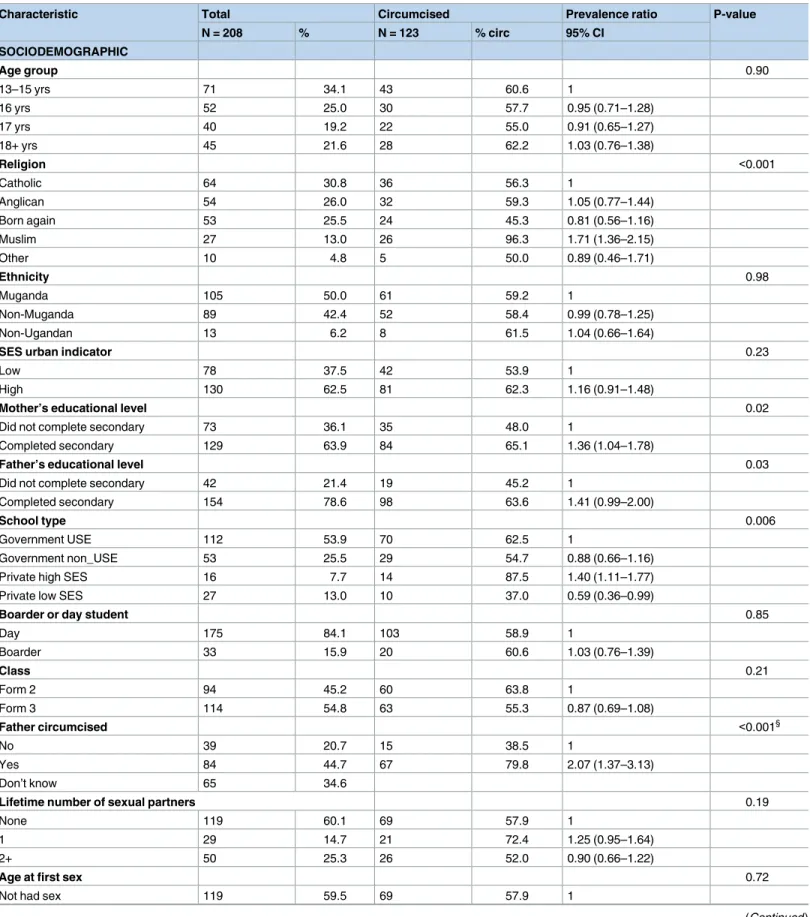
Of the 210 boys present in Forms 2 or 3 on the day of the survey, all provided written informed assent with parental consent, and completed the questionnaire. Socioeconomic characteristics varied, with one government and one private school being of low SES and the other two of high SES. The majority of boys were day students (84%), apart from the high SES private school where most boys (14/16; 88%) were boarders. The median age was 16 years (IQR 15– 17). Overall, 82% students reported that they were Christian and 13% Muslim. Half the stu-dents (51%) were from the Baganda ethnic group; 6% were non-Ugandan. The majority of
parents had completed secondary education (64% of mothers and 79% of fathers) (Table 1).
There was strong evidence of differences in age and ethnicity by school (AppendixTable 1).
The boys at the high SES schools were younger than those at low SES schools (median age 16 compared to 16.5 and 17 respectively; p = 0.01) and those at high SES schools had a lower pro-portion of ethnic Baganda students (34% and 31% compared to 55% and 72% respectively;
p<0.001). Overall, 83 (41%) of boys reported having had sexual intercourse and 52 (26%) of all
boys reported sexual debut before age 15. About half (n = 109; 53%) reported having had an HIV test (67% of those who reported having had sex). Of the 83 sexually active boys, 51 (61%) reported having had two or more sexual partners. The majority of boys reported that they did not drink alcohol (n = 165; 80%), and that they had never used an illegal drug (n = 169; 85%). More than half the boys reported being circumcised (n = 123; 59%). Prevalence of circumci-sion ranged from 35% in the private low SES school to 88% in the private high SES school. In
the univariable analysis (Table 1), being circumcised was strongly associated with Muslim
reli-gion and having a father who was circumcised (p<0.001) and was also associated with higher
level of parent’s education, being in the private high SES school, and having ever had an HIV test.
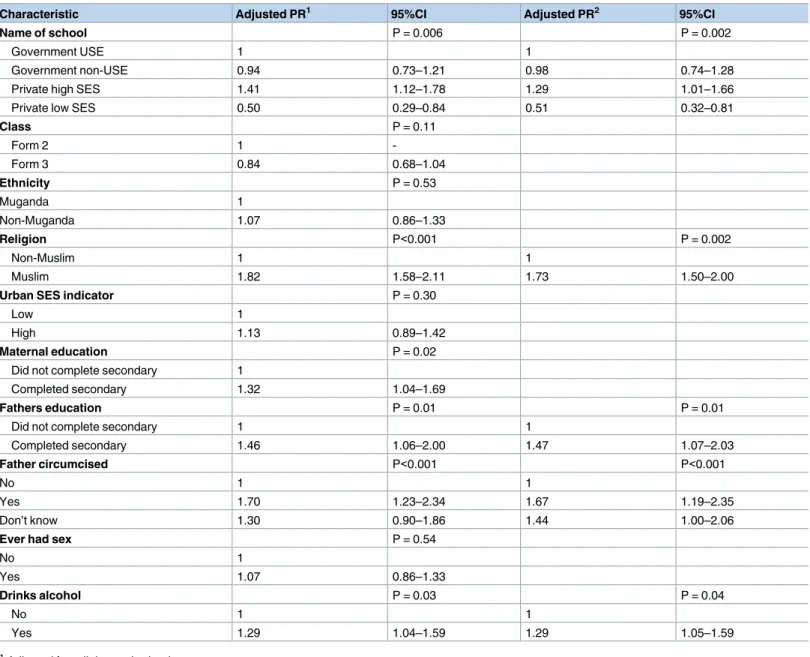
Table 2shows factors associated with circumcision (p<0.15) after adjusting for Muslim religion and school. Having had an HIV test is not included here as it is likely a result of attending for circumcision. In multivariable analysis, circumcision was independently associ-ated with being at the private high SES school (aPR = 1.29, 95%CI 1.01–1.66 compared with the Government USE school), Muslim religion (aPR = 1.73, 95%CI 1.50–2.00), father having completed secondary education (aPR = 1.47, 95%CI 1.07–2.03), father being circumcised (aPR = 1.67, 95%CI 1.19–2.35) or not knowing father’s circumcision status (aPR = 1.44, 95%
CI 1.00–2.06), and alcohol use (aPR = 1.29, 95%CI 1.05–1.59) (Table 2).
Circumcision prevalence, knowledge, and perceptions
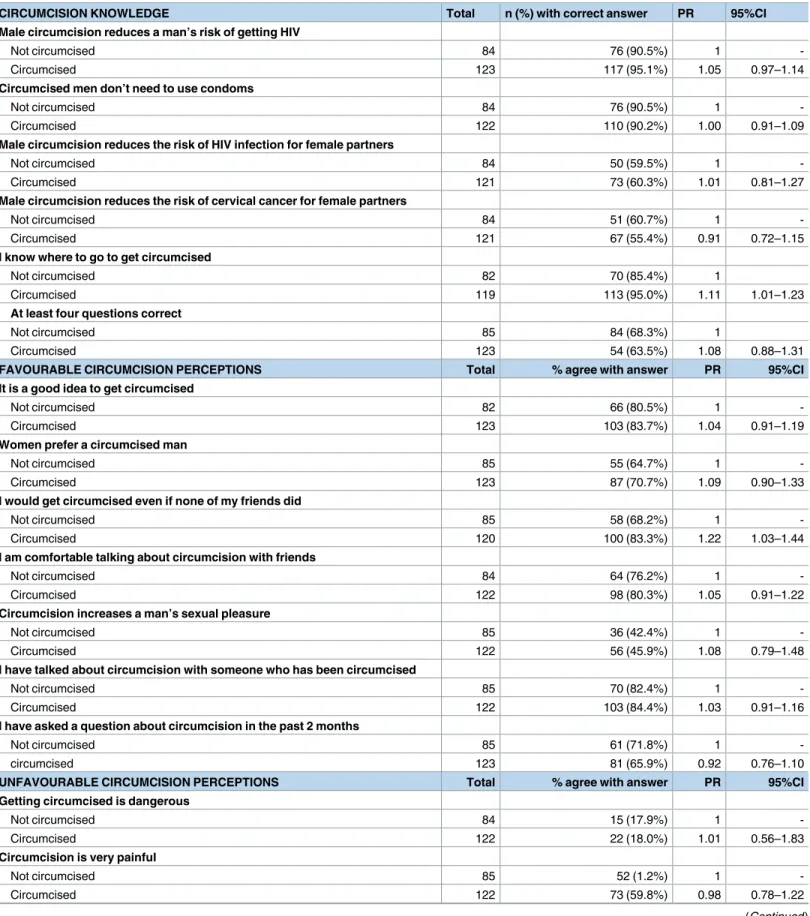
The proportion of boys with good knowledge of VMMC (defined as answering at least 4 of the 5 questions on knowledge correctly) was similar by circumcision status (68.3% versus 63.5%, PR = 1.08, 95%CI 0.88–1.31). Almost all boys knew that circumcision reduced the risk of HIV (95% of circumcised boys and 90% of uncircumcised boys) and 90% knew that circumcised
men should still use condoms to prevent infection (Table 3). Knowledge about circumcision
Table 1. Characteristics of participants by circumcision status1.
Characteristic Total Circumcised Prevalence ratio P-value
N = 208 % N = 123 % circ 95% CI
SOCIODEMOGRAPHIC
Age group 0.90
13–15 yrs 71 34.1 43 60.6 1
16 yrs 52 25.0 30 57.7 0.95 (0.71–1.28)
17 yrs 40 19.2 22 55.0 0.91 (0.65–1.27)
18+ yrs 45 21.6 28 62.2 1.03 (0.76–1.38)
Religion <0.001
Catholic 64 30.8 36 56.3 1
Anglican 54 26.0 32 59.3 1.05 (0.77–1.44)
Born again 53 25.5 24 45.3 0.81 (0.56–1.16)
Muslim 27 13.0 26 96.3 1.71 (1.36–2.15)
Other 10 4.8 5 50.0 0.89 (0.46–1.71)
Ethnicity 0.98
Muganda 105 50.0 61 59.2 1
Non-Muganda 89 42.4 52 58.4 0.99 (0.78–1.25)
Non-Ugandan 13 6.2 8 61.5 1.04 (0.66–1.64)
SES urban indicator 0.23
Low 78 37.5 42 53.9 1
High 130 62.5 81 62.3 1.16 (0.91–1.48)
Mother’s educational level 0.02
Did not complete secondary 73 36.1 35 48.0 1
Completed secondary 129 63.9 84 65.1 1.36 (1.04–1.78)
Father’s educational level 0.03
Did not complete secondary 42 21.4 19 45.2 1
Completed secondary 154 78.6 98 63.6 1.41 (0.99–2.00)
School type 0.006
Government USE 112 53.9 70 62.5 1
Government non_USE 53 25.5 29 54.7 0.88 (0.66–1.16)
Private high SES 16 7.7 14 87.5 1.40 (1.11–1.77)
Private low SES 27 13.0 10 37.0 0.59 (0.36–0.99)
Boarder or day student 0.85
Day 175 84.1 103 58.9 1
Boarder 33 15.9 20 60.6 1.03 (0.76–1.39)
Class 0.21
Form 2 94 45.2 60 63.8 1
Form 3 114 54.8 63 55.3 0.87 (0.69–1.08)
Father circumcised <0.001§
No 39 20.7 15 38.5 1
Yes 84 44.7 67 79.8 2.07 (1.37–3.13)
Don’t know 65 34.6
Lifetime number of sexual partners 0.19
None 119 60.1 69 57.9 1
1 29 14.7 21 72.4 1.25 (0.95–1.64)
2+ 50 25.3 26 52.0 0.90 (0.66–1.22)
Age at first sex 0.72
Not had sex 119 59.5 69 57.9 1
uncircumcised boys). The majority of boys had favourable perceptions about circumcision with 82% (including 81% of uncircumcised boys) reporting that it was “a good idea to get
cir-cumcised” (Table 3). There was evidence of high levels of acceptability among uncircumcised
boys. For example, of the 85 uncircumcised boys, 67% stated they planned to get circumcised and 68% said they would get circumcised even if none of their friends did.
Intervention design
To adapt the Make The Cut intervention for Ugandan youth, the research team reviewed the curriculum, participated in the intervention procedures themselves, and provided insight on how the session could be improved and made specific to adolescent boys in Uganda. This resulted in revisions to include local Ugandan terminology and local VMMC service provider information and the inclusion of information regarding tetanus booster immunisation prior to VMMC, which is now required of all VMMC participants in Uganda. After revision, two recently circumcised peer educators were trained as Make The Cut coaches in a three-day workshop. The coaches learned and practiced delivering the intervention activities, including developing their “Coach’s Stories,” in which they shared their own personal experiences with VMMC. During the workshop, coaches field-tested Make The Cut at two local schools to gain practical experience. Observations by the research team showed coaches remained faithful to the plan for the session, conveyed accurate VMMC information, and were actively engaged with the youth participants.
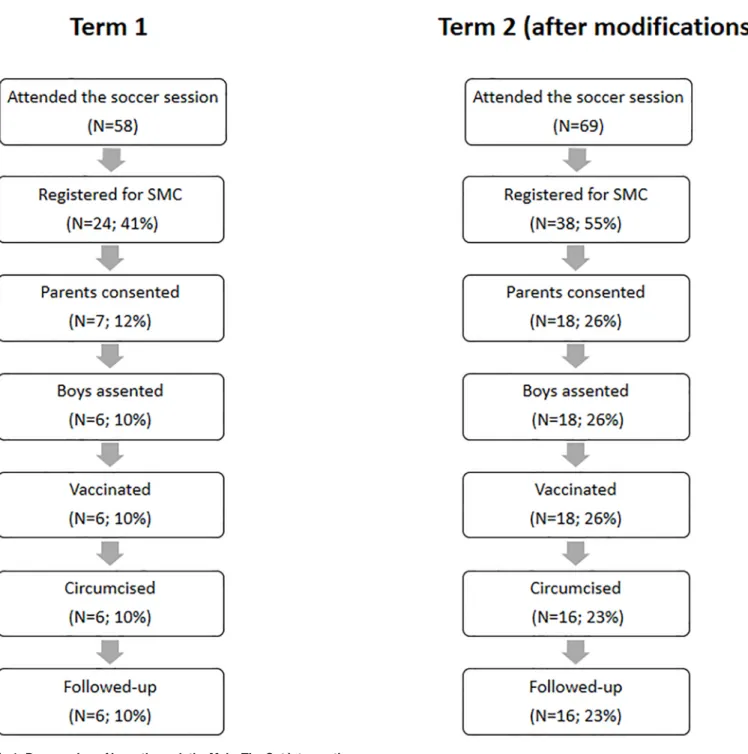
Coaches first implemented Make The Cut with 58 boys in the government low SES school, of whom 24 boys (41%) registered an interest in VMMC and only 6 (10%) were confirmed to
have undergone circumcision (Fig 1). Challenges that contributed to the low confirmed uptake
of VMMC included i) Coaches found it difficult to obtain parental consent for VMMC because of misconceptions about circumcision or about the time this would take from education; ii) School administrators only allowed the Make The Cut intervention to happen after normal school hours, resulting in low attendance; iii) Participants were most likely to undergo VMMC during the holiday time so they would not need to miss classes or exams but the intervention had initially been implemented in this school more than two months before the end of the
Table 1. (Continued)
Characteristic Total Circumcised Prevalence ratio P-value
N = 208 % N = 123 % circ 95% CI
SOCIODEMOGRAPHIC
Age<15 years 52 26.0 33 63.5 1.09 (0.85–1.41)
Age>= 15 years 29 14.5 16 55.2 0.95 (0.66–1.37)
Ever had an HIV test 0.005
No 96 47.3 48 50.0 1
Yes 107 52.7 74 69.2 1.38 (1.09–1.75)
Do you drink alcohol? 0.13
No 163 79.5 92 56.4 1
Yes 42 20.5 29 69.1 1.22 (0.96–1.56)
Have you ever used an illegal drug? 0.25
No 167 84.3 95 56.9 1
Yes 31 15.7 21 67.7 1.19 (0.90–1.57)
term, resulting in some boys losing interest. Also, it was difficult for the coaches to communi-cate with boys during the holiday period to follow and encourage them.
Based on these findings, the following changes were made before implementation in the second school:
1. Coaches conducted home visits with boys who expressed an interest in being circumcised to actively engage with their parents. To assist in facilitating discussions with parents, coaches created and shared a short video of Make The Cut to both educate parents on VMMC and act as a discussion starter.
Table 2. Factors associated with circumcision status.
Characteristic Adjusted PR1 95%CI Adjusted PR2 95%CI
Name of school P = 0.006 P = 0.002
Government USE 1 1
Government non-USE 0.94 0.73–1.21 0.98 0.74–1.28
Private high SES 1.41 1.12–1.78 1.29 1.01–1.66
Private low SES 0.50 0.29–0.84 0.51 0.32–0.81
Class P = 0.11
Form 2 1
-Form 3 0.84 0.68–1.04
Ethnicity P = 0.53
Muganda 1
Non-Muganda 1.07 0.86–1.33
Religion P<0.001 P = 0.002
Non-Muslim 1 1
Muslim 1.82 1.58–2.11 1.73 1.50–2.00
Urban SES indicator P = 0.30
Low 1
High 1.13 0.89–1.42
Maternal education P = 0.02
Did not complete secondary 1
Completed secondary 1.32 1.04–1.69
Fathers education P = 0.01 P = 0.01
Did not complete secondary 1 1
Completed secondary 1.46 1.06–2.00 1.47 1.07–2.03
Father circumcised P<0.001 P<0.001
No 1 1
Yes 1.70 1.23–2.34 1.67 1.19–2.35
Don’t know 1.30 0.90–1.86 1.44 1.00–2.06
Ever had sex P = 0.54
No 1
Yes 1.07 0.86–1.33
Drinks alcohol P = 0.03 P = 0.04
No 1 1
Yes 1.29 1.04–1.59 1.29 1.05–1.59
1Adjusted for religion and school.
2Adjusted for religion, school, father’s education, father’s circumcision status and alcohol use.
Table 3. Circumcision knowledge and perceptions among secondary school boys in Entebbe sub-district.
CIRCUMCISION KNOWLEDGE Total n (%) with correct answer PR 95%CI
Male circumcision reduces a man’s risk of getting HIV
Not circumcised 84 76 (90.5%) 1
-Circumcised 123 117 (95.1%) 1.05 0.97–1.14
Circumcised men don’t need to use condoms
Not circumcised 84 76 (90.5%) 1
-Circumcised 122 110 (90.2%) 1.00 0.91–1.09
Male circumcision reduces the risk of HIV infection for female partners
Not circumcised 84 50 (59.5%) 1
-Circumcised 121 73 (60.3%) 1.01 0.81–1.27
Male circumcision reduces the risk of cervical cancer for female partners
Not circumcised 84 51 (60.7%) 1
-Circumcised 121 67 (55.4%) 0.91 0.72–1.15
I know where to go to get circumcised
Not circumcised 82 70 (85.4%) 1
Circumcised 119 113 (95.0%) 1.11 1.01–1.23
At least four questions correct
Not circumcised 85 84 (68.3%) 1
Circumcised 123 54 (63.5%) 1.08 0.88–1.31
FAVOURABLE CIRCUMCISION PERCEPTIONS Total % agree with answer PR 95%CI
It is a good idea to get circumcised
Not circumcised 82 66 (80.5%) 1
-Circumcised 123 103 (83.7%) 1.04 0.91–1.19
Women prefer a circumcised man
Not circumcised 85 55 (64.7%) 1
-Circumcised 123 87 (70.7%) 1.09 0.90–1.33
I would get circumcised even if none of my friends did
Not circumcised 85 58 (68.2%) 1
-Circumcised 120 100 (83.3%) 1.22 1.03–1.44
I am comfortable talking about circumcision with friends
Not circumcised 84 64 (76.2%) 1
-Circumcised 122 98 (80.3%) 1.05 0.91–1.22
Circumcision increases a man’s sexual pleasure
Not circumcised 85 36 (42.4%) 1
-Circumcised 122 56 (45.9%) 1.08 0.79–1.48
I have talked about circumcision with someone who has been circumcised
Not circumcised 85 70 (82.4%) 1
-Circumcised 122 103 (84.4%) 1.03 0.91–1.16
I have asked a question about circumcision in the past 2 months
Not circumcised 85 61 (71.8%) 1
-circumcised 123 81 (65.9%) 0.92 0.76–1.10
UNFAVOURABLE CIRCUMCISION PERCEPTIONS Total % agree with answer PR 95%CI
Getting circumcised is dangerous
Not circumcised 84 15 (17.9%) 1
-Circumcised 122 22 (18.0%) 1.01 0.56–1.83
Circumcision is very painful
Not circumcised 85 52 (1.2%) 1
-Circumcised 122 73 (59.8%) 0.98 0.78–1.22
2. Coaches conducted in-person visits with school personnel to arrange for the Make The Cut sessions to happen during morning class periods.
3. Coaches implemented Make The Cut after exams, but before the end of the term. This reduced the time between implementation and uptake and avoided the need for communi-cation with the boys during holiday time.
Coaches implemented these changes in the second school (the low SES private school), where we saw an encouraging increase in VMMC referral and uptake compared to the first school (p = 0.06), with 38 of the 69 boys who attended the session (55%) registered for VMMC
and 16 (23%) confirmed to have undergone the procedure (Fig 1).
Qualitative results
The qualitative findings are based on data from boys who attended the Make The Cut inter-vention. Three key themes emerged: 1) role of social support, 2) reasons for and against cir-cumcision and 3) future VMMC considerations.
Role of family and social support. The attitudes of family and peers were central to the
decision to become circumcised in this adolescent population. The circumcised participants in the Make The Cut intervention indicated having benefitted from various sources of social sup-port from family and peers in the form of information and encouragement. Even before partic-ipants met the coaches, they cited particularly parents and other relatives as trusted sources from whom they drew support,
“I first heard from home when they wanted to take us for circumcision forcefully against our will. So I left home and when the whole issue was over I went back home and they did not bother me about that again. So when I went to my father’s place he explained to me about it more and he said that if you are not circumcised you can easily get HIV but if you are circum-cised then you reduce chances of getting the virus”.
(IDI Participant 05, Circumcised).
Table 3. (Continued)
Circumcision healing process is very painful
Not circumcised 85 50 (58.8%) 1
-Circumcised 122 68 (55.7%) 0.95 0.75–1.20
Real men do not get circumcised
Not circumcised 85 11 (12.9%) 1
-Circumcised 122 14 (11.5%) 0.89 0.42–1.86
Circumcision reduces a man’s sexual pleasure
Not circumcised 85 21 (24.7%) 1
-Circumcised 123 27 (22.0%) 0.89 0.54–1.46
I feel uncomfortable talking about circumcision
Not circumcised 85 21 (24.7%) 1
-Circumcised 123 17 (3.8%) 0.56 0.31–1.00
Circumcision reduces a man’s sex drive
Not circumcised 85 16 (18.8%) 1
-Circumcised 123 19 (15.4%) 0.82 0.45–1.50
Role of the coaches. While family and peers played an important role in preparing the
participants for circumcision, the decision to circumcise was prompted by coaches. Partici-pants acknowledged this crucial role of coaches, which entailed the explanation of information regarding circumcision including the healing process and the discussion of the myths or mis-conceptions that had held participants back from deciding to circumcise. Participants were satisfied with the support from coaches not only before but also after circumcision, as the coaches followed up with the participants in the aftermath of circumcision.
Fig 1. Progression of boys through the Make The Cut intervention program.
“[The coaches] were teaching us some things and even they could call and ask me whether I am okay and they even used to give me transport to go to the hospital. The whole process was okay because I felt comfortable with it and whatever you could ask they could reply you.”
(IDI Participant 02, Circumcised).
Reasons for and against circumcision. The main reasons for becoming circumcised were
the health benefits of improving genital hygiene and reducing the risk of being infected with
HIV [15,16], and a main barrier was fear of pain [15–17]. In addition, those who participated
in the Make The Cut intervention but declined circumcision attributed this to loss of contact with their coaches.
“We were given phone contacts by the coaches but then I lost mine so I couldn’t contact any-one. So when I tried looking for the coach’s contacts I realized I had lost them and so I gave up and later afterwards my friend came and told me that he had finished getting circumcised.”
(IDI Participant 03, Uncircumcised).
The influence of the social and family circles was also clear, including some family members who threatened not to care for the boys if they underwent the procedure.
“It [not circumcising] was because of my sister. My mum used to go for work and would come back late at around midnight and my sisters were in senior five and they told me that if I go for circumcision they will not look after me. They said that I will be on my own and stay home alone and no one will either give the medicine, nor cleaning you”.
(IDI Participant 04, Uncircumcised).
Influencing future VMMC decision-making?. All the boys who remained uncircumcised
indicated a willingness to circumcise in future when they have overcome the challenges that had rendered it difficult to circumcise. Some of them were willing to circumcise after their exams while others needed further assurance that the procedure would not be painful.
“After I finish my last examination paper I will go for circumcision. I want to heal very fast because I have other things I would like to do thereafter. Like in one month I will have healed so that I do other things”.
(IDI Participant 02, Uncircumcised).
Discussion
study following the modified intervention suggests that Make The Cut can be effective in reaching uncircumcised boys where baseline prevalence is already high. These findings are consistent with the study on Make The Cut among Zimbabwean adolescents, in which 48% of participants self-reported as circumcised at baseline, and 12% underwent the
procedure following Make The Cut [9]. Additionally, Make The Cut aligns with PEPFAR
VMMC age guidelines, which prioritize VMMC programmes targeted at males aged 15–29
years [18].
The importance of including the family and community was a key finding from our qualita-tive data, and reflects similar findings from a school-based VMMC promotion program in South Africa, which also reported the critical role of the community and family involvement
for VMMC uptake among school-based youth [10]. Our study also showed that the inclusion
of in-person follow-up with students and families in the second phase of implementation of Make The Cut contributed to the increased uptake of VMMC. The continued interaction strengthened the relationship between the coach and student and appeared to influence the participants’ decision to undergo the procedure. Similarly, a recent study in Uganda and South Africa found in-person follow-up with a lay counsellor contributed to significant VMMC
uptake [19]. However, in-person visits are potentially costly and can create logistical and
administrative challenges, which could make this component of the intervention difficult to replicate at scale. In addition to the sport-based interpersonal model utilized in Make The Cut, impact evaluations on male circumcision uptake have found intervention components such as
small incentives [20,21] and SMS follow-up [22] can be effective in increasing demand for
VMMC. Additional research is needed to determine whether SMS communication between coach and participant can enable the continued relationship in a way that is more cost-effective than in-person follow-up.
In this study, self-reported prevalence of VMMC among adolescent males was almost
dou-ble the adult VMMC prevalence in Ugandan (59% vs 33%) [2]. This finding supports a recent
study in Rakai District, Uganda, which found that almost half of boys aged 15–17 years were circumcised (49.3% among all boys; 40.2% among non-Muslim boys) (Gray et al, personal communication). These findings reflect general trends in several other UNAIDS/WHO cir-cumcision priority countries, which show adolescent males are generally more willing to
undergo circumcision than adult males [23].
This study had a number of limitations. As this was a feasibility study, the study was small, and there was no control group which means that we cannot attribute the observed VMMC uptake directly to the Make The Cut intervention. Similarly, although the uptake of VMMC increased after our curriculum modification, we cannot attribute this increased uptake to the modification directly. A further limitation is that VMMC uptake was only measured for three months following the intervention, and it is possible that the intervention resulted in boys deciding to become circumcised after completion of our study.
This study showed that the modified Make The Cut intervention may be effective to increase uptake of safe male circumcision in this population. However, the intervention is time-intensive, and further work is needed to assess the cost-effectiveness of the intervention conducted at scale.
Supporting information
S1 File. In-depth interview guides for boys who became circumcised during the Make The Cut intervention.
S2 File. In-depth interview guides for boys who did not become circumcised during the Make The Cut intervention.
(PDF)
Acknowledgments
The MENISCUS project team includes: Helen Weiss, David Ross, George Miiro, Jessica Nakiyingi-Miiro, Suzanna Francis, Belen Tolendol, Rwamahe Rutakumwa, Jeff DeCelles, Sai-dat Namuli, Milly Naluggya, Rashid Muyingo, Philip Muzira, Habakkuk Ayebazibwe, Kevin Nakuya, Elizabeth Nakinobe, Wilber Ssembajjwe, Juliet Namakula, Christopher Lukooya, Yawe Douglas, Lorna Gibson, Rebecca Hershow, Pontiano Kaleebu and Edward Katongole
Mbidde. (Lead author for this group: Helen Weiss;[email protected])
Author Contributions
Conceptualization: George Miiro, Jeff DeCelles, Jessica Nakiyingi-Miiro, Rebecca B.
Her-show, David A. Ross.
Data curation: Jessica Nakiyingi-Miiro, Lorna J. Gibson.
Formal analysis: Rwamahe Rutakumwa, Jessica Nakiyingi-Miiro, Lorna J. Gibson, Helen A.
Weiss.
Funding acquisition: George Miiro, David A. Ross.
Investigation: Rwamahe Rutakumwa, Philip Muzira, Wilber Ssembajjwe, Helen A. Weiss.
Methodology: George Miiro, Rwamahe Rutakumwa, Jessica Nakiyingi-Miiro, Rebecca B.
Her-show, Suzanna Francis, Belen Torondel, David A. Ross, Helen A. Weiss.
Project administration: Saidat Musoke.
Supervision: Jeff DeCelles, Rwamahe Rutakumwa, Helen A. Weiss.
Writing – original draft: Helen A. Weiss.
Writing – review & editing: Jeff DeCelles, Jessica Nakiyingi-Miiro, Philip Muzira, Wilber
Ssembajjwe, Saidat Musoke, Lorna J. Gibson, Rebecca B. Hershow, Suzanna Francis, Belen Torondel, David A. Ross, Helen A. Weiss.
References
1. UNAIDS. Global AIDS Update. Geneva: UNAIDS, 2016.
2. UNAIDS. Uganda HIV Epidemic Profile. 2014.
3. Weiss HA, Halperin D, Bailey RC, Hayes RJ, Schmid G, Hankins CA. Male circumcision for HIV preven-tion: from evidence to action? AIDS. 2008; 22(5):567–74.https://doi.org/10.1097/QAD.
0b013e3282f3f406PMID:18316997.
4. World Health Organization. Voluntary medical male circumcision for HIV prevention in 14 priority coun-tries in East and Southern Africa. Geneva: WHO, 2016 June 2016. Report No.
5. Williams BG, Lloyd-Smith JO, Gouws E, Hankins C, Getz WM, Hargrove J, et al. The potential impact of male circumcision on HIV in Sub-Saharan Africa. PLoS Med. 2006; 3(7):e262.https://doi.org/10.1371/ journal.pmed.0030262PMID:16822094
6. Njeuhmeli E, Forsythe S, Reed J, Opuni M, Bollinger L, Heard N, et al. Voluntary medical male circumci-sion: modeling the impact and cost of expanding male circumcision for HIV prevention in eastern and southern Africa. PLoS Med. 2011; 8(11):e1001132.https://doi.org/10.1371/journal.pmed.1001132
PMID:22140367
8. Kripke K, Vazzano A, Kirungi W, Musinguzi J, Opio A, Ssempebwa R, et al. Modeling the Impact of Uganda’s Safe Male Circumcision Program: Implications for Age and Regional Targeting. PloS one. 2016; 11(7):e0158693.https://doi.org/10.1371/journal.pone.0158693PMID:27410234
9. Kaufman ZA, DeCelles J, Bhauti K, Hershow RB, Weiss HA, Chaibva C, et al. A Sport-Based Interven-tion to Increase Uptake of Voluntary Medical Male Circumcision Among Adolescent Male Students: Results From the MCUTS 2 Cluster-Randomized Trial in Bulawayo, Zimbabwe. Journal of acquired immune deficiency syndromes. 2016; 72 Suppl 4:S292–8. PMID:27404011
10. Montague C, Ngcobo N, Mahlase G, Frohlich J, Pillay C, Yende-Zuma N, et al. Implementation of ado-lescent-friendly voluntary medical male circumcision using a school based recruitment program in rural KwaZulu-Natal, South Africa. PloS one. 2014; 9(5):e96468.https://doi.org/10.1371/journal.pone. 0096468PMID:24788339
11. UNAIDS. Uganda HIV and AIDS Country Progress Report. 2014.
12. Kaufman ZA, DeCelles J, Bhauti K, Weiss HA, Hatzhold K, Chaibva C, et al. A sport-based intervention to increase uptake of voluntary medical male circumcision among adult male football players: results from a cluster-randomised trial in Bulawayo, Zimbabwe. 20th International AIDS Conference; Mel-bourne, Australia 2014.
13. DeCelles J, Hershow RB, Kaufman ZA, Gannett KR, Kombandeya T, Chaibva C, et al. Process Evalua-tion of a Sport-Based Voluntary Medical Male Circumcision Demand-CreaEvalua-tion IntervenEvalua-tion in Bulawayo, Zimbabwe. Journal of acquired immune deficiency syndromes. 2016; 72 Suppl 4:S304–S8.https://doi. org/10.1097/QAI.0000000000001172PMID:27749598
14. Localio AR, Margolis DJ, Berlin JA. Relative risks and confidence intervals were easily computed indi-rectly from multivariable logistic regression. J Clin Epidemiol. 2007; 60(9):874–82.https://doi.org/10. 1016/j.jclinepi.2006.12.001PMID:17689803.
15. Westercamp N, Bailey RC. Acceptability of male circumcision for prevention of HIV/AIDS in sub-Saha-ran Africa: a review. AIDS Behav. 2007; 11(3):341–55.https://doi.org/10.1007/s10461-006-9169-4
PMID:17053855
16. George G, Strauss M, Chirawu P, Rhodes B, Frohlich J, Montague C, et al. Barriers and facilitators to the uptake of voluntary medical male circumcision (VMMC) among adolescent boys in KwaZulu-Natal, South Africa. African journal of AIDS research: AJAR. 2014; 13(2):179–87.https://doi.org/10.2989/ 16085906.2014.943253PMID:25174635.
17. Hatzold K, Mavhu W, Jasi P, Chatora K, Cowan FM, Taruberekera N, et al. Barriers and motivators to voluntary medical male circumcision uptake among different age groups of men in Zimbabwe: results from a mixed methods study. PloS one. 2014; 9(5):e85051.https://doi.org/10.1371/journal.pone. 0085051PMID:24802746
18. In Pursuit of the Pivot Reaching and Serving Clients Aged 15–29 Years Demand Creation 2016 [cited 2017 February 7th]. https://www.malecircumcision.org/resource/pursuit-pivot-reaching-and-serving-clients-aged-15%E2%80%9329-years.
19. Barnabas RV, van Rooyen H, Tumwesigye E, Brantley J, Baeten JM, van Heerden A, et al. Uptake of antiretroviral therapy and male circumcision after community-based HIV testing and strategies for link-age to care versus standard clinic referral: a multisite, open-label, randomised controlled trial in South Africa and Uganda. Lancet HIV. 2016; 3(5):e212–20.https://doi.org/10.1016/S2352-3018(16)00020-5
PMID:27126488
20. Thirumurthy H, Masters SH, Rao S, Bronson MA, Lanham M, Omanga E, et al. Effect of providing con-ditional economic compensation on uptake of voluntary medical male circumcision in Kenya: a random-ized clinical trial. JAMA. 2014; 312(7):703–11.https://doi.org/10.1001/jama.2014.9087PMID:
25042290
21. Thirumurthy H, Masters SH, Rao S, Murray K, Prasad R, Zivin JG, et al. The Effects of Providing Fixed Compensation and Lottery-Based Rewards on Uptake of Medical Male Circumcision in Kenya: A Ran-domized Trial. Journal of acquired immune deficiency syndromes. 2016; 72 Suppl 4:S299–305. PMID:
27404012
22. Weiss SM, Zulu R, Jones DL, Redding CA, Cook R, Chitalu N. The Spear and Shield intervention to increase the availability and acceptability of voluntary medical male circumcision in Zambia: a cluster randomised controlled trial. Lancet HIV. 2015; 2(5):e181–9.https://doi.org/10.1016/S2352-3018(15) 00042-9PMID:26120594