EFFECTS OF STRUGGLE AND GOAL ACHIEVEMENT
IN WEIGHT-LOSS JOURNEYS ON SOCIAL MEDIA: INSTILLING HOPE AND PROMOTING HEALTH BEHAVIORS
Chandler C. Carter
A thesis submitted to the faculty at the University of North Carolina at Chapel Hill in partial fulfillment of the requirements for the degree of Master of Arts in Media and
Communication in the Hussman School of Journalism and Media
Chapel Hill 2020
Approved by:
Francesca Dillman Carpentier Anne M. Johnston
ABSTRACT
Chandler C. Carter: Effects of Struggle and Goal Achievement in Weight-Loss Journeys On Social Media: Instilling Hope And Promoting Health Behaviors
(Under the direction of Francesca Dillman Carpentier)
ACKNOWLEDGEMENTS
TABLE OF CONTENTS
LIST OF TABLES ... vi
LIST OF FIGURES ... vii
CHAPTER 1: EFFECTS OF STRUGGLE AND GOAL ACHIEVEMENT ...1
Literature Review ...3
Social Cognitive Theory ...3
Social Comparison Theory ...10
Underdog Narratives ...15
CHAPTER 2: STUDY METHODS ...23
CHAPTER 3: STUDY 1 RESULTS AND DISCUSSION ...34
CHAPTER 4: STUDY 2 RESULTS AND DISCUSSION ...50
CHAPTER 5: GENERAL DISCUSSION ...63
APPENDIX A: QUESTIONNAIRE ...70
APPENDIX B: EXAMPLES OF INSTAGRAM POST/FEED STIMULI ...86
APPENDIX C: TABLES ...90
LIST OF TABLES
Table 1. Study design ...23
Table 2. Hypothesis table ...91
Table 3. Bivariate correlations for Study 1 variables ...93
Table 4. Bivariate correlations for Study 2 variables ...95
Table 5. Study 1: Initial regressions for diet model ...97
Table 6. Study 1: Final regression model predicting diet intention ...98
Table 7. Study 1: Initial regressions for cardio model ...99
Table 8. Study 1: Final regression model predicting cardio intention ...100
Table 9. Study 1: Initial regressions for yoga model ...101
Table 10. Study 1: Final regression model predicting yoga intention ...102
Table 11. Study 2: Initial regressions for diet model ...103
Table 12. Study 2: Final regression model predicting diet intention ...104
Table 13. Study 2: Initial regressions for cardio model ...105
Table 14. Study 2: Final regression model predicting cardio intention ...107
Table 15. Study 2: Initial regressions for yoga model ...108
LIST OF FIGURES
Figure 1. Moderated parallel mediation model predicting intention to model ...21
Figure 2. Study 1: Final model predicting intention to model the diet strategy ...36
Figure 3. Study 1: Final model predicting intention to model the cardio strategy ...40
Figure 4. Study 1: Final model predicting intention to model the yoga strategy ...42
Figure 5. Study 2: Final model predicting intention to model the diet strategy ...51
Figure 6. Study 2: Final model predicting intention to model the cardio strategy ...54
CHAPTER 1: EFFECTS OF STRUGGLE AND GOAL ACHIEVEMENT
Research supports the idea that social media can provide beneficial support and social opportunities, such as social support and community building (Chung, 2014; Dickins et al., 2016; Naslund et al., 2016), identity expression (boyd, 2007; Guta & Karolak, 2015) and access to important health messages (Moorhead et al., 2013). But social media also have a dark side that includes fake and misleading content (Allcott & Gentzkow, 2017), bullying (Hamm et al., 2015) and material that encourages negative social comparisons (Fardouly et al., 2015), which can harm a user’s well-being. It is important to disentangle the social media content and features that can lead to improved health from those that have a detrimental effect on our health. Of course, people bring their own unique personalities, mindsets and behaviors to the table when interacting with social media, but there are also elements inherent in the content of social media that can either inspire and empower, decrease empathy or self-esteem, or promote hate. This thesis will use research primarily from Social Cognitive Theory (Bandura, 1986), Social Comparison
Theory (Buunk, 2007; Festinger 1954; Smith 2000) and research about underdog narratives (Kim et al., 2008; Prestin, 2013) to explore the type of content on social media that can inspire
individuals, with a specific focus on inspiration to achieve weight-loss goals.
existing research is on the goal outcome rather than on the nature of the pursuit of the goal. The thesis extends this research by considering how the outcome and the pursuit of a weight-loss goal are characterized in a social media narrative.
In a 3 (goal outcome) X 2 (target struggle) design, this thesis addresses both goal
outcome and goal pursuit by examining how social media posts about weight-loss goals that are either achieved (success), in progress, or unattained (failure), and that either involve struggle or lack thereof in the goal pursuit, affect individuals in terms of their perceptions of the target, hopefulness and inspiration, and intention to model the weight-loss behaviors of the target. The concept of struggle is central to the investigation of this thesis. Kaptein (2017), which proposes a characterization of struggle in the context of businesses and their employees, notes that struggle has not been clearly defined in academic literature. However, he proposes that struggle, which can be psychological or physical, is defined by four characteristics. The first is an object at stake that is deemed valuable. The second is that in a struggle, the object of value is not yet realized or guaranteed. The third is the risk of losing or not being able to realize
something valuable is created by adversarial or opposing forces (e.g. human opponents,
ideologies, internal thoughts). And the fourth is that struggle requires great effort in dealing with opposing forces. This thesis examines the role that struggle with a weight-loss goal, both
expressed by a social media author and experienced by a reader, plays when reading about weight-loss journeys on social media with varying goal outcomes. The specific effects of goal outcome and goal struggle variables are derived from Social Cognitive Theory, Social
Literature Review
Social Cognitive Theory
Social Cognitive Theory has been used to support research that examines how behaviors that are enacted by individuals or characters in narratives can influence a person’s motivations to perform, or model, those behaviors (Lee and Shapiro, 2006; Nabi, 2009; Prestin 2013). This thesis uses Social Cognitive Theory as a theoretical framework to explain how and why people might model goal-related behaviors depicted in social media posts about weight loss. I first provide a brief description of the theory, and then I present the specific propositions of the theory that I am using to predict how differences in the pursuit and outcome of a weight-loss goal can influence perceptions of the target pursuing the goal, feelings of hopefulness and inspiration, and intentions to model the target’s goal-related behaviors.
Social Cognitive Theory is an extension of Social Learning Theory, which was theorized by Albert Bandura in the 1960s (Bandura, 1971; Bandura 1986). Social Learning Theory, which reflects behaviorist learning theories such as classical conditioning, proposes that learning can occur by observing the behavior of others, as well as observing the consequences for those behaviors (Bandura, 1971; Bandura 1986). Observational learning is important because it allows individuals to adopt new behaviors without having to engage in trial and error that could lead to many negative consequences (Stajkovic & Luthans, 1998).
through models portrayed visually and auditorily through media (symbolic modeling, Bandura, 1986).
Social Cognitive Theory extends Social Learning Theory, building from the core tenet in Social Learning Theory that learning can occur without changing behavior. As such, Social Cognitive Theory extends beyond behavior imitation to explain the adoption of attitudes, feelings and motivations related to a behavior--further noting that evidence of learning from models can influence attitudes, feelings, and motivations without necessarily changing actual behavior (Bandura, 1986).
Social Cognitive Theory has been described as the bridge between behaviorist learning theories and cognitive theories. It is proposed that cognitive processes mediate the relationship between the modeled behavior/stimulus and imitation of the behavior (Bandura, 1986). These cognitive mediational mechanisms consist of attention and encoding/remembering (Bandura, 1986). Motivational mechanisms include whether or not the perceived outcome of the behavior (outcome expectancy) is deemed beneficial after a cost-benefit analysis and whether or not the individual perceives that they have the ability, or efficacy, to successfully perform the behavior that is modeled (self-efficacy) (Bandura, 1986).
positive outcome (Bandura, 1986). In studies about weight, self-efficacy was related to the concept of growth and fixed mindsets (Hooper et al., 2018).
A growth mindset or incremental view describes when an individual believes they have control over an issue, in this case their weight, and view weight as an incremental entity. A fixed mindset, or entity view, describes when an individual perceives little to no control over their weight and views weight as fixed (e.g. primarily determined by genetics) (Hooper et al., 2018). According to Social Cognitive Theory, high levels of self-efficacy would predict an increased motivation to model desired behaviors, compared to low levels of self-efficacy. Therefore, I predict that high self-efficacy will positively relate to intention to model the social media author.
Perceived similarity to the model. One other important factor that can influence
whether or not a behavior is imitated is the similarity of a model to oneself (Bandura, 1986). Schunk (1987) reviewed 29 studies that either investigated perceived similarity in terms of the model’s age, sex, competence, background, the number of role models presented, or a
combination of these factors. There was mixed evidence for the effects of age and sex of the model on imitation. With respect to the model’s background, Schunk (1987) reviewed one study where children’s high perceived similarity to a model in terms of hometown, interests and
Schunk also reviewed studies that investigated similarity in terms of mastery models, who demonstrated flawless performance throughout a task, and coping models, who
demonstrated fears and deficiencies that were gradually overcome to the point of improved performance and increased confidence (Schunk, 1987; e.g. Kornhaber & Schroeder, 1975; Schunk & Hanson, 1985; Vernon, 1974). Three of these studies (Kornhaber & Schroeder, 1975; Schunk et al., 1987; Vernon, 1974) suggested that children who experienced difficulties learning a skill and observed coping models experienced enhanced skills, compared to those who
observed mastery models. Schunk notes that the results of mastery-coping effects are
inconclusive because the reviewed studies only investigated perceived similarity in the context of reducing avoidance behaviors among fearful participants. However, given the more conclusive findings by Schunk, I predict that if a reader has struggled with weight loss and reads a social media post that also indicates struggle, that reader will have a greater intent to model the social media author because of that similarity in weight loss goal pursuit. To say this another way, I predict that readers’ own levels of struggle will enhance the main effect of the presentation of struggle in the social media post on intentions to model by first increasing perceived similarity. This increased perceived similarity, in turn, will increase intentions to model.
It is important to note that other types of perceived similarity also exist, although perceived similarity based on struggle is the particular focus of this study. These other types, such as perceived similarity in body size with the social media author, are also important in the literature. Although not the focus of this study, these types of similarity are discussed in greater detail in the Social Comparison Theory section below.
likelihood to model behaviors will also depend on whether or not the behavior is reinforced, punished or receives no consequences. Observing others receive positive reinforcement can create outcome expectancies that serve as positive motivators, whereas negative reinforcement can create negative outcome expectancies that discourage modeling. (Bandura, 1986)
Bandura studied reinforcement effects in his Bobo doll experiment in 1961, where children watched aggressive acts performed by an adult on a life-sized inflatable doll (Bandura, 1961). Children in three groups either saw the model rewarded, punished or receive no
consequences for their aggressive behavior. Then, the children were given the opportunity to interact with the doll. The children in the reward or no-consequence groups imitated the model. However, the children in the punishment group were less aggressive toward the doll. Following this finding, Social Cognitive Theory predicts that reinforced behaviors are more likely to be imitated (Bandura, 1961; Bandura 1986).
Reinforcements can be external responses to a behavior (e.g. mom rewards her child with movie tickets for doing extra chores) or internal responses (e.g. the child feeling fulfilled after having completed extra chores). Some studies have examined reinforcement in terms of whether the model is a positive or negative role model (Lockwood et al., 2002; Lockwood, Marshall & Sadler, 2005). Positive models refer to those that have achieved success, and negative models have experienced misfortune (Lockwood et al., 2002). Positive role models can inspire by showing a desired self, achievements that one can strive for, and the means of achieving a goal, whereas negative role models can inspire individuals to avoid failures by showing a “to-be-avoided self” and mistakes to avoid (Lockwood et al., 2002, p. 854).
the model is well-liked but the outcome of the model’s behavior is negative? For example, Nabi and Clark (2008) found that liked models that perform risky behaviors that have been negatively reinforced can influence individuals to imitate that behavior. It is possible that the similarity and/or appeal of the model had a greater effect on adopting modeled behavior than negative reinforcement. Alternatively, the observer may not have perceived the risky behavior or the outcome of the behavior as negative, or perceived the long-term outcome of the behavior to be positive.
Lockwood et al. (2002) found that negative role models were more influential than
positive role models for individuals who were primed to think about a goal in terms of avoiding a negative academic outcome. However, for individuals who were primed to think about achieving a positive academic outcome, the positive role model was more motivating than the negative role model. The positive model illustrated successes and achievements, reflecting positive behavioral reinforcement or reward. The negative model illustrated failures and mistakes, reflecting
negative behavioral reinforcement or punishment. Motivation was not measured in terms of motivation to engage in the actions of the model, but actions related to achieving academic success. Social Cognitive Theory suggests that individuals will be more likely to adopt the behavior of a positive model than a negative model, regardless of whether or not individuals think about attaining or avoiding an outcome.
self-efficacy, which in turn will impact intention to model. Readers who see a target succeed in their goal will feel more self-efficacy, which will predict greater intention. Readers who see a target fail will feel less self-efficacy, which will predict less intention.
Missing from Lockwood et al. (2002)’s study is a consideration of other ways of seeing the target as a potential model (e.g. the nature of the path leading towards a goal outcome) or what happens when a goal is in progress (versus achieved or unattained). Lee and Shapiro (2016), on the other hand, investigated in-progress goals in the context of weight loss. They examined the effects of narratives involving characters who had either achieved their diet goal, failed to achieve the goal, or indicated the goal was still in progress, on goal activation (in implicit memory) and (explicit) intention to model the target’s diet behaviors. They found no differences in intention to model between goal achieved, goal in progress and goal failed conditions. Thus, the effects of reading about goals in progress are not clear.
Lee and Shapiro (2016) did find that, for the goal achievement condition only, the influence of exposure to the narrative on intention to model was moderated by similarity to the character. This finding leads to a similar prediction to the interaction noted above between similarity with struggle and depiction of struggle in a social media post. Namely, the depicted goal outcome will interact with the interaction of the reader’s own level of struggle and the presentation of struggle in the social media post, such that readers with higher levels of struggle and who receive the post indicating struggle in the goal pursuit (similar weight loss experiences) will have a greater intention to model the author if the readers also read that the goal was
attained, versus failed.
Nevertheless, Lee and Shapiro (2016) define their narratives in terms of goal
that the path toward a goal is described might be additional information that helps us decide whether we want to emulate a particular target. For example, if someone is struggling with weight loss, a reader might recognize that experience as being similar to their own and view that target as a potential role model. In other words, intention to model behavior is not just about whether a behavior is rewarded, it is also about what happens on the path towards a goal outcome.
This thesis is interested in parsing out the path toward goal attainment (conveying a struggle or lack thereof) and how this interacts with goal outcomes (success, in progress, failure). Social Cognitive Theory alone is not sufficient to explain these effects. However, Social
Comparison Theory, which will be discussed in the next section, can help predict how a model’s similarity of struggle (or lack thereof) to the reader might interact with the model’s goal outcome to predict perceptions of a target that might impact intention to model weight-loss behaviors. Social Comparison Theory
Festinger (1954) posited that there is a drive to self-evaluate, in other words, to evaluate one’s opinions and abilities. He explained that holding inaccurate opinions or inaccurate
suggested that these social comparisons can occur automatically and subconsciously (Gilbert, Giesler, & Morris, 1995; Wood, 1989).
Applying Social Comparison Theory to this study, if a social media post indicates a weight-loss goal failure, readers might see that author as inferior and engage in a downward social comparison. If a social media post indicates a weight-loss goal success, however, readers might see that author as inspiring and engage in an upward social comparison. Therefore, I predict a main effect of goal outcome on readers’ self-reported directions of social comparison measured after seeing the social media post, in that goal success will produce social comparison ratings that indicate upward comparisons or lateral/neutral comparisons where the target is deemed neither superior nor inferior, while goal failure will produce social comparison ratings that indicate downward comparisons or lateral comparisons. Logically, I would then argue that if a reader feels their own self is better than a potential model, that reader will not want to emulate the potential model. In other words, the more a reader upwardly compares themselves to a target, the more likely the reader will intend to model that target.
comparison than celebrities. However, subsequent studies suggest that social comparison can occur in relation to self-relevant others rather than just physically similar others (such as women comparing themselves to much thinner models who reflect a relevant body ideal) (e.g.
Kruglanski & Mayseless, 1990). In this thesis, relevance of losing weight is measured in terms of whether or not readers have, themselves, ever set a weight-loss goal and what the outcome of their goal is/was (achieved, failed, in progress). These measures are given prior to seeing the social media post and can therefore be used to see how the relevance of the weight loss goal interacts with aspects of the social media post to affect post-stimulus measures, such as intention to model. (The specific measure of the reader’s own struggle was discussed as similarity of struggle in the Social Cognitive Theory section.) Perceived similarity measures that are given after the social media post is viewed include perceived similarities in appearance, experiences and personality, and aspects of the depicted weight loss pursuit as being like the reader’s own experiences.
Early research on Social Comparison Theory assumed that upward, rather than
social comparisons lead to lower self-esteem. If a person is engaged in a downward social comparison that is assimilative, that person might actually feel worse (e.g. experience fear, anxiety, etc.) because they will see themselves as more similar to the lower-status target.
Although Festinger did not capture specific motivations for social comparison in his theory, others have honed in on motivations that relate to the four types of social comparisons: contrasting upward and downward, and assimilative upward and downward (e.g. Collins, 1996; Wills, 1981; Wood 1989). Among these motivations are the needs for self-enhancement (motives to protect or enhance one’s self-esteem) and self-improvement. Self-enhancement is a motive for contrasting downward social comparison (individuals see themselves as superior to an inferior other) (Wills, 1981; Wood, 1989). Wills (1981) reviewed research suggesting that people frequently engage in downward social comparisons when they experience misfortune or threat. Thus, individuals are motivated to improve their self-esteem and do so by making comparisons to “lesser” others. On the other hand, assimilative upward social comparison (to “superior” others) can reflect a motive for self-improvement (Collins, 1996; Wood, 1989). Smith (2000) attempts to outline the emotions that result from upward and downward, contrasting and assimilative comparisons. Smith (2000) proposes that upward assimilative comparisons can result in positive emotions such as admiration, optimism and inspiration. Hope and inspiration as a product of exposure to narratives reflecting struggle will be discussed in the underdog narrative section below.
Similarity in social comparison. Research shows that there are many factors that can
target of comparison based on pre-existing self-knowledge leads to perceptions that the target is similar or different. If the initial assessment is that the target is similar, the individual will engage in similarity testing (testing the hypothesis that the target is similar), which leads them to make an assimilative comparison. Information used to test this similarity hypothesis is argued to be conducive to finding similarity because, much like confirmation bias, the comparison increases the accessibility of knowledge that points to similarities (Corcoran, Crusius, & Mussweiler, 2011). Thus, similarities between the individual and the target will form the basis of their self-evaluations. In other words, if a person finds a potential social comparison target to be similar to themselves, that person will likely engage in an assimilative social comparison.
An initial assessment that the target of comparison is dissimilar, however, leads to dissimilarity testing, which utilizes information relating to differences as the basis of
self-evaluation. The result is a contrasting social comparison. Although, one study found that when a target is moderate compared to extreme on a dimension, then similarity testing is more likely to occur (Diel & Hofmann, 2019). This thesis is interested in whether or not narratives that involve targets who have endured weight loss struggles produce assimilative social comparisons. It should be noted that this thesis does not measure the weight-loss goal status of the individual reading about the model. It may be important to consider this variable to better understand the comparisons that they make with respect to their weight-loss journey. The individual’s own goal outcome can help predict whether or not the target will be perceived as inferior or superior in response to an achieved, in progress or unattained goal. However, this is outside of the scope of this particular thesis and thus, is one of its limitations.
after reading the post. This is an interaction between readers’ struggles, assessed before reading the post, with the presentation (versus absence) of struggle in the post on perceived similarity measured after reading. This is the same interaction effect hypothesized based on the perceived similarity literature reviewed above, this time derived from Social Comparison Theory.
Social comparison tendency. Social comparison has been investigated extensively in the context of appearance-related comparisons. Grabe, Ward & Hyde (2008) conducted a meta-analysis of body image studies, which revealed that media exposure has small to moderate negative effects on women’s body dissatisfaction or body-focused anxiety. These studies (e.g. Halliwell & Dittmar, 2004; Tiggemann & McGill, 2004) have shown that social comparison mediates the relationship between media exposure and body-focused anxiety (Grabe, Ward and Hyde, 2008). One variable that is widely utilized in media and body-focused anxiety research to predict how vulnerable individuals might be to the effects of idealized body images is social comparison tendency (Dittmar & Howard, 2004; Myers & Crowther, 2009). Individuals who are low in social comparison tendency are less likely to compare themselves to others, while those high in social comparison tendency are more likely to do so. Body image research has found greater negative effects of media exposure on individuals that are more likely to make comparisons to others. Thus, this thesis measures social comparison tendency as a control variable because a person's social comparison tendency might weaken any impact of upward or downward social comparisons on outcomes such as intent to model.
Underdog Narratives
Cognitive Theory explained that individuals attended to similar characters performing relevant behaviors that were positively reinforced, which served as positive models that promoted goal-oriented behavior. Social Comparison Theory explained that participants made upward
assimilative social comparisons to the underdog characters, which produced hopeful feelings that motivated goal-directed behavior. This literature on the effects of underdog narratives is also useful in supporting the explanation of how social media narratives conveying struggle might affect feelings of hope and intention to model the target’s goal-related behaviors.
Underdog narratives involve “characters who overcame seemingly unbeatable odds or triumphed against superior adversaries” (Kim et al., 2008). Three fundamental attributes to underdogs are 1) situational elements beyond their control; 2) deficiency in areas vital to the success of their pursuit; and 3) compensation for their deficiencies with tenacity, persistence and effort (as cited in Prestin, 2013). Research has illustrated an “underdog effect” where individuals tend to root for underdogs, especially when rivals are involved (Vandello et al., 2007). Kim et al. (2008) demonstrated that participants even showed more rooting, sympathy and identification with exposure to animated clips of struggling geometric shapes that reflected underdog narratives than non struggling ones that easily attained their goal (Kim et al., 2008). In a subsequent study, they found self-relevance and consequences of behavior moderated the relationship between exposure to narratives and support of the underdog (Kim et al., 2008). This further suggests that similarity of the target is an important determinant of whether or not individuals are inspired by a model’s weight loss behaviors. In addition to supporting the prior prediction that a match
suggests the interaction between reader struggle and presented struggle in the post will predict greater liking of the author.
Prestin (2013) tested whether or not underdog narratives evoked two positive emotions: inspiration and hope. Hope has been defined as the “feeling of yearning for an outcome that the odds do not favor” and has been shown to serve as “an emotional fuel that motivates individuals to sustain efforts to manage stressors and act in pursuit of their goals” (Lazarus, 1991; Prestin, 2013). In Prestin’s (2013) study, participants were assigned to treatment conditions that viewed 5-minute video clips for 5 consecutive days of either underdog narratives, comedy, or nature scenes (others were assigned to a no-media control condition). The underdog group felt more hopeful (measured as a composite of hopefulness and inspiration) and reported greater motivation to pursue their own goals compared to the comedy, nature scenes and no-media conditions. Hopefulness remained elevated above baseline three days after the final media exposure. The study suggests that the “action tendency” or “emotional fuel” of hope may inspire individuals to invest more effort into achieving their goals (Lazarus, 1991; Prestin, 2013). The results also revealed that the struggle of the underdog character was better at predicting hope than goal achievement. Underdog research clearly points to the power of narratives that indicate struggle and achievement to instill hope and inspiration. This thesis aims to determine the effects of narratives indicating struggle when goals are still in progress on hope and inspiration, as well as intentions to model a target’s behavior. Namely, I predict that readers’ own struggle level will interact with the presentation (versus absence) of struggle in a post, leading to higher ratings of hope and inspiration, regardless of the goal outcome indicated in the post.
environment that describe weight-loss attempts. Studies have shown that social media including the blogosphere, Twitter, Facebook and Instagram are used to share weight-loss attempts (Leggatt-Cook & Chamberlain, 2012; Pagoto et al., 2014). The hashtag “#weightlossjourney” appears on 32 million Instagram posts (Instagram, 2019). The goal of this thesis is to test the effects of Instagram narratives portraying weight-loss journeys that either convey struggle or not. Social Cognitive Theory, Social Comparison Theory and underdog narrative studies provide an important framework for conceptualizing how observing models in this media environment who have either achieved, failed or are in goal pursuit, affect an individual’s feelings about a target, about the goal, and about intentions to model the target’s weight-loss related behaviors. Research Questions and Hypotheses
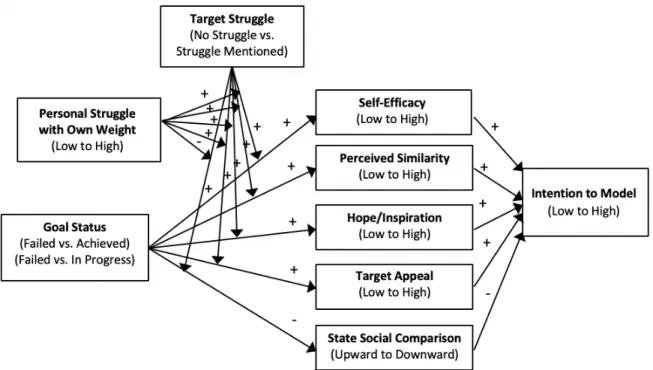
Figure 1 shows the hypothesized path from reading about a target’s weight-loss journey to intention to model the target’s behaviors. First, Hypotheses 1a , 1b and 1c (H1a, H1b and H1c) predict that when viewing social media posts about a target’s weight-loss pursuit, participants will have higher intentions to model goal-related behaviors (H1a: diet; H1b: cardio and H1c: yoga) when the target has achieved their weight-loss goal compared to when the target has failed to achieve their weight-loss goal. These hypotheses represent a direct effect of goal outcome on intention to model, which is not shown in Figure 1.
Hypotheses 2 and 3 reflect a proposed main effect of the outcome of the goal depicted in the target’s weight-loss journey on self-efficacy (H2) and social comparison (H3). Reading about goal success will predict higher levels of self-efficacy, compared to reading about goal failure. Goal success will predict upward rather than downward social comparisons, compared to goal failure.
Hypotheses 4 and 5 reflect a proposed interaction between a reader’s struggle with weight loss and the target’s depicted struggle with weight loss on perceived similarity (H4) and hope/inspiration (H5). Perceived similarity will be highest when a reader has experienced high levels of struggle and the target has also indicated struggle (a struggle match). Also, a reader will feel more hope/inspiration after reading about a weight-loss journey if that journey has indicated struggle and the reader has also experienced higher levels of struggle (again, a struggle match).
comparison are proposed to be mechanisms by which the social media post about weight loss impacts intention to model. I am adding hope as another potential predictor of intention to model, given that feelings of hope might make a person feel more open to considering another person’s behavior as successful or good. Therefore, these four variables are being tested as mediators, as shown in Figure 1.
Figure 1. Moderated parallel mediation model predicting intention to model: effect of goal status, goal pursuit and reader’s own struggle with weight loss (assessed prior to reading the social media content) on self-efficacy, perceived similarity, hope/inspiration, target appeal and state social comparison, and, indirectly, on intention to model.
Research question 2 (RQ2) introduces the idea that general positive feelings about a target might be, itself, a mechanism for intending to model behavior in a social media post. In other words, in addition to self-efficacy, perceived similarity, hope/inspiration, and social
comparison direction, there might be something about having a general positive feeling about the target from reading their post that also predicts intent to model. Therefore, RQ2 asks how will target appeal interact with intentions to model weight-loss strategies through the proposed mediators and in interaction with a reader’s personal struggle and the target’s depicted struggle?
engage in comparisons regardless of the content of a social media post (Dittmar & Howard, 2004; Myers & Crowther, 2009). Lower tendencies for social comparison should reduce any impact of the goal outcomes presented in the social media post on self-reported social
CHAPTER 2: STUDY METHODS
Design
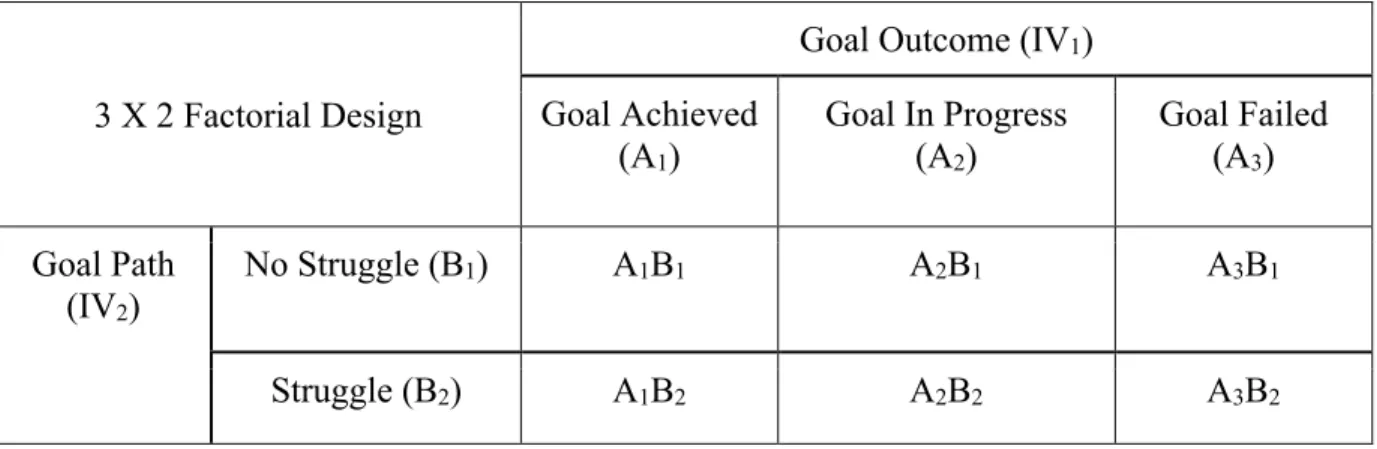
To investigate the effects of goal outcome (achieved, in progress, failed) and goal path (involving struggle or lack thereof) on intention to model goal-related behaviors through self-efficacy, perceived similarity, hope/inspiration, target appeal and state social comparison, Study 1 employed a 3 X 2 between subjects experimental design using a Qualtrics survey instrument to collect data from participants. Simulated Instagram posts about a woman’s weight-loss journey were created and used as stimuli in each condition. The simulated Instagram posts used the same photo but varying captions. After exposure to the post, all participants were shown the same screenshot of the target’s weight-loss plan. To improve external validity, Study 2 attempts to replicate the findings of Study 1 using simulated Instagram feeds (containing 4 posts) for each condition rather than singular Instagram posts. All procedures were approved by the University of North Carolina Institutional Review Board (February 2020).
Table 1. Study design.
3 X 2 Factorial Design
Goal Outcome (IV1) Goal Achieved
(A1)
Goal In Progress (A2)
Goal Failed (A3)
Goal Path (IV2)
No Struggle (B1) A1B1 A2B1 A3B1
Sample
Study 1. Two hundred participants who identified as female were recruited through Amazon Mechanical Turk (MTurk). Participants were paid $2 dollars for their participation. Participants who did not identify as female were excluded because the individual depicted in the study’s stimuli appears to be female in gender. Three participants were excluded from the sample because they indicated a gender identity that was not female (1 male and 2 trans women). An attention check was included towards the end of the Qualtrics survey. Participants were asked how they were feeling and were given various emotions as response options. They were instructed to ignore the question and select “None of the above.” Participants who failed the attention check (N=4) were excluded from the sample. As a result, 193 participants remained. The age of women in the sample ranged from 23 to 72, with a mean age of 41.01 (SD = 12.06). The distribution of worldwide Instagram users above age 45 is low (13%; Statista, 2020), and thus, participants who were above the age of 45 (37% across the two studies) were less likely to be familiar with the platform, which may have impacted their engagement with the stimuli. However, research has shown that older adults do turn to social media to engage with weight-loss information (Ballantine & Stephenson, 2011). Thirty-five percent of participants in a study about social support through the Weight Watchers Facebook page were above the age of 41 and results showed no differences by age in the type of social support sought from the site (high versus low informational/emotional support) and communication style exhibited (active versus passive) (Ballantine & Stephenson, 2011).
2007) to ensure that the sample size of 200 participants was sufficient to obtain a small effect size at Power = .80 and alpha at .05.
Study 2. Participants (N=200) were recruited and paid in the same manner. One
participant was excluded from the sample because they indicated a male gender identity. Three participants failed the attention check and were excluded from the sample. One hundred ninety-six participants remained. The age of women in the sample ranged from 22 to 73, with a mean age of 41.49 (SD = 12.02). Of these, 86.7% were White, 8.7% Black/African American, 4.6% Asian, 2.6% Latinx and 2.0% American Indian/Native Alaskan.
Procedure
Study 1. Participants followed the link to the Qualtrics survey from the recruitment post on Mturk. Then participants were directed to the consent form, which assured them that the study was completely anonymous and voluntary.
The first set of survey questions was used to determine individual differences in social comparison tendency and goal/weight orientation (goal setting, goal outcome, personal struggle level, goal self-efficacy in their goal pursuit, and attitudes toward diet/exercise behavior). Then, the participants were randomly assigned to one of six conditions. Participants were exposed to the Instagram post associated with their treatment condition. Next, participants were asked rate their feelings of hopefulness/inspiration, perceived similarity to the target in the Instagram post, the target’s appeal, and state social comparison.
self-efficacy for using each of the target’s strategies to achieve their own weight-loss goal. All participants were then asked about their intention to model the target's weight-loss related strategies to achieve their own weight-loss goal. Participants who did not currently have a weight-loss goal, were asked to imagine how they would rate their self-efficacy and intention to perform the target’s strategies if they currently had a weight-loss goal. Finally, participants completed a social desirability scale, demographic questions and were debriefed.
Study 2. Study 2 replicated the procedures in Study 1 with the exception that participants were randomly assigned to one of six Instagram feed conditions instead of Instagram post
conditions. Four Instagram posts were included in each feed. Each feed revolved around a single Instagram target (the same target as in Study 1). Two posts reflected the treatment condition (one post was the same as in Study 1), while the remaining two posts reflected positively valenced content and did not involve a goal (e.g. vacation, going to a concert).
A pilot test was conducted to assess the questionnaire design, measures and
manipulations for each study. Manipulation checks were conducted to ensure that the simulated Instagram posts and feeds looked realistic and that the captions and photos matched. Instagram posts/feeds were also evaluated in terms of the extent to which they conveyed goal pursuit (struggle or lack of struggle) and goal outcome (achieved, in-pursuit and failed).
Materials
Study 1. Six Instagram posts were created to reflect each of the six conditions of the experiment. The same public Instagram image was used in each condition (see Appendix B). A free Adobe Photoshop Elements Instagram template was used to create simulated Instagram posts with custom text (e.g. caption, handle, etc.). The image portrays a woman, who is
pants (see Appendix B). The captions beneath the photo reflected the status of the woman’s goal to lose weight and indications of struggle or no struggle during her weight-loss journey.
The goal achieved/no struggle condition post caption read: “I’ve achieved my weight-loss goal! I was able to resist temptations to overindulge in my favorite comfort foods: pizza, pasta and cookies. I made sure I had no excuses to skip my workout and always gave it my full effort and eventually I reached my goal.”
The goal achieved/struggle condition read: “I’ve achieved my weight-loss goal! Along the way, there were many moments where I was very doubtful that I could do it. On some days, I gave into temptations to overindulge in my favorite comfort foods, pizza, pasta and cookies, which made me feel terrible and discouraged. Or some days, I would find excuses to skip my workout or put in a fraction of the full effort. On many of these days, I felt like a failure and if I couldn't shake off feelings of hopelessness, the entire week was filled with attempts to motivate myself to get back on track. Even though it was always difficult to get back up, I chose to get back up enough times that I eventually reached my goal.”
The goal in progress/no struggle condition post read: “Working on reaching my weight-loss goal. That means resisting temptations to overindulge in my favorite comfort foods: pizza, pasta and cookies. Also, making sure I have no excuses to skip my workout and that I’m always giving it my full effort.”
feelings of hopelessness, the entire week is filled with attempts to motivate myself to get back on track. Even though it is always difficult to get back up, I try my best to do it.”
The goal failed/no struggle condition post read: “Well, I didn’t achieve my weight-loss goal. I resisted temptations to overindulge in my favorite comfort foods: pizza, pasta and cookies. I made sure I had no excuses to skip my workout and always gave it my full effort but wasn’t able to achieve my goal.”
The goal failed/struggle condition post read: “Well, I didn’t achieve my weight-loss goal. Along the way, there were many moments where I was very doubtful that I could do it. On some days, I gave into temptations to overindulge in my favorite comfort foods: pizza, pasta and cookies, which made me feel terrible and discouraged. Or some days, I would find excuses to skip my workout or put in a fraction of the full effort. On many of these days, I felt like a failure and if I couldn't shake off feelings of hopelessness, the entire week was filled with attempts to motivate myself to get back on track. It was always difficult to get back up and I tried my best to do it but I wasn’t able to reach my goal.”
After participants answered questions about perceptions of the target and
hope/inspiration, they saw a screenshot of the text portion of a second post that outlined the three strategies the target used/is using to lose weight (see Appendix B). This caption read: “My three weight-loss strategies: 1) Do yoga 1x or 2x per week, 2) Cut out “bad” carbs: pizza, pasta and dessert, from my diet and 3) Do a high intensity cardio workout 1x or 2x per week.”
Appendix B). The additional treatment image was a selfie that depicted the post author’s legs and feet from her point of view. Her sneakers and a foam roller rest next to her feet (see Appendix B).
The caption for the no struggle conditions read: “Finished my workout and managed to resist the plate of cookies on the counter. Went for some healthy snacks instead. And the weight-loss journey continues!
The caption for the struggle conditions read: “Feeling like my workout didn’t count for much since I gave into some ‘bad’ carbs that were tempting me afterwards. It’s frustrating because I reached for so many health snacks that should have satisfied me, but I still ended up eating cookies. I just don’t know if I have the self-control to lose weight. I’ll keep trying but it’s hard not to feel hopeless sometimes.”
Preliminary Measures Goal/weight orientation
• Goal setting. Participants were asked if they had ever set a weight-loss goal. Response choices were: Yes, within the last year (Study 1: 70.5%, N =136; Study 2: 69.7%, N = 138); Yes, over a year ago (Study 1: 24.9%, N = 48; Study 2: 21.7%, N = 43); No, never (Study 1: 4.7%, N = 9; Study 2: 7.6%, N = 15).
• Own goal importance. Participants who had ever set a weight-loss goal were asked how
important the weight-loss goal was to them (Study 1: M = 3.45; SD = 1.20; Study 2: M = 4.20; SD = 0.86).
• Attitudes toward diet/exercise behaviors. Participants were asked to rate their interest in the following diet and exercise behaviors on a point scale (1-Not at all interested to 5-Very interested): a) running (Study 1: M = 2.41, SD = 1.42; Study 2: M = 2.37, SD = 1.45); b) yoga (Study 1: M = 3.02, SD = 1.43; Study 2: M = 3.18, SD = 1.41); c) lifting weights (Study 1: M = 3.04, SD = 1.32; Study 2: M = 2.86, SD = 1.39); d) being on a diet (Study 1: M = 3.26, SD = 1.32; Study 2: M = 3.18, SD = 1.32).
• Own goal self-efficacy (confidence). Participants who had ever set a weight-loss goal were asked what their level of confidence was in being able to attain the goal on a 5-point scale (1 - Not at all confident, 5 - Very confident) (Study 1: M = 3.47, SD = 1.02; Study 2: M = 3.39, SD = 1.18). They were asked to think about the most recent time they set a weight-loss goal.
Social Comparison Tendency. This thesis used Strowman’s (1996) 8-item comparison-to-models questionnaire to capture social comparison tendency. This set of questions consisted of how often participants compare themselves to models (especially models who appear to match their gender identity) in media content in general, in terms of exercise habits and physical appearance, among other items on a 5-point scale. The wording of these questions was updated to reflect the variety of platforms that are currently used to access media content. This measure was used as a control measure to account for variance in the dependent measures due to
individual differences in the tendency to socially compare with others. The eight items were averaged to form a scale of social comparison tendency in Study 1 (Cronbach’s α = 0.89, M = 2.68, SD = 0.92) and Study 2 (Cronbach’s α = 0.91, M = 2.67, SD = 0.97).
(1-Strongly disagree to 5-(1-Strongly agree): a) are you always willing to admit when you make a mistake; b) do you sometimes try to get even rather than forgive and forget (reverse coded); c) are you always courteous, even to people who are disagreeable; d) are you always a good listener, no matter whom you are talking to. This scale was subsequently dropped from the analyses because the alpha level was below .80 (Study 1: Cronbach’s α = 0.691 and Study 2: Cronbach’s α = 0.716).
Dependent Measures
State Social Comparison. To understand how participants compared themselves to the target of the social media posts, participants were asked to indicate the type of comparisons they made based on experiences managing their weight, their appearance and their personality. Participants were asked how their experiences with managing their weight compared to those of the target on a 5-point scale (1-Much worse, 2-Slightly worse, 3-Neither better nor worse, 4-Slightly better and 5- Much better) (Study 1: M = 3.30; SD = 0.95; Study 2: M = 3.35; SD = 1.02). Scores below the midpoint of the scale (below 3) indicated an upward social comparison. Scores above the midpoint of the scale (above 3) indicated a downward social comparison. In Study 1, 17% made upward comparisons, 43% neutral (midpoint) and 40% downward. In Study 2, 17% made upward comparisons, 41% neutral (midpoint) and 42% downward.
neutral (midpoint) and 44% downward. In Study 2, 31% made upward comparisons, 15% neutral (midpoint) and 54% downward.
Lastly, participants were asked how appealing or not appealing their own personality was compared to the target’s personality (1-Much less appealing, 2-Slightly less appealing, 3-Neither more nor less appealing, 4-Slightly more appealing, 5-Much more appealing) (Study 1: M = 3.19, SD = 0.79; Study 2: M = 3.25, SD = 0.96). Scores below the midpoint of the scale (below 3) indicated an upward social comparison. Scores above the midpoint of the scale (above 3) indicated a downward social comparison. In Study 1, 13% made upward comparisons, 60% neutral and 27% downward. In Study 2, 16% made upward comparisons, 56% neutral (midpoint) and 28% downward.
Target appeal. Participants rated how likeable the target was on a 7-point scale (1-Very
Self-efficacy. To measure the self-efficacy in weight loss that participants felt after
seeing their Instagram stimulus, participants were asked what their level of confidence was in being able to use each of the target’s three weight-loss strategies (yoga, dieting and cardio) to achieve their own weight-loss goal on a 5-point scale (1 - Not at all confident, 5 - Very confident). Participants reported the following scores for each of the following weight-loss strategies: yoga 1x or 2x per week (Study 1: M = 3.01, SD = 1.47; Study 2: M = 3.04, SD = 1.38), cutting out “bad” carbs (pizza, pasta, dessert) (Study 1: M = 3.52, SD = 1.17; Study 2: M = 3.64, SD = 1.23), and a high intensity cardio workout 1x or 2x per week (Study 1: M = 3.01, SD = 1.47; Study 2: M = 3.31, SD = 1.30).
Hopefulness/inspiration. This measure comes from Prestin’s (2013) study and asked participants how inspired they felt on a 5-point scale (1- Not at all inspired to 5-Very inspired). The same scale was used to measure how hopeful participants felt. Hopefulness and inspiration were averaged to form a scale of hope/inspiration in Study 1 (Cronbach’s α = .84, M = 3.10, SD = 1.09) and Study 2 (Cronbach’s α = .88, M = 2.76, SD = 1.13).
CHAPTER 3: STUDY 1 RESULTS AND DISCUSSION
Study 1 Results
Manipulation Check – Goal Status. Participants were asked to indicate the goal status
of the woman in the Instagram post they viewed, based on their memory of the post. Participants who failed the goal status manipulation check (N=14) were either in the goal achievement conditions or the goal failure conditions, but not the goal in progress conditions. This also occurred in Study 2, which may reflect a systematic bias. Thus, participants who failed the goal status manipulation check were excluded from subsequent analyses and 180 participants
remained.
Manipulation Check – Struggle. An independent samples t-test revealed that
participants viewed the social media posts as conveying more struggle in the struggle conditions than in the no struggle conditions (MStruggle = 4.16, SD = .77 versus MNoStruggle = 3.49, SD = .84, t(178) = 5.59, p < .001, d = .83).
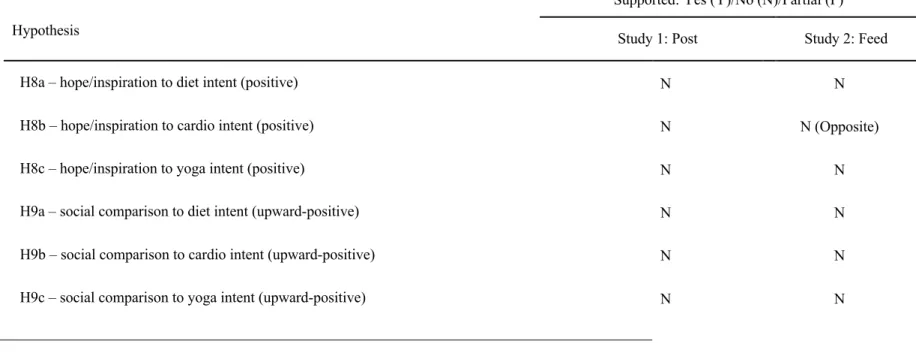
Hypothesis Testing. To test the hypotheses (Table 2, See Appendix C), a conditional process analysis was conducted to examine the hypotheses represented by the moderated mediation model in Figure 1. Specifically, Hayes’ PROCESS tool for SPSS (Hayes, 2013) was used to evaluate the model using ordinary least squares regressions. Indirect effects were estimated with 5,000 bootstrapping samples.
model was entered as the outcome variable (Y). Goal outcome was entered as the predictor variable (X) with the goal achieved and goal in-progress conditions as indicator groups and the goal failed condition as the reference group. Self-efficacy (relevant to the intention), perceived similarity, hope/inspiration, target appeal, and social comparison measures were entered as parallel mediators (M). Regarding self-efficacy, only the relevant self-efficacy measure specific to the intention (i.e., self-efficacy for diet, for cardio, and for yoga) was included in the model. Target struggle was entered as a moderator (W) of the relationship between goal outcome and each mediator, as well as on intention to model. Readers’ own struggle was entered as a second moderator (Z), interacting with target struggle to impact the effect of goal outcome on each mediator and on intention to model. (See Table 3 in Appendix C for bivariate correlations of Study 1 variables)
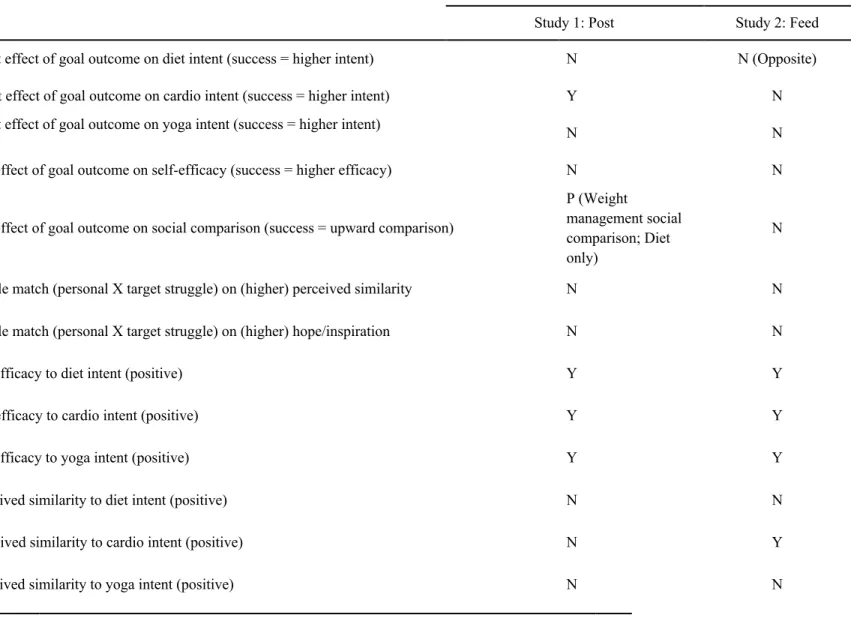
Intention to model diet. Figure 2 shows the results of the model predicting intention to model the target’s diet. Hypotheses 1a, 1b and 1c specified that after viewing the stimulus, participants in the achieved condition would have higher intentions to model the target’s weight-loss strategies (diet (H1a), cardio (H1b) and yoga (H1c)) than those in the failed condition. The final regression model predicting intention to model the diet strategy (Table 6, See Appendix C), where the goal failed condition serves as the reference group, indicates that the target’s goal achieved (versus failed), B = .18, SE B = .79, p = .816, did not predict participants’ intention to model the diet strategy. Therefore, H1a was not supported.
significant goal outcome (failure versus success) X personal struggle interaction predicted self-efficacy, which was not hypothesized.
There was a main effect of goal outcome (failure versus success) on social comparison of one’s weight management experience, B = -1.04, SE B = .47, p < .01. Goal achievement
predicted upward comparison of one’s weight journey, while goal failure predicted downward comparison. H3 was supported specifically for the weight management social comparison measure.
Bootstrapped (5000) confidence intervals include zero for index of moderated mediation and conditional moderated mediation by target struggle for all mediators.
Personal struggle did have an impact on perceived similarity (described in more detail below). However, the hypothesized match between personal and target struggle did not work to elevate perceived similarity, as the interaction between personal struggle and target struggle was not significant for this measure (Table 5, See Appendix C). H4 was not supported. Given no relationship between perceived similarity and intent, H7 was also not supported.
Neither struggle variable, nor the interaction between struggle variables predicted
hope/inspiration. H5 (which predicted the match in struggle would elevate hope/inspiration) was not supported. Likewise, hope/inspiration did not predict intent. Thus, H8 was not supported.
A three-way interaction between goal outcome (failure versus success), personal struggle, and target struggle (the match) was predicted to impact social comparison measures. Although goal outcome and personal struggle had main effects on some of the social comparison measures, as described below, no interactions emerged. Social comparison measures did not predict intent, and thus, H9 was not supported.
RQ1 regarding goals in progress and RQ2 regarding the role of target appeal are discussed in light of the remaining findings of the model as follows. First, there was no
significant effect of target appeal on intention to model the diet strategy. The initial regression predicting target appeal indicated that the interaction between target struggle and own struggle was not significant, B = -.05, SE B = .09, p = .538.
However, the interaction indicates that when the target’s goal is achieved (versus failed), higher levels of struggle and an indication of the target’s struggle (versus no struggle) will predict lower intention to model the diet strategy. This reflects the opposite relationship than was anticipated. The model shows direct effects of goal achieved (versus failed) on two mediators: weight management social comparison and perceived similarity (Table 5, See Appendix C). Goal in progress (versus failed) also had a direct effect on weight management social comparison. Personal struggle had direct effects on four mediators: perceived similarity (Table 5, See Appendix C), body social comparison, weight management social comparison and diet self-efficacy. Target struggle had no direct effects on any of the mediators. The covariate, interest in dieting, was a significant predictor of intention.
Diet self-efficacy was the only mediator that predicted intention to model the diet strategy, with intention to model increasing as diet self-efficacy increased. There was also a significant interaction between own struggle and goal achieved (versus failed) on diet self-efficacy (Table 5, See Appendix C).
The conditional indirect effects of goal outcome on intention to model diet through diet self-efficacy indicated that for goal achieved (versus failed), at high levels of personal struggle, diet self-efficacy increased. By contrast, the direct effect of own struggle on diet self-efficacy indicated a decrease in diet self-efficacy. The 5,000 bootstrapped confidence intervals for the moderated mediation model and conditional moderated mediation by target struggle included zero and, thus, were estimated to be nonsignificant. (Figure 2)
to model was lower in the goal achieved condition than the goal failed condition. The results also showed a significant three-way interaction between own struggle, target struggle and goal
achieved (versus goal failed). When the target struggle was mentioned and own struggle was high, intention to model the diet strategy was lower in the goal achieved condition than the goal failed condition. When target struggle was mentioned and personal struggle was low, intention to model was lower in the goal achieved condition than the goal failed condition. And when target struggle was not mentioned and personal struggle was at mid-levels, intention was also lower in the goal achieved condition than the goal failed condition.
There was also a significant negative relationship with intention to model for the interaction between own struggle and goal in progress (versus failed). As personal struggle increased, the goal in progress condition predicted lower intention than the goal failed condition.
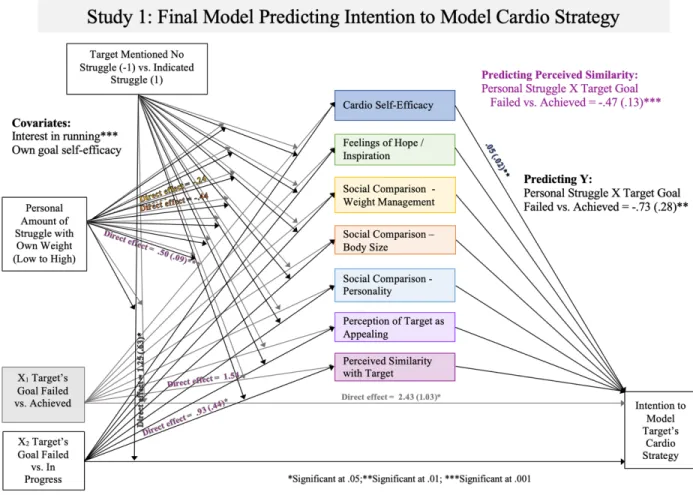
Intention to model cardio. Figure 3 illustrates the full model predicting intention to model cardio. The final regression model predicting intention to model the cardio strategy (Table 8, See Appendix C), where the goal failed condition served as the reference group, indicates that the target’s goal achieved (versus failed), B = 2.43, SE B = .69, p < .05, did predict participants’ intention to model. Therefore, H1b was supported.
Goal outcome (failure versus success) did not have a main effect on either self-efficacy or social comparison measures. H2 and H3 were not supported. However, the negative relationship between goal failed versus achieved and weight journey social comparison approached
intent to model cardio, which means H7, H8, and H9 were not supported. This also corroborates the diet findings.
Figure 3. Final model predicting intention to model the cardio strategy: R2 = .40, F(20,151) = 5.02, p < .001. Relative Conditional indirect effects of goal outcomes on intention to model: None. Bootstrapped (5000) confidence intervals include zero for index of moderated mediation and conditional moderated mediation by target struggle for all mediators.
Turning to the research questions and other findings, the final regression model
As Figure 3 illustrates, the model shows direct effects of goal outcome on the mediator, perceived similarity; goal achieved (versus failed) and goal in progress (vs failed). Personal struggle had direct effects on three mediators: weight management social comparison, body social comparison and perceived similarity (Table 7, See Appendix C). Target struggle had no direct effects on any of the mediators. However, target struggle had a direct effect on intention to model the cardio strategy such that the struggle condition predicted greater intention to model. The covariate, interest in running, was also a significant predictor of intention to model cardio.
Cardio self-efficacy was the only mediator that predicted intention to model the cardio strategy with intention increasing as cardio self-efficacy increased. However, there were no significant main effects or interactions predicting cardio self-efficacy.
When examining interactions directly predicting intention to model (Y), the results showed a significant interaction between own struggle and goal outcome. As personal struggle increased, goal achievement predicted decreased intention to model the cardio strategy, while goal failure predicted increased intention.
Intention to model yoga. As Figure 4 shows, the final regression model predicting intention to model the yoga strategy (Table 10, See Appendix C), where the goal failed condition served as the reference group, indicates that the target’s goal achieved (versus failed), B = .20, SE B = .79, p = .368), did not predict participants’ intention to model the yoga strategy. Therefore, H1c was not supported. There were also no significant interactions between goal achieved (versus failed), own level of struggle and target struggle on intention.
significance (p = .053). The hypothesized interaction between personal struggle and target struggle did not predict perceived similarity or hope/inspiration. H4 and H5 were not supported. Self-efficacy predicted intent to model, again supporting H6. However, the other hypothesized mediators did not predict intent to model cardio. H7, H8, and H9 were not supported.
Figure 4. Final model predicting intention to model the yoga strategy: R2 = .72, F(20,151) = 19.50, p < .001. Relative conditional indirect effects of goal failed vs. achieved on intention to model: Through yoga self-efficacy when target struggle = -1 and personal struggle = 2, B = 1.11, SE B = .38 (SE), CI95[.443, 1.95]; Through yoga self-efficacy when target struggle = -1 and personal struggle = 3, B = .78, .SE B = 25, CI95 [.332, 1.33]. Index of moderated mediation: Through yoga self-efficacy: B = .36, SE B = .13, CI95 [.106, .626]. Conditional moderated mediation by target struggle: Through yoga self-efficacy when personal struggle = 2, B = -.80, SE B = .26,CI95[-1.34, -.335]; Through yoga self-efficacy when personal struggle = 3, B = -.45, SE B = .16, CI95 [-.788, -.142].
Addressing RQ2, the final regression model predicting intention to model the yoga strategy (Table 10, See Appendix C) indicated that there was a significant effect of target appeal on intention to model the yoga strategy. Increased target appeal predicted greater intention to model yoga. However, there were no main effects or interactions of goal outcome, target struggle or personal struggle on target appeal.
Figure 4 shows that there were no main effects or interactions of goal outcome, target struggle or personal struggle on intention. The model shows direct effects of goal achieved (versus failed) on the mediator, perceived similarity. However, perceived similarity did not predict intention to model yoga. Goal in progress (versus failed) did not have any direct effects on the mediators.
Personal struggle had direct effects on three mediators: weight management social comparison, body social comparison and perceived similarity (Table 9, See Appendix C). Yoga self-efficacy predicted intention to model. Increased yoga self-efficacy predicted greater
Addressing RQ1, goal in progress did not play a role in this model. There were no significant main effects or interactions of goal in progress (versus failed) predicting intention to model the yoga strategy. Finally, the covariate, interest in yoga, was a significant predictor of intention to model yoga.
Study 1 Discussion
Study 1 tested the effects of the weight-loss goal outcomes depicted in singular Instagram posts on intention to model the target’s weight-loss strategies through the mediators of perceived similarity with the post author, state social comparison (of weight management experiences, body appearance and personality), target appeal, and feelings of hope/inspiration. Own struggle level with one’s weight-loss goal and mention of struggle (versus no mention of struggle) in the post were examined as moderators of the relationship between the target’s weight-loss goal outcome and each of the mediators as well as the direct relationship between goal outcome and intention to model.
First, it is important to emphasize that interest in these weight-loss strategies were significant predictors of all of the intention to model strategies in Study 1. In other words, what participants came to the table with in terms of their current weight-loss strategies and interests played a large role in determining their intentions.
Cognitive Theory, which predicts that observing positive role models will be more likely to lead to the adoption of the model’s behavior compared to negative role models. However, findings for the diet and yoga models are consistent with those of Lee and Shapiro (2016) that a story
character’s goal achievement does not directly predict intention to model diet related behaviors. Lee and Shapiro (2016) did find that as perceived similarity increased, intention to model increased when the target achieved their goal. However, perceived similarity did not predict intention to model in any of the Study 1 models.
For the diet strategy, personal struggle had a direct effect on self-efficacy (to use the weight-loss behavior to achieve one’s own goal). The more personal struggle one had with weight-loss, the lower one’s self-efficacy related to the target’s diet strategy. However, there was no relationship between personal struggle for cardio and yoga.
Study 1 also revealed some support for the predicted effect of goal outcome on social comparison. Achieved goals predicted upward weight journey comparison in the model predicting diet, while failed goals predicted downward comparison. Further, goal outcome (failure versus success) approached a significant negative relationship on weight journey comparison for the cardio and yoga models. Overall, the average weight journey social comparison was negative for the achieved conditions (M = -.15 SD = .97) and positive for the failed conditions (M = .66, SD = .91). This reflects Social Comparison Theory’s argument that upward comparisons occur in response to others perceived to be superior and downward
comparisons made up 36% to 60% of the social comparisons made (43% weight journey; 21%, body; 60% personality). Some neutral comparison might reflect a social desirability bias where participants believe it is socially acceptable to refrain from labeling the target as worse off in some way. The social desirability measures that were to be used in both studies did not produce a reliable scale and were thus, dropped from the analyses. Although, 40-44% were not afraid to downwardly compare themselves to the model with respect to weight journey and body size comparisons.
Study 1 tested the prediction that when a participant’s own levels of struggle matched the target, they would rate their similarity with the target higher after reading the post compared to participant’s whose struggle level did not match that of the target. Research around Social Cognitive Theory has suggested that a target whose background is similar (e.g. in terms of hometown, interests and clothing) will increase perceived similarity and, in turn, modeled behaviors (e.g. Schunk, 1987). However, the participant and target alignment of struggle with weight-loss did not predict perceived similarity. It is possible that participants weigh explicit target traits (e.g. skin color, body type, etc.) more heavily in their evaluation of the similarity of a target.
The three models predicting intention all produced an interaction between goal achieved (versus failed) and personal struggle on perceived similarity. As personal struggle increased, goal achievement (versus failure) predicted lower perceived similarity regardless of whether or not struggle was mentioned in the post. It appears that whether or not a social media author
whereas both goal achieved conditions may implicitly or explicitly convey struggle as having happened in the past. And thus, participants high in struggle may relate more to the author in the failure condition and those low in struggle may relate more to the author in the achievement condition. Assumed or anticipated struggle may characterize the failed/no struggle condition in the participant’s eyes leading participants high in struggle to, again, relate more to the author in the failed condition, while participants low in struggle relate more to the lack of struggle
conveyed by the author in the achievement condition. It should be noted that the author’s caption in the no struggle condition mentioned easily avoiding or tackling obstacles. The
acknowledgement that obstacles were present at all could suggest that the author omitted their struggle or struggled in the past rather than not having struggled at all.
The match between participant struggle and target struggle did not predict
hope/inspiration and nor did target struggle itself. The underdog literature found that struggle in underdog film narratives (versus comedy, nature scenes or no media) predicted hope and
inspiration above and beyond goal outcome (Prestin, 2013). However, the 5-minute film clips are substantially different stimuli from the social media posts/feeds in this study in terms of length, detail and complexity of their narratives and the explication of the obstacles within them, among other elements. Thus, brief exposure to a social media post with a shorter, potentially less
detailed narrative may do little to elicit these feelings.