Supplements
Who needs them?
A Behind the Headlines report
Foreword
Millions of us take vitamins and dietary supplements hoping to achieve good health, ease
our illnesses or defy ageing. Recent years have seen a massive boom in supplement use as
products that were once the preserve of specialist health food stores have become available
alongside our groceries in the supermarket and on the internet. As availability has grown,
so have sales. In 2009 the UK market for dietary supplements and vitamins was worth more
than £670 million.
However, the huge range of dietary supplements now available makes the area something
of a minefield for consumers. Take a browse through the stocks of the UK’s leading
supplement suppliers and you will find hundreds of products ranging from acai capsules to
zinc, with everything from devil’s claw to royal jelly between. Even individual supplements
can come in a range of doses and a number of different formulations, making it hard to
know what is worth taking and what isn’t.
The Behind the Headlines team has tackled numerous studies on supplements and during
our work it has become clear that the widely perceived benefits of certain supplements
simply do not have enough robust evidence to support them. At times, these misconceptions
appear to have been formed due to press coverage, at other times because of the way some
products are marketed or because of the sheer volume of misinformation floating around on
the internet.
So how do we know which dietary supplements we should take, whether they work and
whether they’re safe? Where should we be going for reliable information? In this report we
hope to make sense of some of these issues surrounding dietary supplements, and also to
look at a selection of evidence on some of the most popular supplements in use today.
Contents
Overview
What are dietary supplements? What’s the industry worth? Who takes supplements and why? Supplements market share chart Should we be taking supplements? How are supplements regulated? Herbal remedies
What claims can supplements make?
Vitamin supplements
Who needs vitamin supplements? Vitamins as antioxidants
What can vitamin supplements really do? Vitamins for fertility
Can supplements be harmful? Key points on vitamins
Weight-loss supplements
So do they live up to their claims? Are weight-loss pills safe?
Safe, proven ways to lose weight
Key points about weight-loss supplements
Supplements for colds
Vitamin C Zinc Echinacea
Key points about cold supplements
The ageing population: ginkgo, ginseng and glucosamine
Ginkgo Ginseng Glucosamine
Key points about ageing supplements
Fish oils
Fish oils for adults Fish oils for children The risks of fish oils Key points about fish oils
Body building
Do the products work and are they safe? The risks of protein supplements
Other products
Key points about body-building supplements
Conclusion
Why do we take supplements if they are unproven? Are supplements worth the money?
Supplement your knowledge
References
1
1 2 2 3 4 5 6 7
8
8
9
9
10
10
10
11
11 12 13 14
15
15 16 16 17
18
18 19 20 21
22
22 23 24 24
25
25 26 26 27
28
28 28 29
Overview
In this report, NHS Choices and Bazian have attempted to examine both individual supplements and the culture that surrounds supplements as a whole. Given the breadth of the topic it shouldn’t be seen as a definitive review of their merits, but we do hope that it will encourage people to be more discriminating in the way they choose supplements and, ultimately, look after their health.
The Behind the Headlines service reviews two health news stories each day, looking at whether media claims match the research, as well as the strengths and weaknesses of the scientific
studies themselves. We have found that dietary supplements, which are used by millions of people each year, are a popular topic for news stories, but that the claims the media makes aren’t always supported by the underlying research. Also,
contradictory conclusions about a supplement will sometimes be published in the press within a short space of time, adding to the public’s confusion. Supplements are clearly popular, but it’s hard to know what to believe. Are the claims made about supplements supported by robust evidence? Are we wasting our money? Are we putting our health at risk? The answers to these questions are not clear-cut, particularly as there are hundreds of different products on the market. However, in this report we have consulted some of the most robust evidence on some big-selling supplements to help consumers make their own minds up, as well as
“Dietary supplements contain vitamins,
minerals, herbs or plant material. They
can be found in pill, capsule, tablet or
liquid form and are used to supplement
(add to) the diet, but they should not be
considered a substitute for food,” World
Cancer Research Fund
1presenting some news coverage of research to illustrate the complexity of the messages they can be faced with.
We start with an overview of dietary supplements, covering what they are, whether we need them and how they’re regulated. There you’ll also find a summary of the size of the industry from data collected about the market in 2009. We then address some commonly used supplements: vitamins, weight-loss supplements, supplements for colds, supplements commonly used by the elderly, fish oils and body-building supplements. In each section we have tried to provide some background on each supplement, discuss any official recommendations on these products and highlight their market share. We have also alerted readers about the known side effects of supplementation and provide links to further reading and guidance if you are considering taking them.
Importantly, we highlight key pieces of evidence that have come to light through the Behind the Headlines projects. While this report is not based on our own systematic searches and appraisals of all available studies (a process that can take hundreds of hours for just a single supplement), we have tried to find pieces of evidence that have carried out this kind of systematic search and appraisal in the Cochrane Library – a well-respected repository of high-quality systematic reviews.
What are dietary supplements?
As their name implies, dietary or nutritional supplements include any consumed products that aim to supplement the diet and provide additional nutrients that may be missing from it, or aren’t
being consumed in sufficient quantities. Today’s supplements contain not just vitamins and minerals, but herbs, amino acids, enzymes, fibre and fatty acids. They also come in a variety of forms, including traditional tablets, capsules, powders, drinks and supplement bars. They can be found in supermarkets, pharmacies, health food shops and, of course, on the internet. Many supplements are actually classified as foods rather than medicines and so don’t have to go through the usual checks and regulations a medicine would go through for safety and efficacy (how well it works) before being put on the market. They are covered by the Food Safety Act and should not be harmful to health.
Other supplements are classified and regulated as medicines because of their reported effects and methods of use. This means that different products that contain the same main ‘active’ ingredient may actually have different classifications, with some classed as foods and others as medicines.
What’s the industry worth?
The supplements market is growing. In 2009, sales of vitamins and dietary supplements in the UK totalled £674.6 million, a growth of about 16% over the previous five years2, with the two
biggest-selling areas being multivitamins (£138.6 million) and fish oils (£139.1 million). These figures relate to products specifically labelled ‘dietary supplements’ and ‘vitamins’. They exclude the categories ‘child-specific vitamins and dietary
Who takes supplements and why?
People take supplements for all kinds of reasons, usually relating to their health. They hope these will boost vitality, limit the signs of ageing, extend life, cut the risk of chronic disease such as cancer and treat specific ailments such as arthritis. According to research by the Food Standards Agency (FSA) in 20083, nearly a third of people in the UK take some
vitamin, mineral or dietary supplement on most days, and about 15% of us report having taken a “high dose” supplement in the last 12 months. The main reason we take supplements is for our general health and wellbeing.
Market data suggest that joint health is a major aspect of wellbeing, accounting for 36% of all supplements sales in 2009. Products that target health of the heart, bones and immune system are also popular, as shown below2.
supplements’ and ‘nutritive drinks and tonics’. The graph overleaf uses the same figures to show the big sellers of 2009.
There’s a large and bewildering range of products available, not just vitamins and minerals but substances as varied as bee pollen, ginseng, garlic, green tea, omega-3 fatty acids and resveratrol. Many supplements contain obscure, exotic substances that it’s hard to find out about, and every so often newspapers will feature a story on some new wonder pill or ancient remedy that has now made its way to the UK market. According to industry reports, this growth in sales and new products is being driven by the UK’s ageing population (15% of us are 65 or older), a more health-conscious public and easier availability due to the internet and the growing number of retail outlets stocking supplements.
Supplements can be expensive
Targets of supplement use (%age of 2009 retail value)
Vitamins and dietary supplements in the UK, Euromonitor International 2010
V
as clear-cut as you might imagine. There are, of course, certain vitamins, minerals and other nutrients that are essential for keeping the body functioning, but experts agree that most people can get enough of these nutrients from eating a balanced diet and, in the case of vitamin D, from getting enough sunlight. On the other hand, there is good evidence that certain vitamin supplements may be beneficial to the health of certain groups of people, such as the elderly, pregnant women and children between six months and five years old. In other cases, people may be taking supplements for specific health reasons, for example, using glucosamine in a bid to protect their joints. In this FSA research3 found the following:
• women are more likely than men to take supplements
• older people and people in poorer health are also more likely to take them
• the market is not exclusively for adults, with just over half of households with children (52%) saying they currently give them a vitamin or mineral supplement • nearly a fifth of households giving their
children supplements give them the adult version
Should we be taking supplements?
There is not a straightforward yes or no answer to this question, both because of the range of products available and because an individual’s circumstances will govern whether they would benefit from using a particular supplement. For example, even with popular, well-known products such as multivitamins things are not
The British Nutrition Foundation advises
anyone concerned about whether their
diet is providing enough nutrients to
discuss this with a health professional. It’s
always a good idea to talk to your GP or to
a registered dietitian if you’re considering
supplementing your diet. They can give
you advice about whether supplements
will have health benefits for you in your
particular circumstances
particular case the most comprehensive evidence reviews to date suggest that there is no overall benefit, and bodies such as the National Institute for Health and Clinical Excellence (NICE) do not recommend its use. However, there are certainly still plenty of people buying glucosamine, and in these cases it’s best that this personal choice is made in an informed way, with knowledge about what the evidence says and any potential harms. At the other end of the scale some supplements sold over the internet, such as certain herbal weight-loss products, have been found to contain banned substances that carry a significant risk to health4. It’s clear that in these cases nobody should
be taking these dangerous products.
In short, there is no easy answer to the question of whether we should be taking supplements, but what is clear is the need for people to know what they are taking, to know whether it is likely to help and to know whether it is likely to harm.
How are supplements regulated?
Depending on how a supplement is classified it will be subject to different regulation. Below is a flowchart originally produced by the Government Chemist to show broadly how supplements will be classified5. There are numerous regulations and
considerations behind classifying each supplement, so it should only be considered to be a very
generalised overview of the process. Product
Does it have a marketing authorization? Is it presented for
treating or preventing
disease?
Can it be administered to
humans for restoring, correcting,
or modifying physiological function?
Product is food, not medicine. Food Safety Act
applies.
Is it concentrated source of vitamins,
minerals or other substances with a
nutritional or physiological effect?
Is it sold in dose form?
Product is a Food Supplement. Food Safety Act and Food Supplement Regulations
apply Product is a
medicinal product. Medicines legislation
applies. Food Safety Act does not
Product is a food. Food Safety Act
applies Medicines legislation
applies. Food Safety Act
does not.
Does it contain herbal substances
and/or herbal preparations?
Are other active ingredients
present?
Product is a herbal medicinal
product
N
N
N N
N
N
Y Y
Y
Y
Y Y
Y
N
The Government Chemist provides advice to Government and industry, applying sound
analytical science in the public interest and acting as the referee in cases of dispute.
As illustrated in the chart, in the UK certain supplements are considered to be foods and will therefore be regulated under general food laws by the Food Standards Agency and Department of Health. Others will be regulated as a medicine by the Medicines and Healthcare Regulatory Agency (MHRA).
Before a medicinal product can be marketed it must be approved by the MHRA, which makes its decision based on the product’s safety, quality and efficacy6.
If a supplement is considered to be a food, that does not mean it is unregulated, rather that it is subject to food safety laws, which are not as stringent as those for medicines.
There is also EU legislation that dictates which vitamins and minerals can be included in supplements7,8,9. Dietary supplements should
only be made with vitamins or minerals that appear on an approved ingredient list. While such measures are an attempt to oversee which substances supplements contain, many also include other active ingredients that can have biological effects in the body. These may make them potentially unsafe as their ingredients can interact with licensed medicines or with other supplements. Ginkgo biloba, for example, interacts with antidepressant, anticonvulsant, antiviral and blood-thinning medications (e.g. warfarin). The effects can be undesirable and even dangerous.
Herbal medicines
The way that some herbal products are regulated has recently changed. As of April 30 2011 all herbal medicines placed on the UK market must have a Traditional Herbal Registration (THR)10 or
a marketing authorisation (previously known as a product licence). The MHRA now defines individual herbal medicines as either registered traditional herbal medicines or licensed herbal medicines.
• Registered traditional herbal medicines
These products are required to meet
specific standards of safety and quality and be accompanied by a list of ‘indications’
(medicinal uses). These agreed indications must be based on a history of traditional usage, and patients should also be provided with information on the safe use of the product. These products can be identified by a THR number on their label and a special logo.
• Licensed herbal medicines
Some herbal medicines in the UK hold a product licence or marketing authorisation just like any other medicine. These are required to demonstrate safety and quality, and they must be accompanied by the necessary information for safe usage. These products can be identified by a distinctive nine-digit product licence (PL) number on the product container or packaging which is prefixed by the letters PL.
Although this new legislation – the EU Traditional Herbal Medicines Products Directive (THMPD) – has come into force, consumers may still find unlicensed herbal medicines available for sale that do not feature written claims. This is due to legislation that stipulates a seven-year transitional period whereby products legally on the market prior to 2004 could continue to be placed on the market until 2011. These products will not be taken off the shelves, instead they can continue to be sold legally, although stock can no longer be replenished. The MHRA points out that the standards of these unlicensed medicines can vary widely, and that these products have not been assessed by the MHRA for quality and safety purposes11.
Herbal products and supplements marketed as foodstuffs will continue to be regulated as foods. For more detailed information on the THR scheme, THR numbers and herbal medicines, see the MHRA website (www.mhra.gov.uk).
What claims can supplements make?
We’ve all seen the claims made by supplement manufacturers for products that “maintain the immune system” or “keep joints healthy”. But how can we tell whether they are backed up by proper scientific research? If manufacturers of supplements claim that their product treats or cures conditions, they are generally considered to be medicinal and therefore subject to regulation by the MHRA. If a supplement has not been given marketing authorisation as a medicine by the MHRA, it should not be making claims that the product treats or cures conditions. However, they can make claims that their product only maintains a function (e.g. “maintains bone function”) and still be governed by food laws. Which?, the well-known consumer review association, is concerned that people are being “taken for a ride” by some claims made on supplement packaging and wants health claims about supplements to be backed up by evidence12.
The reality is that, at present, the public can have great difficulty telling which, if any, of the health claims made by supplement manufacturers can be supported by firm evidence.
There is EU legislation controlling the use of nutrition and health claims, which requires all claims to be assessed and authorised at EU level. The European Food Safety Authority (EFSA) has looked at the science behind the health claims of thousands of different supplements, to see if they stand up. According to Which?12, out
of the thousands that have been checked so
“I deal with many patients who are led by
clever marketing or packaging to spend
huge amounts of money on so-called
‘health’ supplements and products for
which there is no evidence, and which
do nothing at all,” Michael Lean,
professor of human nutrition,
University of Glasgow.
far, it has turned down roughly 80% of these claims. No-one is able to act on the conclusions of this research yet, as the scientific assessments have to be voted on by EU member states, but, eventually, manufacturers will be forced to remove all unsupported health claims from their marketing.
There are, of course, advertising guidelines that apply to products such as supplements, and the Advertising Standards Authority (ASA) has taken action against false or misleading adverts in this area, asking companies to edit or remove inaccurate claims under its industry self-regulation scheme. The ASA can also report un-cooperative and persistently misleading advertisers to the Office of Fair Trading.
However, misleading supplement advertising still occurs, with a 2008 audit of internet marketing conducted by the ASA finding that 28% of adverts for health and beauty products failed to satisfy guidelines13. The audit also found that
when searching for the term “slimming”, for example, one in three sponsored search engine results were in breach of regulations. The ASA said that users searching for the term “slimming” were likely to be presented with search results featuring “problematic claims for slimming pills”.
Buyers should be cautious when choosing supplements
Vitamin supplements
Vitamins are vital, but are vitamin pills?
The body needs vitamins in order to function properly and maintain health, but, despite their vital importance, the body only needs them in minute amounts. We need 13 vitamins to maintain health – vitamins A, C, D, E, K and the eight B vitamins. Each has specific functions in the body: vitamin C helps to keep cells healthy, vitamin A is good for eyesight and healthy skin, vitamin D helps to regulate calcium and is essential for strong bones and teeth, and vitamin E is needed to maintain cell structure. With a few exceptions (niacin and vitamin D), our bodies cannot make these substances, meaning we need to obtain them from other sources such as food. If you have low levels of certain vitamins, you may develop a deficiency disease. Too little vitamin D, for example, could lead to rickets in children.
more than £18 million on vitamin B products. There are clearly plenty of people buying vitamin supplements but, surprisingly, only certain groups are considered to benefit from taking them.
What’s the best way to get enough vitamins?
The best way for most of us to get enough vitamins is to eat a varied and balanced diet. This includes plenty of fruit and vegetables; plenty of starchy foods, such as bread, rice, potatoes, and pasta; some milk and dairy foods; some meat, fish, eggs, and beans and other non-dairy sources of protein. Foods and drinks high in fat and/or sugar should be kept to a minimum. Vitamin D is an exception here. A small amount is obtained through diet but most of this vitamin is made under the skin when it is exposed to sunlight.
The Department of Health set Dietary Reference Values (DRVs) for the UK population (in 1991). DRVs provide information on the amount of energy and nutrients including vitamins and minerals that a group of people of a certain age range (and sometimes sex) needs for good health. DRVs only apply to healthy people.
Dietary supplements and certain foods therefore carry labels denoting the percentage of the
Recommended Daily Allowance (RDA) contained in the product14. RDAs are based on the DRVs and are
used across all European countries. RDAs have a few differences from DRVs and are used only for food labelling purposes.
Behind the Headlines stories on vitamins: • Vitamin D immune system boost?,
March 8 2010
• Vitamin B12 and brain volume, September 9 2008
• Vitamin E linked to physical activity, January 24 2008
• Vitamin C jabs and cancer, August 5 2008
Who needs vitamin supplements?
Certain groups at risk of deficiencies should use supplements15:
• all pregnant and breastfeeding women should take vitamin D supplements Vitamin pills are very popular. Along with
fish oils, they dominate the supplements market, with consumers spending nearly £208 million on vitamin supplements in 20092. Nearly £139 million of this amount was
spent specifically on multivitamins, nearly £36 million on vitamin C products (the most popular single vitamin supplement on the market) and
The UK vitamin market (£million) in 2009
Vitamins and dietary supplements, Euromonitor International 2010
RDAs for vitamins and minerals in the EU
Vitamins RDA Minerals RDA Vitamin A 800 µg Calcium 800mg Vitamin D 5 µg Magnesium 375 mg Vitamin E 12 mg α-TE Iron 14 mg Vitamin K 75 µg Copper 1 mg Vitamin B1 1.1 mg Iodine 150 µg Vitamin B2 1.4 mg Zinc 10 mg Niacin 16 mg Manganese 2 mg Pantothenic acid 6 mg Potassium 2000 mg Vitamin B6 1.4 mg Selenium 55 µg Folic acid 200 µg Chromium 40 µg Vitamin B12 2.5 µg Molybdenum 50 µg Biotin 50 µg Fluoride 3.5 mg Vitamin C 80 mg Chloride 800 mg
Pregnant women benefit from certain supplements
• women trying to conceive and women in the first 12 weeks of their pregnancy are recommended to take folic acid
supplements, which reduce their child’s risk of neural tube defects such as spina bifida. • people aged 65 and over should take
vitamin D supplements
• people with darker skin and people who are not exposed to much sun should take vitamin D supplements
• all children aged six months to five years should be given a supplement containing vitamins A, C and D
• Your GP may also recommend supplements if you need them for a medical condition If you fall outside of these groups and buy vitamin pills then the chances are that you will be spending your money on surplus amounts of vitamins you’ve already gained through your diet.
Vitamins as antioxidants
While it has been known for some time that most people can meet their daily requirement of vitamins through their diet, in recent years there has been particular interest in supplements that will provide high doses of antioxidant vitamins. Antioxidants have become a bit of a buzzword in recent years, with all sorts of products proclaiming that they are a good source of antioxidants.
Of course, this raises the question ‘what exactly is an antioxidant?’ In basic terms an antioxidant is a substance that can interfere with the chemical process of oxidation, in which an atom or molecule gives electrons to another substance. While this
may sound a bit complicated, the basic theory is that unstable atoms or molecules called free radicals need extra electrons and will ‘steal’ these from other molecules in the cell, oxidising them and leaving them in need of extra electrons themselves. This can start off a chain reaction and damage cell components, and this damage accumulates with ageing. Antioxidants are capable of safely donating electrons to free radicals
without becoming free radicals themselves. They can therefore fight the “oxidative stress” caused by excess free radicals, which has been implicated in diseases including cancer and heart disease16.
Several lab-based studies have indeed shown that certain vitamins can “mop up” these free radicals and fight oxidative damage. They include vitamins A, C and E (as well as selenium, a trace element). Several observational studies have also shown that a higher intake of antioxidant-rich fruit and vegetables is associated with a reduced risk of chronic disease. These findings have led to claims that antioxidant supplements can slow ageing, reduce the risk of chronic disease and reduce the risk of dying early.
What can vitamin supplements really do?
An extensive review by the respected Cochrane Library (published in 2008) assessed trials
comparing the effects of a range of vitamins (as well as selenium) on death rates17. It was one
of the biggest reviews of the effects of vitamin supplements on mortality to date, pulling in the results of 67 trials and data on more than 232,000 people. Despite the seemingly plausible mechanism, the results do not provide the reassurance that many taking antioxidant vitamins would wish to hear.
The study found no reduction in mortality in people who took antioxidant supplements, either in
healthy people or in those with diseases. Separately, the results on vitamins A and E and beta-carotene suggest that they may even increase the risk of death (although these results only just reached statistical significance). On the basis of these results the reviewers call for further trials to be “closely monitored” for potential harmful effects.
The findings are also leading to a rethink about free radicals, with the Cochrane researchers saying that by eliminating free radicals from the body,
Key points on vitamins
• Most of us can get all the vitamins we need from a balanced diet.
• Pregnant or breastfeeding women, children aged under five years and some adults do benefit from taking certain supplements. For more information, see NHS Choices: Do I need vitamin supplements?
• Vitamin supplements should not be used as a substitute for a balanced diet. If you do take them, make sure you do not exceed your daily requirement.
we may be interfering with essential “defensive mechanisms”. Indeed, the process of oxidation is part of numerous chemical reactions in the body, and there is some scientific debate over whether taking huge doses of antioxidants might upset the natural balance of these reactions. As with all research, there are important points to note about the scope of this review. It only looked at mortality, not effects on health, and most of the trials in the review used high-dose supplements, so the findings may not apply to low-dose vitamins or to the antioxidants found in food as part of a normal diet. Still, it does show that the antioxidant issue is complex and, given the results of this research, it would seem sensible for most of us to rely on a balanced diet for our intake of antioxidants.
Vitamins for fertility
Then there is the question of fertility. There have been some theories that antioxidants can aid conception. Earlier this year the Cochrane subfertility group performed a review examining the effect of antioxidant supplements, such as vitamin E or zinc, on male subfertility18. The
review, which included 34 studies in just over 2,800 couples, showed that a woman was more likely to have a pregnancy or live birth if her partner took an antioxidant supplement.
These results are certainly more positive, but it’s important to put these results into perspective. The reviewers themselves said that more research is needed, particularly relating to the findings on live births, which came from only three trials featuring a total of 214 couples. We also don’t know from this research which particular antioxidant, if any, might be most effective, or at what dose.
“Antioxidants need to be considered
medicinal products and should undergo
sufficient valuation before marketing,”
Goran Bjelakovic, lead author, Antioxidant
supplements for prevention of mortality
Can vitamin supplements be harmful?
It could be construed that taking vitamins can’t really do any harm. People may believe that at most they will lose some money. Although the doses of vitamins and minerals found in most supplements are thought to be safe,
very high levels can be harmful and you are likely to experience some harms if you take vitamins in large amounts over long periods of time. For example, beta-carotene, which is turned into vitamin A by the body, has been found to increase the risk of lung cancer in heavy smokers and in people who have been heavily exposed to asbestos. High levels of niacin (vitamin B3) can cause skin flushes in some people. Too much vitamin B6 can lead to loss of feeling in the arms and legs. Levels of vitamin C above 1,000mg a day can cause abdominal pain and diarrhoea. Safe upper limits of many vitamins and minerals have been set by the Food Standards Agency and can be found in their 2003 report19.
It’s also worth bearing in mind that vitamins are either water soluble or fat soluble. Those that are water soluble – the eight B vitamins and vitamin C – are used rapidly by the body, and the excess is excreted rather than stored. High-dose supplements containing water-soluble vitamins could well be a waste of money as you could literally end up flushing their expensive contents down the toilet.On the other hand, fat-soluble vitamins – A, D, E and K – are stored in the liver and fat tissues. Amounts in excess of what is needed are more likely to accumulate in the body and could lead to hypervitaminosis (vitamin poisoning). “Excessive amounts of vitamin A can have side effects such as abdominal pain, weight loss, vomiting, blurred vision, irritability and headache” says Emma Williams, nutritional scientist with the British Nutrition Foundation.
Weight-loss
supplements
Shedding Ibs or shedding £s?
Obesity is one of the most serious health issues in the UK. In England alone, more than one-third of adults are overweight and nearly one-quarter obese, with obesity rates predicted to rise by 60% over the next 40 years20. It’s widely recognised that
obesity is linked to major health problems such as heart disease, type 2 diabetes and some cancers. Beyond the important health implications, being overweight can also be a source of unhappiness, particularly if nothing seems to help shift that extra weight.
Given the unfortunate fact that it’s generally much easier to gain weight than it is to lose it, it’s not surprising that growing numbers of people are turning to over-the-counter slimming supplements and internet wonder pills. There are dozens, if not hundreds, of heavily marketed weight-loss products that claim to contain herbs or natural substances that work by mechanisms such as speeding up the metabolism (the rate at which the body burns calories), blocking the absorption of dietary fat in the body (“fat magnets”) or promoting feelings of fullness.
Even if you don’t really believe the claims, it’s easy to get drawn into the “Wow! I feel great!” captions, the celebrity endorsements and the before-and-after transformations showing how in just 60 days some glum, pale, overweight person has transformed into a trim, happy individual with a cheesy grin and a pair of jeans that are now 10 sizes too big.
And indeed, lots of us do end up taking the
plunge, reasoning that for a small outlay we might transform our bodies and our lives, and that at worst we will lose a bit of money if our pills don’t work. Well, unfortunately there is little evidence for some of the products sold by reputable retailers and, worse still, many of the “guaranteed, clinically
Am I overweight?
Adults are defined as being overweight
or obese using a measure called the body
mass index (BMI). It is a way of assessing
whether your weight is appropriate for
your height by calculating the ratio of
your mass (your weight in kilograms)
to your height (in metres squared).
The following table categorises weight
according to BMI:
Classification BMI (kg/m2)
Healthy weight 18.5-24.9 Overweight 25-29.9
Obese 30+
Check your own BMI using the BMI
calculator on the NHS Choices website
So do they live up to their claims?Manufacturers often cite ‘clinical trials’ to prove that their products work. However, many of these manufacturer-led studies are of poor quality, and independent research often finds that products simply don’t live up to these claims. For example, a recent, well-conducted systematic review attempted to make an independent assessment of the
evidence behind popular weight-loss supplements21.
It gathered together all published reviews on individual weight-loss supplements, finding nine that had assessed popular products such as bitter orange, calcium, green tea, guar gum and chitosan. None of these existing systematic reviews had found good evidence that they offered clinically relevant effects without undue risks.
proven, 100% natural weight-loss pills” sold over the internet come with no guarantees, have no evidence behind them and could be packed with potentially harmful substances.
The slimming products industry is vast: according to the British Nutrition Foundation sales of over-the-counter slimming products topped £900 million in 2009 in Western Europe alone.
11
Even if much of the more reliable research out there suggests that many popular weight loss supplements are unlikely to work, people may be swayed by guarantees that they will get results from a particular product. For example, weight-loss supplements are advertised on the internet
Potential problems such as heart palpitations, stomach pain and throat blockage are not particularly pleasant, and these are just those associated with herbal products being sold legitimately. The Medicines and Healthcare Regulatory Agency (MHRA), which is responsible for ensuring that medicines work and are
acceptably safe, frequently issues warnings about some products being sold on the internet as herbal slimming aids. These are often presented as “100% natural” or completely safe, but testing has revealed that some contain undeclared
pharmaceuticals, banned substances or toxic ingredients that pose a serious risk to health4.
“Manufacturers cherry-pick and only ever
mention the positive trials … they then also
fail to mention the mostly poor quality of
their studies. Desperate people are being
misled to buy unproven treatments at
considerable expense,” Professor Edzard
Ernst, professor of complementary medicine
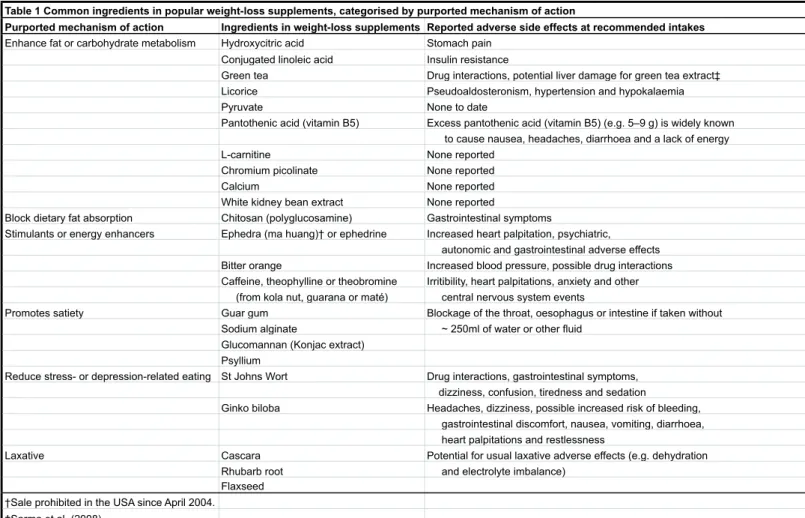
Table 1 Common ingredients in popular weight-loss supplements, categorised by purported mechanism of action Table 1 Common ingredients in popular weight-loss supplements, categorised by purported mechanism of action Table 1 Common ingredients in popular weight-loss supplements, categorised by purported mechanism of action
Purported mechanism of action Ingredients in weight-loss supplements Reported adverse side effects at recommended intakes
Enhance fat or carbohydrate metabolism Hydroxycitric acid Stomach pain Conjugated linoleic acid Insulin resistance
Green tea Drug interactions, potential liver damage for green tea extract‡ Licorice Pseudoaldosteronism, hypertension and hypokalaemia
Pyruvate None to date
Pantothenic acid (vitamin B5) Excess pantothenic acid (vitamin B5) (e.g. 5–9 g) is widely known to cause nausea, headaches, diarrhoea and a lack of energy L-carnitine None reported
Chromium picolinate None reported
Calcium None reported
White kidney bean extract None reported
Block dietary fat absorption Chitosan (polyglucosamine) Gastrointestinal symptoms
Stimulants or energy enhancers Ephedra (ma huang)† or ephedrine Increased heart palpitation, psychiatric, autonomic and gastrointestinal adverse effects Bitter orange Increased blood pressure, possible drug interactions Caffeine, theophylline or theobromine Irritibility, heart palpitations, anxiety and other (from kola nut, guarana or maté) central nervous system events
Promotes satiety Guar gum Blockage of the throat, oesophagus or intestine if taken without Sodium alginate ~ 250ml of water or other fluid
Glucomannan (Konjac extract) Psyllium
Reduce stress- or depression-related eating St Johns Wort Drug interactions, gastrointestinal symptoms, dizziness, confusion, tiredness and sedation
Ginko biloba Headaches, dizziness, possible increased risk of bleeding, gastrointestinal discomfort, nausea, vomiting, diarrhoea, heart palpitations and restlessness
Laxative Cascara Potential for usual laxative adverse effects (e.g. dehydration Rhubarb root and electrolyte imbalance)
Flaxseed †Sale prohibited in the USA since April 2004. ‡Sarma et al. (2008).
Sources: Dwyer et al. (2005); Pittler and Ernst (2004); Pittler et al. (2005); Rogovik and Goldman (2009); Saper et al. (2004). Sources: Dwyer et al. (2005); Pittler and Ernst (2004); Pittler et al. (2005); Rogovik and Goldman (2009); Saper et al. (2004). Sources: Dwyer et al. (2005); Pittler and Ernst (2004); Pittler et al. (2005); Rogovik and Goldman (2009); Saper et al. (2004).
Are weight-loss pills safe?
Many ingredients in common weight-loss pills carry the potential of side effects, some of them serious. The table below lists common ingredients in popular weight-loss supplements along with their reported side effects. magazines13. Out of 48 adverts considered, 24 were
found to be in breach of advertising regulations, including 10 relating to weight-loss pills and edible supplements.
with compelling guarantees, such as a full refund if you don’t ‘lose a stone in just 30 days’ or ‘get the fat-free stomach you’ve always wanted’.
Products marketed in this way appear to breach UK advertising guidelines. The Advertising Standards Agency has said that “marketing communications should not contain claims that people could lose precise amounts of weight within a stated period or that weight or fat could be lost from specific parts of the body”.
Indeed, in 2005 the Advertising Standards Agency looked at the way a range of slimming products were marketed in regional papers and women’s
Herbal Flos Lonicerae (Herbal Xenicol) is another product that appears to be readily sold over the internet, even though the MHRA has warned against its use23. This Chinese “weight-loss oil” has
been linked with side effects such as palpitations, and at least one patient has needed hospital treatment after ingesting it. Despite it being marketed as a ‘herbal’ product the MHRA says that the capsules are thought to contain an “as yet unknown pharmaceutical substance”.
At least 60 other slimming products have been given official recalls and bans24, with consumers
warned to stop taking them because they contain a variety of undeclared, active drugs that may pose a health risk. Many of these products continue to be available on the internet, illustrating how difficult it is to control the sale of potentially dangerous products.
Safe, proven ways to lose weight
Rather than turning to weight-loss supplements, your GP should be your first port of call. They will be able to offer you a number of tried and tested approaches to weight management. What’s more, visiting your GP is free through the NHS.
Initially, GPs and other health professionals usually advise people to maintain a healthy weight by sticking to a balanced diet and increasing physical activity. To help you achieve these goals your doctor can give you specific advice on what you should be eating and ways to stay active.
Beyond this initial advice your GP may then offer you more comprehensive, ‘multicomponent’ interventions that feature not only activity
programmes and dietary advice on healthy eating, but also behavioural interventions to help you achieve your weight-loss goals. Again, your GP can offer these free as part of your treatment by the NHS, and they may be able to tailor your plan to your preferences, fitness level and lifestyle. Drug treatment with orlistat (see below) may be considered, but only after dietary, exercise and behavioural approaches have been started. It may be used if your target weight has not been reached or if your weight has reached a plateau. Your treatment will be carefully monitored and only continued if it is working. (Drug treatment is not recommended for children under 12 years of age.)
Weight-loss wonder pills are unlikely to work
For example, a banned substance called
sibutramine was recently found in two Chinese herbal supplements, Paiyouji tea and Pai You Guo capsules22. Sibutramine was a prescription-only
medicine until it was withdrawn from the market in January 2010 following a warning from the European Medicines Agency that it increased the risk of heart attacks and strokes. The MHRA has officially warned people not to use these products. Despite this, there are still weight-loss sites
marketing these dangerous supplements in the UK.
Key points about weight-loss supplements
• There is very little evidence that most over-the-counter weight-loss supplements actually work.
• Your GP can offer a range of options both to help you lose weight and to maintain a healthy weight. These interventions will mostly be free, so speak to them first. • If you are still thinking of trying a
weight-loss supplement be aware of the risks, particularly if you are shopping over the internet. You could be wasting your money or, more importantly, putting your health at risk.
• Don’t buy weight-loss products on the internet because of the risk of side effects, but if you really want to buy a product, try searching for information on reputable sites such as the MHRA or US Food and Drug Administration (FDA) to check for known problems. Also, try internet searches with words such as “danger”, “scam”, “side effects”, although don’t assume it’s safe if these don’t return results.
• The MHRA provides regular updates on herbal safety and has a particular section alerting consumers to products that contain undeclared or banned pharmaceuticals25.
Orlistat
It’s worth pointing out the difference between slimming supplements and a licensed medicine to help weight loss, called orlistat. This medicine is available on prescription, with a lower dose version called Alli available over the counter. If a medicine is licensed, it has been through a strict process of rigorous clinical testing to show sufficient effectiveness and safety. Orlistat has been shown to work by stopping the body absorbing fat, so that it passes straight out in your stools. Research shows it can help some people lose weight, but even then it is not a wonder pill. In clinical trials, between one-third and one-half of participants achieved a 5% reduction in body mass. Side effects include diarrhoea and bloating. Read more about weight loss on the NHS Choices website.
Supplements for colds
Vitamin C won’t keep the doctor away
Vitamin C is the UK’s most popular single vitamin supplement, with annual sales adding up to about £36 million. Other supplements that people often turn to when they have a cold include zinc and echinacea. All of these have been found to have antiviral properties in animal or laboratory studies, but do they work for people?
Vitamin C
Researchers have been interested in using vitamin C to prevent and treat colds for more than 60 years. Some animal studies have found that
vitamin C strengthens resistance to infections. One theory for this is that the vitamin protects cells against oxidative stress. However, the results from trials in people have so far had inconclusive results. The latest position on vitamin C and colds comes from a systematic review from the Cochrane Library26, generally considered to be one of the
most respected sources of systematic review evidence. The review concluded that there is little evidence that vitamin C supplementation (0.2g per day or more) is beneficial within the general community in terms of preventing infection. Even higher doses of 1g per day or more did not prevent colds in the general population.
The same review did find that regular high doses of vitamin C (1g per day or more) seem to reduce the duration of colds a little, by 8% in adults and 13% in children. The researchers also found that vitamin C supplements seemed to have a greater effect for people who were undergoing extreme physical stress, such as marathon runners. In these groups, the supplements halved the risk of getting a cold, and didn’t necessarily need to be taken in high doses.
The researchers found no evidence that the vitamin could treat early cold symptoms, but they say that more studies are warranted, particularly among children, who get colds more often than adults.
Vitamin C is available through many foods we eat, such as citrus fruits, but do we get enough of it from the diet to fight colds? An orange contains about 70mg of vitamin C27, so to get as much as
the high doses used in some of the trials (1,000mg or more) you would have to eat an awful lot of oranges.
In the doses that are available (generally up to 1,000mg daily) vitamin C is safe for most people. The exceptions are mentioned below. However, vitamin C is water-soluble, and the body cannot store excess amounts. What it doesn’t need it will just get rid of when you go to the toilet, raising the question of whether these supplements are worth the expense.
Possible harms of vitamin C
Vitamin C is not suitable for everyone. It can cause dangerous rises in the blood sugar levels of people with diabetes. It can also be dangerous for people with genetic conditions that cause an excessive build-up of iron in their body, such as haemochromatosis. Large doses may cause nausea, diarrhoea and stomach cramps. If you intend to take vitamin C supplements, it is best to discuss this with your doctor, particularly if you have any medically significant conditions.
The recommended daily allowance of
vitamin C in the EU is 80mg and most
people will achieve this by eating a
sensible diet
Zinc
Zinc is a trace element that is essential for normal growth. The mineral has been promoted for many years as being able to boost the immune system. Laboratory studies have found that it can inhibit the replication of the rhinovirus, which is the most frequent cause of cold symptoms (Cochrane).
Until recently, trials investigating its potential for reducing cold symptoms have had mixed results, but now the evidence seems to be swinging in its favour. In 2011, the Cochrane Collaboration published a review on zinc and colds28. It found
that taking zinc lozenges or syrup within 24 hours of symptoms starting may reduce the length of your cold symptoms by about a day. The severity of the symptoms may also be reduced. Regular zinc supplements (taken for at least five months) appear to protect people against catching colds, and children who take zinc are less likely to be absent from school or to be prescribed antibiotics when they are ill. The review was of 15 trials involving more than 1,300 people, and so is likely to be reliable. However, whether these small benefits are worth the expense (around £7 for 30 tablets) is an individual decision.
• “Take zinc to fight a cold, say
scientists,”
The Daily Telegraph
,
February 16 2011
• “The body of evidence for zinc
supplementation seems to be swinging
in favour of its benefit,” Behind the
Headlines, February 16 2011
The possible side effects of zinc
If you decide to take zinc supplements, buy them from a reputable outlet and keep to the recommended dosages (available with the pack). The correct dose is important and there may be side effects including nausea and an unpleasant taste in the mouth, or more serious events such as vomiting, diarrhoea and abdominal pain.
Rest and plenty of fluids are the best treatment for colds
Taking zinc regularly may prevent you from catching a cold
Read more about zinc
• Zinc for the common cold, Behind the
Headlines, February 2 2011
Echinacea
Echinacea, a group of plants with pinkish-purple flowers, is a popular herbal remedy in the UK. Two echinacea products ranked in the top three supplements sold to support the immune system in 20092. There are many echinacea preparations on the
market, including tablets, drops, capsules, tincture and loose tea. The herb also comes in a wide range of doses – from 400 to 4,000mg.
As with vitamin C, laboratory studies have shown the plant contains substances that can affect the immune system, but the results from research in people have been mixed. One large systematic review undertaken by the Cochrane Collaboration in 2009 found 16 clinical trials that investigated different echinacea preparations for both
preventing and treating the common cold29. The
review found that echinacea did not prevent colds, but some preparations containing a particular
species of echinacea plants (Echinacea purpurea) might reduce the duration and severity of colds in adults. The reviewers did add, however, that the results are “not consistent” and so should be treated with some caution.
Several echinacea formulations have been tested in studies. Different parts of the plant have been used, different methods have been used to process them and sometimes other herbs are added. Although systematic reviews are the best way to summarise the evidence, if trials use different methods, the findings from pooling them are less reliable than if the methods used had been similar. A 2010 trial found that echinacea did not reduce the duration or severity of colds30. This large randomised
controlled trial (RCT) in more than 700 participants found that people who took a standardised dose of echinacea had no significant improvement in either the duration or the severity of their colds compared with those taking a placebo.
“Herbal remedy really does cure a cold,”
The Times June 25 2007
“There is some evidence that preparations
based on the aerial parts of E purpurea
might be effective for the early treatment
of colds in adults but the results are not
fully consistent,” Cochrane Library 2009
A flower from the Echinacea purpurea plant
Key points about cold supplements
Vitamin C There is no conclusive evidence that regular vitamin C supplementation, at moderate or high doses, has any effect on reducing the general population’s risk of getting a cold. In people who undergo extreme physical stress, such as marathon runners, there is some evidence that
supplementation (not specifically with high doses) reduces the risk of getting a cold. Regular vitamin C may slightly reduce the length of a cold in some people.
Zinc There is evidence that taking zinc within a day of developing symptoms of a cold reduces the duration of the cold by about a day and that regular supplementation (for at least five months) protects people against catching colds. For many people, the limited benefit seen here may not seem worth the expense and possible side effects of taking zinc.
Echinacea There is a lack of evidence that echinacea in general can prevent or treat colds. There is some evidence that preparations from Echinacea purpurea might reduce the duration and severity of colds in adults. However, the reviewers that concluded this also added that results in this area are “not consistent”.
Possible side effects of echinacea
Echinacea is thought to be safe when used in the short term, although some side effects have been reported, including fever, nausea and stomach pain31.
There is not enough information to know if it is safe for long-term use. The Cochrane review recommended not taking echinacea for longer than eight weeks at a time. In trials, the herb has been well tolerated, with the only side effect being a rash in some children.
The ageing population
Ginkgo, ginseng and glucosamine
According to the FSA, most people who buy supplements are over 55 years old, so it’s not surprising that some of the most popular
supplements are bought in the hope of preserving memory, joint health and general vitality. Here, we discuss three big sellers – ginkgo, ginseng and glucosamine. In 2009, consumers spent more than £82 million on these three supplements alone.
Ginkgo
The leaves of the ginkgo biloba tree are used in traditional Chinese medicine, in particular for circulatory problems. Here in the West there are claims that ginkgo extracts help a range of conditions, including memory problems, sexual performance problems and eye disorders. Laboratory studies have suggested that some of the active compounds in ginkgo may dilate blood vessels, reduce blood viscosity (thickness), modify neurotransmitter systems and reduce free radicals32.
In recent years, ginkgo has been marketed as being able to prevent the mental decline associated with ageing, and two ginkgo products are the top best-selling dietary supplements for memory health. There is a wide range of products available, including tablets, capsules and liquids, ranging in strength from 30 to 500mg.
However, the most recent research on ginkgo and cognitive decline suggests that many people could be wasting their money33. In November
2008 Behind the Headlines appraised a study that
The leaves of the ginkgo biloba tree
The Daily Telegraph had picked up which found
that “ginkgo biloba does not prevent dementia”. The trial tested whether ginkgo could prevent dementia in healthy, elderly people, but found limited usefulness of the supplement for this purpose. It was a large, good-quality study in 3,000 people, so we can be confident in the findings. There seemed to be a “small protective effect” for vascular dementia (caused by damaged blood vessels in the brain), a finding that would fit with the theory that ginkgo may widen blood vessels. It wasn’t the first time ginkgo had been in the news for this reason. In June 2008, a smaller study (including 176 people) also found that ginkgo didn’t benefit people with existing dementia. A systematic review published by the Cochrane Library in 2009 provides a robust round-up of the evidence34. It considered whether ginkgo had any
effect on dementia and cognitive decline, and concluded that, although it appears to be safe, evidence that it has any benefit is “inconsistent and unreliable”.
More than £6 million has been spent on ginkgo products every year since 2004.
Behind the Headlines has covered several
ginkgo stories. Current research hasn’t
yet answered questions about its use to
prevent stroke or slow the progression of
a common eye disease called age-related
macular degeneration. You can read the
coverage of these claims here:
• Ginkgo biloba and age-related
macular degeneration, March 17 2008
• Ginkgo ‘won’t stop dementia’,
November 19 2008
• Ginkgo ‘no benefit’ for dementia,
June 17 2008
• Can ginkgo protect you from strokes?
October 10 2008
• Ginkgo herb in seizure warning,
February 1 2010
Ginseng
There are several different species of ginseng. They include Panax ginseng (also called Asian or Chinese ginseng), and Panax quinquefolius (American) ginseng. In alternative medicine, ginseng is often referred to as an “adaptogen”, which implies a substance that increases resistance to physical, chemical and biological stress and builds up general vitality. The major active components (ginseng saponins, also called ginsenosides)
supposedly work in several ways, including having possible antioxidant effects.
Ginseng is another supplement that is widely used for its reputed health benefits, including combating ageing. According to research, ginseng
The ginseng root
The possible side effects of ginkgo
Ginkgo supplements based on the leaf extract are thought to be safe for most people, although minor side effects have been reported, including stomach upset and headache35. Ginkgo is thought to thin the blood,
so there is some concern it might increase the risk of bruising and bleeding. A few people have experienced bleeding in the eye and brain, and it may cause problems for people with certain disorders. People who are about to have surgery are advised to stop using it two weeks before. It may also interact with prescribed medications including anticoagulant drugs. It’s best to consult your doctor before taking ginkgo, to find out if it’s safe to do so.
In the UK, the market for ginseng-based products was worth £8.3 million in 2009.
The possible side effects of ginseng
Ginseng products can vary greatly in their content and quality. Some have been found to contain little or no actual ginseng, and some may contain other substances. Although the ingredient ginseng is generally considered safe to use on its own for most people, it can have side effects and may also interact with prescription medications and other supplements and herbs. In addition, some ginseng products have been associated with side effects, including high blood pressure and hormonal effects.
Ginseng is also not suitable for people with certain conditions. If you wish to try ginseng, it is best to consult your GP first.
products are often bought by consumers who believe they will experience both physical benefits and a positive effect on cognitive performance and wellbeing.
Panax ginseng is probably best known for claims that it aids memory and concentration, but it seems that there is no conclusive evidence for whether or not it works.
A recent systematic review by the Cochrane Collaboration that assessed the effects of ginseng supplements (containing ginseng or active agents of the Panax genus) concluded that although ginseng “appears to have some beneficial effects on cognition, behaviour and quality of life”, “more rigorously designed studies are needed”36.
At present, there is no convincing evidence that ginseng aids the brain or is of benefit to people with existing dementia or cognitive impairment.
Glucosamine
Glucosamine and chondroitin sulphate are natural substances found in and around the cells of
cartilage, the flexible connective tissue that protects our bones at the joints. Both are produced by the body. Glucosamine is one of the building blocks of cartilage and chondroitin sulphate is a substance that helps cartilage retain water.
In osteoarthritis, cartilage becomes thin and stiff, and the theory is that glucosamine supplements might help supply the materials needed to rebuild it. In animal and laboratory studies, glucosamine was found to “normalise” cartilage metabolism and rebuild damaged cartilage. Glucosamine supplements are often sold in combination with chondroitin, the idea being that both substances can slow down the progression of osteoarthritis. The glucosamine found in dietary supplements is usually harvested from the shells of shellfish. There is a large and varied range of glucosamine products available. Holland & Barrett, the UK and Europe’s largest health supplement retailer, sells 43 glucosamine-containing supplements, in different strengths and combined with other substances (such as omega-3, cod liver oil and rosehip). They come in different forms too, including gels, caplets and sprays. Are the benefits of glucosamine worth the money spent on it? The latest research suggests not. A recent systematic review published in the British Medical Journal (BMJ) pooled 10 studies published up to 2009, involving 3,802 patients31. Neither
glucosamine, chondroitin or a combination of the two were found to reduce joint pain or treat the narrowing of the joint space associated with osteoarthritis. The authors also say that the differences in effect between the supplements and placebo were “less pronounced” on average in independent trials than in those funded by industry. This review itself was well-conducted. However, it should be pointed out that the trials in this review were all small, potentially affecting the reliability of the review’s findings.
Sales of glucosamine in the UK rose from more than £36 million in 2004 to nearly £68 million in 2009, and in the non-vitamin market, sales are second only to fish oil supplements. Joint health is also the biggest area in the supplement market, comprising more than a third of its retail value.
Read Behind the Headlines stories about
glucosamine
• Osteoarthritis supplement study,
September 17 2010
• Arthritis: herbs don’t help,
February 11 2009
Possible side effects of glucosamine
Glucosamine is thought to be safe for most people, although it may not be suitable for those with certain conditions, including asthma. It can interact with medications including warfarin. Reported side effects include wind, bloating and cramps38.
Glucosamine may not be suitable for people who are planning to have surgery. Anyone taking glucosamine should stop at least two weeks before any surgery. Although there are no reports of this yet, there is some concern that glucosamine products may cause allergic reactions in people who are allergic to shellfish.
Glucosamine is found in the shells of shellfish
Key points about ageing supplements:
• Ginkgo This supplement is generally thought to be safe for most people, but there is very little evidence that it actually does you any good. A recent large review found only inconsistent and unreliable evidence that it has any effect on the risk of dementia or cognitive decline.
• Ginseng The evidence for ginseng remains inconclusive and more high-quality studies are needed to examine its effects. A recent review found that there may be some beneficial effects on cognition, behaviour and quality of life, but the level of evidence is not convincing and there is no evidence that it can prevent or treat dementia or cognitive decline. The quality of products on the market also varies greatly.
• Glucosamine NICE says that there is insufficient evidence to recommend the use of glucosamine in osteoarthritis. NICE advise that, if people choose to buy it, they should be aware that there is evidence for only minimal pain reduction in some people with the use of glucosamine sulphate, and no evidence that it has any effect on the joint space narrowing of osteoarthritis.
NICE does not recommend glucosamine
supplements either
39. It says:
“The use of glucosamine or chondroitin
products is not recommended for the
treatment of osteoarthritis. Many people
take over-the-counter nutraceutical
products and may benefit from clear,
evidence-based information. It would be
beneficial to advise people who wanted
to trial over-the-counter glucosamine
that the only potential benefits identified
in early research are purely related to
a reduction of pain (to some people,
and to only a mild or modest degree)
with glucosamine sulphate 1,500mg
daily. Because only one glucosamine
hydrochloride product is licensed, it
would not be cost effective to prescribe
glucosamine on the NHS”
Fish oils
Brain food in a pill?
Omega-3 fatty acids (called polyunsaturated fatty acids, or PUFAs) are important for the maintenance of good health. They’re found in oily fish such as fresh tuna, mackerel and herring (as well as in some plants). Omega-3 fats are essential fatty acids, meaning that the body can’t make them and they must be obtained from the diet or other external sources. Fish oil has been associated with numerous health benefits and often features in the press, with stories about its ability to help prevent heart problems, cancer, dementia, asthma, joint problems and psychosis. Some studies have looked at whether omega-3 can protect against heart disease and lower fats in the body (triglycerides). Others have looked at their use in people with established heart disease. It is recommended that people who have had a heart attack eat two-four portions of oily fish a week.
Media coverage related to fish oil over the last few years has focused on claims that fish oil may increase children’s brainpower and concentration. This theory is based on the idea that the fatty acids found in fish oils are also major structural components of cell membranes throughout the body, and these are especially present in the brain40.
Fish oils are unlikely to affect behaviour
Fish oil supplements are big business. They are the best-selling product in the UK dietary supplements market, with sales worth just over £139 million in 2009 – a rise of nearly 40% since 20042.
Fish oils for adults
Two of the most important omega-3 fatty acids contained in fish oil are eicosapentaenoic acid (EPA) and docosahexaenoic acid (DHA). Several animal, laboratory and population studies have found an association between omega-3 fats and healthier cholesterol levels, a lower risk of dementia and reduced vascular risk, inflammation and oxidative damage.
Yet, so far, the evidence from clinical trials of omega-3 supplements in humans is far from conclusive. A 2006 Cochrane review that looked at all available trials up to 2005 found no evidence that omega-3 supplements reduce the risk of cognitive impairment or dementia41.
Herring and other oily fish contain omega-3 fatty acids
Another review of fish oil in 2002 found no evidence of any effect on mortality,
“cardiovascular events” such a heart attack or stroke, or cancers, either in people at high risk of heart disease or in the general population, and regardless of whether obtained through supplements or from the diet42. The reviewers
concluded that, although there is no evidence to suggest that people should stop taking rich sources of omega-3, further high-quality trials are needed to confirm suggestions of a “protective effect” on cardiovascular health.