International Journal of Education
in Mathematics, Science and
Technology (IJEMST)
www.ijemst.com
Hybrid-Mentoring Programs for
Beginning Elementary Science Teachers
EunJin Bang
Iowa State University
To cite this article:
Bang, E. (2013). Hybrid-mentoring programs for beginning elementary science teachers.
International Journal of Education in Mathematics, Science and Technology, 1
(1), 1-15.
This article may be used for research, teaching, and private study purposes.
Any substantial or systematic reproduction, redistribution, reselling, loan, sub-licensing,
systematic supply, or distribution in any form to anyone is expressly forbidden.
Authors alone are responsible for the contents of their articles. The journal owns the
copyright of the articles.
Volume 1, Number 1, January 2013, 1-15
ISSN: 2147-611X
Hybrid-Mentoring Programs for Beginning Elementary Science Teachers
EunJin Bang*
Iowa State University
Abstract
This study examines four induction models and teacher changes in science teaching practices, as a result of several mentoring programs. It explores three different computer-mediated mentoring programs, and a traditional offline induction program—in terms of interactivity, inquiry-based teaching, and topics of knowledge. Fifteen elementary science teachers—eleven new teachers and four experienced science teachers — were assigned to and participated in, one of the four induction programs for five months: a Virtual Reality (VRG), a Wiki (WKG), a hand-held digital device (HDG), and a general group (GG). Data was collected by archiving written dialogues, snapshots and field notes of avatar interactions, monthly open-ended questionnaires, weekly journal reflections, science lesson plans, mentor/teacher field notes, student artifacts, and video-recording science teaching in classrooms. Using a case study through a time-order display strategy and utilizing situated learning framework, the findings indicate that the beginning teachers in each induction program had their own unique way of professionally interacting with their mentors. Except for the teachers in the GG, the new teachers were able to establish their own platforms for inquiry-based, student-centered teaching, improving not only their pedagogical content knowledge but also their confidence in teaching science. This study further discusses the importance of meaningful social engagements between mentors and mentees, as well as how these social engagements benefit new teachers becoming inquiry-based teachers and developing healthy communities of practice.
Key words: Hybrid-mentoring, Elementary science teachers, Induction programs
Introduction
High teacher attrition and teacher shortages have recently signaled to science educators the need to establish “high-performing professional learning communities (Way, 2001, p. 3),” through effective induction programs and professional development (PD) (Anthony & Kritsonis, 2006). Recent reports made by the National Center for Education Evaluation and Regional Assistance introduce induction models that are different from traditional models (Glazerman et al., 2008; Glazerman et al., 2010). These include comprehensive induction models—the Formative Assessment System (FAS) by the New Teacher Center (NTC) mentoring model, and seven Events by the Educational Testing Service (ETS). These further embrace activities such as structured and monitored mentoring of beginning teachers, providing yearlong orientations, and providing training activities for mentors, mentees, district coordinators, and administrators. They also involve regular professional development sessions—along with study group meetings, and classroom observations of expert teachers. Along the same vein, suggested induction models from other players are studied and incorporated, such as 1) The New Teacher Project (Weisberg, Sexton, Mulhern, & Keeling, 2009), 2) the Center for Teaching Quality (CTQ), TEAM—a web-based teacher education and mentoring program, 3) the Teacher Leaders’ Network (TLN), 4) mentoring activities, 5) collegial inquiry, and 6) the building of teacher learning communities, as critical elements to improve teaching and learning (Thompson & Goe, 2009).
Results from these induction models identify important aspects of high-quality induction programs. First, mentoring support systems for beginning teachers in instructional, social and emotional supports, should ideally be a cycle of continuous, yet gradually developing models, that are connected to student learning (Hewson, 2007; Glazerman et al., 2008; 2010). Second, a collaborative and trusting culture at multiple levels of the educational system has been identified as another critical component of high-quality induction programs. For
*
instance, beginning teachers grow most successfully in collaborative, administrative teams that value the importance of induction, as well as focus upon the development of instructional leadership roles.
Yet, many researchers acknowledge that teacher change, in their early years, is one of the most difficult processes to achieve. This is due to a combination factors, including a lack of formal systems to guide new teachers during their induction years, teacher beliefs, prior experiences, incorrect or insufficient support from administrations, unhealthy norms of a school’s culture, and the micro-politics of the school (Bechtel & O’Sullivan, 2007; Johnson, 2007; Hodgen & Askew, 2007; Kaasila, Hannula, Laine, & Pehkonen, 2008; Lee, 2004; Luft et al., 2011).
In order to better understand the social dynamics of teachers and the learning that occurred in their induction programs, this study provides beginning elementary science teachers (K-8) with content-focused mentoring support through technology, while sustaining collective inquiry in communications and collaborations. Participants network, interact, and learn about inquiry-based practices in computer-mediated mentoring induction programs. Specifically, new teachers and their mentors in this study, participated in different types of mentoring models: a Virtual Reality Group (VRG), a Wiki Group (WKG), a hand-held digital device group (HDG) and a general group (GG). To be specific, the mentees and mentors matched in the VRG group interacted within a virtual reality, a kind of animated world online where they were represented by animated “avatars” and spoke to their matched partners as they were also represented as animated avatars. In the Wiki group, the matched mentee/mentors interacted with typed dialogue, essentially like they would in a chat room, but with enhancements allowing them to share files, scans, and many other education artifacts. In the Hand-held digital Group, participants were interacting via video-conferencing, being able to see and hear each other, speak with each other in real time while holding the communication device portably in their hand. In the GG group, mentees selected by our research group interacted with a mentor figure who had already been provided by the school.
The questions of interest in this study were:
1. How did mentors and mentees interact within each induction model?
2. How did mentors and mentees experience science teaching and learning in each model?
3. In what way did teacher learning happen, and what topics of knowledge did mentors and mentees generate in each model?
Theoretical Framework
This study used Lave and Wenger’s (2006) theory of situated learning, particularly its aspect of legitimate peripheral participation (LPP) as the main conceptual framework. The theory of situated learning views learning as social co-operation through social engagements. The main goal of learning is to shift activities, transform roles, and develop new identities as a newcomer by moving from legitimate peripheral participation to central participation, on the way to becoming a master. The masters within the community of practice possess certain modes of behavior that a newcomers is expected to learn in order to become a member of the community. During this learning process, newcomers experience trajectories or thresholds of change that are potentials for transformation in activities, roles, skills, knowledge, and identities (Lave and Wenger, 2005).
The theory of situated learning also depicts knowledge as portable and interactive. Through multiple shifts in participation, newcomers grow their abilities to learn and perform in actual performance situations. Therefore, newcomers not only learn from talk, but also learn how to talk which increases their sense of identity as master practitioners. Yet, this “newcomers-become-old-timers” reproduction of the community of practice brings the tensions of the continuity-displacement contradiction, because participation takes place within active social contexts. Different ways of doing between the newcomers and the masters generate identity conflicts and competing viewpoints.
Related Literature
Online Learning Environments and PDs/Induction Programs
Preliminary ideas for online PDs and induction programs were conceptualized mainly through the World Wide Web (WWW), email, listservs, and CD-ROMs (Slough & McGrew-Zoubi, 1996; Muller, 1997; Davis, 1998; McMullen, Goldbaum, Wolffe, & Sattler, 1998). Slough & McGrew-Zoubi (1996) attempted to prove how a website construction project could be an excellent alternative to assess the professional growth of teachers, and how this new alternative assessment (namely, an electronic portfolio), could replace teachers’ resumes. They reported that teachers with no experience with the Internet and email were successfully mastering skills essential for 21st century success, such as using and publishing on the Internet (p. 9).
Another interesting idea, called “E-mail mentoring,” emerged to benefit women college students in the fields of science and engineering (Muller, 1997). Reviewing four different e-mentoring projects, Muller (1997) applauded E-mail mentoring as a unique tool, because it was a “highly cost-effective opportunity…transcending the common constraints of time, synchronous communication, and geography (p. 622).” Most importantly, e-mail mentoring could level “status differences, including those rooted in gender and hierarchy (p. 622),” through its own unique mechanisms. Similar ideas appeared on the horizon among European teacher educators, as well. For example, Davis (1998) delineated how communities of teachers could be established through the WWW, e-mail, and computer conferencing. Teachers within these online environments took courses that encouraged action research and reflective practices. Therefore, online communities ultimately enhanced the quality of teaching and learning.
Design of e-Support
Although much empirical research suggests that people can learn effectively by using electronic mediums (Welsh et al., 2003), quality concerns arise when there is an excessive emphasis on e-learning environments (Greenagel, 2002; Imel, 2002; Thorson, 2002). Greenagel (2002) claims that e-learning proponents fail to keep abreast of ever-changing ICT. Therefore, the current e-learning platforms are “often puerile, boring, and of unknown or doubtful effectiveness (p. 1).” This is due to designers’ indifference to considerations of how people learn, to the high cost of developing meticulous platforms, and to the lack of emphasis on outcomes (Greenagel, 2002). In another study, Greenagel (2002) poignantly and insightfully declared “technology is not an e-learning strategy (p.3),” and also urged us to dispel “the illusion of learning because we have our headcounts (p.6).”
Relying on socio-constructivist and sociocultural learning philosophies, Gunawardena et al. (2006) showed an effective model called Wisdom Communities (WisCom), which consists of two components: a “Cycle of Inquiry” module design, and a “Spiral of Inquiry” program design. There are five steps embedded in this model: Challenge, Initial Exploration, Resources, Reflection, and Negotiation. This cycle is also designed in a way where participants move “from heavy in creation to heavy in enabling (p. 223).” The WisCom model aspired to “facilitate transformational learning by fostering three dimensions: the development of a wisdom community, knowledge innovation, and mentoring and learner support in an online learning environment (p. 218).” Furthermore, it is a model that emphasizes both the distribution of expertise and the construction of collective knowledge among individuals.
Models of Inquiry-Based Practices
Many researchers found positive impacts of inquiry practices, when compared to traditional practices (Akkus, Gunel, & Hand, 2007; Haury, 1993; Scruggs & Mastropieri, 1993; Shymansky, Kyle & Alport, 1983). Akkus et al. (2007) compared two different treatments, an inquiry-based approach versus a traditional approach, in order to resolve the arguments made about the effectiveness of the traditional approaches. They used a heuristic science writing approach for inquiry practices, and found that there is a positive impact on student performance when teachers implement high-quality heuristic science writing. More importantly, they found significant advantages of an inquiry-based approach in decreasing the achievement gaps within classrooms.
of the inquiry-based methods of instruction, in that it is consistent with the way people spontaneously construct knowledge (Bybee et al., 2006). 5E stands for engage, explore, explain, elaborate, and evaluate. Students engage in a scientific topic, and explore it without being instructed about the concept, at their own pace. After tinkering with the materials, students explain their findings and the teacher introduces the applicable scientific concepts. Next, the teacher provides a new situation where students can apply the learned concept in a different situation. Finally, students and teachers engage in an evaluation process that provides feedback for the following lesson. Although such practices have merit, many researchers yet lament the fact that inquiry-based classroom implementations are rarely actualized within the classroom (Bentley, Ebert, & Ebert, 2000; Grossen, Romance, & Vitale, 1994; Luehmann, 2007; Wee, Shepardson, Fast, & Harbor, 2007). Problems arise when newly educated science teachers enter into this community of practice. Aside from the lack of modeling of inquiry-based practices in teacher preparation and induction programs, new teachers spend their first five years struggling philosophically with the textbook driven instructions all to often prevalent in their communities of practice, the lack of systematic supports, and the demands of high-stakes testing (Alouf & Bentley, 2003; Luehmann, 2007). This study was designed to help develop induction models informed by the literature above, and then explores the nature of social interactions and teacher learning.
Methods
This embedded multiple-case study is epistemologically related to socioculturalism in that teachers are understood as social beings; as such their daily life consists of countless interactions with others (e.g. students, colleagues, parents and the like). In these exchanges with different individuals, teachers are indirectly interacting with the milieu that characterizes the school and the unspoken historical framework that defines the school and its systems. Through these interactions, teachers have an opportunity to change. There are many ways to interpret how knowledge is constructed in a sociocultural setting, and in this study interpretivism is used (Denzin, 1969). This position values “affective knowing,” which takes into account the experiences and feelings of a researcher, yet is balanced with attention to the researcher’s rational thought processes (Lemke, 1998). The summary of the design of this study is found in Table 1.
Data Collection
Program and participants
This study uses data from 15 elementary teachers, who came from a centrally situated Midwestern state in the United States. A one-page program flyer was sent via email to approximately 22 school districts in the state, and participants were invited to submit an online application to a secured website platform. Of 28 applicants, 11 beginning, and four experienced elementary science teachers were invited to the program. They were then randomly assigned to one of four different mentoring models. Participants were matched based on a rubric consisting of the following elements: years of teaching experience, grade level, subject area, mentoring support at each school for beginning teachers vs. support for experienced teachers, and 21st century skills, as defined by Jenkins, Clinton, Purushotma, Robinson, and Weigel (2006). Experienced teachers in this program are defined as having more than five years of teaching experience in K-8. Two facilitators with science backgrounds were available for the participants.
Four Different Mentoring Programs
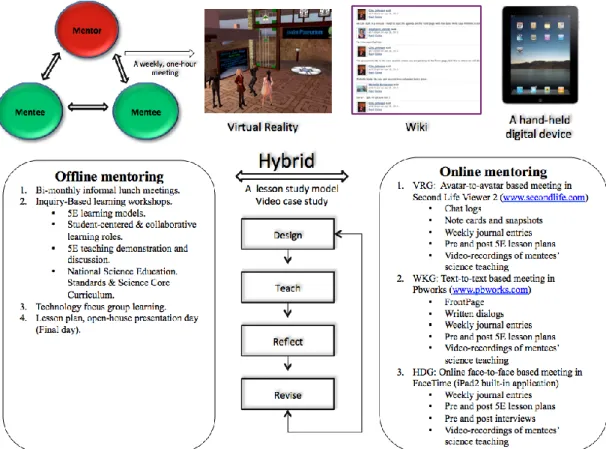
Figure 1 displays the overall design and activities of the three different hybrid-mentoring models:
The Virtual Reality Group (VRG). The virtual reality model consisted of exploring science-intensive Sims as an avatar. In other words, this is an avatar-to-avatar based meeting within the online virtual reality program called Second Life (SL), specifically the Viewer 2 platform (www.secondlife.com). Assisted by a facilitator, participants created their own avatars, and were given virtual land/space and virtual money called “Linden dollars, (L$),” with which they could buy items for their land and avatars, such as enhanced attractive wardrobes, and the like. The virtual land was a part of the online teaching campus created by the National Media Consortium (NMC), which allows participants to capitalize on many functions established for teaching and learning. These functions include “Sandbox,” for building, “Orientation,” for learning basic Second Life skills, a “Virtual teaching campus,” for group meetings, and other amenities designed to engage the participants and make their experiences engaging and realistic. The virtual NMC land rental property used by the VRG participants included Teaching Island 2, Lot #30. Second Lie platforms generally include three menus, (top, side, and bottom menus with an array of tools. For instance, using the bottom menu, the teachers represented by avatars can choose to either chat, speak, create profiles, walk/run/fly, or change their point of view/perspective. Using these three menus, teachers/avatars can also change the appearance of the way they appear via clothes and other mechanisms, take snapshots, and engage in voice chats by using the side menu.
Figure 1. The overall design and main activities of the three hybrid-mentoring models.
interact, and to view a recent activity. Which may have transpired in The WKG platform is located at http://ebestisuourplaces.pbworks.com.
The Hand-Held Digital Group (HDG). A hand-held digital device model was used to execute an online face-to-face meeting in FaceTime, which is an iPad2 built-in application.
General group (GG). Finally, a reference model was set up to support beginning teachers in the same way they routinely work within in their real-life schools/districts. Therefore, the new teachers in this group were not participating in any of these online, virtual mentoring models, but received conventional mentoring support available in their schools/districts.
Methods of Data Collection
Eight data sources were used for the study. All participants were asked to submit either a mentor or mentee program application form, which included demographic information as well as information on their technology skills and degrees of comfortability using technology. The teachers were also interviewed before and after the program, which consisted of eight questions designed to explore the overall experience of the program, information about any teaching techniques and any digital skills they learned, and the like. Participants were also asked to record a weekly online journal-reflection, which has four question prompts specifically asking about social interactions that were made, and topics that the matched teachers studied about each week. The length of average journal entries was 3,356 words for mentees, and 4,110 words for mentors. Other data collected, included four video-recordings of mentees’ one-hour science teaching sessions, science lesson plans, PowerPoint presentation slides—excluding the GG, and any student artifacts that were generated from their science teaching. Archived data from each model (e.g. SL chat logs, note cards, snapshots, written dialogs, etc.) were saved either automatically, or regularly saved to the facilitator’s computer. Finally, any field notes made by the mentors and facilitators were also included as data for this study.
Data Analysis
Case study is one research strategy for examining an identified event in-depth. Yin (2003) defined a “case study” as a research inquiry that explores an event within its real-life context, and an all-encompassing method that seeks answers on “how” and “why” questions. Yin (2003) conceptualized four different case study designs, depending on the number of cases and units of analysis. This study is aligned with a multiple-case with multiple units of analysis. In creating the cases, this study adopted a time-ordered display as a strategy. According to Miles and Huberman (1994), a time-ordered display is “a second major family of descriptive displays. This strategy orders data by time and sequence, preserving the historical chronological flow and permitting a good look at what led to what, and when” (p. 110). The collected data were re-organized on an Excel spreadsheet by month and by sources. During the process of reorganizing data, an elimination of certain data was conducted. For data that were not added to this main spreadsheet e.g. snapshots, field notes, transcriptions of the video-recordings, etc. short descriptions were made in the spreadsheet. After the master data sheet was completed, the traditional qualitative processes that were used for the final analysis of data consisted of indexing and labeling the data, identifying themes to organize data into categories, assigning abbreviated codes and sub-codes to the identified themes, and finally discovering and triangulating categories before drawing credible conclusions of the data (Dey, 2005).
Validity and Trustworthiness of the Study
The study aspired to mitigate potential threats to its validity in both the data collection and analysis procedures. In terms of data collection, the study used unobtrusive interviews and non-participant observation methods (Bogdan & Biklen, 2007). By using open-ended questions, teachers could talk about issues important to them, while non-participant observations allowed for an observed event to occur, without interference from the researcher. Other procedures that contributed to the validity of the findings included: using only trained researchers to conduct interviews, and positioning staff members or facilitators only as lurkers, who read or archived the dialogues of the participants without participating in any way.
The ethical issues of the study included keeping the participants, principals, and districts involved in the study informed. Before collecting data, this research had already been approved by the university’s institutional review board. All active researchers were trained and certified before conducting the research. Pseudonyms were used in a way that the participants’ identities and schools could never be detected.
Findings
Question 1. How did mentors and mentees interact within each induction model?
VRG Theme 1:“I am having trouble!” Three themes were found from the VRG data. The most consistent theme was that the teachers interacting within a virtual reality as avatar came across as technologically challenged, and sudden laggings, slow connections, images loading too slowly, or data being occasionally lost discouraged active participants at times. The matched teachers were sometimes late, or suddenly disappeared from their weekly synchronous meeting venues where they were scheduled to explore at least two to three science-related islands--due to system failures/crashes. Due to this aspect, the VR teachers, one triad, did not enjoy meeting in the virtual environment. They later reflected that they would use alternative platforms such as emails and Facebook to interact.
Theme 2: “Look! This is amazing.” The second theme was related to the “wow” effect where the matched teachers were fascinated by sophisticatedly built three-dimensional virtual reality science related models (e.g. Lunar Impact, Magnetic Field, Perpetual Motion, Newton’s Cradle, the Invisible Spectrum, Eukaryotic cell models, Prokaryotic genomes, Protein synthesis, Being on the Moon, Pi (π), Gram stains and the like). These 3D models encouraged the matched teachers to invite each other to their virtual meeting places for sharing, via either SL Instant messengers, or group chats. This “wow effect” rarely connected to any promising interactions, such as building a 3D science model together, inquiring about scientific concepts behind each 3D model, or talking how these can be integrated into science teaching and learning. Rather, the teachers spent most of their time just sight-seeing these features.
Mentee2: “Kind of slow but still amazing.” Mentee1: “…the planetarium was cool.” Mentee2: “Let's go there…”
Mentor1: “Can you TP us?”
Mentee1: “I don't remember how to get there.” Mentor1: “Is it on this island?”
Mentee1: “Yep, I was flying around and found it.” Mentor1: “What do you think? Wow!”
Mentor1: “There is a jet propulsion lab somewhere too.”
Mentor1: “That might be helpful for XX (name of the mentee1). She's going to do a lesson on forces and motion for 6th graders.”
Theme 3: “Where are you?” The last theme found within this group was getting lost and rescuing each other. The matched teachers, for quite a long time, did not want to explore virtual places individually. When an individual avatar, which was always a mentee, was not seen from the monitor, the mentor would frequently ask them where they were, then teleported them so that they could be together. Toward the end of the program, the matched teachers started to set goals and roles in terms of how they wanted to structure their weekly meetings in SL. The overall pattern was that the mentor was constantly exhibiting pack-oriented interactions, while the mentees exhibited more independent behaviors.
Theme 2: “We need to finish this.” Most of thewritten interactions and dialogs were related to completing the program requirements. The mentor consistently checked these requirements as if she was a task manager. Any noticeable in-depth discussions or interactions were rarely extractable from related data. When asked later, the mentees explained that they initially wanted to build a collegial relationship, or an equitable friendship with their matched members. They shared their experiences, expertise, and what areas needed to be work on. However, after the initiation phase, somehow their relationships became more informal, as if they were just bouncing ideas back-and-forth. One of the mentees reflected that she did not feel that she was talking to a person or human being during her written interactions with others.
HDG Theme 1: “I am wearing multiple hats here” Two themes were found from the data for HDG the matched mentees and mentors using handheld devices to interact via what is commonly known as video-conferencing. Both beginning teachers and their mentors learned to share and collaborate not only with their matched teachers, but also with students in their classrooms, other experts/sources available on the Internet, even with their own children. This platform afforded opportunities of not only being a mentor or facilitator, but also of being an inquiry-based teacherwhere the participants in the group constantly shared and sought out in-depth discussions on a variety of different topics related to science teaching and learning, during their weekly online face-to-face meetings. The role of the mentor that we observed in the HDG, was quite different from those found in the VRG and WKG groups, in that participants actively involved in multiple roles over the course of the program. One versatile mentor, who seemed to be enabled by the communication tool, frequently positioned herself as an empathetic ear, an idea-bouncing colleague, a content specific mentor, or as a facilitator. These weekly mentoring sessions helped mentee teachers to try new ways of teaching science. For instance, one mentee teacher shared that she was having a hard time gauging how much her students learned in her class. As a result, they were brainstorming many ways to assess students. One of the strategies thus proposed, video-recording students claims and evidence, was implemented in the mentee’s class as a result. The following quotes briefly illustrate how one of the mentees in this group incorporated her hand-held digital device (e.g. iPad) in her science classroom, and with conversations her two-year-old son.
Mentee 7: “Ok, well, as for some of the ones for the school, I used the ‘Go-sky-watching’ app a lot in my 8th grade science class. They used it to learn, because we had talked about the moon phases, and you can use the moon phases in Go-sky-watching…For my 7th grade class, for Life Science, we used ‘Inside-the-brain.’ So, there is a 3D brain and we did human body systems…‘Science 360,’ has little clips of different videos cropped, like clipped, so there was just actually a time I could tell them to go to ‘Science 360,’ watch a video, or click on anything that interested them…For personal use, I have a toddler. So, I have a lot of toddler games. I have a 2 year-old. So, there’s lots of, like, letter stuff, schools, singing stuff, coloring stuff, puzzles, books galore, and stuff like that.”
Theme 2: “It is just fun! I want to know how others use this technology” The so-called “fun factor” was the most recurring and consistent theme within the data. All the mentees and mentors wanted to know new ways to use this hand held digital device, and various other science-related applications (Apps) installed on the device. They were eager to share what they had found out about various applications and how they were using those programs in their science classroomsas well as in their daily lives. They were also well connected socially not only using the FaceTime app, but also using social networking features such as Facebook and Twitter. Many times their one-hour weekly meetings were extended to two-hour meetings; yet they all reported that their time was not the biggest concerns.
GG. Theme 1: “I’m just flying by the seat of my pants” All beginning science teachers in this group had literature coaches as their mentors, and these mentors were assigned by their schools. From time to time, the general mentors and the new teachers met for a lesson planning session as well as for classroom observations. However, none of them thought that these interactions were helpful for them, since they were given many curriculum materials from their general mentors. Although they made a friendship with their general mentors, they seldom talked about science lessons. They talked more about current events of schools or reminding each other about those events (e.g. field trips). All new teachers showed major concerns as to whether they were on the right track, or whether they were growing or renewing their goals sufficient as a science teacher.
Question 2: How did mentors and mentees experience science teaching and learning in each model?
primary ways to teach science in all beginning science teacher’s classrooms. The new teachers, who were in the VRG, WKG, and HDG programs, found that although they felt that SWH is similar to the 5E system, it does not have the format of the E’s (Engage, Explore, Explain, Elaborate and Evaluate) and the correct order. They all preferred using 5E over SWH. However, knowing both models helped them incorporate inquiry more into their teaching practices. They also liked the 5E model because it followed the natural thought-model, in that it was sequential, and easy to remember. They started using this model for other lessons too.
Taking time to design a science lesson with their mentors was a positive experience for all new teachers, because it helped them gain a deeper understanding of certain aspects of teachingnot only of the lessons that they were teaching, but also of the deep ethical growth and awareness within that was requisite for them becoming fully cognizant of their roles as teachers within the community. The teachers in these groups also showed that the 5E instructional model helped them become more aware in evaluating their student’s learning processes and progress. Furthermore, this method of science teaching also enlightened them about the importance of the articulation/verbalization aspects of sciencee.g. their own clear explanations, as well as student discussions). Finally, the new teachers also stated that this type of practice helped them be more authentic, imparted more confidence, and allowed them generally to be on track.
Mentee 5: “… and that’s where I go back to the 5E’s, because you have thought this out so much…and working on all of the different aspects…you are more prepared and ready with this lesson…you are excited about it, because you spent so much time on it. And you are proud of it. Then that is…contagious with the kids.”
Mentee 2: “I just feel like because we work on this lesson for, you know, a month, that by the time we are done with it, it is probably one of the best lessons that I have ever taught. Also, there is something that I will go back to.”
Mentee 8: “I think, I feel like I have grown…and it really makes you step back and put it into prospective, towards the importance of teaching, how you feel about it, and what style of teaching, teacher you are. So, I think that it is very beneficial. It keeps you honest, and it keeps you on track.”
There were two major challenges when implementing the 5E system, for the new teachers. The first challenging part was that this model was time-consuming. It took them longer to have the 5E lessons all planned out. Learning to manage each stage time-wise was also part of this challenge. All teachers used 5E not for a single day, but for at least a week of science teaching. They were all amazed how the Explanation stage enabled student’s abilities help them logically explain what they thought about how things would happen. Yet, it was hard for them to implement the 5E protocols for every single science lesson, because this type of inquiry-based teaching made it easier for them to get off track at times. The second most challenging part was executing the Elaboration stage, due to their lack of ideas on how to provide meaningful contexts for students to apply scientific concepts.
The new teachers in GG never had a chance to teach this type of science lessons due to their schools’ literacy program. When science lessons were taught, the FOSS lessons were adopted straight from the kit. They all reported that they were just going through the steps one by one.
Question 3: In what way did teacher learning happen, and what topics of knowledge did mentors and mentees generate in each model?
VRG: Learning by playing. As the participants got accustomed to interacting as avatars in the virtual environment, their knowledge, skills, and habits-of-mind in computer-supported collaborative work improved. This seemed to in large part due to their involvement with Second Life. They learned to landmark their favorite places, under their inventories, and made visits to places such as Mars Institute Island, and the Planetarium to observe the constellations. They traveled to Oxy’s dresses to shop for their avatars’ outfits. They also created events like “Bring your virtual pet to a weekly meeting,” or “Wearing blue jean’s day.” Sometimes they would match these kinds of events with fun places to meet, before heading to their science-related places.
practiced different roles (e.g. being a mentee leading the group, volunteering to be the photographer when the group was at the top of mountain, and so forth). During this type of virtual play, the teachers naturally learned how to walk, run, fly, and communicate in text, voice, and gestures. They also learned how to convert 3D environments into 2D environments, and vice versa, for collecting information. Finally, the teachers experienced scientific concepts through concept-packed 3D objects or scientific systems. However, they talked about these concept labels only for the purposes of inviting others to see the 3D objects or getting some ideas for upcoming science lesson plans.
WKG: Learning by sharing resources. The teachers in this group mainly focused on their 5E lesson plans, and how they could create a student-centered classroom environment. Using their “chat” type of interactions, as well as graphic and other accoutrements afforded by the wiki format, they generated a template together designed to include all the elements in each 5E stage. They then created a group-sharing folder to have everybody’s lesson plan at a one place. They also generated a variety of different web sites related to the topics of their lesson plans. For instance, one of the mentee’s scientific content was an environmental stewardship. The mentor and the other mentee helped get this idea into action by sharing information about carbon footprints, along with a book entitled National Geographic Kids Human Footprint. They also found websites that would be great for kids to find their carbon footprint number. They also added a Sun Chips commercial online, as a media motivator for the kids.
Forces and Motion was also a topic they chose to teach. The matched teachers searched together through some online lessons, and decided to have their students build roller coasters using various materials. The mentors helped the mentees by ordering some picture books from the Area Education Agency or AEA e.g. Roller Coaster by Marla Frazee. Short YouTube video clips related to this topic were also linked to their wiki (e.g. A roller coaster song with the cartoon characters, “Phineas” and “Ferb”). The teachers shared these resources during their weekly meetings. Then they consolidated most of their ideas and finished, having had the most meaningful student learning over their two bi-weekly lunch meetings.
Other main topics that the teachers in this group discussed were about how to implement 5E into their teaching and classrooms. They discussed how much time each stage would take, if students were sufficiently well involved with the Explanation stage, should they take an entire daydepending on the time available to them for science, if students needed more help with a certain explanation, should they allow students to ask experts to help them solved problemsvia the Internet, nonfiction text, or real people coming into talk to the class? They also generated ideas on the elaboration stage, and discussed whether or not the students needed to be negotiating their understandings with each other in more detail.
HDG: Learning by personalizing portable knowledge. The teachers in this group capitalized on having a hand-held digital device, and by using it to the maximum for their science teaching and learning. For instance, they learned to keep notes on almost everything, digitally archiving their science projects when they were in progress by taking picturesfor example, the Butterfly Garden, and the Phases of the Moon projects. The knowledge was so generated, and then shared at social networking sites. Most teachers in this group learned to just “play with it,” in order to figure how certain programs or applications worked. The most favored applications for their science teaching were YouTube video clips, Educreations, Go-Sky-Watching, Moon Glow, Google Earth, NASA applications, and the Jumbo Stopwatch. Yet, some mentees reflected that they still did not know how to incorporate these applications effectively into their science lessons.
GG: Learning by catching up. Beginning science teachers in this group directly adopted science curriculum available at their schools (e.g. FOSS and SWH). The teachers followed these materials when teaching science; however, they all thought that that wanted to teach more inquiry-based science instead of mere cookbook-style science lessons. Some reflected that they felt like they constantly tried to catch up with things. None of the mentee teachers had a good chance to design a science lesson, and analyze it critically before and after the science lesson. Mostly importantly, science was not the subject area that any PD activities were focused on; rather they were mostly centered on reading or math.
Discussions
Learning as Social Co-operation through Social Engagements
The findings from the study provided an in-depth process of how beginning teachers become members of the community they are working within as they face dilemmas at their schools in technical, political, and cultural dimensions. The beginning elementary science teachers in the study initially relied heavily on SWH or FOSS kits for their science teaching. When the mentee teachers in VRG, WKG and HDG were engaged in a series of regular activities with their science mentors, they showed growth in their pedagogical content knowledge, as well as confidence in practicing student-centered science teaching. For instance, the full 5E inquiry-based science lesson designing, teaching, and reflection process helped them develop abilities to improve their assessment skills as well as their questioning skills. Their expanding repertoire of skills and knowledge further led them be hopeful about becoming inquiry-based teachers. Their experiences also gave them a sense of being honest teachers, and being right on track. Ideally, solidifying these elements, at critical thresholds of change, should be continuously internalized and reinforced; such that newcomers enhance their communities of practice. Unfortunately, the new teachers in GG never had a chance to establish the knowledge, skills, and the level of confidence the way that the other teachers did. This is quite understandable since the new teachers and their mentors were only engaged in learning about science curricula ready-made for them. Although certain types of relationships were successfully built, the new teachers considered their mentors as resources they could call if they have any questions. Furthermore, the new teachers in GG were practicing their science teaching where only literature and math were valued. This further hindered the newcomers, not only in the development of their pedagogical content knowledge, but also in becoming highly effective science teachers.
Knowledge as Portable and Interactive
The findings of the study gave insights about which are most effective for sustaining the reproduction of the community of practice. In studying the matched teachers in WKG and HDG, it was evident that the flow of wisdom and knowledge was a constant series or cascade of events when it comes to the teaching of science as inquiry. The experienced teachers shared their previous teaching experiences and science resources that were subject-specific and topic-specific. These curriculum materials were often reflected back in the mentees’ science teachings and lesson plans. Interestingly, there were no conflicts or tensions detected from the data except from the teachers in GG, where they all disagreed about the way science was taught in their schools. Although it is complex, the process of sustaining revered traditions, while at the same time slowly eliminating ineffective practices, is seen as a healthy process a vital and necessary process that allows for the creation of a community of cutting-edge practices. It will lead to a community of teachers competent and fully confident teaching inquiry-based science.
Through this innovative process, and the remarkable technology of the world wide web and an array of ever evolving devices, teachers now have a wealth of access points through which they can gain without fail, the support needed to create the new world of science teaching. And through the same mechanism they have an equally abundant access to vibrant discussions with a variety of mentors and mentees about the knowledge and skills needed to teach with ever-increasing ease and practicality. Most importantly, teachers can find enormous opportunities to reflect on their ideas and practice individually and collectively. Together these elements will transform teachers into inventors of their own learning and rinventors of their practices. This practice of e-learning not only deepens participant’s knowledge of the subjects they are e-learning, but also generates new knowledge (Gee, 2003; Thorson, 2002; Way, 2001).
Practices and Identities
Implications
This study also has broad practical implications both nationally and internationally, in that it helps teachers in any given state, national, or even international network communicate with one another and to participate in the era of knowledge ecology, where users of technology become not only consumers but also producers of inquiry practices. The study has been conceived and developed in order to address several important challenges related to deficiencies in the STEM education now facing our nation. It is imperative to fully grasp, at the outset; the fact that our nation is facing the colossal challenge of producing fully qualified teachers who will be our nation’s primary agents of change to increase student performance in STEM areas (Kuenzi, 2008). As our nation establishes high expectations, teachers of STEM-related material are expected to have exceptionally competent subject-matter knowledge, scientific skills, habits of mind, and an ability to connect Science, Technology, and Society (STS) for preparing a STEM-literate citizenry.
Acknowledgments
That author of this study would like to thank all the participants of the study and their districts for their enormous support. I would also like to recognize the following research assistants, Sara D. Nelson and Rhonda A. Berry, who helped with various parts of this study. This study was partially supported by the Iowa State University College of Human Sciences Seed Grant Program, and was also supported by the Iowa Mathematics and Science Education Partnership (IMSEP).
References
Akkus, R., Gunel, M., & Hand, B. (2007). Comparing an inquiry-based approach known as the science writing heuristic to traditional science teaching practices: Are there differences? International Journal of Science Education, 29(14), 1745-1765.
Alouf, J.L.& Bentley, M.L. (2003, February). Assessing the impact of inquiry-based science teaching in professional development activities, PK-12. Paper presented at the annual meeting of the Association of Teacher Educators, Jacksonville, FL.
Anthony, T.D., & Kritsonis, W. (2006). National implications: An analysis of e- mentoring induction year programs for novice alternatively certified teachers. Doctoral forum-National Journal for Publishing and Mentoring Doctoral Student Research, 3(1) (ERIC Document Reproduction Service No.ED493137) Bechtel, P. A., & O'Sullivan, M. (2007). Enhancers and inhibitors of teacher change among secondary physical
educators. Journal of Teaching in Physical Education, 26(3), 221-235.
Bentley, M., Ebert, C. & Ebert, E. S., II (2000). The natural investigator: A constructivist approach to teaching elementary and middle school science. Stamford, CT: Wadsworth Thompson.
Bogdan, R. C. and S. K. Biklen (2007). Qualitative Research for Education: An Introduction to Theory and Methods. Boston, Pearson.
Bybee, R., Taylor, J. A., Gardner, A., Van Scotter, P., Carlson, J., Westbrook, A., Landes, N. (2006). The BSCS 5E Instructional Model: Origins and Effectiveness. Colorado Springs, CO: BSCS.
Clare, L., & Aschbacher, P. R. (2001). Exploring the technical quality of using assignments and student work as indicators of classroom practice. Educational Assessment, 7(1), 39-59.
Davis, N. (1998, March). Developing telecommunications within European teacher education: Progress, plans and policy. Paper presented at the Proceedings SITE 98: Society for Information Technology & Teacher Education 9th International Conference. Washington, DC.
Denzin, N. (1969). Symbolic Interactionism and Ethnomethodology: A Proposed Synthesis, American Sociological Review, 34(6), 922-934
Dey, I. (2005). Qualitative data analysis: A user friendly guide for social scientists . New York, NY: Routledge. Retrieved from http://www.drapuig.info/files/Qualitative_data_analysis.pdf
Gee, J. (2003). What video games have to teach us about learning and literacy. New York: Palgrave/Macmillan, 2003.
Glazerman, S., Dolfin, S., Bleeker, M., Johnson, A., Isenberg, E., Lugo-Gil, J., & Grider, M. National Center for Education Evaluation and Regional Assistance, U.S. Department of Education. (2008). Impacts of comprehensive teacher induction: Results from the first year of a randomized controlled study (ED-04-CO-0112/001). Retrieved from Education Publications Center website: http://ies.Ed.gov/ncee
Greenagel, F.L. (2002). The Illusion of e-Learning: Why we are missing out on the promise of technology (League for Innovation in the Community College). Retrieved from http://www.league.org/publication/whitepapers/0802.html
Grossen, B., Romance, N., & Vitale, M. (1994). Science: Educational tools for diverse learners. School Psychology Review, 23(3), 442-468.
Gunawardena, C. N., Ortegano-Layne, L., Carabajal, K., Frechette, C., Lindemann, K., & Jennings, B. (2006). New model, new strategies: Instructional design for building online wisdom communities. Distance Education, 27(2), 217-232.
Haury, D. L. (1993). Teaching science through inquiry. In Striving for excellence: The national education goals, Volume II. Washington, DC: Educational Resources Information Center.
Herring, S. (2004). Computer-Mediated Discourse Analysis: An Approach to Researching Online Behavior. To appear in Barab, S. A., Kling, R., & Gray, J.H. (Eds,). (in press). Designing for Virtual Communities in the Service of Learning. New York: Cambridge University Press.
Hewson, P. (2007). Handbook of Research on Science Education. In Abell, S. & Lederman, N (eds), Teacher professional development in science (pp. 1179 – 1203). Mahwah, New Jersey: Lawrence Erlbaum Associates, Inc.
Hodgen, J., & Askew, M. (2007). Emotion, identity and teacher learning: Becoming a primary mathematics teacher. Oxford Review of Education, 33(4), 469-487.
Imel, S. (2002). E-Learning. Trends and Issues Alert, 40. Retrieved from http://www.eric.ed.gov/ERICDocs/data/ericdocs2sql/content_storage_01/0000019b/80/1a/72/8a.pdf Jenkins, H., K. Clinton, R. Purushotma, A.J. Robinson, and M. Weigel. 2006. "Confronting the Challenges of
Participatory Culture: Media Education for the 21st Century." Chicago, IL: The MacArthur Foundation.
Johnson, C. C. (2007). Whole-school collaborative sustained professional development and science teacher change: Signs of progress. Journal of Science Teacher Education, 18(4), 629-661.
Kaasila, R., Hannula, M. S., Laine, A., & Pehkonen, E. (2008). Socio-emotional orientations and teacher change. Educational Studies in Mathematics, 67(2), 111-123.
Kuenzi, J (2008). Science, Technology, Engineering, and Mathematics (STEM) Education: Background, Federal Policy, and Legislative Action. Congressional Research Search service. Report retrieved from http://assets.opencrs.com/rpts/RL33434_20080321.pdf.
Leonard, P., & Douglas A. (2002). What does it mean to be standards-based? The Science Teacher, 69(4), 36-39.
Lave, J., & Wenger, E. (2006). Situated learning: Legitimate peripheral participation. Cambridge, England: Cambridge University Press.
Lee, O. (2004). Teacher change in beliefs and practices in science and literacy instruction with English language learners. Journal of Research in Science Teaching, 41(1), 65-93.
Lemke, J. (1998). Review of From Positivism to Interpretivism and Beyond (Heshusius & Ballard). .Anthropology & Education Quarterly, 29(2), 255-257.
Luehmann, A.L. (2007). Identity Development as a Lens to Science Teacher Preparation. Science Education, 91(5), 822-839.
Luft, J. A. (2009). Beginning secondary science teachers in different induction programs: Findings from year 1. International Journal of Science Education, 31 (17): 2355-84.
Luft, J., Bell, R., & Gess-Newsome (Eds.). (2008). Science as inquiry in the secondary setting. Arlington, VA: National Science Teachers Association Press.
Luft, J., Firestone, J., Wong, S., Ortega, I., Adams, K., & Bang, E.J. (2011). Beginning secondary science teacher induction: A two-year mixed methods study. Journal of Research in Science Teaching, 48 (10), 1199-1224.
Luft, J.A., Neakrase, J., Adams, K., Firestone, J., & Bang, E.J. (2009). Past, present, and future research on induction: An anthology for researchers, policy makers, and practitioners. In J. Wang, S. J. Odell, & R. Clift (eds), Bringing content into induction programs: Examples from science (pp. 205-220). Lanham, Maryland: Rowman & Littlefied.
Muller, C. B. (1997, November). The Potential of Industrial "E-Mentoring" as a Retention Strategy for Women in Science and Engineering. Paper presented at the Annual Frontiers in Education conference, Pittsburgh, PA.
National Research Council (NRC), (1996). National Science Education Standards (NSES). National Academy Press. Washington D.C.
Psathas, G. (1995). Conversation Analysis: The Study of Talk-in-Interaction. Thousand Oaks, CA: Sage.
Piburn, M., Sawada, D., Falconer, K., Turley, J. Benford, R., & Bloom, I. (2000). Reformed Teaching Observation Protocol (RTOP). ACEPT IN-003. The RTOP rubric form, training manual and reference manual containing statistical analyses, are all available from <http://PhysicsEd.BuffaloState.Edu/AZTEC/rtop/RTOP_full/PDF/>. IN-001 contains the RTOP rubric alone, IN-002 contains rubric and training manual, IN-003 adds the statistical analyses.
Scruggs, T. E., & Mastropieri, M. A. (1993). Current approaches to science education: Implications for mainstream instruction of students with disabilities. Remedial and Special Education, 14(11), 15-24. Shymansky, J., Kyle, W., and Alport, J. (1983). The effects of new science curricula on student performance.
Journal of Research in Science Teaching, 20(5), 387–404.
Slough, S. W., & McGrew-Zoubi, R. (1996, March). Area under constructivism: A pilot study using a world wide web home page to assess professional development. Paper presented at the Annual Meeting of the National Association for Research in Science Teaching Annual Meeting. St. Louis, MO.
Thompson, M., & Goe, L. Educational Testing Service (ETS), (2009). Models for effective and scalable teacher professional development (ETS RR-09-07). Retrieved from ETS website: http://www.ets.org/Media/Research/pdf/RR-09-07.pdf
Thorson, A., (Ed.). (2002). By your own design: A teacher's professional learning guide. ENC Focus, 9(1). Way, C., (Ed.). (2001). Teacher development: A strategy for school improvement. LAB Education Notes, 3(2). Wenger, E. (2005). Communities of practice: Learning, meaning, and identity. Cambridge, England:
Cambridge University Press.
Weisberg, D., Sexton, S., Mulhern, J., & Keeling, D. (2009). The widget effect: Our national failure to acknowledge and act on differences in teacher effectiveness. The New Teacher Project, Retrieved from
http://widgeteffect.org
Yin, R. (2006). Case Study Methods. In J Green, G. Camelli, and P. Elmore (Eds.),