THE INTERSECTION OF ACADEMIA AND INDUSTRY: AVOIDING PITFALLS AND NAVIGATING SUCCESSFUL PARTNERSHIPS
Lynne Scott Safrit
A dissertation submitted to the faculty of the University of North Carolina at Chapel Hill in partial fulfillment of the requirements for the degree of Doctor of Public Health in the Gillings
School of Global Public Health.
Chapel Hill 2014
Approved by:
John E. Paul
John R. Anderson Jr.
Edward F. Brooks
Margaret B. Dardess
ABSTRACT
Lynne Scott Safrit: The intersection of academia and industry: Avoiding pitfalls and navigating successful partnerships
(Under the direction of John E. Paul)
This dissertation focused on characteristics of successful academic-industry partnerships,
barriers causing them to fail, and the development of better strategies for collaborative
opportunities and initiatives.
Fifty-seven key informant interviews identified 12 barriers to successful partnerships:
1. Intellectual property rights
2. Meeting agreed upon timetables, accountability and reliability issues. 3. Cultural differences.
4. Poorly trained technology transfer offices. 5. Lack of clearly defined goals and objectives. 6. Overhead rates.
7. Publication rights. 8. Change in personnel. 9. Changing priorities. 10. Internal issues.
11. Confidentiality issues. 12. Threat to academic freedom.
Fifteen characteristics of successful partnerships were identified:
1. Long term partnership relationships. 2. Trust.
3. Clear alignment of goals and mission. 4. Win-win situation.
5. Communication.
6. Interpersonal relationship/prior relationship with partner. 7. Reputation and expertise.
8. Ability to resolve problems at the onset. 9. Flexibility.
11. Well-trained tech transfer office. 12. Internal champion.
13. Support from the top. 14. Interdisciplinarity. 15. Physical proximity.
Several fundamental qualities were found to be essential for successful partnerships:
- Trust
- The ability to form interpersonal relationships - The ability to align goals and objectives - The presence of strong communication skills
- The ability to look at the relationship as a true partnership.
Solutions to the identified barriers include improved communication and trust in the
partnership effort, a convergent vision, improved reporting structures, measureable goals and
clearly defined objectives, the building of interpersonal relationships and strategic partnership
opportunities, the ability to articulate vision and work through the plan of action, higher levels of
trust in the partnership endeavor, and an undisputable acceptance of the academic mission.
An integrated set of policies is required to confront the complex exchange between
academia and industry, addressing education, research, development, recruitment, potential
employment and job creation. These policies must strike a delicate balance between
entrepreneurship and autonomy of research and innovation that give rise to novel discovery and
commercialization of new industry. Further research is needed to clarify actual mechanisms
necessary for a more comprehensive, intersectoral policy development approach incorporating
ACKNOWLEDGEMENTS
A sincere thank you to Dr. John Paul and the members of my dissertation committee, Dr.
John Anderson, Dr. Edward Brooks, Dr. Margaret Dardess, and Dr. Steven Leath, for their
guidance and support; to Kim Bumgardner and Jodi Heater for their organizational skills and
attention to detail; to Dr. Mohamed Ahmedna, for his patient instruction in biostatistics; to the
dedicated scientists and professionals who participated in the body of this research; and to David
H. Murdock, whose vision for the North Carolina Research Campus provided the inspiration for
TABLE OF CONTENTS
List of Tables ... xi
1.0 Executive summary ... 1
2.0 Statement of the issue ... 10
3.0 Significance of the issue ... 13
4.0 The research questions ... 21
5.0 Literature review ... 23
5.1 Sources ... 24
5.2 Search terms ... 25
5.3 Criteria for inclusion ... 26
5.4 Criteria for exclusion ... 26
5.5 Process for article review ... 27
5.6 Findings ... 28
6.0 Overall findings of the literature review ... 31
6.1 Background and historical review of academic-industry partnerships ... 31
6.1.1 The division of applied basic science ... 31
6.1.2 The evolution of the university mission ... 31
6.1.3 The university’s evolution as a societal and economic indicator ... 32
6.1.5 The impact of increased government-funded research ... 34
6.1.6 Universities as equity holders ... 35
6.1.7 Measures of determining success of academic-industry partnerships ... 36
6.1.8 The emerging university research mission ... 37
6.2 Definition of academic-industry partnerships ... 38
6.3 Academic and industry objectives for partnerships ... 43
6.4 Reasons that universities and industry partner ... 47
6.4.1 Reasons for partnerships as cited by tech transfer offices ... 53
6.4.2 Partnerships as funding sources ... 53
6.4.3 Academic-industry partnerships as vehicles for multi-disciplinary research ... 54
6.5 Criticisms of academic-industry partnerships ... 61
6.5.1 Johns Hopkins University: an early critic of academic-industry partnerships ... 61
6.5.2 Similar concerns for MIT and Berkeley ... 62
6.6 Barriers affecting academic-industry partnerships ... 63
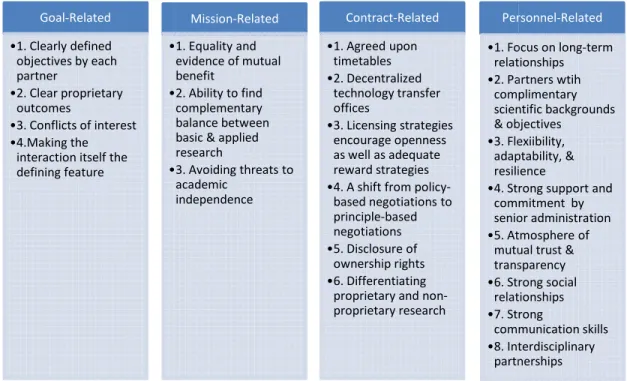
6.6.1 Goal-related barriers ... 64
6.6.2 Mission-related barriers ... 73
6.6.3 Contract-related barriers ... 78
6.6.4 Personnel-related barriers ... 89
6.7 Characteristics of successful partnerships ... 93
6.7.1 Goal-related characteristics ... 95
6.7.3 Contract-related characteristics ... 100
6.7.4 Personnel-related characteristics ... 106
6.8 Conclusions of the literature review ... 112
6.9 Limitations of the literature review ... 113
7.0 Study design and methodology ... 115
7.1 Theoretical approach to the research questions... 115
7.2 Study design ... 117
7.3 Key informant interviews ... 118
7.4 Recruitment of study participants ... 118
7.5 Key informant interview format ... 127
7.6 Document review ... 130
7.7 Case perspective analysis ... 131
7.8 Data analysis ... 132
7.9 Limitations to the methodology ... 137
8.0 Findings and results ... 139
8.1 Why academic-industry partnerships exist ... 140
8.2 Barriers to successful partnerships ... 148
8.2.1 Case perspective #1 – When research findings and industry expectations clash ... 167
8.3 Characteristics of successful partnerships ... 184
8.3.1 Case perspective #2 – From mediocrity to excellence ... 188
9.0 Discussion ... 217
10.0 Plan for change ... 223
10.2 Further thoughts on change from Kotter ... 226
10.3 Reported barriers and solutions ... 227
10.4 Kingdon’s theory of agendas, alternatives and public policies ... 229
10.4.1 Kingdon’s problem stream ... 232
10.4.2 Overview of the “problem stream” plan for change ... 233
10.4.3 Kingdon’s policy stream ... 235
10.4.4 Overview of the “policy stream” plan for change ... 236
10.4.5 Kingdon’s “political stream” ... 238
10.4.6 Overview of the “political stream” plan for change ... 240
10.5 Evaluation of the plan for change ... 241
10.6 Broader implications of the plan for change ... 242
11.0 Closing comments ... 245
Appendix A - Interview recruitment letter ... 246
Appendix B - Interview consent form ... 248
Appendix C - Guideline for interview questions ... 250
Appendix D - Interview key ... 254
Appendix E - Key informant themes & number of statements coded per theme ... 256
Appendix F - Sample excerpts from key informant interviews ... 259
LIST OF TABLES
Table 1 – Selected examples of successful commercial
academic-industry partnerships ... 15
Table 2 – Conceptual framework ... 22
Table 3 – Selected databases ... 24
Table 4 – Search terms ... 25
Table 5 – Evolution of academic-industry partnerships ... 32
Table 6 – Increase in university funded research ... 35
Table 7 – Types of academic-industry partnerships ... 38
Table 8 – Types of academic research partnerships ... 39
Table 9 – Types of academic-industry orientations ... 41
Table 10 – Models of academic-industry partnerships ... 43
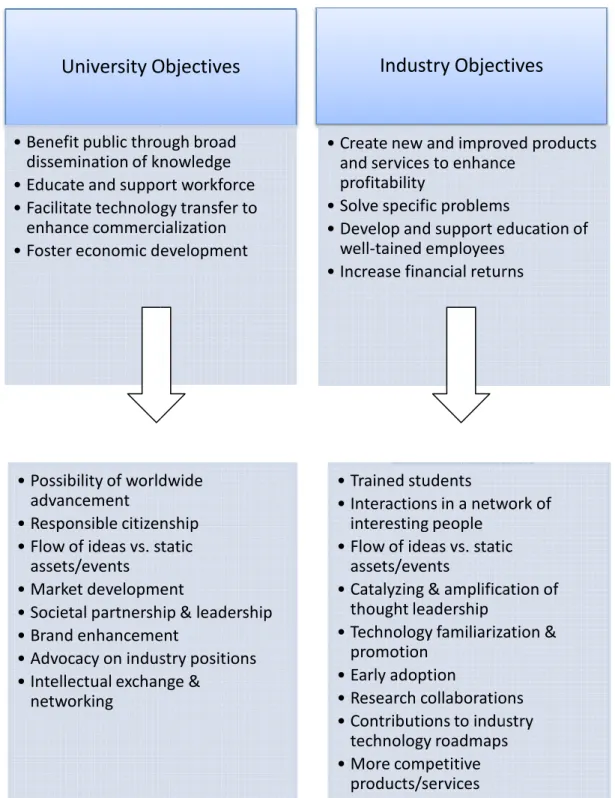
Table 11 – Academic & industry partnership objectives ... 44
Table 12 – Reasons universities & industry partner ... 48
Table 13 – Attributes of academic-industry partnerships ... 58
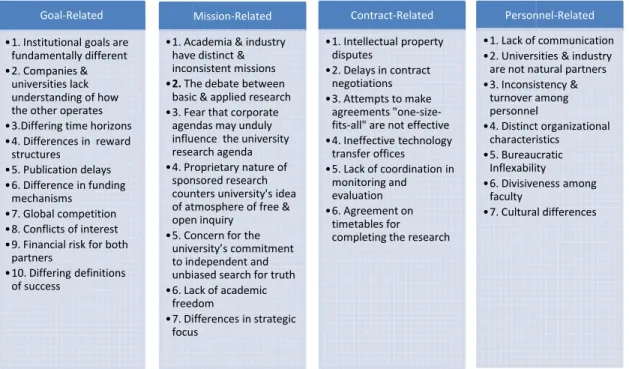
Table 14 – Barriers to academic-industry partnerships ... 64
Table 15 – Characteristics of successful academic-industry partnerships ... 112
Table 17 – Analysis of key informant interview participation ... 124
Table 18 – Professional background of academic informants ... 125
Table 19 – Academic informants by type of academic institution ... 126
Table 20 – Professional affiliation of industry informants ... 126
Table 21 – Process of data analysis ... 133
Table 22 – Summary of reasons for academic-industry partnerships as cited by informants ... 147
Table 23 – Barriers to successful partnerships ... 183
Table 24 – Characteristics of successful partnerships ... 216
Table 25 – The partnership continuum ... 218
Table 26 – Mapping of key findings on barriers to partnerships ... 219
Table 27 – Lewin’s force field model for change ... 225
Table 28 – Reported barriers and solutions ... 228
Table 29 – Kingdon’s policy window model ... 229
Table 30 – Summary of the plan for change within the Kingdon model for policy alternatives ... 231
Table 31 – Plan for change within the Kingdon problem stream ... 232
Table 32 – Plan for change within the Kingdon policy stream ... 236
1.0 EXECUTIVE SUMMARY
The research questions
-This dissertation is the culmination of research that sought to understand what
characterizes successful academic-industry partnerships, what barriers cause them to fail, and
how this knowledge can be utilized to develop better strategies for both academic and
industry partners in pursuit of collaborative opportunities and initiatives.
The framework for this research considered several domains, including the following:
University type
Industry type Nature of project Organizational
issues
Process issues
public agriculture orientation tech transfer intellectual property private pharmaceutical fee for service administration publication
rights/timing land grant food interrogative scientific
participation
cultural issues medical device focused time frame industry
participation
alignment of goals & objectives other long term interdisciplinarity policies
bureaucracy time horizon leadership confidentiality management communication
prior relationship commitment trust
These domains and variables were considered and reviewed in terms of their
contribution and relevance to successful outcomes to both the academic and the industry
participants.
Importance of the research–
Academic-industry partnerships are able to capture the best that each of the individual
partners has to offer: the strength of academic research in focusing intellectual capital and
resources on long-term collaborative projects with the applied research and technological
development of industry. Academic contributions have become increasingly important to
economic success and entrepreneurial science as industries have become more dependent on
open innovation models. Academic research has become increasingly dependent on
collaborations with industry for sponsored research and other partnership opportunities as
federal research funding has dwindled. These partnerships have the potential to pair
discovery and dissemination of knowledge and workforce development to facilitate economic
growth and contribute to the public good.
Methodology –
The study design for this research involved the collection of both primary and
secondary data. Primary data collection consisted of a series of 57 key informant interviews
conducted through a purposive sampling of semi-structured interviews. Interviews lasted an
average of 43 minutes and were conducted in person and by telephone. Two of these
semi-structured interviews were selected for a more detailed case perspective analysis. Informants
years and were from a variety of backgrounds, including public and private universities,
industry and institutional settings. In selecting the informants, consideration was given to
geographic, industry, and academic representation in order to assure a high level of
credibility. Secondary data collection consisted of a document review of publicly available
information regarding academic-industry partnerships, including websites, annual
publications, written policies and guidelines, meeting notes from conferences and other
industry meetings.
Upon completion of the primary and secondary data collection, a thematic analysis
was conducted using notes memos, transcriptions and digital recordings. These transcriptions
were analyzed using coding to identify pertinent themes, patterns and concepts.
Findings–
Findings of the research were summarized in three categories and described below:
1. Why academic-industry partnerships exist
1. Partnerships offer opportunities for early introduction to industry for students; Industry gets an early look at talent within the university as potential employees.
2. Ability to refine academic curriculum to better prepare students for real world experience in the workplace.
3. Enhanced faculty retention as a result of opportunities for industry collaboration. 4. Economic development opportunities.
5. Harnessing of intellectual capital of academic scientists to help industry achieve novel solutions and speed to market.
6. The ability to marry the basic research of academic science and practical application of industry commercialization.
2. Barriers to successful partnerships
1. Discussions regarding intellectual property rights and ownership often prohibit partnerships from ever getting off the ground.
2. University researchers often have difficulty meeting the time tables and schedules required by industry partnerships, creating issues of accountability and reliability.
3. The culture of academic and industry scientists is inherently different.
4. Technology transfer offices are often under-staffed or staffed with individuals who have little experience with the commercialization process, often making the documentation process to establish a partnership cumbersome and lengthy.
5. Unrealistic expectations, due to a lack of clarity of goals and objectives, time frames and other deliverables, often cause the relationship to collapse.
6. Overhead rates are a source of misunderstanding and misinterpretation and greater transparency is needed to avoid potential conflicts.
7. Partnerships will not survive if the publication rights of either faculty or students are jeopardized.
8. A change in personnel among either side of the partnership threatens the continuity of the research initiative.
9. Changing priorities by either side of the partnership may threaten the research initiatives by making the project irrelevant.
10. Internal issues and intra-organizational struggles, conflicts and shifts of power may hinder the execution of the project goals and struggles. Bureaucracy, either within the university hierarchy or the corporate organizational structure, makes it difficult to communicate issues and problems.
11. Confidentiality issues may impact the development of partnerships because of the fear that proprietary information may not be adequately protected.
12. The university’s mission of providing academic freedom to its faculty and students to perform basic research cannot be compromised.
3. Characteristics of successful partnerships
1. Long-term partnership relationships are more successful than short-term projects. 2. A strong element of trust exists between the partners.
3. Clear alignment of goals and overlapping missions. 4. Partnerships provide a win-win situation.
5. Effective communication skills.
6. Interpersonal relationship or prior experience with the partner. 7. Reputation and expertise of the partner.
8. The ability to iron out problems at the beginning of the relationship. 9. Flexibility.
10. A manager who keeps the project on track. 11. Well-trained tech transfer staff.
12. The presence of an internal champion. 13. Support from the top.
An analysis of the rationale for partnerships and an examination of the barriers to and
characteristics of successful partnerships led this researcher to focus upon collaboration and
the building of coalitions. Partnerships were observed to exist along a spectrum beginning
with coordination, extending to cooperation, and finally building to true collaboration.
Barriers to high levels of collaboration were characterized and mapped in several categories
that addressed individual, relationship, community, and organizational and societal factors.
Underlying successful partnerships that were identified were several critical and fundamental
qualities exhibited by the individual partners. These qualities are:
- Trust
- The ability to form interpersonal relationships
- The ability to align goals and objectives
- The presence of strong communication skills
- The ability to look at the relationship as a true partnership
A heightened level of social capital must be developed between the partners in order
to create the trust necessary to achieve the high level of collaboration which is characteristic
of successful partnerships. Partnerships will not succeed absent the presence of complete
trust. There must be a shared vision and direction and no desire to manipulate the partnership
to the greater benefit of one of the partners. Unless goals have been aligned such that there is
a clear understanding of the mission and objectives, the partnership will not succeed.
Plan for change –
Before change can occur, the areas of resistance to change must be acknowledged and
addressed. Following Yukl’s model (2006, 285-286), seven potential areas of resistance were
1. Partners do not trust the people who propose the change. 2. The belief that change is unnecessary.
3. The belief that change is not feasible or that the plan is unlikely to succeed. 4. The potential of higher costs in doing things a different way.
5. Fear of personal failure. 6. The threat to values and ideals. 7. The threat of interference.
In order to evoke change, people must acknowledge the need and perceive that they
have a choice in determining how to change. Such change will involve creating the necessary
vision, communicating that vision widely, empowering a broad base of people to take action,
ensuring credibility, and anchoring these new approaches in the organization’s culture.
The barriers to successful partnerships that were identified in the key informant
interviews were addressed with potential solutions.
Reported barrier Potential solution
1. Intellectual property rights & ownership
Open communication and discourse, trust in the partnership effort, convergent vision
2. Accountability issues relating to timetables and schedules
Open and frequent conversation and reporting structure, established measurables and end goals, clearly defined objectives
3. Cultural differences Building interpersonal relationships, shared beliefs and missions, skilled communication
4. Poorly staffed tech transfer offices resulting in lengthy documentation process
Ability to see strategic partnership opportunities, working through contract issues at onset of partnership
5. Unrealistic expectations & lack of clear goals and objectives
6. Overhead rates and lack of transparency
Trust, effective communication
7. Publication rights Willingness to understand the academic mission of education, trust, confidentiality
8. Changes in personnel Strategic relationships and interpersonal
connections that override individual preferences and “pet projects”
9. Changing priorities Strategic goals that supersede individuals’ goals and speak to the mission of the partner organizations 10. Internal issues & intra-organizational
struggles
Belief in the common overarching mission of the partnership
11. Confidentiality Clear understanding of what is acceptable to each of the partners
12. Academic freedom Indisputable acceptance of the academic mission
Kingdon’s theory (2002) suggests that policy alternatives exist across three
independent streams: problems, policies, and politics. According to Kingdon, problems are
matters of interpretation and social definition which will only be perceived as legitimate
issues when there is adequate pressure to take action. Policies are formed when ideas float
around, forming combinations and recombinations, and in many ways are more defined as
mutations of familiar concepts as opposed to entirely new ideas. In order to facilitate policy
change, a high level of social interaction and shared social capital must exist among the
stakeholders. The political stream is impacted when groups and shareholders achieve
consensus, allowing them to have significant impact on policy agendas and outcomes.
A summary of the plan for change action items along the three policy streams, the
Change within the problem stream 1. Oral presentation of dissertation research findings
2. Dissemination of written research findings through white paper
3. Industry conferences and symposiums
4. Submission of findings in scientific journals or scholarly publications Change within the policy stream 1. Establishment of monthly scheduled
meetings to discuss partnership progress 2. Mentoring opportunities for young faculty
and industry employees on the NCRC 3. Poster presentation at fall symposium at
NCRC
4. Establishment of Chemistry 101
Changes within the political stream 1. Sharing of research findings with policy makers and leaders
2. Consensus building and policy
development among NCRC faculty and industry officials
Evaluation of the plan for change–
Outcome measures will be qualitative, and will involve personal, sociological and
professional levels. Personal interviews with participants in the plan for change will provide
rich information concerning barriers and successes, and can be used to further refine working
groups, dissemination of information and policy recommendations. Feedback will be
gathered on a quarterly basis as a result of systematic monitoring and evaluation in the form
of formal interviews with stakeholders and informal monitoring of interactions at meetings,
Closing Observations–
An integrated set of policies is needed to address the complex exchange between
academia and industry: one which addresses education, development, research and
development, recruitment, potential employment of students and job creation. These policies
must strike a delicate balance between entrepreneurship and the autonomy of research and
innovation that can give rise to novel discovery and commercialization of new industry.
Further research is needed to clarify the actual mechanisms necessary for a more
comprehensive, intersectoral policy development approach that incorporates an institutional
2.0 STATEMENT OF THE ISSUE
Academic-industry partnerships have grown rapidly over the past twenty-five years.
At times, the efforts of academia and industry appear to be aligned and, at other times,
collaborative efforts between the academic and industry communities are characterized by
frustration and friction. Industry partners view university researchers as a source of ideas and
innovation, as catalysts for accelerating technological advances, as individuals who can
validate their products and lend credibility to their judgment, as vehicles for increasing their
organization’s competitiveness, and finally, as developers of talent that can sustain their
organizations. University partners, saddled with the uncertain reliance on local and state
resources for their financial support, have begun to develop collaborative relationships with
industry for revenue contribution, including sponsored research, technology transfer, and
licensing opportunities, as well as forwarding their mission of economic development and
job creation set forth by the early land grant and public universities. Yet the disparate goals,
objectives, organizational characteristics, and operational capabilities of each partner often
make these partnerships challenging to implement and more difficult to sustain.
The strengths of academic research - principally the resources to focus on long-term,
fundamental risky goals and to mount broad collaborative projects – complement the basic
and applied research and development performed by industry. Universities are a source not
only of scientific and technological ideas that lead to new products and process, but also of
new technologies and therefore to embrace continued innovation. As industries have become
more dependent on open versus internal innovation models, new skills, and technological
prowess, academic contributions have become increasingly critical to economic success and
important to a new wave of “entrepreneurial science,” a “high-impact, problem-based,
approach to the world’s biggest problems that produces measurable results in terms of public
benefit” (Thorp & Goldstein, 2010, 23).
The contributions of academia to the pharmaceutical industry, with treatments for
AIDS, the commercialization of insulin, and the development of chemotherapy drugs like
Taxol for the treatment of many forms of cancer, along with contributions to the field of
nutrition, with vitamin-enriched milk and the development of Gatorade; agriculture, with
enhanced growing and breeding techniques; information technology with the development of
software and internet protocol; biotechnology and medicine with the development of DNA
sequencing and other biologic drugs; and energy, with the development of the insulated gate
bipolar transistor, are but a few of the obvious contributions that universities have made to
industry and the public good. But less obvious than these commercial contributions are those
to the local, regional, and national economy through the production of well-trained graduates
entering the workforce and the ability to work hand in hand with industry to tackle the
world’s most pressing health issues and accelerate finding solutions to these problems.
Academic-industry partnerships have the potential to pair discovery and
dissemination of knowledge and workforce development with the creation of goods and
services. They can endow society with a private and public good that exceeds the combined
contributions of the parties. These contributions include economic growth, improved
academic-industry partnerships should be to create value and the public good while satisfying
the mission and objectives of each partner.
The university can be an integral partner with industry in ways that accelerate
translation of research findings into practical applications which can achieve technological,
health-related, and economic objectives that have a positive impact on society. Despite the
mutual advantages that such partnerships afford, there are frequent chasms among the
partners that serve to damage these relationships, sometimes before they have the opportunity
to develop. The focus of this dissertation is to explore variables that make academic-industry
partnerships successful, to understand the issues that often serve as obstacles and barriers to
these partnerships, and therefore, to understand how better to overcome these issues to
3.0 SIGNIFICANCE OF THE ISSUE
New technology ventures which originate in university laboratories fulfill a “bridging
function between curiosity-driven academic research on the one hand and the strategy-driven
corporate research on the other hand” and have “the potential to introduce technological
disequilibria” that can alter the rules of competition in existing industries and can provide a
“breeding ground for new venture creation” (Debackere & Veugelers, 2004, 326). As early as
the 1945 ground-breaking report by Vannevar Bush, science advisor to Presidents Roosevelt
and Truman, it has been recognized that research partnerships “hold the key to meeting the
challenge of transition that our nation now faces” (Bush, 1945, 2-3). Mowery further
commented that academic-industry partnerships represent a critical strategic response to
global competition and a shift of “increased reliance by U.S. firms on sources of R&D
outside of their organizational boundaries through such mechanisms as …. collaborations
with U.S. universities” (Mowery, 1998, 646). These new open innovation models allow for
the random collision of ideas that often are the precursors of successful partnership
opportunities.
The globalization of our economy, which has inextricably changed the nature of
corporate innovation and competition, has resulted in corporations placing a premium on
products and processes that are derived from scientific innovation. This increased demand by
industry, coupled with a decrease in federally funded research, has placed market-like
support and funding for research, resulting in what Slaughter and Leslie (1997) refer to as
“academic capitalism.” In addition to the decline in federal funding, universities have been
forced to adapt quickly to the changing environment in research administration due to
additional factors such as decreased state funding, increased competition for extramural
funding, regulatory compliance issues, financial compliance, and auditing (Casey, 2005, 10).
Today, nearly two-thirds of the department chairs of universities located in the United States
have some sort of personal interaction with industry, including roles as consultants, members
of scientific advisory boards, paid speakers, or as a member of a board of directors
(Campbell et al., 2007, 1783).
Academic advances in molecular biology have contributed to commercial success
within the pharmaceutical industry with the discovery of small molecule synthetic chemical
drugs, such as the closing of target receptors used to screen new compounds, as well as
through advances in combinatorial chemistry which have allowed for quicker synthesis of
hundreds of thousands of experimental substances for preliminary screening. Academic
scientists also have contributed powerful advances in structural biology using x-ray
crystallography; nuclear magnetic resonance to allow the more precise molecular design of
drugs; and chip technology, using DNA assays, to permit the molecular separation of
phenotyping to enhance diagnostic and therapeutic drug development. University physics,
mathematics, and engineering professors have contributed research essential to the
development of high performance computing and advanced instrumentation, new medical
devices, and new scientific and technological principles, designs, and materials that have
allowed industry to downsize their basic research laboratories, making academic research all
There are numerous examples of the powerful influence of corporate partnerships in
the academic process (Table 1). The University of Utah’s semi-conductor work led to Cirrus
Logic, while Genentech’s roots lie at the University of California at San Francisco, MIT and
Biogen, Stanford University and Google, Hewlett Packard and Yahoo!, Carnegie Mellon
University and internet search engine provider Lycos, are all examples of successful
commercialization originating from academic research (Shane, 2005, 34). North Carolina
State University’s Aseptin and Biolex Therapeutics UNC Chapel Hill’s Algynomics,
AlphaVax, and Inspire, and Duke University’s Trimeris, Angiomics, Bradmer, and Cellective
Therapeutics are also examples of recent commercial spin-offs. By the early 1940’s, over
fifty companies in the United States were supporting 270 biomedical projects in over 70
universities (Carlson, 2000, 41), as depicted in Table 1.
Table 1: Selected examples of successful commercial academic-industry partnerships
(Rogers et al., 2000, 257; Libecap, 2007, xi; Blumenstyk, 1999; Fraser, 2008, 10, Thorp & Goldstein, 2010, 34; Blumenstyk, 2001, 2; Blumenthal, 2003, 2452)
Emory University $320M for development of Emtriva for
AIDS treatment
University of Pennsylvania Development of electronic calculator during 1940s led to advances in computer industry
University of Toronto, University of Rochester and Eli Lilly
Early twentieth century commercialization of insulin and liver extract to cure
pernicious anemia.
MIT 1960s launch of fiber optics stimulated
growth in telecommunications industry
Stanford University, University of California- Berkley
recombinant DNA gene-splicing patent
University of Illinois 1980s supercomputing led to developments
in internet protocol
California Tech, Johns Hopkins DNA sequencing, human genome project, advanced pharmacogenomics
Florida State University Development of chemotherapy drug Taxol
Michigan State University Cancer treatment drugs Cisplatin and Carboplatin, yielding $160M
University of Florida $37M earnings from Gatorade
University of Toronto Infant food Pablum
University of Wisconsin Vitamin-enriched milk
Iowa State University $27M fax algorithm
Indiana University Stannous fluoride used in Crest toothpaste
University of Iowa Bufferin
University of Illinois Mosaic, browser software for Netscape
Northwestern University Led licensing revenues in 2007 with $824M for partial rights to pain-relieving drug Lyrica
Johns Hopkins University Record 12 spinoffs in 2008, including Amplimmune, used to develop biologic drugs to train immune system to kill cancerous tumors
University of California Led licensing revenues in 2007 with $146M
University research is often linked to the community and the needs of local industry.
For example, Purdue University has contributed significantly to the development of the
locomotive technology; the University of Oklahoma was an important participant in the
development of the petroleum industry, and the University of Akron was a major contributor
in the field of polymer science (Rosenberg & Nelson, 1994, 326).
The following key facts underscore the global significance of academic-industry
partnerships:
• As of 1994, companies invested over $1.5 billion to support over 6,000 life science
projects in U.S. universities, accounting for about 14% of total academic research
funding (Blumenthal, 2003, 2454).
• A 2010 survey by the Association of University Technology Managers (AUTM)
identified tech transfer activities at 183 different universities. Survey respondents
reported 651 new spinout companies in 2009, an increase of 10.6% over 2008, and
4,284 newly executed licenses. Total sponsored research in the 183 universities was
$59.1 billion, a 9.6% increase over the previous year. Research funding from industry
contributed $4.3 billion, an increase of 5.6% over the previous year
(www.autm.net/AM/Template.cfm?Section=FY_2010_Licensing_Survey).
• From 1980 to 1999, American university spin-offs were estimated to have generated
280,000 new jobs, a rate of job creation per company that greatly exceeds the rate of
the average new company in the U.S. economy during the same period (Shane, 2005,
34).
• Pharmaceutical and large biotechnology companies increased research and
development spending by 147% from 1993 to 2004, and since the beginning of 2008
alone, Merck, Glaxo Smith Kline, AstraZeneca, and Pfizer have all established
multi-million dollar, multi-year collaborations with academic institutions across a number
of therapeutic areas (Melese et al., 2009, 502). A substantial portion of the total $55
billion to $60 billion of industry research and development investment in basic
biomedical discovery and clinical trials occurs within universities (Moses & Martin,
2001, 933).
• The direct economic impact of university spin-off companies from 1980 to 1999 was
$33.5 billion, or roughly $10 million per company founded.
• University technology transfer offices at U.S. universities increased dramatically
from 25 in 1980 to 200 in 1990. The number of university patents issued annually
more than doubled from 264 to 551 from 1979 to 1984, and doubled again to 1228
from 1984 to 1989. In 2002, 3,673 patents were issued to U.S. universities and
research institutes (Shane, 2005, 199).
In 2001, the Business Higher Education Forum issued a report entitled “Working
Together, Creating Knowledge: The University-Industry Research Collaboration Initiative.”
The report acknowledges that the “rise of a knowledge society is based largely on the
collaborative generation and the use of information” (Business Higher Education Forum,
2001, 3). It maintains that “no one scientist, institution or even nation can sufficiently
conduct wholly independent research programs” and that “rising costs, driven by increasingly
In 2006, the National Council of University Research Administrators and the
Industrial Research Institute jointly issued a study entitled “Guiding Principles for
University-Industry Endeavors” that addressed the serious issues that face academic-industry
partnerships. This report was a result of the first Industry-University Congress which was
held in 2003 and which focused on the importance of strong academic-industry partnerships.
The Congress established as its focus the deliberation of “the causes of, and potential
solutions to, the difficulties facing universities and companies when attempting to work
together” (National Council of University Research Administrators, 2006, 2). The
preamble’s opening statement appropriately underscores the significance of these
relationships:
“University-industry collaborations pair the discovery and dissemination of
knowledge with the application of that knowledge to the creation of goods and services.
Properly constructed, these collaborations ultimately endow society with a public good far
exceeding the combined contributions of the parties: economic growth, an improved standard
of living, an extension of humanity’s intellectual reach. In the broadest sense, the goal of
university-industry collaborations should be to create this public good while simultaneously
satisfying the mission and objectives of each partner.”
Despite the obvious advantages, questions concerning these relationships persist.
Universities are constantly asking themselves to what degree they should enter into
agreements with commercial concerns, and industries are perpetually contemplating how
they can access the cutting edge research capabilities of U.S. universities in order to solve
problems of national economic importance and give themselves a commercial edge over their
Notwithstanding the challenges, the potential rewards to each side are vast. For
industry, the access to research innovation as well as academia’s ability to see problems
through perspectives that are not burdened by commercial concerns is a potentially
invaluable advantage. For the academic institution, students, faculty and scientists gain the
opportunity to investigate real world problems whose solutions can potentially generate
valuable and far-reaching economic and social benefits. Academia offers intellectual
horsepower and a fresh perspective to a set of problems, while industry contributes an equal
but focused intellectual horsepower supplemented by business-oriented project management
discipline. When both parties to the relationship understand and value their respective roles,
4.0 THE RESEARCH QUESTIONS
Nearly every industrial country is focused on making the academic-industry
partnership a centerpiece of its innovation system. With this embracing of technology as a
key to innovation and development, the importance of developing partnerships with research
universities and harnessing the brainpower of the university researchers has become even
more significant.
1. What are the characteristics of successful academic-industry partnerships?
2. What barriers can be identified that cause these partnerships to falter or fail?
3. How can this knowledge be utilized to develop better strategies for either industry or
academic partners in their pursuit of future partnership relationships in terms of
developing long-term partnerships, project specific partnerships, or other research
related partnership initiatives?
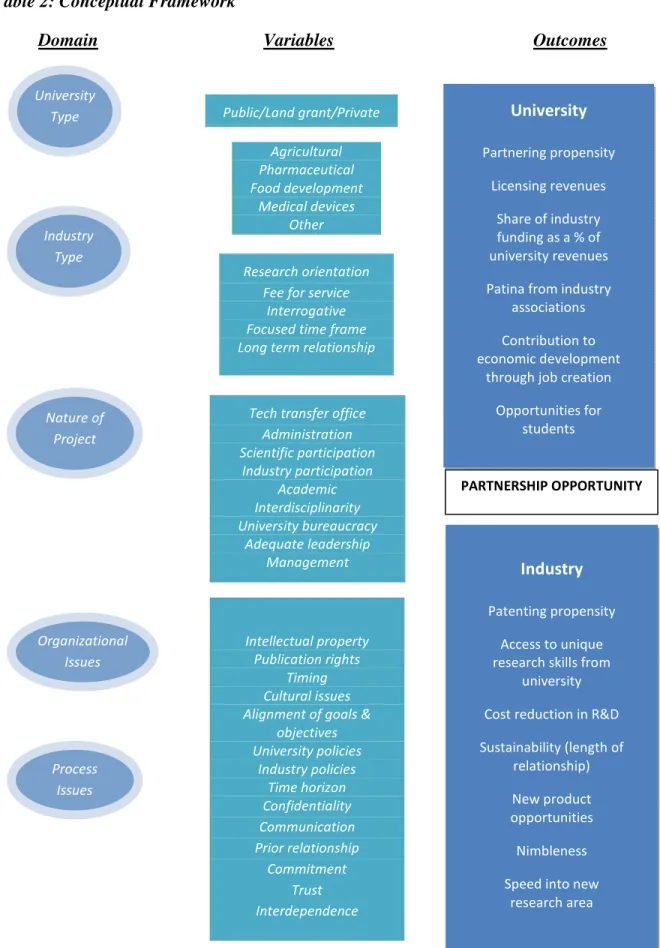
Table 21illustrates the conceptual framework which will be utilized when considering the aforementioned questions.
1
University Type Industry Type Agricultural Pharmaceutical Food development Medical devices Other PARTNERSHIP OPPORTUNITY Nature of Project Organizational Issues Process Issues
Table 2: Conceptual Framework
Domain Variables Outcomes
Public/Land grant/Private University
Partnering propensity
Licensing revenues
Share of industry funding as a % of university revenues
Patina from industry associations
Contribution to economic development
through job creation
Opportunities for students
Research orientation Fee for service
Interrogative Focused time frame Long term relationship
Tech transfer office Administration Scientific participation Industry participation Academic Interdisciplinarity University bureaucracy Adequate leadership
Management Industry
Patenting propensity
Access to unique research skills from
university
Cost reduction in R&D
Sustainability (length of relationship)
New product opportunities
Nimbleness
Speed into new research area
Intellectual property Publication rights
Timing Cultural issues Alignment of goals &
5.0 LITERATURE REVIEW
The literature review for this topic focused on the relationship between several
selected variables, including academic research and subsequent commercialization, the
partnerships for research between academia and private industry, and technology transfer
within universities, particularly when in collaboration with industry partners. Articles were
included that are both descriptive and relational, studies which contained observational data
and those containing surveys, interviews and qualitative analysis.
A review of these articles suggests which qualities define a successful partnership and
what obstacles, issues or problems may arise in the relationship between academia and
industry as a result of these types of collaborations. By reviewing “success stories” we are
able to better define best practices for these partnerships. A systematic review of
academic-industry partnerships provides the basis of a better understanding of the components of a
successful working relationship between academic researchers, industry researchers, and
subsequent product development. Likewise, a review of the literature explored barriers to
these partnerships and a review of issues and problems that prevent these collaborations from
achieving success.
Literature was selected that reviewed partnerships with both public and private
academic institutions within the United States, Europe, and Asia, with institutions of higher
5.1 Sources
The literature that encompassed the search related to collaboration and partnerships
between academia and industry. All searches were conducted utilizing the University of
North Carolina at Chapel Hill library E-Research capability. Initially, a preliminary search
of the following databases was conducted: Google Scholar, Public Administration Abstracts,
ERIC, Lexis Nexis and Academic One-File. While the scope of this study did not afford the
time to pursue alternative research venues, it is anticipated that a further review would
include publicly available reports from technology transfer offices from both public and
private universities throughout North and South Carolina.
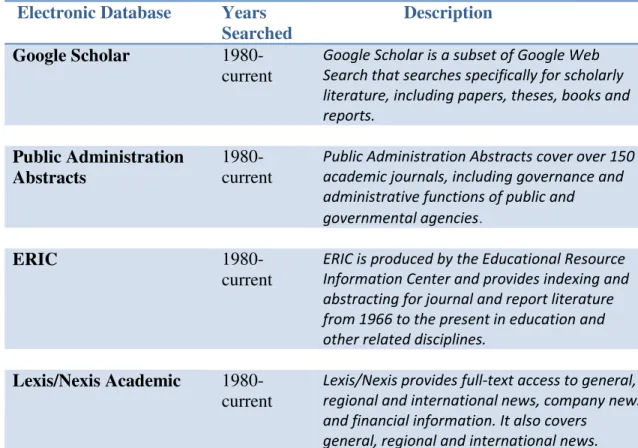
Table 3 lists the databases which were selected:
Table 3: Selected databases
Electronic Database Years Searched
Description
Google Scholar
1980-current
Google Scholar is a subset of Google Web Search that searches specifically for scholarly literature, including papers, theses, books and reports.
Public Administration Abstracts
1980-current
Public Administration Abstracts cover over 150 academic journals, including governance and administrative functions of public and governmental agencies.
ERIC
1980-current
ERIC is produced by the Educational Resource Information Center and provides indexing and abstracting for journal and report literature from 1966 to the present in education and other related disciplines.
Lexis/Nexis Academic 1980-current
Lexis/Nexis provides full-text access to general, regional and international news, company news and financial information. It also covers
Academic Search Premier
1980-current
Academic Search Premier covers popular and scholarly journal articles with many full-text articles and provides information from a wide range of academic areas including business, social sciences, humanities, general academic, general science, education and multi-cultural topics. This multidisciplinary database features full-text articles for over 4,000 journals with many dating back to 1975, abstracts and indexing for over 8,200 scholarly journals. It also includes coverage of over 6,800 peer-reviewed journals.
5.2 Search terms
The table below indicates the search terms that define the variables being explored by
the research question. Table 4 describes the combinations of the key terms that were used in
searching all five databases.
Table 4: Search terms
Public University AND Private Industry AND Collaboration OR
University AND Corporate AND Partnership
OR
Academic AND Business AND Collaboration
OR
Academia AND Technology
Transfer
AND Relationship
OR
Higher Education AND Private Corporation
AND Productivity
OR Academic
Research
AND Life Sciences Companies
5.3 Criteria for inclusion
Only journal articles and books that were obtained through the use of the electronic
databases indicated above were included in this review. The review encompasses a
comprehensive survey of peer-reviewed articles from 1980 through 2013. In addition, several
articles and books from earlier than 1980 were included in the review. Only articles in
English were included, although articles that discussed academic/corporate partnerships in
Europe, China, and Japan also were reviewed.
The research did not seek to exclude academic-corporate partnerships in any industry
sector. The research includes findings from partnerships as diverse as weapons
manufacturing, microelectronics, nutrition, and pharmaceutical development.
Articles that were included were selected with a focus on development of findings
that would be applicable to a variety of settings, in smaller university settings as well as
larger, research-oriented institutions.
5.4 Criteria for exclusion
Articles that were not from scientific or academic databases were not considered.
Articles that focused on research initiatives and/or partnerships between federal or state
government and university researchers as opposed to corporate/university partnerships were
excluded from this review.
Articles were reviewed taking a broad approach to the success and failure of
academic-industry relationships. Although the focus of my question is idiosyncratic to the
private industry and public institutions, the results of the analysis can be generalizable to
multiple types of public-private partnerships and a variety of research initiatives.
5.5 Process for article review
Articles were selected through the use of the five databases previously discussed
through the use a systematic literature survey to filter and summarize results. As was
previously discussed, a list of key phrases was identified and utilized, and articles were
selected through the utilization of the criteria for inclusion and exclusion previously set forth.
Articles were first reviewed on the basis of the title. If the title did not offer promising
information, the article was excluded. Further relevant references were found through the use
of the snowballing technique. A review of the abstract, if available, was then performed. The
abstract was then evaluated based on whether the content was directly related to the subject
matter, relationships between academia and industry.
After a review of the abstract, articles and books were selected for full review. Each
article was read and a summary was made of each article, including article identification,
author, source, date, data base from which the article was obtained, institution or industry
partner, if applicable, type of collaboration, and variables affecting the partnership ( for
example, open-ended vs. project-based research project, length of relationship, complexity of
technology transfer agreement, embedded industry partner vs. “for fee” university scientific
research, policy issues, and additional funding mechanisms involved in the partnership, for
example federal or private grants).
Articles were then collected and saved electronically in EndNotes entitled
relevant and based upon evidence of sufficient quality and information. Complementary
information was taken from websites, conferences and other reports that were published by
government agencies, professional organizations and other academic affiliations.
5.6 Findings
Overall, the PubMed, GoogleScholar and Academic Source Premier databases proved
to be the most beneficial sources of pertinent articles and resources. The measurement of
academic-industry research is relatively undeveloped and sometimes ambiguous, as the task
of isolating, tracking and measuring these successes over time given the massive
contributions of a given body of academic research to the performance of particular industry
sectors, corporations, universities and regional economies is complex and difficult.
Several of the articles reviewed featured studies that incorporated interviews with life
science companies, academic researchers, and university leadership. For example,
Blumenthal (1994, 183-185) cites a study of 100 U.S. universities in which it became
apparent that there were a wide variety of relationship structures and an even wider variety of
management approaches to dealing with these relationships. A study cited by Hall et al.
(2001, 88-90) included 38 academic-industry projects and discussed the difficulties that
existed in these partnerships. Anthony’s survey of 210 life science companies (Blumenthal et
al., 1996, 368-374) indicated numerous responses regarding disputes over intellectual
property. Campbell’s (Campbell et al., 2002, 473) more recent study mentioned a high
frequency of disagreements regarding the data confidentiality and publication rights.
It should be noted that the literature involving academic-industry partnerships is quite
have taken a quantitative approach to the definition of “success” through a measurement of
patents, licensing revenues, spin-offs and cooperative authorship of academic papers and
articles. These are undoubtedly benchmarks of academic-industry success. However, these
quantitative measures do not allow for such determinants as organizational structure, social
relationships or other interpersonal factors, nor are they capable of measuring the benefits
such partnerships may ensue over time, such as philanthropic contributions, other corporate
support for the university or long term research support by industry, to enumerate but a few
of the potential successful interactions. Additionally, research that is based only upon the
results of patent data does not account for collaboration that does not result in patents but
instead leads to other types of innovation where patents are not an important element.
Many of the articles which were reviewed are rich in survey data which have been
collected from members of both industry and academia. These studies offer considerable
breadth and they are able to capture a variety of academic-industry linkages. However, the
nature of surveys does not allow for a great amount of detail in characterizing these
relationships with a high degree of profundity. Some of the articles reviewed provided
qualitative analysis, such as the use of interviews, and were able to provide more detail and
understanding of individual arrangements, but did not necessarily provide a reliable
evaluation of the impact and consequences of these relationships. Success in many of the
articles is measured by an analysis of number of patents, licensing revenues and
commercialization success. The focus of this study will be on these attributes as well as other
facets of successful academic-industry relationships, including long-term research funding
and partnerships, philanthropic involvement in the university, funding for basic research
contained articles that view these types of partnerships as relationships consisting of “social
pathways through which information, knowledge and other resources are exchanged or
jointly produced through academia and industry working together” (Perkmann & Walsh,
6.0 OVERALL FINDINGS OF THE LITERATURE REVIEW
6.1 Background and historical review of academic-industry partnerships
6.1.1 The division of applied and basic science
Historically, the division between the mission and purpose of academia and industry
was relatively straightforward and uncomplicated: universities were formed with the purity
of contributing to knowledge for knowledge’s sake, and it was industry’s mission to find a
way to use this knowledge. Applied science and science-for-profit were considered less
prestigious occupations than science for its own sake (Feldman & Desrochers 2004, 116).
However, in reality, universities not only provided education and job training to the masses
in the post World War II era, they provided an excellent platform for the investigation of the
intersection of technologies within the university itself. The more recent move toward
translational research has further muddied what some believe the earlier mission of the
university to have been. Paradoxically, it is the early clarity of division of purpose and
mission which sets the stage for a divergence that has sometimes made academic-industry
partnerships fragile and tenuous.
6.1.2 The evolution of the university mission
The evolution of the university’s science mission can be described as encompassing
four distinct phases in which interaction has evolved from passive, non-interventionist forms
of research to interactive partnerships (Jacob et al., 2000, 255-256; Perkmann & Walsh,
Table 5: Evolution of academic-industry partnerships
6.1.3 The university’s evolution as a societal and economic contributor
Universities stayed true to their course of training basic professional careers such as
law or the clergy until the early 1800’s. Universities’ service to the business sector was
largely in the form of providing “trained graduates, independent studies, expert advisors, or
contract research” (Tudiver, 1999, 139). Wilhelm von Humboldt, one of the founders of the
University of Berlin, established a new model that universities throughout Europe and the
United States would follow. Humboldt espoused a new theory that emphasized research as an
integral part of the teaching mission, one that placed a heightened emphasis on science, a
more interdisciplinary approach, and a corporate and social mission that contributes to the
economy and society (Thorp and Goldstein, 2010, 4). In time, academic institutions began to Interactive; based on partnership of knowledge and relationship of parties. Flow of
information and discovery is non-linear, bi-directional, cooperative, and fluid. Establishment of physical place of interaction between academic and industry scientists, based on premise that close physical proximity would result in
problem-sharing and interaction. Patron or sponsorship role between academia and industry.
University as supporter of economic development through state and federal funding as well as direct commission from private sector - academic scientists act
link their basic research to more applied science for the purpose of contributing to the
development of technologies for commercial purposes. German universities, for example,
were a source of valuable scientific discovery for the emerging pharmaceutical industry in
the late nineteenth century (Yusaf & Nabeshima, 2007, 3). Biomedical research flourished at
universities such as the University of Pennsylvania, the University of Delaware, and Rutgers
University, inducing the growth in those locations of such industries as Merck, DuPont, and
Eli Lilly, and the Massachusetts Institute of Technology was a major factor in the growth of
technology-related industries in Massachusetts (Yusuf & Nabeshima, 2007, 3). University
communities served to attract residential growth as well, because of the perceived excellent
quality of life issues associated with university campuses and provided additional economic
growth in retail, residential and commercial sectors.
6.1.4 The impact of the Morrill Act and the land grant institution
The idea of academic-industry collaboration in the U.S. actually predates the civil war
with the Morrill Act of 1862 and the Hatch Act of 1887 and the subsequent establishment of
land grant institutions such as North Carolina State University, which began utilizing their
research capabilities to assist small, rural agricultural communities in developing improved
growing and harvesting techniques and with the installation of agricultural experiment
stations in 1887 (Lee, 2000, 111). Land grant universities were established on the premise of
“creating knowledge that entrepreneurs could use to improve local agriculture and
manufacturing” (Shane, 2005, 33). Underlying the discussions surrounding
academic-industry partnerships is a “social contract” between science and society, an embodiment of
postwar science policy (Bush, 1945, 1-28) in which academia was expected to return the
from public tax dollars. This “contract” is a compelling reminder that the relationship of
science to American democracy is a delicate one (Guston & Keniston, 1994, 6). Further, the
declining trend of U.S. economic and technological competitiveness has resulted in what Lee
(1996, 848) refers to as “neotransferism,” a call to return to the land grant philosophy with a
renewed emphasis on the transfer to industry of knowledge, technology, know-how and a
qualified workforce all in the interest of economic development.
6.1.5 The impact of increased government-funded research
Despite these developments, throughout the first half of the twentieth century, only a
handful of universities engaged themselves in research collaborations with industry. It was
not until World War II that, due to a sweeping increase in government funding for research
and development, universities began to incorporate more comprehensive research aimed at
technology development and the link between university and industry research partnerships
was solidified (Rosenberg & Nelson, 1994, 293). From the period of time following World
War II through 1997 the explosive growth in life sciences funding resulted in 54% of the
overall public research budget being spent in this category, with most of this going to
academia (Gelijns & Thier, 2002, 73).
Table 6: Increase in university
6.1.6
By the mid to late 1990s, over 90% of firms that were conducting research in the life
sciences arena had some type of relationship with a university and about 25% of faculty
members in the life sciences at major U.S. universities had received support from industry .
These same studies showed that over 50% of the faculty members in the life sciences had
consulted for industry and that about 7% of them had held equity in a company that was
performing work related to the faculty member’s research. In 1999, a survey showed that
68% of the universities in the U.S. and Canada held equity in companies that sponsored
research conducted by members of their own faculty (Blumenthal, 2003, 2453).
1940s • 50 companies supported 270 biomedical research projects in 70 universities, according to National Research Council survey (Blumenthal, 2003, 2453).
1960s
•Universities began to establish tech transfer offices.
1970s
•Turning point in growth of university patenting and licensing
industry share of academic research funding increased from 2.7% to 4.1%.
•University patents in areas other than biotech and medicine increased by over 90% from the 1968-1970 period to the 1978
increased by 295% (Shane, 2005, 199).
1980s
•A Study of 1,056 university research centers indcates that more than half were
established during the 1980s, primarily as a result of university initiatives. These centers created more than $2.5B of R&D spending in 1990 (Anderson, 2001, 232).
•Between 1980 and 1983, large pharma poured $140M into research at 13 universities (Blumenthal, 2003, 2453).
1990s
•Industry funding or university research increased to 7.4%, declining to 7.0% by 2005. •Impact of the Bayh Dole Act is evident, helping pave the way to further
commercialization by stimulating patenting opportunities for universities. Before the act's passage, universities produced approximately 250 patents per year, as compared to over 4,800 patents in 1998 alone (Anderson, 2001, 232). 63% of these went to small companies (Golob, 2006, 690).
2000 •AUTM reported an increase in the growth in total gross income for U.S. university and research patents from $200 million in 1991 to over $1.25 billion in 2000 (Casey, 2005, 11).
niversity funded research
6.1.6 Universities as equity holders
By the mid to late 1990s, over 90% of firms that were conducting research in the life
sciences arena had some type of relationship with a university and about 25% of faculty
s at major U.S. universities had received support from industry .
These same studies showed that over 50% of the faculty members in the life sciences had
consulted for industry and that about 7% of them had held equity in a company that was
related to the faculty member’s research. In 1999, a survey showed that
68% of the universities in the U.S. and Canada held equity in companies that sponsored
research conducted by members of their own faculty (Blumenthal, 2003, 2453).
50 companies supported 270 biomedical research projects in 70 universities, according to National Research Council survey (Blumenthal, 2003, 2453).
Universities began to establish tech transfer offices.
Turning point in growth of university patenting and licensing - from 1970 to 1980 industry share of academic research funding increased from 2.7% to 4.1%.
University patents in areas other than biotech and medicine increased by over 90% 1970 period to the 1978-1980 period, while biotech and medical patents increased by 295% (Shane, 2005, 199).
A Study of 1,056 university research centers indcates that more than half were
established during the 1980s, primarily as a result of university initiatives. These centers created more than $2.5B of R&D spending in 1990 (Anderson, 2001, 232).
Between 1980 and 1983, large pharma poured $140M into research at 13 universities (Blumenthal, 2003, 2453).
Industry funding or university research increased to 7.4%, declining to 7.0% by 2005. Impact of the Bayh Dole Act is evident, helping pave the way to further
commercialization by stimulating patenting opportunities for universities. Before the act's passage, universities produced approximately 250 patents per year, as compared to over 4,800 patents in 1998 alone (Anderson, 2001, 232). 63% of these went to small companies (Golob, 2006, 690).
AUTM reported an increase in the growth in total gross income for U.S. university and research patents from $200 million in 1991 to over $1.25 billion in 2000 (Casey, 2005,
By the mid to late 1990s, over 90% of firms that were conducting research in the life
sciences arena had some type of relationship with a university and about 25% of faculty
s at major U.S. universities had received support from industry .
These same studies showed that over 50% of the faculty members in the life sciences had
consulted for industry and that about 7% of them had held equity in a company that was
related to the faculty member’s research. In 1999, a survey showed that
68% of the universities in the U.S. and Canada held equity in companies that sponsored
research conducted by members of their own faculty (Blumenthal, 2003, 2453).
50 companies supported 270 biomedical research projects in 70 universities, according
from 1970 to 1980 industry share of academic research funding increased from 2.7% to 4.1%.
University patents in areas other than biotech and medicine increased by over 90% 1980 period, while biotech and medical patents A Study of 1,056 university research centers indcates that more than half were
established during the 1980s, primarily as a result of university initiatives. These centers created more than $2.5B of R&D spending in 1990 (Anderson, 2001, 232).
6.1.7 Measures of determining success of academic-industry partnerships
Clearly, the Bayh-Dole Act precipitated a flurry of activity by universities in their
management of licensing and patenting new products. University patents in areas other than
biotech and medicine increased by over 90% from the 1968-1970 time period to the
1978-1980 period, while biotech and medical patents increased by 295% (Shane, 2005, 195). The
AUTM report indicates an increase in the growth in total gross income for U.S university and
research patents from $200 million in 1991 to over $1.25 billion in 2000 (Casey, 2005, 11).
It should be noted, however, that the use of number of patents issued should not be
considered a definitive measure of the success or the productivity of academic-industry
partnerships. Patents among universities may vary dramatically in quality. Many factors
contribute to this variance, including the effect of “home run” patents on overall university
patenting revenues, the costs of establishing technology transfer and licensing offices, and
the actual revenues that are generated from patents. That being said, revenues are certainly
not the only reason for licensing among universities. Other motivating factors include faculty
retention and recognition, or issues of regional economic development and the resulting
political goodwill that may result from these activities. Partnership success must be thus
measured using a different yardstick than patent counts – research dollars, length of
partnership relationship, opportunities for students for internships and post-graduate
employment, endowments, contributions through philanthropy, and other support for the
university through financial or non-financial means must be considered when evaluating the