GENERALIST NURSES CARING FOR PATIENTS WITH MENTAL ILLNESS IN A NON-PSYCHIATRIC SETTING
Paula Bird
A dissertation submitted to the faculty at the University of North Carolina at Chapel Hill in partial fulfillment of the requirement for the degree of Doctor of Nursing Practice (Health Care
Systems), in the School of Nursing.
Chapel Hill 2018
Approved by: Cheryl B. Jones Jennifer Leeman
©2018 Paula Bird
ABSTRACT
Paula Bird: Generalist Nurses Caring for Patients with Mental Illness in a Non-Psychiatric Setting
(Under the direction of Cheryl B. Jones)
Purpose: The purpose of this project was to describe an educational intervention that improves the attitudes and self-perceived knowledge and competences of generalist nurses caring for patients with acute psychiatric needs. Summary of the Evidence: There are two critical shortages impacting the mental health care of our nation: the availability of inpatient psychiatric beds, and the limited mental health workforce to provide care. Taken together, patients needing mental health care are often boarded in general hospitals and receive care by generalist nurses who are ill equipped to provide the necessary care. Description: A 6-hour continuing
educational intervention targeting generalist nurses was developed and taught by an experienced psychiatric clinical nurse specialist. Evidence-based guidelines that focused on nursing
competencies and improving nurses’ attitudes were used as part of the program development. Evaluation: Outcomes were measured using the Behavioral Health Care Competency and the Opening Minds Scale for Health Care Providers. The instruments were administered
A 6-hour educational intervention can positively impact the competencies and attitudes of generalist nurses caring for patients in non-psychiatric settings, and these impacts can last for up to 4 weeks. Patients with mental health needs who are admitted to a non-psychiatric setting will benefit from the training generalist nurses receive to improve the nurses’ attitudes and
TABLE OF CONTENTS
LIST OF TABLES ix
LIST OF FIGURES……….x
CHAPTER 1 ... 1
Practice Question ... 4
Purpose ... 5
Chapter Summary ... 5
CHAPTER 2 ... 6
Chapter Introduction ... 6
Search Strategy ... 6
Review of Studies ... 10
Themes ... 10
Perception and Attitude ... 11
Knowledge and Competency ... 14
Chapter Summary ... 18
CHAPTER 3 ... 20
Chapter Introduction ... 20
Attribution Theory ... 20
Swanson’s Theory of Caring ... 22
CHAPTER 4 ... 25
Project Design ... 25
Educational Intervention ... 25
Setting ... 27
Target Population ... 28
Data Collection and Instruments ... 29
Recruitment ... 32
Ethics and Human Subjects Permissions ... 33
Key Personnel/Stakeholders ... 35
Resources and Budget ... 36
Data Analysis ... 36
Chapter Summary ... 37
CHAPTER 5 ... 38
Study Sample ... 39
Goal/Aim 1: Improve Nurses Attitudes toward Mental Illness ... 42
Goal/Aim 2: Improve Nurses Knowledge and Competencies ... 48
Open-Ended Questions ... 52
CHAPTER 6 ... 58
Intervention ... 58
Goal/Aim 1: Improve Nurses Attitudes toward Mental Illness ... 60
Implications ... 64
APPENDIX A: LITERATURE REVIEW MATRIX INCLUDING THEMES ... 67
APPENDIX C: COURSE OUTLINE ... 72
APPENDIX D: PERMISSION TO USE THE BEHAVIORAL HEALTH CARE COMPETENCY AND THE OPENING MINDS FOR HEALTHCARE PROVIDERS SURVEYS ... 74
APPENDIX E: THE OPENING MINDS FOR HEALTHCARE PROVIDERS SURVEY INSTRIMENT ... 78
APPENDIX F: THE OPENING MINDS FOR HEALTHCARE PROVIDERS SURVEY SUBSCALES ... 80
APPENDIX G: THE BEHAVIORAL HEALTH CARE COMPETENCY SURVEY INSTRUMENT ... 82
APPENDIX H: NURSING DEMOGRAPHIC SURVEY ... 84
APPENDIX I: NURSING SURVEY ON IMPACT OF TRAINING ON PRACTICE AT 4 WEEK FOLLOW-UP... 85
APPENDIX J: RECRUITMENT FLYER ... 86
APPENDIX K: UNIVERSITY OF NORTH CAROLINA AT CHAPEL HILL IRB APPROVAL ... 87
APPENDIX L: WAKEMED IRB APPROVAL... 88
APPENDIX M: INTRODUCTION LETTER TO PARTICIPANTS OF THE DNP PROJECT ... 89
APPENDIX N: BOXPLOTS AND VIOLIN PLOTS FROM DATA ANALYSIS ... 90
APPENDIX O: COURSE EVALUATION RESULTS FOR DECEMBER 12, 2017 CLASS ... 106
LIST OF TABLES
Table 1. – Survey Administration Schedule………..32
Table 2. – Subject-Generated Identification Code Question Set………...34
Table 3. – Participant characteristics, age, ethnicity, education,………...40
RN experience, psychiatric experience and work location for Session One (n = 22) and Session Two (n = 19) who completed the pre- and post- surveys Table 4. – Participant characteristics, age, ethnicity, education,………...41
RN experience, psychiatric experience and work location for Session One (n = 8) and Session Two (n = 10) who completed all three surveys Table 5. – Session One: Pre- and Post-Intervention OMS-HC Results……….43
Table 6. – Session One: Pre- and 4 Week Post-Intervention OMS-HC Results………43
Table 7. – Session Two: Pre- and Post-Intervention OMS-HC Results………45
Table 8. – Session Two: Pre- and 4 Week Post-Intervention OMS-HC Results………...46
Table 9 – Combined Sessions One and Two: Pre- and Post-Intervention……….47
OMS-HC Results Table 10 – Combined Sessions One and Two: Pre- and 4Week………...47
Post-Intervention OMS-HC Results Table 11. – Session Two: Pre- and Post-Intervention BHCC Results………...…51
LIST OF FIGURES
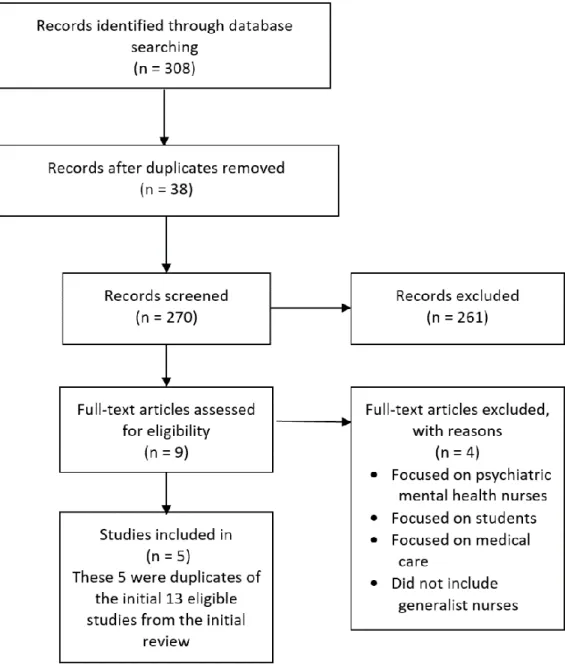
Figure 1. – Initial Search PRISMA………..8 Figure 2. – Second Search PRISMA Including the Key Word………9
“Education”
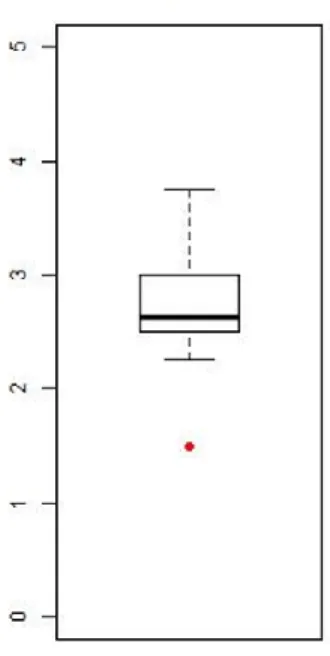
Figure 3. – OMS-HC Outlier found in Session One, Subscale A:……….42 Pre-Intervention Survey
Figure 4. – OMS-HC Outlier found in Session Two, Subscale A:………... 44 Pre-Intervention Survey
Figure 5. – OMS-HC Outlier found in Session Two, Subscale C:………44 Pre-Intervention Survey
Figure 6. – OMS-HC Outlier found in Session Two, Subscale B:………... 45 Pre-Intervention Survey
Figure 7. – BHCC Outliers found in Session Two,………...49 Pre- and Post-Intervention Survey
CHAPTER 1 INTRODUCTION
There are two critical shortages impacting mental health care in the United States (US): the limited availability of inpatient psychiatric beds, and the lack of an adequate mental health workforce to provide care. Between 2010 to 2016 (Fuller, Sinclair, Geller, Quanbeck, & Snook, 2016), there was a 17% reduction in the number of inpatient psychiatric beds, and a 96.5% drop from the peak number in the 1950s (Torrey, Fuller, Geller, Jacobs, & Ragosta, 2012). Today, there are 11.7 inpatient psychiatric beds per 100,000 in the U.S. (Fuller et al., 2016). This is the lowest number of beds per capita in the US since before mental illness was considered a crime over a century ago (Torrey et al., 2012). This critical shortage of state psychiatric beds is forcing individuals with mental illness, and particularly those with severe symptoms, to either not seek help or to seek care in emergency rooms or hospitals while they wait for an inpatient bed, and sometimes these individuals must wait for weeks. One study found that 70% of emergency rooms needed to board patients experiencing mental illness for more than 24 hours and 10% for a week or more (Zun, 2012).
the fastest growing in the U.S. over the coming decade (United States Census Bureau, 2010). Wake County has 237 psychiatric hospital beds, which by La’s calculation only meets 60% of the need for inpatient psychiatric beds.
Individuals living with mental illness also are more likely to have chronic medical
conditions compared to the general population (Edward, Felstead, & Mahoney, 2012; Scott et al., 2012; van der Kluit & Goossens, 2011). These comorbidities, in turn, bring about a decreased life expectancy of 10 years on average (Walker, McGee, & Druss, 2015). Lally et al. (2015) found a high rate of general hospital utilization by individuals who are admitted as a patient experiencing mental illness to an acute care facility. Their study found that 10.4% of inpatients experiencing mental illness were admitted to a general hospital and 12% were seen in the emergency department for non-mental health medical needs. This finding suggests that many patients with mental health needs also need treatment in non-psychiatric settings (i.e., acute care, home health, or primary care settings).
Behavior Health (2017) also reported workforce, including mental health psychiatric nurses and psychiatric nurse practitioners, that was inadequate to deliver safe and effective care to patients in inpatient and outpatient settings. Psychiatric and substance abuse hospitals employ 16.13% of the nursing workforce (United States Department of Labor, 2016). Per the United States
Department of Labor (2016), psychiatric settings pay nurses less than all other high
concentration health care settings except home health. The low pay may partially explain the shortage of psychiatric mental health nurses.
North Carolina’s shortage of nurses mirrors the U.S. trend. The U.S. Department of Health and Human Services (2014) estimated North Carolina’s overall nursing shortage to be 121,000 for 2015. The North Carolina Board of Nursing’s Licensure Statistics (2017) reports only 4% of the RN nursing workforce is practicing in psychiatric/mental health/substance abuse settings.
Taken together, the lack of psychiatric inpatient beds and nursing staff specializing in mental health, means that individuals needing acute care for their mental illness are often boarded in general hospitals, receiving care by generalist nurses who are ill equipped to provide the necessary care. General hospitals and other non-psychiatric settings, as well as the nurses working in these settings, have been required to care for those who need care for mental illness. As access to mental health services becomes more and more limited, individuals needing care are turning to other settings to get their needs met.
Generalist nurses, defined by the American Association of Colleges of Nursing as nurses that provide “…direct care of the sick in and across all environments, health promotion and
clinical prevention, and population-based health care”, are the backbone of the nursing
both the mental health and medical health needs of individuals living with serious mental illness in a non-psychiatric hospital setting, and the challenges are immense. Some of the challenges include factors such as nurses’ perceptions related to the stigma of caring for patients with mental illness; nurses’ fear, anger, tension, and discomfort of caring for patients with mental illness; and nurses’ lack of professional satisfaction, which may lead to patients receiving suboptimal care and being discriminated against (van der Kluit & Goossens, 2011; C. Zolnierek & Clingerman, 2012). Giandinoto and Edward (2014) found that generalist nurses caring for individuals with mental illness in a non-psychiatric hospital experience fear, negative attitudes and poor mental health literacy. They also have difficulty being positive and optimistic in providing care, and identified the acute care hospital environment as being a challenge in providing appropriate care to these patients. Rutledge et al. (2013) found that nursing staff in general hospitals lacked confidence to intervene or care for patients experiencing a behavioral health crisis. Further, Rutledge and colleagues found this lack of confidence was related to the nurses’ perception that they needed additional education in intervening and providing medication management with this patient population.
Practice Question
Purpose
The purpose of this project was to develop and implement a mental health educational intervention for RNs working in non-psychiatric settings who care for patients with mental illness. The intervention took place at WakeMed (WM), with RNs who voluntarily registered for and agreed to participate in a 6-hour course, with 5 continuing education units (CEUs). Two classes were conducted. Participants completed a pre- and post-questionnaire that assessed their self-perceived competencies in caring for patients with mental health needs, and their
stigmatizing attitudes toward people with mental illness. They were again surveyed four weeks later, after they had an opportunity to put their learning into practice, to assess the impact of the training. The goals of the program were to improve nurses’ self-perceived competencies in caring for patients with mental health problems, and decrease nurses’ stigmatizing attitudes toward patients with mental illness.
Chapter Summary
CHAPTER 2
REVIEW OF THE LITERATURE Chapter Introduction
This chapter will review the current literature on the perceptions of nurses regarding their attitudes and competencies toward caring for individuals with mental illness and whether
education can change or improve the attitudes, knowledge and competencies of nurses who care for these individuals. The following are included in this chapter; the search strategy, the results of the Preferred Reporting Items for Systematic Reviews for Meta-Analysis (PRISMA) and the key themes that emerged from the review. The search strategy will be the first discussed.
Search Strategy
An initial literature review was done to determine the perception of generalist RNs in non-psychiatric settings about their competencies and attitudes toward patients they care for who have acute mental illness and whether additional training in mental health impacted their
perceptions. The review was conducted using the following databases available at the University of North Carolina at Chapel Hill’s Health Science Library: PubMed, Cumulative Index to
Studies were included in the review if they were published between January 2011 to February 2017, to assure the most up to date research was reviewed, and addressed attitudes, perceptions and/or experiences of generalist nurses caring for patients with psychiatric illness in a non-psychiatric setting and/or contained outcomes related to the effects of education on
generalist nurses’ attitudes and perceptions. Studies were excluded if the population studied was exclusively psychiatric clinicians, nursing students, faculty or the evaluation was solely focused on medical care, to ensure that generalist nurses were the focus of study.
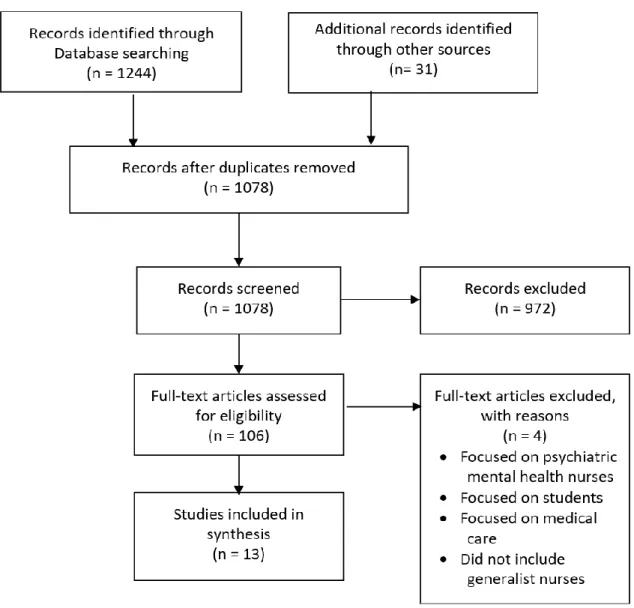
A total of 1244 studies were identified of which 197 were duplicates. Thirty one additional studies were found through a snowball, grey literature and hand search. A review of the title and abstracts was used to eliminate studies not relevant to this project. The remaining 1078 studies were screened using the exclusion criteria. Of those, 972 were excluded and 106 studies were selected for full text review. Thirteen of these studies met the inclusion criteria. Figure 1 demonstrates the process used using the PRISMA guidelines.
Review of Studies
Six of the 13 studies were qualitative studies (Giandinoto & Edward, 2015; Grant,
Keltner, & Eagerton, 2011; Huggins, 2016; MacNeela, Scott, Treacy, Hyde, & O'Mahony, 2012; van der Kluit, Goossens, & de Leeuw, 2013; C. Zolnierek & Clingerman, 2012). Of these, three were conducted in the United States (Grant et al., 2011; Huggins, 2016; C. Zolnierek &
Clingerman, 2012), and one each in, Australia (Giandinoto & Edward, 2015), the Netherlands or Ireland (MacNeela et al., 2012; van der Kluit et al., 2013).
The remaining seven studies were reports of various types of literature reviews: one was a narrative, qualitative review which summarizes a number of studies and develops a single conclusion (Arboleda-Flórez & Stuart, 2012), two were integrated reviews (Brunero, Jeon, & Foster, 2012; van der Kluit & Goossens, 2011), three were general reviews of the literature (Alexander, Ellis, & Barrett, 2016; Giandinoto & Edward, 2014; Karman, Kool, Poslawsky, & van Meijel, 2015), and one was a meta-analysis review (Corrigan, Morris, Michaels, Rafacz, & Rüsch, 2012).
Themes
Brunero et al., 2012; Corrigan et al., 2012; Grant et al., 2011; Huggins, 2016; Patten et al., 2012). Five studies discussed the impact of an educational intervention on attitudes and perceptions (Brunero et al., 2012; Grant et al., 2011), knowledge and competencies (Arboleda-Flórez & Stuart, 2012; Corrigan et al., 2012), or both (Huggins, 2016). All studies reviewed discussed findings based on one or both of the categories, and included further breakdown on these themes. The summary of the literature review, including themes is included in Appendix A.
Perception and Attitude
Attitude and perception are different, but they are intrinsically linked. The Compact Oxford English Dictionary (1991) defines attitude as, “settled behavior or manner of acting, as represented by feeling or opinion” and perception as “the intuitive or direct recognition of a moral or aesthetic quality.” More simply put, attitude is about behavior and perception is about feeling. To find out participants’ attitudes and perceptions, researchers used one of two methods; interviews (Giandinoto & Edward, 2015; MacNeela et al., 2012; C. Zolnierek & Clingerman, 2012), or questionnaires (Huggins, 2016; van der Kluit et al., 2013). All of these studies examined the attitudes and perceptions of RNs about caring for patients with a mental illness.
There were three reviews of the literature that examined attitudes and perceptions; Alexander et al. (2016), Giandinoto and Edwards (2014), and Karman et al. (2015). All articles reported that clinicians (nurses, physicians, and/or psychologists) held negative attitudes and/or perceptions of patients with mental illness or substance use disorders regardless of the clinicians’ age, gender, marital status, ethnicity or religion (van der Kluit & Goossens, 2011) or profession. Further, all articles recommended education on mental illness as a potential solution to
Generalist nurses who work outside mental health facilities frequently describe patients with mental illness as being challenging and unpredictable, and posing a danger to staff
(Alexander et al., 2016; Giandinoto & Edward, 2014, 2015; C. Zolnierek & Clingerman, 2012). Giandinoto and Edward (2014) reviewed 25 articles published between 1985 and 2013 to
investigate the challenges of professionals caring for patients with mental illness in a non-psychiatric acute care setting and found that health professionals expressed fear, negative attitudes toward patients with mental illness, and concerns about the stigma (i.e., shame or disgrace) towards individuals with mental illness were common. These attitudes existed despite mental health being included in formal nursing education.
Similarly, in a review of the literature reported by Karman et al. (2015), nurses’ negative attitudes toward patients who were likely to or had engaged in self-harm behaviors were
common, with 10 out of the 15 articles noting this concern. Karman and colleagues completed a review of the literature on the factors that contribute to nurses’ attitudes toward patients who self-harm. The authors reviewed fifteen studies that focused on a variety of health care
professions; including generalist, emergency and psychiatric mental health nurses, social workers and other “qualified health care professionals.” Karman et al. found that while the literature shows negative attitudes are common among nurses, the studies were inconclusive on how basic demographics, such as nurses’ age, gender, education level or work experiences, affected their attitudes. However, the authors did find that the specialty/qualification of the nurse appeared to influence attitude: psychiatric mental health nurses held more positive attitudes toward patients who self-harm than generalist nurses.
a think-aloud decision-making task and critical incident interview based on two patient simulations. Using this approach, they asked nurses to respond to simulations as they would during an actual patient encounter. They found that the nurses were more focused on pragmatic aspects of care, such as maintaining patient safety and providing directives to patients (e.g., setting limits), rather than focusing on patient-centered aspects of care, such as providing reassurance and encouragement, actively listening to patients, and using therapeutic
communication skills, and viewed patients with mental illness more from an attitude of being at risk for self-harm or harming others and difficult to manage in clinical situations, rather than as vulnerable individuals who are in distress.
In summary, generalist nurses hold certain attitudes and perceptions about patients with mental illness that may affect their willingness and ability to care for patients with mental illness in the general acute care setting. These attitudes and perceptions include fear of patients’
behavior and unpredictability, their own poor mental health literacy, a lack of self-perceived competencies in caring for those with mental illness, and held negative attitudes, including stigma, toward individuals with mental illness. Individuals experiencing mental illness will always be part of the cadre of patients generalist nurses provide care to. Therefore, it is essential that nurses’ perceptions and attitudes of are addressed, and that specific strategies are used to change them. Doing so will help to ensure that patients with mental illness cared for in general hospital areas receive the care and treatment they need, and that the generalist nurses providing care are willing and competent to deliver the care these patients need.
Knowledge and Competency
Using attribution theory, Corrigan et al. (2001) looked at three strategies for changing attributions about severe mental illness: education (providing accurate information to replace myths about mental illness), contact (providing direct interactions to people with mental illness to challenge public attitudes), and protest (suppressing stigmatizing attitudes about mental illness). They found that education improved clinicians’ attributions about mental illness, and that contact improved clinician attributions more than education for the diagnoses of depression and psychosis; protest however did not change attribution.
The studies that examined education as an intervention found education to have a beneficial impact on nurses’ perceptions of the stigma associated with mental illness. Corrigan et al. (2012) reviewed 72 studies from 14 countries and included a total of 38,364 participants, including health care professionals, secondary education students, elementary education students people with mental illness and the general public. The authors looked at three common
adolescents’ attitudes about stigma. Protest did not have an impact (d = 0.099) on reducing stigma for either group.
A meta-analysis (Griffiths et al., 2014) on the effectiveness of reducing stigma associated with mental disorders, reported results for 19 studies (n = 6,318) that examined the personal stigma or social distance of the general public, athletes, secondary education students, health care professional and teachers plus others. They found results similar to Corrigan’s study: both education (d = 0.330, 95% CI, p < 0.001) and personal contact (d = 0.470, CI 95%, p < 0.001) were effective in reducing stigma. They also found that internet programs were just as effective as face-to-face interventions in reducing stigma. However, the authors cautioned that more research was needed because they did not focus on the stigma associated with different disorders, which they considered a limitation of their study.
The remaining studies focusing on stigma examined various approaches to reduce stigma and its impact. Arboleda-Florez and Stuart (2012) identified six evidence-base approaches to decrease stigma. In addition to those reported by Corrigan et al. (2012) and Griffiths et al.(2014) (education, contact and protest), the authors identified three other approaches to decrease stigma: 1) legislative reform, 2) advocacy, and 3) stigma self-management. They determined that stigma is an issue for health care providers and those health care providers are often part of the problem. However, based on their narrative review of the literature, the authors surmised that all six
effective used in combination than separate, isolated interventions. They also identified barriers to implementing educational programs, which included a lack of interest and/or motivation on the part of clinicians who work in general clinical areas outside of a psychiatric setting, and the time constraints to attend training.
One study reviewed the use of simulation to improve the competencies of clinical staff. Grant et al., (2011) described how the Veterans Health (VA) Administration developed a
simulation program focused on mental illness after the Birmingham VA Medical Center and the Alabama Birmingham School of Nursing collaborated on a VA Nursing Academy grant that allowed them to expand their mental health simulations to include generalist nurses on the medical-surgical units. The clinical nurses and faculty worked to develop simulated mental illness scenarios to be used in educating practicing nurses. The authors identified three major health systems that developed simulation approaches to augment competency training for mental health; Virginia Commonwealth, Oregon Health and Science University and New York
University School of Medicine. The types of simulation included; 1) role play, 2) video
vignettes and 3) SimMan® scenarios for alcohol detoxification. This was needed because, of the top 10 diagnoses seen at the Birmingham VA Medical Center, three were psychiatric problems: posttraumatic stress disorder, drug abuse and schizophrenia. Because simulation can provide scenarios that mimic the real life clinical environment in a safe setting, this method of training and education was noted to improve knowledge and skill performance and enhance critical thinking in a clinical setting based on the evaluations from the RNs who participated in the program (Grant et al., 2011).
health continuing education program. Two pre- and post-measures were used; one to assess nurses’ perceptions of competency (the Behavioral Health Competency Survey), and one to assess the nurses’ perceptions of stigma (the Opening Minds Scale for Health Care Providers). Sixteen RNs participated in the project and attended a six hour continuing education class that addressed the management of medically hospitalized patients with co-occurring mental illness. Huggins found that nurse participants had improved self-perceived competency (p = 0.000) and reduced stigma (p = 0.012) when surveyed 4-6 weeks after attending the education class. The strengths of this study are that valid and reliable instruments were used, and that findings indicated that additional mental health education positively affected generalist nurses’ perceptions of behavioral health competencies, and their attitudes about stigma toward
individuals with mental illness. Her study recommended that a heightened focus on preparing generalist nurses working outside of hospital settings with education was needed to enhance their competencies and attitudes.
Chapter Summary
patients. Further studies using valid and reliable instruments are needed to examine the impact of educational programs on generalist nurses’ perceptions of their competency and attitude toward caring for patients with mental illness over time.
Findings from the literature highlight the reality that clinicians working in
non-psychiatric settings, especially RNs, have negative attitudes and perceptions of individuals with mental illness, and feel ill-prepared to successfully care for these individuals. Also, education has a positive impact on reducing negative attitudes and perceptions toward patients with a mental health problem, and improving the competencies of generalist nurses in caring for patients with mental health needs in non-psychiatric settings. These findings support the proposed DNP project, which will examine the impact of an evidence based mental health continuing education program for generalist nurses on nurses’ attitudes and competences in caring for individuals with mental illness. The literature underscores the need for additional mental health training for all generalist nurses to assure patients are being adequately and
CHAPTER 3
THEORETICAL FRAMEWORK Chapter Introduction
Nursing science is the culmination of knowledge and theories from a broad scope of disciplines, with a focus on improving and maintaining health outcomes for individuals, groups, and communities. The ability to understand, synthesize and then put into practice the wealth of evidence available to change nursing practice is essential to advance the profession. In this section, two theories that informed the development of this project will be discussed: attribution theory and Swanson’s caring theory.
Attribution Theory
Attribution theory is a mid-range psychological, social cognitive theory, that was used in this project to assist in the development of interventions to change the knowledge and attitudes of generalist nurses who provide nursing care in non-psychiatric settings. Attribution theory explains how individuals view the cause and effect of behaviors and outcomes. Fritz Heider, an Austrian psychologist, first wrote about interpersonal relations and the theory of attribution in the 1950s (Heider, 1958). He described individuals as “naïve psychologists” who want to
Attribution theory assumes that people try to determine why others do what they do. This involves three-steps: 1) the person observes a behavior in others; 2) the person believes the behavior to be intentional; and 3) the person decides if the other person was forced to perform the behavior or not (that is, whether the individual behaved in a particular way because of the situation or because of their personal tendencies/beliefs). Causes of behavior are further delineated as follows: 1) the locus of control can be internal (within the individual’s control) or external, (outside the individual’s control) 2) behaviors can change over time or remain stable, and 3) control over the outcome of any particular situation may be within or outside of one’s personal domain/abilities.
Wiener’s work on attribution focused on studies of education and achievement. He found that students with high self-esteem and high school achievement attributed their success to internal, stable, uncontrollable factors such as ability, while they attributed their failure to either internal, unstable, controllable factors like effort, or to external, uncontrollable factors such as task difficulty (Weiner, 1985).
illness could be conceptualized in terms of controllability, and that mental illness was often perceived as within the control of the person (Corrigan, 2000; Corrigan, 2004; Corrigan et al., 2003; Corrigan et al., 2000; Corrigan et al., 2004; Crandall & Moriarty, 1995).
The relevance of attribution theory in this project is that generalist RNs may believe individuals with mental illness are responsible for their condition and are less deserving of care. The goal of providing an educational intervention based on the understanding of attribution theory is to improve the attitudes (to be less stigmatizing) of generalist RNs caring for
individuals with mental illness. Additionally, Swanson’s theory of caring was used to frame the educational intervention.
Swanson’s Theory of Caring
Swanson’s (1991) mid-range theory focuses on caring, derived through her work in perinatal nursing. Her theory couples the process of caring with a patient’s well-being, along five dimensions: knowing, being with, doing for, enabling and manifesting belief. Swanson also identified the themes associated with nursing actions within the five processes. Kalfoss and Owe (2015) conducted a systematic review to provide empirical verification of the processes Swanson identified in nursing actions. The authors reviewed 25 articles published between 2003 and 2013, and identified the themes associated with the nursing action within the five processes.
“Knowing” was described as focusing or centering on the patient and taking a holistic, humanistic view of the person. Knowing means seeking to understand the patient’s situation and using empathy and sensitivity to guide the process. It also includes a nurturing way of relating to another and an informed understanding of another. Further, the comprehensive nursing
“Being with” includes the intimacy of the caregiving relationship as well as the human connectedness often described as bonding, trust, being emotionally present and being authentic. It also means being adaptable and compassionate. “Doing for” is the aspect of professional competence in providing care and possessing the clinical knowledge to provide care, and doing so while maintaining the dignity of the patient.
“Enabling” is allowing the patient to engage in self-care and entering into a partnership where communication is essential, power and responsibility is shared, and patient choice and decision making is encouraged. Finally, “maintaining belief” is accepting people as they are and considering the person as a whole and having hope that the patients they care for will be able to live meaningful lives.
generate their own solutions and thinking through issues. Attempts were made to tailor the education intervention using approaches that were familiar to nurses and caring in nursing. These theories were critical to the project and worked hand-in-hand to address the educational needs of the generalist nurse. It was hypostatized that understanding and incorporating
attribution theory into the intervention would assist in reducing the stigmatizing attitudes generalist RNs may have in caring for individual with mental illness and Swanson’s theory of caring would assist generalist RNs in developing competencies that will allow them to care for individuals with mental illness
Chapter Summary
CHAPTER 4 METHODS
This project evaluated the impact of a mental health continuing education intervention on generalist nurses’ self-perceptions of behavioral health competencies and attitudes toward caring for individuals with mental illness in a non-psychiatric setting.
Project Design
A quasi-experimental, interventional pilot study with a repeated measures design within a single group of participants was used to evaluate the outcomes of this project. Two valid and reliable instruments were administered to the RN participants at baseline (immediately before the educational session), post-education intervention, and 4 weeks post-intervention.
Educational Intervention
The educational intervention used in this project was a 6-hour education session with 5 CEUs using evidence-based guidelines from the American Psychiatric Nurses’ Association Transitions in Practice (Adams, 2015a), and the Mental Health Commission of Canada on stigma reduction (Knaak & Patten, 2014). While the project site offered continuing education on mental health, the training focused primarily on describing common psychiatric diagnoses, suicide prevention and medication management, as well as reinforcing the institution’s existing policies related to levels of observation and restraint use. Although the existing training at the project site provides some information that may improve the mental health competencies of the generalist RN, there have been no efforts to document whether nurses’ knowledge and
education classes on mental health at the study site focused on changing the attitudes of the RNs caring for individuals with mental illness.
Providing education to healthcare providers has been documented as an effective method to improve competencies (Brunero et al., 2012; Huggins, 2016; D. N. Rutledge et al., 2013) and attitudes (Arboleda-Flórez & Stuart, 2012; Bharathy, Foo, & Russell, 2016; Corrigan et al., 2012; Huggins, 2016; Papish et al., 2013; Patten et al., 2012), as determined by comparing data gathered pre- and immediately post-intervention. However, literature assessing the long-term effects of an educational intervention to improve competencies and attitudes of generalist RNs caring for individuals with mental health needs is scarce.
The 6-hour education session was coordinated and taught by a trained, master’s prepared, psychiatric clinical nurse specialist (CNS) employed by the project site. The CNS was educated on the project by reviewing the proposal and meeting with the project investigator to develop the course content. Additionally, a psychiatric physician’s assistant (PA) provided the overview on psychotropic medications. There was an opportunity for participants to ask questions to the project investigator at the beginning and end of the session. Participants attended the entire class. A six-hour session was chosen to assure adequate time for content (both didactic and interactive discussion) and was based on information about session length reported by Brunero et al.’s (2012) integrative review of mental health education programs.
The class was developed to be consistent with Weiner’s theory of attribution and
therapeutic use of self); 3) psychopharmacologic updates relevant to common psychiatric
diagnoses including psychotic and depressive disorders; and 4) a presentation by two individuals who have mental illness with an emphasis on stigma reduction and providing hope that
individuals with mental illness do go on to live meaningful lives. The objectives for this intervention were that, at the end of the class, participant would be able to: 1) describe typical symptoms of common mental health disorders, 2) identify strategies to address common nursing functions when caring for people with mental illness (assessment, intervention, and
communication; 3) be familiar with current updates in psychopharmacology; 4) understand the perspective of a person living with mental illness; and 5) describe strategies for further
professional growth in caring for individuals experiencing a mental health crisis. Education strategies included lecture, interactive group discussions and case presentations to deliver foundational content (via PowerPoint presentations), handouts and a contact-based session to address misperceptions and misconceptions about mental illness.
Both training sessions were held in with the WM conference center with a capacity of 35. Participants registered for the classes via WM’s training and education online portal. Pre- and post-surveys were completed using a hard-copy, paper-and-pencil survey. The 4 week post survey was completed by either paper and pencil or online (Survey Monkey®). Lunch was provided to participants, as was 5 CEUs provided by WM (Appendix B). The course outline is included (Appendix C).
Setting
Raleigh, WakeMed Cary and WakeMed North), 919 licensed beds, and three free standing emergency departments. WM employs 2,887 RNs and the nursing services department uses Swanson’s theory of caring as their nursing theory to guide their vision on how they provide care to improve the health and well-being of their community with outstanding and compassionate care to all (WakeMed Health and Hospitals, 2017). In 2016, the WM system had 50,148 discharges and 289,841emergency visits (WakeMed Health and Hospitals, 2016). Of those, 3,071 patients with mental illness were on involuntary commitment (IVC) and boarding in an inpatient bed an average of 7.88 days waiting to transfer to a psychiatric hospital (S. Hoffman, 2017). This equates to 24,200 days of mental health care provided by generalist nurses during the year. At any given time in the WM system, there are 65 patients requiring mental health care for an acute crisis. The number of individuals being boarded at WM on IVC awaiting transfer to an inpatient psychiatric hospital has increased by 24% in the past 4 years (S Hoffman, 2017). Thus, the priority of more effectively managing patients with behavioral health diagnoses is important to WM and is one of the top five priorities for the organization for fiscal year 2018 (October 1, 2017 – September 30, 2018). This project is a high-priority for WM and the concept has been endorsed by and was supported through resources made available by WM.
Additionally, the system’s Nursing Evidence-Based Research Council endorsed the project. Target Population
and has a BSN (65%). The average age is 42 years old, and the average years of experience working as a nurse is thirteen.
The first education session targeted the RNs working in home health because of the expressed interest of the executive director and the identified need for content. The home health RNs are caring for patients that have both medical and mental illness. This is not surprising given the odds of individuals with serious mental illness, such as schizophrenia and bipolar disorders, having a medical comorbidity is greater than 1.5 times the general population
(Bahorik, Satre, Kline-Simon, Weisner, & Campbell, 2017) and as stated earlier individuals with mental illness also are more likely to have chronic medical conditions compared to the general population (Edward et al., 2012; Scott et al., 2012; van der Kluit & Goossens, 2011). The second session was open to all RNs employed by WM. Lessons learned from the first training session were integrated into the second session.
Data Collection and Instruments
To address study aims, the outcomes examined in this project were: 1) attitudes (or stigma) toward caring for individuals living with mental illness in generalist nurses practicing in a non-psychiatric setting and 2) self-perceived mental health care knowledge and competencies in generalist nurses practicing in a non-psychiatric setting. In both cases, it was anticipated that outcomes would improve following the implementation of this project. Demographic
Outcomes were measured using two valid and reliable instruments: the Opening Minds Scale for Health Care Providers (OMS-HC) (Modgill, Patten, Knaak, Kassam, & Szeto, 2014) and the Behavioral Health Care Competency (BHCC) (D. Rutledge, Wickman, Drake, Winokur, & Loucks, 2012). Combined, the OMS-HC and BHCC contain a total of 38 items, and both surveys use a five-point Likert-type rating scale system with the following response options: 1 = Strongly disagree, 2 = Disagree, 3 = Neither agree nor disagree, 4 = Agree, and 5 = Strongly agree. The time estimated to complete both surveys is 20 minutes or less. Permission to use both surveys was obtained from the respective developers/researchers (Appendix D).
The OMS-HC is a 15-item survey with three subscales that assess attitudes of health care providers in three domains: 1) people with mental illness, 2) disclosure and help-seeking, and 3) social distance. (Appendix E). The mental illness subscale relates to the general attitudes toward people with mental illness and the role of health care providers; the disclosure and help-seeking subscale relates to self-disclosure of mental illness and help seeking behavior; and the social distance subscale relates to a willingness to engage people with mental illness in activities and relationships (Appendix F).
The OMS-HC has also been reported to be valid and reliable. In a secondary analysis of data gathered from 1,523 participants in 12 different anti-stigma programs who completed the original 20-item OMS-HC prior to and after receiving stigma reduction education, Modgill et al. (2014) evaluated the psychometric properties of the instrument.
effective size (d = 0.28) and standardized response means (0.40, 95% CI). The authors
concluded that the 15-item OMS=HC had acceptable internal consistency and was successful in detecting changes associated with anti-stigma education/interventions.
The BHCC is a 23-item survey developed to measure non-psychiatric mental health RN’s self-perceived competency in caring for patients with mental illness. The BHCC has four sub-scales to assess patient assessment, practice/intervention competency, psychotropic
recommendations and resource adequacy (Appendix G). Responses are assessed for each
subscale and then for the instrument overall by first summing individual responses to all items in each sub-scale, and then totaling the combined score for all subscales for a total scale score. The range of possible individual scores is 15-75, with a higher score indicating greater perceived competency.
The BHCC has been reported to be valid and reliable. Rutledge et al. (2012) surveyed 844 nurses from three community hospitals. Construct validation was supported based on a sample of nurses with and without psychiatric mental health nursing experience. Nurses who had prior experience in mental health nursing had significantly higher scores than nurses without experience (0.05; p < 0.0001). Reliability was demonstrated with Cronbach’s alpha coefficient total score of 0.92 and subscale scores as follows: Resource Adequacy (0.78), Patient
Assessment (0.91), Practice/Intervention Competency (0.90), and Psychotropic Recommendation (0.78).
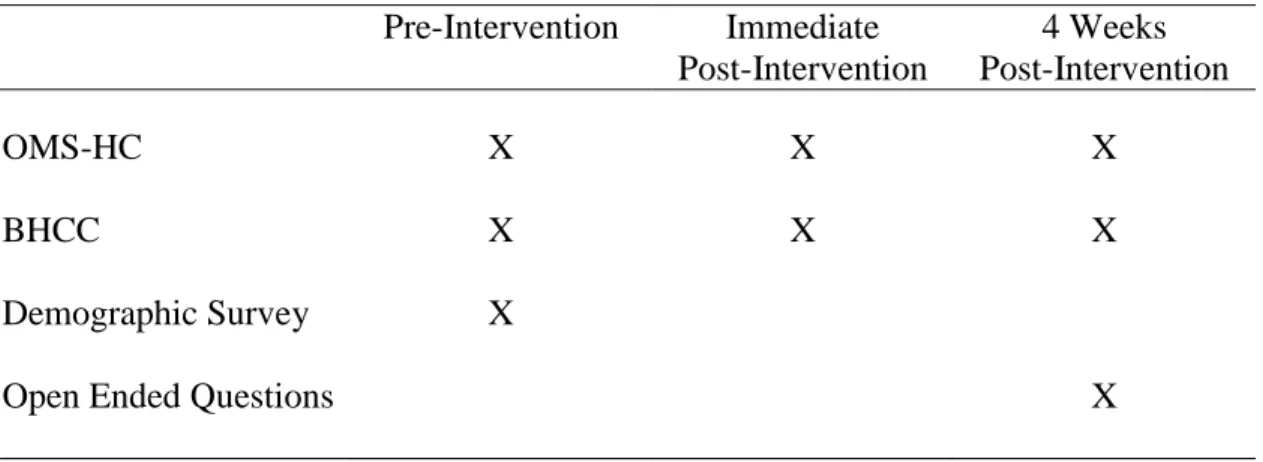
Three additional open-ended questions were asked of participants at a 4 week follow-up: 1) Has the training changed your behaviors in caring for patients with mental illness? If so, how?, 2) Has the training impacted your competencies in caring for patients with mental illness? If so, how?, and 3) Has the training impacted your attitude toward caring for patients with mental illness? If so, how? (Appendix I). These open-ended questions assisted with the data analysis by corroborating the results from the two survey instruments (O'Cathain & Thomas, 2004). Both the demographic and open-ended questions were developed using the survey instrument design principles of Dillman et al. (2009). The survey administration schedule is highlighted in Table 1. Table 1. Survey Administration Schedule
Pre-Intervention Immediate Post-Intervention
4 Weeks Post-Intervention
OMS-HC X X X
BHCC X X X
Demographic Survey X
Open Ended Questions X
Recruitment
hospitals, asking these leaders to encourage their clinical RNs to participate. Participants registered electronically using WM’s education and training electronic online portal, but could also walk in the day of the session if there was space. Recruitment incentives offered included 5 CEUs and lunch during the education sessions.
Ethics and Human Subjects Permissions
Prior to launching the project, review and approval through the Institutional Review Boards (IRB) at the University of North Carolina at Chapel Hill (UNC-CH) (Appendix K) and WM (Appendix L) were obtained. The project investigator has previously completed
Collaborative Institutional Training Initiative (CITI) training required by the UNC-CH.
All generalist RNs who attended the educational session were invited to participate in the project. All who agree to participate received full disclosure about the project prior to the administration of the first survey (Appendix M). Participants could also attend the educational session without completing the surveys, and participants who completed the surveys may request the aggregated results upon study completion.
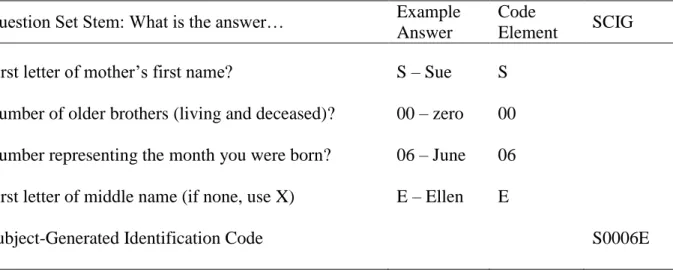
All data collected from the participants were protected using a subject-generated
Table 2. Subject-Generated Identification Code Question Set Question Set Stem: What is the answer… Example
Answer
Code
Element SCIG First letter of mother’s first name? S – Sue S
Number of older brothers (living and deceased)? 00 – zero 00 Number representing the month you were born? 06 – June 06 First letter of middle name (if none, use X) E – Ellen E
Subject-Generated Identification Code S0006E
The pre-and post-surveys were completed on paper, and the 4 week post surveys were completed either by paper or electronically and then entered into an electronic file (Excel). The paper copies were destroyed. The electronic file was stored on a password protected flash drive and will be retained for three years after the project is closed with the IRB, and then destroyed. The registration information from the education course will not be linked in any way to the survey results. Results from this project will only be disseminated using de-identified data and will only be reported in aggregate form. Only the project investigator and project chair will have access to the data. A copy of the data will be retained by the Project Chair for the time required by the UNC-CH and WM IRBs.
As with any project of this nature, there are potential risks associated with this project. Participating in a project that focuses on mental health may make some participants
for this population of patients. Also, RNs who participated in the educational session and
complete the surveys gained insights into their own professional development and training needs. All RNs who participated in the educational session received continuing education credits for attending the session, and not just those who participated in the study. Given the magnitude of the problem being addressed in this project, and the value to be derived for both patients and nurses, the benefits of the project are believed to outweigh the risks.
Key Personnel/Stakeholders
Key project personnel included, the psychiatric mental health CNS and PA employed by WM who conducted the education, the staff within the nursing education department at WM who coordinated the continuing education process, and the administrative assistant staff who assisted with coordination of class room and equipment set-up. The project investigator provided overall project coordination and assured that timelines and targets are maintained. The project
investigator was also responsible for data collection and analysis.
County National Alliance for the Mentally Ill and patients and their families who may experience the need for behavioral health or substance use services during a crisis.
Resources and Budget
This project involved voluntary participants, so there was no cost for recruitment apart from the educational flyers. WM provided the following as in-kind contributions: the
coordination of obtaining CEUs for the educational sessions; time of the psychiatric mental health CNS to plan and teach the sessions; time of the project investigator to be present during both training sessions and answer questions; the educational pay of the RNs attending the
training and potential replacement costs of doing so if RNs are not attending on their day off; and conference space and necessary audio-visual equipment. Lunch was provided by the project investigator.
Data Analysis
For each of these subscales, two sets of tests were performed using two different time points: 1) pre-intervention versus intervention, and 2) pre-intervention versus 4 week post-intervention. Only participants that responded to both survey time points were included for each of these sets of tests. For each of these sets of tests, the same basic procedure was performed in R: raw data was divided by subscale and survey and the mean value for individuals in the
subscale in each survey was calculated. (i.e., there is a mean value for subject xxx for Subscale A in Session One and another mean value for subject xxx for Subscale A in Session Two to be compared). These mean values were tested for outliers using the boxplot.stats function. An outlier is commonly defined as is a data point that falls more than 1.5 times the interquartile range above the third quartile or below the first quartile (Renze, 2018). If any outliers were detected, the participants were removed from both datasets being compared for that test so as to not skew the results. A boxplot was generated to demonstrate where the outliers were found.
After outlier removal, a paired Wilcoxon test was performed on the mean values to determine if the responses were the same between the two surveys. If significant differences were found, a violin plot was produced to visually demonstrate the difference in mean values and mean distributions. The boxplots and violin plots for each test are located in Appendix N.
Chapter Summary
CHAPTER 5 RESULTS
The purpose of this project was to design, implement and analyze an educational intervention to improve the self-perceived attitudes, knowledge and competencies of generalist nurses caring for patients with acute psychiatric needs. This chapter presents project findings by project goals.
Project Goal 1: This goal focused on improving the attitudes (or decreasing the stigma) of generalist nurses towards caring for individuals living with mental illness
Project Goal 2: This goal focused on improving the self-perceived mental health care knowledge and competencies of generalist nurses
Participants
Twenty-four participants registered for the first session and twenty-three for the second. Registration was kept separate and not linked to the results of the survey. In addition, Session One had one same-day walk-in registration. The project investigator aimed to have a
convenience sample of 40 RNs. Forty-two RNs attended the sessions (22 in Session One and 20 in Session Two) and three non-registered nurses attended Session One (a social worker,
Session One (Appendix O) had an overall satisfaction rating of 3.53 out of 4 and Session Two (Appendix P) had an overall satisfaction rating for 3.94 out of 4.
Study Sample
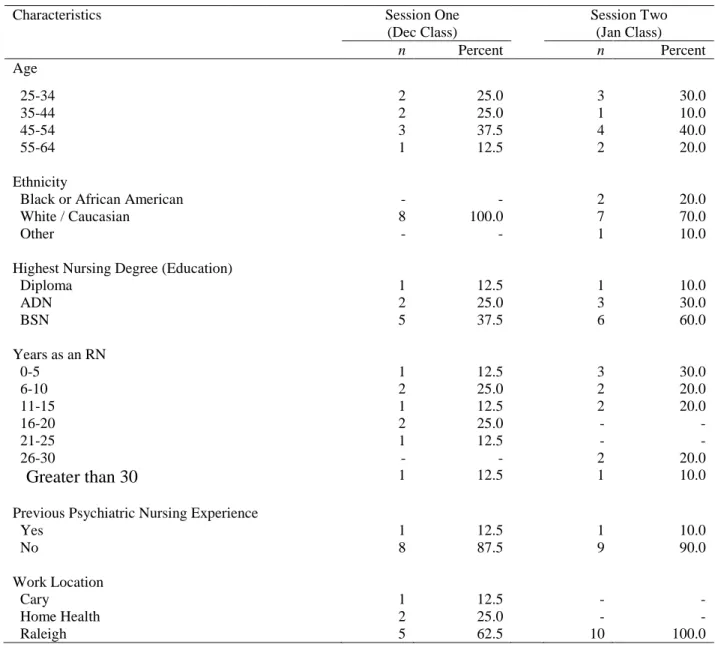
There were four sub-samples for this project. They included; 1) RN participants who completed the pre- and post-surveys in Session One (n = 22), 2) RN participants who completed the pre- and post-surveys in Session Two (n = 19), 3) RN participants who completed the pre-, post- and four-week post survey data in Session One (n = 8), and 4) RN participants who completed the pre-, post- and four-week post survey data in Session Two (n = 10). The return rates for the four-week post survey were 36% from Session One and 53% from Session Two. Characteristics of the matched pair-study for participants who completed the first two surveys, (Table 3) and for those that completed all three surveys (Table 4) were summarized using descriptive statistics, frequency and percentages.
The majority of participants in Session One (81.8) and two (73.7) did not have prior psychiatric experience.
Table 3. Participant characteristics, age, ethnicity, education, RN experience, psychiatric experience and work location for Session One (n = 22) and Session Two (n = 19)
Characteristics Session One
(Dec Class)
Session Two (Jan Class)
n Percent n Percent
Age
25-34 4 18.2 6 31.6
35-44 6 27.3 3 15.8
45-54 8 36.3 8 42.1
55-64 4 18.2 2 10.5
Ethnicity
Black or African American 5 22.7 3 5.3
White / Caucasian 16 72.7 15 78.9
Other 1 4.6 1 15.3
Highest Nursing Degree (Education)
Diploma 1 4.6 1 5.3
ADN 5 22.7 4 21.1
BSN 15 68.1 14 73.7
MSN 1 4.6 - -
Years as an RN
0-5 2 9.0 5 26.3
6-10 6 27.3 5 26.3
11-15 4 18.2 2 10.5
16-20 4 18.2 2 10.5
21-25 2 9.0 1 5.3
26-30 - - 3 15.8
Greater than 30 4 18.2 1 5.3
Previous Psychiatric Nursing Experience
Yes 4 18.2 5 26.3
No 18 81.8 14 73.7
Work Location
Cary 1 4.6 3 15.8
Home Health 10 45.4 - -
Table 4. Participant characteristics, age, ethnicity, education, RN experience, psychiatric
experience and work location for Session One (n = 8) and Session Two (n = 10) who completed all three surveys
Characteristics Session One
(Dec Class)
Session Two (Jan Class)
n Percent n Percent
Age
25-34 2 25.0 3 30.0
35-44 2 25.0 1 10.0
45-54 3 37.5 4 40.0
55-64 1 12.5 2 20.0
Ethnicity
Black or African American - - 2 20.0
White / Caucasian 8 100.0 7 70.0
Other - - 1 10.0
Highest Nursing Degree (Education)
Diploma 1 12.5 1 10.0
ADN 2 25.0 3 30.0
BSN 5 37.5 6 60.0
Years as an RN
0-5 1 12.5 3 30.0
6-10 2 25.0 2 20.0
11-15 1 12.5 2 20.0
16-20 2 25.0 - -
21-25 1 12.5 - -
26-30 - - 2 20.0
Greater than 30 1 12.5 1 10.0
Previous Psychiatric Nursing Experience
Yes 1 12.5 1 10.0
No 8 87.5 9 90.0
Work Location
Cary 1 12.5 - -
Home Health 2 25.0 - -
Goal/Aim 1: Improve Nurses Attitudes toward Mental Illness
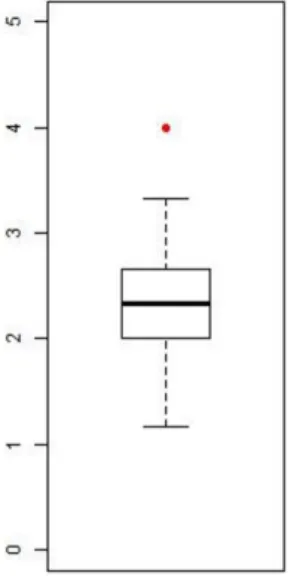
For participants in Session One, there was one outlier found in all data, which was in the pre-intervention survey, Subscale A, attitude toward people with mental illness (Figure 3). This participant rated greater than1.5 times the interquartile range above the third quartile and was removed from the analysis for Subscale A.
Figure 3. OMS-HC Outlier found in Session One, Subscale A: Pre-Intervention Survey
Table 5. OMS-HC Session One: Pre- and Post-Intervention OMS-HC Results
n Pre-Intervention Mean Post-Intervention Mean p
Subscale A: Attitudes toward people with MI
21 2.337 2.119 0.058
Subscale A: MI-With Outlier 22 2.412 2.152 0.033
Subscale B: Attitude toward disclosure and help-seeking
22 2.750 2.625 0.254
Subscale C: Attitude toward social distance
22 2.289 2.045 0.052
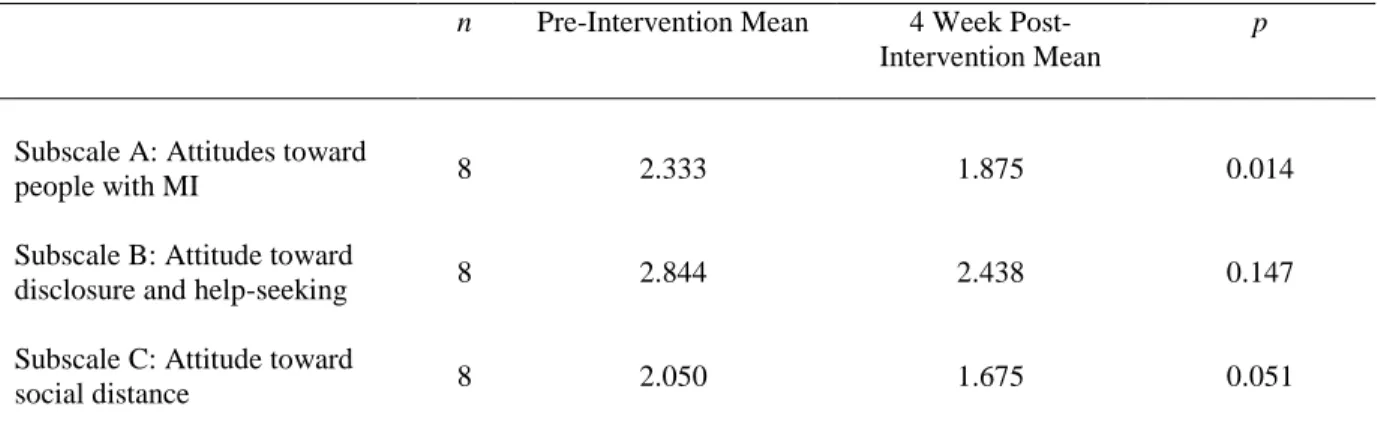
Table 6. Session One: Pre- and 4 Week Post-Intervention OMS-HC Results
n Pre-Intervention Mean 4 Week Post-Intervention Mean
p
Subscale A: Attitudes toward
people with MI 8 2.333 1.875 0.014
Subscale B: Attitude toward
disclosure and help-seeking 8 2.844 2.438 0.147
Subscale C: Attitude toward
social distance 8 2.050 1.675 0.051
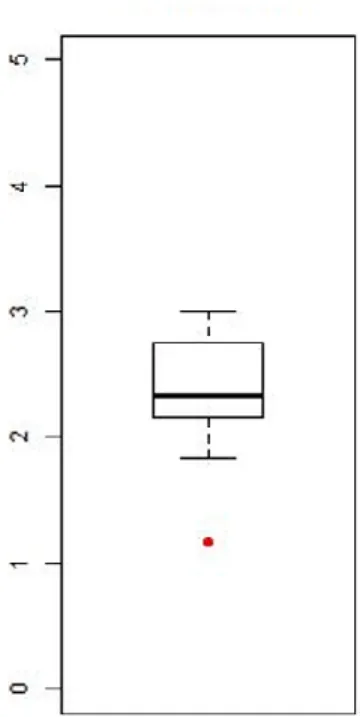
For participants in Session Two, one outlier was found for Subscale A, attitude toward people with mental illness and two were found for Subscale C, attitude toward social distance in the pre- and post-intervention comparison (Figures 4 and 5). The participants who were outliers had lower (less stigma) scores than the other participants. Removing or leaving in these outliers made no difference in the results.
Figure 5. OMS-HC Outlier found in Session Two, Subscale C: Pre-Intervention Survey
There were no significant differences found between the pre- and post-intervention scores on the OMS-HC. One outlier was identified in Subscale B for Session Two in the pre- and 4 week post-intervention scores (Figure 6).
The outliers identified were different than in the pre- versus post-intervention comparison because the participants involved were different. Again, this participant scored lower (less stigma) ad removing or leaving in this outlier made no difference in the results.
The tests showed a significant difference in Subscale A, with the pre-intervention mean being higher than the 4 week post-intervention mean. The results are summarized in Tables 7 and 8.
Table 7. Session Two: Pre- and Post-Intervention OMS-HC Results
n Pre-Intervention Mean Post-Intervention Mean
p
Subscale A: Attitudes toward
people with MI 18 2.435 2.241 0.105
Subscale B: Attitude toward
disclosure and help-seeking 19 2.605 2.421 0.188
Subscale C: Attitude toward social distance
Table 8. Session Two: Pre- and 4 Week Post-Intervention OMS-HC Results
n Pre-Intervention Mean 4 Week Post-Intervention Mean
p
Subscale A: Attitudes toward
people with MI 10 2.517 2.200 0.018
Subscale B: Attitude toward
disclosure and help-seeking 9 2.833 2.611 0.292
Subscale C: Attitude toward social distance
10 2.020 1.920 0.611
The data from Session One and Session Two were combined and tested with and without outliers. Subscale A was significant, with or without outliers, when comparing pre- and post-intervention scores. Subscale C as only significant if the outliers were kept in the dataset when comparing pre- and intervention scores. When comparing pre- and 4 week
Table 9. Combined Sessions One and Two: Pre- and Post-Intervention OMS-HC Results n Pre-Intervention
Mean
Post-Intervention Mean
p
Subscale A: Attitudes
toward people with MI 19 2.414 2.189 0.009
Subscale A: MI-With
Outliers 21 2.392 2.171 0.010
Subscale B: Attitude toward
disclosure and help-seeking 21 2.683 2.530 0.072
Subscale C: Attitude toward
social distance 19 2.085 2.000 0.185
Subscale C: Social
Distance-With Outliers 21 2.116 1.956 0.037
Table 10. Combined Sessions One and Two: Pre- and 4 Week Post-Intervention OMS-HC Results
n Pre-Intervention Mean
4 Week Post-Intervention Mean
p
Subscale A: Attitudes
toward people with MI 18 2.435 2.056 0.000
Subscale B: Attitude toward
disclosure and help-seeking 18 2.764 2.500 0.082
Subscale C: Attitude toward
Goal/Aim 2: Improve Nurses Knowledge and Competencies
All results were significant, with the second comparison responses were consistently higher than the first comparison. Like the pre- and post-intervention tests, consistent outliers were found in two of the 10 participants for both pre- and 4 week post-intervention data, reducing the dataset to 8 eight for testing. All responses were significantly different, with the 4 week post-intervention scores being higher than the pre-intervention scores. The results are summarized in Tables 9 and 10.
Table 11. Session Two: Pre- and Post-Intervention BHCC Results
n Pre-Intervention Mean Post-Intervention Mean
p
Patient Assessment 14 3.74 3.99 0.002
Practice/Intervention 14 3.71 3.98 0.002
Medication Recommendation 14 3.74 3.99 0.002
Resource Adequacy 14 3.73 3.99 0.002
Full Score 14 3.73 3.99 0.001
Assessment-With Outliers 19 3.72 4.07 0.001
Practice-With Outliers 19 3.71 4.06 0.001
Medication-With Outliers 19 3.7 4.06 0
Resource-With Outliers 19 3.72 4.07 0.001
Table 12. Session Two: Pre- and 4 Week Post-Intervention BHCC Results
n Pre-Intervention Mean 4 Week
Post-Intervention Mean
p
Patient Assessment 8 3.76 4.01 0.036
Practice/Intervention 8 3.74 4.03 0.014
Medication Recommendation 8 3.78 4.05 0.025
Resource Adequacy 8 3.77 4.05 0.022
Full Score 8 3.76 4.04 0.022
Assessment-With Outliers 10 3.69 4.10 0.014
Practice-With Outliers 10 3.66 4.14 0.006
Medication-With Outliers 10 3.71 4.15 0.009
Resource-With Outliers 10 3.69 4.15 0.009
Full-With Outliers 10 3.68 4.15 0.009
Open-Ended Questions
Question 1: Has the training you received changed your behaviors in caring for patients with mental illness?
1. “I feel less threatened of physical outburst and now look for ability to connect.” 2. “This is the best course I have taken at WakeMed. I have truly enjoyed learning about
how to quickly intervene when a patient is escalating and how to recommend
interventions to the physician. One thing I was concerned about prior to the course was medication administration and having the PA come and discuss the different medications was so helpful! I also truly enjoyed hearing from the women who spoke about their experiences in mental health.”
3. “I think I'm more aware and compassionate. I just had a patient who had a personality disorder, and instead of quickly leaving the room. I tried to engage in conversation. I don't know that it was successful. But, I definitely felt more compassion than in the past.”
4. “Before the training I had a hard time dealing with people with mental illness. It scared me and I had created a stigma about them. Hearing the personal stories really helped. It put into perspective that these are all people and they really need our help. It’s provided me with more compassion and patience towards them.”
5. “To a certain degree, I continue to distinguish mental illness as separate from addiction. Am I incorrect? “
Question 2: Has the training impacted you competencies in caring for patients with mental illness?
1. “I'm more educated on first line drugs for particular diagnoses.”
2. “As I have stated above I certainly do feel better prepared to help make an impact in the care people with mental illnesses receive.”
3. “I think it has improved my competency.”
4. “Mainly my understanding and compassion towards them. I will more on the job training with actually dealing with the situations to be comfortable with the medications.”
5. “Somewhat, feel much more attentive, listen and discuss with colleagues, supporting with discouraging negative behaviors expressed by others.”
6. “I am more confident in speaking with the care team and recommending medications.”
Question 3: Has the training you received impacted your attitude towards caring for patients with mental illness?
1. “I had a stereotype due to lack of exposure and education.”
2. “I have always been passionate about helping provide patient centered care to people who are struggling with mental illness. I am not sure why but I often find myself drawn to find out more about patient's mental health illnesses and diving in creative and evidence-based practices to improve outcomes. Which is why I took this class!”
3. “I've always felt frustrated dealing with this population. Now I try to be more compassionate.”
4. “As stated above. I am more understanding, patient, and compassionate.”
Even though I have had many patients over the years with mental challenges, since it didn’t apply to the current diagnosis, wasn’t something I focused on. ( OR, Ambulatory physician practices, surgery practices) That’s not to say I/we didn’t encourage referring the patient to appropriate resources, and promoting conversations with the patient to identify any risky behaviors.”
6. “I have always been compassionate but hearing the NAMI speakers that are not stable I have gained a better understanding of what the patient experiences and how they feel while in the hospital and feel I am able to be a better patient advocate for my patients after sitting in the class.”
Ten participants in Session Two responded to the open-ended survey questions. Of those, the 9 participants felt the training they received positively changed their behaviors and 8 believed the training positively impacted their competencies and improved their attitude in caring for individuals with mental illness. The participants were asked how the training
impacted their behaviors, competencies and attitudes. Eight participants provided comments for question 1 and seven participants provided comments for questions 2 and 3. Their responses are listed below.
Question 1: Has the training you received changed your behaviors in caring for patients with mental illness?
1. “Having more knowledge of mental illness helps me to make better decision about the care of my patients.”
5. “I found the de-escalation techniques to be helpful.”
6. “Made me more aware of what my patients are going thru and I learned ways to help them see ways they can help themselves.”
7. “I am more comfortable talking to and caring for patients that have a mental illness. I will use techniques from this class to communicate/care for patients with mental illness effectively.”
8. “They are everyday people. I loved the speaker from NAMI.”
Question 2: Has the training you received impacted your attitude towards caring for patients with mental illness?
1. “I understand more about how to de-escalate aggressive behavior.” 2. “More confident in my ability to care for mentally related patients.” 3. “Better approach and compassion.”
4. “More knowledgeable about medications.”
5. “I feel like I have an even more rounded education on how to take care of individuals with mental health issues.”
6. “Made me more aware of what is out of their control.”
7. “I am more knowledgeable on medications to use and useful communication techniques with patients that have a mental illness.”
Question 3: Has the training you received impacted your attitude towards caring for patients with mental illness?
1. “I think I have more compassion.”
4. “More empathy.”
5. “I don't feel dread when reading patient has a psychiatric history.”
6. “I am more comfortable which I feel like makes me more caring for patients that have a mental illness.”