CONVERGENT VALIDITY BETWEEN FIELD TESTS OF ISOMETRIC CORE STRENGTH, FUNCTIONAL CORE STRENGTH, AND SPORT PERFORMANCE
VARIABLES IN FEMALE SOCCER PLAYERS
by
Jeffrey Scott Wagner
A thesis
submitted in partial fulfillment of the requirements for the degree of
Master of Science in Exercise and Sport Studies, Biophysical Studies Boise State University
DEFENSE COMMITTEE AND FINAL READING APPROVALS
of the thesis submitted by
Jeffrey Scott Wagner
Thesis Title: Convergent Validity between Field Tests of Isometric Core Strength, Functional Core Strength, and Sport Performance Variables in Female Soccer Players
Date of Final Oral Examination: 13 October 2010
The following individuals read and discussed the thesis submitted by student Jeffrey Scott Wagner, and they evaluated his presentation and response to questions during the final oral examination. They found that the student passed the final oral examination. Shawn R. Simonson, Ed.D. Chair, Supervisory Committee
Lynda Ransdell, Ph.D. Member, Supervisory Committee Eric L. Dugan, Ph.D. Member, Supervisory Committee
iv
ACKNOWLEDGEMENTS
Writing this thesis was one of the most difficult yet rewarding experiences that I have embarked on, both personally and educationally. My development through this process would not have been possible without the contributions of so many others. Most of all I would like to thank my parents, Eric and Jeanne, and my brother, Chris, for all of their support and words of encouragement. I strived to make them proud of the work I did; they were my motivation to succeed.
Thanks to all my friends for their support and for providing me with a life outside of school, which produced so many fun memories, while at Boise State. Thanks to Raj Issuree, MPT, for his guidance in the development of this thesis. The knowledge he passed on to me was invaluable. Thanks to Niki Taylor and the College of Idaho women’s soccer team for taking part in my study. A special thanks to Bill Sando and John Thornton for being a constant reminder and driving force behind me to finish what I started.
Thank you to my thesis committee chairperson, Dr. Simonson. He has worked with me from the start of this process and I cannot begin to thank him enough for all of the time he spent reviewing my work. Thanks to my thesis committee members, Dr. Ransdell and Dr. Dugan, for all of their input, which helped strengthen my work. I am truly indebted to my thesis committee for their guidance, which helped shape this thesis.
v
ABSTRACT
bi-vi
bi-lateral rotation) could be analyzed in different manners (isometrically,
concentric/functionally) to see which correlates more strongly with tests of soccer sport performance. Results: A Pearson’s product correlation found that the isometric core strength correlated more strongly with tests of soccer sport performance than concentric functional core strength. Discussion: It was found that the core plays a greater role in providing a stable base of support rather than producing/transferring force during tests of soccer sport performance. Consistent with previous studies, the external load and
vii
TABLE OF CONTENTS
ACKNOWLEDGEMENTS ... iv
ABSTRACT ... v
LIST OF TABLES ... ix
LIST OF FIGURES ... x
CHAPTER 1: INTRODUCTION ... 1
Hypotheses ... 7
Limitations ... 7
Delimitations ... 8
Definitions ... 8
Core Fitness ... 8
Core Stability ... 8
Core Strength ... 8
Kinetic Chain ... 9
Specificity of Training ... 9
CHAPTER 2: REVIEW OF LITERATURE ... 10
Core Stability vs. Core Strength ... l0 Anatomy and Physiology of the Core Musculature ... 12
Previous Research on Core Fitness and Sport Performance ... 15
viii
Participants ... 29
Procedures ... 30
Isometric Core Strength Testing ... 31
Isometric Trunk Flexion ... 34
Isometric Trunk Rotation ... 34
Functional Core Strength Testing ... 35
Front Abdominal Power Test ... 35
Side Abdominal Power Test ... 36
Soccer Performance Testing ... 37
Standing Kick ... 38
Throw-in ... 38
Statistical Design ... 38
CHAPTER 4: RESULTS ... 39
CHAPTER 5: DISCUSSION ... 43
REFERENCES ... 52
APPENDIX A: RAW DATA ... 55
APPENDIX B: INFORMED CONSENT ... 60
ix
LIST OF TABLES
Table 1 Previous research examining the relationship between sport
performance and core testing measures ... 16
Table 2 Reliability of isometric core strength pilot testing ... 39
Table 3 Mean ± standard deviation for isometric strength, functional strength, and soccer performance tests ... 39
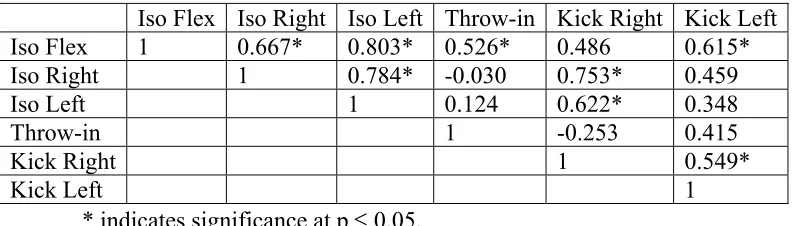
Table 4 Correlation between isometric core strength and soccer performance tests ... 40
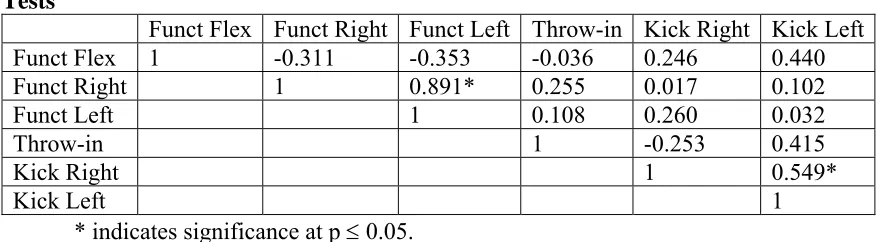
Table 5 Correlation between functional core strength and soccer performance tests ... 41
Table 6 Correlation between isometric core strength and functional core strength tests ... 41
Table A.1 Individual participant data for isometric core strength measures ... 56
Table A.2 Individual participant data for functional core strength measures ... 57
Table A.3 Individual participant data for soccer sport performance measures ... 58
x
LIST OF FIGURES
Figure 1 Lateral View of Core Musculature ... 4
Figure 2 Posterior View of Core Musculature ... 4
Figure 3 Baseline Dynamometer ... 32
Figure 4 Shoulder Harness ... 32
Figure 5 Isometric Core Strength Testing Setup ... 33
Figure 6 Locations of Dynamometer Placement ... 33
Figure 7 Isometric Trunk Flexion Strength Testing ... 34
Figure 8 Isometric Trunk Rotation Right Strength Testing ... 35
Figure 9 Isometric Trunk Rotation Left Strength Testing ... 35
Figure 10 FAPT Testing ... 36
Figure 11 SAPT Testing ... 37
CHAPTER 1: INTRODUCTION
Athletes, coaches, and strength and conditioning specialists are always looking for
the latest training trends to improve performance. Recently, much attention has been
given to the role that core fitness plays in sport performance. Almost all sports involve
movements that require a transfer of power through the core and out the limbs to produce
a forceful action. When throwing a baseball for example, forces are first produced in the
lower body followed by a pattern of muscle activation beginning with the contralateral
external oblique and proceeding through the arm 1. The core serves as the center of the
functional kinetic chain and foundation for limb movement. Increasing core fitness is
beneficial to athletes in order to increase force production, strengthen spinal stability, and
aid in injury prevention and rehabilitation 2. However, to date there is a dearth of
literature showing that core fitness has a direct influence on sport performance. Being
that the core plays a simultaneous role in providing stability and in producing/transferring
force during sport movements, it has made it difficult for researchers to fully understand
the relationship between core fitness and sport performance. Therefore, the purpose of
this study is to examine whether the core plays a greater role in providing stability or in
generating and transferring of forces to the limbs during sport movements.
When discussing the core, it is important to distinguish between core stability and
core strength. These two terms are often used interchangeably, which has caused
confusion in the literature. Core stability and core strength differ based on their
is achieved when the intervertebral range of motion is maintained within a safe limit in
response to internal and external perturbations 4. On the other hand, core strength is
responsible for producing the muscular force around the lumbar spine to maintain
functional stability 2. Therefore, it is through core strength that core stability is provided.
The functions of core stability and core strength given above stem from a
rehabilitation viewpoint of the core. Being that the current study is in the sport
performance realm, it is important to define them in such a manner. Therefore, core
stability will be defined as the ability to control the position and motion of the trunk over
the pelvis to allow optimum production, transfer, and control of force and motion to the
terminal segment in integrated athletic activities 5. Core strength will be defined as the
ability of the musculature to produce force via contractile forces and intra-abdominal
pressure 6. In the current study, the term core fitness will be used to describe the
combination of core stability and core strength working together to perform a sport
specific task. When the two systems of core fitness optimally function together, the
result is proper force distribution and maximum force generation with minimal
perturbations acting on the joints of the kinetic chain 7.
The kinetic chain is the coordinated, sequenced activation of body segments that
places the distal segment in the optimum position at the optimum velocity with the
optimum timing to produce the desired athletic task 8. Success in a majority of sports is
dependent upon producing external forces while maintaining dynamic stability.
Instability of the core during athletic tasks leads to an increase in co-contractions of
antagonistic muscles, which takes away from production of external forces 9. Instability
alignment 6. The interaction between core fitness in the kinetic chain and sport
performance lead Kibler to coin the phrase, “proximal stability for distal mobility,” which
describes the patterning of the generation of force in athletic movements 5. Kibler’s
concept suggests that for the distal segments to function maximally in skilled movements,
a stable base (core) must first be provided.
In the current study, the kinetic chain was examined with tests of isometric core
strength and functional core strength. Tests of isometric core strength evaluated the
ability of the core to provide a stable base of support with the assumption that greater
isometric strength results in a greater ability to resist external perturbations. Tests of
functional core strength evaluated the ability of the core to generate and transfer forces to
the distal segments with the assumption that greater functional strength results in greater
production of external force. These two components of core fitness were correlated with
tests specific to soccer to see which plays a greater role in soccer sport performance. The
specific tests of soccer sport performance that require an external force to be produced
while maintaining sufficient stability were the standing soccer kick and throw-in.
The core musculature was originally separated by Bergmark into two functional
regions, local or global, based on their role in stabilizing the core 10. Local muscles
attach to the lumbar vertebrae and are responsible for inter-segmental control 3. These
small and deep muscles provide the stability needed when tensile and compressive forces
are acting on the lumbar vertebrae. Examples of local muscles are the transverse
abdominis, multifidus, diaphragm, and the pelvic floor muscles 10 (Figures 1 & 2).
Global muscles attach to the hips and pelvis in order to influence spinal orientation and
which make them capable of producing powerful movements. Examples of global
muscles include the rectus abdominis, external oblique, internal oblique, erector spinae,
and the lateral parts of the quadratus lumborum 10 (Figures 1 & 2).
Figure 1: Lateral View of Core Musculature 11
Examining the core from a sport performance perspective has broadened the
scope of musculature that plays a role during core fitness. Some have recently included
the muscles of the pelvis and shoulder as they are crucial in transferring energy from the
larger torso to the smaller extremities 12. For example, the hip musculature plays a
crucial role within the kinetic chain in both the stabilization of the trunk and pelvis and in
the transferring of force from the lower extremities 13. Muscles of the mid-upper back
have similarly been included when discussing the core musculature due to their
attachment to the core of the spine and the role they play in scapular stabilization and
upper limb movement 5.
The theoretical framework of the current study considered that since the kinetic
chain encompasses local, global, pelvic/hip, and shoulder muscles, more accurate tests
and correlations between core fitness and sport performance should be possible. Thus,
the purpose of this study was to test the core musculature for isometric and functional
core strength to determine which plays a greater role in sport performance during similar
movement patterns. The movement patterns consisted of trunk flexion and bilateral
rotation. Tests of isometric core strength measure the ability of the core to provide a
stable base of support for limb function. Tests of functional core strength measure the
ability of the core to generate and transfer forces through the core to the limbs. By
correlating the isometric core strength and functional core strength tests with soccer sport
performance tests, it will be determined which plays a greater role during soccer sport
performance.
Previous research regarding core fitness and sport performance has failed to show
failed to test the strength and power component of the core. Instead, they tested the
endurance component and tried to correlate it with tests of muscular strength and power.
Core stability in the Nesser studies 14, 15 was measured using McGill’s protocol 17 for
determining core endurance of the torso stabilizer muscles. McGill’s protocol includes
isometric trunk flexion, trunk extension, and left and right lateral musculature tests in
which the subjects hold a static contraction for as long as possible 17. Sport performance
determinants were a 40-m sprint, pro agility, vertical jump, and single repetition
maximum bench press, squat, and power clean tests. Nesser stated, “An accurate
comparison of these two tests cannot be made because the strength and power tests
involve primarily fast-twitch muscles fibers, maximum force production, and the
adenosine-triphosphate-phosphocreatine energy system, whereas the core
strength/stability tests focus more on slow-twitch muscle fibers, submaximal muscle
contractions, and anaerobic glycolysis 14(p. 1753).”
Perhaps Nesser 14, 15 and Tse 12 used McGill’s core endurance testing protocol 17
because there exists no gold standard to measure core strength and power 3. Specificity
of testing and training is vital to sport performance 18; however, previous research has
failed to use tests that are specific to performance capabilities. The current study will use
tests that measure the isometric and concentric strength components of core fitness.
Isometric core strength will be evaluated using tests adapted from Daniels and
Worthingham’s Muscle Testing: Techniques of Manual Examination 7th Ed 19.
Concentric, functional core strength will be evaluated using tests that were adapted from
trunk medicine ball exercises 20. To date, these isometric core strength and functional
previous studies in that they will measure the isometric and concentric strength
components of core fitness rather than the endurance component.
Hypotheses
It was hypothesized that there would be a stronger correlation between the
functional core strength tests and soccer performance variables than between the
isometric core strength tests and soccer performance variables. This is due to the
functional core strength tests being performed dynamically in a manner more similar to
the tests of sport performance as opposed to the static tests of isometric core strength.
Three hypotheses were investigated in this study:
1. Concentric trunk flexion would correlate more strongly with the soccer throw-in
than isometric trunk flexion.
2. Concentric trunk rotation to the right side would correlate more strongly with the
left footed soccer kick than isometric trunk rotation to the right side.
3. Concentric trunk rotation to the left side would correlate more strongly with the
right footed soccer kick than isometric trunk rotation to the left side.
Limitations
The participants in this study have several years of soccer and weight lifting
experience, which makes them familiar with the testing methods. Inexperienced
participants could skew results due to poor test execution. Due to the sport specific
nature of the tests involved, these results cannot be generalized to athletes in other sports.
Delimitations
In order to have a more homogenous testing population, this study was limited to
trained athletes from the same team. This way it can be ensured that all participants are
at or near the same training level. Using a trained participant pool that is familiar and
comfortable with the testing procedures should also provide for more accurate results by
reducing the effect of learning.
Work done by Arokoski et al. 21 showed that differences exist between males and
females in the activation of trunk muscles during various core exercises. Specifically,
they found rectus abdominis, external oblique, and multifidus electromyographic activity
to be significantly greater in women than men, which reflects higher abdominal and
paraspinal muscle loading relative to maximal voluntary contractions (MVC). Therefore,
women may be better able to activate their stabilizing muscles than men 21. Due to trunk
muscle activation differences in males and females, this study will consist of only female
participants.
Definitions
Core Fitness – The combination of isometric core stability and concentric core strength to
perform a task of sport performance.
Core Stability – The ability to control the position and motion of the trunk over the pelvis
to allow optimum production, transfer, and control of force and motion to the terminal
segment in integrated athletic activities 5.
Core Strength – The ability of the musculature to generate force through contractile
Kinetic Chain – The coordinated, sequenced activation of body segments that places the
distal segment in optimum position at the optimum velocity with the optimum timing to
produce the desired athletic task 5.
Specificity of Training – The distinct adaptations to the physiological systems that arise
from a training program. Training is most effective when resistance exercises are most
similar to the sport activity in which improvements are sought 18.
CHAPTER 2: REVIEW OF LITERATURE
Recent trends in strength and conditioning have placed an emphasis on core
fitness for the purpose of improving sport performance. The core is viewed as the
“powerhouse” of the body where power is not only created, but also transferred to and
from the lower and upper body as an integral part of the kinetic chain 2. Therefore,
improving core fitness has been viewed as a principle way of improving performance
across a variety of sports. This idea seems relatively simple but testing and training the
core for the purposes of improving sport performance has created many questions among
strength and conditioning professionals: What exactly are core strength and core
stability? What structures and musculature define the core? How is core fitness related
to sport performance? Much of the previous research has done little to answer these
questions as good measures of core performance are lacking and the correlation between
core fitness and sport performance has not been well established 12, 14-16.
Core Stability vs. Core Strength
Much confusion exists as to the differences between core stability and core
strength. Often, these terms are used interchangeably, which exacerbates this confusion.
Core stability occurs as a result of input from the passive spinal column, active spinal
muscles, and neural control unit, which maintain intervertebral range of motion within a
safe limit in response to internal and external perturbations 4. Perturbations can be
expected or unexpected and occur as a result of internal and external forces due to distal
perturbations, input from the passive, active, and neural subsystems are needed. These
conceptually separate but functionally interdependent systems work together to provide
core stability 4.
Similarly, core strength provides the muscular control required around the lumbar
spine to maintain functional stability 2. Strength in its most basic terms is the ability of a
muscle to exert or withstand force 6. One of the three subsystems of core stability is the
active control of the muscles surrounding the spine and the ability of these muscles to
produce the forces needed to provide spinal stabilization that make up core strength.
Therefore, it is through the contractile forces created by the active muscles surrounding
the spine that core stability is provided. The close relationship between core stability and
core strength could be the reason as to why they may be confused for one another in the
literature and by practitioners.
Another source of confusion between core stability and core strength stems from
the sectors in which they are used: rehabilitation versus sport performance. The demands
placed on core stability and core strength are vastly different within these sectors. In
rehabilitation, core fitness focuses on the ability to perform pain-free activities of daily
living with an emphasis placed on the control of spinal loading. In sport performance,
core fitness focuses on the ability to maintain stability during highly dynamic and
sometimes loaded movements 3. Based on the sector in which core stability and core
strength are used, they should be approached differently.
Being that the current study is being performed from a sport performance
perspective, the terms core stability and core strength are combined into a single term,
control the position and motion of the trunk over the pelvis to allow optimum production,
transfer, and control of force and motion to the terminal segment in integrated athletic
activities 5. Whereas, core strength will be defined as the ability of the musculature to
generate force through contractile forces and intra-abdominal pressure 6. Since the core
is central to almost all kinetic chains of sport performance tasks, control of core stability,
core strength, and motion will maximize upper and lower body extremity function 5. For
the kinetic chain to function at its maximal capability, athletes must maximize the
relationship between providing sufficient stability while producing forceful motions of
sport performance.
Anatomy and Physiology of the Core Musculature
In order to understand the role that core fitness plays in sport performance,
understanding the anatomy and physiology of the core musculature is imperative.
However, there is not a fully agreed upon designation of which muscles comprise the
core musculature. Again, defining the core musculature may differ depending on
whether it is a rehabilitation study or a sport performance study 3. As previously stated,
the rehabilitation viewpoint proposed by Bergmark placed the muscles of the core into
local or global groups based on their role in acting directly on the lumbar spine or in
transferring a load between the pelvis and thoracic cage. Sport performance based views
of the core musculature have also included the shoulder and pelvic muscles for the role
they play in the transfer of power through the core and out the extremities 3. Richardson
et al. described the core musculature as a box with the abdominals in the front,
paraspinals and gluteals at the back, diaphragm as the roof, and pelvic floor and hip
lumbo-pelvic-hip complex in order to stabilize the spine, pelvis, and kinetic chain during
functional movements 7. The latissimus dorsi, trapezius, and rhomboid muscles have also
been included when describing the core musculature from a sport performance
perspective due to their attachment to the core of the spine and the role they play in
scapular stabilization and upper limb movement 5.
Sometimes overlooked in being included within the core musculature, the hip
musculature plays a significant role in sport performance and should be included in this
discussion of the core musculature because they provide pelvic and spinal stability and,
due to their large cross-sectional area, are capable of producing significant amounts of
force for trunk flexion, extension, and rotation. The iliopsoas is the primary muscle of
hip flexion and its attachment to the lumbar spine also gives it potential to provide
stability during movements of increased lumbar flexion 2. The glutei produce hip
extension, produce power for forward leg movements, and provide trunk stability over
the planted leg 8. The hip musculature plays a significant role in the kinetic chain by
transferring forces from the lower extremities to the pelvis and spine; i.e., the hip and
trunk musculature has been shown to contribute about 50% of the kinetic energy and
force to throwing motion 5, which makes it a pertinent piece of the core musculature from
a sport performance perspective.
In order for powerful movements of sport performance to take place, the core
musculature must provide a stable base of support. Theoretically, contraction of the
transverse abdominis acts as a girdle by increasing intra-abdominal pressure and putting
tension on the thoracolumbar fascia, which creates a rigid cylinder to enhance lumbar
contractions that increase intra-abdominal pressure precede the initiation of large segment
movements of the upper and lower limbs 23, creating a stable base of support prior to limb
movements. Hodges and Richardson found that the transverse abdominis and multifidus
contract 30 ms prior to shoulder movement and 110 ms prior to leg movement 24.
Postural support has also been shown to be provided by the rectus abdominis and oblique
abdominal muscles, which contract in a direction-specific pattern prior to limb movement
5.
It has also been found that the multifidi and abdominal muscles require only 5%
of a maximal voluntary contraction (MVC) for activities of daily living and 10% of a
MVC for rigorous activities to stiffen the spinal segments 25. Therefore, a forced
maximal contraction is not needed in order to increase core stability. Work done by
Cholewicki et al. found that the amount of stability provided during a given task is
dependent upon the load and direction of the load placed on the core 26, 27. Stability is
greatest during the most difficult tasks and decreases during periods of low muscular
activity 26. Thus, only the amount of stability required to provide proper vertebral
alignment during a task is given.
Core stability is dependent on three subsystems: the passive spinal column, active
spinal muscles, and a neural control unit 4. Passive core stability is provided by the
osseous and ligamentous structures of the lumbar spine. These structures alone provide
little support but may have a more important role of providing proprioception of the
lumbar spine segments 2. Without assistance from active muscles, the spine itself is not
capable of supporting heavy loads. Therefore, the active spinal muscles of the trunk and
energy from proximal to distal body parts 5. Finally, dynamic stability is dependent on
two-way neuromuscular input to control the trunk during movements in response to
forces generated from distal body segments and from expected or unexpected
perturbations 28. The core base of support provided by these three subsystems is crucial
in allowing movement between body parts, supporting loads, and protecting the spinal
cord and nerve roots 4.
The current study approached the core musculature from a sport performance
perspective. Due to the complex interaction in providing both components of core
fitness, the local, global, and hip musculature were analyzed to find whether they play a
larger role in providing a stable base of support or in generating/transferring of forces
during movements of soccer sport performance.
Previous Research on Core Fitness and Sport Performance Prior to sport performance and training, testing should be done in order to
evaluate an athlete. Proper testing can be used to assess athletic talent, identify any
physical limitations, provide reference values to evaluate the effectiveness of a training
program, and set training goals 18. However, previous work on the relationship between
core fitness and sport performance has shown little to no correlation. A possible reason
for this was the failure to select appropriate testing methods. Test selection should
consider the physiologic energy systems and movement specificity patterns required by
the sport 18. Previous studies (Table 1) 12, 14-16 did not employ testing protocols specific to
the physiologic characteristics and movement patterns of the core musculature relative to
the sport performance tests they were correlated with, and have failed to show a
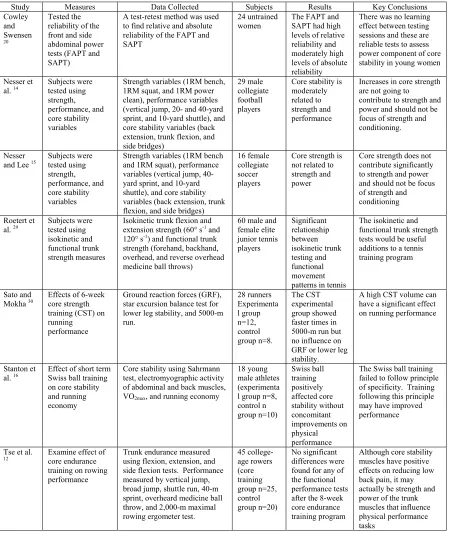
Table 1: Previous Research Examining the Relationship between Sport Performance and Core Testing Measures.
Study Measures Data Collected Subjects Results Key Conclusions
Cowley and Swensen
20
Tested the reliability of the front and side abdominal power tests (FAPT and SAPT)
A test-retest method was used to find relative and absolute reliability of the FAPT and SAPT
24 untrained
women The FAPT and SAPT had high levels of relative reliability and moderately high levels of absolute reliability
There was no learning effect between testing sessions and these are reliable tests to assess power component of core stability in young women
Nesser et
al. 14 Subjects were tested using
strength, performance, and core stability variables
Strength variables (1RM bench, 1RM squat, and 1RM power clean), performance variables (vertical jump, 20- and 40-yard sprint, and 10-yard shuttle), and core stability variables (back extension, trunk flexion, and side bridges)
29 male collegiate football players
Core stability is moderately related to strength and performance
Increases in core strength are not going to contribute to strength and power and should not be focus of strength and conditioning.
Nesser
and Lee 15 Subjects were tested using
strength, performance, and core stability variables
Strength variables (1RM bench and 1RM squat), performance variables (vertical jump, 40-yard sprint, and 10-40-yard shuttle), and core stability variables (back extension, trunk flexion, and side bridges)
16 female collegiate soccer players
Core strength is not related to strength and power
Core strength does not contribute significantly to strength and power and should not be focus of strength and conditioning
Roetert et
al. 29 Subjects were tested using
isokinetic and functional trunk strength measures
Isokinetic trunk flexion and extension strength (60° s-1 and
120° s-1) and functional trunk
strength (forehand, backhand, overhead, and reverse overhead medicine ball throws)
60 male and female elite junior tennis players Significant relationship between isokinetic trunk testing and functional movement patterns in tennis
The isokinetic and functional trunk strength tests would be useful additions to a tennis training program
Sato and
Mokha 30 Effects of 6-week core strength
training (CST) on running performance
Ground reaction forces (GRF), star excursion balance test for lower leg stability, and 5000-m run. 28 runners Experimenta l group n=12, control group n=8. The CST experimental group showed faster times in 5000-m run but no influence on GRF or lower leg stability.
A high CST volume can have a significant effect on running performance
Stanton et
al. 16 Effect of short term Swiss ball training
on core stability and running economy
Core stability using Sahrmann test, electromyographic activity of abdominal and back muscles, VO2max, and running economy
18 young male athletes (experimenta l group n=8, control n group n=10) Swiss ball training positively affected core stability without concomitant improvements on physical performance
The Swiss ball training failed to follow principle of specificity. Training following this principle may have improved performance
Tse et al.
12 Examine effect of core endurance
training on rowing performance
Trunk endurance measured using flexion, extension, and side flexion tests. Performance measured by vertical jump, broad jump, shuttle run, 40-m sprint, overheard medicine ball throw, and 2,000-m maximal rowing ergometer test.
45 college-age rowers (core training group n=25, control group n=20) No significant differences were found for any of the functional performance tests after the 8-week core endurance training program
Nesser et al. 14 reported a weak relationship between what they defined as core
strength and performance variables. Using McGill’s muscular endurance protocol 17,
core strength of the torso stabilizer muscles was measured. McGill’s protocol consisted
of an isometric trunk flexor test, trunk extensor test, and left and right lateral muscular
test with a minimum of five minutes between tests. Participants were required to hold
isometric positions for as long as possible until the starting positions were no longer able
to be maintained 17, a test of endurance rather than strength. Nesser then measured
strength variables of 29 NCAA division 1, male, football players (height 184.0 ± 7.1 cm;
weight 100.5 ± 22.4 kg) using a single rep max test for the bench press, squat, and power
clean. Power variables were measured using the vertical jump, 20- and 40-yard sprint,
and 20-yard shuttle run. Each core test, as well as a total core endurance score, was
correlated with each strength and performance test. Although a number of significant
correlations were found, they ranged from weak to moderate and were not consistent.
This is to be expected when attempting to correlate strength and power to muscular
endurance.
In a separate study that utilized the same test methods, Nesser and Lee 15
evaluated 16 NCAA division I female soccer players (height 163.6 ± 5.2 cm; weight 60.7
± 7.5 kg). No significant correlations were found between core endurance and the
performance variables. Reasons given for the lack of a strong relationship between core
endurance and sport performance were that the core muscular endurance tests were not
specific to the strength and power variables or that core strength plays only a small role in
strength and power performance 14, 15. Although Nesser and Lee claimed to be measuring
made between tests of strength and core endurance because measures of core endurance
are not a good representation of how muscles operate under functional loads and
movements 14.
Tse et al. 12 performed a study that examined the effectiveness of a core
endurance training program on college-aged rowers (core group N = 20: age 21 ± 1.0;
height 1.74 ± 0.04 m; weight 68.4 ± 8.6 kg and control group N =14: age 20.1 ± 1.0;
height 1.75 ± 0.06 m; weight 67.3 ± 5.8 kg). McGill’s protocol 17 was again used to
measure torso muscular endurance. Performance tests included: vertical jump, standing
broad jump, 10-meter shuttle run, 40-meter sprint, 2 kg medicine ball overhead throw,
and a 2,000-meter rowing ergometer test. Maximal heart rate and final lactate were
measured after the rowing ergometer test in order to ensure maximal effort. During the
8-week study, all participants continued to participate in their regular exercise regimen,
which consisted of one exercise for each major muscle group with two sets of 12-15
repetitions at 50% of their single repetition maximum. In addition, the core group
participated in two core endurance training sessions per week lasting 30-40 minutes in
which participants were taught how to properly activate the transverse abdominis and
multifidus muscles as well as perform static and dynamic core endurance exercises.
After the 8-week intervention, performance variables were measured and Tse et al. found
that there was no improvement in any of the tests. They cited possible reasons for the
lack of improved performance as the short duration of the intervention or the elite
beginning training level of these athletes. Tse et al. neglected to consider that muscular
although endurance is effective in the treatment of low back pain, it may be the strength
and power of the core muscles that influence performance tasks 12.
Studies by Stanton et al. 16 and Sato and Mokha 30 regarding core fitness and
running performance showed conflicting results. The study by Stanton et al. investigated
the role that short term core stability training had on running economy. Twenty-two male
athletes (15.5 ± 1.4 years; V.O2max 55.3 ± 5.7 ml/kg/min) were recruited for this study.
Core stability was measured using the Sahrmann and a Swiss ball prone stabilization tests
16. The Sahrmann core stability test is performed by placing a pad inflated to 40 mmHg
under the lordotic curve of the participant. There are five test levels with increasing
difficulty. Level 1 is performed by first producing an isometric contraction of the
abdominal musculature that braces the trunk without a movement being produced. The
legs are then raised to 100˚ of hip flexion with comfortable knee flexion; this position
becomes the starting position for each subsequent level. During level 2, the participant
lowers one leg until the heel contacts the ground, the knee is fully extended, and the leg is
then returned to the starting position. Level 3 is performed in same manner as level 2
except the heel does not contact the ground, but is instead lowered until it is 12 cm above
the ground. During level 4, the subject lowers both legs until the heels contact the
ground, knees are fully extended, and legs are then returned to the starting position.
Level 5 is performed in the same manner as level 4 except the heels do not contact the
ground, but are instead held 12 cm above the ground, knees are fully extended, and legs
are then returned to the starting position. Failure at any level occurs when a 10 mmHg
change above or below the baseline value of the pad is measured at any point during the
The Swiss ball prone stabilization test was performed by placing the toes on the
vertical apex of a Swiss ball, with the hands on the ground and elbows locked so that the
participant’s body was parallel to the ground. The participant was required to hold this
position until failure. Running economy and V.O2maxwere measured during an
incremental treadmill test to volitional fatigue. The treadmill speed was set at 7 km·h-1
during a five minute warm-up and then the speed was increased 1 km·h-1 every minute
until volitional fatigue was reached. Both the control and experimental groups performed
their normal training activities with the experimental group also participating in a 6-week
Swiss ball core strengthening program. The program was performed twice a week for 25
minutes with six core stability exercises being performed on the Swiss ball, including:
lunge, supine lateral roll, alternating superman, forward roll on knees, supine two leg
bridge, and supine Russian twist. The study found that although core stability improved
as a result of the training, running economy and performance did not. The failure of
improved performance variables may have been due to a lack in specificity of training or
an insufficient training volume 16.
On the other hand, Sato and Mokha 30 were able to show an improvement in
running performance in their study, which tested the influence of core strength training
on running kinetics, lower extremity stability, and 5000 meter performance in runners.
Using 28 adult subjects (36.9 ± 9.4 years), ground reaction forces, lower extremity
stability, and 5000 meter run performance were measured before and after a 6-week
study. Lower extremity stability was measured using the Star Excursion Balance Test.
This test was performed by having the participant stand barefoot on one leg at the center
direction of the 0, 90, and 180˚ lines while maintaining balance. Participants lightly
touched their toe to the ground at the maximum reaching point and held this position for
three seconds. The test was then performed on the opposite leg.
The experimental group performed core strengthening exercises four times a
week, with the training volume increasing every two weeks in order to elicit strength
gains. Five exercises were performed that targeted the abdominal, hip flexor/extensor,
and back extensor muscles: an opposite arm/opposite leg raise as well as an abdominal
crunch, back extension, hip raise, and Russian twist on a stability ball. After 6-weeks of
training, the experimental group showed a significant improvement in 5000 meter run
performance but not in ground reaction forces or lower extremity stability. The
experimental group dropped 47 seconds off their time as compared to only 17 seconds in
the control group. While studies such as Stanton et al. 16 have also implemented a core
strength training protocol, they have failed to show an improvement in performance.
Sato and Mokha increased the training volume bi-weekly in an attempt to improve
strength rather than performing the same volume throughout the study, which was seen in
the study by Stanton et al. They attribute the improved performance to a higher training
volume, which possibly provided a strong enough stimulus to elicit strength gains and
improve running performance 30. Although a conditioning effect on the core musculature
was not measured, after the 6-week core strength training intervention, the experimental
group reported that they were more conscious of body position and the importance of
good posture while running 30, which may have also led to improved performance.
Roetert et al. 29 measured the relationship between isokinetic and functional trunk
(mean: 14.95; standard deviation: 1.3). Isokinetic trunk flexion and extension strength
were measured using a Cybex 6000 dynamometer at speeds of 60°s-1 and 120°s-1.
Functional trunk strength was measured using forehand, backhand, overhead, and reverse
overhead medicine ball throws for maximal distance using a 6 lb. medicine ball.
Correlations ranged from 0.52 – 0.67 (p value ≤ 0.01) when peak torque extension at both
speeds was correlated with the four functional throws. Correlations ranged from 0.67 –
0.76 (p value ≤ 0.01) when peak torque flexion at both speeds was correlated with the
four functional throws. The authors did not provide a detailed description of how the
functional throws were performed. Therefore, it is not known to what extent the core
musculature was isolated or how much influence force production from the limbs had on
performance. However, they concluded that there is a positive relationship between
isokinetic trunk strength testing and functional movement patterns in elite junior tennis
players.
A possible reason for the authors of the previously mentioned studies 12, 14-16 to
use tests that were endurance in nature rather than dynamic core tests is because there
exists no gold standard for field tests that measure core strength when performing
everyday tasks and sport movements 3. Isometric and isokinetic core fitness testing both
have their limitations. Isometric tests only assess muscle performance at one muscle
length while isokinetic tests require expensive equipment. Currently, isokinetic trunk
testing is the standard measure of core stability due to its reliability 31.
Due to the complex interaction between lumbo-pelvic-hip musculature, finding a
single test to evaluate core fitness remains difficult. Not only this, but field tests that
Cowley and Swensen 20 developed the front abdominal power test (FAPT) and side
abdominal power tests (SAPT). These tests may be useful in sport performance testing
because they can be performed in an explosive manner similar to sport. It is also possible
that these tests are able to identify athletes who may be at higher risk of low back or
lower extremity injuries due to a weak core, being that strength tests are better predictors
of back and lower extremity injuries than endurance tests 20, 32. Not only does a weak
core diminish performance 33 but it can also increase the likelihood of low back and
lower extremity injuries, especially in females 32.
The FAPT and SAPT, which were adapted from plyometric medicine ball
exercises that are designed to improve core power, are performed by explosively
contracting the core musculature and using the arms as a lever to maximally project the
ball. Using 24 untrained women, they performed three trials of the FAPT and SAPT on
non-consecutive days. They found that there was a 3% increase in mean distance
between the trials, but this was not significant and indicates that there was not a learning
effect between the trials. In order to test reliability, an interclass correlation (ICC) of 0.95
was reported for the FAPT and 0.93 for the SAPT, which indicates excellent test-retest
reliability 20. The authors concluded by stating that their findings on the FAPT and SAPT
were reliable tests that may be used for assessing the strength and power component of
the core.
To the author’s knowledge, the ability of the FAPT and SAPT as valid measures
of functional core strength has not been verified in the literature. Limitations of these
tests include the release height and angle of the medicine ball as well as unintended
medicine ball from a height greater than that of a shorter participant will project the ball
further. The angle at which the ball is released could also affect test performance.
During both tests, the medicine ball is to be projected directly out of the hands of the
participant, not at an upward angle. Although this is monitored for and results in a failed
attempt, the possibility of a slight upward release remains.
In addition, Kumar et al. 34 found that females recruit the contralateral pectoralis
muscles to generate rotational torque in order to make up for weaknesses in the
abdominal and back muscles. Ikeda et al. 35 analyzed differences in the side medicine
ball throw between males and females and found that they differed significantly in test
execution, possibly due to the difficulty of women to recruit the trunk rotators. Thus, the
FAPT and SAPT do not isolate the core musculature and the results can be confounded
by the contribution of other muscle groups. The lack of reliable and valid field tests of
core strength is an issue in the field testing of athletes. The unavailability of isokinetic
trunk testing led to the FAPT and SAPT being used to quantify functional core strength
in the current study. Future research should better establish the validity of the FAPT and
SAPT with electromyography to ensure that these tests are measuring what they are
intended to measure.
The tests used to quantify isometric core strength were adapted from Daniels and
Worthingham’s Muscle Testing: Techniques of Manual Examination 7th Ed 19. Pilot
testing prior to actual participant involvement established that these tests were highly
reliable (Table 4.2). Tests of isometric trunk flexion and bi-lateral rotation were
performed in the exact manner as tests used for manual muscle testing used by physical
participants could produce during an isometric contraction. The position of the
participant and testing apparatus were set up in a manner so that measurement of the
isometric contraction occurred along the correct angle of pull relative to the intended
muscle. The movements performed and test design helped to establish these tests as valid
measures of strength for an isometric contraction.
In summary, various reasons exist as to why previous research has not been able
to firmly establish the role that the core plays in sport performance. Both the study by
Nesser et al. 14 and the study by Nesser and Lee 15 used testing that measured core
endurance and the studies by Tse et al. 12 and Stanton et al. 16 used core training that was
designed to improve endurance of the core. All of these studies attempted to correlate
endurance-oriented core tests with highly dynamic tests of sport performance. Knowing
what we know about the core muscles, their fiber types, and their capabilities, it should
be no surprise that there was a weak correlation between the core and sport performance
testing in these studies 12, 14-16. Previous research examining the relationship between the
strength and power component of core fitness is still lacking. However, the work done
by Roetert et al. demonstrates that the relationship between core strength and functional
movement patterns similar to sport does exist 29. More research is warranted in order to
better explain the role between core fitness and sport performance. Using tests that
evaluate the strength component of the core, a better relationship between the core and
sport performance should be found than what has been seen in previous studies 12, 14-16.
Conclusion
From this review of literature, it is clear that the relationship between core fitness
and Tse et al. concluded that there is a weak correlation between core endurance and
sport performance12, 14-16. However, these studies failed to measure the strength
component of core stability and how it correlates with performance. Sport requires
explosive and dynamic movements that travel through the kinetic chain of the core.
When testing and correlating the relationship between core fitness and sport performance,
testing should effectively measure the determinants of core stability and core strength
relative to sport performance. With appropriate strength testing of the core, this study
should determine whether the ability of the core to provide a stable base of support for
optimal limb function or the ability of core concentric strength to produce and transfer
force to the distal segments will correlate more strongly with soccer sport performance.
Not only is it the intention of this study to better explain the relationship between the core
and sport performance, but to guide future studies that improve training and sport
performance.
CHAPTER 3: METHODS
Coaches and strength and conditioning professionals have prescribed core training
for athletes without adequate proof that it does in fact improve sport performance. Core
training is effective in the prevention and treatment of back and lower extremity injuries,
but data supporting the relationship between core fitness and sport performance is lacking
2. In order to improve sport performance training, a better understanding of the role the
core plays in sport-specific movements is needed. The current study used tests of core
fitness and correlated them with tests of soccer performance to better explain the role of
the core during sport performance. The soccer kick and throw-in are two determinants of
success in the sport of soccer 36. Theoretically, the core musculature is the link in the
kinetic chain between the lower and upper bodies and should have a direct influence on
the aforementioned determinants of soccer performance.
The theoretical framework of the current study considered that since the kinetic
chain encompasses local, global, pelvic/hip, and shoulder muscles, more accurate tests
and correlations between core fitness and sport performance should be made. Thus, the
purpose of this study was to test the core musculature for isometric and functional core
strength to determine which plays a greater role in sport performance during similar
movement patterns. This was examined by performing tests of similar movement
patterns (trunk flexion and bi-lateral rotation) in each prescribed manner (isometrically,
concentrically/functionally, and soccer performance) and correlating them with one
different manners. Tests of isometric core strength measured the ability of the core to
provide a stable base of support for optimal limb function. Tests of functional concentric
core strength measured the ability of the core to produce and transfer force to the distal
segments.
Experimental Design
This was a correlational study to determine whether the ability of the core to
provide a stable base of support or the ability of the core to produce and transfer force
correlated more strongly with soccer sport performance. The predictive variables in this
study were the isometric core strength tests of trunk flexion, right rotation, and left
rotation and the functional core strength tests using the FAPT and SAPT. The criterion
variables in this study were the soccer sport performance variables, which included a
soccer-style kick with the dominant and non-dominant leg and a soccer style throw-in.
A stable base of support created by core isometric strength and forceful flexion
created by core functional strength are both needed to maximally perform the throw-in.
It was hypothesized that concentric trunk flexion would correlate more strongly with the
soccer throw-in than isometric core trunk flexion. To test this hypothesis, isometric trunk
flexion strength was used to quantify the ability to maintain core stability in the sagittal
plane. The ability to generate/transfer force to the distal segments in the sagittal plane
was quantified using the FAPT. These tests were correlated with the soccer throw-in.
During the kick, muscular activation is initiated contralateral to the kicking leg.
A rigid base of support maintained by core isometric strength and the forceful rotation
created by core functional strength are both necessary to maximally perform the kick. It
strongly with the left footed soccer kick than isometric trunk rotation to the right side. It
was also hypothesized that concentric trunk rotation to the left side would correlate more
strongly with the right footed soccer kick than isometric trunk rotation to the left side. To
test these hypotheses, isometric trunk rotation strength was used to quantify the ability to
maintain core stability. The ability to generate/transfer force to the distal segments in the
transverse plane was quantified using the SAPT. These tests were correlated with the
contralateral soccer kick.
Participants
Consistent with previous studies, a homogenous population was tested to limit
any training or experience factors that may affect the data 12, 14-16. Eleven female
participants (age: 19.73 ± 0.9 y, height: 1.63 ± 0.04 m, weight: 64.41 ± 11.73 kg) from
the College of Idaho soccer team who were of the same training level and had some
familiarity with the testing protocols volunteered. Only participants who were free of
injury and fully able to complete the testing were selected and were required to sign an
informed consent. This study was approved by the Institutional Review Board at Boise
State University. All participants were right foot dominant. A power analysis
determined that a minimum of 16 participants had to be tested in order to produce
significant results 37. Due to some of the team members being multi-sport athletes, not all
of the team was available for the testing sessions. Thus, testing was performed by 13
participants; but due to the inability of two participants to finish all of the tests, only data
Procedures
Testing took place on the campus of the College of Idaho in Caldwell, Idaho. All
participants were familiarized with the tests prior to testing. The isometric core strength
tests consisted of trunk flexion, right rotation, and left rotation and the functional core
strength tests included the FAPT and SAPT 20. The sport performance variables tested
were soccer style kicks with the dominant and non-dominant foot as well as a throw-in,
both for maximal speed. Speed was then converted to a force by multiplying the mass of
the ball by the acceleration imparted by the athlete.
Prior to all testing sessions, the participants followed a series of dynamic
warm-up exercises. The warm-warm-up consisted of 20 yards of high knees, butt kickers, side
shuffle, karaoke, A-skip, power skip, and walking tin soldier kicks. In order to stretch the
trunk, the windmill stretch was performed 10 times to each side as well as a prone
superman hold 10 times for three second stretches.
Testing took place over a 2-day period with tests on both days being performed in
random order to avoid any potential interaction between tests. A random order generator
was used to randomize all tests 38. Day 1 consisted of height and weight measurements
as well as the functional core strength and soccer performance testing. The FAPT and
SAPT were thoroughly demonstrated and then the participants were allowed to practice
the tests in order to ensure proper performance. Participants then each performed three
successful attempts of each test with the best efforts recorded. The soccer kick and
throw-in were also demonstrated to and practiced by the participants. Again each
Participants rested 20-30 seconds between each attempt of the functional core strength
and soccer performance tests.
Day 2 of testing consisted of the isometric core strength testing. A thorough
demonstration was given by the test administrator. When the participants performed the
isometric tests, encouragement was given and verbal cues such as “do not jerk” and
“perform a smooth, maximal contraction” were used to ensure that each variation of the
test was performed properly with a MVC. Each participant made three successful
attempts with the best effort recorded. Participants were given 20-30 seconds to rest
between each attempt of the isometric core strength tests. If a participant failed to
execute either of the performance or core strength tests correctly, additional attempts
were made until three correct attempts were achieved.
Isometric Core Strength Testing
The isometric core strength tests were adapted from physical therapy manual
muscle tests from Daniels and Worthingham’s Muscle Testing: Techniques of Manual
Examination 7th Ed 19. The position of the participant and specific movement patterns of
these tests allowed the intended core musculature to be evaluated for isometric strength.
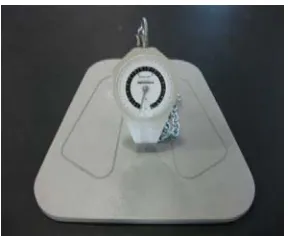
Strength was measured in kilograms (kg) using a dynamometer (Baseline, White Plains,
NY) (Figure 3). Prior to this study, the Baseline dynamometer had not been used as a
measurement tool of isometric core strength. Therefore, it was imperative to perform a
pilot study prior to experimental testing to establish reliability of the testing methods and
measurement device. Pilot testing consisted of seven participants who performed the
testing in the exact same manner the actual participants would. Each participant made
rotation. The testing methods and measurement device were found to be highly reliable
(Table 4.2).
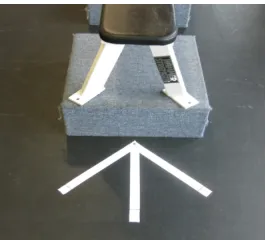
A shoulder harness was used for the trunk flexion, rotation right, and rotation left
tests. The center hook was used for trunk flexion. The hook behind the left scapula was
used for right rotation and the hook behind the right scapula was used for left rotation
(Figure 4). The hooks were positioned 12.7 cm from center near the inferior angle of the
scapula. For all trunk tests, a chain was used to connect the harness to the dynamometer.
Chain length was set to where there was no slack in the line while the participant was in
the neutral position.
Figure 3: Baseline Dynamometer
Figure 4: Shoulder Harness
The bench used for testing was set at 62.23 cm off the ground and a center point
measurement line was drawn 38.1 cm straight out from the center point as well as a line
45° right and left of center. The front edge of the dynamometer was set at the 38.1 cm
line for all of the tests. Flexion was set at the center line while rotation right was set at
45° left of center and rotation left was set at 45° right of center (Figure 6). The
dynamometer was set up in this manner so that the contraction, or pull by the participant,
was in a direct line with the dynamometer, which is similar to how manual muscle testing
of the trunk is performed in physical therapy 19. The distance between the dynamometer
and the hook attachment was constant so that the angle of the pull was as close as
possible to being the same between participants. Due to possible torso length differences
between the participants, the angle of the pull may have slightly differed; but due to the
relatively small standard deviation in height (1.63 ± 0.04 m), this effect was minimal.
Figure 5: Isometric Core Strength Testing Setup
During the contraction, the participants were instructed to give a smooth and
maximal effort without jerking. Once they felt like they had reached their maximal
contraction, they relaxed, never giving more than a three second contraction. After a
brief rest period of 20-30 seconds, the participant performed another attempt. Three
successful attempts were made by each participant. Participants performed isometric
flexion, rotation right, and rotation left in the same testing session with randomized test
order to limit the effect of one isometric test on another.
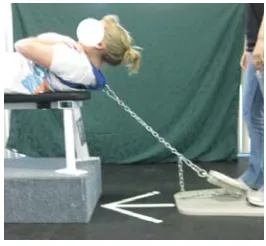
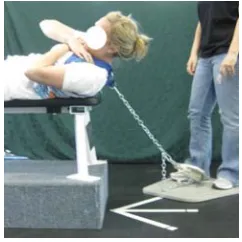
Isometric Trunk Flexion – This test measured the maximal isometric strength of the
muscles that produce trunk flexion. The participant laid supine with her legs extended
and hips and feet fastened to the bench. The subject’s arms were folded across her chest
and the harness was connected to the dynamometer. The participant was then instructed
to perform a curl up (Figure 7).
Figure 7: Isometric Trunk Flexion Strength Testing
Isometric Trunk Rotation – This test measured isometric strength of the muscles that
produce trunk rotation. The participant laid supine on a bench with her legs fully
extended and hips and feet fastened to the bench. The upper body harness was connected
to the dynamometer, which was placed at 45° relative to the participant so she was
to take her left shoulder to her right hip in a modified crunch (Figure 8). This was
performed in the exact opposite manner to test the left side (Figure 9).
Figure 8: Isometric Trunk Rotation Right Strength Testing
Figure 9: Isometric Trunk Rotation Left Strength Testing
Functional Core Strength Testing
Front Abdominal Power Test – This test was performed with the participant lying on her
back, knees bent at 90°, arms extended overhead, and feet positioned at the beginning of
the measurement line. The feet were secured so that they did not come off the ground as
the participant flexed her trunk. Hands were supinated with the thumbs touching and a
2kg medicine ball was placed in them. When instructed to, the participant explosively
contracted the abdominal and hip flexor muscles, causing the trunk to come off the floor,
wrist joints remained extended throughout the movement and the feet and buttocks
remained in contact with the floor (Figure 10). The distance the ball traveled was
measured in meters from the point at the tips of the feet to where the medicine ball
landed. An ICC performed by Cowley and Swensen found excellent test-retest reliability
of the FAPT (e.g., 0.95 at a 95% confidence interval) 20.
Figure 10: FAPT Testing
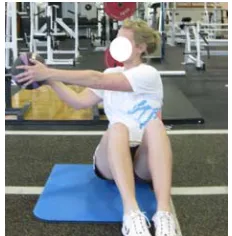
Side Abdominal Power Test – This test was performed with the participant seated, knees
bent at 90°, and feet placed shoulder width apart on the ground. The left edge of the foot
was placed at the beginning of the measurement line. The participant extended her arms
straight out in front of her with hands supinated and her fifth digits touching. The
participant then lowered her torso so that she sat 45° to the ground and a 2kg medicine
ball was placed in her hands. She then slowly rotated to her right until her arms were
perpendicular to the measurement line and forcefully rotated to the left by explosively
contracting the core musculature and releasing the ball as her arms passed over her left
knee. The countermovement rotation to the right and then explosive movement to the left
was performed in a continuous manner and arms remained parallel to the ground with no
upward movement while the participant’s feet and buttocks remained in contact with the
the left foot to where the ball landed (Figure 11). This test was also performed to the left
side in the exact opposite manner. An ICC performed by Cowley and Swensen found
excellent test-retest reliability of the SAPT (e.g., 0.93 at a 95% confidence interval) 20.
Figure 11: SAPT Testing
Soccer Performance Testing
The tests of soccer performance included in this study were the standing kick and
throw-in. Reliability of the standing kick and throw-in, as depicted by an ICC at a 95%
confidence interval, were 0.76 and 0.87, respectively 36. Both of these tests measured the
maximal distance the ball traveled in the air. Due to the effect that elevation angle has on
distance traveled, it was suggested that a radar gun be used to measure ball speed instead.
Using a radar gun to measure ball speed, a study performed by Markovic et al. 39 found
the reliability of the standing kick to be 0.95 at a 95% confidence interval. Both the
standing kick and throw-in were performed stationary in order to isolate the movement to
the core musculature as much as possible and to eliminate any forward momentum that
could aid in the amount of force produced. Due to the simplicity and reliability of these
tests, they are recommended for the purpose of testing and evaluating soccer performance