© 2015 Tsobou Roger et al. This is an open access article distributed under the terms of the Creative Commons Attribution License -NonCommercial-ShareAlike Unported License (http://creativecommons.org/licenses/by-nc-sa/3.0/).
Journal of Applied Pharmaceutical Science Vol. 5 (06), pp. 034-049, June, 2015 Available online at http://www.japsonline.com
DOI: 10.7324/JAPS.2015.50606 ISSN 2231-3354
Phytochemical screening and antibacterial activity of medicinal plants
used to treat typhoid fever in Bamboutos division, West Cameroon
Tsobou Roger
1, Mapongmetsem Pierre-Marie
2, Voukeng Kenfack Igor
3, Van Damme Patrick
41
Department of Plant Biology, University of Dschang, P.O.Box 67 Dschang, Cameroon; Department of Biological Sciences, University of Ngaoundéré, P.O.Box 454 Ngaoundéré, Cameroon. 2Department of Plant Production, Laboratory of Tropical and Subtropical Agriculture and Ethnobotany, 3Department of Biological Sciences, University of Ngaoundéré, P.O.Box 454 Ngaoundéré, Cameroon. 4Department of Biochemistry, Faculty of Science, University of Dschang; Dschang, Cameroon.
ARTICLE INFO
ABSTRACT
Article history:
Received on: 02/03/2015 Revised on: 13/04/2015 Accepted on: 30/04/2015 Available online: 27/06/2015
This study was undertaken to document how typhoid is traditionally treated in Bamboutos division. For this purpose thirty eight plants species were selected. These plants underwent phytochemical screening and antibacterial study using standard procedures. The antibacterial tests using agar well diffusion method and microdilution assay indicated that, all the thirty eight plant samples showed activity against S. typhi, while S. paratyphi A and S. paratyphi B reacted on fifteen and fourteen plants respectively. The highest zones of inhibition were obtained from Senna alata with diameter of 24, 22.5 and 20.5 mm against S. paratyphi A, S. paratyphi B and S. typhi respectively at 160 mg/ml concentration. The lowest MIC values 128 µg/ml was exhibited by the extract of Vitex doniana against Salmonella paratyphi A. Bactericidal activity was obtained by the extract of Carica papaya, Pseudarthria confertiflora, Moringa oleifera and Harungana madagascariensis. Antibacterial screened of Pseudartthria confertiflora was reported for the first time. Annona muricata, Laggera alata, Spathodea campanulata, Cordia platythyrsa, Carica papaya, Terminalia glaucescens and Pseudarthria confertiflora gave positive results for all secondary metabolites while other plants contained two to five metabolites. The presence of these secondary metabolites probably contributes to the antibacterial potential of these plants. This finding supported the uses of these plants for treatment of typhoid fever and other infectious diseases in the study area.
Key words:
Phytochemical screening, antimicrobial, typhoid fever, medicinal plants, MIC, bactericidal.
INTRODUCTION
Knowledge on plant uses is the result of many years of
man’s interaction and selection on the most desirable, the most
vigorous and the most successful plant present in the immediate
environment at a given time (Rindos, 1984). According to the
World Health Organization, 80% of people in developing
countries still depend on local medicinal plants to fulfill their
primary health needs (WHO, 2002). Besides that, there is a
global consensus on the benefits of phytopharmacy and at present
medicinal plants occupy a key position in plant research and
medicine. In many African countries, such as Ghana, Mali,
Nigeria and Zambia, the first line of treatment for 60% of the
.
* Corresponding Author
Tsobou Roger , University of Dschang, Faculty of Science, P O BOX. 67; Phone: 6 75 72 30 72. Email: [email protected]
children with high fevers, is the use of herbal medicines at home
(WHO, 2003). The importance of plants in medicine remains even
of greater relevance with the current global shift to obtain drugs
from plants sources, as a result of which attention has been given
to the medicinal value of herbal remedies for safety, efficacy and
economy (Abubakar
et al.
2009).
The problem has
become endemic in many developing
countries,
causing enormous childhood morbidity and high cost of
treatment (Leume, 1999). Multidrug resistant
Salmonella
species
are being increasingly reported from the
developed world. There is
therefore, the need for efficient
and safe vaccine which can be
used as a preventive
public health tool (Leume, 1999).
Thus, the resistances of Salmonella to these antibiotics
couple with the high cost of treatment have prompted the present
study on plant used for the treatment of typhoid fever.
Furthermore, typhoid fever is a systemic infection caused by the
bacterium
Salmonella enterica
subspecies enterica serotype
typhi,
which is acquired by ingestion of contaminated food and water
(Iroha
et al.,
2010).
Much more, in 2009, Zofou
et al.,
report that this disease
remains the second cause of mortality in the Bamboutos Division
after malaria. In the same way, the report provided by the NGO
“Action for the formation and the natural stock management”,
indicated that, 2715 cases of typhoid fever and 1998 cases of
diarrheas and gastro-enteritis were recorded in 2010 in this
Division. In the same line, Nanfack
et al.,
in 2014 have found that
typhoid fever was the hydrous widespread disease in this locality,
follow by dysentery and gastro-enteritis. Besides, each year the
disease affects at least 12.6 million people world-wide, most of
them resides in the developing countries of Southeast Asia and
Africa (WHO, 2003).
Typhoid fever is uncommon in industrialized regions
such as the USA, Canada, Europe, Australia and Japan and new
cases of the disease in these countries are related to a journey in
the developing countries (Papadimitropoulos
et al.,
2004).
Mortality rates associated with this disease vary form one region to
other, with highest reported from Indonesia, Nigeria and India
(Miller
et al.,
1994).
The prevalence of this disease and the increasing prices
of medicine have resulted in the demand for discovery of less
expensive but more potent sources of drugs. Plants are one of the
best sources of potent drugs. In fact, medicinal plants represent a
rich source form which antimicrobial agents may be obtained
(Kubmarawa
et al.,
2007).
The traditional knowledge on medicinal plants that is
inherent within local communities is a very important source of
information that continually provides the present-day herbal
remedies (Shahid-ud-Daula & Basher, 2009). In recent years,
researches in various countries have been directed towards
discovering the medicinal uses of plants through phytochemical
and antimicrobial screening (Hashim
et al.,
2010).
Nevertheless, the present investigation represents a
preliminary screening of some medicinal plants used against
typhoid fever in Bamboutos division.
These medicinal plants have been claimed by traditional
medical practitioners in this locality to be effective when used for
the treatment of typhoid fever. However, no detailed reports on
anti-typhoid activity of these plants exist in literature in
Cameroon; therefore, the present work investigates phytochemical
compounds and antibacterial activity against
Salmonella
species.
MATERIALS AND METHODS
Study area
The Bamboutos Division is located in the western
highlands and extends between 5–6° N and between 9–11°E
(Figure 1). It’s one of the eight divisions which forms the West
Region of Cameroon and is bordered to the north by Mezam
Division, to the south by Mifi and Menoua divisions, and to the
west by Noun Division. The Bamboutos division covers an area of
1155 km² which represents 8.31% of the total area of the West
Region of Cameroon. Located on the eastern slope of the
Bambouto Mountain from which it is named, Bamboutos Division
is characterized by the great diversity of its relief, climate,
vegetation, and soils. Mount Bambouto is the third highest
mountain in Cameroon (2740 m) after Mount Cameroon (Fako)
(4100 m) and Mount Oku (3008 m). The main occupation in the
community is farming. There are two seasons: the dry season from
November to March and the rainy season from March to October.
The climate is subtropical with an annual rainfall estimated at
1621.5 mm and a mean annual temperature of 24–29°5C (MINEF,
1999). They have four main languages used in the community
(Ngomba’a
, Ngiembon, Ngombalé
and
Megaka
).
Collection of ethnomedical information
An ethnobotanical survey was carried out in the
Bamboutos Division January–November 2009. Traditional healers
and elderly persons were the target key informants in the study,
and the selection process was based on the knowledge base of
informants, experience, and current practices in ethnobotany
medicine of the target individual. The traditional healers were
interviewed using semi-structured questionnaires as described by
Martin (1995) and open-ended conversations. Trips were made to
the sites where traditional healers usually go to harvest plants. The
interviews and discussions were carried out in the local language
for each of the villages visited. Since the author is a native of the
division, data on the local names of the plants, the plant parts used,
mode of usage and administration, and mode of preparation were
easily obtained. Selected respondents were well-known in the
community due to their long practice in providing services related
to traditional health care. The age of the respondents ranged
between 40 and 95 years (29 were between 40-50, whereas 18
were between 51-60 and 23 were above 60 years old). Forty of
them were traditional healers, whereas the rest were elders who
had gained knowledge on medicinal uses of plants from their
parents and relatives who were historically using the plants.
Collection of plant samples
Microbial strains
Fresh clinical strains of
Salmonella typhi
ATCC 6539,
S.
paratyphi A
and
S. paratyphi B.
were obtained from the
Microbiology Laboratory, Department of Biochemistry, University
of Dschang. All the strains were stored at 4°C temperature until
use.
Preparation of plant extracts
Fresh plant material were washed with tap water, air
dried at room temperature for 15-30 days, and then homogenized
to fine powder. A sample (200 g) of each powdered plant material
was soaked in ethanol (500 ml) for 48 h with constant stirring. The
suspension was filtered through Whatman filter paper N° 1. The
filtrate was concentrated under vacuum using a rota-vapor to
obtain the dry ethanol extract and stored at 4°C until further use.
These extracts were used both for the phytochemical screening of
secondary metabolites and antibacterial activity.
Phytochemical analysis of the plant extract
The extracts were subjected to phytochemical tests in
order to identify secondary metabolites such as, flavonoids,
alkaloids, saponins, steroids, polyphenols and triterpenes
.
according to standard methods (Ronchetti et Russo, 1971;
Hegnauer, 1973; Békro
et al.,
2007 and N’Guessan
et al.
, 2009).
Antibacterial assay
Determination of diameter inhibition
The
media
were
prepared
according
to
the
manufacturers’ standard, 38 g/1000ml of distilled water. The
ethanolic extracts were dissolved in 10% dimethylsulpoxide
(DMSO) and further diluted to obtain different concentrations (160
mg/ml, 80 mg/ml and 40 mg/ml). Negative control used was
DMSO. Ciprofloxacin was used as positive reference standard
having a concentration of 10 µl/ml for all bacterial strains.
The organisms were maintained on nutrient agar plates
and were revived for bioassay by subculturing in fresh nutrient
agar for 24 h before being used. The agar wells diffusion method
described by Kuete, (2010), was adopted. Briefly, nutrient agar
was prepared by autoclaving and allowed to cool to 40-50°C
before seeded with the test organism (in sterile petri-dishes of 90
mm diameter). The seeded plates were allowed to set and
cylindrical plugs were removed from the agar plates by means of a
cork borer to produce wells of approximately 6 mm diameter. The
wells were equidistant from each other and the edge of the plate
(Washington, 1995). The wells were then filled with 50 µl of each
ethanolic extract at a concentration of 160 mg/ml, 80 mg/ml and
40 mg/ml. Also, concentration of 10 µg/ml of ciprofloxacin and
200 µg/ml DMSO were introduced into other wells as positive and
negative controls, respectively with the aid of micropipette. The
plates were incubated at 37°C for 24 h. antibacterial activity was
determined by measuring the zone of inhibition surrounding the
well. The zones of inhibition were then measured, recorded and
compared with standard control, Ciprofloxacin (10 µg/ml). The
assays were carried out under aseptic conditions. All tests were
performed in triplicate.
Determination of MIC and MBC
Preparation of the solutions of extracts
The stock ethanolic extracts solutions were prepared by
dissolving 59 mg of each extracts in 200 µl of 10%
dimethylsulphoxide (DMSO) and mixed with 1600 µl of Mueller
Hinton broth, to give the final concentration of 8192 µg/ml and
serially diluted two fold to obtain the concentration ranges from
128-8192 µg/ml for the extract and 2-256 µg/ml for ciprofloxacin.
100 µl of each concentration was added in 96 wells plates
containing 100 µl of MHB and inoculums standardized at 1,5x 10
8CFU/ml. Negative growth controls were included in every test.
The plates were covered with a sterile plate sealer, then agitated to
mix the contents of the wells using a plate shaker and incubated at
37°C for 24 h. The MIC of each sample was detected following
addition (40 µl) of 2%
p-
iodonitrotetrazolium chloride and
incubation at 37°C for 30 minutes (Pettit
et al.,
2005). Viable
microorganisms reduced the yellow dye to a pink colour. MIC was
defined as the lowest sample concentration that prevented this
change and exhibited complete inhibition of bacterial growth. For
the determination of MBC, a portion of liquid (50 µl) from each
well that showed no change in color was placed on MHB (150 µl
each new 96 wells plates) and incubated at 37°C for 24 h. The
lowest concentration that yielded no growth after this
sub-culturing was taken as the MBC. The MBC/MIC was calculated to
determine if the extract is bactericidal or bacteriostatic, according
to Noumedem
et al.,
(2013).
STATISTICAL ANALYSIS
Data were expressed as mean ±standard deviation. The
data obtained were subjected to ANOVA test to determine whether
there was significant difference in zone of inhibition between
extract concentrations and also antibiotic used.
RESULTS
Seventy informants (traditional healers and elderly
persons) were interviewed on how they used plants to treat typhoid
fever. Fifty-nine species, distributed among 56 genera and 33
families were recorded (Tsobou
et al.,
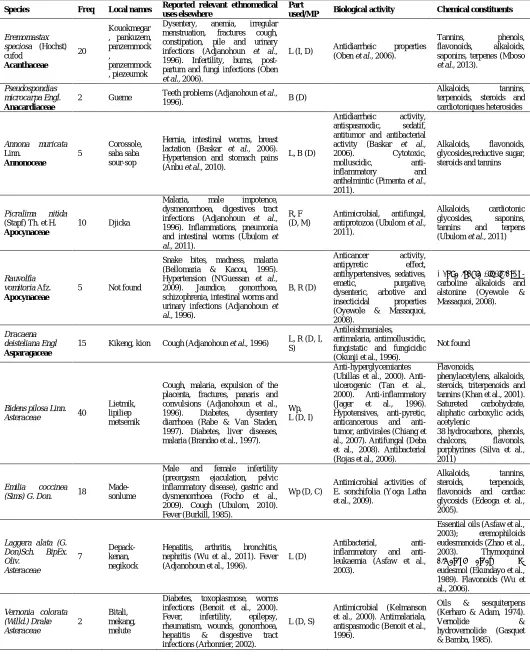
2013). Thirty-eight of the
59 species recorded were selected for this study (Table 1). Various
parts were harvested depending on the parts the informants used in
the treatment of typhoid fever. The leaves, barks, whole plant,
roots, fruits and stem were the ones that were harvested, but the
part that is used most was found to be the leaves, followed by stem
bark. The most common mode of preparation was decoction. The
species name, family, vernacular name, ethnomedical uses
elsewhere, plant part used, biological activity and chemical studies
of the 38 selected species are presented in Table 1. However,
Bidens pilosa
was the most cited plant in our study. The only
mode of administration was oral.
Phytochemical screening
Phytochemical screening of collected plant species has
been carried out following the methods reported in literature and
the results have been reported in table 2. The result of the
phytochemical analysis showed that, these plants extracts are rich
in at least one of the following class of compounds: triterpenes,
flavonoids, alkaloids, polyphenols, sterols and saponins.
All these
group of compounds were found in
Annona muricata, Picralima
nitida,
Laggera
alata,
Spathodea
campanulata,
Cordia
platythyrsa, Carica papaya, Terminalia glaucescens, Pseudarthria
confertiflora, Senna alata
and
Musa paradisiaca
. Triterpenes were
found in all plant extracts except
Gossypium barbadense
and
Dioscorea dumetorium.
While alkaloids have been found to be
absent in 18 species (i.e.
Pseudospondias microcarpa,
Stereospermum acuminatissimum, Cupressus lusitanica, Entada
abyssinica, Theobroma cacao
and
Mitracarpus villosus
).
Polyphenols have been found to be present in thirty seven species.
Flavonoids are generally present in most of the 38 plants except in
Dracaena
deisteliana,
Pteridium
aquilinum,
Dioscorea
dumetorum, Ocimum gratissimum
and
Paullinia pinnata
. Sterols
and saponins are present in 36 and 23 plants species respectively.
Antibacterial activity
The results of the antibacterial screening of the ethanolic
extract on the test strains are shown in table 2. All the thirty eight
(38) plants tested showed activity against
S. typhi
. While 23 and
24 plant species did not showed any activity against
S. paratyphi A
and
S. paratyphi B
respectively
.
The zone of inhibition increased
with increasing concentration of extract in wells. This showed that
the concentration influence the activity. The highest zone of
inhibition were obtained from
Senna alata
against
Salmonella
paratyphi
A,
S. paratyphi
B and
S. typhi
with diameter of 24, 22.5
and 20.5 mm respectively at 160 mg/ml.
Among 38 plants tested
Pseudarthria confertiflora,
Terminalia glaucescens, Senna alata, Dacryodes edulis
and
Stereospermum acuminatissimum
were found to be the most
effective against
S. typhi
.
Senna alata
and
Rauvolfia vomitoria
were found to be the most sensitive against
Salmonella paratyphi
A. Similarly,
Senna alata, Pseudarthria confertiflora
and
Rauvolfia vomitoria
were found to be the most active against
S.
paratyphi
B. The inhibition zone (7.5 – 24 mm) of each extract on
Table 1: Information about medicinal plants recorded and tested in this study.
Species Freq Local names Reported relevant ethnomedical
uses elsewhere
Part
used/MP Biological activity Chemical constituents
Eremomastax
speciosa (Hochst)
cufod
Acanthaceae
20
Kouokmegar , pankuzem, panzemmock ,
panzemmock , piezeumok
Dysentery, anemia, irregular menstruation, fractures cough, constipation, pile and urinary infections (Adjanohoun et al.,
1996). Infertility, burns, post-partum and fungi infections (Oben
et al., 2006).
L (I, D) Antidiarrheic properties (Oben et al., 2006).
Tannins, phenols, flavonoids, alkaloids, saponins, terpenes (Mboso
et al., 2013).
Pseudospondias microcarpa Engl.
Anacardiaceae
2 Gueme Teeth problems (Adjanohoun et al.,
1996). B (D)
Alkaloids, tannins, terpenoids, steroids and cardiotoniques heterosides
Annona muricata
Linn. Annonoceae 5 Corossole, saba saba sour-sop
Hernia, intestinal worms, breast lactation (Baskar et al., 2006). Hypertension and stomach pains (Anbu et al., 2010).
L, B (D)
Antidiarrheic activity, antispasmodic, sedatif, antitumor and antibacterial activity (Baskar et al.,
2006). Cytotoxic, molluscidic, anti-inflammatory and anthelmintic (Pimenta et al.,
2011).
Alkaloids, flavonoids, glycosides,reductive sugar, steroids and tannins
Picralima nitida
(Stapf) Th. et H.
Apocynaceae
10 Djicka
Malaria, male impotence, dysmenorrhoea, digestives tract infections (Adjanohoun et al.,
1996). Inflammations, pneumonia and intestinal worms (Ubulom et
al., 2011).
R, F (D, M)
Antimicrobial, antifungal, antiprotozoa (Ubulom et al.,
2011).
Alkaloids, cardiotonic glycosides, saponins, tannins and terpens (Ubulom et al., 2011)
Rauvolfia
vomitoria Afz.
Apocynaceae
5 Not found
Snake bites, madness, malaria (Bellomaria & Kacou, 1995). Hypertension (N'Guessan et al.,
2009). Jaundice, gonorrhoea, schizophrenia, intestinal worms and urinary infections (Adjanohoun et
al., 1996).
B, R (D)
Anticancer activity, antipyretic effect, antihypertensives, sedatives, emetic, purgative, dysenteric, arbotive and insecticidal properties (Oyewole & Massaquoi, 2008).
Active indole alkaloids, β -carboline alkaloids and alstonine (Oyewole & Massaquoi, 2008).
Dracaena deisteliana Engl
Asparagaceae
15 Kikeng, kion Cough (Adjanohoun et al., 1996) L, R (D, I, S)
Antileishmaniales, antimalaria, antimolluscidic, fungistatic and fungicidic (Okunji et al., 1996).
Not found
Bidens pilosa Linn.
Asteraceae 40
Lietmik, lipiliep metsemik
Cough, malaria, expulsion of the placenta, fractures, panaris and convulsions (Adjanohoun et al., 1996). Diabetes, dysentery diarrhoea (Rabe & Van Staden, 1997). Diabetes, liver diseases, malaria (Brandao et al., 1997).
Wp, L (D, I)
Anti-hyperglycemiantes (Ubillas et al., 2000). Anti-ulcerogenic (Tan et al., 2000). Anti-inflammatory (Jager et al., 1996). Hypotensives, anti-pyretic, anticancerous and anti-tumor, antivirales (Chiang et al., 2007). Antifungal (Deba et al., 2008). Antibacterial (Rojas et al., 2006).
Flavonoids,
phenylacetylens, alkaloids, steroids, triterpenoids and tannins (Khan et al., 2001). Satureted carbohydrate, aliphatic carboxylic acids, acetylenic
38 hydrocarbons, phenols, chalcons, flavonols, porphyrines (Silva et al., 2011)
Emilia coccinea
(Sims) G. Don. 18
Made-sonlume
Male and female infertility (preorgasm ejaculation, pelvic inflammatory disease), gastric and dysmenorrhoea (Focho et al., 2009). Cough (Ubulom, 2010). Fever (Burkill, 1985).
Wp (D, C)
Antimicrobial activities of E. sonchifolia (Yoga Latha et al., 2009).
Alkaloids, tannins, steroids, terpenoids, flavonoids and cardiac glycosids (Edeoga et al., 2005).
Laggera alata (G.
Don)Sch. BipEx.
Oliv. Asteraceae 7 Depack-kenan, negikock
Hepatitis, arthritis, bronchitis, nephritis (Wu et al., 2011). Fever (Adjanohoun et al., 1996).
L (D)
Antibacterial, anti-inflammatory and anti-leukaemia (Asfaw et al., 2003).
Essential oils (Asfaw et al., 2003); eremophiloids eudesmanoids (Zhao et al., 2003). Thymoquinol
dimethyl ether & α -eudesmol (Ekundayo et al., 1989). Flavonoids (Wu et al., 2006).
Vernonia colorata (Willd.) Drake Asteraceae 2 Bitali, mekang, melute
Diabetes, toxoplasmose, worms infections (Benoit et al., 2000). Fever, infertility, epilepsy, rheumatism, wounds, gonorrhoea, hepatitis & disgestive tract infections (Arbonnier, 2002).
L (D, S)
Antimicrobial (Kelmanson et al., 2000). Antimalariala, antispasmodic (Benoit et al., 1996).
Spathodea campanulata
P.Beauv.
Bignoniaceae
3 Foufougue, foukfouk
Hernia, schizophrenia, leucorrhoea, malaria & haemorrhoids (Adjanohoun et al., 1996). Infertility, postpartum & weakness impotence (Focho et al., 2009). Dysentery, ulcer, gonorrhoea, diarrhoea & poisons (Amusan et al.,
1995). Diabetes (Nagla'a, 2007). Haemorrhoids (Agyare et al., 2009).
L, B (D)
Antimalarial,
hypoglycemiant, anti-HIV (Niyonzima et al., 1999). Antimicrobial, antioxydant & nephroprotective (Rajesh et al., 2010).
Spathodic acids, steroids, saponins, ursolic acids, tomentosolic acids, verminosids, pectic compounds, anthocyanins (Amusan et al., 1996). Phenolic acids, cafeic acids, ferulic acids, flavonoids (Nagla'a, 2007). Specioside, diglucoside kampeferol & cafeic acids (Elusiyan et
al., 2011).
Stereospermum acuminatissimum
K. Schum.
Bignoniaceae
2 Watefè Not found B (D, M) Not found Not found
Cordia
platythyrsa Bak.
Boraginaceae
4 Fapbè Not found F (S) Not found Not found
Canarium Schweinfurthii
Engl.
Burseraceae
3 Beré, pui
Cough (Adjanohoun et al., 1996). Fever, constipation, malaria, diarrhoea, sexual infections, rheumatism (Koudou et al., 2005).
B (D) Antioxydant, antimicrobial (Obame et al., 2008). Lipids and fatty acids (Obame et al., 2008).
Dacryodes
edulis (G.Don)
H.J.
Burseraceae
8 Zo'o
Digestive tract infections, ear infections, dysentery & anemia (Ayuk et al., 1999). Leprosy (Bouquet, 1969). Skin infections (Ajibesin et al., 2008).
L, B (D)
Antimalarial (Zofou et al.,
2011). Antibacterial (Ajibesin et al., 2011). Antimicrobial & antioxydant (Obame et al.,
2011).
Essential oils rich in monoterpens,
sesquiterpens, diterpens, triterpens, phellandrène &
β-caryophyllène (Onocha
et al., 1999).
Carica papaya
Linn.
Caricaceae
27 Papaye, popo'o
Asthma, rhinitis (Morton, 1977). Wounds, burns, dyspesia, gastro-intestinales disorders, cancer, infectious diseases (Otsuki et al.,
2010). Diabetes, malaria, gonorrhoea, jaundice, headache, splenomegaly (Adjanohoun et al.,
1996). Urinary tract infections (Mesfin et al., 2005). Hypertension, galactagogue, dyspesia (Arbonnier, 2002).
L, B, F (D)
Anthelmintic,
antimicrobial, anti-tumor, antiprotozoa (Banerjee, 2001). Antioxydant, anti-inflammatory (Imaga et al., 2010).
Folic acids, vitamin B12, alcaloids, saponins, glycosides, tannins, anthraquinones,
flavonoids (Suresh et al.,
2008). Carpaine, carpasemine,
chymopapaine (Gurub-Fakim, 2008).
Terminalia glaucescens
Planch.
Combretaceae
11 Tsi-sa'a
Diabetes, bacteria infections, obesity, typhoid fever, malaria, asthma, hepatosplenomegaly (Adjanohoun et al., 1996). Dysentery, anti-HIV (Koudou et al.,
1995).
B (D)
Antimicrobial (Ndukwe et
al., 2005 ; Balou et al.,
2010). Antispasmodic, antivirale, antioxydants (Njomen et al., 2011).
Glaucinoic acids, triterpenoids (Atta-Ur-Rahmana et al., 2005). Alkaloids, saponins, tannins, steroids, flavonoids,
anthraquinones,
phlobatannins (Adebayo & Ishola, 2009 ; Kolapo et
al., 2009).
Cupressus
lusitanica Mill.
Cupressaceae
5 Sapin Postpartum, hair loss (Bussmann & Ashley, 2010).
Wp, L, S
(D) Not found Not found
Pteridium aquilinum
(Linn.) kulh.
Dennstaedtiacea e
Koukoumazong Antiprotozoa (Crane, 1990). L (D) Antimicrobial activity (Hassan et al., 2007).
Glycoside anthraquinones, cardiac glycosides, cyanogenic glycosides, essential oils (Hassan et
al., 2007).
Dioscorea dumentorium
Dioscoreaceae
3 Leliock, meliock
neliock Not found L (D) Not found Not found
Entada
abyssinica A.
Rich.
Fabaceae
3 Not found
Infertility, menstruation disorders (Chifundera, 1998). Asthma, tuberculosis, cough (Otieno et al.,
2011). Rheumatism, abdominale pains, diarrhoea, fever (Bekele-Tesemma et al., 1993). Malaria, syphilis, wounds, psoriasis, convulsions (Arbonnier, 2002).
B (D)
Antivirale (Cos et al.,
2002). Antibacterial (Fabry et al., 1998). Antiprotozoa
(Freiburghaus et al.,
1998).
5S, 6R, 8a R-5- (carboxymethyl)-3-4-4a, 5, 6, 7, 8, 8a-Octahydro-5,
6, 8a
Pseudarthria confertiflora
(A. Rich.) Baker
Fabaceae
2 Not found Not found L (D) Not found Not found
Senna alata
(Linn.) Roxb
Fabaceae
21 Foupan
Constipation, gastro-enteritis, intestinal worms, eczema, typhoid fever, hepatitis, jaundice (Adjanohoun, et al., 1996). Skin infections, syphilis, gonorrhoea (Arbonnier, 2002). Hypertension (Okafor & Ham, 1999).
L (D)
Hepatoprotective (Pieme et al., 2006). Antimicrobial (Awal et al., 2004).
Phenols, tannins, saponins, alkaloids, steroids, flavonoids, carbohydrates (Owoyale et al., 2005).
Harungana madagascarien sis Lam-expoir
Hypericaceae
5 Not found
Menstruation disorders, dysentery, female infertility, hernia (Adjanohoun et al., 2009). Postpartum (Focho et al., 2009). Malaria, fever, nervous depression, kidney & liver diseases (Adeneye et al., 2008).
B (D)
Antimicrobial activity (Okoli et al., 2002). Analgesic, anti-inflammatory,
antioxydants (Kouam et
al., 2006). Antiplasmodic
(Ndjakou Lenta et al.,
2007).
flavonoids, alkaloids, saponins, glycosides, tannins (Moulari et al. 2006). Harunmadagascarins C & D,
Kenganthrol D,
harumadagascarins A & B, harunganol B, harungin anthrone, bazouanthrone (Kouam et al., 2007).
Ocimum gratissimum
Linn.
Lamiaceae
15
Kotemadjo, masep, masepo
Gonorrhoea, vaginitis, metritis (Abdulrahma, 1992). Respiratory infections, diarrhoea, headache, conjunctivitis, skin infections, pneumonia, fever (Okigbo & Ogbonnanya, 2006). Cough, convulsion, gastroenteritis (Adjanohoun et al., 1996). Hypertension, malaria (N'Guessan et
al., 2009). Facilitate the childbirth
(Kamatenesi et al., 2007).
L (D)
Antimicrobial, antidiabetic activity (Oussou et al.,
2008). Insecticidal activity (Seri-Kouassi et al., 2004). Anti-HIV activity (Elujoba, 2000).
Sterols, polyterpens, polyphenols, flavonoids, catechic tannins, alkaloids (N'Guessan et al., 2009). Monoterpens, sesquiterpens, saponosids (Oussou et al.,
2008).
Vitex doniana
Sweet
Lamiaceae
6 Vounetane, voutane
Typhoid fever (Faleyimi et al.,
2012). Syphlis (Adjanohoun et al.,
1996). Dysmenorrhoea, infertility, gastritis, smallpox, epilepsy, wounds, snake bites (Arbonnier, 2002).
B (D)
Antimicrobial activity (Kubmarawa et al., 2007; Iroha et al., 2010).
Sponins, tannins, essential oils (Kubmarawa et al.,
2007).
Gossypium barbadense
Linn.
Malvaceae
10 Coton, ti-sisi
Pelvic pains, postpartum (Rajith et al., 2010). Malaria (Ajaiyeoba et al.,
2006).
L (D) Not found Not found
Theobroma
cacao L.
Malvaceae
2 Caca Wounds (Agyare et al., 2009) L, B (D) Not found Not found
Thespesia populnea
(Linn.) soland excorr
Malvaceae
6 Kepfou
Asthma, cholera, diarrhoea, diabetes, dysentery, gonorrhoea, haemorrhoids, hernia, wounds (Parekh & Chanda, 2008). Liver diseases (Venkata & Sai, 2011).
L (S)
Antidiabetic, antioxydant activity (Parthasarathy et
al., 2009). Antimicrobial
activity (Saravanakumar et
al., 2009).
Alkaloids, flavonoids, carbohydrates, phytosterols, tannins, saponins, proteins, amino acids, terpens, phenols, mucilage (Venkata et Sai, 2011). Essential oils, glycosides, fatty acids (Siddharth et al., 2009). Gossypol, herbacetine, kaempferol (Parekh & Chanda, 2008). Thespones, thespesones, mansonone-D & H, gossypol (Akila & Rani, 1993).
Ficus sur
Forssk
Moraceae
5 Gack, gaia
Galactagogue (Addo-Fordjou et al.,
2008). Wounds, burns, ulcers (Agyare et al., 2009).
B (D) Not found Not found
Moringa
oleifera Lam.
Moringaceae
2 Moringa
Typhoid fever (Faleyimi et al., 2012). Skin infections, headache, rheumatism (Amri & Kisangau, 2012). Urinary tract infections, diarrhoea, dysentery, diabete, hypertension (Fahey, 2005).
L (D)
Antidiabetic, hypocholesterolemic activity, anti-inflammatory, liver, kidney infections, cardiovascular problems, anticancer (Bharali et al.,
2003).
Gallic tannins, catechol tannins, steroids, triterpenoids, flavonoids, saponins, anthraquinones, alkaloids (Kasolo et al.,
The minimum inhibition concentrations (MIC) and
minimum bactericidal concentration (MBC) values are presented
in Table 2. The lowest MIC values 128 µg/ml was exhibited by the
extract of
Vitex doniana
against
Salmonella paratyphi
A; followed
by the extract of
Rauvolfia vomitoria, Senna alata
and
Terminalia
glaucescens
with MIC values of 512 µg/ml each on
S. paratyphi A,
while
S. paratyphi B
was most sensitive on
Senna alata
and
Terminalia glaucescens
extract with a MIC of 512 µg/ml.
The
extract
of
Bidens
pilosa,
Harungana
madagascariensis, Gardenia ternifolia
and
Lantana camara
were
most effective against
Salmonella typhi
with MIC values of 512
µg/ml.
Annona muricata, Senna alata, Terminalia glaucescens,
Paullinia pinnata
and
Vitex doniana
inhibited the growth of all the
bacteria tested. The results of table 2 showed detectable MBC
values for some of the studied plants on the tested microbial
strains.
When analyzing carefully the MIC and MBC results for
each plant samples, it can be noted that MBC/MIC ratios lower
than 4 were obtained for
Carica papaya, Pseudarthria
confertiflora, Moringa oleifera and Harungana madagascariensis
,
thus considered to have bactericidal activities (Noumedem
et al.,
2013). To the best of our knowledge, the activity of
Pseudarthria
confertiflora
on the microorganisms studied in the present work is
being reported for the first time.
Musa paradisiaca
Linn.
Musaceae
22 Kedong, kadong
Diarrhoea, dysentery, intestinal infections, diabetes, uraemia, nephritis, hypertension, venereal diseases (Ghani, 2003). Nervous depression, epilepsy, hysteria, mastitis, cystitis, prostatis, syphilis (Focho et al., 2009).
L (D)
Antimicrobial, hematoprotectives, hypoglycemic,
antihypertensive activity (Biswas et al., 2011).
Pectines, flavonoids (Ragasa
et al., 2007). Serotonine,
norepinephrine, tryptophane, indolic compounds, tannins, starch, iron, cristalized & non cristalized sugar, vitamin C, vitamin B, albuminoids, fatty acids, mineral salts (Ghani, 2003). Alkaloids, steroids, flavonoids, saponins, sugars, tannins (Biswas et al.,2011).
Psidium
guajava Linn.
Myrtaceae
22 Goyave, gravou
Weakness impotence (Focho et al.,
2009). Diarrhoea, dysentery, dermatitis (Adjanohoun et al., 1996). Vaginitis, haemorrhoids, leucorrhoea (Arbonnier, 2002). Malaria, infectious diseases (Gurib-Fakim, 2008).
L, B (D)
Antimicrobial activity (Gurib-Fakim, 2008). Antioxydants (Ayoola et
al., 2008).
Hepatoprotective, antispasmodic, hypoglycemiant, hypotensive (Ojewole, 2005).
Tannins, essential oils, cinnamic acids, 3-hexenoic, quercetin, glycosides, eugenol (Gurib-Fakim, 2008).
Imperata cylindrica
(L.)Raeusch.
Poaceae
4 Kenick, neuck, nick
Wounds (Anbu et al., 2009). Abdominale pains (Kamatenesi et al., 2011).
Wp (D) Antibacterial , antipyretic (Balangcod et al., 2012).
Alkaloids, flavonoids, tannins, glycosides (Balangcod et al., 2012) .
Paullinia
pinnata Linn.
Sapindaceae
3 Dzick
Rheumatism, weakness impotence (Addo-Fordjour et al., 2008). Ulcers, haemorrhoids, wounds (Agyare et
al., 2009). Malaria (Adinorthey et
al., 2012). Fever, hypertension,
contraceptive (N'Guessan et al.,
2009). Buruli ulcer (Yemoa et al.,
2008). Syphilis (Focho et al., 2009). L (D)
Stimulent, antioxydants (Annan & Houghton, 2010).
Tannins, saponins (Yemoa et
al., 2008). Sterols,
polyterpens, polyphenols, flavonoids, tannins, alkaloids, saponosids (N'Guessan et al.,
2009).
Gardenia ternifolia
Schum et Thonn.
Rubiaceae
2 Metoucbouor
Ascites, diarrhoea, rachitism, leprosy, constipation, hepatitis, rheumatism, onchocerciasis, female infertility, wounds, haemorrhoids (Arbonnier, 2002).
B (D)
Purgatives, cholagogue, duiretic, emetic, asthenia (Arbonnier, 2002).
Not found
Mitracarpus
villosus(
Swartz)DC.
Rubiaceae
3 Not found
Leprosy, skin infections (Jegede et al., 2005). Dysentery, diarrhoea (Dalziel, 1937).
Wp (D)
Antibacterial, anti-inflammatory (Jegede et al., 2005).
Stigmasterols, urlolic acids (Sofowora, 1986). Coumarins (Ekpendu, 1995).
Lantana
camara Linn.
Verbenaceae
7 Lantana
Cataracte, snake bites, epilepsy (Kamatenesi et al., 2011). Malaria (Clarkson et al., 2004). diarrhoea, cough, asthma, jaundice, constipation, gastritis, asthenia, rheumatism, arthritis (Arbonnier, 2002).
L (D)
Antimicrobial (Tripathi, 2010). Antiulcerogenic, antihyperglycemic, antimotility, anti-inflammatory,
antifertility, anticancer, antiproliferative (Ghosh & Sarma, 2010). Hemolitic activity (Kalita, 2011).
Essential oils, phenolic compounds, flavonoids, carbohydrates, proteins, alkaloids, glycosides, iroids glycosides, phenyl ethanoids, oligosaccharids, quinine, saponins, steroids, triterpens, sesquiterpens, tannins (Kensa, 2011; Kalita, 2011).
WP: whole plant; L: leaves; B: barks; R: roots; S: stems; SL: stems with leaves; T: tuber; F: fruits
Table 2: Screening of 38 plant species for potential antibacterial activity against some Salmonella species.
Botanic name P Sc S. typhi SPA
40 mg/ml 80 mg/ml 160 mg/ml MIC MBC 40 mg/ml 80 mg/ml 160 mg/ml MIC MBC
Eremomastax speciosa (Hochst) cufod L 7.67 ± 0.46 8 ± 0.81 10,5 ±0.40 2048 4096 (2) nd nd nd 1024 8192 (8)
Pseudospondias microcarpa Engl. B 8,5 ± 0.40 9,5 ± 0.40 11,5 ±0.40 4096 / nd nd nd / /
Annona muricata Linn. L 9.5 ± 0.40 11 ± 0.81 14,5 ±0.40 4096 4096 (1) 0±0 10 ±00 13 ± 00 2048 /
Picralima nitida (Stapf) Th. et H. R 0± 0 9 ± 00 12 ± 0.81 1024 4096 (4) 0±0 8,5 ±1.22 10 ±1.63 / /
Rauvolfia vomitoria Afz. B 0 ±0 10± 00 12 ± 0.81 8192 / 11±0.81 12.5±0.40 15.5 ±0.40 2048 /
Dracaena deisteliana Engl L, R 0±0 0±0 7.5±0.40 / / nd nd nd / /
Bidens pilosa Linn. Wp, L 10.5 ± 1.22 12 ± 0.81 13 ± 0.81 512 2048 (4) 10 ±00 10.5 ±0.40 12 ±0.81 / /
Emilia coccinea (Sims) G. Don. Wp 0±0 0±0 8.5±0.41 nd nd 0±0 0±0 8.5±0.41 / /
Laggera alata (G. Don)Sch. BipEx. Oliv. L 7.5 ± 0.40 10 ± 00 13.5 ±0.40 4096 / nd nd nd / /
Vernonia colorata (Willd.) Drake L 0 ± 00 9 ± 0.81 10.5 ±0.40 / / nd nd nd / /
Spathodea campanulata P.Beauv. L 9 ± 00 10 ± 0.81 12.5 ±0.40 1024 8192 (8) nd nd nd / /
Stereospermum acuminatissimum K. Schum. B 11 ± 00 13 ± 0.81 15 ± 0.81 2048 / nd nd nd / /
Cordia platythyrsa Bak. F 10 ± 00 11 ± 0.81 12 ± 0.81 2048 8192 (4) nd nd nd / /
Canarium Schweinfurthii Engl. B 0 ± 00 9 ± 00 10,5 ±0.40 4096 8192 (2) nd nd nd / /
Dacryodes edulis (G.Don) H.J. L 14.5 ± 0.40 15.5 ± 0.40 19.5 ±0.40 2048 4096 (2) nd nd nd / /
Carica papaya Linn. L, B, F 8.5 ± 0.40 10 ± 00 12 ± 00 1024 2048 (2) 9 ±0.81 11 ±0.81 12 ±0.81 / /
Terminalia glaucescens Planch. B 9.5 ± 0.40 16.5 ± 0.40 20.5 ±0.40 8192 / 0 ± 00 10.5±0.40 13 ±0.81 512 2048 (4)
Cupressus lusitanica Mill. Wp, L, S 0 ± 00 8.5 ± 0.40 10.5 ±0.40 2048 / nd nd nd / /
Pteridium aquilinum (Linn.) kulh. L 0 ± 00 9 ± 0.81 11.5 ±0.40 4096 / 0 ± 00 8.5 ± 0.40 11 ± 0.81 2048 /
Dioscorea dumentorium L 0 ± 00 9.5 ± 0.40 11 ± 0.81 1024 8192 (8) nd nd nd / /
Entada abyssinica A. Rich. B 0 ± 00 8.5 ± 0.40 10.5 ± 0.40 2048 / nd nd nd / /
Pseudarthria confertiflora (A. Rich.) Baker L 11.5 ± 0.40 15 ± 0.81 23,5 ± 1.22 2048 8192 (4) nd nd nd / /
Senna alata (Linn.) Roxb L 10.5 ± 0.40 17.5 ± 0.40 20,5 ± 0.40 1024 / 12.5 ±0.40 17.5 ± 0.40 24 ± 0.81 512 4096 (8)
Harungana madagascariensis Lam-expoir B 0 ± 00 8.5 ± 0.40 11.5 ± 0.40 512 2048 (4) nd nd nd / /
Ocimum gratissimum Linn L 10.5 ± 0.40 11.5 ± 0.40 12 ± 0.40 2048 4096 (2) 0 ± 00 10.5 ± 0.40 11 ± 00 / /
Vitex doniana Sweet B 0 ± 00 0 ± 00 10 ± 00 1024 4096 (4) 9.5 ± 0.40 11 ± 0.81 11.5 ± 1.22 1024 4096 (4)
Gossypium barbadense Linn. L 0 ± 00 10 ± 0.81 10.5 ± 0.40 8192 / nd nd nd / /
Theobroma cacao L. L, B 9.5 ± 0.40 10.5 ± 0.40 13.5 ± 0.40 8192 / nd nd nd / /
Thespesia populnea (Linn.) soland ex corr L 8 ± 00 10 ± 0.81 11 ± 0.81 2048 / nd nd nd / /
Ficus sur Forssk B 0 ± 00 10.5 ± 0.40 11 ± 00 8192 / nd nd nd / /
Moringa oleifera Lam L 9.5 ± 0.40 11 ± 00 12.5 ± 0.40 1024 2048 (2) 9.5 ± 0.40 10 ± 00 11.5 ± 0.40 / /
Musa paradisiaca Linn. L 9.5 ± 0.40 10.5 ± 1.22 12 ± 0.40 2048 4096 (2) 0 ± 00 0 ± 00 10.5 ± 0.40 / /
Psidium guajava Linn. L, B 9 ± 0.81 10 ± 00 11.5 ± 0.40 2048 4096 (2) nd nd nd / /
Imperata cylindrica (L.)Raeusch. Wp 0 ± 00 0 ± 00 10.5 ± 0.40 2048 / nd nd nd / /
Paullinia pinnata Linn. L 0 ± 00 10.5 ± 0.40x 11 ± 00 2048 8192 (4) 0 ± 00 9.5 ± 0.40 12 ± 0.40 2048 2048 (1)
Gardenia ternifolia Schum et thonn. B 0 ± 00 9.5 ± 0.40 11 ± 0.81 512 2048 (4) nd nd nd / /
Mitracarpus villosus( Swartz)DC. Wp 0 ± 00 11 ± 00 13,5 ± 0.40 4096 / nd nd nd / /
Lantana camara Linn L 10.5 ± 0.40 11.5 ± 0.40 13 ± 0.81 512 2048 (4) 8.5 ± 0.40 9 ± 0.81 11 ± 0.81 / /
Eremomastax speciosa (Hochst) cufod nd nd nd / / - ++ ++ + + -
Pseudospondias microcarpa Engl. nd nd nd / / - +++ +++ + + +
Annona muricata Linn. 0±0 9±0.81 11,5 ± 0.40 4096 8192 (2) + + + + + +++
Picralima nitida (Stapf) Th. et H. nd nd nd / / + + + + + +++
Rauvolfia vomitoria Afz. 11 ±
0.81
12,5 ± 0.40 15.5 ± 0.40 512 4096 (8) + + ++ + + -
Dracaena deisteliana Engl 0±0 8,5 ± 1.22 12 ± 00 / / + - - + + ++
Bidens pilosa Linn. 9 ± 00 10 ± 00 12.5 ± 0,40 / / + + + + + -
Emilia coccinea (Sims) G. Don. / / / / / + +++ + + + -
Laggera alata (G. Don)Sch. BipEx. Oliv. nd nd nd / / + + ++ + + +
Vernonia colorata (Willd.) Drake nd nd nd / / - ++ +++ + + -
Spathodea campanulata P.Beauv. nd nd nd / / + + +++ + + +
Stereospermum acuminatissimum K. Schum. nd nd nd / / - + + + + +++
Cordia platythyrsa Bak. 0 ± 00 8.5 ± 0.40 9,5 ± 0.40 / / + +++ +++ + + +++
Canarium Schweinfurthii Engl. nd nd nd / / + + +++ + + -
Dacryodes edulis (G.Don) H.J. nd nd nd / / + + +++ + + -
Carica papaya Linn. 0 ± 00 9.5 ± 0.40 11 ± 0.81 / / + + + + + +
Terminalia glaucescens Planch. nd nd nd 512 4096 (8) + +++ +++ + + +++
Cupressus lusitanica Mill. nd nd nd / / - + + ++ + +++
Pteridium aquilinum (Linn.) kulh. 0 ± 00 0 ± 00 9 ± 0.81 / / - - ++ + + ++
Dioscorea dumentorium nd nd nd / / - - ++ - - ++
Entada abyssinica A. Rich. nd nd nd / / - ++ ++ + + ++
Pseudarthria confertiflora (A. Rich.) Baker 11 ± 0.81 13.5 ± 1.22 17.5 ± 0.40 2048 2048 (1) + +++ +++ + + +++
Senna alata (Linn.) Roxb 10.5 ± 0.40 13.5 ± 0.40 22 ± 2.03 512 4096 (8) + + ++ ++ + ++
Harungana madagascariensis Lam-expoir nd nd nd / / - +++ +++ ++ ++ -
Ocimum gratissimum Linn 0 ± 00 8.5 ± 0.16 10 ± 00 / / + - + + + -
Vitex doniana Sweet 0 ± 00 10 ± 00 11 ± 0.81 128 2048
(16)
- ++ ++ + + +
Gossypium barbadense Linn. nd nd nd / / - +++ +++ - - +
Theobroma cacao L. nd nd nd / / - +++ +++ + + +
Thespesia populnea (Linn.) soland ex corr nd nd nd / / - + + ++ + -
Ficus sur Forssk nd nd nd / / - ++ ++ + + +++
Moringa oleifera Lam nd nd nd / / - ++ +++ + + -
Musa paradisiaca Linn. 0 ± 00 9 ± 0.81 12 ± 00 / / + + + + + +
Psidium guajava Linn. nd nd nd / / + + + + + -
Imperata cylindrica (L.)Raeusch. nd nd nd / / + + + + + -
Paullinia pinnata Linn. 8.5 ± 1.22 10.5 ± 1.2 13 ± 0.81 1024 8192 (8) - - + + + +++
Gardenia ternifolia Schum et thonn. nd nd nd / / + +++ +++ + + -
Mitracarpus villosus( Swartz)DC. nd nd nd / / - +++ +++ + + +++
Lantana camara Linn 9.5 ± 0.40 11 ± 0.81 12.5 ± 1.22 8192 / - + + + + -
Ciprofloxacin (10 µg/ml)
I.Z.D MIC MBC MBC/MIC
30 ± 0.81 64 128 2 S. typhi ATCC 6539
28,5 ± 1.22 32 64 2 SPA
30 ± 1.63 32 64 2 SPB
DISCUSSION
The high diversity of species used for treatment of
typhoid fever in the study area, is an indication of the importance
of medicinal plants. The reliance on traditional medicine may be
due to the perceived potency of the plants. High consensus among
users in different countries reflects the significance of medicinal
plants to the people (Cotton, 1996). It was clear that the informants
harvest the bark, roots, stem, fruits and leaves; but the part that is
used most was found to be the leaves. Leaves as frequently used
organ in traditional herbal drugs is also reported elsewhere (Muthu
et al.,
2006 ; Panghal
et al.,
2010). In addition to this, leaves are
the main photosynthetic organs in plants and are considered to be
the natural pharmacy for synthesis of many active constituents
those are pharmacologically more active against certain diseases
(Passalacqua
et al.,
2007). In general the use of leaves as the
chosen plant part is a more sustainable practice as opposed to
where roots and/or the bark are used. The prevalence in the use of
leaves for preparation of traditional herbal remedies has been
reported in other studies (Muthu
et al
. 2006; Focho
et
al
. 2009;
Panghal
et al
. 2010; Amri & Kisangau 2012). This practice helps
to increase the chances of species survival and enhances the
sustainable management of plants, as long as only an appreciable
amount of leaves is harvested (Abede & Ayehu, 1993; Tadesse
et
al
. 2005).
It was not surprising that decoction was the preferred
preparation method. Decoction is known to be an effective
extraction method compared to maceration in cold water, since
boiling facilitates the extraction of constituents and also kills
microorganisms potentially associated with the harvested plants.
Plant parts were generally prepared using water as the solvent,
likely because water is a readily available and cheap solvent and
provides good solubility of the active components. Oral
administration was the only mode of dispensing of herbal
medicines against typhoid fever. This is because the causal
bacterium is located in the intestinal tract. This mode of
administration of herbal medicine was also reported elsewhere
(Kamatenesi & Oryem-Origa, 2006; Bhattarai
et al
. 2010).
Bidens pilosa
is the most commonly used plant for
treatment by informant. Several studies document good
antimicrobial effects of its extract (Rojas
et al.,
2006; Deba
et al.,
2008).
Phytochemical screening conducted on the plant extracts
(Table 2) revealed the presence of compounds which are known to
exhibit biological as well as physiological activities (Sofowora,
1993). These are alkaloids, flavonoids, polyphenols, saponins,
sterols and triterpens. The presence of all the secondary
metabolites in
Annona muricata, Laggera alata, Spathodea
campanulata, Cordia platythirsa, Carica papaya, Terminalia
glaucescens and Pseudarthria confertiflora
, is an indication that
these plants are of pharmacological importance (Adebayo &
Ishola, 2009), and also justified their potential use as drug in the
study area. Almost all the plants contained triterpenes except in
Dioscorea dumetorum
and
Gossypium barbadense
. Triterpenes
have been found to be useful in the prevention and therapy of
several diseases, including cancer. Triterpenoids are also known to
possess antimicrobial, antifungal, antiparasitic, antiviral,
anti-allergenic, antispasmodic, antihyperglycemic, antiinflammatory
and immunomodulatory properties (Wagner & Elmadfa, 2003).
The presence of this compound probably justified the use of the
selected plants for the treatment of typhoid fever. However, the
absence of this constituent in the leaves of
Gossypium barbadense
did not corroborates the findings of Charu
et al.,
(2012).
Furthermore, most of these plants contained phenolic
compounds (Polyphenols and flavonoids) which are one of the
largest and most ubiquitous groups of plant metabolites (Singh
et
al.,
2007). They possess biological properties such as
antiapoptosis, antiaging, anticarcinogenesis, antiinflammation,
antiatherosclerosis, cardiovascular protection, improvement of
endothelial function, as well as inhibition of angiogenesis and cell
proliferation activities (Han
et al.,
2007). Flavonoids are
hydroxylated phenolic substances known to be synthesized by
plants in response to microbial infection and they have been found
to be antimicrobial substances against wide range of
microorganisms
in vitro
. Their activity is probably due to their
ability to complex with extracellular and soluble proteins and to
complex with bacterial cell wall (Marjorie, 1996). In addition,
Polyphenols have been reported to exhibit antibacterial activities
with distinguished characteristics in their reactivity with proteins
related polyamides polymers (Haslam, 1996).
Sterols present in most of our plant sample, have been reported to
have antibacterial properties (Raquel, 2007) and they are very
important compounds especially due to their relationship with
compounds such as sex hormones (Okwu, 2001).
The absence of alkaloids and saponins in
Moringa
oleifera
in the present work is in contrast with the opinion of Gills
(1992) and Kasolo
et al.,
(2010) who noted that saponins and
alkaloids are two of the active constituents. For instance, alkaloids
are nitrogen-containing naturally occurring compound, commonly
found to have antimicrobial properties due to their ability to
intercalate with DNA of the microorganisms. Also, the presence of
saponin in
Annona muricata
is in agreement with previous
findings of Yusha’a
et al.
(2011).
The activity of plant extracts against bacteria have been
studied for years, but in more intensified way during the last three
decades. During this period, numerous antimicrobial screening
evaluations have been published based on the traditional Chinese,
African and Asian uses of plant-based drugs (Suffredim
et al.,
2004). In the present study, the results of antibacterial property of
the 38 plant extracts (table 2) against tested organisms varied
depending on bacteria tested and concentration as previously
reported by (Ravikumar
et al.,
2007; Rajesk
et al.,
2010).
However, 38, 15 and 14 plants shows inhibition diameter against
Salmonella typhi
,
S. paratyphi B
and
S. paratyphi A
respectively.
activity with the dose levels employed (Taylor
et al.,
2001). Lack
of the activity can thus only be proven by using large dose
(Farnsworth, 1993), if the active principle is present in high
enough quantities, there could be other constituents exerting
antagonistic effects or negating the positive effects of the bioactive
agents (Jager
et al.,
1999).
It was noticed that
Senna alata,
showing the highest
antibacterial activity on both pathogens with zone of inhibition of
24, 22.5, 20.5 mm on the
Salmonella paratyphi A, S. paratyphi B
and
S. typhi
respectively at 160 mg/ml. This could probably have
been due to the fact that the rate of the active ingredients or
constituents in the plant materials is higher compared to the other
plants used in this research (Kunle & Egharevba, 2009).
Preliminary phytochemical analysis of
S. alata
leaves showed that,
they
possess
polyphenols,
triterpenes
and
saponins.
Phytoconstituents such as polyphenols, triterpenes and saponins
have been reported to inhibit bacterial growth and to be protective
to plants against bacterial and fungal infections (Mather &
Gonzalel, 1982; Okwute, 1992). The presence of saponins in this
plant must have exhibited direct antibacterial activity and
suppression of bacterial virulence resulting to the antimicrobial
activity seen in this study (Gills, 1992). This also corroborate with
the report of Owoyale
et al.,
(2005) who documented on the plant
Senna alata
to be effective in treatment of fungal and bacterial
diseases.
The fact that
Salmonella typhi
was more susceptible to
the extract of
Pseudarthria confertiflora, Terminalia glaucescens,
Senna
alata,
Dacryodes
edulis
and
Stereospermum
acuminatissimum
indicated the potency of these plants against
typhoid fever.
Senna alata
and
Rauvolfia vomitoria
were found to
be the most sensitive against
Salmonella paratyphi
A. However,
Salmonella paratyphi B
was sensitive to the extract of
Senna alata,
Pseudarthria confertiflora
and
Rauvolfia vomitoria
. The
antibacterial activity of
Terminalia glaucescens, Senna alata,
Dacryodes edulis and Rauvolfia vomitoria
have been reported in
the literature (Owoyale
et al.,
2005; Obame
et al.,
2008; Adebayo
and Ishola, 2009; Ayepola, 2009; Ogundiya
et al.,
2009; Ajibesin
et al.,
2011; Bolou
et al.,
2011; Omogbai & Eneh, 2011).
In local area, these plants are being used in the treatment
of typhoid fever, diarrhea, dysentery etc. So, the uses of these
plants as antibacterial agent are justified; since they showed good
inhibition zones. Demonstration of low MIC (128 µg/ml)
especially by
Vitex doniana
(table 2) is an indication that the
phytoconstituents of the plant have therapeutic potential. Similar
report revealed the antimicrobial potency of
Vitex doniana
with
MIC range from 0.4-128 µg/ml (Iroha
et al.,
2010). It is important
to highlight that
Vitex doniana
has been thoroughly studied
phytochemically and its antimicrobial activity has been evaluated
(Kubmarawa
et al.,
2007; Iroha
et al.,
2010). In this study, its
antibacterial activity was demonstrated. It is no surprising the
activity shown by this plant, since other species of the same genus
(
V. negundo
) have shown to have antibacterial, anti-inflammatory
and anti-fungal activity (Rusia & Srivastava, 1998; Dharmasiri
et
al.,
2003; Panda
et al.,
2009).
Based on literature on these 38 plants, there is no
biological and chemical on
Pseudarthria confertiflora
. Several
species of the genus
Pseudarthria
(
P. viscida
and
P. hookeri
) has
been studied and it has been demonstrated that they presented
immunomodulatory and anti-fungal activity (Clarkson
et al.,
2004;
Deepa
et al.,
2004; Mathew & Sasikumar, 2007; Vijayabaskaran
et
al.,
2010), but the particular species
Pseudarthria confertiflora
has
never been studied before and in this work, its antibacterial
activity was demonstrated. The activity of this plant against
salmonella typhi, S. paratyphi A
and B has added one more plant
that can offer alternative medicare to diseases caused by these
microorganisms.
According to Noumedem
et al.
(2013), a sample is
bactericidal when the ratio MBC/MIC
≤ 4 and bacteriostatic when
this ratio is >4. It therefore appeared that bactericidal effects were
obtained with the extracts from
Carica papaya, Pseudarthria
confertiflora, Moringa oleifera and Harungana madagascariensis
.
The result of antibacterial of
Vitex doniana,
Rauvolfia vomitoria,
Senna alata, Terminalia glaucescens Bidens pilosa, Harungana
madagascariensis Gardenia ternifolia
and
Lantana camara
is
highly encouraging and gives new lead plants for isolation and
characterization of the active compounds. It is probably these
active chemical constituents present in these plants which are
responsible for the treatment of various bacterial infections caused
by
Salmonella sp
.
CONCLUSION
The result of the present study offers a scientific basic for
the use of the majority of tested plants in the treatment of typhoid
fever in Bamboutos division. These plants species can be regarded
as promising resources for anti-typhoid drugs. It seems that further
investigations are necessary in order to draw solid conclusions.
REFERENCES
Abdulrahma F. 1992. Studies on natural products. The Moraceae in African traditional medicine and management of psychiatry in Borno State. M.Sc. Thesis, University of Maiduguri, Maiduguri, Pp.89-95.
Abebe D, Ayehu A. 1993. Medicinal Plants and Enigmatic Health Practices in Northern Ethiopia. Berhanina Selam Printing Enterprise, Addis Ababa, Ethiopia.
Abubakar BA, Aliyu MM, Mikhail SA, Hamisu I, Adebayo’o O. Phytochemical screening and antibacterial activities of Vernonia ambigua, Vernonia blumeoides and Vernonia oocephala (Asteraceae). Natural Drugs, 2009.
Addo-Fordjour P, Kofi Anning A, Durosimi Belford E J, Akonnor D. Diversity and conservation of medicinal plants in the Bomaa community of the Brong Ahafo Region, Ghana. Journal of Medicinal Plants Research, 2008; 2(9): 226-233.
Adebayo EA, Ishola OR. Phytochemical and antimicrobial screening of crude extracts from the root, stem bark, and leaves of
Terminalia glaucescens. African Journal of Pharmacy and Pharmacology, 2009;3(5):217-221.
Adeneye AA, Olagunju JA, Elias SO, Olatunbosun DO, Mustafa AO, Adeshile OI, Ashaolu AO, Laoye TA, Bamigboye AO, Adeoye AO. Protective activities of the aqueous root extract of