*Corresponding Author:
Email: [email protected] Tel.: +254728104220
Fax: +254723040015
International Journal of Human Capital in Urban Management (IJHCUM)
Homepage: http://www.ijhcum.net/
ORIGINAL RESEARCH PAPER
Sustainable solid waste management: An appraisal of institutional limitations
W.O. OmolloDepartment of Planning and Development, Kisii University, Kenya
This study investigates the underlying factors elucidating why solid waste management in Eldoret Town, Kenya, has up to now remained inadequate notwithstanding the existing legal framework that mandates the County Government of Uasin Gishu to ensure that all residents have access to a clean and healthy environment. The study adopted a descriptive research design. While primary data were collected through field photography and a questionnaire administered to the Director of Environment and Enforcement, secondary data was obtained from the County Government publications and reports. Research findings indicated that the reasons why the County Government of Uasin Gishu was not successfully discharging its statutory mandate included understaffing, low education level of technical staff, lack of an adequate number of receptacles, irregular solid waste collection, inadequate number of transportation vehicles, limited prioritization in the funding of solid waste management and a scarcity in the engagement of stakeholders. Key recommendations included preparing a comprehensive staff establishment policy that includes succession planning, prioritizing solid waste management within the annual development planning, regular solid waste collection, incorporating system approach to solid waste management, and adoption of smart waste management through the integration of Geographic Information Systems and remote sensing. This paper contributes to the international debate on urban management by critically investigating the institutional barriers towards solid waste management.
©2019 IJHCUM. All rights reserved.
ARTICLE INFO
Article History:
Received 22 April 2019 Revised 3 May 2019 Accepted 7 June 2019
Keywords:
Eldoret Town Kenya
Sustainable solid waste management (SWM)
ABSTRACT
INTRODUCTION
Increasing global population coupled with rapid economic development is posing challenges on environmental sustainability. A key concern of this stalemate is generated solid wastes that comprise non-hazardous garbage, rubbish, and trash from homes, institutions and industrial facilities (Rajesh et al., 2014). Sustainable SWM, however, remains a challenge for most planning authorities in developing
countries, a problem instigated by the ever-increasing generation rates, budgetary constraints that are frequently caused by high operating costs, lack of understanding over a wide range of factors that influence different stages of SWM and inadequate linkages necessary to enable the entire process of management to seamlessly function (Soni et al., 2016;
Guerrero et al., 2013). These variables make SWM
a major environmental and public health concern (Achankeng, 2003; Igbinomwanhia, 2014; Sibanda et al., 2017; Abdel-Shafy, et al., 2018). The problem
158
W.O. Omollo
is heightened by the fact that in an attempt to accelerate the pace of industrial development, most developing countries have a tendency of not paying attention to sustainable SWM (UNEP, 2005). The first goal of SWM should, therefore, be to protect public health (Haregu et al., 2017). Foregoing insight suggests that effective SWM should target to address the strategic functions that include, but not limited to collection, transferring and resource recovery, with the objectives of protecting public health, environmental quality, developing sustainability and complementing economic productivity. In order to meet these goals, sustainable SWM systems must be fully embraced by responsible planning authorities in collaboration with key stakeholders (Rotich, et al., 2005). Nevertheless, in Kenya, the challenge of sustainable SWM remains a going concern (Gakungu, 2011). This is attributable to inadequate collection systems characterized by disposal methods that are not environmentally friendly as corroborated by 30 to 40% of generated solid wastes in towns that are not collected, with less than 50% of the residents served. Moreover, up to 80% of vehicles used in transportation are either out of service or in dire need of repair. With the current state of affairs, if a sustainable SWM in Kenya is not urgently addressed, urban areas are bound to be exposed to environmental and public health problems (Otieno, 2010). In an effort to contain the problem, Article 42 of the Constitution of Kenya (The Republic of Kenya, 2010a) grants each Kenyan the right to both a clean and healthy environment, a requirement reinforced by Part 2 of the fourth schedule which bestows upon the county governments the responsibility of SWM. This requirement is further supported by Section 3 of the Physical Planning Act (Cap. 286) (The Republic of Kenya, 1996) which classifies deposit of solid wastes as an activity that requires development control by county governments. Further, Part IV of the Urban Areas and Cities Act correspondingly requires the county governments to establish boards with responsibilities that include public service delivery (The Republic of Kenya,2012a). This, without a doubt, includes SWM. Regarding national policy priority, a noticeable flagship project of Kenya Vision 2030 was the development of viable SWM systems for key urban areas (The Republic of Kenya, 2010b). However, despite the existing enunciations, the
problem of SWM continues unabated in Kenya with a particular reference to Eldoret Town. This study, therefore, sought to investigate why sustainable SWM in Eldoret town has to date remained elusive irrespective of the existing statutory mandate that empowers the County Government of Uasin Gishu (CGUG) to safeguard that SWM as a public utility service is successfully delivered to all residents. Failure to urgently address the challenge is likely to compromise the sustainability of future generations in Eldoret Town. The current research was undertaken in Eldoret Town between the 5th of October 2018 and 14th December 2019.
MATERIALS AND METHODS
Study area
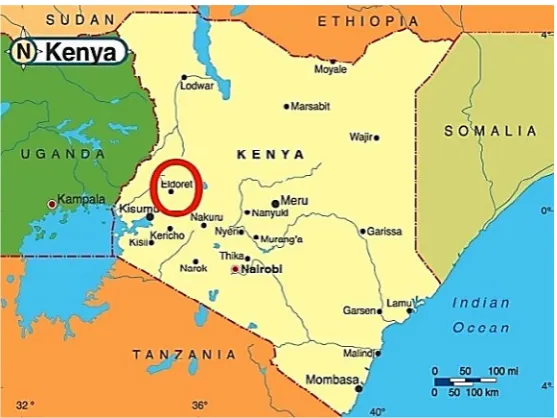
Eldoret Town, the fifth largest urban centre in Kenya (Fig. 1), is located 313 km North-West of Nairobi City, and approximately 65 km north of the equator. The town’s population was estimated at 289,380 by Kenya’s 2009 census survey (The Republic of Kenya, 2009) and is further projected to 350,000 by 2030. An increase in the town’s population in the absence of sustainable urban environmental planning and management is likely to accelerate environmental and public health problems related to SWM.
Research Design and Data Collection
159 RESULTS AND DISCUSSION
Institutional capacity for SWM
SWM in Eldoret Town is coordinated by the DEE who oversees daily operations of storage, collection, transportation, disposal, staff supervision and management. The DEE also addresses consumer complaints, public education and legal issues on SWM. Aspects of SWM that include storage, collection, transportation and disposal are specifically supervised by the Cleansing and Conservancy Officer (CCO) who reports to the DEE. Although the Enforcement Section (ES) is within the Department of Environment and Enforcement, it is not under the direct authority of the DEE, thus undermining the Director’s span of control on SWM, with a particular reference to enforcement of related bylaws. Another key factor limiting the ES from executing its mandate is a shortage of personnel. The study established that most positions within the section were vacant as
corroborated by only 34 staff, against the required 56, thus a vacancy of 22 (40%). This limits its effectiveness in ensuring that applicable bylaws are enforced. Additional critical factor observed to be undermining the ES’s operation was low education levels of its officers, where a majority (81%) lacked professional training which is paramount for planning policy interpretation and implementation. Concerning top administrative staff within the Department of Environment and Enforcement, although four officers were required as per the staff establishment, all these positions were found to be vacant (Table 1).
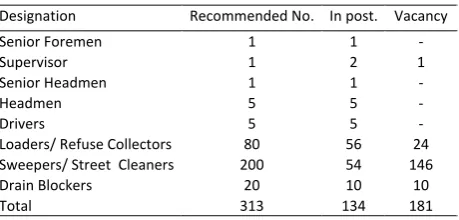
Relating to technical staff, out of the 313 required, only 134 were in post, a deficit of 181. The most affected cadres were for refuse collectors/loaders and street sweepers/cleaners. For instance, although 200 sweepers were required, only 54 were in post. The section had also a shortage of 24 refuse loaders/ collectors (Table 2).
The above research findings relate to a study
1
Fig. 1: Geographic location of the study area in Eldoret Town, Kenya (Election Watch, 2019)
Fig. 1: Geographic location of the study area in Eldoret Town, Kenya (Election Watch, 2019)
1
Table 1: Administrative Personnel Involved in SWM
(The Director of Environment and Enforcement, 2018)
Designation Recommended In post Vacancy
Director of Environment 1 ‐ 1
Deputy Director, Environment 1 ‐ 1
Administrative Officer 1 ‐ 1
CCO 1 ‐ 1
Total 4 ‐ 4
160
Institutional limitations to solid waste management
undertaken by Yukalang et al. (2017) in Thailand that investigated the barriers to effective municipal SWM in the Tha Khon Yang Sub District Municipality. In this case, their research findings indicated that most residents (33 %) cited inadequate staff capacity as a key barrier to SWM. To validate these assertions, the study established that inadequate staff capacity was a significant challenge at all levels that ranged from the performance by senior administrative staff and cascaded down to the staff who were responsible for street cleaning. These arguments are further confirmed by UN-Habitat (2018) which established that SWM remained a challenge in most urban areas of developing countries, attributable to an absence of technical and financial capacity, as a result leading to uncontrolled open dumping. In consequence, this manifestly negates target 11.6 of the Sustainable Development Goals (UN-Habitat, 2018), which aims that by 2030, the environmental impact of cities per capita should be reduced by paying attention to SWM as well as air quality.
Solid Waste Storage
While the CGUG provides residents with communal receptacles (secondary), it is the duty of residents to have primary (individual) receptacles for storing solid wastes prior to being transferred to
communal receptacles for collection. As a regulator, the CGUG requires primary receptacles not to be greater than 39 m3 feet and not less than 2.5 m3; provided by suitable holders, close-fitting water and fly proof lid. It was, however, observed that most residents in Eldoret Town used a variety of materials such as polythene bags, metallic and plastic buckets, which did not conform to these approved standards, a demonstration of inadequate enforcement by the CGUG. Besides primary receptacles, the CGUG hires to owners or occupiers of premises approved “din” standard containers (1.1m3) at a fee of Kshs 280 per month. Table 3 highlights the distribution of these receptacles per residential neighbourhood.
Table 3 indicates that despite Eldoret having a population of 289,380, the CGUG availed only 155 “din” standard containers to serve the entire town. Further, although in terms of neighbourhoods Langas had the highest population (25, 000), it had only 15% of the receptacles, a situation that encourages illegal dumping of solid wastes, a key concern for public health. As per the CGUG’s regulations on SWM, if users default paying set rental fees for receptacles (din standard containers), an extended period accompanied by a warning notice is usually given after which if there is no compliance, the receptacle is forthwith withdrawn. Table 4 presents
2
Table 2: Technical Personnel Involved in SWM (The Director of Environment and Enforcement, 2018)
Designation Recommended No. In post. Vacancy
Senior Foremen 1 1 ‐
Supervisor 1 2 1
Senior Headmen 1 1 ‐
Headmen 5 5 ‐
Drivers 5 5 ‐
Loaders/ Refuse Collectors 80 56 24
Sweepers/ Street Cleaners 200 54 146
Drain Blockers 20 10 10
Total 313 134 181
3
Table 3: Distribution of “Din” standard containers (The Director of Environment and Enforcement, 2018)
Residential
Area No. of receptacles total% of Residentialarea No. of receptacles Total% of
Kahoya 14 9 Elgon View 3 2
Kamkunji/
Bacon
19 12 Munyaka 1 1
West Indies 10 6 Huruma 57 37
Pioneer 16 10 Kapsoya 3 2
Langas 23 15 Race Course 9 6
Table 2: Technical Personnel Involved in SWM (The Director of Environment and Enforcement, 2018)
161
the number of standard containers withdrawn from neighbourhoods due to non-payment. In this regard, one (1) USA dollar was equivalent to Kshs. 101.85 as per the Central Bank of Kenya (2019) exchange rates of April 2019.
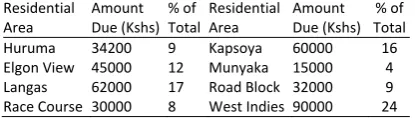
Table 4 demonstrates that out of the Kshs. 368,200 owed by defaulters, 17% were due from Langas, a position that has made it challenging for the county government to improve its capacity in SWM on the account of less revenue collected from hired receptacles. A conspicuous implication of withdrawing these receptacles was observed through uncontrolled open dumping by residents without due consideration of environmental sustainability, an issue that has continued to plague the sustainable SWM process in Eldoret Town. Whereas the CGUG hires the “din” standard containers at Kshs. 280 per month, it, on the other hand, hires the bulk containers (11m3) at Kshs. 960 for the same duration. These containers are normally placed in the markets (no fee charged, since all the markets are owned by the CGUG, hired by institutions and industries. It was, however, established that the CGUG had only 20 bulk containers serving the entire Eldoret Town. Just like the “din” standard containers, the number of bulk containers in Eldoret Town has not been increased since 1989 when they were donated by the Italian Government. This not only exhibits inadequacy in
SWM considering that the town requires over 250 bulk containers but likewise represents a deficit by 92%. In the same way, though the GGUG requires over 1000 “din” standard receptacles, it had only 155, hence a key barrier towards sustainable SWM.
Solid waste collection
The frequency of collection (in terms of the number of times in a week or a month that waste is collected) is a fundamental parameter of any waste collection system (UN-Habitat, 2010). Proper waste collection is an essential function of government authorities (Yukalang et al., 2017). The service has, therefore, an important impact on both public health and aesthetics within urban areas. An effective collection system serving the whole city and a safe and environmentally sound disposal site are therefore essential components of a sustainable and integrated SWM system (UN-Habitat, 2010). In Eldoret Town, solid wastes are collected five days a week, that is, Monday to Friday. Saturdays are usually set aside for follow-ups where performance is evaluated. Collection in residential areas is ordinarily undertaken once a week, except for the central business district, which is covered daily owing to a high daytime population. The study, however, established that solid collection in most neighbourhoods was either irregular or entirely lacking. In terms of operation,
4
Table 4: “Din” containers withdrawn in 2018 (The Director of Environment and Enforcement, 2018)
Residential Area
Amount Due (Kshs)
% of Total
Residential Area
Amount Due (Kshs)
% of Total
Huruma 34200 9 Kapsoya 60000 16
Elgon View 45000 12 Munyaka 15000 4
Langas 62000 17 Road Block 32000 9
Race Course 30000 8 West Indies 90000 24
Table 4: “Din” containers withdrawn in 2018 (The Director of Environment and Enforcement, 2018)
Table 5: The solid waste collection programme
(The Director of Environment and Enforcement, 2018)
Day Area Covered
Monday West Indies, Ndalat, Bondeni, Railways, Steel Mills, Unga Area, Mitaa Road, Railways and Kithuga Square Tuesday Uhuru Estate, Kidiwa, Old Uganda Road/Bacon, Rural Housing, Raiply, Mwenderi, Huruma, King’ong’o,
Road Block, Baringo and Maili‐Nne
Wednesday Pioneer A, Eldoret Polytechnic, Race Course, Kemboi Farm, Elgon View, Pioneer Estate, Kipkaren, Langas, Hill School, Eldoret International Airport
Thursday Kapsoya A, Moi Girls School, Kenya – Re, Kimumu, Hawaii, Kapsoya Site and Service, Jerusalem, Marura,
Munyaka, Muthirithia and Cyrus Farm
Friday Kapsoya B, Lochab Quarters, Ken – Knit, Nandi Road, RVTI, KCC, Moi Referral Hospital Area, Sungunanga,
and other busy estates
Saturday Weekly follow‐ups
162 W.O. Omollo
County Government’s crew covers an average of ten residential neighbourhoods per day (Table 5).
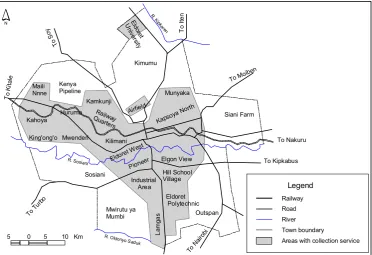
A noticeable limitation of the above programme is that since it covers an average of 10 neighbourhoods per day, an assumption is made that the population is equally distributed across these neighbourhoods. However, according to the current population projections, over 40% of the residents in Eldoret Town live in Langas. The contention is that since Langas has the highest population in Eldoret Town, it has a corresponding higher solid waste generation rate. Low and irregular solid waste collection is as a result, among the factors negatively impacting on the CGUG’s initiatives towards SWM. For instance, in the year 2018, the average amount of solid waste collected as per the records of the CGUG was 1278 metric tons, compared to 1433 and 1598 metric tons in 2017 and 2016 respectively. These findings correspond to that of Obiageli et al (2016) that examined a practice and pattern of SWM in Onitsha Metropolis, Nigeria, and found out that the major challenge was on an irregular solid waste collection as corroborated by 56 % of the households who were sampled. Spatial coverage of solid waste collection by
the CGUG is further depicted (Fig. 2). It is evident that the service does not cover the entire town.
Solid Waste Transportation
SWM is not limited to the collection of solid wastes and materials that can be recycled. The scope similarly entails transporting wastes to locations where they are emptied by collection vehicles (Ahsan et al., 2014). The objective is to transport wastes from specific locations at regular intervals and at a minimum cost (Ochieng, 2004). Transportation of solid wastes in Eldoret Town as a function of the CGUG is guided by its bylaws which broadly outlines the legal and administrative arrangements for collection and disposal. Procedurally, the collection of solid wastes which are temporarily stored in “din” standard containers (1.1m3) is accomplished using a 4-ton compacting truck (minimatic). The minimatic load into themselves mechanically and empty bins put in the same place. After a minimatic has collected enough solid wastes, it hauls it to a self-compacting stationary 20-ton transfer container (pactainer). When pactainer is full, it is lifted by a multilift and transported to the final disposal site for discharge.
2
Munyaka Kimumu
Kamkunji Maili
Nnne
Kahoya
Mwenderi Huruma
Lam
ga
s
Elgon View
Outspan Mwirutu ya
Mumbi
Industrial Area
Sosiani Pion
eer Kenya
Pipeline
Kapsoya North
Hill School Village Eldoret W
est
Eld oret Un
ive rsity
King'ong'o
Railway
Quarters Siani Farm
Eldoret Polytechnic Airfield
To Tu rbo
To Nakuru To
S
oy To Ite
n
To Moibe n
To Kipkabus
To N airob
i To K
itale
Kilimani
Railway Road River Town boundary
Areas with collection service
Legend
N
5 0 5 10 Km R. Oldonyo S
aduk R. Sosiani
R. Kipk aren
Fig 2: Coverage by solid waste collection service in Eldoret Town (The Director of Environment and Enforcement, 2018)
163
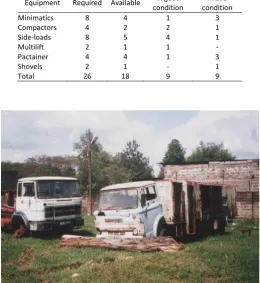
Minimatic trucks are expected to make at least two trips to respective transfer stations per day, while the transfer stations are supposed to be taken to the final disposal site at least once in every two days. However, it was observed that in most cases, there was a delay in the collection by a week or more due to frequent breakdowns. Thus, to afford a sustainable SWM, the CGUG requires 26 transportation vehicles and allied equipment. Nonetheless, it had 16% of the required number, out of which 50% were in good working condition with the other half (50%) grounded (Table 6 and Fig. 3).
From Table 6, it can be rightly argued that an insufficient number of vehicles potentially affect the frequency of solid waste collection from neighbourhoods in addition to other designated collection points. This potentially contributes to the rise of public health problems, especially in markets and residential areas (Fig. 3).
Above research findings are in line with that of
Jerie and Tavera (2014) in Gweru, Zimbabwe, that
established that the Gweru City Council experienced high vehicle breakdown frequencies due to poor road conditions and insufficient maintenance. This challenge was occasioned by inadequate budget allocation towards the maintenance of collection vehicles, resulting in inadequate SWM. The findings further resonate with that of Joshi andAhmed (2016)
who found out that the frequent breakdown of collection vehicles drastically reduced transportation and disposal efficiency in Indian urban centres, a situation aggravated by the fact that most urban local boards had no capacity to undertake major repairs in case of vehicle breakdowns. The current research findings, moreover, compare to that of Abdulrasoul and Bakari (2016) undertaken in three markets of Zanzibar, Tanzania, where it was demonstrated that an inadequate number of transportation vehicles significantly limited the frequency and timeliness at which solid wastes were collected from markets
6
Table 6. Status of transportation vehicles
(The Director of Environment and Enforcement, 2018)
Equipment Required Available In good
condition
In bad
condition
Minimatics 8 4 1 3
Compactors 4 2 2 1
Side‐loads 8 5 4 1
Multilift 2 1 1 ‐
Pactainer 4 4 1 3
Shovels 2 1 ‐ 1
Total 26 18 9 9
Table 6. Status of transportation vehicles (The Director of Environment and Enforcement, 2018)
Fig. 3: Grounded solid waste collection vehicles
164
Institutional limitations to solid waste management
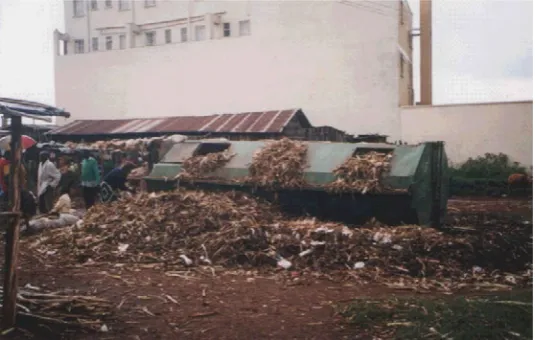
and other designated sites to the final disposal site. Records obtained from the CGUG further indicated that the number of working days lost by solid waste collection vehicles due to breakdowns has been increasing more than the number of days spent on the roads. Between September and December 2017, for example, the vehicles spent 269 days on the road compared to 469 days spent in the garage for repairs. Similarly, in 2018 (January to July) 606 days were lost in the garage against the 469 days spent on the road. This significantly limits the CGUG’s vision towards delivering a sustainable SWM in the study area and may further explain why generated wastes remain uncollected in several low-income neighbourhoods such as Huruma (Fig. 4).
Solid Waste Disposal
The CGUG relies on open disposal technique to dispose of solid wastes collected from all the neighbourhoods of Eldoret Town. Disposal is done at a 33-year-old discarded quarry, which was acquired without a requisite environmental impact assessment. Apart from the fact that the site is full, the roads leading to it are often rendered impassable during rainy seasons. This prompts many truck drivers to dispose of wastes in undesignated sites. Another factor discouraging the drivers from disposing of solid wastes at the main disposal site is the foul smell that emanates from decomposing and burnt wastes. During the field survey, it was observed that drivers at the dumping site were not provided with necessary equipment such as masks, gloves and other clothing
relevant for handling wastes. This exposes them to risks of contracting respiratory diseases, as well as sustaining physical injuries. Controlled disposal used to be undertaken using a shovel to level and compact solid wastes at the site, however, this is no more since it broke down several years ago. In turn, the situation has made wind to easily scatter solid wastes to the neighbourhood. The site is also not fenced and is located on the riparian reserve of River Sosiani.
Collaboration in SWM
Although planning authorities are accountable for SWM, they cannot attain this objective if they work in isolation. In this case, a sustainable SWM initiative can only be achieved if all key stakeholders are actively engaged in SWM planning, implementation and monitoring. Past research initiatives have, moreover, demonstrated that it is essential to not only enlighten the community on the provisions for SWM and the right methods of handling such wastes but also to proactively engage them in the design of SWM matters that may affect them. This could, for instance, include collection frequency, the form of collection, positioning of solid waste receptacles, and the user fees that need to be paid in support of the offered service (UN-Habitat, 2010). As a planning authority, the CGUG ought to establish viable partnerships with other stakeholders towards addressing the recurring challenges of SWM in Eldoret Town. Nonetheless, the records reviewed demonstrated that the CGUG scarcely integrates key institutions such as Non-Governmental Organizations
4
Fig. 4: An overflowing bulk storage container
165
(NGOs), Community-Based Organizations (CBOs), and national government ministries, departments and agencies in a collaborative effort towards viable SWM. Further, none of these stakeholders is represented during environmental committee meetings where pertinent issues relating to SWM are discussed. For example, an examination of the records availed from the DEE showed that although there were registered CBOs with a membership of more than 300, none engaged in environmental related issues such as on SWM.
Financing SWM
Adequate funding is a requisite for sustainable SWM (Sulemana et al., 2018). Financial sustainability in SWM is, therefore, one of the key tenets of urban environmental management. This may suggest why in most developing countries, SWM usually accounts for a substantial proportion of the total recurrent budget, with statistics of 3 to 15 % reported ( UN-Habitat, 2010). Nevertheless, one of the reasons why SWM is neglected is the lack of adequate funding through budget prioritization (Taghizadeh-Hesary et al., 2019). In Kenya, and by extension Eldoret Town, the Public Finance Management Act (The Republic of Kenya, 2012b) prescribes the process of budgeting for county governments to include: a budget formulation that entails the preparation of budget proposals and forwarding the same to County Assemblies as a basis for policy implementation; budget legislation; budget implementation; accounting for expenditure, reporting on expenditure and auditing of expenditure. To operationalize the budget, section 104 of the County Government Act (The Republic of Kenya, 2012c) obliges county governments to prepare Integrated Development Plans (IDPs) covering five years. Article 220 of the Constitution of Kenya (The Republic of Kenya, 2010a), as a result, requires county governments to prepare County Annual Development
Table 7. Budgetary allocation (Kshs) for WENR
(County Government of Uasin Gishu, 2017; 2018)
Budget priority 2017/2018financial year 2018/2019financial year
Water projects 365,500,000 538,000,000
SWM 190,000,000 136,000,000
Tree planting ‐ 15 ,000,000
Beautification ‐ 7,000,000
Tourism and wildlife services ‐ 654,000,000
Total 555,500,000 1,350,000,000
Table 7.Budgetary allocation (Kshs) for WENR (County Government of Uasin Gishu, 2017; 2018)
Plans (CADPs) that outlines the strategic priorities for the medium term, and programs to be delivered, and important capital expenditure. CADP is, therefore, an effective administrative tool used as a strategy for implementing the IDP. It is mainly prepared with the objective of providing a comprehensive database of new and ongoing projects that the county government, through its various departments, intends to implement during each financial year. The present study consequently investigated the extent to which the CGUG prioritized SWM within its CADP. To attain this inquest, CADPs for 2016/2017 and 2017/2018 financial years were jointly analyzed with an attention to the budgetary allocation for the sector responsible for Water, Energy and Natural Resources (WENR) which is administratively in charge of SWM, and where the Department of Environment and Enforcement is domiciled (Table 7) (CGUG, 2017; CGUG, 2018). The table highlights that in the last two financial years (2017/2018 and 2018/2019), budgetary priority within the WENR Sector mainly favoured water projects (66% in 2017/2018, compared to 34% for SWM) and tourism and wildlife services in 2018/2019 (48%), compared to SWM which accounted for a paltry 10% of the allocation. Curiously, the allocation for water projects represented 40% of allocation signifying an increase of 47% between the two financial years.
166 W.O. Omollo
of Kshs. 50,000,000. From the foregoing analysis, it is apparent that increased budgetary allocation for SWM is not among the top priorities within the WENR sector. Further, in situations where funds were budgeted for SWM, it was scarcely enough to procure an adequate number of attendant infrastructures such as solid waste transportation vehicles, including provision for repairs and maintenance. More fundamental, regarding the subject of optimal staff establishment, CADPs are silent on any deliberate initiatives towards recruiting additional staff to build capacity towards sustainable SWM. These findings are in line with that of Addaney and Oppong (2015) that
examined the critical issues affecting municipal SWM in Ghana. The study established that the total budget for SWM was only GH¢130,000 (USD 24,134) per year representing 35% of the total budget. Out of this amount, about 10 % was spent on sweeping of public streets and public areas in the municipality and 25% on the maintenance of SWM equipment. As recently argued by Sulemana et al. (2018), insufficient funding of SWM considerably results in the limited collection of solid waste generated, with the remaining directed to unplanned dumping sites, consequently attracting public health and environmental hazards.
CONCLUSION
This paper has critically demonstrated that sustainable SWM in Eldoret Town remains ineffective notwithstanding the existing statutory mandate that clearly empowers the CGUG to ensure that the service is efficaciously discharged. This stalemate has been precipitated by institutional weaknesses that include: inadequate human resource capacity and associated management issues, insufficient transportation infrastructure, a limited number of communal receptacles, irregular collection, inadequate disposal site, weak collaboration and low prioritization in financing SWM. Drawing from this background, the central argument maintained in this study is that the CGUG might not after all attain its vision of a prosperous and attractive county in Kenya and beyond if it does not guarantee all its residents a sustainable clean and healthy environment. The following policy recommendations are, therefore, made towards addressing the observed institutional limitations in an attempt to achieve a sustainable SWM in Eldoret Town.
a) A comprehensive staff establishment policy
for the Department of Environment and Enforcement should prepare and implement by the CGU. Further, CGUG should undertake continuous succession planning to ensure that gaps created by staff who are due for retirement are competitively filled by professionals.
b) The CGUG through its annual development planning should prioritize SWM by strategically increasing funding in core areas such as procurement of transportation vehicles and allied equipment, staff recruitment and development, and stakeholders’ consultations.
c) An adequate number of communal receptacles should be provided in all neighbourhoods of Eldoret Town. While distributing the receptacles, care should be taken to ensure that their numbers correlate with the size of the population served per neighbourhood.
d) The collection of solid wastes should be regularly undertaken at planned intervals. Collection frequency should be determined by the population and spatial extent of each neighbourhood. Clear communication channels should be used to sensitize residents on collection timetable for each neighbourhood.
e) The CGUG should adopt the emerging concept of “smart city” in SWM through the application of Geographic Information Systems and remote sensing in facilitating activities such as mapping the location and extent of unplanned disposal sites as well as monitoring the volume of solid waste generated from disposal sites.
f) The CGU should adopt a systems approach to SWM that involves regular engagement of key stakeholders. This is in line with section 3 (1) of the Environmental Management and Co-ordination Act (The Republic of Kenya, 1999), that entitles any residence of Kenya a healthy and clean environment. In turn, residents on their part should also have an obligation of safeguarding and enhancing their environment so as to promote the envisaged sustainable urban development.
g) A controlled sanitary landfill needs to be developed by the GGU at the current disposal site. This is a strategy for isolating solid wastes in addition to averting pollution of water and air.
ACKNOWLEDGEMENT
167
County Government of Uasin Gishu, with a special mention of the Chief Public Health Officer and Conservancy Officer for granting him access to useful data and information that enabled accurate reporting and successful completion of this research.
CONFLICT OF INTERESTS
The author declares that there are no conflicts of interest regarding the publication of this manuscript. In addition, the ethical issues; including plagiarism, informed consent, misconduct, data fabrication and/ or falsification, double publication and/or submission, redundancy have been completely observed by the author.
REFERENCES
Abdel-Shafy, H.I.; Mansour, M.S., (2018). Solid waste issue: Sources, composition, disposal, recycling, and valorization. Egypt. J. Petrol., 27: 1275- 1290 (16 pages).
Abdulrasoul, A. A.; Bakari, S.S., (2016). Challenges and problems of solid waste management in three main markets in Zanzibar. Adv. Recy. Waste Manage., 1 (2): 1-9 (9 pages).
Achankeng, E., (2003). Globalization, urbanization and municipal solid waste management in Africa: A paper presented at the annual conference of the African Studies Association of Australasia and the Pacific (22 pages).
Addaney, M.; Oppong, R.A., (2015). Critical issues of municipal solid waste management in Ghana. JENRM., 2 (1): 30-36 (7 pages).
Ahsan, AM; Alamgir, M.M; El-Sergany; Shams, S.M.K; Rowshon, N.N; Nik, D., (2014). Assessment of municipal solid waste management system in a developing country. Chin. J. Eng., 2014, 2-11 (10 pages).
Central Bank of Kenya, (2019). CBK indicative exchange rates (1 page).
County Government of Uasin Gishu, (2017). Annual development plan FY 2017/2018 (92 pages).
County Government of Uasin Gishu, (2018). Annual development plan FY 2018/2019 (111 pages).
Dulock, H., (1993). Research design: Descriptive research. JOPON., 10 (4):154-157 (4 pages).
Election Watch, (2019). Kenya: Country review (1 page). Gakungu, N.K., (2011). Solid waste management: A case of
technical institutions in Kenya. M.Sc. Thesis, University of Nairobi, Kenya (185 pages).
Guerrero, L.A; Maas, G; Hogland, W., (2013). Solid waste management challenges for cities in developing countries. J. Waste Manage., 33 (1): 220-232 (13 pages).
Haregu, T.N., Ziraba, A.K., Aboderin, I.; Amugsi, D.; Muindi, K.; Mberu, B., (2017). An assessment of the evolution of Kenya’s solid waste management policies and their implementation in Nairobi and Mombasa: Analysis of policies and practices.
Environment and Urbanization, 29 (2): 514-532 (19 pages
Igbinomwanhia, D.I; Obanor, L; Olisa, Y.P., (2014). Characterisation of domestic solid waste for the determination of waste management option in Amassoma, Bayelsa State Nigeria. J. Appl. Sci. Environ. Manage. 18 (2): 211-215 (4 pages). Jerie, S.; Tevera, D., (2014). Solid waste management practices in
the informal sector of Gweru, Zimbabwe. J. Waste Manage., 2014: 1-7 (7 pages).
Joshi, R.; Amed, S., (2016). Status and challenges of municipal solid waste management in India: A review. Cogent Environ. Sci., 2: 1139434 (18 pages).
Obiageli, F.E.; Azubike, O.C.; Nnebue, C.C.; Azubike, N.F.; Sidney-Nnebue, Q.N., (2016). Practice, pattern and challenges of solid waste management in Onitsha Metropolis, Nigeria. Am. J. Public Health Res., 4 (1): 16-22 (7 pages).
Ochieng, W.O., (2004). Planning for domestic and commercial solid waste management: A case study of Langas in Eldoret Town. M.A. Thesis, University of Nairobi (181 pages). Otieno, T., (2010). Clouds of our solid waste may blow us away if
we don’t act now. Daily Nation Newspaper (1 page). Rajesh, R.P.; Lewlyn, L.R.; Rodrigues, A.O.M; Sunith, H., (2014).
Impact of urbanization on municipal solid waste management: A system dynamics approach. Int. j. Renew. Energy Environ. Eng., 02 (1): 1-37 (37 pages).
Rotich, K.H; Zhao, V; Dong. J., (2006). Municipal solid waste management challenges in developing countries: Kenyan case study. Waste Manage., 26 (1): 92-100 (9 pages).
Sibanda, L.K; Obange, N; Awuor, F.O., (2017). Challenges of solid waste management in Kisumu, Kenya. Urban Forum, 28: 387 (17 pages).
Soni, A.; Patil, D.; Argade, K., (2016). Municipal solid waste management. Procedia Environ. Sci., 35 (2016): 119–126 (8 pages).
Taghizadeh-Hesary, F.; Yoshino, N.; Shimuzu, S., (2019). The Impact of monetary and tax policy on income inequality in Japan. The World Econ., (22 pages).
Sulemana, A.; Donkor, E.A.; Forkuo, E.K.; Oduro-Kwarteng, S., (2018). Optimal routing of solid waste collection trucks: A review of methods. J. Eng., 2018: 1-12 (12 pages).
The Director of Environment and Enforcement, (2018). Report on solid waste management (136 pages).
The Republic of Kenya, (1996). The Physical Planning Act (Cap 286). Government Printer: Nairobi (39 pages).
The Republic of Kenya, (1999). Environmental Management and Co-ordination Act. Government Printer: Nairobi (77 pages). The Republic of Kenya, (2009). The 2009 Kenya Population and
Housing Census: Counting our People for the implementation of Vision 2030, Vol. 1A. Government Printer: Nairobi (218 pages).
The Republic of Kenya, (2010a). Constitution. Government Printer: Nairobi (137 pages).
The Republic of Kenya, (2010b). Kenya vision 2030: Popular version (32 pages).
168
Institutional limitations to solid waste management
The Republic of Kenya, (2012b). Public Finance Management Act: Government Printer: Nairobi (186 pages).
The Republic of Kenya, (2012c). County Governments Act. Government Printer: Nairobi (73 pages).
Taghizadeh- Hesary, F.; Yoshino, N.; Shimuzu, S., (2019). The Impact of monetary and tax policy on income inequality in Japan. The World Econ., (22 pages).
UN-Habitat, (2018). SDG Indicator 11.6.1 training module: Solid waste management in cities. United Nations Human Settlement
Programme (UN-Habitat): Nairobi (19 pages).
UN-Habitat, (2010). Water and sanitation in the world’s cities 2010: Earthscan: London (228 pages).
UNEP, (2005). Solid waste management Vol. 1. UNEP: Nairobi (128 pages).
Yukalang, N., Clarke, B. and Ross, K., (2017). Barriers to effective municipal solid waste management in a rapidly urbanizing area in Thailand. Int. J. Environ. Res. Public Health, 14(9): 2- 23 (22 pages).
COPYRIGHTS
Copyright for this article is retained by the author(s), with publication rights granted to the IJHCUM Journal. This is an open-access article distributed under the terms and conditions of the Creative Commons Attribution License (http://creativecommons.org/licenses/by/4.0/).
HOW TO CITE THIS ARTICLE
Omollo, W.O., (2019). Sustainable solid waste management: An appraisal of institutional limitations. Int. J. Hum. Capital Urban Manage., 4(3): 157-168.
DOI: 10.22034/IJHCUM.2019.03.01