• No results found

Study of Stability Complex Formation of Transition Metals with Chalcone

N/A
N/A
Protected

Academic year: 2020

Share "Study of Stability Complex Formation of Transition Metals with Chalcone"

Copied!
5
0
0

Loading.... (view fulltext now)

Full text

(1)

Study of Stability Complex Formation of Transition Metals

with Chalcone

Kate Kashmira Hiralal and N. N. Pawar

Department of Chemistry,

S.S.V.P.S’s L. K. Dr. P. R. Ghogrey Science College, Dhule-424005, INDIA.

(Received on: December 23, 2016)

ABSTRACT

The interaction of Cu(II),Co(II),Cr(III) with

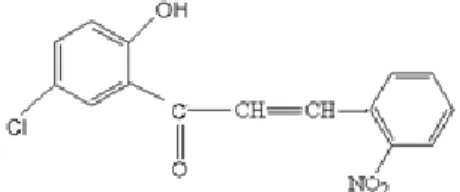
1] 2 hydroxy -3- nitro-5-chloro-4-nitro chalcone.(HNCNC) & 2] 2 hydroxy -5- chloro-2-nitro chalcone. (HCNC)

Have been studied by Calvin-Bejerrum titration technique in media of 70% dioxane water mixture at 0.1M ionic strength at 30 ±0.1°c temperature. Cu(II),Co(II),Cr(III) metal formed 1:1 and 1:2 complexes is occur simultaneously . In this probe the data obtained used to quote the value of proton-ligand and metal ligand formation constant in the order of Cu(II) < Co(II) < Cr(III).

Keywords: pH-metric study, Cu(II),Co(II),Cr(III), Metal Ligand, Stability constant, Substituted chalcone.

INTRODUCTION

Substituted chalcone is good chelating agent due to presence of electron donating oxygen atom (2, 3). Chalcone are aromatic ketone that forms the central core of various biological compounds. Chalcone and their metal ligand have demonstrated wide range of analytical and biological applications (4, 6, 7). It was interesting to know physicochemical properties such as stability of complexes with Cu(II),Co(II),Cr(III) metal ion pH-Metrically(1, 10, 11).Study of complexes under identical condition is still lacking. In present investigation chalcones prepared by conventional method (5, 8 9) are as below

(2)

Figure 2: 2 hydroxy -5- chloro-2-nitro chalcone (HCNC)

EXPERIMENTAL

All Chemicals such as NaOH, HNO3, and NaNO3 were of A R Grade. The ligands were prepared by literature method. The metal ions were used in the form of their nitrate.

Systronic scientific digital pH-Meter was used for measurement of pH. Standard NaOH and 1 M NaNO3 solution were prepared in double distilled water. PH-meter calibrated by standard buffer solution of pH 4.0, 7.0 and 9.20 at 30°c before processing the titration. The experimental procedure implies pH-metric titration as follow:

1] Free acid (0.01M)

2] Free acid (0.01M) + Ligand (20×10-4M)

3] Free acid (0.01M) + Ligand (20×10-4M) and Metal ion (4×10⁻⁴M) against standard NaOH solution (1.009N)

Titration was carried out in Pyrex beaker. The ionic strength of the solution was maintained (µ=0.1M) by adding appropriate quantity of 1M NaNO3.The readings were recorded for each addition of 0.2ml standard NaOH solution.

RESULT AND DISCUSSION

Proton-ligand stability constant of ligand

Substituted chalcones may be considered as monobasic acid having one dissociable H+ ion from OH¯ion .In present investigation monobasic ligand used and expressed as follow:

The titration data were used to construct the curve [acid curve (A)+ ligand curve (A+L) +Metal ion curve (A+L+M)]between volume of NaOH against pH.

(3)

Where,

𝛾- Number of dissociable protons from ligand E0 - Concentration of HNO

3 N - Normality of NaOH

V2 & V1 - Volume of alkali consumed by acid and ligand on same pH V0 - Initial Volume

TL0 - Ligand concentration

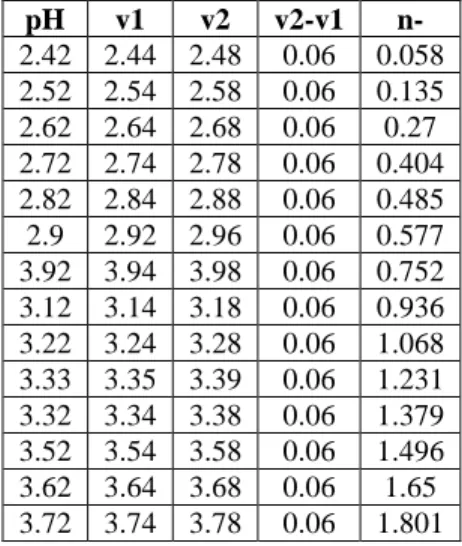
Table 1: Ligand L-1 (HNCNC) at the temperature 30±1°c

pH v1 v2 v2-v1 n-

2.42 2.44 2.48 0.06 0.058 2.52 2.54 2.58 0.06 0.135 2.62 2.64 2.68 0.06 0.27 2.72 2.74 2.78 0.06 0.404 2.82 2.84 2.88 0.06 0.485 2.9 2.92 2.96 0.06 0.577 3.92 3.94 3.98 0.06 0.752 3.12 3.14 3.18 0.06 0.936 3.22 3.24 3.28 0.06 1.068 3.33 3.35 3.39 0.06 1.231 3.32 3.34 3.38 0.06 1.379 3.52 3.54 3.58 0.06 1.496 3.62 3.64 3.68 0.06 1.65 3.72 3.74 3.78 0.06 1.801

Table 2: Ligand L2 (HCNC) at the temperature 30±1°c

pH v1 v2 v2-v1 n-

(4)

Table 3: Proton-Ligand Stability Constant at 30°c (𝝁 = 𝟎. 𝟏𝑴)

System pK

L1- HNCNC 8.2

L2- HCNC 8.82

Table 4: Ligand L-1 (HNCNC): Metal-Ligand Stability Constant at 30°c (𝝁 = 𝟎. 𝟏𝑴)

System log K1 log K2 logK1/logK2

L1- HNCNC Cu(II) 8.64 8.19 1.054945055 L1- HNCNC Co(II) 8.48 8.04 1.054726368 L1- HNCNC Cr(III) 8.09 8.01 1.009987516

Table 5: Ligand L2 (HCNC): Metal-Ligand Stability Constant at 30°c (𝝁 = 𝟎. 𝟏𝑴)

Graph 1: Ligand L-1 (HNCNC)

Graph 2: Ligand L-2 (HCNC)

System log K1 log K2 logK1/logK2

(5)

CONCLUSION

It could be observed from the tables given above that there is appreciable difference between log K1 and log K2 value. These indicate the formation of 1:1 and 1:2 complexes. During formation of metal chelates water molecule from the primary hydration sphere of the metal ion are replace by the chelating ligand. For this the solvent and ligand field interaction the order of stability constant for these metal complexes was: Cu(II) < Co(II) < Cr(III).

ACKNOWLEDGEMENT

The authors are thankful to Principal, Dr, D.A. Patil S.S.V.P.S’s L.K. Dr. P.R. Ghogrey Science Collage, Dhule for encouragement and providing necessary facilities.

REFERENCES

1.

Bjerrum J. Meetal amine formation in aqueous solution, P. Hasse and Sons. Copenhagen (1941).

2.

Bouwmann E., Driessen W.L., Reedijk J., Coord. Chem. Rev. 104, 1432009 (1990).

3.

Kornet M.J. and Carrett R.J., Synthesis of 1-phenyl-2-(phenylcarbamoyl) pyrazolidines as potential anticonvulsant agents. J Pharm Sci.; 68:313-318 (1979).

4.

Lin, Y.M., Zhou Y., Flavin M.T., Zhou L.M., Nie W. and Chen F.C., Chalcones and flavonoids as anti- tuberculosis agents. Bioorg. Med. Chem., 10: 2795-2802 (2002).

5.

Pathare U.A. and Thakur, Studies on interaction between Sm(III),and Nd(III) metal ions and novel chalcones at 0.1 M ionic strength pH metrically. Int. J. of Inn. Res. and Dev., Vol4(4),ISSN 2278-0211 (2015).

6.

Procter I. M., Hathaway B. J., Billing D. E., Nicholls P., J. Chem. Soc. A, 1678 (1968).

7.

Rahimizadeh M., Pordel M., Bakavoli M., Rezgeian S. and Sadghian A. Synthesis and antibacterial activity of some new derivatives of pyrazole. World J Microbiol Biotechnol, 26, 317-321 (2010).

8.

Ramteke A. A., Chavan S. P., Patil S. D. and Narwade M. L. Effect of ionic Strength on the stability constants of complexes of 3-(4- Chlorophenyl)-4-(3-pyridine)-5-(2-hydroxyphenyl)-pyrazole with Cu(II), Tb(III) &Nd(III) metal ions. Int J Chem Studies, 2(4), 01-05 (2014).

9.

Routh S. R. and Gollapalli N. R. Speciation of Binary Complexes of Co(II), Ni(II) and Cu(II) With Bidentate Ligand in Low Dielectric Medium. Int J Res Method In Phys and Chem, 1(1), 20-30 (2014).

10.

Sharma Sangeeta, Shah M.C., Dalwadi Dipika, Thakkar Falguni and Vora J.J.; Res. J.

Chem. Env., 12(4), 29-34 (2008).

Figure

Figure 2: 2 hydroxy -5- chloro-2-nitro chalcone (HCNC)
Table 1:  Ligand L-1 (HNCNC) at the temperature 30 ±1°c  pH  v1  v2  v2-v1  n-  2.42  2.44  2.48  0.06  0.058  2.52  2.54  2.58  0.06  0.135  2.62  2.64  2.68  0.06  0.27  2.72  2.74  2.78  0.06  0.404  2.82  2.84  2.88  0.06  0.485  2.9  2.92  2.96  0.06
Table 4: Ligand L-1 (HNCNC): Metal-Ligand Stability Constant at 30°c (

References

Related documents

The anti-inflammatory activity of the title compounds (4a-f) and the parent compound AMACs (3a-f) were evaluated using inhibition of heat-induced albumin denaturation

19% serve a county. Fourteen per cent of the centers provide service for adjoining states in addition to the states in which they are located; usually these adjoining states have

Static shunt compensation is used to influence the natural electrical characteristics of the transmission line to increase the state transmittable power and to control

At ANTARES classifiers are used for impulsive signals to distinguish between sperm whale and dolphin biosonar, and shipping impulses.. After classification spectrograms and

Abbreviations: aCO, asthma-COPD overlap; aCss, asthma control scoring system; BD, bronchodilator; BMI, body mass index; ICs, inhaled corticosteroid; D l CO, single-breath

their choice.. Both these rhymes are unexcused. The figures are small, but point clearly to the conclusion that after Bk.I Horace abandoned the rhyme of the

The main objectives of this research are to determine the perceived service quality of the water and sewerage operatorsand also to determine the relationship