DOI: http://dx.doi.org/10.5281/zenodo.3606848
Using prostatic fluid levels of zinc concentration
in non-invasive and highly accurate screening
for prostate cancer
Vladimir Zaichick*1, Sofia Zaichick2
1
Radionuclide Diagnostics Department, Medical Radiological Research Centre, Korolyev St.- 4, Obninsk 249036, Kaluga
Region, Russia
2
Laboratory of Dr Gabriela Caraveo Piso, Feinberg School of Medicine, Northwestern University, 303 East Chicago
Avenue, Ward 10-144, Chicago, IL 60611-4296, USA, E-mail: [email protected]
* Correspondence: Fax: +7 (495) 956 1440; Phone: +7 (48439) 60289; E-mail:[email protected]
Received: 24 November 2019; Revised submission: 10 December 2019; Accepted: 07 January 2020 http://www.journals.tmkarpinski.com/index.php/mmed
Copyright: © The Author(s) 2020. Licensee Joanna Bródka, Poland. This article is an open access article distributed under the terms and conditions of the Creative Commons Attribution (CC BY) license (http://creativecommons.org/licenses/by/4.0/)
ABSTRACT: Prostate specific antigen (PSA) does not provide the high reliability and precision that is
required for an accurate screening for prostate cancer (PCa). The aim of our study was to search for a simple, rapid, direct, preferably non-invasive, and highly accurate biomarker and procedure for the screening for PCa. For this purpose the level of Zn was prospectively evaluated in expressed prostatic fluid (EPF), obtained from 38 apparently healthy males and from 33, 51, and 24 patients with chronic prostatitis, benign prostatic hyperplasia and PCa, respectively. Measurements were performed using an application of energy dispersive X-ray fluorescent (EDXRF) microanalysis developed by us. It was found that in the EPF of cancerous prostates the level of Zn was significantly lower in comparison with those in the EPF of normal, inflamed, and hyperplastic prostates. It was shown that “Sensitivity”, “Specificity” and “Accuracy” of PCa identification using the Zn level in the EPF samples were all significantly higher than those resulting from of PSA tests in blood serum. It was concluded that the Zn level in EPF, obtained by EDXRF, is a fast, reliable, and non-invasive diagnostic tool that can be successfully used by local, non-urologist physicians at the point-of-care to provide a highly effective PCa screening and as an additional confirmatory test before a prostate gland biopsy.
Keywords: Urology screening; Prostate cancer; Benign prostatic hyperplasia; Chronic prostatitis; Expressed
prostatic fluid; Zn content; Energy-dispersive X-ray fluorescent analysis.
1. INTRODUCTION
PCa is also the leading cancer in men from Africa, Oceania, and the Caribbean [1, 2]. PCa has also become a major public health concern in China [4].
The survival rate is proportional to the stage reached at diagnosis, hence early-stage diagnosis using effective diagnostic tools is a key to reducing mortality due to PCa [5]. It is widely acknowledged that screening and early diagnosis of PCa are of vital importance for improving the likelihood of recovery. Current screening relies on prostate-specific antigen (PSA) testing in blood serum and a PSA level of 4 ng/ml is used as the highest level compatible with non-malignant conditions. However, PSA screening of PCa has some significant disadvantages.
Firstly, PSA is not a cancer-specific biomarker. So there can be an elevated serum concentration (above 4 ng/ml) among patients with benign prostate hyperplasia (BPH) and urogenital infections, including chronic prostatitis (CP). Reliance on PSA testing can result in significant over-detection of alleged PCa and hence inappropriate treatment of non-malignant disease [6]. Nearly 70-75% of prostate biopsies fail to detect PCa in men who undergo prostate biopsy procedures due to elevated PSA levels discovered after blood serum-test screening [5, 7]. In other words, it has been confirmed that only 25-30% of patients with a PSA value ≥4 ng/ml were finally diagnosed with PCa, leading to the over-treatment of low-risk patients, unnecessary biopsies and nonessential radical prostatectomies [8]. Thus, the level of PSA test specificity (selectivity) can be estimated as about 25-30%.
Secondly, the PSA test misses some aggressive tumors. For example, as was found by Thompson et al. [9] that 20-25% men diagnosed with PCa including those with a poorly differentiated form (Gleason Score
≥8) have PSA levels below 4 ng/ml [6, 9]. Data from other research shows that only 40% of patients with PCa have an abnormal PSA level [10]. Thus, the PSA test’s sensitivity can be estimated as somewhere between 40-75%.
The limitations and potential harm associated with PSA screening stimulate investigation of novel biomarkers with superior ability to detect PCa, compared with traditional PSA tests, so decreasing unnecessary biopsies. Much attention is now turning to fluid-based biomarkers, because obtaining fluid samples is in effect a minimally invasive liquid biopsy. Other relevant factors of great significance for any novel method of PCa detection include cost-effectiveness, capacity to generate real-time results, “simplicity-of-use”, robustness, and functionality without excessive prior-processing of samples [11].
In our previous studies the significant role of Zn, Ca, Mg, Rb and some other trace elements (TEs) in the function of the prostate was studied [12-22]. One of the main functions of the gland is the production of prostatic fluid [23]. It contains a high levelof Zn, Ca, Mg, Rb, and some other TEs, in comparison with concentrations of these elements in serum and other human body fluids.
content in EPF are likely to reflect a disturbance of prostate function. It was found that data on changes of TE content and Zn/TE concentration ratios in EPF of patients with PCa are very important, because these significant changes increase our knowledge and recognition of PCa pathogenesis and may prove useful as PCa diagnostic markers [29-39].
The main objective of present study was to obtain reliable results about the Zn concentrations in the EPF of healthy men as well as in the EPF of patients with CP, BPH and PCa using the 109Cd EDXRF method. The second aim was to compare the Zn levels of EPF investigated for normal, inflamed, hyperplastic, and cancerous prostates. The final aim was to evaluate appropriate characteristics of Zn level in EPF as potential diagnostic test, with regard to its sensitivity, specificity, and accuracy.
All studies were approved by the Ethical Committees of the Medical Radiological Research Centre (MRRC), Obninsk. All the procedures performed in studies involving human participants were in accordance with the ethical standards of the institutional and/or national research committee and with the 1964 Helsinki declaration and its later amendments, or with comparable ethical standards.
2. MATERIALS AND METHODS
2.1. Samples
Specimens of EPF were obtained from 38 men with apparently normal prostates (N, mean age ± Standard Deviation - 59±11 years), from 33 males with CP (mean age 50±9 years), from 51 patients with BPH (mean age 63±6 years), and from 24 patients with PCa (mean age 65±10 years) in the Urological Department of MRRC using a standard rectal massage procedure. The diagnosis of each prostate condition was made by qualified urologists. In all cases the N classification and CP diagnosis were confirmed by clinical examination and by cytological and bacteriological investigations of the EPF samples. The diagnosis of BPH or PCa had been confirmed by clinical examination and morphological results obtained during studies of biopsy and resected materials. Subjects were asked to abstain from sexual intercourse for three days preceding the procedure. Specimens of EPF were obtained in sterile containers, which were appropriately labeled. Twenty μl (microliters) of fluid were taken in duplicate by micropipette from every specimen for TE analysis, while the rest of the fluid was used for cytological and bacteriological investigations. One 20 μl sample of the EPF was dropped on a 11.3 mm diameter disk made of thin, ash-free filter paper fixed on pieces of adhesive tape and dried in a desiccator at room temperature. Then the dried sample was covered with a 4
μm gage Dacron film and centrally pulled onto a Plexiglas cylindrical frame [28].
2.2. Standards and certified reference material
Then the sub-sample was covered with 4 μm gage Dacron film. Before the sample was applied, pieces of adhesive tape and Dacron film were weighed using an analytical balance. They were reweighed after the sample had been placed inside to determine precisely the sub-sample mass.
2.3. Instrumentation and method
The facility for the radionuclide-induced EDXRF included an annular 109Cd source with an activity of 2.56 GBq, A Si(Li) detector with an electric cooling system and a portable multi-channel analyzer based on apersonal computer, comprised the detection system. Its resolution was 270 eV at the 6.4 keV line. The facility functioned as follows. Photons with energy 22.1 keV from the 109Cd source arrived at the surface of the specimen inducing fluorescent Kα X-rays from the Zn. The fluorescence reached the detector after passing
through a 10 mm diameter collimator. Then the X-ray’s arrival was recorded. The duration of the measurements of Zn concentration was 60 min for each sample. The intensityof theKα-line of Zn for EPF
samples and standards was estimated from a calculation of the total area under the corresponding photo peak in the spectra.
2.4. Computer programs and statistic
All EPF samples for EDXRF were prepared in duplicateand mean value of Zn content was used in the final calculation. Using the Microsoft Office Excel programs, some statistical characteristics, such as arithmetic mean (M), standard deviation (SD), standard error of the mean (SEM), minimum and maximum values (Range), and median were calculated for Zn concentrationsin the EPF of normal (N), CP, BPH, and PCa prostates. The difference in the results between the five pairs of samples (N and CP, N and BPH, N and PCa, PCa and CP, PCa and BPH) was evaluated by the parametric Student's t-test and non-parametric Wilcoxon-Mann-Whitney U-test. Values of p<0.05 were considered to be statistically significant. For the construction of diagram illustrating individual data set for Zn concentrations in the EPF of normal, inflamed, benign hyperplastic and cancerous prostates, the Microsoft Office Excel software was also used.
3. RESULTS
Tables 1 and 2 depict some statistical characteristics of the Zn concentrations investigated and relevant to a normal distribution (M, SD, and SEM) (Table 1) and appropriate for a distribution that may not necessarily be normal (Median, Range) (Table 2).
The ratios of means/medians and the difference between mean/median values of Zn concentration in EPF samples of normal, inflamed, benign hyperplastic and cancerous prostates determined by the parametric Student's t-test and non-parametric Wilcoxon-Mann-Whitney U-test are presented in Tables 3 and 4, respectively.
Table 1. Mean values of the Zn concentration (mg/l) in prostate fluid of normal (N), inflamed (CP), benign hyperplastic
(BPH) and cancerous prostate (PCa).
Element
Prostate fluid
N 41-82 years (n=38)
CP 37-65 years (n=33)
BPH 52-75 years (n=51)
PCa 47-77 years (n=24)
Mean±SD(SEM) Mean±SD(SEM) Mean±SD(SEM) Mean±SD(SEM)
Zn 598±207(34) 382±275(48) 488±302(42) 62.0±98.3(20.1)
Table 2. Median and range of Zn concentration (mg/l) in prostate fluid of normal (N), inflamed (CP), benign hyperplastic
(BPH) and cancerous prostate (PCa).
Element
Prostate fluid
N 41-82 years (n=38)
CP 37-65 years (n=33)
BPH 52-75 years (n=51)
PCa 47-77 years (n=24)
Median(Range) Median(Range) Median(Range) Median(Range)
Zn 560(253-948) 295(62.0-1051) 427(45.0-977) 21.6(2.82-371)
Table 3. Ratio of means and the difference (Student’s t-test) between mean values of Zn concentration (mg/l) in prostate
fluid of normal (N), inflamed (CP), benign hyperplastic (BPH) and cancerous prostate (PCa).
CP and N BPH and N PCa and N PCa and CP PCa and BPH
Ratio
CP/N p≤
Ratio
BPH/N p≤
Ratio
PCa/N p≤
Ratio
PCa/CP p≤
Ratio
PCa/BPH p≤
0.64 0.001 0.82 0.044 0.104 0.001 0.16 0.001 0.13 0.001
Table 4. Ratio of medians and the difference (Wilcoxon-Mann-Whitney U-test) between mean values of Zn concentration
(mg/l) in prostate fluid of normal (N), inflamed (CP), benign hyperplastic (BPH) and cancerous prostate (PCa).
CP and N BPH and N PCa and N PCa and CP PCa and BPH
Ratio
CP/N p
Ratio
BPH/N p
Ratio
PCa/N p
Ratio
PCa/CP p
Ratio
PCa/BPH p
0.53 <0.01 0.76 <0.01 0.039 <0.01 0.073 <0.01 0.051 <0.01
Table 5 contains important parameters (“Sensitivity”, “Specificity” and “Accuracy”), which reflect the possibilities that Zn concentration in prostate fluid can aid the diagnosis of PCa (estimation is made for “PCa or normal, CP, and BPH”). A calculation was done under such conditions as: if the level of “Sensitivity” was chosen as 100%, if the level of “Specificity” was chosen as 100%, and if the level of “Sensitivity” was not below 80% (optimal).
Table 5. Parameters of the importance (“Sensitivity”, “Specificity” and “Accuracy”) of Zn concentration in prostate fluid
for the diagnosis of PCa (estimation is made for “PCa or normal, CP, and BPH”).
Chosen parameter(s) Upper limit
for PCa Sensitivity % Specificity % Accuracy %
“Sensitivity” was chosen as 100% 371 mg/l 100 60±5 66±5
“Specificity” was chosen as 100% 45 mg/l 63±10 100 94±2
Optimal levels of “Sensitivity”, “Specificity”
and “Accuracy” (“Sensitivity” ≥ 80%) 120 mg/l 92±6 92±3 92±2
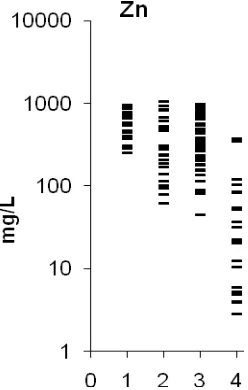
Figure 1. Individual data set for Zn concentrations (mg/l) in prostate fluid of normal (1), inflamed (2), benign hyperplastic
(3) and cancerous prostate (4).
4. DISCUSSION
As was shown by us [27-39] results from the use of CRM IAEA H-4 as certified reference materials for the analysis of samples of EPF is acceptable. Good agreement of the Zn content, analyzed by the 109Cd EDXRF method, with the certified data of reference materials indicates an acceptable accuracy for the results obtained in the study and presented in Tables 1-5.
From Tables 3 and 4, it is observed that in the EPF of inflamed and hyperplastic prostates the mean/median values of Zn are significantly lower than normal levels.
In the EPF of cancerous prostates the mean/median values of Zn are drastically lower than normal levels. Moreover, these differences also exist when EPFs of cancerous prostates are compared with EPFs of inflamed or hyperplastic prostates (Tables 3 and 4).
Thus, from Tables 3 and 4, as well as from individual data set (Figure 1), it is observed that measurements of the Zn concentration in EPF could become a powerful diagnostic tool when seeking PCa. To a large extent, continuation of the search for new methods for early diagnosis of PCa was due to experience gained after a critical assessment of the limitations of the current PSA blood serum tests [5-11, 41]. In addition to the PSA test and morphological study of needle-biopsy cores of the prostate, the development of highly precise less invasive testing methods will clearly be very useful. The proportion of subjects with of normal, inflamed, benign hyperplastic and cancerous prostates in the present study reproduced the Urological Department’s usual patient proportions in the MRRC. Thus, our data allow us to evaluate adequately the importance of Zn concentration in EPF for the diagnosis of PCa.
The equations for calculation of such important characteristics of the diagnostic test as “Sensitivity”, “Specificity/Selectivity” and “Accuracy” are well known [42]. They comprise:
Sensitivity = {True Positives (TP)/[TP + False Negatives (FN)]}×100% Specificity = {True Negatives (TN)/[TN + False Positives (FP)]}×100% Accuracy = [(TP+TN)/(TP+FP+TN+FN)]×100%
new method of PCa diagnosis is set equal to 100% the resulting values for “Sensitivity” and “Accuracy” are also presented in Table 5. The data for “Sensitivity”, “Specificity/Selectivity” and “Accuracy” can be more balanced if a level of ≥ 80% for “Sensitivity” is acceptable. It should be noted that the number of people (samples) examined was taken into account for calculation of confidence intervals of data presented in Table 5 [42].
From data in Table 5 it follows, after comparison, that levels of “Sensitivity”, “Specificity/Selectivity” and “Accuracy” for the Zn in EPF used as PCa biomarker are better than results from the PSA level blood serum test. In other words, if level of Zn concentration in EPF sample is lower than 120 mg/l, one could diagnose a malignant tumor with an accuracy 92±2%. Thus, using the level of Zn in an EPF sample as a tumor marker makes it possible to diagnose cancer in the 92±6% of cases (sensitivity) with specificity/selectivity 92±3%. The high level of specificity/selectivity, 92±3%, means that this test results in a significant decrease in the number of unnecessary biopsies, because on average only 8% (100%-92% = 8%) of prostate biopsies fail to detect PCa (i.e. are false negative) in men who have prostate cancer. Thus, using the proposed test will reduce the number of true negatives after biopsy.
Characteristically, elevated or deficient levels of TEs and electrolytes observed in the EPF of cancerous prostates are discussed in terms of their potential role in the initiation, promotion, or inhibition of prostate cancer. In our opinion, abnormal levels of TE contents in the EPF of cancerous prostates could be the consequences of malignant transformation. Compared to other fluids of the human body, the prostate’s secretion contains higher levels of Zn. These data suggest that this element could be involved in prostatic function. The suppressed prostatic function can be both a cause and a consequence of CP or BPH. Malignant transformation is accompanied by a drastic loss of tissue-specific functional features, which leads to a significant reduction in the Zn content associated with functional characteristics of the human EPF.
It is necessary to keep in mind that biochemical, or in other words functional, changes in prostatic cells are present from the earliest development of malignancy, which precedes any histopathological indication of malignancy, and these biochemical changes persist during progression of the malignancy and remain present in advanced prostate cancer. Thus, Zn depletion is an early step in the cancer proliferation process and Zn depletion in EPF precedes the morphological transformation of cells from being histopathologically normal to cancerous.
In our study the portable device we used for EDXRF analysis, with its 109Cd source for the excitation of X-ray fluorescence in the EPF sample, was developed by ourselves. More powerful devices for EDXRF analysis with X-ray tubes, including “the total reflection” version (TRXRF) of the method, allow reliable determinations of Zn and many other TE concentrations in a drop of a human body fluid within 10 min [43]. EDXRF is a fully instrumental and non-destructive method because a drop of EPF is investigated without requiring any sample pretreatment or its consumption. Moreover, it is well known that among the most modern analytical technologies, EDXRF is one of the simplest, fastest, most reliable and efficient of the available techniques for TE determination [43]. There are many different kinds of EDXRF and TRXRF device on the market and technical improvements are frequently announced.
All of these advantages, including the elimination of CP and BPH as confounding conditions when screening for PCa, along with its “Sensitivity”, “Specificity” and “Accuracy” for PCa identification all exceeding 90%, favor the EDXRF of TEs in EPF over the use of PSA levels for this purpose. Also these results suggest a strong possibility that it can replace the PSA level determination in screening for PCa. In our opinion, obtaining the Zn level in a drop of EPF, using EDXRF, is a fast, reliable, and non-invasive diagnostic tool that can be successfully used by physicians, who are not urologists, at the point-of-care for highly effective PCa screening and as an additional test before prostate gland biopsy. Its advantages have been outlined above. Further we believe it is superior to the PSA level determination for this purpose.
5. CONCLUSION
There is a critical need for a highly reliable, accurate, simplified biomarker and procedure for the screening for prostate cancer, or as an adjunct for the PSA test during the urological examination of patients as candidates for prostate biopsy. In the present work, Zn concentration measurements were carried out in the EPF samples from normal, inflamed, hyperplastic, and malignant prostates using the non-destructive, instrumental 109Cd EDXRF micro method developed by us. It was shown that this method is an adequate analytical tool for the non-destructive determination of Zn concentrations in the EPF samples of human prostate in normal and some pathological conditions. It was observed that in the EPF of cancerous prostates, levels of Zn were significantly lower in a comparison with those in the EPF of normal, inflamed, and hyperplastic prostates. It was shown that “Sensitivity”, “Specificity” and “Accuracy” of PCa identification using the Zn level in the EPF samples was significantly higher than that using PSA levels in blood serum. It was concluded that study of the Zn level in an EPF drop, obtained by using EDXRF, is a fast, reliable, and non-invasive diagnostic tool that can be successfully used by physicians at the point-of-care for highly effective PCa screening and as an additional test before a prostate gland biopsy.
Authors Contributions: This work was carried out in collaboration between two authors. VZ collected
prostatic fluid samples, designed the EDXRF of samples, and carried out the statistical analysis of results. SZ managed the literature searches, wrote the first draft of the manuscript, and translated the manuscript into English. Both authors read and approved the final manuscript.
Conflict of Interest: The authors declare no conflicts of interest.
Acknowledgments: The authors are grateful to Dr Tatyana Sviridova, Medical Radiological Research Center,
Obninsk for supplying EPF samples. The authors are also extremely grateful to Dr. Sinclair Wynchank for a very valuable and detailed discussion of the results of this work and his help in English.
REFERENCES
1. Taitt HE. Global trends and prostate cancer: A review of incidence, detection, and mortality as influenced by race, ethnicity, and geographic location. Am J Mens Health. 2018; 12(6): 1807-1823. 2. Dasgupta P, Baade PD, Aitken JF, Ralph N, Chambers SK, Dunn J. Geographical variations in prostate
cancer outcomes: a systematic review of international evidence. Front Oncol. 2019; 9: 238. 3. Siegel RL, Miller KD, Jemal A. Cancer Statistics, 2017. CA Cancer J Clin. 2017; 67(1): 7-30.
5. Tkac J, Gajdosova V, Hroncekova S, Bertok T, Hires M, Jane E, Lorencova L, Kasak P. Prostate-specific antigen glycoprofiling as diagnostic and prognostic biomarker of prostate cancer. Interface Focus. 2019; 9(2): 20180077.
6. Zapała P, Dybowski B, Poletajew S, Radziszewski P. What can be expected from prostate cancer biomarkers. A clinical perspective. Urol Int. 2018; 100(1): 1-12.
7. Sorokin I, Mian BM. Risk calculators and updated tools to select and plan a repeat biopsy for prostate cancer detection. Asian J Androl. 2015; 17(6): 864-869.
8. Qu M, Ren SC, Sun YH. Current early diagnostic biomarkers of prostate cancer. Asian J Androl. 2014; 16(4): 549-554.
9. Thompson IM, Pauler DK, Goodman PJ, Tangen CM, Lucia MS, Parnes HL, et al. Prevalence of prostate cancer among men with a prostate-specific antigen level < or=4.0 ng per milliliter. N Engl J Med. 2004; 350: 2239-2246.
10. Alotaibi KM. Incidence of prostate cancer among patients with prostate-related urinary symptoms: A single institution series in 10 years. Urol Ann. 2019; 11(2): 135-138.
11. Hayes B, Murphy C, Crawley A, O'Kennedy R. Developments in point-of-care diagnostic technology for cancer detection. Diagnostics (Basel). 2018; 8(2): pi: E39.
12. Zaichick V. INAA and EDXRF applications in the age dynamics assessment of Zn content and distribution in the normal human prostate. J Radioanal Nucl Chem. 2004; 262: 229-234.
13. Zaichick V, Zaichick S. The effect of age on Br, Ca, Cl, K, Mg, Mn, and Na mass fraction in pediatric and young adult prostate glands investigated by neutron activation analysis. Appl Radiat Isot. 2013; 82: 145-151.
14. Zaichick V, Zaichick S. INAA application in the assessment of Ag, Co, Cr, Fe, Hg, Rb, Sb, Sc, Se, and Zn mass fraction in pediatric and young adult prostate glands. J Radioanal Nucl Chem. 2013; 298(3): 1559-1566.
15. Zaichick V, Zaichick S. NAA-SLR and ICP-AES Application in the assessment of mass fraction of 19 chemical elements in pediatric and young adult prostate glands. Biol Trace Element Res. 2013; 156(1): 357-366.
16. Zaichick V, Zaichick S. Use of neutron activation analysis and inductively coupled plasma mass spectrometry for the determination of trace elements in pediatric and young adult prostate. Am J Anal Chem. 2013; 4: 696-706.
17. Zaichick V, Zaichick S. Relations of bromine, iron, rubidium, strontium, and zinc content to morphometric parameters in pediatric and nonhyperplastic young adult prostate glands. Biol Trace Element Res. 2014; 157(3): 195-204.
18. Zaichick V, Zaichick S. Relations of the neutron activation analysis data to morphometric parameters in pediatric and nonhyperplastic young adult prostate glands. Adv Biomed Sci Engin. 2014; 1(1): 26-42. 19. Zaichick V, Zaichick S. Relations of the Al, B, Ba, Br, Ca, Cl, Cu, Fe, K, Li, Mg, Mn, Na, P, S, Si, Sr,
and Zn mass fractions to morphometric parameters in pediatric and nonhyperplastic young adult prostate glands. BioMetals. 2014; 27(2): 333-348.
20. Zaichick V, Zaichick S. The distribution of 54 trace elements including zinc in pediatric and
nonhyperplastic young adult prostate gland tissues. J Clin Lab Invest Updates. 2014; 2(1): 1-15. 21. Zaichick V, Zaichick S. Androgen-dependent chemical elements of prostate gland. Androl Gynecol Curr
22. Zaichick V, Zaichick S. Differences and relationships between morphometric parameters and zinc content in nonhyperplastic and hyperplastic prostate glands. BJMMR. 2015; 8(8): 692-706.
23. Zaichick V. The prostatic urethra as a Venturi effect urine-jet pump to drain prostatic fluid. Med Hypotheses. 2014; 83: 65-68.
24. Mackenzie AR, Hall T, Whitmore WFJr. Zinc content of expressed human prostate fluid. Nature (London). 1962; 193(4810): 72-73.
25. Marmar JL, Katz S, Praiss DE, DeBenedictis TJ. Values for zinc in whole semen, fraction of split ejaculate and expressed prostatic fluid. Urology. 1980; 16(5): 478-480.
26. Zaichick V, Tsyb A, Dunchik VN, Sviridova TV. Method for diagnostics of prostate diseases. Certificate of invention No 997281 (30.03.1981), 1981, Russia.
27. Zaichick V, Sviridova T, Zaichick S. Zinc concentration in human prostatic fluid: normal, chronic prostatitis, adenoma, and cancer. Int Urol Nephrol. 1996; 28(5): 687-694.
28. Zaichick V, Zaichick S, Davydov G. Method and portable facility for measurement of trace element concentration in prostate fluid samples using radionuclide-induced energy-dispersive X-ray fluorescent analysis. Nucl Sci Tech. 2016; 27(6): 1-8.
29. Zaichick V, Zaichick S. Effect of age on the Br, Fe, Rb, Sr, and Zn concentrations in human prostatic fluid investigated by energy-dispersive X-ray fluorescent microanalysis. MicroMed. 2018; 6(2): 94-104. 30. Zaichick V, Zaichick S. Trace element concentrations in the expressed prostatic secretion of normal and
hyperplastic prostate. J Urol Neph St. 2018; 1(3): 1-7.
31. Zaichick V, Zaichick S. Trace elements of expressed prostatic secretions as a source for biomarkers of prostatic cancer. J Clin Res Oncol. 2018; 1(1): 1-7.
32. Zaichick V, Zaichick S.Br, Fe, Rb, Sr, and Zn levels in the prostatic secretion of patients with chronic prostatitis. Int Arch Urol Complic. 2018; 4: 046.
33. Zaichick V, Zaichick S. Significance of trace element quantities in the prostatic secretion of patients with chronic prostatitis and prostate cancer. JBRR. 2019; 2(1): 56-61.
34. Zaichick V, Zaichick S. Ratio of zinc to bromine, iron, rubidium, and strontium concentration in the prostatic fluid of patients with benign prostatic hyperplasia. Acta Scient Med Sci. 2019; 3(6): 49-56. 35. Zaichick V, Zaichick S. Ratio of zinc to bromine, iron, rubidium, and strontium concentration in
expressed prostatic secretions as a source for biomarkers of prostatic cancer. Am J Res. 2019; 5-6: 140-150.
36. Zaichick V, Zaichick S. Some trace element contents and ratios in prostatic fluids as ancillary diagnostic tools in distinguishing between the benign prostatic hyperplasia and chronic prostatitis. Arch Urol. 2019; 2(1): 12-20.
37. Zaichick V, Zaichick S. Ratio of zinc to bromine, iron, rubidium, and strontium concentration in the prostatic fluid of patients with chronic prostatitis. Global J Med Res. 2019; 19(4): 9-15.
38. Zaichick V, Zaichick S. Significance of trace element quantities in the prostatic secretion of patients with benign prostatic hyperplasia and prostate cancer. J Cancer Metastasis Treat. 2019; 5(48): 1-9.
39. Zaichick V, Zaichick S. Some trace element contents and ratios in prostatic fluids as ancillary diagnostic tools in distinguishing between the chronic prostatitis and prostate cancer. Med Res Clin Case Rep. 2019; 3(1): 1-10.
41. Hjertholm P, Fenger-Gron M, Vestergaard M, Christensen MB, Borre M, Møller H, Vedsted P.Variation in general practice prostate-specific antigen testing and prostate cancer outcomes: An ecological study. Int J Cancer. 2015; 136: 435-442.
42. Genes VS. Simple methods for cybernetic data treatment of diagnostic and physiological studies. Nauka, Moscow, 1967.