K.Chandra Sekar et al, International Journal of Computer Science and Mobile Applications, Vol.4 Issue. 6, June- 2016, pg. 26-31 ISSN: 2321-8363
Impact Factor: 4.123
An Attempt to Offer Advanced Browsing
Structures and Positive Thinking with
Lowered Cost for Casual User
K.Chandra Sekar
1, Dr. R.Indra Gandhi
21
P. G Scholar, G.K.M. College of Engineering and Technology, Chennai, Tamilnadu, India
E-mail:
[email protected]
2
Professor, G.K.M. College of Engineering and Technology, Chennai, Tamilnadu, India
E-mail:
[email protected]
Abstract
The Web browser is used to run the software application that allows retrieving, presenting and travels the information from one place to another. It fetches the data like Web pages, images, videos or other piece of content from the server and displays it. Web Browser uses hyperlinks to display the property and let the users to navigate their browsers. It defines the application software that is designed for the user to access and retrieve the documents using the Internet. Resulting files typically saved with the text available in a same form store panel .It gives secure browsing to the users and it stores the browsing history by separately to every users. They can enter the username It gives video history option when the user needs to store their history as video. This is based on the user choice. It reduce the data cost when the user browsing on some of the video streaming. It allows the users to play multiple audio, video, image files and after end of the songs or videos it automatically plays next listed audio or video. image capture method is one of the modules in this browser; it gives users to take snapshot on the web pages to save the images as well as particular place of the web page. It provides two languages Tamil and English. The language changes will happens immediately after changing the language of the web browser.
Keywords: Recommendation system, Recommendation Algorithm, Hybrid Recommender system, RMSE
1.
INTRODUCTION
Web browser is used to run the software application that allows retrieving, presenting and travels the information from one place to another. It fetches the data like Web pages, images, videos or other piece of content from the web server and displays it accordingly. Web Browser uses hyperlinks to display the resources and allow the users to navigate their browsers. It defines the application software that is designed for the user to right to use and take back the documents using the Internet player also called the player enables users to play and manage digital media files on their computer and on the Internet.
K.Chandra Sekar et al, International Journal of Computer Science and Mobile Applications, Vol.4 Issue. 6, June- 2016, pg. 26-31 ISSN: 2321-8363
Impact Factor: 4.123
browser development, and accomplishment differences, and design considerations by web developers add to differences in presentation and experienced by browser any users.
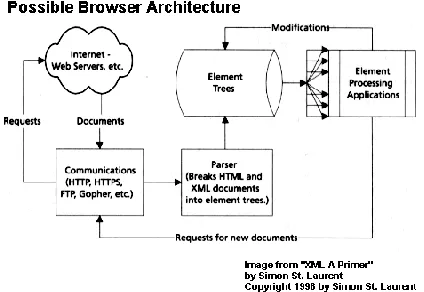
Fig 1. Web Browser Architecture
2.
COMPONENT DESCRIPTION
The .NET framework provides the foundation and component. The interact seamlessly, whether nearby or directly on different platforms. It standardizes common data types and communications protocols so that workings created in different languages can easily automatically interpret “.NET” is also the collective name given to different software components built upon the .NET platform.
3.
MODULES DESCRIPTION
A module may contain a documents comment before the module header, in which this comment is interpreted by an overall description of the module itself, and placed in a section unrestricted “Description” in the documentation for the module.
3.1 WEB PAGE NAVIGATION
Website navigation is important for the success of websites visitor’s experiences in website. The website’s map-reading system is like a path plan to all the different areas and information contained within the websites. Using a consistent routing method from page to page help the website visitor to learn your website navigation system.
3.2 MEDIA PLAYER
K.Chandra Sekar et al, International Journal of Computer Science and Mobile Applications, Vol.4 Issue. 6, June- 2016, pg. 26-31 ISSN: 2321-8363
Impact Factor: 4.123
other. Such players are known as either audio players or video players and time and again have a user crossing point tailored for the specific media type.
3.3 OPENING FILE FORMATS
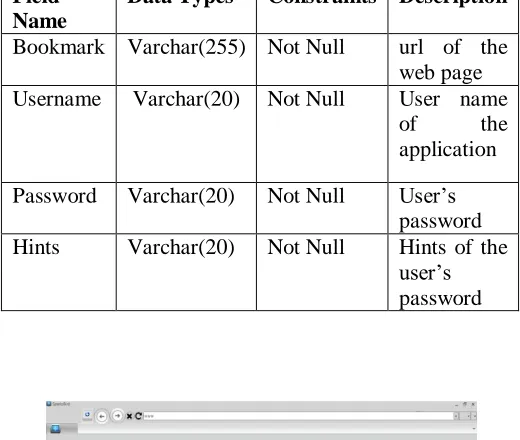
The player includes intrinsic support for Windows Media codes and also WAV and MP3 media formats. Windows Media Audio Professional codes are included which supports multi-channel audio at up to 24-bit 192 kHz resolution. maintain for any media code and container format can be added using specific Direct Show filters or Media foundation code the player will not play MP3 files that contain compressed ID3 headers (|tags”); trying to do so results DVD and down- trace playback functionality with sustain for menus, titles and chapters, parental controls and audio track language choice if attuned decoders are installed. Windows Media Player 12 adds native support for H.264 and MPEG-4 piece 2 video formats, AAC audio and3GP, MP4 and MOV pot formats. It also support image formats (jpeg, tiff, gif, bomb). The following tables are used in the system:
Registration
Bookmarks
3.4 EXTENSIBILITY
The player has skinning support and includes a color chooser. Not all functions are usually exposed in skin mode. Media player allows setting the video border color. It supports visualizations and Info center view which displays media metadata fetched starting the internet. occupied display visualizations are support. It supports Background plug-ins, window plug-ins and now in concert plug-ins toward manage medium playback in addition Digital Signal Processing as well as renderer plug-ins.
3.5 SKINMODE
Media player also features skins. Currently, This Media Player has many more default skins: “Corporate”, “Revert” and etc.
4.
TABLE DESIGN
K.Chandra Sekar et al, International Journal of Computer Science and Mobile Applications, Vol.4 Issue. 6, June- 2016, pg. 26-31 ISSN: 2321-8363
Impact Factor: 4.123
5.
RESULT
Fig 2. Multiple Web Browser Field
Name
Data Types Constraints Description
Bookmark Varchar(255) Not Null url of the web page Username Varchar(20) Not Null User name
of the application
Password Varchar(20) Not Null User’s password Hints Varchar(20) Not Null Hints of the
K.Chandra Sekar et al, International Journal of Computer Science and Mobile Applications, Vol.4 Issue. 6, June- 2016, pg. 26-31 ISSN: 2321-8363
Impact Factor: 4.123
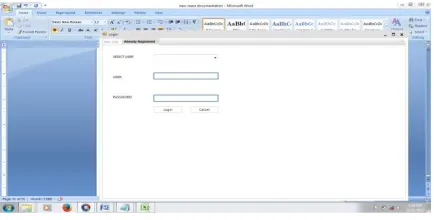
Fig 4. Private Browsing: Login Process
6.
CONCLUSION
In this thesis, we set out to explore user interface for supporting data-centric interaction on today’s Web. In doing so, I have to show that such data-centric interactions are useful and it is feasible for casual users, and usable tools can be built to support such interactions by gearing for small, simple data sets and common casual needs.
This thesis makes the following contributions:
First, this thesis combines a simple graph-based data model with simple extensions of the HTML syntax in order to let casual users those without programming skills -publish web pages offering advanced browsing features and rich visualizations. Second, this thesis shows that the cost of using web data extraction technologies can be lowered for casual users by retaining presentation elements from the original web pages.
7.
FUTURE ENHANCEMENT
In this project, future enhancement consists of fully activated with voice commands; user can change everything in it. Increasing its file transferring speed and file uploading speed. Users can be open to play more games in it.
References:
[1] British Medical Association (UK). Confidentiality and disclosure of health information. 1999 Oct. URL: http://web.bma.org.uk/public/ethics.nsf/webguidelinesvw?openview [accessed 2001 Apr 19] [Web Site].
[2] NHS Executive's Security and Data Protection Programme. Ensuring security and confidentiality in NHS organizations (E5501 v1.1). 1999. URL: http://194.101.83.13/library/cards/c0000365.htm [accessed 2001 Sep 22] [Website]
[3] Her Majesty's Stationery Office (UK). The Data Protection Act (1998). 1998. URL: http://www.hmso.gov.uk/acts/acts1998/19980029.htm [accessed 2001 Apr 19] [Website]
[4] General Medical Council (UK). Confidentiality: Protecting and Providing Information. 2000 Sep. URL: http://www.gmc-uk.org/standards/secret.htm [accessed 2001 Apr 19] [Website]
K.Chandra Sekar et al, International Journal of Computer Science and Mobile Applications, Vol.4 Issue. 6, June- 2016, pg. 26-31 ISSN: 2321-8363
Impact Factor: 4.123
[6] British Standards Institution (UK). BS ISO/IEC 17799:2000 (BS 77991:2000) Information technology: code of practice for information security management. London: BSI; 2000. URL: http://www.bsi-global.com/ [Web Site]
[7] Dierks T, Allen C. The TLS protocol (RFC 2246). 1999 Jan. URL: http://www.rfc-editor.org/ [accessed 2001 Jun 5] [Website]
[8] Ralph C. Merkle, Martin E. Hellman, On the Security of Multiple Encryption, A technical note on Programming Technique & Data Structure in Stanford University, Department of Electrical Engineering, Stanford, CA published in ACM, 1981, Volume 24, Number 7.
[9] IBM Corporation. Cryptography and SET, June 1998.