Journal of Education and Training Studies Vol. 5, No. 11; November 2017 ISSN 2324-805X E-ISSN 2324-8068 Published by Redfame Publishing URL: http://jets.redfame.com
An Innovative Learning Model in Digital Age: Flipped Classroom*
1Mustafa Çevikbaş1, Ziya Argün2 1Gazi University, Graduate School of Educational Sciences, Turkey
2Gazi University, Faculty of Education, Turkey
Correspondence: Mustafa Çevikbaş, Gazi University, Graduate School of Educational Sciences, Turkey.
Received: September 24, 2017 Accepted: October 30, 2017 Online Published: October 30, 2017 doi:10.11114/jets.v5i11.2322 URL: https://doi.org/10.11114/jets.v5i11.2322
Abstract
The study aimed to emphasize that digital revolution has crucial influences on the field of education as in many other fields. The relevant influences have led to radical changes in terms of teaching and learning approaches approved in the field of education. The students in our age have quite different characteristics when compared to the past, and their expectations have been shaped accordingly. Hence, it is quite difficult to draw interest and curiosity of the students today to learning activities through the traditional teaching approaches. Moreover, it is not easy to overcome some problems regarding teaching and learning by obsolete approaches. In this regard, the educators today show highly much interest in the innovative teaching approaches that address the needs of this age. One of those approaches is flipped classroom model. In this study, the conceptual and historical foundations of the flipped classroom model as being one of the popular instructional models in recent years, theoretical background of the model, and the advantages and disadvantages of the model in teaching processes were highlighted. Furthermore, interpretations concerning what kind of a role flipped classroom model would play to get over some problems in the field of education were included.
Keywords: flipped classroom model, blended learning, digital technologies
1. Introduction
Nowadays some parents and educators find the new generation’s interest in computers, smart phones, tablet PCs and similar technologies, and how those technologies are used by this generation strange. They compare the current habits with the old, as well. In this regard, Prensky (2001) points out that the ‘digital immigrants’ who can not be flexible in their thoughts waste their precious time by grumbling that things were better before. He adds that on the contrary, those who can think in a flexible and perceptive manner attempt to comply with the digital world by getting help of the new generation while acknowledging that they are not informed enough about the unusual world of this generation.
It is possible to assert that one of the most leading reasons of the disparity in the ideas and experiences of the digital immigrants and digital natives is the modern digital revolution which influences our lives deeply, and the resultant new conditions. Digital revolution is acknowledged as one of the most noteworthy changes, which have a profound impression on humanity, following industrial revolution. That radical change reveals itself in a plenty of fields including particularly the pedagogy, sociology, psychology, economy and culture of societies. Drucker (1994) expresses that the most critical change in this process will be about information referring to the structure, content, meaning and importance of information. Correspondingly, the digital revolution restructures the education system of societies while transforming them, and eliminates several doctrines that are not disapproved (Toffler, 1996). This transformation leading to a radical change in the global learning systems (Prashar, 2015) reveals necessity of updating and questioning the teaching and learning environment designed, the roles of teachers and students, and the educational tools used (Kuhn, 2003).
It is necessary to make the educational activities efficient by preserving the gains from the past in accordance with the requirements of the age we live in. One of the possible ways to achieve this goal is reorganizing the teaching and learning environments. Then, how should the teaching and learning environments be? There is not only one answer to this question. Actually, it is already inconsequential to discuss a teaching and learning environment that is appropriate for all the learners because of the individual differences (Pritchard, 2015). However, it is possible to organize the teaching and learning
Journal of Educ
environment th can respond t solutions to th the learners. N compared to th digital immigr how much the In this sense, t a game design and that this w evident that d organized wil changes, so do dance. In this traditional me immigrants in environments, needed to kee integration. M what is crucia ensure change through digita 2009). In addi benefits not on In an attempt the solution o activities (Kir promotes and about using t technologies w should not fo weakening tha lot. Just as it disconnected t we feel all da have an unque
2. The Conce
Educational c online. Althou picture started 19th century e took place. E considerable r some disadva learning appro learning and o
cation and Train
hat can be effe the needs of b he difficulties (T
Nowadays teac he X generatio rants change th e immigrants m
the futurist edu ner, states that will probably digital immig ll be those ne oes the dance. regard, digital ethods and wil
n that digital , flexible and ep in mind th Moreover, regar al is the awar e and to catch al technologies ition, it is indi nly to students to enhance stu of some probl rschner & Selin
facilitates lea the digital tec will undermine orget that inve at skill (Altun t is not possib
to the digital t ay when we fo
estionable imp
eptual and His
ontent is share ugh performin d to change upo
evolved throug Especially the
rise in the imp antages, online oaches. Blende online learning
ning Studies
ective dependin both learners a Turhan, 2008). chers are faced on. Then, the qu he methods an may wish it, it is
ucator Marc P it will get inc become impo grants and the ecessary to tra .” The music h l immigrant te l wait digital n
world and t creative think hat serious det rding that we l reness about th h innovations
s take students icated that inte s but also to tea udents’ commu lems in educat nger, 2003; Sa arning (Alkan, chnologies in e students’ som ention of cars
, 2014). On th ble to maintai echnologies al orget to take o portance in imp
storical Found
ed, and teachin ng educational
on emerging d gh the inventi remarkable d portance of on e learning app ed learning is g (Driscoll, 200
ng on the curre and instructors . The point wo d with ‘Y and uestion ‘should nd approaches t s highly unlike
rensky, who is creasingly diffi ossible in the c e methods the ansform. A we has changed la achers have tw natives to subs to recognize king skills. Th
termination is live in an ever-he necessity o (Lunenburg & s’ learning furt eractive use of achers (Cheun unication skill tion are ackno alomon, 2002)
Deryakulu, & educational p me skills partic s, planes, jets, he contrary, tho
in the life ke lso cannot be s our cell phones proving the qu
dations of the
ng and learning l activities in a distance educat
on of radio, te developments i nline learning a
proaches also defined as the 02).
Figure 1.
ent context. We s, provide an
rthy of notice i d Z generation
d the digital na they adopt’ ha ely that the Dig s also known a ficult to educat course of time ey applied, an ell-known Afr ately so it is re wo options! On stitute for them the natives o hus, they will p s critical to re
-changing wor of a remarkab & Ornstein, 20
ther and make f digital techno ng & Slavin, 20 s and attain in owledged as a . From this po & Şimşek, 199
processes. Tho cularly compu , etc. either d ose inventions eping away fr sustained. In th s along in the
ality of educat
e “Flipped Cla
g processes ar a face to face tion. The studi elevision and c
in the field of after 1990s. A lead to sever e learning eme
Blended Learn
We can organize environment is the congruity s’ that follow atives learn thro as become a cu gital Natives wi as a critic of ed te the new gen e. On the basis nd the teachin rican proverb
equired to cha ne is to mainta mselves. The o of the digital
preclude digit ealize innovati rld that is cruel ble individual
004). It is arg e them more p ologies in a co
011).
nformation, a v a great tool th int of view, te 95). However,
ose concerns utational skills. did not lead to s have contribu from cars or o he simplest ter
morning. Sim tional activitie
assroom Mode
re managed in e manner has b
ies of distance computers, an f educational All the same, a ral disadvantag rged from the
ning
Vol. 5,
e those environ for free thinki y between lear rather differen ough earlier m urrent issue. U ill go backward ducation, speak neration throug s of Prensky’s ng and learnin
summarizes th ange the music
ain instruction other is to ackn
world by us tal disintegrati ive transforma l and everlastin
effort and col gued that the e prepared for fu nscious and pr
variety of techn hat needs to b
chnology is co some people are related to . However, tho o forgetting h
uted to the pro other essential rms, let’s think milarly, digital
s.
el”
two ways incl become a rout education that d notable deve technologies although tradit ges, which ha combination o
No. 11; Novem
nments in a man ing and that c rning environm nt learning wa methods?’ or ‘sh Unfortunately, n ds (Prensky, 20 ker, writer, adv gh traditional m s (2001) analy
ng environme his: “When th cal instruments through less e nowledge that sing multiple ion. In this sen ations that wil
ng (Hargreave llaboration in environments uture (Inan & L
roper manner
nologies consi be used in edu onsidered as a
have serious c o the fact tha ose who have c how to walk o ogress of hum l needs, a qua k that how inco technologies p
luding face to tine for centur t have its origi elopments in t have brought tional approach as brought up
of in-class fac
mber 2017
nner that can offer ments and ays when hould the no matter 001). visor and methods, yses, it is nts they he music s and the effective, they are learning nse, it is ll ensure s, 2002), order to enriched Lowther, provides idered as ucational tool that concerns at digital concerns or led to ankind a ality life ompetent precisely
Journal of Educ
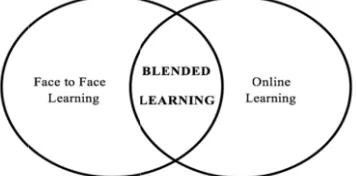
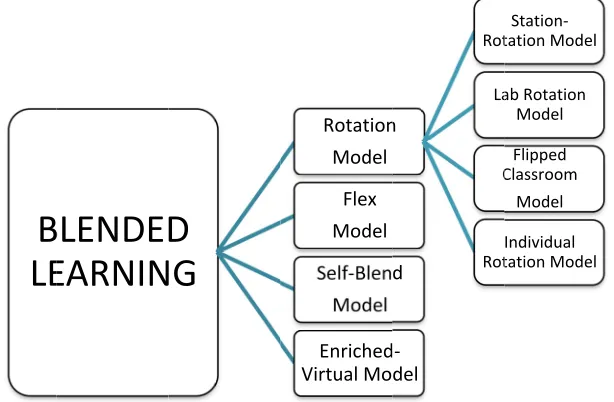
Blended lear information an from both ind students are i documents pro be used so as blended learni & Horn, 201 essentially int to ignore face teachers and s approaches. In introduced. In it is presented
Flipped classr in recent yea regarding pra progressed in In this sense, lecturer in th (Missildine, F (1997) puts e underlining th lecture notes created a disc subjects of ph model and tak (1993) indicat active learning In addition to to the flipped similar sense t 2000; Lage et the earliest on should be acco with active lea out with their
cation and Train
B
LE
rning providin nd saves time dividual and gr involved in so ovided in man
to interpret an ing approache 12). However, tend to benefit e to face learn students are pr n the literatur n their study, S d in the Figure
Figure 2. room model th ars (Bergmann ctices of the f line with the i lacking of di he department Fountain, Sum emphasis on t he importance and the related cussion platfor hysics (Bruff, 2 king its final fo tes that in the g processes in
all these contr classroom mo to the one now al., 2000) wer nes in which fl
omplished out arning. Thus, te
students in cl
ning Studies
BLENDE
EARNIN
ng pedagogic e for active lea
oup works in a ocial interacti ny environmen nd follow the s raise the lear , as Garrison from the adva ning, to phase
rovided with a re, a variety o
taker and Horn 2.
. Flipped Class hat is built on a n & Sams, 20 flipped classro mprovements/ gital technolo of “Physics mmers, & Goss
the idea that of peer instru d readings in rm by includin
2013). Similar orm though he classes where which informa ributions, Bake odel remarkabl wadays, the expr
re used as corr lipped classroo of class, and t eachers find th ass one to one
D
NG
cal means en arning activitie
an effective wa ion with each nts contribute t educational ac rners’ responsi
and Kanuka antages of both teachers out active roles, an of blended lea
n (2012) place
sroom as a Ble a strong found 012; Khan, 20
oom model da /developments gies, the pract and Applied selin, 2013). I learning proc uction. On the
their books be ng the student r to the studies e did not exact flipped classro ation and mean er (2000), Lage ly, as well. In t ressions “class responding to t om model was that cooperativ he opportunity e and face to f
Rotation Model Flex Model Self-Blen Model Enriched Virtual Mo nhances socia es in class. Th
ay. This allow h other in lear o richness in i ctivities and st ibility in line w (2004) partic h online and fa
and to perform nd in-class ac arning models e flipped classr
ended Learning ation has been 011). Although ate back to 20 s in technology tices accompli Physics” are n his book ca cesses start ou
e basis of this efore coming ts to the proce
s by Mazur (1 tly handle the oom model is ning is structu e and Platt (200
those studies t sroom flip” (Ba the flipped clas implemented ve group works
to save time fo face. Baker (20
n Rot La C Rot d -del
l interaction his feature pro ws for synchron rning process. instruction, and
tudent progres with their indiv cularly empha ace to face lear m just the on tivities are con
meeting on th room model am
g Model (Stak n among the m h its populari 0-25 years ago y since that tim ished by Prof. the first exa alled “Peer Ins ut of school a s idea, Mazur
to class. After ess over intere 997), King (1 flipped classro implemented ured instead of
00), and Lage, that deal with aker, 2000) and ssroom concep in real terms. s should be co or meaningful 000) thought o
Vol. 5, Station-tation Model ab Rotation Model Flipped Classroom Model Individual tation Model opportunities ovides the opp nized activities . Thus, lots o d alternative e ss. Moreover, vidual learning asize, blended rning; otherwis line learning. nsidered cruci he common g mong the blend
ker & Horn, 20 most popular bl ty has increas o. The flipped me.
f. Dr. Eric Maz amples of flip
struction: A U and go into m
asked his stu rwards, he for esting question
993) also cont oom model in it is required t f relaying infor Platt, and Tre flipped classro d “inverted cla pt. The studies
Baker (2000) onducted in cla learning activi of benefitting f
No. 11; Novem
s, facilitates portunity of be
s in which teac of visual and evaluation meth
it is a known g performances d learning app se, it is hardly
On the contra ial in blended ground in ques
ded learning m
012)
ended learning sed lately, the d classroom m
zur in 1990s w pped classroom User’s Manual”
more depth at udents to comp rmed small gro ns about the im
tributed to sha its current for to attach impor rmation.
glia (2000) con oom model in
ssroom” (Lage in question ar proposes that assrooms in com
ities that they c from electronic mber 2017 reaching enefitting chers and auditory hods can fact that s (Staker proaches possible ary, both learning stion are models as
g models e studies odel has
Journal of Education and Training Studies Vol. 5, No. 11; November 2017
actively in his lectures at the university, and he encouraged his students to prepare various notes and slides out of class. He expresses that rather than lecturing in class it is more meaningful to guide students in the studies they perform in collaboration with each other in groups. Besides, in the practices they carried out for the economy courses at the level of bachelor degree, Lage et al. (2000) focused on carrying out the in-class activities in the traditional and ordinary teaching out of class (via computers and various media tools) and carrying out the out-of-class activities in the traditional and ordinary teaching in class. They also put emphasis on learning styles in implementation processes.
It has been noticed that most of the studies focusing on flipped classroom model attempts to introduce the aforementioned model as the interchanged version of in-school and out of-school learning activities of traditional approaches. However, in traditional approaches, students generally keep away from active learning activities out of class. Furthermore, they usually do not make use of technology in classes. Hence, introducing flipped classroom model by attributing it to just the practices of traditional approaches (reversing) is not accepted.
Following Baker (2000) and Lage et al.’s (2000) contributions to the field, the studies in which flipped classroom model were implemented properly were carried out by Jonathan Bergmann and Aaron Sams. Bergmann and Sams working as a chemistry teacher at Woodland Park High School in Colorado State in the USA thought of what they could do for the students that could not attend the lectures due to the sports activities or any other reason not to fall behind in the class, and they decided to make videos for their lectures and to share those videos with their students in digital platforms. Afterwards, they opened to share some lecture notes and slides with the lecture videos on the Internet. That is how everything started, and the videos and documents shared online drew considerable interest. Because the students attending the classes asked to benefit from those documents, Bergmann and Sams (2012) started to study on a more systematic model by sharing their studies with all the students. At this stage, since all the students have got involved in this system, long lasting lectures have been replaced by a variety of activities including problem solving and modeling (Tucker, 2012). Bergmann and Sams (2012) determined several rules for their students to assume responsibility and to focus on their tasks in the learning process. Accordingly, they wanted their students to watch the videos definitely, to list the questions they were confused with while watching the videos and to come to school so. Bergmann and Sams (2012) noticed that this approach they adopted after experiencing to a certain extent allowed them to communicate with their students more effectively, manage a flexible learning process, give instant and effective feedback, and to back up their students more when required. The students’ satisfaction with this situation and attitudes towards flipped learning played an active role in current state of the practices. In the course of time, those innovative flipped classroom practices became prominent at other schools, and upon heavy demands Bergmann and Sams (2012) started to give seminars and organized workshops at a variety of schools. In addition to the seminars and workshops they organized, they contributed to the literature a lot through six books they published including “Flip your classroom: Reach every student in every class every day-2012, Flipped learning: Gateway to student engagement-2014, Flipped learning for math instruction-2015, Flipped learning for science instruction-2015, Flipped learning for English instruction-2015, Flipped learning for social studies-2015”.
Following Bergmann and Sams, the flipped classroom practices were carried out by Karl Fisch who is also a math teacher in Colorado. Fisch wanted to digress from the educational practices he continued to carry out for a long time, and he shared the videos of his lessons on “YouTube”. On the other hand, he mainly conducted problem solving activities in his lessons. Pink (2010) mentions Karl Fisch’s practice as ‘Fisch Flip’.
At this point, what made the flipped classroom model well known is the Salman Khan’s speech titled as ‘Let’s use to reinvent education’ on TED (Technology, Entertainment, Design). Within this speech that was clicked over four million times on digital platforms, Salman Khan used the expression ‘flipping the classroom/flipped classroom’, and thus, flipped classroom model was recognized in the international arena. At this point, as it was indicated in the “The NMC Horizon Report: 2015 Higher Education Edition”, it is expected that the flipped classroom model will spread rapidly.
3. Theoretical Background of Flipped Classroom
Flipped classroom can be defined as: “A blended learning model in which meaningful and active learning activities involving metacognitive activities are carried out as part of cooperative and individual work in classroom settings, and in which low cognitive level activities and independent studies in accordance with the individual’s learning speed are carried out outside of school settings through utilization of class videos, slides, articles and course notes in digital platforms”. Thus, flipped classroom model applications have two significant phases. These are: first out of the class - independent studies carried out online platforms and second in class - inquiry-based activities. In this sense, out of class activities prepare a foundation for in class activities.
Journal of Educ
cognitive activ out of class a cognitive dom cognitive dom
Within the sc through utilizi take the learni and peers thro struggles, cann support that is needs appropr The learning interact with t in active learn class. In this s requires highe specifics of th expected that encompasses provides a fle and collabora knowledge an zone of proxi learning objec with the oppo classroom pra Various theore was proposed b by use of educ
AT HOME
cation and Train
vities are perfo and proceedin main levels. Th main levels is sh
cope of flipped ing digital med ing responsibil ough use of dig
not overcome s also referred riate support as
and developm their peers and ning activities
sense, they lea er order level o he students’ su t conceptual u intensive and exible and inqu ative and coop nd meaning in imal developm ctives are share
rtunity to give actices also me etical framewor by Strayer (200 ational technol
Figure
ning Studies
formed in class g in class are he place of in-hown in Figur
Figure 3. B d classroom p dia and platfor lity. They can e
gital media too with personal as scaffold. He scaffolds. Also ment process o
d teachers and in the context arn how to sha of thinking abi upport needs c understanding fun activities r uisitive learnin perative work, a discussion-r ment. Along w
ed and experie e more effectiv eets the doctrin rks have been p 07) demonstrate logies in flipped
e 4. Theoretica IN CLA
sroom settings e performed in -class and out-re 3.
Bloom Taxonom ractices, stude rms. Thus, they
establish stron ols once again effort, and doe ence, one can o, appropriate f the students
deepen this so of real life thr are the learnin ilities; students can be deduce
and the prog requiring high ng environmen , includes acti rich environme with this, duri ence is gained t ve guidance an nes of the cons proposed for fl ed in Figure 4. d classroom mo
al framework o
Creatin
Evaluatin
Analyzin
Applyin
Understan
Remembe
ASSs (Brame, 2013 n compliance -of-class flippe
my and Flippe ents primarily y acquire basic ng social intera n. At this stage es not understa deduce that th support should continues int ocial interactio rough engaging ng responsibili
s frequently ne d from their c gression will her order cogni nt in accordanc ive and mean ent and provid ing the flippe through social nd support as sc
tructivist theor flipped classroo This framewor odel; thus, learn
of flipped class
g
ng
ng
ng
ding
ering
3). Hence, the with the revis ed classroom a
d Classroom M work indepen c level of know actions by getti e, student share
and. This deve he student in th d be provided to tensely within
on that they in g in the coope ty. The implem eed support in conversations a
be realized a itive skills. In ce with differe ingful learnin des opportuniti ed classroom p
l interaction. T caffold practic ries (Brandt, 1 om model in th rk points out th ning environme
sroom model (
Vol. 5,
flipped classr sed levels of applications am
Model ndently outside
wledge before ing instant con es the question elopment show he zone of prox
o the student in the classroom nitiated. Moreo rative group w mentation stag the process of and performan at the end of
this sense, flip entiated learnin ng activities, s
ies for the stud practices, resp These processe
ces. Thus, the s 997; Davis, 20 he literature. On hat activity base
ents are affected
(Strayer, 2007)
No. 11; Novem
room activities Blooms’ taxon mong Bloom's
e of the schoo e entering the c ntact with their ns with others ws the need for ximal developm n this zone. m. Students are
over, they are works carried o
ge of in class a f task engagem nce. In this sen
the class per pped classroom ng, enables in supports struct dent to progre ponsibilities re
s also provide structure of the 013).
ne of those fram ed learning is p
d by this proces
)
mber 2017
s starting nomy of s revised
ol setting class and teachers that s/he teaching ment and
e able to involved out in the activities ment. The nse, it is riod that m model teractive turing of ss in the elated to teachers e flipped
Journal of Educ
Taylor and St Classroom Ac learning, inter through frequ knowledge. T of students sig
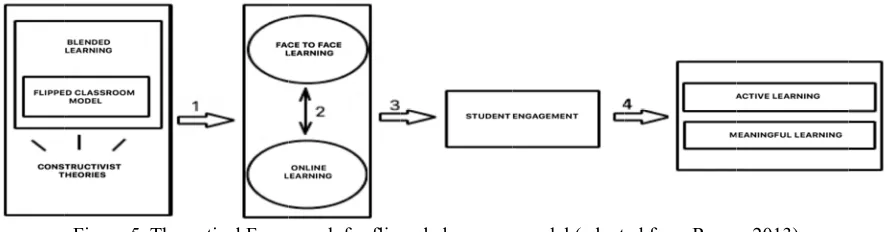
In Figure 5, f item by item a 1. Flipped cla and face to fac 2. Instruction time is gained increase the qu 3. In flipped learning envir 4. Flipped cla activities are a
4. Some Adva
Flipped classr environments one by one in Flipped classr performance ( in digital plat feature of the students can e (Fulton, 2012a Smith (2013) shares his stud also indicates recommended Low, & Glanc Next, student communicate and effective establishment The healthy c already indica interaction wi classroom mo 2012) also en opportunity to
cation and Train
atler (2014) in ctivities, stude ract more with uent discussion herefore, as it gnificantly and
Figure 5. The four basic poin as follows. assroom model
ce learning. is carried out d to implement uality of face-t classroom mo ronment is crea assroom mode assessed in rea
antages of Flip
room model p both inside an the following room model pr (Bergmann & tforms outside e videos or the easily benefit a).
particularly em dy findings tha s course video d that these vid ce, 2013; See & ts are no long
with their clas feedback (Ha of a healthy c communication ated that the m ith students thr odel that incre
nables teacher o prevent misco
ning Studies
ndicated that th ents are able t h each other, c
n activities, an can be clearly d thus it is poss
eoretical Fram nts are emphas
l, is a type of b
of the school t more effectiv to-face learnin odel practices ated. Thus, the el develops 21 al life context.
pped Classroo
provides a var nd outside of t
paragraphs. ractices give le
Sams, 2012). e of the school
ey can reach a from digital t
mphasizes tha at 97% of the os play impor deos be kept sh & Conry, 2014 ger alone outsi
ssmates and te amdan et al., communication n that is establ most effective
roughout the w eases teacher-s
rs and studen onceptions by
here is a relati to participate ooperate and i nd to start cre y seen in Figur sible to realize
ework for flipp sized and the
blended learnin
setting throug ve teaching in ng.
both online a e level of stude 1st century ski This results in
om Model in E
riety of advant the school. Th
earners the op Students bene l. They can re and study the technologies a
at the course v participant stu rtant role in s hort (approxim 4).
ide school by eachers using d
2013). In this n network betw lished in this p
part of flipped whole course (M student and stu nts to use the means of insta
ion between st actively in pr identify their l eating more co
re 5 flipped cl e active and me
ped classroom theoretical fra
ng and suppor
gh uploading v the class. In o
and face-to-fa ent engagemen ills, lifts the b n active and me
Educational P
tages for both he advantages o
pportunity to le efit from the e epeatedly watc
written and v and written or
videos are an im udents find the
students’ beha mately10 minut
y means of fli digital applicat s respect, flip ween teachers process also b d classroom m Moore, Gillett udent-student eir time effect
ant communic
tudent engagem roblem-solving learning gaps, onnections bet assroom mode eaningful learn
m model (adapt amework of fli
rted by constru
videos into on other words, on
ace learning en nt increases. boundaries of
eaningful learn
Processes
h teachers and of flipped clas
earn in accorda ducational vid ch the videos visual material visual docum
mportant part e course videos
avior, perform tes) in order to
ipped classroo tions at any tim ped classroom and students rings an activ model practices
t, & Steele, 20 interaction bo tively (Johnso
ation and vers
Vol. 5,
ment and learn g processes an develop their tween existing el increases the ning.
ted from Reeve ipped classroo
uctivist theorie
nline platforms nline learning
nvironments a
the class, and ning.
d students with ssroom model
ance with thei deos, lecture n through make s at any time ments besides t
of the flipped s useful. Herre mance and atti o be effective (A
om model. Th me they want m model pract (Cockrum, 20 e interaction p s is based on e 014; Smith, 20 oth in and out on, 2013). In satile interactio
No. 11; Novem
ning. Through nd evaluate th critical thinki g knowledge a
e level of part
e, 2013) om model is e
s, includes bot
s. In this respe offers opportu
are utilized an
d ensures that
h its enriched are presented
ir individual sp otes, slides etc e use of stop a they want. Th their teachers’
d classroom m eid and Schille itudes. Howev Alvarez, 2012
his is because and they get s tices contribut 014; Lage et al process. Teach establishing in 13). Therefore of the class ( addition, the on (Berrett, 20
mber 2017
h Flipped heir own ng skills and new icipation
xplained
th online
ect, more unities to
nd a rich
learning
learning in depth
peed and c. shared and play herefore, ’ support
odel and er (2013) ver, it is ; Forsey,
Journal of Education and Training Studies Vol. 5, No. 11; November 2017
Flipped classroom model enables active participation of students in the class since it is interesting in addition to providing ways of communication and richness of interaction in learning processes. It can be also considered that lesson videos also have an effect on this participation. In fact, it can be said that, outside of the classroom digital technologies, inside of the classroom interactive activities are effective in students’ in class participation and their ability to focus on the specified task (Bergmann & Sams, 2012; Lage et al., 2000; Riendeau, 2012; Smith, 2013; Tucker, 2012). Herreid and Schiller (2013) indicate that with flipped classroom model practices, students are encouraged to think about their own learning processes both in and outside of the classroom and engage their own learning process.
The participation of students in the classes is reinforced by the cooperative learning activities of flipped classroom model. Flipped classroom model develops cooperative learning skills that are placed among the 21st century skills (Abeysekera & Dawson, 2015; Bergmann & Sams, 2012; Hamdan et al., 2013; Strayer, 2012; Tucker, 2012). Thus, through sharing their responsibilities, students gain the habit of working together and have the opportunity to benefit from their peers in their learning process (Gojak, 2012). In this way, they become aware of different perspectives and see different problem solving strategies (Bland, 2006). Thus, flipped classroom model practices have contributed to student both in academic and motivational senses (Davies, Dean, & Ball, 2013; Gannod, Burge, & Helmick, 2008). Therefore, students' anxiety levels can be controlled (Marlowe, 2012; Strauss, 2013).
With all these gains, flipped classroom model contributes to an increase in students' academic achievement and performance (Alvarez, 2012; Forsey et al., 2013; Fulton, 2012b; Hamdan et al., 2013; Riendeau, 2012). flipped classroom model practices are very crucial in terms of including metacognitive activities that increase students' performance and academic achievement since students internalize concepts, gain critical thinking skills, and monitor their developments in terms of learning outcomes through flipped classroom model applications (Berrett, 2012; Gojak, 2012). Therefore, students become responsible for both individual and collective learning processes within the framework of flipped classroom model applications (Baker, 2000, Bergmann & Sams, 2012; Hamdan et al., 2013). Teachers, just as students, play an active role in flipped classroom model applications and actively provide support and guidance to their students. They also have to renovate themselves by sharing students’ learning responsibilities. In this respect, flipped classroom model also contributes positively teachers’ professional developments (Alvarez, 2012). Another advantage of flipped classroom model compared to other models is more time can be allocated for the learning activities based on constructivist theories in the classroom. Now students are starting to learn outside of the school and come to class with a certain knowledge. Hence, there is more time left in the classroom for inquiry-based activities. This is (unable to allocate time for constructivist activities in the class) one of the most complaints of our teachers. Flipped classroom model offers important opportunities for teachers and students in this regard.
In addition to all these academic and social contributions, flipped classroom model also provides administrative advantages. Cockrum (2014) mentions that a considerable part of the academic learning time is allocated for disciplinary problems. Flipped classroom model as an innovative teaching approach reduces the disciplinary problems (Cockrum, 2014) and lesson absenteeism (Alvarez, 2012).
When evaluated in a comprehensive way, flipped classroom model associates real-life applications with teaching processes, offers significant contributions to lifelong learning and brings a different breath to the education with the innovations it brings.
5. Challenges Confronted in Flipped Classroom Practices and Suggestions for Solutions
Besides the discussed benefits of flipped classroom model in education process, it also encompasses a number of challenges within its structure. Of those challenges, preparing lesson videos, and visual and written materials is the most prominent one since it is a hard and time-consuming task (Davies et al., 2013; Gannod et al., 2008; Hamdan et al., 2013; Herreid & Schiller, 2013). Bergmann and Sams (2012) state that readily available instructional resources can be utilized and this will not take too much time. However, even if each teacher wants to prepare their own lesson video and other course content, this difficulty will be a challenge for the first year since the videos and other documents prepared before can be used easily in the next years along with necessary refinements and revisions based on current updates in the field. Thus, through collaboration with other teachers, teacher can carry out shared works or utilizing readily available resources, teachers can overcome this challenge.
Strayer (2009) states that in the process of applying flipped classroom model, students may feel anxious about monitoring the course videos and completing the readings before coming to class. This should not be perceived as a disadvantage since anxiety up to a certain limit is beneficial for learning. In other cases where flipped classroom model is not applied, completing the tasks such as homework, exercises will remain as an issue that can also trigger the anxiety.
Journal of Education and Training Studies Vol. 5, No. 11; November 2017
new approach. In these situations, a gradual transition to flipped classroom model applications, sharing responsibilities in an entertaining way, sharing expectations and tasks clearly, and using the rewards system may facilitate this transition.
Considering the situation of students who do not have access to Internet technologies from a technical and economical perspective is appeared to be a challenge to deal with in flipped classroom model applications. Yet, the applications that are used in flipped classroom model practices are compatible with many devices such as computers, tablet PCs, smart phones, etc. narrow the problem as almost everyone has a smartphone including children nowadays. Nevertheless, the group of students working together should be checked to see if they have the necessary technical infrastructure for flipped classroom model applications.
Finally, in the scope of flipped classroom model applications, some challenges can be encountered. These challenges are as follows: “Students want to prefer traditional approaches since they are familiar these approaches and feel 'comfortable' because of their passive role in the learning process (Missildine et al., 2013; Strayer, 2009), teachers and students view constructivist approaches as a waste of time, (Mangan, 2013) and they approach innovative approaches in a prejudiced manner.”
It can be said that these challenges are more demanding than the others mentioned before because overcoming those difficulties requires a radical paradigm change. This is not an easy task to achieve. However, this difficulty is not just unique for flipped classroom model, actually these sorts of problems can be faced in all innovative approaches. Even though it is a difficult task to overcome these problems, it is possible minimize the anxieties and concerns of the parties and minimize the disadvantages by focusing on the benefits provided by flipped classroom model.
Some of the difficulties that can be encountered in the flipped classroom model framework can also depend on some misconceptions about the flipped classroom model. Some of the misconceptions about the flipped classroom model are listed below:
• The course videos take the place of the teacher and the videos represent the teacher's activities in the class settings. • Flipped classroom model is confused with distance learning and is regarded as equivalent of distance learning. • Students work in an unplanned way.
• Students and teachers spend all their time in front of a computer screen. • Students are left alone in the learning process, isolated from society.
• Students need to have advance level of knowledge about information technology.
Depending on how it is perceived and implemented, the advantages or disadvantages of the flipped classroom model in the learning process may vary from macro level to micro level based on a number of factors including country, culture, the subject matter or the classroom where it is applied. From this point of view, investigating the applicability of the flipped classroom model in different countries’ educational settings, benefits of the flipped classroom model in the learning processes, the challenges and solutions that can be experienced in the application process will make a significant contribution to the field.
6. Discussion
The New Media Consortium (NMC) published ‘The NMC Horizon Report: 2015 Higher Education Edition’ (Johnson, Adams Becker, Estrada, & Freeman, 2015), in which flipped classroom model is mentioned as one of the six learning technology trends which will impact the future in a great extent. Also, the report indicated that flipped classroom model would spread dramatically within one year. The increase in the number of educators implementing flipped classroom model in their classes and institutions and increasing number of academic research on this particular area within last two years is also supported this anticipation. It is encouraging that digital technologies, including web 2.0, 3.0 and 4.0 technologies that support flipped classroom model applications, are increasingly becoming one of the most common educational trends (Welsh, Wanberg, Brown, & Simmering, 2003) in the learning and teaching process.
Journal of Education and Training Studies Vol. 5, No. 11; November 2017
(Cockrum, 2014) and lesson absenteeism (Alvarez, 2012), and of preparing for lifelong learning (Bland, 2006). As a result, flipped classroom model has provided both academic and motivational contributions to students and teachers (Davies et al., 2013; Fulton, 2012b; Gannod et al., 2008). All these gains are important indicators for that flipped classroom model responds to the requirements of our time.
Today, the problems about the rote-learning based and competitive central education system, the way the curricula are implemented, lack of analytical thinking, interpretation skills and socialization, and technology integration into education are frequently discussed, and those problems prevent development of 21st century skills.
The problem of finishing curriculum materials within the framed time and the concern aroused as a result this curriculum pressure, may cause teachers to stay away from constructivist approaches and inquiry based learning methods. In this regard, flipped classroom model helps teachers to overcome this time pressure problem and support them to gain more time by providing alternative ways with the principle of acquiring the theoretical knowledge out of school. In addition, suggesting alternative ways results in lifting the boundaries of the school that allows students to develop their social and academic growth in a wider and enrich environment. Thus, an enriched learning environment is created and a critical point of view can be developed. Also, teacher can closely monitor the progress of the students in and out of school settings and support their construction of learning process in flipped classroom model. The support (scaffolding) strategies provided by the teachers influence the students' individual performance and group work, help their understanding and are highly effective in teaching higher level cognitive strategies (Pritchard, 2015; Rosenshine & Meister, 1992). As a result of these instructional scaffolds, productivity and effectiveness in the teaching process have also increased (Jacobs, 2001). In this respect, it is noteworthy that flipped classroom model allows students to receive support from their peers and teachers both in school and especially outside of the school.
Another issue that needs to be emphasized is the innovation that flipped classroom model brings to technology integration into education. In some teaching models, technology is only used either in school or out of the school. This limitation has been lifted with flipped classroom model and digital integrity has realized. The problems encountered in the process of technology integration into education in many countries are one of the triggering factors to implement flipped classroom model. The need for the realization of this transformation can be examined through the Fatih Project case implemented in Turkey (see for Fatih Project: Çevikbaş & Çevikbaş, 2015). Even though, huge objectives have been settled in the Fatih project route and a serious budget has been allocated, one can see that the project has encountered some setbacks along the way. Especially, it is stated that the teachers and students cannot benefit effectively from digital technologies (interactive board, tablet PC, etc.) provided within the scope of the project and this shows that the project is located far away from their determined objectives (Çevikbaş & Çevikbaş, 2015). EBA, a sub-project of the Fatih Project, has not succeeded in being a platform with its rich content, where teachers and students interact with each other. It is also thought that the source of these problems is related to the teaching approaches adopted. Therefore, the implementation of flipped classroom model applications are seen as an opportunity to ensure technology integration into education, especially along with the effective implementation of the Fatih Project. In this respect, it can be considered that it is beneficial that the education policymakers profound a strong strategy related to flipped classroom model applications and support these applications.
It is of course worthwhile to focus on the problems mentioned above in the learning and teaching processes and to make some designations in these matters, but it is not possible to generate a solution only by identifying the problems or discussing these problems. Therefore, it is also necessary to consider the solution of these problems in the field of education. In this regard, flipped classroom model is an important model that needs to be considered.
As a result, flipped classroom model has remarkable yields for all stakeholders involved in education and training processes, especially teachers and students. When the importance of flipped classroom model and the limited number of researches that focus on flipped classroom model are considered (Hamdan et al., 2013), it is necessary to examine and develop this modern learning model in different contexts.
References
Abeysekera, L., & Dawson, P. (2015). Motivation and cognitive load in the flipped classroom: Definition, rationale and a call for research. Higher Education Research & Development, 34(1), 1-14.
https://doi.org/10.1080/07294360.2014.934336
Alkan, C., Deryakulu, D., & Şimşek, N. (1995). Eğitim teknolojisine giriş. Ankara: Önder Matbaa.
Altun, M. (2014). Eğitim fakülteleri ve matematik öğretmenleri için liselerde matematik öğretimi, 5. Baskı, Bursa: Alfa Akademi.
Journal of Education and Training Studies Vol. 5, No. 11; November 2017
Baker, J. (2000). The “classroom flip”: Using web course management tools to become the guide by the side. In J. A. Chambers (Ed.), Selected papers from the 11th International Conference on College Teaching and Learning (pp. 9-17). Jacksonville, FL US: Florida Community College at Jacksonville.
Bergmann, J., & Sams, A. (2012). Flip your classroom: Reach every student in every class every day. Washington, DC: International Society for Technology in Education.
Berrett, D. (2012). How “flipping” the classroom can improve the traditional lecture. The Education Digest, 78(1), 36-41.
Bland, L. (2006). Applying flip/inverted classroom model in electrical engineering to establish life-long learning. In ASEE Annual Conference & Exposition. Chicago, IL.
Brame, C. (2013). Flipping the classroom. Vanderbilt University Center for Teaching. Retrieved from: http://cft.vanderbilt.edu/guides-sub-pages/flipping-the-classroom/
Brandt, D. A. (1997). Constructivism: Teaching for understanding of the Internet. Communications of ACM, 40(10), 112-117. https://doi.org/10.1145/262793.262814
Bruff, D. (2013). Using peer instruction to flip your classroom: Highlights from Eric Mazur’s recent visit. Blog post, Vanderbilt University Center for Teaching.
Çevikbaş, M., & Çevikbaş, S. (2015). Prospective mathematics teachers’ views on the FATIH Project: The big educational technology movement in Turkey. International Journal of Education in Mathematics, Science and Technology, 3(4), 298-312. https://doi.org/10.18404/ijemst.32760
Cheung, A. C., & Slavin, R. E. (2011). The effectiveness of educational technology applications for enhancing mathematics achievement in K-12 classrooms: A Meta-analysis. Educational Research Review, 9, 88-113. https://doi.org/10.1016/j.edurev.2013.01.001
Cockrum, T. (2014). Flipping your English class to reach all learners: Strategies and lesson plans. Routledge.
Davies, R. S., Dean, D. L., & Ball, N. (2013). Flipping the classroom and instructional technology integration in a college-level information systems spreadsheet course. Educational Technology Research and Development, 61(4), 563-580. https://doi.org/10.1007/s11423-013-9305-6
Davis, C. (2013). Flipped or inverted learning: Strategies for course design. In Smyth, E. G., Volker J. X., (Eds.),
Enhancing instruction with visual media: Utilizing video and lecture capture, (pp. 241-265) Hersey, PA: IGI Global. https://doi.org/10.4018/978-1-4666-3962-1.ch017
Driscoll, M. (2002). Blended learning: Let's get beyond the hype. E-Learning, 3(3), 54.
Driscoll, T. (2012). Flipped Learning and democratic education: The Complete Report. Retrieved from: http://www.flipped-history.com/2012/12/flipped-learning-democratic-education.html
Drucker, P. F. (1994). Post-capitalist society. Routledge.
Forsey, M., Low, M., & Glance, D. (2013). Flipping the sociology classroom: Towards a practice of online pedagogy.
Journal of Sociology, 49(4), 471-485. https://doi.org/10.1177/1440783313504059
Foust, T. (2012). Special guest article: A tip of the hat to the flip of the class. Illinois Music Educator, 73(2), 100. Fulton, K. (2012a). Upside down and inside out: Flip your classroom to improve student learning. Learning & Leading
with Technology, 39(8), 12-17.
Fulton, K. P. (2012b). 10 reasons to flip. Phi Delta Kappan, 94(2), 20. https://doi.org/10.1177/003172171209400205 Gannod, G. C., Burge, J. E., & Helmick, M. T. (2008). Proceedings of the 30th international conference on software
engineering: Using the inverted classroom to teach software engineering. New York, NY: ACM.
Garrison, D. R., & Kanuka, H. (2004). Blended learning: Uncovering its transformative potential in higher education.
Internet and Higher Education, 7(2), 95-105. https://doi.org/10.1016/j.iheduc.2004.02.001
Gojak, L. (2012). To flip or not to flip: That is not the question. National Council of Teachers of Mathematics. Retrieved from: http://www.nctm.org/about/content.aspx?id=34585
Hamdan, N., McKnight, P., McKnight, K., & Arfstrom, K. M. (2013). A Review of flipped learning. Retrieved from: http://www.flippedlearning.org/cms/lib07/VA01923112/Centricity/Domain/41/LitReview_FlippedLearning.pdf Hargreaves, A. (2002). Sustainability of educational change: The role of social geographies. Journal of Educational
Journal of Education and Training Studies Vol. 5, No. 11; November 2017
Herreid, C. F., & Schiller, N. A. (2013). Case studies and the flipped classroom. Journal of College Science Teaching, 42(5), 62-66.
Inan, F. A., & Lowther, D. L. (2009). Factors affecting technology integration in K-12 classrooms: A path model.
Educational Technology Research and Development, 58(2), 137-154. https://doi.org/10.1007/s11423-009-9132-y Jacobs, G. (2001). Providing the scaffold: A model for early childhood/primary teacher preparation. Early Childhood
Education Journal, 29(2), 125-130. https://doi.org/10.1023/A:1012581113983
Johnson, G. B. (2013). Student perceptions of the flipped classroom. Master Thesis, University of British Columbia. Retrieved from: https://open.library.ubc.ca/cIRcle/collections/24/items/1.0073641
Johnson, L., Adams, B,
S., Estrada, V., & Freeman, A. (2015). The NMC horizon report: 2015 higher education edition. New Media Consortium. 6101 West Courtyard Drive Building One Suite 100, Austin, TX 78730.
Khan, S. (2011). Let's use video to reinvent education, Speech presented at TED 2011. Retrieved from: https://www.ted.com/talks/salman_khan_let_s_use_video_to_reinvent_education
King, A. (1993). From sage on the stage to guide on the side. College Teaching 41(1), 30-35. https://doi.org/10.1080/87567555.1993.9926781
Kirschner, P., & Selinger, M. (2003). The state of affairs of teacher education with respect to information and communications technology. Technology, Pedagogy and Education, 12(1), 5-17. https://doi.org/10.1080/14759390300200143
Kuhn, D. (2003). Understanding and valuing knowing as developmental goals. Liberal Education, 89(3), 16-21. Lage, M. J., & Platt, G. (2000). The internet and the inverted classroom. The Journal of Economic Education, 31(19),
11-11. https://doi.org/10.1080/00220480009596756
Lage, M. J., Platt, G., & Treglia, M. (2000). Inverting the classroom: A gateway to creating an inclusive learning environment. Journal of Economic Education, 31(1), 30-43. https://doi.org/10.1080/00220480009596759
Lunenburg, F. C., & Ornstein, A. C. (2004). Educational administration: Concepts and practices (4th ed.). Belmont: Wadsworth/Thompson Learning.
Mangan, K. (2013). Inside the flipped classroom. The Chronicle of Higher Education. Retrieved from: http://majarrett.people.ua.edu/uploads/1/3/8/0/13807995/flipped_classroom.pdf
Marlowe, C. A. (2012). The effect of the flipped classroom on student achievement and stress. Master Thesis, Montana State University. Retrieved from:
http://scholarworks.montana.edu/xmlui/bitstream/handle/1/1790/MarloweC0812.pdf?sequence=1&isAllowed=y Mazur, E. (1997). Peer instruction: A user's manual. Upper Saddle River, NJ: Prentice Hall.
Missildine, K., Fountain, R., Summers, L., & Gosselin, K. (2013). Flipping the classroom to improve student performance and satisfaction. Journal of Nursing Education, 52, 597-599.
https://doi.org/10.3928/01484834-20130919-03
Moore, A. J., Gillett, M. R., & Steele, M. D. (2014). Fostering student engagement with the flip. MatheMatics Teacher, 107(6), 420-425. https://doi.org/10.5951/mathteacher.107.6.0420
Pink, D. (2010). Think Tank: Flip-thinking-the new buzz word sweeping the US. The Telegraph. Retrieved from: http://www.telegraph.co.uk/finance/businessclub/7996379/Daniel-Pinks-Think-Tank-Flip-thinking-the-new-buzz-word-sweeping-the-US.html
Prashar, A. (2015). Assessing the flipped classroom in operations management: A pilot study. Journal of Education for Business, 90(3), 126-138. https://doi.org/10.1080/08832323.2015.1007904
Prensky, M. (2001). Dijital yerliler, dijital göçmenler I. On the horizon, NCB University Press, 9(5).
Pritchard, A. (2015). Öğrenme yolları, Sınıfta öğrenme teorileri ve öğrenme stilleri. (M. Çevikbaş and S. Çevikbaş, Trans. Ed.). Ankara: Nobel Akademik Yayıncılık.
Journal of Education and Training Studies Vol. 5, No. 11; November 2017
Rosenshine, B., & Meister, C. (1992). The use of scaffolds for teaching higher level cognitive strategies. Educational Leadership, 49(7), 26-33.
Salomon, G. (2002). Technology and pedagogy: Why don’t we see the promised revolution? Educational Technology, 42(1), 71-75.
See, S., & Conry, J. M. (2014). Flip My Class! A faculty development demonstration of a flipped-classroom. Currents in Pharmacy Teaching and Learning, 6(4), 585-588. https://doi.org/10.1016/j.cptl.2014.03.003
Smith, J. D. (2013). Student attitudes toward flipping the general chemistry classroom. Chemistry Education Research and Practice, 14(4), 607-614. https://doi.org/10.1039/C3RP00083D
Staker, H., & Horn, M. B. (2012). Classifying K–12 blended learning. Mountain View, CA: Innosight Institute, Inc. Strauss, V. M. (2013). Emotional values of words in finance: Anxiety about losses and excitement about gains. M. Sc.
Thesis in Social Cognition, University College London
Strayer, J. (2009). Inverting the classroom: A study of the learning environment when an intelligent tutoring system is used to help students learn. Saarbrücken, Germany: VDM.
Strayer, J. (2012). How learning in an inverted classroom influences cooperation, innovation and task orientation.
Learning Environments Research, 15(2), 171–193. https://doi.org/10.1007/s10984-012-9108-4
Strayer, J. F. (2007). The effects of the classroom flip on the learning environment: A comparison of learning activity in a traditional classroom and a flip classroom that used an intelligent tutoring system. Doctoral Dissertation, The Ohio State University.
Taylor, S. S., & Statler, M. (2014). Material matters: Increasing emotional engagement in learning. Journal of Management Education, 38(4), 586-607.
Toffler, A. (1990). Future shock. Bantam.
Tucker, B. (2012). The flipped classroom. Education Next, 12(1).
Turhan, R. (2008). Her çocuk farklıdır. Empati, 4, 38. Retrieved from: http://www.ekin.k12.tr/dosya/empati38.pdf Welsh, E., Wanberg, C., Brown, K., & Simmering, M. (2003). E-learning: Emerging uses, empirical results and future
directions. International Journal of Training and Development, 7(4), 245-258. https://doi.org/10.1046/j.1360-3736.2003.00184.x
Copyrights
Copyright for this article is retained by the author(s), with first publication rights granted to the journal.