Author Anna Meimann Student Number s1453416 Academic Year 2016/2017
Date 15-08-2017
First Supervisor Dr. P. A. M. Meulenbeek Second Supervisor Dr. C. Bode
Institute University of Twente Faculty Faculty of Behavioral,
Management and Social Sciences (BMS)
Program Psychology
Specialization Positive Psychology and Technology (PPT)
MASTERTHESIS
A Holistic Model of the Relation Between Panic
Disorder and Fatigue
‘[…] trea
table panic disorder
is an important contributor […] to the etiology
and clinical presentation of chronic fatigue
[…].’
Acknowledgements
Hereby I would like to thank my attendants Dr. Peter Meulenbeek and Dr. Christina Bode for giving me constructive and detailed comments, remarks and food for thought during the
writing process of my thesis.
Moreover, I want to say ‘Danke!’ to my family, especially my mother, and closest friends for supporting me, keeping up my motivation, and bearing my mood swings, especially in the
final part of the writing process.
Finally, I would like to express my gratitude to the University of Twente for enabling me to obtain my Bachelor’s and Master’s degree in Psychology and for supporting me.
Abstract
In this thesis, a systematic literature review that aims to deliver a comprehensive overview on the interdependent relation between Panic Disorder (PD) and fatigue is
conducted. Special attention is paid to etiological processes, maintaining factors and treatment concepts for PD patients that experience fatigue.
Background and Objective. PD as well as fatigue have a great detrimental impact on
an affected person’s life. Up to date, research on the mutual influence these two constructs have on each other is still insufficient. As a starting point for the explorative data search, the first impression of the relation between panic disorder and fatigue was illustrated in an
‘etiological model of panic disorder and fatigue’.
Method. The systematic literature review was conducted in spring 2017. In order to
examine the relation between PD and fatigue, journal articles were retrieved from five scientific databases. After three phases of screening, N = 16 articles were included into the final data pool by combining the key term 'PD’ with various search terms for 'fatigue' and by relating to etiology, maintenance, and treatment.
Results. The literature review revealed that sleep characteristics, sleep duration and
Nocturnal Panic Attacks contribute to the etiology of fatigue in PD patients. Besides, fatigue has found to be maintained by a vicious cycle of dysfunctional beliefs, cognitive biases, safety behaviour, and increased sleep effort. With regard to the treatment of PD patients who
experience fatigue, it was found that fatigue and sleep related complaints are side effects in PD medication. The conventional treatment combination for PD patients consisting of Cognitive Behavioural Therapy and medication is ascertained to be unsatisfactory when intending to achieve improvements in PD patients that undergo fatigue and related symptoms.
Conclusion. The main findings of the conducted review indicated to expand and adjust
the ‘etiological model of panic disorder and fatigue’. The resulting ‘holistic model of the relation between panic disorder and fatigue’ can be seen as the first attempt to visualize the relation between PD and fatigue. Further, it can be seen as the starting basis for further
exploration of the influence of PD as well as fatigue on the mutual etiology, maintenance, and treatment concepts of PD as the relevant and fatigue as the secondary diagnosis.
Kurzfassung
In dieser Abschlussarbeit wurde eine systematische Literaturrecherche durchgeführt, um einen umfassenden Überblick über den Zusammenhang zwischen Panikstörung und Müdigkeit zu erstellen. Den Ausgangspunkt für die explorative Literatursuche bildete das
‚ätiologische Modell der Panikstörung und Müdigkeit‘, welches basierend auf dem einem Eindruck von der Beziehung zwischen Panikstörung und Müdigkeit erstellt wurde.
Hintergrund und Zielsetzung. Sowohl Panikstörung als auch Müdigkeit haben
erhebliche negative Auswirkungen auf die Lebensqualität Betroffener. Bis heute mangelt es an ausreichender Forschung hinsichtlich des gegenseitigen Einflusses beider
Erscheinungsformen. Daher zielt diese Studie darauf ab, wissenschaftliche Erkenntnisse über die Beziehung zwischen Panikstörung und Müdigkeit zu erheben. Diese könnten insofern einen Beitrag zu künftigen Behandlungsmöglichkeiten von Panikpatienten liefern, als dass gleichzeitig auftretende Müdigkeitsbeschwerden zusätzlich behandelt werden könnten.
Methodik. Die systematische Literaturrecherche wurde im Frühjahr 2017 durchgeführt.
Um die wechselseitige Beziehung zwischen Panikstörung und Müdigkeit deutlich zu machen, wurden Journalartikel aus fünf wissenschaftlichen Datenbanken zusammengestellt. Durch die
Kombination des Schlüsselbegriffs ‚Panikstörung‘ mit differenzierten Suchbegriffen zum Thema Müdigkeit als auch in Bezug auf die Ätiologie, Aufrechterhaltung und
Behandlungsmöglichkeiten, konnten nach drei systematischen Screeningphasen N=16 Artikel im endgültigen Datenpool zusammengestellt werden.
Resultate. Die Literaturrecherche ergab, dass Schlafcharakteristiken, Schlafdauer und
nächtliche Panikattacken zum Entstehen von Müdigkeit bei Panikpatienten beitragen. Außerdem konnte festgestellt werden, dass Müdigkeit bei Panikpatienten durch einen Teufelskreis bestehend aus dysfunktionalen Überzeugungen, Sicherheitsverhalten und erhöhtem Schlafaufwand aufrechterhalten wird. Im Hinblick auf die Behandlung von Panikpatienten, die unter Müdigkeit leiden, wurde festgestellt, dass Müdigkeit und schlafbedingte Beschwerden häufig als Nebenwirkungen von Psychopharmaka zur
Behandlung von Panikstörungen auftreten. Die konventionelle Behandlungskombination für Panikpatienten, bestehend aus kognitiver Verhaltenstherapie und Medikation, wird als unzureichend bewertet, wenn es darum geht Verbesserungen in Bezug auf
Müdigkeitsbeschwerden bei Panikpatienten zu erzielen.
Fazit. Die wichtigsten Ergebnisse der durchgeführten Literaturüberprüfung
Panikstörung und Müdigkeit" kann als erster Versuch angesehen werden, die Beziehung zwischen Panikstörung und Müdigkeit zu visualisieren. Das Modell sollte außerdem als Ausgangspunkt für die weitere Erforschung des gegenseitigen Einflusses von Panikstörung und Müdigkeit genutzt werden.
Table of Contents
Introduction 8
Relevance 8
Panic Disorder 8
Definition of Panic Disorder 8
Etiology and Maintenance of Panic Disorder 9
Treatment of Panic Disorder 10
Comorbidity and Prevalence of Panic Disorder 11
Fatigue 11
Definition of Fatigue 11
Risk Factors, Comorbidity, and Prevalence of Fatigue 12
Panic Disorder and Fatigue 13
Research Questions 16
Methods 17
Literature Search 17
Search Terms 17
Literature Screening 18
Inclusion and Exclusion- Criteria 18
Phases of Screening 18
Data Extraction 20
Results 21
Screening Results 21
Study Characteristics 21
Etiology of Panic Disorder and Fatigue 22
Sleep Characteristics 22
Sleep duration and Insomnia 23
Nocturnal Panic Attacks 23
Summary 24
Maintenance of Panic Disorder and Fatigue 26
Maladaptive Cognitive and Behavioural Processes 26
Summary 27
Treatment of Panic Disorder and Fatigue 28
Pharmacological Treatment 29
Psychological Treatment 29
Combined Treatment 29
Summary 30
Discussion 33
‘An Etiological Model of Panic Disorder and Fatigue’ Revisited 33
The Blue, Upper Part Revisited 33
The red, Lower Part Revisited 33
Conclusion on the ‘Etiological Model of Panic Disorder and Fatigue’ 36 Limitations and Implications for Future Fundamental Research 37 Definition and Conceptualization of Fatigue and Sleepiness 37
The Problem of Comorbidity 37
Heterogeneity of the Included Sample 38
Recency of the Included Studies 38
Study Publication Bias and Selective Reporting Bias 38 Limitations and Implications for Clinical Practice 39
Diagnose of Comorbid Fatigue 39
Integration of Fatigue in the Treatment of Panic Disorder 39
Conclusion 41
References 42
Appendix 50
Appendix A 50
Introduction
Relevance
Being afflicted with fatigue and related symptoms has significant detrimental effects
on a person’s mood and coping resources, leading to a lower life quality and hence, to an increased vulnerability to develop comorbid psychiatric diseases as affective and somatoform disorders (Harvey, Wesseley, Kuh, & Hotopf, 2009). Compared to current research
concerning the relation of fatigue and physical diseases, only a few of the published articles cover the relation between fatigue and particular psychiatric diseases such as anxiety
disorders has been published. More particularly, only few studies are concerned with the relation between panic disorder (PD) and fatigue. The necessity to fill in this research gap is facilitated by the severity and high prevalence of both phenomena causing detrimental effects on daily functioning and the quality of life of concerned people (Barton, Karner, Salih, Baldwin, & Edwards, 2014). By now, no reviews that explicitly assess the relation between PD and fatigue, have been published. This systematic literature review aims to give a comprehensive overview of the relation between both phenomena by considering relevant issues such as etiology, maintenance, and treatment concepts.
Panic Disorder
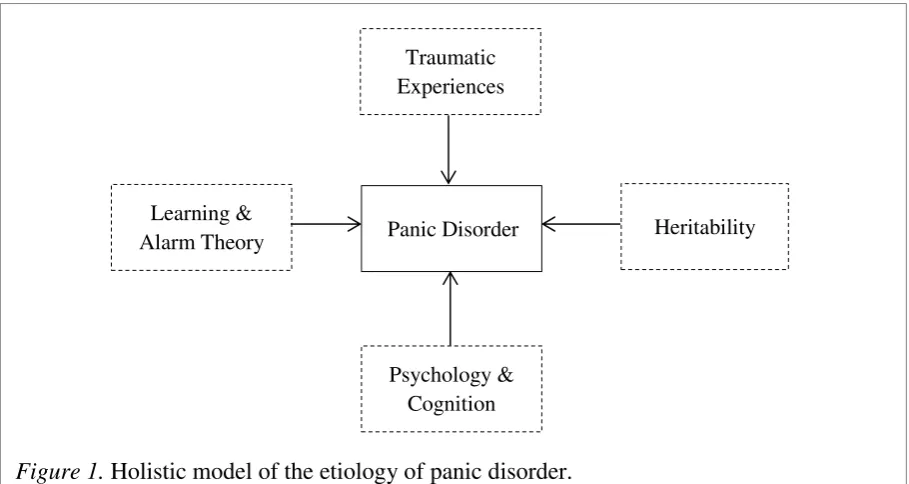
Etiology and Maintenance of Panic Disorder. PD has psychological as well as biological causes. To illustrate the etiology of PD and the underlying mind-body relation, four crucial aspects, based on Emmelkamp, Bouman, and Visser (2009) are displayed in a holistic model (see Figure 1). In a first approach to explain the development of PD, Emmelkamp et al. (2009), mention heritability, which is found to explain the development of PD in about 48%.
Concerned people often inherit the predisposition to develop PD. Although evidence is found for possible deviations in physiological systems of PD patients, as an impaired respiratory center or lower heartrate variability once PD is diagnosed, these findings were not replicated and conclusions based on this evidence should be made with caution. Next to physiological
aspects Emmelkamp et al. (2009) emphasize the crucial role of psychological and cognitive aspects in the development and maintenance of PD. PD patients commonly misinterpret
bodily sensations as signs of catastrophes, leading to increased anxiety. This attentional bias can be explained by the activation of latent interoceptive anxiety. Interoceptive anxiety
means, that PD patients evaluate their current state of anxiety on the basis of bodily sensations instead of external signs or information. Thus, if strong anxiety is provoked, this hidden (latent) interoceptive anxiety is activated and PD patients experiences extensive fear. Another theory, resting upon the physiological theory described, is the learning/ alarm theory.
[image:10.595.70.525.262.504.2]Learning theory assumes that an inherent alarm system warns the individual in case of danger. It further emphasizes the impact of interoceptive conditioning, which assumes that every physical sensation will lead to a panic attack. As a result, anxiety sensibility, or fear of fear is
Figure 1. Holistic model of the etiology of panic disorder.
Traumatic Experiences
Panic Disorder Heritability Learning &
Alarm Theory
developed. As a last approach, Emmelkamp, Bouman, and Visser (2009) mention the finding that early traumatic experiences increase the chance for the development of PDs.
How close mind and body are related in the nature of PD becomes clear again after having a closer look at the maintenance of PD. According to Ehlers (1995), maintenance and
relapse depend on an individual’s heartbeat perception, anxiety sensibility, avoidance patterns
and safety-seeking behavior. Great safety-seeking behavior is found to increase catastrophic beliefs and anxiety (Salkovskis, Clark, Hackmann, Wells, & Gelder, 1999). Moreover, baseline levels of anxiety severity, comorbidity and previous mental disorders account for present maintenance of PD. Finally, the type of PD treatment and its success is another contributor to the maintenance of PD symptoms.
Treatment of Panic Disorder.The instant need to treat PD by medical services is emphasized by Katon (1996), who states that patients commonly seek help when suffering from somatic symptoms associated with PD. According to Emmelkamp et al. (2009), PD can be treated by applying the methods of three treatment approaches. First, cognitive change has
to be made. This could be done by Cognitive Therapy, which focuses on bringing change in
the individual’s catastrophic misinterpretations. Secondly, behavioral change has to be
targeted in effective treatment of PD. The individual is challenged to not apply safety
behavior by the use of verbal or behavioral techniques. Thirdly, by learning coping strategies
the patient learns to deal with bodily sensations that commonly provoke a panic attack. Panic attacks can be decreased by means of systematic interoceptive exposure, a treatment in which PD patients are exposed to their feared bodily sensations over a prolonged time. Research has shown that a combination of the three described treatment approaches, commonly known as Cognitive Behavioral Therapy (CBT), is most appropriate to treat PD patients as it causes a decrease of panic attacks, anxiety, and avoidance (Otto, Pollack, & Sebatino, 1996). Next to the therapeutic approach, another option to improve panic symptoms is
pharmacological therapy.Tricyclic antidepressants, SSRI’s, SNRI’s and benzodiazepines are
proven to be effective. In case of acute episodes of PD, it is recommended to combine Cognitive Therapy and medication. Moreover, group treatments are found to be more
Comorbidity and Prevalence of Panic Disorder. Diagnosing and treating PD requires considering mental and physical comorbidities. According to De Jonge et al. (2016), PD has a great comorbidity with mood disorders (bipolar disorder), impulse-control disorders (binge eating disorder and bulimia nervosa), as with substance- use disorders. This gives an indication of the incidence of PD. The NEMESIS-2 study, which assessed the incidence of psychiatric disorders in the Netherlands have found a lifetime prevalence of PD of 3.8%. The 12 – months prevalence in the Netherlands has found to be 2.2% (Trimbos Instituut, 2012). A comparable study has been assessed by the Robert- Koch Institut in Germany. The German population has shown a one-year prevalence of 3.0% in women, and 1.7% in men (Robert Koch- Institut, 2002). Overall, the probability to suffer from PD is found to be two times higher in females than in males (Angst et al., 2016). Furthermore, there is a higher prevalence rate of PD in high-income countries than in low-income countries. Additionally, lifetime comorbidity in people suffering from PD was about 80.4%. These numbers indicate what the NEMESIS study has shown- anxiety disorders are equally prevalent as mood disorders on a lifetime basis what emphasizes the need to conduct research on anxiety disorders as PD.
Fatigue
Definition of Fatigue. Due to its complexity, there is no consensus definition of fatigue. Yet, four definitions of fatigue are presented in the following to make clear how fatigue, which is a key concept in this review, is understood in this paper. In scientific literature, fatigue is often defined in terms of dualistic concepts. First, normal fatigue is distinguished from pathological fatigue. The definition relies on the duration of experiencing fatigue and on the nature of recovery. Normal, acute fatigue is often a consequence of
short-term sleep loss or exhaustive mental or physical work. It occurs in healthy individuals who commonly recover rapidly after taking a rest. Pathological, chronic fatigue occurs in patients
with severe mental and physical illness. A characteristic of pathological, chronic fatigue is that the fatigue symptoms last over long time periods and are difficult to restore, which can lead to enormous consequences for the patients daily life functioning. Secondly, physical fatigue is distinguished from psychological fatigue. Physical fatigue relies on bodily activity
and energy loss or consumption. This matches the behavioral viewpoint on fatigue, which also says that an individual that experiences fatigue and related symptoms commonly lacks energy,
which causes a decline in the individual’s activity level and a disturbance on an individual’s
originates fromhigh stress levels, low motivation levels, and weariness, which may cause depressive or anxiety symptoms. The most severe manifestation of psychological fatigue is the CFS. This syndrome is a pathological, severe mental illness a patient can have as a main diagnose. The decisive difference between CFS and fatigue is that fatigue is not a main diagnose. Thus, CFS is not considered in this review. The paper solely focuses on all forms of fatigue defined above.
To give a comprehensive understanding of fatigue, the difference with sleepiness has to be presented. Research has found that fatigue is commonly related to sleepiness (Shen, Barbera, & Shapiro, 2006). Both phenomena are described as separate, but interrelated
appearances. According to Shen, Barbera, and Shapiro (2006), sleepiness can be distinguished from fatigue due to the extent of impairment of the normal arousal level, considering that fatigue impairs the arousal level to a greater extent. Sleepiness is defined as one’s tendency to
fall asleep (sleep propensity). Although fatigue and sleepiness are associated, this paper aims to differentiate between both and to consider merely fatigue. Thus, this review targets all forms of fatigue by excluding CFS and sleepiness.
Risk Factors, Comorbidity, and Prevalence of Fatigue. Due to the
multidimensionality of fatigue and related symptoms, a number of factors account for its high prevalence (Shen et al., 2006). Theorell-Haglow, Lindberg, and Janson (2006) identified risk factors for fatigue and daytime sleepiness for women. First of all, it is found that the risk to experience symptoms of fatigue and sleepiness increases with age. Secondly, lifestyle factors play a central role in the etiology of daytime sleepiness and fatigue. Examples that facilitate fatigue are physical inactivity and smoking. Moreover, short sleep duration, and insomnia serve as predictors for fatigue and sleepiness in woman (Theorell-Haglow, Lindberg, & Janson, 2006). Thirdly, as mentioned above, comorbidity with several chronic and acute physical and mental diseases strongly increases the risk to develop fatigue and sleepiness. Among others, frequent comorbidities are found with rheumatoid arthritis, cancer, snoring and being overweight, as with experiencing psychological distresses like anxiety and depression.
The great range of comorbidities fatigue entails already suggests the detrimental effects fatigue and sleepiness have on a person’s general health and quality of life. According to Shen, Barbera, and Shapiro (2006), fatigue is even ‘[…] identified as major debilitating and
Theorell- Haglow, Lindberg and Janson (2006) report an estimated prevalence of fatigue and day time sleepiness of 5.5% to 23% in the general population, while women are found to suffer from fatigue more often than men. Additionally, Kroenke, and Price (1993) found a lifetime prevalence of fatigue lasting for two or more weeks in 20% of the US population.
Panic Disorder and Fatigue
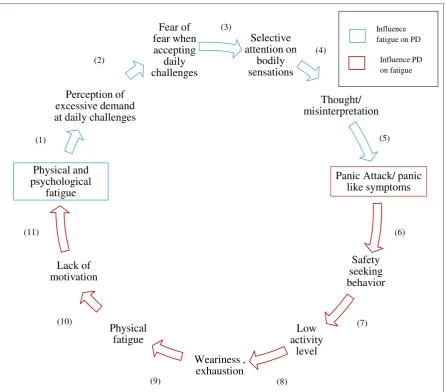
When having a closer look at the nature of PD and fatigue, it is obvious that both of them have mainly contrasting symptoms (DSM-IV). While PD causes an accelerated heart rate, sweating, and intense fear among others, fatigue is characterized by exhaustion and lack of vitality. Furthermore, fatigue is not listed as a symptom of PD. Thus, both do not seem to relate to each other at first. Nevertheless, research has shown a co-occurrence of PD and fatigue. Galligan, Hevey, Coen, and Harbison (2015) found a significant relation between both constructs in patients who recovered from stroke. Furthermore, Manu, Matthews, and Lane (1991) found an enhanced probability to develop a PD when suffering from extensive fatigue previously. Up to date, no research was found stressing out the etiology and relation of PD and fatigue when co-occurring. To demonstrate the first impression concerning relations between PD and fatigue based on the recent literature, a hypothetic, etiological model of panic disorder and fatigue (see Figure 2) is created.
The ‘etiological model of panic disorder and fatigue’ displays the assumed relation between the emergence of panic attacks, that are central to PD, and physical and
psychological fatigue. In the following, the expected influence fatigue has on panic attacks, as the expected influence panic attacks have on the emergence of fatigue are displayed by
dividing the mutual influence in subparts. (1) If a person experiences physical and
psychological fatigue, daily challenges are perceived as being an excessive demand. (2) Due to the decrease in alertness and concentration, it becomes difficult to cope with those
challenges (Jean-Louis, Von Gizycki, Zizi, & Nunes, 1998). (3) Furthermore,
misinterpretation of daily demands and own abilities, trigger the thoughts and fears of
experiencing a new panic attack due to overextension. A ‘radar system’ which detects
which aims to detect and avoid panic evoking situations, a person’s attention is highly
selective for bodily sensations that could serve as an indicator for the next panic attack. According to Asmundson, Sandler, Wilson, and Walker (1992), this is due to the cognitive set of patients suffering from PD, which biases attention towards physical arousal. (5) The
anxiety sensivity, leads to a misinterpretation of autonomic sensations (accelerated heart rate or sweating) that eventually raise a panic attack.
[image:15.595.73.520.320.712.2]In addition to the influence fatigue has on the emergence of a panic attack, a panic attack can contribute to the emergence of fatigue. (6) Once a PD patient experiences his first panic attack, safety seeking behavior is commonly applied. This is crucial for the maintenance of PD (Salkovskis, Clark, Hackmann, Wells, & Gelder, 1999). Safety seeking behavior occurs as subtle stimulus avoidance and/ or escape behavior (Salkovskis, 1991).
Figure 2. An etiological model of panic disorder and fatigue: extended version. Note.Number 1-11 are mentioned in the description of the Figure to denote the particular subparts.
Selective attention on bodily sensations Thought/ misinterpretation
Panic Attack/ panic like symptoms Safety seeking behavior Low activity level Weariness , exhaustion Physical fatigue Lack of motivation Physical and psychological fatigue Perception of excessive demand at daily challenges
Fear of fear when accepting daily challenges Influence PD on fatigue Influence fatigue on PD
(7) Actually, as mentioned above, due to the ‘radar system’ PD patients consistently avoid potential panic evoking situations. In the long term, this causes a decrease in activity level. A low activity level has an effect on a potential social isolation of PD patients. Altogether, the impaired social functioning as well as a decrease in physical and emotional
health leads to a significant impairment in a patient’s quality of life in the long run
(Markowitz, Weissman, & Ouellette, 1989). (8) According to Ensrud, Ewing, Fredman,
Hochberg, Cauley et al. (2010), low physical activity and a person’s state of weariness and
exhaustion are associated with each other. Being physically inactive, not only enhances the risk to develop severe physical illnesses as cardiovascular diseases, but also affects a person’s overall condition of physical health (Blair & Brodney, 1999). (9) This may lead to physical fatigue, which relies on bodily activity and energy loss (Shen, Barbera, & Shapiro, 2006). (10) The vicious circle is continued by the detrimental effect physical fatigue has on a person’s
motivation and his mental health (Lou, Kearns, Oken, Sexton, & Nutt, 2001), (11) which will finally contribute to the emergence of physical as well as psychological fatigue. According to Shen, Barber, and Shapiro (2006), suffering from both forms of fatigue induces symptoms of anxiety, which encloses the vicious circle of PD and fatigue. Altogether, the ‘etiological model of panic disorder and fatigue’ emphasizes again how close body and mind are related when thinking about the connection between PD and fatigue. This supports the need for a holistic approach when studying the relation between the etiology, maintenance, and treatment of both. Figure 3 displays a more compact version of the model described above.
Figure 3. An etiological model of panic disorder and fatigue: abridged.
Perception of overextension
Panic attack
Safety seeking behavior Low
activity level Physical and psychological
Research Questions
The aim of this systematic literature review is to point out existing knowledge concerning the relation between PD and fatigue. Therefore, the objective is to answer the following research question by collecting and assessing relevant and recent scientific
literature: To what extent is fatigue related to panic disorder? To get a comprehensive answer
to this question, the following three sub-questions are taken into closer consideration:
1. To what extent does fatigue influence the etiology of panic disorder?
To what extent does panic disorder influence the etiology of fatigue?
2. To what extent does fatigue influence the maintenance of panic disorder?
To what extent does panic disorder influence the maintenance of fatigue?
3. To what extent is fatigue treated within the common treatment concepts of panic
Methods
In this systematic literature review comprehensive databases were screened on recent literature concerning the relation between PD and fatigue (and related phenomena). In order to give a review of relevant scientific studies and to guarantee evidence-based research, systematic review methods are used (Cuijpers, 2016). The aim of this study is to assess the relation between PD and fatigue by collecting and systematically analysing data on the etiology, maintenance, and treatment of PD with occurring fatigue.
Literature Search
An extensive literature search of exclusively scientific journal articles was conducted by the author in this review. To search, select, and collect relevant literature, the following electronic databases were used: Scopus, PsychInfo, Web of Science, ScienceDirect, and Google Scholar. The search was conducted in spring 2017 (March 2017- May 2017). To have a bigger variety and amount of relevant search results, the author decided to search for
literature published in the last 30 years.
Search Terms
The key indexing term used by the author was Panic Disorder. To answer the
research question, the search term fatigue was required in the search query. As mentioned
above, the term fatigue is commonly associated with sleeplessness and related symptoms.
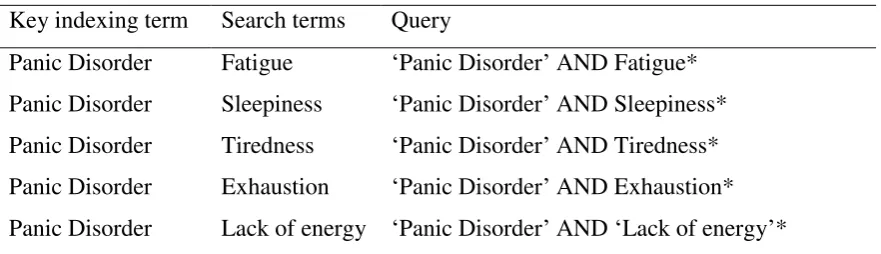
Thus, it was decided to consider this multidimensionality when selecting appropriate search terms. Therefore, next to fatigue, the search terms: sleepiness,tiredness, exhaustion, and lack of energy were incorporated in the search. To answer the research question the Boolean
operator ‘AND’ was used to combine the key-indexing term panic disorder with the search
terms fatigue/ sleepiness/ tiredness/ exhaustion/ lack of energy. Furthermore, to answer the
stated sub-questions, the search terms etiology (RQ 1), maintenance (RQ 2), and
pharmacologicaltreatment/ psychological treatment (RQ 3)were added via the Boolean
Table 1
Overview key Indexing Term and Search Terms in English
Key indexing term Search terms Query
Panic Disorder Fatigue ‘Panic Disorder’ AND Fatigue* Panic Disorder Sleepiness ‘Panic Disorder’ AND Sleepiness* Panic Disorder Tiredness ‘Panic Disorder’ AND Tiredness* Panic Disorder Exhaustion ‘Panic Disorder’ AND Exhaustion* Panic Disorder Lack of energy ‘Panic Disorder’ AND ‘Lack of energy’*
* The search terms ‘Etiology’, ‘Maintenance’, ‘Pharmacological treatment’, ‘Psychological Treatment’ were
added to answer the sub-questions.
Literature Screening
Inclusion and Exclusion Criteria. Inclusion criteria when screening the literature were: literature concerning the etiology, maintenance, or treatment of PD, literature related to the etiology, maintenance, or treatment of fatigue/sleepiness/tiredness/exhaustion/lack of vitality, and literature related to fatigue/sleepiness/tiredness/exhaustion/lack of vitality in the etiology, maintenance, or treatment of PD. Furthermore, studies had to address participants that a) are diagnosed with PD as the main diagnose and b) that are not diagnosed with another main diagnose of mental or physical diseases. Exclusion criteria when screening the literature were: case reports, meta-analytic studies, literature reviews, book chapters; language other than English, German, and Dutch and literature about Chronic Fatigue Syndrome and fatigue caused by somatic diseases in relation to PD. Moreover, studies that did not approach fatigue and related symptoms were excluded.
Phases of Screening. As illustrated in Figure 4, the literature was screened in three phases of screening. In the identification phase (phase 1), First of all, the electronic databases were screened in detail regarding titles by using the above mentioned search terms and by applying the above mentioned in- and exclusion criteria. As a next step, duplicates were removed. In the screening phase (phase 2), the studies included after the first phase of
Data Extraction
Results
Screening Results
For the first phase of screening in total N = 85 studies were selected based on its titles. The search terms displayed in Table 1, as the in- and exclusion criteria listed above were applied to identify the studies included in the first version of the data pool. Most articles were found concerning the relation between PD and fatigue in general (N = 54). In contrast,
articles dealing with the research question concerning the psychological treatment (N = 4) of PD when considering fatigue represent the smallest amount of the research material. As displayed in Figure 4, which illustrates the selection process, N = 64 studies were included in screening phase 2. In this screening phase, N = 21 records were excluded from the data pool for several reasons (see Figure 4). Next, full-text eligibility is checked for the remaining articles (N = 43) in the data pool. After excluding N = 19 sources, N = 24 were included in the third screening phase. After performing this last screening, N = 8 studies were excluded from the final data pool. The in- and exclusion criteria that were responsible for the extraction of these studies have not been apparent in the first and second phase of screening. After performing the screening process described above, N = 16 studies were included in the final data pool and qualitative analysis. As mentioned in the exclusion criteria, it was planned to search for studies in English, German, and Dutch. During the search process it became apparent that just a small amount of studies has been published in German or Dutch, and that these studies do not match the in- and exclusion criteria. Thus, only studies written in English were selected and included in the final data pool. Appendix B displays studies that are
included in the final data pool. An additional screening result that should be reported for future research is the finding that the search terms ‘lack of energy’ and ‘exhaustion’ as
synonyms for fatigue did not yield any results in combination with PD.
Study Characteristics
An overview over characteristics of the studies included in the final data pool is given in Appendix B. It displays the authors’ names, the year of publication, the location of
publication, the title of the study, the journal name, study population, the sample size and the database it was retrieved from. Most final studies were retrieved from ScienceDirect (N = 5), the fewest were retrieved from PsychInfo (N = 2). In addition, the query “Panic Disorder”
(N = 10). Studies included in the qualitative analysis were published from 1984 to 2014, thus in a 30- year period. Furthermore it became apparent that most studies were published in the United States (N = 9) and in Europe (N = 5). Moreover, population size and characteristics are displayed in Appendix B. Sample sizes of study populations were mentioned in N = 15 studies. The range of sample size in the selected studies goes from 9 to 1168 participants. The mean age in all studies is 33.9. Two studies addressed children, while N = 16 studies
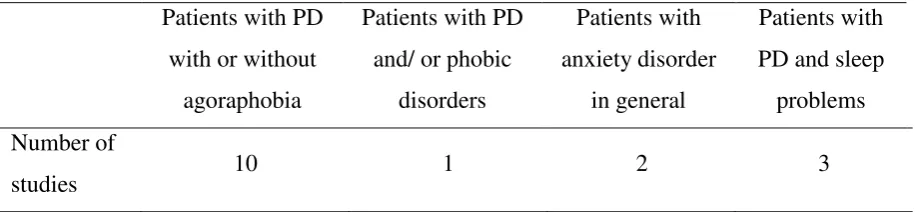
addressed an adult population. Furthermore, a closer look was taken at the participants’ symptoms and diseases. As displayed in Table 2, information concerning particular
[image:23.595.72.530.340.446.2]participant characteristics were given in N = 16 studies. In total only N = 3 studies in the final data pool focused on participants that experience PD and sleep problems.
Table 2
DiseaseCharacteristics of Participants in N = 16 Studies in the Final Data Pool
Patients with PD with or without
agoraphobia
Patients with PD and/ or phobic
disorders
Patients with anxiety disorder
in general
Patients with PD and sleep
problems Number of
studies 10 1 2 3
Etiology of Panic Disorder and Fatigue
As mentioned above, this systematic review aims to examine the relationship between PD and fatigue by focusing on the etiology of PD and fatigue among others. Thus, in order to
answer the research questions: ‘To what extent does fatigue influence the etiology of panic disorder?’ and ‘To what extent does panic disorder influence the etiology of fatigue?’ the
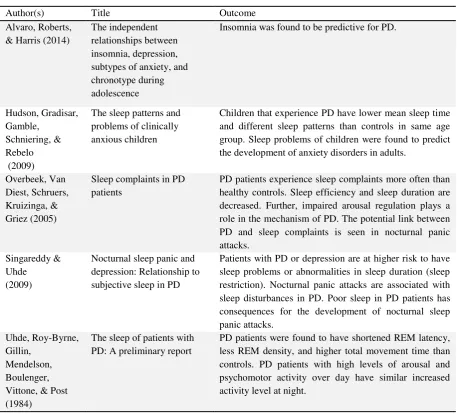
results of N = 6 studies, that yielded information regarding these research questions, are described in the following. As can be seen in the overview in Figure 5 and Table 3, various sleep characteristics, the sleep duration and the occurrence of nocturnal panic attacks account more or less for the etiology of PD and fatigue.
Sleep Characteristics. N = 3 studies that assessed sleep characteristics of PD patients found abnormalities in the Rapid Eye Movement (REM) sleep phase of patients that
latency and a decrease in total REM density. Furthermore, the movement time of PD patients was increased as compared to the controls. Additionally, it was found that high levels of arousal and psychomotor activity over day can be associated with higher activity levels at night. Similar results were found by Overbeek, Van Diest, Schruers, Kruizinga, and Griez (2005).The sleep complaints of 70 PD patients were examined. Five PD patients suffered from comorbid dysthymia and 31 patients reported to experience panic attacks at night. It was found that PD patients often suffer from an impaired arousal regulation, which is seen as an underlying mechanism to the pathology of PD. In addition, it was reported that PD patients had an increase in overall sleep complaints and a decrease in sleep efficiency in particular. Next to the abnormalities in sleep patterns that account for fatigue in adult PD patients, an Australian study assessed by Hudson, Gradisar, Gamble, Schniering, and Rebelo (2009) reports sleep patterns and problems in clinically anxious children from age 9 to 12.
Surprisingly, compared to controls in the same age group no significant differences in sleep latency and number of awakenings during the night were found as.
Sleep Duration and Insomnia. Besides abnormalities during sleep, the duration and (in-) ability to fall asleep and/or sleep through the night serves as an explanation for fatigue in PD patients. N = 3 studies found deviation from the sleep time of controls. Firstly,
Singareddy and Uhde (2009) assessed subjective sleep duration in four subgroups, namely (1) PD only, (2) PD with nocturnal sleep panic attacks, (3) PD with lifetime depression, (4) PD with nocturnal panic attacks and lifetime depression. The patients in subgroup (4) reported the greatest decrease in subjective sleep duration (5h or less). The greatest amount of sleep duration was reported by subgroup (3). Overall, 23% of PD patients suffered from severe sleep restriction or an increase in sleep duration. The role of insomnia in PD is also
mentioned in a study conducted by Alvaro, Roberts, and Harris in 2014. To investigate the effects of depression and anxiety on insomnia data of 318 students was gathered. It was found that insomnia is predictive for PD, but not vice versa. The decrease in sleep duration is also confirmed by Uhde et al. (1984), who stated that PD patients sleep less than controls what may be due to their increased movement time during night.
Nocturnal Panic Attacks. Night time or nocturnal panic attacks (NPA’s) awaken a
concerned person from sleep. It evokes similar symptoms as a ‘normal’ panic attack over day.
complaints too. In fact, it was found that the PD patients with NPA’s have more problems in
maintaining sleep than PD patients without NPA’s. The second study that was concerned with the etiology of PD and fatigue, especially with NPA’s, was conducted by Singareddy
and Uhde in 2009. It was found that NPA’s are associated with an increase in sleep disturbances. In particular, it was stated that poor sleep in PD patients contributes to the
development of NPA’s. Furthermore, NPA’s were found to be a risk factor for the development of anxiety.
Figure 5. The mutual influence panic disorder and fatigue have on each other’s etiology.
Summary. The literature review concerning the etiology of PD and fatigue revealed three aspects that account for the reciprocal influence PD and fatigue have on the etiology and development of each other. The relationship between both is illustrated in Figure 5. With
regard to the research question ‘To what extent does fatigue influence the etiology of panic disorder?’ it was found that most PD patients experience abnormalities in sleep duration.
Besides sleep restriction even insomnia is common in PD patients.
The literature review revealed that PD has a greater influence on the etiology of fatigue than vice versa. The research question ‘To what extent does panic disorder influence the etiology of fatigue?’ can be answered by presenting two findings. Firstly, various
divergent sleep characteristics were found to be responsible for the development of fatigue in
PD. Next to the decrease in REM latency, REM density and ability of arousal regulation, movement time and the extent of psychomotor activity are increased in PD patients. Secondly, Nocturnal Panic Attacks were found to account for the etiology of fatigue and
related symptoms in PD patients, due to its detrimental consequences for the maintenance of sleep. As displayed in Figure 5, it was commonly found that N = 5 studies support the assumption that PD influences the etiology of fatigue in terms of abnormalities in sleep
Panic
Disorder Fatigue
Sleep Characteristics
Abnormalities in REM sleep and nocturnal movement
Nocturnal Panic Attacks
Complaints in maintaining sleep Fatigue
Sleep Duration
Insomnia, hypersomnia and restrictions in sleep duration
pattern and NPA’s. N = 1 study emphasizes the predictive role of Insomnia for the etiology of PD. It has to be considered that the studies report about sleep and related problems, but not explicitly fatigue.
Table 3.
Journal Articles Identified to Answer the Research Question on the Etiology of Panic Disorder and Fatigue
Author(s) Title Outcome
Alvaro, Roberts, & Harris (2014)
The independent relationships between insomnia, depression, subtypes of anxiety, and chronotype during adolescence
Insomnia was found to be predictive for PD.
Hudson, Gradisar, Gamble,
Schniering, & Rebelo (2009)
The sleep patterns and problems of clinically anxious children
Children that experience PD have lower mean sleep time and different sleep patterns than controls in same age group. Sleep problems of children were found to predict the development of anxiety disorders in adults.
Overbeek, Van Diest, Schruers, Kruizinga, & Griez (2005)
Sleep complaints in PD patients
PD patients experience sleep complaints more often than healthy controls. Sleep efficiency and sleep duration are decreased. Further, impaired arousal regulation plays a role in the mechanism of PD. The potential link between PD and sleep complaints is seen in nocturnal panic attacks.
Singareddy & Uhde (2009)
Nocturnal sleep panic and depression: Relationship to subjective sleep in PD
Patients with PD or depression are at higher risk to have sleep problems or abnormalities in sleep duration (sleep restriction). Nocturnal panic attacks are associated with sleep disturbances in PD. Poor sleep in PD patients has consequences for the development of nocturnal sleep panic attacks.
Uhde, Roy-Byrne, Gillin,
Mendelson, Boulenger, Vittone, & Post (1984)
The sleep of patients with PD: A preliminary report
Maintenance of Panic Disorder and Fatigue
The second aspect that was addressed in this review was concerned to the
maintenance of PD and fatigue. Thus, the following research questions were formulated: ‘To what extent does fatigue influence the maintenance of panic disorder?’ and ‘To what extent does panic disorder influence the maintenance of fatigue?’ .To answer this questions, the
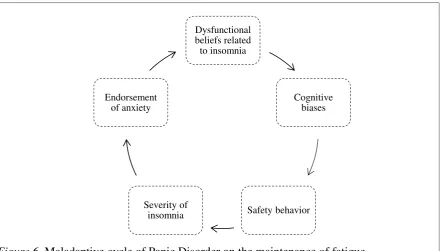
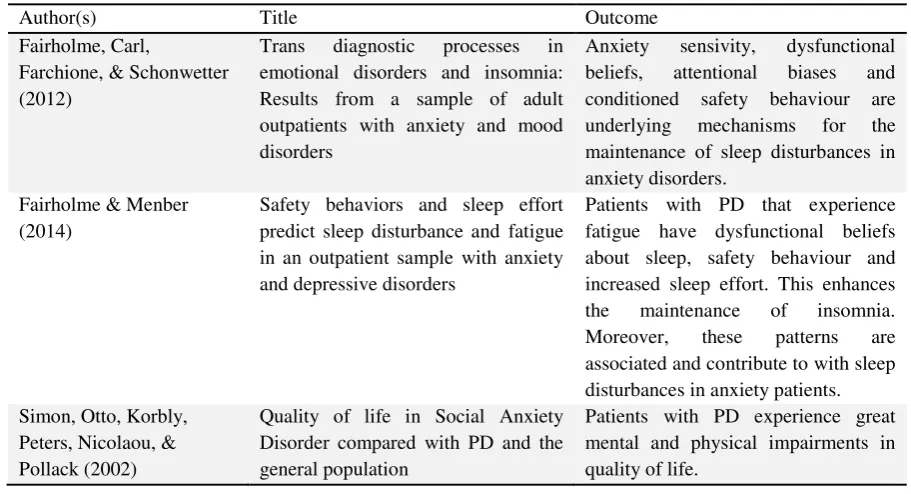
findings of N = 3 studies were compiled and described in the following (see also Table 4). Maladaptive Cognitive and Behavioral Processes. The review concerning the maintenance of PD and fatigue revealed that fatigue is persisting in PD patients due to several maladaptive cognitive and behavioral processes. These processes are examined by two
studies. Firstly, Fairholme, Carl, Farchione, and Schonwetter (2012) conducted a study to assess the relationship between anxiety sensivity, dysfunctional beliefs, fatigue, safety
behaviors, and insomnia in 59 outpatients with anxiety and mood disorders. It was found that anxiety sensivity is an underlying mechanism to the persistence of sleep disturbances in anxiety disorders. Furthermore it is revealed that dysfunctional beliefs (e.g. consequences of inadequate sleep), attentional biases (e.g. selective attention on signs of wakefulness or inadequate sleep), and conditioned safety behavior (e.g. active attempts to control own sleep) are key mechanisms in the persistence of insomnia. An example for an attentional bias might be coming home from work and still thinking about work related issues- this will be
interpreted as a sign to be unable to fall asleep the coming night. Further, signs of fatigue over day are commonly interpreted as indicative signs of impaired functioning. Safety
sleep effort was added to dysfunctional beliefs and safety behavior as underlying
[image:28.595.75.517.205.456.2]mechanisms. Increased sleep effort was described as the active attempt to control own sleep. In the study it could be observed that concerned people reduce their daytime activity level on days that follow nights with poor sleep, for example. Nevertheless, it was emphasized that is not fully approved whether dysfunctional beliefs and increased effort are maintaining factors or if they are more a byproduct of anxiety.
Figure 6. Maladaptive cycle of Panic Disorder on the maintenance of fatigue
based on findings of Fairholme, Carl, Farchione, & Schonwetter, 2012
Quality of Life. Next to studies that aim to explain the maintenance of PD and fatigue by means of maladaptive cognitive and behavioral processes, Simon, Otto, Korbly, Peters, Nicolaou and Pollack (2002) examined the quality of life in PD patients. In this study it was found that PD patients are impaired in physical functioning and mental health to a greater extent than social anxiety patients. It was stated that the decrease in physical activity affects a PD patient’s vitality and energy level. Actually, this has detrimental consequences for the quality of life of concerned people.
Summary. To sum up the findings concerning the maintenance of PD and fatigue, it has to be emphasized that only the relation of PD on the maintenance of fatigue is reported, not vice versa. No literature was found regarding the research question ‘To what extent does fatigue influence the maintenance of panic disorder?’ what means that the influence of
fatigue on the etiology of PD is not examined, or that research findings are not published yet.
Dysfunctional beliefs related
to insomnia
Cognitive biases
Safety behavior Severity of
insomnia Endorsement
On the contrary, the research question ‘To what extent does panic disorder influence the maintenance of fatigue?’ can be answered in terms of maladaptive cycles. Fairholme and
[image:29.595.68.524.298.545.2]colleagues (2012) conducted two studies and underlined the role of dysfunctional beliefs, cognitive biases, safety behavior and increased sleep effort in the persistence of insomnia and fatigue in PD patients. Furthermore, a study conducted by Simon and colleagues emphasized the impaired quality of life in PD patients that contributes to the persistence of fatigue and related symptoms.
Table 4
Journal Articles Identified to Answer the Research Question on the Maintenance of Panic Disorder and Fatigue
Author(s) Title Outcome
Fairholme, Carl,
Farchione, & Schonwetter (2012)
Trans diagnostic processes in
emotional disorders and insomnia: Results from a sample of adult outpatients with anxiety and mood disorders
Anxiety sensivity, dysfunctional
beliefs, attentional biases and
conditioned safety behaviour are underlying mechanisms for the maintenance of sleep disturbances in anxiety disorders.
Fairholme & Menber (2014)
Safety behaviors and sleep effort predict sleep disturbance and fatigue in an outpatient sample with anxiety and depressive disorders
Patients with PD that experience fatigue have dysfunctional beliefs about sleep, safety behaviour and increased sleep effort. This enhances
the maintenance of insomnia.
Moreover, these patterns are
associated and contribute to with sleep disturbances in anxiety patients. Simon, Otto, Korbly,
Peters, Nicolaou, & Pollack (2002)
Quality of life in Social Anxiety Disorder compared with PD and the general population
Patients with PD experience great mental and physical impairments in quality of life.
Treatment of Panic Disorder and Fatigue
The last aspect that was assessed in this literature review to examine the relationship between PD and fatigue concerned the treatment of PD. For this, the research question ‘To what extent is fatigue treated within the common treatment concepts of panic disorder? (Psychological and Pharmacological’) was formulated. In the following, findings on the
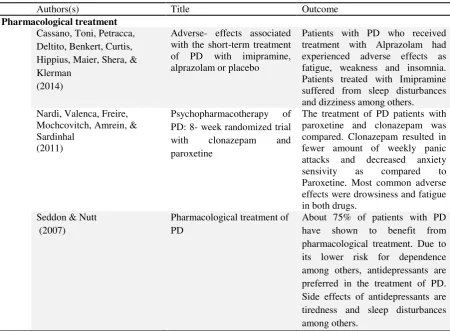
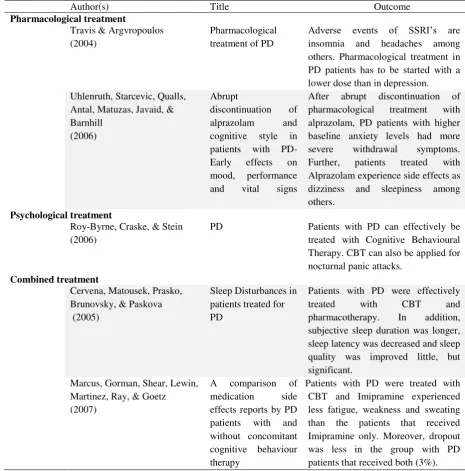
Pharmacological Treatment. In total N = 5 studies were identified that give insights in the pharmacological treatment of PD and/ or co-occurring fatigue and related symptoms. It got apparent that the studies report fatigue and related symptoms as sleep disturbances, drowsiness and insomnia as common adverse events of pharmacological treatment of PD patients. Those side effects are listed in nearly all medication classes to treat PD (see Table 5 for extended description of related study results).
Psychological Treatment. Next to pharmacotherapy, PD is commonly treated with psychological treatment forms. N = 1 study addressed fatigue in the psychological treatment of PD. Roy-Byrne, Craske and Stein (2006) emphasized the effectiveness of Cognitive Behavioral Therapy (CBT) for nocturnal panic attacks. It was found that false beliefs are apparent during sleep as well as over day what awakens concerned people and worsens their overall sleep parameters. Among others, CBT interventions address those false beliefs and catastrophic misinterpretations and are thus recommended to be applied for patients that
experience NPA’s.
Combined Treatment. The literature search has shown that a combination of two monotherapies aroused interest in recent years. Thus, it is decided to describe results
concerning combined treatment forms (commonly pharmacotherapy and CBT) derived from N = 2 studies (see Table 5). Cervena, Matousek, Prasko, Brunovsky and Paskova (2005) explicitly addressed fatigue in the combined treatment of PD. Sleep disturbances of PD patients were assessed when being treated with psychotherapy (CBT), and with medication
(Benzodiazepines and SSRI’s). It was found, that the overall anxiety level of PD patients decreased after the treatment period. Further, the subjective sleep duration of PD patients increased, the sleep latency decreased and the sleep quality was improved to a small extent after treatment. As a conclusion, the study revealed that the sleep of PD patients shifted from stage one (superficial) to stage 4 (deep) sleep when treating with psychotherapy and
medication. In addition, Marcus, Gorman, Shear, Lewin, Martinez, Ray, and Goetz (2007) conducted a study to compare side effects in PD patients being treated with pharmacotherapy only and being treated with pharmacotherapy and CBT. Thus, one group of patients with PD was treated with both, CBT and Imipramine and one group of PD patients was treated with Imipramine only. As a result, the patients treated with both treatment forms experienced less fatigue, weakness and sweating during the treatment than the other group of patients.
Summary. To answer the research question regarding the treatment of fatigue and
PD: ‘To what extent is fatigue treated within the common treatment concepts of panic disorder? (psychological and pharmacological’), it has to be stated that no special attention
is given to the improvement of fatigue when treating PD with pharmacotherapy. Rather, fatigue and related symptoms are listed as common side effects of PD medication.
With regard to psychological treatment concepts it was found that Nocturnal Panic Attacks could effectively be treated with CBT to improve sleep parameters. Finally,
[image:31.595.76.527.401.733.2]combined treatment has shown to be not only effective concerning an overall improvement of sleep quality, but to also reduce the side effect of fatigue and weakness that occur when PD patients are treated with medication only. When answering the research question formulated for the treatment of PD and fatigue it has to be concluded that fatigue is addressed to a small extent in psychological and combined treatment concepts only.
Table 5
Journal Articles Identified to Answer the Research Question on the Pharmacological and Psychological Treatment of Panic Disorder and Fatigue
Authors(s) Title Outcome
Pharmacological treatment Cassano, Toni, Petracca, Deltito, Benkert, Curtis, Hippius, Maier, Shera, & Klerman
(2014)
Adverse- effects associated with the short-term treatment of PD with imipramine, alprazolam or placebo
Patients with PD who received treatment with Alprazolam had experienced adverse effects as fatigue, weakness and insomnia. Patients treated with Imipramine suffered from sleep disturbances and dizziness among others. Nardi, Valenca, Freire,
Mochcovitch, Amrein, & Sardinhal
(2011)
Psychopharmacotherapy of
PD: 8- week randomized trial
with clonazepam and
paroxetine
The treatment of PD patients with paroxetine and clonazepam was compared. Clonazepam resulted in fewer amount of weekly panic attacks and decreased anxiety
sensivity as compared to
Paroxetine. Most common adverse effects were drowsiness and fatigue in both drugs.
Seddon & Nutt (2007)
Pharmacological treatment of PD
Table 5 continued
Author(s) Title Outcome
Pharmacological treatment
Travis & Argvropoulos (2004)
Pharmacological treatment of PD
Adverse events of SSRI’s are
insomnia and headaches among others. Pharmacological treatment in PD patients has to be started with a lower dose than in depression. Uhlenruth, Starcevic, Qualls,
Antal, Matuzas, Javaid, & Barnhill
(2006)
Abrupt
discontinuation of
alprazolam and
cognitive style in patients with PD-
Early effects on
mood, performance
and vital signs
After abrupt discontinuation of
pharmacological treatment with
alprazolam, PD patients with higher baseline anxiety levels had more
severe withdrawal symptoms.
Further, patients treated with
Alprazolam experience side effects as dizziness and sleepiness among others.
Psychological treatment
Roy-Byrne, Craske, & Stein (2006)
PD Patients with PD can effectively be
treated with Cognitive Behavioural Therapy. CBT can also be applied for nocturnal panic attacks.
Combined treatment
Cervena, Matousek, Prasko, Brunovsky, & Paskova (2005)
Sleep Disturbances in patients treated for PD
Patients with PD were effectively
treated with CBT and
pharmacotherapy. In addition,
subjective sleep duration was longer, sleep latency was decreased and sleep quality was improved little, but significant.
Marcus, Gorman, Shear, Lewin, Martinez, Ray, & Goetz (2007)
A comparison of
medication side
effects reports by PD patients with and without concomitant cognitive behaviour therapy
Discussion
The current review focused on the interrelation between panic disorder (PD) and fatigue. In particular, the reciprocal influence on their etiological processes, maintaining factors and the integration of fatigue in common treatment concepts for PD was examined. The aim of this systematic literature review was to give an extensive overview and
description of characterizing aspects of the relation between PD and fatigue. In the following, main findings are outlined and discussed per research question in the light of the ‘etiological model of panic disorder and fatigue’ (see Figure 2) and other existing scientific studies on PD and fatigue.
‘An Etiological M
odel of Panic Disorder
and Fatigue’ R
evisited
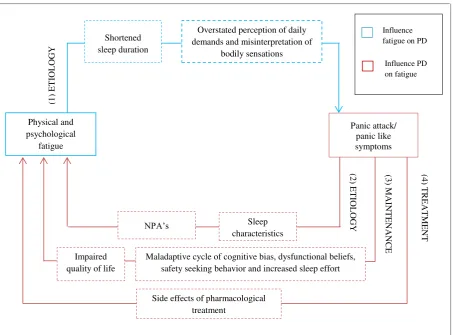
To point out the first impression of research findings concerning the relation between PD and fatigue an ‘etiological model of panic disorder and fatigue’ (see Figure 2) was created in the introduction of this paper. After screening the literature and selecting relevant studies, the model is evaluated and extended based on the reviews main findings and additional scientific literature (see Figure 7).
The Blue, Upper Part Revisited. When answering all three research questions regarding the influence of fatigue on PD, it became apparent that the current literature revealed findings on the etiological influence only. (1) Etiology. In particular, the review
identified a decrease in sleep duration and (in-) ability to fall asleep or sleep through the night to contribute to the etiology of PD. To give a more comprehensive suggestion for the
etiological influence of fatigue on PD, the aspect of ‘sleep duration’ needs to be added to the
blue, upper part of the ‘etiological model of panic disorder and fatigue’ (see Figure 7). The current literature did not confirm, neither reject the first impression of the literature illustrated in the upper part of the model due to a lack of research in this field. This assumes that the presumed influence fatigue has on the etiology of PD still needs to be further explored.
The red, Lower Part Revisited. In contrast, the review gave detailed insights into the influence PD has on the etiology and maintenance of fatigue, as well as into the influence PD treatment concepts may have for comorbid fatigue. When evaluating the lower, red cycle of
the ‘etiological model of panic disorder and fatigue’ based on the reviews findings, the model needs be broadened to depict a comprehensive illustration of not only the etiological
Figure 7. A holistic model of the relation between panic disorder and fatigue
Note.Number 1-4 are mentioned in the description of the Figure to denote the particular subparts.
(2) Etiology. The current review revealed that fatigue in PD patients is caused not
only by divergent sleep characteristics, but also by worsened sleep parameters due to the
occurrence of Nocturnal Panic Attacks (NPA’s). These findings are consistent with other studies that consider the etiological relation between PD and fatigue. Hauri, Friedman, and Ravaris already stated in 1989, that the influence of PD and fatigue is characterized by a longer sleep latency, lower sleep efficiency, enhanced movement time and bodily activity, as well as by the occurrence of nightly panic attacks. Especially NPA’s aroused the interest of
researchers in the past years, due to the finding that 18-45% of PD patient experience NPA’s (Papadimitriou & Linkowski, 2005). According to Singareddy and Uhde (2009), NPA’s are likewise independently and interactively related to sleep disturbances in PD, and commonly seen as the link between PD and sleep complaints/ fatigue. Overall, the review emphasized the necessity to not overlook fatigue when diagnosing and understanding the emergence of
PD. Therefore, ‘sleep characteristics’ and ‘NPA’s’ are integrated in the model as explanatory
factors for the etiological influence PD has on fatigue (see Figure 7). Physical and psychological fatigue Panic attack/ panic like symptoms
Side effects of pharmacological treatment
Shortened sleep duration
Sleep characteristics
Maladaptive cycle of cognitive bias, dysfunctional beliefs, safety seeking behavior and increased sleep effort Impaired
quality of life
NPA’s
Overstated perception of daily demands and misinterpretation of
bodily sensations (1 ) ET IOLOG Y (2 ) ET IOLOG Y (3 ) M AIN TE NA NCE (4 ) TRE AT M ENT Influence fatigue on PD
(3) Maintenance. The current review declared two aspects that influence the
maintenance of fatigue in PD patients- a maladaptive cycle of dysfunctional beliefs, cognitive biases, safety behavior and increased sleep effort, as well as an overall impairment in quality of life. Interestingly, additional scientific literature states that PD maintains fatigue due to their corresponding underlying mechanisms. Both, PD and fatigue are maintained by maladaptive cycles. When comparing both cycles it becomes apparent that they only differ with regard to the content of dysfunctional beliefs and the type of safety behavior or rather avoidance behavior. Dysfunctional beliefs in PD patients in general relate to the fear to undergo the next panic attack ('I will get a panic attack and lose control'). The dysfunctional beliefs in PD patients that experience fatigue and related symptoms refer to the fear of the
detrimental consequences of insufficient sleep and rest on the concerned persons’ daily life
(‘I can’t function over day’). Furthermore, safety behavior in PD patients can be classified in three categories of behavior- direct avoidance, escape and subtle avoidance of potential panic evoking situations (Thwaites & Freeston, 2005). In contrast, safety behavior in insomnia is classified more in terms of its focus, which means whether it occurs in the daytime or at night (Ree & Harvey, 2004). Some patients that experience insomnia try to control the sleep itself; others reduce their daytime activity level on days that follow nights with poor sleep
(Fairholme, Carl, Farchione, & Schonwetter, 2012) . Yet, safety behavior in both cycles shows patterns of reducing or avoiding potentially challenging situations. The high similarity in the underlying mechanisms of PD and fatigue in PD patients contributes to the
maintenance of fatigue in PD.
The review again, neither fully confirmed, nor rejected the first impression of the literature (the etiological model of panic disorder and fatigue) regarding the maintenance of fatigue in PD patients. When comparing the main findings reported above with the first impression on the maintenance of fatigue in PD patients, illustrated in the lower part of the
‘etiological model of panic disorder and fatigue’, it gets apparent that the review’s findings correspond with two aspects mentioned in the first impression of the literature. Firstly, the impaired quality of life of PD patients, with other words, the low activity level, lack of motivation and the state of exhaustion was found to account for the maintenance of fatigue. Secondly, the crucial role of conditioned safety behavior and increased sleep effort as key mechanisms to maintain fatigue in PD patients was confirmed. Additionally, the roles of cognitive bias and dysfunctional beliefs were identified in the review and should be taken into consideration when trying to explain the influence PD has on the maintenance of fatigue.
the review gave insights into the integration of fatigue in the common treatment concepts of PD. Hereby it was found that fatigue is only addressed to a small extent. In particular, taking into account fatigue and the improvement of sleep parameters has been seen back in
psychological and combined treatment concepts only. In contrast, fatigue and related symptoms were found to be listed as common side effects of pharmacotherapy to treat PD. These findings are also confirmed by current literature on the treatment of PD and fatigue. Barlow, Gorman, and Shear (2000) agree that a combination of Cognitive Behavioral Therapy and Psychopharmacotherapy is most effective (on the long run) when treating PD only. To ensure an effective treatment of comorbid fatigue, adaptions have to be made. Firstly, CBT should be extended with (graded) exercise therapy for example (Mock et al., 2005). Secondly, pharmacotherapy should not be used to treat PD patients with comorbid fatigue. The side effects of PD medication, as headache, fatigue or even insomnia, are seen as great disadvantage of this treatment form (Pande et al., 2000). Fatigue has to be seen not merely as a side effect of medication, but also as a possible maintaining factor for PD. Therefore, the side effects of PD medication have to be added when explaining the etiology and maintenance of fatigue in PD.
Conclusion on the ‘Etiological Model of Panic Disorder and Fatigue’. The model based on the first impression of the literature formed a good basis for the explorative
literature search. It was helpful to take into account different aspects that may be responsible for the relation between PD and fatigue. Indeed, the review’s findings suggest that the ‘etiological model of panic disorder and fatigue’ needs to be extended with the issues
discussed above to give a comprehensive overview of factors that account for the mutual etiology, maintenance, and integration of fatigue in the treatment of PD. When extending the
‘etiological model of panic disorder and fatigue’ with the issues of mutual maintenance and treatment, the new adjusted version of the model (see Figure 7) requires renaming the model in: ‘A holistic model of the relation between panic disorder and fatigue’.
Limitations and Implications for Future Fundamental Research
included the nature of sleep and the state of sleepiness to explain their results. This made it difficult to distinguish both concepts in the searching process. Furthermore, authors have their own conceptualization and understanding of both terms. The overlap and resulting lack of an accurate differentiation of fatigue and sleepiness in current scientific literature
complicates to draw distinct and verifiable conclusions on research findings. For example, fatigue is often described as a side effect of psychopharmaca as Clonazepam
(Benzodiazepine) and Paroxetine (SSRI). In case of Imipramine (TCA), sleepiness is listed as a common side effect. Further exploration of the conceptualization of fatigue and related concepts in general, as well as a clear differentiation and accurate definition of the concepts appears desirable and convenient for prospective fundamental research on fatigue.
The Problem of Comorbidity. Secondly, the literature search revealed several comorbidities of PD and fatigue with mental conditions like Generalized Anxiety Disorder (GAS) and Major Depressive Disorder (MDD) (Fischler et al., 1997; Breslau et al. 1992; Massion et al. 2002), as with physical diseases such as Fibromyalgia and Rheumatoid
Arthritis (Hudson et al., 1992; Breslau et al., 1992; Katon et al., 1991). To ensure an accurate examination of the relationship between PD and fatigue, the applied exclusion criteria
entailed an exclusion of studies that reported other main diagnoses than PD. Thus, studies that report not clinicopathologic symptoms of co-occurring medical and psychiatric
conditions were included. Therefore, results of the current review may be biased by studies presenting a closer relationship between PD and fatigue than it is actually the case. In future fundamental research on the relation between PD and fatigue, an accurate examination of the relationship between PD and fatigue can only be ensured by fully excluding comorbid
symptoms of other medical or psychiatric conditions.
Heterogeneity of the Included Sample. Thirdly, the studies included in the current review differed regarding their population samples. This could impair generalizability and the
possibility to compare the study’s findings. Firstly, the current review included participants from age 7 to age 74. The wide age range of the sample might be associated with the nature and severity of PD and fatigue. For example, the need to sleep varies with age to a great extent (Ohayon, Roberts, Zulley, Smirne, & Priest, 2000). Secondly, the sample sizes of the studies included in this review vary from 9 to 1168 participants, suggesting greater
generalizability in contrast.
Recency of the Included Studies. The fourth limitation of the conducted review relates to the amount and recency of the included studies. While searching for relevant studies, the time span was extended to the year 1987 (past 30 years) due to the small amount of search results. This not only revealed the research gap in this field again, but also entailed disadvantages. Meanwhile, some studies are revised regarding treatment options and
scientific findings (etiology and maintenance). Furthermore, study populations have changed. Especially the prevalence of PD and fatigue increased due to cultural and lifestyle changes as increased utilization of medical services (Walker, Katon, & Jamelka, 1993). As a conclusion, further exploration of the recent relation between PD and fatigue is needed.
Study Publication Bias and Selective Reporting Bias. The last limitation of the current review is that the results may have been impaired and distorted by study publication bias and outcome reporting bias (Dwan et al., 2008). Publication bias suggests that not all
studies are actually published depending on the significance of the study’s findings and that, thus, outcome data is missing (Cuijpers, 2016). Investigators, reviewers, and editors have the tendency to prefer the publication of positive or statistically significant results as compared to studies that found small effects of intervention or statistically not significant findings
(Dickersin, 1990; Dwan et al., 2008). In consequence, this non-publication of negative studies leads to an overestimation of treatment effects, which threatens the reliable evidence of published literature. The current review is also likely to be biased by the study publication bias. Firstly, the bias in the included studies, which forms the basis for the results of this review, automatically leads to bias in the results of this review. Secondly, no qualitative research catalogue was used.
Besides, the current review might also be affected by within-study selective outcome reporting bias (ORB), which relates to published studies. It suggests that a particular subset of the original variables in a study is selected based on its results aiming to include it in a