University of Warwick institutional repository: http://go.warwick.ac.uk/wrap
A Thesis Submitted for the Degree of PhD at the University of Warwick
http://go.warwick.ac.uk/wrap/62626
This thesis is made available online and is protected by original copyright. Please scroll down to view the document itself.
Professional hybrids and perspectives on electronic
health records as boundary objects: The case of the
National Programme for IT organising vision
By
Miria Anna Koshy
A thesis submitted in partial fulfilment of the requirements for
the degree of Doctor of Philosophy
Warwick Business School
University of Warwick
iii
LIST OF TABLES ... viii
LIST OF FIGURES ... viii
ACKNOWLEDGEMENTS ... ix
DECLARATION... xi
ABSTRACT ... xii
ABBREVIATIONS ...xiii
CHAPTER 1 INTRODUCTION ... 1
1.1 Overview ... 1
1.2 Why this research? ... 3
1.3 Key theoretical underpinnings ... 4
1.4 Research objectives ... 7
1.5 Anticipated theoretical contributions ... 8
1.6 Structure of the thesis ... 9
CHAPTER 2 LITERATURE REVIEW ... 12
2.1 Introduction ... 12
2.2 IT/IS implementations: Progress and challenges ... 13
2.2.1 Large scale public sector IT initiatives ... 14
2.2.2 The contextual nature of IS ... 19
2.3 Technology frames and boundary objects ... 20
2.4 Organising visions ... 29
2.4.1 Elements influencing discourse surrounding organising visions ... 34
2.5 IT in health care ... 38
2.5.1 The need for ICT in healthcare ... 40
2.5.2 The constellation of electronic health record terminology ... 41
2.5.2.1 Impact on medical errors ... 44
2.5.2.2 Ownership ... 45
2.5.2.3 Autonomy versus control mechanisms ... 46
2.5.2.4 Cost effectiveness ... 48
2.5.2.5 Doctor-patient dynamics ... 48
iv
2.8 Research focus ... 67
CHAPTER 3 THE NPFIT STORY ... 70
3.1 Introduction ... 70
3.2 The NPfIT NCRS story... 70
3.2.1 The birth of the NPfIT ... 71
3.2.2 Drawing up the specifications ... 72
3.2.3 Procurement of the contracts ... 78
3.2.4 Restructuring, engagement and pre-emptive placation... 79
3.2.5 Criticisms and inquiries into the NPfIT ... 82
3.2.6 Disruptions to NPfIT leadership ... 84
3.2.7 Attempts to salvage the NCRS ... 85
3.2.8 The closure of the NPfIT ... 86
3.3 Summary ... 87
CHAPTER 4 RESEARCH METHODS ... 91
4.1 Introduction ... 91
4.2 Research paradigm ... 92
4.3 The study of discourses ... 96
4.4 Research Design ... 98
4.4.1 Sensitising interviews ... 98
4.4.2 Documentary data ... 99
4.4.3 Interviews with key informants ...100
4.5 Sampling Strategy ...100
4.6 Data Collection ...104
4.6.1 Interviews ...104
4.6.2 Documentary data ...107
4.7 Data analysis ...108
4.7.1 Documentary data analysis ...108
4.7.2 Interview data analysis...110
4.8 Summary ...114
v
5.3 The NPfIT as an organising vision for EHRs ...134
5.3.1.1 Interpretation ...136
5.3.1.2 Legitimation ...137
5.3.1.3 Mobilisation ...139
5.3.2 Community discourse and buzzwords ...140
5.3.3 The manipulations and shifts in vision ...143
5.3.3.1 A semblance of success ...144
5.3.3.2 Changing structures ...145
5.3.4 The NPfIT legacy ...146
5.4 Boundary objects within the NPfIT organising vision ...148
5.4.1 The NPfIT as a temporal boundary object ...151
5.4.2 The boundary objects surrounded by community discourse ...153
5.4.2.1 Planning and contracting ...154
5.4.2.2 Communication and engagement ...161
5.4.2.2.1 Political backing ...163
5.4.2.2.2 Role of media and communicating to the crowd ...165
5.4.2.3 Privacy and confidentiality ...167
5.5 Conclusion ...169
CHAPTER 6 EHRS AS BOUNDARY OBJECTS BETWEEN USERS ... 178
6.1 Introduction ...178
6.2 EHRs: What do they mean to their users? ...180
6.2.1 The diverse needs of EHR users ...181
6.2.2 The different functionalities of EHRs as perceived by their users ...184
6.3 Knowledge differences and dependencies surrounding EHRs ...191
6.4 The multiple uses of EHRs ...197
6.4.1 EHRS for administrative and fiscal purposes ...197
6.4.2 EHRs as repositories ...198
6.4.3 Moving beyond the static: EHRs as transactional tools ...199
6.4.4 EHRs as a business tool ...200
vi
6.6 Summary ...212
CHAPTER 7 CLINICIAN-IT HYBRID PROFESSIONALS ... 216
7.1 Introduction ...216
7.2 Professionals and the struggle to adhere to boundaries ...217
7.3 Clinicians as managers in the NPfIT ...235
7.4 Clinical informatics: Home to an emerging clinical hybrid ...238
7.4.1 Drivers for the emergence of the clin-IT hybrid ...241
7.4.1.1 External threats from the state and market ...243
7.4.1.2 Incentives ...245
7.4.1.3 Delegation and division of work: reinforcing boundaries ...248
7.4.1.4 Quality of care, improved performance and profits ...250
7.4.1.5 Interest in IT as a hobby ...251
7.4.2 Prevalence of clin-ITs amongst primary care physicians: GP-ITs ...253
7.5 Challenges faced by clinician-IT hybrids ...256
7.5.1 Attaining credibility in the shadow of IT giants ...257
7.5.2 Career prospects and balancing of roles ...258
7.5.3 Conflicts of interest ...262
7.6 Summary ...265
CHAPTER 8 DISCUSSION AND CONCLUSION ... 272
8.1 Introduction ...272
8.2 Discussion ...273
8.3 Conclusion ...280
8.3.1 Key findings ...281
8.3.2 Contributions ...285
8.3.3 Implications for practice ...288
8.4 Limitations ...290
8.5 Scope for future work...292
8.6 Summary ...295
REFERENCES ... 299
vii
viii
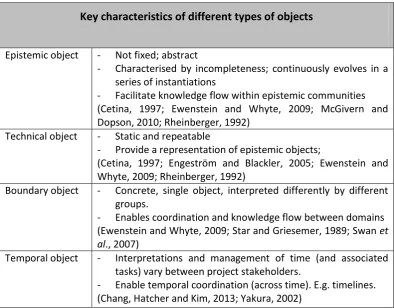
Table 2.1 Key characteristics of epistemic, technical, boundary and temporal objects ... 26
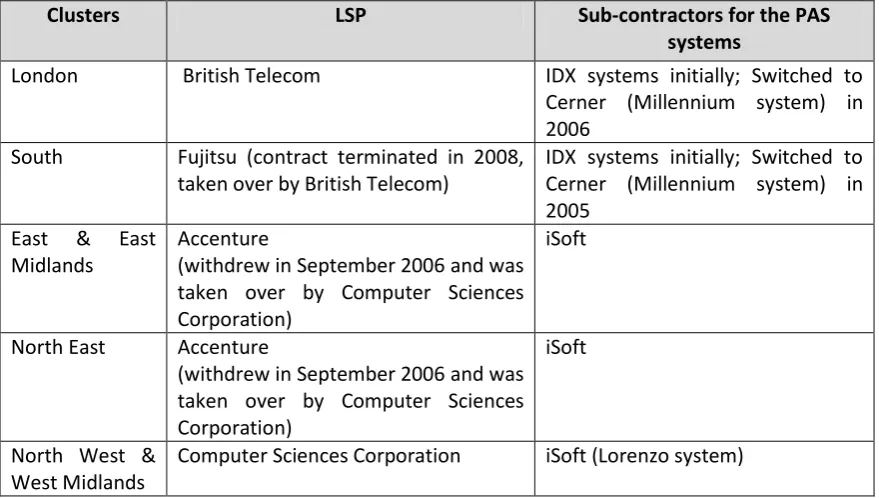
Table 3.1 NPfIT clusters and Local Service Providers ... 79
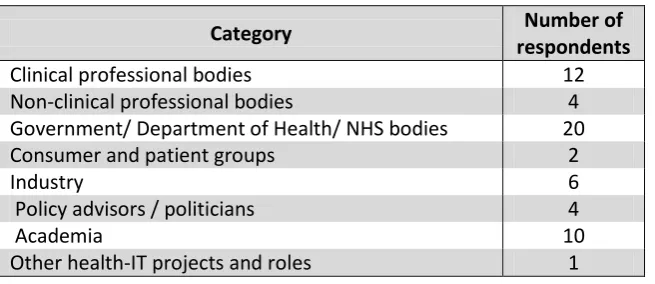
Table 4.1 Distribution of respondents across categories ...106
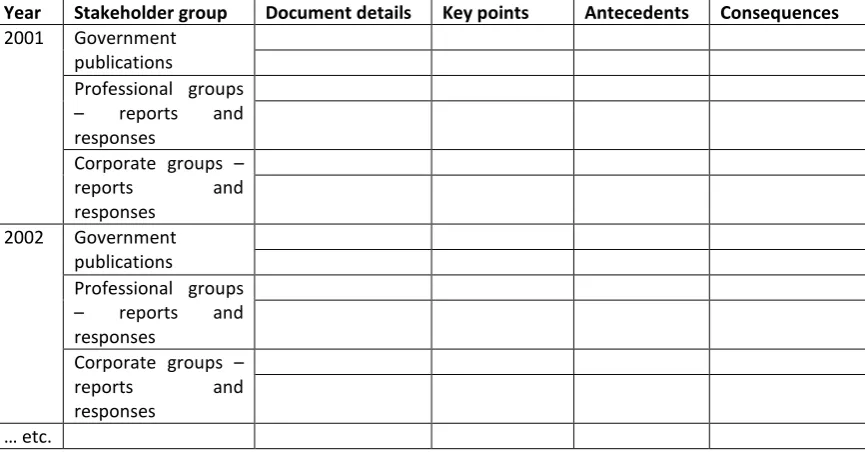
Table 4.2 Document tracking template ...109
Table 6.1 Knowledge differences and dependencies between EHR users ...196
Table 6.2 The EHR boundary object: views of different users ...208
LIST OF FIGURES
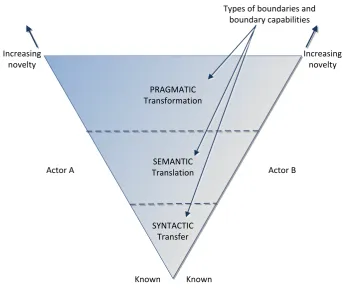
Figure 2.1 Management of knowledge flow across boundaries (Carlile, 2004) ... 28Figure 2.2 Factors influencing the production of organising vision discourse (Swanson and Ramiller, 1997) ... 35
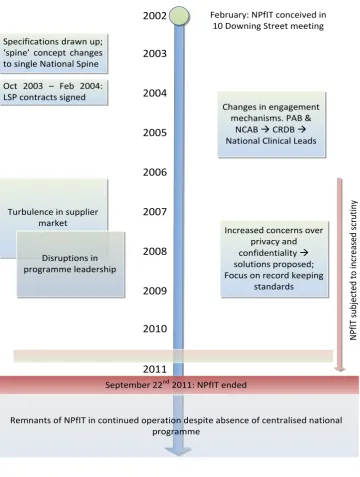
Figure 3.1 Key Phases in the NPfIT ... 87
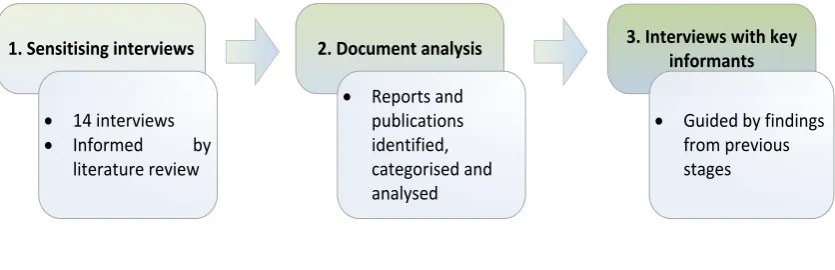
Figure 4.1 Research design ... 98
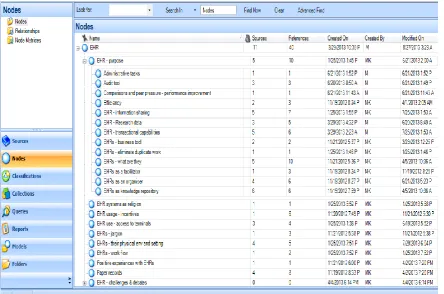
Figure 4.2 A snapshot of the coding categories ...112
Figure 5.1 Stakeholder groups in the NPfIT organising vision ...142
ix
I take this opportunity to express my gratitude to several people who have played an
important role during the four years of my PhD research.
I would like to thank my supervisors, Professor Jonathan Tritter and Professor Gerry
McGivern for all their guidance, support, encouragement, and confidence in me. I am
deeply grateful to them for having taken over the supervision of my research and guiding
me to the completion of this work. Together, they have been instrumental in helping me
develop as a researcher. I cannot fail to mention their patience in reading long drafts at
short notice, and their excellent insights, feedback and advice while simultaneously
challenging my ideas throughout my research process.
I thank Professor Wendy Currie and Dr David Finnegan who encouraged me to embark on
this PhD journey and who supervised me during the initial phase of this study. I extend
my thanks to Professor Justin Waring and Dr Stephen Corea who were also involved in my
supervision, and who gave me valuable inputs and advice.
My sincere gratitude to Warwick Business School for making this study financially
possible, and to those in the Doctoral Programme Office for their all their help and
support.
My time at Warwick as a PhD student has been challenging but enjoyable. A number of
friends and colleagues have been an important part of my life here. Alice, Ann, Claudia,
Iman, Joy, Joana, Lindiwe, Masha and Megan - I am thankful for the friendship, peer
x
parents, my siblings and their families for being there for me and motivating me. I am
extremely grateful to my husband for all his patience and encouragement during the final
phases of this study. I also thank my in-laws for all their help while I was working on the
last stages of this thesis.
My sincere gratitude to all the folk at the Upper Hill Street Gospel Hall, for their
wonderful fellowship, for opening their homes and hearts to me, and making this place
feel like a home away from home. In particular, I would like to thank the Montgomerys,
the Didcotts and the Daltons to whom I am deeply indebted for all their help and support
in numerous ways.
Above all, I thank my God for His grace, provision and blessings all through this PhD
journey which in many ways has been a walk of faith. It has been refreshing and
strengthening to see how indeed, He does supply all my needs according to His riches in
glory by Christ Jesus (Philippians 4:19), and makes all things beautiful in His time
xi
DECLARATION
This is to declare that
This thesis has been written by me
I am responsible for the research work submitted in this thesis
All verbatim extracts have been distinguished and the sources specifically acknowledged
This work has not been previously submitted for a degree programme at university or any other institutions of learning
During the preparation of this thesis the following two papers were presented at conferences.
Koshy, M.A., McGivern, G., and Tritter, J. 2013. The clinician-IT hybrid professional. European Group of Organization Studies 2013, Montreal.
Koshy, M.A., McGivern, G. and Tritter, J. 2013. Organising visions and the dynamics of community stakeholder groups in the NPfIT. UK Academy of Information Systems 2013, Oxford.
xii
This thesis examines the uses of Electronic Health Records (EHRs) and challenges faced in
their implementation in the context of England’s National Programme for IT (NPfIT), the
biggest civil IT programme in the world (Brennan, 2007). Despite the huge investments
and high visibility that characterised the NPfIT, its aim of national level EHRs was not
achieved and the programme was dismantled after being in operation for nearly a
decade. The concepts of ‘organising visions’ (Swanson and Ramiller, 1997), ‘boundary
objects’ (Star and Griesemer, 1989), ‘technology frames’ (Orlikowski and Gash, 1994) and
‘professional hybridisation’ (Noordegraaf, 2007) are employed to explain findings from
this research. The study uses qualitative research methods, drawing on documentary
sources and 51 semi-structured interviews.
Responding to the limitations of using solely organising visions (Swanson and Ramiller,
1997), this thesis studies the NPfIT using a dual lens combining organising visions and
boundary objects to understand the dynamics between stakeholders of the NPfIT
organising vision. This thesis presents the EHR itself as a boundary object, and illustrates
the knowledge sharing capacity of EHRs across clinical boundaries.
A key emergent finding is the presence of clinician-IT hybrid professionals - a group that
has neither been subject to empirical research nor been given sufficient attention in
critical projects such as the NPfIT despite their unique position that bridges the clinical
and IT domains. This study presents key findings discussing the factors that support and
xiii
AOMRC – Academy of Medical Royal Colleges CFH – Connecting for Health
CRDB – Care Records Development Board DCR – Detailed Care Record
DH – Department of Health EHR – Electronic Health Record GP – General Practitioner GPSoC – GP Systems of Choice IS – Information Systems IT – Information Technology LSP – Local Service Provider
NCAB – National Clinical Advisory Board NCL – National Clinical Lead
NCRS – NHS Care Records Service NHS – National Health Service NHS IA – NHS Information Authority NAO – National Audit Office
NPFIT – National Programme for IT
PACS – Picture Archival Communication System RCGP – Royal College of General Practitioners RCN – Royal College of Nursing
1.1 Overview
‘The world's most spectacular purchase of “vapourware”1
, perpetrated on behalf of the British taxpayer’ (Chelsom, 2011: 6).
‘An expensive and problematic solution to a non-existent clinical problem’ (Robertson et al., 2010: 6).
‘A dismal catalogue of naivety, ambition and spinelessness’ (The Times, 2011). ‘A fiasco’ (Brooks, 2007: 7).
These are not depictions of any ordinary project, but were labels attached to England’s
National Programme for IT (NPfIT), the world’s biggest civil IT programme (Brennan,
2007), also described as ‘the project that could make or break’ the English NHS (Craig and
Brooks, 2006: 182). Launched in 2002 with an initial estimated cost of £6.2 billion
(Connecting for Health, 2005b) that spiralled up to £9.8 billion (NAO, 2013), the NPfIT was
the flagship programme for the modernisation agenda (Cabinet Office, 1999) within the
English NHS. One of its key components, the NHS Care Record Service (NCRS), was
intended to provide health professionals and patients easy access to their electronic
health records (EHRs) from anywhere and at any time (Connecting for Health, 2005b).
Despite the tremendous amount of political support available to the programme, it was
subjected to significant criticism from the media and key stakeholders including clinicians
(Sauer and Willcocks, 2007) and was finally dismantled in September 2011 (DH, 2011).
The disparity between the NPfIT’s promised benefits and the actual outcomes prompts
the need to investigate what went wrong, and how the derailment of the programme
could have been averted. Nearly midway into the programme, Craig and Brooks (2006:
1 Vapourware is a term used to refer to IT products that have been promised but do not actually materialise
2
184) had warned that if the NPfIT were to fail, it would cause ‘the largest haemorrhage of
taxpayers’ money from essential front-line services into the pockets of management and
IT systems consultants in British history’, exemplifying the magnitude of the stakes
involved.
This thesis investigates the dynamics between key stakeholder groups including clinicians,
the Department of Health, information technology (IT) suppliers, NPfIT management and
policymakers in the high profile NPfIT, and demonstrates how dissonance among these
players was an impediment to the successful completion of the programme. The lack of
clinical engagement was one of the main criticisms of the programme (Coiera, 2007;
Cresswell et al., 2011; Hendy et al., 2005), resulting in an absence of efforts to understand
the diverse needs of clinicians. This study employs empirical data to illustrate some of the
(often conflicting) perspectives of multiple stakeholders regarding EHRs (McGinn et al.,
2011), given that the key component of the NPfIT envisioned EHRs at a national level.
Prior to the NPfIT a significant level of computerisation had been reached among general
practitioners (GPs) in the UK (Benson 2002a, 2002b). The success of computerisation in
primary care was an opportunity for the national programme to employ lessons learned
from local EHR implementations to inform policy and practice. However this was not the
case, due to a lack of meaningful clinical engagement (Coiera, 2007; Cresswell et al.,
2011; Hendy et al., 2005). Much could have been learned from the experiences of primary
care physicians who would have provided valuable inputs regarding clinical needs and
requirements pertaining to EHRs. The leadership and initiatives taken by GPs who had an
interest in computing was one of the reasons for the higher incidence of computerisation
3
contrast to several studies that trumpet the techno-phobic and resistant nature of
clinicians (Ford et al. 2009; Lapointe and Rivard, 2005; Timmons, 2003b). My empirical
data points to the existence of a much overlooked clinical hybrid professional: the
clinician-IT hybrid, and this thesis stresses the importance of this role in health IT
initiatives such as the NPfIT.
With this brief overview, I identify the importance of this research, and outline the key
theoretical underpinnings that inform this study. This is followed by a section presenting
my research objectives. The chapter concludes with an outline of the structure of this
thesis.
1.2 Why this research?
Lessons learned from past IT projects – both, successes as well as failures (Parliamentary
Public Accounts Committee, 2000) did not appear to be drawn on in the case of the NPfIT.
Recently voiced hopes of a paperless NHS by 2018 (Whitfield, 2013) seem to indicate an
insularity to past failures, resurrecting optimistic ambitions of policymakers who launched
the NPfIT with a similar unfeasible timeline of under three years (Brooks, 2007;
Greenhalgh and Keen, 2013). While this study does not aim to evaluate a particular
aspect of the NPfIT, it illustrates the complex community dynamics which marked the
programme using the concepts of organising visions (Swanson and Ramiller, 1997) and
boundary objects (Star and Griesemer, 1989), providing useful insights for future
research.
In attempting to establish a national level EHR, the NPfIT did not engage with clinicians to
understand how they perceived and used EHRs in their clinical practice. The increasingly
4
and EHRs vary. It is important to understand how EHRs interface between multiple users,
and how their needs, knowledge and dependencies differ if they are to be deployed
effectively. I analyse EHRs as boundary objects (Star and Griesemer, 1989; Carlile 2002,
2004) and highlight their multiple purposes as perceived by their users.
Attempts were made to address the lack of clinical engagement toward the latter half of
the national programme by a number of mechanisms including the establishment of
National Clinical Leads (Cresswell et al., 2011). This process of involvement is an example
of the absorption of clinical professionals into management/leadership and can be
viewed as the formation of a distinct professional hybrid, the clinician-manager (Doolin,
2002; Fitzgerald, 1994). The involvement of GPs in the computerisation of primary care in
England draws attention to the unique role of clinicians who take an active interest in IT,
and who could potentially be regarded as unique hybrid professionals bridging healthcare
and technology. Given the potential link between high performing healthcare
organisations and their preference for clinician-managers as opposed to managers
without a clinical background (Goodall, 2011), there may be similar benefits offered by
the increased recognition and involvement of clinician-IT hybrid professionals.
1.3 Key theoretical underpinnings
This section outlines the key theoretical concepts employed in this study. These concepts
are revisited in Chapter 2 where I discuss them in further detail.
This study draws on extant literature to understand the challenges, issues and nuances of
EHR implementations, and uses this foundation to follow the progress of EHR
5
ambitions served as inputs to the programme (Sauer and Willcocks, 2007), providing a
chain of interwoven debates over the course of the NPfIT.
I employ the concept of organising visions (Swanson and Ramiller, 1997), to analyse the
diffusion of IS innovations and the NPfIT. The consideration of ‘community discourse’ and
the emergence and subsidence of ‘buzzwords’ or dominant rhetoric in organising visions
help in understanding the dynamics between the many stakeholders involved in the NPfIT
(see Chapters 3 and 5). I also use the concept of boundary objects (Star and Griesemer,
1989; Swan et al., 2007) when discussing the multiple perspectives that contributed to
the NPfIT organising vision discourse. Described as ‘objects which inhabit multiple worlds
simultaneously’ (Star and Griesemer, 1989: 408), boundary objects may be physical or
abstract, and scholars have studied a range of boundary objects including technology (Gal
Lyytinen and Yoo, 2008), texts (Oswick and Robertson, 2009) and timelines (Yakura,
2002).
When discussing clinicians’ multiple uses of EHRs, I again return to the concept of
boundary objects, highlighting the different types of boundaries (Carlile 2002, 2004)
where they may be positioned, to facilitate the flow of knowledge between different EHR
users. The different interests of users may hinder effective knowledge flow, due to the
challenge of knowledge ‘at stake’ (Carlile 2004). These tensions highlight the need to take
into account users’ multiple perspectives and needs for successful EHR implementations.
Underlying the theoretical discussions in Chapter 5 is the idea of technology frames which
acknowledges differences in the ways distinct stakeholders perceive and use IT,
influencing the way they interact with technology (Orlikowski and Gash, 1994; Davidson,
6
technology frames (Orlikowski and Gash, 1994), and this variation in the interplay
between stakeholder groups in different settings accounts for the context dependent
nature of technology implementations (Davis and Hufnagel, 2007). Technologies that
support multiple incongruent technology frames are likely to have a higher degree of
‘interpretive flexibility’ (Pinch and Bijker 1984, 1987), defined as the ‘capacity of a specific
technology (or other knowledge system) to sustain the divergent interpretations of
multiple relevant groups’ (Sahay and Robey, 1996: 260). This holds true in the case of
EHRs given their diverse range of users.
The latter part of this thesis focuses on the sociology of professions and professional
hybrids. Freidson’s (1985) theory of restratification proposes that professionals adopt
additional roles in response to external threats. This has significance to the emergence of
clinical professional hybrids such as clinician-managers (Noordegraaf, 2007; Montgomery,
2001; Ferlie et al., 2011), as they attempt to prevent non-professionals from pervading
their jurisdiction (Dopson, 2009). Technology too may be regarded as a threat to clinician
autonomy as its boundary spanning nature (McLaughlin and Webster, 1998; Tjora, 2000;
Barrett et al., 2012) facilitates shifts in professional boundaries allowing an increased
overlap between different clinical roles (Walter and Lopez, 2008). I draw on these strands
of literature to analyse the infiltration of clinicians into the IT domain resulting in a niche
group of clinician-IT hybrid professionals.
With this brief overview of the key theoretical concepts which underpin this research, I
7 1.4 Research objectives
This research investigates the significance of EHRs as boundary objects subject to multiple
interpretations by a diverse range of users. The study is set in the context of England’s
NPfIT, and studies the key boundary objects that marked the different phases of the
national programme. My emergent findings pointed to the existence of a niche group of
clinicians involved in IT development, implementation and policy making, and hence this
research investigates reasons for the emergence of this new hybrid role and the specific
challenges they have to contend with.
This study began with the objective of addressing the following questions:
1. How did the NPfIT organising vision develop under the influence of the
discourse prevalent amongst stakeholders during the project?
2. How do different users perceive EHRs, and how do professional roles influence
how EHRs are used to mediate interactions and knowledge flow across
boundaries?
A key emergent finding from my empirical data was the presence of a significant number
of clinicians who have ventured into IT roles. The identification of this often overlooked
hybrid led to a subsequent research question:
3. What triggers the formation of the clinician-IT hybrid, and how does this align
with Freidson’s theory of restratification amongst medical professionals?
With this overview of my research objectives, I now outline the anticipated theoretical
8 1.5 Anticipated theoretical contributions
This research offers three main contributions to academic literature, which I shall now
detail.
First, the limited success in national health IT systems implementations (Cresswell et al.,
2011) and the paucity of literature on large scale EHR initiatives (Takian et al., 2012)
highlight the need for research into large scale national EHR initiatives such as the NPfIT’s
Care Record Service. This study responds to this call, and investigates EHR adoption in the
context of England’s NPfIT, thus serving as an empirical contribution to literature on large
scale EHR projects.
Secondly, scholars have identified the need for more research on the transformation of
objects (Engeström and Blackler, 2005; McGivern and Dopson, 2010). During their
lifetime, objects may go through phases in which varied levels of value are ascribed to
them, and in the process they are transformed and reconceptualised (Engeström and
Blackler, 2005). Studying the different phases or ‘buzzwords’ in the NPfIT organising vision
(Swanson and Ramiller, 1997) as abstract epistemic boundary objects, this research traces
the development of some key boundary objects contained within the NPfIT. The
longitudinal nature of the programme suggests the likelihood of changes in the nature of
the programme’s boundary objects. By studying the lifetime of these objects in closer
detail, this thesis offers insights into the transformation of objects in the context of the
NPfIT.
Thirdly, this research investigates the phenomenon of professional hybridisation which is
a relatively recent and emerging area of research (Noordegraaf, 2007; Fitzgerald and
9
different domains such as healthcare and management (Noordegraaf, 2007;
Montgomery, 2001). This thesis contributes to literature on hybridisation by investigating
a niche group of professional hybrids, namely clinician-IT hybrids, which has not seen
significant empirical research. Building on empirical data gathered from a range of
clinicians involved in IT either in advisory or hand-on development roles, this thesis
addresses theoretical as well as empirical gaps in the literature by exploring how and why
some clinicians adopt additional IT related roles.
Having outlined my research objectives and anticipated contributions, I now present the
structure of the thesis.
1.6 Structure of the thesis
This chapter introduces the reader to this study by presenting an overview of the key
drivers and theoretical concepts that underpin this research. I explain the importance of
this study, and the relevance of organising visions (Swanson and Ramiller, 1997),
boundary objects (Star and Griesemer, 1989), technology frames (Orlikowski and Gash,
1994) and professional hybridisation (Noordegraaf, 2007) to my research focus. I also
outline the research objectives and anticipated contributions of this thesis.
Chapter 2 provides a literature review that brings together work from the information
systems (IS) field and the sociology of professions, as these strands of literature are
particularly relevant to my research focus. Key theoretical concepts, including organising
visions, boundary objects and technology frames, employed in the later chapters are
10
Chapter 3 provides an overview of ‘the NPfIT story’ using a combination of documentary
sources and reviewed literature. This chapter serves to set the context for the findings
and discussion chapters (Chapters 5 to 7) by discussing the key phases that marked the
NPfIT during its operation from 2002 to 2011.
In chapter 4 I discuss my research methods by outlining the research paradigm, sampling
strategy, data collection phase and data analysis. I go on to consider the process of data
gathering and highlight some of the challenges encountered. I also elaborate on the
analytical process. The four chapters following this constitute my findings chapters.
Chapter 5 analyses the NPfIT story presented in Chapter 3 using the concepts of
organising visions (Swanson and Ramiller, 1997) and boundary objects (Star and
Griesemer, 1989; Swan et al. 2007). Different phases of the NPfIT such as contracting and
the increased efforts toward clinical engagement are studied as abstract boundary
objects within the programme. The chapter highlights the different and conflicting views
of the stakeholders involved, and how these influenced the NPfIT organising vision.
In chapter 6, the focus is narrowed down to EHRs in particular, using literature on
boundary objects (Star and Griesemer, 1989; Swan et al., 2007) to analyse my empirical
data and explain how professionals and patients use EHRs to perform tasks and exchange
knowledge between boundaries. I discuss the relevance of knowledge differences and
dependencies (Carlile and Rebentisch, 2003) between EHR users to explain how the use of
EHRs to mediate knowledge boundaries depends on the professional roles and
11
Chapter 7 shifts the focus to clinical professionals who have adopted additional IT related
roles, and who may be categorised as clinician-IT hybrid professionals. This chapter
presents empirical data to explain the reasons for the movement of clinicians into these
hybrid roles, and highlights the challenges faced by them. I consider Freidson’s (1985)
theory of restratification and analyse its relevance to the case of clinician-IT hybrids.
Chapter 8 contains my discussion and conclusions. It brings together key points from my
findings chapters, and provides an integrated discussion linking these findings, and their
relevance to the NPfIT. I then conclude by summarising my key findings and
contributions, and outlining the limitations of the study and scope for future research.
With this overview of the thesis, I now proceed to present the key literature that informs
2.1 Introduction
This chapter elaborates on the key literature relevant to my research questions. This
study’s focus on EHRs in the context of the NPfIT necessitates an understanding of the
nuances of IS implementations in a large scale, national, health sector setting. For this
reason, I draw on IS literature, steering the discussion toward the healthcare context
specifically. Given the complexity of the healthcare setting, I emphasise the need for
stakeholder involvement, and bring in the concepts of technology frames (Orlikowski and
Gash, 1994), boundary objects (Carlile 2002, 2004) and organising visions (Swanson and
Ramiller, 1997) when discussing the IS literature. These concepts acknowledge and accept
the tensions and differences present amongst a diverse range of stakeholders and others
involved in complex IS projects, but also highlight the need for increased cohesion, and
the importance of the commonality between them.
Given the general resistance on the part of clinicians when faced with new technology
(Goldschmidt, 2005), it is essential to understand their innate tendency to retain control
and independence in their work practices, evocative of the professional autonomy and
dominance that they exercise (Freidson, 2007). This requires a comprehension of the
sociology of professions (Abbott, 1988; Freidson, 1985), which will also be covered in this
chapter.
The next section discusses issues pertinent to IS implementations: challenges, large scale
public sector IT, and the contextual nature of IS. This is followed by a discussion on
technology frames, boundary objects and organising visions. I provide an overview of the
13
(EHRs). The increasing interest shown by national authorities in such initiatives is also
briefly discussed. This discussion on healthcare IT also draws on literature on professional
roles, to highlight the added complexity of IT in healthcare due to the independent and
dominant nature of the medical profession (Abbott, 1988; Freidson, 2007). With this
background on IS implementations in the healthcare context, I highlight the link between
professionalism and increased use of technology. The increasing dual roles adopted by
health professionals will then be discussed; a phenomenon termed ‘professional
hybridisation’ (Noordegraaf, 2007). I briefly elaborate the reason for such hybrid roles,
and why they are crucial to the successful project implementations in the healthcare
sector. This is followed by an overview of my research questions, where I reiterate my
objectives on the basis of the reviewed literature.
2.2 IT/IS implementations: Progress and challenges
The field of IT has seen exponential growth in the last decade for a range of reasons
including: decreasing technology cost, advances in technology, increasing need for faster
communication across geographical locations, and increased investment in ICT (Nolan,
1973). The increasing complexity of IT and its management is evident from Nolan’s (1973)
four stages of data processing growth in organisations, namely, Initiation, Contagion,
Control and Integration, that were later extended to six stages with the addition of Data
Administration and Maturity (Nolan, 1979). As IT innovations are developed, the
perceptions attached to them by people depends on the ‘talk’ or discourses surrounding
them, causing some to suggest that they are discursive constructions (Ramiller, 2001a).
The initial phases of Nolan’s (1979) six stage model were shaped by existing community
14
over time. These discourses do not just differ with time, but between stakeholders, as at
any given time conflicting discourses are likely to arise. For instance, IT has been
recognised as having benefits as well as negative impacts simultaneously (Paré et al., 2008), and this has sparked debates on whether technology does have the potential to
improve work practices.
The decision to adopt new technologies is often clouded by inadequate information and
the lofty promises made by vendors (Ramiller 2001a, 2001b). In order to make informed
decisions regarding technology adoption, the roles and authority of those advocating it
need to be considered, i.e. whether it is authority by expertise, as in the case of IT
developers, or authority by the ability to issue orders, as in the case of business
executives (Ramiller, 2001b). These roles are of particular importance when discussing
large scale IT projects which have a number of key stakeholders including the state,
industry and professional groups. With this brief prelude on the evolutionary nature of IT
innovations, I will now discuss the case of large scale IT projects which are rife with
challenges, and even more so when placed in a public sector setting.
2.2.1 Large scale public sector IT initiatives
New and innovative information and communication technologies (ICT) would at first
glance appear to be an unconventional area of interest for the public sector given public
servants’ general aversion to risk (Ahmad and Broussine, 2003). In the case of health
technologies such as EHRs, the challenges of IT implementations (Goldfinch, 2007)
combined with the complexity of the healthcare sector (Goldschmidt, 2005) are
exemplified when transferred to public sector settings which have their own set of
15
capabilities of technology have been recognised and governments have seen renewed
efforts to incorporate IT for better delivery of services to the public (Silcock, 2001; DH,
2002a). These efforts have resulted in increased public sector investments in ICT,
e-government projects and large scale applications to improve efficiency of e-government
procedures.
Despite tremendous progress and increased investments in technology, IT projects are
known to be prone to failure (Goldfinch, 2007) and the rate of project failures is reported
to be increasing, based on comparative analysis of the 1980s and the 1990s (Ashurst et
al., 2008). Large scale IT implementations are subject to even higher risks (Goldfinch,
2007) and have had a track record of frequent failures due to challenges that include
resistance, implications of potential power redistribution, evidence of return on
investment, and difficulty integrating with already existing fragmented systems (Folkerd
and Spinelli, 2008; Fukami and McCubbrey, 2011; Kim and Kankanhalli, 2009; Lapointe
and Rivard, 2005). The problem of shifting and expanding project goals and
functionalities, also known as ‘scope creep’ (Kreps and Richardson, 2007), is yet another
challenge in large scale IT projects, and results in escalating costs. Public sector projects
are no exception, and are known to have particularly low success rates in comparison to
other sectors. Some suggest that given the rates of government project failures, public
sector IS projects should steer clear of new (innovative) technologies, and be restricted to
tried and tested systems (Goldfinch, 2007).
Flyvberg, Holm and Buhl (2007:279) suggest that cost estimations for large scale projects
must be regarded with caution as those who promote such projects may ‘strategically
16
promote the interests of stakeholders who would profit from the implementation of such
projects, or to support the public interest as lower cost estimates provide an incentive to
avoid wasting taxpayers’ money. Policymakers responsible for making decisions on the
basis of forecasts and estimates are often unaware of the assumptions employed in
making these calculations (Wachs, 1990a). Individuals may be under pressure during
project planning meetings with superiors, resulting in them providing figures that others
want to hear, rather than providing a realistic plan (Flyvberg, Holm and Buhl, 2007). This
results in initial project estimates being utilised to merely justify the project rather than
to genuinely evaluate it (Wachs, 1990b). Such ‘cooked’ forecasts (Wachs, 1990b: 144) are
deceptive even if they are allegedly for altruistic purposes, and they may result in the
rollout projects that are not economically viable in the long term (Flyvberg, Holm and
Buhl, 2007).
Hierarchies and bureaucracy may be present in many settings but are particularly
pronounced in the public sector and government projects (Ahmad and Broussine, 2003;
Bretschneider, 1990; Caudle, Gorr and Newcomer, 1991; Jones, 2008). Public sector IT
projects have more inter-dependencies across organisational boundaries, more red tape
compared to private sector projects, and are prone to discontinuities in political
leadership (Bretschneider, 1990; Cats-Baril and Thompson, 1995).
Public sector initiatives are extremely risk averse (Ahmad and Broussine, 2003) and a lack
of political will is one of the reasons why many national public sector programmes fail
(Jones, 2008). The other extreme is equally detrimental, where political will mutates into
a political agenda that may conflict with the needs and demands of the public. When this
17
ulterior motives and ultimately, disillusionment (Ahmad and Broussine, 2003). The high
visibility of public sector projects makes them subject to excessive media attention
(Cats-Baril and Thompson, 1995), and the drive to maintain legitimacy in the eyes of the wider
public (Moore and Hartley, 2005) is a possible reason for their risk aversive nature. This
accountability to the public encourages transparency; on the other hand, it may also be
the very reason for whitewashing the actual status of various issues.
While some suggest that the very nature of innovative technology implies radical change
rather than an incremental approach (Hartley, 2011), the large scale of these government
projects, their frequent lack of regard for local standards and the associated difficulties in
interoperability and integration call for a need to re-examine the centralised big bang
approach adopted by several national authorities (Jensen and Aanestad, 2010). Examples
in the UK include the cancellation of the Wessex Health Authority’s Regional Information
Systems after an expenditure of over £43 million, the abandonment of a benefits
payment scheme involving the British Post Office, the Department of Social Security and
the computer company, ICL, at a cost of £300 million (Goldfinch, 2007), and more
recently, the dismantling of England’s NPfIT (DH, 2011) which was the world’s largest civil
IT project (Brennan, 2007). Britain’s 2011 ICT strategy refutes this however, suggesting
that its IT failures were not exceptional, and that there is no credible reason to assume
that government-led ICT projects are necessarily more prone to failure (Cabinet Office,
2011a). The British government does acknowledge the dependence of IT project success
on preparedness, change management and effective process reengineering, and the need
to shift its style of ICT implementation away from its typical big bang approach (Cabinet
18
By the early 2000s, the UK public sector experienced a number of IT project failures as
highlighted in a report by the Parliamentary Public Accounts Committee (2000). These
projects spanned various departments including agriculture, health, the Inland Revenue,
defence and education, and it was acknowledged that there was a need to learn from
past mistakes. It was in this milieu that the NPfIT was conceived the year following the
publication of this report.
At this time there appeared to be a shift from traditional public sector management to
new public management (NPM) (Crawford and Helm, 2009), and the NPfIT reflected this
in its attempts to engage in consultations with people rather than limit the level of
community involvement. While there was an effort to try and learn from successful
projects in other countries such as the US (Stevens, 2004), the programme team did not
seem to remember lessons from previous IS project implementations in the NHS (Currie,
2008; Maguire, 2007) that were detailed by the Parliamentary Public Accounts Committee
(2000).
Several studies of the NPfIT have investigated its challenges and underlying problems
(Avison and Young, 2007; Brennan, 2007; Hendy et al., 2005; Robertson et al., 2010).
Despite the dismantling of the project, it continues to ignite interest from academics as
well as practitioners, as a classic case study which represents the challenges to strong
governmental and political interest when faced with opposition and disengagement of
end-users.
Historically the UK public sector has had a focus on productivity and budgeting measures
(Jones, 2008). This holds true in the case of the NHS as well, with its various reforms
19
of new bodies, fundholding and shifting agendas (Klein, 1995; Morrell, 2006). In the late
1990s, the need for improved service delivery resulted in calls for modernisation, and this
included the incorporation of information systems to facilitate this aim (Jones, 2008; NHS,
2000; The NHS Confederation, 2003a).
Given the range of settings and the varied scales in which technology can be
implemented, it follows that each implementation scenario is unique and will not
necessarily have the same outcomes as implementations in other contexts. This draws
attention to the highly contextual nature of IS implementations, and the need to tailor
systems to the need at hand.
2.2.2 The contextual nature of IS
Several IS implementations are launched in a bid to be at par with systems in other
countries or organisational contexts (Avgerou, 2001; European Commission, 2009;
Robertson et al., 2010). However, successful IS implementation in other regions,
organisations or industries does not necessarily translate into similar outcomes in every
case. These variations in IS project outcomes are due to reasons including the diverse
stakeholder groups involved, different challenges and requirements of various sectors,
and a possible underestimation of the complexity of IS projects in new settings (Avgerou,
2001). There is clearly a need to contextualise and tailor systems to the context in which
they are being implemented.
Healthcare in particular has been recognised as a highly challenging environment for the
introduction of new technology, given its complexity and institutionalised nature
(Chiasson and Davidson, 2004; Fennel and Alexander, 1987). The mutual influence that
20
manner in which health IT introduces changes in clinical work practices, and also has to
contend with the workarounds that clinicians attempt in their efforts to resist change
(Alshawi et al., 2003; Goldschmidt, 2005). In order to better understand the interplay
between technology and its social context, it is necessary to recognise the variations in
the way different users perceive and use technology. I will discuss this further, employing
literature on ‘technology frames’ (Orlikowski and Gash, 1994) and ‘boundary objects’
(Star and Griesemer, 1989).
2.3 Technology frames and boundary objects
The presence of multiple stakeholder groups adds an additional dimension of complexity
to the contextual nature of IS implementations, given the diverse perspectives and needs
of each user group (Ramiller, 2001b). Orlikowski and Gash (1994) introduce the term
‘technology frames’ to refer to the varied lenses through which different users perceive
technology and its usage.
Technology frames are structured in terms of the various knowledge domains, with the
contents of the frame being the knowledge itself (Davidson, 2006). These frames are not
rigid, and their structure as well as content may shift and vary with time and context
(Davidson, 2006). Given the multiple stakeholders present in a typical IS project, conflicts
result in incongruent technology frames. Attempts to resolve these incongruences may
result in filtering, negotiation or shifting of technology frames (Ovaska, Rossi and
Smolander, 2005). While cognitive diversity is beneficial in early phases of IT development
and planning, the later implementation phases require more cohesive and integrated
21
and shifted in order to resolve incongruences between stakeholders may be a step
toward a more unified focus in IS implementation.
Some typical technology frames which shape users’ understanding of technology include
the nature of technology (its features and purpose), technology strategy (on the
implementation approach), technology-in-use (ease of use, training, etc.), IT delivery
strategies, IT design, the business value of technology, and IT-enabled work practices (on
how technology changes or fits in with existing work practices) (Orlikowski and Gash,
1994; Davidson, 2002). The reasons for incongruences in users’ technology frames include
different requirements and needs of stakeholders. This may in turn be linked to the
professional differences amongst various user groups as well, as professionals have
specific and specialist requirements and practices which differ or conflict from that of
their peers (Aydin and Rice, 1991).
There may be variations in responses to technology even amongst members of a
professional group, depending on their departmental or organisational affiliations (Aydin
and Rice, 1991). With clinicians often belonging to a combination of organisations and
professional bodies, it may be the case that they have to contend with conflicting
requirements and expectations from their multiple affiliations.
Technology also has the capacity to change boundary practices, i.e., the way elements on
either side of these boundaries interact with each other (Gal, Lyytinen and Yoo, 2008).
Technology’s boundary spanning capabilities facilitate an increasing overlap of roles and
responsibilities (Barrett et al., 2012; McLaughlin and Webster, 1998; Tjora, 2000), also
called ‘task drift’(Bossen, Jensen and Witt, 2012). This has particular significance to the
22
previously outside their jurisdiction, and this means potential changes in the hierarchies
inherent amongst clinicians (Nancarrow and Borthwick, 2005). Nurses have begun to
execute tasks which were previously the sole responsibility of physicians, resulting in a
blurring of professional boundaries. Such shifts in boundaries which enable clinicians to
climb up professional hierarchies is termed ‘vertical substitution’ (Nancarrow and
Borthwick, 2005).
The easy access to information made possible by technologies such as the Internet
(Henwood et al., 2003) challenge the indeterminate nature of professional knowledge
(Boreham, 1983), and this potentially affects the dynamics of patient-doctor interaction
as well (Evetts, 2013). The increasing overlap and fusion of roles enabled by technology
usage often has to contend with an opposing tendency by clinicians to reinstate
boundaries that reassert their professional autonomy and independence (Walter and
Lopez, 2008). This aspect of professionalism may be one of the reasons for the
emergence of new professional roles by means of hybridisation, which I discuss in section
2.7.
Carlile (2002, 2004) discusses the importance of ‘boundary objects’ (Star and Griesemer,
1989) in dealing with knowledge boundaries which are present as a consequence of
specialist expertise and tasks of professionals (Swan et al., 2007). Boundary objects refer
to abstract or physical concepts which are positioned at the interface between different
domains, and which are subject to multiple interpretations, perspectives and practices
depending on the domain from which they are viewed (Star and Griesemer, 1989; Swan
et al., 2007; Nicolini, Mengis and Swan, 2012; Barrett and Oborn, 2010). Boundary objects
23
project contracts (Koskinen and Mäkinen, 2009) and timelines (Yakura, 2002), to name a
few. The concept has been applied to a range of domains including software development
(Barrett and Oborn, 2010), product development (Carlile, 2002), healthcare (McGivern
and Dopson, 2010) and biomedicine (Swan et al. 2007).
In referring to the knowledge boundaries which have to be overcome when dealing with a
boundary object, Carlile (2002) emphasises that these separate knowledge sources act as
both facilitators as well as inhibitors to product development. In the case of IS
innovations too, there is a plethora of knowledge sources available as the IS field bridges
several domains that have an interest in the innovation being developed (Wang and
Ramiller, 2009). The effectiveness of boundary objects do not necessarily depend on their
inherent characteristics, but also depends on how stakeholders make sense of them (Fox,
2011). Those objects that gain prominence or encourage communication and adoption
across stakeholder groups may be termed ‘positive boundary objects’, whereas those that
inhibit such progress are ‘negative boundary objects’ (Fox, 2011).
In looking at how technology itself acts as a boundary object between different
stakeholders (e.g. different groups of health professionals), Fox (2011) highlights the
capabilities of technology to be either facilitative or hindering to cross-boundary
collaboration. Artefacts such as engineering drawings are a classic example of how
boundary objects can be used for collaboration and communication between different
epistemic groups, while simultaneously being used by dominant professionals groups (in
this case, engineers) to maintain their expert authority in their jurisdictions (Bechky,
24
Unlike boundary objects which may be either physical or abstract, epistemic objects are
generally abstract ‘objects of inquiry’ (Ewenstein and Whyte, 2009: 9) situated within
epistemic practices (Cetina, 1997; McGivern and Dopson, 2010). Rheinberger (1992)
explains how epistemic objects transform and evolve, and this may be understood
through Cetina’s (1997) example of computer systems that are modified and improved
over the years. Epistemic objects situated between different epistemic practices enable
boundary spanning, resulting in the simultaneous existence of epistemic and boundary
objects in such cases (Ewenstein and Whyte, 2009; McGivern and Dopson, 2010).
Technical objects serve as fixed representations that contain a specific epistemic object
(Rheinberger, 1992).
Yakura (2002) introduces the concept of ‘temporal’ boundary objects and proposes the
notion of ‘concert in time’ wherein clinical professionals in a hospital setting may be able
to estimate the time of the day by merely observing the activities which take place at any
given time. Similarly, project timelines facilitate a clear distinction between project
phases, with each phase viewed differently by stakeholders (Yakura, 2002; Chang,
Hatcher and Kim, 2013). By regarding project timelines as ‘placeholders’ or temporal
boundary objects it is possible to distinguish between project phases and how
stakeholders perceive and interpret each such phase (Yakura, 2002: 957). For instance, a
deadline might signify receipt of payments for those who supply a product or service,
while for clients it implies debit and payment of bills. Similarly, working overtime for
some would be a cause for resentment, having to work unpaid hours, while for others it
provides a way of showing their commitment to their work (Yakura, 2002). Epistemic
25
subject to multiple interpretations and inputs, and perceptions of each of these phases
may vary over time, facilitating the transition to the next phase in the project.
Scholars have also studied contracts as boundary objects (Gal, Lyytinen and Yoo, 2008), as
they interface between organisations and stakeholders, enabling collaboration and
influencing work practices which are relevant to both parties involved. In their capacity as
boundary objects, contracts provide a mechanism to manage risks and uncertainties as
they provide all parties involved with a clear statement of expectations, and define
common terms which may otherwise be interpreted differently by those involved
(Koskinen and Mäkinen, 2009). This means that the planning phase prior to the creation
of contracts must involve all stakeholders, and those who have decision making powers
should be well informed regarding the nature of the project. However, as elaborated in
Section 2.2.1, this is often not the case, as project plans and forecasts are often
manipulated or not well informed, due to political reasons as well as a lack of sufficient
credible information (Flyvberg, Holm and Buhl, 2007; Wachs 1990a, 1990b). An overview
of the different types of objects is provided in Table 2.1 (see page 26).
In their discussion on how objects are ‘transformed’, Engeström and Blacker (2005)
suggest that objects are transient and may get devalued or discarded during their
lifetime. Objects may ‘die’ but do not necessarily ‘disappear’, as they may be revitalised
by ‘reconceptualising’ the objects, so that they are ‘reincarnated’ (McGivern and Dopson,
2010) in a different manner from what was originally envisioned. This is dependent on
how different stakeholder groups perceive the object and reconceptualise it so that it is
used for a different purpose. Carlile and Rebentisch (2003) discuss the need for a shift
26
and dependencies in knowledge that may not have been relevant or known previously,
but are of current importance. This is often the case in settings where novelty increases,
[image:40.595.136.531.195.503.2]mandating new or updated knowledge (Carlile and Rebentisch, 2003).
Table 2.1 Key characteristics of epistemic, technical, boundary and temporal objects Key characteristics of different types of objects
Epistemic object - Not fixed; abstract
- Characterised by incompleteness; continuously evolves in a series of instantiations
- Facilitate knowledge flow within epistemic communities (Cetina, 1997; Ewenstein and Whyte, 2009; McGivern and Dopson, 2010; Rheinberger, 1992)
Technical object - Static and repeatable
- Provide a representation of epistemic objects;
(Cetina, 1997; Engeström and Blackler, 2005; Ewenstein and Whyte, 2009; Rheinberger, 1992)
Boundary object - Concrete, single object, interpreted differently by different groups.
- Enables coordination and knowledge flow between domains (Ewenstein and Whyte, 2009; Star and Griesemer, 1989; Swan et al., 2007)
Temporal object - Interpretations and management of time (and associated tasks) vary between project stakeholders.
- Enable temporal coordination (across time). E.g. timelines. (Chang, Hatcher and Kim, 2013; Yakura, 2002)
In understanding the way knowledge is shared across boundaries, of particular
importance are ‘semantic’ and ‘pragmatic’ boundaries, which go a step beyond the
‘transfer’ of knowledge which occurs at ‘syntactic boundaries’ (Carlile, 2004). Carlile’s
(2004) framework for knowledge flow across these different types of boundaries is
depicted in Figure 2.1 (see page 28). Semantic boundaries facilitate the translation of
knowledge, taking into account the diverse views and perspectives of different actors, so
that there is the creation of shared meaning between these groups. This acts as a
27
meaningful dialogue with a clear understanding of how other users perceive an object is
essential to reconciling disparities and incongruent technology frames (Carlile, 2004;
Orlikowski and Gash, 1994). Stakeholders may have different interests and work practices
which shape the way they perceive and use objects such as technology. Efforts to protect
their professional interests can conflict with the need to use IT in a collaborative manner,
confirming Carlile’s (2002) suggestion that knowledge can be ‘at stake’ and that
individuals may often have to make a choice between protecting their interests and using
technology in a manner that facilitates knowledge sharing.
The challenges of knowledge sharing across boundaries, or the ‘stickiness’ of knowledge
(von Hippel, 1994), often acts as a barrier to new types and forms of knowledge, and this
is a challenge to be contended with when dealing with innovations and hybrid knowledge
and professionals (Carlile, 2004). Much of this inertia may also be attributed to the
different technology frames with which users perceive, interpret and use technology (Gal
and Berente, 2008; Orlikowski and Gash, 1994).
Technology frames provide a shared framework to organisational members or individuals
of a particular user group, through which they make sense of the technology (Gal and
Berente, 2008). The conflicts and tensions between these different groups implies that
there is often an issue of incongruent technology frames (Orlikowski and Gash, 1994),
that poses challenges to consistent and successful implementation of technology, due to
28 PRAGMATIC Transformation
SYNTACTIC Transfer SEMANTIC Translation
Types of boundaries and boundary capabilities
Increasing novelty Increasing
novelty
Known Known
[image:42.595.160.504.74.363.2]Actor A Actor B
Figure 2.1 Management of knowledge flow across boundaries (Carlile, 2004)
Health technology, with its complex involvement of several user groups and stakeholders
presents itself as a suitable example to discuss the many different perspectives shaping
the use of specific technologies such as EHRs. When developing health technology, it is
not sufficient to try and understand what users (clinicians and patients) want, as different
people have their own perceptions of the world. What they say they want and what
would actually be beneficial to them in practice often differ (Karsh et al., 2010), adding an
additional layer of complexity to understanding the multiple interpretations of an object.
Differences in the way users make sense of technology are evident between clinical
professionals as well. This draws attention to the existence of different technology frames
(Orlikowski and Gash, 1994) with which people view technology as an artefact, and also
explains why boundary objects in the technology domain are viewed by stakeholders
29
The incongruence of technological frames in an inter-organisational setting due to the
diverse stakeholder groups involved (Davidson, 2006) points to a need for investigating
the dynamics between stakeholder groups, and this is offered by the discourse based
approach around which the concept of ‘organising visions’ (Swanson and Ramiller, 1997)
is centred, and which will be elaborated on in the next section. This approach not only
allows us to discuss interactions between stakeholder groups and their influence in
steering the way technology is adopted, but it also allows us to study the overarching
discourses relevant to the vision, in this case being the national implementation of EHRs.
2.4 Organising visions
When implementing new technologies, it is argued that organisations should observe
best practices, and learn from the experience of past IT implementations by other
players, keeping in mind the need to tailor IT to specific contexts (Avgerou, 2001).
However, when the technology in question is relatively new, and there are limited past
success stories, the best approach would not be looking back at history, or looking at
peers, but looking forward to identify develop a clear vision to steer current efforts
towards it (Murphy, 2011). The term ‘organising vision’ coined by Swanson and Ramiller
(1997) refers to the manner in which IS innovations are diffused, and how these
technologies are interpreted, legitimised and mobilised in the course of their
implementation plan. It acknowledges the heterogeneous nature of the IS field (Avison
and Myers, 1995), and the potential existence of conflicts and competing interests due to
the multiple actors involved.
Swanson and Ramiller (1997:460) use the term organising visions in the context of new
30
information technology in organisations’. Dominant discussions or ‘buzzwords’ provide a
glimpse into the ‘community discourse’ steering the vision (Swanson and Ramiller, 1997;
2003). This also indicates the instability of innovations, as they undergo a process of
scrutiny, discussion amongst dominant stakeholders, and further refinement (Ramiller,
2001b). The community discourse of an organising vision is constituted and influenced by
a community of stakeholders who have a common interest in the vision (Swanson and
Ramiller, 1997).
While other scholars have suggested that the early stages of IS innovation adoption were
defined by a rational choice by specific organisations (Tolbert and Zucker, 1983), Swanson
and Ramiller suggest that institutional elements are at play right from the beginning, as
the perceptions and decisions of specific stakeholders are shaped by the on-going
discourses on the innovation. These may take the form of reports, papers, conferences,
and activities of other stakeholder groups, and play a role in shaping the concepts
underlying the IS innovation. These discourses wherein IT suppliers flaunt the
transformative powers of technology and persuade non-IT stakeholders of the need for
new innovative technologies, using the rhetoric of ‘transformation’ or ‘novelty’ (Ramiller
2001a, 2006) can often be misleading.
The ‘interpretive flexibility’ of technology (Pinch and Bijker 1984, 1987) is reflected in the
multiple perspectives and inputs of stakeholder groups in an organising vision (Swanson
and Ramiller, 1997). While there are often conflicting views amongst stakeholder groups
in the heterogeneous community, they share a common platform, in that they have a
mutual understanding of what the vision represents (Swanson and Ramiller, 1997). This is