not a grapefruit in
500
miles
One microscopic bump or particle on a computer tape-equivalent in size to a grapefruit sitting on a 500-mile, four-lane highway-is all it takes to cause a parity error. D There are no "grapefruits" orl Ampex tape. New formula Ampex computer tapes are clean and
error-free to begin with, and are formulated to stay that way for hundreds of thousands of equip-ment passes. You get more data through-put, unparalleled data
re-AMPEX
CIRCLE 1 ON READER CARD
150 <in s ····to
capacityof65.536j~dch·esSE~S. ar1ld lengths.yp.to80 bitlsare>dnlYia Jew outstanding features.9.. ... .... .... .... ... .et3()O 1
gene ra
I
pu rpose.memoryexerci ser.Eight standard· .oper~ting ·modesl .. plu~.~\yideva~riety.of .auxiJiary input:9ptputputses .. an<:I levels give unequa led pr()gramming. flexibi lity. This.flexibility .. plus.putstanding··9Beratiqg speed·· results in asecurel'Ongterm capital investment.
Accura cy t . • ea se··· ofop~ration'fl rJ~/.signifi". cant. hum anengi ri ee ri ngc0tlcepts .. havebEl~n
emphasized .. Reliabitityis inherElnt ~eGause
oftime."proven3C?Q mcH·PAC digitat.logic mo~ul~~~hich· .. ·ar~uS~?thr~~~tl~u~.
DElliverY?iNotquite.fls·.fast.as~tleiequip~
fnet'lt. cypl~tirTl~ .. ~.butJa.ster·.than · •.... ···I~~ser
spec .. models ··.ava.ilable·.·. elsewhere;. Write for complete details •. ()f call yournearest3CJield office.
See us at I EEE, Booth No. 3009, 11 and 13.
Cy¢letime 150 nsecsttil.5msecs
A~~resscapacity 6?,S36i addresses
Word length Up to 80 bits
()utp~t
•••.~.mpli~u?e
...•..••..• Va.riab'.~
..t~.i.-f-i.6
...
Volts Model 3601 provides selection, adjust-mentand· .. contr()1 of thefolfowing:Addressing· .sequence Data .. pattern
Operating modes toad .and$top Regenerate. .. ·.·.·i Read,Modify~ Write Buffer ... __
Regenerate~ toad;i Regener;ate· Loa d CycleCompfement
Address.··· Data CheCk Error checking
Clock controlsandtillling System. interfacesignai.levels
3C SALES OFFICES: NEEDHAM, MASS.; FOREST HILLS, N.Y.; LEVITTOWN, PA.; SYRACUSE, N.Y.; SILVER SPRING, MD.; HOUSTON, TEXAS; HUNTSVILLE, ALA.; COCOA BEACH, FLA.; DES PLAINES, ILl.; DETROIT, MICH.; WEST CAR· ROLLTON, OHIO; LOS ANGElES, CALIF.; KENT, WASH.; IILBUQUERQUE, N.M.
COMPUTER CONTROL COMPANY, INC.
OLD CONNECTICUT PATH, FRAMINGHAM, MASSACHUSETTS 01702
Ourbrand-new .... /
time-sharingcoquler,
already it
sp~aks
eight languages.
WHAT LANGUAGES
The SDS 940 is a low-cost, high-performance computer
designed specifically for general-purpose time sharing.
The complete system is
in
operation now, and we'll make
the first customer delivery
in
April.
If
you'd like a demonstration, come to Santa Monica and
converse with the system in any of its eight fully documented
and debugged languages.
Or rent a Teletype and call up the system from where you
are.
The 940 is very easy to talk to. No expert interpreters
required.
It can handle an unlimited number of user stations. With
more than 30 users talking at once, the 940 can respond
in
two to three seconds. With six simultaneous users the response
time is less than one second.
The 940 does multi-programming, real-time processing
and on-line remote data processing. Its hardware is designed
to minimize programmed overhead and make the whole
sys-tem available to the user.
Hardware features include monitor and user modes,
dynamic program relocation, automatic memory
fragmenta-tion control, and system protecfragmenta-tion.
Users may be individuals, machines, or both at once, and
they'll never get in each other's way. The Monitor program,
and hardware protection, keep users
fromdestroying or
gain-ing unauthorized access to programs or data of other users;
The Executive program lets you call for the language that
best suits your problem and your ability to operate the
machine. Another program, HELP, tells you how to use the
language.
The following subsystems are operating now (with full
documentation) :
CAL (Conversational Algebraic Language). Resembles·
Joss. Is primarily aimed at small
nu~ericalproblems in a
highly interactive environment. It relieves the user of all
burdens of storage allocation for both programs and data.
FORTRAN. Has all the features of the standard SDS 900
Series FORTRAN II. Can accept symbolic source-language
input created on-line by QED, and thus an on-line
compile-execute-edit-compile cycle is easily achieved in the system.
QED. A generalized text editor that allows the on-line user
to create and modify symbolic text for any purpose. Includes
inserting, deleting and changing lines of text; a line-edit
fea-ture; a powerful symbolic search feafea-ture; automatic tabs the
user can set; and ten string buffers. The user can automatically
save a set of editing commands for "canned" execution later
(cliches).
assem-aLERt
DDT,
bIer with subprogram, literal, and powerful macro facilities.
It is similar to the standard SDS Meta-Symbol assembler. The
output is accepted for use by the debugging program DDT,
providing all the symbol tables for effective program checkout
in terms of source languages.
DDT. A versatile, sophisticated on-line debugging
pack-age. Permits the user to examine, search, change, and insert
break-point and step-trace instructions in his program at the
symbolic level. Permits the use of literals in the same manner'
as the assembler. Can load both absolute and relocatable
assembler-produced files. Its command language is geared
to rapid interactive operation by the on-line user.
LISP. An extremely powerful symbol-manipulating
lan-guage that uses recursive, list-processing techniques.
Partic-ularly valuable for nonnumeric applications and logical
analy-sis. In its current application it is interpretive and has the
added capability of employing M-expressions, which are
closer to the user's problem language than the normal input
form.
SNOBOL. A programming language that provides
com-plete facilities for the manipulation of strings of characters.
Is particularly applicable for programs associated with text
editing, information retrieval, linguistics, compiling, and
sym-bolic manipulation of algebraic expressions.
HELP. A valuable aid to the inexperienced. Provides
on-line question-answering service for use by the time-sharing
Executive and the above-described subsystems. HELP gives
users convenient access to a direct self-teaching facility, which
accepts questions on system or subsystem usage in natural
language and answers in English.
Other subsystems are well along in development, including
ALGOL.
When not required for time sharing, the
940operates as an
SDS
930-a high-powered general-purpose and real-time
computer.
An almost unlimited number of SDS peripheral devices
may be used with the
940,including Random Access Disc
(RAD) files, single-capstan magnetic tape unit, display scopes
with character and vector generators, line printers, card
read-ers and punches, paper' tape equipment and digital plottread-ers.
The SDS
940is not an interim time-sharing system which
will be obsolete in a couple of years when software for the
"big" systems is delivered. You'll still be contentedly using
your
940system five years from now.
You can start using it in six months if you hurry.
Scientific Data Systems
4
mechanical units can't
touch this!
ornni-dala0
I
TAPE READER/REELER
... costs only
... gives you 125 characters per sec.
... plus these features
• All you need to do is provide a ·Step·Pulse . • . the compact PTR·60100 does the rest.
• Reads opaque tape such as metallized mylar or black paper . . . also translucents (optional). • 8 channels plus sprocket . . . 9 data amplifiers
and control electronics included.
• Positive interlocks for taut·tape and out·of·tape. • No controls to set - no adjustments to make. • Reel size: 6 inches . . . 2·inch hUb.
• Rewind speed: 20 inches/sec. • Absolutely maintenance·free.
• High reliability through proven components and conservative design.
WRITE NOW FOR TECHNICAL BULLETIN
ornn -.-dala
DIVISIONOFBORG·WARNER CORP. 511 NORTH BROAD STREET, PHILADELPHIA, PA. 19123· (215) 925·4343
electronic
equipment
BORG
_----TM
WARNER
CIRCLE 6 ON READER CARD
march
1966
volume 12
President Publisher
Editor
number 3
FRANK D. THOMPSON GARDNER F. LANDON
Managing Editor & Art Diredor
Associate Editors
ROBERT B. FOREST CLEVE MARIE BOUTELL EDWARD K. YASAKI WILLIAM J. ROLPH HEIDE E. HESS ANGELINE PANTAGES CHARLES WHITE HOWARD BROMBERG ROBERT V. HEAD JAMES McCROHAN ROBERT L. PATRICK DANIEL D. McCRACKEN LOWELL AMDAHL MARILEE PITMAN ALGENE TRAINA
Assistant Editor Eastern Editor European Editor Contributing Editors
Washington Reporter Editorial Adviser Technical Consultants
Production Manager Circulation Mgr.
Eastern Distrid Manage"
New England District Manager & Vice President
Midwest Disfrid Manager
JAMES M. MORRIS WARREN A. TIBBETTS FELIX CHARNEY 1<41 E. <4<4th St., New York N.Y. 10017 [212] MUrray Hill 7·5180 WARREN A. TIBBETTS 112 West Haven Rd., Manch •• ter, N.H., [603] NAtional 5·9498 JOHN BRENNAN 20!J West Wacker Drive, Chicago, III. 60606
[312] Financial 6·1026 Western Distrid Manager HAMILTON S. STYRON
& Vice President 1830 W. Olympic Blvd., Los Angeles, CaL, 90006 [213] 385·0474 EDITORIAL OFFICES
1830 WEST OLYMPIC BLVD. lOS ANGELES, CALIF. 90006
Circulation audited by
Business Publications Audit American Business Press, Inc. Member,
Microfilm copies of DATAMATION may be obtained from University Microfilms, Inc., '
313 No. First St., Ann Arbor, Michigan. DATAMATION is published monthly on or about the tenth day of every month by F. D. Thompson Publications, Inc., Frank D. Thompson, President. Executive, Circulation and Advertising offices, 141 East 44th
Street, New York, New York 10017 (MUrray Hill 7-5180). Editorial offices, 1830 W. OlympiC Blvd., Los Angeles, California 90006. Published at Chicago, III. DATAMATION is circulated without charge by name and title to individuals who qualify by our standards and are employed by manufacturers or users of automatic information·handling equipment in all branches of business, industry, government and the military. Available to others by subscription at the rate of $15.00 annually; single issues (when available) $1.50. Reduced rate for qualified students. Foreign sub-scriptions are on a paid basis only at a rate of $25.00 annually. No subscription agency is authorized by us to solicit or take orders for subscriptions. Controlled circulation paid at Columbus, O. Form 3579 to be sent to F. D. Thompson Publications, Inc., 205 W. Wacker Dr., Chicago, III. 60606. Copyright 1966, F. D. Thompson Publications, Inc.
Printed by Beslow Associates, Inc.
This issue 59,952 copies
NASA's new Raytheon 520 Computer
and Hybrid Linl(age System
beats specs by 33%
test
0000515
proves it
So did all the other tests performed on this digital
computer and hybrid linkage system before it was
shipped on schedule to NASA's Marshall Space
Flight Center facility at Slidell, Louisiana for
simu-lation of space vehicle control systems, structure
and fluid thrust coupling, trajectory optimization
and lateral-load and wind-profile studies.
Procurement specs called for maximum analog
loop error of ±0.055%. But test after test showed
actual errors much lower, ranging from 0.000% to
a high of ±0.037%, 33% better than required.
Average error for 12 channels was ±0.008%.
This kind of performance is gratifying, but not
entirely unexpected. The conversion sub-system
linking the Raytheon 520 with an existing 231 RV
analog computer was designed to be accurate,
providing 13 bits plus sign, parallel sample and
hold and buffered digital-to-analog converters to
eliminate skew in sampling and desampling.
NASA's system includes Raytheon's new
Multi-verter®, a single unit combining integrated circuit
multiplexing, a sample and hold amplifier with an
aperture time under 50 nanoseconds and 4
micro-seconds settling time to 0.01 % accuracy, and a
0.01 % analog-digital converter.
Other features of the 520 hybrid system include
readout of all points accessible to the 231 RV
addressing system, 520 control of servoset
poten-tiometers, and sensing and control of 231 RV
com-puter modes such as Static Check, Rate Test, Pot
Set, Reset, Hold and Operate. Up to nine analog
computer consoles can be handled. A 1200-hole
supplemental logic patch panel is provided with a
complement of logic elements.
Raytheon's hybrid computing software includes
Real-Time FORTRAN IV, FLEXTRAN (a macro
assembler) and the BOSS monitor. Hybrid
pro-grams provide mode control, pot setting, readout,
conversion, sense and control line activation and
priority interrupt operation.
The Raytheon 520 is a 24-bit small/medium scale
computer for hybrid computing, real-time systems
and general purpose scientific 'and engineering
applications. It's now being specified for
installa-tions in the $100,000 to $300,000 range. New
capa-bilities include a 1
J.lsec main memory, Keyboard
CRT, Disk Pack, Direct Memory Access and Drum.
All the facts are in Data File C-127.
RAYTH EON COM PUTER
Most people
like Computape
A
few
don't
The way repeat sales are going lately, there are an awful lot of people out
there who like Computape.
But occasionally we run into someone who doesn't.
Bound to happen, of course. Once in a long while it turns out to be
some-one who has a legitimate gripe. Like the'little car ad says, nobody's perfect.
Much more often, interestingly enough, it's someone who has never even
tried Computape. Maybe he's found another brand that seems adequate and
would rather fight than switch. Or maybe he has a feeling that the company
that does the most and the loudest advertising just naturally makes the best
precision tape.
We will respect his opinion without subscribing to its validity.
Nevertheless, we would like the chance to prove to him that Computape
is the finest, most dependable tape that money can buy. Tape is our only
business, so
itjolly well better be.
Maybe you're missing out on something good, too, just because you've never
tried
it.Why not investigate? After all, most people like Computape.
CIRCLE 8 ON READER CARD
APROo'UCT OF COMPUTRON INC.
MEMBER OF THE Blr GROUP
march
1966
volume'12 number 3
automatIc
information
processIng
for business
industry &science
®
22 THE CHECKLESS SOCIETY, by
Robert
V.Head.
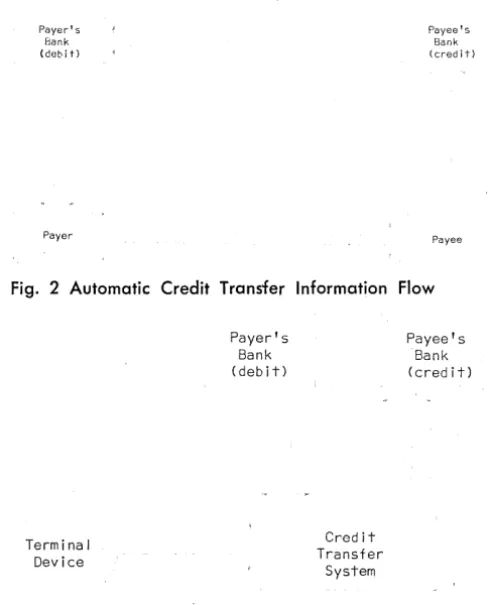
The idea of an auto-matic credit transfer system is examined, including the implications for the illl-plementors, consumers, and those who are on-line. Discussed are the services that can be performed, control of the system, and role of the government.28 COMPUTERS
&
TAX COLLECTION, byPhil Hirsch.
Although a time and manpower saver, the Internal Revenue's adp system also thwarts taxdodgers and schemers who file two returns to get two refund checks. Nationwide, it will help bring in $118 billion this year.33 COMPUTERS
&
TAX ACCOUNTING, byEdward K. Yasaki.
A look at the business of preparing tax returns by computer shows how the paper explosion could lead to remote terminals and central data banks, and what this means to the tax accountant.,36
IMPACT OF HARDWARE IN THE 1970'S, byL.
C.Hobbs.
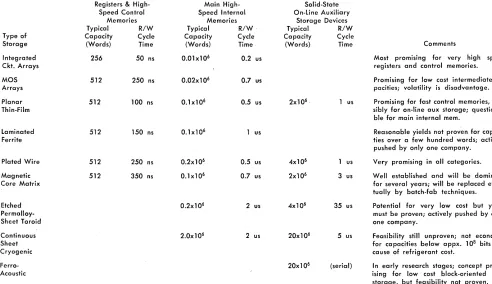
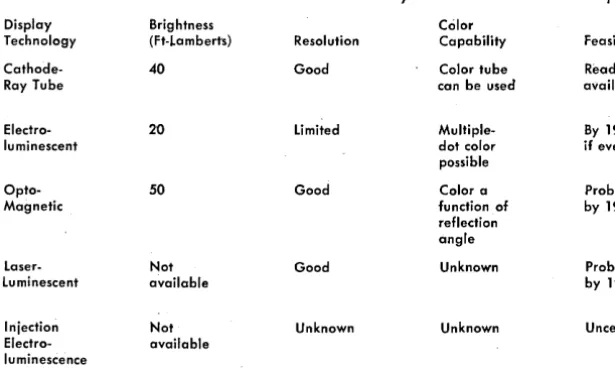
Examining the uneven rate of improvements in the next five years in I/O gear, components and packaging techniques, storage and displays, the author decries the general lack of understanding of the implications of these differing rates of progress on future systems. Seven problem areas are pinpointed.49 TIME-SHARING
&
MULTIPROCESSING TERMINOLOGY, byRobert
A.
Coli/'a.
This paper analyzes some terms in current use in time-sharing, multi-programming, and multiprocessing, and offers definitions that account for historical and foreseeable developments.53 THE SIGMA 7 FROM SDS. New line of computers marks the entry of the firm into new areas - business dp, time-sharing, multiprocessing, a large software system, and head-on competition with IBM.
61 THE SJCC GOES TO BOSTON. Nine non-conflicting technical sessions plus seven special sessions are featured at the Spring Joint Computer Conference, April 26-28.
datamation departments
10 Calendar 95 Books
14 Letters to the Editor 101 Washington Report
17 Look Ahead 109 World Report
21 The Editor's Readout 113 People
67 News Briefs 115 The Datamart
79 New Products 119 Index to Advertisers
The 1966
Reference Guide to CEC Analog
and Digital Magnetic Tape
Recorders and Accessories
This guide includes the new
DR-3000-the first truly universal digital magnetic tape system
Type VR-3600 - The dean of recorders, and the ultimate choice for the most de-manding pre- and post-detection and general purpose use.
~ 400 cps to 1.5 mc direct frequency re-sponse; and d-c to 500 kc FM frequency response.
~ Bi-directional capability including reverse automatic phase equalizers-available on special order.
~ 7 or 14 channel systems available as standard.
~ Available in "Universal" machine con-figurations for compatibility with lower bandwidth CEC recorders by switch selection.
~ Accessories include monitor meters for display of bias, input and output signals, RFI certification to MIL-1-6181D. Type VR-3800 - This data recorder offers the basic advantages of the VR-3600 at a modest price. Often referred to as the "work horse" of midband recorders.
~ 300 cps to 300 kc direct frequency response; d-c to 40 kc FM frequency re-sponse with high accuracy FM system.
~ Six speeds to 60 ips, instantly switchable.
~ All-metal-front-surface recording heads - reduce cleaning to a minimum; reduce tape and head wear.
l!l 7 or 14 channel systems available as standard.
VR·3600 VR·3800
8
~ Direct system fully amplitude- and phase-equalized.
Type VR-2600-Recognized as the finest, most versatile performer in its class.
~ Available with any combination of four types of recording/ reproducing elec-tronics and configurations (direct, FM, PDM, PCM).
~ All solid-state electronics, push-button controlled for operation without readjust-ment at six (6) tape speeds.
~ 600kc direct, 80 kc FM, IRIG PDM, and 1000 bit-per-inch PCM capabilities.
l!l 7 and 14 track analog systems as well as 16 track PCM systems available as standard. Accessories include edge track voice recording/reproducing, shuttle con-trol and monitoring equipment, including both meter and oscilloscope presentation. Type VR-3300 - Unmatched for appli-cations where ruggedness and mobility must be combined with outstanding performance.
l!l 100 cps to 300 kc direct frequency response; d-c to 20 kc FM frequency response.
~ Dual capstan drive system provides closed-loop speed and tension control equal to standard laboratory systems.
~ Interchangeable record and reproduce electronics and heads with CEC's Type VR-2800 laboratory recorder/reproducer
VR·3300
VR·2600
and VL-2810 continuous loop recorder / reproducer.
~ Six speed record/reproduce system. Type VR-2800 - A highly reliable wide-band system for use in laboratory envi-ronments with direct and FM electronics.
~ Six speed record/ reproduce operation.
~ 100 cps to 300 kc direct system and d-c to 20 kc FM system.
~ Up to 7 or 14 channels on 1/2 " or 1" tape respectively on 14" reels provide extended record time.
~ Uses aII-metal-front-surface magnetic heads, as do all CEC recorders, for long life and minimum tape wear.
Type PR-3300-Designed for mobility at a modest cost.
~ High quality mobile magnetic tape recorder / reproducer for standard 100 kilocycle work.
~ 7 or 14 channel systems or Y:z" and 1" tape respectively; 1 Olh n diameter reels.
~ Handles information via direct, FM or PDM techniques in any combination. Like the VR-3300, this unit can be operated from a-c or d-c power sources using its accessory precision frequency power supply.
~ Interchangeable electronics with CEC's GR-2800 and GL-2810 magnetic tape recorder /reproducer systems.
PR·3300
VR·2800
VR-3600 VR-3800* TAPE SPEEDS 6 speeds 6 speeds
to 120 ips to 60 ips
DIRECT 400 cps- 300
cps-FREQUENCY 1.5 mc 300 kc RESPONSE
FM FREQUENCY d-c-
d-c-RESPONSE 500 kc 40 kc
CHANNELS up to 14 up to 14 RECORDING Direct, FM Direct, FM METHODS
ELECTRONICS Solid-State Solid-State
Type GR-2800 - Commonly selected for general lab use in both industrial and mili-tary applications because of its operating economy, long life and reliability.
!!l General purpose laboratory recorder / reproducer system accommodating data in direct. FM or PDM recorded format in the frequency range from d-c to 100 kc.
!!l Utilizes all solid-state electronics.
!!l 7 or 14 channel operation on 112" and 1" tape respectively, with reel diameters to 14'~
!!l Closed-loop capstan drive system.
!!l Precision capstan drive electronics and tape speed control servo provide tape speed accuracies to within ± 0.02 % of recorded speed.
Types GL-2810 & VL-2810-Specifically designed for data reduction or data monitoring and storage where machine workload is heavy.
!!l Accommodate tape loop runs from 2 to 75 feet at six tape speeds from 1 % to 60 ips.
!!l GL-281O handles data in the range from d-c to 10 kc via FM techniques, and from 100 cps to 100 kc employing direct tech-niques; VL-2810 handles d-c to 20 kc FM and 100 cps to 300 kc via direct.
!!l Utilizes Y2" tape for up.to 7 channels, or 1" tape for up to 14 channels, using IRIG geometry.
!!l Accessories include. selective erase equipment providing erasure of any com-bination of 7 to 14 tracks, without removal of the tape loop from the machine. Bulk erase equipment also available.
GR-2800 GL-2810
VR-2600 VR-3300 VR-2800 PR-3300 GR-2800 GL-2810 DR-3000 7 speeds 6 speeds 6 speeds 6 speeds 6 speeds 6 speeds up to to 120 ips to 60 ips to 60 ips to 60 ips to 60 ips to 60 ips 75 ips
(in two ranges)
300 cps- 100 cps- 100 cps- d-c- 100 cps- 100
cps-600 kc 300 kc 300 kc 100 kc 100 kc 100 kc
d-c- d-c- d-c- d-c- d-c- . d-c..!...
80 kc 20 kc 20 kc 10 kc 10 kc 20 kc
up to 14 up to 14 up to 14 up to 14 up to 14 up to 14 up to 9 Direct, FM, Direct, FM, Direct, FM, Direct, FM, Direct, FM, Direct, FM, Up to 800
PDM, PCM PDM PDM PDM PDM PDM bpi NRZ or
1600 phase encoded Solid-State Solid-State Solid-State Solid-State Solid-State Solid-State Solid-State
Type DR-3000 - This advanced new in-strument offers unequalled versatility and performance - at the lowest cost of any comparable digital tape system available today.
!!l 7 or 9 channel formats including 200. 556, and 800 bpi recording densities or 1600 bpi phase encoding density on special order.
!!l Rigid performance specifications pro-vide machine-to-machine compatibility.
!!l Straight line tape loading requires no threading. Easiest of all to load, entire operation takes less than 10 seconds.
!!l Compact, rugged design with unique tape buffering provides high speed system mountable in a 19" or 24" rack.
!!l Dual capstans with special actuators assure positive and gentle tape drive, com-pletely eliminate tape slippage. And air bearings virtually eliminate tape friction.
DR·3000
CEC's Data Tape
®Accessories
The Monitor Oscilloscope is used with tape recorder/reproducers, or any
multi-channel instrumentation system to provide visual display of electrical signals ranging in frequency from d-c to 1,500,000 cps. Unique features of this unit include up to 500 kc sweep rate & modular construction.
The Type TD-2903 Automatic Tape Degausser is designed to erase data sig-nals from magnetic tape wound on reels up to 14" in diameter and from 1,,-4" to 2" wide tape. A reel of 1" wide instrumentation tape recorded at saturation level is erased to a nominal 90 db below normal level.
The Dynamic Tape Tension Gage per-mits accurate tension measurements directly while the recorder is in operation ... helps keep your recorder in proper operating condition through routine maintenance adjustment.
For complete information on any CEC Tape Recorder/Reproducer, write or call CEC for Bulletins in Kit 9008-X 4.
CEC
Data Instruments DivisionCONSOLIDATED
ELECTRODYNAM ICS
A SUBSIDIARY OF BELL & HOWElL/PASADENA, CALIF. 91109 INTERNATIONAL SUBSIDIARIES: WOKING, SURREY, ENGLAND
Frankly, if all we could offer you
was another good analog computer,
we· wouldn't be in this rat race.
As it is, we've built a really
better mousetrap. Take a good look.
We have to be honest about it. The world just doesn't need another analog computer. So when we designed the new Ten-Fifty, we made a value analysis of every major machine in its class. Look at the results:Capacity. 43% more computing capacity at anyone time - 86 modules. 47% more patching terminals - 2040. 200% more peripheral trunks - 126. Performance. Repetitive solutions up to 1000 per second. Simultaneous real time and fast time operation. Patented two or three mode electronic switching. Switch-ing times less than 500 nanoseconds. High accuracy multipliers - zero error 0.05%. 500 KC solid state amplifiers.
Hybrid operation is integral - logic is built-in. You get a separate 440 hole patch panel. Individual integrator controls. High speed electronic comparators and analog switches. The Ten-Fifty is fully compatible with major digital computers. Dependability. Patch panel is solid aluminum with coaxial terminals and fully gold plated wiping contacts, which are undisturbed during patching. Patch cords and wiring are shielded for low cross-talk. Short-circuit proof construction. Circuits are conservative in design and fully field-proven. Entire computer is factory wired and tested for full expansion.
Convenience. Pushbutton readout of amplifiers, pots and trunks. All amplifiers are uncommitted. Three built-in electronic timers - simultaneous operation. Thumbwheel time adjustments. Patch panel is color coded and lettered for full complement. All expansions simply plug-in. Expansion is by addition - not substitution.
Economy. Your first cost is low. Your expansion cost is low. There are no hidden extras. The Ten-Fifty is Value Engineered to give you the most computational capability per dollar invested. No computer in its class can match it.
10
Judge for yourself. Send for free comparison chart that shows you point by point where the value lies in analog computers.
COMPUTER PRODUCTS, INC.
55 Chapel Street, Newton, Mass. 02158 Tel. (617)-244-7575
CIRCLE 10 ON READER CARD
*
calendar
• Course in SIMSCRIPT, modeling
and simulation, is being offered by
the Southern Simulation Service,
March 21-25, Tampa, Fla.
• One-day technical symposium,
sponsored by six southern California ACM chapters, will be held March 29, Disneyland Hotel, Anaheim, Calif.
• Honeywell 800/1800 V sers Assn.
will meet March 29-31, Jack Tar Har-rison Hotel, Clearwater, Fla.
• American V niv. is sponsoring the following courses: "The Challenge of Cybernetics to Education," March 29-31, and "Systems Science," Mar 9-12, Twin Bridges Marriott Motor Hotel, Washington, D.C. Fees: $150-175.
• Course on "Top Management
Con-trol of EDP" will be given by Auto-mation Training Center, March 31-April 1, Del Webb's Townhouse, Phoenix, Ariz., and April 21-22, Ameri-cana Hotel, New York City. Fee: $175.
• Three-day symposium on
com-puter graphics will be held April
4-6, Schoenberg Hall, Vniv. of Cali-fornia at Los Angeles. Informatics Inc. is co-sponsor with VCLA. Fee: $50.
• Data Processing Management
Assn. is presenting two one-day COBOL
seminars: April 14, Statler Hilton Hotel, Cleveland, Ohio; and April 15, Palmer House, Chicago. Fee: $30.
• International congress on dp in
Europe is scheduled for April 17-21 at the Technical College in Craz, Austria. Co-sponsors are the Datacen-ter Craz and the Data Processing Assoc. of Vienna.
• Symposium on process automation
will be held April 18-20, Newporter Inn, Newport Beach, Calif. Sponsors are Beckman Instruments, Scientific Data Systems, Consolidated Electro-dynamics Corp. and Control Data Corp.
• Computer Usage Education Inc. will present two seminars: "The Re-programming Problem," April 19-21, Sheraton Motor Inn, New York City, and "Data Communications," April 12-14, Somerset Hotel, Boston. Fees: $195.
• Systems and Procedures Assoc. is sponsoring a Southwest Systems Con-ference April 20, at the Townehouse, Phoenix, Ariz.
• Symposium on computer-aided
basic research will meet April 22 at the Steven's Institute, Hoboken, N.
J.
• Meeting of the American Society of Mechanical Engineers on the theme '<Computers and Instrumentation" will be April 25-27, Charleston, W.Va.
• Seminars on digital systems engi-neering are scheduled for April 18-22 in Palm Beach, Fla., and April 25-29 in Los Angeles. Calif. A third seminar, I
'<Digital Electronics," will meet April 25-29, Washington, D.C. Sponsor is RCA Institutes' School of Custom Ed-ucational Programs.
• Course on hybrid computation will
be held April 25-May 6, Univ. of Cali-fornia, Los Angeles. Registration dead-line is April 18. Fee: $300.
• Spring Joint Computer Conference
will meet April 26-28, War Memorial Auditorium, Boston, Mass. Sponsor is American Federation of Informa-tion Processing Societies: Assn. of Computing Machinery, Computer Group of the IEEE, American Docu-mentation Institute, Assn. for Machine Translation and Computational Lin-guistics, and Simulation Councils, Inc.
• Telecommunications exposition to
be held in conjunction with meeting of Industrial Communications Associa-tion will be May 2-5, Queen Eliza-beth Hotel, Montreal, Canada.
• National colloquium on
informa-tion retrieval is scheduled for May 12-13, Univ. of Pennsylvania, Phila-delphia, Pa.
• SHARE Design Automation
Com-mittee Workshop will meet at the Jung Hotel in New Orleans, May 16-18.
• GUIDE International Users Organ-ization will meet at the Queen Eliza-beth Hotel in Montreal, Canada, May 24-27.
HSpecial" Pulse Generators are made to order at TI. Modular construction allows assembly of the right building blocks to meet your requirements. Now, "specials" cost you no more, frequently cost less than conven-tional pulse generators.
For example, the 6613 is an eco-nomical general-purpose unit with PRF from 15 cps to 15 mc, priced at only $950. Another model, the 6325, is a ten-channel, word-bit pro-. grammable unit operating up to 25
mc. The single unit does the job of ten discrete generators, at half the cost, and fits in a cabinet 23 in. wide, 38 in. high, 18 in. deep.
TI 'Pulse Generators give you out-standing performance: PRF's to 100 mc, fast rise and fall times, variable pulse width and delay, variable rise and fall times, plus and minus out-puts, pulse mixing, programmed and random word generation. You have your choice of portable or rack-mounting cases.
\ Vhen you need special pulse gen-erator performance, choose one of the thousands of standard pulse gen-erator combinations from Texas In-struments. For more information, contact your nearest TI Authorized Representative or write to the Indus-trial Products Group in Houston.
INDUSTRIAL PRODUCTS GROUP
TEXAS INSTRUMENTS
INCORPORATED
P. o. BOX 66027 HOUSTON, TEXAS 77006 118 RUE du RHONE GENEVA, SWITZERLAND
Your decentral ized company
12
o
Your decentralized company with a Univac
Total Management Information System.
Your total organization is tied together by a total
communications system that continuously receives,
up-dates and relays management information.
Centra I ized control of decentra I ized operations
becomes a reality. And distance, as a factor
in management, becomes irrelevant.
There are three distinct Total Management Information Systems
graded for businesses of varying size and complexity
and known collectively as The Un ivac®
Modular 490 Real-Time Systems.
l~~ ~~
letters
finding unused names
Sir:
We ran into a rather stubborn comput-er program the othcomput-er day. Most pro-grams fall more or less naturally into their acronyms, but this one resisted our efforts. Should it be Programming System for Adaptive Learning Ma-chines? Sounds'like we're praying for success. Adaptive Learning-machine Programming System? ALPS has been
used already. New Algorithmic
Pro-gram for Adaptive Learning Machines? Sure, it's topical,
but-In short, we racked our brains but to no avail. Others surely face the same problem. To aid them, and to protect and conserve this important national resource, I propose the crea-tion of a (federally-financed, of course) Department of Acronyms, Mnemonics, and Names, whose primary job would be to publish periodically a (hash-coded) listing of used and available acronyms.
JOHN H. MUNSON
Artificial Intelligence Group Stanford Research Institute Menlo Park, California
automay & smog
Sir:
I certainly agree with Mr. Patrick that private transportation must be auto-mated ("The Future of Private Trans-portation," Jan., p. 27), but we must also discard the internal combustion engine. An electric car using battery or fuel cell power for local street driving, and receiving power through the tracks of a freeway rail system for distance driving, is certainly a possi-bility. This system would also be easi-er to control than one of gasoline-powered autos riding on concrete highways.
The major obstacle in implementing any automated traffic system \yill not, however, be technical. All vehicles will have the same performance and appearance, leaving little toencour-age the consumer to trade in his pres-ent model for a newer one. This will be a more radical departure from our
14
current schen:le than even the idea of automation.
ROBERT B. KELLY
Livermore, California
Why buy? You'll probably be able to rent 'em. In fact, you may have to rent them.
social implications
Sir:
Paul Armer, in his piece in The Forum (Dec., p. 124), says: "Many loud voices, in particular the Ad Hoc Committee on the Triple Revolution, are saying that we must immediately face up to paying men not to work-we must have a guaranteed annual income ... "
According to John D. Pomfret in the New York Times: "The (Triple Revo-lution) committee urged that the link
(between income and jobs) be broken by 'an unqualified commitment' by society to provide through its appro-priate legal and governmental insti-tutions 'every individual and every family with an adequate income as a matter of right.''' Robert Theobald (a committee member) does propose a guaranteed annual income. But none of us speaks for the committee ... None of us wants to pay carpen-ters, or anyone else, not to work. What we do want is to increase total pro-duction and to provide people with an adequate income so that they could buy what the machines, together with men, produce ...
DR. LOUIS FEIN Palo Alto, California
medical computers
Sir:
I must confess surpris€ and chagrin at having our organization ignored in the article, "The Computer in Medicine, An Overview," by Evon C. Greanias
(Dec., p. 24).
The Commission on Professional and Hospital Activities is now in its eleventh year. Each day we receive about 20,000 abstracts of medical rec-ords of patients recently discharged from more than 610 hospitals in the U.S., Puerto Rico, Canada, and Aus-tralia. These hospitals will discharge approximately five million patients this year, representing one in every six hospitalizations in the U.S. and one in every five in Canada.
The commission does two things with these abstracts. First, we prepare certain routine statistics and indexes for the participating hospitals-infor-mation which all hospitals must have in order to maintain their accredita-tion. Several of the routine reports
which the participating hospitals re-ceive form the basis of the hospitals' educational medical audit program. In nonmedical terms, we provide a man-agement information system for physi-cians who make up the medi'cal staff of the hospital. Various displays of the data, together with exception report-ing, give the physicians new insight into their practices.
Secondly, the data are contributed to our growing file of over 17 million records and are made available not only to the participating hospitals but to other bona fide researchers in the health fields. Our own staff com-pleted nearly 400 special studies on these data last year, pointing up varia-tions or similarities in patients and practices in many areas of medical interest.
Each of the medical record abstracts can routinely handle up to 150 kinds of information about each patient, but an almost unlimited variety of addi-tional information can be handled by special arrangement.' We have two computers to handle the work, but our staff of over 140 people are the real key to the reputation the commission enjoys in medical and hospital circles. They not only run the Professional Activity Study and the Medical Audit Program but a host of other research projects in such areas as hospital utili-zation, specialized registries, nursing home records, community health in-formation systems, and the quality of patient care, just to mention a few. Our staff has also made substantial contributions in the fields of statistics, computer methodology, and classifica-tion theory. The demands of the Medi-care legislation have speeded up our already rapid growth, and it looks like we will spend well over $2 million this year.
WILLIAM H. KINCAID
Commission on Professional and Hospi-tal Activities
Ann Arbor, Michigan
the living machine
Sir:
Congratulations on your excellent Jan-uary issue! One complaint, however. In '.'The Computer in Literature," Ned Kelly says:
" ... Still, this is a long way from the idea that mankind may even disap-pear, leaving behind robots as his only descendants. We ask what this could
mean-the mind boggles at die
thought-but does the reader recall the weird dialogue between Margaret Mead and Warren McCulloch in the film The Living Machine?"
The answer is no, he doesn't. So would
letters
you please give us a brief summary of this weird dialogue? It just isn't fair of you to leave us dangling like that.
EUGEN BOSCH
Arlington, Virginia
Editor's comment: Unable to reach Mr. Kelly, here's my answer to your question. The Living Machine, a two-part, one-hour movie, was produced by the National Film Board of Can-ada, and I saw it at the SJCC in Detroit in 1963. That's quite a while ago, so some of my recollections may be fuzzy or inaccurate, but I don't think there was a direct confrontation between McCulloch and Mead in the film. The narrator, however, interviewed McCulloch, and elicited from him statements affirming science's ability to create machines which could duplicate what many view as the most private (or sacred) human capabilities. In one marvelous scene, McCulloch is sitting in his bathing suit and striking beard, dealing with a grandchild, as the interviewer asks with obvious shock" ... even machines which could reproduce machines which can duplicate humans?" (This is a paraphrase of his statement.) And McCulloch, reiterating an earlier conditional statement, allows as how this could be, if the human functions can be adequately and appropriately described. Later, the same narrator asks Miss Mead to comment on McCulloch's statement. Her reply, as I re-member it, suggested that this was a form of a power dream common to scientists (I don't think she mentioned the Faust legend, but it leaps to mind). This, as I see it, is the "weird dialogue" Kelly refers to. While we're on the subject, it seems worth noting that later in my own interview with McCulloch, I asked him what he thought of. Miss Mead's comment. His unscientific but understandably human reaction ;(with a wave of the hand): "Oh, Margaret."
dp training
Sir:
Although an effective training pro-gram is vital to any dp organization, it is becoming evident that manufac-turer-sponsored courses for program-mers and analysts are not satisfying this need. Therefore, and in order to more effectively express users' desires, the Education Committee of the Joint Users Group is embarking on an ex-tensive program.
It will include a survey of the cur-rent training plans and programs of users' groups, a critique of the survey, and the publication of a suggested training program with the participa-tion of the separate users' groups. Those interested in participating are requested to contact me.
STANLEY M. NAFTALY, CHAIRMAN
Education Committee Joint Users Group 432 Clay Street
San Francisco, California 94111
OUR PEOPLE WRITE ROUND BOOKS
Filed here in this climate controlled library are the
taped instructions and information from which our
com-puters pour out reports on inventory, accounting,
class-room scheduling, payroll, even mailing labels.
Every word was written by people ... experienced
people. Every "chapter" was outlined and organized by
our systems designers. Every guiding sentence was phrased
for efficiency by our programmers.
Without these people, our $23 million worth of
com-puting machines would spin fruitlessly.
If you are thinking about utilizing a computer, think
about people first.
Call or write.
One of our people will answer.
Consulting. Systems Design. Programming. Data Processing and Computing
0
NlCDONNELL AUTONIATION CENTER
DIVISION OF MCDONNELL AIRCRAFT ~
Box 516, St. louis, Missouri, 63166 Tel. (314) 731-2121 ~
o.
)l
~
.-=---....J1l§
[eJIIl
~lCO
lL1L ____ -,
The
Me
4000 prints as silently as light striking this page.
16
Monroe Datalog®'s ultra high speed MC 4000 is totally silent because it's an optical, not an impact printer. All solid state. Cathode ray tube with fiber optics. Absolutely reliable-only two moving parts.
Ultra high speed-records 6000 lines per minute, or any speed less that your application requires. Truly synchro-nous or asynchrosynchro-nous. Available in numeric or alphanumeric models-both 32 columns wide.
Features: character serial input, bit parallel. 6 microseconds per character
CIRCLE 14 ON READER CARD
data transfer time. Exceptional com-pactness-l0,%''' x lOU" x 21,%'''. Any 4 or 6 line code with any logic level. Permanent copy option available. '
And a full year's warranty. Price: $5650 for numeric model; $5850 for alphanumeric model.
For information, contact Monroe Datalog Division of Litton Industries, 343 Sansome St., San Francisco 94104. (415) 397-2813.
MONROE DATALOG
rn
DIVISION OF LITTON INDUSTRIES
rtant
nputer
he
Arizona
the impres-lent Depart-neet rapidly
of appoint-) our head-:m, send us
SPECIALIST -BUSINESS SYSTEMS DESIGN
BS degree in Business or Math or equivalent. Several years of systems design experience for business sys-tems utilizing computers, or equiva-lent. Programming and tab experience. Functional experience in Manufactur-ing, MarketManufactur-ing, Finance or Product Service.
PROGRAMMER
High school education and formal or on the job training in programming techniques. 2 years programming ex-perience or exex-perience working in Product Service training with pro-gramming experience or equivalent experience in logic design, test and diagnostics design or related pro-gramming experience.
PROGRAMMING ANALYST
BS degree in Math, Engineering Sci-ences or Business. 4 years program-ming experience on large or medium scale digital computer system. Appli-cation and/or techniques program-ming experience. Machine and/or assembly language programming ex-perience. Mass Random Access stor-age device programming.
Jirements to: t., Sect. 47C, :ona.
T
rRIC
f=)look~ahead
CONVERSION MIGRAINE AWAITS
THIRD GENERATION PIONEERS
A huge conversion headache awaits most installations
installing third generation hardware ••• and most of
them are either unaware of it, or are pretending the
problem will fade if ignored.
That's the view of
several top-flight systems people who have had long,
discouraging looks at the conversion problem.
The
consensus: hardware and file conversion represent the
toughest hurdles; program conversion, while
time-consuming and difficult, will be more straightforward.
Hardware problems facing IBM upgradees include
different collating sequences for the 360 and its
binary predecessors; estimating printer timing and
finding the best combination of characters in the
extended character set; getting accurate up-to-date
information about the 360 and conversion routines.
The main problem, says one man, is not just moving to
a new machine which can do new things, but the
immense variety of ways it can do them.
File conversion will be especially tough for
those moving up from word-oriented machines.
And then
there are the technicalities of different numbers of
tracks, different ·densities.
One conversion expert
will be surprised if he'll be able to record 1600
bpi on his old tapes.
The 360 conversion problem is sticky enough that
some people are reconsidering vendors.
For 7000
users, the logical alternative seems to be the 635,
more compatible with that series than is the 360.
Attempting to capitalize on the 360 conversion
problem, GE is offering a Cobol conversion package
(SCORE, for SCan CObol REserve words), and 7040/90
simulators.
Admits one man at an installation long
known as an IBM one, "If you're ever going to change
vendors, now's the time." And it looks as if many
former 360 fans would rather switch than fight •••
conversion problems.
FOR BIG 360 USERS,
A WImR OF i5'YSC'5NTENT
Early large-scale 360 performance is causing some
disappointment: one user says he hasn't yet been able
to run a Cobol program on his 50; times are so
bad that he may have to put in another main frame.
It's the E level software, says one expert: it's slow,
doesn't take advantage of any memory available over
32K
bytes.
The F level
(64K)looks ok, but H level
for some processors has been cancelled.
IBM will
probably hop up E level software by this summer.
H level Fortran, under fire for being slow, will
probably be released with disclaimers to those who
can't live without it. But a new, faster "G" level
Fortran is being developed for IBM by Digitek.
PLL!: RAPID RISE
TO STANDARD-DOM?
Although it's hardly being used yet, PL/I is already
being discussed as a candidate for standardization
effort.
At a meeting last month of representatives
of most major manufacturers, user groups and the
government, it was decided to recommend to ASA's
X3 info processing committee that PL/I be
If you've ever
programmed· .
under a real-time
operating system,
write to
CUC.· .
If you've
designed or
implemented. one,
call us collect!
• Let's talk. And let's be frank. We need you and people like you.
We think we've built the kind of company you'd find stimulating.
You've probably heard how choosy we are. And you've heard about the kind of work we do. But can you imagine the satisfaction you'd get from working with an outfit like CUC? To find out more about us mail this coupon.
...
cue
Computer Usage Development Corp. 344 Main St., Mt. Kisco, N. Y. 10549914·666-6741 Ext. 25
Send us a copy of your 24 Page Capability Report "One Day in May"
NAME __________________________________ __ COMPANY NAME __________________________ __ ADDRESS ______________________________ __ An Equal Opportunity Employer CITY STATE ZIP _ _ _ OFFICES IN: NEW YORK CITY; WASHINGTON, D.C.; BALTI"'OR-E; PHILADELPHIA; CHICAGO; BOSTON; LOS ANGELES; SAN FRANCISCO; HOUSTON.
18 DATAMATION
The 5 faces of
a
Systems
Engin~
How you, too,
c~
We're looking for Avionics Systems Engineers with split personalities - split five ways. Well-rounded engineers who can literally do the work of five.
Engineers who can fill the roles of conceptual innovator, scientist and engineer, trade-off analyst, hardware 'specialist and economist-all in one.
I
Hard to find? You bet they are. But 'somewhere out there are the people
we're looking for. Maybe you.
IBM's Electronics Systems Center in Owego, New York, has immediate openings for engineers in one of the most exciting areas of engineering there is - Systems Engineering.
March 1966
It
fn ut
Tl
eq
co ml
Sc th
T(
co ml inj pr mi in de en tn: yo
grl prl
look ahead
CDC CHANGES 6800
.!LQ
STRUCTURE, PRICE •••
CONSIDERS NEW PRODUCTS
RUMORS AND
RAW RANDOM DATA
and that it be conducted by X3.4 (common programming
languages), which has already agreed to do just that.
The work to be performed by X3.4 would include
recommendation of modifications; proposal of a
precise specification of the language, including
subsets; and a report on the suitability of the
proposed specs (not on the language as it now stands).
Thus other manufacturers hope to influence a
generalization of the language, weaning it away from
any dependence upon 360 characteristics. But critics
claim such development is outside X3's authority,
will automatically ensure suitability of PL/I for
standardization, cramming the language down the
industry's throat before it has been widely accepted.
The wishes of fickle customers are blamed for the
latest change in the design of the CDC 6800.
In an .
attempt to enlarge the I/O capacity, users can now
have up to 64 peripheral processors, each with 4K
words of core.
This makes the Big One even less
compatible in the I/O area with the 6600.
CDC vp
Seymour Cray continues with a crew of only 38,
producing the prototype 6800 at Chippewa Falls, Wisc.
With the first model due in two years, the price has
been upped some 10 to 20%.
Meanwhile, Control Data is mulling over some new
products.
The 6000 series satellite computers may be
fitted with a central core and offered as a package.
Another rumored item: a mass core unit, to be
available in 2-million-word modules for the 6600,
with a .1 usec/word transfer rate.
It would also be
available for the 6800, but four times as fast.
The revamped, revitalized activity at the Bureau of
Standards is 'off and running, with int erest ing work
beginning on such ticklish topics as computer
selection, performance measurement, documentation
standards.
Director Norm Ream, looking for some
high-level people to move the program, has hired BEMA's
Vico Henriques and GSA's Bob Rountree. He's also
hoping to get industry to supply research associates.
The first R.A. may come from Japan •••• Look for
another entry into the computer sweepstakes in a
month or two.
A brand new western firm will announce
a machine highlighting quick delivery, "instant"
useability •••• Kodak will announce a certified
computer mag tape soon, is lining up sales outlets.
Consolidated Electrodynamics Corp. hopes to get
exclusive marketing rights •••• Houston Fearless goes
into production in six months with a microfilm unit
which can store 67,500 images on microfiche cards and
sells for under $2K, said to be $4K less than its
nearest competitor.
The unit will be available with
teletype or crt and interface for on-line hookups.
Also, in the prototype stage is a camera processor to
make the microfiche images.
HF expects the $15
million microfiche industry to grow to $150 million
in the next five years •••• IBM is developing (or
having developed) Fortran and Cobol to PL/I
translators •••• Reuben Donnelly has finally settled
on a 490 -- to be updated to a 494 -- for its
interline reservations system •••• SEL, which has sold
over 30 800 series computers, is offering three i.c.
crt displays with refresh memories.
PRC and IDC are
developing software for the 800's, which will be
speeded up •••• Dartmouth moves up in Oct. to a GE 625
with 160-line capability, 80 each for GE and the
If you use a computer
to draft your own paycheck,
PAID TO GEORGE SPELVHJ D61-16-2265
ENDING
1-31-66 550
no
6.05 61.40 1fj.00 00you owe it to yourself to use
the tape that never misses a bit
Everybody on -the payroll stands to benefit if you use the computer tape least likely to develop errors caused by drop-outs. Conventional tapes begin to shed dropout-causing oxide particles after only a few paydays. Memorex computer tape-using advanced coating formulations and processing methods to achieve a superior bond between the oxide par-ticles-is essentially free from redeposition problems. Hence
Memorex precision tapes are widely preferred for such im-portant figures as your payroll records.
If you write Memorex Corporation at 210 Memorex Park,
Santa Clara, California 95052, we will send you computer tape specification data and a complete bibliography of tech-nical information available from the Memorex library of reprints.
Memorex Branch Offices in New York, Philadelphia, Washington, Atlanta, Orlando, Dayton, Chicago, Detroit, Dallas, Los Angeles, San Francisco; Offices and Affiliates in London, Cologne, and Paris
CIRCLE 15 ON READER CARD
editor's
read~ut
the missing data base, part 2:
ANATOMY OF AN INDUSTRY
IN SEARCH OF MATURITY
It's obvious that the information processing industry lacks a coherent body of facts and statistics about its own activities. It's evident that such information could be of immense and immediate value to users, manufacturers, educators, investors ... to the entire industry and everyone affected by it. And it's clear that most of the information needed exists and could be gathered, synthesized and made available.
Just who could or should go about gathering this desperately needed infor-mation is not so clear. To find out why this is so, let's take a quick look at the anatomy of our industry, a loose assemblage of amorphous bodies connected in random and haphazard ways, each responding differently to wide varying stimuli. Manufacturers, for instance, respond sometimes to pressure from users (FORTRAN), from government (COBOL), from competition (prices down, internal performance up). As a group, hardware manufacturers (most of them) are represented only by an organization called BEMA (Business Equipment Manufacturers' Association). BEMA coordinates information processing stand-ards work for the American Standstand-ards Association, conducts a yearly exhibit of office and edp equipment, does little else. Except in standards matters, it does not represent any unified voice of manufacturers.
The user, responsive in varying degrees to his own management, is even less well structured. User groups have a narrow influence on some important deci-sions of the one manufacturer they seek to influence. Attempts to increase the usefulness and broaden the influence of the Joint User Group have failed, partly because not all user groups will join, partly because of IBM's predominance.
Professional societies respond primarily to the educational needs of their members. Coming closest to representing the industry (but not close enough) is AFIPS (American Federation of Information Processing Societies), which so far has shown a reluctance to serve as an industry spokesman or to influence anybody.
So far, none of the organizations we've examined seem to offer a source for the information gathering activity the industry needs. Each lacks either the finances, the representative base, the will ... or some combination thereof.
Let's look at the federal government, which plays several key industry roles. First of all, the government has served from the industry's infancy as the prime source of research funds. And the government, although it does not always act it, is the industry's biggest user. As such it can exert the strongest influence over the broadest range of industry activities - manufacturing, education, software and services-of any organization in the industry as it is now constituted. But the charter of the government extends beyond these two functions: it includes the responsibility for the development of conditions leading to a healthy, competitive, profitable industry; the protection of the rights of the consumer; development of
a strong export industry; among others. '.
We're not talking now about the bureaucracy-heavy, red-tape-riddled Big Brother kind of government, but of government responsive to the needs of every facet and segment of the industry. We're talking about the kind of government which seeks and makes use of the cooperative involvement of industry leaders, serving as the coordinating focal point for an industry in search of maturity.
The development of an industry data base to answer the kinds of questions illustrated in last month's Readout would do much to accelerate the maturation of the industry, and the cohesiveness necessary if it is to conduct its affairs with intelligent purpose. And we think that the government can best direct the first attempts to develop this data base.
We feel that in the charter and organization of the government's, ADP activ-ities as outlined in H.R. 4845-the Brooks Bill- (and in the Report to accompany that bill), exists evidence of the government's ability to serve as the coordinating focal point for this industry-wide gathering and synthesizing activity.