Investigation of Various Power Quality Issues & its Solution in Grid
Connected Distributed Power System
Komal D. Thakur
1, Kirti R. Chichate
21
Assi. Prof., Dept of Electrical Engineering, DMIETR, Wardha, Maharashtra, India
2
Assi. Prof., Dept of Electrical Engineering, DMIETR, Wardha, Maharashtra, India
---***---Abstract –. Power quality is the measure, analysis and improvement of bus voltage usually load bus voltage to maintain that voltage to be sinusoidal at rated voltage and frequency.It is the collections of all electrical networks as the ability of system equipment to perform satisfactorily without discontinuity. Power quality problem occurs when the alternating voltage sine wave is distorted. This paper describes how to deal with effect of power quality problems along with its solutions. Even it is benefited for the suppliers, distributors and consumers of electricity.
Key Words:Power quality, voltage sag, swell, harmonics,
interruption, flicker
1. INTRODUCTION
Power quality is defined as the ability to provide a clean and stable power supply to utility & end users. It must be noise and distortion free sine wave within a voltage and frequency. It can be largely motivated by the power quality issues. It can also be defined as user of electric power may utilised energy from distribution system successfully without any disturbance, interruption and interference. According to this paper about power issues critically discussed. Power quality related issues are the important concern in the distribution side and also an industry sides. It is very important issue among all the users. There are various types of power quality issues occurs in the power system such as harmonics, flicker etc. Power quality disturbances can also increases based on that type of switching phenomena that result in create a oscillatory transients in electrical systems or supply. In the distribution system high power nonlinear loads are connected in such a way to the generation of harmonics in the system. Power quality problems can listed as equipment failure, increased electricity bills, wasted energy, interference with communications systems and even shutting down of entire plants. It affects the sensitive devices such as computers at home, generator, transformer, various machines used in industries. Hence it is very important to investigate these problems and their possible solutions.
1.1 POWER QUALITY ISSUES:-
The Electronic devices can face the lot of problems without quality of the power such as malfunction of the equipment damage the devices likely effect of sensitivity of the equipment. The various power quality problems are voltage sag, voltage swell, voltage fluctuations, voltage dips, voltage unbalance, flicker, and harmonics distortions, frequency
variations, very long interruptions, and very short interruptions, electrical noise, under voltages, blackouts, and brownouts.
A. Voltage Sag
Voltage sag also referred as voltage dips. It is defined as reduction in voltage for a short duration of time. And the duration of voltage sag is less than 1 minute but more than 8 miliseconds (0.5 cycles). The magnitude of reduction is between 10% and 90% of the normal root mean square (rms) voltage at 50 Hz. Mainly it caused due to any short circuit and any of the over load and starting of the electric motors. The major cause of voltage dips are fault in the system, starting of large loads. Excessive network loading, loss of generation, incorrectly set transformer taps and voltage regulator malfunctions, causes under voltage which indirectly lead to overloading problems as equipment takes an increased current to maintain power output.
Fig.: Voltage sag
B. Under voltage
Under voltages occur when the voltage drops below 90% of the nominal voltage for more than 1 minute. They are also referred as brownouts. Under voltages can create overheating in motors, and can lead to the failure of non-linear loads such as computer power supplies. The solution for sags also applies to under voltages. Sometimes utilities deliberately cause under voltage to reduce the load during heavy load conditions. However, a UPS with the ability to adjust voltage using an inverter first before using battery power will prevent the need to replace UPS batteries as often. More importantly, if an under voltage remains constant, it may be a sign of a serious equipment fault, configuration problem, or that the utility supply needs to be addressed.
C. Voltage Swell
for less than 1 minute. Due to which suddenly the load is thrown off and voltage rises at point of common coupling (PCC). [3]It is normally associated with system fault conditions. It is looking just like the voltage sag but it is happened is very less commonly. Voltage swell is the really for the ungrounded and floating delta system where the suddenly change in the ground reference systems finally it can cause voltage rise on the ungrounded phases. Normally we can say the voltage swell is the single line to grounded fault system and it can be always temporarily voltage rise during the particular time and minutes.
Fig. : Voltage swell
D. Voltage Fluctuations
Voltage fluctuations are rapid changes in voltage with in the allowable limits of voltage magnitude of 0.95 to 1.05 of nominal voltage. It causes sudden start and stop of the electric motors, and hence load will be oscillating. Probably the important consequence is common to under voltages. The main consequence of the voltage fluctuations is the giving flickering of the lighting, and other consequence is the gives the impression of the unstable visual perception. The solution of voltage fluctuation for change in the frequency of the is Static VAR controllers.
D. Voltage Unbalance
It is variations in voltage in the power system and hence in the magnitudes and phase angle. Voltage unbalance mainly causes the single phase load, and incorrect of the big size single phase loads through the three phase system. It may be according to the any fault conditions also it will chance to create in the three phase system. It also causes capacitor banks not operating properly.
E. Frequency variations
Frequency variation is change in frequency from the normal utility frequency in 50 hz. It creates many problems in generators by change in frequency in the generator sides. It can be looses data from the sensitive equipments or failure in equipment, shut down of the system.
F. Electrical noise
It is caused by a low voltage, high frequency. It transmitted through the air or wires. High voltage lines, arcing from operating disconnect switches, startup of large motors, radio and TV stations, switched mode power electronics devices can all cause this type of noise. It can degrade telecommunication equipment, radio and TV reception and damage electronic equipment.
There are two way to solve this type of problem such as we can eliminate the source of electrical noise. And another way is to either stop or reduce electrical noise from being transmitted.
G. Interruption
Interruption are a complete loss of voltage i.e. a drop to less than 10 % of nominal voltage in one or more phases.
There are three types of interruptions namely;
i) Momentary interruption
ii) Temporary interruption
iii) Long duration interruption
Momentary interruptions are the complete loss of voltage on one or more phase conductors for a time period between 0.5 cycles, or 8 miliseconds, and 3 seconds.
Temporary or short duration interruption is a drop of voltage below 10% of the nominal voltage for a time period between 3 seconds and 1 minute.
Long duration interruption is last longer than 1 minte.
Any interruption in a business costs money. It results in loss of production in an office, retail market or industrial factory.
H. Harmonics
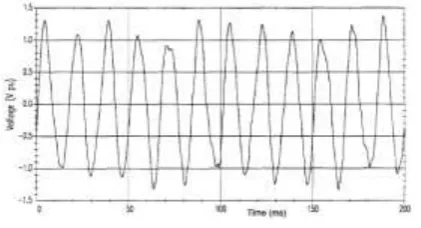
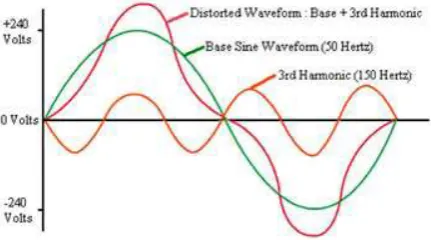
[image:2.595.57.268.656.770.2]motors, degrading of the conductors; transformers faced a lot of problems. Once the level of harmonics increases it will affect. The problems created like equipment failure, equipment heating, create a electromagnetic interference between the communication circuits.
Fig. : Voltage unbalance of three phase system
G. Flickers
Repeatedly the supply voltage variations and also it will maintain randomly. It can be caused by arc furnaces , welding equipment and shredders.
H. Power Factor Variations
Power factor is the very important term in the electrical power system. It means that defined as the ratio of real power to apparent power. Apparent power is the product of voltage and current. Semiconductor devices are used in various electrical power systems because it will distorted the wave form it is called the nonlinear load. According to this nonlinear load is not giving perfect sinusoidal and also lots of deviations in the voltage and current wave form. In this situations the apparent power is greater than the real power it gets low power factor. Once the level of power factor will be increased we must face a lot of problems in the load side along with entire circuit. Poor power factor has various consequences such as increase the load current, larger KVA rating of the equipment, greater conductor size, larger copper loss, poor efficiency, and poor voltage regulation. In case of the power factor is very low the current flowing in the circuit is more than load. In case of the high power factor the useful power is transferred to the electrical system.
III. SOLUTION TO POWER QUALITY PROBLEMS
Many types of power enhancement devices has been developed to improve the power quality and also to protect the equipment such as transient voltage surge suppressors, various types of filters such as harmonic filters, noise filters, voltage regulators, isolation transformers, dynamic voltage restorer, ups, off line UPS, line interactive UPS, true on line UPS, Unified power quality conditioner, static VAr compensators, thyristor based static switch, motor generator set.
A. Transient Voltage Surge Suppressors (TVSS)
The most common devices for preventing power quality problems from damaging equipment are surge suppressors. Surge suppressors protect sensitive equipment from being zapped by voltage surges or lightning strokes on the power system. If they located on the utility side of the meter, they are called as surge or lightning arresters. If they are located at the end user sideof the meter, they are called as transient voltage surge suppressors (TVSSs). These types of units are safe for the electronic load.
TVSS is having nonlinear resistance component as these types of components also controls the excessive line voltage even it conduct any of the excessive impulse energy to ground.
B. Noise Filters
All filters including noise filters prevents from unwanted frequencies from entering sensitive equipment. It can be carried out by using the combinations of capacitors and inductors it will be creates a low impedance path to the fundamental frequency and also a high impedance path of the higher frequencies. It is also called as low pass filter used as when noise along with frequency in the range of KHZ.
C. Harmonic Filters
We know that harmonics filters can be used to reduce the unwanted or undesirable harmonics. This has to be split into the two types of groups one is a passive filters another one is a active filters .passive filters is defined as the combinations of the resistors, inductors, capacitors it also be carried out low impedance path to the fundamental of frequencies even it is reduced unused harmonic components. A lot of passive filters connected in parallel this to be reduced several harmonic components. Passive filters can be acts as a Ineffective situation when the vary the passive components or system is varied. Then active filter is used to identify the current consume by the load along with it will reduce the harmonics currents generated by the loads. In the past few years it will not be a effective but it will be becoming cost effective to reduce changing and unknown harmonics.
D. Isolation Transformers
transformers cannot be compensated voltage fluctuations and any of the power outages problems
E. Voltage regulators
Voltage regulators can used to maintain the output voltage. There are three types of voltage regulators first one is the tap changers, constant voltage transformers, buck boost. Tap changers is used when adjust the input voltage vary automatically taps transferred to the transformer. The main advantages of this high efficiency, having high over load current capability, isolate the noise, the main disadvantages is the noise will be created when the tap changes[3]. Buck boost is creating a high efficiency, withstand the high inrush currents. The main disadvantages is the noise will be created when the tap changes and there is no any waveform correction. Constant voltage transformer is to maintain the nearly constant output voltage during the large input voltage variations. The main disadvantages of this to be a low efficiency, the size will be more.
F. Uninterrupted Power Supply (UPS)
UPS is to provide the protection for any power disturbance, or any power interruptions. It will be giving power continuously when the power interruption if any power disturbances occurs. Depends upon the various technologies and differ the provide protection such as sag if any continuous noise will occurs.
G. Dynamic Voltage Restorer (DVR)
It will be connecting in series with a load and it is similar to the voltage source. At the load terminals DVR is to maintain the output voltage constant by using the stored energy to inject the active and also a reactive power.
H. Static VAr Compensators
Static VAr compensators is used to regulate the high
voltage quickly and also a combinations of the capacitors and reactance .To prevent the voltage fluctuations the solid state switches controls this fluctuations insertion of the capacitors and reactors. Static VAR compensators normally regulate the high voltage and also reduce the flickers caused by large loads.
I. Unified Power Quality Conditioner (UPQC)
UPQC is used to mitigate the voltage and current. It is also related to the power quality issues in the power distribution systems. This has to be employed two types of voltage inverters that will be connected to the dc energy storage system. UPQC has to be compensated the current and supply voltage. This current will be drawn from the network supply voltage is delivered to the load.
IV. CONCLUSION
Power quality is the important and very critical or crucial matter in the modern society. Most of the electrical equipment is failed due to power quality problems. Many sectors can be accepted or satisfied the quality of the utility powers. But some of the consumers more demanding getting the proper functioning of the electrical equipment along with quality of the power. To prevent this problems better way to restoring the technologies, distributed generation, selecting the less sensitive equipment and also by using the interface devices.
References
[1] Moataz Ammar, Student Member, IEEE Marty Martin, “Flicker Emission of Distributed Wind Power: A Review of Impacts, Modeling, Grid Codes and Mitigation Techniques,”
[2] D. Mascarella, P. Venne, D. Guérette, Member, IEEE, and G. Joos, Fellow, IEEE, “Flicker Mitigation via Dynamic Volt/VAR Control of Power Electronic Interfaced WTGs,”
[3]Kavitha V, “ Investigation of Power Quality Issues and Its Solution for Distributed Power System”ICCPCT 978-1- 5090-4967- 7/17/$31.00 © 2017 IEEE.
[4] Yun-Seong Kim and Dong-Jun Won, “Mitigation of the Flicker Level of a DFIG Using Power Factor Angle Control”, IEEE Transaction on Power Delivery, vol. 24, no. 4, October 2009.
[2] S. W. Mohod and M. V. Aware, “Micro Wind Power Generator with Battery Energy Storage for Critical Load”, IEEE Systems Journal, vol. 6, no. 1, march 2012.
[3] S. W. Mohod and M. V. Aware, “Power Quality Issues & It’s Mitigation Technique in Wind Energy Generation”, in Proc. IEEE ICQPH, September-October 2008.
[4] A. Larsson, “Flicker Emission of Wind Turbines during Continuous Operation”, IEEE Transactions on Energy Conversion, vol. 17, no. 1, march 2002.
[5] Yunqian Zhang, Zhe Chen, Weihao Hu and Ming Cheng, “Flicker Mitigation by Individual Pitch Control of Variable Speed Wind Turbines With DFIG”, IEEE Transaction on Energy Conversion, vol. 29, no. 1, march 2014.
[6] Tao Sun, Zhe Chen and Frede Blaabjerg, “Flicker Studyon Variable Speed Wind Turbines with Doubly Fed Induction Generators”, IEEE Transactions on Energy Conversion, vol. 20, no. 4, December 2005.
[7] S. W. Mohod & M. V. Aware, “Analysis and Design of a Grid Connected Wind Generating System with VSC”, IEEE System Journal.
IEEE Int. Conf on Power Electronic Drives and Energy System (PEDES) Delhi, 5A-21, December 2006.