Effect on Beetroot Samples in a Solar Conduction
Dryer
Dipti Deshpande
Sinhgad College of Engineering, India
Abstract: A flat plate type natural convective solar dryer is designed and constructed for conducting thin layer drying experiments of beetroot samples. Determination of the air-drying characteristics of beetroot by thin layer solar drying process is carried out by subjecting it to various combinations of heat transfer like Conduction, Convection and Radiation along with simulation of thin layer solar drying process of beetroot done by Newton (Lewis) thin layer drying model. The drying process of beetroot was carried out during daylight time of around 8 hours. The dramatic moisture reduction of beetroot took place during the peak hours of solar intensity from 11:00 am to 15:00 pm. Beetroot samples were dried from a decimal initial moisture content of about 87% w.b to a decimal final moisture content of about 7% w.b. The drying process occurs in falling rate period and moisture diffusion was the dominant physical mechanism governing moisture movement within the beetroot samples.
I. INTRODUCTION
Drying is a very effective method which protects food and inhibits growth of bacteria and yeasts by removal of water [1,2]. Electrical heaters need over 3 kW of primary energy for supplying 1 kW of evaporation [3]. In the present scenario, researcher and engineers focus on to design and manufacture efficient systems or devices in order to harness renewable energy for drying products. Drying reduces the water activity of the produce to a level below which deterioration does not occur for a definite duration [4,7]. High prices and shortage of fossil fuels have increased emphasis on using alternative renewable energy resources and hence drying is preferred because of the same. [8].
Solar drying is an elaboration of the sun drying process and an efficient system of utilizing solar energy [8,9 10-12]. The taproot portion of the beet plant is the beetroot. Other than as a food, Beets have use as a food coloring and as a medicinal plant. Beets also contain the B vitamin folate, which helps reduce the risk of birth defects. Considering so many benefits and importance of beetroot, we have selected this vegetable for drying purpose. If beetroot can be dried and hence preserved for longer time can yield benefits for humanity for a longer duration.
II. RELATED WORK
The popularity of products which are dried have longer shelf life, substantial volume reduction and product diversity. Applications of dryers in the countries which are developing can reduce the losses postharvest and contribute significantly to the availability of food in these countries [23].
Solar dryers need to be properly designed in order to meet specific drying requirements of agricultural products and give satisfactory performance for energy requirements like dimensions, airflow rate ,temperature, relative humidity, the characteristics of products, system configurations and drying seasons.
The prediction of drying rate of the specific crops under different conditions is very important for the design of the drying systems. Full-scale experimentation for various products and systems configurations is sometimes costly and not possible. The valuable tool for prediction of performance of solar drying systems is the use of a simulation model.
Many investigators have carried out mathematical modeling and experimental studies on the thin layer drying of various fruits and vegetables. For example, potato slices, okra, coroba slices, sweet cherry, mango slices, carrots, pistachios [2, 16].
Therefore, the present study was aimed with the following main
III. PLAN OF EXPERIMENTS
A. Moisture Ratio
Drying of the samples was observed to be in falling rate mechanism i.e., with the time moving forward the drying rate decreases. The moisture diffusion of rhizomes can be generalized for moisture ratio (MR) [1] expression, which is given as:
= −
−
Where M is the material moisture content in % at time t, Me is the equilibrium moisture content % of the material, M0 is the initial
moisture content of the material % .All the Moisture content are calculated on Wet Basis (wb) MR could also be written as [1]
= × Where the constants are: = for slab, = for cylinder, = × ×
Simplifying it into linear form: = = ln( − )
The effective moisture diffusivity of samples can be calculated [1] = ×
×
B. Machine Learning
We have used the Machine learning technique here to create the graphs using python which is a machine learning technique and which helps eliminate minor discrepancies in the data like difference in the starting point of the graphs. This gives a proper end to end graphs concatenates different readings in one graph.
C. Drying Equipment
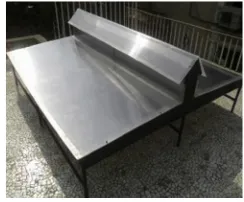
[image:2.612.250.372.491.592.2]The Solar conduction dryer is a solar powered food dehydrator (Fig. 1) developed by a group of innovators known as Science for Society (S4S). The device utilizes solar power in a conductive manner as well as convective way for drying. The structure of solar conductive dryer which comprises of four drying chambers constructed from hollow sections of stainless steel. The dryer has four drying trays, covering a surface area of 1.04 m2 each. Transparent plastic (PC Multiwall Sheet) is used to cover the trays. The trays are coated with black color special food grade coating, where the products to be dried are placed.
Fig 1 Solar conduction dryer
D. Experiment Procedure
1) Condition 1
a) Conduction+ Convection: A small bridge made up of wood of height 10 cm, width 10 cm and width 2 cm was kept above 3 samples while the fourth sample was kept on the top of the dryer surface only which was subjected to all the three modes of transport i.e,. conduction, convection and radiation
2) Condition 2
a) Radiation+ Convection: 3 samples were kept on a small bridge made up of wood of height 10 cm, width 10 cm and width 2 cm while the fourth sample was kept on the top of the dryer surface only which was subjected to all the three modes of transport i.e,. conduction, convection and radiation on the dryer surface only.
E. Readings and Measurement
The readings taken using the aforesaid methods and instruments were recorded in a tabular form after different intervals of time. From this collected data, four parameters were considered for the experimental study and modeling the data which were Moisture content by percentage from the moisture analyzer machine , Diameter of sample, Thickness of sample ,Weight of the sample. Also the percentage change in these samples were also recorded for comparison. Based on this data, Modeling was done using Newton Lewis model.
IV. OBSERVATION A. Experimental Observation
MR Formula used for our study was Lewis Model. Following are the formulae for Lewis Model.
1) Formula: = = ×
× where,t= minutes passed, h= thickness, k= Moisture Rate const D eff = effective moisture diffusivity = 3.01 × 10 m2/s
The experiment was done two times for each type of heat transfer for variable size samples from a same sliced beetroot to study the change in Moisture Ratio (MR) and Moisture Content. Following are the graphs for the different experiments.
a) Exp1: Conduction+Convection Exp2:Conduction+Convection
b) Exp3: Radiation+Convection
c) Exp4: Radiation+Convection
B. Experiment Inferences and Observation
convection case than in the case of conduction + convection. From Experiment 2, the rate of change of moisture content tends to be lower if the weight of the initial sample is higher. In this case when the weight was 12.1 g the % change, in moisture content was 87.51% whereas in the Sample A, whose weight was 6.8g the percentage change in moisture content is 89.51%. .Also the percentage weight loss by the sample is more in case of lower weight sample as compared to a higher weight sample..
As far as the experimental study indicates, during either conduction, convection or radiation, there has been no significant trend in the change in diameter of the samples.
V. CONCLUSION
From the above study it can be concluded that the rate of change of moisture ratio is higher if we transfer the heat to any given sample using radiation and convection. Also it was observed that the samples tend to lose more heat when they have a higher thickness ratio. The final change in diameter of the sample content tends to be almost double of change in moisture and weight of the sample. It seems from the above experiments that radiation and convection turned out to be superior heat transfer method for drying out cylindrical sliced samples of beetroot.
This may not hold true for fully uncut samples of beetroot as we have seen that rate of change of Moisture ratio tends to be generally faster if the thickness of the given sample is higher. The maximum change of Moisture ratio (MR) was 90% for radiation and convection while it was 89% for conduction and convection. The decline in rate of drying in beginning phase has a tendency to be more extreme and articulate when contrasted with later stages of drying.
REFERENCES
[1] Borah, K. Hazarika and S.M Khayer. Drying kinetics of whole and sliced turmeric rhizomes (Curcuma longa L.) in a solar conduction dryer. Information Processing in Agriculture 2, 85-92, (2015).
[2] Ismail and I. Idriss. Mathematical modelling of thin layer solar drying of whole okra (Abelmoschus esculentus (L.) Moench) pods. International Food Research Journal 20(4): 1983-1989, (2013).
[3] I.T. Togrul and D. Pehlivan. Mathematical modelling of solar drying of apricots in thin layers. Journal of Food Engineering, 55, 209-216, (2002).
[4] S. Singh and S. Kumar. Performance evaluation of solar dryer system for optimal operation: mathematical modelling and experimental validation. International Journal of Sustainable Energy, 33:1, 141-158, (2013).
[5] N. Hashim, O. Daniel and E. Rahaman. A preliminary study: kinetic model of drying process of pumpkins (Cucubita Moschata) in a convective hot air dryer. Agriculture and Agricultural Science Procedia 2, 345-352, (2014).
[6] I.T. Togrul and D. Pehlivan. Modelling of drying kinetics of single apricot. Journal of Food Engineering 58, 23-32, (2003).
[7] S. Misha, S. Mat, M.H Ruslan, E. Salleh, K.Sopian. Performance of a solar assisted solid desiccant dryer for kenaf core fiber drying under low solar radiation. Solar Energy 112, 194-204, (2015).
[8] L. Bennamoun, A. Belhamri. Design and simulation of a solar dryer for agricultural products. Journal of Food Engineering 59, 259-266, (2003).
[9] K. Chapchaimoh, N. Poomsa-ad, L. Wiset and J. Morris. Thermal characteristics of heat pump dryer for ginger drying. Applied Thermal Engineering 95, 491-498, (2016).
[10] P.P. Tripathy, S. Kumar. A methodology for determination of temperature dependent mass transfer coefficients from drying kinetics: Application to solar drying. Journal of Food Engineering 90, 212-218, (2009).
[11] E.K. Akpinar, C. Sarsilmaz and C. Yildiz. Mathematical modelling of a thin layer drying of apricots in a solar energized rotary dryer. International Journal of Energy Research; 28: 739-752, (2004).
[12] R. Lopez, M. Vaca, H. Terres, A. Lizardi, J. Morales, J. Flores, A. Lara and S. Chavez. Kinetics modeling of the drying of chickpea (Cicer arietinum) with solar energy. Energy Procedia 57, 1447-1454, (2014).
[13] L. Seremet, E. Botez, O. Nistor, D.G Andronoiu and G. Mocanu. Effect of drying methods on moisture ratio and rehydration of pumpkin slices. Food Chemistry 195, 104-109, (2016).
[14] K. B. Koua, W. F. Fassinou, P. Gbaha and S. Toure. Mathematical modelling of the thin layer solar drying of banana, mango and cassava. Energy 34, 1594-1602, (2009).
[15] S. Timoumi, D. Mihoubi and F. Zagrouba. Simulation model for a solar drying process. Desalination 168, 111-115, (2004).
[16] M. A Hossain, J. L. Woods, B. K. Bala. Optimisation of solar tunnel drier for drying of chilli without color loss. Renewable Energy 30, 729-742, (2005). [17] C. Ratti. Shrinkage during drying of foodstuffs. Journal of Food Engineering 23, 91-105, (1994).
[18] C.Ratti. Simulation of packed bed drying of foodstuffs with airflow reversal. Journal of Food Engineering 26, 259-271, (1995).
[19] M. V. R. Murthy. A review of new technologies, models and experimental investigations of solar driers. Renewable and Sustainable Energy Reviews 13, 835-844, (2009).
[20] I.T. Togrul, D. Pehlivan. Modelling of thin layer drying kinetics of some fruits under open-air sun drying process. Journal of Food Engineering 65, 413-425, (2004).
[21] L. Bennamoun, A. Belhamri. Numerical simulation of drying under variable external conditions: Application to solar drying of seedless grapes. Journal of Food Engineering 76, 179-187, (2006).
[22] H. Abbasfard, H. H. Rafsanjani, S. Ghader and M. Ghanbari. Mathematical modeling and simulation of an industrial rotary dryer: A case study of ammonium nitrate plant. Powder Technology, 239, 499-505, (2013).
[24] R. T. Karuppa, P. Pavan and R.D Reddy. Experimental investigation of a new solar flat plate collector. Research Journal of Engineering Sciences, Vol. 1(4), 1-8, (2012).
[25] O. Prakash and A. Kumar. Environomical analysis and mathematical modelling for tomato flakes drying in a modified greenhouse dryer under active mode. International Journal of Food Engineering 2014; 10(4): 669-68, (2013).
[26] S. Singh and S. Kumar. Performance evaluation of solar dryer system for optimal operation: mathematical modelling and experimental validation. International Journal of Sustainable Energy, 33:1, 141-158, (2014).
[27] O.V. Ekechukwu, B. Norton. Review of solar-energy drying systems II: an overview of solar drying technology. Energy Conversion & Management 40, 615-655, (1999).
[28] http://scienceforsociety.co.in/solar-dryer/ [29] python.org https://www.python.org/ [30] https://plot.ly/python/