Abstract— In this paper, a simple cost-effective solution is proposed, by which devices used in this project can be controlled remotely while the user is anywhere across the globe. Short Message Service (SMS) and Multimedia Messaging Service (MMS) is a mechanism of delivery of short messages and also image over the mobile networks that are widely spread across the globe. The main objective is to create a command or programming language that will control the devices such as GSM modem connected to computer sending an image to the centre database through the GSM network provided. In order to operate this project automatically, Visual Basic 6.0 was chosen in the writing of the program as it is the easiest programming language compared to other programming language. It is also reliable to all devices used in this project. After receiving the MMS, the received data will be stored in the database before analyzing the image.
Index Terms—GSM, MMS, database, communications.
I. INTRODUCTION
Over the last decade, the implementation of Speed Trap Image Transfer through GSM Network has been attempted by using the internet and through power-line modems. However, these solutions are not only complex but also require a physical connection to access those devices. In case of controlling through internet, the main problems are each controllable device requires separate Ethernet card and IP addresses to control, it also requires internet connection to each device. A simple, cost-effective solution is proposed by which devices as mentioned above can be controlled remotely, while the user is anywhere across the globe just by sending appropriate SMS message, which is cheaper than dialing and costs more or less the same with respect to geographical distance.
Nowadays, SMS has become very popular [3]. It is a store-and-forward way of transmitting messages to and from mobiles [5]. Each short message can be no longer than 160 characters [2]. These characters can be text (alphanumeric) or binary Non-Text Short messages. An interesting feature of SMS is return receipts. This means that the sender has an option of receiving a receipt notifying that the SMS was successfully delivered to the intended recipient. Since SMS uses signaling channels for its transmission/reception as opposed to dedicated data channels, these messages can be sent/received simultaneously with the voice/data/fax services over GSM networks. Moreover, SMS supports national and international roaming. With PCS networks based on all the
three technologies (GSM, CDMA and TDMA) supporting SMS, SMS has been rendered a universal mobile data service.
A. Problem Statement
Geographically, Malaysia and Thailand are connected while Singapore is separated by Strait of Tebrau. From several profitable aspect for Malaysia, Malaysian government has built a North-South Expressway linking all three country from the north to the south nationwide which starts from Bukit Kayu Hitam, Kedah (Malaysia-Thailand's border) to the south of the country ended at Johore Bharu (Malaysia-Singapore's border). Singapore is connected to this highway via a causeway across the strait.
Besides the benefit obtained from the tourism industry especially from Singapore and Thailand, there is also problem arising with regard to over-speeding foreign vehicles on the North-South Highway (NSH). Despite a lot of summon given to them, it seems that the problems never come to an end simply because the Malaysian authority has no real-time offence data to track the vehicle at the check-point before leaving this country.
By using high speed digital camera, photo of over-speeding foreign vehicle can be recorded and sent to Malaysian Police Department and Malaysian Immigration Department data bases using MMS. These data bases can be accessed by the personnel at the check point simply by key-in the vehicle registration number on real-time basis. Upon conviction, an appropriate amount of summon will be imposed to the driver and has to be settled before leaving the country.
B. Objectives
The project objectives are as follows,
i. To design an application that able to send picture through GSM network.
ii. To explore the configuration in the GSM network.
iii. Send picture SMS (MMS) through GSM network
The project has the following scopes:
i. Send the picture SMS to the central database by GSM networking once the picture captured from the speed trap camera. The picture will be
Speed Trap Image Transfer through GSM
Network
stored in computer and further action will be taken in the next process.
ii. Develop an application using Visual Basic to enable the transferring of picture through GSM network once it is stored in a specific folder in the computer direct to central database. iii. Explore the configuration of the GSM network
system to find out the easiest and fastest way to send the picture SMS through GSM network that link directly to central database.
C. Architecture
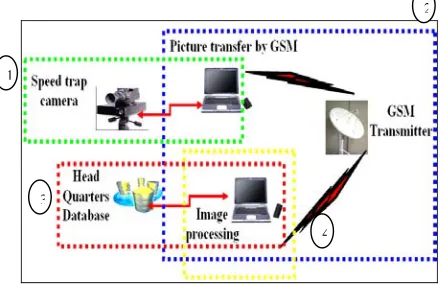
[image:2.612.69.291.242.386.2]Figure 1 shows the overview of this project. This project functioned as what it was designed which is able to send the picture SMS to the GSM modem at the central database system. The system works as described below:
Figure 1. System Architecture i. First Process:
Auto speed trap camera will capture image of the vehicle that breaks of the Malaysian traffic law. Then the picture is saved in the computer that connected to the GSM modem.
ii. Second Process:
Any picture that appears at the image stored folder in the computer will be immediately sent to the central database through GSM network.
iii. Third Process:
At this stage the data received from the GSM network will be processed and analyzed using image processing software before link to the database to trace the owner’s profile of the vehicles.
iv. Forth Process:
This is the last stage of the system which is used to trace the owner profile of the vehicles at the central database for appropriate action.
II. RELATED WORK
A. Global System for Mobile Communications
In 1991, the first GSM systems were ready to be brought into friendly-user operation. In the same year, the meaning of the acronym GSM was changed to stand for Global System for Mobile Communications. The year 1991 also saw the definition of the first derivative of GSM, the Digital Cellular System 1800 (DCS 1800), which more or less translate the GSM system into 1800 MHz frequency range. In the United States, DCS 1800 was adapted to the 1900 MHz band (Personal Communication System 1900, or PCS 1900) [3]. By 1992, many European countries had operational networks, and GSM started to attract interest worldwide [1] [2]. Time has brought substantial technological progress to the GSM hardware. GSM has proved to be a major commercial success for system manufacturers as well as for network operators.
B. GSM Architecture
[image:2.612.312.537.393.491.2]The GSM network architecture can be divided into three main components. These components are the subscribers which hold the mobile station, namely the GSM terminal, the base station subsystems, which controls the radio link with the mobile station and the network subsystem, which performs the switching of calls and other management task such as authentication [14]. Figure 2 shows the main element of the GSM architecture. Every line which connecting all subsystem and element are the method of interfacing between each other.
Figure 2. GSM Architecture C. Mobile Station
The mobile station (MS) and the base station subsystem communicate across the Um interface also known as the air interface or radio link. The base station subsystem communicates with the network subsystem across the Abis interface. The mobile station consists of physical terminal and contains the radio transceiver, the display and digital signal processors and the subscriber identity module (SIM). The SIM provides the user with the ability to access their subscribed services irrespective of the location and the terminal used [1]. The insertion of the SIM in any GSM cellular phone allows the user to access a network, give and receive phone calls and make use of all the subscribed services.
D. Base Stations Subsystems
The base station subsystem is composed of two parts: the base transceiver station (BTS) and the base station controller (BSC). They communicate across the specified Abis interface thus allowing network operators to use components made by different suppliers. The base transceiver station 1
2
3
houses the radio transceiver that defines a cell and handle the radio link protocols with the mobile station. Depending on the density of the area, more or fewer BTSs are needed to provide the appropriate capacity to the cell. Digital communication system (DCS) networks working at 1800 MHz need twice the number of BTSs to cover the same area as GSM networks, but provide twice as much capacity.
E. Network Subsystem
The mobile service switching center (MSC) is the main component of the network subsystem. It provides the same functionality as a switching node in a PSTN or ISDN but also takes care of all the functionality needed to handle a mobile subscriber such as registration, authentication, location updating, handovers and routing to a roaming subscriber. The MSC also act as a gateway to the public switched telephone network (PSTN) or integrated services digital network (ISDN), and provides the interface to the short messaging service centre (SMSC).
F. Short Message Services
Developed as part of the GSM Phase 2 specification [5], SMS is based on the capability of a digital cellular terminal to send or receive alphanumeric messages. The short messages can be up to 140 bytes in length, and are delivered within a few second where GSM coverage is available. More than a common paging service, the delivery of the message is guaranteed even when the cellular terminal is unavailable (e.g. when the terminal is switched off or outside the area off our outside the area of coverage). The network will hold the message and deliver it shortly after the cellular terminal announces its presence on the network. The fact that SMS (through GSM) supports international roaming with very low latency makes it particularly suitable for applications such as paging, E-mail or voicemail notification, messaging services for multiple users etc. However, the facilities offered to users and the charges for these facilities still mainly depend on the level of service provided by the network operator [4].
G. Multimedia Messaging Services
For the phone user, MMS is very similar to Short Message Service (SMS)-it provides automatic, immediate delivery of user-created content from phone to phone. The message addressing used is primarily phone numbers, thus the traffic goes from phone to phone. MMS also provides support for e-mail addressing, so that messages can also be sent by e-mail. In addition to the familiar text content of SMS, MMS messages can contain still images, voice or audio clips, and later also video clips and presentation information [14]. An MMS message is a multimedia presentation in a single entry-it is not a text file with attachments. MMS is bearer independent and is not limited to only GSM or WCDMA networks.
III. DEVELOPMENT PLATFORM
A. Microsoft Visual Basic
Visual Basic 6.0 is a visual programming languages based It is the computer language of choice among those of us who
design software to interface to the real world. It provides and easy operator uses a mouse or keyboard to select ‘buttons’ or other ‘controls’ to cause things happen or see things happen with easy to understand ‘ layouts’ and graphics. VB was derived heavily from BASIC and enables the rapid application development (RAD) of graphical user interface (GUI) applications, which is also able to access to databases using Data access Object (DAO) such as mySQL or Microsoft Access, Remote Data Objects (RDO) for controlling object, or ActiveX Data Object (ADO) which works as a add-on to visual Basic program, and creation of ActiveX controls and objects. A programmer can put together an application using the components provide with Visual Basic itself. Programs written in Visual basic can also be used with Windows application programming Interface (API), but doing so requires external function declarations. Visual Basic 6.0 was chosen in the writing of the program as it is the easiest programming language compared to other programming language. It is also reliable to all devices used in this project.
B. ActiveX Control
An ActiveX control is essential a simple OLE object that supports the unknown interface. It is usually support many more interfaces in order to offer functionality, but all additional interfaces can be viewed as optional and such a container should not rely on any additional interface being supported. By not specifying additional interfaces that a control must support a control can efficiently target a particular are of functionality without having to support particular interface to quality as a control. As always with OLE, whether in a control or a container, it should never be assumed that an interface is available, and standard return-checking conventions should always be followed. It is important for a control or container to degrade gracefully and offer alternative functionality if a required interface is not available.
C. Rabbit Microprocessor RCM3200
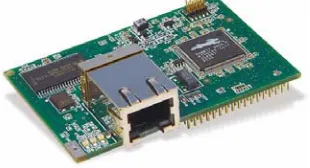
[image:3.612.357.512.623.707.2]Rabbit Semiconductor was formed expressly to design a better microprocessor for use in small and medium-scale controllers. The first microprocessor was the Rabbit 2000. The second microprocessor, now available, is the Rabbit 3200. Rabbit microprocessor designers have had years of experience using Z80, Z180, and HD64180 microprocessors in small controllers. The Rabbit shares a similar architecture and a high degree of compatibility with these microprocessors, but it is a vast improvement [6]. Figure 3 shows prototype of Rabbit Microprocessor RCM 3200.
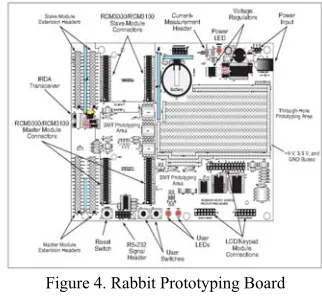
The Rabbit 3200 hardware and software interfaces are as uncluttered and are as foolproof as possible. The Rabbit has outstanding computation speed for a microprocessor with an 8-bit bus. This is because the Z80-derived instruction set is very compact, and the timing of the memory interface allows higher clock speeds for a given memory speed. RCM 3200 must be pair with RCM 3000 which act as a trainer. Figure 4 shows prototype of Rabbit Microprocessor RCM 3000.
Figure 4. Rabbit Prototyping Board
D. WaveCom M1306B GSM/GPRS Modem
[image:4.612.116.277.158.307.2]Hardware used for this project is WaveCom M1306B GSM/GPRS Modem or Fastrack Modem. This modem was design by using dual band 900/1800MHz Fastrack M1306B offers GPRS Class 10 Capability with Open AT and IT protocols such as IP connectivity as standard features. Beside that, it also work as fully functional GSM/GPRS modem with data, voice, fax and SMS capability, the Fastrack features comes with an internal SIM tray and SIM interface, a 15-pin sub-D RS232 interface for serial communication, and a 4-pin Molex connector allowing it to be powered from a 5.5-32VDC supply or one of our mains adaptors [7]. Figure 5 is the physical look of WaveCom GSM/GPRS modem
Figure 5. GSM Modem
IV. METHODOLOGY
The project is divided into two main components hardware and software. Both the hardware and software are further broken down into several individual subsystems. Each subsystem is tested and implemented separately, and integrated together to construct the final project. This section describes the development stage of hardware, and software that compliment the hardware.
The main part of this project was to send the image of over-speeding vehicles through GSM network. There are five phases involved in its implementation i.e. Preliminary Investigation, Analysis, Design, Implementation and lastly Maintenance. The methodology of work is as shown in
Figure 6.
Figure 6. Phases in Methodology
This project is divided into two major parts; hardware design and software development. The hardware part involves developing and testing the hardware to determine the operation of the hardware and to obtain the output format of the hardware. Programming involves two stages; compile and simulate. The design of the system program consists of image capturing, image sending and receiving in a form of MMS through GSM network, and image storing in the database. In the implementation stage, the steps involved connecting GSM modem to Comport, Clearing Message Inbox, Sending the image in form of MMS, New Message Indication and Receiving MMS and Store the received MMS
V. EXPECTED RESULTS
At the end of this project, Speed Trap Image Transfer through GSM Network will function as what it was designed which is able to send and receive the MMS by using GSM modem to the other GSM modem at the central database system once the picture of a vehicle is captured. The image that been captured then will be stored in a picture storage/folder before the next process of the system takes place and the detail of the vehicle owner will be traced at the centre data base.
VI. CONCLUSION
The proposed project was indeed possible to be implemented using the available enabling technology such as GSM modem, GSM network and software such as Visual Basic 6.0, Dynamic C and ActiveX Control. The project will somehow help the relevant authority in Malaysia to nab the errant drivers that flout the highway’s law of the country and eventually help in eradicating highway accident due to over-speeding.
REFERENCES
[1] S. Collesei, P., di Tria, and G. Morena. (1994) “Short Message Service Based Applications In The GSM Network”. 5th IEEE International Symposium on Wireless Networks-Personal, Indoor and Mobile Radio Communication 1994, 18-23 Sep 1994, The Hague, Netherlands, Vol 3. pp. 939-943.
[2] Curran, K. and Craig R. (2001), “A short message service for campus wide information Delivering Urgent Information to Student”. 1st Joint IEI/IEE symposium on Telecommunications System Research, 27th November 2001, IEI Headquarters, Clyde Rd, Dublin.
[image:4.612.140.255.469.582.2]Management, SAM 2006, JUN 26-29 2006, Las Vegas, Nevada, USA. pp. 252-260.
[4] Bocon, V. and Cretu, V. (2006), “Threats and Countermeasures in GSM Networks”, Journal of Networks, Vol. 1, No 6.
November/December 2006. pp. 18-27.
[5] Agarwal, N., Chandran-Wadia, L., Apte, V. (2001). “Capacity analysis of the GSM Short Message Service”. Proceedings of the National Conference on Communications, 1 Feb 2004, Bangalore, India. pp. 1-5.
[6] Rabbit Core RCM 3200 User Manual (2005), (Retrieved: 24 April 2008)
http://www.zworld.com/documentation/docs/manual/RCM3200/user manual/RCM3200.pdf
[7] WaveCom M1306B GSM/GPRS Modem User Manual (2005), (Retrieved: 20 April 2008)
http://torg-ru.ru/download/devices/wavecom/fastrak_modem_user_guid e.pdf
[8] Boquete, L. Bravo, I. Barea R. and García, M. A. (2003), “Telemetry and control system with GSM communications”. Microprocessors and Microsystems, Vol. 27, Issue 1. pp 1-8.
[9] Alex Varshavskya, Eyal de Laraa, Jeffrey Hightowerc, Anthony La Marcac, and Veljo Otsasonb. (2007), “GSM Indoor Localization”. Pervasive and Mobile Computing, Vol 3. pp. 698–720.
[10] William Enck, Patrick Traynor, Patrick McDaniel and Thomas La Porta. (2005), “Exploiting Open Functionality in SMS Capable Cellular Networks”. Proceedings of the 12th ACM Conference on Computer and Communications Security. pp. 393-404.
[11] M.A. Mohammad, A. Norhayati. (2003), “A short message service for campus wide information Delivery”. 4th National Conference on Telecommunication Technology Proceeding, 14-15 Jan. 2003 Shah Alam, Malaysia. pp. 216-221.
[12] Ching, L.T. and Garg, A/P, H. K. (2002). Designing SMS Application for Public Transport Service System in Singapore. The 8th International Conference onCommunication Systems 2002, ICCS 2002, 25-28 Nov. 2002, Nat. Univ. of Singapore, Singapore. pp. 706-710.
[13] Thompson, S. M, Sheat, D. E, (1998) “Road Transports Information and Control”. 9th International Conference on Road Transport Information and Control, 1998. 21-23 April 1998, British Telecom Lab, UK. pp. 59-63.
[14] Talukder, A. K. and Yavagal, R. R Yavagal (2005) Mobile Computing. New Delhi: Tata McGraw-Hill Publishing Company Limited.
[15] Liu, S.H, and Guok, T.H (2004) “The Acceptance Of Sms Text Notification Services Among College Students In Malaysia”. MMU International Symposium on Information & Communication Technologies 2004 in conjunction with Asia Pacific Wireless Broadband Forum (AP-WBF) 2004 & NICT – MMU Joint Workshop on Wireless Access Technology. 24-25 November 2004, Petaling Jaya, Malaysia. pp. 5-8.
[16] Suomi, R. and Serkkola, A. (2007) Web Mobile Based Application for Healthcare Management. Finland: IRM Press. pp 335-353