Abstract— The humanitarian supply chain management systems are not yet fully defined, interruption of supply of antiretroviral is a major challenge to the national program. Supply interruption will increase the risk of treatment failure and development of ARV resistance, hence there is a need to strengthen the current supply chain and logistics so as to reduce the risk of stock outs and to also strengthen the capacity of the government of Zimbabwe to absorb the high volumes of HIV/ AIDS commodities from the global fund and other donors. The study mainly used primary data collection method including a survey and interview. Secondary data from the literature review, was also complimented by semi-structured interviews with management and personnel in the organizations studied. Solutions and recommendations were then identified in order to attend to the identified deficiencies, problems and challenges.
.
Index Terms—HIV/AIDS, Humanitarian Supply Chain, Management, Zimbabwe.
I. INTRODUCTION
The key to any successful health system is the supply of medicines, availability of essential commodities and equipment to enable testing, treatment, care and support The Logistics and Supply Chain of HIV/AIDS related commodities generally is governed by the Ministry of Health and Child Welfare of Zimbabwe and the Medicines Control Authority of Zimbabwe. Most NGOs distribute the commodities to the countries’ district and provincial hospitals and clinics. Patients would then collect the drugs from these hospitals and clinics. NatPharm, a government owned parastatal, is a major enabler of this as it caters and deals primarily with the general public seeking attention at general/government facilities [15]. Most of NatPharm's commodity management activity is related to essential drugs and medicinal supplies. NatPharm also depends heavily on government as well as other donor organizations like the United Nations Children's fund (UNICEF) for financing, and medicinal drugs donation. It also mostly receives and distributes medicinal drugs from donors on behalf of the
Manuscript received July 29, 2015; revised August 03, 2015
T. T. Chingono is with the University of Johannesburg, South Africa (telephone, 0027115591169, e-mail: [email protected]).
C, Mbohwa is a Professor with the University of Johannesburg, South Africa (e-mail: [email protected]).
government [18], as such Natpharm can be described as a humanitarian aid agent.
Antiretroviral (ARV) drugs and related Human Immunodeficiency Virus (HIV) and Acquired Immunodeficiency Syndrome (AIDS) commodities have been and are still in short supply, in the absence of a well-defined supply chain management system for the commodities which are currently available, the National HIV and AIDS Program faces an enormous task of managing the quantities of products [15]. The Ministry of Health and Child Welfare appointed three entities; NatPharm, the AIDS and Tuberculosis Unit and the Department of Pharmacy Services are central to the establishment and sustainability of a robust HIV & AIDS supply chain management system. Currently, NatPharm handles the Supply Chain and Logistics including storage, order processing and physical distribution of the products which include ARVs, HIV Test Kits and drugs to treat opportunistic infections. The AIDS & Tuberculosis Unit quantifies product requirements, reviews the appropriateness of orders from sites, and monitors the overall HIV & AIDS commodity supply chain. The Department of Pharmaceutical Services coordinates facility level pharmacy staff in the management of the essential drugs and to lesser extend HIV & AIDS commodities [15] Disasters come in various forms and sizes. HIV/AIDS in Zimbabwe and its associated or related commodities such as food shortages require humanitarian intervention. In fact, 9 out of every 10 disasters that organisations such as Red Cross responds to are events that may have a major impact on areas of the world, yet do not get the media attention disasters do. One example of this is the HIV/AIDS and food crisis in Zimbabwe. This African nation recently saw a 32 per cent increase in the number of individuals who do not have enough to eat, and 2.2 million Zimbabweans representing 25 per cent of the rural population needed help between January and March 2014 to avoid hunger/ hidden hunger. This problem is a result of drought, which has led to a poor harvest and high food prices. HIV/AIDS makes the issue complex. Gwanda, a district in southern Zimbabwe, has the most HIV cases in the country and is also in need of food assistance. There are concerns that if the region does
Management of the Humanitarian Supply Chain
in Zimbabwe
not get the help it needs, the HIV/AIDS problem will worsen.
a) OBJECTIVES.
The major objective of this study was to:
Conduct and analyse data from survey to determine both the specific nature of the humanitarian supply chain Analyse and identify deficiencies and problems of a humanitarian logistics and supply chain management nature that exist in Zimbabwe. .
II. EXISTINGLITERATURERELEVANTTOTHE STUDY
Most research has focused on trying to implement and introduce humanitarian logistics and supply chain management to Humanitarian organizations in trying to make their efforts quicker, efficient and cost effective such researchers include, Clark and Culkin [2], Thomas [19], Van Wassenhove [27], Kleindorfer and Van Wassenhove [9], Thomas and Mizushima [20], Tomasini and Van Wassenhove [22], Thompson [21]. Some even further suggest Supply Chain Analytics for Humanitarian Logistics Transformation [16] focuses on the important role of humanitarian logistics, Networks for Africa in support for the implementation of the Millennium Development Goals.
III. STUDYAREA/SCOPE
The research survey was conducted in Zimbabwe. NGOs and other Organizations Including Natpharm, with their Zimbabwean head offices for in Harare were surveyed. The participation in the survey was voluntary and allowing all willing organizations to participate in the survey minimized the element of bias in the sample of respondents. The sampling procedure by its nature was assumed to be random. Organizations under government and Non-Governmental organizations including embassies were surveyed. The scope of the research included administering questionnaires and conducting interviews, meetings with the relevant managerial, supply chain or logistics staff at head offices of willing organisations to identify and document weak points in the logistics and supply chain of HIV/AIDS commodities. Data was also gathered on willing Antiretroviral Sites such as clinics and Hospitals staff regarding current status of HIV and AIDS commodities supply. It also included visiting the logistics unit of the Ministry of Health and Child Welfare AIDS and Tuberculosis unit to gather secondary data so as to identify strengths and existing capacity in the HIV and AIDS
commodity management, and determine improvements required to perform the functions as the program expands..
IV. METHODOLOGYANDRESEARCHDESIGN
This study used a mixed-methods approach, combining quantitative and qualitative research. De Vos et al. [5] suggest that all research belong to either two categories: • Qualitative research: provides attitudinal responses and attempts to explain phenomena that are not as easily quantified by numbers. Open-ended questions, i.e. question that allow for the respondent to provide his/her answers in his/her own words, are utilized to gather qualitative research data. 150 Questionnaires were distributed and 105 responses were recorded.
• Quantitative research: provides numerical, quantified results based mostly on statistical computations. This is usually based on results gathered from the responses recorded by using close-ended questions.
V. RESULTSANDDISCUSSION
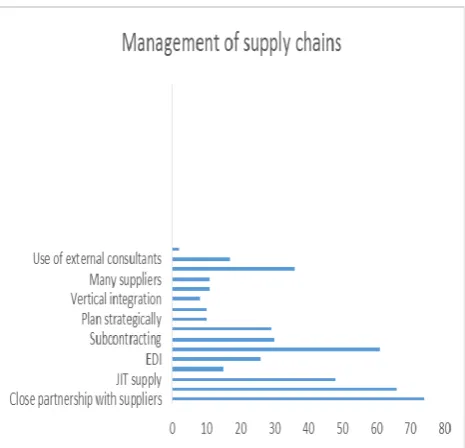
[image:2.595.306.539.466.690.2]For quick manipulation of the data, frequency tables were drawn. Then the bar charts and pie charts were chosen as distribution pattern graphs. The bar chart was chosen since it is the best form of diagram for discrete variates such as those that were obtained from the survey responses.
Fig 1. Management of supply Chains.
use the Vertical integration method of supply chain management.
Managing supply chain success.
The success of organisation in managing their supply chain was also captured. Most organisations indicated that they were often successful, 56% made this indication. This also tends to point out that in some cases, but fewer, their supply chain was not successful in providing the much needed aid to beneficiaries in good time.
Most organisations were satisfied with their methods of supply chain management but in planning for the future, most organisations intend to start implementing third party logistics and vertical integration, this was the case for mostly for those that were not satisfied. The main advantage of the vertical integration is the increased control, that is it has the control to increase or reduce production, at will, so there is more supply chain coordination.
[image:3.595.304.548.278.486.2]Fig 2. Company structure and presence of logistics departments.
Fig 3. Presence of clear logistics plan.
[image:3.595.46.290.358.523.2]From the 105 responses recorded, more than 75 had a logistics department present and around 15 did not. Logistics is that part of the supply chain process that plans, implements, and controls the efficient, effective forward and reverse flow and storage of goods, services, and related information between the point of origin and the point of consumption in order to meet customers’ requirements. It is pivotal for Humanitarian organizations to have such a department which ensure goods reach their intended destination in good time. Most organizations also had a clear logistics plan. It also has advantage of quick analysis, & can incorporate the complex tradeoffs, thus it is recommended that those who do not have should strive for one, as it can also give them the competitive edge.
Fig 4. Benefits of using SCM systems.
The major benefit that was recorded was that of flexibility and being able to predict future requirements. This helps ensure sustainability of the supply chain. Other notable benefits included better quality information and more accurate costing. These benefited the concerned organisations greatly.
Problems associated with implementation of SCM systems.
[image:3.595.45.290.561.752.2]Future systems implementation
Most organisations plan to introduce the standard package of e-business as everyone is equal on this platform, when you are interacting with your clients or vendors using e-business, it is difficult for them to tell how big your business is. With a professionally developed and maintained website, any small business can look as impressive on the Internet as the large corporations do. It is a level playing field that helps create opportunity for small businesses
Most participants noted that they are satisfied with the current public policy.
Future measures
Very important measures that must be promoted and implemented include closer cooperation between companies, improved information provision, better infrastructure and more funding and support amongst others.
VI. CONCLUSIONSANDRECOMMENDATIONS
The success of humanitarian operations is hard to measure. Economic success is the standard performance measure in the pro-profit world. For non-profit organizations this evaluation is more complex, considering difficult-to-formulate elements such as unmet need fulfilled and more tractable ones like cash flow. Keeping complete track, control and accountability of the humanitarian programs and their outcomes is challenged by the high urgency and pace of this type of operations, and time for analyzing and recording is usually tight.
Political and aid actors – including the UN and donors – need to shift their approach and strategy if they are to address the humanitarian issues facing Zimbabwe effectively and efficiently. Increased humanitarian aid is necessary, but so too is a move to a more proactive emergency approach based on a recognition of the severity of the crisis – in all its manifestations. Donor governments and UN agencies must ensure that the provision of humanitarian aid remains distinct from political processes. Their policies towards Zimbabwe must not be implemented at the expense of the humanitarian imperative to ensure that Zimbabweans have unhindered access to the assistance they need to survive.
Blurring the lines between political goals and humanitarian response will have dire consequences in an already highly politicised context. The government of Zimbabwe must give
independently. Food aid is the clearest example of politicised humanitarian action. Although food distributions have resumed in some locations following the government’s ban on NGO activity during the elections in 2008, patients at MSF clinics tell us that distributions are manipulated for political purposes. In Epworth clinic, MSF patients were unable to get food aid for over six months after the June election, leading HIV/AIDS patients to default from treatment as they searched for food.
REFERENCES
[1] Beamon, B.M. and Balcik, B. (2008) Performance measurement in humanitarian relief chains,International Journal of Public Sector Management, 21, 1, 4-25
[2] Clark, A. and Culkin, B. (2007) A Network Transshipment Model for Planning Humanitarian Relief Operations after a Natural Disaster,
presented at EURO XXII - 22nd European Conference on Operational Research, Prague
[3] Crawford, I. M. (1990) Marketing Research Centre for Agricultural Marketing Training in Eastern and Southern Africa. Harare Zimbabwe [4] Davidson, L. S. (2006) Key performance indicators in humanitarian
logistics. Engineering Systems Division GBG
[5] De Vos, A.S., Strydom, H., Fouche, C.B., Poggenpoel, M.and Schurink, E.W. (1998). Research at grass roots: A primer for the caring professions. Pretoria: Van Schaik
[6] Global AIDS Responds Progress Report (2012) Zimbabwe Country Report, Reporting period: January 2010-Dec 2011
[7] Gray, R and Oloruntoba, R (2006) Humanitarian aid: an agile supply chain?, Supply Chain Management: An International Journal, 11, 2,
115–120
[8] Kerina, D., Stray-Pedersen, B. and Muller, F. (2013). HIV/AIDS: The Zimbabwean Situation and Trends. American Journal of Clinical Medicine Research. Vol.1, No.1, 15-22
[9] Kleindorfer, P. R., L. N. Van Wassenhove. 2004. Managing risk in global supply chains in Strategies for building successful global businesses, Chapter 12, H. Gatignon, J. R. Kimberley (eds.),
Cambridge University Press, Cambridge, Massachusetts, pp. 288–305. [10] Kovács, Gyöngyi & Spens, Karen M. 2007. Humanitarian logistics in disaster relief operations. [pdf] Emerald Group Publishing Limited.
[11] Mentzer, J.T., DeWitt, W., Keebler, J.S., Min, S., Nix, N. W. Smith, C.D. and Zacharia, Z.G. (2001) Defining Supply Chain Management, Journal of Business Logistics 22,2
[12] Mbohwa, C. (2008) Identifying challenges and collaboration areas in humanitarian logistics: Southern African perspective. Humanitarian
logistics: Network for Africa Rockefeller Foundation Bellagio Center Conference, Bellagio, lake Como, Italy.
[13] Na¨slund, D. (2002), “Logistics needs qualitative research – especially action research”, International Journal of Physical Distribution & Logistics Management, Vol. 32 No. 5, pp. 321-38. [14] Na¨slund, D. andWilliamson, S.A. (2008), “Supply chain integration:
barriers and driving forces in an action research-based inventory intervention”, Supply Chain Forum: An International Journal, Vol. 9 No. 1, pp. 70-80.
[15] Noguera, Ms. Marilyn, Mr. David Alt, Dr. Lisa Hirschhorn, Dr. Chiedza Maponga, Dr. Patrick Osewe, and Dr.Amos Sam-Abbenyi. (2003). Zimbabwe: Antiretroviral Therapy Program—Issues and Opportunities for Initiation and Expansion. Arlington, Va.: DELIVER/John Snow, Inc., for the U.S. Agency for International Development.
[16] Nyaguthie, (2008). The important role of humanitarian logistics. Oxfam-GB, Pretoria, South Africa.
[17] Rickard, J. (2006) Humanitarian Logistics: Musing Aloud, Monday Developments, 24, 20, 6-7.
[18] Takang, Erick, Dragana, Veskov, Celestine, Kumire, and Jabulani Nyeriwa. May.( 2006). Management of HIV and AIDS commodities in Zimbabwe- A capacity assessment of NatPharm and Ministry of Health and Child Welfare
[20] Thomas, A. and Kopczak, L. (2005) From Logistics to Supply Chain Management: The path forward in the humanitarian sector, Technical Report, Fritz Institute, San Francisco, CA, USA.
[21] Thompson (2008). Supply chain analytics for humanitarian logistics transformation. . Humanitarian logistics: Network for Africa Rockefeller Foundation Bellagio Center Conference, Bellagio, lake Como, Italy.
[22] Tomasini, R., Van Wassenhove, L.N. (2004). Genetically modified food donations and the cost of neutrality. Logistics response to the 2002 Southern Africa food crisis. INSEAD Case 03/2004-5169. [23] Tomasini, R., Van Wassenhove, L.N. (2009) From preparedness to
partnerships: case study research on humanitarian logistics,
International transactions in operations research, 16, 549- 559 [24] Tomasini, Rolando & Luk Van Wassenhove. 2009. Humanitarian
logistics. CPI Antony Rowe. Chippenham and Eastbourne
[25] UNDP (2010) Human Development Report- Real wealth of Nations: pathways to human development
[26] UNIDO (2011) Pharmacuitical Sector Profile; Zimbabwe. Global UNIDO Project: Strengthening the local production of essential generic drugs in least developed and developing countries.
[27] Van Wassenhove, L. N. (2006) Blacket memorial lecture. Humanitarian aid logistics; Supply chain management in high gear. Journal of operational Research Society, 57(5), 475-489.