SCITECH
Volume 13, Issue 3RESEARCH ORGANISATION
September 11, 2019Journal of Research in Business, Economics and Management www.scitecresearch.com
The Role of Team Effectiveness in Promoting Work Output
Derrick Dela Dumenu
1, Qian Yan
2, Lebene Akuvi Dosserh
31
College of Economics and Management, Nanjing University of Aeronautics and Astronautics, Nanjing
210016, China; [email protected]
2
College of Economics and Management, Nanjing University of Aeronautics and Astronautics, Nanjing
210016, China;[email protected]
3
College of Economics and Management, Nanjing University of Aeronautics and Astronautics, Nanjing
210016, China;[email protected]
Abstract
The study assessed the impact of teamwork on organizational productivity on the staff members of web design companies; Facio Innovations technology and Unique Tech Solutions. The research employed both qualitative and quantitative tools in analyzing the relationship between the independent variable (teamwork) and the dependent variable. The study revealed a significant positive impact of the predictors on the response variable with an adjusted R2 of 84%. Qualitative analysis of both organizations reveals a great user experience achieve when projects are executed by teams. The study recommends teamwork activities have to be adopted by Fintech companies in order to enhance their performance and productivity.
1. INTRODUCTION
Organizational effectiveness is critical to the success of every organization. Achievement, performance, and organizational effectiveness is the basic function of every organization. Performance is a terminology with varied meanings. There exist several schools of thoughts and varying opinions concerning performance. Barney (1997) notes how performance continues to be a contentious issue among organizational researchers around the world. Barney (1997) simplifies performance as an equivalent of the famous 3Es (economy, efficiency, and effectiveness) of a certain program or activity. Daft (2000) likens performance to the ability of an organization to not only achieve its objectives but to do so in using their available resources in an efficient and effective manner. It thus implies to perform well; an organization must achieve all its set goals and Objectives. Firms are effective when they are able to make judicious use of their available resources and still to be able to achieve its goals and objectives.
In recent times, organizations have intensified their dependence on teams. Research has begun to focus on the role teams in increasing effectiveness of companies. Tost et al. (2011) note, ―organizations, make extensive use of teams when structuring and allocating work projects.‖ The extensive use of teams in most organizations is attributed to facts that teams provide rapt and collective efforts to address complex organizational problems (Montoya-Weiss et al., 2001; Salas et al., 1992).
2.
LITERATURE
REVIEW
While organizations continue to strive to achieve high performance, there have been concerns in recent years, the role of teams in promoting performance. Cullen (1951) argues that the concerns of organizations indicate a lack of satisfaction, a sense of concern, about the level of performance achieved so far. One of the concerns of researchers in organizational management is the definition and measurement of performance. Several researchers have tried to conceptualize the term and have put forward varied definitions with varied context. Hefferman and Flood (2000) have made significant contributions in defining the concept and the measurement of organizational performance. In their literature, they defined performance as the output of productivity. Hefferman and Flood (2000) noted that productivity is a ratio depicting the volume of work completed in a given amount of time. While researchers such as Hefferman and Flood (2000) admit a similarity between performance and productivity, researchers such as Ricardo (2001) have argued that there exists a significant difference between performance and productivity. Ricardo belongs to the school of thought that who perceive performance a much broader concept that includes productivity, quality, consistency, satisfaction, among other factors. Productivity measures are mostly considered in the result-oriented evaluation.
The broad nature of the term performance has made it not only difficult to conceptualize but to establish its relationship with other variables. While much of the literature on performance focuses on studying the level of achievement an organization has clocked, it raises concerns about the factors that actually affect or determine the level of performance of an organization over a period of time. Abu-Jarad et al. (2010) made significant revelations that the organizational model of firm performance focused on organizational factors such as human resource policies, organizational culture and organizational climate and leadership styles.
Organizational Effectiveness is one of the modes of measuring organizational performance. It has now become one of the most important organizational goals for all organizations seeking to increase their performance. Federman (2006) describes this concept as being related to the ability of organizations to not only access resources but to put those resources into judicious use so as to achieve their goals and objectives. Cameron (1978) also argued that effectiveness within an organization describes the availability and access to essential resources. All these views bring to light the essence of pursuing organizational effectiveness. According to McCann (2004), organizational effectiveness has now become a criterion for the measurement of an organization’s success at fulfilling their purposes through core strategies and missions.
Organizational effectiveness is a multi-facet term with varied definitions. Effectiveness generally refers to the extent to which an organization is able to achieve its goals. Bernard (1938) defines effectiveness as the accomplishment of recognized objectives of cooperative effort and adds for emphasis that the degree of accomplishment is the degree of effectiveness.
Organizations can also only achieve their objectives if they are able to survive and the primary condition for survival is enough profitability to enable them to maintain their wealth-creating capabilities. An organization that is not profitable cannot even survive, not to think of the level of its effectiveness, There are also other basic requirements for organizational stability, predictability and overall survival and these include resource acquisition, efficiency, production or output, rational coordination, renewal and adaptation, conformity and constituency satisfaction (Steers, 1991).These are perquisites for effectiveness. The issue became more complicated when Robbins and Coutler (2002) added another dimension; that effectiveness is also concerned with how appropriate the goals are’! Apart from the fact that appropriateness is subjective and value-laden, the question is appropriate from whose judgment and/or for whom or what group of people?
on the importance of external market factors in determining organizational effectiveness, while the other focused on internal factors behavioral and sociological paradigm).That is to say that the internal factors that affect effectiveness are categorized into two areas, economic factors and organizational factors. Over the years. They have been a growing interest in the role of teams as an organizational factor in promoting performance and/or effectiveness. Research conducted by Martin & Bal (2006) on high-level managers established that ―teams are central to organizational success‖ with 91% of respondents confirming it. This has led to organizations intensifying the use of teams in work. Tost et al. (2011) note, ―organizations, make extensive use of teams when structuring and allocating work projects.‖ The extensive use of teams in most organizations is attributed to facts that teams provide rapt and collective efforts to address complex organizational problems (Montoya-Weiss et al., 2001; Salas et al., 1992).
In recent times, organizations have intensified their dependence on teams. Research has begun to focus on the role teams in increasing effectiveness of companies. Tost et al. (2011) note, ―organizations, make extensive use of teams when structuring and allocating work projects.‖ The extensive use of teams in most organizations is attributed to facts that teams provide rapt and collective efforts to address complex organizational problems (Montoya-Weiss et al., 2001; Salas et al., 1992). Ayarkwa & Adinyira (2011) define teamwork as ―cooperative effort by the members of a group or team to achieve a common goal.‖ According to Salman & Hassan (2015), A ―team can be described as a group of people who work together to achieve the same goals and objectives for the good of the service users and organizations in order to deliver a good quality of service.‖ Teamwork has its origin from sports, where basically a group of people works together to achieve a common result (Cheum, 2017). The team player concept focuses on collective efforts towards the achievement of a common goal. Over the years, organizations have begun to leverage teams for increased and sustained performance (Li et al., 2014). Several studies have been conducted on human behavior both as individuals and in teams. What all these researchers seek to achieve is to establish the role of teams in promoting high productivity.
Hackman (1987) suggests that Teams are the workgroups within an organization, which have clearly defined members, who are responsible for a certain task, product, or service. A team is composed of two or more members who are assigned to specific roles and to perform specific tasks with their specific knowledge and skills. A team operates in a larger social context in which individual team members interact with other teams or employees (Hackman and Wageman, 2005). Driskell (1992) noted that the ability of team members to exchange information in an interdependent manner was critical to effective team performance. He stated that these give-and-take behaviors
constitute the critical essence that characterizes a functioning group. McGrath (1984) earlier alluded to this point by saying that the "essence of a group lies in the interaction of its members—the behaving together of two or more people" (p. 12). Wellins (1994) reports of more significant participation and involvement, increased consideration to progression enhancements and improved employee satisfaction as the benefits of teams.
Zain et al. (2009) argued that teamwork is one of the four dimensions of organizational culture that have a significant influence on employee performance and that all the four dimensions of organization culture (teamwork, communication, reward and recognition, and training and development) are important determinants of performance. With the increasing complexity of most of the organizational activities due to advancement in technology, teamwork has now become a major focus of many organizations, especially for technology companies (Ahmad, 2011). Datta et al. (2005) posit productivity to be the extent to which an organization’s human capital is efficiently creating valuable output. Productivity cannot be discussed without considering the role of human resource (team). According to Cheum (2017), services industries, especially the technology-oriented ones, have intensified the use of teams in service delivery. Supporting statements from Hur et al. (2016) reveals that service industries grapple with the stresses and challenges that come with serving their clientele. Hence, most technology companies leverage teams for improved performance. Working in teams can produce great improvements in productivity, quality and customer satisfaction levels, as well as enhanced employee flexibility and commitment (Piczak and Hauser 1996) when it works effectively. But to what extent of technology, education, practical process along with all the law which causes the organization must adjust plans that focus on all aspects of human resource management, workforce planning, recruiting, developing and retaining the quality management. Payment of compensation and benefits are including the evaluation for the success of the organization (Prapaiwan Summatitthi, 2009) [4].
One important factor that pushes the employees to work or to do something success, it starts from "Motivation". We can see that some practitioners who work or do some activity are very energetic, lively, concentrated, conscientious, etc. But while some practitioners do not work or do not want to do through the day in the state, sluggish, gloomy and does not care whether the job will be good or bad, but somehow different behavior these occur as a result of the motivation of the individual.
3.
M
ETHODOLOGY3.1 Research Design
social or physical phenomenon and determining the frequency of occurrence; (b) examining the degree to which the variables are associated and making predictions regarding the occurrence of social or physical phenomena (Elahi and Dehdashti, 2011). It thus involves the use of both qualitative and quantitative research approaches. This allows for triangulation to enhance the validity of the research. Due to the exploratory nature of the study, a mixed-method research approach was used for data collection and analysis. The study made use of traditional qualitative methods such as interviews and observation without ignoring quantitative methods such as surveys. Triangulating data sources is a way of ensuring convergence across qualitative and quantitative data.
3.3. Sampling, Sample Size, Data Collection and Analysis
The sampling frame was drawn from the list of registered technology firms within Kumasi Municipal area. The study population of the study consisted of two case unit organizations, their clientele and some quality assessment experts. The target case unit organizations where software development firms. A website design project was purposefully selected from both organizations and their workflow study critically to establish the role teamwork played producing the of project outcomes. Also, the study assessed the quality of the job done by interviewing the project owners. A team of randomly quality assessment experts was selected to assess the project quality against project requirements.
Data collection was done through the administration of questionnaire, observation and web quality assessment, the questionnaire comprising of 20 questions was developed to address the research objectives and also form the basis for testing the research hypotheses.
The study required an assessment of the development process and workflow of both web development companies to establish the operational characteristics, mode of operation and output with regards to web design projects. Data was harmonized by categorizing, integrating, examining and triangulating in a manner that meaningfully addressed the study objectives. Analysis of data was done both qualitative and quantitative analytical tools. The results of the analysis are to be presented in the form of tables, regression and write-ups which will provide a comprehensive understanding of the influence of teams on productivity. A multiple regression relating the Effectiveness of firms (dependent variable) and the role of teams (independent variable) was be estimated. A five-point scale was used to measure the extent of the influence of teams on the effectiveness of teams. This research adopts a regression model R = B0 + B1X. From the equation, B0 equals the constant; X equals the influence of teams. B1 is the estimated regression coefficient that quantifies the extent of influence of teams on effectiveness.
3.1. Overview of Study Location
Ghana is purposefully selected as a useful case for the study. Ghana is a West African country which lies between latitudes 5o, 36 minutes North and 0o, 10 minutes East. From the coast, the country extends inland to latitude 11o North, covering a distance of 672 kilometers from South to North. Ghana has a total land area of 239, 460 square kilometers. The distance across the widest part from East to West measures about 536 kilometers (Ghana Statistical Service, 2012). To the East of Ghana lies Togo, on the West is La Cote D' Ivoire and on the North, the Republic of Burkina Faso. Ghana's population was estimated to be 25, 824,920 people, with the growth rate of 2.4 percent as of 2012 (Ghana Statistical Service, 2012). There are two reasons why Ghana serves as an ideal case for this study. First, Ghana is considered as one of the fastest-growing economies in Africa. Ghana has witnessed significant growth in fin-tech companies over the last couple of years. With fintech companies being noted for the use of teams in the execution of projects, the research finds them suitable for the conduct of this study.
4.
T
HE RESULTS OF THIS RESEARCH4.1. Demographics
Two web development companies were surveyed. Both companies have been duly registered and have been operating for 5 years. Each of these companies has at least five staff . All staff in both companies at the time of the interview had a minimum of a bachelors’ degree. Also, staff except for the financial accountant knew a minimum of two programming languages.
Both companies where engage in developing a web-based application for an NGO in the Upper East Region of Ghana. Each company handles the project requirements and documentation. The project duration was 3 weeks starting on the same day. The organizations were intensely monitored and studied throughout the entire development process.
4.2 Design Process
All fintech companies have laid down procedures for executing projects. These processes vary from company to company. Each other, based on its available resources, develops a process that will yield more results in the shortest possible time. The research studied both companies to establish the design process of each firm and how the design process factored in teamwork.
1. Analysis: Each project in the company begins with an Analysis of the project by all staff of the company. During the analysis of the project, the project manager assigns each team member to a list of activities. The project manager is a full-stack programmer and this makes it easy for him to coordinate the entire development process. During the analysis of the project, team members assess the project requirements as against the strengths of each teammate. This makes it possible to assign the best man for the best Job. For the case project in question, three (3) team members were assigned to this project. The first team member was assigned to handle front end development of the website. The second team member was assigned to handle the backend development while the last team member was assigned to design graphics for the development.
2. Wireframing: Wireframing is usually regarded as the first stage of web development. During this stage, designers use simple sketches to illustrate the design outlook of an application. This is a process that involves teamwork. It thus implies the collaboration between all developers working on a project. Since the project is being worked on by different persons at the same time, there is a need for close collaboration to ensure each piece of the projects fits in the jaw of the other project.
3. Design and Development: This is the design stage, where the actual development is carried out. During this stage, team members continue to communicate on progress while exchanging information regarding development. Teamwork, according to the firm, is of greatest essence here. For the project design to be successful, each team member is required to work on schedule and at the sometimes cooperate with others.
4. Testing: After successful completion of the project, an internal audit is undertaking to ensure
compliance with project requirements and standards. This is a critical stage and is carried out with all members of the team available. An external audit is further carried out with a team of randomly selected persons to test the user interface and user experience of the application. Feedback is taking and changes made where necessary. 5. Deployment: The project ends with the deployment
of the web application to public servers. The team continues to monitor to ensure a full function of the web application.
ii. Case Unit Two: Unique Tech Solutions
Unique Tech Solutions: in this research case unit two (2) had similar but diverse design process. Unique tech has a culture of using full-stock developers for projects. The director of the company noted that due to limited staff, the
company tries to maximize the use of its staff. The design process of Uniquetech solutions is as follows;
1. Project analysis: The project begins with a team analysis of the new project. This entails a detailed study of requirements and/or demands. During the analysis, the project manager assigns a developer for the project.
2. Design and development: After a developer is assigned to the project, the developer is given s schedule and work commerce. Since this is a single-handled project, Other members of the company can only assist, but all work on the project is handled by the developer.
3. Reporting: The project phase is divided into three (3) stages. At each stage, the developer is required to present the progress of work to the entire company. With the project in question, the client was present for project progress presentations. 4. Testing and Deployment: Testing and deployment
are carried out simultaneously. The testing process is carried out by all staff of the company and the client. After successful testing, the application is deployed to online servers.
iii. Analysis
The research discovered the use of teams by both companies. While Facio Innovations technology uses teams throughout the entire design process, Uniquetech solutions make limited use of teams. The latter uses full-stack developers who have the skills and experience to carry out a development fully. Despite, the entire company as a team conducts analysis and quality assessments of the project. The former has a culture of using teams for the entire design project. Despite the availability of a full stack developer, the company still prefers the use of teams in the execution of projects.
In an interview, the managing director of Uniquetech Solutions said; ― I know the importance of teamwork, and I know quite well it can improve our performance. However, we have limited staff and that makes it impossible to put them into teams‖. Conversely, the Managing Director of Facio Innovations Technology, stated; ―I care about results. I know each of my team has a specialty. I have learned to leverage their skills set for improved performance‖. This brings to light the diverse perfections held by managers. While the latter beliefs in leveraging the skill set of the few staff, the former believes in using full stock developers to improve performance.
4.3. Teamwork and Organizational Effectiveness
4.3.1. The role of Teamwork in improving Organisational Effectiveness
into play. The research tried to established a list of factors that affect project outcomes and productivities. Questionnaires were administered to the entire population of both companies. In total, ten (10) respondents were interviewed. Respondents were made to choose from a list of factors they believe influenced their performance and/or effectiveness.
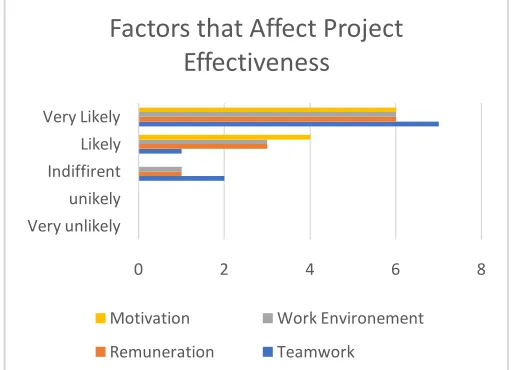
Figure 1: Factors that Affect Project Effectiveness
Source: Field survey 2019
Ratings using a 5-point Likert's scale reveals teamwork (7) as the most likely factors that affect project effectiveness. The other 3 factors each responded to a frequency of 6 responses indicating these factors as very likely factors that affecting the effectiveness of the firms on projects.
Also, the research recorded four (4) responses that reveal motivations have likely impacts on the effectiveness. Three (3) responses were both recorded for both work environment and Remuneration also as likely factors affecting effectiveness. Lastly, two (2) respondents indicated they had indifferent opinions regarding the influence of teams on effectiveness. One respondent also had indifferent opinions regarding the influence of both the work environment and remuneration.
The staff of all firms under discussion agree to the significant rolethat teams play in increasing productivity and organizational effectiveness. But to what extent do teams influence productivity and organizational effectiveness. The research ran a regression to ascertain the level of influence of teamwork on effectiveness. Box 1 shows the results of the regression.
Table 1. Model Summary
Mode l
R R
Square
Adjusted R Square
Std. error of the Estimate
1 .846a .716 .681 .495
a. Predictors: (Constant), Teamwork
Figure 2: Regress Analysis
The model is significant at 1% with an F-stat of 20.19. The R-Square of 0.846 implies that the independent variables explain a very substantial portion of the level of effectiveness of firms. The results of the regression show a very strong and positive relationship between teamwork and effectiveness. The results indicate that effectiveness increase as the level of team efforts from poor (1) to excellent (5).
4.3.2Quality of work
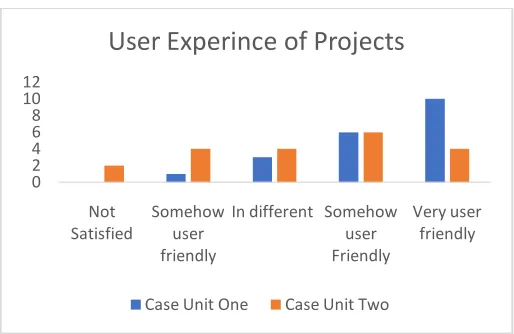
The research assessed the quality of the output by using 20 random assessors. The assessors where made rate both projects based on some on user experience. A five-point Likert’s scale was used to rate the projects. Assessors were required to rate the project use a scale of 1-5 (not very user-friendly to very user-friendly). Figure 1 summaries the responses from the survey.
From the survey, ten (10) respondents confirm a great user experience of the project completed by case unit one. Six respondents noted a somehow great user experience while three had indifferent opinions. The research recorded only one(1) response, which indicated the web app was somehow not user experience. General responses indicate a great user experience of the web app developed by case unit A. sixteen (16) respondents further confirmed the design was lovely and unique, adding to the great reviews received on the project.
The reviews from respondents on the user experience of Case Unit two revealed diverse opinions. The research recorded two (2) responses that indicated the web app was not user-friendly while another four (4) indicated it was somehow not user-friendly. The research recorded four (4) indifferent responses, which are higher than the three (3) recorded for case unit one. Six (6)and four (4) respondents indicated the web app was somehow user-friendly and great user experience, respectively.
The responses revealed more than half of the respondents confirming the web app developed by case unit one is more user-friendly. From the interviews conducted at the case unit organizations, the research concludes that one of the contributing factors to the great design produced by case unit one is the result of great teamwork.
0 2 4 6 8
Very unlikely unikely Indiffirent Likely Very Likely
Factors that Affect Project
Effectiveness
Motivation Work Environement
Figure 3: User Experience of Projects
Source: Field Survey (2019)
Both Firms met the project deadlines. However, case Unit One which used teams extensively completed the project in one week three days while case unit two completed in two weeks four days. This is an indication that working in teams increases productivity and organizational effectiveness by increasing the volume of teamwork and reducing the workload that would have being on an individual. Collective efforts of teams make it possible for teams to not only work smarter but fast and more precise.
5.
D
ISCUSSIONThe research sort to examine the relationship between teamwork and organizational effectiveness. The results of the regression with an adjusted R2 of 84% is consistent with researchers conducted by Cohen & Manion (1999), Frobel & Marchington (2005) where they stated that organizations that put more focus on teams had achieved significant results in increased employee performance and greater productivity.
From the analysis of the design process of web design firms, the research concludes that firms that use teams throughout the entire design process achieve increased performance than forms that only use teams for some roles. Collective and collaborative development yields more results and great user experience applications. The role of teams is clearly established with evidence from the two projects under study.
Projects developed by teams are more user-friendly than those developed by single full-stack developers. From the interviews conducted at the case unit organizations, the research concludes that one of the contributing factors to the great design produced by case unit one is the result of great teamwork. The research concludes that teamwork is highly correlated with employee performance. The increase in teamwork significantly leads to an increase in the work productivity of employees.
6.
C
ONCLUSIONThe study revealed a significant positive impact of the predictors on the response variable with an adjusted R2 of 84%. Qualitative analysis of both organizations reveals a great user experience achieve when projects are executed by teams. The study recommends teamwork activities have to be adopted by Fintech companies in order to enhance their performance and productivity.
Acknowledgement
First and FOREMOST, I would like to express my outmost gratitude to the Almighty God for granting me the wisdom, strength and grace to successfully complete this paper. I am a highly thankful to the Chinese Government for granting me the opportunity to pursue my study in the country. A very special thanks and deep gratitude goes to my supervisor and advisor; Professor Qian Yan who through experience and technical know-how guided me throughout the research process. She was always there to help and direct me on what to do. I would definitely not have been able to accomplish this research without her support, Thank you Laoshi. I would also like to acknowledge the help of two significant people in my life, Lebene Dosserh and Mr. Azupogo Urbanus Wedaaba for their immense support and contribution for making this dream of publishing a reality. And also to my family, I say a very big thank you for the support and love you have shown me all this year. I wouldn’t have come this far if not for that love. I would like to thank all participants who participated in my survey, without their participation, this research could not have been done. Finally, I would like to thank Nanjing University of Aeronautics and Astronautics for this opportunity, and also, for all the supervisors, teachers, coordinators thank you for your corporate and help until the end. Thanking you all.
R
EFERENCES[1] Adjirackor, T., & Authority, N. R. (2016). Impact of teamwork on organizational productivity in some. 4(6), 40–52.
[2] Ahmad, Z. M. (2011). Effect of Teamwork on Employee
Performance. 1(1), 110–126.
https://doi.org/10.5296/ijld.v1i1.1110
[3] Cheum, J. (2017). Strategic issue on employee retention [4] Cullen, S. R. (1951). Teamwork and productivity. Journal of Communication, 1(2), 5–11. https://doi.org/10.1111/j.1460-2466.1951.tb00108.x [5] Martz, W. A. (2008). Evaluating Organizational
Effectiveness. 0
2 4 6 8 10 12
Not Satisfied
Somehow user friendly
In different Somehow user Friendly
Very user friendly
User Experince of Projects
[6] Mickan, S., & Rodger, S. (2000). Characteristics of
effective teams : (February).
https://doi.org/10.1071/AH000201
[7] Ooko, P. A. (2015). Impact of Teamwork on the Achievement of Targets in Organisations in Kenya : A Case of SOS Children ’ s Villages , Eldoret. 7(14), 69–78.
[8] Ownership, C., Moonaisur, D., & Parumasur, S. B. (2012). Perceived enablers and obstacles to team. 10(1), 521–534.
[9] Salman, W. A., & Hassan, Z. (2015). The impact of teamwork on employee performance. International Journal of Accounting, Business and Management, 4
(1)(April), 77–86.
https://doi.org/10.13140/RG.2.1.4959.8804