3776
How To Overcome Learning Challenges In A
Biochemistry Class? Uncovering Lessons From
Facilitation Styles And Collaborative Learning
Reynold C. PadagasAbstract: Teaching Biochemistry requires teacher innovativeness and creativity and to achieve desired learning outcomes, the teacher must integrate activities to encourage collaboration despite diversity. However, in any collaborative endeavors, students inevitably encounter differences and these could either accelerate or hamper their academic success. This descriptive exploratory research determined the facilitation styles and collaborative learning of fifty-nine first year nursing students enrolled in Biochemistry. Using John Heron‘s Facilitation Styles Inventory, the results explicitly conveyed that the first year nursing students have expanded their Supportive Intervention (SU), followed by Informative Intervention (IN), Cathartic Intervention (CA), and Catalytic Intervention (CL), Prescriptive Intervention (PR), and Confronting Intervention (CO). This goes to show that the freshmen nursing students build up confidence of teachers and other students by focusing on their competencies, qualities and achievements as reflected by their SU score. On the other hand, collaborative learning increases their likelihood to succeed in their academic tasks in Biochemistry despite the challenges that include bossy leaders, dependent team members, inability to comply to desired output, individual differences in attributes and characteristics, and many more. Acquisition of soft skills such as problem solving, decision making, communication, and other essential lifelong learning skills are also uncovered. The findings may help teachers at all levels of education to ignite most appropriate facilitation techniques, maximize collaborative learning activities and foster oneness despite team diversity.
Index Terms: Biochemistry, facilitation styles, collaborative learning, team diversity
—————————— ——————————
1
INTRODUCTION
The diversity of learners generally makes teaching and learning more exciting, if not more challenging to both teachers and students. To some teachers, having a diverse group of learners is an opportunity that can test flexibility in the dynamics of teaching while effecting quality learning. The diversity of learners largely influences the competencies of teachers in terms of pedagogy, classroom management, assessment of student learning, among others. However, despite the diversity of learners, the teachers are still in control of the conditions of their student successes. Contrariwise, to say that the students are not affected by diversity in class is an underestimation. In fact, like teachers, students too experience a number of challenges when dealing with other students having different socio-demographic background, interests, learning preferences, culture, and academic tracks, to name a few. In the Philippines, Commission on Higher Education (CHED) Memorandum Order (CMO) No. 105 series of 2017 was adopted and promulgated the policy on the admission of SHS graduates to the Higher Education Institutions (HEIs) beginning Academic Year 2017-2018. The policy cited that ―all Grade 12 graduates beginning Academic Year 2017-2018 are eligible to enter college regardless of the track or strand taken in the Senior High School‖. The differences of the students in terms of their SHS strands make the teaching of the courses a little bit more challenging especially in nursing.
This, however, created several occasions for the teachers to make their instructional designs more responsive to the learning needs of students. The course learning outcomes must be well-defined, realistic, time-bound, and measurable to attain the general objectives of the courses. In the same vein, the teaching strategies and methodologies of the teachers must also be tailored fit to the intended learning outcomes. Now that the implementation of the outcomes-based education emerged, the teachers need not to become adamant in the ways they handle their classes. They need to maximize their wisdom and innovativeness to satisfy the desired course learning outcomes beyond what is expected. Quality learning should not be compromised no matter how difficult a course is. Learning is not a variable; the approaches to learning are. Teachers play very crucial roles in determining ways on how to learn and foster active engagement in students. Many students associate science with negative feelings and attitudes which discourage them from continuing with science (Karpudewan. & Chong Keat, 2017). In fact, studies indicate that the majority of students in undergraduate biochemistry take a surface approach to learning, associated with rote memorization of material, rather than a deep approach, which implies higher cognitive processing (Kulak and Newton, 2014). In fact, Biochemistry subject had problem in learning and teaching, especially in laboratory work (Anwar, Senam, Laksono, and Endang, 2017). In various context, biochemistry laboratory course was designed to provide significant learning experiences to expose students to different ways of succeeding as scientists in academia and foster development and improvement of their potential and competency as the next generation of investigators (Evans, Heyl, and Liggit, 2016). Curriculum reform in biochemistry teaching is needed because of the knowledge limitations of students, a close linkage of biochemical content with clinics, the shortcomings of lecture-centered teaching, and the requirements for early clinical practice training and competence (Yan, Ma, Zhu, Zhang, 2017). Biochemistry is a challenging subject because student learning depends on the application of previously learned concepts from general chemistry and biology to new, ————————————————
3777 biological contexts (Villafaňe, Bailey, Loertscher, Minderhout
and Lewis, 2011). In the Philippines, Biochemistry is also regarded as one of the toughest courses in the nursing curriculum. It is a five-unit course taken by first year nursing students comprised of a three-unit theory and a two-unit laboratory based on CHED Memorandum No. 15, series of 2017. In this course, one unit of theory or lecture is equivalent to eighteen contact hours, and a unit of laboratory is corresponds to fifty-one contact hours. To many nursing students, Biochemistry requires a lot of time and effort to pass it. With the belief that all students can learn and succeed, but not on the same day in the same way, the teachers need to clarify on what the students need to know and how students would learn them. In this way, the students will be helped to learn concepts relative to their needs. The teachers can design their instructions using a variety of strategies to exploit and maximize available resources. For instance, teachers can make use of collaborative learning to be able to facilitate their classes. Collaborative learning is a student-centered approach(Goodsell et al., 1992) but this does not mean that traditional methods of instruction such as note-taking, lecturing, etc. are no longer employed. In collaborative endeavors, students inevitably encounter difference, and must grapple with recognizing and working with it (Goodsell et al., 1992) hence; the goals of education in collaborative learning are involvement, cooperation and teamwork. In relation to outcomes-based education (OBE), since its inception in the Philippines, the students are presumed to become listeners and communicators, learners and thinkers, team members and partners, supporters and contributors, teachers and mentors, creators and producers, planners and designers, problem finders and solvers, implementers and performers, and leaders and organizers. Indeed, outcomes-based teaching and learning (OBTL) requires a major shift in perspective, from traditional methods of teaching that rely on the transmission of content to students, to engaging students in actively constructing their own knowledge (Biggs & Tang, 2011). While collaborative learning seems to fit in any course, this study begun with a hypothesis that the goals of learning through the use of collaborative learning as a pedagogical approach can be best achieved when students are first assessed of their facilitation styles as well as their diversity awareness. In this way, teachers will be able to recognize how students act and behave in a diverse community of learners and help them define approaches to working and communicating with other students. The study determined the facilitation styles of first year nursing students in Biochemistry and explored on the soft skills acquired in collaborative learning activities employed to learn specific concepts. Team diversity and ways that students managed themselves were also observed.
2
MATERIALS
AND
METHODS
2.1 Research Design
This study utilized descriptive exploratory research design. The investigator first determined the facilitation styles of the research participants. Through the use of written interview, the investigator determined various collaborative learning activities employed in Biochemistry as experienced by the freshmen nursing students. Several challenges affecting collaboration were also assessed. Team diversity and lifelong
learning skills, or so called soft skills were also explored.
2.2 Research Sample
In this research, fifty-nine first year nursing students participated as study participants through purposive sampling. Selection criteria were set in choosing the participants. Only regular first year nursing students who were officially enrolled in Biochemistry class during the first semester of the school year 2018-2019 were involved as research participants. Gender, among other demographic characteristics were not used as basis in selecting the samples.
2.3 Instrumentation
In determining the facilitation styles, John Heron‘s Facilitation Styles Inventory was used. Written interview was also used to gather important data such as the collaborative learning activities employed in Biochemistry, challenges in collaboration, team diversity issues and lifelong learning skills acquisition. The written interview was conducted in such a way that the students were given the freedom to enlist their responses assuring them that no specific responses will be associated to them. Names were not also written and acquired in the interview forms.
2.4 Ethical Considerations
Informed consent were obtained from the study participants and they were oriented about the parameters of the research undertaking. The qualitative data acquired during the written interview were treated with objectivity. Thematic coding was done to get the themes of the students‘ responses to questions posed to them during the written interview. The rigor of the research findings was assured with no bias in the treatment of data.
3 RESULTS
AND
DISCUSSION
3.1 Demographic profile of the freshmen nursing student-respondents
3778
Fig. 1. Frequency and percentage distribution of the freshmen
nursing student-respondents according to gender.
Fig. 2. Frequency and percentage distribution of the freshmen
nursing student-respondents according to age.
With regard to age, a majority of the freshmen nursing student-respondents are aged 18 years old (39 or 66.10%). However, Figure 2 confirms that the freshmen population is heterogeneous in terms of age distribution.
Fig. 3. Frequency and percentage distribution of the freshmen
nursing student-respondents according to SHS tracks.
With regard to SHS track, a majority of the freshmen nursing student-respondents finished STEM (24 or 40.68%), followed by those who finished ABM (10 or 16.95%), GAS (8 or 13.56%), HUMSS (3 or 5.08%), TVL Programming (2 or 3.39%), TVL Automotive (1 or 1.69%). About 10 or 16.95% of the freshmen nursing student-respondents have not indicated their SHS tracks completed. The DepEd Teachers Club (2018) as cited by Padagas (2018), highlighted that the CHED Memorandum
Order (CMO) No. 105 series of 2017 adopted and promulgated the policy on the admission of SHS graduates to the Higher Education Institutions (HEIs) beginning Academic Year 2017-2018. The policy cited that ―all Grade 12 graduates beginning Academic Year 2017-2018 are eligible to enter college regardless of the track or strand taken in the Senior High School‖. This resulted to malalignment of program enrolled in by the students based on their SHS track finished.
Fig. 4. Frequency and percentage distribution of the freshmen
nursing student-respondents according to primary choice course.
The Pareto chart in Figure 4 shows that nursing is a primary choice course among all courses such as hotel and restaurant management, accountancy, dentistry, criminology, fine arts, architecture, chemistry, business management, education, engineering, law, medical technology, medicine, and psychology. Conversely, there are a few of them with no specified primary choice courses.
Fig. 5. Frequency and percentage distribution of the freshmen
nursing student-respondents according to secondary choice course.
3779 nursing student-respondents. The distribution of various
courses is heterogeneous. Selection of courses include business management, medical technology, hotel and restaurant management, accountancy, psychology, information technology, veterinary medicine, cookery, medicine, law, education, culinary arts, criminology, biology and aircraft maintenance. Surprisingly, some of them have not specified secondary choice courses.
3.2 Facilitation styles profile of the freshmen nursing student-respondents
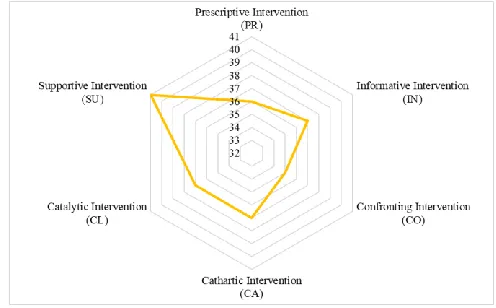
Facilitator approaches, styles, and competence can influence the level of reflective thinking (Tuttici, Ryan, Coyer, & Lewis, 2018). The role of ‗others‘ in collective reflection and knowledge generation as an outcome creates a platform for deep reflection, addressing both the processes and premises of reflective thinking (Fong, Nor, & Nolan, 2018). Heron‘s facilitation styles include authoritative interventions and facilitative interventions. The authoritative interventions include prescriptive intervention (PI), informative intervention (IN), and confronting intervention (CO). On the other hand, the facilitative intervention includes cathartic intervention (CA), catalytic intervention (CL), and supportive intervention (SU), Based on the calculated scores of the facilitation styles of freshmen nursing students enrolled in a Biochemistry class, it can be gleaned from Figure 1 that they have more expanded SU (score: 41) followed by IN (score: 37), CA (score: 37), and CL (score: 37), PR (score: 36) and CO (score: 35). This goes to show that the freshmen nursing students builds up confidence of other students by focusing on their competencies, qualities and achievements as reflected by their SU score. Likewise, their IN score posits that the students provide information to instruct and guide other students. Their CA score means that they tend to help other students to express and overcome thoughts or emotions that they have not previously confronted. Meanwhile, their CL score determines that the students also help other students to reflect, discover and learn from themselves and their experiences. In this way, they become more self-directed in decision making or problem solving mechanisms. Their PR score pertains to the idea that they explicitly direct other students by giving them advice and direction. The IN score, however, posits that the students provide information to instruct and guide other students. Lastly, their CO score determines that the students challenge other students‘ behaviors or attitudes. This however is positive and constructive, not punitive. The PR and IN, according to several coaches, are inappropriate but most of them argue that authoritative facilitation and intervention is also necessary. This, on the other hand, can be best in various settings or situations where PR and IN are deemed required due to some levels of apathy and incapacity to become more receptive during collaborative activities.
Fig. 6. The facilitation styles of freshmen nursing students.
3780 the teacher engaging his or her Biochemistry class in an online
learning environment, trust, communication media, and interactivity must be set at an optimum. In a study conducted by Du et al. (2018), they found out that trust among group members had a positive and powerful influence on online collaboration. They also determined that communication media and the interactivity among group members mediated the influence of group trust on online collaboration.
3.3 Significant difference between the facilitations styles of freshmen nursing student-respondents
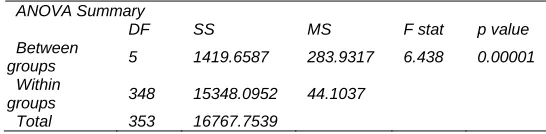
It can be deduced from Table 1 that the facilitation styles namely, PR, IN, CO, CA, CL, and SU are highly significantly differed (F value = 6.438; p value = 0.0001) at α .05 level of significance. This explains the heterogeneity of the facilitation styles employed by the freshmen nursing student-respondents. The difference in the facilitation styles provides the assumption that the teacher must employ eclectic approach in fostering learning in Biochemistry. The fact that the facilitation styles really differ in students, the teacher must have balance between traditional, creative, and technology-enabled strategies with respect to the diverse needs and situations. While it is construed that the SU gets the highest score among the facilitation styles, this does not mean that the students do not employ other facilitation styles. There are several instances where the teacher needs to become flexible or adaptive to the kind of activities that he or she intends to apply.
Table 1 Significant Differences between the Facilitation Styles
of Freshmen Nursing Students Enrolled in a Biochemistry Class
ANOVA Summary
DF SS MS F stat p value
Between
groups 5 1419.6587 283.9317 6.438 0.00001 Within
groups 348 15348.0952 44.1037 Total 353 16767.7539
3.4 Collaborative activities performed by the freshmen nursing student-respondents in Biochemistry
Considering the complexity of topics in Biochemistry, the use of multi-method active learning approach by the teacher is beneficial. Relating this to real-based clinical scenarios is another consideration to make. In this way, valuing the lesson will be facilitated. It is important that the teacher presents clinical examples to make the learning of a concept more meaningful to students. The teacher should also need apply various evidence-based teaching strategies to effectively transfer knowledge among his or her students. The use of evidence-based teaching strategies can significantly accelerate learning processes. These can also heighten motivation and inspiration among students. In a mixed-method descriptive study conducted by Culyer, Jatulis, Cannistraci, & Brownell (2018), it was found out that the top five strategies to facilitate transfer of knowledge between theory and practice are reflection, simulation, small groups, case-based learning, and problem-based learning. In this study, according to the freshmen nursing student-respondents, the teacher fosters several collaborative learning activities using traditional, creative, and technology-enabled means. The traditional approaches include case study, panel discussion, group reporting, debate, interactive discussion, and laboratory experiments. The creative strategies include group songs and
dances, short skit, group act, and role play. Meanwhile, the technology-enabled ones are video creation and presentation called infomercials, virtual laboratory experiments, and Canvas, an online platform used in the university. The identified collaborative learning approaches employed are student-centered Student engagement in learning activities like collaboration requires assessment and focused monitoring and evaluation. For instance, Jaafar, Hashim & Ariffin (2012) developed an instrument to measure student learning involvement. The instrument is said to be essential whenever studies seek to examine the outcomes of student engagement.
3.5 Challenges encountered by the freshmen nursing student-respondents in Biochemistry and the issues on team diversity
3781 he can not, he finds ways.
3.6 Lifelong learning skills or soft skills of freshmen nursing students
Soft skills, also known as lifelong learning skills, are hard to measure but they can be objectively assessed even without standard metrics. The changes in students‘ behaviors can irradiate learned or acquired soft skills. Among the freshmen nursing students, the professor observed improvements in various soft skills acquired to succeed in any collaborative activities in Biochemistry. These include being a good coach, communication and active listening skills, processing insights into others, having empathy toward and being supportive of one‘s team member, good critical thinking, problem-solving, and being able to make connections across complex ideas. Students acknowledged the need for improvements in time management, team work, communication, adaptability and flexibility, ability to perform under pressure, innovation, listening, delegation, creativity, work ethics, leadership, and problem solving. These must have been caused by certain adjustments from their secondary schooling prior to their entry in the university as nursing students. In the study of Abdullah, Kong & Talib (2014), they have highlighted that perceived social support is a predictor of university adjustment and academic achievement in first year students. A great adjustment is much needed for them to be able to excel or perform better in their course. It is imperative for the teachers to integrate several measures to help students expand their soft skills. Soft skills are now being regarded as skills necessary to succeed not only in academics but also in the real world of work. They are given much weight compared to hard skills. The soft skills can be used as a signpost for how teachers are innovating. As a signal, the soft skills can help the teachers make decisions and take actions necessary to impact quality learning among students.
4 CONCLUSIONS
Biochemistry demands the teacher a great deal of innovative teaching methods and strategies to facilitate a diverse classroom. Facilitating a class during collaborative activities requires empirical basis. The teacher needs to profile his students to determine approaches that are essentially effective to facilitate them without compromising academic success. Considering the fact that the class is diverse in terms of student attributes and characteristics, the teacher essentially creates interventions to ensure that the diversity in class does not hamper the cognitive, psychomotor, and affective developments during collaborative activities. It is in this regard that the teacher is valued most in class facilitation especially in enhancing higher order thinking skills in students. However, as posited by Varutharaju & Ratnavadivel (2014), while facilitators play a crucial role in engaging learners, it is expected that learners become more autonomous, strategic and motivated to apply effort and strategies in a variety of meaningful contexts. Various activities that employ collaboration in the classroom are worth-driven teaching strategies as they do not only help students to academically succeed but also to acquire the soft skills necessary to survive and thrive in the actual work environment. Students need supportive teachers and classmates to succeed in their academic life. Having supportive people around can make magnanimous impact in the development of holistic individuals who can be active and responsible to attain common, desired thrusts. While the level
of motivation of students to succeed in their chosen career is multifactorial, it is crucial to note that adequate support and external validation and affirmation can dramatically influence student success. There is no such thing like a perfect teaching modality applicable to all settings but there is always that one teaching strategy suitable for specific learning situation. It is recommended that the teacher as a facilitator should develop strategies that can fire up collaboration among students with an end in mind to effect quality learning. As an instructional designer, the teacher should integrate appropriate collaborative activities to enhance interprofessional partnerships in students. Team diversity is both a strength and a weakness but the teacher should find ways on how to mitigate differences and turn diversity as a strength in both academics and lifelong experiences.
5
ACKNOWLEDGMENT
The author would like to extend his sincerest thanks to Jose Rizal University headed by Dr. Vicente K. Fabella and to all those who have contributed and supported this study.
6
REFERENCES
[1] M.C. Abdullah, L.L. Kong, & A.R. Talib (2014). Perceived social support as predictor of university adjustment and academic achievement amongst first year undergraduates in a Malaysian public university. Malaysian Journal of Learning and Instruction, 11, 59-73.
[2] Y.A.S. Anwar, L.F.X. Senam, and W. Endang (2017). Effective laboratory work in biochemistry subject: Students' and lecturers' perspective in indonesia. International Journal of Higher Education, v6 n2 p100-109 2017
[3] M.O. Ayodele (2009). Gender differences in mathematics and integrated science achievement among junior secondary school students. Malaysian Journal of Learning and Instruction (MJLI), Vol. 6, 41-53.
[4] J. Biggs, & C. Tang (2011). Train-the-trainers: implementing outcomes-based teaching and learning in malaysian higher education. Malaysian Journal of Learning and Instruction (MJLI), Vol. 8, 1-19.
[5] L.M. Culyer, L.L. Jatulis, P. Cannistraci, & C.A. Brownell (2018). Evidenced-based teaching strategies that facilitate transfer of knowledge between theory and practice: what are nursing faculty using? Teaching and Learning in Nursing, 13(3), 174-179. [6] DepEd Teachers Club (July 28, 2018). All grade 12
graduates are eligible for college, retrieved from https://depedclub.com/all-grade-12-graduates-are-eligible-for-college-ched/ on July 28, 2018.
[7] J. Du, C. Wang, M. Zhou, J. Xu, X. Fan, & S. Lei (2018). Group trust, communication media, and interactivity: toward an integrated model of online collaborative learning. Interactive Learning Environments, 26(2), 273-286.
3782 [9] L.Y.Y. Foong, M.B.M. Nor, & A. Nolan (2018). The
influence of practicum supervisors‘ facilitation styles on student teachers‘ reflective thinking during collective reflection. Reflective Practice, 19 (2), 225-242.
[10] Goodsell, M. Maher, V. Tinto, B.L. Smith, and J. MacGregor (1992). Collaborative learning: a sourcebook for higher education. National Center on Postsecondary Teaching, Learning, and Assessment at Pennsylvania State University, retrieved from http://healthystartacademy.com/wpcontent/uploads/20 15/09/
[11] M. Karpudewan, & M. Chong Keat (2017). The effects of classroom learning environment and laboratory learning environment on the attitude towards learning Science in the 21st-century Science lessons. Malaysian Journal of Learning and Instruction (MJLI), Special issue on Graduate Students Research on Education, 25-45.
[12] F.M. Jaafar, R.A. Hashim, & T.F.T. Ariffin (2012). Malaysian university student learning involvement scale (muslis): Validation of a student engagement model. Malaysian Journal of Learning and Instruction, 9, 15-30.
[13] J. Laakkonen, & H. Muukkonen (2018). Fostering students‘ collaborative learning competencies and professional conduct in the context of two gross anatomy courses in veterinary medicine. Anatomical sciences education.
[14] M.J. Leenknecht, L. Wijnia, S.M. Loyens, & R.M. Rikers (2017). Need-supportive teaching in higher education: Configurations of autonomy support, structure, and involvement. Teaching and Teacher Education, 68, 134-142.
[15] S. Pociask, D. Gross, & M.Y. Shih (2017). Does team formation impact student performance, effort and attitudes in a college course employing collaborative learning? Journal of the Scholarship of Teaching and Learning, 17(3), 19-33.
[16] D.L. Roorda, S. Jak, M. Zee, F.J. Oort, & H.M. Koomen (2017). Affective teacher–student relationships and students' engagement and achievement: a meta-analytic update and test of the mediating role of engagement. School Psychology Review, 46 (3), 239-261.
[17] L. Ross, & E. Judson (2018). Gender-based differences in engineering faculty members‘ view and
use of student-centered learning
strategies. International Journal of Gender, Science and Technology, 9(3), 204-220.
[18] C. Rozelle (2018). Exposing Students to Diverse Health Care Teams. ABNF Journal, 29 (1).
[19] S. Stover, & C. Holland (2018). Student resistance to collaborative learning. International Journal for the Scholarship of Teaching and Learning, 12(2), 8. [20] S. Tharayil, M. Borrego, M. Prince, K.A. Nguyen, P.
Shekhar, C.J. Finelli, & C. Waters (2018). Strategies to mitigate student resistance to active learning. International Journal of STEM Education, 5 (1), 7.
[21] N. Tutticci, M. Ryan, F. Coyer, & P.A. Lewis (2018). Collaborative facilitation of debrief after high-fidelity simulation and its implications for reflective thinking:
student experiences. Studies in Higher Education, 43 (9), 1654-1667.
[22] E. Varutharaju, & N. Ratnavadivel (2014). Enhancing higher order thinking skills through clinical simulation. Malaysian Journal of Learning and Instruction, 11, 75-100.
[23] Q. Yan, L. Ma, L. Zhu, & W. Zhang, (2017). Learning effectiveness and satisfaction of international medical students: introducing a hybrid-pbl curriculum in biochemistry. Biochemistry and Molecular Biology Education, v45 n4 p336-342 Jul-Aug 2017
[24] Franz (2012). Group dynamics and team interventions: understanding and improving team performance, First Edition, Blackwell Publishing Ltd. p71.
[25] Kulak and Newton (2014). A guide to using case-based learning in biochemistry education. https://doi.org/10.1002/bmb.20823.
[26] S.M. Villafañe, C.L. Bailey, J. Loertscher, V. Minderhout and J.E. Lewis (2011). Development and analysis of an instrument to assess student understanding of foundational concepts before
biochemistry coursework.
https://doi.org/10.1002/bmb.20464.