Volume-7 Issue-2
International Journal of Intellectual Advancements
and Research in Engineering Computations
An experimental study on replacement of course aggregate in pervious
concrete using HDPE plastic
Pradhap.S
1,Madhavan.B
1, Gowtham.S
1, Sathish Raj.S
1, Amirthagadeshwaran.G
21
UG Student, B.E Civil Engineering, Nandha Engineering College, Erode, Tamil Nadu, India.
2Assistant Professor, Department of Civil Engineering, Nandha Engineering College, Erode, Tamil Nadu.
ABSTRACT
This paper reports "An Experimental Study On Replacement of Coarse Aggregate In Pervious Co ncrete Using HDPE Plastic Waste" in which the natural aggregate are replaced by the waste plastic (HDPE) in the Rigid pavement. The main objective of this project is to use the waste plastic into an efficient way in the construction of road pavement which leads to a green eco system. Permeable pavements help in improving the flow of water, ground water recharge and increase life time of pavement. By using the plastic as an aggregate in the concrete reduce the cost and weight of the pavement. All of the concrete mixture were tested at room temperature. The Fresh Concrete test includes performing slump Cone Test, Compaction factor test and Flow Test. These harden concrete performing of compressive strength, flexural strengths and spilt tensile strength. Curing ages 7, 14, 28 days for the concrete mixture were applied in this work. This study insures that reusing and recycling of waste plastic as a natural aggregate substitution in concrete gives a good approach to reduce the cost of the materials and solve some of the solid waste problems posed by plastics.
Keywords:
High Density Polyethylene, Plastic Coarse Aggregates, Pervious Concrete.INTRODUCTION
The rapid growth of technology, up gradation of technical innovations and a high rate of obsolescence in the industrial sector have led to one of the fastest growing waste streams in the world which consist of end of life electrical and electronic equipment products & plastic. Many of the trends in consumption and production processes are unsustainable and pose serious challenge to environment and human health. Optimal and efficient use of natural resources, minimization of waste, development of cleaner products and environmentally sustainable recycling and disposal of waste are some of the issues which need to be addressed by all concerned while ensuring the economic growth and enhancing the quality of General’s (CAG) report, over, 1.5 MT of plastic waste, 48 MT of municipal waste are generated in the country annually.
Therefore, with increasing consumerism and an anticipated rise in the sales of electronic & plastic products in the countries experiencing rapid economic and industrial growth, the higher percentage of plastic waste in municipal solid waste is going to be an issue of serious concern. There is no large scale organized waste recycling facility in India and the entire recycling exists in unorganized sector. The integrated waste management approach is to be considered involving efficient use of plastic& electronic materials, recycling and disposal mechanisms. So best thing to do out of this waste is to utilize it as a replacement for coarse aggregate in concrete mix since the coarse aggregate is also is a resource of economic value that cannot be readily replaced by natural means on a level equal to its consumption, resulting in economical and sustainable concret General’s (CAG) report, over, 1.5 MT of plastic
waste, 48 MT of municipal waste are generated in the country annually. Therefore, with increasing consumerism and an anticipated rise in the sales of electronic & plastic products in the countries experiencing rapid economic and industrial growth, the higher percentage of plastic waste in municipal solid waste is going to be an issue of serious concern. There is no large scale organized waste recycling facility in India and the entire recycling exists in unorganized sector. The integrated waste management approach is to be considered involving efficient use of plastic& electronic materials, recycling and disposal mechanisms. So best thing to do out of this waste is to utilize it as a replacement for coarse aggregate in concrete mix since the coarse aggregate is also is a resource of economic value that cannot be readily replaced by natural means on a level equal to its consumption, resulting in economical and sustainable concrete. Now we are considering replacement of Coarse aggregate with plastic waste in rigid pavement. Development of industries and urban areas increase the waste generation is also increases, which is unfavorably carrying out the environment. Durability, sustainability and economy have made it the world’s most widely used construction material. As the plastic waste is lighter than the natural aggregate so the concrete made from such aggregate possesses [1-5.
This project is to use the waste plastic High Density Poly Ethylene (HDPE). HDPE is a plastic made from petroleum and types of HDPE plastics include bottles with pigment and without. Those with pigment have a higher resistance to cracking and chemicals, so this type of bottle is ideal for packaging household items such as certain cleaning products. Other HDPE plastics are made into injection-molded containers that serve as various food packaging because they are resistant to warping. It is high strength-to-density Ratio, HDPE is used in the production of plastic bottles, corrosion-resistant piping, geo membranes and plastic lumber. HDPE is commonly recycled and has the number "2" as its resin identification code. In 2007, the global HDPE market reached a volume of more than 30 million tons [6-10].
OBJECTIVES
The natural aggregate are 50% replaced by the waste plastic (HDPE) in the Rigid pavement.
To study properties of plastic waste used in concrete.
To study influence plastic aggregates in concrete to conventional concrete.
To find the strength of the harden concrete [11-15].
METHODOLOGY
Abstract
Collection of literature
Study of literature
Collection of material
Testing of material
MATERIAL TESTING
Water
Fresh potable water having pH value water is 7 is used for making concrete and for curing the concrete cubes, prism and cylinder.
Cement
Ordinary Portland cement (OPC) is one of the most popular building materials used all across the globe. There is a fascinating story behind the
naming of this widely used cement product. The chief chemical constituents of ordinary Portland cement (OPC) are Calcium, Alumina and Iron, Cement manufacturers continuously research and make effort to further strength and improve the quality and other features of this particular type of cement. We offer the 53 Grade OPC Cement which gives even higher cement strength to match the rising demands of higher strength building material in the urban world..
Table 1 Physical Properties of Cement.
Property Value Requirement
(IS12269-1989) Specific gravity 3.12 ISH99-1959 Initial setting time 30 Minimum 30 min. Final setting time 390 min. Maximum 600 min.
Soundness 5.80 Maximum 10mm
Standard consistency 27.20% -
Fine Aggregates
The size of aggregate less than 4.75 mm considered as fine aggregate. Fine aggregate is natural sand which has washed and sieved to remove particles larger than 5 mm and coarse aggregate gravel which has been crushed, washed and sieved so that the particles may vary from 5 up to 50 mm size. The fine aggregate should have
rounded shape. Manufactured Sand is an alternative for river sand. Due to fast growing construction industry, the demand for sand has increased tremendously, causing deficiency of suitable river sand in most part of the word.
Properties of Fine aggregate
Specific gravity test on fine aggregate G = 2.375
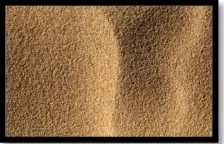
Fig 1Fine Aggregate
Sieve analysis
A sieve analysis is a practice or procedure used to assess the particle size distribution of a granular
Table 2 Sieve analysis test on fine aggregate
S.No IS Sieve Mass retained (g) Cumulative % retained Cumulative fineness %
1 4.75 mm 32 3.2 96.8
2 2.36 mm 33 3.3 93.5
3 1.18mm 134 13.4 80.1
4 600 micron 374 37.4 42.7
5 300 micron 341 34.1 8.6
6 150 micron 81 8.1 0.5
7 PAN 26 2.6 -2.1
Coarse aggregate (Natural)
Aggregate are the important constitutes in concrete. They give body to the concrete, reduce shrinkage and effect economy. The aggregates occupy 70 – 80percentof the volume of concrete, their impact on various characteristics. The size of
aggregate bigger than 4.75 mm considered as coarse aggregate. The coarse aggregate has high crushing strength. The size of coarse aggregate depends up on the nature of work. The aggregates are free from dust before used in the concrete.
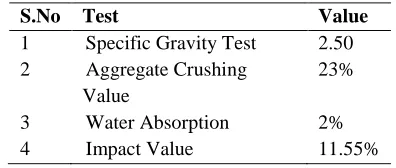
Table 3 Physical Properties on Coarse Aggregate (Natural)
S.No Test Value
1 Specific Gravity Test 2.50 2 Aggregate Crushing
Value
23%
3 Water Absorption 2%
4 Impact Value 11.55%
Coarse Aggregate (Plastic)
The use of plastic is increasing day by day, although steps were taken to reduce its consumptions. This creates substantial garbage every day which is much unhealthy. A healthy and sustainable reuse of plastics offers a host of advantages. The suitability of recycled plastic as coarse aggregate in concrete and its advantages are discussed here. The initial questions arising of the
bond strength and the heat of hydration regarding plastic aggregate were solved. Tests were conducted to determine the properties of plastic aggregate such as density, specific gravity, impact value, crushing value and water absorption. As 100% replacement of natural coarse aggregate with plastic coarse aggregate is not feasible, so partial replacement were examined.
Table 4 Physical Properties of Coarse Aggregate (Plastic)
S.No Test Value
1 Specific Gravity Test 0.95
2 Aggregate Crushing Value
25%
Fig 2 Coarse Aggregate
Propertise of HDPE
HDPE is large strength-to-density ratio.
The density range from 930 to 970 kg/m3.
The density of HDPE is only marginally higher than that of low-density polyethylene.
The HDPE is having higher specific strength.
It is also harder and more opaque and can
withstand somewhat
higher temperatures (120 °C/248 °F for short periods).
HDPE is relatively hard and resistant to impact and can be subjected to temperatures of up to 120oC without being affected.
HDPE has a high density, with a specific gravity of 0.95.
FRESH CONCRETE TEST
Fresh concrete is that stage of concrete in which concrete can be moulded and it is in plastic state. The potential strength and durability of
concrete of a given mix proportion is very dependent on the degree of its compaction.
Slump Cone Test
Compaction factor test
Flow test.
Slump Cone Test
Unsupported fresh concrete flow to the sides and a sinking in height takes place. This vertical settlement is known as slump. Slump is a vertical measure indicating the consistency or workability of cement concrete. In this test fresh concrete is filled into a cone of specified shape and dimension and the settlement or slump is measured when supporting mould is removed. Slump increase as water content is increased. It gives an idea of water content needed for concrete be used for different works Bleeding of concrete is said to occur when excess water comes up at the surface of concrete. This causes small pores through the mass of concrete and is undesirable.
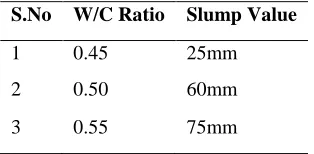
Table 5 Slump test on fresh concrete S.No W/C Ratio Slump Value
1 0.45 25mm
2 0.50 60mm
3 0.55 75mm
Flow Test
The flow table test or flow test is a method to determine consistency of fresh concrete. Flow
Table 6 Flow Test on Fresh Concrete S.NO W/C RATIO Value
1 0.45 0.844
2 0.50 0.852
3 0.55 0.89
Compaction factor test
Compaction factor test is more precise and sensitive than the slump test and is particularly using for concrete mixes of very low workability. This test work on the principle of determining the degree of compaction achieved by a standard
amount of allowing the concrete work done by allowing the concrete to fall through a standard height. The degree of compaction is called compaction factor. It is measured by the density ratio. The density achieved in the test to density of same concrete fully compacted.
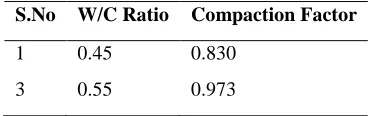
Table 7 Compaction Test on Fresh Concrete S.No W/C Ratio Compaction Factor
1 0.45 0.830
3 0.55 0.973
HARDEN CONCRETE TEST
The water causes the hardening of concrete through a process called hydration. Hydration is a chemical reaction in which the major compounds in cement from chemical bonds with water molecules and become hydrates. The hardened concrete testes are
Compression Strength Test
The compression test specimens were tested on a compression tested on a compression testing machine (CTM) of capacity 2000 KN. The
specimen was placed on machine in such a way that its position is at right angle to it shown position which it had at the time of casting. load is applied gradually as the rate 14 N/mm2/min or 320 KN/min. Cube moulds of size 150 x 150 x 150 mm were casted and allowed for curing in a curing tank for 28 days and they were tested at 7, 14 and 28 days. Compressive strength =P/A
Where, P = Load (N) A = Area (mm2)
Fig 3 Compressive Strength
Split Tensile Strength
The determination of tensile strength of concrete in necessary to determine the load at which the concrete members crack. The cracking forms a tensile failure. The main of this experimental test is to determine the maximum load carrying capacity of test specimens. Cylinders of size 150mm in Diameter and 300mm height
were cast for split tensile test. Two numbers of specimens were tested 28days.
Split Tensile Strength (MPa) = 2P/π DL Where,
P = Failure Load (KN)
D = Diameter of specimen (150 mm) L = Length of specimen (300 mm)
Fig 4 Split Tensile Strength
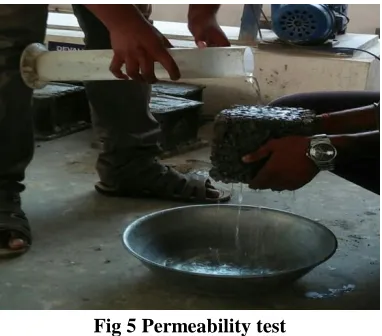
Permeability test
The constant head permeability test method has been adopted. The time required for the flow of 1000 ml of water through the cubical mould was noted. Table below shows time and coefficient of permeability for different specimens.
K = qL/ AH
Where,
K = Coefficient of Permeability cm/sec q = Discharge cm3 /sec
Fig 5 Permeability test
Table 8 Conventional Concrete Compressive Strength, Split Tensile Strength and Flexural Strength Results for M25 Grade of Concrete
S.No Days Compressive strength N/mm2 Split Tensile Strength N/mm2 Flexural Strength N/mm2
1 7 15.5 1.45 2.15
3 28 25 3 3.25
Fig 5 Flow Chart for Conventional Concrete Compression Strength, Flexural Strength and Split Tensile Strength Results for M25 Grade of Concrete
Table 9 Replacing of Plastic Coarse Aggregate with Concrete Compressive Strength, Split Tensile Strength and Flexural Strength Results for M25 Grade of Concrete
S.No Days Compressive strength N/mm2 Split Tensile Strength N/mm2
1 7 8.5 5.0
3 28 15 6 0
10 20 30
7 Days 14 Days
28 Days N/mm2
Compressive strength Split Tensile Strength
Flexural Strength
5 10 15 20
Compressive strength
Split Tensile Strength
ADVANTAGES
Advantages
Strength of the parking area gets increased.
Better resistance to water & water stagnation.
No stripping & no potholes.
Increases binding & better bonding of the mix.
Better soundness property.
Maintenance cost of the road is almost nil.
No effect of radiation like UV.
CONCLUSION
The experimental investigation is to find out the M25 grade design ratio of conventional concrete test report and Partial Replacing of plastic Coarse Aggregate with the Concrete Test Report on this section.
Here using the ratio of concrete mix is 1:1.2:2.34 and Refering of IS 10262-2019 and IS 456 – 2000 codes are using to find the concrete test. This project 7 days, 14 days and 28 days of Compressive Strength, split tensile strength and flexural strength were studied.
REFERENCES
[1]. Syed Allah Bakash, Chava Sowmith, Guntaka Rakesh1 and B.G. Rahul “A Review of The Use Of Recycled Materials in Rigid Pavements” International Journal of Engineering Research & Technology (IJERT) 2(4), 2013.
[2]. K.R.Mahendranath, P.Chamanthi and P.Bala Krishna “Experimental Investigations on Eco Friendly Concrete” International Research Journal of Engineering and Technology (Irjet) 4(5), 2017.
[3]. Surender Singh and Dr.S.N.Sachdeva, “Thickness Requirement of a Rigid Pavement with varying Conditions of Sub grade, Sub-Base and Shoulders” IOSR Journal of Mechanical and Civil Engineering (IOSR-JMCE). [4]. Aman Khimta and sahil Arora “Use of Waste Plastic in Bituminous Concrete” International Journal of Civil
Engineering and Technology (IJCIET) 8(8), 2017.
[5]. TolulopeA.Olukunle, “Design Consideration of a Plastic Shredder in Recycling Processes” World Academy of Science, Engineering and Technology International Journal of Industrial and Manufacturing Engineering, 2016.
[6]. H.K.Sharma “Utilization of Waste Plastic in Construction of Pavement” National Conference on Recent Research in Engineering and Technology (NCRRET) International Journal of Advance Engineering and Research Development (IJAERD) 2015.
[7]. Anzar Hamid Mir, “Use Of Plastic Waste in Pavement Construction an Example of Creative Waste Management” IOSR Journal of Engineering (IOSRJEN) 5(2), 2015.
[8]. Pratiksha Singh Rajput, R.K.Yadav, “Effect of Plastic Waste on Properties of Road Aggregate” IJIRST – International Journal for Innovative Research in Science & Technology 2, 2016.
[9]. Nivetha.R, KeerthikumarB, Aravindaraj.K, Krishnakanth.S, Vijay Karthekeyan “Experimental investigation of Rigid Pavement using demolished waste” International Research Journal of Engineering and Technology (IRJET) 2018.
[10].T.DivyaBhavana, S.Koushik, K.Uday Mani Kumar, R.Srinath, “Pervious Concrete Pavement” International Journal of Civil Engineering and Technology (IJCIET) 2017.
[11].V.V.Arora, P.N.Ojha, Suresh Kumar and Komal Preetkaur “Special Applications Concrete-Pervious Concrete, Plastic Concrete and Controlled Low Strength Material” National Council for Cement and Building Materials, India.
[12].B.Rajmane, A.K.Gupta, D.B.Desai “Effective Utilization of Waste Plastic In Construction of Flexible Pavement For Improving Their Performance” on IOSR Journal of Mechanical and Civil Engineering (IOSR-JMCE).