JNSD 2016; Vol.2, No.3: 46-51
Original Article
Open Access
www.jnsd.tums.ac.ir
Effect of quercetin supplementation on serum CRP levels:
a systematic review and meta-analysis of randomized
controlled trials
Masoud Khorshidi
1, Sakineh Shab-Bidar
1, Hamed Kord-Varkaneh
2, Kurosh Djafarian
21Department of Clinical Nutrition, School of Nutritional Sciences and Dietetics, Tehran University of
Medical Sciences, Tehran, Iran
2Department of Community Nutrition, School of Nutritional Sciences and Dietetics, Tehran University of
Medical Sciences (TUMS), Tehran, Iran
A B S T R A C T
Article History
Received:
19/02/2016
Revised:
15/04/2016
Accepted:
29/04/2016
Background: Several studies have investigated the effect of quericitn supplementation
on serum C - reactive protein (CRP). However, results were inconsistent. This systematic review and meta-analysis was designed to assess the effect of quercetin supplementation on CRP levels in randomize control trials (RCTs).
Methods: We searched PubMed and Scopus up to July 2016 to identify RCTs
investigating the effect of quercetin on serum CRP. Meta-analysis was performed using either a fixed-effects or random-effect model according to I² statistic. Weighted mean differences (WMDs) and 95% confidence intervals (CIs) were calculated for net changes in CRP levels.
Results:Seven trials with eight data sets and 346 participants met the inclusion criteria.
There was no significant differences for CRP reduction between subjects with quercetin supplementation and placebo control [WMD, 0.01 mg/L; 95% CI: -0.18 to 0.21, p =0.88] with significant heterogeneity (I²=48.9%; p=0.05). Subgroup analyses showed that dose, duration and country were not the potential sources of heterogeneity.
Conclusion: Our results suggest that quercetin supplementation does not reduce serum
CRP. Further large and well-designed studies are necessary to confirm this conclusion.
Keywords:
c-reactive protein,
quercitin,
meta-analysis
Introduction
Oxidative stress and Inflammation have fundamental role in progress of cardiovascular disease (CVD), atherogenesis and type 2 diabetes mellitus (T2DM) Which has involved many people around the world(1, 2). Some of mediators which amplify inflammation and contribute to the damage of the tissues were secreted by activated macrophages. One of these mediators is interleukin-6(IL-6) which was produced by both
monocyte-derived macrophages and activated endothelium. In the liver IL-6 stimulates the production of large amounts of acute- phase reactants including C-Reactive Protein(CRP), fibrinogen , and serum amyloid A(3, 4). Studies have shown that elevated levels of CRP leads to increase in risk of metabolic syndrome, CVD and T2D(5, 6).
At a recent time, mostly the focuses of the natural products with inflammation modifying properties that have greater safety compared to the chemically synthesized agents, one of this products are flavonols(7-10). Flavonols are the main members of the class of natural phenolic compounds called flavonoids(11). Flavonols is ____________________________________________
Corresponding author:
Masoud Khorshidi
, et al.
JNSD 2016; Vol.2, No.3: 46- 51 used at a dosage of 20-35 mg/day(12, 13). Quercetin[3,3’,4’,5,7-pentahydroxyflavone] is one of the most abundant flavonols(14, 15), which is found in some sources such as tea, onion and apple(16). It has been shown that quercetin is safe and tolerable for human(15). Generally, quercetin is conjugated with the various part of sugar which increases quercetin absorbtion from upper small intestine(17). Quercetin has some effective features such as antioxidant(18) and antidiabetic effect (19, 20), anti-inflammatory (21), dyslipidemia improving(22), endothelial function- improving(23), blood pressure reducing (24), weight lowering(25) and vasodilatory effect(26) which is implemented on human, in vivo and in vitro.
As an anti-inflammation factor, it has been shown that plasma levels of CRP decreased in quercetin supplementation group compared with placebo group (27-29), however, in some studies, the effect of quercetin on CRP levels was not significant in comparison with control group(28, 30, 31). There is no systematic review and meta-analyses about the effect of quercetin supplementation on the serum CRP level so far. Also the effective dose and duration of quercetin supplementation has not determined. Therefore, in this study we aimed to execute a systematic review and meta-analysis of published randomize control trials (RCTs) to confirm the effect of quercetin supplementation on serum CRP levels.
Subjects and methods Search strategy
We followed the preferred reporting Items for systematic reviews and meta-analyses (PRISMA)
guidelines during all stages of the design, implementation and reporting of this meta-analysis(32). Two authors independently searched the databases for English-language literature including Medline (http://www.ncbi.nlm.nih.gov/ pubmed) and SCOPUS (http:// www.scopus.com), from inception to July 2016.
The search terms used were quercetin and C-Reactive Protein or CRP or high-sensitivity CRP or high-sensitivity c-reactive protein or hs-CRP and randomized controlled trial or trial or randomly. This search was completed by hand search of the reference list of RCTs to include other potentially eligible trials.
Selection criteria
Human studies were included if they met the following inclusion criteria including: (1) population: adults, (2) intervention: oral supplementation of quercetin compared to placebo group, (3) outcome: expression of enough information about Intended variables at baseline and at the end of study in each group, (4) study design: randomized clinical trial with either crossover or parallel design. Exclusion criteria were the following: (1) uncontrolled trials, (2) non-clinical studies, (3) absence of sufficient information on CRP level, (4) using mixture of quercetin with vitamins or other agents.
Data extraction
Quality of studies was assessed by Jadad criteria(33). Two reviewers evaluated the included articles for their Jadad score.
Two reviewers independently screened and extracted study characteristics including first author, country, study population, sex, sample size, quercetin dose, treatment duration and outcome data. Any more computations on study data which was considered essential were conducted by the first reviewer and checked by the second reviewer. Extracted data were checked by third author and any discrepancy was resolved by discussion.
Statistical analysis
Stata version 14 (Stata Corporation, College Station, TX) was used for the analysis in this study. The statistical heterogeneity and between-study contradiction were evaluated by the Cochran’s Q test and the I² statistic(34). We used a fixed-effect model for heterogeneous data (I² value was ≥50%) and random-effect model for non-heterogeneous data (I² value was <50%). SD was calculated when the information were reported as standard error of the means (SEM) by multiplying SEM by square root of the sample
quercetin supplementation and serum CRP
JNSD 2016; Vol.2, No. 3: 46-51 size: SD=SEM × √n. We estimated the weighted
mean difference (WMD) with 95% confidence intervals (CI) for outcomes. Statistical significance level was considered as p < 0.05.
Results Search results
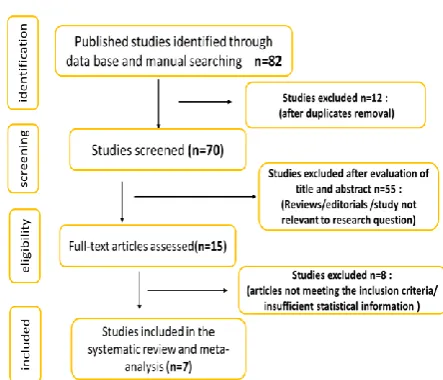
After electronic and hand searches, 82 studies were identified and after screening under consideration of the inclusion and exclusion criteria 7 eligible studies with 8 data sets were found to be appropriate for this meta-analysis(28, 30, 31, 35-38). All included trials used quercetin as supplementation with any added substances. The details of our selection process are shown in Figure 1.
Study characteristics
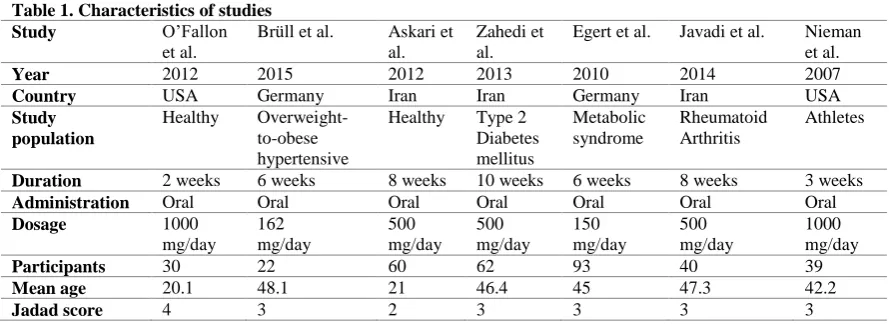
The methodological quality score of selected papers ranged from 2 to 4 (Table 1). Total of 346 participants were included in 7 selected studies. Smallest study had a population size of 22 participants versus largest study with 93 participants.
All study designs of selected studies were double-blind placebo controlled and were conducted in the Germany, Iran and United States during the period of 2007-15. Selected trials investigated oral intake at dose of 150 to 1000 mg quercetin/day. Duration of intervention ranged from 2-10 weeks. Included studies enrolled participants with overweight and obesity(35), healthy subjects (31), T2DM (37), metabolic syndrome (30), rheumatoid arthritis (28) and athletes (36, 38). The mean age of the patients were 20-48 years. Oral supplementation with quercetin was well tolerated in all of the trials included in this review.
Main analysis
In meta-analysis of seven trials with 346 participants, supplementation with quercetin did
not significantly reduce CRP serum level [WMD, 0.01 mg/L; 95% CI: -0.18 to 0.21, p =0.88], however, this analysis were associated with significant heterogeneity (I²=48.9%; p=0.05). Moreover, analysis in a random effect model was not significant [WMD, 0.00 mg/L; 95% CI: -0.35 to 0.35, p=0.99] in compare with placebo condition (Figure 2).
Subgroup analysis was made to further explore the effect of quercetin supplementation on the serum CRP levels in different duration of supplementation. There was no significant effects with trials stratifying according to ≥8 and <8 week duration of supplementation (WMD, 0.09 mg/L; 95% CI: -0.21 to 0.40, p =0.88) and (WMD, -0.18 mg/L; 95% CI: -0.91 to 0.55, p =0.88) respectively. In addition, CRP level was not considerably changed after assortment studies according to conduct in same country. Moreover, dosage of supplementation with quercetin had not effect on CRP level (data not shown).
There were significant differences between the studies which was done on women in comparison with other studies.
Publication bias
The funnel plot test of asymmetry was not done because there were only eight papers included in meta-analysis. According to the general rule, a funnel plot test could have used when at least ten studies are pooled in a meta-analysis (34).
Discussion
It has been well identified that inflammation is the underlying cause of chronic diseases such as atherosclerosis (1, 3, 39). Epidemiologic studies show that higher quercetin intake from fruits and vegetables is associated with reduced risk for such disease compared with lower intake due to quercetin’s anti-inflammatory and anti-oxidative capacities (40-43). Anti-inflammatory effects of
Table 1. Characteristics of studies
Study O’Fallon
et al.
Brüll et al. Askari et
al.
Zahedi et al.
Egert et al. Javadi et al. Nieman et al.
Year 2012 2015 2012 2013 2010 2014 2007
Country USA Germany Iran Iran Germany Iran USA
Study population
Healthy
Overweight-to-obese hypertensive
Healthy Type 2
Diabetes mellitus
Metabolic syndrome
Rheumatoid Arthritis
Athletes
Duration 2 weeks 6 weeks 8 weeks 10 weeks 6 weeks 8 weeks 3 weeks
Administration Oral Oral Oral Oral Oral Oral Oral
Dosage 1000
mg/day
162 mg/day
500 mg/day
500 mg/day
150 mg/day
500 mg/day
1000 mg/day
Participants 30 22 60 62 93 40 39
Mean age 20.1 48.1 21 46.4 45 47.3 42.2
Masoud Khorshidi
, et al.
JNSD 2016; Vol.2, No.3: 46- 51 quercetin derived from chemical structure of quercetin which particularly is due to the presence and position of the hydroxyl group (-OH) and catechol group in the B-ring and its inhibitory effect on nuclear factor-kappa B (NF-κB) activation and DNA binding (27, 44, 45). Oral quercetin supplementation at dose of 1000 mg/day for twelve weeks had no side effects in humans and quercetin has identified as safe status according to the U.S. Food and Drug Administration (FDA) (15). Until now, many clinical trial have been performed about quercetin and its effect on serum CRP level, which their results are different (28, 30, 31, 35-38).
According to over knowledge, this is the first time that a meta-analysis evaluate the effect of quercetin supplementation on CRP levels. Meta-analysis showed consuming variable doses of querectin did not have a significant effect on serum CRP levels compared with placebo. Moreover, stratifying the RCTs according to the duration of supplementation showed no significant relationship in studies lasting <8 or ≥8 weeks follow-up. Furthermore, there was no significant correlation between the trials administering quercetin with doses ≥500 mg/day or <500 mg/ day.
These results are inconsistent with the results of experimental studies (46, 47) which maybe is due to their different bioavailability, depending on the type of glycosides they contain and conjugation in the body after absorption (48). trial that include in this meta-analysis often have participant with normal level of CRP while quercetin shows have better effects when the level of inflammation is high because the activity of β-glucuronidase that critical enzyme for the therapeutic effectiveness of quercetin increased under inflammatory conditions (49, 50). other
probable explanation for this contradiction is the dose of quercetin used in human studies Less than that used in animal studies (46, 47). maybe, the effect of quercetin on Levels of inflammatory markers in the selected studies have been influenced by genotypic differences (30, 51).
This meta-analysis had some limitations. First, most of the trials used in this meta-analysis had few participants and the total number of included studies were few which theoretically caused unstable estimates of treatment effects (52). Furthermore, we could not assess publication bias by Begg’s and Egger’s tests, because the numbers of RCTs were limited. Between-study heterogeneity was found in outcomes based on the tentative categorization of I² values. Potential explanation for the heterogeneity in outcomes, coulde be due to the specific health condition of each study such as gender, age and drug usage. Furthermore, duration of supplementation in the included studies mostly was short. In addition, some articles could be missed due to the search limitation to the English databases.
Conclusion
In conclusion, this meta-analysis showed that oral intake of quercetin had not significant effect on serum CRP levels and its routine use cannot be recommended based on the available evidences. Large-scale and high-quality clinical trials are still required to clarify the effectiveness of quercetin supplementation on inflammation.
Conflict of Interests
The authors declare that there is no conflict of interests regarding the publication of this paper.
References
1. Libby P, Ridker PM, Maseri A. Inflammation and atherosclerosis. Circulation. 2002;105(9):1135-43. 2. Pradhan A, Ridker P. Do atherosclerosis and type 2 diabetes share a common inflammatory basis? European Heart Journal. 2002;23(11):831-4. 3. Hansson GK. Inflammation, atherosclerosis, and
coronary artery disease. New England Journal of Medicine. 2005;352(16):1685-95.
4. Kontogianni M, Zampelas A, Tsigos C. Nutrition and inflammatory load. Annals of the New York Academy of Sciences. 2006;1083(1):214-38. 5. Haffner SM. The metabolic syndrome:
inflammation, diabetes mellitus, and cardiovascular disease. The American journal of cardiology. 2006;97(2):3-11.
quercetin supplementation and serum CRP
JNSD 2016; Vol.2, No. 3: 46-51
Chen R. Cardiovascular disease in US patients with metabolic syndrome, diabetes, and elevated C-reactive protein. Diabetes care. 2005;28(3):690-3. 7. Bhaskar S, Sudhakaran P, Helen A. Quercetin
attenuates atherosclerotic inflammation and adhesion molecule expression by modulating TLR-NF-κB signaling pathway. Cellular Immunology. 2016;310:131-40.
8. Carullo G, Cappello AR, Frattaruolo L, Badolato M, Armentano B, Aiello F. Quercetin and derivatives: useful tools in inflammation and pain management. Future Medicinal Chemistry. 2017;9(1):79-93.
9. Li Y, Yao J, Han C, Yang J, Chaudhry MT, Wang S, et al. Quercetin, inflammation and immunity. Nutrients. 2016;8(3):167.
10. Overman A, Chuang C, McIntosh M. Quercetin attenuates inflammation in human macrophages and adipocytes exposed to macrophage-conditioned media. International Journal of Obesity. 2011;35(9):1165-72.
11. Formica J, Regelson W. Review of the biology of quercetin and related bioflavonoids. Food and chemical toxicology. 1995;33(12):1061-80. 12. Justesen U, Knuthsen P, Leth T. Determination of
plant polyphenols in Danish foodstuffs by HPLC-UV and LC-MS detection. Cancer letters. 1997;114(1-2):165-7.
13. Sampson L, Rimm E, Hollman PC, de VRIES JH, Katan MB. Flavonol and flavone intakes in US health professionals. Journal of the American Dietetic Association. 2002;102(10):1414-20. 14. Boots AW, Haenen GR, Bast A. Health effects of
quercetin: from antioxidant to nutraceutical. European journal of pharmacology. 2008;585(2):325-37.
15. Harwood M, Danielewska-Nikiel B, Borzelleca J, Flamm G, Williams G, Lines T. A critical review of the data related to the safety of quercetin and lack of evidence of in vivo toxicity, including lack of genotoxic/carcinogenic properties. Food and chemical toxicology. 2007;45(11):2179-205. 16. Scalbert A, Williamson G. Dietary intake and
bioavailability of polyphenols. The Journal of nutrition. 2000;130(8):2073S-85S.
17. Cermak R, Landgraf S, Wolffram S. The bioavailability of quercetin in pigs depends on the glycoside moiety and on dietary factors. The Journal of nutrition. 2003;133(9):2802-7.
18. Jullian C, Moyano L, Yanez C, Olea-Azar C. Complexation of quercetin with three kinds of cyclodextrins: an antioxidant study. Spectrochimica Acta Part A: Molecular and Biomolecular Spectroscopy. 2007;67(1):230-4. 19. Alam MM, Meerza D, Naseem I. Protective effect
of quercetin on hyperglycemia, oxidative stress and DNA damage in alloxan induced type 2 diabetic mice. Life sciences. 2014;109(1):8-14.
20. Kim J-H, Kang M-J, Choi H-N, Jeong S-M, Lee Y-M, Kim J-I. Quercetin attenuates fasting and
postprandial hyperglycemia in animal models of diabetes mellitus. Nutrition research and practice. 2011;5(2):107-11.
21. Kelly GS. Quercetin. Altern Med Rev. 2011;16(2):172-94.
22. Lee K-H, Park E, Lee H-J, Kim M-O, Cha Y-J, Kim J-M, et al. Effects of daily quercetin-rich supplementation on cardiometabolic risks in male smokers. Nutrition research and practice. 2011;5(1):28-33.
23. Sanchez M, Lodi F, Vera R, Villar IC, Cogolludo A, Jimenez R, et al. Quercetin and isorhamnetin prevent endothelial dysfunction, superoxide production, and overexpression of p47phox induced by angiotensin II in rat aorta. The Journal of nutrition. 2007;137(4):910-5.
24. Mackraj I, Govender T, Ramesar S. The antihypertensive effects of quercetin in a salt-sensitive model of hypertension. Journal of cardiovascular pharmacology. 2008;51(3):239-45. 25. Nabavi SF, Russo GL, Daglia M, Nabavi SM. Role of quercetin as an alternative for obesity treatment: you are what you eat! Food chemistry. 2015;179:305-10.
26. Monori-Kiss A, Monos E, Nádasy GL. Quantitative analysis of vasodilatory action of quercetin on intramural coronary resistance arteries of the rat in vitro. PloS one. 2014;9(8):e105587. 27. Chun OK, Chung S-J, Claycombe KJ, Song WO.
Serum C-reactive protein concentrations are inversely associated with dietary flavonoid intake in US adults. The Journal of nutrition. 2008;138(4):753-60.
28. Javadi F, Eghtesadi S, Ahmadzadeh A, Aryaeian N, Zabihiyeganeh M, Foroushani AR, et al. The effect of quercetin on plasma oxidative status, C-reactive protein and blood pressure in women with rheumatoid arthritis. International journal of preventive medicine. 2014;5(3).
29. Nieman DC, Henson DA, Maxwell KR, Williams AS, Mcanulty SR, Jin F, et al. Effects of quercetin and EGCG on mitochondrial biogenesis and immunity. Med Sci Sports Exerc. 2009;41(7):1467-75.
30. Egert S, Boesch-Saadatmandi C, Wolffram S, Rimbach G, Müller MJ. Serum lipid and blood pressure responses to quercetin vary in overweight patients by apolipoprotein E genotype. The Journal of nutrition. 2010;140(2):278-84.
31. O’Fallon KS, Kaushik D, Michniak-Kohn B, Dunne CP, Zambraski EJ, Clarkson PM. Effects of quercetin supplementation on markers of muscle damage and inflammation after eccentric exercise. International journal of sport nutrition and exercise metabolism. 2012;22(6):430-7.
Masoud Khorshidi
, et al.
JNSD 2016; Vol.2, No.3: 46- 51
Reynolds DJM, Gavaghan DJ, et al. Assessing the quality of reports of randomized clinical trials: is blinding necessary? Controlled clinical trials. 1996;17(1):1-12.
34. Higgins JP, Green S. Cochrane handbook for systematic reviews of interventions: John Wiley & Sons; 2011.
35. Brüll V, Burak C, Stoffel-Wagner B, Wolffram S, Nickenig G, Müller C, et al. Acute intake of quercetin from onion skin extract does not influence postprandial blood pressure and endothelial function in overweight-to-obese adults with hypertension: a randomized, double-blind, placebo-controlled, crossover trial. European journal of nutrition. 2016:1-11.
36. Nieman DC, Henson DA, Davis JM, Dumke CL, Gross SJ, Jenkins DP, et al. Quercetin ingestion does not alter cytokine changes in athletes competing in the Western States Endurance Run. Journal of Interferon & Cytokine Research. 2007;27(12):1003-12.
37. Zahedi M, Ghiasvand R, Feizi A, Asgari G, Darvishi L. Does quercetin improve cardiovascular risk factors and inflammatory biomarkers in women with type 2 diabetes: a double-blind randomized controlled clinical trial. International journal of preventive medicine. 2013;4(7). 38. Askari G, Ghiasvand R, Feizi A, Ghanadian SM,
Karimian J. The effect of quercetin supplementation on selected markers of inflammation and oxidative stress. Journal of Research in Medical Sciences. 2012;17(7). 39. Cochain C, Zernecke A. Macrophages in vascular
inflammation and atherosclerosis. Pflügers Archiv-European Journal of Physiology. 2017:1-15. 40. Knekt P, Kumpulainen J, Järvinen R, Rissanen H,
Heliövaara M, Reunanen A, et al. Flavonoid intake and risk of chronic diseases. The American journal of clinical nutrition. 2002;76(3):560-8.
41. Nair MP, Mahajan S, Reynolds JL, Aalinkeel R, Nair H, Schwartz SA, et al. The flavonoid quercetin inhibits proinflammatory cytokine (tumor necrosis factor alpha) gene expression in normal peripheral blood mononuclear cells via modulation of the NF-κβ system. Clinical and Vaccine Immunology. 2006;13(3):319-28. 42. Neuhouser ML. Review: Dietary flavonoids and
cancer risk: Evidence from human population studies. Nutrition and cancer. 2004;50(1):1-7. 43. Theodoratou E, Kyle J, Cetnarskyj R, Farrington
SM, Tenesa A, Barnetson R, et al. Dietary flavonoids and the risk of colorectal cancer. Cancer Epidemiology and Prevention Biomarkers. 2007;16(4):684-93.
44. Rice-Evans CA, Miller NJ, Paganga G. Structure-antioxidant activity relationships of flavonoids and phenolic acids. Free radical biology and medicine. 1996;20(7):933-56.
45. Wang L, Tu Y-C, Lian T-W, Hung J-T, Yen J-H, Wu M-J. Distinctive antioxidant and
antiinflammatory effects of flavonols. Journal of Agricultural and Food Chemistry. 2006;54(26):9798-804.
46. Gardi C, Bauerova K, Stringa B, Kuncirova V, Slovak L, Ponist S, et al. Quercetin reduced inflammation and increased antioxidant defense in rat adjuvant arthritis. Archives of biochemistry and biophysics. 2015;583:150-7.
47. Mahmoud MF, Hassan NA, El Bassossy HM, Fahmy A. Quercetin protects against diabetes-induced exaggerated vasoconstriction in rats: effect on low grade inflammation. PloS one. 2013;8(5):e63784.
48. Manach C, Williamson G, Morand C, Scalbert A, Rémésy C. Bioavailability and bioefficacy of polyphenols in humans. I. Review of 97 bioavailability studies. The American journal of clinical nutrition. 2005;81(1):230S-42S.
49. Perez‐Vizcaino F, Duarte J, Santos‐Buelga C. The flavonoid paradox: conjugation and deconjugation as key steps for the biological activity of flavonoids. Journal of the Science of Food and Agriculture. 2012;92(9):1822-5.
50. Shimoi K, Saka N, Nozawa R, Sato M, Amano I, Nakayama T, et al. Deglucuronidation of a flavonoid, luteolin monoglucuronide, during inflammation. Drug metabolism and disposition. 2001;29(12):1521-4.
51. Hubacek JA, Peasey A, Pikhart H, Stavek P, Kubinova R, Marmot M, et al. APOE polymorphism and its effect on plasma C-reactive protein levels in a large general population sample. Human immunology. 2010;71(3):304-8.