Original Research Article
Psychosocial problems and needs of patients in palliative care center
Arun T. Mithrason
1*, Gomathy Parasuraman
2, Ramesh Harihara Iyer
3, Suresh Varadarajan
3INTRODUCTION
India is one of the developing countries with increase in aging population over the past 20 years, and also with increase in prevalence of advanced cancer.1 Around one million new cases of cancer occur each year in India, with over 80% presenting at stage III and IV.2 They present with multiple and multi-dimensional problems. Therefore, they require not only physical control of disease and symptoms, but, also need help to cope up with other elements caused by the disease. If they are at the advanced stage of the disease where the chance of
cure is remote, they may also need assistance in planning for life.
Palliative care is not end of life care, its aim is to relieve suffering in all stages of disease. Along with medical care, palliative care is provided at the same time when curative or life-prolonging treatments begins.3 To achieve good palliative care, good psychosocial care is important. Psychosocial care, according to the National Council for Hospice and Specialist Palliative Care Services, involves both psychological and emotional well-being of the patient as well as their family/care takers, providing them with knowledge about the illness and its consequences
ABSTRACT
Background: Number of cancer cases in India is rising every year and also the sufferings caused by the disease. The patients not only require physical control of disease and symptoms, but, also need help to cope up with other elements caused by the disease. Psychosocial aspect of the patient is usually left unmet.
Methods: This study was done in „Jeevodaya Hospice Care Centre‟, Chennai, India. 60 patients were included in this study. Questionnaire on problems and needs in palliative care was used. The questionnaire consists of eleven elements which deal with psychological issues and fourteen elements which deal with social problems and needs.
Results: The five most common psychological problems, perceived by palliative care patients in descending order were; depressed mood (96.7%), fear of metastasis (95%), unpredictability of future (93.3%), not experiencing pleasure (91.5%), and, fear of physical suffering (85%). The five most common social problems perceived by the patients were; loneliness (93.3%), experiencing too little support from others (61.7%), difficulty in talking about the disease for not wanting to bother others (56.7%), finding others not receptive while talking about the disease (53.3%) and difficulty in finding someone confidential to talk to (46.7%).
Conclusions: These psychological and social problems along with fear of death causes disruption of the sensitive balance between the body and mind. Proper communication, treatment and counselling helps in a great way to tackle such issues.
Keywords: Cancer, Psychosocial problems, Palliative care, Counselling
Department of Community Medicine, 1DM WIMS, Naseera nagar, Wayanad, Kerala, 2Saveetha Medical College, Thandalam, Kanchipuram, 3Sri Ramachandra Medical College and Research Institute, Porur, Chennai, Tamil Nadu, India
Received: 22 February 2018 Revised: 12 March 2018 Accepted: 14 March 2018
*Correspondence: Dr. Arun T. Mithrason,
E-mail: [email protected]
Copyright: © the author(s), publisher and licensee Medip Academy. This is an open-access article distributed under the terms of the Creative Commons Attribution Non-Commercial License, which permits unrestricted non-commercial use, distribution, and reproduction in any medium, provided the original work is properly cited.
and how to deal with it.4 It allows the patients to express their feelings about the disease.4,5
Usually a large number of the patients‟ needs remain unmet because not all take the initiative to make their problems known. Most of the patients do not report their problems because they are unaware of available services, some doesn‟t want to bother their doctor with futile or non-medical problems thinking it is waste of time.6-9 Therefore, the psychosocial problems are not addressed causing unnecessary suffering and possibly leading to an escalation of the problems.10
Thus, it is important to define the goals which addresses all the dimensions when treating patients with life-limiting illnesses. Developing a standard protocol for assessing the problems and needs of cancer patients might help overcome these problems, and contribute to their better quality care.11 The Noble prize winner for peace „Mother Teresa‟ in 1979 had said The greatest disease is the feeling of being unwanted, uncared for and deserted by everybody.12 The most terrible disease that can ever strike a human being is to have no one near him to be loved.
To be maximally supportive, it is necessary to show that we care about the patient as a person and that we are not just concerned about physical symptoms alone. Therefore, this study aims to find out the psychosocial problems of patients in palliative care center, in Chennai to know how healthcare rendered to terminally ill patients can be modified for the good of the suffering patients.
METHODS
A cross sectional study was done in „Jeevodaya Hospice care Centre‟, located in North Chennai in Mathoor, Manali, India. Study was conducted from May to September 2010 (5 months). 60 patients who were not very ill, able to talk comfortably and who had good mental state as per the mini mental state examination were included in the study. Questionnaire on problems and needs in palliative care was used. After extensive textbook and literature search in palliative care, the common psychological and social problems and needs in palliative care were identified. According to the previous studies on problems and needs of patients in palliative care the PNPC (problems and needs in palliative care) questionnaire developed by Osse was a valuable tool to develop the questionnaires.13
The questionnaire consists of eleven elements which deal with psychological issues and fourteen elements which deal with social problems and needs. Also, patients back-ground information was collected which includes information on the socio-economic and socio-demographic profiles like name, sex, address, religion, number of family members, educational status, occupation, type of family, family income and marital status.
The questionnaire was administered to the study subjects, after getting informed consent, according to the time comfortable for the individual patients. Therefore, interviewing per patient took lots of time. Enough time breaks were given according to patient‟s request. Time taken to answer the background information, socio-economic and socio-demographic data along with general and clinical examination was approximately 45 minutes. The time taken to answer the questionnaire was approximately 4 hours. The interview questions were not asked continuously but in three divided time schedules comfortable for the patients and according to the institution timings. Whenever a patient felt tired and not interested to answer, the interview was withheld and resumed after some time.
The study was approved by institutional ethics committee. Data analysis was done in SPSS 17. Individual problems asked through questionnaire are expressed in proportions and percentage.
RESULTS
70% of the patients in this study were in the age-group of 40-59 years. Among the study subjects‟ males and females were equally distributed. The age distribution of the patients are shown in Table 1.
Table 1: Age distribution of palliative care patients.
Age group Total (n=60) (%)
<40 yrs 8 (13.3)
40-59 yrs 42 (70)
>60 yrs 10 (16.7)
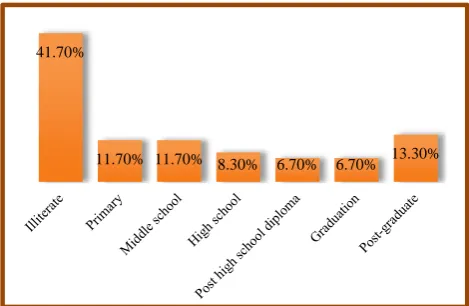
The educational status of the palliative care patients is as given below (Figure 1). 41.7% of subjects in the study were illiterate. 13.3% of subjects were postgraduates.
Figure 1: Distribution of palliative care patients by education.
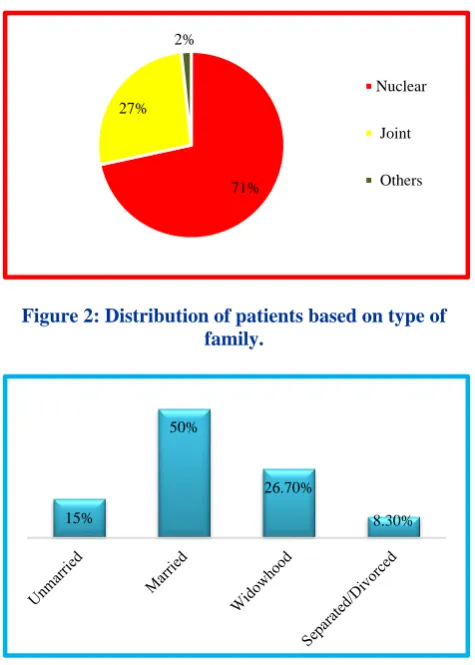
Figure 2 shows information on the type of family. It was observed that 71.7% were from nuclear family.
41.70%
Figure 2: Distribution of patients based on type of family.
Figure 3: Marital Status of palliative care patients.
According to their marital status, patients were classified as unmarried, married and living, widowhood, separated or divorced (Figure 3). 15% of subjects in the study were unmarried and 50% were married.
Of 60 subjects in the study, 14 (23.3%) patients had breast cancer, 11 (18.3%) patients had cancer of oral cavity and 11 (18.3%) patients had cancer stomach. Other patients included carcinoma of cervix, lung, pancreas, rectum, thyroid, liver, colon, esophagus, prostate, ovary and osteosarcoma (Figure 4).
Figure 4: Disease profile of palliative care patients.
Psychological problems and needs
The palliative care patients were interviewed about their common psychological problems. Among the psychological problems, the five most common problems perceived by majority of palliative care patients in descending order were; depressed mood (96.7%), fear of metastasis (95%), unpredictability of future (93.3%), not experiencing pleasure (91.5%), fear of physical suffering (85%) (Table 2).
Table 2: Psychological problems and their severity among palliative care patients.
Psychological problems (n) Perceived (%) Perceived as severe (%)
Fears
Fear of metastasis 57 95.0 74.5
Fear for physical suffering 51 85.0 34.6
Fear of being alone 39 65.0 38.5
Fear of death 27 45.0 55.6
Fear for treatment 20 33.3 55.0
Difficulties
Difficulty in unpredictability of future 56 93.3 39.3
Difficulty to accept body appear 31 51.7 25.8
Difficulty in showing emotion 18 30.0 16.7
Difficulty to see the positive aspects of life 17 28.3 22.0 Others
Depressed mood 58 96.7 44.8
Not experiencing pleasure 54 91.5 34.0
Social problems and needs
The five most commonly prevailing social issues in descending order were; loneliness (93.3%), experiencing
too little support from others (61.7%), difficulty in talking about the disease for not wanting to bother others (56.7%), finding others not receptive while talking about the disease (53.3%) and difficulty in finding someone confidential to talk to (46.7%) (Table 3).
71% 27%
2%
Nuclear Joint Others
15%
50%
26.70%
8.30%
0.0% 5.0% 10.0% 15.0% 20.0% 25.0% 30.0% 35.0% 40.0% 45.0%
Table 3: Social problems perceived as most common and severe by palliative care patients.
Social problems (n) Perceived (%) Perceived as severe (%)
Loneliness 56 93.3 73.2
Not experiencing enough support from others 37 61.7 39.5
Difficulty in talking about the disease to others and not
wanting bother them 34 56.7 2.9
Finding others not receptive while talking about disease 32 53.3 6.3 Difficulty in finding someone confidential to talk to 28 46.7 17.9
Being forsaken by others 26 43.3 50.0
Others deny severity of your problem 25 41.7 0.0
Not getting practical help from life partner 23 40.4 52.4
Others dramatizing the situation 23 38.3 21.7
Difficulty in contacting with children 18 34.6 88.9
Relationship problems with life partner 11 25.6 63.6
Difficulty in talking about the disease to life partner 11 25.6 63.6
Difference in opinion about treatment provided 10 16.7 50.0
Problem when others are being over concerned 3 5.0 0.0
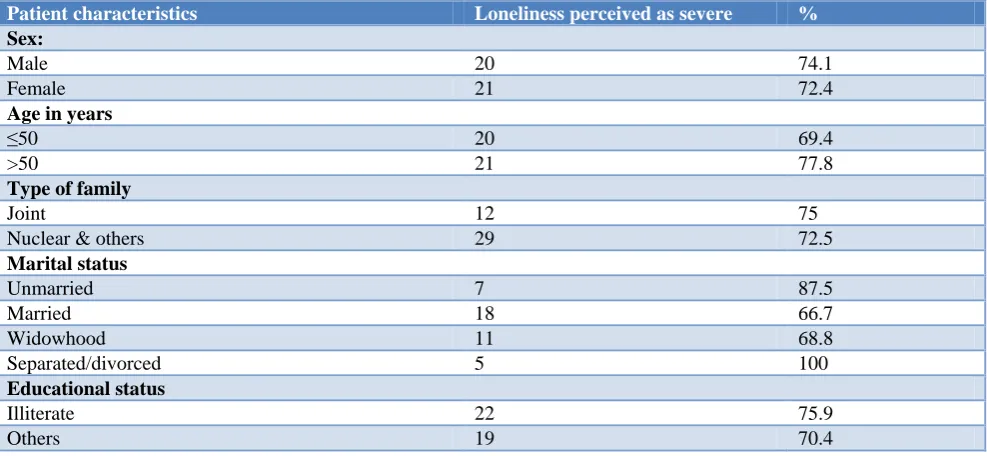
Table 4: Loneliness perceived as severe by age group, sex, type of family, marital status and educational status.
Patient characteristics Loneliness perceived as severe %
Sex:
Male 20 74.1
Female 21 72.4
Age in years
≤50 20 69.4
>50 21 77.8
Type of family
Joint 12 75
Nuclear & others 29 72.5
Marital status
Unmarried 7 87.5
Married 18 66.7
Widowhood 11 68.8
Separated/divorced 5 100
Educational status
Illiterate 22 75.9
Others 19 70.4
Among the social issues, „feeling of being lonely or loneliness‟ was the most common issue as well as a severe problem perceived by palliative care patients. On cross tabulating loneliness in relation to sex, age, type of family, marital status and educational status, it was found that none of the above-mentioned factors had much influence on severity of loneliness (Table 4).
DISCUSSION
Psychological problems are very common among terminally ill patients. The most common psychological problems observed in our study were depressed mood, fear of metastasis and difficulty in predicting of future. Depressed mood was present among 96.7% of palliative care patients. This includes feeling depressed most often
during the day, feeling of persistent sadness, feeling low, poor self-esteem, crying etc. Among those who had depressed mood, 44.8% perceived it as a severe problem. The magnitude of problem among men and women in our study was similar.
patients interviewed, due to differences in assessment tools and other factors.
There are lot of factors that can lead to depression and can be categorized as cancer-related factors, cancer treatment-related factors, psychiatric history, and social factors.18 Cancer patients with advanced disease are the most vulnerable group.18,19 Various causes of depression include knowledge of a life-threatening diagnosis, having physical symptoms like pain and nausea, side effects from medical treatments, and loss of independence and functionality. Others include changes in family relationships, concern for dependents and changes appearance.20,5 Patients who are usually at risk of developing depression (apart from a family history of depression) include patients whose symptoms are poorly controlled or those who have poor communication with their healthcare provider.5,20
Symptoms of depression are categorized in two groups: somatic and psychological. Patients usually present with symptoms such as fatigue, sleep disturbances (excessive sleep or insomnia), reduced appetite, being less talkative, and may be emotionally down. They characteristically have withdrawn mood, loss of interest in their environment and in activities. They may even have a desire or wish to hasten death (WTHD),or, be suicidal in intent.21,5
Even the family/ care givers of patients are under great stress. Caregivers have been found to experience more anxiety and depression than people who are not caring for patients with cancer. Children are also affected when a parent with cancer develops depression.22 Many researchers found that the level of distress experienced by family members is comparable, or even higher, than the one experienced by the patient.23
Counseling provides professional assistance for patients and their care givers in coping and managing their current situation.24 There are studies that show, treating depression not only improves the psychological condition but reduces suffering and enhances quality of life.25 Therefore, healthcare providers and care takers must be alert for depressive symptoms in cancer patients, and seek evaluation for depression when indicated.
Fear of metastasis was the second commonly persisting psychological problem (95%) among the patients in our study. Among those who had fear of metastasis, 74.5% perceived it as a severe problem. Fear of metastasis can be mentally debilitating. It increases the level of stress patient is undergoing through.26 Any kind of headache, eye ache, bone pain, bruise, swelling, etc., or any new rash a patient gets, makes the patient think of metastasis. Most of the patients in the present study knew what cancer they were suffering from. They were also well aware of what is meant by „metastasis‟ in cancer. Moreover, daily they saw their co-patients suffering and eventually dying in their neighboring bed due to
metastasis. Therefore, even counseling was of not much help in these patients.
Difficulty in unpredictability of future was the third most common psychological problem (93.3%) among palliative care patients. 39.3% perceived this problem as severe. Anxiety of the disease is main and also the worry over future financial issues and the possibility of disability. This leads to increase in stress which manifests in many ways including poor sleep routines, aches and pains, irritability, tension, anxiety and more. In a study done by Ossey et al, unpredictability of future was one among the top five problems.27 Counseling in such patients helps to maintain a positive attitude, present their feelings in a confident way; and not letting anger take over those feelings.
91.5% of patients in this study said that they were not experiencing pleasure in life. 34% of them said this as a severe problem. Pleasure is a subjective feeling and cannot be objectively measured. For patients with all type of sufferings life becomes unpredictabile and happiness seems out of reach. Lissoni et al in a study concluded that decline in the perception of pleasure with cancer progression depends on psychological factors and also on psychochemical alterations occurring during the course of disease.28 Counselling can play a very effective role by inducing a positive feeling. Patients can divert their minds in activities like gardening, watching television, playing cards and involvement in some pleasure activities.
In the present study, fear of physical suffering was present among 85% of palliative care patients and fear of death among 45% of patients. In the study done by Osse et al, fear of suffering was third among the top 20 needs among cancer patients.13 It was observed that fear and coexisting emotions like denial, anger and the „why me?‟ syndrome can hamper the patients healing process and have a psychosomatic effect on the disease. According to Penson et al, for many, cancer is synonymous with death and fearing death is a normal response.29 Without fear, people would not take action and seek medical help.30 However, when fear becomes intense and overwhelming, it is usually very distressing for patients. Some people deal with such intense fear by denying everything that might contribute to it, which in turn can result in delay of diagnostic and treatment procedures.31,32 Tackling fear should then be the first step towards dealing with cancer. Healthcare providers should support patients in coping with fear, not only because it is a distressing feeling but also to improve adherence to treatments.
reduce fear and choosing a provider that suits them the best.
Social problems
Man is a social being. We live in a society as a community and perform our daily activities. Our daily activities include our vocation, relationship with life partner, children, parents, brothers & sisters and other family members. Helping others in their need and being helped by other peers keeps us more alive and healthy in the society. Unfortunately, patients with terminal illness are restricted from these activities.
The key social issues interviewed to palliative care patients were; relationship problems with life partner, difficulty in talking about the disease to life partner, difficulty in contacting children, difficulty in talking about the disease to others for not wanting to bother them, finding others not receptive while talking about the disease, difference in opinion about treatment provided, experiencing too little support from others, difficulty in finding someone confidential to talk to, not getting enough practical help from life partner, irritated when others are being over concerned, irritated when others dramatize the situation, others deny the severity of the problem, loneliness and being forsaken by others. The prevalence of these key social issues among the palliative care patients were recorded through “yes or no” questions.
The most common social problem found among palliative care patients in this study was loneliness (93.3%). 73.2% perceived it as a severe problem. In the present study, sex, age, type of family, marital status and educational status had no influence on severity of loneliness. It was observed that people with cancer often felt lonely or distant from others. They may find that their friends have a hard time dealing with their cancer and may not visit. They may feel too sick to take part in the hobbies and activities which they used to enjoy like gardening, cooking, reading etc. Some of the patients felt less lonely when they were with other cancer patients. Many felt better when they join a group and talk with others who are facing the same challenges. Some of the patients also said that pain seems to be most unbearable in loneliness or during sleepless nights.
Other common social problems reported by patients in this study were not experiencing enough support from others (61.7%), not talking to others for not wanting to bother them (56.7%), finding others not receptive while talking about the disease (53.3%), difficulty in finding someone confidential to talk to (46.7%), being forsaken by others (43.3%), difficulty in contacting with children (34.6%), relationship problem with life partner (25.6%). The range and depth of social problems reported by the patients clearly demonstrates that these issues are common and of importance.
Cancer patients should be allowed to express hopes, fears and concerns about their disease. Listening is a wonderful way of offering support. Listening also helps to understand their changing moods and state of mind. It was observed that these palliative care patients are craving for someone to whom they can talk and be comfortable. The Jeevodaya palliative care team was always ready to talk to the patient, to make them comfortable.
Difficulties concerning relationships were high on the patient agenda, as was shown in the reported frequencies, but they are complex, vary enormously and cannot be easily categorized. Even though they were categorized as; difficulty in contacting with children, life partner, difficulty in talking about the disease to life partner” etc. Most of the patients having relationship problems with life partner were the ones who had severe perception of other social problems.
CONCLUSION
It is important that healthcare professionals take a person-centered holistic approach towards identifying pshycho-social problems and its causes in vulnerable group. The focus should now be shifted on patient rather than disease. This will help patient remain functional throughout the illness and live with maximum comfort and dignity.
Funding: No funding sources Conflict of interest: None declared
Ethical approval: The study was approved by the Institutional Ethics Committee
REFERENCES
1. Khosla D, Patel FD, Sharma SC. Palliative care in India: current progress and future needs. Indian J Palliative Care. 2012;18(3):149.
2. Seamark D, Ajitha kumari K, Burn G, Saraswalthi Devi P, Koshy R, Seamark C. Palliative care in India. J Royal Society Med. 2000;93(6):292-5. 3. O‟Neill LB, Morrison RS, Arnold RM. Palliative
care: Issues specific to geriatric patients. 2017. 4. What do we mean by „psychosocial‟? A discussion
paper on use of the concept within palliative care. The National Council for Palliative Care Mar. 2000. Available at: http://wwwncpcorguk/publications/ archives.html. Aceessed on 3 December 2017. 5. Onyeka TC. Psychosocial issues in palliative care:
A review of five cases. Indian J Palliative Care. 2010;16(3):123.
6. Brock G, Gurekas V, Deom P. Denial among cancer patients. Tips and traps. Can Fam Physician. 1993;39:2581–4.
behaviour: in depth interview study. BMJ. 2000;320(7239):909-13.
8. Barry CA, Bradley CP, Britten N, Stevenson FA, Barber N. Patients' unvoiced agendas in general practice consultations: qualitative study. BMJ. 2000;320(7244):1246-50.
9. Curtis JR, Patrick DL, Caldwell ES, Collier AC. Why don't patients and physicians talk about end-of-life care? Barriers to communication for patients with acquired immunodeficiency syndrome and their primary care clinicians. Archives of Internal Medicine. 2000;160(11):1690-6.
10. Detmar SB, Aaronson NK, Wever LDV, Muller M, Schornagel JH. How are you feeling? Who wants to know? Patients‟ and oncologists‟ preferences for discussing health-related quality-of-life issues. J Clin Oncol. 2000;18:3295–301.
11. Maguire P, Faulkner A, Booth K, Elliott C, Hillier V. Helping cancer patients disclose their concerns. Eur J Cancer. 1996;32:78–81.
12. Mother Teresa- A biography, Greenwood Biographies, Meg Greene, Page 113.
13. Osse BH, Vernooij MJ, Schade E, Grol RP. Towards a new tool for needs assessment in the palliative care of cancer patients: the PNPC instrument. J Pain Symptom Management. 2004;28(4):329-41.
14. Linden W, Vodermaier A, MacKenzie R, Greig D. Anxiety and depression after cancer diagnosis: prevalence rates by cancer type, gender, and age. Journal of affective disorders. 2012;141(2):343-51. 15. Wang Y, Shen J, Xu Y. Symptoms and quality of
life of advanced cancer patients at home: a cross-sectional study in Shanghai, China. Supportive Care in Cancer. 2011;19(6):789-97.
16. Walsh D, Donnelly S, Rybicki L. The symptoms of advanced cancer: relationship to age, gender, and performance status in 1,000 patients. Supportive Care in Cancer. 2000;8(3):175-9.
17. Stam HJ, Bultz BD, Pittman CA. Psychosocial problems and interventions in a referred sample of cancer patients. Psychosomatic Med. 1986;48(8):539-48.
18. Bukberg J, Penman D, Holland J: Depression in hospitalized cancer patients. Psychosom Med 1984;46:199-212.
19. Passik SD, McDonald MV, Dugan WM, Edgerton S, Roth AJ. Depression in Cancer Patients: Recognition and Treatment. Mental Health eJournal. 1997;2(3).
20. Barraclough J. ABC of palliative care: Depression, anxiety, and confusion. BMJ. 1997;315(7119):1365-8.
21. Kelly B, Burnett P, Pelusi D, Badger S, Varghese F, Robertson M. Factors associated with the wish to
hasten death: a study of patients with terminal illness. Psychological Med. 2003;33(1):75-81. 22. Depression in people with cancer.
http://www.medbroadcast.com/channel/mental-health/depression/depression-in-people-with-cancer. 23. Woźniak K, Iżycki D. Cancer: a family at risk. Przeglad menopauzalny= Menopause review. 2014;13(4):253.
24. Osborn RL, Demoncada AC, Feuerstein M. Psychosocial interventions for depression, anxiety, and quality of life in cancer survivors: meta-analyses. Int J Psychiatry Med. 2006;36:13-34. 25. Mohd-Sidik S, Akhtari-Zavare M, Periasamy U,
Rampal L, Fadhilah SI, Mahmud R. Effectiveness of chemotherapy counselling on self-esteem and psychological affects among cancer patients in Malaysia: Randomized controlled trial. Patient Education Counseling. 2018.
26. Herschbach P, Keller M, Knight L, Brandl T, Huber B, Henrich G, et al. Psychological problems of cancer patients: a cancer distress screening with a cancer-specific questionnaire. Br J Cancer. 2004;91(3):504-11.
27. Osse BH, Vernooij-Dassen MJ, Schadé E, Grol RP. The problems experienced by patients with cancer and their needs for palliative care. Supportive Care in Cancer. 2005;13(9):722-32.
28. Lissoni P, Malugani F, Manganini V, Ardizzoia A, Gardani G, Bartolacelli E. Psychoncology and cancer progression-related alterations of pleasure-associated neurochemical system: Abnormal neuroendocrine response to apomorphine in advanced cancer patients. Neuroendocrinol Letters. 2003;24(1/2):50-3.
29. Penson RT, Partridge RA, Shah MA, Giansiracusa D, Chabner BA, Lynch TJ Jr. Fear of death. Oncologist. 2005;10:160-9.
30. Dubayova T, van Dijk JP, Nagyova I, Rosenberger J, Havlikova E, Gdovinova Z, et al. The impact of the intensity of fear on patient‟s delay regarding health care seeking behavior: a systematic review. International journal of public health. 2010;55(5):459-68.
31. Kallergis G. Informing cancer patient based on his type of personality: the avoidant patient. J BUON. 2013;18(2):527-31.
32. Stiefel F. Understanding why women delay in seeking help for breast cancer symptoms. J Psychosomatic Res. 2006;60(3):309-10.