comment
reviews
reports
deposited research
interactions
information
refereed research
Research
Evolution of gene fusions: horizontal transfer versus independent
events
Itai Yanai*, Yuri I Wolf
†
and Eugene V Koonin
†
Addresses: *Bioinformatics Graduate Program and Department of Biomedical Engineering, Boston University, Boston, MA 02215, USA.
†National Center for Biotechnology Information, National Library of Medicine, National Institutes of Health, Bethesda, MA 20894, USA.
Correspondence: Eugene V Koonin. E-mail: [email protected]
Abstract
Background: Gene fusions can be used as tools for functional prediction and also as evolutionary markers. Fused genes often show a scattered phyletic distribution, which suggests a role for processes other than vertical inheritance in their evolution.
Results: The evolutionary history of gene fusions was studied by phylogenetic analysis of the domains in the fused proteins and the orthologous domains that form stand-alone proteins. Clustering of fusion components from phylogenetically distant species was construed as evidence of dissemination of the fused genes by horizontal transfer. Of the 51 examined gene fusions that are represented in at least two of the three primary kingdoms (Bacteria, Archaea and Eukaryota), 31 were most probably disseminated by cross-kingdom horizontal gene transfer, whereas 14 appeared to have evolved independently in different kingdoms and two were probably inherited from the common ancestor of modern life forms. On many occasions, the evolutionary scenario also involves one or more secondary fissions of the fusion gene. For approximately half of the fusions, stand-alone forms of the fusion components are encoded by juxtaposed genes, which are known or predicted to belong to the same operon in some of the prokaryotic genomes. This indicates that evolution of gene fusions often, if not always, involves an intermediate stage, during which the future fusion components exist as juxtaposed and co-regulated, but still distinct, genes within operons.
Conclusion:These findings suggest a major role for horizontal transfer of gene fusions in the evolution of protein-domain architectures, but also indicate that independent fusions of the same pair of domains in distant species is not uncommon, which suggests positive selection for the multidomain architectures.
Published: 26 April 2002
GenomeBiology2002, 3(5):research0024.1–0024.13
The electronic version of this article is the complete one and can be found online at http://genomebiology.com/2002/3/5/research/0024 © 2002 Yanai et al., licensee BioMed Central Ltd
(Print ISSN 1465-6906; Online ISSN 1465-6914)
Received: 12 November 2001 Revised: 7 February 2002 Accepted: 26 March 2002
Background
Gene fusion leading to the formation of multidomain proteins is one of the major routes of protein evolution. Gene fusions characteristically bring together proteins that function in a concerted manner, such as successive enzymes in metabolic pathways, enzymes and the domains involved in their regula-tion, or DNA-binding domains and ligand-binding domains
receptor kinases, domain fusion is the main principle of functional design [4-6]. Furthermore, accretion of multiple domains appears to be one of the important routes for increasing functional complexity in the evolution of multi-cellular eukaryotes [7-9].
Pairs of distinct genes that are fused in at least one genome have been termed fusion-linked [3]. A gene fusion is pre-sumably fixed during evolution only when the partners cooperate functionally and, by inference, a functional link can be predicted to exist between fusion-linked genes. Recently, this simple concept has been used by several groups as a means of systematic prediction of the functions of uncharacterized genes [1-3,10,11].
In addition to their utility for functional prediction, analysis of gene fusions may help in addressing fundamental evolu-tionary issues. Gene fusions often show scattered phyletic patterns, appearing in several species from different lin-eages. By investigating the phylogenies of each of the two fusion-linked genes, it may be possible to determine the evo-lutionary scenario for the fusion itself. A recent study pro-vided evidence that the fission of fused genes occurred during evolution at a rate comparable to that of fusion [12]. Here, we address another central aspect of the evolution of gene fusions, namely, do fusions of the same domains in dif-ferent phylogenetic lineages reflect vertical descent, possibly accompanied by multiple lineage-specific fission events, or independent fusion events, or horizontal transfer of the fused gene? In other words, is a fusion of a given pair of genes extremely rare and, once formed, is it spread by hori-zontal gene transfer (HGT) perhaps also followed by fissions in some lineages? Alternatively, are independent fusions of the same gene pair in distinct lineages relatively common during evolution? Among fusions that are found in at least two of the three primary kingdoms of life (Bacteria, Archaea and Eukaryota), we detected both modes of evolution, but horizontal transfer of a fused gene appeared to be more common than independent fusion events or vertical inheri-tance with multiple fissions.
Results and discussion
To distinguish between a single fusion event followed by HGT and/or fission of the fused gene and multiple, indepen-dent fusion events in distinct organisms, we analyzed phylo-genetic trees that were constructed separately for each of the fusion-linked domains (proteins). The fusion was split into the individual component domains and phylogenetic trees were built for each of the corresponding orthologous sets from 32 complete microbial genomes (Figure 1, and see Materials and methods), including both fusion components and products of stand-alone genes. The topologies of the resulting trees were compared to each other and to the topology of a phylogenetic tree constructed on the basis of a concatenated alignment of ribosomal proteins, which was
chosen as the (hypothetical) species tree of the organisms involved [13]. If the fusion events either occurred indepen-dently of each other or were vertically inherited, perhaps fol-lowed by fission in some lineages, the distribution of the fusion components in the phylogenetic trees for the ortholo-gous clusters to which they belong is expected to mimic the distribution of the species carrying the fusion in the species tree. In contrast, if the fusion gene has been disseminated by HGT, fusion components will form odd clusters different from those in the species tree.
This could be a straightforward approach to reconstructing the evolutionary history of gene fusions, if only the topology of the species trees was well resolved. However, this is not necessarily the case for bacteria or archaea, where relation-ships between major lineages remain uncertain [14,15], although a recent detailed analysis suggested some higher-level evolutionary affinities [13]. Because the distinction between the three primary kingdoms is widely recognized [14,16] and is clear in the trees for most protein families [17],
trans-kingdom horizontal transfers of fused genes can be more reliably detected with the proposed approach. There-fore, we concentrated on the evolutionary histories of gene fusions that are shared by at least two of the three primary kingdoms.
As the framework for this analysis, we used the database of clusters of orthologous groups (COGs) of proteins [18,19], which contains sets of orthologous proteins and domains from complete microbial genomes (32 genomes at the time of this analysis; see Materials and methods). Domain fusions represented in some genomes by stand-alone versions of the fusion components are split in the COG database so that each fusion component can be assigned to a different COG. Whenever distinct domains of a fusion protein belong to separate COGs, the corresponding COGs are said to be fusion-linked [3]. A search of the COGs database revealed 405 pairs of fusion-linked COGs. The vast majority (87%) of fusion links include fusion present in only one primary kingdom (Table 1). Only 52 pairs of fusion-linked COGs
Table 1
Phyletic patterns of gene fusions
Kingdom profile* Number of fusion links between COGs
abe 3
ab- 27
-be 20
a-e 1
a-- 82
-b- 215
--e 56
Total 405
comment reviews reports deposited research interactions information refereed research
included fusions represented in two or three kingdoms (Table 1), and for reasons discussed above, we chose these pairs of COGs for an evolutionary analysis of gene fusions.
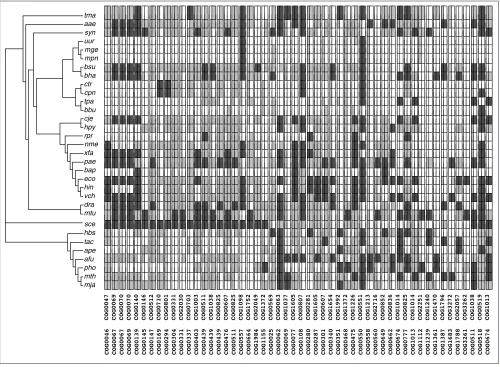
Figure 1 shows a genome-COG matrix that reveals the phyletic (phylogenetic) patterns of the presence or absence of the orthologs across the spectrum of the sequenced genomes [18] for each of the 52 pairs of fusion-linked COGs containing cross-kingdom fusions. When assessed against the topology of the tentative species tree based on the con-catenated alignments of ribosomal proteins [13], fusions showed a scattered distribution in phyletic patterns (depicted by columns in Figure 1). For example, the fusion between COG1788 and COG2057 (,and -subunits of acyl-CoA:acetate CoA transferase) is seen in the bacteria
Escherichia coli, Deinococcus radiodurans and Bacillus halodurans, and in the archaea Aeropyrum pernix,
Thermophilus acidophilum and Halobacterium sp. Simi-larly, the fusion between COG1683 and COG3272 (uncharac-terized, conserved domains) was found in the bacteria
Pseudomonas aeruginosaand Vibrio cholerae, and in the
archaeon Methanobacterium thermoautotrophicum. In
each of these cases, with the species tree used as a reference, the bacteria involved are phylogenetically distant from each other and more so from the archaea, and non-fused versions of the two domains exist within the same bacterial lineages and in archaea (Figure 1). These observations emphasize the central question of this work: are the fusions between the same pair of domains in different species independent or are they best explained by HGT?
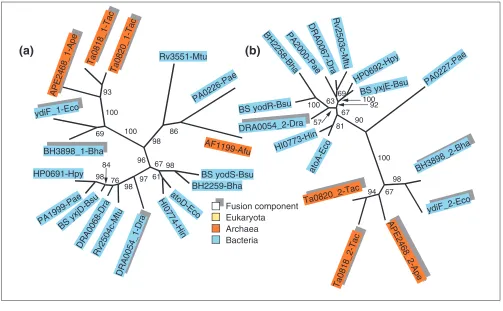
[image:3.609.56.556.87.454.2]Figure 2 shows the pair of phylogenetic trees for the fusion-linked COGs 1788 and 2057. In both trees, the fusion com-ponents from E. coliand B. halodurans(YdiF and BH3898, Figure 1
Phyletic patterns of fusion-linked COGs. Each pair of COGs is represented by a double column. The dark-gray rectangles indicate fusions, the light-gray rectangles indicate that the fusion components are represented by stand-alone genes in the given genomes, and the white rectangles indicate that there is no representative of the given COG in the given genome. Where one rectangle in a double column is light gray and the other is white, the genome in question has a representative of only one of the pair of fusion-linked COGs. Species abbreviations are as listed in Materials and methods.
respectively) confidently group with the archaeal fusion components, to the exclusion of the non-fused orthologs. This position of the E. coliand B. haloduransfusion com-ponents is unexpected and is in contrast to the placement of the orthologs from other gamma-proteobacteria and Gram-positive bacteria, as well as non-fused paralogs from the same species (AtoA/D and BH2258/2259, respectively) within the bacterial cluster. These observations strongly suggest that the gene for fused subunits of acyl-CoA:acetate CoA transferase was disseminated horizontally between
E. coli, B. halodurans, and archaea. The presence of non-fused paralogs in both these bacterial species appears to be best compatible with gene transfer from archaea to bacte-ria. In contrast, the fusion of the pair of domains from the same COGs seen in D. radioduransseems to be an inde-pendent event because, in both trees, the D. radiodurans
branch is in the middle of the bacterial cluster (Figure 2a,b). Thus, the history of this pair of fusion-linked COGs appears to involve horizontal transfer of the fused gene between bacteria and archaea (and possibly also within kingdoms), as well as at least one additional, inde-pendent fusion event in bacteria.
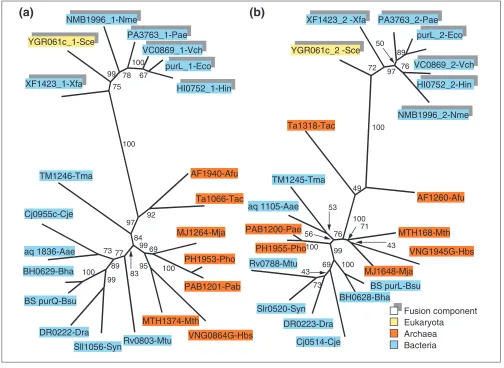
Figure 3 shows the phylogenetic trees for the two domains of phosphoribosylformylglycinamidine (FGAM) synthase, a purine biosynthesis enzyme. The components of this fusion, which is found in proteobacteria and eukaryotes, form a tight cluster separated by a long internal branch from the non-fused bacterial and archaeal orthologs. This tree topol-ogy suggests HGT between bacteria and eukaryotes, possibly a relocation of the fused gene from the pro-mitochondrion to the eukaryotic nuclear genome or, alternatively, gene trans-fer from eukaryotes to proteobacteria. An additional aspect of the evolution of this gene is the apparent acceleration of evolution upon gene fusion, which is manifest in the long branch that separates the proteobacterial-eukaryotic cluster from the rest of the bacterial and archaeal species (Figure 3a,b).
[image:4.609.54.557.86.397.2]The fusion-linked COGs 1605 and 0077 (chorismate mutase and prephenate dehydratase, respectively) show a more complicated history, with distinct fusion events resulting in different domain architectures (see legend to Figure 4). The presence, in both trees, of two distinct clusters of fusion components and the isolated fusion in Campylobacter jejuni
Figure 2
Phylogenetic trees for fusion-linked COGs: ,and -subunits of acyl-CoA:acetate CoA transferase. Fusion components are denoted by shading and by a number after an underline (_1 for the amino-terminal domain and _2 for the carboxy-terminal domain). The three primary kingdoms are color-coded as indicated in the figure. The RELL bootstrap values are indicated for each internal branch. (a),subunit (domain) (COG1788); (b) -subunit (domain) (COG2057). The proteins are designated using the corresponding systematic gene names followed (after the underline) by the abbreviated species names. Species abbreviations are as in Materials and methods and Figure 1.
BS yodS-Bsu BH2259-Bha atoD
-Eco
HI0774-Hin
DRA0054_1-Dra
Rv2504c-Mtu
DRA0068-Dra
BS yxjD
-Bsu
PA1999-Pae
HP0691-Hpy BH3898_1-Bha BH3898_1-Bha
ydiF_1-Eco
ydiF_1-Eco APE2468_1-Ape
Ta0818_1-Tac
Ta0820_1-Tac
Rv3551-Mtu
PA0226-Pae
AF1199-Afu
PA0227-Pae
BH3898_2-Bha
BH3898_2-Bha
ydiF_2-Eco
ydiF_2-Eco
APE2468_2-Ape
APE2468_2-Ape
Ta0818_2-Tac
Ta0820_2-Tac
Ta0820_2-Tac
atoA -Eco
HI0773-Hin
DRA0054_2-Dra
DRA0054_2-Dra BS yodR-Bsu
BH2258-Bha
PA2000-Pae
DRA0067-Dra
Rv2503c-Mtu
HP0692-Hpy
BS yxjE-Bsu
Fusion component Eukaryota Archaea Bacteria 69
93
100
86
98
61 67
98 84
76 98
97 96
98 100
100
57
94 67
98 100 90 69
63 100
81 67
92
suggest at least three independent fusion events, two of which apparently were followed by horizontal dissemination of the fused gene (Figure 4a,b). The single archaeal fusion, the Arachaeoglobus fulgidus protein AF0227, belongs to one of these clusters and shows a strongly supported affinity with the ortholog from the hyperthermophilic bacterium
Thermotoga maritima(Figure 4a,b). Given the broad distri-bution of this fusion in bacteria, horizontal transfer of the bacterial fused gene to archaea is the most likely scenario.
The pair of fusion-linked COGs 0777 and 0825 (, and -subunits of acetyl-CoA carboxylase, respectively) shows unequivocal clustering of the fusion components from numerous archaeal and bacterial species, which indicates a prevalent role for HGT in the evolution of this fusion (Figure 5a,b). Moreover, archaea are scattered among bac-teria, suggesting multiple HGT events. However, an
appar-ent independappar-ent fusion is seen in Mycobacterium
tuberculosis(Figure 5a,b). It could be argued that, in cases
like those in Figure 5, where there is a sharp separation (a long, strongly supported internal branch in each of the trees) between the fusion components and stand-alone pro-teins, the COGs involved needed to be reorganized, to form one COG consisting of fusion proteins only and two sepa-rate COGs consisting of stand-alone proteins. Formally, this would eliminate the need for HGT as an explanation of the tree topology for any of these new COGs. However, this solution (even if attractive from the point of view of classifi-cation) does not seem to be correct in light of the principle of orthology that underlies the COG system: it appears that, in both of the COGs involved, the fusion components and stand-alone proteins are bona fide orthologs, as judged by the high level of sequence conservation and by the fact that, in the majority of species involved, they are the only ver-sions of this key enzyme.
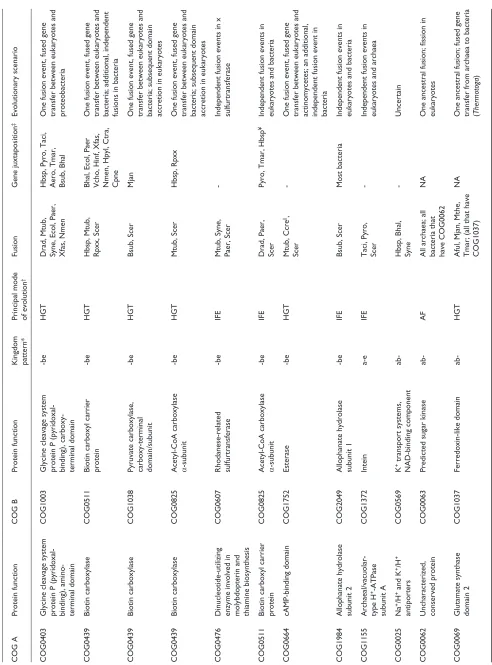
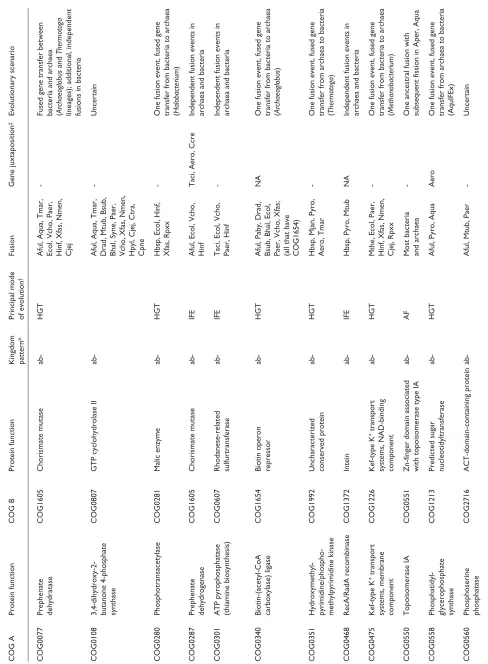
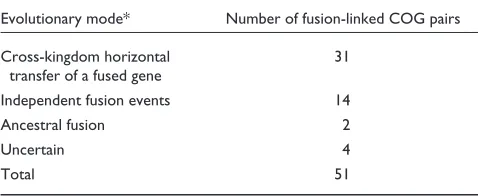
The results of phylogenetic analyses of the 51 cross-kingdom fusion links are summarized in Tables 2 and 3 and the
comment
reviews
reports
deposited research
interactions
information
[image:5.609.54.558.87.455.2]refereed research
Figure 3
Phylogenetic trees for fusion-linked COGs: phosphoribosylformylglycinamidine (FGAM) synthase. (a) Synthetase domain (subunit) (COG0046);
(b)glutamine amidotransferase domain (subunit) (COG0047). Protein designations are as in Figure 2.
MJ1264-Mja
PH1953-Pho
PAB1201-Pab
VNG0864G-Hbs MTH1374-Mth
Rv0803-Mtu Sll1056-Syn
DR0222-Dra BS purQ-Bsu BH0629-Bha
aq 1836-Aae Cj0955c-Cje
TM1246-Tma XF1423_1-Xfa XF1423_1-Xfa
YGR061c_1-Sce YGR061c_1-Sce
NMB1996_1-Nme NMB1996_1-Nme
PA3763_1-Pae PA3763_1-Pae
VC0869_1-Vch VC0869_1-Vch
purL_1-Eco purL_1-Eco
HI0752_1-Hin HI0752_1-Hin
AF1940-Afu
Ta1066-Tac
MTH168-Mth
VNG1945G-Hbs
MJ1648-Mja
BS purL-Bsu BH0628-Bha
Cj0514-Cje DR0223-Dra Slr0520-Syn Rv0788-Mtu
PH1955-Pho PAB1200-Pae
aq 1105-Aae TM1245-Tma
Ta1318-Tac YGR061c_2 -Sce YGR061c_2 -Sce
XF1423_2 -Xfa
XF1423_2 -Xfa PA3763_2-PaePA3763_2-Pae purL_2-Eco purL_2-Eco
VC0869_2-Vch VC0869_2-Vch
HI0752_2-Hin HI0752_2-Hin
NMB1996_2-Nme NMB1996_2-Nme
AF1260-Afu 67
100
78 99
75
100
97
100 69
95 99 73
100 99
89 77
92
83 84
89 50
76
72 97
100
43 71
100
73
43 69
100 99
56 53
76 100 49
Fusion component Eukaryota Archaea Bacteria
Figure 4
Phylogenetic trees for fusion-linked COGs: chorismate mutase and prephenate dehydratase. (a) Chorismate mutase (COG1605); (b) prephenate dehydratase (COG0077). Protein designations are as in Figure 2. The protein AF0227contains a prephenate dehydrogenase domain in addition to the chorismate mutase and prephenate dehydratase domains.
BS_pheA-Bsu BH1215-Bha VNG2222G-Hbs Rv3838c-Mtu Cj0316_2-Cje Cj0316_2-Cje Ta0915-Tac aq 951_2-Aae aq 951_2-Aae Sll1662-Syn NMB0446_2-Nme NMB0446_2-Nme PA3166_2-Pae PA3166_2-Pae XF2325_2-Xfa XF2325_2-Xfa MTH1220-Mth MJ0637-Mja YNL316c-Sce DR1147-Dra BU392_2-Buc BU392_2-Buc pheA_2-Eco pheA_2-Eco HI1145_2-Hin HI1145_2-Hin VC0705_2- Vch VC0705_2- Vch AF0227_3-Afu AF0227_3-Afu TM0155_2-Tma TM0155_2-Tma 89 82 100 71 100 53 66 71 92 72 6873 62 100 52 50 75 52 aq 951_1-Aae aq 951_1-Aae DR1001_1-Dra DR1001_1-Dra BS aroA_1-Bsu BS aroA_1-Bsu BH3242_1-Bha BH3242_1-Bha NMB0446_1-Nme NMB0446_1-Nme PA3166_1-Pae PA3166_1-Pae XF2325_1-Xfa APE0563a-Ape PA4230-Pae HI1290_1-Hin tyrA _1-Eco VC0696_1-Vch Ta0245-Tac Cj031_ 1-Cje Cj031_ 1-Cje Rv0948c-Mtu HP0291-Hpy MJ0246-Mja VNG1244C-Hbs MTH804-Mth VC0705 1-Vch VC0705 1-Vch HI1145 1-Hin HI1145 1-Hin pheA 1-Eco pheA 1-Eco BU392 1-Buc BU392 1-Buc XF1141-Xfa PA5184-Pae Rv1885c-Mtu YPR060c-Sce AF0227_2-Afu AF0227_2-Afu TM0155_1 TM0155_1 Fusion component Eukaryota Archaea Bacteria 60 98 99 56 90 61 92 49 90 82 92 85 98 64 65 64 91 82 73 85 5160 65
85
59 58
(a)
(b)
Figure 5
Phylogenetic trees for fusion-linked COGs: ,and -subunits of acetyl-CoA carboxylase. (a)-subunit (domain) (COG0777); (b) ,subunit (domain) (COG0825). Protein designations are as in Figure 2. The proteins DRA0310 and PA1400, in addition to the domains corresponding to the ,and -subunits of acetyl-CoA carboxylase, contain a biotin carboxylase domain and a biotin carboxyl carrier protein domain. The clustering of these proteins in phylogenetic trees almost certainly reflects HGT between the respective bacterial lineages.
Rv0904c_2-Mtu Rv0904c_2-Mtu aq_1206-Aae BS_accA-Bsu BH3165-Bha Sll0728-Syn DR1214-Dra XF0203-Xfa HI0406-Hin accA -Eco VC2244-Vch PA3639-Pae NMB1177-Nme CT265-Ctr CPn0414-Cpn Cj0443-Cje HP0557-Hpy Rv2247_2-Mtu Rv2247_2-Mtu YNR016c_3-Sce DR 1542_2-Dra DR 1542_2-Dra PA2888_2-Pae PA2888_2-Pae Rv0974c_2-Mtu Rv0974c_2-Mtu PA2014_2-Pae PA2014_2-Pae Rv2502c_2-Mtu VNG0623G_2-Hbs BS_yngE _2-BS_yngE _2-Bsu BH1136_2-Bha DRA0310_4-Dra PA1400_4-Pae Rv3799c_2-Mtu Rv3280_2-Mtu VNG1529G_2-Hbs RP619_2-Rpr BH2957_2-Bha DR1316_2-Dra BS_yqjD_2-Bsu BS_yqjD_2-Bsu TM0716_2-Tma TM0716_2-Tma PH1287_2-Pho PH1287_2-Pho AF2217_2-Afu AF2217_2-Afu 83 63 100 100 100 99 41 100 55 91100 86 96 98 62 68 99 74 100 100 51 99 100 89 57 98 55 74 49 96 47 48 77 100 55 DRA0310_3-Dra PA1400_3-Pae PA0211-Pae DR1215-Dra Rv0904c_1-Mtu Rv0904c_1-Mtu sll0336-Syn BS yttI-Bsu BH3166-Bha aq 445-Aae XF1467-Xfa NMB0679-Nme PA3112-Pae VC1000-Vch accD-Eco HI1260-Hin Cj0127c-Cje HP0950-Hpy CT293-Ctr CPn0058-Cpn VNG0623G_1-Hbs VNG0623G_1-Hbs BS yngE_1-Bsu BS yngE_1-Bsu BH1136_1-Bha BH1136_1-Bha PA2014_1-Pae PA2014_1-Pae DR1542_1-Dra DR1542_1-Dra Rv2502 c_ 1-Rv2502 c_ 1-Mtu Rv0974c_1-Mtu PA2888_1-Pae R v2247_1-M tu DR1316_1-Dra BS yqjD _1-Bsu BH2957_1-Bha VNG1529G_1-Hbs Rv3799c_1-Mtu Rv3799c_1-Mtu Rv3280_1-Mtu Rv3280_1-Mtu RP619_1-Rpr RP619_1-Rpr TM0716_1-Tma TM0716_1-Tma PH1287_1-Pho AF2217_1-Afu 100 98 100 100 81 93 67 10093 100
[image:6.609.56.556.411.687.2]comment
reviews
reports
deposited research
interactions
information
refereed research
Table
2
Evolutionary history of trans-kingdom gene fusions COG A
Protein function
COG B
Protein function
Kingdom
Principal mode
Fusion
Gene juxtaposition
‡
Evolutionary scenario
pattern*
of evolution
†
COG0046
Phospho-ribosyl-COG0047
Phospho-ribosyl--be
HGT
Ecol, Paer,
Pyro, Paby, Tmar,
One fusion event, fused
formylglycinamidine
formyl-glycinamidine
Vcho,Hinf,
Drad, Bsub, Bhal
gene transfer between
(FGAM) synthase,
(FGAM) synthase glutamine
Xfas, Nmen
eukaryotes and proteobacteria
synthetase domain
Amidotransferase domain
COG0067
Glutamate synthase
COG0069
Glutamate synthase
-be
HGT
Most bacteria
Aful, Mjan, Tmar
One fusion event, fused gene
domain 1
domain 2
transfer between eukaryotes and bacteria
COG0067
Glutamate synthase
COG0070
Glutamate synthase
-be
HGT
Most bacteria
-One fusion event, fused gene
domain 1
domain 3
transfer between eukaryotes and bacteria
COG0069
Glutamate synthase
COG0070
Glutamate synthase
-be
HGT
Most bacteria
Aful, Mjan, Mthe
One fusion event, fused gene
domain 2
domain 3
transfer between eukaryotes and bacteria
COG0139
Phospho-ribosyl-AMP COG0140
Phospho-ribosyl-ATP
-be
Most
bacteria
-Uncertain
cyclohydrolase pyrophospho-hydrolase (histidine biosynthesis)
(histidine biosynthesis)
COG0145
N-methylhydaintoinase A
COG0146
N-methylhydaintoinase B
-be
HGT
Mtub, Syne, Scer
Mjan, Aero, Hpyl
One fusion event, fused gene transfer between eukaryotes and (the ancestor of) Cyanobacteria and Actinomycetes
COG0147
Anthranilate/para-COG0512
Anthranilate/para--be
IFE
Nmen, Cjej,
Aful, Mthe, Taci,
Independent fusion events in
aminobenzoate synthase
aminobenzoate synthase
Paer, Scer
Aero, Tmar, Drad,
eukaryotes and bacteria
component I
component II
Bsub, Bhal, Ecol, Vcho, Xfas
COG0169
Shikimate
COG0710
3-dehydro-quinate
-be
IFE
Ctra, Cpne, Scer
Paby
¶,Ecol
Independent fusion events in
5-dehydrogenase
dehydratase
eukaryotes and bacteria
COG0294
Dihydropteroate
COG0801
7,8-dihydro-6--be
IFE
Ctra, Cpne, Scer
Llac
¶,Tmar, Drad,
Independent fusion events in
synthase
hydroxymethylpterin-Bsub, Bhal
eukaryotes and bacteria
pyrophosphokinase
COG0304
3-oxoacyl-(acyl-carrier-COG0331
(acyl-carrier-protein)
-be
HGT
Mtub, Scer
Drad, Ecol, Vcho
One fusion event, fused gene
protein) synthase
S-malonyl-transferase
transfer between eukaryotes and bacteria
COG0331
3-oxoacyl-(acyl-carrier-COG2030
Acyl dehydratase
-be
HGT
Mtub, Bsub,
-Fused gene transfer between
protein) synthase
Scer
eukaryotes and Actinomycetes; additional, independent fusions in bacteria
COG0337
3-dehydroquinate
COG0703
Shikimate kinase
-be
IFE
Tmar, Scer
Drad, Mtub,
Independent fusion events in
synthetase
Proteo-bacteria,
eukaryotes and bacteria (with
Ctra, Cpne
[image:7.609.70.555.71.746.2]Table
2
(continued from the previous page)
COG A
Protein function
COG B
Protein function
Kingdom
Principal mode
Fusion
Gene juxtaposition
‡
Evolutionary scenario
pattern*
of evolution
†
COG0403
Glycine cleavage system
COG1003
Glycine cleavage system
-be
HGT
Drad, Mtub,
Hbsp, Pyro, Taci,
One fusion event, fused gene
protein P
protein P
(pyridoxal-Syne, Ecol, Paer,
Aero, Tmar,
transfer between eukaryotes and
binding),
amino-binding),
carboxy-Xfas, Nmen
Bsub, Bhal
proteobacteria
terminal domain
terminal domain
COG0439
Biotin carboxylase
COG0511
Biotin carboxyl carrier
-be
HGT
Hbsp, Mtub,
Bhal, Ecol, Paer
One fusion event, fused gene
protein
Rpxx, Scer
Vcho, Hinf, Xfas,
transfer between eukaryotes and
Nmen, Hpyl, Ctra,
bacteria; additional, independent
Cpne
fusions in bacteria
COG0439
Biotin carboxylase
COG1038
Pyruvate carboxylase,
-be
HGT
Bsub, Scer
Mjan
One fusion event, fused gene
carboxy-terminal
transfer between eukaryotes and
domain/subunit
bacteria; subsequent domain accretion in eukaryotes
COG0439
Biotin carboxylase
COG0825
Acetyl-CoA carboxylase
-be
HGT
Mtub, Scer
Hbsp, Rpxx
One fusion event, fused gene
,
-subunit
transfer between eukaryotes and bacteria; subsequent domain accretion in eukaryotes
COG0476
Dinucleotide-utilizing
COG0607
Rhodanese-related
-be
IFE
Mtub, Syne,
-Independent fusion events in x
enzyme involved in
sulfurtransferase
Paer, Scer
sulfurtransferase
molybdopterin and thiamine biosynthesis
COG0511
Biotin carboxyl carrier
COG0825
Acetyl-CoA carboxylase
-be
IFE
Drad, Paer,
Pyro, Tmar, Hbsp
¥
Independent fusion events in
protein
,
-subunit
Scer
eukaryotes and bacteria
COG0664
cAMP-binding domain
COG1752
Esterase
-be
HGT
Mtub, Ccre
||,
-One fusion event, fused gene
Scer
transfer between eukaryotes and actinomycetes; an additional, independent fusion event in bacteria
COG1984
Allophanate hydrolase
COG2049
Allophanate hydrolase
-be
IFE
Bsub, Scer
Most bacteria
Independent fusion events in
subunit 2
subunit 1
eukaryotes and bacteria
COG1155
Archaeal/vacuolar-COG1372
Intein
a-e
IFE
Taci, Pyro,
-Independent fusion events in
type H
+-ATPase
Scer
eukaryotes and archaea
subunit A
COG0025
Na
+/H +and K +/H
+
COG0569
K
+transport systems,
ab-Hbsp, Bhal,
-Uncertain
antiporters NAD-binding
component
Syne
COG0062
Uncharacterized,
COG0063
Predicted sugar kinase
ab-AF
All archaea; all
NA
One ancestral fusion; fission in
conserved protein
bacteria that
eukaryotes
have COG0062
COG0069
Glutamate synthase
COG1037
Ferredoxin-like domain
ab-HGT
Aful, Mjan, Mthe,
NA
One ancestral fusion; fused gene
domain 2
Tmar; (all that have
transfer from archaea to bacteria
COG1037)
(
Thermotoga
[image:8.609.62.554.79.744.2]comment
reviews
reports
deposited research
interactions
information
refereed research
Table
2
(continued from the previous page)
COG A
Protein function
COG B
Protein function
Kingdom
Principal mode
Fusion
Gene juxtaposition
‡
Evolutionary scenario
pattern*
of evolution
†
COG0077
Prephenate
COG1605
Chorismate mutase
ab-HGT
Aful, Aqua, Tmar,
-Fused gene transfer between
dehydratase
Ecol, Vcho, Paer,
bacteria and archaea
Hinf, Xfas, Nmen,
(
Archaeoglobus
and
Thermotoga
Cjej
lineages); additional, independent fusions in bacteria
COG0108
3,4-dihydroxy-2-COG0807
GTP cyclohydrolase II
ab-Aful, Aqua, Tmar,
-Uncertain
butanone 4-phosphate
Drad, Mtub, Bsub,
synthase
Bhal, Syne, Paer, Vcho, Xfas, Nmen, Hpyl, Cjej, Ctra, Cpne
COG0280
Phosphotransacetylase
COG0281
Malic enzyme
ab-HGT
Hbsp, Ecol, Hinf,
-One fusion event, fused gene
Xfas, Rpxx
transfer from bacteria to archaea (Halobacterium
)
COG0287
Prephenate
COG1605
Chorismate mutase
ab-IFE
Aful, Ecol, Vcho,
Taci, Aero, Ccre
Independent fusion events in
dehydrogenase
Hinf
archaea and bacteria
COG0301
ATP pyrophosphatase
COG0607
Rhodanese-related
ab-IFE
Taci, Ecol, Vcho,
-Independent fusion events in
(thiamine biosynthesis)
sulfurtransferase
Paer, Hinf
archaea and bacteria
COG0340
Biotin-(acetyl-CoA
COG1654
Biotin operon
ab-HGT
Aful, Paby, Drad,
NA
One fusion event, fused gene
carboxylase) ligase
repressor
Bsub, Bhal, Ecol,
transfer from bacteria to archaea
Paer, Vcho, Xfas;
(
Archaeoglobus
)
(all that have COG1654)
COG0351
Hydroxymethyl-COG1992
Uncharacterized
ab-HGT
Hbsp, Mjan, Pyro,
-One fusion event, fused gene
pyrimidine/phospho-conserved protein
Aero, Tmar
transfer from archaea to bacteria
methylpyrimidine kinase
(
Thermotoga
)
COG0468
RecA/RadA recombinase
COG1372
Intein
ab-IFE
Hbsp, Pyro, Mtub
NA
Independent fusion events in archaea and bacteria
COG0475
Kef-type K
+transport COG1226
Kef-type
K
+transport
ab-HGT
Mthe, Ecol, Paer,
-One fusion event, fused gene
systems, membrane
systems, NAD-binding
Hinf, Xfas, Nmen,
transfer from bacteria to archaea
component
component
Cjej, Rpxx
(
Methanobacterium
)
COG0550
Topoisomerase IA
COG0551
Zn-finger domain associated
ab-AF
Most bacteria
-One ancestral fusion with
with topoisomerase type IA
and archaea
subsequent fission in Aper, Aqua
COG0558
Phosphatidyl-COG1213
Predicted sugar
ab-HGT
Aful, Pyro, Aqua
Aero
One fusion event, fused gene
glycerophosphate nucleotidyltransferase
transfer from archaea to bacteria
synthase
(AquIFEx)
COG0560
Phosphoserine
COG2716
ACT-domain-containing protein
ab-Aful, Mtub, Paer
-Uncertain
[image:9.609.66.554.81.745.2]Table
2
(continued from the previous page)
COG A
Protein function
COG B
Protein function
Kingdom
Principal mode
Fusion
Gene juxtaposition
‡
Evolutionary scenario
pattern*
of evolution
†
COG0649
NADH:ubiquinone
COG0852
NADH:ubiquinone
ab-HGT
Hbsp, Aqua,
Most archaea
One fusion event, fused
oxidoreductase subunit 7
oxidoreductase 27 kD
Ecol, Paer
and bacteria
gene transfer from bacteria to
subunit
archaea (
Halobacterium
)
COG0662
Mannose-6-phosphate
COG0836
Mannose-1-phosphate
ab-HGT
Aful, Pyro, Aqua,
-Fused gene transfer from
isomerase
guanylyltransferase
Ecol, Paer, Vcho,
bacteria to archaea; a second,
Xfas, Hpyl, Cjej
independent fusion event in bacteria
COG0674
Pyruvate:ferredoxin
COG1014
Pyruvate:ferredoxin
ab-HGT
Aful, Hbsp, Taci,
Mjan, Mthe,
Fused gene transfer from
oxidoreductase and
oxidoreductase and
Aero, Mtub, Bhal,
Aqua, Tmar,
archaea to bacteria; a second,
related 2-oxoacid:ferredoxin
related 2-oxoacid:ferredoxin
Syne, Ecol, Vcho,
Hpyl, Cjej
independent fusion event in
oxidoreductases, oxidoreductases,
Tpal
bacteria
alpha subunit
gamma subunit
COG0777
Acetyl-CoA
COG0825
Acetyl-CoA carboxylase
ab-HGT
Aful, Hbsp, Pyro,
-Fused gene transfer from
carboxylase
-subunit
,
subunit
Tmar, Drad, Mtub,
bacteria to archaea; a second,
Bsub, Bhal, Paer,
independent fusion event in
Rpxx
bacteria
COG1013
Pyruvate:ferredoxin
COG1014
Pyruvate:ferredoxin
ab-IFE
Mthe, Syne, Ecol,
Aful, Taci,
Independent fusion events in
oxidoreductase and
oxidoreductase and
Vcho, Tpal
Aero, Mtub,
archaea and bacteria
related 2-oxoacid:ferredoxin
related 2-oxoacid:ferredoxin
Bhal
oxidoreductases, oxidoreductases, beta subunit
gamma subunit
COG1112
Superfamily I DNA
COG2251
Predicted metal-binding
ab-IFE
Pyro, Mtub
-Independent fusion events in
and RNA helicases
domain
archaea and bacteria
and helicase subunits
COG1239
Mg-chelatase
COG1240
Mg-chelatase
ab-HGT
Hbsp, Mthe, Taci,
Mjan, Paer
Fused gene transfer between
subunit ChlI
subunit ChlD
Mtub, Syne
bacteria and archaea, with subsequent fissions
COG1361
S-layer domain
COG1470
Predicted membrane
ab-HGT
Aful, Pyro, Bhal
-One fusion event, fused gene
protein
transfer from archaea to bacteria
COG1387
Histidinol phosphatase
COG1796
DNA polymerase IV
ab-HGT
Mthe, Taci, Drad,
NA
One fusion event, fused gene
and related hydrolases
(family X)
Bsub, Bhal; (all
transfer between archaea to
of the PHP family
prokaryotes that
bacteria
have COG1796)
COG1683
Uncharacterized
COG3272
Uncharacterized
ab-HGT
Mthe, Paer, Vcho
-One fusion event, fused gene
conserved protein
conserved protein
transfer between archaea and bacteria (
Methanobacterium
and
Vibrio
/
Pseudomonas
, respectively)
COG1788
Acyl-CoA:acetate CoA
COG2057
Acyl-CoA:acetate CoA
ab-HGT
Hbsp, Taci, Aero,
Mtub, Bsub,
Fused gene transfer between
transferase alpha subunit
transferase beta subunit
Drad, Bhal, Ecol
Paer, Hinf,
bacteria and archaea; a second,
Hpyl
[image:10.609.70.553.84.744.2]Additional data. In 31 of the 51 links, an inter-kingdom hori-zontal transfer of the fused gene appeared to be the evolu-tionary mechanism by which the fusion entered one of the kingdoms. In contrast, only 14 fusion-linked pairs of COGs show evidence of independent fusion in two kingdoms, and in just two cases, the fusion seems to have been inherited from the last universal common ancestor. The latter two sce-narios were distinguished on the basis of the parsimony principle, that is, by counting the number of evolutionary events (fusions or fissions) that were required to produce the observed distribution of fusion components and stand-alone versions of the domains involved across the tree branches. Accordingly, it needs to be emphasized that we can only infer the most likely scenario under the assumption that the prob-abilities of fusion and fission are comparable. It cannot be ruled out that some of the scenarios we classify as indepen-dent fusions in reality reflect the existence of an ancestral fused gene and subsequent multiple, independent fissions. The detection of ancestral domain fusions may call for the unification of the respective COG pairs in a single COG, with the species in which fission occurred represented by two dis-tinct proteins.
Examination of the genomic context of the genes that encode stand-alone counterparts of the fusion components showed that, in 25 of the 51 cases, these genes were juxtaposed in some, and in certain cases, many prokaryotic genomes (Table 2). This suggests that evolution of gene fusions often, if not always, passes through an intermediate stage of juxta-posed and co-regulated, but still distinct, genes within known or predicted operons. In addition, some of the juxtaposed gene pairs might have evolved by fission of a fused gene.
The results of the present analysis point to HGT as a major route of cross-kingdom dissemination of fused genes. Hori-zontal transfer might be even more prominent in the evolu-tion of fused genes within the bacterial and archaeal kingdoms. This notion is supported by the topologies of some of the phylogenetic trees analyzed, which show unexpected clustering of bacterial species from different lin-eages (note, for example, the grouping of D. radiodurans
with P. aeruginosa in Figure 5). Massive HGT between archaea and bacteria, particularly hyperthermophiles, has been suggested by genome comparisons [20-24]. However, proving HGT in each individual case is difficult, and the sig-nificance of cross-kingdom HGT has been disputed [25,26]. With gene fusions, the existence of a derived shared character (fusion) supporting the clades formed by fusion components and the concordance of the independently built trees for each of the fusion components make a solid case for HGT.
The apparent independent fusion of the same pair of genes (or, more precisely, members of the same two COGs) on multiple occasions during evolution might seem unlikely. However, we found that one-fourth to one-third of the gene fusions shared by at least two kingdoms might have evolved
comment
reviews
reports
deposited research
interactions
information
refereed research
Table
2
(continued from the previous page)
COG A
Protein function
COG B
Protein function
Kingdom
Principal mode
Fusion
Gene juxtaposition
‡
Evolutionary scenario
pattern*
of evolution
†
COG3261
Ni,Fe-hydrogenase III
COG3262
Ni,Fe-hydrogenase III
ab-HGT
Paby, Mtub, Ecol
Pyro
One fusion event, fused gene
large subunit
component G
transfer from bacteria to archaea
COG0518
GMP synthase -
COG0519
GMP synthase
abe
HGT
Aero, Scer,
Mthe, Pyro, Paby
Fused gene transfer among
Glutamine
-PP-ATPase domain
most bacteria
bacteria, archaea, and
amidotransferase
eukaryotes
domain
COG0674
Pyruvate:ferredoxin
COG1013
Pyruvate:ferredoxin
abe
HGT
Aful, Mthe, Taci,
Hbsp, Mjan, Aero,
Fused gene transfer from
oxidoreductase and
oxidoreductase and
Pyro, Paby, Scer,
Aqua, Tmar, Mtub,
archaea to bacteria
related 2-oxoacid:ferredoxin
related 2-oxoacid:ferredoxin
Syne, Ecol, Vcho,
Hpyl
(
,
-proteobacteria)
oxidoreductases, oxidoreductases,
Cjej,
Tpal
alpha subunit
beta subunit
*Abbreviations: a, archaea, b, bacteria, e, eukaryotes; a dash indicates that the given kingdom is not represented in at least
one of the fusion-linked COGs.
†AF, ancestral fusion, HGT, horizontal gene
transfer, IFE, independent fusion events.
‡In several cases, the indicated genes are separated by one to three genes or their order is switched compared to that of the fu
sion components.
§Paby,
Pyrococcus abyssi
, an archaeal genome not included in the master set of genomes analyzed in this study.
¶Llac,
Lactococcus lactis
, a bacterial genome not included in the master set of genomes analyzed in
this study.
||Ccre
, Caulobacter crescentus
, a bacterial genome not included in the master set of genomes analyzed in this study.
¥Hbsp,
Halobacterium
sp., an archaeal genome not included in the master set
[image:11.609.65.289.101.744.2]through such independent events, and probable additional independent fusions were noted among bacteria. This could be due to the extensive genome rearrangement characteristic of the evolution of prokaryotes [27,28], and to the selective value of these particular fusions, which tend to get fixed once they emerge.
Materials and methods
The version of the COG database used in this study included the following complete prokaryotic genomes. Bacteria: Aae,
Aquifex aeolicus; Bap, Buchnera aphidicola; Bbu, Borrelia burgdorferi; Bsu, Bacillus subtilis; Bhal, Bacillus halodurans; Cje, Campylobacter jejuni; Cpn, Chlamydophila pneumoniae; Ctr, Chlamydia trachomatis; Dra, Deinococcus radiodurans; Eco, Escherichia coli; Hin, Haemophilus influenzae; Hpy,
Helicobacter pylori; Mge, Mycoplasma genitalium; Mpn,
Mycoplasma pneumoniae; Mtu, Mycobacterium tuberculosis; Nme, Neisseria meningitidis; Pae, Pseudomonas aeruginosa; Rpr, Rickettsia prowazekii; Syn, Synechocystis sp.; Tma, Ther-motoga maritima; Tpa, Treponema pallidum; Vch, Vibrio cholerae; Xfa, Xylella fastidiosa. Eukaryote: Sce, Saccha-romyces cerevisiae. Archaea: Ape, Aeropyrum pernix; Afu,
Archaeoglobus fulgidus; Hbs, Halobacterium sp.; Mja,
Methanococcus jannaschii; Mth, Methanobacterium ther-moautotrophicum; Pho, Pyrococcus horikoshii; Pab, Pyrococ-cus abyssi; Tac, Thermoplasma acidophilum.
COGs containing fusion components from at least two of the three primary kingdoms, were selected for phylogenetic analysis. COGs containing 60 or more members were excluded because of potential uncertainty of orthologous relationship between members of such large groups [18]. Multiple alignments were generated for each analyzed COG using the T-Coffee program [29].
Phylogenetic trees were constructed by first generating a dis-tance matrix using the PROTDIST program and the Dayhoff PAM model for amino-acid substitutions and employing this
matrix for minimum evolution (least-square) tree building [30] using the FITCH program. The PROTDIST and FITCH programs are modules of the PHYLIP software package [31]. The tree topology was then optimized by local rearrange-ments using PROTML, a maximum likelihood tree-building program, included in the MOLPHY package [32]. Local bootstrap probability was estimated for each internal branch by using the resampling of estimated log-likelihoods (RELL) method with 10,000 bootstrap replications [33]. The gene order in prokaryotic genomes was examined using the ‘Genomic context’ feature of the COG database.
Additional data files
Phylogenetic trees for 82 individual COGS presented as 52 pairs of trans-kingdom fusion-linked COGs are available with the online version of this paper. Bootstrap values (per-centage of 1,000 replications) are indicated for each fork. Archaeal proteins are designated by black squares, bacterial proteins by gray squares and eukaryotic proteins by empty squares. Fusion components are denoted by _1, _2, _3, etc.
Acknowledgements
We thank Charles DeLisi, Adnan Derti, I. King Jordan, Kira Makarova, Igor Rogozin, and Fyodor Kondrashov for critical reading of the manu-script and helpful discussions.
References
1. Marcotte EM, Pellegrini M, Ng HL, Rice DW, Yeates TO, Eisenberg D: Detecting protein function and protein-protein interac-tions from genome sequences. Science 1999, 285:751-753. 2. Huynen MJ, Snel B: Gene and context: integrative approaches
to genome analysis. Adv Prot Chem 2000, 54:345-379.
3. Yanai I, Derti A, DeLisi C: Genes linked by fusion events are generally of the same functional category: a systematic analysis of 30 microbial genomes.Proc Natl Acad Sci USA 2001,
98:7940-7945.
4. Parkinson JS, Kofoid EC: Communication modules in bacterial signaling proteins.Annu Rev Genet 1992, 26:71-112.
5. Reizer J, Saier MH, Jr.: Modular multidomain phosphoryl trans-fer proteins of bacteria. Curr Opin Struct Biol 1997, 7:407-415. 6. Hunter T: Signaling - 2000 and beyond.Cell 2000, 100:113-127. 7. Koonin EV, Aravind L, Kondrashov AS: The impact of
compara-tive genomics on our understanding of evolution.Cell 2000,
101:573-576.
8. Rubin GM, Yandell MD, Wortman JR, Gabor Miklos GL, Nelson CR, Hariharan IK, Fortini ME, Li PW, Apweiler R, Fleischmann W, et al.:
Comparative genomics of the eukaryotes. Science 2000,
287:2204-2215.
9. International Human Genome Consortium: Initial sequencing and analysis of the human genome. Nature 2001, 409:860-921. 10. Enright AJ, Ilipoulos I, Kyrpides NC, Ouzounis CA: Protein
inter-action maps for complete genomes based on gene fusion events.Nature 1999, 402:86-90.
11. Galperin MY, Koonin EV: Who’s your neighbor? New computa-tional approaches for funccomputa-tional genomics.Nat Biotechnol 2000,
18:609-613.
12. Snel B, Bork P, Huynen M: Genome evolution: gene fusion versus gene fission. Trends Genet 2000, 16:9-11.
13. Wolf YI, Rogozin IB, Grishin NV, Tatusov RL, Koonin EV: Genome trees constructed using five different approaches suggest new major bacterial clades.BMC Evol Biol 2001, 1:8.
14. Pace NR: A molecular view of microbial diversity and the biosphere.Science 1997, 276:734-740.
[image:12.609.55.294.129.227.2]15. Teichmann SA, Mitchison G: Is there a phylogenetic signal in prokaryote proteins? J Mol Evol 1999,49:98-107.
Table 3
Summary of evolutionary scenarios for cross-kingdom gene fusions
Evolutionary mode* Number of fusion-linked COG pairs
Cross-kingdom horizontal 31
transfer of a fused gene
Independent fusion events 14
Ancestral fusion 2
Uncertain 4
Total 51
16. Woese CR, Kandler O, Wheelis ML: Towards a natural system of organisms: proposal for the domains Archaea, Bacteria, and Eucarya.Proc Natl Acad Sci USA 1990, 87:4576-4579. 17. Brown JR, Doolittle WF: Archaea and the
prokaryote-to-eukaryote transition. Microbiol Mol Biol Rev 1997, 61:456-502. 18. Tatusov RL, Koonin EV, Lipman DJ: A genomic perspective on
protein families.Science 1997, 278:631-637.
19. Tatusov RL, Natale DA, Garkavtsev IV, Tatusova TA, Shankavaram UT, Rao BS, Kiryutin B, Galperin MY, Fedorova ND, Koonin EV:
The COG database: new developments in phylogenetic clas-sification of proteins from complete genomes. Nucleic Acids Res 2001, 29:22-28.
20. Koonin EV, Mushegian AR, Galperin MY, Walker DR: Comparison of archaeal and bacterial genomes: computer analysis of protein sequences predicts novel functions and suggests a chimeric origin for the archaea.Mol Microbiol 1997, 25:619-637. 21. Aravind L, Tatusov RL, Wolf YI, Walker DR, Koonin EV: Evidence for massive gene exchange between archaeal and bacterial hyperthermophiles. Trends Genet 1998, 14:442-444.
22. Nelson KE, Clayton RA, Gill SR, Gwinn ML, Dodson RJ, Haft DH, Hickey EK, Peterson JD, Nelson WC, Ketchum KA, et al.: Evidence for lateral gene transfer between Archaea and Bacteria from genome sequence of Thermotoga maritima. Nature 1999,
399:323-329.
23. Doolittle WF: Lateral genomics.Trends Cell Biol 1999, 9:M5-M8. 24. Koonin EV, Makarova KS, Aravind L: Horizontal gene transfer in
prokaryotes: quantification and classification.Annu Rev Micro-biol 2001, 55:709-742.
25. Kyrpides NC, Olsen GJ: Archaeal and bacterial hyperther-mophiles: horizontal gene exchange or common ancestry?
Trends Genet 1999, 15:298-299.
26. Logsdon JM, Faguy DM: Thermotoga heats up lateral gene transfer.Curr Biol 1999, 9:R747-R751.
27. Dandekar T, Snel B, Huynen M, Bork P: Conservation of gene order: a fingerprint of proteins that physically interact.
Trends Biochem Sci 1998, 23:324-328.
28. Wolf YI, Rogozin IB, Kondrashov AS, Koonin EV: Genome align-ment, evolution of prokaryotic genome organization and prediction of gene function using genomic context. Genome Res 2001,11:356-372.
29. Notredame C, Higgins DG, Heringa J: T-Coffee: A novel method for fast and accurate multiple sequence alignment.J Mol Biol 2000, 302:205-217.
30. Fitch WM, Margoliash E: Construction of phylogenetic trees.
Science 1967, 155:279-284.
31. Felsenstein J: Inferring phylogenies from protein sequences by parsimony, distance, and likelihood methods.Methods Enzymol 1996, 266:418-427.
32. Adachi J, Hasegawa M: MOLPHY: Programs for Molecular Phylogenetics. Tokyo: Institute of Statistical Mathematics; 1992.
33. Kishino H, Miyata T, Hasegawa M: Maximum likelihood infer-ence of protein phylogeny and the origin of chloroplasts.
J Mol Evol 1990, 31:151-160.
comment
reviews
reports
deposited research
interactions
information