International Journal of Emerging Technology and Advanced Engineering
Website: www.ijetae.com (ISSN 2250-2459,ISO 9001:2008 Certified Journal, Volume 3, Issue 10, October 2013)
462
Face Base Online Voting System Using Steganography
Mundalik Vijay
1, Sabale Suvarna
2, Khandave Dipalee
3, Prof S. K. Patil
41BE Computer MMIT Lohagaon. Pune 411032, Affiliated by PUNE University.
Abstract— In this paper a Face Detection and Recognition system used as an Authentication technique in online voting, which is same as electronic voting, is proposed. Web based voting allows the voter to vote from any location in state or out of state. The voter’s image is captured and sends toward the face recognition to algorithm (Eigen face) which is used to detect his face from the image and save it as the first matching point.
The voter’s National identification card number is used to retrieve and return his saved photo from the database of the Supreme Council elections which is passed to the same recognition algorithm (Eigen face) to recognize the face from it and save it as second matching point. The two matching points (i.e. two images) are used by a recognition algorithm to check the image is same or not.
If recognition algorithm result are two point match then checks wither this person has the right to vote or not and at the same time using Cryptography and Steganography we try to provide Password Security to Voter account.
Keywords-- Biometric, Face-Recognition, E-Voting, Robust-Steganography.
I. INTRODUCTION
The participation of every Citizen in elections is a responsibility of great importance; People often blame the government when they perceive something to be wrong in their government when they perceive something to be wrong in their city. Everyone should be express their agreement or disagreement with the government‟s policies when the opportunity to be offered.
The Constitution of India provides for an Election Commission of India which is responsible for direction and control of an Election, Voting is by secret ballot paper. Polling stations are usually set up in public institutions, such as schools, colleges, community halls.
On entering the polling station, the Voting card is checked against the Election voting list, and allocated a ballot paper. The elector votes by marks the ballot paper with a rubber stamp on or near the symbol of the candidate of his choice, inside a screened compartment in the polling Station. The voter then folds the ballot paper and inserts it in a common ballot box which is kept in full view of the Presiding Officer and polling agents of the candidates. This marking system eliminates the possibility of ballot papers being surreptitiously taken out of the polling station or not being put in the ballot box.
Since 1998, the Election Commission of India has highly uses Electronic Voting Machines instead of ballot boxes. In 2003, all state elections were held using EVM. Encouraged by this the Election Commission of India took a big decision to use only EVMs for the Lok Sabah election due in 2004. More than 1 million Electronic Voting Machine i.e. EVMs were used in this election.
“Online Voting System” is an online voting technique is same as other online services like “Online Banking” .In this voting system people who are living in a INDIA and whose age is above 18 years of any [censored] can give his\her vote online without going to any School or Voting Center.
There is a Server Database which is maintained by the Server in which all the names of voter with all his personal details and face sample is stored.
SCOPE:-
1) This system will increase the voting percentage in India. 2) If high security is applied then it may reduce false vote. New Technology biometrics that tries to fetch human biological features Such as Face with an Automated Machine like a Web Camera either to Authentication or identification. Biometric systems try to exchange knowledge with an Individual feature, e.g. Face Sample.
A. Necessity
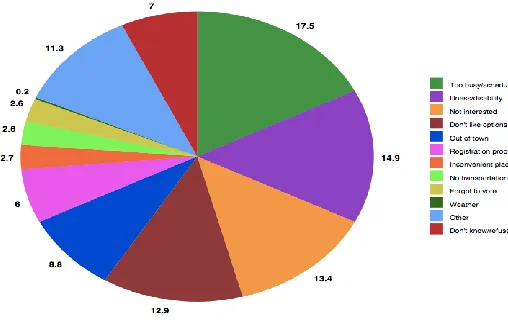
In India People Don‟t Voted for following reason
[image:1.612.330.584.535.695.2]as shown in fig 1.1.
International Journal of Emerging Technology and Advanced Engineering
Website: www.ijetae.com (ISSN 2250-2459,ISO 9001:2008 Certified Journal, Volume 3, Issue 10, October 2013)
463
So, We have present Online Voting System with Face recognition Biometric and Steganography ,in order to avoid duplicate vote and enhance the accuracy and the speed of the process so that Voter Can vote from anywhere in India.II. ARCHITECTURE
Fig.1 System Architecture
A. Working Flow Of the System:-
Fig.2 System Flow
1) Every New User in the India is first register for Voting. So, our first step is registration.
2) At that time of Registration System Capture
The Face of the user by using Web Camera And Store the Face sample in the Server Database for Security Purpose.
3) After that system will generate PIN i.e Personal Identification Number and Secrete key for each
User as shown in figure.
Fig.3 Secret Key Generation.
4) By Using Secret Key and Personal Identification
Number with Capture Photo System gives Cover image as Shown in fig.4.
5) Next that Stego Image is generated with the help Cover Image as Shown in fig.4
Fig.4 Stego Image Creation (Encoding).
A.Stego Image Creation Algorithm (Embedding Algorithm):-
The embedding algorithm makes use of a stego
cryptographic model. The model easily unifies
International Journal of Emerging Technology and Advanced Engineering
Website: www.ijetae.com (ISSN 2250-2459,ISO 9001:2008 Certified Journal, Volume 3, Issue 10, October 2013)
464
By encryption, we need to determine the bytes of cover image which we are going to modify. These are determined by random function with secret key as seed. Here, we have array „Random [ ]‟ of size 288 with values ranging from 1 to 3 *216. Initially stego image array „SI[ ]‟ is same as that of cover image array „CI[ ]‟ & We have a key image array „KI []‟ of 3 * 216 bytes. So, in order to yield stego image „S‟ we are going to modify the array „SI[ ]‟ by the following embedding algorithm.6) Then this Stego Image is a Number Which is unique for every user because of security avoiding duplication of Vote, this Number is sent to the user mail account.
7) Next step is Stego Login for that stego image is required which was send at the time of registration on user mail id.
8) This stego image is pass toward the server for verification for Authentication Algorithm are used
As shown in fig.5
Fig.5 Authentication Algorithm (Decoding)
B. Stego Image Decoding Algorithm (Authentication Algorithm):-
In the Decoding process, firstly the personal identification number i.e PIN from the Stego image. Now, from the matching entry in the voter database, we read the key Image and Secret key of that individual. Successful comparison of the key is the time-stamp value. The timestamp (e.g. Date) delivers the security from replay attacks, so that the same stego image cannot be used again in future. Using this secret key as seed we are generating the array „Random[ ]‟ of size 288. From the stego image we areforming the array „SI[]‟. Also, we have array „KI[]‟ given by key image. Using these we can extract the „SecretMsg[]‟ by applying the algorithm given below.
9) If Stego image is valid then system will generate User id and Password for login.
10) After Successful login System will capture the face of the user by using Web Camera and that image passes for recognizing.
11) Next is very important stage in point of Security By using Eigen Face Algorithm, We are matching the Two photo first is newly capture photo and second is same photo of that person which was stored at the time of registration in the database.
C. The Algorithm for the facial recognition:-
International Journal of Emerging Technology and Advanced Engineering
Website: www.ijetae.com (ISSN 2250-2459,ISO 9001:2008 Certified Journal, Volume 3, Issue 10, October 2013)
465
When observing an unknown image which is denoted by „ X ‟, the weights are calculated for that particular image and stored in the vector „Wx‟ After that, „Wx‟ is compared with the weights of images, of which one knows for certain that they are faces (the weights of the training set „W‟). One way to do it would be to regard each weight vector as a point in space and calculate an average distance „D‟ between the weight vectors from „Wx‟ and the weight vector of the unknown image ,‟Wx‟ (the Euclidean distance described in the appendix „B‟ would be a measure for that). If this total average distance exceeds the threshold value(theta) , then the weight vector of the unknown image „Wx‟ lies too far apart form the weights of the faces. In this case, the unknown „X‟ is considered not a face. Otherwise (if „X‟ is actually a face), its weight vector „Wx‟ is stored for later use.Eigenvalues and Eigenvectors:-
An eigenvector of a matrix is a vector such that, if multiplies with the matrix, & the result is always in a integer multiple of that vector. Its direction is not changed by that transformation. This integer value is Same as eigenvalue of the eigenvector. The corresponding eigenvalue is the proportion by which an eigenvector's magnitude is changed.
This relationship can be described by the equation M * u = * u, where u is an eigenvector of the matrix M and is the corresponding eigenvalues. This means, an eigenvalue of 2 means that the length of the eigenvector has been doubled. An eigenvalue of 1 means that the length of the eigenvector stays the same.
Eigenvectors having some following properties:
1. They can be determined only for square matrices.
2. There are n eigenvectors (and corresponding eigenvalues) in an n * n matrix.
All the eigenvectors are perpendicular.
Fig.6 Eigen Face Recognition Algorithm
12) If Face matches then user will get Candidate List and Ward No.
13) According to user Choice he /she gives his/her Vote For Selected Candidate.
14) Finally Logout, after logout user cannot allow for Re -login because of security to avoid multiplication of vote of same user.
15) Lastly Admin will Displays the Election Result.
III. ADVANTAGES
1) Avoid duplication of votes.
2) Fast generation of region wise result. 3) More secure approach.
4) Voting support from anywhere through web.
5) Increases System productivity by casting number of votes.
IV. DISADVANTAGES.
1) Light Intensity Should be high at the time of capturing the photo.
International Journal of Emerging Technology and Advanced Engineering
Website: www.ijetae.com (ISSN 2250-2459,ISO 9001:2008 Certified Journal, Volume 3, Issue 10, October 2013)
466
V. CONCLUSION.
The target of this paper is on use techniques like Cryptography and Steganography for Password Security to Voter Account as well as by using Eigen Face recognition technique the highly more secure Online Voting System is implemented. The security level of the project can be increases by using new concept randomly generation of cover image for every user.
By using Embedding and Authentication process of the system password security highly improved. Thus this technology gives chance to every citizens for voting from any place, and they can be sure that they alone can choose their Candidate.
REFERENCES
[1] Shivendra Katiyar, Kullai Reddy Meka, Ferdous A. Barbhuiya, Sukumar Nandi. 2011 “Online Voting System Powered By Biometric Security Using Steganography” International Conference on Emerging Applications of Information Technology.
[2] Malwade Nikita, Patil Chetan, Chavan Suruchi, Prof. Raut S. Y. 2013 “ Secure Online Voting System Proposed By Biometrics And Steganography ” International Journal of Emerging Technology and Advanced Engineering.
[3] Armen, C. and Morelli.R. 2005 ” E-Voting and Computer Science: Teaching About the Risks of Electronic Voting Technology ”. [4] Shobha lokhande. 2012 “E-Voting through Biometrics and
Cryptography- Steganography Technique with conjunction of GSM Modem” International Journal of Computer Applications.
[5] Robert Krimmer.2006 “ Electronic Voting 2006 “International Workshop Co-organized by Council of Europe, ESF , IFIP G 8.5 and E-Voting”
[6] Arati Kothari and Sampatkumari Maruti Bandagar . 2011. “Performance & Evaluation of Face Recognition Algorithm” World Journal of Science & Technology.