ORIGINALRESEARCHARTICLE
HYPERTENSION IS MULTIFACTORIAL!
1
Iaggo Raphael David,
1Matheus Lemos Silva,
1Danielle Soares Silva,
1,2Beatriz Rocha Sousa,
1
Larissa Alves Guimarães,
3Luciana Evangelista Brito,
3Michele Mara Caires Gonçalves,
4
Alfredo Maurício Batista de Paula,
1,3Felipe Oliveira Bittencourt
and *
1,2,3Stenio Fernando Pimentel Duarte
1
Public Health Foundation of Vitória da Conquista, Vitória da Conquista, Bahia, Brazil
2
Faculty of Technology and Sciences, Vitória da Conquista, Bahia, Brazil;
3
Independent Faculty of the Northeast, Vitória da Conquista, Bahia, Brazil
4
State University of Montes Claros, Montes Claros, Minas Gerais, Brazil
ARTICLEINFO ABSTRACT
Background: Hypertension has been, worldwide, considered a multifactorial disease. This study aims to prove the multifactorial of hypertension and suggest a new line of research on improving stratification scores for risk identification for high blood pressure. Methods: This is a quantitative, an observational cross-sectional, descriptive and experimental. Statistical analysis was performed multivariate linear regression, the variables were adjusted step by step estimated using logistic regression to allow potential imbalance between blood pressure and the selected variable was considered the level of significance of p <0.05. Following the creation of seven models of adjustments to arrive at the eighth and final model. Results: Finding a result was to prove statistically that hypertension is a multifactorial disease, checking that all variables alone do not reach significance only in the constant array with p≤0,000. Conclusions: Creating arrays and risk profiles search assign different approaches of HA and not only drug therapy vision, noting that the creation of these profiles can open different avenues for prevention. Substantiating that the best way of applying the prevention and treatment of hypertension is based on changes in behavioral habits and life.
Copyright © 2018, Iaggo Raphael David et al. This is an open access article distributed under the Creative Commons Attribution License, which permits
unrestricted use, distribution, and reproduction in any medium, provided the original work is properly cited.
INTRODUCTION
The increase in blood pressure (BP) is one of the main avoidable risk factors for cardiovascular disease, mortality and
disability (Beaney et al. 2017), and presents itself as
difficulties in global public health, it is estimated that 26% is the overall prevalence of people with hypertension at the turn of the century (Hjerkind, 2017). It is estimated that with the aging population increases the severity of morbidity mortality caused by increased pressure, raising the risk for cardiovascular disease and decreased the healthy years of life
(Beaney et al., 2017). Hypertension has been, worldwide,
considered a multifactorial disease, and one of its modifiable risk factors and nonmodifiable age, inadequate levels of PA Oparil, 2018), physical activity (Bakker, 2018), alcohol consumption, socioeconomic status (education, income and occupation) (Tompkins, 2015) and marital status (Roy, 2017).
*Corresponding author: Stenio Fernando Pimentel Duarte
(However, this multifactorial is based on the fact that several studies find individual variables contributing to the increased hemodynamic levels, however there are no studies that prove scientifically or better statistically in humans to multifactorial in hypertension, and most studies suggest that multiple pathways and risk factors can influence the development and aggravation of hypertension (Lu, 2017 and Mafutha, 2017). The need for identification of risk factors is evidenced by the amount of knowledge published in several journals, however, risk factors have been studied individually (Loprinzi,2 2016 and Zhao, 2018). Highlighting the potential association with the prevention or progression of the disease, which would be necessary to identify arrays of factors that can predict this risk, in which factors do not happen isolation. Given what has been exposed this study aims to prove the multifactorial of hypertension and suggest a new line of research on improving stratification scores for risk identification to the onset of hypertension.
ISSN: 2230-9926
International Journal of Development Research
Vol. 08, Issue, 10, pp. 23490-23495, October,2018
Article History:
Received 20th July, 2018 Received in revised form 03rd August, 2018
Accepted 06th September, 2018
Published online 30th October, 2018
Key Words:
Blood Pressure. Risk Factors.
Cardiovascular Diseases. Chronic Disease.
Citation: Iaggo Raphael David, Matheus Lemos Silva, Danielle Soares Silva, et al. 2018. “Hypertension is multifactorial!”, International Journal of
Development Research, 8, (10), 23490-23495.
MATERIALS AND METHODS
This is a quantitative, an observational cross-sectional, descriptive and experimental in a city the interior of Bahia (Latitude: 14 51 '58 "S, Longitude: 40 ° 50' 22" W). The same is a subproject entitled "Epidemiological profile of Chronic Diseases in the Municipality of Vitória da Conquista / BA". Data were collected between the months of August 2016 and February 2018, using the stratified random approach method. Participants were informed about the methods to be used to collect, according to Resolution 466/12 (National Health Council), which is in international documents of research involving humans. It is noteworthy that the project was approved by the Ethics Committee of the Faculty Northeast Independent (Opinion No. 1,859,545), was used articles of selection criteria published in the last three years to the body text of the composition, in order to maintain the present information, as well as the use of journals published in Qualis Capes A1 / A2 and B1 / B2 International magazine and have higher impact factor in Thompson 3 points, to maintain the quality of information.
Target Population: Sample included 737 hypertensive and normotensive, with 521 females and 216 males, the difference of the superiority of the number of women can be explained by population imbalance, because Brazil is a country where the female population is higher than the male (IBGE, 2010) and the fact that women tend to be more careful about the health status than men (Dastan, 2018), also demonstrating better control of blood pressure (Choi, 2014), and more often to use health systems (Adewuya, 2018). The age range comprising from 20 to 45 years, this choice was due to better hormonal stability and decreased interference of age on the results, since under 20 there is a hormonal variation (Mao, 2016), and the strip 45 is where it starts transition from declines in hormone levels as well as their physiological effects (Bruno, 2018) and thus repercussions that could interfere the results of our study, particularly in menopausal women (Di Giosia, 2018). Increasing age is associated with increased risk for hypertension (Hamczyk, 2018), being explained by aging and physiological changes, mainly in arteries such as endothelial dysfunction, decreased production of nitric oxide and arterial stiffening (Bruno, 2018). The class follows the bottom of the pyramid of reference that most of the world's population is below the poverty line, which also runs counter to the reality seen in Brazil, however the survey covers all social classes, not interfering in statistical analysis also been found to lower classes tend to eat foods with higher sodium content (Mazloomy Mahmoodabad, 2016), suggesting that this class also have higher blood levels (Leng, 2015). As well as the education follows the same line of social class, in which the poorest people have less access to education, with a positive and inverse association with higher blood pressure levels, suggesting that the higher the lower education level PA (Liu, 2017 and Zhang, 2017). The work, since industrialization that health and disease profile has changed, mainly due to the increased time sitting and changing working hours not consistent with the circadian cycle (Manohar, 2017), a high load of working hours (Boucher, 2017), decreasing time remains in energy expenditure, factors that may increase the risk for chronic diseases such as hypertension (Lindsay, 2016). The marital status, evidence has shown that once being married was a factor in reducing mortality and being single increased the risk (Kutob, 2017). The relationship has been proven effective in promoting good decisions and less
[image:2.595.329.535.409.639.2]exposure to risk factors (Sbarra, 2015). Conversely early marriage may have increased the number of divorces and has been more present in the presence of factors such as socioeconomic status and low education (Aboulghar, 2016), increasing the number of singles. Alcohol abuse, the literature shows that excessive consumption of alcohol is harmful and an important predictor for the development of hypertension (Collart, 2015), but moderate consumption is demonstrating positive effects in relation to blood pressure control (Roerecke, 2017). The detrimental effect of alcohol consumption can be explained physiologically due to increased sympathetic activity, stimulation of the renin-angiotensin-aldosterone system, endothelial dysfunction and increased generation of reactive oxygen species (ROS) in the vascular bed, ethanol also increases release of pro-inflammatory cytokines (Simplicio, 2017). Being physically or physically inactive active, it has been classified in accordance with the recommendations of the World Health Organization (WHO) that it takes 50 minutes of physical activity of moderate intensity during the week or do at least 75 minutes of physical activity vigorous intensity during the week, or an equivalent combination of moderate and vigorous activity (States, 2018), being checked by the International Physical activity Questionnaire (IPAQ) (Sousa, 2017). The physical activities has showing evidence of a better hemodynamic control, physiologically explained by the release of adrenergic hormones equilibrium, better venous return and decrease the risk for hypertension (Carpio-Rivera, 2016).
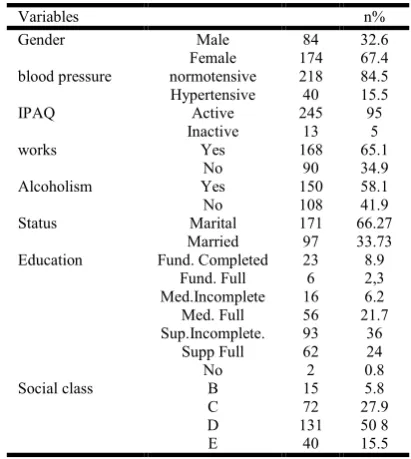
Table 1. Sample Description after adjustment of the inclusion and exclusion criteria
Variables n%
Gender Male 84 32.6
Female 174 67.4 blood pressure normotensive 218 84.5 Hypertensive 40 15.5
IPAQ Active 245 95
Inactive 13 5
works Yes 168 65.1
No 90 34.9
Alcoholism Yes 150 58.1
No 108 41.9
Status Marital 171 66.27
Married 97 33.73 Education Fund. Completed 23 8.9
Fund. Full 6 2,3 Med.Incomplete 16 6.2 Med. Full 56 21.7 Sup.Incomplete. 93 36
Supp Full 62 24
No 2 0.8
Social class B 15 5.8
C 72 27.9
D 131 50 8
E 40 15.5
Source search NEPEdc 2018
It used two international guidelines and national, the intention that the work has a higher reproducibility and not just at national level, entering a consensus among the three guidelines. People who used drugs for blood pressure control were excluded. Age - sample consisted of individuals aged 20 to 45 years, and ages were excluded either that which escaped the rule. So that there were biases related previously justified hormonal issues. Participants who did not want to provide all the information necessary for matrix composition were excluded, namely: physical activity; job; marital status; education; social class; alcoholism; measurement of blood pressure. After adjustment of the inclusion and exclusion criteria, Our sample consisted of 258 individuals, 174 women
and 84 men. From these definitions previously said, the characteristics of our sample are detailed in Table 1.
Statistical analysis
Statistical analysis was performed multivariate linear regression, the variables were adjusted estimated using logistic regression step by step to allow the potential imbalance between blood pressure and the selected variables, it was considered the level of significance of p <0.05, statistical program used was SPSS 25. Model creation adjustments to the variables was necessary to test the association between variables. Independent variables: waist circumference, physical activity, occupation, marital status, education,
Models Variables p-value Comments
Model 1 Blood pressure, waist circumference, occupation, physical activity, marital status, education.
Being highly significant with p ≤ 0.000
Factors associated proving the multifactorial of hypertension, each variable there was no significance isolation but together.
Model 2 Model 1 + age and social class. Kept significance was p ≤ 0.000 Factors associated proving hypertension multifactorial, each variable were not significant individually but together.
Model 3 Model 2 + gender maintained significance with p ≤ 0.000
Factors associated proving the multifactorial of hypertension, but the genre has provedbe an isolated variable in influencing PA.
Model 4 Model 2 + Smoking Changes in significance with p ≤ 0.001
Noting that smoking exerted a protective factor, decreasing the value of the association. The factors associated proving the multifactorial of hypertension, each variable there was no significance isolation but together.
Model 5 Model 4 + Alcoholism Association remained significant with p ≤ 0.001.
Factors associated proving the multifactorial of hypertension, each variable was not significant isolation but together.
Model 6 Model 5 - Smoking And the association back to firmer values associated with p ≤ 0.000
Showing that smoking could cause a protective influence on our mother, so it was removed. The factors associated proving the multifactorial of hypertension, each variable there was no significance isolation but together.
Model7 Model 6 - DC and back to the association stronger association with values of p ≤ 0.000
Taken waist circumference, because it be improved by physical activity is also part of the matrix, which may cause a confounding effect.
Model 8 Physical activity, occupation, marital status, education, age, social class, alcohol consumption.
The significance level keeps on p ≤0,000
Proving the choice of the matrix, and the variables are able, together, lead to hypertension. For all the variables separately showed no significance.
Model 1: Blood pressure, waist circumference, occupation, physical activity, marital status, education;
Model 2: Blood pressure, waist circumference, occupation, physical activity, marital status, education, age and social class;
Model 3: Blood pressure, waist circumference, occupation, physical activity, marital status, education, age and social class, gender;
Model 4: Blood pressure, waist circumference, occupation, physical activity, marital status, education, age and social class, smoking;
Model 5: Blood pressure, waist circumference, occupation, physical activity, marital status, education, age and social class, smoking, drinking;
Model 6: Blood pressure, waist circumference, occupation, physical activity, marital status, education, age and social class, alcohol consumption;
Model 7: Blood pressure, occupation, physical activity, marital status, education, age and social class, alcohol consumption;
smoking, alcohol consumption, gender. Dependent variable: blood pressure. Figure 1 shows the association matrix, with all the variables have been selected and the p-value for each variable values, demonstrating that alone no variable achieved significance for the development of hypertension, but the set of factors showed a significant constant (p≤0,000), proving that hypertension is a multifactorial disease and that most of the factors are risk capable of being modified, especially with the changing lifestyle habits.
DISCUSSION
The importance of this study is demonstrated by the magnitude and breadth of the findings involving a disease that affects
about 3.5 million adults have not ideal blood pressure and is believed that one in four adults have hypertension, and non-optimal blood pressure levels has been considered as a global risk for mortality (Zhao, 2018), from all causes talking about 9.4 million death and 212 million years of healthy life lost (Zhang, 2017). It is estimated that the proportion of the global population of hypertensive adults increase to 29%, with estimated 1.56 billion hypertensive in the world by 2025 (Zhang, 2017). The HA multifactorial proven this article (Figure 1), raises the level of research on the verification of risk factors for chronic diseases. However, most of the articles published in international journals has shown that THERE is a disease of multifactorial nature, yet they have analyzed the risk factors in isolation, seeking risk associations with simple statistical analysis and individual (Bakker, 2018; Loprinzi, 2016; Liu, 2017; Carpio-Rivera, 2016; Zhang, 2016).
Stating that the intervention should be at general and not specifically on individual risk factors, as in the case of the factors that can be modified, which has been individually studied, such as physical activity, alcohol consumption, socioeconomic status, marital status (Choi, 2017; Di Giosia, 2018; Egan, 2017 and Colafella, 2018). Substantiating that the best way of applying the prevention and treatment of hypertension is based on changes in behavioral habits and life. However, the first line treatment for hypertension is based on
reduction of their comorbidities using medications (Ayan,
2018). Creating arrays and risk profiles search assign different approaches of HA and not only drug therapy vision, noting that the creation of these profiles can open different pathways to prevention, such as the development of scores of risk for development of hypertension blood as well as the multidisciplinary intervention to be reduced all risk factors and not just mediation, exclusive of isolated risk factors.
Thanks
Thanks kindly statistical MATHEUS LEMOS SILVA the formidable work.
REFERENCES
Aboulghar M, Albertini DF, Allen JF, Bhattacharya S, Cottingham J, Evers JLH, Geraedts JPM, Glasier A, Hunt K, Hussein J, La Vecchia C, Luy W, Michaud PA, Negri E, Peters SAE, Sethi D, Crosignani PG, Devroey P, Diedrich K, Farquharson RG, Fraser L, Gianaroli L, Lundin K, Sunde A, Tapanainen JS, Tarlatzis B, Van Steirteghem A, Veiga A, Volpe A. The influence of social factors on
gender. Hum Reprod. 2016; 31:1631-1637.
<https://doi.org/10.1093/humrep/dew154>.
Adewuya AO, Coker OA, Atilola O, Ola BA, Zachariah MP, Adewumi T, Olugbile O, Fasawe A, Idris O. Gender difference in the point prevalence, symptoms, comorbidity, and correlates of depression: findings from the Lagos State
Mental Health Survey (LSMHS), Nigeria. Arch
WomensMent Health. 2018:1-9. <https://doi.org/10.1007/
s00737-018-0839-9>.
Ayan M, Kadarath S, Campbell PT. The role of clinic blood pressure for the diagnosis of hypertension. 2018:1-6. <https://doi.org/10.1097/HCO.0000000000000528>. Bakker EA, Sui X, Brellenthin AG, Lee D-C. Physical activity
and fitness for the prevention of hypertension.
CurrOpinCardiol. 2018:1. <https://doi.org/10.1097 /
HCO.0000000000000526>.
Beaney T, Schutte AE, Tomaszewski M, Ariti C, Burrell LM, Castillo RR, Charchar FJ, Damasceno A, Kruger R, Lackland DT, Nilsson PM, Prabhakaran D, Ramirez AJ, Schlaich MP, Wang J, Weber MA, Poulter NR, Napiza-Granada C, Sevilla MR, Atilano A, Ona D, More A, Jose A, Maheshwari A, Kondal D, Yu W, Li W, Xu S, Yu J, Zhang H, Widyantoro B, Turana Y, Situmorang T, Sofiatin Y, Barack R, Lin H-J, Wang T-D, Chen W-J, Sirenko Y, Evstigneeva O, Negresku E, Yousif M, Medani S, Beheiry H, Ali I, Zilberman J, Marin M, Rodriguez P, Garcia-Vasquez F, Kramoh K, Ekoua D, Lopez-Jaramillo P, Otero J, Sanchez G, Narvaez C, Accini J, Hernandez-Hernandez R, Octavio J, Morr I, Lopez-Rivera J, Ojji D, Arije A, Babatunte A, Wahab K, Fernandes M, Pereira S, Valentim M, Dzudie A, Kingue S, DjomouNgongang D, Ogola E, Barasa F, Gitura B, Malik F-T-N, Choudhury S, Al Mamun M, Minh V, Viet N, Cao Truong S, Ferri C, Parati G, Torlasco C, Borghi C, Goma F, Syatalimi C, Zelveian P, Barbosa E, Sebba Barroso W, Penaherrera E, Jarrin E, Yusufali A, Bazargani N, Tsinamdzgvrishvili B, Trapaidze D, Neupane D, Mishra S, Jozwiak J, Malyszko J, Konradi A, Chazova I, Ishaq M, Memon F, Heagerty A, Keitley J, Brady A, Cockcroft J, McDonnell B, Lanas F, Chia Y-C, Ndhlovu H, Kiss I, Ruilope L, EllengaMbolla B, Milhailidou A, Woodiwiss A, Perl S, Dolan E, Azevedo V, Garre L, Boggia J, Lee V, Kowlessur S, Miglinas M, Sukackiene D, Wainford R, Habonimana D, Masupe T, Ortellado J, Wuerzner G, Alcocer L, Burazeri G, Sanchez Delgado E, Lovic D, Mondo C, Mostafa A, Nadar S, Valdez Tiburcio O, Leiba A, Dorobantu M, De Backer T, Chifamba J, Stergiou G, Nwokocha C, Sokolovic S, Toure A, Connell K, Khan N, Burger D, De Carvalho Rodrigues M, Kramer B, Schmieder R, Unger T, Wyss F, Yameogo N, Beistline H, Kenerson J, Alfonso B, Olsen M, Soares M. May Measurement Month 2017: an analysis of blood
pressure screening results worldwide. Lancet Glob Heal.
2018:1-8. <https://doi.org/10.1016/S2214-109X(18)30259-6>.
Boucher P, Gilbert-Ouimet M, Trudel X, Duchaine CS, Milot A, Brisson C. Masked hypertension and effort-reward
imbalance at work among 2369 white-collar workers. J
Hum Hypertens. 2017; 31:620-626. <https://doi.org/
10.1038/jhh.2017.42>.
Bruno RM, Masi S, Taddei M, Taddei S, Virdis A. Essential
Hypertension and Functional Microvascular Ageing. High
Blood Press Cardiovasc Prev. 2018; 25:35-40.
<https://doi.org/10.1007/s40292-017-0245-9>.
Carpio-Rivera E, Moncada-Jiménez J, Salazar-Rojas W, Solera-Herrera A. Acute Effects of Exercise on Blood
Cardiol. 2016:422-433. <https://doi.org/10.5935/ abc.20160064>.
Choi HM, Kim HC, Kang DR. Sex differences in hypertension prevalence and control: Analysis of the 2010-2014 Korea
national health and nutrition examination survey. PLoS
One. 2017; 12:1-12. <https://doi.org/10.1371/journal.pone.
0178334>.
Colafella KMM, Denton KM. Sex-specific differences in
hypertension and associated cardiovascular disease. Nat
Rev Nephrol. 2018; 14:185-201. <https://doi.org/10.1038/
nrneph.2017.189>.
Collart F, Timary P De, Dom G, Dor BD, Duprez D, Lengele J, Peuskens H, Rehm J, Stärkel P, Timary P De, Dom G, Dor BD, Duprez D, Lengele J, Collart F, Timary P De, Dom G, Dor BD, Duprez D, Lengele J. Alcohol-induced hypertension : an important healthcare target in Belgium Alcohol-induced hypertension : an important healthcare
target in Belgium. Acta Clin Belg. 2015. <https://doi.org/
http://dx.doi.org/10.1179/2295333715Y.0000000039>. Dastan I, Erem A, Cetinkaya V. Awareness, treatment, control
of hypertension, and associated factors: Results from a
Turkish national study. Clin Exp Hypertens. 2018;
40:90-98. <https://doi.org/10.1080/10641963.2017.1334797>. Di Giosia P, Giorgini P, Stamerra CA, Petrarca M, Ferri C,
Sahebkar A. Gender Differences in Epidemiology,
Pathophysiology, and Treatment of Hypertension.
CurrAtheroscler Rep. 2018; 20. <https://doi.org/10.1007/
s11883-018-0716-z>.
Egan BM. Physical activity and hypertension. Hypertension.
2017; 69:404-406. <https://doi.org/10.1161/ HYPERTE NSIONAHA.116.08508>.
Hamczyk MR, Campo L. Aging in the Cardiovascular System : Lessons from Hutchinson-Gilford Progeria
Syndrome. Annu Rev. 2018.
Hjerkind KV, Stenehjem JS, Nilsen TIL. Adiposity, physical activity and risk of diabetes mellitus: prospective data from
the population-based HUNT study, Norway. BMJ Open.
2017; 7:e013142. <https://doi.org/10.1136/bmjopen-2016-013142>.
IBGE. Instituto Brasileiro de Geografia e Estatística - população por sexo e grupo de idade - 2010. 2018:2018. Kutob RM, Yuan NP, Wertheim BC, Sbarra DA, Loucks EB,
Nassir R, Bareh G, Kim MM, Snetselaar LG, Thomson CA. Relationship Between Marital Transitions, Health Behaviors, and Health Indicators of Postmenopausal
Women: Results from the Women’s Health Initiative. J
Women’s Heal. 2017; 26:313-320. <https://doi.org/
10.1089/jwh.2016.5925>.
Leng B, Jin Y, Li G, Chen L, Jin N. Socioeconomic status and
hypertension: A meta-analysis. J Hypertens. 2015;
33:221-229. <https://doi.org/10.1097/HJH.0000000000000428>. Lindsay DB, Devine S, Sealey RM, Leicht AS. Time kinetics
of physical activity, sitting, and quality of life measures within a regional workplace: A cross-sectional analysis.
BMC Public Health. 2016; 16:1-9. <https://doi.org/
10.1186/s12889-016-3487-x>.
Liu X, Liu C, Schenck H, Yi X, Wang H, Shi X. The risk factors of 9-year follow-up on hypertension in middle-aged
people in Tujia-Nationality settlement of China. J Hum
Hypertens. 2017; 31:838-842. <https://doi.org/10.1038/
jhh.2017.58>.
Lloyd-Jones DM, Morris PB, Ballantyne CM, Birtcher KK, Daly DD, DePalma SM, Minissian MB, Orringer CE, Smith SC. 2017 Focused Update of the 2016 ACC Expert Consensus Decision Pathway on the Role of Non-Statin
Therapies for LDL-Cholesterol Lowering in the
Management of Atherosclerotic Cardiovascular Disease Risk: A Report of the American College of Cardiology
Task Fo. J Am Coll Cardiol. 2017; 70:1785-1822.
<https://doi.org/10.1016/j.jacc.2017.07.745>.
Loprinzi PD. Accelerometer-determined physical activity and allcause mortality in a national prospective cohort study of
hypertensive adults. J Hypertens. 2016; 34:848-852.
<https://doi.org/10.1097/HJH.0000000000000869>. Lu J, Lu Y, Wang X, Li X, Linderman GC, Wu C, Cheng X,
Mu L, Zhang H, Liu J, Su M, Zhao H, Spatz ES, Spertus JA, Masoudi FA, Krumholz HM, Jiang L. Prevalence, awareness, treatment, and control of hypertension in China: data from 1·7 million adults in a population-based screening study (China PEACE Million Persons Project).
Lancet. 2017; 390:2549-2558. <https://doi.org/10.1016/
S0140-6736(17)32478-9>.
Mafutha NG, Mogotlane S, De Swardt H. Development of a Hypertension Health Literacy Assessment Tool for use in primary healthcare clinics in South Africa, Gauteng.
African J Prim Heal Care Fam Med. 2017; 9:2071-2936.
<https://doi.org/10.4102/phcfm.v9i1.1305>.
Manohar S, Thongprayoon C, Cheungpasitporn W, Mao MA, Herrmann SM. Associations of rotational shift work and night shift status with hypertension: A systematic review
and meta-analysis. J Hypertens. 2017; 35:1929-1937.
<https://doi.org/10.1097/HJH.0000000000001442>. Mao J, Dalvie MA. Anthropometric Measurements, Serum
Reproductive Hormonal Levels and Sexual Development
among Boys in the Rural Western Cape, South Africa. Int J
Environ Res Public Health. 2016; 13:6-8. <https://doi.org/
10.3390/ijerph13121185>.
Mazloomy Mahmoodabad SS, Tehrani H, Gholian-aval M, Gholami H, Nematy M. The effect of social class on the
amount of salt intake in patients with hypertension. Blood
Press. 2016; 25:360-363. <https://doi.org/10.1080/
08037051.2016.1179508>.
Oparil S, Acelajado MC, Bakris GL, Berlowitz DR, Cífková R, Dominiczak AF, Grassi G, Jordan J, Poulter NR,
Rodgers A, Whelton PK. Hypertension. Nat Rev Dis Prim.
2018; 4. <https://doi.org/10.1038/nrdp.2018.14>.
Roerecke M, Kaczorowski J, Tobe SW, Gmel G, Hasan OSM, Rehm J. The effect of a reduction in alcohol consumption on blood pressure: a systematic review and meta-analysis.
Lancet Public Heal. 2017; 2:e108-e120. <https://doi.org/
10.1016/S2468-2667(17)30003-8>.
Roy A, Praveen PA, Amarchand R, Ramakrishnan L, Gupta R, KondalD, Singh K, Sharma M, Shukla DK, Tandon N, Reddy KS, Krishnan A, Prabhakaran D. Changes in hypertension prevalence, awareness, treatment and control rates over 20 years in National Capital Region of India:
Results from a repeat cross-sectional study. BMJ Open.
2017; 7. <https://doi.org/10.1136/bmjopen-2016-015639>. Sbarra DA, DA. S. Divorce and health: current trends and
future directions. Psychosom Med. 2015; 77:227-236.
<https://doi.org/10.1097/PSY.0000000000000168>. Simplicio JA, do Vale GT, Gonzaga NA, Leite LN, Hip�lito
U V., Pereira CA, Tostes RC, Tirapelli CR. Reactive oxygen species derived from NAD(P)H oxidase play a role
on ethanol-induced hypertension and endothelial
dysfunction in rat resistance arteries. J PhysiolBiochem.
2017; 73:5-16. <https://doi.org/10.1007/s13105-016-0519-z>.
Sociedade Brasileira de Cardiologia. 7aDiretrizBrasileira De
Sousa R, Silva ML, Andrade IS, Moreira PA, Novais N, Júnior VS, Lima PV, Araújo L, Fernando S, Duarte P. Original Research Article Stress Scoring With Physical Behavior And Its Social Variables. 2017; 07:13844-13847.
States WHOM, States WHOM. Key facts What is physical activity ? How much of physical activity is recommended ? Benefits of physical activity and risk of insufficient physical activity. 2018:1-6.
Tompkins G, Forrest LF, Adams J. Socio-economic differences in the association between self-reported and clinically present diabetes and hypertension: Secondary
analysis of a population-based cross-sectional study. PLoS
One. 2015; 10:1-13. <https://doi.org/10.1371/ journal.pone.
0139928>.
Zhang FL, Guo ZN, Xing YQ, Wu YH, Liu HY, Yang Y. Hypertension prevalence, awareness, treatment, and control
in northeast China: A population-based cross-sectional
survey. J Hum Hypertens. 2017; 32:54-65. <https://doi.org/
10.1038/s41371-017-0003-4>.
Zhang M, Zhao Y, Wang G, Zhang H, Ren Y, Wang B, Zhang L, Yang X, Han C, Pang C, Yin L, Zhao J, Hu D. Body mass index and waist circumference combined predicts obesity-related hypertension better than either alone in a
rural Chinese population. Sci Rep. 2016; 6:1-8.
<https://doi.org/10.1038/srep31935>.
Zhao A, Tan S, Szeto IM, Wang Y, Meng L, Li T, Zhao W, Wang M, Zhang Y. Gaps in awareness and control of hypertension : a cross-sectional study in Chinese urban
adults. J Hum Hypertens. 2018. <https://doi.org/10.1038/
s41371-018-0059-9>.