2936
HEALTH INFORMATION SYSTEM SUCCESS FRAMEWORK
BASED ON USER REQUIREMENTS PERSPECTIVE
1EBRAHIMGAHLEB,2IBRAHIMMOHAMED
1,2 School of Computer Science
Faculty of Information Science and Technology Universiti Kebangsaan Malaysia 43000 UKM Bangi, Selangor, Malaysia
E-mail: 1[email protected] ,2[email protected]
ABSTRACT
Although the success of Health information system (HIS) has attracted many researchers to investigate the factors that affect the net-benefit in the success framework, to date, there is no comprehensive framework available for the success of the HIS, which takes the impact of user requirements factors in developing countries. Therefore, the present study addressed this gap by proposing a success framework which integrates the HIS quality and HIS user dimensions in the context of Yemen. The HIS users dimension includes the following factors: user requirements, user need, intention to use and user satisfaction. To validate the integrated framework, a quantitative method was used in which a self-administered structured questionnaire was distributed to a total of 250 employees, under HIS departments in seven hospitals in the capital Sanaa, Yemen. SPSS.VS.22.0 and AMOS VS.22 were used to design and analyze the framework. The results revealed that the factors in the HIS users have positive effect on the net benefit. In addition, the factors in the HIS users are influenced by the factors in the HIS quality. The Deleon’s and Mclean’s results indicated that the HIS quality has a positive relationship with the net benefits.
Keywords: User need, Health Information System (HIS); Health Information system Quality (HISQ); Health information system users (HISU) and health information system Net benefits (HISNB).
1. INTRODUCTION
Recently, HIS has been given much attention by researchers with the aim of improving the quality, efficiency, and the outcomes in different domains, including reducing the cost of the healthcare [1]. In health organizations, it is inevitable to execute HIS due to the various brokerage and domination factors involving organizations, people, and technology. As a result, HIS has created some critical parts of information technology infrastructure owing to the sensitivity and nature of the data processed through the time especially that has to do with the treatment history as well as the medical record of patients [2]. In many different countries, there is a growing awareness that strategic investments in innovative clinical (IS) as well as other types of HISs can yield significant improvement for an entire healthcare system [3].
HIS is a difficult task to perform [4-8]. While there are evident and potential benefits from the use of technological innovation in health, there are also substantial risks [9]. In the context of developing countries, HIS applications either partially or fully
fail to achieve the main objectives [10, 11]. Frequently, technology companies in the health domain belittle its complexity and dismiss the assumption that if something has been successful in another domain, then it can be achievable in the health domain [9]. Considering the high failure rate and the very visible and often politically embarrassing failure of a lot of health ICT projects, HIS is distinguishable from other IS environments because of its complexity, lack of one single owner and being hyper turbulent and information-sensitive [12]. Consequently, many HISs represent more specialized independent systems which are combined with one another [13, 14]. Such failure of HIS may lead to a slow progress or may inhibit the progress and the development of solutions prepared for overcoming impediments and failures [11, 15, 16].
2937 is essential to guarantee such desired success [14].These user requirements as an integral part of IS design are critical to the accomplishment of interactive systems. However, the challenge lies in specifying these needs and requirements. Regarding this, so far, only a few studies have been carried out to measure the satisfaction level among the HIS user [13]. Teixeira, et al. [18] argued that the lack of human consideration such as end user requirements issue is among other issues that can well explain the failure of the IS implementation in the HIS. A previous study conducted by Ismail, et al. [19] indicated that addressing the expectations of user requirements is a distinct element that ascertains the successful adoption of the HIS. There are still several issues that need to be addressed [14, 20-25].
Related research on IS places an emphasis on user requirements in HIS owing to rare investigation of how IS success factors impact user requirements in HIS. User requirements represent an IS that comprises capabilities of users in working with the system. They are information that must be included in any applications to help users to achieve specific tasks. Thus, in the context of the current study, user requirements are the actions that the product must perform or the services that the system is expected to offer. There are initiatives from the perspective of users in the HIS which are based on success framework of IS [26].
Adhering to the above mentioned problem statement, there is still a need for proposing a framework of the user requirements of HIS in developing countries. Accordingly to [27] the identified problems are the lack of availability of these systems especially in developing countries (in this case Yemen) and the insufficient works on end user acceptance of HIT systems. These limitations can be overcome by studying the factors that affect the user acceptance, and considering them for the development of the system.
Therefore, the current study aims to propose HIS success framework which includes the major users’ requirements and users’ need factors that affect the success of IS in health organizations of Yemen. The
proposed framework is evaluated using
SPSS.VS.22.0 and AMOSVS.22 software. It attempted to answer the following specific research questions:
1) What are the user requirement factors
that need to be considered for the information system success?
2) Can a framework for investigating user
requirements factors that influence IS success be proposed?
3) Can the proposed framework for
information system be validated to measure user requirements?
In the next research, we discuss the main effects used as the requirements for investigating the HIS in hospitals finding and explain our methodology. Then, we provide a detailed discussion of the synthesized findings of the research studies according to the three research questions. The paper is concluded by useful implications for HIS users of technology use in peer review and recommendations for future research. 2. INFORMATION SYSTEM SUCCESS
MODELS
Like most previous research proposing HIS models to comprehend the most important factors impacting the HIS adoption and users’ requirements, the current study used Delone and McLean [26] IS success model (Figure 1) as the basic ground for the proposed framework.
2938
Figure 1: Revised DeLone and McLean is success model. Source: Delone and McLean [26]
3. THE PROPOSED FRAMEWORK
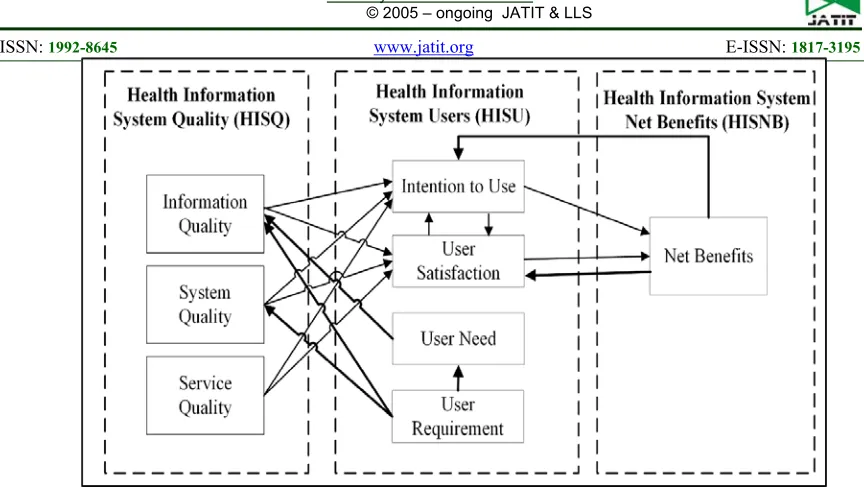
In this research, we proposed a new framework (Figure 2) which integrates three dimensions: HISQ, HISU and HISNB. Each dimension includes several factors adapted from previous studies. The aforementioned factors are categorized into eight main constructs service quality, information quality, System quality, intention to use, user satisfaction, user requirements, user needs and net benefits. The HISQ is classified into service quality, information quality and system quality. The second dimension (HISU) consists of the user satisfaction, intention to use, user requirements and user needs, while the HISNB has only one factor named as net benefits. As explained in Westh, et al. [28], user requirement factors are divided into functional requirements and non-functional requirements. They also have sub factors: business roles, external interfaces and authentication for the functional requirements and security for the non-functional requirements.
2939
Figure 2: Conceptual Framework for the Study.
A basic list of potential common aspects is recognized and collected from the HISU dimension, the HISNB which has only one factor named net benefit development strategies and the IS success framework theories. Hence, there are eight main common factors which are categorized as exogenous and endogenous variables. The exogenous variable is a factor that is considered independent. This means that the variable within one formula does not directly related to the other variables in the same formula. However, the endogenous variable has a direct relationship with other variables in the framework, thus being in a formulated form.
The exogenous latent variables include the HISQ system quality factors (e.g include factors: service quality, system quality, information quality). However, the endogenous latent variables include characteristic factors that comprise auditability. Therefore, the independent variables from the states
in this studies showing the factors of net benefits for the HISU. Figure 2 illustrates all the factors, as well as the relationship between them.
3.1 Critical HIS Factor Influencing User Requirements.
A cross-section research was performed to resolve the deficiency of past research in this perspective. Thus, significance was given to identify the most typical and effective aspects in decreasing user requirements and improving the HIS quality. Worth mentioning in this context is the importance of presenting the main aspects and sub factors which impact the harnessing of user requirement in HIS reduction. As seen in Table (1), the factors are system service, system quality, information quality, intention to use, user satisfaction, user needs, user requirements and net benefits towards the importance of HIS.
Table 1: Working Definitions of the Main Factors of HIS That Reduce User Requirements
Factors Definition and the Related References
System Quality It is the system quality of the support that system users receive from the IS department and IT support personnel. The quality includes responsiveness, accuracy, eases of use, system flexibility, technical competence, and empathy of the personnel staff [30-32].
Information Quality It is the desirable characteristics of the system outputs that include
relevance, understanding, accuracy, conciseness, completeness, currency, timeliness, usability [30, 33].
Service Quality Quick responsiveness, empathy, assurance follow up service,
[image:4.612.105.510.606.728.2]2940
Intention to use It is the degree and manner in which staff and customers utilize the
capabilities of an IS. Examining items such as, the number of functions used, frequency of access, and amount of connecting time [35].
User Satisfaction It records the satisfaction level as reported by system users,
including users’ overall satisfaction and interface satisfaction [35].
Net benefits Clinical practice refers to the effects of the job, performance of the
task, productivity, valume of work, morale, efficiency, effectiveness (goal achievement, service), the quality of decision making (analysis, accuracy, time, confidence, participation), reducing errors, communication, clinical outcomes (patient care, morbidity, mortality,) cost [34].
User Requirements It indicates the concept of meeting user requirements, Information
Quality, Use and Meeting user expectations and perceptions of the system. Then, the IS will be effective [36].
User Need It is the call for a stronger emphasis on data investigation of the
patients in health units, patient information, needs requirements from the developer [37].
3.2 The Relationship Between Factors Elpez and Fink [38] found a relationship between user requirements and IS of DeLone and McLean model in the study of IS Success in the Public Sector. Similarly, Schniederjans and Yadav [36] identified a relationship between user need and information quality. User requirements were also correlated with user needs in another study of an assessment of the quality of information [37]. Yusof, et al. [39] pointed out that there is
relationships between two dimensions:
technological and human. In the study which was conducted by Gorla, et al. [40], they found a relationship between the user requirements and system quality.
4. USER REQUIREMENTS ANLAYSIS
Understanding the requirements of a given system is regarded as the main reason causing such success or failure of that system. Because
understanding these requirements means
understanding the issues or problems that need to be solved and it also means understanding the best solutions which will enable the system to meet the needs of the user. Based on the study of Wiegers [41], lack of understanding the accurate requirements is expected to have the negative effect on a given project, regardless of how well the rest of that project is executed. Other previous studies confirmed the same idea of the importance of understanding software requirements [42, 43]
Ahmad, et al. [44] pointed out that user requirements provide clients and users with abstract statements of the system requirements and they also provide them with a more detailed description of the functionality. They mainly focus on what users’ needs and perceive or expect from a given system. User requirements were traditionally either explicit or implicit [45]. As indicated by Teixeira, et al. [18], user requirements are indicative the requisites of those people or potential customers and users of that particular system. The success of as particular system begins with the successful understanding of users [46]. The benefits of user requirement identification can make systems highly productive and the quality high, reduce expenses and costs spent in preparation and achieve users’ satisfaction. Successful identification or analysis of user requirements includes better understanding of users’ needs, diverse stakeholders and the context where the software will be employed [47]. Yet, analysis of such prerequisites is not a simple or easy procedure [17].
2941
Figure 3: The Phases of Requirements Analysis Source: [41]
4.1 Requirements Elicitation
Requirements elicitation consist of the actions necessary to comprehend the problem that the suggested program will address, where the program limitations state who the user requirements are and what they require to obtain a range of characteristics, restrictions and properties outlining the system to be built [48]. This phase commonly begins with interpreting the high-level program goals, determining the user requirements, and assessing their needs and actions based on the goals, in order to determine the problem space. While occasionally the problem definition seems to be obvious, more frequently, it is actually not [49].
Requirements elicitation is earlier on of requirements analysis. It can thus be suggested that specifications elicitation is a prerequisite for other significant development phases. In addition, elicitation is acknowledged as the most significant and challenging aspect. It is essential because the results of elicitation identify what the system will do and therefore determine the failure or success of the system. It is complicated because it is a powerful problem-solving activity, which involves identification, interpretation and negotiation to arrive at a description of the issue that meets the needs of the user requirements and user need. The outcome of elicitation is appropriately recorded as a
Set of user requirements and associated system characteristics, constraints and qualities, which act as inputs into the requirements specification phase. [48, 50] Suggested that the elicitation of a meaningful requirement from end users is an early and significant purpose of any and all the user requirements analysis processes.
[51, 52] recommended trawling for requirements to focus on the proven reality that through this procedure one is likely to get more specifications than expected, and they also suggest that collecting a few unnecessary requirements originally is always better than collecting only a few.
2942 might have unstated expectations, they may be resistant to the changes the new system embodies, and they could, therefore, be uncooperative or evasive, and some may simply have invalid knowledge. They might use various terminologies or vocabulary, or make unacceptable assumptions. On the other hand, analysts might not ask the right questions or might omit relevant topics, while users might not offer relevant or comprehensive answers. Therefore, it is crucial to formulating an elicitation strategy that views the user requirements’ characteristics and the actual of the knowledge desired, along with the techniques that should be applied during this phase.
Over the years, requirements elicitation research has increasingly become more multidisciplinary. This has occurred because of the need to address not only the technological and functional features of the system, but also the human and social aspects. In addition to the apparent contributions from the fields of computer science, software requirements and obviously analysis requirements, many aspects and theories used in requirements elicitation come from other disciplines such as Cognitive Psychology, which helps researchers to comprehend people requirements and the challenges in comprehending those needs. Anthropology also helps requirements elicitation researchers to identify how people communicate with systems and the impact of the systems on the environment and their tasks. The contributions of Sociology and Linguistics also play a significant part in requirements elicitation research because the process is person-oriented and communication-rich. Requirements Analysis during the requirements analysis phase, the user requirements and user need’ demands, assumptions and other information recognized during requirements elicitation are combined together and enhanced into further degrees of detail [54]. This step represents the requirements in numerous forms such as prototypes and models, accomplishing trade-off analysis, establishing priorities, analyzing feasibility and seeking gaps that some requirements may have been omitted. The information obtained in this step might require iterations with the elicitation step because clarification is required, conflicts between requirements need to be explored or missing requirements need to be identified [55].
4.2 Requirements Specification
Requirements specification involves detailed documentation of the expectations and requirements of a analysis under development in such a manner that it can serve as an information source for the
user requirements and developers who are involved, respectively, in the operation and design of the system. During specification, the characteristics, constraints and attributes extracted during impact analysis are expounded into perfectly established software requirements [54]. The outcome of the specification task is a system requirement specification, which exactly represents the groups of functional and non-functional requirements for the expected system product. From the perspective of computer-based systems, the user’s specification means different things to different people. For instance, a specification could be a written document, a range of visual models, a collection of usage scenarios, a prototype or any combination of these [55].
4.3 Requirements Validation
2943 4.4 Requirements Management
The desire to modify requirements continues over the life of a system. Requirements management is a group of tasks that helps the project team to recognize, manage and monitor requirements and changes at any time as the project proceeds. Basically, requirements management starts with obtaining user requirements buy-in to the baseline requirements. Requirements management involves the activities of requesting changes to the baseline requirements, undertaking impact analyses in relation to the requested changes, rejecting or accepting those changes and applying the accepted changes. Requirements management also involves the activities undertaken to ensure that the system and project plans remain reliable and monitoring the status of the requirements as the software development process progresses.
4.5 Requirements Documents
Documents consist of manuals, forms, job descriptions and corporate reports, which can provide analysts with useful information about the target system and the organization. They can also be universal documents such as standards and legal
documents. However, examining existing
documents consumes a lot of time as analysts need to cautiously review and choose the ones that are directly related to the project.
This source is useful for capturing other knowledge, which cannot be directly acquired from user requirements. In particular, it is good at exploring domain knowledge that is difficult to
articulate and understand. Documentation
techniques are particularly viable when the organization has clear policy and procedures that are properly documented.
5. METHODOLOGY AND HYPOTHESES
The data was collected from health units in Yemen. The study used a self-administered questionnaire to collect the necessary data. First, there were limited resources in the context of the study. Secondly, based on the researcher’s knowledge and experience, most Yemen hospitals in IS tend to be unwilling to participate in manual surveys because these are traditional methods and consume much time. However, a manual survey questionnaire has been used to obtain original information given by a participant from his/her reading the survey questionnaire from paper and/or traditional system. This technique of data collection can cover large samples from the population.
A sampling design ensures that the sample used in this research represents the population from which the sample is drawn. This research focuses on the population of HIS agencies because these agencies depend heavily on IS resources for business and are closely related to the operations of healthcare requirement. These agencies also serve as custodians of government and privates classified information and depositories of HIS. Sampling success depends on the sampling preparation design. Thus, this section discusses sampling design in terms of the unit of analysis, sample size and Seam-required sample size.
In the context of the present study, the population consists of users in HIS who are responsible for selection of suitable users for the requirements of the elicitation propose. The sampling procedure is used in the selection of the population [57-59]. Sampling is limited to particular people who can provide the required information; they are selected based on pre-established criteria to ensure that they possess the needed information. In the current research, 250 questionnaires were distributed among the organizations which were chosen as representatives of the relevant population. Initially, 200 questionnaires were returned which account for a 72% response rate. The achieved rate is sufficient for analysis as the recommended number of filled questionnaires for conducting a research on large population is 100 as demonstrated in [60]. The questionnaire was translated to into Arabic language. It is anticipated that it would be easier for the respondent to understand it in Arabic better than in English language. This will encourage them to respond to the survey questions. As suggested by Sekaran [61], the researcher should consider the language of the respondents and ensure the development of the translation of the instruments accordingly. Therefore, the Arabic translation of the questionnaire was performed by a native Arabic speaker who is fluent in both languages (English and Arabic) and has expertise in IS field. The Arabic questionnaire was then translated back into English by another person who holds the same educational qualification.
2944 was refined, modified and distributed among the users in HIS. The questionnaire contains 47 items where method of answering is based on seven-point Laker scale ranging from Extremely Agree” (7), the highest to “Extremely Disagree” (1), the lowest.
Using SPSS.VS.22.0, the sampling descriptive profiles were obtained. Consequently, to develop the proposed framework, we used the Structural Equation Framework ling (SEM) which is a satirical method to test and construct a casual relations among the three proposed factors dimensions. This approach is commonly used in IS and it has the advantages of 1) wide range of fit indices, which allows the overall fit assessment for the whole structure framework, 2) flexibility (suitable for multicollinearity interpretation due to its flexible assumption capacity), 3) reduction of measurement error due to the utilization of confirmatory factor analysis and multiple indicators for each potential variable. The proposed framework in this work consists of three main dimensions and a total of eight latent variables which are represented by series of observed indicators. The internal consistency of measurement of this variable was tested using Cranach’s alpha measurement. Moreover, the software package called Analysis of Moment Structure (AMOS) version 22 was used for the framework ling. SEM is an appropriate method for the analysis and framework evaluation of this study.
5.1 Hypothesis Formulation
The hypothesized framework was tested statistically in a simultaneous analysis of the entire framework of variables to determine the degree to which it was considered with the data. If the goodness-of-fit is adequate, the framework argues for the plausibility of postulated relations among variables; if it is inadequate, the tenability of such relation is rejected [62].
The first hypothesis focused on the effect of HISQ on HISU. This hypothesis was proven to be significant based on the analysis made on the results of the HISU whereby this hypothesis as the p-value = 000 (p<0.05). The second hypothesis assumes that HISQ would have a positive effect on HISNB. According to the data analyzed, this effect was significant with a p-value = 0.000 (p<0.0391). The third hypothesis focused on the influence of HISU on HISNB among users in Yemen. Based on the hypothesis, HISU had a positive and significant effect on HISNB as the p-value = 0.000 (p<0.05).
The research hypotheses tested in this study are presented as follows:
H1: HISQ will have a positive effect on HISU and integration among HISU in Sana’a Yemen.
H2: HISQ will have negative effect on health HISNB and integration among HISU in Sana’a Yemen.
H3: HISU will have a positive effect on HISNB and integration among user on HIS Sana’a Yemen. 6. DATA ANALYSIS
This research focused on the population of the public and private hospitals in Sana'a province of Yemen. A total of participants were 180. Regarding the professional data of the respondents, the respondents ‘position level indicated that more than 48% are physicians and nurses (32.2% of the respondents were physicians and 16.7% were nurses). This was followed by professional users (15.6%), technician 16.7%, and administrator 14.4% and finally, 4.4% represented others such as secretaries, receptionists, etc.
Regarding the experience of using computer in job, 5.0% of the respondents had less than one year of computer usage, and only 6% of the respondents had experience in using computer for a period of over than 20 Years. Moreover, 21.7% of the users had a computer usage experience between 1 and 4 years. And 41.7% of them had experience of using the computer for a period of 5-9 Years. The majority of the respondents (78.0%) are familiar with technology. This is due to that familiarity with technology may create the opportunity of the success of HIS.
For their experience in the current job, 3.9% of the respondents had less than one year of work usage, and only 2.8%ofthe respondents had experience in work for a period of over than 20 years. Moreover, 17.2% of the users had work experience between 1 and 4 years. And 33.3% of them had experience of work for a period of 5-9 years. This is followed by 32.2% of the respondents who had experience of work between 10 and 14 years, and 10.6% of them stated that they had experience of work between 15 and 19 years.
2945 evaluating internal consistency of research instruments is Cronbach’s alpha. The value of Cronbach’s alpha which is above 0.7 is acceptable, and the value which is above 0.8 is preferable. The reliability test of Cronbach alpha for each construct is provided in Table 2. Thus, it was found that the reliability coefficients for all constructs of the questionnaires are between 0.982 and 0.924. This indicates that the questionnaire used in this this study has a higher level of reliability and consistency. KMO was employed in this study for
[image:10.612.114.501.257.376.2]the purpose of determining the validity of the data and measuring the appropriateness of the factor analysis by seeing the correlation of the factors. The value of the KMO test is between 0 and 1. Higher value indicates that the analysis used is more suitable. As recommended by [63], KMO should be equal to or higher than 0.60. As shown in Table 2, the KMO value was found between 0.845 and 0.941. These results are greater than the recommended value (0.60), thus confirming that the data is appropriate for further analysis.
Table 2: Cronbach’s Alphaand KMO For All Variable
Framework Constructs Cranbach’s
Alpha
KMO NO Of
Items Result
Information Quality 0.983 0.935 6 Excellent Reliability
System Quality 0.985 0.941 6 Excellent Reliability
Service Quality 0.986 0.939 6 Excellent Reliability
Intention to Use 0.908 0.849 5 Excellent Reliability
User Satisfaction 0.984 0.892 5 Excellent Reliability
User Requirements 0.924 0.915 9 Excellent Reliability
User Need 0.905 0.845 5 Excellent Reliability
Net Benefits 0.982 0.917 5 Excellent Reliability
6.2 Structural Framework Analysis
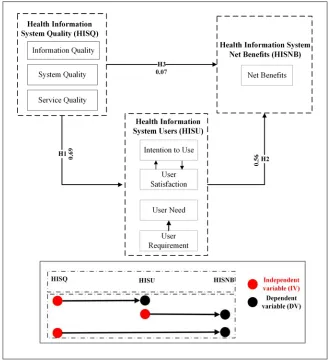
In general, the research framework is evaluated using Structural equation framework ling (SEM). SEM is an appropriate analysis method. It has been also used widely for testing and validating research frameworks in HIS. [63] Stated that any proposed framework should be substantively meaningful and statistically well fitting. Therefore, we used the chi-square test to measure the adequacy of a hypothesized framework in terms of whether it can reflect variance and covariance of the data. Such test is sensitive to sample size, and therefore, the value of x2 to its degree-of-freedom (x2 / df) should be less than 3. This is an indicative of the acceptable fit between the proposed framework and the sample data [64]. Following the value suggested by the same researcher, we examined various common goodness-of-fits measures for the purpose of testing the overall framework fit; comparative fit index (CFI), incremental fit index (IFI), and root mean square error of approximation (RMSEA) which were computed to validate the framework. The CFI and IFI value is suggested to be more than 0.9; and the acceptable value for RMSEA is less than 0.08. Thus, the measures of fit mentioned under the framework in Figure 3 revealed that the framework fits the data well,x2 / df< 3, CFI and IFI > 0.9 and RMSEA < 0.08. Table 3 illustrates that all measures of goodness of fit fall within the
recommended values and the framework has a good fit with the data.
Table 3: The Measures of Framework Fitness
Fit
Measure Recommended Value Measure Fitness Conclusion
X2 /df <3.0 1.908 Acceptable
CFI >0.90 0.929 Acceptable
IFI >0.90 0.929 Acceptable
RMSEA <0.08 0.071 Acceptable
[image:10.612.311.525.425.499.2]2946
Table 4: The Results Of Hypotheses Testing
Path Estimate S.E. C.R. P Conclusion
HISU. <--- HISQ. .307 .050 6.105 *** Significant
HISNB. <--- HISQ. .066 .076 .858 .391 Insignificant
HISNB. <--- HISU. 1.103 .218 5.058 *** Significant
Note: HISU health information system user, HISQ health information system quality, HISNB health information system net benefit.
6.3 The Framework User Requirements Success of the HIS in Sana’a Yemen. To study the influence of the investigated factors on users intention to success of IS in HIS in Yemen, this subsection discusses the main determinants of IS success. Concerning the results gained from the quantitative data analysis in this research, the HISQ is the strongest independent variables (IV) predictor of dependent variables (DV) of HISU. These constructs measure the user’s ability and third self-confidence to use such IS. Therefore, it is important to organize training practice programs to facilitate solving emergent problems that may lead to building self-confidence among users in HIS and increasing their abilities when performing their specific tasks. High computer HISQ may lead to a higher level of success rate. The result seems consistent to those obtained by prior studies showing that HISQ plays a key role in the acceptance and usage of technology [65].
In addition, inconsistent with the study conducted by Holtz [66], the dimension IV of HISU is the strongest and most significant DV predictor of HISNB as shown by its significant impact on success. However, it is not the most predictor on the HISNB. The influence of HISU on the success of IS suggests that the HISNB is related to the system user, which must be clearly identified.
Moreover, in this dimension, independent variables (HISQ) have a significant relation to the HIQNB to success of HIS. Therefore, it is important to recognize users who can strongly influence others into accelerating and facilitating the implementation process. This result is in agreement with results of previous research [67, 68] which show that this factor has the strongest relationship with user requirements success HIS.
Finally, framework user requirements success of the HIS was developed. By applying SEM, the developed framework was validated, and its dimensionality was achieved by testing the factor loading and correction value of the exogenous variable. The validation of the framework was
accomplished through construct validity and goodness of fit recommended by the researchers. The structure and links between the framework factors were also conceptualized based on an understanding of the success framework of HIS and its outcome and therefore, this required testing to confirm their appropriateness and validity (Figure4).
7. FINDINGS AND DISCUSSIONS
The results of this study have implications for research aiming at developing or promoting HIS success in Yemen. Although the strengthening of the success of HIS for development at community level, health facility, district, province, and national levels, it has been recognized that the success of HIS of Yemen as one of the developing counties is still in its infancy and has not been studied widely. As stated by Al-Ghaithi [69], robust HIS is vital to successful HIS program implementation. This study takes into consideration the influence of user requirements factors and it is among few studies if it is not the first study that deals with the success of HIS at provincial level in Yemen.
2947 such system and facilitation system difficulties. This research has significant implications for managers and their users in hospitals. Managers need to consider the factors that could promote the use of on HIS in Sana’a Yemen HIS. Understanding the influence of these factors on the success can help in developing and accelerating the implementation process of in the HIS of the country.
The findings of such research can be regarded as fundamental for future strategies in achieving the desired success of the HIS of Yemen where user requirements are still poor. This means that a plan
[image:12.612.141.470.282.643.2]for successful investment in this area can be gained through investigating these factors that impact employees of HIS. In addition, there are a few studies that investigated the user requirement factors through success frameworks in the HIS of developing countries such as Yemen.
2948
8. RELATED WORK
Yemen is considered a least producing country in the eastern. Its weak HIS is unable to generate quality details that is required in regular basis for promoting the use of details to boost performance in handling efficiency programs [69]. According to Al Serouri, et al. [70], the data provided by HIS is poor. Despite the directions towards the development and improvement of healthcare, Yemen is ranked poorly in all central factors of health access and services [71].
A recent evaluation of the HIS in Yemen has been performed out by the Ministry of Public
Health and Population (MOPHP) in
synchronization with the Civil Registration Department of Ministry of Interior, Central Statistical Organization, the World Bank, Health Metrics Network (HMN), and other main stakeholders [69]. The results of the assessment showed that Yemen still faces a major challenge in HIS development. The MOPHPs administrators, like other countries administrators, believe that health information technology will not only
enhance effective health information for
administration but also improve health care delivery and public health service. Several levels related to HIS such as medical canter details program are being organized and developed using IT to support the worldwide medical care system. Training from past major wellness IT execution venture in the country recommend that user’s acceptance of technology is one of the main factors of the tasks success. The understanding of how people who work in HIS agree to and use wellness IT, their basic IT information, details users’ specifications and factors that impact their IT developed and use do not only help HIS designs but also allows an efficient implementation and evaluation of the processes.
Generally, Yemen is one of the developing countries in which the HIS almost reflects similar characteristics of other HISs found in other developing countries with the same circumstances. During the last decade, enormous investment was spent in the HIS health sector in Yemen, but in scrappy manner [72]. Unfortunately, although many
Yemeni health sectors have implemented
fragmented IS; these systems are not well accepted by the health sectors staff. The fragmentation of HIS is widely happening while creating countries [73]. This fragmented nature of the various sub-systems has the potential of restricting the capability to create a completely integrated HIS to
provide comprehensive information on relevant health care measures [74]. In Yemen, the high fragmentation and inefficiency of HIS are due to the
uncoordinated financial commitment, and
inadequate information quality, primarily due to the deficiency of knowledge of the information value [69].
Moreover, Yemen’s health planning is still based on the traditional normative rather than strategic planning even after information has been made ready for use [75]. The authors added that it is necessary to enhance user requirements among health workers so that they value information and its use. According to the WHO, the information is not yet considered as users in Yemen as reported by the regional Health System Observatory World Health Organization and Metrics Health Network of World Health Organization. The private sector also offers some servicing solutions, especially for equipment used in radiology and intense care. Still,
getting insufficient to fulfilled current
specifications. Additionally, regarding the health industry is not adequate because it is not clear and the inner and exterior interaction and information return are not fully institutionalized. Therefore, the current study focused on identifying which factors that influence the Yemeni healthcare staff intention to perspective the user requirements to IS.
9. LIMITATIONS AND ASSUMPTION
This study like other studies has some constraints and limitations and assumption related to the interpretation of the results. The present study was designed based on the extensive literature and the sample size within the reasonable limits from seven hospitals in Sana’a Yemen. Although the perceived results were obtained, there are still some constraints and limitations and assumption in the current study.
2949 obtained in this research were collected from one type of HIS named hospitals in one province in Sana’a Yemen. Consequently, the findings may not have covered all types and levels of HIS. Finally, the instruments for collecting the data were limited to the survey distributed to the respondents conducted among specific managers who are information rich other quantitative method such as documentation that may enrich the data was not used in this research since the investigated area is complex and wide. In Yemen, more research with health user at different levels such as health units, health centers, dispensaries, health office in the province and top health authority should offer a clear picture of HIS of each provinces. Obtaining a clear picture of each province may even lead to accurately capturing the success of HIS at the national level. This research can be a basis for future research in several level sector of the country in investigating the barriers and enablers of the success of HIS in this population.
10. FUTURE WORK
Although the research reported in this paper outlines some worthy contributions to both theory and practice, a number of avenues exist for future work in order to enhance the results and extend their implications as follows:
First, there is a need to investigate other factors that influence the user requirements and techniques selection during requirements elicitation, which has not been discovered during this study. To do this, other methods could be users in future studies such as the observation and case study. Second, with respect to the empirical evidence to support the framework, more experiments in different domains such as education, ministry and telecommunication may be conducted. In this way, the framework could be further refined. Third, the prototype of user requirements and techniques selection for
requirements could be further improved using a fuzzy logic approach as in an expert system. Fourth, the sample of the study was collected from the HIS employees. However, future research can explore the influence of investigated factors among the private sector employees since both public and private sectors provide healthcare services. Finally, based on the findings from the quantitative analysis, external environmental factors such as patient's user requirements and internal environmental factors such as user’s commitment toward information and motivation from top management are among the main barriers that influence the success process in the healthcare context, and therefore, it can be suggested for further studies to include such factors surrounding the user requirements and user needs.
11. CONCLUSIONS
The aim of the study was to investigate the impact of user requirement factor on HISs in Yemen. To achieve this, 250 questionnaire were distributed among seven hospitals in Sana’a, Yemen. Consequently, the data collected was used to evaluate the proposed framework. The validation and analysis of the improved framework were conducted using SPSS.VS.22.0 and AMOSVS.22. The results revealed a direct relationships among the investigated factors, namely: system quality, service quality, and information quality, intention to use, user satisfaction, user needs, user requirements and net benefits. Hence, it confirms the impact of user requirements and user needs on HISNB. The values of the goodness of fit indices of the framework goes in harmony with the recommended ones, hence, it proves the reliability of the framework. This study can be extended by
examining more factors impacting user
requirements and user need in Yemen.
REFERENCES:
[1] M. Ahmad, A. U. Rajapaksha, J. E. Lim,
M. Zhang, N. Bolan, D. Mohan, et al.,
"Biochar as a sorbent for contaminant management in soil and water: a review,"
Chemosphere, vol. 99, pp. 19-33, 2014.
[2] Q.-A. Kester, L. Nana, A. C. Pascu, S.
Gire, J. M. Eghan, and N. N. Quaynor, "A Cryptographic Technique for Security of Medical Images in Health Information
Systems," Procedia Computer Science,
vol. 58, pp. 538-543, 2015.
[3] S. Kitsiou, V. Manthou, M. Vlachopoulou,
and A. Markos, "Adoption and
sophistication of clinical information
systems in Greek public hospitals: Results
from a national web-based survey," in XII
Mediterranean Conference on Medical and Biological Engineering and
Computing 2010, 2010, pp. 1011-1016.
[4] J. Adler-Milstein and D. W. Bates,
"Paperless healthcare: Progress and challenges of an IT-enabled healthcare
system," Business Horizons, vol. 53, pp.
119-130, 2010.
[5] G. B. Cline and J. M. Luiz, "Information
technology systems in public sector health facilities in developing countries: the case
2950
informatics and decision making, vol. 13,
p. 13, 2013.
[6] A. V. Parwani, Pathology Informatics, An
Issue of the Clinics in Laboratory
Medicine vol. 36: Elsevier Health
Sciences, 2016.
[7] D. F. Sittig and H. Singh, "A new
socio-technical model for studying health information technology in complex
adaptive healthcare systems," in Cognitive
Informatics for Biomedicine, ed: Springer,
2015, pp. 59-80.
[8] G. B. Cline and J. M. Luiz, "Information
technology systems in public sector health facilities in developing countries: the case
of South Africa," BMC medical
informatics and decision making, vol. 13,
p. 1, 2013.
[9] D. Lewis, N. Hodge, D. Gamage, and M.
Whittaker, "Understanding the role of technology in health information systems,"
Pacific health dialog, vol. 18, pp. 144-54,
2012.
[10] S. R. Isabalija, K. G. Mayoka, A. S.
Rwashana, and V. W. Mbarika, "Factors affecting adoption, implementation and sustainability of telemedicine information
systems in Uganda," Journal of Health
Informatics in Developing Countries, vol.
5, 2011.
[11] A. Mukred, D. Singh, and N. Safie, "A
review on the impact of information culture on the adoption of health
information system in developing
countries," Journal of Computer Science,
vol. 9, p. 128, 2013.
[12] D. Estrin and I. Sim, "Open mHealth
architecture: an engine for health care
innovation," Science, vol. 330, pp.
759-760, 2010.
[13] I. Amin, S. Hussein, W. Rahim, and W.
Isa, "Assessing User Satisfaction of Using Hospital Information System (His) in
Malaysia Essay," in International
Conference on Social Science and
Humanity IPEDR, 2011.
[14] A. Ismail, A. T. Jamil, A. Fareed, A.
Rahman, J. Madihah, A. Bakar, et al.,
"The implementation of Hospital
Information System (HIS) in tertiary hospitals in malaysia: a qualitative study," 2012.
[15] Grossmann, W. Alexander Goolsby,
LeighAnne Olsen, and a. J. M. McGinnis,
"Engineering a learning healthcare
system," pp. look at the future: Workshop summary. Washington, DC: The National Academies Press
2011.
[16] A. Mukred, D. Singh, and N. Safie,
"Investigating the impact of information culture on the adoption of information system in public health sector of
developing countries," International
Journal of Business Information Systems,
vol. 24, pp. 261-284, 2017.
[17] M. Maguire and N. Bevan, "User
requirements analysis," in Usability, ed:
Springer, 2002, pp. 133-148.
[18] L. Teixeira, C. Ferreira, and B. S. Santos,
"User-centered requirements engineering in health information systems: a study in
the hemophilia field," Computer methods
and programs in biomedicine, vol. 106,
pp. 160-174, 2012.
[19] A. Ismail, A. T. Jamil, A. F. A. Rahman, J.
M. A. Bakar, N. M. Saad, and H. Saadi,
"The implementation of Hospital
Information System (HIS) in tertiary hospitals in malaysia: a qualitative study,"
Malaysian Journal of Public Health
Medicine, vol. 10, pp. 16-24, 2010.
[20] S. Hayajneh and A. A. Zaghloul, "Barriers
to the adoption of health information technology in Arab countries’ hospitals:
practitioners’ perspective," in 24th
International Conference of the European Federation for Medical Informatics Quality of Life through Quality of
Information–MIE2012, 2012.
[21] C. Lin, I.-C. Lin, and J. Roan, "Barriers to
physicians’ adoption of healthcare
information technology: an empirical
study on multiple hospitals," Journal of
medical systems, vol. 36, pp. 1965-1977,
2012.
[22] P. Nambisan, G. L. Kreps, and S. Polit,
"Understanding electronic medical record
adoption in the United States:
communication and sociocultural
perspectives," Interactive journal of
medical research, vol. 2, 2013.
[23] J. Karuri, P. Waiganjo, O. Daniel, and A.
Manya, "DHIS2: The tool to improve health data demand and use in Kenya,"
Journal of Health Informatics in
Developing Countries, vol. 8, 2014.
[24] P. Palvia, K. Lowe, H. Nemati, and T.
2951
perspectives," Information Technology,
vol. 5, pp. 1-2012, 2012.
[25] P. Nambisan, G. L. Kreps, and S. Polit,
"Understanding electronic medical record
adoption in the United States:
communication and sociocultural
perspectives," Interactive Journal of
Medical Research, vol. 2, p. e5, 2013.
[26] W. H. Delone and E. R. McLean, "The
DeLone and McLean model of
information systems success: a ten-year
update," Journal of management
information systems, vol. 19, pp. 9-30,
2003.
[27] A. R. Ahlan and B. I. e. Ahmad, "User
Acceptance of Health Information
Technology (HIT) in Developing
Countries: A Conceptual Model,"
Procedia Technology, vol. 16, pp.
1287-1296, 2014.
[28] T. B. Westh, M. Z. Hauschild, M. Birkved,
M. S. Jørgensen, R. K. Rosenbaum, and P. Fantke, "The USEtox story: a survey of model developer visions and user
requirements," The International Journal
of Life Cycle Assessment, vol. 20, pp.
299-310, 2015.
[29] W. H. Delone and E. R. Mclean,
"Measuring e-commerce success:
Applying the DeLone & McLean information systems success model,"
International Journal of Electronic
Commerce, vol. 9, pp. 31-47, 2004.
[30] S. Petter, W. DeLone, and E. McLean,
"Measuring information systems success: models, dimensions, measures, and
interrelationships," European journal of
information systems, vol. 17, pp. 236-263,
2008.
[31] Z. Gen-Liang, "Consumer acceptance of
Internet as a channel of distribution,"
Journal of Business and Management
Research, vol. 1, pp. 20-27, 2012.
[32] L. Sook-Ling, M. A. Ismail, and Y.
Yee-Yen, "Information infrastructure capability and organisational competitive advantage:
Framework," International Journal of
Operations & Production Management,
vol. 35, pp. 1032-1055, 2015.
[33] A. B. Ameen and K. Ahmad, "A
CONCEPTUAL FRAMEWORK OF
FINANCIAL INFORMATION
SYSTEMS TO REDUCE
CORRUPTION," Journal of Theoretical
& Applied Information Technology, vol.
54, 2013.
[34] M. M. Yusof, L. Stergioulas, and J. Zugic,
"Health information systems adoption: findings from a systematic review,"
Studies in health technology and
informatics, vol. 129, p. 262, 2007.
[35] N. Gorla and T. M. Somers, "The impact
of IT outsourcing on information systems success," Information & Management, vol.
51, pp. 320-335, 2014.
[36] D. Schniederjans and S. Yadav,
"Successful ERP implementation: an
integrative model," Business Process
Management Journal, vol. 19, pp.
364-398, 2013.
[37] R. Surman and P. A. Bath, "An assessment
of the quality of information on stroke and speech and language difficulty web sites,"
Journal of Information Science, vol. 39,
pp. 113-125, 2013.
[38] I. Elpez and D. Fink, "Information systems
success in the public sector: Stakeholders’ perspectives and emerging alignment
model," Issues in Informing Science and
Information Technology, vol. 3, pp.
219-231, 2006.
[39] M. M. Yusof, J. Kuljis, A.
Papazafeiropoulou, and L. K. Stergioulas, "An evaluation framework for Health Information Systems: human, organization and technology-fit factors (HOT-fit),"
International journal of medical
informatics, vol. 77, pp. 386-398, 2008.
[40] N. Gorla, T. M. Somers, and B. Wong,
"Organizational impact of system quality, information quality, and service quality,"
The Journal of Strategic Information
Systems, vol. 19, pp. 207-228, 2010.
[41] K. Wiegers, More about software
requirements: thorny issues and practical
advice: Microsoft Press, 2005.
[42] R. Schmidt, K. Lyytinen, and P. C. Mark
Keil, "Identifying software project risks:
An international Delphi study," Journal of
management information systems, vol. 17,
pp. 5-36, 2001.
[43] A. M. Hickey and A. M. Davis, "A unified
model of requirements elicitation,"
Journal of Management Information
Systems, vol. 20, pp. 65-84, 2004.
[44] M. Ahmad, N. Belloir, and J.-M. Bruel,
"Modeling and Verification of Functional and Non-Functional Requirements of
2952
of Systems and Software, vol. 107, pp.
50-70, 2015.
[45] C. Bo, M. Xiang-Wu, and C. Jun-Liang,
"An adaptive user requirements elicitation
framework," in Computer Software and
Applications Conference, 2007. COMPSAC 2007. 31st Annual
International, 2007, pp. 501-502.
[46] N. Maiden, "User requirements and system
requirements," IEEE Software, vol. 25, pp.
90-91, 2008.
[47] B. H. Cheng and J. M. Atlee, "Research
directions in requirements engineering," in
2007 Future of Software Engineering,
2007, pp. 285-303.
[48] F. Anwar and R. Razali, "A practical
guideline of selecting stakeholders for
requirements elicitation-an empirical
study," Int. J. Softw. Eng. Appl, vol. 9, pp.
95-106, 2015.
[49] D. Leffingwell, Managing software
requirements: a use case approach:
Pearson Education India, 2003.
[50] J. M. Moore and F. M. Shipman, "A
comparison of questionnaire-based and GUI-based requirements gathering," in
Automated Software Engineering, 2000. Proceedings ASE 2000. The Fifteenth
IEEE International Conference on, 2000,
pp. 35-43.
[51] S. Robertson and J. Robertson, Mastering
the requirements process: Getting
requirements right: Addison-wesley, 2012.
[52] R. Razali and F. Anwar, "Selecting the
right stakeholders for requirements elicitation: a systematic approach,"
Journal of Theoretical and Applied
Information Technology, vol. 33, pp.
250-257, 2011.
[53] J. Coughlan, M. Lycett, and R. D.
Macredie, "Communication issues in requirements elicitation: a content analysis
of stakeholder experiences," Information
and Software Technology, vol. 45, pp.
525-537, 2003.
[54] C. R. Coulin, "A situational approach and
intelligent tool for collaborative
requirements elicitation," Université
Toulouse III-Paul Sabatier, 2007.
[55] P. A. Laplante, Requirements engineering
for software and systems: CRC Press,
2013.
[56] R. France and B. Rumpe, "Model-driven
development of complex software: A
research roadmap," in 2007 Future of
Software Engineering, 2007, pp. 37-54.
[57] G. A. Churchill Jr, "A paradigm for
developing better measures of marketing
constructs," Journal of marketing
research, pp. 64-73, 1979.
[58] S. M. Ahmed, M. S. Zakaria, and M. A. H.
Altemimi, "CSFs of Electronic
Information Sharing in Iraqi SMEs,"
Journal of Engineering and Applied
Sciences, vol. 11, pp. 1846-1850, 2016.
[59] S. M. Ahmed, A. M. Pasikhani, M. S.
Zakaria, and H. Ibrahim, "What are
electronic information sharing and
integration critical success factors that influence the participation in SMEs?,"
Journal of Engineering and Applied
Sciences, vol. 12, pp. 4234-4240, 2017.
[60] R. B. Alreck P. L. S., Ed, "The survey
research handbook," lllinois, Irwin, 1985.
[61] U. Sekaran, Research methods for
business: A skill-building approach: John
Wiley & Sons, 2000.
[62] B. M. Byrne, "Structural equation
modeling with AMOS: Basic concepts, applications, and programming Ed.2nd," ed: New York/London: Routledge, 2010.
[63] J. F. Hair, "Black, WC, Babin, BJ, &
Anderson, RE (2010)," Multivariate data
analysis, vol. 7, 2010.
[64] J. F. Hair, W. C. Black, B. J. Babin, and R.
E. Anderson, "Canonical correlation: A supplement to multivariate data analysis,"
Multivariate data analysis: a global perspective. 7th edn. Pearson Prentice Hall Publishing, Upper Saddle River,
2010.
[65] M. W. Browne and R. Cudeck,
"Alternative ways of assessing model fit,"
Sage focus editions, vol. 154, pp. 136-136,
1993.
[66] B. E. Holtz, An examination of the
adoption of electronic medical records by rural hospital nurses through the unified theory of acceptance and use of
technology lens: Michigan State
University, 2010.
[67] W. Alrawabdeh, A. Salloum, and J.
Mingers, "Key Factors in Fluencing the
Diffusion of Information and
Communication Technology (ICT) in the Arab World. A Comparative Study,"
Europe, vol. 6, p. 28.5, 2012.
[68] B. Gupta, S. Dasgupta, and A. Gupta,
2953 organization in a developing country: An
empirical study," The Journal of Strategic
Information Systems, vol. 17, pp. 140-154,
2008.
[69] A. J. Al-Ghaithi, Al-Gohaly, F., Sheikh,
R., Taha, A. F., Alkumaim, G., Talab,A. A. & Alwageeh, A. S, "Republic of Yemen and Health Metrics Network. Health Information system Assessment
Report. ," The Ministry of Public Health
and Population, Sana’a Yemen, p. 45,
2009.
[70] A. Al Serouri, J. Øvretveit, A. A.
Al-Mudhwahi, and M. Y. Al-Gonaid, "Strengthening Health Systems in Yemen: Review of Evidence and Implications for
Effective Actions for the Poor," in Health
Management-Different Approaches and
Solutions, ed: InTech, 2011.
[71] Y. M. Karfaa, S. Yussof, and M. E. B.
Rusli, "Inspirations of Management Information Systems towards Decision– Making, Collaboration, Communication, and Enhancing the Status of Healthcare:
for Entities of Various Levels,"
International Journal of Scientific and
Research Publications, vol. 5, p. 110,
2015.
[72] S. S. Saleh, M. S. Alameddine, N. M.
Natafgi, A. Mataria, B. Sabri, J. Nasher, et
al., "The path towards universal health
coverage in the Arab uprising countries
Tunisia, Egypt, Libya, and Yemen," The
Lancet, vol. 383, pp. 368-381, 2014.
[73] C. AbouZahr and T. Boerma, "Health
information systems: the foundations of
public health," Bulletin of the World
Health Organization, vol. 83, pp. 578-583,
2005.
[74] P. Matshidze and L. Hanmer, "Health
information systems in the private health
sector," South African Health Review, pp.
89-102, 2007.
[75] A. F. Lafond, R. , "The prism:
Introduction an analytical framework for understanding performance of routine Health Information System in Developing
countries.," A workshop on Enhancing the
Quality and User of Health Information at the District Level Eastern Cape Province,
![Figure 1: Revised DeLone and McLean is success model. Source: Delone and McLean [26]](https://thumb-us.123doks.com/thumbv2/123dok_us/8903579.955863/3.612.91.528.42.293/figure-revised-delone-mclean-success-source-delone-mclean.webp)
![Figure 3: The Phases of Requirements Analysis Source: [41]](https://thumb-us.123doks.com/thumbv2/123dok_us/8903579.955863/6.612.95.520.61.334/figure-phases-requirements-analysis-source.webp)