Simulation Result’s for Collabrative Caching Zonal
Routing Protocol (CCZRP) for Mobile Adhoc Network: A
Research Paper
Vivek M Gulhane
Assistant Professor and Head of Dept. of Inf. Technology,
Dr. Sau. K.G.I.E.T, Darapur,India
D. N. Chaudhari,
Ph.D.Professor and Head of Dept. of Comp. Science and Engineering,
J.D.I.E.T, Yevatmal,
ABSTRACT
In understanding of how individual quality patterns form and impact the social network is proscribed, however it is important for a deeper understanding of network dynamics and evolution. This question is basically unknown, partly, as a result of the issue in getting large-scale society-wide information that at the same time capture the high-powered info on individual movements and social interactions. Human quality patterns are complicated and distinct from one person to another. Nonetheless, actuated by tremendous potential advantages of modeling such patterns in sanctioning new mobile services and technologies, researchers have tried to capture salient characteristics of human quality. during this implementation paper discuss various routing protocols used for human quality model i.e. DSR, AODV, CHAMP and try to project a protocol for human quality model i.e. CCZRP (Collaborative Caching with Zonal Routing Protocol). Within the projected protocol use human quality model on CCZRP, CHAMP and DSR simulated on NS2 software system and compare them using different parameters.
Keywords
Human mobility, Link Prediction Routing, Parameters of Human Mobility, Social Network, CCZRP Routing Protocol
1.
INTRODUCTION
Human quality is expounded to the elemental drawback in earth science and spacial economic science of the placement of activities and their spacial distribution. a vital example is traffic systems: Analyzing large quantity of quality information, one purpose is to check and model traffic flow in road networks and public transportation networks. Another purpose is to be ready to predict the flow among these networks and probably to predict the long run position of a moving object (individual or a vehicle). Human quality may be a key, consider spreading of infectious diseases. These diseases transmit between humans in shut proximity transmission space and contaminate the population as a result of folks travel and move. It’s been shown that, human quality exhibit a group of scaling relations and applied math regularities. Thus, the studies on however the topological options of traffic networks are often incorporated in models for sickness dynamics became attention-grabbing. it's been determined that the means topology is translated into dynamics will have a profound impact on the sickness dynamics. At a worldwide level for instance, the spreading of infectious diseases like the u is - additionally to seasonal effects mostly controlled by aviation patterns.
Qualitative statistics of human mobility is vital for the industrial application like Geo-Marketing.. Finding the recent spot to position your packaging depends on the quantity of individuals probing location and so implies to understand the
flows, or a minimum of the dominant flows of people within the space into account.
Social networks have generated explicit interest in several researchers recently, owing to their crucial role in varied applications [1] [2]. Knowing the flows of people from one purpose to the opposite in a very town or a rustic provides U.S.A. with helpful data for modeling Human quality behaviors and characteristics that may be used from totally different aspects. resolute by the recent interest of analysis during this space, the foremost of labor has centered on the social house solely, effort a very important question of to what specifically a personal quality patterns form and impact the social network, mostly unknown. Indeed, social links are usually driven by abstraction proximity, from job- and family-imposed programs to joint involvement in varied social activities [3]. These face-to-face interactions and shared social foci, delineated as overlap in individuals\' trajectories, are expected to own important impact on the structure of social networks, from the upkeep of durable friendships to the formation of recent links.
Delay Tolerant Networks (DTN) [4] [5] are the category of wireless networks that has attracted raft of interest from the networking community recently. These networks are sometimes thin and also the affiliation between their nodes changes often. Moreover, it\'s sometimes unattainable to search out a path from supply to destination at any time instance, so long and variable delays occur in routing of messages. Among several real world samples of DTNs, mobile social networks (MSN) are of growing significance as a results of the fast and wide unfold usage of assorted wireless devices (e.g., cell phones, GPS devices) among folks and their surroundings.
2.
RELATED WORK
In this section, a tendency to review 3 classes of connected work: studies on human quality patterns, link prediction in social networks, and interaction between physical area and network structure.
2.1
Human Quality
In the past few years, the provision of large-scale datasets, like mobile-phone records and global-positioning-system (GPS) knowledge, has offered researchers from varied disciplines access to careful patterns of human behavior, greatly enhancing our understanding of human quality.
chance to re-visit previous locations, by mistreatment itinerant knowledge of 100; 000 people.
Song et al. [8] then projected a statistically consistent microscopic model for individual quality. Researchers have conjointly found individuals' daily routines square measure extremely predictable, by mistreatment principal part analysis [9] and measure quality entropy [10].
The biggest necessities of human quality models square measure from the sphere of MANET(Mobile Ad-hoc Network) for the performance prediction and simulation purpose. Therefore there are the sturdy necessities of realistic human quality model by varied fields of researchers. one amongst the resent analysis lead to a field of advanced system physics shows that up to ninety three of human quality patterns will be foreseen [13]. With the wide use of mobile devices with positioning system like sensible Phones or Navigation System, we will collect additional data for human quality pattern in terribly high preciseness.
According to Basol [30], the worth of quality reaches so much on the far side mere geographical movement of humans, however provides a whole new mind- assail human interactions that may well be thought-about from abstraction, temporal, and discourse aspects. Completely different dimensions of Human quality even have been mentioned in Kakihara and Sorensen's study [6]. They need mentioned the Importance of "being mobile" not even as a matter of individuals traveling however, associated with the move ion they perform the manner during which they interact with one another in their social lives. Considering this importance, they need dilated the construct of quality by gazing 3 distinct dimensions; specifically, spatial, temporal and discourse quality.
From data processing perspective, there are variety of studies mining frequent patterns on human movements. General approaches square measure supported frequent patterns and association rules, and build prophetic models for future locations. to call a couple of, Morzy used a changed version of Apriori [11] and Prefixspan [12] algorithms to come up with association rules. Jeung et al. [13] developed a hybrid approach by combining predefined motion functions with the movement patterns of the thing, extracted by a changed version of the Apriori algorithmic program. Yavas et al. [14] have foreseen user movements during a mobile ADPS. What is more, Giannotti et al. [15] developed flight pattern mining, and applied it to predict consecutive location at a definite level of accuracy by mistreatment GPS knowledge [16].
2.2
Link Prediction in Social Networking
Link prediction has attracted a lot of interest in recent years once the seminal work of Liben-Nowell and Kleinberg [17]. it's a big challenge in machine learning because of the inherent extreme disparity of positive and negative cases. Existing approaches have targeted on shaping numerous proximity measures on constellation, to function predictors of latest links in each supervised [18] and unattended [17] frameworks. Most of the empirical analyses ar supported co-authorship networks, and also the domain dependent options developed in bound studies (see, e.g., [18]) are tailored to the present specific knowledge set. The supervised superior link prediction methodology HPLP in [20] [19] has additionally been applied to an oversized phone dataset, exploitation solely network proximity measures.
The fundamental distinction of our study from this literature is that we have a tendency to specialize in the impact of human quality, associate degree intrinsic property of human behavior,
on link prediction. Indeed, this designed a broad vary of mobile homophily measures and explored their power in predicting new links. Our analysis is orthogonal to the higher than line of analysis, within the sense that any general link prediction methodology will be employed in combination with our quality options, e.g., the machine learning techniques for very unbalanced categories.
2.3
Interaction between physical area and
network
Although it's normally tough to get knowledge that contain at the same time the geographical and network info, there are many fascinating tries to assess the interaction between the 2. as an example, there's empirical proof [21] showing that the chance of forming a social tie decays with distance as an influence law. supported this reality, Backstrom, et al. [22] introduced associate degree rule that predicts the situation of a private. many recent studies targeted either on tiny populations of volunteers, whose whereabouts and social ties were monitored at fine detail exploitation ad-hoc smart-phone applications [23] and location-sharing services [24], or on massive however specific on-line communities like Flicker. though none of those knowledge might offer a society-wide image of either social interactions or individuals' daily routines, these studies so indicate that the robust correlation between physical area and network structures emerges in several numerous settings.
3.
ROUTING PROTOCOLS
3.1
AODV Protocol
AODV is that the Ad-hoc on Demand Vector protocol. AODV may be a relative of the Bellman-Ford distant vector rule, however is tailored to figure in an exceedingly mobile surroundings. AODV determines a route to a destination only if a node desires to send a packet to it destination. Routes are maintained as long as they're required by the supply. Sequence numbers make sure the freshness of routes and guarantee the loop-free routing.
AODV is an on-demand routing protocol as delineate in [26]. in an exceedingly human quality victimization AODV routing, a supply node needs to initiate a route discovery mechanism, on every occasion knowledge is prepared to be transmitted. The AODV route discovery method consists of flooding the network with a Route Request (RREQ) packet to be received by the meant destination node. The destination node then, sends a uncast Route Reply (RREP) to the supply node so establishing a route between the 2 nodes for knowledge transmission. This method adds delay towards end-to-end knowledge delivery. However, on the opposite hand, AODV provides a contemporary route for knowledge delivery as against sporadically pre-established routes.
3.1.1 Disadvantages:
1) AODV protocol is that intermediate nodes will cause inconsistent routes if the supply sequence variety is incredibly previous and also the intermediate nodes have the next however not the newest destination sequence variety, thereby having stale entries. Also, multiple Route Reply packets in response to one Route Request packet will cause serious management overhead.
3.2
DSR Protocols
DSR is that the Dynamic supply Routing Protocol. DSR may be a straightforward and economical routing protocol designed specifically to be used in multi-hop networks. The sender is aware of the whole hop by hop route to the destination. These routes ar hold on in an exceedingly route cache. This protocol is of 2 mechanisms, route Discovery and route maintenance that work along to permit nodes to get and maintain routes to whimsical destinations within the network.
The advantage of this protocol is that routes ar maintained solely between nodes that require to speak, Route caching will additional scale back route discovery overhead, and one route discovery might yield several routes to the destination, thanks to intermediate nodes replying from native caches.
3.2.1 Disadvantages:
1) The route maintenance mechanism doesn't regionally repair a broken link.
2) Stale route cache data may additionally end in inconsistencies throughout the route reconstruction part.
3) The association setup delay is over in table-driven protocols. Even if the protocol performs well in static and low-mobility environments, the performance degrades quickly with increasing quality.
4) Sizeable routing overhead is concerned thanks to the source-routing mechanism utilized in DSR. This source-routing overhead is directly proportional to the trail length.
3.3
CHAMP Protocol
CHAMP is that the Caching and Multipath routing Protocol. CHAMP operates in an exceedingly reactive or event-driven fashion, execution only if a packet is received or when a forwarding failure is detected. Its execution is often logically divided into 2 phases, specifically route discovery and route maintenance. A route discovery part is initiated once a node searches for routes to a destination. A route maintenance part is dead in reaction to network topological changes that have an effect on active routes.
In CHAMP, knowledge packets are known by the supply symbol and a source-affixed sequence variety. Each knowledge packet additionally contains the symbol of the previous hop in its header, serving as a “pointer” to the upstream node that cached an equivalent packet.
Marina and Das [27] projected a multipath extension of AODV known as AOMDV. It uses the notion of associate “advertised hop count” to take care of multiple loop-free ways. This approach additionally lends some similarities to CHAMP’s route discovery procedure. Simulation results show that AOMDV outperforms AODV by the maximum amount as five-hitter in terms of packet delivery, [*fr1] the delay and 2 hundredth less routing overhead. Clearly, CHAMP shows considerably higher performance than AOMDV. Whereas CHAMP discovers non-disjoint multipath routes, AOMDV ensures the invention of link-disjoint routes. A recent study has shown that non-disjoint multipath routes are additional resilient and energy-efficient than disjoint routes.
Nodes suppose knowledge packet acknowledgment provided by the link layer to see the state of a link. Since packets are forwarded in an exceedingly round-robin fashion, all links are sporadically invigorated. Route maintenance happens only if a node “ i “ loses all its active routes to some destination ” j “ when an information forwarding failure.
3.4
CCZRP Routing Protocol
Collaborative Caching with Zonal Routing Protocol is that the combination of agglomeration and zonal routing protocol. Agglomeration may be a sensible methodology in wireless networks for effective electronic communication and towards energy potency [34]. It involves grouping of sensing element nodes together; in order that nodes communicate their perceived knowledge to the CHs. CHs transmit, combination and collect the mass knowledge to the process centre known as base station for additional analysis [35]. Agglomeration provides re-source utilization and minimizes energy consumption in wireless network by reducing the amount of sensing element nodes that participate in long distance transmission [36] [37]. Cluster primarily based operation consists of multiple rounds. These involve cluster formation, cluster heads choice and transmission of information to the bottom station.
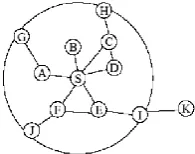
[image:3.595.383.481.399.476.2]ZRP [6] may be a framework by victimization it and able to cash in of each table driven and on demand driven protocol consistent with the applying. during this separation of nodes, native neighborhood from the worldwide topology of the complete network permits for applying totally different approaches and so taking advantage of every technique’s options for a given scenario. These native neighborhoods ar known as zones (hence the name) every node could also be inside multiple overlapping zones, and every zone could also be of a special size. The “size” of a zone isn't determined by geographical measure, in concert would possibly expect, however is given by a radius of length α wherever α is that the variety of hops to the perimeter of the zone.
Fig 1: ZRP having Zone radius α =2
In the higher than diagram ZRP, protocol having Zone radius two during this within the zone communication wiped out proactive manner and out of doors it between such zones in reactive manner. A, E, F, H, J, C ar interior node and D, G, I, k are border nodes communication between B and K is finished through proactive manner and L is found outside the zone. In CCZRP routing protocol initial the agglomeration is finished to enhance the transmission capability of the network then zonal routing protocol is applied.
4.
HUMAN MOBILITY AND ITS
PARAMETERS
country. the supply of those huge CDRs (Call Detail Record) has created potential, for example, the empirical validation in a very large-scale setting of ancient social network hypotheses like Granovetter's strength of weak ties, the event of a primary generation of realistic models of human quality [28] and its certainty.
Indeed, despite the heterogeneous abstraction resolution (the uneven reception space of itinerant towers) and sampling rates (the temporal arrangement of calls), the massive volume of CDR information permits U.S. to reconstruct several salient aspects of individual daily routines, like the foremost oft visited locations, and therefore the time and cyclicity of such visits. Therefore, these information function associate unprecedented social magnifier serving to U.S. scrutinize the quality patterns beside structure and therefore the intensity of social interactions.
In mobile social networks, there's a possible of cooperative information gathering via already deployed and human maintained devices. Therefore, opportunist routing of messages in these networks has been studied by several researchers. However, as a result of the difficult network surroundings (intermittent property inflicting lack of continuous end-to-end path between nodes) in these networks, economical routing of messages isn't a straightforward task. To ease these difficulties and alter nodes to form right forwarding choices whereas routing messages, inherent social network properties of those networks have to be compelled to be utilized. The property (opportunity for message transfers) between human-carried devices is achieved after they get into every other’s vary. Thus, the link processes the frequency and length of the property between nodes needs to be analyzed to route messages expeditiously. as an example, think about a high school network. A student contains a higher probability to examine students taking his/her categories (and thus higher probability to transfer information to them) than the scholars from different categories that he/she will meet solely throughout breaks.
A correct and realistic quality model is crucial to get the precise and meaty simulation results. Today, most quality models for accidental network think about movement parameter supported users social interactions. The node movement is littered with the wants of human social interaction. Meanwhile, social network-related study shows that there's some quite relationship between human social interaction and social attributes. thus a quality model be designed which is able to embody the user’s social attributes whereas forming the zones additionally procedure of all the users within the zone be done supported social attributes which might be later used for routing purpose.
In the studies of the human quality three main kind of networks in human quality and there necessary attributes. As shown in the figure one, as follows:
1) Trajectory-based network • Radius of Gyration • Spatial Networks
• Jump Length
2) Dynamic proximity networks • Contact Time • Centrality
• Diffusion
• Inter-contact Time
3) Flow networks • Spatial
• Networks • Velocity
• Density
• Queue
• Delay
• Flow
• Centrality
[image:4.595.315.537.295.484.2]All of those varieties have totally different necessary attributes that plays a awfully necessary role for the human quality studies. There are various factors that conjointly influence the study of individual human quality. Figure two and three illustrate all those factors.
[image:4.595.314.543.520.735.2]Fig 2: The three main baselines in Human Mobility studies
As shown within the on top of figure following area unit the 2 necessary styles of factors that influence the individual quality behavior:
1) Personal Factors
• Socio-demographic Aspects
• Activities
• Attitudinal Aspects
• Physical Constitution • Lifestyle
• Accessibility of Transport Modes
2) External Factors • Location of Traveling
• Distance of Traveling • Transport and quality
• Transport policies and designing • Natural surroundings
• Information and communication modes
4.1 Analysis
: The engineer Analyzes and adjusts the cooperation protocol that needs an scheme.4.2 Design
: style selections have to be compelled to be created concerning the selection of incentives, which ought to get the incentives and therefore the means that is implementing them.4.3 Evaluate
: The ensuing cooperation protocol is evaluated by applying AN acceptable analysis methodology.The incentive protocol typically concentrates on the subsequent quality parameters.
4.4 User Location
: User location is that the one among most vital parameter within the human quality. User location particularly time of on a daily basis is taken within the thought for it. At what explicit time of the user gift during which location, this offers the transient detail concerning user’s daily social life.4.5 Path:
Path utilized by the user to achieve to it location to achieve that individual location. What number alternative methods area unit obtainable to achieve that explicit individual location? Why users opt for this particular path? This entire factors area unit thought-about within the projected human quality model.4.6 Time spent at a selected location
:
this is often another necessary facet of the human quality. Once user visits location what proportion time he pays thereon particular location on daily bases is think about for the human quality issue of the user.4.7 Social Activity of user
:
group action of the explicit user at particular place is another necessary facet utilized in human quality. At explicit location to what number individuals user act, to which type of individual’s user speak all this activity of user taken within the human quality model.4.8 Number of Calls:
variety of decisions received and call by the user at explicit location this is often another social issue. Chats done by user at that individual location.4.9 Distance:
Distance is that the one among the foremost necessary parameter within the human quality. However distance an individual travel within the quality network is to be calculated in each instance.4.10 Time:
Time is another necessary parameter within the human quality. The trail of individual human quality is calculated with relevancy time needed to hide the actual distance.4.11 Time Spent:
what proportion time an explicit individual pay with the various individuals and in numerous places is additionally plays a vital role within the human quality model.4.12 Security:
Security is that the most vital aspects in any style of networking system. In human quality networking system conjointly security is extremely necessary facet. Authentication give for the info transfer between one node to a different within the network is technique typically utilized in the human quality5.
IMPLEMENTATION
[image:5.595.312.561.369.655.2]In this research work, the human quality model is implemented with the 3 routing protocols. Initially the human quality is applied on CCZRP (Collaborative Caching with Zonal Routing Protocol) on NS2. Then the human quality is tested using DSR and CHAMP. The results of all the 3 strategies are compared to suggest the best routing protocol for the human quality model.
Fig. 5: Delay graph of human mobility for CHAMP vs. DSR routing protocol
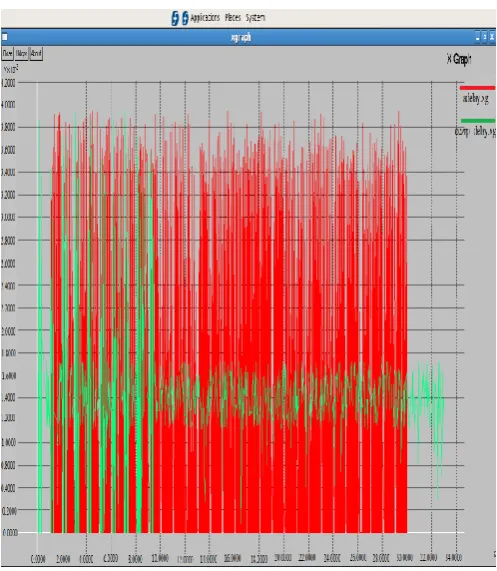
From figure 4 it's shown that the delay of CCZRP relative to DSR Protocol, but DSR routing protocol and figure four shows that the delay of CHAMP and DSR routing protocol square measure comparatively same. Therefore the delay of CCZRP is a smaller as compared to DSR and CHAMP for human quality model.
[image:6.595.312.549.71.349.2]Fig. 6: Energy graph of human mobility for CCZPR vs. DSR routing protocol
Fig. 7: Energy graph of human mobility for CHAMP vs. DSR routing protocol
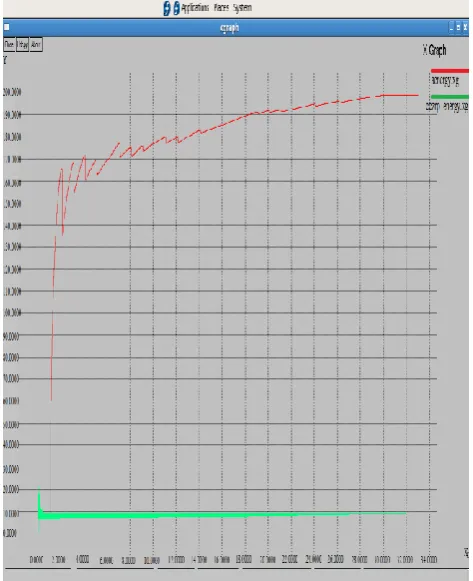
From figure 6 and 7 it is observed that the energy needed by the human quality model using CCZPR is a smaller amount and Constant, whereas the energy needed by human quality model CHAMP is a smaller amount than DSR protocol however on top of CCZPR.
[image:6.595.310.556.446.738.2] [image:6.595.54.291.447.738.2]Fig. 9: Throughput graph of human mobility for CHAMP vs. DSR routing protocol.
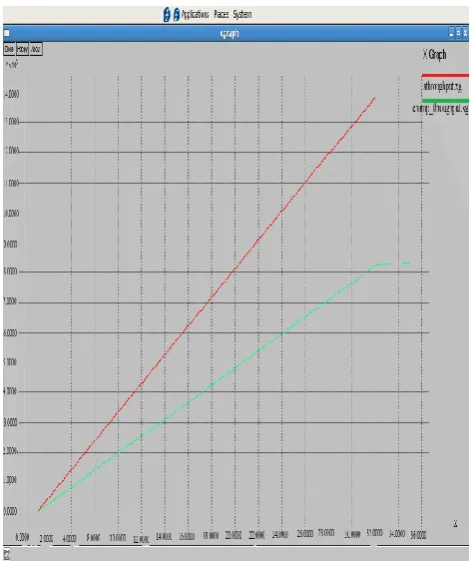
Figure 8 & 9 show the graph of outturn for the human quality model for CCZRP vs. DSR and CHAMP vs. DSR severally. the worth of outturn for CCZRP is a smaller amount than the worth of CHAMP and DSR protocol, this can be as a result of in CCZRP the packet sends from the nodes I the network are optimized to cut back the delay and energy of the model.
6.
CONCLUSION
In this paper human mobility model is implemented with the different routing protocols which are CCZRP, DSR and CHAMP. In this simulation result of the research work that was is carried out, the human mobility model as applied to CCZRP, DSR and CHAMP routing protocols is studied and compared. From the delay graph it is seen that the delay introduced for CCZRP is very small as compared to DSR Protocol. It is also proved that the energy required is less and the throughput of CCZRP is much better as compared to others.
7.
FUTURE WORK
In the future scope would like to work upon the feature of those friendly devices which can share and hire their resources for improvement of the above achieved results in much better way.
8.
REFERENCE
[1] D. Easley and J. Kleinberg. Networks, crowds, and markets: Reasoning about a highly connected world. Cambridge University Press, 2010.
[2] G. Caldarelli. Scale-free networks: complex webs in nature and technology. Oxford University Press, 2007.
[3] M. Rivera, S. Soderstrom, and B. Uzzi. Dynamics of Dyads in Social Networks: Assortative, Relational, and Proximity Mechanisms. Annual Review of Sociology, 36:91{115, 2010.
[4] P. Juang, H. Oki, Y. Wang, M. Martonosi, L. S. Peh, and D. Rubenstein, Energy-efficient computing for wildlife
tracking: design tradeoffs and early experiences with zebranet, Proc. ACM ASPLOS, 2002.
[5] J. Ott and D. Kutscher, A disconnection-tolerant transport for drive-thru internet environments, in Proceedings of IEEE INFO- COM, 2005.
[6] D. Brockmann, L. Hufnagel, and T. Geisel. The scaling laws of human travel. Nature, 439(7075):462{465, 2006.
[7] M. Gonzfialez, C. Hidalgo, and A.-L. Barabffasi. Understanding individual human mobility patterns. Nature, 453(7196):779{782, 2008.
[8] C. Song, T. Koren, P. Wang, and A.-L. Barabffasi. Modelling the scaling properties of human mobility. Nature Physics, 2010.
[9] N. Eagle and A. Pentland. Eigenbehaviors: Identifying structure in routine. Behavioral Ecology and Sociobiology, 63(7):1057{1066, 2009.
[10]C. Song, Z. Qu, N. Blumm, and A.-L. Barabasi. Limits of predictability in human mobility. Science, 327(5968):1018, 2010.
[11]M. Morzy. Prediction of moving object location based on frequent trajectories. In ISCIS, pages 583{592, 2006.
[12]M. Morzy. Mining frequent trajectories of moving objects for location prediction. In MLDM, pages 667{680, 2007.
[13]H. Jeung, Q. Liu, H. T. Shen, and X. Zhou. A hybrid prediction model for moving objects. In ICDE, pages 70,79, 2008
[14]G. Yavas, D. Katsaros, O. Ulusoy, and Y. Manolopoulos. A data mining approach for location prediction in mobile environments. Data Knowl. Eng., 54(2):121{146, 2005.
[15]F. Giannotti, M. Nanni, and D. Pedreschi. Efficient mining of temporally annotated sequences. In SDM, 2006.
[16]A. Monreale, F. Pinelli, R. Trasarti, and F. Giannotti. Wherenext: a location predictor on trajectory pattern mining. In KDD, pages 637{646, 2009.
[17]D. Liben-Nowell and J. M. Kleinberg. The link prediction problem for social networks. In CIKM, pages 556{559, 2003.
[18]M. Al Hasan, V. Chaoji, S. Salem, and M. Zaki. Link prediction using supervised learning. In SDM: Workshop on Link Analysis, Counter-terrorism and Security, 2006.
[19]C. Wang, V. Satuluri, and S. Parthasarathy. Local probabilistic models for link prediction. In ICDM, pages 322{331, 2007.
[20]R. Lichtenwalter, J. T. Lussier, and N. V. Chawla. New perspectives and methods in link prediction. In KDD, pages 243{252, 2010.
[21]R. Lambiotte, V. Blondel, C. De Kerchove, E. Huens, C. Prieur, Z. Smoreda, and P. Van Dooren. Geographical dispersal of mobile communication networks. Physica A: Statistical Mechanics and its Applications, 387(21):5317{5325, 2008.
[22]L. Backstrom, E. Sun, and C. Marlow. Find me if you can: improving geographical prediction with social and spatial proximity. In WWW, pages 61{70, 2010.
Proceedings of the National Academy of Sciences, 106(36):15274, 2009.
[24]J. Cranshaw, E. Toch, J. Hong, A. Kittur, and N. Sadeh. Bridging the gap between physical location and online social networks. In Ubicomp, pages 119{128, New York, NY, USA, 2010. ACM.
[25]Rongxing Lu “Pi: A Practical Incentive Protocol for Delay Tolerant Networks”, Ieee Transactions On Wireless Communications, Vol. 9, No. 4, April 2010
[26]Perkins, C. and Royer, E. and Das, S., “Ad hoc On demand Distance Vector (AODV) routing," RFC 3561, Jul. 2003.
[27]M. Marina and S. Das, “On-demand multipath distance vector routing in ad hoc networks,” in Proc. IEEE ICNP ’01, 2001, pp. 14–23.
[28]C. Song, T. Koren, P. Wang, and A.-L. Barabasi. Modeling the scaling properties of human mobility. Nature Physics, 2010.
[29]ADD HOME. Mobility management and housing project. 2009.
[30]Rahul C. Basole. The value and impact of mobile information and communication technologies. Proceedings of the IFAC Symposium, Atlanta, GA., 2004.
[31]P. Nain, D. Towsley, B. Liu, and Z. Liu, “Properties of Random Direction Models,” INRIA technical report RR-5284,July 2004.
[32]Vasanthi.V and Hemalatha.M, 2012. A Proportional Analysis of Dissimilar Mobility Models in Ad-Hoc Sensor Network over DSR Protocol. Int. J. Computer Applications 42 (15); PPno.26-32.
[33]M. Sanchez and P. Manzoni, A Java-Based Ad Hoc Networks Simulator, in Proceedings of the SCS Western Multiconference Web-based Simulation Track, Jan.1999.
[34]K. Zhou, L. Meng, Z. Xu, G. Li and J. Hua, “A Dynamic Clustering-Based Routing Algorithm for Wireless Senor Networks,” Information Technology Journal, Vol. 7, No. 4, 2008, pp. 694-697.
[35]A. D. Amis, R. Prakash, T. H. P. Vuong and D. T. Huynh, “Max-Min D-Cluster Formation in Wireless Ad-Hoc Networks,” Proceedings of the IEEE 9th Annual Joint Conference of the IEEE Computer and Communications Societies, Tel Aviv, 26-30 March 2000, pp. 32-41.
[36]Y. He, W. S. Yoon and J. H. Kim, “Multi-level Cluster-ing Architecture for Wireless Sensor Networks,” Infor-mation Technology Journal, Vol. 5, No. 1, 2006, pp. 188-191.
[37]W. Liu and J. Yu, “Energy Efficient Clustering and Rout-ing Scheme for Wireless Sensor Networks,” ProceedRout-ing of the IEEE International Conference on Intelligent Com-puting and Intelligent Systems, Shanghai, 20-22 Novem-ber 2009, pp. 612-616.
![Fig 3: factors of influence on individual mobility behavior, source: [29].](https://thumb-us.123doks.com/thumbv2/123dok_us/8022365.766481/4.595.314.543.520.735/fig-factors-influence-individual-mobility-behavior-source.webp)