N A N O E X P R E S S
Controlled Growth of WO
3Nanostructures with Three
Different Morphologies and Their Structural, Optical,
and Photodecomposition Studies
S. RajagopalÆD. Nataraj ÆD. MangalarajÆ
Yahia DjaouedÆJacques RobichaudÆ
O. Yu. Khyzhun
Received: 2 June 2009 / Accepted: 17 July 2009 / Published online: 4 August 2009
Óto the authors 2009
Abstract Tungsten trioxide (WO3) nanostructures were
synthesized by hydrothermal method using sodium tungstate (Na2WO42H2O) alone as starting material, and sodium
tungstate in presence of ferrous ammonium sulfate [(NH4)2
Fe(SO4)26H2O] or cobalt chloride (CoCl26H2O) as
struc-ture-directing agents. Orthorhombic WO3having a
rectan-gular slab-like morphology was obtained when Na2WO4
2H2O was used alone. When ferrous ammonium sulfate and
cobalt chloride were added to sodium tungstate, hexagonal WO3nanowire clusters and hexagonal WO3nanorods were
obtained, respectively. The crystal structure and orientation of the synthesized products were studied by X-ray diffraction (XRD), micro-Raman spectroscopy, and high-resolution transmission electron microscopy (HRTEM), and their chemical composition was analyzed by X-ray photoelectron spectroscopy (XPS). The optical properties of the synthe-sized products were verified by UV–Vis and photolumines-cence studies. A photodegradation study on Procion Red MX
5B was also carried out, showing that the hexagonal WO3 nanowire clusters had the highest photodegradation
efficiency.
Keywords Tungsten trioxideHydrothermal
Structure-directing chemicalsNanowiresNanorods
Photodecomposition
Introduction
One-dimensional (1-D) nanostructures have attracted much attention because of their distinct properties and wider applications. Self-assembled growth of one-dimensional nanostructures is a simple and spontaneous process. However, understanding the reaction chemistry and growth mechanism of the process is necessary to obtain these structures. Repeated experiments of this synthetic method are needed to obtain uniform growth of 1-D nanostructures. Semiconductor metal oxide nanostructures are highly attractive, so more attention has been paid, because of their obvious optical and electronic applications. Tungsten tri-oxide (WO3) is one of then type indirect wide band gap
materials [1, 2]. It is a fundamental functional material having interesting physical properties and wide range of applications. Due to its high work function, it was used as a charge injection layer [3]. Because of its higher catalytic activity, it can be used in photocatalytic and electrocata-lytic applications [4,5]. It serves as a good host for ions, so it can be used successfully in electrochemical Li ion bat-teries, electrochromic, thermochromic, and photochromic devices [6–9]. Many methods have been developed to synthesize 1-D WO3 nanostructures, such as
template-assisted growth [4], anodization [10], conventional thermal evaporation [1], hot wall chemical vapor deposition [11], S. RajagopalD. Nataraj (&)
Thin Film & Nanomaterials Laboratory, Department of Physics, Bharathiar University, Coimbatore 641 046, India
e-mail: [email protected]
D. Mangalaraj
Department of Nanoscience and Technology, Bharathiar University, Coimbatore 641 046, India
Y. DjaouedJ. Robichaud
Laboratoire de Micro-Spectroscopies Raman et FTIR, Universite´ de Moncton-Campus de Shippagan, 218, boul. J.-D. Gauthier, Shippagan, NB E8S 1P6, Canada
O. Yu. Khyzhun
Department of Structural Chemistry of Solids, Frantsevych Institute for Problems of Materials Science, National Academy of Sciences of Ukraine, 3 Krzhyzhanivsky Street, 03142 Kyiv, Ukraine
arc discharge [12], pulsed laser deposition [13], and hydrothermal method [14]. Among the various methods, hydrothermal method is a facile, dominant tool for the synthesis of anisotropic nanoscale materials. Significant advantages of this method are controllable size, low tem-perature growth, cost-effectiveness, and less complicated. Number of attempts were paid to synthesize controlled WO3nanostructures by hydrothermal method with the help
of structure-directing chemicals like Na2SO4, Rb2SO4,
K2SO4, Li2SO4, and Na2S [6,14–17]. All attempts suggest
that the reason behind the controlled growth was due to the presence of sulfate ions in the reaction. The data reported in Refs. [6, 14–17] show that I-group compounds such as Li2SO4, Na2SO4, Na2S, K2SO4, and Rb2SO4were used as
structure-directing chemicals for the synthesis of WO3
nanostructures. In the present work, we choose VIII-group metal complexes, such as ferrous ammonium sulfate, as structure-directing chemical for the synthesis of WO3
nanostructures. Since chlorine is next to sulfur in periodic table, we expect that it may have similar tendency to sulfur. Therefore, cobalt chloride was also used as another structure-directing chemical to realize the change in morphology of WO3products. It is interesting that we have
obtained wire- and rod-shaped WO3 nanostructures,
respectively, from ferrous ammonium sulfate and cobalt chloride as structure-directing agents. Their structural, optical, and photodegradation properties were also studied in this paper.
Experimental Details
Synthesis of Tungsten Oxide Nanostructures
All the chemicals were of analytical grade and taken without further purification or modification. Sodium tungstate (Na2WO42H2O) is the starting material. Hydrochloric acid
(HCl), oxalic acid (C2H2O42H2O), nitric acid (HNO3),
ferrous ammonium sulfate [(NH4)2Fe(SO4)26H2O], and
cobalt chloride (CoCl26H2O) were the other chemicals used
for the growth.
Three different reactions were made for the preparation of WO3products. In the first experiment, sodium tungstate
was dissolved in 100 mL double distilled water (DDW) (6.6 g, 0.2 mole) and acidification was done by adding HCl to get a pH of 1. A white precipitate was obtained, and it was dissolved by adding oxalic acid (0.4 g in 30 mL DDW, 0.1 mole). As a result, a transparent solution was obtained, and it is the final solution for this experiment. In the second reaction, sodium tungstate (6.6 g, 0.2 mole) and ferrous ammonium sulfate (0.4 g, 0.1 mole, 10 mL DDW) were dissolved in DDW separately and mixed under vigorous stirring. A dark brown color mixture was obtained, and it
was dissolved by adding oxalic acid. In this case, a trans-parent yellow color solution was obtained. It is the final solution of this reaction and its pH was 1. In the third experiment, sodium tungstate (6.6 g, 0.2 mole) and cobalt chloride (1.786 g, 0.5 mole, 15 mL in DDW) solutions were prepared separately and mixed with constant stirring. A violet mixture appeared, and it was dissolved by nitric acid. Now, a transparent red solution was obtained and its pH was 1. These three solutions were transferred separately into 40 mL Teflon-lined stainless steel autoclave and maintained at 180°C for 24 h to get the final product. The as-obtained products were washed several times both in water and ethanol and finally dried at 100 °C for 2 h. Characterization Techniques
The surface morphology, structural, and chemical states of the formed nanostructures were characterized by using scanning electron microscopy (SEM-5600 JEOL JSM), transmission electron microscopy (TEM-2011 JEOL STEM), X-ray diffraction (PANalytical X-ray diffractom-eter—XPERT PRO), Raman spectroscopy (Horiba Jobin Raman spectrometer, reflection mode, wavelength of 532 nm, 2mW), and X-ray photoelectron spectroscopy (XPS—ion-pumped chamber of an ES-2401 spectrometer Mg Ka radiation, photon energy 1,253.6 eV) techniques. Optical measurements were carried out in UV–Vis spec-trophotometer (SHIMADZU 3600 UV–Vis–NIR spectro-photometer), and photoluminescence properties were analyzed by using Horiba Jobin Yvon spectrofluoromax spectrometer.
Results and Discussion
Characterization of Surface Morphology and Structural Properties
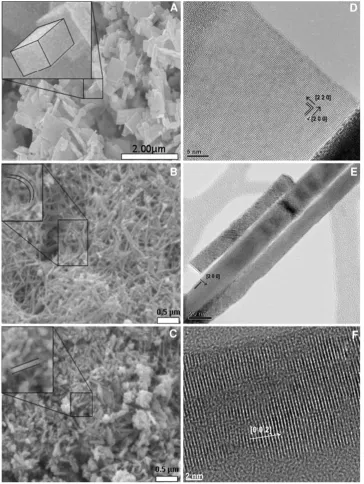
Figure1a–c shows the scanning electron microscope (SEM) images of the as-prepared WO3 products
synthe-sized using three different hydrothermal reactions. Rect-angular slab-like WO3 crystals were obtained by direct
hydrothermal synthesis. These rectangular slab-like struc-tures show their sharp corners and smooth surfaces as indicated in the Fig. 1a. When ferrous ammonium sulfate was used, WO3nanowire clusters were obtained, and their
SEM image is shown in Fig.1b. The average length and diameter of the nanowires were 1lm (1,000 nm) and 30 nm, respectively. Cobalt chloride-reacted WO3
a decrease in the length was observed with nanorod morphology.
Usually, when there is no structure-directing chemical, the morphology will be rectangular in shape. When struc-ture-directing chemicals such as sulfate and chlorine ions were added, then one can see the formation of one-dimensional nanowire/nanorod-like structures. Though the exact reason is not reported, it is believed that sulfate ions play a major role in giving one-dimensional shape, i.e., sulfate ions adsorb to the surface of the seed crystals of WO3and thereby decrease the surface energy of the WO3
seed crystals in all directions except one direction. In this particular undisturbed direction, further growth takes place
by means of agglomeration/attachment with other seed layers. This process continues to give one-dimensional wire/rod-like structures.
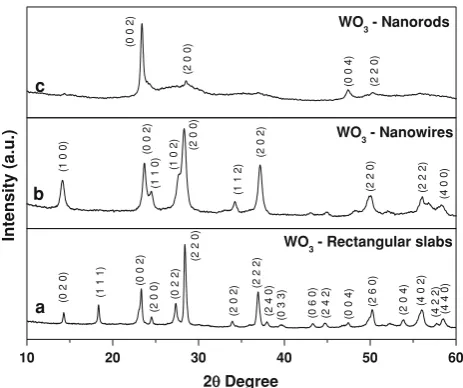
Figure1d–f also shows that the corresponding high-resolution transmission electron microscope (HRTEM) images. Rectangular slab structures have shown well-cleared sharp boundaries. Resolved lattice fringes of both directions have been seen in rectangular slab structure. The calculated spacing of the lattice fringes of two perpendic-ular directions was about 3.14 and 3.63 A˚ , respectively. Figure2a–c shows the X-ray diffraction (XRD) patterns for three as-prepared WO3 products. XRD pattern for
rectangular slab structure, with orthorhombic crystal phase, Fig. 1 SEM and TEM images
[image:3.595.183.548.58.543.2]is shown in Fig.2a. Spacing of the lattice fringes, calcu-lated from the HRTEM, was well indexed with (220) and (200) planes of orthorhombic WO3crystals. Their lattice
parameters were a=7.359 A˚ , b =12.513 A˚ , and
c=7.704 A˚ (JCPDS card No: 35-0270) [18]. HRTEM image of a nanowire shows (Fig.1e) clear lattice fringes along the growth direction. Here, the spacing of the lattice fringes was 3.63 A˚ , which was well indexed with the ‘d’ spacing of the plane (200) of hexagonal WO3 (Fig.2b).
These products were prepared by using ferrous ammonium sulfate as structure-directing chemical. They follow hex-agonal crystal structure. Lattice parameters of the synthe-sized h-WO3 are a =7.324 A˚ and c=7.668 A˚ (JCPDS
card No: 85-2460) [14]. From the HRTEM image of WO3
nanorod, it was observed that the spacing of lattice fringes was about 3.87 A˚ , which is indexed with the (002) plane in XRD pattern for the h-WO3products (Fig.2c). These were
prepared by using cobalt chloride as structure-directing chemical, and their lattice parameters are the same as that of WO3nanowire clusters.
Orthorhombic WO3 structures are the usual product
from the direct hydrothermal synthesis. However, when reacted with ferrous ammonium sulfate, it was observed that one of its lattice parameters ‘b’ is reducing from 12.513 to 7.324 A˚ . The remaining lattice parameters ‘a’ and ‘c’ are almost unchanged in such a case. So, it is clear that the formation of hexagonal crystal structure from the orthorhombic structure is taking place by reducing ‘b’ lattice significantly. The interlayer spacing for the direct synthesized WO3and ferrous ammonium sulfate used WO3
products, respectively, at d220 (3.143 A˚ ) and d200 (3.156 A˚ ) are almost the same, which proves that the lattice parameters ‘a’ and ‘c’ are similar to each other. When
reacted with cobalt chloride, a reduction in the ‘b’ value close to ‘a’ value was noted and that could be the reason for the change in crystal structure from orthorhombic to hexagonal. Though the exact reason behind the one-dimensional nanorod growth is not clear, we believe that chlorine ions also play a similar role as that of sulfate ions and help to grow a one-dimensional nanostructure.
In hydrothermal growth condition, nanoparticles of WO3 are formed and subsequently aggregated to give
morphologies like rectangular slab, wire, and rod struc-tures. When there are no structure-directing chemicals, the as-formed nanoparticles are of orthorhombic nature and these orthorhombic nanoparticles aggregated to form a three-dimensional rectangular slab-like structure. When structure-directing chemicals, such as ferrous ammonium sulfate or cobalt chloride, were used, the as-formed WO3
particles are of hexagonal nature and these hexagonal particles aggregated to give wire- or rod-like structures. Three-dimensional rectangular slabs-like structure is pro-hibited by the presence of sulfate or chlorine ions. The role played by the sulfate/chlorine ions in getting one-dimen-sional structure has been explained earlier.
Figure3a–c shows the Raman spectra recorded from the three WO3 samples. Most of the vibrational modes are
similar to one another, but a very few modes differentiate whether it is orthorhombic or hexagonal WO3 crystal
system [19]. Crystalline WO3 has three main spectral
regions, one is between 900 and 600 cm-1, the second one is between 400 and 200 cm-1, and the third one is below 200 cm-1. The three regions, respectively, correspond to stretching, bending, and lattice modes. These peaks are characteristics of tungsten oxide material as well. We observed Raman peaks for orthorhombic rectangular slab-like structure at 805, 690, 325, and 255 cm-1. Here, the
10 20 30 40 50 60
WO3 - Rectangular slabs
(4 4 0)
(4 2 2)
(4 0 2)
(2 0 4)
(2 6 0)
(0 0 4)
(2 4 2)
(0 6 0)
(0 3 3)
(2 4 0)
(2 2 2)
(2 0 2)
(2 2 0)
(0 2 2)
(2 0 0)
(0 0 2)
(1 1 1)
(0 2 0)
a
2θ Degree
Intensity (a.u.)
WO3 - Nanowires
(4 0 0)
(2 2 2)
(2 2 0)
(2 0 2)
(1 1 2)
(2 0 0)
(1 0 2)
(1 1 0)
(0 0 2)
(1 0 0)
b
WO
3 - Nanorods
c (0 0 4) (2 2 0)
(2 0 0)
(0 0 2)
Fig. 2 X-ray diffraction spectra of the three different as-prepared WO3products:arectangular slab-like structures,bnanowire clusters, andcrod-like samples
200 400 600 800 1000
255
325
690 805
a
Intensity (a.u.)
Wavenumber (cm-1)
* 817 325 b * 255 651 690 817 c
[image:4.595.54.286.56.250.2] [image:4.595.310.541.505.686.2]mode at 805 and 690 cm-1 corresponds to stretching vibration of O–W-O, whereas the modes at 325 and 255 cm-1corresponds to bending vibration of W–O-W. In the case of the hexagonal nanowire structure, we observed almost similar modes as that of orthorhombic structure. The modes are 817 and 690 cm-1and which were due to stretching vibrations. Upon comparing the stretching modes of orthorhombic (805 cm-1) and hexagonal (817 cm-1) structures, in the case of hexagonal WO3, it
was found that there is a shift in wavenumber toward higher side (Fig.3b, c). This shift could be due to a local structural change in the crystal system, upon conversion
from orthorhombic to hexagonal crystal structure. In addition to this, we also noticed a characteristic mode of hexagonal WO3at 651 cm-1[20], which again confirmed
the crystal structures of nanowire and nanorods. No impurity peaks other than WO3 were observed, which
shows the purity of the as-prepared samples.
Characterization of Chemical States
X-ray photoelectron spectroscopy (XPS) analysis was carried out to further confirm the purity of the samples and
44 42 40 38 36 34 32 30
Binding Energy (eV)
W 4 f7 / 2
W 4 f5 / 2
c
b
Counts (a.u)
a
Fig. 4 XPS W 4f core-level spectra of as-prepared WO3products:a rectangular slab-like structures,bnanowire clusters, andcrod-like samples
536 534 532 530 528
c
b
a
Binding Energy (eV)
Counts (a.u)
O 1s
Fig. 5 XPS O 1s core-level spectra of as-prepared WO3products:a rectangular slab-like structures,bnanowire clusters, andcrod-like samples
250 275 300 325 350
275
c b
a
Absorption
Wavelength (nm)
Fig. 6 UV–Vis absorption spectra of as-prepared WO3products: a rectangular slab-like structures,b nanowire clusters, andcrod-like samples
350 400 450
420
325
c b
a
Intensity (a.u.)
Wavelength (nm)
[image:5.595.55.283.219.429.2] [image:5.595.305.541.224.427.2] [image:5.595.308.543.482.686.2] [image:5.595.54.287.483.676.2]also to check the electronic state of the samples. Figure4a–c shows the XPS W 4f core-level spectra for all the three as-prepared WO3samples. From these results, we observed
that impurities like Fe, Co, Cl, N, and S are not present in all the three samples. The XPS W 4f core-level spectra have revealed that in all the samples under study tungsten atoms are in the formal valence state ?6 [21]. Their 4f peaks binding energies were observed at 38.0 and 36.0 eV, which corresponds to spin-orbit splitting of the W 4f7/2and
W 4f5/2components, respectively, in tungsten oxides [21].
The XPS O 1 s core-level binding energies of the tungsten oxide samples under consideration correspond to 531.0 eV (Fig.5a–c). From the relative intensities of the XPS spectra, we have calculated the compositional stoichiom-etry between ‘W’ and ‘O’ and it is found to be about 1:3 in the every sample studied.
Characterization of Optical Properties
To study the photoluminescence as well as photodegrada-tion performance of the as-prepared WO3 samples, it is
necessary to know the absorption edge and number of photons absorbed by the material. So, UV–Vis absorption spectra were taken for all the three WO3 samples.
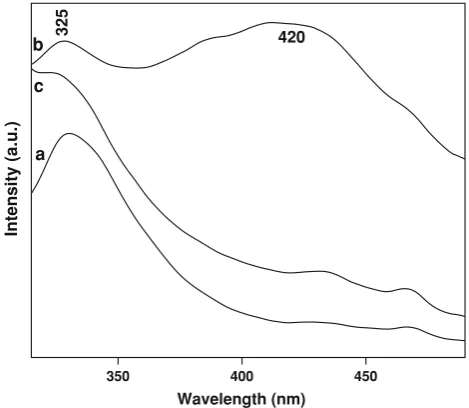
Figure6a–c shows the absorption spectra with a peak maximum at 275 nm wavelength for all the three samples. A very clear, high intense absorption peak was obtained for nanowire cluster structures, whereas for nanorod and rectangular slab structures less intense absorption was seen. Using this absorption maximum, photoluminescence property of the as-prepared WO3 nanostructures was
studied and their emission results are shown in Fig.7a–c. We have seen emission peaks at 325 and 420 nm for all the three WO3samples. The emission at 325 nm corresponds
to edge emission [22–25]. Only nanowire clusters have shown relatively high intense another emission peak at 420 nm and which could originate from the presence of oxygen vacancies or defect states [23]. Though XPS results have shown a stoichiometry in composition, our PL results have shown the presence of defect states by means of an emission at 420 nm. This could be due to more sensitivity of PL than XPS. Increase in surface to volume ratio results in increase of defect states in the case of WO3 nanowire
clusters and that could be the reason for the observed
0.0 0.2 0.4 0.6 0.8 1.0 C
h g
f e d c b a
Absorbance
Wavelength (nm)
0.0 0.2 0.4 0.6 0.8 1.0 B
h g f e d c b a
Absorbance
300 400 500 600 700
A
0.0
g
h f e d c b a
0.8
0.6
0.4
0.2 1.0
Absorbance
Wavelength (nm)
300 400 500 600 700
Wavelength (nm)
300 400 500 600 700
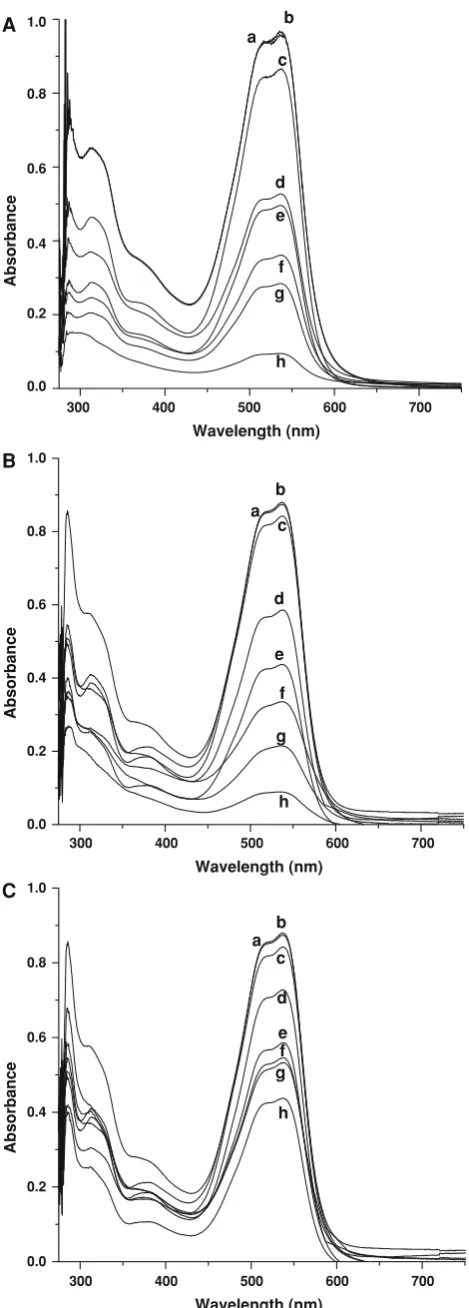
Fig. 8 UV–Vis absorption spectral changes of Procion MX-5B dye mixed with WO3samples at different timings. a Rectangular slab WO3?Procion dye,bnanowire clusters WO3?Procion dye, and c rod-like WO3?Procion dye. Absorption spectra (a, b, and c), respectively, correspond to pure Procion 5B dye, Procion MX-5B dye in the dark for 24 h, and Procion MX-MX-5B dye kept under UV illumination for 24 h, in the absence of WO3nanostructure. Spectra (d–h) corresponds to UV illumination time; 3, 6, 9, 12, and 24 h in the presence of WO3nanostructures
[image:6.595.53.288.55.710.2]strong visible emission in this sample. Rectangular slab and rod-shaped morphologies weakly exhibited this char-acteristic peak with noticeable intensity as shown in the Fig.6a, c.
Photodecomposition Measurements
Photodecomposition activities of the as-prepared WO3
nanostructures were analyzed with Procion Red MX-5B. We have chosen this dye for the decomposition purpose, because it is one of the harmful environmental pollutants. Attempts were made to decompose it by using TiO2
nanoparticles in a typical photocatalytic reactor [26]. Since WO3nanostructures could also exhibit good photocatalytic
performance, we used this for our photodecomposition study. For the present study, we used 0.25 mmole of Pro-cion Red MX-5B reactive dye in 20 mL of DDW and about 0.05 g of all the three as-prepared WO3 powders were
mixed with the as-prepared dye solution and the photode-composition experiment was carried out. A 2.0 mW UV light source with 365 nm wavelength was used for this work. Three experiments were carried out with three dif-ferent WO3 nanostructure morphologies. The absorption
spectra changes during the photodecomposition of the reactive dye and resulted with a decrease in the absorption maximum. The results are shown in Fig.8a–c for all the three morphologies. Absorption value a, b, and c in Fig.8, respectively, correspond to pure as-prepared dye, dye in dark for 24 h, and dye kept in UV light for 24 h, but without WO3 dispersion. From the observed results, we
come to a conclusion that there is no any noticeable change when maintained for 24 h in dark, but a slight decrease in absorption was observed after 24 h exposure in UV illu-mination. With this initial study, the as-prepared WO3
nanostructures were dispersed in the dye solution and illuminated with UV light for 3, 6, 9, 12, and 24 h and their absorptions were recorded. The spectra in Fig.8d–h cor-respond to respective absorption spectra from the overall experimental results. Upon comparison of all the results, it was found that the WO3nanowire cluster dispersed
med-ium has responded quickly in decomposing the dye. UV– Vis absorption spectra have shown that, only this particular morphology has high cross-section for absorption of pho-tons, and this could be the reason for the quick response in decomposition.
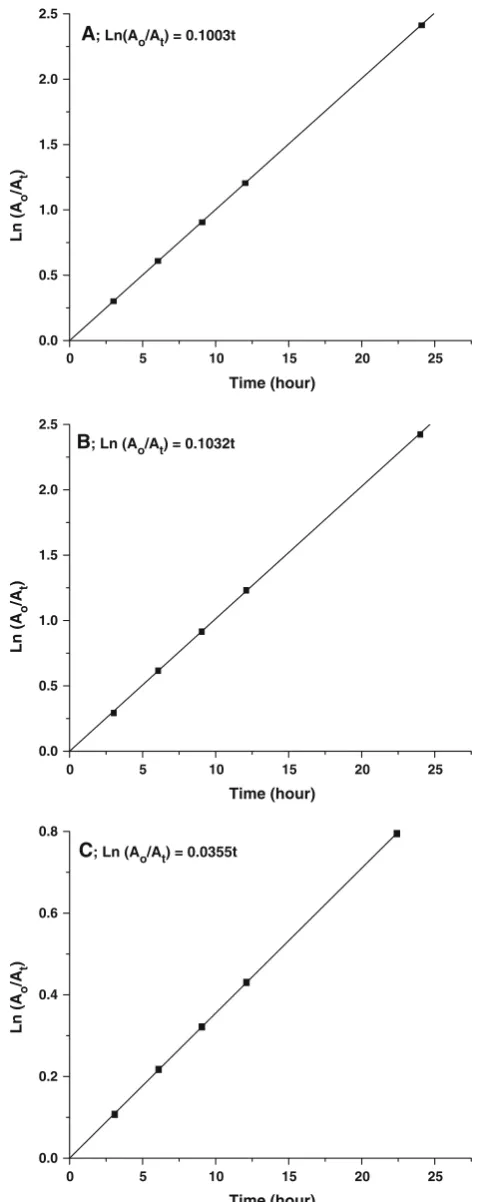
To estimate the rate of the reaction in the present photo-degradation experiment, the following equation was used: lnðAo=AtÞ ¼kt
whereAoandAtare corresponding absorptions, measured at
different illumination time, ‘k’ is rate of the reaction and ‘t’
0.0 0.5 1.0 1.5 2.0 2.5
B; Ln (Ao/At) = 0.1032t
Time (hour) 0.0
0.5 1.0 1.5 2.0 2.5
A; Ln(Ao/At) = 0.1003t
Time (hour)
0 5 10 15 20 25
0 5 10 15 20 25
0 5 10 15 20 25
0.0 0.2 0.4 0.6 0.8
C; Ln (Ao/At) = 0.0355t
Ln (A
o
/A
t
)
Time (hour)
Ln (A
o
/A
t
)
Ln (A
o
/A
t
)
[image:7.595.305.545.56.658.2]is reaction time. The rate of the reactionkwas calculated from all the three photodecomposition experiments by drawing a graph between ln(Ao/At) and time. Figure9a–c
shows the relation between ln(Ao/At) and time. Rate of the
reactionkwas obtained from the slope of these graphs and the as-obtained values are 0.1003, 0.1032, and 0.0355 h-1, which, respectively, correspond to photodecomposition reaction with WO3rectangular slab, nanowire clusters and
nanorod structures. Comparatively a high photodecompo-sition was noted from WO3nanowire cluster samples.
Conclusion
Self-assembled WO3nanostructures were synthesized with
new structure-directing chemicals by using hydrothermal route and its structural, optical, and photodecomposition activity were studied. We have obtained different WO3
morphologies like rectangular slab, nanowire clusters, and nanorods by introducing new structure-directing chemicals (ferrous ammonium sulfate, cobalt chloride) in this hydrothermal reaction. The possible growth mechanism of various shaped WO3 nanostructures was also discussed.
From optical absorption maxima, quantum confinement effect was realized for all the three morphologies. From photodecomposition experiment, a relatively high photo-decomposition activity was observed from nanowire clus-ters sample due to their high absorption. Further study is under research to investigate the concentration-dependent morphologies and their role in photodecomposition. Acknowledgments The author would like to thank Dr. K. Swaminathan, Professor and Head, Department of Microbial Biotechnology, Bharathiar University for his support in utilizing UV–Vis absorption spectrophotometer. One of the authors S. Rajagopal would like to thank Bharathiar University for awarding University Research Fellowship to carry out this work.
References
1. B. Cao, J. Chen, X. Tang, W. Zhou, J. Mater. Chem.2323, 19 (2009)
2. M. Miyauchi, Phys. Chem. Chem. Phys.6258, 10 (2008)
3. M. Hoping, C. Schildknecht, H. Gargouri, T. Riedl, M. Tilgner, H.H. Johannes, W. Kowalsky, Appl. Phys. Lett. 213306, 92 (2008)
4. M. Sadakane, K. Sasaki, H. Kunioku, B. Ohtani, W. Ueda, R. Abe, Chem. Commun. 6552 (2008)
5. X. Cui, L. Guo, F. Cui, Q. He, J. Shi, J. Phys. Chem. C4134, 113 (2009)
6. K. Huang, Q. Pan, F. Yang, S. Ni, X. Wei, D. He, J. Phys. D: Appl. Phys.155417, 41 (2008)
7. S.R. Bathe, P.S. Patil, Smart Mater. Struct.025004, 18 (2009) 8. S.N. Alamri, Smart Mater. Struct.025010, 18 (2009)
9. Z. Luo, J. Yang, H. Cai, H. Li, X. Ren, J. Liu, X. Liang, Thin Solid Films5541, 516 (2008)
10. A. Mozalev, V. Khatko, C. Bittencourt, A.W. Hassel, G. Gorokh, E. Llobet, X. Correig, Chem. Mater.6482, 20 (2008)
11. Y. Zhang, Y. Chen, H. Liu, Y. Zhou, R. Li, M. Cai, X. Sun, J. Phys. Chem. C1746, 113 (2009)
12. A.A. Ashkarran, A. Irajizad, M.M. Ahadian, S.A.M. Ardakani, Nanotechnology195709, 19 (2008)
13. K.J. Lethy, D. Beena, V.P. Mahadevan Pillai, V. Ganesan, J. Appl. Phys.033515, 104 (2008)
14. Z. Gu, T. Zhai, B. Gao, X. Sheng, Y. Wang, H. Fu, Y. Ma, J. Yao, J. Phys. Chem. B23829, 110 (2006)
15. Z. Gu, Y. Ma, W. Yang, G. Zhang, J. Yao, Chem. Commun. 3597 (2005)
16. Z. Gu, H. Li, T. Zhai, W. Yang, Y. Xia, Y. Ma, J. Yao, J. Solid. State. Chem.98, 180 (2007)
17. X. Song, Y. Zhao, Y. Zheng, Mater. Lett.3405, 60 (2006) 18. S. Komaba, N. Kumagai, K. Kato, H. Yashiro, Solid State Ionics
193, 135 (2000)
19. P. Delichere, P. Falaras, M. Froment, A.H. Goff, B. Agius, Thin Solid Films35, 161 (1988)
20. M.F. Daniel, B. Desbat, J.C. Lassegues, B. Gerand, M. Figlarz, J. Solid State Chem.235, 67 (1987)
21. O.Y. Khyzhun, J. Alloys Compd.1, 305 (2001)
22. K. Hong, M. Xie, R. Hu, H. Wu, Appl. Phys. Lett.173121, 90 (2007)
23. K. Lee, W.S. Seo, J.T. Park, J. Am. Chem. Soc.3408, 125 (2003) 24. M. Feng, A.L. Pan, H.R. Zhang, Z.A. Li, F. Liu, H.W. Liu, D.X. Shi, B.S. Zou, H.J. Gao, Appl. Phys. Lett. 141901, 86 (2005)
25. S. Pal, C. Jacob, J. Mat. Sci.5429, 41 (2006)