Citation:
Warwick-Booth, L and Di Martino, S and Trigwell, J (2019) Maternal Smoking Evaluation Report. Project Report. Leeds Beckett University.
Link to Leeds Beckett Repository record: http://eprints.leedsbeckett.ac.uk/6039/
Document Version: Monograph
Creative Commons: Attribution 4.0
The aim of the Leeds Beckett Repository is to provide open access to our research, as required by funder policies and permitted by publishers and copyright law.
The Leeds Beckett repository holds a wide range of publications, each of which has been checked for copyright and the relevant embargo period has been applied by the Research Services team.
We operate on a standard take-down policy. If you are the author or publisher of an output and you would like it removed from the repository, please contact us and we will investigate on a case-by-case basis.
0
Maternal Smoking
Evaluation Report
Final Report June 2019
Louise Warwick-Booth
Salvo Di Martino
1
Executive Summary
Background
One You Leeds provides the maternal stop smoking service across the city of Leeds. Staff from the Centre for Health Promotion Research were commissioned to evaluate the service, between March 2018-June 2019.
Key Findings
Service User Views
• Of the 5 women who completed the survey, 3 had not been successful in their quit attempts and 2 were non-smokers (self-reported).
• Service users reported a range of motivating factors in relation to quitting including finding out that they were pregnant, being concerned about their baby’s health and experiencing morning sickness.
• Receiving support from services (One You Leeds) and using stop-smoking aids such as nicotine patches were also enabling factors.
• Service users also reported several barriers to quitting including maintaining willpower, breaking the habit and experiencing stress. Being around people who continued to smoke was also a barrier for one service user.
• Service users reported positive experiences of the One You service and valued the home visit aspect of the delivery model. Most also reported positive experiences of the midwife service and the coaching sessions offered by One You.
Stakeholder views
• Personal motivation and social/family support were identified by stakeholders as the main facilitators for service users to quit smoking. Conversely, social deprivation, personal beliefs and stereotypes, and lack of awareness about risks connected to smoking during pregnancy were seen as the main barriers.
• Communication and non-judgmental attitudes combined with a capacity to deliver the right information effectively are key for building a good relationship with the women accessing the service. These principles apply to both the midwives and coaches.
improve communication and transparency between services according to staff members.
• The main outcome of quitting smoking for service users are increased self-esteem, happiness, and feelings of being a good parent. Babies also benefit from their mother quitting in terms of decreased chances of low weight at birth and stillbirths.
• Despite an overall sense of satisfaction for the outcomes achieved so far, the
stakeholders recognised that there is still more work to do to increase the number of service users who successfully quit and align the service rates to national ambitions.
Monitoring data
•
212 pregnant smokers engaged with the service between September 2017 and the end of February 2019.• The demographic characteristics of the service users show that on average they were born in 1989, they come from a deprived area of Leeds, with at least one third of them not working or unemployed. Most of them are white British and single.
• In terms of health status, the majority of service users are not disabled and report physical health problems below the national average. They report smoking less than 10 cigarettes a day as well as a high level of readiness to quit smoking.
• One third of the users disclosed experiencing mental health problems. This is above the national average and therefore we advise further investigations around the nature of the problems reported. However, we should also be mindful that experiences of mental health problems can increase during pregnancy.
• The majority of users heard about the service from their community midwife. Midwives referred most of the women, but some service users self-referred.
• The opt-out policy adopted by One You Leeds is successfully ensuring that the majority of smoking pregnant women attend at least an initial meeting with a coach from One You Leeds.
3 Areas for consideration
Service users suggested a range of potential areas for improvement including offering provision beyond normal working hours, extending home visits to a wider group of people (not just pregnant women) and focusing upon the monetary benefits associated with quitting.
The main recommendations from stakeholders were as follows:
• to launch campaigns to raise awareness, especially in younger people, about the risks of smoking
• to tailor the service to better meet the needs of diverse community members • to focus on prevention
• to collect more service users’ views
• to consider that pregnant women might be engaging in other forms of smoking such as cannabis.
The evaluation team also suggest that service providers ensure that they are seeking on-going feedback from service users. Given the challenges likely to be experienced in this area, consideration needs to be given to the mechanisms needed to achieve this.
How we did the evaluation
The evaluation team analysed internal monitoring data and conducted a range of interviews with stakeholders (n=10). Service user views were sought via an online survey (n=5) and qualitative interviews (n=1). Qualitative and quantitative methods were used to strengthen findings and allow some triangulation between different data sources.
Contact/further information
For further information about this research, please contact Dr Louise Warwick-Booth or Dr Joanne Trigwell from the School of Health and Community Studies, Leeds Beckett University.
Table of Contents
Executive Summary ... 1
1: Introduction ... 5
1.1 The Maternal Smoking Intervention ... 5
1.2 Background ... 5
2: Evaluation Methodology ... 6
2.1 Evaluation Aims and Objectives ... 6
2.2 Evaluation Framework ... 6
2.3 Evaluation methods... 6
2.4 Analysis ... 7
2.5Ethics ... 8
2.6 Limitations ... 8
3: Evaluation Findings ... 10
3.1 Service User Data – survey ... 10
3.2 Service User Data – interviews ... 13
3.3 Service User Monitoring Data ... 16
3.4 Qualitative Interviews with Stakeholders... 31
4: Discussion ... 47
5. Conclusion ... 48
6: References ... 49
7: Appendices ... 51
Appendix 7.1 – Stakeholder Interview Schedule ... 51
Appendix 7.2 – Maternal Smoking Survey ... 52
5
1: Introduction
1.1The Maternal Smoking Intervention
One You Leeds provides the maternal stop smoking service across the city, having been commissioned by Leeds City Council, following a comprehensive needs assessment of the city. The service aims to provide easy to access support to address a range of lifestyle issues including smoking cessation. The service has a particular emphasis on attracting those from the most deprived areas.
In relation to smoking cessation, patients are offered 6 x 20-30 minutes sessions. They receive either one-to-one (private and confidential consultations) or group support. All activity adheres to the NCSCT Framework. Furthermore, support is available for four weeks after the patient’s quit date and other help is offered via calls, text messages and the One You Leeds website.
Pregnant women identified as smokers by their midwife from elevated CO levels, are automatically referred into the service. They are provided with behaviour change support from coaches as well as Nicotine Replacement Therapy (NRT) if required.
1.2 Background
Smoking during pregnancy is a major public health concern in England, and an NHS priority. This is because smoking during pregnancy is associated with a range of perinatal
complications, including increased risk of miscarriage, premature births, low birth weight babies, complications in labour and sudden infant death syndrome (NHS 2018, Andres and Day 2000).
In many high-income countries, including the UK, smoking prevalence during pregnancy has decreased (Fahy et al 2014). NHS (2018) figures illustrate that 10.8 per cent of pregnant women were known to be smokers at the time of delivery. This compares to 11.0 per cent for the previous quarter (quarter 2, 2017/18). The data also indicates geographical variation in smoking rates amongst pregnant women linked to social deprivation, with smoking during pregnancy recognised as a major health inequality in the UK (Department of Health 2017). Thus, areas with higher rates of deprivation have larger numbers of women reporting
smoking during pregnancy. The CCGs with the highest proportions were NHS Blackpool (27.8 per cent), NHS South Kent Coast (23.1 per cent) and NHS South Tyneside (21.7 per cent) (NHS 2018).
2: Evaluation Methodology
2.1 Evaluation Aims and Objectives
The overarching aims of the evaluation were to explore the impact, reach, and acceptability of the maternal stop smoking pathway and pilot intervention which involved training practitioners (e.g. Midwives, Children Centre staff, Health Visitors and Sonographers), using the Baby Clear module, to speak with pregnant and postnatal women about their smoking status and referring smokers to the Stop Smoking Service.
The following detailed evaluation objectives therefore underpinned our approach:
1. Explore the impact and reach of the maternal stop smoking pathway and pilot intervention (e.g. through exploring pregnant women’s smoking rates (at their first appointment, at delivery and post-delivery), engagement with Stop Smoking Service (referrals, quit dates and successes) and number of staff trained.
2. Explore the acceptability of the maternal stop smoking pathway (including women referred to the service by staff trained through the pilot intervention) from the
perspectives of pregnant/postnatal women (where possible including women who engaged and those who did not engage with the Stop Smoking Service).
3. Explore the acceptability of the maternal smoking pathway and pilot intervention from the perspectives of key delivery staff (e.g. Midwives, Sonographers, Stop Smoking Advisers, Children Centre staff). Key areas of interest include: perceptions of training and delivery (for the pilot intervention), views of processes surrounding, and
compliance with, the maternal stop smoking pathway, as well as barriers and facilitators to engagement with the Stop Smoking Service since changes in the provision of healthy lifestyles services took place.
2.2 Evaluation Framework
Our evaluation framework draws upon a mixed method design, in which we ‘triangulate’ different types of data (e.g. monitoring and interview data) in order to seek corroboration of findings and expand the breadth of our inquiry (Creswell and Plano Clark, 2011). Previous experience suggests that this also produces more substantive learning to develop future practice and policy.
2.3 Evaluation methods
Qualitative and quantitative methods were used to strengthen findings and allow some triangulation between different data sources.
Internal monitoring data
7 monitoring data. The data explored demographic characteristics (e.g. year of birth, ethnicity, marital status etc.), health status (disability, physical and mental health problems etc.) relationship with the service (route in, initial meeting) and treatment, monitoring, and final outcomes.
Qualitative interviews
The evaluation team undertook semi-structured interviews with key stakeholders. These interviews captured learning related to service delivery, project progress and perceived user outcomes. See Appendix 7.1 for the interview schedule used with stakeholders. Participants were sampled purposively based on their role in, and contribution to, the project. 10 interviews in total were conducted. Seven were stakeholders, two were coaches, and one midwife, all of whom have been involved in the project under evaluation.
Service user views
The evaluation team with support from One You Leeds attempted to recruit service users to participate in a semi-structured interview. One service user agreed but then later declined to participate. A survey was then designed by the evaluation team to capture the
perspectives of service users, using mostly open-ended questions to gather more detailed responses (see Appendix 7.2). Respondents were offered a £10 Love to Shop Voucher for completion of the survey. One You Leeds staff supported the evaluation team in gathering responses by emailing women who had previously accessed their services, with information about the evaluation as well as the survey link. 10 people completed the survey, of which 5 had used a stop-smoking service, 4 had never smoked, and 1 preferred not to say. So, the data from 5 respondents is included in this report.
At the end of the survey, respondents were asked if they wished to be interviewed, and offered a further £10 Love to Shop Voucher as a token of thanks for their participation. 4 women consented to be contacted for a follow-up interview, but only 1 woman were able to participate when contacted. The schedule used to explore service user experiences can be found in Appendix 7.3.
2.4 Analysis
Qualitative
Whilst the majority of participants gave informed consent to record the interviews, 3 stakeholders asked the interviewer to take written notes. The verbatim transcripts from the other 8 recorded interviews, along with the accompanying notes, were analysed using
thematic analysis (Braun & Clark, 2006). This allowed the extraction from the textual material of key themes and subthemes.
The service user interview data (n=1) is reported thematically in the form of a detailed case study.
Quantitative
The statistical software package SPSS v.24 was used to analyse the internal monitoring data as well as to draw graphs. For clarity, the majority of responses on which analyses were based is provided in percentages and frequency count for categorical data (e.g. ethnicity, disability etc.), whereas mean and standard deviation are reported for continuous data (e.g. year of birth, CO reading etc.). In some cases, percentages may not add up to exactly 100% due to rounding or missing data. Inferential statistical analyses were run to test for
statistically significant predictors of success in quitting smoking. For most of these, we reported significance level (p value), and confidence intervals (CI).
2.5 Ethics
The evaluation was given ethical approval through Leeds Beckett University ethics procedures. The following practices were adhered to ensure ethical rigour:
• Informed consent. This was obtained from all interview participants.
• Confidentiality and anonymity – no personal identifying information was used in reporting data.
• Secure information management – security was maintained through password protected university systems.
2.6 Limitations
The evaluation has sought to identify and bring together a range of perspectives in order to highlight what has worked and what might be done differently. Nevertheless, in all
evaluations there are limitations to what can be achieved. In this instance, the evaluation team were only able to gather a small number of service user views, 5 via a survey and 1 via a follow-up telephone interview, despite extensive efforts.
The limited data from a service user perspective prevents us from drawing conclusions regarding the overall evaluation of the service and the impact it has on its clients. It is acknowledged in the literature that the recruitment of pregnant women as participants in health-related research is challenging especially if the topic is sensitive or results in increased knowledge of pregnancy related complications (Mugglie et al 2018). Grant et al (2018) also note that moral judgements are commonly directed towards mothers during pregnancy especially those who smoke. They note that smoking during pregnancy is particularly stigmatized and demonized, which may well have influenced the lack of service user engagement with the evaluation.
In addition, most of the stakeholders interviewed did not directly work with the service users, except for a few staff members (i.e. one midwife and two coaches). Interviewing a higher number of staff members with direct service user contact, would have allowed us to further explore some of the topics and issues highlighted during the interviews as well as to better understand staff approaches with service users.
Another limitation pertains to the sample size, which although big enough for some
9 addition, there is no follow-up data after discharge from One You Leeds; therefore, it is not possible to test whether any positive changes reported at the end of intervention are maintained.
3: Evaluation Findings
3.1 Service User Data
–
survey
10 people completed the survey, of which 5 had used a stop-smoking service, 4 had never smoked, and 1 preferred not to say. So, the data from 5 respondents is discussed here.
Quit attempts
Of the 5 respondents that had used services to support them to stop smoking, they had received support from One Stop (n=1), One You (n=2), NHS services (n=1) and the Doctor (n=1).
All 5 reported that they had successfully quit, for varying periods of time. 1 respondent quit for between 1 week and 1 month, 3 respondents had quit for between 2 months and 6 months and 1 quit for more than 1 year. At the time of the survey, 3 respondents were smokers, and 2 were non-smokers.
One respondent noted that they had been successful in quitting because of the support they received from One You, “I tried to quit a few times with the doctor’s clinics and failed but succeeded with One You.”
Attitudes to smoking
Some respondents recorded negative views about smoking in pregnancy;
“Don’t agree with it.” (Survey Respondent)
“As I’ve got older I find it horrible to see.” (Survey Respondent)
“Against smoking during pregnancy” (Survey Respondent)
One noted that quitting is a difficult process:
“I don’t like smoking in pregnancy but when you’ve been smoking years it’s difficult to give it up.” (Survey Respondent)
Another respondent stated that she had tried to quit but had not managed to sustain her attempt for the full duration of her pregnancies:
“I tried during pregnancy and did stop for some of the term but when I did smoke, my babies were born healthy and a good weight.” (Survey Respondent)
Motivating factors - enablers to quitting
11 her baby motivated her to quit:
“I fell pregnant, so I haven't touched a cigarette since I found out.” (Survey Respondent)
1 respondent reported that her experience of morning sickness had enabled her attempt to quit:
“The sickly feeling, I got around smoke due to pregnancy.” (Survey Respondent)
One woman was concerned about the risks to her baby’s health:
“Thinking about my baby’s health.” (Survey Respondent)
One respondent noted that nicotine patches had enabled her to quit, and another one stated that it was the support services that had enabled her to quit.
Barriers to quitting
Respondents reported facing several barriers in their attempts to quit smoking. These included difficulties in maintaining willpower, breaking the habit and experiencing stress:
“No alternative coping strategy to managing stress, stress levels made it difficult to find alternative coping strategy.” (Survey Respondent)
One respondent experienced the challenge of being surrounded by people who continued to smoke:
“Although some friends were quitting, others were not, and partner was not and therefore still surrounded by smokers.” (Survey Respondent)
One woman had accessed general NHS stop-smoking services, but found them unhelpful in supporting her quit attempt:
“Downloaded NHS stop smoking app - not overly helpful, no response to text sent regarding cravings that were meant to be on offer to help.” (Survey Respondent)
One respondent noted that she had no problem quitting when she discovered her pregnancy:
“No difficulties in quitting when I found out I was pregnant, was able to stop immediately.” (Survey Respondent)
Experiences of referral to One You Leeds
Respondents noted being referred in different ways including via the midwife, and their GP:
couldn't carry on going due to work and had to do it alone in the end.” (Survey Respondent)
“Midwife referred me, really nice lady visited and brought me some aids to help me stop without being judgmental.” (Survey Respondent)
“I was given a leaflet with a number on to ring by my midwife.” (Survey Respondent)
There were some suggestions for improvements to the referral processes including offering service provision out of usual working hours and an extended offer of home visits to a wider group of people, rather than just pregnant women.
Experiences of the service
The 5 respondents were asked to discuss their experiences of using the service, and 3 noted positive experiences, 2 valued the home visit aspect of the service and one simply stated that the service was “excellent”:
“I had home appointments and the lady was very helpful. Answered everything I asked and explained things properly to me” (Survey Respondent)
“Home visits weekly but not needed for long.” (Survey Respondent)
One respondent had attended a clinic-based service rather than One You and said that, “I attended the clinics I don’t feel they did much apart from supplied me champix and then blew into the machine when I went.” (Survey Respondent)
Several suggestions were made by service users in relation to how the service could be improved. For example, offering extended appointment times and increased promotion of the service so that more people are aware of it. One respondent felt that the service could not be improved.
Experiences with the midwife
One of the survey questions asked the respondents to report their experiences of the midwifery service. One noted that in her view midwives judged women who smoke during pregnancy:
“I feel midwives judge but then again they see the effects so have the right to do.” (Survey Respondent)
2 women reported that their midwife has passed them information about stopping smoking, one of whom stated that she felt that she was making her own decision about accessing the service:
“The midwife recommended it although ultimately it was my decision and left to me.”
13
“Amazing midwife throughout pregnancy! Most supportive, knowledgeable, understanding and caring professional I came into contact with throughout my pregnancy.” (Survey Respondent)
“Great.” (Survey Respondent)
Experiences with the coaches
4 respondents outlined positive experiences of working with coaches:
“I saw different people, and all seemed nice.” (Survey Respondent)
“She was lovely really understanding.”(Survey Respondent)
“I felt supported, not judged and very well advised. At this moment in time I’m not in touch with my coach.” (Survey Respondent)
“Excellent.” (Survey Respondent)
3.2 Service User Data
–
interview
Case Study – successful quit attempt
Melissa was aged 38 at the time of the interview (June 2019), and had smoked for 22 years of her life, including during 3 of her 4 pregnancies. She successfully quit smoking with the support of One You Leeds during her 4th pregnancy and was still a non-smoker at the time of
the interview. Prior to seeking support via self-referral to One You Leeds, following her midwife passing on the service details, Melissa said that she had been cutting down the number of cigarettes that she smoked anyway because she was aware that smoking during pregnancy was:
“…not good, not healthy, not good for the baby.”
She appreciated being passed the information from the midwife and feeling able to choose to engage with the service. She suggested that many women will say that they are ready to quit to a professional such as a midwife, when they are not.
Melissa discussed that she had smoked during her previous pregnancies but also
acknowledged that she did not “like to see heavily pregnant women out in public smoking.”
She also mentioned that she was not a public smoker herself, and only smoked at home, outside her own back door. Her motivation to quit smoking during her 4th pregnancy was
influenced by a range of factors:
Melissa had previously tried to stop smoking unsuccessfully and discussed how her previous quit attempts then resulted in her smoking more. She had accessed stop smoking support services previously and based her expectations of the One You provision on those
experiences. She reported being visited at home quickly following on from the initial referral as well as being offered a range of nicotine replacement support options. On reflection about her experiences of One You support, Melissa stated that:
“It is so easy to change your mind to quit…she (One You staff member) came to me, it was convenient, quick…stopping smoking is mind over matter but you do need nicotine at the start.”
She reflected that she was able to seek advice when she needed and felt that she “had someone on hand” from the service. She said that it was useful to receive follow-up calls via phone as this helped her to stay motivated as she took it hour by hour at the start of her quit attempt, but she only used the stop-smoking medication for 1.5 weeks. She appreciated the home visit and the approach on offer noting that “she [worker] wasn’t judgy, she praised me for all I achieved, saying well done.” She suggested that without the home visit it was unlikely that she would have attended an appointment located elsewhere especially as she was so unwell during the pregnancy and has such a busy lifestyle.
In discussing her successful quit attempt, Melissa said that she felt more mature, and ready to stop during her 4th pregnancy:
“I was ready…before I fell on pregnantI said, I like smoking, I enjoy smoking…it is all I have got, I don’t go out, I don’t drink, this is break, my 5 minutes…that was my mantra…I will stop when I want to and I did.”
During her interview Melissa said that she still had cravings and had to tell herself that she is staying healthy, saving money and that she simply needs to control her brain. Her partner still smokes and as a mother of 4 children she discussed also feeling stressed sometimes. Despite these challenges she reported the benefits of not smoking for herself in terms of not being breathless, feeling healthier, and having more money. Since quitting she had been able to afford to take the children on holiday abroad and go on spa days. She suggested that women would respond more to the potential monetary savings as a motivator to quit, rather than the health risks to their baby:
“Push the benefits more…not what it will do for the baby, the bad bits…you will have more money…saying smoking in pregnancy will result in a small baby is not a deterrent as many women want to push out a small baby…”
15 Summary of service user data
• Of the 5 women who completed the survey, 3 had not been successful in their quit attempts and 2 were non-smokers (self-reported).
• Service users reported a range of motivating factors in relation to quitting including finding out that they were pregnant, being concerned about their baby’s health and experiencing morning sickness.
• Receiving support from services (One You Leeds) and using stop-smoking aids such as nicotine patches were also enabling factors.
• Service users also reported several barriers to quitting including maintaining willpower, breaking the habit and experiencing stress. Being around people who continued to smoke was also a barrier for one service user.
• Service users reported positive experiences of the One You service and valued the home visit aspect of the delivery model. Most also reported positive experiences of the midwife service and the coaching sessions offered by One You.
3.3 Service User Monitoring Data
3.3 Demographics
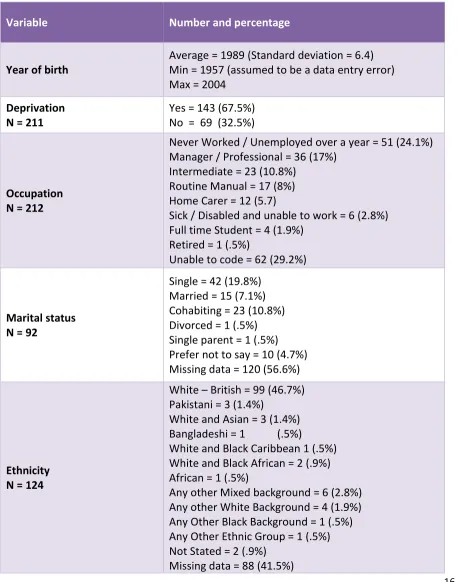
This section presents descriptive statistics of the monitoring data collected from a total of 212 service users. Results are reported in Table 3.1 below.
Table 3.3.1 Service users’ demographic characteristics
Variable Number and percentage
Year of birth
Average = 1989 (Standard deviation = 6.4) Min = 1957 (assumed to be a data entry error) Max = 2004
Deprivation N = 211
Yes = 143 (67.5%) No = 69 (32.5%)
Occupation N = 212
Never Worked / Unemployed over a year = 51 (24.1%) Manager / Professional = 36 (17%)
Intermediate = 23 (10.8%) Routine Manual = 17 (8%) Home Carer = 12 (5.7)
Sick / Disabled and unable to work = 6 (2.8%) Full time Student = 4 (1.9%)
Retired = 1 (.5%)
Unable to code = 62 (29.2%)
Marital status N = 92
Single = 42 (19.8%) Married = 15 (7.1%) Cohabiting = 23 (10.8%) Divorced = 1 (.5%) Single parent = 1 (.5%) Prefer not to say = 10 (4.7%) Missing data = 120 (56.6%)
Ethnicity N = 124
White – British = 99 (46.7%) Pakistani = 3 (1.4%)
White and Asian = 3 (1.4%) Bangladeshi = 1 (.5%)
White and Black Caribbean 1 (.5%) White and Black African = 2 (.9%) African = 1 (.5%)
Any other Mixed background = 6 (2.8%) Any other White Background = 4 (1.9%) Any Other Black Background = 1 (.5%) Any Other Ethnic Group = 1 (.5%) Not Stated = 2 (.9%)
[image:18.596.74.531.204.786.2]17 As we can see from table 3.3.1 on average the service users were born around 1989 and they come from a deprived area of Leeds. In terms of occupation, the majority of them are
unemployed or have never worked, they are single and white British.
The following graphs show the results reported in Table 3.31. The bar charts show the percentage of each category. In cases where too many categories were used, we collapsed those with a percentage less than 5% into a category labelled (other). Lastly, graphs do not show the percentage of missing data, but they are found in table 3.3.1.
As we can see from Fig. 3.1, the average year of birth is about 1989, with a standard
[image:19.596.128.471.361.652.2]deviation of about 6, which indicates that about 68% of the users were born between 1983 and 1995. Overall, the sample appears to be normally distributed, which means that majority of cases are clustered around the mean value, and only some extreme cases are located at either the extreme left or right of the bell-shaped curve graphed in Fig.3.1. In particular, one person was born in 1957, and whilst this date was checked for accuracy we suggest treating this with caution, as we assume that this is a data entry error.
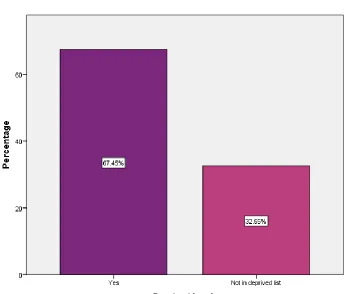
The variable ‘Deprived Leeds’ measures whether the service users reside in an area of Leeds that has been listed as amongst the 40% most deprived areas in Leeds. The majority of service users come from a deprived area in Leeds (67%) and only about one third from areas not residing in an area affected by deprivation.
19 A high percentage of service users had been unemployed over a year or had never worked (24%), followed by those who were in a managerial or professional job (16.98%). However, the highest percentage (29%) is represented by the category ‘unable to code’.
Fig. 3.3 Core occupation
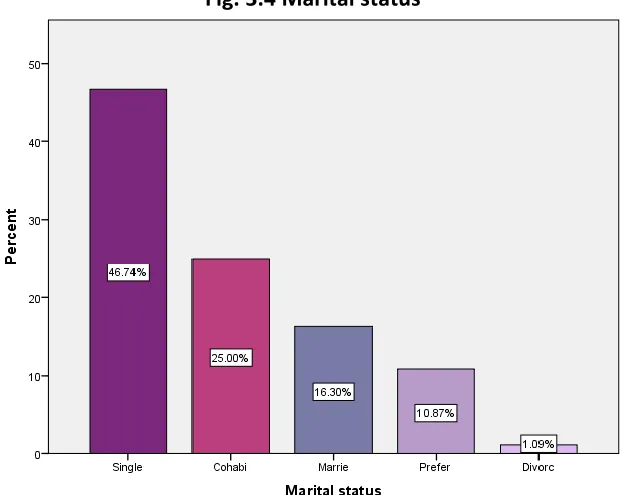
Almost half of the service users described themselves as single (45%), followed by those who were cohabiting (25%) and married (16%). Users who were either single parents (1%) or were divorced (1%) represented a much smaller percentage. About 10% of the participants
preferred not to state their marital status.
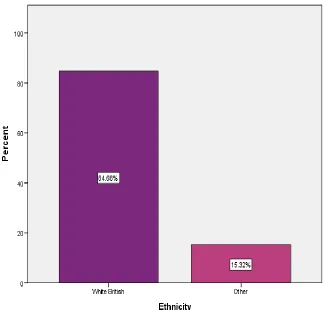
[image:21.596.145.459.514.762.2]In terms of ethnicity, the majority of service users described themselves as white British (84%), whereas the remaining 15% declared that they belonged to other ethnic backgrounds. This is consistent with the ethnicity rate measured by Leeds Observatory (2011).
21
[image:23.596.74.522.234.604.2]3.3.2 Health status
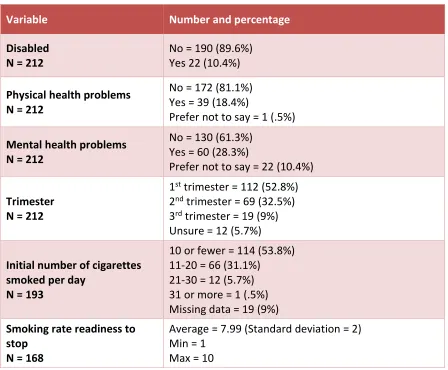
Table 3.3.2 shows health-related characteristics of the service users extracted from the monitoring data. It includes information about disability, physical health, mental health, the trimester of pregnancy at the time when the users joined the service, and the number of cigarettes smoked every day. The table also includes an index on a scale from 1 to 10 of how ready to quit (within the next 30 days) the service users reported feeling.
Table 3.3.2 Service users’ health status
Variable Number and percentage
Disabled N = 212
No = 190 (89.6%) Yes 22 (10.4%)
Physical health problems N = 212
No = 172 (81.1%) Yes = 39 (18.4%)
Prefer not to say = 1 (.5%)
Mental health problems N = 212
No = 130 (61.3%) Yes = 60 (28.3%)
Prefer not to say = 22 (10.4%)
Trimester N = 212
1st trimester = 112 (52.8%)
2nd trimester = 69 (32.5%)
3rd trimester = 19 (9%)
Unsure = 12 (5.7%)
Initial number of cigarettes smoked per day
N = 193
10 or fewer = 114 (53.8%) 11-20 = 66 (31.1%)
21-30 = 12 (5.7%) 31 or more = 1 (.5%) Missing data = 19 (9%)
Smoking rate readiness to stop
N = 168
Average = 7.99 (Standard deviation = 2) Min = 1
Max = 10
Fig. 3.6 Disability (Yes/No)
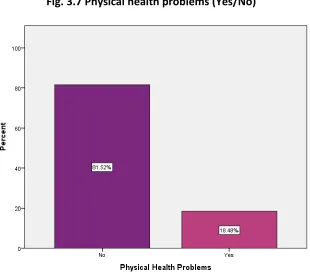
Similarly, most of the service users reported no physical health problem (81%).
Fig. 3.7 Physical health problems (Yes/No)
[image:24.596.147.457.419.696.2]23 can increase during pregnancy (NHS, 2019).
Fig. 3.8 Mental health problems (Yes/No)
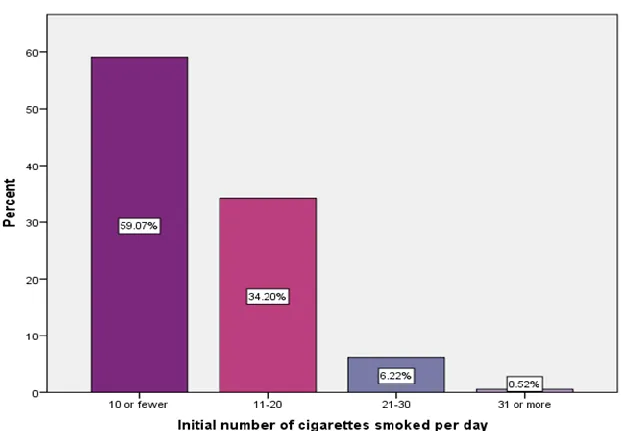
The majority of service users reported smoking 10 or fewer cigarettes a day (59%), followed by 34% who reported smoking between 11 and 20 cigarettes a day. Only 6% of users
reported smoking between 21 and 30 cigarettes a day, and 0.5% reported smoking 31 or more cigarettes a day.
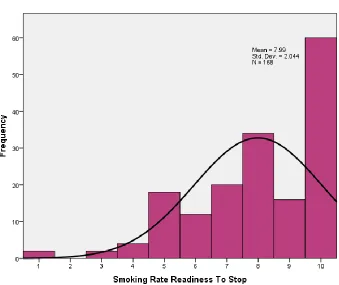
[image:25.596.145.456.507.723.2]Fig. 3.10 shows that the average level of self-reported readiness to stop smoking is about 8 on a scale from 1 to 10. As we can see from figure 3.10, a high number of users have given a score of 10, suggesting that service users report being keen to quit smoking.
25
[image:27.596.71.521.171.357.2]3.3.3 Service demographics
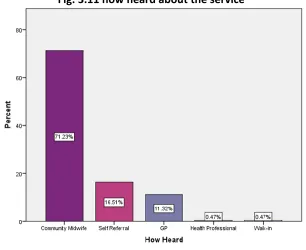
Table 3.3.3 reports information on how the users heard about the service and whether they attended an initial booking with a coach from One You Leeds.1
Table 3.3.3 Users’ relationship with service
Variable Number and percentage
Route in
N = 212 Community midwife = 151 (71.2%) Self-Referral = 35 (16.5%) GP = 24 (11.3%)
Health professional = 1 (.5%) Walk-in = 1 (.5%)
Initial attended?
N = 205 Cancelled or failed to attend = 12 (5.7%) Attended or attended late = 193 (91%)
Missing data = 7 (3.3%)
[image:27.596.147.453.466.716.2]The majority of service users stated that they heard about the service from a community midwife (71.2%). This is not surprising considering that the service adopts an opt-out policy according to which all pregnant women who are identified by a midwife as current smokers are directly referred to the service and invited to undertake the pathway with a coach. However, there is also a smaller yet noticeable percentage of women who self-referred (16%).
Fig. 3.11 how heard about the service
1The variable ‘How heard detail’ was not included in the analyses due to the high heterogeneity
The opt-out policy resulted in 91% of all the participants attending at least an initial meeting. However, we should still highlight that, there is still a small percentage of women who either cancelled or failed to attend their meeting (5%) and for a remaining 3% we do not have data to confirm whether they attended their initial meeting with a coach from One You Leeds.
[image:28.596.74.520.276.500.2]Treatment, monitoring, and outcomes
Table 3.3.4 reports information on the treatment some service users received during the pathway. It also contains information about self-reported cessation as well as level of CO for both users who attended the initial meeting and those who successfully completed the pathway.
Table 3.3.4 Service users’ treatment, monitoring, and outcome
Variable Number and percentage
NRT Supplied at any point N = 212
No = 27 (12.7%) Yes = 185 (87.3%)
Initial CO reading N = 212
Average = 28.23 (Standard deviation = 26.28) Min = 0
Max = 63
Quit review CO results N = 53
Average 1.19 (Standard deviation = 1.02) Min = 0
Max = 4 Quit Review Self-reported
cessation N = 212
27 Fig. 3.12 shows that the majority of service users were supplied with nicotine replacement therapy (NRT) at some point during the pathway (87%).
Fig. 3.12 Nicotine Replacement Therapy
As we can see from Fig. 3.13 overall, only about one quarter (25%) of the service users
[image:29.596.147.457.486.766.2]succeeded in quitting smoking. This is at least 4 times above the current national target of 6% or less at the time of delivery (NHS, 2019). However, we should also consider that only 33 out of 195 CCGs have managed to meet this target.
Amongst those who attended an initial meeting with their coach and then followed the pathway, 25% managed to quit smoking. However, as Table 5 shows there is also a very high percentage of women (68%), who despite having followed the pathway did not succeed in quitting smoking.
Table 3.5 Relationship between attendance to initial meeting and self-reported quit
In addition, this relationship is not significant, p = .7362, which means that we cannot rule out
that chance or other causes might have contributed to determine the success of the 25% of users who quit smoking.
For those who successfully managed to quit smoking, Fig. 3.14 shows a consistent drop in their level of CO, which went from an average of about 28 units down to about 1 (see light blue arrow). This change is highly statistically significant3, p = .001, CI [20.19, 34.74]4, and
shows a large effect size, d = 1.03.
2Result of Fisher’s exact test due to 25% of cells having expected count less than 5.
3Results derived by paired sample t-test
495% Bootstrapped Bias corrected Confidence Intervals
Initial meeting Self-reported quit
No Yes
Attended or attended
late 68.8% 25.4%
Cancelled or failed to
29 Fig. 3.14 CO level before and after quitting
This confirms that quitting smoking has a high impact on reducing levels of CO in the body, and this with have a positive impact on the physical health of both mother and baby.
3.4 Determinants of successful cessation
Amongst the variables included in the monitoring dataset, we searched for those that could predict the users’ chances of successfully completing the pathway and hence quit smoking. One of our hypotheses was that living in a deprived area or having a combination of health-related issues could negatively affect one’s chances of attending the initial meeting, engaging with the pathway and eventually quitting smoking.
Conversely, smoking a smaller initial number of cigarettes or feeling ready to quit smoking, or having nicotine replacement therapy during the course of the pathway could be positive predictors of success.
However, the results of our analyses5 revealed that none of the variables included in the
monitoring data are statistically significant predictors of quitting smoking.
Summary of monitoring data
•
212 pregnant smokers engaged with the service between September 2017 and the end of February 2019.• The demographic characteristics of the service users show that on average they were born around 1989, they come from a deprived area of Leeds, with at least one third of them not working or unemployed. Most of them are white British and single.
• In terms of health status, the majority of service users are not disabled and report physical health problems below the national average. They report smoking less than 10 cigarettes a day as well as a high level of readiness to quit smoking.
• One third of the users disclosed experiencing mental health problems. This is above the national average and therefore we advise further investigations around the nature of the problems reported. However, we should also be mindful that experiences of mental health problems can increase during pregnancy.
• The majority of users heard about the service from their community midwife. Midwives referred the majority of the women, but some service users self-referred.
• The opt-out policy adopted by One You Leeds is successfully ensuring that the majority of smoking pregnant women attend at least an initial meeting with a coach from One You Leeds.
31
3.4 Qualitative Interviews with Stakeholders
This section describes the findings derived from the analysis of the interviews, which were conducted with seven stakeholders, two coaches, and one midwife (n=10) all of whom have been involved in the project under evaluation.
3.4.1 Barriers and facilitators
Service changes
The main barrier that the services involved in the project had to face was the transition from the previous service and the setting up of the new one. This caused some initial delays and reduced referrals:
“…at the moment what we’ve got is the change over from providers at Leeds City Council cos it was Fresh Air Babies, and it’s now moved over to One You Leeds. And I think that- in the transfer over of that provision, caused a slowing down of the service.” (Stakeholder)
“I think there was an issue initially when we first…cross over between FAB and One You Leeds but I think that’s taken off now and our… our referrals have gone up.”
(Stakeholder)
The role of Midwives
Midwives play an important role throughout the project. They are the first professionals responsible for identifying the clients and then for referring them to One You Leeds. In addition, they provide support and monitoring during the period their clients undertake the pathway. Midwives require good communication skills to covey key information in a short period of time and to overcome resistance to giving up smoking, without coming across as judgemental:
“… a discussion about how the midwife can hold those… those very brief discussions with women within a fifteen, twenty-minute consultation… having a conversation with women to sort of say, you know- conversation stoppers to say you smoke do you realise that that’s a real concern during pregnancy for you and the baby, and to actually have a moment whereby the midwife can say but I can support you through this, you know there’s help out there.” (Stakeholder)
Conversely, a lack of communication or delivery of wrong information act as barriers and can have a negative impact on the uptake of the service and the success of the quit attempt:
“… it could be because we haven’t had enough conversations with them or more frequent conversations with them.” (Stakeholder)
from midwives if the midwives aren’t giving the right information out that can obviously make it worse!” (Coach)
“…making sure that the midwives are aware of things and how the midwives
communicate potentially with them about smoking?… I’ve had some participants you know sort of tell me that... their midwife can be quite judgemental… So, if the midwife’s pushing them maybe to do the stop smoking thing but they’re maybe doing it in a “you need to do that” sort of way, it might switch back, they might think I’m not having someone else telling me what to do.” (Coach)
One stakeholder suggested that more emphasis should be placed on midwives. They should be increased in number and placed within communities and also more attention should be given to their role. Some, for example, believe that midwives could be trained to support the clients throughout the pathway, rather than relying on external providers:
“…if you had a midwife doing the cessation, they could actually do the clinical care as well as the discussion about the stopping smoking. And then the woman might feel as if she’s being supported and you know carried with somebody through the pregnancy. Whereas I suppose if you give it to the outside provider, then you separate that off from the clinical care.” (Stakeholder)
For example, a proposal was made to use specialist-trained midwives that could support the clients in quitting smoking. This is based on the assumption that pregnant women trust their midwife and they see them regularly throughout the pregnancy:
“they trust midwives and they would be seeing them very regularly… so I think there should be strong consideration to having a model of aligning a service with these specialist midwives maybe one two or three people then, whatever the commissioners would consider.” (Stakeholder)
The role of Coaches
Coaches are another key figure within the service delivery model as they are responsible for taking on the referred clients, offering them appropriate support and delivering the right treatment throughout the pathway:
“…so, they sort of do behavioural change things and working with them to try and help them break habits as well as obviously offering the treatment and telling them how to use it and everything like that.” (Coach)
One of the things that helped coaches to deliver a better intervention is more time to spend with their clients:
33 bit more- rather than just seeing them to say hello and then giving them some
treatment, when they go it’s more looking into how they’re doing you know see what’s working well and what’s not, you’ve got that extra time to go into a bit more detail which is needed for a lot of people.” (Coach)
During their meetings with the clients the coaches use a combination of behavioural change and nicotine replacement therapy:
“That’s the main things really it’s a lot of behavioural change stuff and getting them to try and think of things themselves you know it’ll work for them if they’ve thought of it.” (Coach)
“…then look at behaviour change… we discuss what treatment there is so for pregnant people they can only have nicotine replacement therapy.” (Coach)
They prefer not to use a non-prescriptive approach, with positive reinforcements and reminders:
“…it’s what do they like to do or what helps calm them down, rather than us suggesting things…” (Coach)
“…you’re sort of giving the positive reinforcement as well reminding them how well they’re doing getting them to think about why they’re wanting to stop.” (Coach)
Similar to midwives, communication and a non-judgmental attitude are key to building a successful relationship with the clients:
“I think one of the most important things is to not be judgemental. It’s to be open and you know be empathetic with them because I think some of them do feel like they get judged and that can be quite hard for them which could be maybe another barrier for some that don’t do it, maybe they’re worried about that. But the role as a coach you’re not there to judge someone you’re there to help them and empathise so that is one of the most important things.” (Coach)
Coaches acknowledged that their clients can have relapses at some point during the pathway. In that case, they try to identify with them the reasons behind it, triggers, and alternative to smoking:
“…find out obviously how it’s been going, see if there’s anything that they’ve found particularly difficult, so if they have so for example if they do say “oh well I ended up smoking because something happened, and it upset me and stressed me out”, we’d then look at why they’ve turned to a cigarette…” (Coach)
“…so, in that case we would- we usually give like, say if they have a little lapse they have a few cigarettes we look at why, and plan going forward to not let that happen again.” (Coach)
thinking right what can you do, is there anything that you think you can do that’s gonna help relieve stress for you? You know and then they’ll think of idea that they might find useful for themselves and then it’s getting them to put that into place.” (Coach)
Working with Service users
The stakeholders identified a number of barriers faced by service users including social deprivation, upbringing, unsupportive social context:
“…obviously a lot of people that we help are form socially deprived areas and they do have quite a tough upbringing and a tough background, which obviously can impact the chance of stopping as well if things are really tough for them it can be a bit too much for them to stop smoking and dealing with other things…” (Coach)
“I think if they’ve been brought up and everyone’s sort of smoked in their family including say their mother, and they feel like they’re alright they don’t really believe it to be a problem.” (Stakeholder)
“If their partner smokes, that makes it even more difficult for the woman.” (Stakeholder)
Professionals reported that women frequently show a lack of knowledge about the risks of smoking during pregnancy:
“Some of them are quite surprised by the risks as well of smoking so it’s obviously they’re not aware of actually the damage that smoking can do to the baby and things, they’re shocked when you tell them the risks.” (Coach)
“…a lot of people come into pregnancy without even realising there is a risk of smoking in pregnancy…” (Midwife)
This can be further reinforced by personal and social beliefs, particularly if the woman had smoked through previous pregnancies:
“They’re in a social demographic that everybody smokes, and they have the feeling of well, everybody around me smokes and they’ve had babies and I’ve had previous- some of them have had previous babies and they’ve not been affected, you know babies grow normally and things like that, so they’ve never seen a consequence to it, so they kind of feel well everybody does it so I’m just gonna carry on.” (Midwife)
“For some women, there is a belief that smoking might relieve stress, others think that because their relatives might have healthy children despite them smoking, that means that smoking is not really so dangerous.” (Stakeholder)
35 pregnancy. For those who smoke, a cigarette is often used as a way of relieving stress:
“That they’re stressed, that that’s their stress release and it’s trying to work out if there’s any other ways that we can reduce their stress.” (Stakeholder)
“…women go through some stressful times when they’re pregnant, so they may go to a cigarette instead of something else to try and relieve that stress.” (Coach)
On the other hand, smoking women can also receive support if they decide to quit smoking:
“I think if one person is really gonna be committed to it, they need the support of others.” (Stakeholder)
Support can come from two main sources. The first is from the clients’ surrounding social network and family members, including their partner:
“…also, like social support, so if they’ve got like a strong social network of people supporting them in stopping then they’re more likely to succeed.” (Coach)
“I think having… family support makes a big difference and I think that that sometimes can be probably a factor that impacts it… is erm… their family social peer circle.” (Coach)
“Especially their partners who smoke. If they gave up at the same time, if they did so they’d certainly do a lot better.” (Coach)
The second area identified by stakeholders was the support that women received from the service, particularly from midwives and coaches:
“…there is smoking cessation midwives, there is smoking cessation team in general, they all get support.” (Stakeholder)
“I think having one-to-one support does make a big difference… giving them that one -to-one support so that maybe if they are in a bit of a stressful time of their lives, sometimes just gives them a bit of a release to get stuff off their chest which in itself can help cos that relieves a bit of stress for them. So, then they’ve got a better chance of stopping.” (Coach)
“…and obviously seeing someone weekly, we know it helps sort of having that consistency of like I’m gonna be seeing the smoking coach.” (Coach)
However, the stakeholders believe that without motivation even support could be ineffective, particularly for entrenched smokers, despite some report occasional success stories:
“…and then even if there’s other people saying it, “oh come on you need to stop it’s really bad for you and the baby” it’s like it doesn’t always sink in.” (Coach)
“It’s like anything isn’t it you’ve gotta want to stop yourself.” (Midwife)
“…I have had the odd one in the past that has been entrenched and has actually- has actually stopped or at least reduced dramatically, so I’ve had the occasional success story.” (Midwife)
In fact, motivation and commitment are considered key to undertaking the pathway and quitting smoking:
“…for some people they do really want to stop smoking and so… regardless of how it is you know they want to stop.” (Coach)
“I think for some of them it is the fact that they’re not choosing to stop smoking they’ve been told and it’s an addiction and if you don’t wanna stop you’re not gonna stop… Even if someone’s telling you you should stop, you have to want to do it and I think for some people even though they’re pregnant and it’s a risk to the baby that’s still not a big enough motivation for them to stop.” (Coach)
Coaches discussed how motivated self-referred women were more likely to quit smoking than those referred by midwives:
“I think one of the issues is that some of them get referred by the midwife, but they don’t actually want to stop smoking.” (Coach)
“…the first thing they say like when I say “what’s brought you here today” at the first session, if they say “oh I’ve been referred by my midwife and I need to stop” then it’s less chance of them being successful where as if they want to stop themselves they ring up us, get referred on, so they can be a bit more successful in that way if they want to do it rather than being forced to do it… if they come and say I’ve been referred by my midwife, they don’t really have much motivation themselves in wanting to stop. It can be a bit more unsuccessful.” (Coach)
However, this view is not endorsed by the quantitative data, which has found no statistically significant relationship between self-referral and chances to quit smoking.
3.4.2 Project and pathway
37 Overall view
The stakeholders generally held a positive view of the project and the pathway in particular. Initially, some stakeholders reported facing an initial lack of clarity:
“From the meetings I attended I still found it quite… unclear, about actually how the project was going, how it was- how the figures were being pulled together… it felt quite disorganised to me.” (Stakeholder)
As discussed earlier, this was probably due to the transition from the previous service and the setting up of the new project and the pathway:
“It’s been a bit of a slow introduction of embedding into what they do and sharing the communications about what they do and the contact numbers et cetera.” (Stakeholder)
After things became more settled, the perspective became more positive:
“But now that One You Leeds are becoming more mature as a team and more… you
know, obviously… getting the different pathways that they work with more clear, it’s improving.” (Stakeholder)
The stakeholders also believe that, in time, the service will further improve:
“So, it’s yet to be seen so it’s quite new at the moment, but we will know in say six to nine- six to twelve months’ time cos it’s not something that would show, like straight away…it’s a new thing, so over a period of time we should be able to make the most of this. And say… fruitful.” (Stakeholder)
What the stakeholders appreciated in particular is the holistic and health-promotion approach that the pathway has adopted:
“I like the idea that they are multifactorial, that they do- they don’t just do smoking but they do the- you know the healthy living activities, and I like the psychological approach and I think they’ve got some excellent leaders now who are engaging with other areas to actually work together for this.” (Stakeholder)
“I think what I like about this project is that actually it is very much from a public health point of view, so you know sort of the- the emotional wellbeing, physical education et cetera et cetera. I like that they’re trying to align things together.” (Stakeholder)
Pathway approach, structure and uptake
systematic, structured, and aligned to clear guidelines:
“I think this is more detailed really. I’d say this is more detailed, and more structured and then there’s a process attached to it.” (Stakeholder)
While still being flexible enough to meet the client’s needs. Home visits are one of the main options offered:
“…what we do is initially we offer them an appointment within a week at a clinic…if they can’t get to one or if for some reason they prefer to not go to a clinic it might be that they… you know don’t want people to know that they’re smoking and they’re pregnant, or it could be just that they struggle to get out and about if they’ve got something wrong with them or if they’re heavily pregnant it might be more difficult, sometimes it’s due to location as well, so if they’re a bit further out of Leeds… we would do a home visit.” (Coach)
In addition, coaches offer different options for treatment, both pharmaceutical and psychological:
“So that you can kind of work out what strength patch you know for the woman’s needs. And then we discuss the secondary product, what we think is gonna work best for them, so some people will like a mouth spray cos it’s fast acting, others like the lozenges cos they take time and that gives them something to do…” (Coach)
“…I think having one-to-one support does make a big difference, because if they- rather than just giving someone treatment and saying “there you go, stop smoking” I don’t think that’s enough I think you have to be able to look at why they smoke, what
triggers them to smoke… but also giving them that one-to-one support so that maybe if they are in a bit of a stressful time of their lives, sometimes just gives them a bit of a release to get stuff off their chest which in itself can help cos that relieves a bit of stress for them. So, then they’ve got a better chance of stopping.” (Coach)
Another element of flexibility reported by stakeholders lies in the possibility of extending the pathway to the users’ partner and other family members. This in particular, seems to be quite effective in helping the users quit smoking. This is consistent with the view expressed above, that social and family support is an important facilitator of quitting smoking during pregnancy:
“…so last week I just signed a pregnant lady off who came with her partner, so he signed up as well, so they stopped together. They used different treatments, but yeah they came together and found it much easier… if they are smokers and want to come on the programme, so we can support any other family members like mothers, I don’t know… children as well…” (Coach)
Clients have also the opportunity to pause or even restart the pathway from the beginning in case they need it:
39
if they felt you know… maybe sometimes it’s just that it’s not quite the right time but maybe in a few weeks; time when they’ve for example calmed down, and they feel ready again they could re- yeah they could start again.” (Coach)
Lastly, the service can offer additional support even after the clients have reached their target:
“We can still see them after their twelve weeks, it’s just that after the twelve weeks that’s it, if they want to come back in another four weeks, we can do that. Which can be quite beneficial, if they do need that extra support.” (Coach)
Despite the various options of support and the use a person-centred approach and tailored pathway around the users’ needs, the stakeholders still expressed concerns about the uptake of the pathway. The number of referrals has gradually gone up and this is attributed to the opt-out approach, which had definitely contributed to increase at least the number of initial bookings:
“I think that is… for me that’s very proactive in trying to get people to go forward… because actually it’s something that’s quite clear that actually women, if they have got a carbon dioxide reading would be referred on, rather than people being asked at that stage. So, I think that is… for me that’s very proactive in trying to get people to go forward.” (Stakeholder)
However, the stakeholders were aware that smoking pregnant women are a very hard to engage population. Many, although referred, will still not engage with the service:
“Oh, yeah yeah yeah. Mostly, mostly they are, but some actually say they are happy, but they don’t turn up to their appointment. At the face value most women will accept the referral.” (Stakeholder)
“…they’ll book them an appointment in and then they’ll either cancel it or not show or somebody might show, and they don’t answer the door. That can happen. Or they might engage in the first appointment but then disengage after that… and, yeah.” (Coach)
And this was again mainly attributed to the users’ motivation:
“Again, the resistant ones are the ones that don’t actually want to stop… again, their motivation.” (Coach)
“…getting women on board is the difficult part. I think once they decide they want to quit everything becomes… everything falls in place.” (Stakeholder)
is “no, I’ve not planned to stop and that’s it.” (Midwife)
In this case, the stakeholders recommend keeping the users encouraged as a mechanism to ensure continued engagement with the service:
“…every time we see a smoker we would again do her CO reading and then if she hasn’t agreed- has not agreed to go with the One You Leeds then we would again try and advise her to attend- to book with them. And the non-smokers again we would do it again at thirty-six weeks’ contact as well.” (Stakeholder)
In fact, they believed that once women are engaged and reach some first goals that this increases their chances of success:
“If you get to your four week quit point, you’re more likely to stay stopped.” (Coach)
However, there are limits to the number of times they can remind them without appearing too forceful and compromising the relationship with their clients as a consequence
“And even though I go through the risks again with them at that and you know they say, “no I understand everything and I’m happy with what I’m doing” so… obviously I don’t push it any further at that point because you know I’ve tried to maintain a relationship with them as well.” (Midwife)
Stakeholders held mixed views about the monetary incentive. Some believe it had a positive effect:
“…most pregnant ladies take it on board they’re obviously quite happy that if they do stop they can spend money on clothes for baby and things like that so… yeah it does impact it quite well.” (Coach)
Others are more skeptical about the quantity and the uptake from the service users
“I’m not sure if it does make that muchof a difference if I’m honest! I dunno cos some people are like “ooh good” but then others it doesn’t seem to… bother them that much. I think like I say if they’re not bothered about stopping, even that doesn’t persuade them.” (Coach)
3.4.3 Partnership and networking
One of the things that the stakeholders appreciated about being involved in the project is working in partnership:
“…I think it’s the partnership working, and the fact that midwifery or maternity services are almost having to share the pregnancy pathway with other organisations so it’s not just the midwives’ role, whereas before everything used to sit with the midwife,
41
have the skills and organisation to actually pick this up and go with it so that’s been sort of like a learning is thinking it doesn’t actually have to be all the midwives’
responsibility, or maternity. There is… other people will do it, and then… so I think that is one of the learning.” (Stakeholder)
However, the stakeholders sometimes showed a lack of knowledge about how all the different aspects of the project are related together. For example, there is a lack of knowledge about the midwives’ referral work from the part of the coaches:
“I’d say that’s a tough one for me to answer because I don’t deal with that side as much because I get the things passed on from my admin team, so I don’t know how well the midwives are referring or not.” (Coach)
“The actual pathway of the intervention is the One You Leeds pathway. And the one which I’m not aware of… of how they organise or structure that one.” (Stakeholder)
There was also a lack of knowledge from the midwife about the how the pathway works:
“…don’t know exactly, I don’t. But yeah, I’ll be honest I don’t get too involved with that side of it I’ve got enough going on myself!” (Midwife)
The lack of knowledge is sometimes coupled with a lack of communication between coaches and midwives, particularly about the referral process, and that can create sometimes delays for the service users:
“I have had feedback sometimes from participants that they’ve said… “my midwife said they’ve referred me and then I’ve been waiting months and not heard anything” so that is indicating to me there could be something where either the midwives think they’ve referred them and haven’t or for some reason we’ve not picked it up but I think as far as I’m aware we do quite good at picking up the referrals that we get so yeah.” (Coach)
Services also sometimes do not communicate effectively with each other:
“I think there is a level of assumption that people know, perhaps from a commissioning point of view or from the- from the actual service itself that we’re all clear about what is being offered. And again, I don’t think we are, so it is back to that absolute
transparency and that clarity about what is on offer.” (Stakeholder)
This might be just an isolated case but still suggests it is important for the whole team to ensure that the knowledge is shared amongst all the stakeholders involved in the project.
3.4.4 Training
Training is one of the fundamental aspects of the project. It is important to teach