ISSN: 1992-8645 www.jatit.org E-ISSN: 1817-3195
131
WEB-BASED GIS MAPPING FOR GEOTHERMAL
RESOURCES POTENTIAL IN WEST SUMATRA
1
YUHENDRA 1
Department of Informatics Engineering, Padang Institute of Technology
Padang (West-Sumatra), Indonesia
E-mail: [email protected]
ABSTRACT
Geothermal energy is one of the renewable power sources which can be an alternative to the increasingly more scarce fossil fuel. Especially, West-Sumatera is one of region in Indonesia located at the ring of fire, has an abundant potential for geothermal energies. The proposed of research address was development of based mapping application and identifying potential areas for geothermal exploration. We use web-based GIS (also called internet GIS or on line GIS) application for standards software packages to develop an interactive web mapping portal for spatial analysis. The resulting system as for resources information system tools in decision support system (DSS) to helping and managing the company’s geothermal resources for key decision making, planning and also provides the users with an innovative and interactive way to access the spatial content over the internet/intranet. The service application provides a variety of functionalities such as; browse map mode, querying, navigation system, user requiring service, search region and displaying geothermal well properties e.g. megawatt capacity, map editing and printing from the web interface.
Keywords: West-Sumatra, Mapping, Web-based GIS, Decision Support System, Geothermal Energy,
Resources Information System
1. INTRODUCTION
Geothermal energy is energy derived from the heat contained in the earth. It is clean, abundant, and reliable. Renewable energy is generally defined as energy that comes from resources that are constantly replaced in nature on a human timescale such as sunlight, wind, rain, tides, waves and geothermal heat, this is why is commonly accepted as the key for future life in the world (Ramachandra, 2007). The requirement of energy is increasing as people growth. According to Gupta & Roy (2011), there is 50% of energy consumption from 1980-2003, caused by increasing of people growth as much as 42% worldwide, especially in developing countries. From this fact, it can be estimated that the demand of energy will increase 57% by 2025.
Indonesia is one of country has an abundant potential for geothermal energies. It’s located at the ring of fire. The available of geothermal resources potential in Indonesia is amount of 276 location in Sumatra, Java, Bali, Kalimantan, Nusa Tenggara, Maluku, Sulawesi, Halmahera and Irian Jaya Area with a total energy of 27.354 MWe (Mega Watt
equivalent). But the developed power only reach
196 MW, or about 40% of the total potential (Sukhyar, 2011). A mapping and management of the geothermal resources have become a necessity utilizing modern technological tools like geographic information systems (GIS). Over the recent years, advancement of internet has become the major carrier of information around the globe, offering increased accessibility and mobility. Beyond data sharing, the integration of the World-Wide Web (WWW) with Web-based GIS System technologies (Web GIS) is becoming prominent, as companies and institutions around the globe realize the significance of Web GIS applications in Spatial Decision Support Systems.
Recent years have seen an enormous increase in the number of web-based applications that use techniques derived from GIS (Singh et al.,2012; Ebenzer, 2012, Kodge et al., 2012). In application, a GIS should be capable of six fundamental operations in order to be useful for finding solutions to real-world problems, such as capture data, store data, query data, analyze data, display data and output data.
A Web-Based GIS (also called internet GIS or
on line GIS) is a network-based geographic
ISSN: 1992-8645 www.jatit.org E-ISSN: 1817-3195
132 wireless Internet to access geographic information and analytical tools in delivering GIS services (Kodge, et.al, 2012). Tom Bernhardsen (1999) defines GIS as a system that captures, stores, manage, manipulates, retrieve and analyze geographic or spatial data through computer hardware/software and other cartographic special devices to create map products. This technology is capable to managing, analyzing, integrating and displaying various forms of geographically referenced information. The spatial information comes from digital mapping being used in spatial decision support systems (DSS). The ability of GIS to integrate maps and data bases, using the geography as the common feature among them has been extremely effective in the context of planning development. And also Web-based GIS applications could provide more sophisticated cartography and spatial visualization features (Lu et al., 2003).
In this work, the design and architecture of the Web Map Server (WMS) is presented and discussed. WMS provides data sharing, visualization of geospatial data and spatial decision support services for environmental planning and management (Sakamoto & Fukui, 2004).
The main contribution of this work is that, by using state-of-the-art web development technologies using MapInfo Professional GIS tools and as a road map for geothermal resources management, especially in West Sumatra province.
2. STUDY AREA
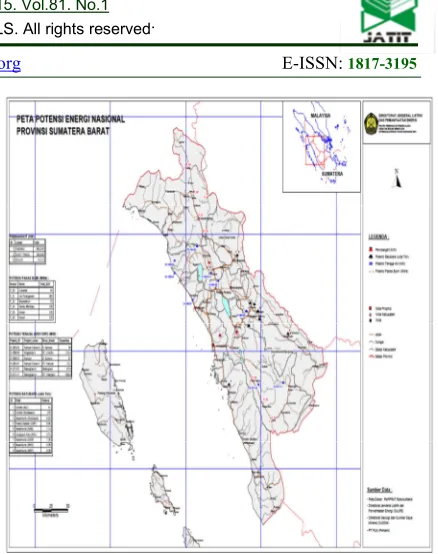
[image:2.612.313.532.50.327.2]The study area in this case study is located West Sumatra in Indonesia with the geographic coordinates of 1°00′S 100°30′E. In the geologist, this province is located in active volcano formed by the Barisan mountain range that runs from north-west to south-east, and an offshore island archipelago called the Mentawai Islands. In this study they are 16 location point for geothermal resources potential in 5 district area in West-Sumatera such as Pasaman, Agam, Solok, Tanah Datar and 50 Kota (see figure 1).
Figure 1: Map of Energy Resources in West Sumatra Province
3. DEVELOPMENT WEB TECHNOLOGIES
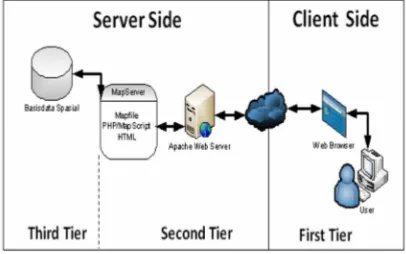
A WMS is a standard protocol for serving geo-referenced map images over the Internet that was generated by a Map Server using GIS data. The Map Server is an Open Source platform environment for publishing spatial data and interactive mapping applications to the web have been used as spatial data server. It creates map images from spatial information stored in digital format. Map Server consists of three different components: map file, template files and the CGI program. The map file needs to set cartographic parameters, cartographic objects, data loading, classification, displaying and querying and graphic elements definition and use. It is implemented using Map Server software’s built-in object oriented scripting language with which it is possible to design how to create and use the maps and their layers.
Figure 2: Server Side Mode WWW
Browse r
HTTP Server
Map Server
GIS Interface
GIS Software
Application Development
[image:2.612.311.539.597.709.2]ISSN: 1992-8645 www.jatit.org E-ISSN: 1817-3195
133 For users wishing to develop web-based mapping applications, a number of web GIS application development tools are available nowadays such as open source (Singh, 2012) and commercial platform have become more popular.
Web-based GIS applications have client/server architecture, which has a client side and a server side. In this architecture users interact with the GIS application through a browser. The web browser is a client which performs presentation functions while the web server is to be considering as a remote server which performs data storage, extraction and processing (Alesheikh et al. 2002; Soltanieh et al. 2003). On the server side sides the GIS database and applications to process the user’s request. On the client side is a user interface within a web browser. Whenever a user submits a request, the server processes the request with the GIS application program and returns the result to the user. Other Client side platform desktop GIS software program commercial software packages such as ESRI ArcView and MapInfo Professional are used. Since it is offer robust GIS capabilities and the programs enable users to view, edit geographic data, produce high quality cartographic maps, and perform advanced spatial analysis. It is make it possible to deliver GIS maps and data to individuals using only a web browser. Users may access these applications over the Internet or via a local Intranet connection. The maps may either be static graphics (such as .pdf or .jpg files), or interactive applications that allow users to zoom in and out, turn layers on and off and perform basic inquiries. Interactive web-based GIS applications utilize central map and web server technologies to manage information requests and deliver maps and data to remote users. With web-based GIS, the technology has evolved from web map publishing to web-GIS mapping.
In figure 2, a mapping application is using dynamic web browser. It is enable to choose features that will be displayed, such as the scale, location etc. And then the web browser displays the map as an image. By changing the parameters, users can generate and view a new map. The server side has geographic data, GIS soft wares, and an interface program. The flow processing of GIS design as shown in the figure 2. At the basic level, publishing geospatial data on the internet needs a web server and a set of maps. The maps should be supplied in a format web browser.
The standard web browser communicates with the web server is called Hyper-Text Transfer
Protocol (HTTP). The HTTP is the standard for
transferring World Wide Web documents. In a dynamic configuration side, the HTTP server is
connected to a Map Server with GIS software installed, which is able to generate maps on request. This request is processed by the GIS server. The result will be sent to the browser. A server with GIS functions is called an Internet Map Server. It is a standard protocol for serving geo-referenced map images over the Internet. Since there are many ways to link the HTTP server with the GIS server through interface programs in this research.
4. DEVELOPMENT METHODOLOGY
4.1 Data Processing
This basically involves preparing data for use within the GIS system. This involved projecting the raster and vector data to their required reference system using tools available within the GIS application software’s. Data processing also involved creating fields for each specific feature class so as to include non-spatial attributes of each feature object to be stored in the geo-database. Generally, the tasks involved were assignment of map co-ordinates and spatial location, transforming between different reference systems, creating fields and assigning attributes to individual features. All the datasets in the geo-database were projected to a common coordinate system. Data was added in form of layers to the map created in Map Info Professional as shown in the figure 4.
4.2Database Standart
The database is an important part of web applications. In the case of GIS web-based applications, it becomes more important because of the storage requirements of geographically referenced data. Once the geographically referenced data are in a database, they can be used and displayed in the form of maps by the web-based application. Thus the performance of a database has a direct impact upon the performance of the web application.
The data was then exported to SQL (Structure
Query Languages) relational database management
ISSN: 1992-8645 www.jatit.org E-ISSN: 1817-3195
134
4.3 Web Application Development
Development standards describe the choice of an appropriate development technology for the web application. Web applications developed in PHP
(Hypertext Preprocessor) and HTML (Hypertext
markup Language), which is an open source
technology used to develop web applications. A web application often stores temporary data in files or communicates with other web applications over the web. For Common communication protocols used to enhance the performance of the web application is HTTP (Hypertext Transfer Protocol). Use of a common communications protocol enhances the performance of the web application because the information contained in the application need not be converted into the application data format. Data sent by the other web application or service can be used directly by the caller web application and this enhances the response time to users.
4.4 MAP Development
[image:4.612.92.295.495.622.2]The content of the internet map that would be seen by a user was developed using Map server application. The Map Server is an Open Source platform environment for publishing spatial data and interactive mapping applications to the web have been used as spatial data server. It creates map images from spatial information stored in digital format. All information concerning the map to be served, its color properties, the layers definition and many other attributes are configured from the Map file.
Figure 3: Map Server side mode
Map Server consists of three different components: map file, template files and the CGI program. The map file needs to set cartographic parameters, cartographic objects, data loading, classification, displaying and querying and graphic elements definition and use. It is implemented using Map Server software’s built-in object oriented scripting
language with which it is possible to design how to create and use the maps and their layers. In the operation, Map Server can operate in two different modes: Map Script APIs and via a CGI executable. In this mode, the rendering depends on two files: the configuration file “map file” and the HTML template. The map file is an ASCII file which defines the data objects used to produce the map. The template file is an HTML file with tagged replaceable parameters enclosed within square brackets. Map Server processes each replaceable parameter in the template file and returns the result.
In design of data format from raster map to digital map is created in MapInfo Professional 10.5 (figure 4). A digitations map is used in to register digital images through the software applications. This step was very important work to input the position control point in geographic coordinates. To creates the map areas using the layers tool that is available facilities. We can add a new map layer and the combines with other layer with the click on menu that created region area map. In digitations process, we must convert the image file to shape file format using a Map Server through the Map Info software.
Digitations MapInfo
Registration
ISSN: 1992-8645 www.jatit.org E-ISSN: 1817-3195
135 Figure 4: Map design flow
5. RESULT
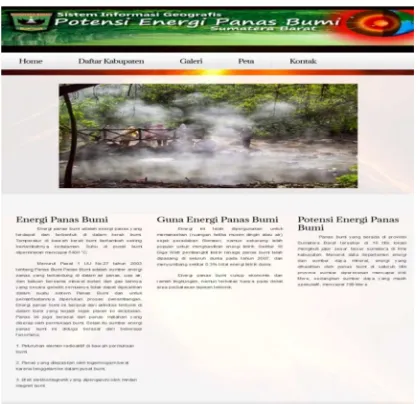
[image:5.612.91.300.465.667.2]The Web-based GIS mapping of geothermal potential resources information system was developed in Figures (5-7).
Figure 5: Web-based GIS mapping portal It is application is to provide a powerful application with a simple and user friendly interface which a user with no GIS experience and knowledge of
using the GIS tools should be able to navigate through the system without any confusion. The portals service (figure 5) provides a variety of information such as; list of region, gallery, map and contact. A user can browser a list of regions area contain the information about a location and energy capacity information in MWe (Mega Watt
equivalent). The application is easy to use and it
provides a valuable resource for accessing spatial datasets. In order to be useful for finding solutions to real-world problems. A GIS should be able to capture data, store, query, analyze, display and output data.
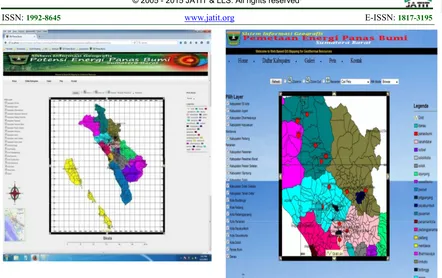
In map display (figure 6), a variety of tool functionalities are divided into the following categories as follows;
•Map Navigation Tools (Mode Browse) – Zoom
In, Zoom Out, Zoom to Full Map, Re-center
•Attribute Data Retrieval Tools – Identify,
Select layer , Query, information layer
•Other Tools –Scale, Select Feature, and Print A map display give information about the distribution point of geothermal resources in each area in West Sumatra. In the left side map, information about layer is given. It is consist of a 19 layers (Agam, Dharmasraya, Mentawai island, Lima Puluh Kota, Padang Pariaman, Pasaman, Pasaman Barat, Pesisir Selatan, Sijunjung, Solok, Solok Selatan and Tanah Datar regency, Bukittinggi, Padang, Padangpanjang, Pariaman , Payakumbuh, Sawahlunto and Solok city). On right side, areas location based color region. A user can easily to find the distribution mapping of geothermal resources each location. We are only selected a layer menu or write the name of area in button search facility. And others facilities, we can retrieve information using identify.
ISSN: 1992-8645 www.jatit.org E-ISSN: 1817-3195
[image:6.612.89.531.64.342.2]136 Figure 6: Web-based GIS Map Display
6. CONCLUSIONS AND FUTURE
RESSEARCH
This paper presented WMS, a web-based GIS for standards software tools. Careful integration of these packages and the use of state-of-the-art web programming techniques resulted in a powerful and robust Web GIS. This system was developed to make identification and mapping distribution of West Sumatra geothermal Potential location area. A User can also easily find geothermal information on target areas using the Internet and save the results as a figure or as spreadsheet data. During the research project a geothermal resource database was created. The database in conjuction with the application allows various users to access information quickly and efficiently. In the future, geothermal information system is being improved for advanced analysis must be combine with remote sensing application using data satellite will be investigated.
Figure 7: Display Map Region of Geothermal Resources
7.
ACKNOWLEDGEMENTS
We would like to thank Energy and Mineral Natural Resources government to provide the data. The research is supported by Indonesia Higher of Education (DIKTI). And especially for anonymous reviewer for valuable comments and suggestions.
REFERENCES:
[1] Bernhardsen, T. 1999. Geographic Information Systems, an Introduction(2nd edition) Wiley, [2] Ebenzer, Y.O, 2012. Developing resources database with Nigeriasat-1 Satellite data and geographical information system, The Egyptian journal of remote sensing and space sciences ,15, 207-214.
[3] Puyam S. Singh, et.al., 2012. Development of a Web Based GIS Application for Spatial Natural Resources Information System Using Effective Open Source Software and Standards, Journal of Geographic Information System, 2012, 4, 261-266.
[4] Martin,D, Atkinson, P, 2000. Editorial:
Innovation in GIS application, Journal of
ISSN: 1992-8645 www.jatit.org E-ISSN: 1817-3195
137 [5] Peng, Z. R. and Tsou, M.2003 Internet GIS:
Distributed eographic Information Services for the Internet and Wireless Networks John Wiles and Sons Inc. Hoboken, NJ, USA. p. xxv.
Ramachandra T. V. 2007 Solar energy potential assessment using GIS .Energy Education Science and Technology 18(2): 101-114. [6] Tsou, M. (2004). Present Realities and the
Future of Internet GIS.GISDevelopment
[7] Kodge B. G, and Hiremath P. S. 2012.Web
based Geo-Spatial and Village Level
Information Extraction System using FOSS,
Journal of Advances in Information Technology, 3(4),222-227
[8] Caldeweyher, D., Jinglan Zhang & Pham, B., 2006. OpenCIS-open source GIS-based Web community information system. International
Journal of Geographical Information Science,
20(8), 885-98.
[9] Soltanieh, S.M.K., Alesheikh, A.A. & Mohammadi, H., 2003. Design and implementation of a web-based GIS for the Iranian Roads Information. Available at: http://www.gisdevelopment.net/technology/gi s/mi0363.htm
[10] Alesheikh, A., Helali, H. & Behroz, H., 2002. Web GIS: Technologies and Its Applications.
Symposium on Geospatial Theory, Processing
and Applications, 15.
[11] Chan Kim, H., Baek, S.G.,Park, J., 2010. Construction of Geothermal Information Database for Korea Based on Web GIS. Proceedings World Geothermal Congress 2010 Bali, Indonesia.
[12] Lu, C. T., Kou, Y.,Wang, H., Shekhar, S., Zhang, P. & Liu, R.,“Two web-based spatial data visualization and mining systems: Mapcube & Mapview”, 2003, Proc. Next-Generation Geospatial Information Systems (NG2I’03).