O R I G I N A L R E S E A R C H
Optimization of Processing Parameters of
Nanoemulsion Containing Aripiprazole Using
Response Surface Methodology
This article was published in the following Dove Press journal: International Journal of Nanomedicine
Wan Sarah Samiun 1
Siti Efliza Ashari 1,2
Norazlinaliza Salim 1,2
Syahida Ahmad 3
1Integrated Chemical Biophysics Research, Faculty of Science, Universiti Putra Malaysia, Serdang 43400, Selangor, Malaysia;2Centre of Foundation Studies for Agricultural Sciences, Universiti Putra Malaysia, Serdang 43400, Selangor, Malaysia;3Department of Biochemistry, Faculty of Biotechnology and Biomolecular Sciences, Universiti Putra Malaysia, Serdang 43400, Selangor, Malaysia
Background:Aripiprazole, which is a quinolinone derivative, has been widely used to treat schizophrenia, major depressive disorder, and bipolar disorder.
Purpose: A Central Composite Rotatable Design (CCRD) of Response Surface Methodology (RSM) was used purposely to optimize process parameters conditions for formulating nanoemulsion containing aripiprazole using high emulsification methods.
Methods: This design is used to investigate the influences of four independent variables (overhead stirring time (A), shear rate (B), shear time (C), and the cycle of high-pressure homogenizer (D)) on the response variable namely, a droplet size (Y) of nanoemulsion containing aripiprazole.
Results: The optimum conditions suggested by the predicted model were: 120 min of overhead stirring time, 15 min of high shear homogenizer time, 4400 rpm of high shear homogenizer rate and 11 cycles of high-pressure homogenizer, giving a desirable droplet size of nanoemulsion containing aripiprazole of 64.52 nm for experimental value and 62.59 nm for predicted value. The analysis of variance (ANOVA) showed the quadratic polynomial
fitted the experimental values with F-value (9.53), a low p-value (0.0003) and a non-significant lack of-fit. It proved that the models were adequate to predict the relevance response. The optimized formulation with a viscosity value of 3.72 mPa.s and pH value of 7.4 showed good osmolality value (297 mOsm/kg) and remained stable for three months in three different temperatures (4°C, 25°C, and 45°C).
Conclusion: This proven that response surface methodology is an efficient tool to produce desirable droplet size of nanoemulsion containing aripiprazole for parenteral delivery application.
Keywords: aripiprazole, antipsychotic drug, APD, schizophrenia, nanoemulsion, response surface methodology, RSM, palm kernel oil esters, PKOES
Introduction
Schizophrenia is a serious and chronic mental disorder that affects 1% of the world
population nowadays.1 This mental disorder is categorized by positive symptoms
which are hallucinations, delusions and deranged thoughts, while negative symp-toms of schizophrenia are loss of motivation, restricted emotional experience,
poverty of speech and cognitive impairment. Dopamine theory is the first
hypoth-esis created that could clarify the pathophysiology of this mental disorder which
imputed an important role in dopamine system dysregulation.2–5
Recently, treatment for schizophrenia using aripiprazole has gained growing attention in a current psychiatric hospital. Aripiprazole is an atypical antipsychotic
Correspondence: Wan Sarah Samiun; Siti Efliza Ashari
Integrated Chemical Biophysics Research, Faculty of Science, Universiti Putra Malaysia, Serdang 43400, Selangor, Malaysia Tel +603-8946 6997
Email ctefl[email protected]; [email protected]
International Journal of Nanomedicine
Dove
press
open access to scientific and medical research
Open Access Full Text Article
International Journal of Nanomedicine downloaded from https://www.dovepress.com/ by 118.70.13.36 on 24-Aug-2020
drug which is a third generation antipsychotic drug (APD)
with better therapeutic efficacy in managing the symptoms
of schizophrenia, a minimum incidence of extrapyramidal
side effects (EPS) and weight gain side effects.6–9
Aripiprazole, which is a quinolinone derivative, has been widely used to treat schizophrenia, major depressive
dis-order, and bipolar disorder. For treatment with
a recommended target dose of 10 to 15 mg per day, aripi-prazole has been proved to give potent treatment for posi-tive and negaposi-tive symptoms.10,11
Schizophrenia disorder is mostly connected to the Central Nervous System (CNS) in the body and a
well-developed CNS has a blood-brain barrier (BBB).12 The
function of BBB is to block any macromolecules from
accessing the brain.13However, the drug deliveries to the
brain is a massive challenge due to the existence of the BBB. The BBB is a specialized system of capillary endothelial cells that isolated the brain from the systemic circulation to maintain a stable environment for a proper function of the nervous tissue.14
The BBB has a strict limitation for transportation into the brain through both metabolic (enzymes) and physical (tight junctions) barrier. On the other hand, the peripheral capil-laries only allow a relatively free exchange of substances across or between the cells. Thus, the BBB is considered the rate-limiting factor in investigating permeation of therapeutic agents into the CNS.15Numerous drug delivery and targeting strategies have been developed to overcome this problem.
Disruption of the BBB, chemical modification, molecular
antibody technology, and various carrier systems have been used as a transport and the distribution of the therapeutic
drugs into the brain.16 One of the promising strategies to
enhance the drug delivery into the brain is by introducing the drug into the nanoemulsion system.
Nanoemulsion is an emulsion from one immiscible liquid dispersed as droplets within another liquid which are oil-in-water (O/W) or oil-in-water-in-oil (W/O) emulsion where the aver-age droplet diameter is between 20–200 nm.17Nanoemulsion system is one of the potential strategies for efficient delivery of lipophilic active across the BBB owing to their nano-sized, biocompatible, biodegradable, superior physical stability,
and massive scale production convenience.18
In recent years, Response Surface Methadology (RSM) has been used as one of the multivariate statistical techniques
for numerous optimization studies.19 RSM was first
intro-duced by Box and collaborators in the 1950s.20It can be used to investigate the relationship and interaction of independent
variables on the response variables by involving
mathematical models and statistical techniques.19 Utilizing
RSM for optimization studies will require fewer
experiments.21 RSM was employed in the enhancement of
CNS therapeautic drugs such as valproic acid-loaded nanoe-mulsion, sorafenib-encapsulated nanoenanoe-mulsion, and chlor-amphenicol-encapsulated nanoemulsion.22–24
From previous work, nanoemulsions containing aripipra-zole were successfully developed utilizing high pressure homogenizer with a homogenization pressure of 1000 bar for 14 cycles by optimizing the compositions of formulation nanoemulsion.25,26In this work, RSM was utilized to identify the optimum processing parameters of encapsulation nanoe-mulsion containing aripiprazole by using the same optimum formulation from previous work. The influences of four inde-pendent variables, including overhead stirring time, shear time, shear rate, and the cycle of high-pressure homogenizer were studied on a response variable, namely droplet size by using CCRD. This design is deployed to reduce the number of experiments with the desirable result under optimum process parameters conditions and also enhance the drug encapsulated
efficiency of the nanoemulsion. The main purpose of this
experiment is to produce an optimum process parameter con-dition for formulating the parenteral nanoemulsion containing aripiprazole by RSM to treat the schizophrenia illness utilizing high energy emulsification methods.
Materials and Methods
Materials
Palm kernel oil esters (PKOEs) were synthesized using
enzymatic transesterification from palm kernel oil and
oleyl alcohol in the lab. Polysorbate 80 (Tween 80) was purchased from Fluka (Germany). Glycerol was acquired from Numedica, JT Baker (USA). Soybean Lecithin (Lipoid S75) was obtained from GmbH (Germany). The aripiprazole was purchased from Laboratory & Scientific Enterprise (Malaysia). Deionized water was obtained
using a Milli-Qfiltration system (USA).
Identi
fi
cation of the Solubility of
Aripiprazole in Oil
The solubility of aripiprazole with different types of oil such as coconut oil, sesame oil, MCT oil, olive oil, sun-flower oil, soybean oil, corn oil, castor oil, palm kernel oil
esters (PKOEs) and safflower seed oil with presence of 2.0
w/w% lecithin were studied to find the most solubilizing
capacity as a carrier. 0.1 w/w% of aripiprazole was added into the oil phase. The total volume of the mixture was
International Journal of Nanomedicine downloaded from https://www.dovepress.com/ by 118.70.13.36 on 24-Aug-2020
5 mL. The mixture was stirred for 24 h with a speed of 350 rpm at 60 °C. Centrifugation process was made using EBA200, Hettich Zentrifugen, Germany at 4500 rpm for 15 min. The phase separation was observed and recorded.
Preparation of Nanoemulsion Containing
Aripiprazole
PKOEs (3.0 w/w%) and lecithin (2.0 w/w%) were stirred using magnetic stirrer at 60 °C. Aripiprazole (0.1 w/w%) was added and continued stirring for 24 h. After the aripiprazole was completely dissolved, Tween 80 (1.0 w/ w%) acts as a co-surfactant was then dropped into the oil phase. The oil mixture was dropped wisely into the aqu-eous phase containing 2.25 w/w% of glycerol and 91.75
w/w% of deionized water.25,26 The mixture was then
stir-red by using overhead stirrer (IKA®RW 20 Digital, Nara,
Japan). High energy emulsification methods, which are
high shear homogenizer (Kinematica AG, Luzern,
Switzerland) and high pressure homogenizer (Emulsiflex,
Canada) were used to prepare the samples.
RSM Experimental Design
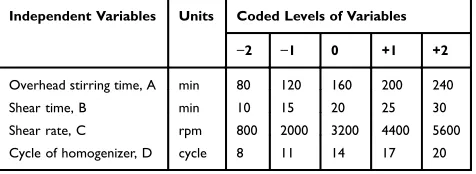
CCRD of RSM was used to optimize the process parameter conditions using high energy processing of four independent vari-ables namely overhead stirring time (80–240 min, A), shear time (10–30 min, B), shear rate (800–5600 rpm, C), and the cycle of high-pressure homogenizer (8–20 cycles, D). This design is used to learn the effects of these variables with droplet size (Y) of nanoemulsion containing aripiprazole as the response. A total number of 30 experimental runs based on the CCRD were employed to identify the optimized levels of significant indepen-dent variables and their correlation between indepenindepen-dent variables in a process generated by the Design Expert version 7.0 software (Stat-Ease Inc., Minneapolis, USA). Atfive different levels, these four independent variables were studied for every individual vari-able. The coded independent variables and their levels utilized in the CCRD are tabulated inTable 1.
Statistical Analysis
Statistical analysis was carried out by using an analysis of variance (ANOVA). By applying ANOVA, it is a more reliable alternative to assess the feature of the modelfitted. The importance of ANOVA analysis is to study the
sig-nificance of second-order polynomial in this model. The
p-value is a component that was employed to control each independent variable’s condition. It also exhibits the inter-actions intensity between every independent variable.
Physicochemical Characterization
Droplet Size, Zeta Potential and Polydispersity Index (PDI) Measurement
The droplet size, zeta potential, and polydispersity index (PDI) of nanoemulsion formulations by experimental design were measured with diffusion method by dynamic light scattering (DLS) droplet analyzer (Zetasizer Nano ZS, Malvern Instruments, Malvern, UK) at temperature 25 °C. The mea-surement was measured using the Photon Correlation
Spectroscopy (PCS) principle.27,28 Nanoemulsion sample
was diluted with deionized water until it reached the desired concentration. The count rate for all diluted sample is in range of 150 to 300 kcps. All samples were measured in triplicate and the recorded values were calculated as mean values.
pH Measurement
A pre-calibrated pH Tutor Bench meter (Eutech Instrument, UK) was used to measure the pH values of the optimized nanoemulsions at 25 °C. Three pH standard buffer solutions (pH 4.01, pH 7.00, pH 10.01) were used for calibration. Three measurements were recorded and the average pH value was used.
Viscosity Measurement
The viscosity of the optmized nanoemulsion was measured
using viscometer (Brookfield DV-II, Brookfield, US) with
SC4-18 spindle at a controlled temperature of 25 °C. The spindle was immersed in the test samples. As the spindle rotated, the measurement of the viscous drag of the sample
counter the spindle was taken by observing the deflection
of the calibrated spring. The measurements of viscosity were taken three times.
Osmolality Measurement
The osmolality of optimized nanoemulsion was measured by the freezing-point depression method using a semi-micro osmometer (Model 3320, Advanced Instruments, Inc., USA). The instrument was calibrated with reference standards of water for injection and calibration solution
Table 1Variables and Their Coded Levels Utilized in the CCRD Matrix
Independent Variables Units Coded Levels of Variables
−2 −1 0 +1 +2
Overhead stirring time, A min 80 120 160 200 240
Shear time, B min 10 15 20 25 30
Shear rate, C rpm 800 2000 3200 4400 5600
Cycle of homogenizer, D cycle 8 11 14 17 20
International Journal of Nanomedicine downloaded from https://www.dovepress.com/ by 118.70.13.36 on 24-Aug-2020
NaCl to give values of 0 and 400 mOsm/kg, respectively. The measurements of osmolality were taken three times.
Stability Study
After sample preparation, the centrifugal tests were con-ducted to study emulsion gravitational stability. The sam-ples were centrifuged for 15 min at 4500 rpm, at room temperature (25 °C). The optimum nanoemulsion contain-ing aripiprazole was kept for three months storage at different temperatures (4 °C, 25 °C, and 45 °C) to study its thermal stability. The droplet sizes of each sample were
measured and recorded every month.23
Coalescence Rate
Coalescence rate of nanoemulsion containing aripiprazole was studied to investigate the cause of particle sizes changed over time. The coalescence rate was calculated with the collected data of particle size of nanoemulsion within the given time for all temperatures using the following equation:
1
r2 ¼
1
r2 0
8μ
3 ωt (1)
where r is the average radius after time,ωis the frequency
of rupture per unit of thefilm surface and r0the value at
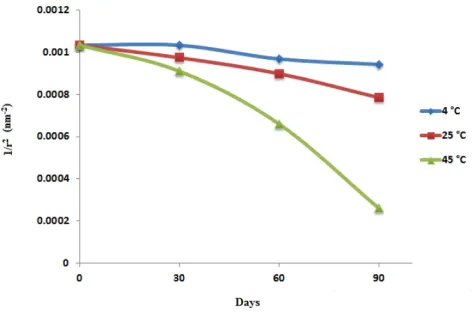
time t=0. A graph of 1/r2against time was plotted in order to determine the rate of coalescence and a linear relation-ship was expected.
Results and Discussion
Screening of Emulsion Compositions
The solubility of aripiprazole in different types of oil withan emulsifier (lecithin) was conducted. The experiments
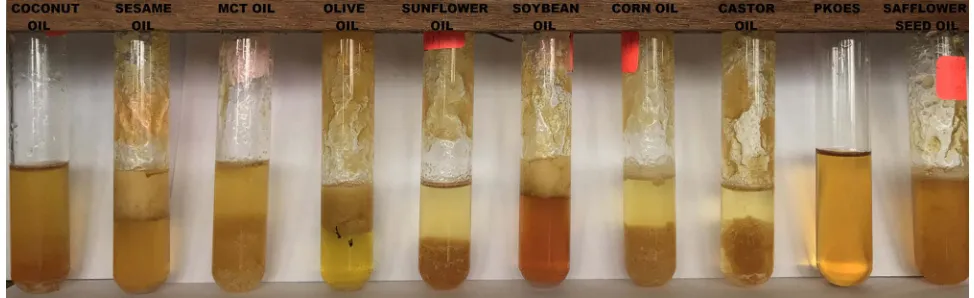
revealed that PKOE was the only oil that can dissolve
aripiprazole as shown in Figure 1. The drug and lecithin
were not fully dissolved in other types of oils such as coconut oil, sesame oil, MCT oil, olive oil, sunflower oil, soybean oil, corn oil, castor oil, and safflower seed oil. All oil mixtures except PKOE formed precipitation in the test tube. PKOE is a short chain ester which can be a suitable carrier for the delivery of the drug to administer into our
body system.29 Lecithin was chosen as an emulsifier to
form electrostatic or covalent binding by simulating the biotic system of the brain which aids the transportation of
particle through the blood-brain barrier.30 However, the
incorporation of lecithin in this nanoemulsion system
might cause lysoderivatives’ formation.31 This formation
prevented with the addition of Tween 80 as a surface active agents which can improve its physical stability by achieving moreflexible interfacial film.32,33
Application of Mathematical Model and
Analysis of Variance (ANOVA)
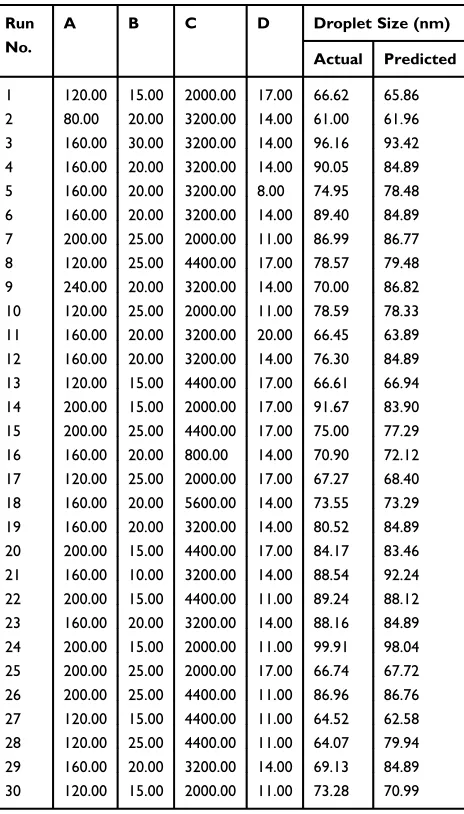
The design matrix of the actual 30 experiments, together with the actual and predicted droplet size are illustrated in
Table 2. The coefficients of the regression were obtained based on the CCRD and results of the experiments. The following second-order polynomial equation was accepted to acquire droplet size as in Equation (2):
Y Droplet sizeð Þ ¼ þ84:89þ6:21Aþ0:29Bþ0:29C
3:65D4:68AB 0:38AC
2:25ADþ2:50BC1:20BD
þ2:37CD2:62A2þ1:99B2
3:04C23:43D2
(2)
where A is the symbol of the overhead stirring time, B is the symbol of shear time, C is the the symbol of the shear
Figure 1The solubility of aripiprazole in different types of oil containing 2% of lecithin.
International Journal of Nanomedicine downloaded from https://www.dovepress.com/ by 118.70.13.36 on 24-Aug-2020
rate, and D is the symbol of the cycle of the homogenizer. In this equation, the synergistic effect can be shown as a positive sign in a symbol. The negative symbol is shown
as an antagonistic effect. A coefficient estimation with
negative values is shown as a negative effect of parameters on the droplet size.
The quadratic polynomial model was shown inTable 3.
The p-value (0.0003) concluded that this model was
sta-tistically significant and acceptable to show the actual
relationship between the response (droplet size, nm) and the significant variables. The non-significant“Lack of Fit”
(F-value = 0.25) which was comparative to the pure error
of the experiments indicated that the quadratic model data was suitable to represent the whole experimental data. The
p-value was also deployed to identify the significance of
every coefficient. When thep-value has a small value, the
corresponding coefficient will be more significant. The
table also showed that the coefficients of A, D, AB, A2,
B2, C2, and D2 were statistically significant when the
p-values below 0.05. The model showed the overhead
stirring time (p-value of 0.0003 ≪ 0.05) was the most
significant variable, followed by the cycle of high pressure homogenizer. However, the shear time and shear rate did
not show any significant effect. Accuracy of the
polyno-mial model is shown to be adequate when the coefficient
of determination value (R2) of the model obtained was
0.9238, whereas the adjusted R2 of the model obtained
was 0.8268 inTable 4.
To identify the systematic departures from the assump-tions used, the residual plot is an important detection method for establishing the regression equations. In
Table 2 A CCRD Matrix and Outcome for the Model of Nanoemulsions Containing Aripiprazole
Run No.
A B C D Droplet Size (nm)
Actual Predicted
1 120.00 15.00 2000.00 17.00 66.62 65.86 2 80.00 20.00 3200.00 14.00 61.00 61.96 3 160.00 30.00 3200.00 14.00 96.16 93.42 4 160.00 20.00 3200.00 14.00 90.05 84.89 5 160.00 20.00 3200.00 8.00 74.95 78.48 6 160.00 20.00 3200.00 14.00 89.40 84.89 7 200.00 25.00 2000.00 11.00 86.99 86.77 8 120.00 25.00 4400.00 17.00 78.57 79.48 9 240.00 20.00 3200.00 14.00 70.00 86.82 10 120.00 25.00 2000.00 11.00 78.59 78.33 11 160.00 20.00 3200.00 20.00 66.45 63.89 12 160.00 20.00 3200.00 14.00 76.30 84.89 13 120.00 15.00 4400.00 17.00 66.61 66.94 14 200.00 15.00 2000.00 17.00 91.67 83.90 15 200.00 25.00 4400.00 17.00 75.00 77.29 16 160.00 20.00 800.00 14.00 70.90 72.12 17 120.00 25.00 2000.00 17.00 67.27 68.40 18 160.00 20.00 5600.00 14.00 73.55 73.29 19 160.00 20.00 3200.00 14.00 80.52 84.89 20 200.00 15.00 4400.00 17.00 84.17 83.46 21 160.00 10.00 3200.00 14.00 88.54 92.24 22 200.00 15.00 4400.00 11.00 89.24 88.12 23 160.00 20.00 3200.00 14.00 88.16 84.89 24 200.00 15.00 2000.00 11.00 99.91 98.04 25 200.00 25.00 2000.00 17.00 66.74 67.72 26 200.00 25.00 4400.00 11.00 86.96 86.76 27 120.00 15.00 4400.00 11.00 64.52 62.58 28 120.00 25.00 4400.00 11.00 64.07 79.94 29 160.00 20.00 3200.00 14.00 69.13 84.89 30 120.00 15.00 2000.00 11.00 73.28 70.99
Table 3ANOVA Results of the Fitted Quadratic Equation for Droplet Size of Nanoemulsions
Source Droplet Size
Sum of Squares
DF Mean
Square F-value
p-value Significance
Model 2628.05 14 187.72 9.53 0.0003 Significant
A 549.35 1 549.35 27.87 0.0003
B 1.83 1 1.83 0.093 0.7664
C 1.81 1 1.81 0.092 0.7677
D 282.13 1 282.13 14.32 0.0030
AB 195.52 1 195.52 9.92 0.0092
AC 1.28 1 1.28 0.065 0.8039
AD 45.29 1 45.29 2.30 0.1577
BC 55.94 1 55.94 2.84 0.1201
BD 12.92 1 12.92 0.66 0.4353
CD 50.20 1 50.20 2.55 0.1388
A2 95.91 1 95.91 4.87 0.0496
B2 97.44 1 97.44 4.94 0.0481
C2 228.94 1 228.94 11.62 0.0058 D2 289.87 1 289.87 14.71 0.0028
Residual 216.79 11 19.71 – –
Lack offit 66.24 7 9.46 0.25 0.9459 Not significant Pure error 150.54 4 37.64 – –
Table 4Regression Coefficients of the Final Reduced Model
Regression Coefficient Value
Standard deviation 4.44
PRESS 800.05
R2 0.9238
AdjustedR2 0.8268
PredictedR2 0.7188
Adequate Precision 10.968
International Journal of Nanomedicine downloaded from https://www.dovepress.com/ by 118.70.13.36 on 24-Aug-2020
Figure 2A, it was confirmed the assumption of normal distribution and the independence of the residuals when the data points on the plot were closed to a straight line.
The correlation between actual and predicted values for
the droplet size was shown inFigure 2B. The actual values
were the experimental response data for a specific
experi-mental run and the predicted values were the prediction result
produced by the model. As can be seen in Figure 2B, the
predicted values were corresponded with the actual values by
R2of 0.9238. It was shown that this model predicted
accu-rately to study the relationship between the independent variables and the droplet size.
Mutual Effects of Process Parameter
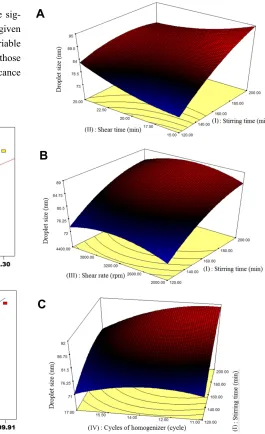
The relationship between independent variables gave sig-nificant influences on the droplet size as shown as in given terms in Equation (2). Instead of studying one variable individually, a study about the relationship between those variables could be carried out to discover their significance for more advanced optimization.Figure 3A shows the interaction between overhead stirring time (A) and shear time (B) as a function of droplet size. Shear rate (C) and cycles of high pressure
homogenizer (D) werefixed variables. When the overhead
stirring time was minimized, the droplet size of nanoemul-sion was tended to decrease. As overhead stirring time and shear time increased, the droplet size of nanoemulsion containing aripiprazole correspondingly increased.
Figure 3Bdepicts the relationship of overhead stirring time (A) and shear rate (C) as a function of the droplet
size. The fixed variables for this interaction were shear
time (B) and cycles of high-pressure homogenizer (D). At
Figure 2(A) The residual plot of experimental runs from CCRD; (B) scatter plot of predicted droplet size (nm) versus actual droplet size (nm).
Figure 3Response surface plots: (A) (I) stirring time (min) versus (II) shear time (min); (B) (I) stirring time (min) versus (III) shear rate (rpm); (C) (I) stirring time (min) versus (IV) cycles of high-pressure homogenizer (cycle).
International Journal of Nanomedicine downloaded from https://www.dovepress.com/ by 118.70.13.36 on 24-Aug-2020
increasing time of overhead stirring from 120 to 200 min, it caused the droplet size of nanoemulsion to increase correspondingly. However, the obtained result showed
that the shear rate did not show a significant effect on
the droplet size of nanoemulsions.
The predicted response surface plots for the reciprocation of overhead stirring time (A) and a cycle of high-pressure homogenizer (D) as a function of droplet size of
nanoemul-sion containing aripiprazole was illustrated in Figure 3C.
Shear rate (B) and shear time (C) were fixed variables.
Based on the observation, the minimum droplet size of nanoemulsion (62.59 nm) was obtained when the overhead stirring time decreased and the number of cycle of high-pressure homogenizer increased.
The independent variable that successfully contributed
to find the smallest droplet size in this design was the
number of cycle of high pressure homogenizer. In this research, it showed that the minimum droplet size could be obtained during 120 min of overhead stirring time and 11 cycles of high-pressure homogenizer. The decreasing of droplet size of nanoemulsion could be related to the increas-ing of mechanical energy. The oil and water mixture was forced to the intense turbulent and shearflow fields in the high-pressure homogenization method. This turbulence would cause the break-up of the dispersed phase into the tiniest droplet size.34 On the other hand, as increases the overhead stirring time, the droplet size of nanoemulsion containing aripiprazole tend to increase. Increasing the time of overhead stirring resulting large droplet size might be due to the coalescence and sedimentation.
Process Parameter Optimization and Model
Validation for Nanoemulsion Containing
Aripiprazole
The desirable droplet size of nanoemulsion can be obtained by optimum process parameters. Optimum process parameters
are used to find the minimum droplet size and have lower
overhead stirring time, higher shear rate, lower shear time, and lower number of cycles of the high-pressure homogenizer. To certify the optimum droplet sizes that been predicted by the model, an experiment of recommended optimum process
parameter was carried out.Table 5 shows that the residual
standard error percentage (RSE%) of optimum conditions for droplet size was 3.08%.
FromTable 5, the optimum process parameter obtained were 120 min of overhead stirring time, 15 min of high shear homogenizer time, 4400 rpm of high shear homogenizer rate, and 11 cycles of the high-pressure homogenizer. The experi-mental run gave a desirable droplet size of nanoemulsion containing aripiprazole of 64.52 nm. The predicted value from the model was 62.59 nm which is very close to experi-mental data and confirmed the validity of the model. It can be said that based on the CCRD of RSM was a precise and valid tool to carry out a study about the optimization of the process parameter.
To confirm the validation of the model, three random
process parameter conditions were prepared as tabulated in
Table 6. The percentage of residual standard error (RSE %) of each validation set was calculated on the droplet size. In
order to confirm the adequacy of the model, a comparison
Table 5Optimal Condition Derived by CCRD Response Surface Methodology
Model Independent Variables Droplet Size (nm)
Optimal conditions
Overhead Stirring Time (min)
Shear Time (min)
Shear Rate (rpm)
Cycle of Homogenizer (cycle)
Actual Value
Predicted Value
RSE Value (%)
120.00 15.00 4400.00 11.00 64.52 62.59 3.08
Table 6Validation Set for Three Different Processing Parameter Conditions of Nanoemulsion Containing Aripiprazole
Independent Variables Droplet Size (nm)
Overhead Stirring Time (min)
Shear Time (min)
Shear Rate (rpm)
Cycle of
Homogenizer (cycle)
Actual Value
Predicted Value
RSE Value (%)
Validation set
190 15 4400 11 85.63 85.76 0.15
120 23 4400 11 75.62 75.20 0.55
180 15 4400 11 81.02 83.76 3.27
International Journal of Nanomedicine downloaded from https://www.dovepress.com/ by 118.70.13.36 on 24-Aug-2020
between the predicted values and the experimental values was made.
pH Measurements
Stable nanoemulsion containing aripiprazole has an initial
pH in the range of 3–4. The pH was measured after high
pressure homogenization. The low pH value of nanoemul-sion containing aripiprazole was expected since aripipra-zole was categorized as an acidic drug. A small amount of sodium hydroxide was used to adjust the emulsion pH to
7.4 and no significance effect on physicochemical
proper-ties and stability was observed upon addition of sodium hydroxide. The pH was brought to slightly alkaline because there was a reduced in pH during storage that may result from oil oxidation during storage. Further, it has been proposed that lecithin-stabilized emulsions were
pronouncedly stable at pH 7 and 8.35
Viscosity and Osmolality Measurement
Viscosity measurement relates to flow characteristic of
a system, thus for parenteral deliver product, the formula-tion should exhibit good syringe ability (easily drawn into a syringe) and inject ability (readily injected from the syringe). Injectability can impact the patient’s adherence even if some studies did not show viscous preparations to increase pain during injection. However, parenteral admin-istration of high viscosity nanoemulsion might increase the blood viscosity which might lead to various cardio- or cerebrovascular events.36,37 A study on parenteral nanoe-mulsion reported that the acceptable value for parenteral
administration was up to 15–20 mPa.s.38 The viscosity
value of nanoemulsion containing aripiprazole was found
to be 3.72 mPa.s and this value was within the specifi
ca-tion for parenteral emulsions. The low viscosity value presented by nanoemulsion containing aripiprazole formu-lation reflected the safety measure prior to its application. The parenteral product should be isotonic and euhydric (physiological pH) to avoid local damage on vascular endothe-lium and circulating blood cells.39Incorporation of a small amount of glycerol assisted in generating emulsion with osmolality value that closes to the normal osmotic pressure
at physiological pH (280–320 mOsm/kg). The osmolality
value of nanoemulsion containing aripiprazole was 297 mOsm/kg which indicated the isotonic characteristic to blood.
Stability Study
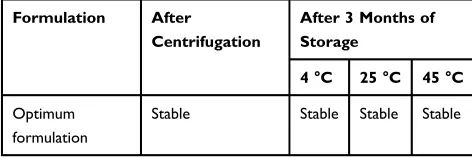
In this formulation study, the stability of nanoemulsion was evaluated. The physical stability and appearance of
optimized nanoemulsion containing aripiprazole were observed after centrifugation and after storage at 4 °C,
25 °C, and 45 °C within three months in Table 7. The
optimized nanoemulsion was in stable conditions, with no
phase separation orflocculation. The observation of
incre-mental of droplet size was made throughout 3-month sto-rage as the temperature of stosto-rage increased: 4 °C (<15% droplet size increment), 25 °C (<25% droplet size incre-ment) and 45 °C (>50% droplet size increincre-ment) as shown inFigure 4. Therefore, a stability study under coalescence rate was carried out to determine the stability of optimum formulation containing aripiprazole.
Coalescence Rate
Coalescence is a process when the breakage of liquidfilms
occured between the droplets and leading to the formation of larger droplets.40A plotted graph of 1/r2against storage time
depicted in Figure 5. According to Equation (1), a linear
straight line should be shown in the plotted graph. Since no linear pattern line shown in this plotted graph, it concluded that there is no coalescence phenomenon occured in this nanoe-mulsion system. Therefore, the incremental of droplet size over storage time was not due to coalescence phenomenon.
Conclusions
In this study, RSM is a powerful tool in the optimization of process parameters conditions of nanoemulsion containing aripiprazole. The interaction between independent vari-ables and response varivari-ables can be studied with RSM. A central composite rotatable design (CCRD) of RSM predicted minimum droplet size based on the given poly-nomial regression models. Overhead stirring time, high shear time, high shear rate, and number cycle of high-pressure homogenizer showed a linear effect on the droplet size. From the result obtained, the coefficient of
determi-nation value (R2) was 0.9238 which is desirable and
indi-cated it was in a good agreement with experimental data. The experimental run gave a desirable droplet size of nanoemulsion containing aripiprazole of 64.52 nm by increasing the overhead stirring time and lowering the
Table 7Physical Stability of Optimized Nanoemulsion
Formulation After
Centrifugation
After 3 Months of Storage
4 °C 25 °C 45 °C
Optimum formulation
Stable Stable Stable Stable
International Journal of Nanomedicine downloaded from https://www.dovepress.com/ by 118.70.13.36 on 24-Aug-2020
cycles of the high-pressure homogenizer. The predicted value from the model was 62.59 nm which is very close
to experimental data and confirmed the validity of the
model. The optimized processing parameter with 120 min of overhead stirring time, 15 min of high shear time, 4400 rpm of high shear rate and 11 cycles of high-pressure homogenizer provided the most desirable criteria of dro-plet size for the nanoemulsion containing aripiprazole. The nanoemulsion was physically stable, with no phase separa-tion orflocculation after centrifugation and after storage at 4 °C, 25 °C, and 45 °C within three months. The suitable pH value of 7.4, as well as low viscosity value and suitable osmolality value presented by nanoemulsion containing
aripiprazole formulation, reflected the safety measure
prior of its application. Thus, nanoemulsion containing aripiprazole showed excellent characteristic in the term
of droplet size and could be used as a potential carrier for the parenteral delivery system.
Acknowledgments
The authors would like to convey an acknowledgment to Universiti Putra Malaysia for supporting this project under UPM-IPS.
Disclosure
The authors report no conflicts of interest in this work.
References
1. Compton WM, Helzer JE. New methods in cross-cultural psychiatry: psychiatric illness in Taiwan and the United States.Am J Psychiatry. 1991;148(12):1697.
2. Li H, Luo J, Wang C, et al. Efficacy and safety of aripiprazole in Chinese Han schizophrenia subjects: a randomized, double-blind, active parallel-controlled, multicenter clinical trial. Schizophr Res. 2014;157(1):112–119. doi:10.1016/j.schres.2014.05.040
3. Potkin SG, Saha AR, Kujawa MJ, et al. Aripiprazole, an antipsychotic with a novel mechanism of action, and risperidone vs placebo in patients with schizophrenia and schizoaffective disorder. Arch Gen Psychiatry.2003;60(7):681–690. doi:10.1001/archpsyc.60.7.681 4. McEvoy JP, Daniel DG, Carson WH, McQuade RD, Marcus RN.
A randomized, double-blind, placebo-controlled, study of the efficacy and safety of aripiprazole 10, 15 or 20mg/day for the treatment of patients with acute exacerbations of schizophrenia.J Psychiatr Res. 2007;41(11):895–905. doi:10.1016/j.jpsychires.2007.05.002
5. Chan HY, Lin WW, Lin SK, et al. Efficacy and safety of aripiprazole in the acute treatment of schizophrenia in Chinese patients with risper-idone as an active control: a randomized trial. J Clin Psychiatry. 2007;68(1):29–36. doi:10.4088/JCP.v68n0104
6. Mailman RB, Murthy V. Third generation antipsychotic drugs: partial agonism or receptor functional selectivity?Curr Pharm Des.2010;16 (5):488. doi:10.2174/138161210790361461
7. Wood M, Reavill C. Aripiprazole acts as a selective dopamine D2 receptor partial agonist. Expert Opin Investig Drugs. 2007;16:771–775. doi:10.1517/13543784.16.6.771
Figure 4Graph of droplet size (nm) observed for three months at three different temperatures.
Figure 5Coalescence rate of optimized nanoemulsion containing aripiprazole at different temperature storage.
International Journal of Nanomedicine downloaded from https://www.dovepress.com/ by 118.70.13.36 on 24-Aug-2020
8. Stip E, Tourjman V. Aripiprazole in schizophrenia and schizoaffec-tive disorder: a review.Clin Ther.2010;32:S3–S20. doi:10.1016/j. clinthera.2010.01.021
9. Bhattacharjee J, El-Sayeh HG. Aripiprazole versus typical antipsy-chotic drugs for schizophrenia.Cochrane Lib.2008;3:CD006617 . 10. Belgamwar RB, El-Sayeh H. Aripiprazole versus placebo for
schizophrenia.Cochrane Database Syst Rev.2007;8.
11. Khanna P, Suo T, Komossa K, et al. Aripiprazole versus other atypical antipsychotics for schizophrenia.Cochrane Lib.2014. 12. Abbott NJ. Dynamics of CNS barriers: evolution, differentiation, and
modulation. Cell Mol Neurobiol. 2005;25(1):5–23. doi:10.1007/ s10571-004-1374-y
13. Abbott NJ, Patabendige AA, Dolman DE, Yusof SR, Begley DJ. Structure and function of the blood–brain barrier. Neurobiol Dis. 2010;37(1):13–25. doi:10.1016/j.nbd.2009.07.030
14. Kaur IP, Bhandari R, Bhandari S, Kakkar V. Potential of solid lipid nanoparticles in brain targeting. J Control Release. 2008;127 (2):97–109. doi:10.1016/j.jconrel.2007.12.018
15. Patel M, Souto EB, Singh KK. Advances in brain drug targeting and delivery: limitations and challenges of solid lipid nanoparticles.
Expert Opin Drug Deliv. 2013;10(7):889–905. doi:10.1517/ 17425247.2013.784742
16. Burgess A, Nhan T, Moffatt C, Klibanov A, Hynynen K. Analysis of focused ultrasound-induced blood–brain barrier permeability in a mouse model of Alzheimer’s disease using two-photon microscopy.J Control Release.2014;192:243–248. doi:10.1016/j.jconrel.2014.07.051 17. Solans C, Izquierdo P, Nolla J, Azemar N, Garcia Celma M.
Nano-emulsions.Curr Opin Colloid Interface Sci.2005;10(3–4):102–110. doi:10.1016/j.cocis.2005.06.004
18. Lovelyn C, Attama AA. Current state of nanoemulsions in drug delivery.J Biomater Nanobiotechnol.2011;2(05):626. doi:10.4236/ jbnb.2011.225075
19. Bezerra MA, Santelli RE, Oliveira EP, Villar LS, Escaleira LA. Response surface methodology (RSM) as a tool for optimization in analytical chemistry. Talanta. 2008;76(5):965–977. doi:10.1016/j. talanta.2008.05.019
20. Gilmour SG. Response surface designs for experiments in bioprocessing.Biometrics.2006;62(2):323–331. doi:10.1111/j.1541-0420.2005.00444.x
21. Myers RH, Montgomery DC, Vining GG, Borror CM, Kowalski SM. Response surface methodology: a retrospective and literature survey.
J Qual Technol.2004;36(1):53–77.
22. Tan SF, Masoumi HRF, Karjiban RA, et al. Ultrasonic emulsification of parenteral valproic acid-loaded nanoemulsion with response sur-face methodology and evaluation of its stability.Ultrason Sonochem. 2016;29:299–308. doi:10.1016/j.ultsonch.2015.09.015
23. Izadiyan Z, Basri M, Masoumi HRF, Karjiban RA, Salim N, Shameli K. Modeling and optimization of nanoemulsion containing Sorafenib for cancer treatment by response surface methodology.
Chem Cent J.2017;11(1):21. doi:10.1186/s13065-017-0248-6 24. Musa SH, Basri M, Masoumi HRF, et al. Formulation optimization of
palm kernel oil esters nanoemulsion-loaded with chloramphenicol sui-table for meningitis treatment. Colloids Surf B. 2013;112:113–119. doi:10.1016/j.colsurfb.2013.07.043
25. Masoumi HRF, Basri M, Samiun WS, Izadiyan Z, Lim CJ. Enhancement of encapsulation efficiency of nanoemulsion-containing aripiprazole for the treatment of schizo-phrenia using mixture experimental design. Int J Nanomedicine. 2015;10:6469. doi:10.2147/IJN
26. Samiun WS, Basri M, Masoumi HRF, Khairudin N. The prediction of the optimum compositions of a parenteral nanoemulsion system loaded with a low water solubility drug for the treatment of schizo-phrenia by artificial neural networks. RSC Adv. 2016;6 (17):14068–14076. doi:10.1039/C5RA26243G
27. Geers H, Witt W. Direct calculation of the volume based particle size distribution from PCS or PCCS measurements.Proc Part Sys Anal.2008. 28. Witt W, Geers H, Aberle L. Measurement of particle size and stability of nanoparticles in opaque suspensions and emulsions with Photon Cross Correlation Spectroscopy (PCCS). Part Sys Anal Harrogate UK.2003.
29. Keng P, Basri M, Zakaria M, et al. Newly synthesized palm esters for cosmetics industry.Ind Crops Prod.2009;29(1):37–44.
30. Krol SJJ. Challenges in drug delivery to the brain: nature is against us. J Controlled Release. 2012;164(2):145–155. doi:10.1016/j. jconrel.2012.04.044
31. Floyd AGJPS, Today T. Top ten considerations in the development of parenteral emulsions.Pharm Sci Technolo Today.1999;2(4):134–143. doi:10.1016/S1461-5347(99)00141-8
32. Yilmaz E, Borchert -H-HJE. Design of a phytosphingosine-containing, positively-charged nanoemulsion as a colloidal carrier system for der-mal application of ceramides.Biopharmaceutics.2005;60(1):91–98. 33. Trotta M, Pattarino F, Ignoni TJE. Stability of drug-carrier emulsions
containing phosphatidylcholine mixtures.Biopharmaceutics.2002;53 (2):203–208.
34. Juttulapa M, Piriyaprasarth S, Takeuchi H, Sriamornsak P. Effect of high-pressure homogenization on stability of emulsions containing zein and pectin.Asian J Pharm Sci.2017;12(1):21–27. doi:10.1016/j. ajps.2016.09.004
35. Cui J, Wang L, Sun GG, Liu LN. Characterization of a Trichinella spiralis 31 kDa protein and its potential application for the serodiag-nosis of trichinellosis.Acta Tropica.2015;142:57–63. doi:10.1016/j. actatropica.2014.10.017
36. Song SH, Kim JH, Lee JH, Yun Y-M, Choi D-H, Kim HYJ. Elevated blood viscosity is associated with cerebral small vessel disease in patients with acute ischemic stroke.BMC Neurol.2017;17(1):20. 37. Ott EO, Lechner H, Aranibar AJS. High blood viscosity syndrome in
cerebral infarction. Stroke. 1974;5(3):330–333. doi:10.1161/01. str.5.3.330
38. Berteau C, Filipe-Santos O, Wang T, Rojas HE, Granger C, Schwarzenbach F. Evaluation of the impact of viscosity, injection volume, and injectionflow rate on subcutaneous injection tolerance.
Med Devices.2015;8:473.
39. Roethlisberger D, Mahler H-C, Altenburger U, Pappenberger AJ. If euhydric and isotonic do not work, what are acceptable pH and osmolality for parenteral drug dosage forms? J Pharm Sci. 2017;106(2):446–456. doi:10.1016/j.xphs.2016.09.034
40. Fredrick E, Walstra P, Dewettinck KJA. Factors governing partial coalescence in oil-in-water emulsions. Adv Colloid Interface Sci. 2010;153(1–2):30–42. doi:10.1016/j.cis.2009.10.003
International Journal of Nanomedicine
Dove
press
Publish your work in this journal
The International Journal of Nanomedicine is an international, peer-reviewed journal focusing on the application of nanotechnology in diagnostics, therapeutics, and drug delivery systems throughout the biomedical field. This journal is indexed on PubMed Central, MedLine, CAS, SciSearch®, Current Contents®/Clinical Medicine,
Journal Citation Reports/Science Edition, EMBase, Scopus and the Elsevier Bibliographic databases. The manuscript management system is completely online and includes a very quick and fair peer-review system, which is all easy to use. Visit http://www.dovepress.com/ testimonials.php to read real quotes from published authors.
Submit your manuscript here:https://www.dovepress.com/international-journal-of-nanomedicine-journal
International Journal of Nanomedicine downloaded from https://www.dovepress.com/ by 118.70.13.36 on 24-Aug-2020