O R I G I N A L R E S E A R C H
Matching-adjusted indirect comparisons of
annualized bleeding rate and utilization of BAY
94-9027 versus three recombinant factor VIII agents
for prophylaxis in patients with severe
hemophilia A
This article was published in the following Dove Press journal: Journal of Blood Medicine
Katharine Batt1 Wei Gao2 Rajeev Ayyagari2 Céline Deschaseaux3 Parth B Vashi4 Zhiwen Yao2 Yao Wang2 Sophia Kessabi3 Robert Klamroth5
1Department of Internal Medicine, Section on Hematology/Medical Oncology, Wake Forest University Baptist Medical Center, Winston-Salem, NC, USA;2Analysis Group, Inc., Boston, MA, USA;3Global Market Access Hematology, Bayer Consumer Care AG, Basel, Switzerland;4US Data Generation and Observational Studies, Bayer Corporation, Whippany, NJ, USA; 5Department for Internal Medicine -Vascular Medicine and Coagulation Disorders, Vivantes Klinikum im Friedrichshain, Berlin, Germany
Background: BAY 94-9027 is an extended half-life recombinant factor VIII (rFVIII) that prevents bleeding in persons with hemophilia A at twice-weekly, 5-day, and 7-day dosing intervals. In rare diseases such as hemophilia, where small populations preclude head-to-head comparisons in randomized controlled trials, outcomes from different studies can be compared by matching-adjusted indirect treatment comparisons (MAICs) via matched sum-mary statistics of individual patient data. This study compared MAIC-adjusted outcomes of BAY 94-9027 with other FVIII agents for prophylaxis of hemophilia.
Methods: Weighted patient data from the BAY 94-9027 PROTECT VIII trial were used to compare annualized bleeding rates (ABRs), percentage of patients with zero bleeds, and factor utilization against published data on rFVIII–Fc fusion protein (rFVIIIFc), BAX 855, and recombinant antihemophilic factor/plasma/albumin-free method (rAHF-PFM).
Results:After matching BAY 94-9027 and comparators, the mean BAY 94-9027 utilization was significantly lower than rFVIIIFc pre- and post-matching (66.2 vs 82.2 IU/kg/week; 66.5 vs 82.2 IU/kg/week; bothP<0.001). Median BAY 94-9027 utilization (IU/kg/week) trended lower than BAX 855 (64.3 vs 87.4) and rAHF-PFM (2004 study: 64.0 vs 107.5; 2012 study: 63.6 vs 109.9). Mean ABRs and percentages of patients with zero bleeds were similar post-matching between BAY 94-9027 and comparators.
Conclusion: BAY 94-9027 demonstrated similar MAIC-adjusted ABR with lower utiliza-tion than rFVIIIFc, BAX 855, and rAHF-PFM.
Keywords:rFVIII, annualized bleeding rate, utilization
Plain language summary
Physicians rely on comparative studies to make treatment decisions for their patients. Clinical research in rare diseases, such as hemophilia, are often limited by their small population sizes, making it unrealistic to conduct large, statistically-powered, randomized, controlled trials. Matching-adjusted indirect comparison (MAIC) is a validated methodol-ogy that is used to compare outcomes of clinical trials when direct head-to-head compar-isons are not feasible. Applying MAIC to comparcompar-isons between studies of the long-acting recombinant factor VIII (rFVIII) agent, BAY 94-9027, vs two other long-acting agents (rFVIII-Fc fusion protein and BAX 855) and a standard-acting agent (rAHF-PFM), our Correspondence: Katharine Batt
Wake Forest University Baptist Medical Center, Department of Internal Medicine/ Section of Hematology/Medical Oncology, Medical Center Boulevard, Winston-Salem, NC 27157, USA
Tel +1 919 593 6188
Email [email protected]
Journal of Blood Medicine
Dove
press
open access to scientific and medical research
Open Access Full Text Article
Journal of Blood Medicine downloaded from https://www.dovepress.com/ by 118.70.13.36 on 24-Aug-2020
study demonstrated that BAY 94-9027 required lower utiliza-tion, with no differences in annual bleed rate or percentage of patients who had no bleeds.
Introduction
Major advances have been achieved in hemophilia health-care over the past several decades, owing to the discovery that a blood clotting factor VIII (FVIII) deficiency could be replaced with intravenous injections of recombinant or virally inactivated FVIII. These findings led to a notable shift in life expectancy from the early-to-mid teens to near that of the general population.1,2 Prophylaxis is the gold standard for preventing bleeding episodes and their seque-lae, ie, joint damage, arthropathy, pain, loss of mobility, and reduced quality of life.3 However, despite significant clinical improvements experienced by persons with hemo-philia (PWH) on prophylaxis, frequent injections or high doses of replacement factor are often required to maintain adequate protection levels because of the short half-lives of most current therapies. Most treatment regimens require injections every 2 or 3 days, representing a treatment burden for a lifelong disease that is compounded by addi-tional issues of venous access, fear of pain, and high costs.4
Recent research efforts have led to the introduction of extended half-life (EHL) agents as new long-acting treat-ment options that alleviate the treattreat-ment burden of fre-quent injections. Currently available EHL treatments include a recombinant FVIII–Fc fusion protein (rFVIIIFc) and a PEGylated full-length rFVIII (BAX 855). rFVIIIFc and BAX 855 have approximately 1.5-fold higher half-lives than standard-acting rFVIII, without compromised efficacy.5,6Increased half-life is anticipated to have a positive impact on patient compliance owing to flexible dosing or reduced treatment burden.5,6
BAY 94-9027, a site-specific PEGylated rFVIII, is an EHL treatment with approximately 1.6-fold higher half-life than standard rFVIII (about 19 vs 12 hours).7In the pivotal phase II/III PROTECT VIII trial, treatment of severe hemophilia A with BAY 94-9027 on-demand or prophylactic (every 7 days, every 5 days, and twice weekly) was associated with favorable efficacy results8 BAY 94-9027 was generally well tolerated, and no patients developed inhibitors.8
While head-to-head comparisons in randomized con-trolled trials (RCTs) are the preferred method for evaluat-ing differences between treatments, such approaches are not often feasible in rare diseases such as hemophilia
owing to the small population sizes available for trial recruitment. In those cases, indirect treatment comparisons provide comparative evidence to inform treatment decisions.9–11 Matching-adjusted indirect comparison (MAIC) is a widely used, validated method for comparing outcomes of interventions in the absence of head-to-head trials.12–16Since 2017, MAIC has been recognized by the UK’s National Institute for Health and Care Excellence as a valid population-adjusted indirect comparison approach, and is accepted across various health technology assess-ment bodies.17,18MAIC takes into account differences in trial design and baseline characteristics between treatments when common comparators are absent. Such population-adjusted analyses ensure that comparisons are conducted within a more balanced patient population. In brief, MAIC uses individual patient data from a trial (or trials) of one treatment to match baseline summary statistics from a comparator’s trial(s);9,19 after adjusting (or “balancing”) for heterogeneity in baseline characteristics between patient populations; confounding factors caused by diver-gent population characteristics are largely eliminated.
We report here the application of MAIC to compare outcomes of annualized bleeding rate (ABR) and rFVIII utilization of BAY 94-9027 compared with EHL therapies, rFVIIIFc and BAX 855, as well as with a standard-acting rFVIII, recombinant antihemophilic factor plasma/albu-min-free method (rAHF-PFM). rFVIIIFc and BAX 855 were selected as comparators of already approved EHL prophylactic treatments currently used in clinical practice in Europe and the USA. rAHF-PFM was selected as a comparative standard half-life treatment that is considered standard treatment in many countries. MAIC was used to compare those agents in the prophylactic setting, using data from published clinical trials and patient-level BAY 94-9027 data.
Methods
Data sources
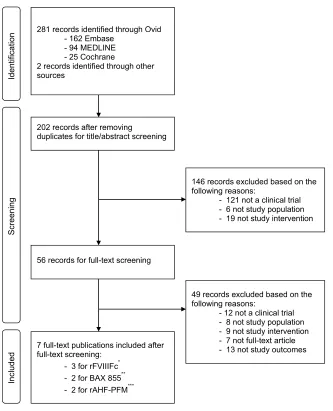
Patient-level data were collected from PROTECT VIII, a phase II/III, open-label, partially randomized trial of BAY 94-9027 in adults and adolescents with severe hemophilia A. For MAIC-based comparisons, clinical studies were identified in a systematic literature review (SLR) for pub-lished pivotal trials of rFVIIIFc, BAX 855, and rAHF-PFM in adults and adolescents with severe hemophilia A. The screening criteria and the PRISMAflow diagram for the SLR are described in Table S1 and Figure S1.
Journal of Blood Medicine downloaded from https://www.dovepress.com/ by 118.70.13.36 on 24-Aug-2020
Aggregate data from the prophylaxis arms of each study were extracted from the published trials for the analysis.
As this was a post hoc analysis of previously published data, no institutional board review was required.
Sample selection
For BAY 94-9027, data from three prophylaxis arms (twice weekly, every 5 days, and every 7 days) of PROTECT VIII were used to accommodate the variability of treatment frequencies across comparators.
For rFVIIIFc, since the approved US Food and Drug Administration (FDA) label allows adjustable dosing,20 individualized and weekly prophylaxis arms from the A-LONG trial were pooled, along with a sensitivity analysis using only data from the individualized rFVIIIFc treatment arm.6 For BAX 855, the prophylaxis arm in the PROLONG-ATE trial was used,5 and for rAHF-PFM, analyses of two rAHF-PFM trials published in 200421 and 201222were used, but analyses were conducted sepa-rately because of differences in ABR calculation. The prophylaxis arm in the 2004 trial was used for the first comparison, and standard and pharmacokinetic (PK)-tai-lored prophylaxis arms in the 2012 trial were pooled for the second comparison. Details on the studies are provided
inTable S2.
Outcome assessments
Outcomes evaluated in this study included ABR, percen-tage of patients with zero bleeds, and weekly rFVIII utili-zation (IU/kg/week). For PROTECT VIII, the duration of assessment was from randomization to the end of prophy-laxis. For the comparator trials, duration of assessment included the prophylaxis exposure period. To accommo-date comparisons of outcomes calculated by different methodologies (ie, negative binomial regression for ABR in A-LONG and square root transformation of ABR for rAHF-PFM-2012), identical methodologies were applied to the patient-level ABR data from PROTECT VIII for those comparisons.
Statistical methods
MAIC methodology9,19 was used to compare BAY 94-9027 versus rFVIIIFc, BAX 855, and rAHF-PFM for prophylactic treatment of severe hemophilia A. Individual patient data from the PROTECT VIII trial were weighted to match the mean baseline characteristics reported in each comparator trial. The matched baseline characteristics were selected based on data availability in
both PROTECT VIII and the comparator trials. Individual patient weights were estimated from a logistic regression model, similar to a propensity score weighting. However, without patient-level data from comparator trials, the usual maximum likelihood approach to estimate parameters in a logistic regression model was not feasible. Method of moments, which only requires aggregated data for the comparators, was used instead.19
The weighted ABR outcomes in PROTECT VIII were statistically compared to the observed values for rFVIIIFc, BAX 855, and rAHF-PFM in the balanced trial popula-tions. ABR was compared using unweighted Wald tests before matching and weighted Wald tests after matching. The percentage of patients with zero bleeds was compared using chi-squared tests before matching and weighted Wald tests after matching. Median weekly rFVIII utiliza-tion was described for the weighted BAY 94-9027 popula-tion in the comparisons with BAX 855 and rAHF-PFM. Mean weekly rFVIII utilization was statistically compared between the balanced BAY 94-9027 and rFVIIIFc popula-tions using unweighted Wald tests before matching and weighted Wald tests after matching.
Statistical comparisons were conducted in R 3.4.3 and statistical significance was set atP<0.05.
Results
Selection and comparison between
clinical trials
For BAY 94-9027, individual patient data from the phase II/III, partially randomized, open-label, PROTECT VIII trial were used. Four published clinical trials were identi-fied for comparison: the A-LONG trial for rFVIIIFc,6the PROLONG-ATE trial for BAX 855,5and two rAHF-PFM trials published in 200421 and in 2012.22
To ensure comparability between patient populations, key inclusion and exclusion criteria for the comparator trials were applied to the BAY 94-9027 population. In general, the study populations of the PROTECT VIII trial and the comparator trials were similar, inclusive of males aged 12–65 years with severe hemophilia A (≤1% FVIII) and previously treated with FVIII concentrates. Patients enrolled in the A-LONG trial weighed more than 40 kg, therefore this criterion was applied to the BAY 9027 population for the comparison of BAY 94-9027 versus rFVIIIFc.
The length of treatment varied across the trials: patients in PROTECT VIII and PROLONG-ATE received
Journal of Blood Medicine downloaded from https://www.dovepress.com/ by 118.70.13.36 on 24-Aug-2020
prophylaxis regimens for 6 months; median durations of rFVIIIFc in the individualized and weekly prophylaxis arms in A-LONG were 32.1 and 28.0 weeks, respectively; median duration of exposure days to rAHF-PFM was 117 in the 2004 study; and mean duration of rAHF-PFM treat-ment was 362 days for standard prophylaxis and 344 days for PK-tailored prophylaxis in the 2012 study.
Comparison of baseline characteristics
between trials
A total of 104 patients treated with BAY 94-9027 prophy-laxis were included in the analysis. For the comparison to rFVIIIFc, one patient was excluded from the BAY 94-9027 population because of the weight criterion >40 kg.
rFVIIIFc
Prior to matching, the BAY 94-9027 population had an older median age and included a higher proportion of patients on prior prophylactic treatments compared to the rFVIIIFc population (81% vs 61%) (Table 1). The BAY 94-9027 population also included a higher
proportion of patients on prior prophylactic treatment with target joints (59% vs 33%, respectively), but a lower proportion of patients on prior on-demand treat-ment with target joints (16% vs 34%, respectively). Similar proportions of patients in the BAY 94-9027 and rFVIIIFc populations had had more than six bleeding events in the prior year despite being on prior prophylac-tic treatment (30% and 31%); 14% of patients previously on on-demand treatment in the BAY 94-9027 population had at least 28 bleeding events, compared with 19% of the patients on prior on-demand treatment in the rFVIIIFc population.
BAX 855
Compared to the BAX 855 population, the BAY 94-9027 population was older and had more target joints (Table 2). The distribution of prior treatment type was similar between the two populations.
rAHF-PFM
Compared to the two rAHF-PFM populations, the BAY 94-9027 population was older and included more
Table 1Observed baseline characteristics of patients treated with BAY 94-9027 and rFVIIIFc, before and after matching
Baseline characteristicsb Before matching After matchinga
BAY 94-9027 rFVIIIFc P BAY 94-9027 rFVIIIFc P
N=103 N=140 N=103 N=140
Age≤29.4 years 33 (32.0%) 70 (50.0%) <0.01* 50.0% 50.0% 1.00
Weight≤72.4 kg 49 (47.6%) 70 (50.0%) 0.81 50.0% 50.0% 1.00
Ethnicity
White 73 (70.9%) 90 (64.1%) 0.35 64.1% 64.1% 1.00
Asian 26 (25.2%) 38 (26.8%) 0.85 26.8% 26.8% 1.00
Region
Europe 37 (35.9%) 37 (26.1%) 0.15 26.1% 26.1% 1.00
North America 23 (22.3%) 48 (34.5%) 0.06 34.5% 34.5% 1.00
Prior treatment type
Prophylactic 83 (80.6%) 86 (61.3%) <0.01* 61.3% 61.3% 1.00
On-demand 20 (19.4%) 54 (38.7%) <0.01* 38.7% 38.7% 1.00
Number of bleeding events in the prior year
Prior prophylactic: >6.0 31 (30.1%) 43 (30.6%) 1.00 30.6% 30.6% 1.00
Prior on-demand: >27.4 14 (13.6%) 27 (19.4%) 0.32 19.4% 19.4% 1.00
Presence of target joint(s)
Prior prophylactic 61 (59.2%) 46 (33.1%) <0.001* 33.1% 33.1% 1.00
Prior on-demand 16 (15.5%) 47 (33.8%) <0.01* 33.8% 33.8% 1.00
Notes:a
The effective sample size of the BAY 94-9027 overall group after matching was 44.60.b
The median of age, weight, and estimated bleeding events in the prior year in the pooled rFVIIIFc group was approximated using the weighted sum of corresponding medians in the individualized and the weekly prophylaxis arms in A-LONG. *P<0.05. Abbreviation:rFVIIIFc, recombinant human factor VIII–Fc fusion protein.
Journal of Blood Medicine downloaded from https://www.dovepress.com/ by 118.70.13.36 on 24-Aug-2020
Asians (Table 3). The BAY 94-9027 population included more patients treated with prior prophylactic treatment than the rAHF-PFM population in the 2004
trial (81% vs 73%), and fewer patients with target joints than the rAHF-PFM population in the 2012 trial (75% vs 96%).
Table 2Observed baseline characteristics of patients treated with BAY 94-9027 and BAX 855, before and after matching
Baseline characteristics Before matching After matchinga
BAY 94-9027 BAX 855 P BAY 94-9027 BAX 855 P
N=104 N=101 N=104 N=101
Age≤28 years 34 (32.7%) 50 (50.0%) <0.05* 50.0% 50.0% 1.00
Weight≤73 kg 51 (49.0%) 50 (50.0%) 1.00 50.0% 50.0% 1.00
Ethnicity
White 73 (70.2%) 77 (76.7%) 0.41 76.7% 76.7% 1.00
Asian 27 (26.0%) 23 (22.5%) 0.71 22.5% 22.5% 1.00
Prior treatment type
Prophylactic 84 (80.8%) 83 (82.5%) 0.94 82.5% 82.5% 1.00
On-demand 20 (19.2%) 18 (17.5%) 0.94 17.5% 17.5% 1.00
Presence of target joint(s) 78 (75.0%) 66 (65.0%) 0.17 65.0% 65.0% 1.00
Notes:a
The effective sample size of the BAY 94-9027 overall group after matching was 78.30. *P<0.05.
Table 3Observed baseline characteristics of patients treated with BAY 94-9027 and rAHF-PFM
Baseline characteristicsb
Before matching After matchinga
BAY 94-9027
rAHF-PFM (2004 study)a
P BAY
94-9027
rAHF-PFM (2004 study)a
P
N=104 N=107 N=104 N=107
Age≤18 years 13 (12.5%) 54 (50.0%) <0.001* 50.0% 50.0% 1.00
Ethnicity
White 73 (70.2%) 99 (92.8%) <0.001* 92.8% 92.8% 1.00
Asian 27 (26.0%) 1 (0.9%) <0.001* 0.9% 0.9% 1.00
Prior treatment typea
Prophylactic 84 (80.8%) 78 (73.0%) 0.23 73.0% 73.0% 1.00
On-demand 20 (19.2%) 29 (27.0%) 0.23 27.0% 27.0% 1.00
Baseline characteristicsb
BAY 94-9027
rAHF-PFM (2012 study)
P BAY
94-9027
rAHF-PFM (2012 study)
P
N=104 N=66 N=104 N=66
Age <16 years 9 (8.7%) 9 (13.6%) 0.44 13.6% 13.6% 1.00
Ethnicity
White 73 (70.2%) 58 (87.9%) <0.05* 87.9% 87.9% 1.00
Asian 27 (26.0%) 1 (1.5%) <0.001* 1.5% 1.5% 1.00
Presence of target joint(s) 78 (75.0%) 63 (95.5%) <0.001* 95.5% 95.5% 1.00
Notes:a
The effective sample size of the BAY 94-9027 overall group was 25.32 after matching with the 2004 study and 55.33 after matching with the 2012 study.b
Patients on both prior prophylactic and on-demand treatment in the 2004 study were categorized as being on“prior prophylactic treatment”to be consistent with the definition in the PROTECT VIII trial. *P<0.05.
Abbreviation:rAHF-PFM, recombinant antihemophilic factor–plasma/albumin-free method.
Journal of Blood Medicine downloaded from https://www.dovepress.com/ by 118.70.13.36 on 24-Aug-2020
After matching, the summary statistics of all matched baseline characteristics were exactly balanced for each comparison.
Comparison of outcomes
Annualized bleeding rate
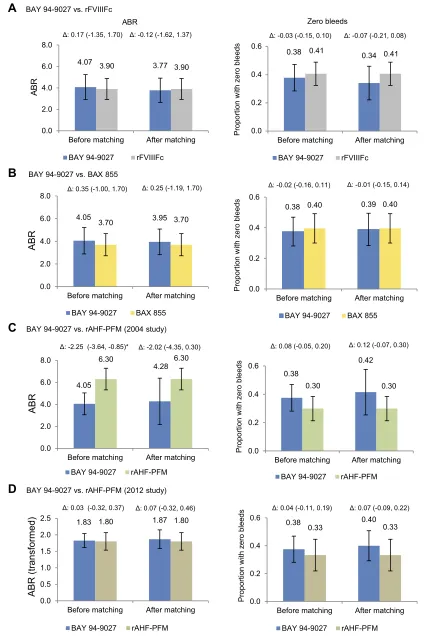
Before matching, BAY 94-9027 was associated with a slightly higher mean ABR compared to rFVIIIFc, BAX 855, and rAHF-PFM-2012; the differences were not sta-tistically significant (left panels, Figure 1A, B and D, respectively). BAY 94-9027 was associated with a signifi -cantly lower mean ABR compared to rAHF-PFM-2004 (difference: −2.25, P<0.01; left panel of Figure 1C). After matching, the mean ABR was similar between BAY 94-9027 and the comparators: 3.77 vs 3.90 (rFVIIIFc), 4.25 vs 2.91 (individualized rFVIIIFc), 3.95 vs 3.70 (BAX 855), 4.28 vs 6.30 (rAHF-PFM-2004), and 1.87 vs 1.80 (rAHF-PFM-2012, square root-transformed ABR [see Methods]). None of these differences reached statistical significance (P>0.05).
BAY 94-9027 was associated with a slightly higher median ABR compared to rFVIIIFc (before and after: 2.09 vs 1.93), BAX 855 (before and after: 2.1 vs 1.9), and rAHF-PFM-2012 (before: 1.61 vs 1.10; after: 1.56 vs 1.10). Median ABR was not reported in the rAHF-PFM-2004 study for rAHF-PFM. The P-values for comparing the medians were incalculable owing to the unavailability of standard errors for the median ABR of comparators.
Percentage of patients with zero bleeds
Before matching, BAY 94-9027 was associated with fewer patients with zero bleeds compared to rFVIIIFc and BAX 855, and slightly more zero-bleed patients compared to rAHF-PFM (right panels ofFigure 1).
The after matching comparisons were similar to before matching: 34.1% vs 40.7% (rFVIIIFc), 35.2% vs 45.3% (individualized rFVIIIFc), 38.9% vs 39.6% (BAX 855), 41.5% vs 29.9% (rAHF-PFM-2004), and 40.0% vs 33.3% (rAHF-PFM-2012). None of the differences was statisti-cally significant either before or after matching.
Comparison of weekly rFVIII utilization
After balancing the baseline characteristics between trial populations, the mean weekly rFVIII utilization of patients treated with BAY 94-9027 was significantly lower than for those treated with rFVIIIFc (66.5 vs 82.2 IU/kg/week;
P<0.001) (Figure 2A). The results of the sensitivity ana-lysis of BAY 94-9027 versus individualized rFVIIIFc were
consistent with these results (66.4 vs 85.4 IU/kg/week;
P<0.001).
Median weekly rFVIII utilization for BAY 94-9027 was also lower than for BAX 855 (64.3 vs 87.4 IU/kg/week) and rAHF-PFM (64.0 vs 107.5 [rAHF-PFM-2004] and 63.6 vs 109.9 [rAHF-PFM-2012]) (Figure 2B,CandD). However, theP-values were incalculable owing to the unavailability of standard errors for the median utilizations of BAX 855 and rAHF-PFM.Figure 3shows the relative reductions in annual utilization of BAY 94-9027 compared with each comparator in the context of ABR and zero bleed comparisons.
Discussion
Advances in healthcare for hemophilia have allowed the personalization of treatment based on individual patient priorities, physical attributes, and medical needs. New and emerging therapies have contributed to a wealth of options for healthcare providers and patients alike. The Medical and Scientific Advisory Council of the National Hemophilia Foundation recommends rFVIII as treatment for patients with severe hemophilia A, but does not recom-mend one product over another.23However, the hemophi-lia community faces the challenge of often having insufficient information about differentiating features that are needed to drive treatment decision-making.
For rare diseases such as hemophilia, the small popula-tion of afflicted individuals makes it difficult to design RCTs powered enough to conclusively compare different treatments in direct head-to-head trials. The absence of such trials can often result in a knowledge gap in understanding relative treatment outcomes of ABR and utilization in com-parison to other therapies. Intertrial comcom-parisons have, in the past, been considered inferior to RCTs because of inherent differences in patient characteristics, study designs, and methodologies between studies, thus limiting the inter-pretability of such comparisons. While RCTs continue to be the gold standard in clinical trial design, MAIC represents a validated approach that allows balanced comparisons between studies when RCTs are not feasible.
BAY 94-9027 is an EHL rFVIII agent that has demon-strated effective bleed prevention when dosed twice-weekly, every 5 days, and every 7 days, with no inhibitor development.8 Although findings from PROTECT VIII have shown similar outcomes, compared to published data from other EHL and standard-acting FVIII agents, interpretation of these findings is limited to comparisons against other studies. We show that, using MAIC, outcome measures of ABR and percentage of patients with zero
Journal of Blood Medicine downloaded from https://www.dovepress.com/ by 118.70.13.36 on 24-Aug-2020
4.07 3.90 3.77 3.90
0.0 2.0 4.0 6.0 8.0
Before matching After matching
AB
R
ABR
BAY 94-9027 rFVIIIFc
Δ: 0.17 (-1.35, 1.70) Δ: -0.12 (-1.62, 1.37)
0.38 0.41 0.34 0.41
0.0 0.2 0.4 0.6
Before matching After matching
Proportion w
ith
zero bleeds
Zero bleeds
BAY 94-9027 rFVIIIFc
Δ: -0.03 (-0.15, 0.10) Δ: -0.07 (-0.21, 0.08)
4.05 3.95
3.70 3.70
0.0 2.0 4.0 6.0 8.0
Before matching After matching
ABR
BAY 94-9027 BAX 855
Δ: 0.35 (-1.00, 1.70) Δ: 0.25 (-1.19, 1.70)
0.38 0.40 0.39 0.40
0.0 0.2 0.4 0.6
Before matching After matching
Proportion w
ith
zero bleeds
BAY 94-9027 BAX 855
Δ: -0.02 (-0.16, 0.11) Δ: -0.01 (-0.15, 0.14)
4.05
4.28
6.30 6.30
0.0 2.0 4.0 6.0 8.0
Before matching After matching
ABR
BAY 94-9027 rAHF-PFM
Δ: -2.25 (-3.64, -0.85)* Δ: -2.02 (-4.35, 0.30)
0.38
0.42
0.30 0.30
0.0 0.2 0.4 0.6
Before matching After matching
Proportion w
ith
zero
bleeds
BAY 94-9027 rAHF-PFM
Δ: 0.08 (-0.05, 0.20) Δ: 0.12 (-0.07, 0.30)
1.83 1.80 1.87 1.80
0.0 0.5 1.0 1.5 2.0 2.5
Before matching After matching
ABR (transformed)
BAY 94-9027 rAHF-PFM
Δ: 0.03 (-0.32, 0.37) Δ: 0.07 (-0.32, 0.46)
0.38 0.40
0.33 0.33
0.0 0.2 0.4 0.6
Before matching After matching
Proportion w
ith
zero bleeds
BAY 94-9027 rAHF-PFM
Δ: 0.04 (-0.11, 0.19) Δ: 0.07 (-0.09, 0.22)
A
BAY 94-9027 vs. rFVIIIFcB
BAY 94-9027 vs. BAX 855C
BAY 94-9027 vs. rAHF-PFM (2004 study)D
BAY 94-9027 vs. rAHF-PFM (2012 study)Figure 1Comparison of ABR and proportion of patients with zero bleeds between BAY 94-9027 and (A) rFVIIIFc; (B) BAX 855; (C) rAHF-PFM-2004; (D) rAHF-PFM-2012. *P<0.05. Abbreviations:ABR, annualized bleeding rate; rAHF-PFM, recombinant antihemophilic factor–plasma/albumin-free method; rFVIIIFc, recombinant factor VIII–Fc fusion protein.
Journal of Blood Medicine downloaded from https://www.dovepress.com/ by 118.70.13.36 on 24-Aug-2020
bleeds of BAY 94-9027 are similar to those for other available rFVIII products, but with lower utilization.
The current findings have potential implications for real-world practice. This analysis provided valuable evi-dence on ABR outcomes and rFVIII utilization that should be considered when choosing therapies. The observation of lower BAY 94-9027 utilization compared to other agents also highlights the differences between the newer EHL agents beyond half-life alone. The currently favored endpoint of ABR serves as a clinically meaningful and objective target, but as new therapies emerge, treatment decisions driven by differentiation between similar agents become more challenging when only one outcome mea-sure is considered. Attributes other than ABR can be particularly meaningful to healthcare providers and patients who seek individualized treatment based on per-sonal treatment goals; the value of a healthcare interven-tion increases when measures beyond clinical outcomes
are considered, such as quality of life, school and work participation, and leisure activities.24
From a payer standpoint, alternative payment models that incentivize optimal treatment while maintaining cost control have been created for EHL products to enable their entry into the market,4 and the availability of an rFVIII agent that requires less utilization to reach the same pro-tection levels opens the door to allowing patients to dictate their preference for increased health benefit or less burden-some treatment regimens, or a combination of the two.4
This analysis is subject to the following limitations. First, while MAIC methodology accounted for the imbal-ance in observed baseline characteristics, undocumented differences in baseline characteristics, either in publica-tions or in online data repositories, could not be elimi-nated. With implementation of the FDA Amendments Act of 2007,25 the regulatory requirement for clinical trials registration and open access to results has enabled
A
BAY 94-9027 vs. rFVIIIFcC
BAY 94-9027 vs. rAHF-PFM (2004 Study)B
BAY 94-9027 vs. BAX 855D
BAY 94-9027 vs. rAHF-PFM (2012 Study)66.2 66.5
82.2 82.2
0 20 40 60 80 100 120
Before matching After matching
BAY 94-9027 rFVIIIFc
Δ (95% CI): -16.0 (-19.7, -12.4) P<0.001*
% reduction: 19.5%
Δ (95% CI): -15.7 (-19.4, -12.0) P<0.001*
% reduction: 19.1%
64.3 64.3
87.4 87.4
0 20 40 60 80 100 120
Before matching After matching
Median w
eekly
utilization
Average w
eekly
utilization
BAX 855
Δ: -23.1 % reduction: 26.4%
Δ: -23.1 % reduction: 26.4%
64.3 64.0
107.5 107.5
0 20 40 60 80 100 120
Before matching After matching
rAHF-PFM
Δ: -43.2 % reduction: 40.2%
Δ: -43.5 % reduction: 40.5%
64.3 63.6
109.9 109.9
0 20 40 60 80 100 120
Before matching After matching
Median w
eekly
utilization
Median w
eekly
utilization
rAHF-PFM
Δ: -45.6 % reduction: 41.5%
Δ: -46.3 % reduction: 42.1%
BAY 94-9027 BAY 94-9027
BAY 94-9027
Figure 2Comparison of weekly rFVIII utilization between BAY 94-9027 and (A) rFVIIIFc; (B) BAX 855; (C) rAHF-PFM-2004; (D) rAHF-PFM-2012. Median weekly rFVIII utilization of prophylactic BAX 855 was estimated using the median dose per infusion (44.6 IU/kg) multiplied by the median of prophylaxis infusions per week (1.96). Median weekly rFVIII utilization of rAHF-PFM-2004 was estimated using the median annualized consumption (5,733.3 IU/kg/year) multiplied by 7/365.25. Median weekly rFVIII utilization of rAHF-PFM-2012 was estimated using the median dose per infusion (30.7 IU/kg) multiplied by the protocol-specified number of prophylaxis infusions per week (ie, every other day). *P<0.05.
Abbreviations:rAHF-PFM, recombinant antihemophilic factor–plasma/albumin-free method; rFVIIIFc, recombinant human factor VIII–Fc fusion protein.
Journal of Blood Medicine downloaded from https://www.dovepress.com/ by 118.70.13.36 on 24-Aug-2020
researchers to make more comprehensive evaluations of clinical trial data, a welcome change that facilitates rea-sonable comparative analyses between different studies. However, such comparisons are limited when data collec-tion is not uniform or when incomplete data sets are made accessible. Future development of clinical trial guidelines for hemophilia drugs, including recommended baseline characteristic and outcomes data collection, and greater access to data would thus be beneficial to the healthcare community. Second, owing to ethical concerns, hemophi-lia studies have generally not included a common refer-ence arm (eg, randomized placebo arm) that can be used to assess or adjust for residual confounding. Third, some differences between trials could not be eliminated by matching due to a lack of overlap in the patient population, eg, the small percentage of moderately severe hemophilia patients and requirement for prior on-demand treatment in the rAHF-PFM trials. This point is also illustrated by the differences seen between the two rAHF-PFM studies, which reflect different baseline characteristics of two dif-ferent patient populations. Lastly, exposure duration to prophylaxis varied between studies, but, with the excep-tion of rAHF-PFM-2004, exposure was shorter for BAY 94-9027 than for the comparators, and is therefore unlikely to skew findings in its favor.
Conclusion
MAIC is a suitable method for comparing ABR outcomes and weekly rFVIII utilization between BAY 94-9027 and other prophylactic rFVIII agents for hemophilia A. Prophylaxis with
BAY 94-9027 showed lower weekly rFVIII utilization com-pared to rFVIIIFc (−19.1%), BAX 855 (−26.4%), and rAHF-PFM (−40.5% with 2004 trial;−42.1% with 2012 trial), with similar ABR outcomes.
Abbreviation list
ABR, annualized bleeding rate; EHL, extended half-life; FDA, US Food and Drug Administration; FVIII, factor VIII; MAIC, matching-adjusted indirect comparison; PK, pharmacokinetic; PWH, person with hemophilia; rAHF-PFM, recombinant antihemophilic factor– plasma/albumin-free method; RCT, randomized controlled trial; rFVIII, recombinant factor VIII; rFVIIIFc, recombinant factor VIII–Fc fusion protein; SLR, systematic literature review.
Acknowledgments
This study was funded by Bayer. Ingrid Koo, PhD, pro-vided writing support during manuscript development.
Author contributions
Rajeev Ayyagari, Wei Gao, Zhiwen Yao, and Yao Wang performed the research and wrote the paper. Céline Deschaseaux and Parth B Vashi designed the research study. Katharine Batt and Robert Klamroth interpreted the data and provided clinical context and conclusions from the study. All authors contributed to data analysis, drafting and revising the article, gavefinal approval of the version to be published, and agree to be accountable for all aspects of the work.
Disclosure
KB acted as a paid consultant to Bayer Pharmaceuticals in the interpretation of data for this manuscript and is also a scientific advisor to the health consulting firm, Precision Health Economics. WG, RA, ZY, and YW are employees of Analysis Group, Inc., which received funding from Bayer to conduct this analysis. CD, PBV, and SK are employees of Bayer. RK received research funding from Bayer, CSL Behring, Sobi, Novo Nordisk, Shire, and Pfizer, and has acted as a paid consultant for Bayer, Shire, Pfizer, Octapharma, CSL Behring, SOBI, and Novo Nordisk. The authors report no other conflicts of interest in this work.
References
1. Mejia-Carvajal C, Czapek EE, Valentino LA. Life expectancy in hemophilia outcome. J Thromb Haemost. 2006;4(3):507–509. doi:10.1111/j.1538-7836.2006.01776.x
-19%*
-26%
-40%
-42% -50%
-40% -30% -20% -10% 0%
rAHF-PFM
rFVIIIFc BAX 855 2004 2012
Relativ
e reduction
in
annual
IU utilization (%
)
Incremental ABR of BAY 94-9027 vs. comparator
-0.12
(P=0.87)
0.25
(P=0.73)
0.07
(P=0.74)
-2.02
(P=0.09)
Incremental percentage of patients with zero bleeds of BAY 94-9027 vs. comparator
-0.07
(P=0.37)
-0.01
(P=0.93)
0.07
(P=0.40)
0.12
(P=0.21)
*P<0.001
Figure 3 Relative reduction in annual IU utilization and incremental ABR and percentage of patients with zero bleeds, BAY 94-9027 vs rFVIIIFc, BAX 855, rAHF-PFM-2004, or rAHF-PFM-2012. *P<0.05.
Abbreviations:ABR, annualized bleeding rate; rAHF-PFM, recombinant antihe-mophilic factor–plasma/albumin-free method; rFVIIIFc, recombinant human factor VIII–Fc fusion protein.
Journal of Blood Medicine downloaded from https://www.dovepress.com/ by 118.70.13.36 on 24-Aug-2020
2. Oldenburg J, Dolan G, Lemm G. Haemophilia care then, now and in the future.Haemophilia.2009;15(Suppl 1):2–7. doi:10.1111/j.1365-2516.2008.01946.x
3. Srinivastava A, Brewer AK, Mauser-Bunschoten EP, et al. Guidelines for the management of hemophilia.Haemophilia.2013;19(1):e1–47. 4. Persson U, Steen Carlsson K, Jönsson B. Alternative payment models
in haemophilia treatment.IHE Report.2016;10. Lund: IHE. 5. Konkle BA, Stasyshyn O, Chowdary P, et al. Pegylated, full-length,
recombinant factor VIII for prophylactic and on-demand treatment of severe hemophilia A. Blood.2015;126(9):1078–1085. doi:10.1182/ blood-2015-03-630897
6. Mahlangu J, Powell JS, Ragni MV, et al. Phase 3 study of recombi-nant factor VIII FC fusion protein in severe hemophilia A.Blood. 2014;123(3):317–325. doi:10.1182/blood-2013-10-529974
7. Coyle TE, Reding MT, Lin JC, Michaels LA, Shah A, Powell J. Phase I study of BAY 94-9027, a PEGylated B-domain-deleted recombinant factor VIII with an extended half-life, in subjects with hemophilia A.J Thromb Haemost.2014;12(4):488–496.
8. Reding MT, Ng HJ, Poulsen LH, et al. Safety and efficacy of BAY 94-9027, a prolonged-half-life factor VIII. J Thromb Haemost. 2017;15(3):411–419. doi:10.1111/jth.13597
9. Signorovitch JE, Sikirica V, Erder MH, et al. Matching-adjusted indirect comparisons: a new tool for timely comparative effectiveness research.
Value Health.2012;15(6):940–947. doi:10.1016/j.jval.2012.05.004 10. Veroniki AA, Straus SE, Soobiah C, Elliott MJ, Tricco AC. A
scop-ing review of indirect comparison methods and applications usscop-ing individual patient data. BMC Med Res Methodol. 2016;16:47. doi:10.1186/s12874-016-0146-y
11. Ishak KJ, Proskorovsky I, Benedict A. Simulation and matching-based approaches for indirect comparison of treatments.Pharmacoeconomics. 2015;33(6):537–549. doi:10.1007/s40273-015-0271-1
12. Di Lorenzo G, Casciano R, Malangone E, et al. An adjusted indirect comparison of everolimus and sorafenib therapy in sunitinib-refrac-tory metastatic renal cell carcinoma patients using repeated matched samples. Expert Opin Pharmacother. 2011;12(10):1491–1497. doi:10.1517/14656566.2011.587119
13. Signorovitch JE, Wu EQ, Swallow E, Kantor E, Fan L, Gruenberger JB. Comparative efficacy of vildagliptin and sitagliptin in Japanese patients with type 2 diabetes mellitus: a matching-adjusted indirect comparison of randomized trials. Clin Drug Investig. 2011;31 (9):665–674. doi:10.2165/11592490-000000000-00000
14. Strand V, Betts KA, Mittal M, Song J, Skup M, Joshi A. Comparative effectiveness of adalimumab versus secukinumab for the treatment of psoriatic arthritis: a matching-adjusted indirect comparison. Rheumatol Ther. 2017;4(2):349–362. doi:10.1007/ s40744-017-0070-6
15. Signorovitch J, Erder MH, Xie J, et al. Comparative effectiveness research using matching-adjusted indirect comparison: an application to treatment with guanfacine extended release or atomoxetine in children with attention-deficit/hyperactivity disorder and comorbid oppositional defiant disorder. Pharmacoepidemiol Drug Saf. 2012;21(Suppl 2):130–137. doi:10.1002/pds.3246
16. Pocoski J, Li N, Ayyagari R, et al. Matching-adjusted indirect com-parisons of efficacy of BAY 81-8973 vs two recombinant factor VIII for the prophylactic treatment of severe hemophilia A.J Blood Med. 2016;7:129–137. doi:10.2147/JBM.S104074
17. Decision Support Unit- National Institute for Healthcare Excellence (NICE). Methods for population-adjusted indirect comparisons in submissions to NICE; 2017. Available from: http://scharr.dept.shef. ac.uk/nicedsu/wp-content/uploads/sites/7/2017/05/Population-adjust ment-TSD-FINAL.pdf. Accessed April 24, 2018.
18. Thom H, Jugl S, Palaka E, Jawla S Matching adjusted indirect comparisons to assess comparative effectiveness of therapies: usage in scientific literature and health technology appraisals. Paper pre-sented at: ISPOR 21st Annual International Meeting May 2016; 2016; Washington, DC. doi:10.1016/j.jval.2016.03.1723
19. Signorovitch JE, Wu EQ, Yu AP, et al. Comparative effectiveness without head-to-head trials: a method for matching-adjusted indirect comparisons applied to psoriasis treatment with adalimumab or eta-nercept. Pharmacoeconomics. 2010;28(10):935–945. doi:10.2165/ 11538370-000000000-00000
20. United States Food and Drug Administration (FDA). Highlights of pre-scribing information: ELOCTATE (antihemophilic factor [recombinant], FC fusion protein);2014. Available from: https://www.fda.gov/down loads/BiologicsBloodVaccines/BloodBloodProducts/ApprovedProducts/ LicensedProductsBLAs/FractionatedPlasmaProducts/UCM400192.pdf. Accessed June 15, 2018.
21. Tarantino MD, Collins PW, Hay CR, et al. Clinical evaluation of an advanced category antihaemophilic factor prepared using a plasma/ albumin-free method: pharmacokinetics, efficacy, and safety in pre-viously treated patients with haemophilia A.Haemophilia.2004;10 (5):428–437. doi:10.1111/j.1365-2516.2004.00932.x
22. Valentino LA, Mamonov V, Hellmann A, et al. A randomized com-parison of two prophylaxis regimens and a paired comcom-parison of on-demand and prophylaxis treatments in hemophilia A management.J Thromb Haemost. 2012;10(3):359–367. doi:10.1111/j.1538-7836 .2011.04611.x
23. National Hemophilia Foundation. National hemophilia foundation: MASAC recommendations; 2017. Available from: https://www. hemophilia.org/Researchers-Healthcare-Providers/Medical-and-Scientific-Advisory-Council-MASAC/MASAC-Recommendations. Accessed June 6, 2018.
24. O’Mahony B, Dolan G, Nugent D, Goodman C; International Haemophilia Access Strategy C. Patient-centred value framework for haemophilia.Haemophilia.2018;24:873–879. doi:10.1111/hae.13456 25. US National Library of Medicine. FDAAA 801 and thefinal rule;
2018. Available from: https://clinicaltrials.gov/ct2/manage-recs/ fdaaa. Accessed January 23, 2019.
Journal of Blood Medicine downloaded from https://www.dovepress.com/ by 118.70.13.36 on 24-Aug-2020
Supplementary materials
Table S1Inclusion and exclusion criteria for the SLR
Inclusion criteria Exclusion criteria
Language
●Studies in English ●Studies not in English
Study design and publication type
●RCTs ●Reviews (SLR and narrative reviews)
●Single-arm trials ●Observational studies
●Case reports
●Commentaries and letters
●Recommendations/guidelines
Study population
●Adult and adolescent patients with severe hemophilia A ●Non-human studies
●Studies focusing on pediatric patients (<12 years old)
●Not hemophilia A
●Not severe hemophilia A patientsa
Study interventions
●rFVIIIFc, BAX 855, or rAHF-PFM ●Studies that did not include rFVIIIFc, BAX 855, or rAHF-PFM
Outcomes of interest
●Studies that included outcomes ●Studies that did not include outcomes
Note:a
Studies with mixed severe and moderately severe hemophilia A patients may be included.
Abbreviations:rAHF-PFM, recombinant antihemophilic factor/plasma/albumin-free method; RCT, randomized controlled trial; rFVIIIFc, recombinant factor VIII–Fc fusion protein; SLR, systematic literature review.
Journal of Blood Medicine downloaded from https://www.dovepress.com/ by 118.70.13.36 on 24-Aug-2020
T able S2 Summar y of clinical trials used in the analysis Study Study drug Design P atients N Regimen Outcome Endpoint PR O TECT VIII a BA Y 94-9027 Phase II/III, multinational, partia lly randomized, open-label trial Men aged 12 – 65 ye ars with FVIII <1% and ≥ 150 ED to FVIII 132 10-w eek run-in period: 25 IU/kg twice w eekly (on-demand or pr oph ylaxis) Randomization period: twice w eekly (30 – 40 IU/kg), e ver y 5 da ys (45 – 60 IU/kg), or e ver y 7 da ys (60 IU/kg) pr oph y-laxis for 36 w eeks ABR (primar y) A-LONG b rFVIIIFc Phase III open-label, multicenter , partially randomized trial Pre viously tr eated males aged ≥ 12 ye ars with se ve re hemo-philia A (FVIII <1%) 165 Thr ee tr eatment arms: 1) individualized pr oph ylaxis (25 – 65 IU/kg e ver y 3 – 5 da ys); 2) w eekly pr oph ylaxis (65 IU/kg); 3) episodic (10 – 50 IU/kg) f ABR (primar y) PR OLONG-A TE c BAX 855 Phase II/III multicenter , open-label study Subjects aged 12 – 65 ye ars with sev er e hemophilia A (FVIII <1%) and ≥ 150 ED to FVIII 138 Pr oph ylaxis regimen: 45±5 IU/kg twice w eekly for ≥ 50 ED On-demand regimen: 10 – 60±5 IU/kg for 6 months±2 da ys ABR (primar y) rAHF-PFM-2004 d rAHF-PFM Thr ee-part study; open-label, uncontr olled, pr oph ylactic study (part 2) and tw o PK studies Subjects aged ≥ 10 years with FVIII ≤ 2%, w eight >35 kg, and ≥ 150 ED to FVIII 111 Pr oph ylactic regimen: 25 – 40 IU/kg thr ee times per w eek or e ver y other da y for ≥ 75 ED (PK re gimens: 50±5 IU/kg, tw o infusions 72 h to 4 w eeks apar t) ABR (post hoc) rAHF-PFM-2012 e rAHF-PFM Open-label, multicenter study Subjects aged 7 – 65 years with FVIII ≤ 2% and ≥ 150 ED to FVIII 66 Standar d pr oph ylaxis: 20 – 40 IU/kg e ver y 48±6 h for 12 months g PK-tailor ed pr oph ylaxis: 20 – 80 IU/kg e ver y 72±6 h for 12 months g ABR (primar y) Notes: aReding et al (2017) 1; bMahlangu et al (2014) 2; cK onkle et al (2015) 3; dT arantino et al (2004) 4; dV alentino et al (2012) 5. fTre
atment was terminated upon completion of pharmacokinetic assessments and achie vement of pres peci fi ed rFVIIIFc exposur e to ensur e acceptable inhibitor detection. Median duration of tr eatment was 32.1 and 28.0 da ys for pr oph ylaxis arms 1 and 2, respect ive ly . gRandomization to standar d or PK-tailored pr oph ylaxis occurr ed after 6 months of on-demand tr eatment at 50±6 IU/kg. Abbre viations: ABR, annualized bleeding rate; ED , exposure da ys; FVIII, factor VIII; PK, pharmacokinetic; rAHF-PFM, re combinant antihemophilic factor – plasma/albumin-free method; rFVIIIFc, re combinant factor VIII – Fc fusion pr otein.
Journal of Blood Medicine downloaded from https://www.dovepress.com/ by 118.70.13.36 on 24-Aug-2020
Journal of Blood Medicine
Dove
press
Publish your work in this journal
The Journal of Blood Medicine is an international, peer-reviewed, open access, online journal publishing laboratory, experimental and clinical aspects of all aspect pertaining to blood based medicine including but not limited to: Transfusion Medicine; Blood collec-tion, Donor issues, Transmittable diseases, and Blood banking logistics; Immunohematology; Artificial and alternative blood based
therapeutics; Hematology; Biotechnology/nanotechnology of blood related medicine; Legal aspects of blood medicine; Historical per-spectives. The manuscript management system is completely online and includes a very quick and fair peer-review system. Visit http://www.dovepress.com/testimonials.php to read real quotes from published authors.
Submit your manuscript here:http://www.dovepress.com/journal-of-blood-medicine-journal
* There are two unique studies for rFVIIIFc: A-LONG and its extension study ASPIRE.
** There is one unique study for BAX 855: PROLONG-ATE.
*** There are two unique studies for rAHF-PFM: Valentino et al. 2012 and Tarantino et al. 2004. 281 records identified through Ovid
- 162 Embase - 94 MEDLINE - 25 Cochrane
2 records identified through other sources
202 records after removing
duplicates for title/abstract screening
146 records excluded based on the following reasons:
- 121 not a clinical trial - 6 not study population - 19 not study intervention
56 records for full-text screening
49 records excluded based on the following reasons:
- 12 not a clinical trial - 8 not study population - 9 not study intervention - 7 not full-text article - 13 not study outcomes 7 full-text publications included after
full-text screening: - 3 for rFVIIIFc* - 2 for BAX 855** - 2 for rAHF-PFM***
In
c
lu
d
e
d
Scre
e
ning
Identifi
cation
Figure S1PRISMAflow diagram.
Journal of Blood Medicine downloaded from https://www.dovepress.com/ by 118.70.13.36 on 24-Aug-2020