Scholarship at UWindsor
Scholarship at UWindsor
Electronic Theses and Dissertations Theses, Dissertations, and Major Papers
2008
Effective communication in tropical forests: Song transmission
Effective communication in tropical forests: Song transmission
and the singing behaviour of Rufous-and-white Wrens
and the singing behaviour of Rufous-and-white Wrens
(Thryothorus rufalbus)
(Thryothorus rufalbus)
Nicole Kristen Barker University of Windsor
Follow this and additional works at: https://scholar.uwindsor.ca/etd
Recommended Citation Recommended Citation
Barker, Nicole Kristen, "Effective communication in tropical forests: Song transmission and the singing behaviour of Rufous-and-white Wrens (Thryothorus rufalbus)" (2008). Electronic Theses and
Dissertations. 8097.
https://scholar.uwindsor.ca/etd/8097
This online database contains the full-text of PhD dissertations and Masters’ theses of University of Windsor students from 1954 forward. These documents are made available for personal study and research purposes only, in accordance with the Canadian Copyright Act and the Creative Commons license—CC BY-NC-ND (Attribution, Non-Commercial, No Derivative Works). Under this license, works must always be attributed to the copyright holder (original author), cannot be used for any commercial purposes, and may not be altered. Any other use would require the permission of the copyright holder. Students may inquire about withdrawing their dissertation and/or thesis from this database. For additional inquiries, please contact the repository administrator via email
SONG TRANSMISSION AND THE SINGING BEHAVIOUR OF
RUFOUS-AND-WHITE WRENS (THRYOTHORUS RUFALBUS)
by
NICOLE KRISTEN BARKER
A Thesis
Submitted to the Faculty of Graduate Studies
through Biological Sciences
in Partial Fulfillment of the Requirements for
the Degree of Master of Science at the
University of Windsor
Windsor, Ontario, Canada
2008
Published Heritage Branch
395 Wellington Street Ottawa ON K1A0N4 Canada
Direction du
Patrimoine de I'edition
395, rue Wellington Ottawa ON K1A0N4 Canada
Your file Votre reference ISBN: 978-0-494-47064-0 Our file Notre reference ISBN: 978-0-494-47064-0
NOTICE:
The author has granted a non-exclusive license allowing Library and Archives Canada to reproduce, publish, archive, preserve, conserve, communicate to the public by
telecommunication or on the Internet, loan, distribute and sell theses
worldwide, for commercial or non-commercial purposes, in microform, paper, electronic and/or any other formats.
AVIS:
L'auteur a accorde une licence non exclusive permettant a la Bibliotheque et Archives Canada de reproduire, publier, archiver,
sauvegarder, conserver, transmettre au public par telecommunication ou par Plntemet, prefer, distribuer et vendre des theses partout dans le monde, a des fins commerciales ou autres, sur support microforme, papier, electronique et/ou autres formats.
The author retains copyright ownership and moral rights in this thesis. Neither the thesis nor substantial extracts from it may be printed or otherwise reproduced without the author's permission.
L'auteur conserve la propriete du droit d'auteur et des droits moraux qui protege cette these. Ni la these ni des extraits substantiels de celle-ci ne doivent etre imprimes ou autrement reproduits sans son autorisation.
In compliance with the Canadian Privacy Act some supporting forms may have been removed from this thesis.
Conformement a la loi canadienne sur la protection de la vie privee, quelques formulaires secondaires ont ete enleves de cette these.
While these forms may be included in the document page count,
their removal does not represent any loss of content from the thesis.
Canada
Bien que ces formulaires
I. Co-Authorship Declaration
I hereby declare that this thesis incorporates material that is a result of joint research, as
follows:
I am the sole author of the introductory chapter, Chapter 1.1 am the principle
author for the research presented in the data chapters, Chapters 2, 3, and 4. All three data
chapters are co-authored with my supervisor, Dr. Daniel Mennill. In all cases, the key
ideas, experimental execution, data analysis, interpretation, and writing were performed
primarily by me. Dr. Daniel Mennill contributed through the provision of financial and
logistical assistance, sharing in the research design, and providing feedback and editorial
input during the writing of all three chapters.
Chapter 2 is a result of joint research undertaken by myself and my supervisor,
Dr. Daniel Mennill, in collaboration with Dr. Torben Dabelsteen from the University of
Copenhagen, Denmark. Dr. Torben Dabelsteen provided me with essential software for
this research, the skills to use the software, and financial support to visit his university
and learn about the software. He also provided feedback on the interpretation and writing
for this chapter. For these reasons, he shares co-authorship on Chapter 2.
Chapter 2 is written in the format of the journal Behaviour, and was submitted for
publication on 7 July 2008. Chapter 4 is written in the format of the journal Animal
Behaviour, and was submitted on 8 July 2008.
I am aware of the University of Windsor Senate Policy on Authorship and I
certify that I have properly acknowledged the contribution of other researchers to my
thesis, and have obtained written permission from each of the co-authors to include the
above materials in my thesis.
I certify that, with the above qualification, this thesis and the research to which it
published in a peer reviewed journal, as follows:
Thesis Chapter Publication Citation Publication Status
Chapter 1 Barker, N.K. 2008. Bird song structure and Published
transmission in the Neotropics: Trends, methods and
future directions. Ornitologia Neotropical 19: 175-199
I certify that I have obtained written permission from the copyright owner to
include the above published material in my thesis. I certify that the above material
describes work completed during my registration as a graduate student at the University
of Windsor.
I declare that, to the best of my knowledge, my thesis does not infringe upon
anyone's copyright nor violate any proprietary rights and that any ideas, techniques,
quotations, or any other material from the work of other people included in my thesis,
published or otherwise, are fully acknowledged in accordance with the standard
referencing practises. Furthermore, to the extent that I have included copyrighted material
that surpasses the bounds of fair dealing within the meaning of the Canada Copyright
Act, I certify that I have obtained a written permission from the copyright owner to
include such material in my thesis.
I declare that this is a true copy of my thesis, including any final revisions, as
approved by my thesis committee and the Graduate Studies office, and that this thesis has
This thesis examines sound transmission and the communication behaviour of
Neotropical Rufous-and-white Wrens. A song transmission experiment revealed strong
effects of distance, signaller perch height, and sex on song degradation, minor effects of
receiver perch height, and mixed effects of microhabitat. An examination of fine structure
of Rufous-and-white Wren song in relation to habitat did not show a strong effect of
microhabitat on song structure, although it did quantitatively validate the use of song type
classes in this species. A field study of perch height selection in Rufous-and-white Wrens
showed that they use elevated song posts, which were shown to provide a song
propagation benefit. Males perch higher than females, which may be related to a more
active territorial defence or mate guarding role for male song. This is the first sound
transmission-based investigation of effective communication in both sexes of a tropical
This thesis would not have been possible without the contributions from several
people and organizations. For financial support, I would like to thank the University of
Windsor and the Natural Sciences and Engineering Research Council of Canada
(NSERC) for directly supporting my graduate degree, the Society of Canadian
Ornithologists (SCO) for supporting my field research with a Fred Cooke award, as well
as NSERC, the Canada Foundation for Innovation (CFI), and the Ontario Research
Foundation (ORF) for supporting this research through grants to Dan Mennill, and a
Framework grant from the Danish National Research Council to Torben Dabelsteen.
My three and a half month long field season would have been very difficult
without help from several people. First, thanks to Roger Blanco, Maria Marta Chavarria,
and the staff at Santa Rosa for logistical support. Thanks to David Bradley, Celia Chui,
and Jessica Cuthbert for assistance with nestling bleeding (ladder holding), sling-shotting,
and vegetation sampling; thanks also for understanding when I monopolized the ladder
for my experiment(s). Everyone at Base Cero helped keep morale high during the rough
patches.
A very big thank you to Torben Dabelsteen for providing me the opportunity to
visit his lab in Copenhagen and learn about SIGPRO. My thesis would not have been the
same without his contributions. Another big thank you to Thorsten Balsby, who not only
helped me with SIGPRO, but also talked me through the logistics of a transmission
experiment, and helped me navigate my way around Copenhagen. Simon Pedersen
provided me with some additional help (including shortcut keys) regarding SIGPRO.
Thank you to the Animal Behaviour Group at the University of Copenhagen for their
welcome and hospitality.
At the University of Windsor, I thank Holly Hennin for her assistance in
annotating some of my sound recordings, and for chatting with me about the wrens in our
study site (oh, SRPG). Thank you to Stephanie Doucet for methodological advice in the
planning stages, and for discussion about my statistical analyses. Thanks also to Jan
Ciborowski for taking the time to discuss my statistics with me. A big thank you to all of
to those who provided input on my manuscripts: Stephanie Topp, Lauren Reed, Kyle
Swiston, David Bradley, Karan Odom, Sandra Valderrama, Natalie Bond, Melanie
Farquhar, and Jessica Cuthbert. Thank you to those who discussed my research with me
(i.e. debated the meaning of "adaptive") and for sharing in the graduate student
experience.
I am sincerely grateful for the guidance of my supervisor, Dan Mennill. Thank
you for providing support that is above and beyond what might be expected of a
supervisor, for giving me the chance to branch out and bring habitat into the wren mix,
and for everything you have taught me about field work, planning and conducting
research, presenting my research, and all other aspects of academia. Also, for introducing
me to Kyle.
Finally, I would like to thank Kyle Swiston for his support, encouragement,
advice, and motivation. Words cannot adequately convey the important role he had
during my work on this thesis, from direct assistance and problem-solving in the field, to
helping me schedule my SIGPROing and keeping me from getting overwhelmed, to
chatting about the validity of various research methods. He helped keep things in
Declaration of Co-authorship and Previous Publication iii
Abstract v
Acknowledgements vi
List of Tables xii
List of Figures xiii
Chapter 1: Introduction 1
Introduction 2
Tropical versus temperate 2
Song structures are shaped by multiple evolutionary factors 4
Signal distortion: Attenuation and degradation 4
Attenuation 5
Degradation 6
Habitat and vocal signals: The acoustic adaptation hypothesis 6
Trends in song structure and transmission: How is song related to habitat? 8
Types of studies: Focal studies, surveys, and transmission Studies 12
Sound transmission studies 13
Survey studies 13
Focal species studies 14
Descriptive studies 14
Song transmission studies 14
Reciprocal transmission studies 15
Playback and response studies 15
Rufous-and-white Wren song 19
Effective communication in tropical forests: Song transmission, song
structure, and singing behaviour in Rufous-and-white Wrens (Thryothorus
rufalbus) 21
Literature cited 22
Chapter 2: Degradation of rufous-and-white wren songs in a tropical forest: Effects
of sex, perch height, and habitat 27
Chapter Summary 28
Introduction 28
Methods 31
Experimental setup 31
Sound analysis 34
Statistical analysis 36
Equipment and software 37
Results 37
Degradation of introductory syllables 37
Degradation of trills 39
Degradation of terminal syllables 41
Background noise 42
Discussion 42
Signaller perch height and song degradation 43
Receiver perch height and song degradation 46
Sex of signaller and song degradation 48
Microhabitat and song degradation 50
Literature cited 54
Chapter 3: Structure of Rufous-and-white Wren song in a tropical forest: Is there a
link between habitat and song structure? 66
Chapter Summary 67
Introduction 68
Methods 71
Field techniques 71
Vegetation measurements 72
Song and repertoire structure 73
Fine structural measurements 74
Statistical analyses 76
Results 78
Habitat 78
Song classes 78
Song versus habitat 79
Discussion 80
Acknowledgements 87
Literature Cited 88
Chapter 4: Song perch height in rufous-and-white wrens: Does behaviour enhance
effective communication in a tropical forest? 99
Chapter Summary 100
Introduction 100
Methods 103
Results 105
Literature cited 112
Thesis Summary 118
Chapter 2: Degradation of rufous-and-white wren songs in a tropical forest: Effects of
sex, perch height, and habitat
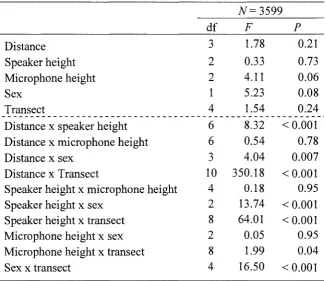
Table 1. Mixed-model ANOVA table for excess attenuation (EA) of
introductory syllables, trills, and terminal syllables 57
Table 2. Mixed-model ANOVA table for signal-to-noise ratio (SNR) of
introductory syllables, trills, and terminal syllables 58
Table 3. Mixed-model ANOVA table for tail-to-signal ratio (TSR) of
introductory syllables, trills, and terminal syllables 59
Table 4. Mixed-model ANOVA table for blur ratio (BR) of introductory syllables,
trills, and terminal syllables 60
Table 5. Mixed-model ANOVA table for background noise, pooled across
introductory syllables, trills, and terminal syllables 61
Chapter 3: Structure of Rufous-and-white Wren song in a tropical forest: Is there a link
between habitat and song structure?
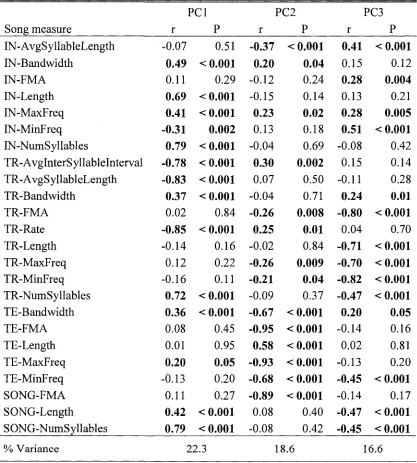
Table 1. Correlation coefficients for song measurements significantly
contributing to the first three van wax-rotated principal components 91
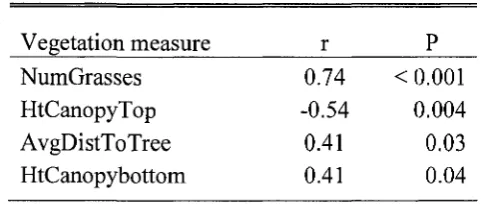
Table 2. Correlation coefficients for vegetation measurements significantly
contributing to the canonical variable in discriminant analysis by forest type... 92
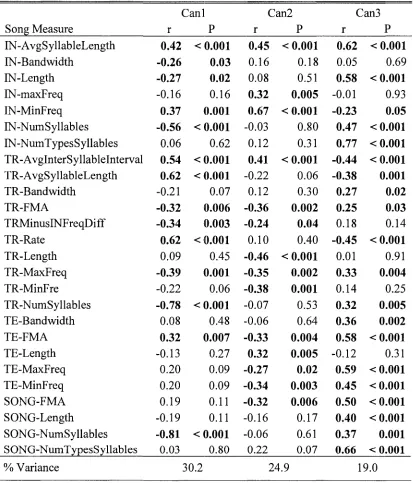
Table 3. Correlation coefficients for song measurements significantly
contributing to the first three canonical variables in discriminant analysis by
population song class 93
Table 4. Results of ANOVA on the effect of population-level song class and
Chapter 2: Degradation of rufous-and-white wren songs in a tropical forest: Effects of
sex, perch height, and habitat
Figure 1. Spectrograms of rufous-and-white wren songs indicating which
elements were analyzed in this study 62
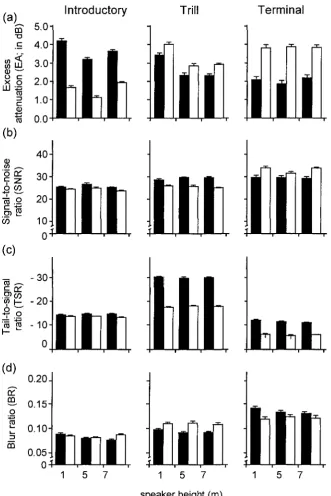
Figure 2. Interaction effect of distance and sex on four degradation
measures 63
Figure 3. Interaction effect of speaker height and sex on four degradation
measures 64
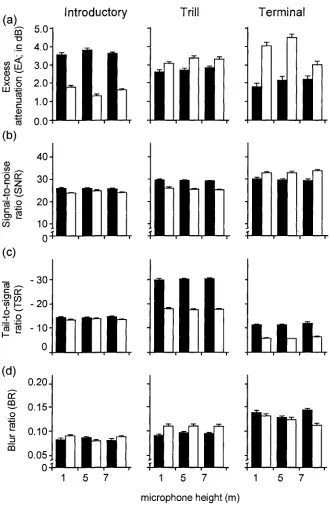
Figure 4. Interaction effect of microphone height and sex on four
degradation measures 65
Chapter 3: Structure of Rufous-and-white Wren song in a tropical forest: Is there a link
between habitat and song structure?
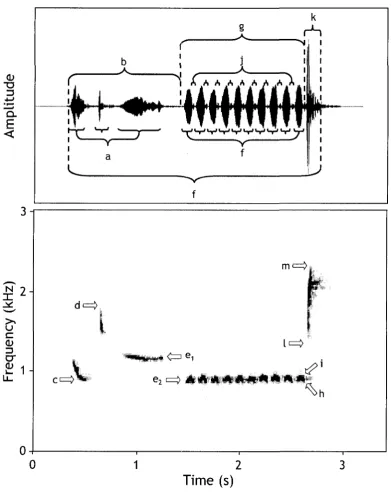
Figure 1. Waveform and spectrogram depicting a Rufous-and-white Wren
song, highlighting the song sections and some song measurements 95
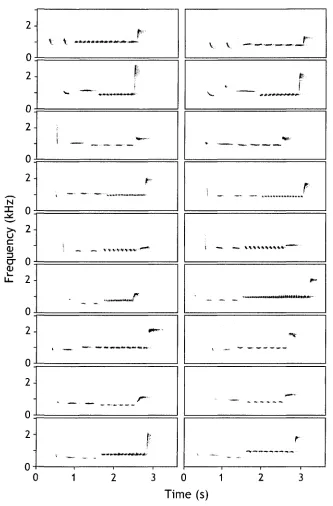
Figure 2. Spectrograms of two examples of each of the nine most common
song classes in our population of Rufous-and-white Wrens 96
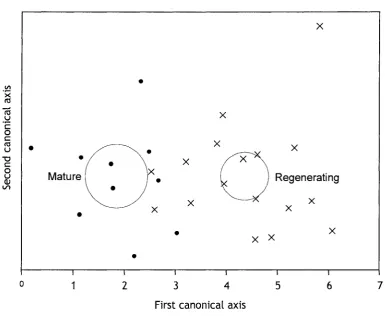
Figure 3. Scatterplot of the discriminant function resulting from the analysis
of mature and regenerating forests 97
Figure 4. Scatterplot of the discriminant function resulting from the analysis
of the most common nine song classes sung by Rufous-and-white Wrens in
Sector Santa Rosa, Costa Rica 98
Chapter 4: Song perch height in rufous-and-white wrens: Does behaviour enhance
effective communication in a tropical forest?
Figure 1. Average perch heights for rufous-and-white wrens when engaging
Figure 3. Average perch heights for male and female rufous-and-white
Introduction
Bird song plays an important role in territory defence and mate attraction (Catchpole
& Slater 2008). Song structure is significant because it acts in both species and individual
recognition, and may also be important for reproductive divergence (Baker & Boylan 1999,
reviewed in Slabbekoorn & Smith 2002) and hybridization prevention (reviewed in
Slabbekoorn & Smith 2002). Song structure is shaped by proximate and ultimate
mechanisms such as bill morphology (e.g. Podos 2001), body size (e.g. Ryan & Brenowitz
1985), and sexual selection (e.g. Vallet & Kreutzer 1995). However, bird song must transmit
effectively through the environment before it can be shaped by any other selective pressures
(Wiley & Richards 1982). Some characteristics of bird song are thought to differ between
tropical and temperate habitats (Morton 1996, Stutchbury & Morton 2001), although no
systematic study has been conducted thus far. With differences in their physical environment
as well as behavioural ecology, it would not be surprising to find that birds in the tropics
exhibit different patterns of variation in song structures and singing behaviours than
temperate species. This thesis is focussed on patterns in song transmission, song structure,
and singing behaviour in a Neotropical duetting songbird: the Rufous-and-white Wren. In
this introductory chapter, I review the important background concepts necessary to
understand the contents of the three data chapters in this thesis.
Tropical versus temperate
The concepts of "tropical" and "temperate" are often presented as dichotomous. As
geographical regions, they are divided on a map by the Tropics of Capricorn and Cancer, but
oversimplification; "tropical" and "temperate" represent two ends of a spectrum of variation
in latitude, climate, and other features. A complete picture of tropical to temperate variation
should include studies of intermediate latitude, but a false dichotomy is useful because it
helps to highlight differences between the regions of maximum contrast.
In general, tropical habitats differ most dramatically from temperate habitats in terms
of climate and seasonality; tropical regions have rainy and dry seasons whereas temperate
regions have winter, spring, summer, and fall. Patterns in flowering, fruiting, and insect
abundance are more variable in the tropics than in temperate habitats. Birds living in tropical
habitats experience different selective pressures from those in temperate habitats, and they
exhibit contrasting behavioural ecologies (Stutchbury & Morton 2001). Differences in
breeding season and migratory behaviours, stemming primarily from climatic differences,
influence other behaviours such as territoriality, mating system, and communication
(Stutchbury & Morton 2001, 2008). The tropics exhibit greater species diversity and the
majority of bird species are found in the tropics; approximately 80% of songbirds (order:
Passeriformes) breed in tropical regions (Stutchbury & Morton 2001). These facts have
prompted Morton (1996) and Stutchbury & Morton (2001) to suggest that it might be more
reasonable to consider the behavioural ecology of tropical birds as the standard, and
temperate species as divergent, which stands in contrast to the prevalent world view. While
many studies regarding the structure and transmission of tropical bird song have been
conducted, the amount of research dedicated to temperate species is disproportionately high.
Research regarding tropical bird song in relation to habitat contributes to our understanding
of bird song, avian behavioural ecology, and the important associations between birds and
Song structures are shaped by multiple evolutionary factors
Birds' species-specific songs evolve as a compromise between multiple selective
forces that can sometimes work in opposition. For example, some birds may be under intense
selective pressures on beak size due to food availability (e.g. Gibbs & Grant 1987) which
may then affect song structure by constraining the speed of trilled notes (e.g. Podos 2001,
Ballentine 2006). Sexual selection can also influence song structure if female birds prefer
specific features in male songs (e.g. Vallet & Kreutzer 1995, Ballentine et ah 2004).
Additional factors including body size, territory size, population density, and intended
receivers will also influence song structure (Lemon et al. 1981, Cosens & Falls 1984, Calder
1990, Nemeth et al. 2001, 2006). Phylogeny can have an impact as well, by constraining the
variation between closely related species. Lastly, the habitat a species lives in can influence
song structure, if certain song features transmit more effectively in certain habitats and
thereby lead to better communication between conspecifics.
Signal distortion: Attenuation and degradation
Animal communication involves the transmission of information-carrying signals
from senders to receivers. As these signals propagate through the natural environment, they
are distorted from their original structure by several processes. Bird song is no exception and
is often modified extensively by the time it travels from a sending individual to a receiving
one. Modifications that occur to a song as it is transmitted may interfere with a receiver's
ability to detect or recognize the signal. Detection requires that a receiver can determine the
presence or absence of a signal, while recognition requires the receiver to discriminate
are the two major forces affecting sound transmission. Attenuation is the decrease in signal
strength that occurs with increasing distance from the sender, and is often perceived as a
decrease in amplitude. Degradation is the distortion of the "spectral, temporal, and structural
characteristics" of a sound (Slabbekoorn 2004b) by processes of reverberation, refraction,
and irregular amplitude fluctuations (Wiley & Richards 1978, 1982, Bradbury &
Vehrencamp 1998, Slabbekoorn 2004b), although sometimes this word is used to refer to all
changes to a sound that occur during transmission (including excess attenuation; e.g.
Dabelsteen et al. 1993, Holland et al 1998).
Attenuation: Spherical spreading is the reduction of sound intensity by 6 dB with
every doubling of distance from the sound source. Spherical spreading causes global
attenuation, where all frequencies of a sound are decreased by the same amount. Attenuation
in excess of that caused by spherical spreading is called excess attenuation, and occurs
through various forces such as absorption and scattering. Absorption is when sound energy is
converted to other forms of energy (i.e. heat) during propagation though a medium (e.g. air).
Scattering occurs when sounds are reflected by obstacles such as leaves, branches, or
atmospheric disturbances. Absorption and scattering both cause frequency-dependent
attenuation, where higher frequency sounds attenuate faster than lower frequency sounds.
There are complex interactions between sender height, distance to receiver, the sound's
frequency, and other factors that influence the degree to which a sound is attenuated (Wiley
& Richards 1978). Sounds produced near or at ground level and travelling over long
distances interact with the ground, selectively attenuating specific frequencies. The exact
pattern of attenuation depends on the height that the signal is produced at, the height of the
propagating (i.e. bare ground versus vegetation-covered). In some instances, low frequency
sounds (less than 1 -2 kHz) experience a great increase in attenuation when they are produced
from within 1 m of the ground (e.g. Marten et al. 1977, Ellinger & Hodl 2003), while in other
instances, higher frequencies experience greater attenuation (Embleton 1996). The overall
conclusion regarding attenuation seems to be that low frequency sounds propagate better than
high frequency sounds although there are some situations when this rule does not apply
(Marten & Marler 1977, Marten et al. 1977, Wiley & Richards 1978, Ellinger & Hodl 2003).
Degradation: There are two main forms of sound degradation. Reverberations are
caused when sound is reflected off surfaces to create a "sound tail" of multiple echoes after a
sound. They are often associated with closed habitats because the presence of many thick tree
trunks and branches causes extensive reflections. Irregular Amplitude Fluctuations are
caused when sound is refracted by atmospheric turbulence; the resulting distortion is
perceived as fluctuations in a sound's intensity, which can mask the amplitude fluctuations in
the original signal (Wiley & Richards 1978). Irregular amplitude fluctuations are often
associated with open environments, where solar radiation warms pockets of air to create
turbulence and stratification in air temperature. The term blurring has been used to refer to
the collective effects of frequency-dependent attenuation and degradation (reverberations and
irregular amplitude fluctuations) on amplitude and frequency patterns (e.g. Dabelsteen et al.
1993, Mathevon et al. 2005).
Habitat and vocal signals: The acoustic adaptation hypothesis
The founding research relating sound transmission to avian communication (e.g.
will best learn the songs they hear most clearly (Hansen 1979), prompted the formulation of
the acoustic adaptation hypothesis. This hypothesis suggests that evolution has favoured
acoustic signals that are structured to maximize their transmission in a given environment
(Rothstein & Fleischer 1987, Brown & Handford 2000). In other words, birds' songs should
match their habitats, so as to travel the greatest distance with minimal attenuation (decrease
in signal strength with distance) and degradation (temporal and structural distortion).
Additional terms such as environmental adaptation hypothesis (Date & Lemon 1993), local
adaptation hypothesis (Brown et al. 1995), and environmental selection hypothesis (Bosch &
de la Riva 2004) have also been used to refer to the selection pressure that the physical
environment can exert on strategies for acoustic communication, but acoustic adaptation
hypothesis is the most prevalent term in avian communication studies. General predictions
from this hypothesis suggest that bird songs should be lower pitched, less
frequency-modulated, and have fewer rapidly repeated elements in closed (i.e. forest) habitats than in
open (e.g. grassland) habitats, because the songs of closed habitat birds are generally subject
to more reverberation and frequency-dependent attenuation than those of open habitat birds
(Richards & Wiley 1980, Wiley & Richards 1982). Numerous studies have tested these
predictions and the match between song and habitat using various methods (e.g. Wiley 1991,
Date & Lemon 1993, Slabbekoorn et al. 2002, Seddon 2005, Nemeth et al. 2006, Lijtmaer &
Tubaro 2007). Some findings support the predictions (e.g. Morton 1975, Anderson & Conner
1985, Wiley 1991, Badyaev & Leaf 1997, Bertelli & Tubaro 2002, Tubaro & Lijtmaer 2006)
while others fail to do so (e.g. Lemon et al. 1981, Handford & Lougheed 1991, Date &
Lemon 1993, Williams & Slater 1993). A recent meta-analysis showed that song frequency
single temporal variable included in the analysis was not (Boncoraglio & Saino 2007).
Collectively, these and other studies have demonstrated some general relationships between
habitat, song structure and sound transmission.
Trends in song structure and transmission: How is song related to habitat?
There are clear differences in the frequency and temporal structure of bird song
between open and closed habitats, but differences between tropical and temperate habitats are
far less obvious. Bird species living in closed habitats tend to have lower frequency songs
than those in more open habitats (Morton 1975, Wiley 1991, Tubaro & Lijtmaer 2006), a
difference that is more pronounced in the tropics (Wiley & Richards 1982, Wiley 1991). One
explanation for this frequency difference is that open and closed habitat birds experience
differential selective pressures. While there is an overall pressure for birds to produce low
pitched songs because lower frequency sounds attenuate less than higher pitched sounds
(Konishi 1970), birds in closed habitats may experience especially strong selection for low
frequency songs because trees and foliage cause extensive scattering and absorption leading
to greater excess attenuation of high frequencies than lower frequencies (Wiley & Richards
1982). There may be a wider range of acceptable song frequencies in open habitats because
selection pressures are relaxed in the absence of sound-scattering foliage (Wiley & Richards
1982, Wiley 1991, Nemeth et al. 2001). Ambient noise likely also plays a role: birds may be
under selective pressure to produce songs that are not overlapped by wind or insect noises
(Ryan & Brenowitz 1985). Insects such as cicadas (Homoptera: Cicadidae) produce
extensive high frequency ambient noise (Ellinger & Hodl 2003, Slabbekoorn 2004b), wind
Slabbekoorn 2004b) and other biotic factors such as amphibians or mammals produce noise
of low to intermediate frequencies (reviewed in Slabbekoorn 2004a, 2004b). There is some
evidence that high frequency noise is more common in forest habitats, particularly in the
tropics, whereas lower pitched wind noise is more prevalent in open habitats (Ryan &
Brenowitz 1985, Waser & Brown 1986, Slabbekoorn 2004a, 2004b). Therefore, differential
selective pressures may be exerted on birds in closed and open habitats to produce low and
high frequency songs, respectively, to avoid being masked.
Birds living in closed habitats have different song structures than those living in more
open habitats. Grassland birds tend to have songs with faster trills (e.g. Handford &
Lougheed 1991), a greater prevalence of side bands and buzzes (e.g. Wiley 1991), more
notes, and broader bandwidths (e.g. Tubaro & Lijtmaer 2006). In contrast, forest species tend
to have pure-tonal songs (e.g. Morton 1975) with fewer notes, longer notes, and longer
intervals between notes (e.g. Badyaev & Leaf 1997, reviewed in Wiley & Richards 1982).
This trend of slower trilled tonal songs in closed habitat species is true in both tropical
species (Morton 1975, Ryan & Brenowitz 1985) and temperate species (Richards & Wiley
1980, Wiley 1991, but see Boncoraglio & Saino 2007). These structural characteristics are
thought to be adaptive for avian communication. In a dense forest, reverberations will blur
the temporal structure of repetitive frequency modulation and rapid amplitude modulation in
songs but whistled tonal notes will be less distorted (Richards & Wiley 1980, Brown &
Handford 2000). In open habitats, irregular amplitude fluctuations mask low rates of
amplitude modulation, so trills may be adaptive because the redundancy created in their rapid
rate of amplitude and frequency modulation ensures that information is still received
No studies have explicitly compared tropical and temperate bird songs, despite the
several surveys that have been conducted within tropical habitats (Morton 1975, Ryan &
Brenowitz 1985, Seddon 2005) and temperate habitats (Richards & Wiley 1980, Wiley 1991,
Sorjonen 1986). However, there is some evidence that suggests differences in songs between
the two habitats. For example, when comparing the findings of two similar studies (Morton
1975, Wiley 1991), tropical forest species appear to sing lower frequency songs than
temperate forest species, though no such difference is apparent between tropical and
temperate grassland species. Tropical forest birds concentrate the energy of their songs into
low frequencies (mean frequency emphasized is 2.1 kHz; Morton 1975), while temperate
forest birds have a higher average dominant frequency (frequency of maximum amplitude is
4.2 kHz; Wiley 1991). Many tropical forest species are described as having simple tonal
songs that change little in frequency (Morton 1975) and some researchers state that these
narrow frequency bandwidth songs are typical of species that live in dense tropical forests
(Slabbekoorn et al. 2002). These potential frequency and structural differences between
tropical and temperate forest habitats may relate to stronger selection pressures on tropical
species to produce low frequency, narrow frequency bandwidth sounds as a strategy of
avoiding excess attenuation and degradation caused by dense tropical habitats. Tropical bird
species may be subject to stronger selection to maximize the distance their songs travel
because they have larger territories than those of their temperate counterparts (Terborgh et al.
1990), and birds that sing at low frequencies could be at a selective advantage because their
songs travel farther to mates or rival conspecifics. Additionally, there may be further
advantages for tropical forest species to use narrow frequency bandwidth notes if
et al. 2006). Lastly, ambient noise may also create an advantage for low pitched, narrow
frequency bandwidth songs. The biotic environment in tropical forests is varied and noisy;
insects such as crickets (Orthoptera: Gryllidae), katydids (Orthoptera: Tettigoniidae), and
cicadas produce a great deal of ambient noise in the frequency range of 3.15-12.5 kHz, with
most of it concentrated around 4-8 kHz (Ellinger & Hodl 2003, Slabbekoorn 2004a, 2004b).
Birds in tropical forests may experience especially strong selection to produce songs within
the window of relative quiet (1-4 kHz) to avoid masking from the intense ambient noise
created by tropical insects, although this will depend on the particular habitat (e.g.
Slabbekoorn 2004a, 2004b).
While there is a sufficient amount of evidence to suggest that the acoustic adaptation
hypothesis holds true in many situations, there are many reasons why we might find evidence
that directly contradicts its predictions. Firstly, the acoustic adaptation hypothesis focuses on
maximizing long-distance signals; broadcasting as far as possible with minimal attenuation
and degradation to enhance detection and recognition by receivers. There are, however,
situations in which maximizing a signal might not be necessary or desirable, in which case a
signal may be adapted for optimal, rather than maximal distances (Lemon et al. 1981, Aubin
et al. 2004, Nemeth et al. 2006). It may be, for example, that intended receivers (neighbours
or mates) are nearby, or that a degraded signal is adequate for its intended purpose (Aubin et
al. 2004, Kroon & Westcott 2006) or even beneficial if the degraded signal keeps
information from unintended eavesdroppers (Mennill et al. 2002). It could also be that some
signals are designed to minimize variability in transmission quality rather than maximize
distance travelled (Brown & Handford 1996, 2000, 2003). Additionally, some amount of
neighbouring birds are, because degradation can act as a distance and location cue (Richards
1981, Morton 1982, Morton 1986).
The second reason we might predict deviation from the predictions of the acoustic
adaptation hypothesis is that many factors influence the evolution of song structure beyond
the natural environment. For example, larger birds may produce lower pitched songs (e.g.
Bowman 1979, Ryan & Brenowitz 1985, Bertelli & Tubaro 2002), beak size and shape
constrains temporal features of songs (e.g. Podos 2001, Seddon 2005, Ballentine 2006,
reviewed in Podos & Nowicki 2004), phylogeny can constrain variation and subsequent
evolution of song (e.g. Laiolo & Rolando 2003, Rheindt et al. 2004), territory size,
population density and intended receiver (i.e. close-range or long-range) will influence how
far a signal must travel (e.g. Wiley & Richards 1978, Lemon et al. 1981, Calder 1990, Aubin
et al. 2004, Nemeth et al. 2006), the presence of related sympatric species may lead to
character displacement in songs (e.g. Bowman 1979, Irwin 2000, Slabbekoorn & Smith
2002), and sexual selection can exaggerate certain song features if they are preferred by
females (e.g. Vallet & Kreutzer 1995, Ballentine et al. 2004). These factors may
counterbalance acoustic adaptation.
Thirdly, there are several approaches to studying song structure and transmission, and
innumerable variations within each approach. Inconsistencies between methods can explain
some variation in the results of studies testing the acoustic adaptation hypothesis.
Types of studies: Focal studies, surveys, and transmission studies
Studies that test the predictions of the acoustic adaptation hypothesis and the effects
1) sound transmission studies; 2) surveys; and 3) focal species studies. Generally, sound
transmission studies are aimed at understanding the transmission of sound through different
environments; surveys compare song characteristics of many species between categories of
habitat; and focal species studies concentrate on habitat-related song differences in one or a
few species.
Sound transmission studies: The study of sound transmission and its implications
for avian communication was largely founded by transmission studies conducted in the 1970s
(e.g. Chappuis 1971, Morton 1975). The general method for conducting a study of this type
is to broadcast synthetic noises from a speaker and re-record them from a variety of distances
at one or more heights. The resulting observation sounds are then compared to the model
sounds, which can be either the original broadcasted stimuli or close-range re-recordings.
Using re-recordings as model sounds is preferable, because this helps control for possible
distortion caused by the broadcasting and recording process (e.g. Morton 1975, Dabelsteen et
al. 1993). Model sounds are compared to the transmitted sounds to ascertain the extent of
attenuation and degradation. The same experimental setup can be used in multiple habitats,
and then attenuation, reverberation, and other sources of distortion can be measured in
relation to various factors.
Survey studies: Sound transmission studies have revealed that signals experience
differential attenuation and degradation dependent on the structure of the habitat they
propagate through. The predictions of acoustic adaptation hypothesis were developed with
this central idea in mind: birds requiring their long-distance signals to be received by distant
conspecifics should have songs structured to transmit efficiently and accurately through their
small-scale surveys to investigate whether this prediction holds true. These studies involve
relating the songs or calls of several species to the habitats in which these species live. When
conducting survey studies, investigators collect recordings of bird songs from various
habitats, conduct fine structural measurements on these songs, and then compare song
structure between habitat classes. Surveys differ in the number and type of species,
geographic area and habitats considered, as well as the inclusion of other factors that might
influence song, such as body size, beak morphology, or phylogeny.
Focal species studies: In focal species studies, researchers investigate a single
species or a few closely-related species, either to give insight regarding that particular species
or to use it as a model species which helps explain general principles of avian
communication. Focal species studies can be split into four general categories: (1)
Descriptive studies; (2) Song transmission studies; (3) Reciprocal transmission studies; (4)
Playback and response studies. Combining more than one of these approaches into one study
is common and useful.
Descriptive studies: Generally, researchers measure various frequency and temporal
parameters of songs from birds of one or a few species living in different habitats and then
compare these characteristics to see if conspecifics from various habitats sing different songs.
Birds' songs are recorded in multiple habitat types, measured with sound analysis software,
and then compared between habitats. Like surveys, researchers measure multiple fine
structural features of songs and then relate them to habitat classes or ecological variables.
Song transmission studies: The stimuli in song transmission studies are songs or song
elements from one or more species, but the experimental design is similar to that of sound
conditions to generate observation sounds, which are then compared to the model sounds
(either the original recordings, or songs re-recorded at very short distances). The goal is to
compare the effects of distance, height of song and listening posts, different habitats, or other
factors on the propagation of particular species' songs.
Reciprocal transmission studies: Reciprocal transmission experiments determine how
bird songs from various locations transmit in native and foreign habitats. They provide a test
of the acoustic adaptation hypothesis by assessing the match of songs to habitats; a bird's
song should be adapted for the habitat in which it lives, so if a conspecific song from a
different habitat propagates better than the native song, it suggests that the native song does
not meet the predictions of the acoustic adaptation hypothesis. The methods are similar to
those of song transmission, except the propagated songs or song elements are collected from
multiple habitats, and the experiment is replicated in those same habitats.
Playback and response studies: Playback studies introduce a behavioural element to
studies of song propagation in the natural environment. This technique involves assessing
birds' reactions to various playback stimuli to determine if they recognize the differences
between songs. Often a control song and a degraded song are used, where degraded can mean
re-recorded at various distances, altered in the frequency domain to simulate attenuation of
higher frequencies, or altered in the time domain to create or simulate reverberations.
Tropical songbirds: Female song and duetting
The most common definition of "bird songs" states that they "tend to be long,
complex, vocalizations produced by males in the breeding season" (Catchpole & Slater
Slater & Mann 2004). The authors of this widespread definition wrote it from a
temperate-biased perspective; it is true that song is a primarily male activity in the temperate region, but
it is quite common to find female song in tropical regions (Langmore 1998, Slater & Mann
2004). Female solo song has been largely neglected, although there has been some research
on duet singing (Slater & Mann 2004). Duetting, defined as "overlapping bouts of
vocalizations given by paired individuals such that their elements within those bouts have a
high level of alternation, or a low coefficient of variation of the intervals between their
elements, or both" (Hall 2004, adapted from Farabaugh 1982), has been documented in over
220 bird species (Farabaugh 1982). This number, representing > 3% of avian species, is
likely to be a vast underestimate, based on preliminary research (Mennill, unpubl. data).
Because female song and duetting occur in a variety of unrelated bird taxa, these behaviours
must have evolved several times, a more parsimonious explanation than the alternative that
they have been lost multiple times (Slater & Mann 2004). It therefore stands to reason that
some aspects of tropical life history are associated with female song, duetting, or both (Slater
& Mann 2004).
Based on the small amount of research that has been conducted, female song appears
to function in territorial defence, mate guarding, mate attraction, and coordination of
breeding activities, and tends to be associated with high levels of female-female competition
and year-round territoriality (Langmore 1998). In many tropical species, especially
insectivores, year-round territoriality is common (Kunkel 1974, Stutchbury & Morton 2001),
breeding seasons are longer (Stutchbury & Morton 2001), and parental investment may be
higher than temperate species (Stutchbury & Morton 2001, Slater & Mann 2004). Stutchbury
frequent in tropical birds. Taken together, these factors suggest lower levels of sexual
selection, greater pair commitment, and extensive sex-role convergence in tropical birds
(Slater & Mann 2004). Sex-role convergence is thought to be one of the primary factors
favouring female song in tropical bird species (Stutchbury & Morton 2001, Slater & Mann
2004). Female song may also be involved in breeding synchrony; there are few external cues
for breeding (i.e. changes in day length and temperature) in tropical regions, so it may be that
song by both pair members ensures that their breeding activities are synchronized (Slater &
Mann 2004).
Up to twelve hypotheses for avian duetting have been proposed, many of which are
similar to those for female song. Duet singing has been suggested to function primarily in
maintaining contact between pair members, mate guarding, paternity guarding, ensuring
reproductive synchrony, joint resource defence, and signalling commitment (reviewed in Hall
2004). These can be simplified into a smaller number of categories: acoustic contact, pair
bonding, territory defence, and sexual conflict. Dense tropical forests may restrict visibility,
in which case cooperative duets would be useful in maintaining acoustic contact and
localizing mates (Thorpe 1963). Pair bonding is accomplished through cooperative duets, if
members are signalling commitment to one another (Wickler 1980). Pairs may duet
cooperatively to defend their territories or resources against intruders (Seibt & Wickler
1977). Lastly, duetting may also have a role in sexual conflict if individuals reply to their
mates' songs to prevent extra-pair copulations, thereby functioning as a mate or paternity
Rufous-and-white Wrens
In this thesis, I explore sound transmission and communication behaviour in
Rufous-and-white Wrens {Thryothorus rufalbus), a Neotropical duetting species of medium-sized,
non-migratory songbirds in the family Troglodytidae. There are five subspecies of
Rufous-and-white Wrens, collectively ranging from southern Mexico through Central American into
Colombia and Venezuela. Our study site is in Sector Santa Rosa of the Area de Conservation
Guanacaste (10°40'N, 85°30'W), in which our study species (subspecies Thryothorus
rufalbus castonanotus) lives in areas of mature humid forest as well as late-successional
regrowth forest. Rufous-and-white Wrens are insectivores, feeding primarily on the ground
among the leaf litter (Ahumada 2001).
While a detailed study has yet to be published, the ongoing study of this species by
Mennill et al. demonstrates that this species is relatively long-lived and maintains long
pair-bonds. Several pieces of evidence collected during the on-going long-term study of our
population provide support for this statement: (1) two males in the population were observed
during six consecutive field seasons (male 1: 2002-2007, male 2: 2003-2008); (2) one pair
was observed defending the same territory from 2002-2006; and (3) survivorship from the
2005 field season to the 2006 field season was 76.7% (Mennill et al. unpubl. data).
Rufous-and-white Wrens maintain year-round territories that are relatively large for passerines
(regularly > 100 m long in our study site; Mennill & Vehrencamp in press). Males and
females show similar territorial behaviour; territories delineated by male songs are similar in
size to those delineated by female songs (Osmun Honours thesis).
The breeding season for Rufous-and-white Wrens is from April until at least
with the onset of the rainy season in May (Topp & Mennill 2008), and I have observed pairs
actively attempting to re-nest following predation events well into August. Pairs share
parental duties such as nest-building and nestling-feeding, but only females incubate eggs
and brood nestlings. They are socially monogamous and it is not yet clear whether they are
genetically monogamous, although females have been observed making forays into adjacent
territories prior to egg-laying (Mennill & Vehrencamp in press).
Rufous-and-white Wren song
Both male and female Rufous-and-white Wrens sing, and pairs combine their songs
to form duets (Mennill & Vehrencamp 2005). Songs in this species have a generally
stereotyped song structure, although there is some variation between subspecies (Valderrama
et al. 2007). Within our study population (subspecies: Thryothorus rufalbus castonanotus),
male and female songs both follow a very consistent structure, comprised of introductory,
trill, and terminal sections (Mennill & Vehrencamp 2005). The introduction section appears
to be the most variable, and can include between one and six notes, which range from short
or long pure-tonal syllables of various frequencies to very quick wide bandwidth syllables
(Mennill & Vehrencamp 2005). The trill section contains between two and 35 pure-tonal
syllables within a very narrow frequency range that are repeated in relatively quick
succession, although there is some variability in the spacing between subsequent trill
syllables (Mennill & Vehrencamp 2005). The terminal section is often the loudest part of
Rufous-and-white Wren songs, and it most often consists of one wide bandwidth syllable,
While male and female songs are similar, there are significant differences in the fine
structure of their songs that allow for sex differentiation by ear in the field, or later using
spectrograms. Males have more repeated syllables in their trills, female songs are higher
frequency, and female songs often appear quieter than male songs, although this is difficult to
quantify (Mennill & Vehrencamp 2005). Males sing more than females, and only males show
a pronounced peak in singing at dawn (Mennill & Vehrencamp 2005, Topp & Mennill 2008).
Males and females also show differences in the seasonal pattern of their singing behaviour:
males sing most around the onset of the rainy season, which coincides with the female fertile
period, while females sing most early in the year, prior to breeding (Topp & Mennill 2008).
Both males and females have repertoires of distinct song types that can be identified
based on differences in their temporal and frequency features; males usually have larger
repertoires than females (Mennill & Vehrencamp 2005). Rufous-and-white Wrens sing with
eventual variety, where they repeat a given song type several times before switching to
another song type (Mennill & Vehrencamp 2005). Males sing more repeats of a given song
before switching than females do (Mennill & Vehrencamp 2005). Song sharing is very
common in our population, where every bird shares several song types with other birds in the
population (Mennill & Vehrencamp 2005).
Rufous-and-white Wren duets are formed when a male and female contribute at least
one song within < 1.0 s of each other. Duets are loosely coordinated in time, and range from
simple duets (one song from each sex), to sandwich duets (one song from one pair member,
surrounded by two songs from second pair member), to complex duets (more than one song
from both pair members; Mennill & Vehrencamp 2005). Substantial evidence suggests that
they occur (Mennill & Vehrencamp in press). Duets appear to be involved in maintaining
acoustic contact, pair bonding, cooperative territory defence, and mate guarding (Mennill
2006, Topp & Mennill 2008, Mennill & Vehrencamp in press).
Effective communication in tropical forests: Song transmission, song structure, and
singing behaviour in Rufous-and-white Wrens
There is substantial evidence that birds rely on a variety of techniques to enhance
communication within their habitats, as shown through surveys and various focal species
studies. In my thesis, I used multiple methods to assess the techniques used by
Rufous-and-white Wrens. In Chapter 2,1 present results of a song transmission experiment designed to
assess the effects of propagation distance, song post height, receiver height, sex, and habitat
on the degradation of Rufous-and-white Wren song. In Chapter 3,1 present analyses of the
fine structure of Rufous-and-white Wren songs in relation to habitat in a descriptive study. In
Chapter 4,1 quantify the perch heights that Rufous-and-white Wrens choose during particular
activities, in order to assess whether they utilize song posts that enhance communication. My
research provides a comprehensive analysis of the song structure and singing behaviour of
Rufous-and-white Wrens, particularly in relationship to sound transmission and effective
communication. This research also represents the first thorough examination of song
Literature cited
Ahumada, J. A. 2001. Comparison of the reproductive biology of two Neotropical wrens in an unpredictable environment in northeastern Colombia. Auk 118: 191-210.
Anderson, M.E. & Conner, R.N. 1985. Northern Cardinal song in three forest habitats in eastern Texas. Wilson Bull. 97: 436-449.
Aubin, T., Mathevon, N., da Silva, M.L., Vielliard, J.M.E. & Sebe, F. 2004. How a simple and stereotyped acoustic signal transmits individual information: The song of the White-browed Warbler Basileuterus leucoblepharus. An. Acad. Bras. Cienc. 76: 335-344.
Badyaev, A.V. & Leaf, E.S. 1997. Habitat associations of song characteristics in Phylloscopus and Hippolais warblers. Auk 114: 40-46.
Baker, M.C. & Boylan, J.T. 1999. Singing behavior, mating associations and reproductive success in a population of hybridizing Lazuli and Indigo Buntings. Condor 101: 493-504.
Ballentine, B. 2006. Morphological adaptation influences the evolution of a mating signal. Evolution 60: 1936-1944.
Ballentine, B., Hyman, J. & Nowicki, S. 2004. Vocal performance influences female response to male bird song: an experimental test. Behav. Ecol. 15: 163-168. Bertelli, S. & Tubaro, P.L. 2002. Body mass and habitat correlates of song structure in a
primitive group of birds. Biol. J. Linn. Soc. 77: 423-430.
Boncoraglio, G. & Saino, N. 2007. Habitat structure and the evolution of bird song: a meta-analysis of the evidence for the acoustic adaptation hypothesis. Funct. Ecol. 21: 134-142.
Bosch, J. & De la Riva, I. 2004. Are frog calls modulated by the environment? An analysis with anuran species from Bolivia. Can. J. Zool. 82: 880-888.
Bowman, R.I. 1979. Adaptive morphology of song dialects in Darwin's finches. J. Ornithol. 120: 353-389.
Bradbury, J.W., and Vehrencamp, S.L. 1998. Principles of animal communication. Sinauer Associates, Sunderland.
Brenowitz, E.A. 1982. The active space of Red-winged Blackbird song. J. Comp. Physiol. 147:511-522.
Brown, T.J. & Handford, P. 1996. Acoustic signal amplitude patterns: a computer simulation investigation of the acoustic adaptation hypothesis. Condor 98: 608-623.
Brown, T.J. & Handford, P. 2000. Sound design for vocalizations: quality in the woods, consistency in the fields. Condor 102: 81-92.
Brown, T.J. & Handford, P. 2003. Why birds sing at dawn: the role of consistent song transmission. Ibis 145: 120-129.
Brown, C.H., Gomez, R. & Waser, P.M. 1995. Old World monkey vocalizations: adaptations to the local habitat? Anim. Behav. 50: 945-961.
Catchpole, C.K. & Slater, P.J.B. 2008. Bird song: Biological themes and variations, 2" edition. Cambridge University Press, Cambridge.
Chappuis, C. 1971. Un exemple de 1'influence du milieu sur les emissions vocales des oiseaux: revolution des chants en foret equatoriale. Terre et Vie 118: 183-202. Cosens, S.E. & Falls, J.B. 1984. A comparison of sound propagation and song frequency in
temperate marsh and grassland habitats. Behav. Ecol. Sociobiol. 15: 161-170. Dabelsteen, T., Larsen, O.N. & Pedersen, S.B. 1993. Habitat-induced degradation of sound
signals: quantifying the effects of communication sounds and bird location on blur ratio, excess attenuation, and signal-to-noise ratio in Blackbird song. J. Acoust. Soc. Am. 93: 2206-2220.
Date, E.M. & Lemon, R.E. 1993. Sound transmission: a basis for dialects in birdsong? Behaviour 124:291-312.
Ellinger, N. & Hodl, W. 2003. Habitat acoustics of a Neotropical lowland forest: Bioacoustics 13: 297-321.
Embleton, T.F.W. 1996. Tutorial on sound propagation outdoors. J. Acoust. Soc. Am. 100: 31-48.
Farabaugh, S.M. 1982. The ecological and social significance of duetting, p. 85-124. In D.E. Kroodsma, E.H. Miller, & H. Ouellet [eds.], Acoustic communication in birds, Volume 2. Academic Press, New York.
Gibbs, H.L. & Grant, P.R. 1987. Oscillating selection in Darwin's finches. Nature 327: 511-513.
Gish, S.L. & Morton, E.S. 1981. Structural adaptations to local habitat acoustics in Carolina Wren song. Z. Tierpsychol. 56: 74-84.
Hall, M.L. 2004. A review of hypotheses for the functions of avian duetting. Behav. Ecol. Sociobiol. 55:415-430.
Handford, P. & Lougheed, S.C. 1991. Variation in duration and frequency characters in the song of the Rufous-collared Sparrow, Zonotrichia capensis, with respect to habitat, trill dialects and body size. Condor 93: 644-658.
Hansen, P. 1979. Vocal learning: its role in adapting sound structures to long-distance propagation and a hypothesis on its evolution. Anim. Behav. 27: 1270-1271. Hennin, H. 2008. Differences in Vocal Behaviour Between Bachelor and Paired Male
Rufous-and-white Wrens. Honours thesis. University of Windsor, Ontario, Canada. Holland, J., Dabelsteen, T., Pedersen, S.B. & Larsen, O.N. 1998. Degradation of Wren
Troglodytes troglodytes song: implications for information transfer and ranging. J. Acoust. Soc. Am. 103: 2154-2166.
Irwin, D.E. 2000. Song variation in an avian ring species. Evolution 54: 998-1010. Konishi, M. 1970. Evolution of design features in the coding of species-specificity. Am.
Zool. 10:67-72.
Kroon, F.J. & Westcott, D.A. 2006. Song variation and habitat structure in the Golden Bowerbird. Emu 106: 263-272.
Laiolo, P. & Rolando, A. 2003. The evolution of vocalisations in the genus Corvus: effects of phylogeny, morphology, and habitat. Evol. Ecol. 17: 111-123.
Langmore, N.E. 1998. Functions of duet and solo songs of female birds. Trends Ecol. Evol. 13: 136-140.
Lemon, R.E., Struger, J., Lechowicz, M.J. & Norman, R.F. 1981. Song features and singing heights of American warblers: maximization or optimization of distance? J. Acoust. Soc.Am. 69: 1169-1176.
Litjmaer, D.A. & Tubaro, P.L. 2007. A reversed pattern of association between song dialects and habitat in the Rufous-collared Sparrow. Condor 109: 658-667.
Mann, N.I., Barker, F.K., Graves, J.A., Dingess-Mann, K.A. & Slater, P.J.B. 2006. Molecular data delineate four genera of "Thryothorus" wrens. Mol. Phylogenet. Evol. 40: 750-759.
Marten, K. & Marler, P. 1977. Sound transmission and its significance for animal vocalization, I. Temperate habitats. Behav. Ecol. Sociobiol. 2: 271-290.
Marten, K., Quine, D. & Marler, P. 1977. Sound transmission and its significance for animal vocalization, II. Tropical forest habitats. Behav. Ecol. Sociobiol. 2: 291-302.
Mathevon, N., Dabelsteen, T. & Blumenrath, S.H. 2005. Are high perches in the Blackcap Sylvia atricapilla song or listening posts? A sound transmission study. J. Acoust. Soc. Am. 117:442-449.
Mennill, D.J. Ratcliff, L.M. & Boag, P.T. 2002. Female eavesdropping on male song contests in songbirds. Science 296: 873-873.
Mennill, D.J. & Vehrencamp, S.L. 2005. Sex differences in singing and duetting behavior of Neotropical Rufous-and-white Wrens {Thryothorus rufalbus). Auk 122: 175-186. Mennill, D.J. & Vehrencamp, S.L. (2008). Context-dependent functions of avian duets
revealed by microphone-array recordings and multispeaker playback. - Curr. Biol. 18: 1-6.
Morton, E.S. 1975. Ecological sources of selection on avian sounds. Am. Nat. 109: 17-34. Morton, E.S. 1982. Grading, discreteness, redundancy, and motivation-structural rules,
p.183-212. In D.E. Kroodsma, E.H. Miller, & H. Ouellet [eds.], Acoustic communication in birds, Volume 1. Academic Press, New York.
Morton, E.S. 1986. Predictions from the ranging hypothesis for the evolution of long distance signals in birds. Behaviour 99: 65-86.
Morton, E.S. 1996. A comparison of vocal behavior among tropical and temperate passerine birds, p. 258-268. In D.E. Kroodsma & E.H. Miller [eds.], Ecology and evolution of acoustic communication in birds. Cornell University Press, Ithaca.
Nemeth, E., Winkler, H. & Dabelsteen, T. 2001. Differential degradation of antbird songs in
a Neotropical rainforest: adaptation to perch height? J. Acoust. Soc. Am. 110: 3263-3274.
Nemeth, E., Dabelsteen, T., Pedersen, S.B. & Winkler. H. 2006. Rainforests as concert halls for birds: are reverberations improving sound transmission of long song elements? J. Acoust. Soc. Am. 119: 620-626.
Osmun, A. 2008. Comparison of Male and Female Territorial Behaviour in the Rufous-and-white wren {Thryothorus rufalbus). Honours thesis. University of Windsor, Ontario, Canada.
Podos, J. 2001. Correlated evolution of morphology and vocal signal structure in Darwin's finches. Nature 409: 185-188.
Podos, J & Nowicki, S. 2004. Performance limits on birdsong production, p. 318-341. In P. Marler and H. Slabbekoorn [eds.], Nature's music: the science of birdsong. Elsevier Academic Press, New York.
Rheindt, F.E., Grafe, T.U., & Abouheif, E. 2004. Rapidly evolving traits and the comparative method: how important is testing for phylogenetic signal? Evol. Ecol. Res. 6: 377-396.
Richards, D.G. 1981. Estimation of distance of singing conspecifics by the Carolina Wren. Auk 98: 127-133.
Richards, D.G., & Wiley, R.H. 1980. Reverberations and amplitude fluctuations in the propagation of sound in a forest: implications for animal communication. Am. Nat.
115:381-399.
Rothstein, S.I. & Fleischer, R.C. 1987. Vocal dialects and their possible relation to honest status signaling in the Brown-headed Cowbird. Condor 89: 1-23.
Ryan, M.J. & Brenowitz, E.A. 1985. The role of body size, phylogeny, and ambient noise in the evolution of bird song. Am. Nat. 126: 87-100.
Seddon, N. 2005. Ecological adaptation and species recognition drives vocal evolution in Neotropical suboscine birds. Evolution 59: 200-215.
Seibt, U. & Wickler, W. 1977. Duettieren als Revier-Anzeige bei Vogeln. Z. Tierpsychol 43: 180-187.
Slabbekoon, H. 2004a. Habitat-dependent ambient noise: consistent spectral profiles in two African forest types. J. Acoust. Soc. Am. 116: 3727-3733.
Slabbekoorn, H. 2004b. Singing in the wild: the ecology of birdsong, p. 178-205. In P. Marler and H. Slabbekoorn [eds.], Nature's music: the science of birdsong. Elsevier Academic Press, New York.
Slabbekoorn, H. & Smith, T.B. 2002. Bird song, ecology and speciation. Phil. Trans. R. Soc. Lond. B. 357: 493-503.
Slabbekoorn, H., Ellers, J. & Smith, T.B. 2002. Birdsong and sound transmission: the benefits of reverberations. Condor 104: 564-573.
Slater, P.J.B. & Mann, N.I. 2004. Why do the females of many bird species sing in the tropics? J. Avian Biol. 35: 289-294.
Sonnenschein, E. & Reyer, H.U. 1983. Mate-guarding and other functions of antiphonal duets in the slate-coloured boubou (Laniarius funebris). Z. Tierpsychol 63: 112-140. Sorjonen, J. 1986. Factors affecting the structure of song and the singing behaviour of some
northern European passerine birds. Behaviour 98: 286-304.
Stutchbury, BJ.M & Morton, E.S. 1995. The effect of breeding synchrony on extra-pair mating systems in songbirds. Behaviour 132: 675-690.
Stutchbury, B.J.M & Morton, E.S. 2008. Recent advances in the behavioral ecology of tropical birds. Wilson J. Ornithol. 120: 26-37.
Terborgh, J., Robinson, S.K., Parker III, T.A., Munn, C.A. & Pierpont, N. 1990. Structure and organization of an Amazonian forest bird community. Ecol. Monogr. 60: 213-238 Thorpe, W.H. 1963. Antiphonal singing in birds as evidence for avian auditory reaction time.
Nature 197: 774-776.
Topp, S. 2007. Seasonal variation in the duetting behaviour of Rufous-and-white Wrnes {Thryothorus rufalbus). M.Sc. thesis, University of Windsor, Ontario.
Topp, S. & Mennill, D.J. 2008. Seasonal variation in the duetting behaviour of rufous-and-white wrens {Thryothorus rufalbus). Behav. Ecol. Sociobiol. 62: 1107-1117. Tubaro, P.L. & Lijtmaer, D.A. 2006. Environmental correlates of song structure in forest
grosbeaks and saltators. Condor 108: 120-129.
Valderrama, S.V., Parra, J.E. & Mennill, D.J. 2007. Species differences in the songs of the critically endangered Niceforo's Wren and the related Rufous-and-white Wren. Condor 109: 870-877.
Vallet, E. & Kreutzer, M. 1995. Female canaries are sexually responsive to special song phrases. Anim. Behav. 49: 1603-1610.
Waser, P.M. & Brown, C.H. 1986. Habitat acoustics and primate communication. Am. J. Primatol. 10: 135-154.
Wickler, W. 1980. Vocal duetting and the pair bond. I. Coyness and partner commitment. A hypothesis. Z Tierpsychol 52: 201-209.
Wiley, R.H. 1991. Associations of song properties with habitats for territorial oscine birds of eastern North America. Am. Nat. 138: 973-993.
Wiley, R.H. & Richards, D.G. 1978. Physical constraints on acoustic communication in the atmosphere: implications for the evolution of animal vocalizations. Behav. Ecol. Sociobiol. 3: 69-94.
Wiley, R.H., and Richards, D.G. 1982. Adaptations for acoustic communication in birds: sound propagation and signal detection, p. 131-181. In D.E. Kroodsma, E.H. Miller, & H. Ouellet [eds.], Acoustic communication in birds, Volume 1. Academic Press, New York.