ESTIMATING AIR PARTICULATE MATTER 10 USING LANDSAT
MULTI-TEMPORAL
DATA
AND
ANALYZING
ITS
ANNUAL
TEMPORAL PATTERN OVER GAZA STRIP, PALESTINE
Abdallah Shaheen
1+Aqeel Ahmed Kidwai
2Noor Ul Ain
3Midyan Aldabash
4Aatif Zeeshan
51,3,5
Researcher, Department of Meteorology, COMSATS Institute of Information Technology, Islamabad, Pakistan
2
Principal Scientific Officer, Department of Meteorology, COMSATS Institute of Information Technology, Islamabad, Pakistan
4PhD Researcher, Geomatics Engineering Department, Istanbul Teknik
Üniversitesi İnşaat Fakültesi, Istanbul, Turkey
(+ Corresponding author)
ABSTRACT
Article History
Received: 16 January 2017 Revised: 10 February 2017 Accepted: 22 February 2017 Published: 3 March 2017Keywords
PM10 TM ETM+ Atmospheric reflectance Gaza strip Urbanization.Palestine faces economic and political issues such as conflict, siege and urbanization; all
these have led to an increase in the air pollution over Gaza Strip. In this study,
Particulate matter 10 (PM10) concentrations over Gaza Strip has been estimated by
Landsat Thematic Mapper (TM) and Landsat Enhanced Thematic Mapper Plus (ETM+)
data, based on a multispectral algorithm. Simultaneously, in-situ measurements for the
corresponding particulate are acquired for selected time period. Landsat and ground data
for eleven years are used to develop the algorithm while four years data (2002, 2006,
2010 and 2014) have been used to validate the results of algorithm. The developed
algorithm gives highest regression, R coefficient value i.e. 0.86; RMSE value as 9.71
µg/m³; P values as 0. Average validation of algorithm show that calculated PM10
strongly correlates with measured PM10, indicating high efficiency of algorithm for the
mapping of PM10 concentration during the years 2000 to 2014. Overall results show
increase in minimum, maximum and average yearly PM10 concentrations, also presents
similar trend over urban area. The rate of urbanization has been evaluated by supervised
classification of the Landsat image. Urban sprawl from year 2000 to 2014 results in a
high concentration of PM10 in the study area.
Contribution/ Originality:
The paper contributes the first ever research on the air quality of Gaza Strip, Palestine.
The propose algorithm in this research is to estimate the particulate matter 10 using remote sensing data and also
study the impact of environmental parameters on air quality during last 15 years in the study area.
1. INTRODUCTION
The addition of foreign fine particles into the atmosphere gives rise to air pollution, especially when the particles
originate from hazardous sources. It basically, is a mixture of solid, liquid and gaseous particles. Air pollution is
caused when these particles inhabit the atmosphere in an elevated amount, menacing to human health by increasing
disease risks and/or destroying the cultural patrimony in urbanized areas. The core factor behind the air pollution is
ever increasing human-induced anthropogenic activities such as vehicle emissions, industry and urbanization loading
a huge amount of smoke and other harmful gases into the atmosphere. Motor traffic emissions are one of the most
Journal of Asian Scientific Research
ISSN(e):2223-1331
ISSN(p):
2226-5724
DOI: 10.18488/journal.2/2017.7.2/2.2.22.37 Vol. 7, No.2, 22-38.
important sources for air pollution across the globe. Pollutant particles are dispersed and diluted during emission and
also exhibit photochemical reactions
[1]
.
Air pollution shows adverse effects on human health
[2, 3]
as well as atmospheric visibility
[4, 5]
and climate
change
[6]
. Chemical particles like sulfur dioxide (SO
2), nitrogen oxide (NOx), carbon monoxide (CO), heavy
metallic compounds and Suspended particulate matters (SPM) are responsible for acute and chronic lung diseases,
heart diseases; and also cause the aggravation of existing lung diseases such as bronchitis and asthma. Thus, affecting
the average human life expectancy rate
[7, 8]
.
PM10 consists of fine solid particulates along with very small water droplets present in the air, ranging to a size
of less than 10 microns. PM10 is generally divided into fine particulates with size smaller than 2.5 microns i.e.
PM2.5, and courser particulates lesser than 10 microns i.e. PM 10.
National Ambient Air Quality Objectives for
Particulate Matter [9]
categorized PM10 into two divisions, i.e. primary particles (sea salt, minerals and carbonaceous
compounds) and secondary particles (those which have been created in the atmosphere by the interaction of different
chemical compounds). PM10 is believed to be a major deriver of air pollution especially in developing regions where
maximum level for this particulate suggested by World Health Organization (WHO) is constantly on an increase. It is
regarded as a good index to study air pollution as it decreases the visibility and cause serious health problems.
To analyze the change in PM concentration in the atmosphere, ground monitoring stations can cater
measurements on regular basis. But data availability is a limitation and if available, monitoring station data is
expensive to use and lack behind in the mapping of an extended spatial extent. Generally, remote sensing techniques
have been in practice for major ecological studies such as air quality assessment. Remote sensing can assist in the
tracking, detection and analysis of pollutants transferred into the atmosphere, making it possible to monitor it over a
larger spatial extent at different elevations, which makes it the only source to cover such a huge area. To carry out air
pollution studies, many applications for Moderate Resolution Imaging Spectroradiometer (MODIS), Satellite Pour l’
Observation de la Terre (SPOT) and Landsat have been used to exhibit the relation between air pollution and satellite
data by a number of researchers
[10-12]
.
MODIS has been used for monitoring and estimating Aerosol Optical Depth (AOD) and PM10 concentration but
its application is limited due to its coarser spatial resolution; and disagreement in correlation results between the
MODIS aerosol product and PM10 concentration, on account of the area and changing environmental conditions
[13]
.
However, precise study of air quality necessitates a satellite data with high spatial resolution. To provide the satellite
measurements for suitable finer resolution required for air pollution study, the visible and thermal bands of TM and
ETM+ have been commonly used in a number of recent researches
[14-23]
In this study, PM10 estimations of Landsat based on atmospheric reflectance values of the visible bands
(extracted by TM and ETM+) are used to create a multispectral algorithm. As urbanization is the root cause of
anthropogenic activities and urban area is the hub of air pollution worldwide, so this research has been carried out in
the urban area of Gaza Strip to analyze the extent of air pollution caused by PM10.
2. MATERIALS AND METHOD
2.1. Study Area
Figure-1. Study Area: Gaza Strip
2.2. Materials
2.2.1. TM and ETM+
Landsat satellite has been providing with the largest perpetual measurements of satellite-based remotely sensed
observational data. It provides the satellite data with medium level spatial resolution and is helpful to monitor the
global change. Table 1 shows the characteristics of TM and ETM7+
[25]
. The data for TM and ETM+ is acquired
from USGS Website obtained by specific path and row. Gaza Strip is covered by two paths and two rows namely,
path/row 174/38 and path /row 175/38 (Figure 2).
Table-1. Specific characteristics of TM5 and ETM 7
ETM+ Bands
TM Bands
Name
Wavelength
Resolution
ETM+ 1
TM 1
Blue
0.45 - 0.52 µm
30 m
ETM+ 2
TM 2
Green
0.52 – 0.60 µm
30 m
ETM+ 3
TM 3
Red
0.63 – 0.69 µm
30 m
ETM+ 4
TM 4
NIR
0.76 – 0.90 µm
30 m
ETM+ 5
TM 5
MIR1
1.55 – 1.75 µm
30 m
ETM+ 6
TM 6
Thermal
10.4 – 12.50 µm
30 m
ETM+ 7
TM 7
MIR2
2.08 – 2.35 µm
30 m
ETM+ 8
-
Panchromatic
0.551 - 0.981 µm
15 m
Source: reference [25]
2.2.2. Ground-Based Observation Data
Figure-2. Path/Row of TM and ETM+ and Ground Observation location
2.3.
Method
2.3.1. Geometric Correction
Geometric distortion is a commonly found error in raw multispectral satellite images, primarily because of the
displacement in satellite position. These errors are to be removed before the manipulation of such images. Geometric
distortion in an image is resolved by using resampling technique, taking minimum five ground control points (GCPs)
on a base map and comparing it with satellite images of the study area. On May 31
st2003, one of the sensors of
ETM+ failed to scan called the Scan Line Corrector (SLC), which lost an approximate of 22 percent data. To fill the
gap between scan lines, an algorithm has been used which is developed by
Scaramuzza and Micijevic [27]
.
2.3.2. Radiometric calibration
(1)
Where, L is radiance at sensor expressed in Wm
-2Sr
-1
m
-1, λ is band number, Bias is band specific
multiplicative rescaling factor from Metadata of TM and ETM+, Gain is band specific additive rescaling factor from
Metadata of TM and ETM+ and DN is digital number.
Converting spectral radiance to top of atmosphere reflectance (TOA), for combined atmospheric reflectance and
surface reflectance, is calculated with the following equation (2),
[32]
(2)
Where, TOA is the top of atmospheric reflectance at sensor, D is earth-sun distance in astronomical units
[31]
ESUN is mean solar exo-atmospheric irradiances (W/m
2/sr/µm)
[31]
and
s = solar zenith angle (degree) (Metadata
of TM and ETM+).
It is important to retrieve the surface reflectance prior to calculating the atmospheric reflectance for remote
sensing data. For the respective study, surface reflectance is calculated by manipulating the relationship between three
visible bands (blue, green and red) and the Mid Infrared (MIR) band at 2.1 µm. It is assumed that atmospheric haze
does not significantly affect MIR band data, or else it can be retrieved from MIR band because to some extent,
surface reflectance is correlated across different bands to each other. A number of studies showed accurate results by
measuring surface reflectance of visible bands from MIR
[33]
. For this research, surface reflectance of the visible
bands are calculated using equation (3, 4 and 5), given by
Lim, et al. [18]
.
(3)
(4)
(5)
Where, Rs is the surface reflectance of visible bands, blue green and red. TOA (λ7) is the total reflectance at
sensor of MIR band.
TOA is the sum of atmospheric reflectance and surface reflectance. The atmospheric reflectance is extracted using a
simple form of the equation (6). This equation is also used by
Popp, et al. [33]
(6)
Where, Ratm is the atmospheric reflectance (i=1, 2, 3... Corresponding to wavelength for satellite).
2.3.3. PM10 Algorithm Model
Mie Aerosols Scattering Theory has been applied to estimate the spectral optical depth and aerosol phase
function. It is based on the imaginary index and aerosol size distribution
[34, 35]
.
(7)
On the other hand, atmospheric reflectance caused by Molecule Rayleigh scattering, is found by
Liu, et al. [36]
Where, Ra is the atmospheric reflectance caused by Mie Aerosols scattering, Rm is the atmospheric reflectance
caused by molecule Rayleigh scattering,
s is the solar zenith angle,
v is the viewing zenith angle,
is the relative
azimuth angle, Wo is the single scattering albedo, τa is aerosol optical thickness caused by aerosols, τm is the aerosol
optical thickness caused by molecules, Pa is the aerosol scattering phase function, Pm is the rayleigh scattering phase
function,
is the cosines of the view directions and
is the cosines of the solar directions.
The atmospheric reflectance is the sum of Ra and Rm
[37]
.
Ratm =
+
(9)
The method can be applied to satellite imagery. i.e. For TM or ETM+ band 1. So, τa has been arranged by
Xia [38]
in
equation (10)
τa =
Ratm
(10)
By ignoring Rm
[39, 40]
Equation (10) can be modified as Equation (11).
τa =
Ratm (11)
Where, τa is the AOT. Parameters such as
,
, Wo, Pa,
s,
v and
can be easily estimated by separate
equations to presents as a coefficient value (A
0). Equation (11) can be written as Equation (12).
AOT = (A
0) Ratm (12)
Equation (8) is re-written for selected bands of TM and ETM+ as Equation (9).
AOT (λ) = A
0Ratm (λ
1) + A
1Ratm (λ
2) + A
2Ratm (λ
3) (13)
Where, Ratm is the atmospheric reflectance (i=1, 2, 3... Corresponding to wavelength for satellite), Aj is the
algorithm coefficient (j=0, 1, 2), it is determined empirically. The relation between PM and AOT is obtained for a
single homogeneous layer of atmosphere which contain spherical aerosol particulates. The mass concentration at the
surface is obtained after drying the sampled air, given by
Koelemeijer, et al. [41]
.
(14)
Consequently, it is concluded that against AOT, the parameter of PM exhibits a better correlation directly. By
utilizing the information resulting from spectral AOT analysis, PM10 concentration has been extracted. Several
studies suggest that AOT and PM10 have a strong linear correlation where, R is more than 0.8
[42, 43]
.
Gupta, et al.
[44]
;
Slater, et al. [45]
and
Engel-Cox, et al. [46]
also analyzed the correlation between PM concentrations and AOT
measurements by linear equation. By taking AOT as a substitute in terms of PM10 equation (13), PM10 algorithm
with spectral reflectance of multi-band wavelengths (λi) is simplified as Equation (15).
PM10 = A
0Ratm (λ
1) + A
1Ratm (λ
2) + A
2Ratm (λ
3) (15)
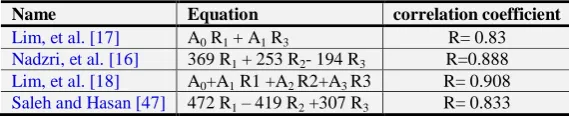
Table 2 shows a number of studies suggest that PM10 and atmospheric reflectance show linear correlation
between them. Where, R was more than 0.8.
Table-2. Several Previous PM10 Regression Based on Landsat images
Name Equation correlation coefficient
Lim, et al. [17] A0 R1 + A1 R3 R= 0.83
Nadzri, et al. [16] 369 R1 + 253 R2- 194 R3 R=0.888
Lim, et al. [18] A0+A1 R1 +A2 R2+A3 R3 R= 0.908
2.3.4. Classification and Accuracy Assessment
Image classification methods are divided into two broad categories i.e. supervised and unsupervised. Each of the
approaches has its own advantages as well as disadvantages; however, it is more likely to get maximum accuracy by
supervised image classification technique than by unsupervised method
[48, 49]
. So, to carry out this study, both
images of Landsat have been classified into thematic maps by performing supervised classification using maximum
likelihood technique. Two major classes are identified which are urban area and non-urban area. Accuracy assessment
is calculated by using ground data. Error matrices are then generated to analyze the user’s accuracy, producer’s
accuracy and over all classification accuracy.
3. RESULTS AND DISCUSSION
3.1 Atmospheric Reflectance Extraction and Validation
Atmospheric reflectance of visible bands were extracted using equation (6), which needs to be validated. Ground
measurement of surface reflectance or atmospheric reflectance on varying wavelengths are unavailable. However,
Dark Object Subtraction Method (DOS) has been practiced to validate the atmospheric reflectance of visible band.
Shadow area is a crucial component of this method, it employs the assumption that solar irradiance did not reach
ground surface, instead reflectance from atmosphere gets recorded due to interaction between irradiance and
atmospheric pollutants.
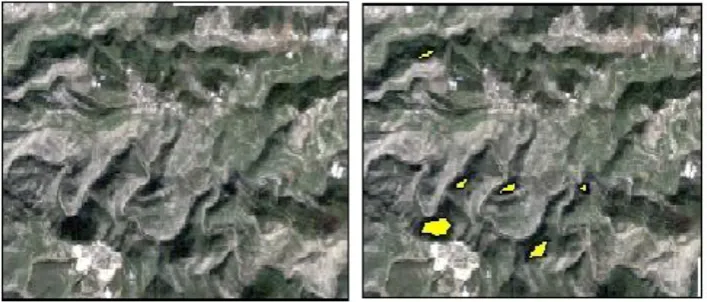
Figure-3. Dark Area (Shadow) by yellow boundary
Figure 3 shows the shadow area, represented by yellow color, is extracted to present TOA of visible band. Hence,
to validate the atmospheric reflectance of visible bands, 16 images of Landsat for different seasons and years have
been used. Atmospheric reflectance of all three visible bands strongly correlates with TOA of the corresponding
bands over the shadow area where, correlation coefficient (R)
> 0.95, Root Mean Square Error (RMSE) is nearly zero
and P = 0 (Figure 4).
3.2. Estimating PM10 Model and Validation
This research approach analyzes the temporal vibration of PM10 concentration during the years 2000-2014 over
Gaza Strip. Therefore, 11 years of ground data and satellite images have been utilized to create the PM10 algorithm
and four years (2002, 2006, 2010 and 2014) have been used for the validation of this algorithm. The atmospheric
reflectance for blue, green and red bands were determined using equation (6), as shows in figure 5. For the study,
atmospheric reflectance values are averaged using the kernel size (7x7), which is adjusted at the ground
measurements of 54 minutes before the passing of satellite above the study area due to lowest RMSE and highest R.
Figure-5. Atmospheric Reflectance of Three Visible Bands against PM10 measurement
A linear regression is used to create PM10 algorithm using Minitab software (Minitab 16.2.1), based on the
lowest value of RMSE, a highest R and lowest (P). Where the R= 0.86, RMSE = 9.71 µg/m³ and P = 0. The PM10
algorithm is as below equation (16).
(16)
Where, PM10 is the PM10 concentration (µg/m³), Ratm (λ
1), Ratm (λ
2) and Ratm (λ
3) are the atmospheric
reflectance of visible bands, blue, green and red respectively.
In addition, Figure 6 shows statistical results of regression such as probability plot, versus order, versus fits and
histogram.
Figure-6. Statistical Result of the PM10 Regression
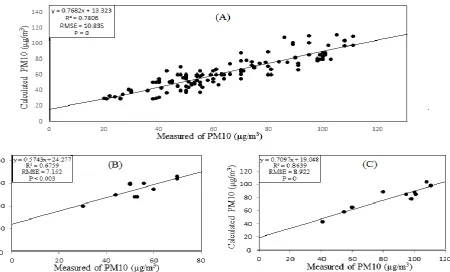
Figure-7. Validation results of the regression. (A) The average validation of four years; (B) The lowest validation on 12/2/2006 and (C) The highest validation on 20/6/2014
3.3. Temporal Variations of PM10 Concentration and Urbanization Extent
Table 3 shows the Images of TM and ETM+ that are used to establish the annual temporal variation of PM10
concentration over study area during the period 2000-2014.
Table-3. Years and months of image acquisition of TM and ETM+ which have been used to analyze PM10 over Gaza Strip.
Year
Jan
Feb
Mar
Apr
May
Jun
Jul
Aug
Sep
Oct
Nov
Dec
2000
x
xx
x
x xx
xxx
x
xx
x
2001
x
xx
x
xx
x
x
x
2002
xx
x
x
x
x
xx
2003
x
x
x
x
xx
x
x
x
x
2004
x
xx
xx
xx
x
xx
xx
x
2005
x
x
xx
xx
x
xx
xx
x
x
x
x
2006
x
x
x
xx
x
xx
x
x
x
x
2007
xx
x
x
x
xxx
x xx
xx
x
x
xx
xx
2008
x
x
x
xx
x
x
x
2009
x
x
x
xx
x
xx
xx
x
xx
xx
2010
x
x
x
xx
x
x
xx
xxx
2011
xx
x
x
xx
x
xx
xx
x
x
2012
x
x
xxx
x
xx
xx
xx
xxx
xx
x
2013
xx
x
xx
xx
xxx
xx
x
x
x
2014
xx
x
x
xx
x
xx
xx
x
x
Note: x, xx and xxx indicates availability of the image(s) of Landsat in the corresponding months
The general trend spread over 15 years (2000-2014) is shown in figure 8, where the maximum, minimum and the
mean annual PM10 concentration have a positive trend line which leads to establish the premise that PM10
concentration has increased during these years over Gaza Strip.
Figure 8 shows the average yearly concentration for PM10. During the year 2000, the maximum, minimum and
average recorded PM10 concentrations are 102 µg/m³, 28 µg/m³ and 65 µg/m³ respectively. It increases to a
maximum of 120 µg/m³ a minimum of 33 µg/m³ and an average of 71 µg/m³ during 2000-2002. The year 2003 shows
decrease in minimum (31 µg/m³) and mean (68.5 µg/m³) PM10 concentrations while, it shows increase in minimum
(124 µg/m³) concentration. From 2004 to 2006, the maximum and mean PM10 concentrations decrease to 119 µg/m³
and 71 µg/m³ respectively but the minimum concentration shows an increase of about 38 µg/m³. During the years
2007-2009, decrease in minimum, and mean concentration is shown which reaches to be 36 µg/m³ of minimum and
75.8 µg/m³ of mean concentration while an increase of 135 µg/m³ is shown in maximum concentration. The results
for 2010 show that PM10 concentration for maximum, minimum and average concentration decreased and reached to
a maximum of about 134 µg/m³, the average of 71.5 µg/m³ and a minimum of about 32 µg/m³. During the years
2011–2014, there is an increase in the minimum, maximum and mean concentration of PM10 which reached the
highest concentration overall during the 15 years, where the min is 45 µg/m³, the max is 144 µg/m³ and mean
concentration is recorded to be 85.1 µg/m³. Pattern
variation of annual mean PM10 concentration is clearly shown in
figure 9
Landsat TM image of 2000 and ETM+ of 2014 have been classified based on Maximum Likelihood technique,
categorized into two classes i.e. urban area and non-urban area (fig. 10). Classification result (Table 4) represents
urban area to be 79 Km
2in 2000, which is 21.64 % of total area while non-urban area is calculated to be 286 Km
2which is 78.36 % of the total area. Results reveal that in 2014 (Table 4), urban area increased up to 169 Km
2(46.3
%). This shows an extremely high urban growth rate from 2000 to 2014. The overall accuracy of the maps derived
from TM and ETM+ stood as 93% and 91% for 2000 and 2014 respectively.
Table-4. LULC results of the Gaza Strip during the years 2000 and 2014
Classes
. 2000 .
Area (Km
2) Area (% Age)
2014 .
Area (Km
2) Area (% Age)
Urban Area
79 21.64
169 46.3
Non-Urban Area
286 78.36
196 53.7
The PM10 concentrations show an overall increase during the years 2000-2014. To relate this increase with
urbanization and accelerated rate of anthropogenic activities. Classification result shows that urban area over Gaza
Strip especially Gaza City, has experienced increase during the years 2001-2014. This is evident from the Figure 10,
where the area around Gaza City shows noticeable increased urban extent. The population of Gaza Strip has also
increased to be 1.95 million in 2014 while, it was 1.1 million in the year 2000. This population growth led to an
increase in the number of motor vehicles across Gaza Strip, which is estimated to be about 80,000. So, we can
conclude that PM10 concentration over urban area shows increasing trend due to expansion of the urban area and
industrialization. Urbanization and population growth have strongly affected PM10 level and boosted its
concentration in the atmosphere during 2000-2014 over the Gaza Strip.
The effects of siege in the area leave strong imprints on the environment. It results in the usage of electricity
generators by a large population, to compensate the power shortage experienced due to country’s inability to run its
power generation plants. This is due to the fuel shortage for these plants. According to an estimation, about 100,000
generators per day are being used that consume almost 500,000 liters oil every day.
Another factor influencing the PM concentration in atmosphere is precipitation. It causes reduction in the amount
of pollutant particles and gaseous molecules suspended in the air, during a rainfall season
[50]
. Rainfall is an active
agent to wash away the large amount of tiny particles from the atmosphere. In case of no/less rainfall, the air remains
loaded with particulate matter. Therefore, annually averaged data for rainfall from
Ministry of Agriculture (MoA)
[51]
is analyzed for the respective time period (Figure 11). Statistics show a sharp decrease in rainfall quantity during
the years, which is a potential cause of high PM10 concentration in study area
Figure-10. Classified Map for the years 2000 and 2014
.
4. CONCLUSION
The atmospheric reflectance for Landsat visible bands has been validated using (DOS) method, using the
assumption that solar irradiance did not reach ground surface, instead reflectance from atmosphere gets
recorded due to interaction between irradiance and atmospheric pollutants.
Atmospheric reflectance of the visible bands strongly correlates with TOA of the corresponding bands over
the shadow area.
We developed an algorithm to estimate the PM10 concentration over Gaza Strip based on Landsat image
data and ground monitoring stations data for eleven years while, four years data has been used to validate the
algorithm. The precision suggests that we can monitor PM10 concentration on small area or regional scale
using Landsat observations.
Analysis results give a positive trend line of PM10 concentration which shows an average increase in its
concentration during the years 2000-2014 over the area.
Urbanization and population have strongly affected the PM10 concentration where the highest concentration
is found to be over urban area of Gaza Strip and is constantly increasing. Other factors include constantly
decreasing rainfall which promoted PM10 accumulation.
5. RECOMMENDATIONS
It is recommended that Government of Palestine and WHO encourage the policy making and law implementation
to control the air pollution in Gaza Strip and eradicate its sources and key factors, as this has become a rapidly
growing problem presently which is affecting the health of a large portion of population as well as environment in the
area. If the pollutants emission increases with the same pace it would become an uncontrollable hazard in the coming
decades.
Funding: This study received no specific financial support.
Competing Interests:The authors declare that they have no competing interests.
Contributors/Acknowledgement: We thank COMSATS Institute of Information Technology and
Department of Meteorology for providing the opportunity to carry out this research. We also thank Dr. Aqeel Ahmed Kidwai for the guidance, and our colleagues for the support and insights that greatly assisted the research.
REFERENCES
[1] H. Mayer, "Air pollution in cities," Atmospheric Environment, vol. 33, pp. 4029-4037, 1999.View at Google Scholar
[2] R. Williams, J. Suggs, A. Rea, K. Leovic, A. Vette, C. Croghan, L. Sheldon, C. Rodes, J. Thomburg, A. Ejire, M. Herbst,
and W. Sanders, "The research triangle park particulate matter panel study: PM mass concentration relationships,"
Atmospheric Environment, vol. 37, pp. 5349– 5363, 2003.View at Google Scholar | View at Publisher
[3] I. Adamson, H. Prieditis, and R. Vincent, "Pulmonary toxicity of an atmospheric particulate sample is due to the soluble
fraction," 1999.
[4] J. H. Seinfeld and S. N. Pandis, Atmospheric chemistry and physics from air pollution to climate change. London: Wiley,
1998.
[5] M. I. Shahzad, N. E. Janet, W. Jun, C. R. James, and C. W. Pak, "Estimating surface visbility at Hong Kong from ground-
based LIDAR, sun photometer and operrational MODIS product," Journal of the Air &Waste Mangment Associate, vol.
63, pp. 1098-1110, 2013.View at Google Scholar | View at Publisher
[6] J. Haywood and O. Boucher, "Estimates of the direct and indirect radiative forcing due to tropospheric aerosols: A
review," Reviews of Geophysics, vol. 38, pp. 513–543, 2000.View at Google Scholar | View at Publisher
[7] WHO, "Air quality guidelines global update 2005," Report on a Working Group meeting, 18–20 October, Bonn2005.
[8] M. Kampa and E. Castanas, "Human health effects of air pollution," Environmental Pollution, vol. 151, pp. 362-367,
[9] National Ambient Air Quality Objectives for Particulate Matter, "Science assessment document," Palestinian Central
Bureau of Statistics (PCBS, 2014), 1998.
[10] N. Soulakellis, N. Sifakis, M. Tombrou, D. Sarigiannis, and K. Schäfer, "Estimation and mapping of aerosol optical
thickness over the city of Brescia - Italy using diachronic and multiangle SPOT 1, 2 & 4 imagery," Geocarto International
Journal, vol. 19, pp. 57-65, 2004.View at Google Scholar | View at Publisher
[11] J. Amanollahi, C. Tzanis, A. M. Abdullah, M. F. Ramli, and S. Pirasteh, "Development of the models to estimate
particulate matter from thermal infrared band of landsat enhanced thematic mapper," International Journal of
Environmental Science and Technology, vol. 10, pp. 1245-1254, 2013.View at Google Scholar | View at Publisher
[12] C. Q. Lin, Y. Li, Z. B. Yuan, K. H. Alexis, X. J. Deng, T. K. L. Tse, J. C. H. Fung, C. C. Li, Z. Y. Li, and X. C. Lu,
"Estimation of long-term population exposur to PM2.5 for dense urban areas using 1-km MODIS data," Remote Sensing
of Environment, vol. 179, pp. 13–22, 2016.View at Google Scholar | View at Publisher
[13] K. WijeratneI and W. Bijker, "Mapping dispersion of urban pollution with remote sensing," International Archives of
Photogrammetry, Remote Sensing, and Spatial Information Sciences, vol. 34, pp. 125-130, 2006.View at Google Scholar
[14] S. Saleh, "Air quality over Baghdad City using earth observation and landsat thermal data," Journal of Chemical
Information and Modeling, vol. 53, pp. 1689–1699, 2011.View at Google Scholar
[15] O. Nadzri, Z. M. J. Mohd, H. S. Lim, and K. Abdullah, "Satellite retrieval optical thickness over estimating Arid Region:
Case study over Makkah, Mina and Arafah, Saudi Arabia," Journal of Applied Sciences, vol. 10, pp. 3021-3031, 2010.
View at Google Scholar | View at Publisher
[16] O. Nadzri, M. Z. Matjafri, and H. S. Lim, "Estimating particulate matter concentration over Arid Region using satellite
remote sensing: A case Study in Makkah, Saudi Arabia," Modern Applied Science, vol. 4, pp. 131–142, 2010.View at Google
Scholar | View at Publisher
[17] H. S. Lim, M. Z. Matjafri, and K. Abdullah, "Algorithm for air quality mapping using satellite images," pp. 383-308,
2010.
[18] H. S. Lim, M. Z. MatJafri, K. Abdullah, N. M. Saleh, and A. Sultan, Remote sensing of PM10 from LANDSAT TM
imagery. Thailand: Acrs Chiang Mai, 2004.
[19] A. Ung, L. Wald, T. Ranchi, C. Weber, and J. Hirsch, "Air pollution mapping: Relationship between satellite made
observation and air quality parameters," presented at the 12th International Symposium. Transport and Air Pollution,
Avignon, France, 2003.
[20] A. Ung, C. Weber, G. Perron, J. Hirsch, and J. Kleinpeter, "Air pollution mapping over a city – virtual stations and
morphological indicators," presented at the 10th International Symposium “Transport and Air Pollution”, Colorado, USA,
2001.
[21] A. Ung, L. Wald, T. Ranchin, C. Weber, J. Hirsch, G. Perron, and J. Kleinpeter, "Air pollution mapping: A new approach
based on remote sensing and geographical databases," Application to the city of Strasbourg. Photo-Interpretation, pp. 3-4,
2000.
[22] A. Retalis, C. Cartalis, and E. Athanassious, "Assessment of the distribution of aerosols in the area of Athens with the use
of landsat thematic mapper data," International Journal of Remote Sensing, vol. 20, pp. 939-945, 1999. View at Google
Scholar | View at Publisher
[23] L. Wald and J. M. Baleynaud, "Observed air quality over city of Nantes by means of landsat thermal infrared data,"
International Journal of Remote Sensing, vol. 20, pp. 947-959, 1999.View at Google Scholar | View at Publisher
[24] Palestinian Central Bureau of Statistics (PCBS), 2014.
[25] NASA, "Landsat 7 science data user handbook. Retrieved from http://Landsathandbook.gsfc.nasa.gov/handbook.html. [
Accessed 15 May 2010]," 2010.
[27] P. Scaramuzza and E. Micijevic, "SLC gap-filled products phase one methodology preliminary assessment of the value of
landsat 7 ETM+ data following scan line corrector malfunction." Retrieved from
http://landsat.usgs.gov/documents/SLC_Gap_Fill_Methodology.pdfUSGS&NASA . [Accessed June 2003], 2004.
[28] Z. Zhu and C. E. Woodcock, "Object-based cloud and cloud shadow detection in landsat imagery," Remote Sensing of
Environment, vol. 118, pp. 83-94, 2012.View at Google Scholar | View at Publisher
[29] Y. Liu, S. Wei, and D. Xiangzheng, "Changes in crop type distribution in Zhangye City of the Heihe River Basin, China,"
Applied Geography, vol. 76, pp. 22-36, 2016.View at Google Scholar | View at Publisher
[30] X. Quana, H. Binbin, Y. Marta, Y. Changming, L. Zhanmang, Z. Xueting, and L. Xing,
"
A radiative transfer model-basedmethod for the estimation of grassland aboveground biomass," International Journal of Applied Earth Observation and
Geoinformation, vol. 54, pp. 159–168, 2016.View at Google Scholar | View at Publisher
[31] G. Chander, B. L. Markham, and D. L. Helder, "Summary of current radiometric calibration coefficients for landsat MSS,
TM, ETM+, and EO-1 ALI sensors," Remote Sensing of Environment, vol. 113, pp. 893–903, 2009.View at Google Scholar |
View at Publisher
[32] P. M. Mather, Computer processing of remotely-sensed images an introduction, 3rd ed.: John Wiley and Sons, 2004.
[33] C. Popp, D. Schläpfer, S. Bojinski, M. Schaepman, and K. I. Itten, "Evaluation of aerosol mapping methods using
AVIRIS imagery. R. Green (Editor)," presented at the 13th Annual JPL Airborne Earth Science Workshop. JPL
Publications, March 2004, Pasadena, CA, 10, 2004.
[34] M. D. King, Y. J. Kaufman, D. Tanre, and T. Nakajima, "Remote sensing of tropospheric aerosols from space: Past,
present, and future," Bulletin of the American Meteorological Society, vol. 80, pp. 2229-2259, 1999.View at Google Scholar |
View at Publisher
[35] H. Fukushima, M. Toratani, S. Yamamiya, and Y. Mitomi, "Atmospheric correction algorithm for ADEOS/OCTS acean
color data: Performance comparison based on ship and buoy measurements," Advances in Space Research, vol. 25, pp.
1015-1024, 2000.View at Google Scholar | View at Publisher
[36] C. H. Liu, A. J. Chen, and G. R. Liu, "An image-based retrieval algorithm of aerosol characteristics and surface
reflectance for satellite images," International Journal of Remote Sensing, vol. 17, pp. 3477-3500, 1996.
[37] E. Vermote, D. Tanre, J. L. Deuze, M. Herman, and J. J. Morcrette, "6S user guide version 2, second simulation of the
satellite signal in the solar spectrum." Retrieved from
http://www.geog.tamu.edu/klein/geog661/handouts/6s/6smanv2.0_P1.pdf, 1997.
[38] X. Xia, "Significant overestimation of global aerosol optical thickness by MODIS over land," Chinese Science Bulletin,
vol. 51, pp. 2905-2912, 2006.View at Google Scholar | View at Publisher
[39] D. K. Paronis and J. N. Hatzopoulos, "Aerosol optical thickness and scattering phase function retrieval from solar
radiances recorded over water: A revised approach," International Geoscience and Remote Sensing Symposium, vol. 4,
pp. 1920-1922, 1997.View at Google Scholar
[40] Y. J. Kaufman and D. Tanre, "Algorithm for remote sensing of tropospheric aerosol from Modis, Product ID: MOD04,"
1998.
[41] R. B. A. Koelemeijer, C. D. Homan, and J. Matthijsen, "Comparison of spatial and temporal variations of aerosol optical
thickness and particulate matter over Europe," Atmospheric Environment, vol. 40, pp. 5304-5315, 2006.View at Google
Scholar | View at Publisher
[42] N. Sifakis, N. Soulakellis, D. Paronis, and R. Mavrantza, "Manual of EO image processing codes," Revised Reference
Manual V.1.1, 2002.
[43] D. A. Chu, Y. J. Kaufman, G. Zibordi, J. D. Chern, M. Jietai, and L. Chengcai, "Global monitoring of air pollution over
land from the earth observing system-terra moderate resolution imaging spectroradiometer (MODIS)," Journal of
Geophysical Research, vol. 108, pp. 4661-4678, 2003.View at Google Scholar
[44] P. Gupta, S. A. Christopher, and J. Wang, "Satellite remote sensing of PM and air qualliy assessment over global cities,"
[45] J. F. Slater, J. E. Dibb, J. W. Campbell, and T. S. Moore, "Physical and chemical properties of surface and column
aerosols at a rural New England site during MODIS overpass," Remote Sensing of Environment, vol. 92, pp. 173–180,
2004.View at Google Scholar | View at Publisher
[46] J. A. Engel-Cox, C. H. Holloman, and B. W. Coutant, "Qualitative and quantitative evaluation of MODIS satellite censor
data for regional and urban scale air quality," Atmospheric Environment, vol. 38, pp. 2495–2509, 2004.View at Google
Scholar | View at Publisher
[47] S. A. H. Saleh and G. Hasan, "Estimation of PM10 concentration using ground measurements and landsat 8 OLI satellite
image," Journal of Geophysics & Remote Sensing, vol. 3, pp. 1–6, 2014.View at Google Scholar
[48] D. T. Peter and L. L. Michael, "Measuring praise and criticism: Inference of semantic orientation from association," ACM
Transactions on Information Systems, vol. 21, pp. 315–346, 2003.View at Google Scholar
[49] M. J. Butt, A. Waqas, M. F. Iqbal, G. Muhammad, and M. A. K. Lodhi, "Assessment of urban sprawl of Islamabad
metropolitan area using multi-sensor and multi-temporal satellite data," Arabian Journal for Science and Engineering,
vol. 37, pp. 101–114, 2012.View at Google Scholar | View at Publisher
[50] J. M. Yoo, Y. R. Lee, D. Kim, M. J. Jeong, W. R. Stockwell, P. K. Kundu, S. M. Oh, D. B. Shin, and S. J. Lee, "New
indices for wet scavenging of air pollutants (O3, CO, NO2, SO2, and PM10) by summertime rain," Atmospheric
Environment, vol. 82, pp. 226-23, 2014.View at Google Scholar | View at Publisher
[51] Ministry of Agriculture (MoA), "Rainfall report, general directorate of soil and irrigation, Palestine." Retrieved from
http://www.apis.ps/documents/MoA_Final_rainfall_Report_2007-2008.pdf, 2008 & 2014.