Western University Western University
Scholarship@Western
Scholarship@Western
Electronic Thesis and Dissertation Repository
8-23-2013 12:00 AM
Testing the Template Hypothesis of Vocal Learning in Songbirds.
Testing the Template Hypothesis of Vocal Learning in Songbirds.
Adriana Diez
The University of Western Ontario
Supervisor
Scott MacDougall-Shackleton The University of Western Ontario Graduate Program in Neuroscience
A thesis submitted in partial fulfillment of the requirements for the degree in Master of Science © Adriana Diez 2013
Follow this and additional works at: https://ir.lib.uwo.ca/etd
Part of the Animal Sciences Commons, Molecular and Cellular Neuroscience Commons, and the Systems Neuroscience Commons
Recommended Citation Recommended Citation
Diez, Adriana, "Testing the Template Hypothesis of Vocal Learning in Songbirds." (2013). Electronic Thesis and Dissertation Repository. 1571.
https://ir.lib.uwo.ca/etd/1571
This Dissertation/Thesis is brought to you for free and open access by Scholarship@Western. It has been accepted for inclusion in Electronic Thesis and Dissertation Repository by an authorized administrator of
Testing the Template Hypothesis of Vocal Learning in Songbirds.
Thesis format: Monograph
by
Beatriz Adriana Diez Mendieta
Graduate Program in Neuroscience
A thesis submitted in partial fulfillment of the requirements for the degree of
Master of Science
The School of Graduate and Postdoctoral Studies The University of Western Ontario
London, Ontario, Canada
© Beatriz Adriana Diez Mendieta 2013
Abstract
The auditory forebrain regions NCM and CMM of songbirds are associated with perception and complex auditory processing. Expression of the immediate-early gene ZENK varies in response to different sounds. Two hypotheses are proposed for this. First, ZENK may reflect access to a representation of song memories. Second, ZENK may reflect attention. I tested these hypotheses by measuring ZENK in response to tutored heterospecific or isolate songs compared to non-tutored wild-type song. Young zebra finch females were exposed to different tutoring conditions and later exposed to different playbacks, and the expression of ZENK in CMM and NCM measured. ZENK responses varied across playback stimuli in some brain regions, but did not interact with tutoring conditions. These results do not support the hypothesis that ZENK activation reflects auditory memories.
Keywords
Co-Authorship Statement
Acknowledgments
First and foremost I would like to express my deepest gratitude to my supervisor Dr Scott MacDougall-Shackleton for his incredible expertise, guidance, support, advice, patience, and his willingness to always answer every question in a good mood. Without his encouragement and the trust he put in me I would not be able to accomplish my Masters.
Thank you to my advisory committee Dr David Sherry, Dr Marc Joanisse, Stefan Köhler, as well as my examiners Dr Steve Lomber, Dr Shiva Singh and Dr David White for taking the time to read my thesis and for providing very insightful comments and interesting questions that helped me to improve this project.
I would also like to thank all of my labmates, in particular Tara Farrell for helping me to solve all my statistical questions and other matters related to my project. I want also thank Kim Schmidt, Adam Piraino, Brian Robertson, Pralle Kriengwatana, and Caitlin
Vandermeer.
Very special thanks to Yani Sarquis-Adamson and Dr Elizabeth MacDougall-Shackleton.
I want also recognize the great work done by Alice Cui. Without her help I could not finish on time.
Lastly, I would like to give my humble thanks to Craig Gullons for his unconditional support throughout the entire process, reading over my work so many times and for always
reminding me what I am able to achieve. Mom and Dad for their prays, love and support.
Table of Contents
Abstract... ii
Co-Authorship Statement ... iii
Acknowledgments ... iv
Table of Contents... v
List of Tables ... vii
List of Figures... viii
Chapter 1... 1
1 Introduction... 1
1.1 Vocal learning - Speech and Birdsongs. ... 2
1.2 Birdsong Function, Acquisition and Female Song Preferences. ... 5
1.3 Vocal Learning - Neural Systems of Song Production & Perception... 8
1.4 IEGs - Definition & Evidence for the Functionality of Auditory Forebrain Regions. ... 13
Chapter 2... 18
2 Materials and Methods... 18
2.1 Animal procedures ... 18
2.2 Experimental groups – Description ... 19
2.3 Playback Procedure... 24
2.4 Tissue preparation and Immunocytochemistry... 26
2.5 ZENK quantification... 27
2.6 Statistical analysis... 29
Chapter 3... 31
3 Results... 31
4 Discussion ... 35
References... 40
Appendices... 47
Abbreviations... 47
Official Notice of Animal Use Subcommittee Approval... 48
List of Tables
Table 1. Number of Birds per Group and Playbacks distribution. ... 24
List of Figures
Figure 1. Time line song acquisition in zebra finches. DAH (Days after hatching)... 6
Figure 2. Song and auditory system in songbirds – Functional organization network. The “song system” (white ovals) includes: The posterior vocal pathway is composed of the ventral motor pathway which includes Uva, and Nif. The descending motor pathway (dashed lines) contains HVC, RA, DM and the nuclei involved in vocal respiratory control. The Anterior forebrain pathway or (cortical-basal ganglia loop) contains Area X; DLM, and LMAN. The Auditory nuclei (gray colored) provide inputs to the song system to HVC, Nif, and Uva. The ascending auditory pathway contains the nuclei MLd, (located in the midbrain); Ov (thalamic structure) and Field L, NCM, CMM, CLM, and CSt in the telencephalon. Diagram modified from Amador & Margoliash, (2011). See acronims in the text or appendices Table of Abbreviatios. ... 10
Figure 3. Comparative Basic Auditory Pathway Between Mammals and Birds. Diagram modified from Jarvis, (2004) ... 12
Figure 4. Time line birds manipulation. ... 19
Figure 5. Spectrograms of two wild-type zebra finches songs. ... 20
Figure 6. Spectrograms of two Isolate conspecific zebra finch songs... 21
Figure 7. Spectrograms of fragments of two wild type Bengalese finch songs... 23
Figure 8. Time line Playback Procedure... 24
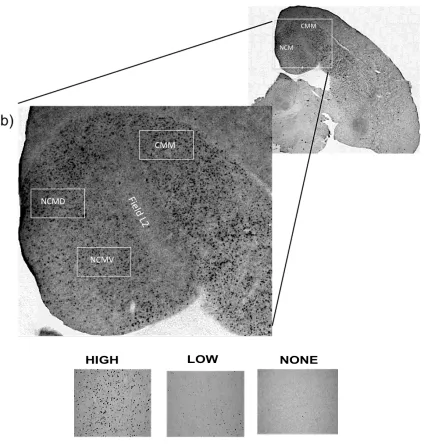
Figure 9. (a) Sagittal section of the female zebra finch brain showing the auditory forebrain regions where Zenk-ir was quantified. (b) The approximate areas sampled within each region CMM = caudomedial mesopallium, NCMD = dorsal caudomedial mesopallium, and NCMV = ventral caudomedial mesopallium and Field L2 that exemplified an area where
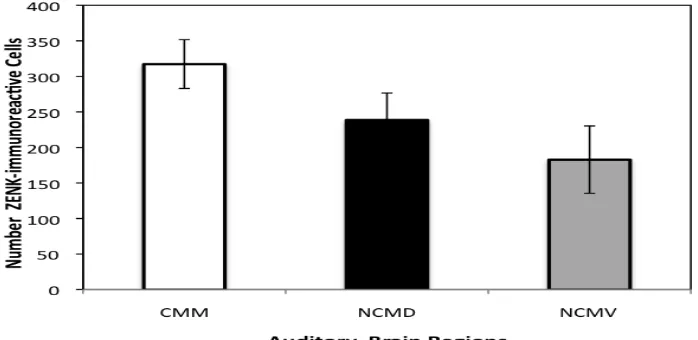
Figure 10. Number of ZENK-ir cell count on the different auditory brain regions. Error bars
are ± 1 SE... 31
Figure 11. Number of ZENK-ir cell count on CMM in response to playback. Error bars are ±
1 SE... 32
Figure 12. Number of ZENK-ir cell count on NCMD in response to playback. Error bars are
± 1 SE... 33
Figure 13. Number of ZENK-ir cell count on NCMV in response to playback. Error bars are
± 1 SE... 33
Figure 14. ZENK-ir cells counts in each brain region in response to tutor song for all three
Chapter 1
1
Introduction
To speak a language is a complex and exclusive human faculty. However, in order to perform this unique trait humans require a vocal learning ability, the capacity to imitate or modify complex vocal sounds. Unlike language, vocal learning is not unique to humans, and though it is still a rare trait in mammals it is widely spread among birds. Vocal learning involves the imitation of species-specific communication sounds leading to speech learning in humans and to song learning in birds (Brainard & Doupe, 2002; Jarvis, 2007; MacDougall-Shackleton, 2009; Bolhuis, Okanoya, & Scharff, 2010). Songbirds have thus become a widespread behavioral and neural model that allows us to research vocal learning as a perceptual and motor ability (Brainard & Doupe, 2002).
The neural bases of vocal learning has been studied with respect to the underlying structures and circuits that support the process of learning and production of the motor programs required to develop an effective communication signal; and its interaction with the system that allows the detection, discrimination, identification, selection, recognition and memorization of the sounds that are relevant to the vocal learning process (Brainard & Doupe, 2002; Catchpole & Slater, 2008).
Birdsongs as communication signals seem to have an adaptive role that influences the behavior of the receivers. In order for this signal to be effective, a predictable connection between production and perception of natural complex stimuli (song) in a behavioral context appears to be required. Therefore, songs need to be processed to establish their relevance in a specific context and, presumably, based on this process the receiver will generate a proper response. This response is usually related to cognitive process such as, memory, learning and attentional mechanisms (Knudsen & Gentner, 2010).
of the key traits assessed (Catchpole & Slater, 2008). Therefore, females need to process the song and generate the proper response. This response can be measured at behavioral and neural levels. To explore the neural processing of song, different experimental techniques such as: awake behaving animal responses, single unit recording,
autoradiography, functional magnetic imagining fMRI and gene expression have been used (Theunissen & Shaevitz, 2006).
In this thesis I explore the influence of early tutoring conditions on the adult neural responses (specifically using the gene expression technique) of female zebra finches (the receiver) to different stimuli in two auditory forebrain areas that have been proposed to play a fundamental role in the perceptual processing of song. The function of these regions is still a matter of debate. On one hand, these brain areas seem to be functionally associated with the sound characteristics relevant to the species – specific songs (nature of the stimuli), and, on the other hand, with the memory of the song formed during the song acquisition process (familiarity of the stimuli). In this introduction I will initially present an overview of vocal learning and similarities between humans and songbirds, then I will focus on birdsong (function, acquisition, and the neural structures involved). Finally, I will focus on song processing in female songbirds, specifically in two auditory areas, and the possible functions of these structures based on the outcomes from studies using gene expression.
1.1 Vocal learning - Speech and Birdsongs.
Humans and birds are some of the few species that possess the ability to imitate complex vocal sounds. As a result, songbirds have been extensively studied with respect to this trait because of the similarities that they exhibit in the acquisition of birdsong as
compared to speech acquisition in humans. Songbirds require auditory experience in the process of song acquisition. In fact young birds learn their songs by imitating usually the song of conspecific models that they hear. This point is further discuse in section 1.2
in advance of experience. Indeed, infants are able to recognize a broad repertoire of phonemes from different languages, even if they are not included in the subset of phonemes used by their caregiver’s language. However, this ability is progressively narrowed through development during interaction with speakers from a specific language or dialect (White, 2003; Guasti, 2004; Doupe & Kuhl, 2008). In a comparable way, young songbirds seem to begin life with foreknowledge about their species’ song. In fact, they seem to have a selective predisposition to learn the sounds from their own species even if they are able to produce sounds from a different species (Catchpole & Slater,
2008; Doupe & Kuhl, 2008). This is the case in male swamp sparrows (Melospiza
georgiana; Marler & Peters, 1977). Male swamp sparrows were exposed early in life to tape recordings that contained syllables of their own species and to the syllables of
sympatric song sparrows (Melospiza melodia). Interestingly, the young swamp sparrows,
in their final song, included only the elements from the swamp sparrow songs. This preference could reflect constraints that emerge even with little influence of the environment and they seem to limit the bird’s attention to the species relevant stimuli (Marler & Peters, 1977). The fact that they favored their conspecific song, compared to a heterospecific song, indicates that songbirds may have some bias restrictions that guide the song acquisition process and include the acoustic features that the species-typical song should contain. Consequently, birds memorize songs that correspond to their innate template (Searcy, Marler, & Peters, 1985; Marler, 1997; Bolhuis & Gahr, 2006; Fehér, Wang, Saar, Partha, & Tchernichovski, 2009, Bolhuis, Okanoya, & Scharff, 2010). However, it also has been proposed that this bias towards their own species song could arise, in part, from the fact that the song exposure in most research was done using tape recordings instead of live tutors, and thus social interactions between the song tutor and tutee were eliminated (Catchpole & Slater, 2008).
It is also suggested that during the song learning process songbirds are able to memorize a larger set of their species sounds than the ones they ultimately select for their song. For example, swamp sparrows, during their learning process sing around 12 song elements, but for their final song they select 3 or 4 (Marler & Peters, 1977). In the same way,
canaries (Serinus canaria) crystallize a song every year and this song remains stable for
syllables are added to it and earlier syllables disappear, however year by year their syllable repertoire gets bigger (Nottebohm & Nottebohm, 1978; Nottebohm, Nottebohm,
& Crane, 1986). Studies on brown-headed cowbirds (Molothrus ater) have shown that
before song crystallization males overproduce song types, but then selectively retained the song types that elicit a very rapid ‘wing stroke’ display from females (West & King, 1988). So, songbirds seem to narrow their song repertoire during song development.
Both humans and songbirds seem to have an innate ability to recognize, memorize, select and produce their species’ sounds. However, experience is needed in order to activate this knowledge and shape development of their languages, and songs, respectively. Lack of experience in the few known cases where humans were raised under conditions of social deprivation had a negative impact on their language skills. A similar observation was found in birds which, in social isolation, developed an abnormal song. (Price, 1979; Brainard & Doupe, 2002; Catchpole & Slater, 2008; Doupe & Kuhl, 2008; Marler & Zeigler, 2008; Feher, 2009). Thus, regardless of an innate capacity, humans and most songbirds need to be exposed to their species-specific vocalizations during a phase early in development or a ‘sensitive period’ in order to produce effective communication signals. For instance, the human capacity to produce and detect sounds from a new language as a native speaker is significantly reduced after early adolescence (Doupe & Kulh, 2008). In songbirds the timing for this vocal learning plasticity varied between species (Brainard & Doupe, 2002). Songbirds can be broadly divided into “open-ended
learner” species, like canaries (Serinus canaria), that can incorporate new songs or
elements in their adult song repertoire throughout their life, and “close-ended learner”
species, like zebra finches (Taeniopygia guttata), in which the capacity to learn is
restricted to a ‘sensitive period’ early in life (Brainard & Doupe, 2002; Slater, 2003; Catchpole & Slater, 2008; Amador & Margoliash, 2011).
King, & West, 2003;Doupe & Kuhl, 2008). Babbling and sub-song are a fundamental step, where the young test their articulatory capacities and discover and practice the sounds of their species (Guasti, 2004; Doupe & Kuhl, 2008). This implies that hearing others, and themselves, are essential aspects in vocal learning development. Deprivation in any of these aspects leads to abnormalities in the acquisition and maintenance of speech in humans and songs in songbirds (Brainard & Doupe, 2002; Kuhl, 2003; Nottebohm, 2005; White, 2009; MacDougall-Shackleton, 2009; Bolhuis, et al., 2010).
In sum, songbirds, like humans, base much of their communication on vocal interaction. Thus, sound recognition and sound production occupy a fundamental role in their life. The importance of songs in birdsongs, their acquisition and the neural systems that support these mechanisms are the topics of the following sections.
1.2 Birdsong Function, Acquisition and Female Song
Preferences.
The main functions of birdsong are mate attraction and territory defense (Catchpole & Slater, 2008). Thus, individual variation in song can have a significant influence on reproductive success and fitness through its effects on mate selection and mate
competition (Gil & Gahr, 2002; Catchpole & Slater, 2008; Taffeta & Theunissen, 2011). Thus, birdsong is a sexually selected trait, but unlike many other sexually selected traits such as plumage or antlers, its development depends on vocal learning. But, how do songbirds acquire their songs? The process of song learning in songbirds is generally
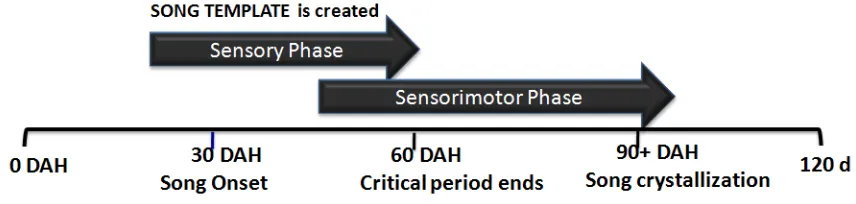
divided in two phases: the sensory phase, where the exposure to the song of an adult
conspecific ‘tutor’ takes place and an internal representation of this song (song template)
is formed; and the sensorimotor phase, where the juvenile practices singing and
eventually matches its vocal output to the stored auditory memory (Konishi, 1965; Brainard & Doupe, 2002; Nottebohm, 2005; Bolhuis et al. 2006).
tutor song) and, finally, in normal conditions, the song becomes crystallized by around day 90 and this is the song they sing for life. (Eales, 1987; Bolhuis, Zijlstra, Den Boer-Visser, & Van der Zee, 2000; Adret, 2004; Lauay, Gerlach, Adkins-Regan, & Devoogd, 2004; Catchpole & Slater, 2008).
Figure 1. Time line song acquisition in zebra finches. DAH (Days after hatching)
This song learning process led to the auditory template hypothesis, the idea that the bird’s
construction of a complex sound replica is based on a set of both genetic and
environmental instructions (Konishi, 1965). Evidence for this hypothesis came from studies using deafened birds or birds raised in isolation that did not have access to proper auditory stimuli and were unable to generate a normal song (Konishi, 1965; Marler 1977). However, their songs still preserved some general features of the species-typical song, suggesting some innately- encoded song features, or an inherent song template constraint that guides songbirds learning process (Searcy et al., 1985; Marler, 1997; Bolhuis et al., 2006; Feher et al., 2009, Bolhuis et al., 2010).
For example, in the case of zebra finches the sensitive period to learn and produce the tutor song is closed early in development. However, they still learn songs for recognition and discrimination later in life. Thus song recognition memories may differ from the memory of songs that contribute to the song template for vocal learning (Riebel, Terpstra, Smallegange, Terpstra, & Bolhuis, 2002).
Consequently, it had been suggested that songbirds generate two kinds of memories in
order to develop a song. First, the production memory, that can be further subdivided,
a form of procedural memory developed during the sensory-motor phase, where the
template allows the song maintenance after song crystallization. Second, the recognition
memory, that seems to be present along the entire life of the birds and allows them to distinguish relevant auditory cues (Adret, 2004).
In the case of female song preferences it is not clear if they pass through an early sensitive period of memory formation analogous to that for song production, or if their memories for preferred songs is a product of song recognition ability analogous to that males have in adulthood (Lauay et al., 2004).
Female songbirds of many species use male song as a cue for mate choice, and thus females are predicted to exhibit preferences for song features that may result in higher fitness through direct or indirect benefits (Catchpole & Slater, 2008). Such features include song complexity, song performance, and the geographic dialect of the song (Nowicki and Searcy 2005). The evolutionary processes that have resulted in female song preferences have been well studied, but an important question is how such female song preferences arise through development. As in the case of male song learning, there is evidence for both innate and learned components. Studies of preferences for song dialects and familiar songs suggest that in some species adult females base their mate selection on the auditory memory of the song that was created early in life. For example,
in white-crowned sparrows (Zonotrichia leucophrys) females prefer song dialects they
heard early in life over other songs (Baker 1981; MacDougall-Shackleton &
MacDougall-Shackleton, 2001). Similarly, female zebra finches show preferences for their foster father’ song over their genetic father’song (Clayton, 1990) ) and, for their father (tutor) or mate song over novel songs (Miller, 1979a,b). Female song sparrows have also been shown to prefer songs they heard early in life over songs from the genetic population (Hernandez, Phillmore, & MacDougall-Shackleton, 2008).
The examples presented aboved are evidence of song preferences as experience dependent behavior. Thus, early experience seems to modulate the response to a song stimuli. However, there are also indications that song preferences can be do not seem to
canaria), raised in isolation or in aviary conditions. Both groups showed preferences for phrases with a high syllable rate and a greater bandwidth, which suggests an innate perceptual predisposition towards those song characteristics as a preference guide (Draganoiu, Nagle, & Kreutzer, 2002). A similar situation was found in house finches, (Carpodacus mexicanus), hand reared and tutored either with their local song dialect, with a distant cospecific dialect, or with no exposure to any dialect. Across all groups, females preferred the local dialect independently of their early tutoring conditions (Hernandez & MacDougall-Shackleton, 2004 ). Hand raised female swamp sparrows, (Melospiza georgiana), in spite of their tutoring conditions, show preferences for the 3-note song syntax of their population of origin (Balaban, 1988). Similar results were found
in canaries (Vallet, Beme, & Kreutzer, 1998) and chafinches, (Fringilla coelebs) (Riebel
& Slater, 1998). Thus, song preferences of females likely develop via an interaction of experience-dependent and –independent processes. Therefore, the degree of interaction between inherited predispositions and experience seems to vary among species
So far I have been discussing song acquisition and song preferences from a behavioral perspective, but in order to produce and recognize these learned vocalizations birds require an underlying neural system that supports: i) motor commands that lead to production of complex species- specific sounds; ii) perceptual abilities that facilitate detection, identification, selection, recognition and memorization of relevant sounds; iii) mechanisms that permit them to evaluate their auditory feedback against their internal template and allow them to correct their own vocal output (Brainard & Doupe, 2002; Catchpole & Slater, 2008). A brief description of these neural systems is the focus of the following section.
1.3 Vocal Learning - Neural Systems of Song Production &
Perception.
structures are also recruited in a complex circuitry (Jügens, 2002; Jarvis, 2007; Amador & Margoliash, 2011).
1.3.1 Song-control System. In the case of songbirds, this complex circuitry is called the ‘song-control system’, a network dedicated to learning and production of songs. It
includes two main pathways, the posterior descending pathway or caudal motor pathway
and the anterior forebrain pathway (cortical-basal ganglia loop). The caudal motor path
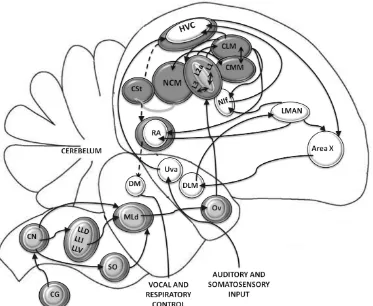
is crucial for song production (See Figure 2). The main nucleus is HVC (used as a proper name) that projects directly to RA, robust nucleus of the arcopallium, which projects to DM, dorsomedial nucleus of the intercollicular complex, that subsequently projects to vocal and respiratory control structures at the brain stem and then to the syrinx (the sound producing organ in birds). Lesions of structures along this path lead to permanent and intense failure in song production in adult birds. HVC also projects indirectly to the RA via the anterior forebrain pathway (AFP); that is, Area X, DLM (dorsal lateral nucleus of the medial thalamus) and LMAN (lateral magnocellular nucleus of the anterior
Figure 2. Song and auditory system in songbirds – Functional organization network. The “song system” (white ovals) includes: The posterior vocal pathway is composed
of the ventral motor pathway which includes Uva, and Nif. The descending motor pathway (dashed lines) contains HVC, RA, DM and the nuclei involved in vocal respiratory control. The Anterior forebrain pathway or (cortical-basal ganglia loop)
contains Area X; DLM, and LMAN. The Auditory nuclei (gray colored) provide inputs to the song system to HVC, Nif, and Uva. The ascending auditory pathway contains the nuclei MLd, (located in the midbrain); Ov (thalamic structure) and Field L, NCM, CMM, CLM, and CSt in the telencephalon. Diagram modified from
Amador & Margoliash, (2011). See acronims in the text or appendices Table of Abbreviatios.
1.3.2 Auditory projections to the song control system. (See Figure 2) The song control system obtains auditory input through HVC, which receives projections from the
and possibly from the Field L directly and indirectly through NIf, nucleus interfacialis of the nidopallium, which is considered the main source of auditory input to HVC. Uva obtains information from the auditory system and PAm (nucleus parambigualis) in the ventrolateral medulla that innervates NIf and HVC (Amador & Margoliash, 2011).
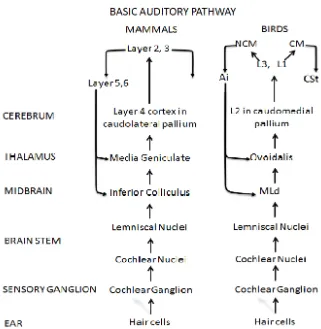
Figure 3. Comparative Basic Auditory Pathway Between Mammals and Birds. Diagram modified from Jarvis, (2004)
Electrophysiological studies suggest that the auditory pathway processes sensory information, including conspecific vocalization in a hierarchical level of specialization, such that the information rises from the peripheral areas to the higher-level of processing at the forebrain (Amin, Grace, & Theunissen, 2004). At the forebrain level field L is considered the first specification level, being able to identify between heterospecific songs and synthetic songs over conspecific songs. The following level involves CM and CNM. CM exhibits greater selectivity for vocalizations compared to synthetic sounds (Adret, 2004; Amador & Margoliash, 2011; Taffeta & Theunissen, 2011). Its role has also been associated with processing behaviorally relevant sound. Indeed, lesions in CM of female zebra finches leads to failure in the normal responses to conspecific and
European starlings (using electrophysiological recordings) show that their selectivity properties are largely dependent on the bird’s experience and perceptual learning can modify their selectivity (Gentner & Margoliash, 2003). NCM in zebra finches also shows a hierarchical organization, being more responsive to conspecific song, than to
heterospecific or non-auditory stimuli and little or no response to the presentation of white noise or tone stimuli (Mello, Vicario, & Clayton, 1992).
The variability in immediate-early gene (IEG) in brain regions outside of the song
system (such as NCM and CMM) in songbirds (canaries and zebra finches) discovered by Mello et al. (1992), has directed the interest of researchers toward understanding the possible functional associations that can be involved in song production, learning and perception. Since then, the measurement of IEG has become the standard technique to assess neural depolarization during exposure to a stimulus in the avian brain
(MacDougall-Shackleton, 2011). Therefore, neural activation, as assessed by IEGs, in NCM and CMM is the focus of my research. The following section provides a brief review of IEGs, specifically ZENK, as well as the possible functionality of NCM and CMM associated with the levels of IEG expression
1.4 IEGs - Definition & Evidence for the Functionality of
Auditory Forebrain Regions.
IEGs (or primary response genes) are a class of genes, that are rapidly and transiently expressed in response to a variety of cellular stimuli, ranging from external stimulation that leads to neuronal depolarization to chemical stimulation (Mello, 2002; Pinaud, 2005; Terleph & Tremere, 2006). In avian research, one of the most commonly used IEGs is the
nerve growth factor induced gene-A (NGFI-A, also known as, zif-268, egr-1, ngf-Ia and
krox-24, zenk), (Here after ZENK). ZENK encodes a transcription factor that is found in
the promoter of different genes expressed within the nervous system, and it seems to have an important role in the control of neural plasticity mechanisms (Pinaud, 2005). ZENK seems to be part of an early molecular regulatory cascade of events, generated by
extracellular stimulation. This cascade involves continued depolarization, and it is mainly
coordinated by intracellular calcium (Ca2+) influx, as a result of N-methyl-D-aspartate
opening of voltage sensitive Ca2+ channels. The consequent influx of Ca2+ regulates an intracellular flow of biochemical events that culminate in the induction of IEG, in this case, ZENK expression (Ribeiro & Mello, 2002; Pinaud, 2005; Terleph & Tremere, 2006). The identification of the products that result from the ZENK expression (mRNA or ZENK protein) allows the detection of the cells that were depolarized during the exposition to the external stimuli (Pinaud, 2005).
As discussed previously, NCM and CMM are considered to play an important role in perception and processing of complex auditory stimuli. Additionally, the variability in ZENK expression in these areas in response to different stimuli has motivated the study of using this technique in different species. Recent evidence seems to support a relation between ZENK expression in NCM and CMM with song preferences. Thus, females appear to respond selectively to songs that are contextually relevant (Maney et al., 2003).
NCM ZENK expression in female budgerigars, (Melopsittacus undulates, a
non-songbird), exposed to either standard male song, complex song, or simple song show higher levels of activation associated to complex song (behaviorally preferred) (Eda-Fujiwara, Satoh, Bolhuis, & Kimura, 2003).
Female white-crowned sparrows were exposed to conspecific male song of either local (preferred) or foreign dialect. ZENK response in CMM and NCMD was positively correlated with the local dialect and the number of sexual displays performed in response to song (Maney et al., 2003). Similarly, female European starlings were exposed to conspecific short or long songs (preferred). ZENK expression in NCM was higher in response to long songs. However, this differentiation was not found in CMM where ZENK expression was consistently high across subjects (Gentner, Hulse, Duffy, & Ball, 2001).
Therefore, in some species of songbirds, female preferences vary depending on the nature of the song stimuli (such as, length, complexity, familiarity, etc. discussed in 1.2), and this variation seems to be reflected by the levels of ZENK expression in CMM and NCM. Thus, NCM and CMM activation appears to respond to the biological salience of the song stimuli (MacDougall-Shackleton, 2011). Nevertheless, explanations that account for this apparent association between ZENK variability and the nature of the song stimuli are not entirely understood. Evidence presented by different research leads to a different interpretation of variability in ZENK expression.
One interpretation of variation in ZENK response to song is that it results from the
relationship of the heard stimulus and the memory of the tutor song. The rationale that
in NCM in male zebra finches appears to be correlated positively with the accuracy or strength of the song copy made from the tutor song (measured as the number of elements copied). Additionally, CMM seem to be implicated in encoding song characteristics such as the length of the song (Bolhuis, Hetebrij, Den Boer-Visser, De Groot, & Zijlstra, 2001). In another study female zebra finches reared with their father showed significant preference for their father’s song. This preference was related to high levels of ZENK activation in CMM (Terpstra, Bolhuis, Riebel, Van der Burg, & Den Boer-Visser, 2006). Juvenile zebra finches show an increasing level of ZENK expression in NCM during the sensorimotor learning phase. So, ZENK expression was higher during the later phase in response to the tutor song compared to the earlier phase. (Gobes, Zandbergen, & Bolhuis, 2010 ). Additionally, a significant positive correlation was found between ZENK
activation in NCM in response to the tutor song as opposed to the bird’s own song or a novel song (Terpstra, Bolhuis, & den Boer-Visser, 2004). Based on this evidence, it is has been proposed that NCM is, or makes part of, the neural substrate for the
representation of the tutor song (Bolhuis & Gahr, 2006).
A second interpretation of variation in ZENK responses to song proposes that ZENK activation in NCM and CMM reflect the biological salience of the song, and result from increased perceptual processing through some kind of attentional mechanisms
(MacDougall-Shackleton, 2001). For instance, ZENK expression in forebrain auditory areas decreases after repeated exposition to the same song via habituation. However, the ZENK activation levels increase following the presentation of a novel song (Mello, Nottebohm, & Clayton, 1995). In a series of experiments, male zebra finches were exposed to repetitions of a song until reaching habituation. Later, the same song was presented again but in one of four different contexts (speaker from a diferent side, reduced sound pressure level, paired with illumination, and paired with colored
In summary, two hypotheses have been proposed to explain the correlation between variation in song playback and variation in the levels of ZENK activation in NCM and CMM. 1. ZENK activation in NCM and CMM reflects the access to a representation of tutor song memory. Therefore NCM and CMM are the neural substrate for the memory of the tutor song acquired during the sensory phase. 2. ZENK activation in NCM and CMM reveals attentional mechanisms. Of course, these two hypotheses are not entirely mutually exclusive, as songs that are similar to a stored song memory may capture more attention or have greater perceptual processing. However, the second hypothesis posits that these attentional mechanisms can operate regardless of the tutor song memory.
Chapter 2
2
Materials and Methods
I examined Zenk immunoreactivity (ZENK-ir) in three auditory forebrain areas of female
zebra finches (Taeniopygia guttata) raised in different tutoring conditions. The ZENK
induction was measured following the presentation of songs that did, or did not, match the birds’ prior experience (See below).
2.1 Animal procedures
Zebra finches from the aviary colony maintained at the Advanced Facility for Avian Research (AFAR) at the University of Western Ontario, London, Ontario, Canada were used as parents for the experimental subjects.
For breeding purposes a female and a male were paired in individual breeding cages. Two plastic containers were provided as nest cups. One of them contained wood bedding and the other one contained hay. The birds selected one of them to build their nests. Birds
had access to multi-vitamin seeds, grit and cuttlefish bone and water ad libitum. One
spoon of egg-food mix (blended hard-boiled egg and bread) was provided daily during the breeding process, when the chicks hatched the amount of egg food mix was increased to one tablespoon per chick. This mix was provided until the offspring were moved to the experimental groups. The light cycle was 14 h light: 10 h dark during the experiment. Rooms were maintained at 24° C.
To determine the sex of the birds, small blood samples were collected and DNA
extracted. The sex was then determined through PCR amplification of genes located on the sex chromosomes (Griffiths, Double, Orr, & Dawson, 1998).
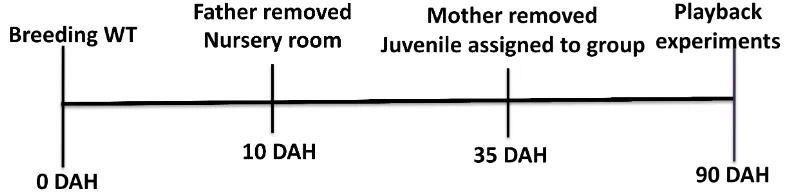
The mother raised the chicks until the median age of the clutch was 35 days after hatch, when offspring could feed independently (Clayton, 1987). At that day, birds were randomly assigned to one of the experimental groups (See Figure 4).
Figure 4. Time line birds manipulation.
2.2 Experimental groups – Description
Female zebra finches were randomly assigned to one of three tutoring condition groups. Hence, each group was exposed to different early auditory experiences from day 35 after hatching until maturation around day 90.
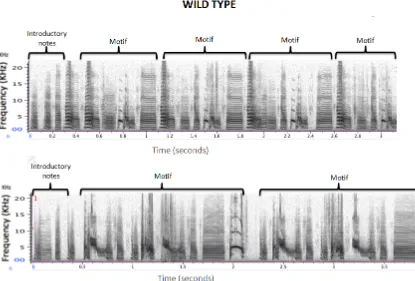
2.2.1 Group 1. Wild Type Conspecific tutored. This group was composed of 19 zebra finch females that were tutored by one of seven wild-type conspecifics, which means that they were exposed to zebra finch song.
Figure 5. Spectrograms of two wild-type zebra finches songs.
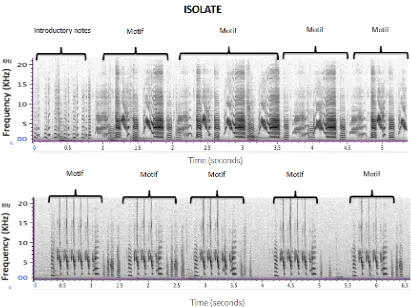
2.2.2. Group 2. Isolate conspecific tutored. This group was composed of 20 female zebra finches that were tutored by one of seven male zebra finches that had an isolate song. Throughout their song-learning period (day 10-90) these males were kept in social and acoustic isolation, as a result they developed an ‘isolate’, ‘autogenous’ or ‘untutored’ song (Williams, Kilander, & Sotanski, 1993). Hereafter I refer to these songs as isolate song.
Figure 6. Spectrograms of two Isolate conspecific zebra finch songs
To obtain the isolate songs, seven isolated tutors were breed from the wild type zebra finches. The breeding conditions were the same used to obtain the females for this experiment, however, when the young males reach independency around day 35 after hatching, they were individually housed in a soundproof isolation chamber (wide 91cm X deep 71cm X height 172cm) until day 140 after hatching. Song development in zebra finches is completed by 4 months after hatching (Price, 1979).
2.2.3 Group 3. Wild Type Heterospecific tutored. This group was composed of 19 female zebra finches that were tutored by one of five heterospecific songbirds,
specifically Bengalese finches (Lonchura striata). This means that females from this
group were exposed to a wild type heterospecific song.
Bengalese finches were selected because there is evidence that zebra finches tutored by Bengalese finches are able to make an accurate copy of the of the Bengalese finch song, even though it is not their species song (Clayton, 1988). Additionally, zebra finches and Bengalese finches are closely related (Family Estrildidae), and share neural structures dedicated to acquisition and production of song (Zeng, Székely, Zhang, Lu, Liu, & Zuo, 2007; Watanabe & Sakaguchi, 2010). Bengalese finch syllable syntax and syllable types rarely occur in normal wild-type zebra finch songs (Funabiki & Konishi, 2003).
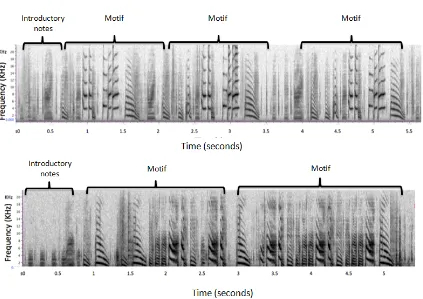
Similar to zebra finches every Bengalese finch male has an individual song. This song has a duration around 10 – 20 seconds, and is composed of one repeated motif (Figure 7). Every motif consist of several syllables that are largely composed of harmonically related tones from a range between 0.2 – 5.0 kHz. Bengalese finch song tends to have a
Figure 7. Spectrograms of fragments of two wild type Bengalese finch songs
The five wild type Bengalese finch tutors for this experiment were purchased from a breeder and had been reared with Bengalese finch parents.
subgroup remained together until females reach maturity, around day 90.
2.3 Playback Procedure
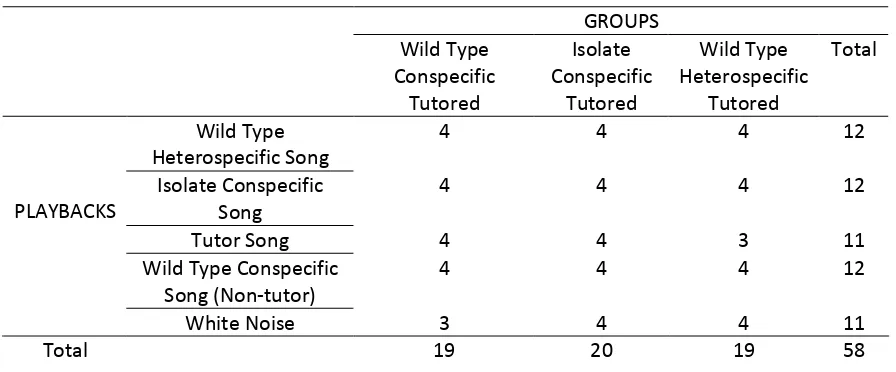
When females reached maturity (after day 90 after hatching), they were randomly assigned to one of five subgroups depending of the song playback to which they were exposed: Tutor song (which is differentiated as the song produced by the rearing male), wild-type conspecific song, wild-type heterospecific song, isolated conspecific song, or white noise.
Figure 8. Time line Playback Procedure
Table 1. Number of Birds per Group and Playbacks distribution.
GROUPS
Wild Type Conspecific Tutored
Isolate Conspecific
Tutored
Wild Type Heterospecific
Tutored
Total
Wild Type
Heterospecific Song 4 4 4 12
Isolate Conspecific
Song 4 4 4 12
Tutor Song 4 4 3 11
Wild Type Conspecific Song (Non-‐tutor)
4 4 4 12
PLAYBACKS
White Noise 3 4 4 11
Total 19 20 19 58
All the songs used as stimuli were obtained from the different tutors (Isolated
minutes using an omni-directional microphone (Sennheiser ME62/K6P) and a digital audio recorder (MARANTZ PMD671) with a sampling rate of 44.1 kHz and 16-bit resolution. Birds were recorded twice with an interval of at least 7 days and all the birds were older than 4 months, so their song was already crystallized. Zebra finches and Bengalese finches have one song that they repeat during their lifetime. Using sound analysis software Raven pro (Cornell Lab of Ornithology) the recordings of each bird were examined and one of the directed songs was selected for use as a stimulus. This song was repeated in 30-second intervals, having one-second interval between song repetitions, followed by 30 seconds of silence. Therefore, each minute of playback corresponds to 30 seconds of exposure to the song playback and 30 seconds of silence. Depending on the song duration, the song was repeated two, three or four times until reaching the 30 seconds of song playback. This process was repeated to produce 19 playback song stimuli (7 wild type zebra finch, 7 Isolate zebra finch and 5 Bengalese finch)
For the white noise playback, a white noise mp3 file from an Internet website
(http://whitenoisemp3s.com) was downloaded and played in the same isolation chamber. The white noise playback was then recorded with the same equipment as above. The stimulus was then treated as the other playbacks. White noise segments were 30 seconds in duration and arranged in two repetitions of 15 seconds, having one-second interval between white noise repetitions, followed by 30 seconds of silence.
Prior to the playback exposure each female bird (see section 2.2 above) was moved into a 36.5 cm X 24 cm X 30 cm cage that contained one seed cup, one water bottle, one grit
cup, a cuttleboneand two perches (food and water were provided adlibidum) inside a
sound proof isolation chamber. Each isolation chamber was equipped with 2 playback speakers (KOSS HDM/111 BK) used to broadcast the stimuli. Speakers were placed in front and at the side of the cage. The volume of the speakers was adjusted to produce an average sound intensity of 75 dB SPL at the position of the cage.
avoid as much as possible any movement or vocalization that can cause IEG expression and can confound the experiment. The randomly assigned song playback was repeated for 30 minutes. One hour after the stimulus was played, while still in the dark, birds were given an overdose of isoflurane anesthetic, decapitated and the brains were rapidly dissected from the skulls.
All the experimental procedures, care, and housing conditions were conducted according to and with the approval of the University of Western Ontario’s animal use regulations.
2.4 Tissue preparation and Immunocytochemistry
Once brains were collected they were immediately immersed in 4% paraformaldehyde
for at least 4 days to fix them. Fixed brains were immersed in 30% sucrose for 48 h at 4°C
to cryoprotect them, then the brains were frozen rapidly in powdered dry ice before
storage at -80°C until processing.
Brains were sliced in 40-µm thickness in parasagittal sections starting from the midline
on a cryostat. Every second section was collected into 0.1 M phosphate buffered saline (PBS). Sections were immunolabeled to localize ZENK protein (egr-1) as follows: free floating sections were washed twice in 0.1 M PBS, incubated for 15 minutes in 0.5%
H2O2 at room temperature, then washed thee times in 0.1 M PBS. Then sections were
blocked using 10% normal goat serum (Vector labs, catalog # S-1000) in 0.3% Triton-X 100 (PBST) for 1 h incubation at room temperature. The normal goat serum was then
removed and the sections were incubated for approximately 20 h at 4°C in the primary
to 4 and each immunohistochemistry run had brains from the different treatment groups. Finally sections were mounted on gelatin-coated microscope slides, dehydrated in ethanol and cleared in solvent (Harleco Neo-Clear, EMD Chemicals) and protected with
coverslips affixed with Permount (Fisher Scientific).
2.5 ZENK quantification
The level of Zenk immunoreactivity (ZENK-ir) was quantified in three forebrain auditory areas within the telencephalon: the dorsal caudal medial nidopallium (NCMD), the ventral caudal medial nidopallium (NCMV) and the caudal medial mesopallium (CMM). Dorsal, ventral and caudal areas of NCM boundaries were defined taking the lateral ventricle as a reference point (Figure 9). NCM rostral border area was defined using Field L that was visible as an area without immunoreactivity. CMM was delineated by the most caudal area bounded by the lateral ventricle and the caudo-ventral border of the
Figure 9. (a) Sagittal section of the female zebra finch brain showing the auditory forebrain regions where Zenk-ir was quantified. (b) The approximate areas sampled
within each region CMM = caudomedial mesopallium, NCMD = dorsal caudomedial mesopallium, and NCMV = ventral caudomedial mesopallium and Field L2 that exemplified an area where immunoreactivity is absent. Rostral is to the right, and dorsal is to the top. The three boxes below are miniature versions of
the pictures taken when the region shows high, low or none activation.
camera mounted on a Leica DM5000B light microscope through a X20 objective lens (Leica Microsystems, Richmond Hill, ON, Canada). We used Leica Application Suite to compile each picture as a z-stack from a series of images taken at a regular interval (0.63 mm) throughout the focal depth of the section using a Leica 420D camera. Compiling these photomicrographs created an image in which all cells were in focus. (Hall &
MacDougall-Shackleton, 2012). The observer was blind to the group treatment and to the playback broadcasted to the bird.
For each image, we used ImageJ64 (NIH) software to count the number of ZENK-ir cells in the whole image. First we converted the images to 8-bit gray scale, after that the number of particles with an optical density above a threshold value were counted using the threshold tool. This threshold was set manually in every image due to the variability in the background staining, in a way that the group of pixels emphasized by the software were equivalent with what a blind observer considered labeled nuclei, To set exclusion
limits for cell size (2.0 – 56 µm2) we randomly selected 6 birds and from the 18
photomicrographs per bird (6 x each area) and choose a subset of 20 cells. So from the cells subset (360 measurements per bird, 2,160 measurements in total) we determined the minimum and maximum sizes of the cells and established a minimum and maximum. Exclusion limits for sphericity were set at 0.45. The observer was blind to the bird’s tutoring condition and to the song playback broadcasted to the subject.
2.6 Statistical analysis.
within-subjects factor of brain auditory region.
Chapter 3
3
Results.
First, I will present the effects of lateralization, followed by the main effects and interactions of tutoring and playback conditions on ZENK ir cells.
There was no interaction between brain region and hemisphere on the number of
ZENK-ir cells, F(1.72, 96.34) = 0.29, ns, and hemisphere had no effect, F(1, 56) = 0.00, ns.
Consequently, hemisphere was omitted as a factor for subsequent analyses.
Although the main effect of tutoring was not significant, F(2, 43) = 0.34, p > 0.70, nor
was the effect of playback, F(4, 43) = 2.06, p > 0.10, there was a significant main effect
of brain region on ZENK-ir, F(1.77, 75.99) = 68.06, p < 0.001, η2p = 0.61. Using
repeated measures t-tests, the ZENK-ir cell count in CMM was the highest of the three
brain regions (M = 317.32, SD = 160.32; see Figure 10) as it was significantly greater
than that in NCMD (M = 238.70, SD = 136.44; see Figure 10), t(57) = 7.65, p < 0.001,
and NCMV (M = 182.88, SD = 108.57; see Figure 6), t(57) = 9.72, p < 0.001. The cell
count in NCMD was significantly greater than that in NCMV, t(57) = 5.24, p < 0.001.
There was also a significant interaction between brain region and playback, F(7.07,
75.99) = 2.39, p < 0.05, η2p = 0.18 indicating that the variation in Zenk response across
playback stimuli varied across brain regions. One-way ANOVAs revealed that there was
a marginally significant effect of playback on the number of ZENK-ir cells in CMM, F(4,
53) = 2.49, p < 0.06, η2p = 0.16, (see Figure 11) and NCMD, F(4, 53) = 2.38, p < 0.07,
η2p = 0.15 (see Figure 12) ; however, there was no effect playback on NCMV, F(4, 53) =
0.68, ns (see Figure 13) .
Figure 12. Number of ZENK-ir cell count on NCMD in response to playback. Error bars are ± 1 SE
Contrary to predictions, there was no interaction between brain region, tutoring, and
playback on ZENK-ir cell count, F(14.14, 75.99) = 0.89, ns . In addition, neither the
interaction between brain region and tutoring, F(3.53, 75.99) = 0.26, ns, nor the
interaction between tutoring and playback were significant, F(8, 43) = 0.81, ns.
It is possible that the absence of significant differences in ZENK reactivity in response to the different song playbacks and rearing conditions was a result of lack of statistical power. However, my experiment had similar sample sizes to previous research that did detect significant differences (e.g., Mello et al., 1992; Hernandez et al., 2004). Sensitivity power analysis using G power analysis (Faul, Erdfelder, Lang, & Buchner, 2007)
Chapter 4
4
Discussion
In this experiment, female zebra finches showed different levels of neuronal activation across three auditory forebrain regions CMM, NCMD, and NCMV. This variation seems to depend on the auditory stimuli the birds were exposed to, where CMM and NCMD show a trend of ZENK activation that was not found in NCMV. Interestingly, there was not a significant main effect between the playback songs and the ZENK expression patterns, which indicates that the different playbacks equally stimulated CMM and NCMD in these females. Therefore, it appears that as long as birds are exposed to complex sounds they will have enhanced levels of ZENK expression in their auditory areas. Furthermore, this variation does not seem to be associated with early tutoring conditions. Consequently, the female zebra finches of this experiment show different neuronal activation in CMM and NCMD in response to complex sounds, and this activation appears not to be affected by early acoustic exposure.
This finding is in accordance with results from Hernandez & MacDougall-Shackleton, (2004) where female house finches did not show differential patterns of Zenk expression in auditory forebrain regions to songs heard early in life over novel songs. The ZENK activation trend did not relate with early experiences. Consequently, the ZENK responses to the stimuli heard late in life seem to have little influence from early auditory
experiences.
However, Hernandez & MacDougall-Shackleton, (2004) did not find a positive
correlation between the levels of neuronal activation and the results from the behavioral preference task (see 1.2) that have been found in studies with other species of birds, (budgerigars, Eda-Fujiwara et al., 2003; white-crowned sparrows, Maney et al., 2003; European starlings, Gentner et al., 2001 see 1.4). Nevertheless, as Hernandez & MacDougall-Shackleton, (2004) pointed out, the ZENK activation levels could be reflecting the behavioral salience of the song rather than the auditory memory of the song, even if they do not correlate with the behavioral preference. This proposition could
memory suggested by Adret (2004 See section 1.2), and the degree of interaction
between early experiences, inherited predispositions shaping the song preferences (Nagle & Kreutzer, 1997; Draganoiu et al., 2002). Further research is needed to elucidate this correlation between ZENK activation and experience – dependent and independent song preferences.
The proposal that ZENK responses to song stimuli are little influenced by early auditory experiences seems to be supported by my findings. Thus, even though I did not find an interaction between early experiences and ZENK expression, I did find an interaction between ZENK expression in the different auditory brain regions, (specifically, CMM and NCMD) and the playback that they were exposed to late in life. Therefore, it seems that independent of the auditory experiences, zebra finch females show different levels of neuronal activation in CMM and NCMD in response to different auditory stimuli
presented in adulthood. Thus, the activation in the three areas depends on the playback stimulus heard. This effect is seen in CMM, followed by NCMD, but does not seem to be true for NCMV. Zenk induction appears higher for all of the song playbacks compared to white noise in CMM and NCMD. Similar results were found by Ribeiro et al., (1998) whose work with canaries showed that ‘natural’ sounds produced clusters of ZENK activation, but that the farther the stimuli went away from ‘natural’ sounds, the broader the activation in the auditory regions. As the stimuli became more synthetic, the
activation, over a wider spectrum, was higher. Whereas ‘natural’ sounds produced
activation in a specific area and of a specific type, synthetic sounds did not show as much discrimination (Ribeiro, Cecchi, Magnasco, & Mello, 1998).
The results did not show significant differences in activation between the different
See section 2.2). Bengalese finch and zebra finch song are different particularly at the syntactic level, Bengalese finch songs are characterized by syllable repetition (such as aaabbbccc), which differs with the zebra finch song that maintains a fixed sequence of syllable (such as abc). Also Bengalese finch songs are longer in duration (Funabiki et al., 2003 See section 2.2). It thus appears that the Zenk responses in auditory regions was similar due to similar acoustic features, despite differences in song length and syntactic structure.
It was recently proposed that ZENK expression in NCM and CMM appears to correlate with song preferences across various species (Maney, et al., 2003; Terpstra et al., 2008, MacDougall-Shackleton, 2009; Eda-Fijuwara et al., 2003; Gentner et al., 2001). This preference could be associated with the possibility that female songbirds form auditory memories early in life, based on the tutor song, and there memories are neurally
represented in NCM and CMM (Bolhuis, Zijlstra, Den Boer-Visser, & Van der Zee, 2000; Bolhuis & Gahr, 2006. See section 1.4). This hypothesis, however, is not
supported by my results. Overall, there was not a significant interaction between tutoring conditions, playback, and number of ZENK-ir cells expressed in CMM, NCMD, and NCMV. Contrary to Maney, et al., 2003; Terpstra et al., 2008, etc., my findings suggest that these females early tutoring experiences did not seem to influence the adult
responses to the different auditory stimuli in the auditory forebrain areas. However, I did not have a parallel behavioral study that can corroborate the absence of correlation between ZENK expression in auditory brain areas and behavioral preferences.
Some alternative hypotheses that can explain the fact that my experiment did not support the neural representation of the tutor song are as follows: First, there is the possibility that the song is not represented in those areas. Therefore, as was observed, we should not expect to have significantly different activation in the auditory brain areas in response to the tutor song compared with other stimuli. (See figure 7). Second, it is possible that the activation is high only when female zebra finches are raised by their wild type
difference in Zenk response to tutor song across the three rearing groups (See figure 14). That is, Zenk response to tutor song was not higher in wild-type reared birds.
Figure 14. ZENK-ir cells counts in each brain region in response to tutor song for all three tutoring groups. Error bars are ± 1 SE
Third, a possible, though improbable, explanation could be that the females in this experiment were not exposed to the different tutoring conditions prior to day 35 after hatching. Studies observing song acquisition processes of zebra finch have been
In conclusion, my study does not provide evidence to support the forebrain auditory areas as the neural localization of the tutor song memory. However, it may support the
References
Adret, P. (2004). In search of the song template. Annals New York Academy of Sciences
ANNALS NEW YORK ACADEMY OF SCIENCES, 1016, 303-324 .
Amador, A., & Margoliash, D. (2011). Auditory memories and feedback processing of
vocal learning. In J. A. Winer, & C. E. Schreiner, The auditory cortex (pp.
561-575). Springer.
Amin, N., Grace, J. A., & Theunissen, F. E. (2004). Neural response to bird's own dong
and tutor song in the zebra finches field L and caudal mesopallium. Comparative
physiology A, 190, 469-489.
Avey, M. T., Phillmore, L. S., & MacDougal-Shackleton, S. A. (2005 ). Immediate early gene expression following exposure to acoustic and visual components of
courtship in zebra finches. Behavioural Brain Research, 165 (2), 247-253.
Baker, M. C. (1981). Early Experience Determines Song Dialect Responsiveness of
Female Sparrows. Science, 214, 819-820.
Balaban, E. (1988). Cultural and Genetic Variation in Swamp Sparrows (Melospiza
georgiana): II. Behavioral Salience of Geographic Song Variants. Behaviour, 105
(3/4), 292-322.
Bautista, L. F., Trail, P. W., Dewolfe, B. B., & Morton, M. L. (1993). Singign and its
functions in female white-croned sparrows. Animal Behaviour, 46, 511-524.
Bjorn, M., & Okanoya, K. (2007). The Natural History of Human Language: Bridging
the Gaps without Magic. In C. Lyon, C. Nehaniv, & A. Cangelosi, Emergence of
Communication and Language (pp. 403-420). London, England: Springer. Bolhuis, J. J., & Eda-Fujiwara, H. (2003). Bird brains and songs: neural mechanisms of
birdsong perception and memory. Animal Biology, 53 (2), 129-145.
Bolhuis, J. J., & Gahr, M. (2006). Neural mechanisms of birdsong memory. Nature
Reviews, 7, 347-357.
Bolhuis, J. J., Hetebrij, E., Den Boer-Visser, A. M., De Groot, J. H., & Zijlstra, G. G. (2001). Localized immediate early gene expression related to the strength of song
learning in socially reared zebra finches. European Journal of Neuroscience, 13
(11), 2165–2170.
Bolhuis, J. J., Okanoya, K., & Scharff, C. (2010). Twitter evolution: converging
mechanisms in birdsong and human speech. Nature Reviews Neuroscience, 11
(11), 747-759.
Bolhuis, J. J., Zijlstra, G. G., Den Boer-Visser, A. M., & Van der Zee, E. A. (2000). Localized neuronal activation in the zebra finch brain is related to the strength of
song learning. PNAS, 97 (5), 2282-2285.
Brainard, M. S., & Doupe, A. J. (2002). What songbirds teach us about learning. Nature,
Buchanan, K. L., Catchpole, C. K., Lewis, J. W., & Lodge, A. (1999). Song as an
indicator of parasitism in the sedge warbler. Animal Behaviour, 57, 307-314.
Catchpole, C. J., & Slater, P. J. (2008). Bird Song. Biological Themes and Variations.
Cambridge: Cambridge University Press.
Clayton, N. S. (1987). Song learning in Cross-Fostered Zebra Finches: A re-examination
of the sensitive phase. Behaviour, 102, 67-81.
Clayton, N. (1990). Song learning and song recognition in zebra finch subspecies. Animal
Behaviour, 40, 1009-1017.
Cohen, J. (1969). Statistical power analysis for the behavioral sciences. New York:
Academic Press.
Doupe, A. J., & Kulh, P. K. (2008). Birdsong and human speech: common themes and
mechanisms. In P. Marler, & H. P. Zeigler (Eds.), Neuroscience of Birdsong. New
York: Cambridge University Press.
Draganoiu, T. I., Nagle, L., & Kreutzer, M. (2002). Directional female preference for an
exaggerated male trait in canary (Serinus canaria) song. The royal society, 269
(1509 ), 2525-2531.
Eales, L. (1987). Do zebra finch males that have been raised by another species still tend
to select a conspecific song tutor? Animal Behavior, 35, 1347–1355.
Eales, L. (1986). Song Learning in Zebra Finches. Ph.D. Thesis . University of Sussex.
Eda-Fujiwara, H., Satoh, R., Bolhuis, J. J., & Kimura, T. (2003). Neuronal activation in
female budgerigars is localized and related to male song complexity. European
Journal of Neuroscience, 17 (1), 149-154.
Faul, F., Erdfelder, E., Lang, A.-G., & Buchner, A. (2007). G*Power 3: A flexible statistical power analysis program for the social, behavioral, and biomedical
sciences. Behavior Research Methods, 39 (2), 175-191.
Feher, O. (2009). Evolution of Song Culture in the Zebra Finch. New York, NY, USA:
The City University of New York.
Fehér, O., Wang, H., Saar, S., Partha, M. P., & Tchernichovski, O. (2009). De novo
establishment of wild-type song culture in the zebra finch. Nature, 459, 564-569.
Forstmeier, W., Burger, C., Temnow, K., & Derégnaucourt, S. (2009). THE GENETIC
BASIS OF ZEBRA FINCH VOCALIZATIONS. Evolution , 63 (8).
Funabiki, Y., & Konishi, M. (2003). Long memory in song learning by zebra finches. The
Journal of Neuroscience, 23 (17), 6928-6935.
Gentner, T. Q., & Margoliash, D. (2003). Neuronal population and single cells
representing learned auditory objects. Nature, 424, 669-674.
Gentner, T. Q., Hulse, S. H., Duffy, D., & Ball, G. F. (2001). Response Biases in Auditory Forebrain Regions of Female Songbirds Following Exposure to
Gil, D., & Gahr, M. (2002). The honesty of bird song: multiple constraints for multiple
traits. Trends in Ecology and evolution, 17 (3), 133-140.
Gobes, S. M., Zandbergen, M. A., & Bolhuis, J. J. (2010 ). Memory in the making: localized brain activation related to song learning in young songbirds.
Proceedings of The Royal Society, 277 (1698), 3343-3351.
Goldstein, M. H., King, A. P., & West, M. J. (2003). West, M. J., & King, A. P. (1988). Female visual displays afect the development of male song in the cowbird. Nature
, 334, 244-46. PNAS, 100 (13), 8030-8035.
Griffiths, R., Double, M. C., Orr, K., & Dawson, R. J. (1998). A DNA test to sex most
birds. Molecular Ecology, 7 (8), 1071-1075.
Guasti, M. T. (2004). Language Acquisition. The Growth of Grammar. Cambridge,
Massachusetts, USA: MIT Press.
Hall, Z. J., & MacDougall-Shackleton, S. A. (2012). Influence of Testosterone
Metabolites on Song-Control System Neuroplasticity during Photostimulation in
Adult European Starlings (Sturnus vulgaris). PLos ONE, 7 (7), e40060.
Hasselquist, D., Bensch, S., & Schantz, T. (1996). Correlation between male song repertoire, extra-pair paternity and offspring survival in the great reed warbler.
Nature, 381, 229-232.
Hernandez, A. M., & MacDougall-Shackleton, S. A. (2004 ). Effects of early song experience on song preferences and song control and auditory brain regions in
female house finches. Journal of Neurobiology, 59 (2), 247–258.
Hernandez, A., Phillmore, L., & MacDougall-Shackleton, S. (2008). Effects of learning
on song preferences and Zenk expression in female songbirds. Behavioural
Processes, 77 (2), 278-84.
Hultsch, H., & Kopp, M. L. (1989). Early Auditory Learning and Song Improvisation in
Nightingales, Luscinia Megarhynchos. Animal Behaviour, 37 (3), 510-512.
Immelmann, K. (1969). Song development in the Ze- bra Finch and other estrildid
finches. In W. Thorpe, R. Hinde, & R. Hinde (Ed.), Bird vocalizations: their
relations to current problems in biology and psychology (pp. 64-74). London, Cambridge, U.P: Cambridge U.P.
Jürgens, U. (2002). Neural pathways underlying vocal control. Neuroscience and
Biobehavioral Reviews, 26 (2), 235-258.
Jarvis, E. D. (2007). Neural systems for vocal learning in birds and humans: a synopsis.
Journal of Ornothology, 148 (1), S35-S44.
Jarvis, E. D., & Nottebohm, F. (1997). Motor-Driven gene expression. PNAS, 94 (8),
4097-4102.
Knudsen, D. P., & Gentner, T. Q. (2010). Mechanisms of song perception in oscine birds.
Brain & Language, 115, 59–68.
Konishi, M. (1965). The role of auditory feedback in the control of vocalization in the
Kruse, A. A., Stripling, R., & Clayton, D. F. (2004). Context-specific habituation of the
zenk gene response to song in adult zebra finches. Neurobiology of Learning and
Memory, 82 (2), 99–108.
Lassek, R., & Bischof, J.-H. (1985). The gaping reaction and the development of fear in
young zebra finches (Taeniopygia guttata castanotis). Zeitschrift für
Tierpsychologie, 69, 55-65.
Lauay, C., Gerlach, N. M., Adkins-Regan, E., & Devoogd, T. J. (2004). Female zebra
finches require early song exposure to prefer high-quality song as adults. Animal
Behaviour, 68, 1249-1255.
MacDougall-Shackleton, E., & MacDougall-Shackleton, S. (2001). Culture and genetic evolution in mountain white-crowned sparrows: song dialects are associated with
population structure. Evolution, 55, 327-334.
MacDougall-Shackleton, S. A. (2009). The Importance of Development: What Songbirds
Can Teach Us. Canadian Journal of Experimental Psychology, 63 (1), 74-79.
MacDougall-Shackleton, S. A. (2011). The levels of analysis revisited. Philosophical
Transactions of The Royal Society B, 366 (1574), 2076-2085.
MacDougall-Shackleton, S. A., Hulse, S. H., & Ball, G. F. (1998). Neural bases of song
preferences in female zebra finches (Taeniopygia guttata) . Neuroethology, 9,
3047–3052.
Maney, D. L., MacDougall-Shackleton, E. A., MacDougall-Shackleton, S. A., Ball, G. F., & Hahn, T. P. (2003). Immediate early gene response to hearing song correlates
with receptive behavior and depends on dialect in a female songbird. Journal of
Comparative Physiology A, 189, 667-674.
Marler, P. (1997). Three models of song learning: evidence from behavior. Journal of
Neurobiology , 33, 501–516.
Marler, P., & Peters, S. (1977). Selective vocal learning in a Sparrow. Science. New
Series, 198, 519-521.
McKenzie, T. L., Hernandez, A. M., & MacDougall-Shackleton, S. A. (2006). Experience with songs in adulthood reduces song-induced gene expression in
songbird auditory forebrain. Neurobiology of Learning and Memory, 86 (3), 330–
335.
Mello, C. (2002). immediate-early gene (IEG) expression mapping of vocal
communication areas in the avian brain. In L. Kaczamarek, & H. A. Robertson,
Handbook of chemical neuroanatomy: Immediate early genes and inducible transcription factors in mapping of the central nervous system function and dysfunction (Vol. 19, pp. 59-101). Elsevier Science.
Mello, C. V., & Pinaud, R. (2006). Immediate early gene regulation in the auditory
system. In R. Pinaud, & L. A. Tremere, Immediate Early Genes. In sensory