University of South Florida
Scholar Commons
Graduate Theses and Dissertations Graduate School
November 2018
Testing the Validity and Utility of a Career and
Technical Education Programs of Study Evaluation
Instrument
Alisha D. Hyslop
University of South Florida, [email protected]
Follow this and additional works at:https://scholarcommons.usf.edu/etd Part of theOther Education Commons
This Dissertation is brought to you for free and open access by the Graduate School at Scholar Commons. It has been accepted for inclusion in Graduate Theses and Dissertations by an authorized administrator of Scholar Commons. For more information, please contact
Scholar Commons Citation
Hyslop, Alisha D., "Testing the Validity and Utility of a Career and Technical Education Programs of Study Evaluation Instrument" (2018).Graduate Theses and Dissertations.
Testing the Validity and Utility of a Career and Technical Education Programs of Study Evaluation Instrument
by
Alisha D. Hyslop
A dissertation submitted in partial fulfillment of the requirements for the degree of
Doctor of Philosophy in Curriculum and Instruction
with a concentration in Career and Workforce Education
Department of Leadership, Counseling, Adult, Career and Higher Education College of Education
University of South Florida
Major Professor: Victor Hernandez, Ph.D. Co-Major Professor: Liliana Rodriguez, Ph.D.
Edward Fletcher, Ph.D. Robert Dedrick, Ph.D.
Date of Approval: October 25, 2018
Keywords: CTE, quality, Association for Career and Technical Education, program theory Copyright © 2018, Alisha D. Hyslop
DEDICATION
This dissertation is dedicated to my husband, Jason, for his unwavering support as I undertook this journey; to my children, Mackenzie and Cooper, who I hope have learned a bit about the dedication necessary to accomplish one’s goals; and to the hundreds of thousands of CTE educators around the country who deliver high-quality programs to meet student needs every day!
ACKNOWLEDGMENTS
I would like to express my sincere thanks and appreciation to my doctoral committee. First, to my major professor Dr. Victor Hernandez, who patiently guided me through this journey from day one, when I sat in his office and expressed interest in joining a cohort just a few days before the deadline. I am extremely grateful for his calm demeanor and thoughtful advice over the many years of my work. I would also like to thank my co-major professor, Dr. Liliana Rodriguez, who introduced me to the formal practice of evaluation and shaped the entire focus of this work. She was always ready with a kind word of encouragement and her passion for
students was evident in every interaction. Much appreciation also goes to Dr. Edward Fletcher, whose questions and advice were extremely helpful throughout my journey. And last, but certainly not least, the statistical expertise of Dr. Robert Dedrick was critical to the success of this project—especially as he jumped in to help with additional data analysis to answer important questions.
In addition to my formal committee, I would like to acknowledge the many CTE
researchers around the country who provided assistance during my doctoral journey, particularly Dr. James Stone and Dr. Pradeep Kotamraju. The advice they offered throughout the process was invaluable, and I greatly appreciated their time, expertise, and willingness to share! Finally, I would like to thank my research partner on the first phase of ACTE’s high-quality CTE
research, which led to this project—Catherine Imperatore. This work would not have been possible without her focus and expertise, and continued advice throughout the project!
i TABLE OF CONTENTS LIST OF TABLES ... iv LIST OF FIGURES ...v ABSTRACT ... vi
CHAPTER ONE: INTRODUCTION ...1
Problem Statement ... 1
Purpose of the Study ... 8
Research Questions ... 8
Conceptual Framework ... 10
Significance of the Study ... 12
Limitations ... 12
Definitions of Key Terms ... 13
CHAPTER 2: LITERATURE REVIEW ...17
Career and Technical Education ... 17
History of CTE ... 17 Current Legislation ... 20 New Constructs ... 23 Career Clusters ... 23 Programs of Study... 23 Career Pathways... 25 Overview of Evaluation ... 26
Formative vs. summative evaluation. ... 26
Evaluation approaches. ... 27
Evaluation models. ... 28
Evaluation of CTE ... 29
Best practices identification ... 30
Perkins accountability ... 32
National Assessment of Career and Technical Education ... 33
State efforts ... 34
National frameworks ... 35
ACTE High-quality CTE Program of Study Research ... 39
Analysis of current quality frameworks. ... 40
Development of ACTE Framework ... 43
Conceptual Framework ... 45
Program theory-driven evaluation. ... 45
ii
Translation validity ... 48
Criterion-related validity ... 49
Summary of Literature Review ... 50
CHAPTER 3: METHODOLOGY ...51 Research Design... 51 Phase One... 53 Program sample ... 53 Data ... 55 Instrumentation ... 56
Data collection procedures ... 58
Data analysis ... 58 Question one ... 59 Question two ... 60 Phase Two ... 60 Sample... 60 Instrumentation ... 61
Data collection procedures ... 61
Data analysis ... 62
CHAPTER 4: RESULTS ...64
Phase One... 64
Description of sample. ... 64
Evaluation instrument results. ... 67
Validity of evaluation instrument. ... 68
Utility of the evaluation instrument ... 72
Ease of use ... 72
Usefulness of instrument... 73
Implications for future use ... 75
Practicality across CTE program models ... 76
Phase Two ... 77
Description of sample ... 78
Emergent themes ... 78
The instrument is seen as a valid measure of program quality ... 79
Administrators and educators may have different perspectives ... 80
This instrument fills a gap in available quality metrics ... 82
The use of this instrument lends credibility to participating programs .... 83
The instrument is an effective program improvement tool across the CTE spectrum ... 84
CHAPTER 5: DISCUSSION ...87
Study Overview ... 87
Summary of Results ... 88
Evaluation instrument results. ... 88
Research question one... 88
iii
Discussion and Conclusions ... 92
Results on the instrument ... 93
Validity of evaluation instrument ... 93
Utility of evaluation instrument ... 94
Limitations ... 96
Next Steps in ACTE’s High-quality CTE Initiative ... 98
Implications for Policy ... 100
Implications for Future Research ... 101
REFERENCES ...104
APPENDICES ...110
Appendix A: Institutional Review Board (IRB) Letter ... 111
Appendix B: Conflict of Interest Disclosure Approval and Management Plan ... 112
Appendix C: Evaluation Instrument Rating Scale ... 116
Appendix D: Evaluation Instrument ... 117
Appendix E: Feedback Questionnaire ... 138
Appendix F: Phase Two Interview Protocol ... 144
iv
LIST OF TABLES
Table 2.1: Criteria from Exemplary Career and Technical Education Programs:
Secondary-Level User’s Guide to Program Improvement ...31
Table 2.2: 2006 Carl D. Perkins Act Accountability Indicators ...32
Table 2.3: Program of Study Framework Components and Subcomponents ...36
Table 2.4: Criteria for Linked Learning Pathway Quality Review and Continuous Improvement ...38
Table 4.1: Program Evaluation Form Participants by Career Cluster ...66
Table 4.2: Program Evaluation Instrument Results: Information on Scores for Criteria Within Each Element ...69
Table 4.3: Correlation Results ...70
Table 4.4: Evaluation Instrument Ease of Use Ratings ...73
v
LIST OF FIGURES
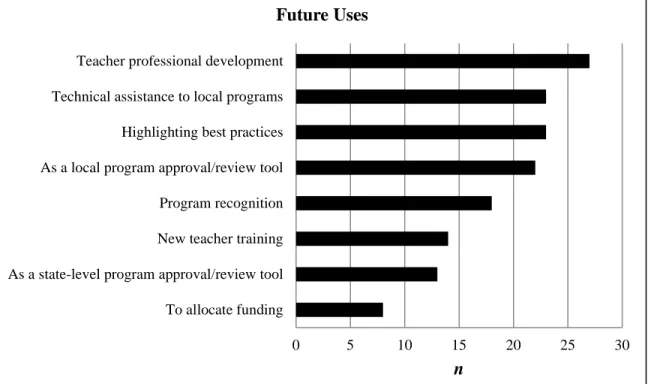
Figure 2.1: Linear program theory model ...46 Figure 3.1: Two-phase, sequential mixed methods research design ...52 Figure 4.1: Suggestions for Future Use ...76
vi
ABSTRACT
The purpose of this study was to build on the research already completed by the
Association for Career and Technical Education (ACTE) in the development of ACTE’s quality Program of Study Framework and accompanying evaluation instrument to examine the validity of the instrument’s results and its utility when used independently by local educators in a pilot test. The study used a two-phase mixed-methods design. In the first phase, 39 participating programs were evaluated using the instrument, consisting of 102 items organized into 12 elements. Representatives of participating programs, either teachers or administrators, then provided quantitative and qualitative feedback about the instrument, and 23 of the programs submitted Perkins program performance data. Results on the program evaluation instrument were correlated with the Perkins performance data to determine the criterion validity of the instrument. Correlations were significant for two of the performance measures, student technical skill attainment and completion, and positive but not statistically significant for student
placement. Results related to the utility of the instrument, including for ease of use, practicality across programs, and usefulness of information, were all positive, and participants provided suggestions to further increase the possibility of wide scale future use. In Phase Two of the study, results of Phase One were used to inform in-depth interviews with a sample of five participants. These interviews provided further insight on the validity and utility questions guiding the study. The study is significant because it helps to more clearly define the
characteristics of a high-quality CTE program and provide a standardized way to determine and improve the quality of CTE programs for millions of students around the country.
1
CHAPTER ONE: INTRODUCTION
Recent federal policies, coupled with state and national economic concerns, have put pressure on all publicly funded programs to produce results (Hollenbeck, 2011). Policymakers at the local, state, and federal levels all want to know that their investments are worthwhile and that practitioners are using scarce resources in the most efficient manner. To help produce these desired results, there has been a renewed focus within public education on identifying specific practices that lead to positive outcomes and spreading such practices across the country (U.S. Department of Education, 2013). Essentially, policymakers can no longer be satisfied with simply knowing whether education funding streams “work,” they also must understand the key elements of how and why programs work so that those specific elements can be replicated more widely and achieve desired results (Hess & Little, 2015).
Greater attention to the identification and scalability of best practices can be seen throughout education, but is particularly necessary within the field of career and technical education (CTE) (Duncan, 2011). Unfortunately, CTE lacks a set of clearly defined best
practices and a common definition of “what works” to improve student achievement, making the task difficult. This study builds on previous work by the Association for Career and Technical Education (ACTE) to address the deficiency of program-quality criteria by testing the validity and utility of ACTE’s new program evaluation tool.
Problem Statement
Despite large enrollments and endorsements from many business and industry leaders, high program costs and the recent increased focus on core academics have meant CTE programs,
2
even more than other publicly funded education activities, are facing growing demands from policymakers to improve outcomes and provide verification of student achievement. Without high-quality program evaluation metrics, it is becoming increasingly difficult for programs to justify their existence (Duncan, 2011).
CTE programs that prepare students for their post-education future have been a part of public education in the United States since the late 1800s, and have been supported by direct federal resources since the Smith Hughes Act was passed in 1917 (Barlow, 1976). Over the years, these programs have evolved from preparing students solely for entry-level jobs to imparting a rigorous mix of academic, technical, and employability skills that allow students to pursue further education and a wide variety of careers (ACTE, n.d.). Now, 94% of the country’s high school students enroll in at least one CTE course, with approximately 20% participating in a sequence of three or more courses (U.S. Department of Education, National Center for Education Statistics, 2009). Approximately 12 million postsecondary students participate as well (ACTE, n.d.).
Over the years, new program models and delivery structures have emerged to support the broader mission of CTE. In the late 1990s, the Career Clusters model helped to organize career possibilities into 16 broad categories, each containing more specific pathways. The foundational idea behind the Clusters movement was to better organize content and standards so that students learned academic and technical skills along an integrated continuum. The new Career Cluster framework allowed for more career exploration activities and the ability to expose students to a broader array of career possibilities within their area of interest, rather than a narrow, single-occupation approach to instruction (Ruffing, 2006).
3
Further, to better connect secondary and postsecondary education, the concept of a program of study was introduced in the Carl D. Perkins Career and Technical Education Act of 2006. A program of study is a sequence of academic and technical courses that spans both secondary and postsecondary education and leads to a credential. Specifically, the law referenced “coherent and rigorous content aligned with challenging academic standards and relevant career and technical content in a coordinated, non-duplicative progression of courses that align secondary education with postsecondary education to adequately prepare students to succeed in postsecondary education” (Section 122(c)(1)(A)(ii)). In practice, programs of study have driven the CTE community to provide clearer, more cohesive program offerings to
students, to better connect secondary and postsecondary educational levels, and to more carefully consider in-demand credentials.
However, the breadth of the CTE enterprise and its long, evolving history are not enough to sustain it into the future. One specific criticism has been the failure to share and grow
evidence-based practices that would help all programs produce more desired outcomes (U.S. Department of Education, Office of Vocational and Adult Education, 2012). This criticism relates both to the need to better evaluate CTE programs, as well as to share these results in a way that will spread best practices.
Foundations of the first step in the work to better evaluate CTE programs—identifying programs with positive outcomes—are already in place. The 1998 Carl D. Perkins Vocational and Technical Education Act first implemented specific federal performance indicators for CTE programs, and Congress strengthened these requirements during the law’s 2006 reauthorization (ACTE, 2006). The 2006 Carl D. Perkins Career and Technical Education Act requires states and local school districts to report performance information on eight separate performance
4
measures for secondary programs, and six measures at the postsecondary level (U.S. Department of Education, Office of Career, Technical, and Adult Education, Division of Academic and Technical Education, n.d.a). A slightly revised set of performance indicators was included in the Perkins Act’s 2018 reauthorization, which will go into effect on July 1, 2019, but the themes are continued (Advance CTE & ACTE, 2018).
However, it is clear from the criticisms that the field of CTE must do more to evaluate programs in a way that not only identifies positive student outcomes, but also allows the practices that led to these outcomes to be more easily recognized and such information to be more easily shared across the country. While the Perkins performance measures can form a basis for identifying high- and low-performing programs, they are insufficient for answering
underlying questions about how or why that level of achievement was attained. On their own, they do not provide the information necessary to identify and replicate positive practices or to allow program leaders to determine appropriate technical assistance for targeted program improvement. For these reasons, more extensive evaluation instruments to examine program elements and measure progress are necessary. These instruments must serve to help unpack Suchman’s (1967) “black box” to determine how programs produce results.
Over the past few years, some states and national organizations have begun the process of looking at program inputs, activities, and outputs in an effort to determine which programs are on track for success. However, the depth, contents, quality, and even purpose of their evaluation instruments vary tremendously, and their use is inconsistent. For example, some states have implemented evaluation tools merely to monitor program compliance with federal and state laws—which, while a valuable purpose, does not meet the broader goal of ensuring program quality and scalability of best practices. Others have developed their evaluation instruments to
5
provide information more useful for program improvement, but there is no common understanding of which program elements are most important or even necessary to ensure positive student outcomes (Imperatore & Hyslop, 2015a).
Examples of evaluation tools at the national level generally fall into three categories: quality frameworks that evaluate specific types of CTE programs, those that relate to entire institutions, and those that apply to broader career pathways systems (Imperatore & Hyslop, 2015a). In the first category are efforts like the National Career Academy Coalition’s quality framework, which is only applicable to programs delivered specifically through the career academy model (National Career Academy Coalition, 2013), and the Department of Education’s Program of Study Design Framework, which contains 10 components and related
subcomponents that the federal Office of Career, Technical, and Adult Education (formally OVAE) suggests “support the development and implementation of effective programs of study” within CTE (OVAE, 2010, p. 1). Unfortunately, the Program of Study Design Framework includes elements that vary in level of detail and audience, limiting its utility for local practitioners (Imperatore & Hyslop, 2015a).
The second category of national frameworks is those evaluating entire institutions, including those from accrediting bodies, as well as national organizations such as High Schools that Work. Finally, at the broader systems level, there have been a number of new efforts to incorporate CTE programs into the growing career pathways movement, and a number of quality-related frameworks related to these career pathway systems. These range from
government documents, such as the Department of Labor’s six key elements of career pathways and Department of Health and Human Services’ descriptive and service strategies, to the Criteria
6
and Indicators for a Quality State Career Pathways System from the Center for Law and Social Policy (Imperatore & Hyslop, 2015a).
The growing proliferation of CTE-related standards and frameworks has left the field without a clear definition of program quality, and opens the door for criticisms like those referenced earlier from federal policymakers. To begin to address this concern, the Association for Career and Technical Education (ACTE) launched its High Quality CTE Initiative in July of 2015 to “help synthesize the myriad voices that are part of the dialogue on high-quality CTE” (Imperatore & Hyslop, 2015a, p. 1). This multi-phase project is designed “to identify a comprehensive, research-based quality CTE program of study framework, test the framework and integrate it into [the Association’s] efforts to recognize and disseminate information on best practices within CTE” (Imperatore & Hyslop, 2015a, p. 1).
Four pieces have already been publically released from ACTE under this initiative: Defining High-quality CTE: Contemporary Perspectives on CTE Quality, in July 2015; Defining High-quality CTE: Quality CTE Program of Study Framework, Draft Version 1.0, in November 2015; Defining High-quality CTE: Quality CTE Program of Study Framework, Draft Version 3.0, in November 2016 (draft 2.0 of the referenced Framework was used for research purposes and not publically released); and Defining High-quality CTE: Quality CTE Program of Study Framework, Beta Version 4.0. Version 4.0, which will be referenced throughout this study as the “ACTE Framework” or the “Framework”
In the first paper, ACTE researchers catalogued and sorted the various program quality frameworks currently being used in the field, including those mentioned earlier, and then coded them based on key structural and content elements. This work led to the conclusion that there is a lack of clarity and consistency in the current definition of high-quality CTE, particularly as it
7
relates to individual local programs (Imperatore & Hyslop, 2015a). There was not a clear set of quality criteria that could be applied universally to specific CTE programs by local practitioners, either for program improvement or evaluation purposes.
From this initial work, ACTE researchers then set out to fill the identified gap by creating a comprehensive, research-based framework for local programs of study. The “program of study” was selected as the unit of analysis on which to base the framework due to its prominence in federal legislation and state and local implementation efforts related to CTE. It is also broad enough to encompass the diverse CTE delivery system, including programs in comprehensive high schools, magnet schools, area CTE centers, early college high schools, community and technical colleges, and more—while at the same time providing a foundational structure to the work (Personal Consultation, ACTE).
In November 2015, the Draft Version 1.0 of the ACTE Framework was released. It contained 12 main elements, ranging from student assessment to career development. Under each element was a set of more specific criteria that further elaborate on the element’s
implementation. ACTE then began the process of ensuring the content validity of the elements and criteria through a number of research strategies, including the use of additional research and literature reviews, and expert input provided through review, surveys and focus groups. These strategies were designed to build consensus around the elements of the Framework and the fact that these are indeed the elements necessary for a high-quality CTE program that will lead to desired student outcomes. The validation process included several rounds of revisions to
incorporate input and standardize elements, and Beta Version 4.0 of the Framework was released in the spring of 2017.
8
After this series of activities to establish content validity and the finalization of the beta version for testing, the Framework was adapted into a standard evaluation instrument that can be used to measure the quality of individual programs of study, not only for the purposes of
program assessment and accountability, but also for continual program improvement. While all of the programmatic details are still being finalized, ACTE’s goals include ensuring the
evaluation instrument is a useful tool for program self-evaluation, as well as third-party
assessment linked to the identification of best practices and recognition programs. The gap that remained in this effort was the need to pilot test the evaluation instrument to ensure that it is a valid and useful tool in a variety of CTE settings around the country.
Purpose of the Study
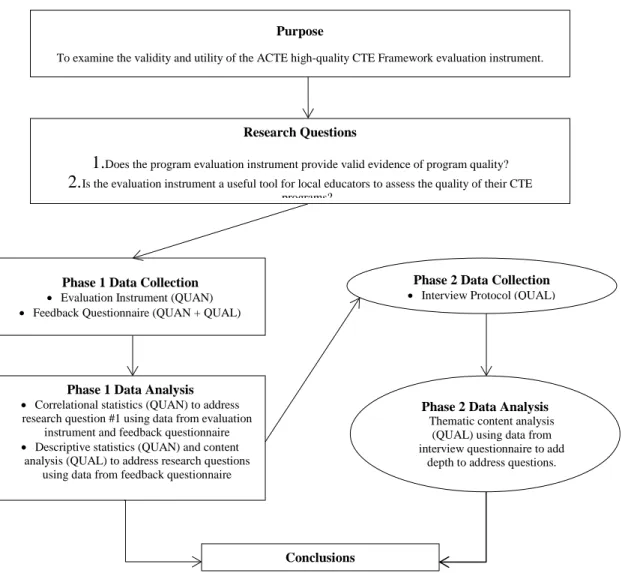
The purpose of this study was to build on the research already completed by ACTE in the development of the ACTE Framework and accompanying evaluation instrument to examine the validity of the instrument’s results and its utility when used independently by local educators in a pilot test.
Evidence of the instrument’s criterion validity—whether the included elements are appropriate measures of program quality, as related to already established program outcome measures—was examined. In addition, the study examined its utility, including ease of use, practicality, and usefulness of results to local practitioners. Within these questions, the
resources, barriers and possibilities for scaling up the tool to widespread use were considered.
Research Questions
The specific research questions that were examined to achieve the purposes of the study are as follows:
9
2. Is the evaluation instrument a useful tool for local educators to assess the quality of their CTE programs?
For the purposes of these questions, “valid evidence of program quality” was measured primarily by correlations with established program outcome data based on the primary core indicators of performance as defined in the Carl D. Perkins Career and Technical Education Act of 2006, including students’ academic and technical skill attainment, completion, and placement rates as reported under that Act. These performance indicators are the required standard by which program quality is judged in the field and thus provided the most widely accepted set of program quality expectations.
Results on the evaluation instrument were correlated with program outcome data to provide evidence of its validity, focusing on the instrument’s predictive validity as a measure of criterion-related validity. Drost (2011) defines criterion-related validity as “the degree of correspondence between a test measure and one or more external referents (criteria), usually measured by their correlation” (p. 118). In this study, the “test measure” is the evaluation instrument in question, and the “one or more external referents” are the performance data. In addition, additional evidence of validity was collected to supplement the correlation data.
The measures of the instrument’s usefulness included its ease of use and practicality across education settings, and the usefulness of the results for both program improvement and evaluation purposes. Local educators included both faculty and administrators at the institution or district level who volunteered to pilot the evaluation tool on individual programs of study in their schools or institutions.
10
Conceptual Framework
This study was built upon the foundational elements of ACTE’s research to identify elements of a high-quality CTE program, outlined in Imperatore and Hyslop’s (2015a) Defining High-quality CTE: Contemporary Perspectives on CTE Quality and their framework and evaluation instrument development processes. Woven throughout this work, the constructs of program evaluation and instrument development then formed the basis of the conceptual framework for this study.
Evaluation can be defined as “the identification, clarification, and application of
defensible criteria to determine an evaluation object’s value” (Fitzpatrick, Sanders, & Worthen, 2011, p. 7). ACTE’s early research on which this study is based set out to identify the
“defensible criteria” that could be used to systematically identify and replicate quality within CTE programs of study. Specifically, principles of theory-driven evaluation guided the identification of these criteria by ACTE. Theory-driven evaluation is often aligned with the phenomenon of “unpacking the black box,” first proposed by Edward Suchman in 1967 to
emphasize the importance of evaluating not only the overall effectiveness of social programs, but understanding the components of such programs.
Donaldson (2007) defines a three-step process for implementing theory-driven
evaluation. First, an understanding of how a program is hypothesized to achieve its outcomes must be developed. Second, evaluation questions are then formulated, and then finally, answered. This process parallels the purpose of ACTE’s high-quality CTE initiative—first to validate the practices or “components” that will result in improved CTE student outcomes, and then to develop and implement an evaluation instrument based on such components.
11
Validity plays a key role in the first step of the theory-driven evaluation process and thus, the first step in the development of the ACTE Framework and evaluation instrument. During the initial phase of the ACTE Framework’s development, researchers subjected it and the evaluation instrument to several tests of translation validity, including face validity and content validity. According to Drost (2011), “Translation validity attempts to assess the degree to which
constructs are accurately translated into the operationalisation, using subjective judgment—face validity—and examining content domain—content validity” (p. 116). This was accomplished through rigorous content analysis of existing frameworks, literature reviews, and expert review and input.
Validity is also a key component of this phase of the project. The research questions of this study were based on the principles of criterion-related validity in particular, focused on establishing the predictive validity of the instrument. One of the major principles of a leading evaluation model by Kirkpatrick and Kirkpatrick (2009) is that when designing training programs, you must begin by thinking about the desired end results—level four, and work backward from that point to determine the behaviors that will lead to those results, the
knowledge and skills that will improve those behaviors, and the environment that will best relay that information. This is an especially critical concept to apply to the evaluation of CTE
programs, which must maintain a clear focus on desired program outcomes and determining the appropriate conditions to lead to those outcomes. In this vein, the criterion-related validity of the evaluation instrument was determined by correlating program input measures with desired end results, or program outcome measures.
Based on this conceptual framework focused on ACTE’s early research, program-theory evaluation, and principles of validity, it was expected that the elements that were identified and
12
validated on their constructs in the initial stage of ACTE’s research would lead to desired program outcomes measured by student performance. CTE programs that score higher on the evaluation instrument would have higher levels of student achievement, and programs that score lower overall on the evaluation instrument would have lower overall outcomes on student achievement measures.
Significance of the Study
This study makes several significant contributions to the field of CTE by helping to more clearly define the characteristics of a high-quality CTE program of study. Perhaps most
important from a program survival standpoint, the development of a set of valid program-quality criteria and a single evaluation instrument provides the standardized evidence of program
success that policymakers have demanded. This is a critical step for CTE programs that are under growing pressure to improve student outcomes, and could prove instrumental in requests for increased funding and other positive policy developments.
A single, valid instrument would also provide comparability to the state and local CTE program evaluation processes required by federal and state laws, and provide results useful for benchmarking and true program improvement. Exemplary programs could be more easily recognized for outstanding achievement in particular areas, and such information could be more easily shared in a manner designed to advance the performance of the entire system of CTE, ultimately increasing student access to high-quality programs and overall student achievement.
Limitations
In addition to the decisions made by the researcher that delimit the study, several limitations also exist. First, the diversity within the CTE field makes it very difficult for one instrument to accurately capture every single element that might be considered necessary for a
13
specific program to produce high-quality results. Some programs, particularly those dealing with specific, high-need populations such as students with disabilities or juvenile offenders, or with a more specialized subject, may not be able to use the evaluation instrument effectively without further refinement or additions. There are also many factors impacting student outcomes that will not be examined in this study, and could impact results if considered.
Definitions of Key Terms
Association for Career and Technical Education (ACTE). The Association for Career and Technical Education is a professional organization representing the full range of CTE
professionals, from the middle school level to postsecondary education, including educators, administrators, career guidance counselors, business and industry partners, and related organizations. Members come from the local, state, and national level, and the organization works to provide professional development, leadership, and advocacy on behalf of the entire field.
Career Clusters®. Career Clusters are “an organizing tool for curriculum design and instruction (Advance CTE, 2016, para. 2)” within CTE. There are 16 national Career Clusters representing broad industries or occupational areas that are further divided into 79 career pathways. The 16 national Career Clusters include:
• Agriculture, Food & Natural Resources
• Architecture & Construction
• Arts, A/V Technology & Communications
• Business Management & Administration
• Education & Training
14
• Government & Public Administration
• Health Science
• Hospitality & Tourism
• Human Services
• Information Technology
• Law, Public Safety, Corrections & Security
• Manufacturing
• Marketing
• Science, Technology, Engineering & Mathematics
• Transportation, Distribution & Logistics
Carl D. Perkins Act. The Carl D. Perkins Act is the primary federal legislation providing funding to CTE programs. The Act as currently being implemented was last
reauthorized by Congress as the Carl D. Perkins Career and Technical Education Act of 2006, and prior to that was known as the Carl D. Perkins Vocational and Technical Education Act of 1998. Approximately $1.2 billion is allocated through the law to states and then to local school districts and postsecondary institutions. Funds are used for local program improvement,
including activities such as professional development, new equipment or curriculum, and CTE student support. A new piece of federal CTE legislation was passed in 2018, known as the Strengthening Career and Technical Education for the 21st Century Act, but will not go into effect until July 1, 2019, so is not yet relevant to this study (Advance CTE & ACTE, 2018).
Career pathways. For the purposes of this study, career pathways refer to a system of “connected education and training strategies and support services that enable individuals to secure industry relevant certification and obtain employment within an occupational area and to
15
advance to higher levels of future education and employment in that area” (U.S. Departments of Education, Labor, and Health and Human Services, 2012, pg. 1). Generally, they involve several levels of education and multiple agencies or private sector partners.
High-quality CTE. For the purposes of this study, ACTE’s 12 elements of high-quality CTE, as included in Defining High-Quality CTE: Quality CTE Program of Study Framework, Beta Version 4.0 (Imperatore & Hyslop, 2017) are used to define program quality. These
elements form the basis of the research project, and complete details can be found in Appendix D as part of the evaluation instrument. The 12 elements are:
1. Standards-aligned and Integrated Curriculum 2. Sequencing and Articulation
3. Student Assessment
4. Prepared and Effective Program Staff 5. Engaging Instruction
6. Access and Equity
7. Facilities and Equipment
8. Business and Community Partnerships
9. Career Development
10.Career Technical Student Organizations (CTSOs)
11.Work-based Learning
12.Data and Program Improvement
Program of study. The Carl D. Perkins Career and Technical Education Act of 2006 defines this term as options for students that:
16
• Include coherent and rigorous content aligned with challenging academic standards and relevant career and technical content in a coordinated, non-duplicative progression of courses that align secondary education with postsecondary education adequately prepare students to succeed in postsecondary education;
• May include the opportunity for secondary education students to participate in dual or concurrent enrollment programs or other ways to acquire postsecondary education credits; and
• Lead to an industry-recognized credential or certificate at the postsecondary level, or an associate or baccalaureate degree (Section 122(c)(1)(A)).
17
CHAPTER 2: LITERATURE REVIEW
This study was built on efforts by ACTE to develop and validate a high-quality CTE framework and evaluation instrument. The study’s specific purpose was to examine the
evaluation instrument’s validity and utility when used independently by local educators in a pilot test to measure CTE program quality. This chapter begins by presenting a conceptual overview of CTE, of general evaluation principles, and of specific efforts to evaluate the quality of CTE programs, including both formal and informal work at the national, state, and local levels. Next, early work by the Association for Career and Technical Education (ACTE) to identify current evaluation criteria, and gaps in that research, is summarized in detail as the foundation of the proposed study. Finally, the conceptual framework for the study situates it in theory-driven evaluation and program theory, as well as the principles of validity as they relate to evaluation and instrument development.
Career and Technical Education
History of CTE. CTE programs that prepare students for their post-education future have been a part of public education in the United States since the late 1800s, and have been supported by direct federal resources since the Smith-Hughes Act was passed in 1917 (Barlow, 1976). The Smith-Hughes Act of 1917 began the federal investment in secondary CTE, and marked the beginning of a more formalized system of what was then called “vocational
education” in the United States. This legislation, coming on the heels of the industrial revolution and World War I, was designed to provide more skilled workers for industry by keeping students in high school and increasing job preparation (Gordon, 2014). It funded a limited range of
18
programs in agriculture, trade and industrial education, and home economics. Under the Smith-Hughes Act, vocational education was seen as separate from more academic studies, with requirements for separate state boards and limits on the amount of time students could engage in academic instruction (Hayward & Benson, 1993). Vocational education at this time was seen as an alternative to the more general, liberal arts curriculum that prevailed in most schools (Lynch, 2000).
Over the next five decades, vocational education programs, and the legislation that governed them, would grow and expand. Funding increased, and the types of fields supported did as well, growing to include programs in areas like practical nursing and marketing (Gordon, 2014). Beginning in 1963, the Vocational Education Act and its subsequent amendments expanded the purpose and focus of CTE even further, with a particular focus on those most in need of educational assistance. LaFollette (2011) described this expansion as for “persons of all ages in all communities.” Legislation—and programs—began to focus more on student needs and on accessibility to diverse and disadvantaged populations (Gordon, 2014). Set-asides for services for special population groups were hallmarks of the legislation in the 60s, 70s and 80s (Gordon, 2014), in many cases in response to the economic and social context of the time period (Hayward & Benson, 1993). The Carl D. Perkins Vocational Education Act of 1984 exemplified a growing dichotomy within CTE—two disparate goals of providing technical skills for the workforce and supporting students from special populations (Lynch, 2000; Hayward & Benson, 1993).
These disparate goals began to shift in the 1990s and 2000s, as the country’s education system was increasingly scrutinized. The release of the A Nation at Risk: The Imperative for Educational Reform report in the 80s (U.S. Department of Education, 1983) triggered a wave of
19
education reform efforts that eventually led to legislation emphasizing the integration of vocational education and academics, articulation across levels of education, closer partnerships between education with industry, and stronger accountability (Gordon, 2014). It was in this period that we began to see modern-day “CTE” emerge from the vocational education that existed for most of the century, and a decline in the isolation that had separated vocational and academic educational experiences.
From this shift came the career and technical education that is recognized today,
imparting a rigorous mix of academic, technical, and employability skills that allow students to pursue further education and a wide variety of careers (ACTE, n.d.). Now, 94% of the country’s high school students enroll in at least one CTE course, with approximately 20% participating in a sequence of three or more courses (U.S. Department of Education, National Center for Education Statistics, 2009). Approximately 12 million postsecondary students participate as well (ACTE, n.d.). Courses are offered in middle schools, comprehensive high schools, magnet schools, career centers, community and technical colleges, four-year universities, and other alternative settings. CTE programs are defined by the federal Carl D. Perkins Career and Technical Education Act of 2006 as:
Organized educational activities that—(A) offer a sequence of courses that—(i) provides individuals with coherent and rigorous content aligned with challenging academic standards and relevant technical knowledge and skills needed to prepare for further education and careers in current or emerging professions; (ii) provides technical skill proficiency, an industry-recognized credential, a certificate, or an associate degree; and (iii) may include prerequisite courses (other than a remedial course) that meet the requirements of this subparagraph; and (B) include competency-based applied learning
20
that contributes to the academic knowledge, higher-order reasoning and problem-solving skills, work attitudes, general employability skills, technical skills, and
occupation-specific skills, and knowledge of all aspects of an industry, including entrepreneurship, of an individual. (Section 3(5))
Current legislation. The current major federal legislation governing CTE was signed into law in 2006 as the Carl D. Perkins Career and Technical Education Act of 2006.
Structurally, it remains similar to prior legislation, with a Basic State Grant providing CTE resources to states via formula, that in turn provide formula resources to local school districts and postsecondary institutions (ACTE, 2006). There are five major themes exemplified in this legislation: accountability, coordination within the CTE community, academic and technical integration, connections between secondary and postsecondary education, and links to business and industry (ACTE, 2006). Many of the themes were manifested in response to the then recent passage of the No Child Left Behind Act of 2002, which required an intense focus on student academic achievement and accountability (Gordon, 2014), and built on reforms began in the 1990s.
Conversations about accountability and enhancing the academic achievement of CTE students dominated the reauthorization conversations leading up to the passage of this law, and led to new requirements such as local performance targets, alignment with academic standards, and programs of study (ACTE, 2006). Programs of study, described in more detail in the following section, are designed to more intentionally connect secondary CTE to postsecondary CTE, and allow more students to transition seamlessly into postsecondary education. In addition, even the change in terminology from “vocational education” to “career and technical
21
education” emphasized the increased rigor and prominence of CTE as a path for all students (ACTE, 2006).
The 2006 Act also provided even more flexibility for states and local programs, with expanded “uses of funds” language, options for pooling resources, and the option to combine funding streams to make the best use of limited resources (ACTE, 2006). While at times this flexibility is critical, it has also led to some of the criticisms of CTE as being too variable (U.S. Department of Education, Office of Planning, Evaluation and Policy Development Policy and Program Studies Service, 2014). Even with this variability, however, the federal law has been recognized as critical to driving state and local efforts to improve and enhance CTE programs, and a mutually influential interchange has developed between federal and state policy (Klein et al., 2014).
With more than a decade since the last federal legislation, Congress began work on a new CTE law, and finally approved that bill in July 2018. Discussions began several years ago, but became more fully developed in late 2015 and 2016, and continued over the next few years. The Senate Health, Education, Labor, and Pensions Committee released a set of bipartisan principles guiding the reauthorization that represent much of policymakers’ early thinking:
1. Make it easier for States and locals to run their CTE programs to serve all students who desire to gain access to CTE coursework, including students with disabilities.
2. Increase access to, and support of, career counseling for all CTE students.
3. Maintain CTE as a formula program.
4. Align with ESEA and WIOA (where applicable) to improve the efficiency and
22
5. Support the expansion of public/private collaborations with secondary and postsecondary programs, including alignment with State or locally-determined in-demand industries and occupations.
6. Support efforts to integrate into and strengthen career pathways at the state and local levels.
7. Address unfunded programs.
8. Improve evaluation and research to support innovation and best practices. (Hyslop, 2015)
Reauthorization legislation was actually passed in the House in 2016, although work could not be completed in the Senate before Congress adjourned for the year. The Strengthening Career and Technical Education for the 21st Century Act, H.R. 5587 (2016), built on many of the Senate’s themes, but also emphasized increased state and local control and the devolution of the federal role in CTE. Congress resumed reauthorization efforts in 2017, and the House again passed its bill, that year as H.R. 2353. The Senate picked up this bill during the summer of 2018 and passed an amended version, which then went back to the House for final passage before being signed into law. Since this new law, Public Law 115-224, does not go into effect until July 1, 2019, the current 2006 Perkins Act remains the standard for CTE programs nationwide
(Advance CTE & ACTE, 2018).
The delay in federal reauthorization opened the door for more state activity in the interim. States have enacted an increasing number of CTE-related policies in recent years, building on the themes that have emerged in reauthorization conversations. In 2015 alone, there were more than 125 pieces of legislation, board rules, executive actions, and budget provisions enacted in states related to CTE (ACTE & Advance CTE, 2016). These state policy actions most commonly fell
23
into the categories of funding, governance, industry connections and work-based learning, career/academic guidance and awareness, and dual and concurrent enrollment.
New constructs. Over the years, new program models and delivery structures have emerged to support the broader mission of CTE.
Career Clusters. In the late 1990s, the Career Clusters model helped to organize career possibilities into 16 broad categories, each containing more specific pathways (now numbering 79 in total). The Clusters were developed out of work by the U.S. Department of Education and several other groups on skill standards, and were formally adopted in 1999 (Ruffing, 2006). The foundational idea behind the Clusters movement was to better organize content and standards so that students learned academic and technical skills along an integrated continuum. The new Career Cluster framework allowed for more career exploration activities and the ability to expose students to a broader array of career possibilities within their area of interest, rather than a
narrow, single-occupation approach to instruction (Ruffing, 2006). The U.S. Secretary of Education at the time of their adoption, Richard Riley, explained, “With this new structure schools can better assure that each student has the opportunity to explore options, set goals and prepare for meaningful work in the new century” (Ruffing, 2006, p. 5). Today, Career Clusters are “an organizing tool for curriculum design and instruction” (Advance CTE, 2016, para. 2) within CTE, and encompass several levels of skills, including foundation, pathway, and essential knowledge and skill statements.
Programs of study. The concept of “programs of study” was unveiled in the 2006 reauthorization of the Carl D. Perkins Career and Technical Education Act. However, this Act only includes a general definition of a program of study. The Act states that programs of study must:
24
• incorporate secondary education and postsecondary education elements;
• include coherent and rigorous content aligned with challenging academic standards and relevant career and technical content in a coordinated, non-duplicative progression of courses that align secondary education with postsecondary education to adequately prepare students to succeed in postsecondary education;
• may include the opportunity for secondary education students to participate in dual or concurrent enrollment programs or other ways to acquire postsecondary education credits; and
• lead to an industry-recognized credential or certificate at the postsecondary level, or an associate or baccalaureate degree (Association for Career and Technical Education, 2006).
The Department of Education summed up these requirements in an operational definition: “A program of study is a comprehensive, structured approach for delivering academic and career and technical education to prepare students for postsecondary education and career success” (MPR Associates, Inc., 2010, p. 1). Programs of study were envisioned as a singular program construct spanning secondary and postsecondary education, easing student transition between learner levels (MPR Associates, Inc., 2010), and were built on prior initiatives and concepts already in place in CTE, such as School-to-Work and Tech Prep Programs (Klein, et al., 2014). Under the 2006 Perkins Act, local grantees were only required to offer one comprehensive program of study (ACTE, 2006).
Many states and local institutions have embraced the program of study concept though, and are offering more of their CTE content through the program of study organizational construct. In a survey covering the 2008-09 school year, eight secondary CTE state directors
25
reported that all of their CTE students were enrolled in program of study content (Klein, et al., 2014). However, due to flexibility in the legislation, there is a great deal of variability in the structure and quality of programs of study across the country (Klein, et al., 2014). This led the Department of Education to develop the Program of Study Design Framework, described in detail later in this chapter, as well as to offer grants to aid state development of Rigorous Programs of Study with more standard components in order to assess outcomes (U.S. Department of Education, Office of Career, Technical, and Adult Education, Division of Academic and Technical Education, n.d.b).
Career pathways. While Career Clusters and Programs of Study emerged directly from CTE programs and legislation, the concept of career pathways has much broader applicability. Some states use the terms programs of study and career pathways interchangeably, but for the purposes of this study, career pathways refer to a system of “connected education and training strategies and support services that enable individuals to secure industry relevant certification and obtain employment within an occupational area and to advance to higher levels of future education and employment in that area” (U.S. Departments of Education, Labor, and Health and Human Services, 2012, p. 1). Like programs of study and Career Clusters, career pathways are an organizational framework, but they involve several levels of education and multiple agencies or private sector partners (U.S. Department of Education, Office of Career, Technical, and Adult Education, 2015).
Career pathways emerged from several decades of work in the education, labor, and health and human services arenas (U.S. Department of Education, Office of Career, Technical, and Adult Education, 2015), but are often most associated with adult programs. In recent years, however, the concept has been applied more broadly to a range of audiences and educational
26
systems, and was included in federal statute in the Workforce Innovation and Opportunity Act of 2014. The new thinking represents a comprehensive, holistic approach to education and
workforce systems (U.S. Department of Education, office of Career, Technical and Adult Education, 2015).
Overview of Evaluation
Evaluating the success of program changes and determining results is critical within today’s outcome-oriented education environment, especially within CTE. Evaluation can be defined as “the identification, clarification, and application of defensible criteria to determine an evaluation object’s value” (Fitzpatrick, Sanders, & Worthen, 2011, p. 7).
Formative vs. summative evaluation. A key component of the evaluation process is identifyingthe purpose of an evaluation, which is critical to carrying it out in an effective
manner. One of the first questions to be asked is whether the evaluation will serve a formative or summative role. Formative evaluation serves the principal purpose of providing information for program improvement (Fitzpatrick, Sanders, & Worthen, 2011). Some examples of formative evaluation in education include collecting information from stakeholders on possible changes to the school calendar, studying the efficacy of implementation of a new teacher peer mentoring program, or developing a feedback program with local business leaders to better tailor
curriculum to industry needs.
On the other hand, summative evaluation is designed to aid decisions or judgments about program adoption, continuation, or expansion (Fitzpatrick, Sanders, & Worthen, 2011). It is generally concerned with a program’s overall merit in relationship to set criteria. Summative evaluation is more often formal in nature and more often performed by external stakeholders (although neither is required). Examples of summative evaluations include reviewing a CTE
27
program to determine if it should be continually offered and reviewing a career exploration model to determine if it should be expanded to more schools. A memorable quote by Robert Stake sums up the differences between formative and summative evaluation: “When the cook tastes the soup, that’s formative evaluation; when the guest tastes it, that’s summative
evaluation” (cited by Scriven, 1991, p. 19). Generally, both formative and summative evaluation methods are useful in education to meet the goals of program improvement and accountability.
Evaluation approaches. There are numerous evaluation approaches that can be used to measure the success of change in education programs, and multiple ways of organizing and categorizing these approaches. One method of identifying approaches is presented by Fitzpatrick, Sanders, and Worthen (2011), who base their model on the primary factor that directs the evaluation.
The first category of evaluation approaches is oriented to comprehensive judgments of the quality of the program, including expertise-oriented evaluations and consumer-oriented evaluations. They are some of the earliest forms of evaluation and rely heavily on the perceived expertise or influence of the evaluator. The audience is broader than in other evaluations and is often the general public. Accreditation site visits conducted by educational evaluation teams are examples of this approach to evaluation.
The second category of evaluation approaches is oriented to characteristics of the program. This category includes objectives-based, standards-based, and theory-based
evaluations. The focus is learning more about some aspect of the program, and logic models are often used to shed light on the underlying rationale behind the program’s activities. These methods of evaluation, focused on objectives, standards, and assessments, now dominate education.
28
The third category of evaluation approaches are oriented to decisions to be made about the program and include the Context-Input-Process-Product approach, utilization-focused
evaluation, as well as other approaches focused on “providing information to improve the quality of decisions made by stakeholders” (Fitzpatrick, Sanders, & Worthen, 2011, p. 123). These evaluations are targeted toward decision makers, such as policymakers, administrators, or program staff, and answer questions specifically designed to aid those individuals in making key program decisions.
Finally, there are evaluation approaches oriented to participation of stakeholders, also known as participatory evaluations. These evaluations focus on involving stakeholders in conducting the evaluation. This can lead to “stakeholders’ greater understanding and ownership of the evaluation leading to greater use of the results or to empowering stakeholders, building evaluation capacity in the organization, and increasing organizational learning and data-based decision making” (Fitzpatrick, Sanders, & Worthen, 2011, p. 189).
Evaluation models. Often, specific evaluation models combine elements of several of these categories, and over time, some models have emerged as leaders in certain areas of
education. For example, in 1959, Don Kirkpatrick developed what is now the premier model for evaluating training programs. Primarily designed for use in corporate training settings, the Kirkpatrick Four Levels of Evaluation (Kirkpatrick & Kirkpatrick, 2006) are also highly applicable to education settings as well.
The Kirkpatrick evaluation model consists of four levels: reaction, learning, behavior, and results. Evaluating the first level, reaction, involves determining whether participants react favorably to a learning event, or in other words, whether they enjoyed or were satisfied with the training. The second level, learning, is an evaluation of whether training participants gained the
29
desired knowledge, skills, or attitudes. The third level, behavior, is a longer-term measurement that entails evaluating whether participants actually apply their learning in authentic situations after training. Finally, the fourth level, results, is defined as whether targeted outcomes, such as increased sales or decreased safety violations, actually occur as a result of the training.
When the levels were first proposed, training evaluation was primarily being conducted at the reaction level. Don Kirkpatrick’s model was a major shift in the conversation about the evaluation of training that provided more accurate and complete information about programs’ impact using all four levels. Over time, the four evaluation levels have become ingrained in the education and training literature, and have been expanded by other evaluators. For example, Jack Phillips built on the four levels to measure return on investment and also contributed systems and processes to further define them (Kirkpatrick & Kirkpatrick, 2009).
One of the major principles of the Kirkpatrick model is that when designing training programs, you must begin by thinking about the desired end results—level four, and work backward from that point to determine the behaviors that will lead to those results, the
knowledge and skills that will improve those behaviors, and the environment that will best relay that information (Kirkpatrick & Kirkpatrick, 2009). This is an especially critical concept to apply to the evaluation of CTE programs, which must maintain a clear focus on desired program outcomes and determining the appropriate conditions to lead to those outcomes.
Evaluation of CTE
In absence of a single set of program quality criteria, there is also no single standard of evaluating CTE programs around the country. There are, however, several national and state-level activities that have had implications for CTE program evaluation in the past and should be
30
considered in any future efforts. Foundational work to evaluate CTE programs and systems is in place through a number of different initiatives, which will be described in detail below.
Best practices identification. Beginning about a decade ago, there has been an
increased focus on the idea of “best practices” in CTE, but this term is often used ambiguously and inconsistently. At their most basic level, best practices are “practices based on research” (Robinson, Shore, & Enersen, 2007, n. p.). However, in many cases, ideas or program components are termed “best practices” with no evaluation evidence to support that claim. While there are numerous research studies linking various CTE interventions or elements to increased student achievement—justifying those elements as evidence-based practices, there is no definitive compilation or source for such information, no comprehensive review of all the best practices in the field.
The National Research Center for Career and Technical Education spent some time exploring this issue and seeking to share more evidence-based practices. In a 2008 presentation, Dr. James Stone, the Center’s director, shared this definition of what he termed a “promising practice” in CTE: “method, technique, program or strategy considered highly successful by practitioners and for which evaluation evidence is available” (Stone & Struebing, 2008, slide 17). The project was renamed “Vanguard Practices in CTE” (NRCCTE, 2012), but unfortunately, reduced funding and administrative issues delayed, and eventually ended, the Center’s work to systematically compile such practices. Principal investigator Oscar Aliaga explains that the project’s goal was to “analyze the different activities, practices, and structures that have led some schools that use CTE as a main component to impact the outcomes of the students” (Aliaga, 2012). While this project yielded some information, its scope was limited and it did not include a focus on the entire CTE system.
31
Some additional work has been done through the use of systematic reviews of literature, also from the National Research Center, and meta-analysis of CTE studies. Unfortunately, those topics also are limited or too general to offer a complete picture of “best practices” within CTE programs, such as in the case of Valentine et al.’s (2009) work on postsecondary transitions.
Leading to the work of the National Research Center, one of the prior grantees developed a program improvement rubric for secondary-level programs, focused on the question, “What Makes a Career-Technical Education Program Exemplary?” (National Dissemination Center for CTE, 2002). Unfortunately, these criteria, including in Table 2.1, never gained widespread adoption and are no longer in use in any systemic way.
Table 2.1
Criteria from Exemplary Career and Technical Education Programs: Secondary-Level User’s Guide to Program Improvement
Category Criterion
Program Quality 1. Program goals and objectives are clear, challenging, and appropriate for the intended population.
2. The program content is aligned with learning goals, and is accurate, current, and appropriate for the intended population.
3. The program reflects the vision promoted in recognized academic and occupational standards and by state and national legislation, as appropriate.
4. Collaborations with internal and external organizations and stakeholders are maintained to strengthen the quality and effectiveness of the program.
Educational Significance 1. The program addresses important individual and societal needs. 2. The program contributes to educational excellence for all learners,
and leads to other positive results or outcomes.
3. The program design is innovative, reflects current research, and is worthy of replication.
Evidence of Effectiveness and Success
1. The program makes a measurable difference in learning for all participants.
2. The program meets or exceeds identified performance goals. 3. A systematic evaluation process is used to continuously improve the
program. Replicability and Usefulness to
Others
1. The whole program or elements of the program can be successfully implemented, adopted, or adapted in other educational settings.
32
Perkins accountability. The current federal Perkins Act requires local and state programs to report annually on their performance, including on 14 key indicators (U.S. Department of Education, Office of Career, Technical, and Adult Education, Division of Academic and Technical Education, n.d.a). The current indicators are included in Table 2.2. Student-level data to address these indicators is collected by states and then submitted to the federal Department of Education through the state Consolidated Annual Report, which includes the performance data and a narrative summary of the state’s activities under Perkins for the year (U.S. Department of Education, Office of Career, Technical, and Adult Education, Division of Academic and Technical Education, n.d.a). All of the state reports are then compiled into a federally mandated “Report to Congress” on the status of CTE programs around the country. Like many outcomes-only based evaluation products, however, the Report to Congress sheds little light on how to increase CTE program achievement in a systematic way across the country.
Table 2.2
2006 Carl D. Perkins Act Accountability Indicators
Education Level Indicator
Secondary 1S1: Academic Attainment in Reading/Language Arts
1S2: Academic Attainment in Mathematics 2S1: Technical Skill Attainment
3S1: Secondary School Completion 4S1: Student Graduation Rate 5S1: Secondary Placement 6S1: Nontraditional Participation 6S2: Nontraditional Completion
Postsecondary 1P1: Technical Skill Attainment
2P1: Credential, Certificate or Diploma 3P1: Student Retention or Transfer 4P1: Student Placement
5P1: Nontraditional Participation 5P2: Nontraditional Completion
33
National Assessment of Career and Technical Education. Also mandated by the Perkins Act, the federal government periodically publishes a comprehensive evaluation of CTE programs around the country. The most recent National Assessment was released in 2014, and included information gleaned from a wide variety of sources, including surveys, case studies, extant data, and commissioned studies on both Perkins implementation and CTE student participation and outcomes (U.S. Department of Education, Office of Planning, Evaluation and Policy Development, Policy and Program Studies Service, 2014). However, this evaluation suffered from a number of difficulties.
When looking at student outcomes, most of the studies are correlational rather than rigorous impact studies designed to assess effects on students. In addition, the report noted that “local subgrantees may offer CTE programs supported by multiple funding sources and may be influenced by other federal, state, and local requirements, making it difficult to disentangle the effects of federal CTE policies from those of other initiatives (U.S. Department of Education, Office of Planning, Evaluation and Policy Development, Policy and Program Studies Service, 2014, p. 13).” The National Assessment also addressed program implementation, but found it difficult to compare programs:
Statutory provisions allow states and local subgrantees considerable flexibility in
designing and implementing POS. This flexibility has led to variation — both across and within states — in how CTE practitioners define key terms, design programs, and
organize, administer, and deliver services (U.S. Department of Education, Office of Planning, Evaluation and Policy Development, Policy and Program Studies Service, 2014, p. 54).