Visual Data Association:
Tracking, Re-identification and
Retrieval
Feng Zheng
Department of Electronic and Electrical Engineering
University of Sheffield
A thesis submitted for the degree of
Doctor of Philosophy
Declaration
Parts of this thesis have been included in the following published or submitted papers:
• Feng Zheng, Yi Tang, Ling Shao. Hetero-manifold Regulariza-tion for Cross-modal Hashing. Accepted by IEEE TPAMI, 2016, DOI: 10.1109/TPAMI.2016.2645565.
• Feng Zheng and Ling Shao. Robust and Long-term Motion Tracking for Intelligent Vehicles. Under peer-reviewed in IEEE TITS, 2017.
• Feng Zheng and Ling Shao. A Winner-take-all Strategy for Improved Object Tracking. Under peer-reviewed in IEEE TIP.
• Feng Zheng, Ling Shao, Vitomir Racic, James Brownjohn. Mea-suring Human-Induced Vibrations of Civil Engineering Struc-tures via Vision-Based Motion Tracking. Measurement, Vol.83, 2016, pp. 44-56.
• Feng Zheng, Zhan Song, Ling Shao, Ronald Chung, Kui Jia. A Semi-supervised Approach for Dimensionality Reduction with Distributional Similarity. Neurocomputing, Vol. 103, pp. 210-221, March 2013.
• Feng Zheng and Ling Shao. Learning Cross-view Binary Iden-tities for Fast Person Re-identification. IJCAI, New York, USA, July 2016.
Feng Zheng, Ling Shao, James Brownjohn. Learn++ for Ro-bust Object Tracking. BMVC, Nottingham, UK, Sep. 2014.
Acknowledgements
First and foremost, I would like to express my sincere gratitude to my supervisor Prof. Ling Shao, who gave me continuous encouragement and offered me such a great opportunity to study in Sheffield. His professional, flexible and patient guidance makes me feasible to freely drive interesting ideas of research and creatively conduct the studies in this thesis. More importantly, he gave me the continued support during the most difficult times.
I would like to thank the external examiner Prof. Peter Hall for his insightful suggestions and comments to improve the thesis.
I would like to thank the internal examiner Dr. Ali Gooya for his supports during the viva and the thesis editing process.
I must appreciate Prof. James Brownjohn very much for offering a chance to broaden my research vision to the area of civil structuring. Thanks for his selflessly support and generosity.
I must deeply acknowledge Dr. Xiantong Zhen for collaborating sev-eral interesting works and discussing some promising ideas in the past four years. I really admire his attitude of passion and enthusiasm on research and I learn a lot from him.
I would like to thank Prof. Shoubiao Tan for assisting me to success-fully transfer my system of human computer interaction on Android platform. I feel very happy to know a person who has a frank manner to research and great enthusiasm on programming.
I sincerely express my thanks to Dr. Yi Tang for helping me to achieve the most exciting theoretical research of cross-modal hashing. I ben-efited a lot working with him all the time.
I am thankful to Bingzhang Hu for cooperating a novel idea of cross-age face retrieval. His fantastic idea makes it possible to realise such an amazing application.
I would also like to thank all members and visiting researchers from the University of Sheffield including Bo Dong, Di Wu, Fan Zhu, Jun Tang, Li Liu, Ruomei Yan, Simon Jones, Yang Long and Ziyun Cai,
and the members from Northumbria University including Daniel Or-ganisciak, Mengyang Yu, Lining Zhang, Yuming Shen and Yi Zhou. Thank them for their friendly help and their constructive discussions. Thanks to the Engineering and Physical Sciences Research Council (EPSRC) and the University of Sheffield, who provided the financial support for me to complete my Ph.D. I recognize that this research would not have been possible without the financial assistance.
Finally, I take this opportunity to express the profound gratitude to my parents, my wife and my son. Thanks for all of their unconditional love, support, help, encouragement and dedication.
Abstract
As there is a rapid development of the information society, large amounts of multimedia data are generated, which are shared and transferred on various electronic devices and the Internet every minute. Hence, building intelligent systems capable of associating these vi-sual data at diverse locations and different times is absolutely es-sential and will significantly facilitate understanding and identifying where an object came from and where it is going. Thus, the esti-mated traces of motions or changes increasingly make it feasible to implement advanced algorithms to real-world applications, including human-computer interaction, robotic navigation, security in surveil-lance, biological characteristics association and civil structure vibra-tion detecvibra-tion.
However, due to the inherent challenges, such as ambiguity, hetero-geneity, noisy data, large-scale property and unknown variations, vi-sual data association is currently far from being established. There-fore, this thesis focuses on the studies of associating visual data at diverse locations and different times for the tasks of tracking, re-identification and retrieval. More specifically, three situations includ-ing sinclud-ingle camera, across multiple cameras and across multiple modal-ities have been investigated and four algorithms have been developed at different levels.
Chapter 3 The first algorithm is to explore an ensemble system for robust object tracking, primarily considering the independence of clas-sifier members. An empirical analysis is firstly given to show that ob-ject tracking is a non-i.i.d. sampling, under-sample and incomplete-dataset problem. Then, a set of independent classifiers trained se-quentially on different small datasets is dynamically maintained to overcome the particular machine learning problem. Thus, for every challenge, an optimal classifier can be approximated in a subspace spanned by the selected competitive classifiers.
Chapter 4 The second method is to improve the object tracking by exploiting a winner-take-all strategy to select the most suitable track-ers. This topic naturally extends the concept of ensemble in the first
topic to a more general idea: a multi-expert system, in which members come from different function spaces. Thus, the diversity of the sys-tem is more likely to be amplified. Based on a large public dataset, a prediction model of performance for different trackers on various challenges can be obtained off-line. Then, the learned structural re-gression model can be directly used to efficiently select the winner tracker online.
Chapter 5 The third one is to learn cross-view identities for fast person re-identification, in a cross-camera setting, which significantly differs from the single-view object tracking in the first two topics. Two sets of discriminative hash functions for two different views are learned by simultaneously minimising their distance in the Hamming space, and maximising the cross-covariance and margin. Thus, similar binary codes can be found for images of the same person captured at different views by embedding the images into the Hamming space.
Chapter 6 The fourth model is to develop a novel Hetero-manifold regularisation framework for efficient cross-modal retrieval. Com-pared with the first two settings, this is a more general and complex topic, in which the samples can be relaxed to the images captured in the very far distance or very long time, even to text, voice and other formats. Taking advantage of the hetero-manifold, the similarity be-tween each pair of heterogeneous data could be naturally measured by three order random walks on this hetero-manifold.
It is concluded that, by fully exploiting the algorithms for solving the problems in the three situations, an integrated trace for an object moving anywhere can be definitely discovered.
Contents
Contents vi
List of Figures x
List of Tables xii
Nomenclature xiii
1 Introduction 1
1.1 Visual Data Association . . . 1
1.1.1 Potential Applications . . . 3
1.1.2 Definition of Problems . . . 5
1.2 Challenges, Hypotheses, and Solutions . . . 8
1.2.1 Single Camera Object Tracking . . . 8
1.2.2 Cross-camera Person Re-identification . . . 12
1.2.3 Cross-modal Retrieval . . . 14
1.3 Contributions . . . 17
1.4 Thesis Outline . . . 18
2 Literature Review 22 2.1 General Learning Framework . . . 22
2.2 Learning to Data Association . . . 24
2.2.1 Associating in a Same Feature Space . . . 25
2.2.2 Associating in Multiple Sources . . . 26
2.3 Classical Learning Methods . . . 27
2.3.1 Ensemble Learning . . . 27
2.3.2 Online Learning . . . 30
2.3.3 Graph-based Embedding . . . 31
2.3.4 Hash Function Learning . . . 34
2.4 Object Tracking . . . 36
CONTENTS
2.6 Cross-modal Retrieval . . . 40
2.7 Discussion . . . 41
3 Sampling Competitive Classifiers for Robust Object Tracking 43 3.1 Preliminaries . . . 44
3.1.1 Hypotheses . . . 44
3.1.2 Motivation . . . 45
3.2 Structural Representation for Image Patch . . . 47
3.3 “Concept Drift” in Object Tracking . . . 49
3.4 Learn++ for Solving the Problem of “Concept Drift” . . . 53
3.4.1 Motion constraints . . . 53
3.4.2 Objective function . . . 54
3.4.3 Basic classifier . . . 55
3.4.4 Tracking by detection . . . 56
3.4.5 Collecting and weighting samples . . . 56
3.4.6 Sampling the classifiers . . . 57
3.5 Experiments . . . 59
3.5.1 Comparison with state-of-the-art methods . . . 60
3.5.2 More analysis on the long-term sequences . . . 65
3.6 Summary . . . 66
4 A Winner-take-all Strategy for Improved Object Tracking 68 4.1 Preliminaries . . . 69
4.1.1 Hypotheses . . . 69
4.1.2 Motivation . . . 70
4.2 Learning to Predict the Performance . . . 71
4.2.1 Evaluation criterion . . . 72
4.2.2 Motion features . . . 72
4.2.3 Structural regression modal training . . . 74
4.3 Online Winner-take-all Tracking . . . 76
4.3.1 Winner selection . . . 76
4.3.2 Online updating . . . 77
4.4 Experiments . . . 78
4.4.1 Two public datasets . . . 78
4.4.2 Selected trackers . . . 79
4.4.3 Overall performance on benchmark . . . 80
4.4.4 Component analysis . . . 82
4.4.5 Analysis of long-term tracking . . . 84
CONTENTS
5 Learning Cross-view Binary Identities for Fast Person Re-ID 86
5.1 Preliminaries . . . 87
5.1.1 Hypotheses . . . 87
5.1.2 Motivation . . . 88
5.2 Learning Cross-view Binary Identities . . . 90
5.2.1 Maximising the variance of bits . . . 90
5.2.2 Minimising the Hamming distance . . . 91
5.2.3 Overall objective function . . . 93
5.3 Optimisation . . . 94
5.3.1 Dual problem . . . 95
5.3.2 Greedy selection . . . 96
5.3.3 Convergence . . . 97
5.4 Experiments . . . 98
5.4.1 The efficiency of CBI . . . 99
5.4.2 Comparison with the state-of-the-art methods . . . 101
5.4.3 Comparison with other hashing methods . . . 104
5.4.4 Optimisation analysis . . . 109
5.5 Extension . . . 110
5.6 Summary . . . 112
6 Hetero-manifold Regularisation for Cross-modal Hashing 114 6.1 Preliminaries . . . 115
6.1.1 Hypotheses . . . 115
6.1.2 Motivation . . . 116
6.2 Hetero-manifold of multi-modal data . . . 117
6.3 Hash function learning on the hetero-manifold . . . 120
6.3.1 Distance inequality on a graph . . . 122
6.3.2 Objective function . . . 123
6.4 Sequential optimisation . . . 125
6.4.1 The first hash function learning . . . 126
6.4.2 The following hash function learning . . . 127
6.5 Experiments . . . 128
6.5.1 Cross-camera re-identification . . . 130
6.5.2 Cross-modal retrieval . . . 132
6.5.3 Cross-age face retrieval . . . 134
6.6 Summary . . . 138
6.7 Appendices . . . 140
7 Conclusions 146 7.1 Discussion . . . 146
CONTENTS
List of Figures
1.1 The general cases of visual data association . . . 2
1.2 Vision based human-induced vibration detection . . . 5
1.3 An overview of the main studies and the latent structure of the researches carried out in this thesis. . . 6
1.4 Two application examples of signal camera object tracking . . . . 8
1.5 A schematic diagram to show that the general purpose of Re-ID . 12
1.6 A sample of multi-modality to describe a kind of animal elephant 15
1.7 Summarisation and structure of all chapters. . . 21
2.1 The general learning flow for classical tasks . . . 23
2.2 The general learning flow for data association. . . 26
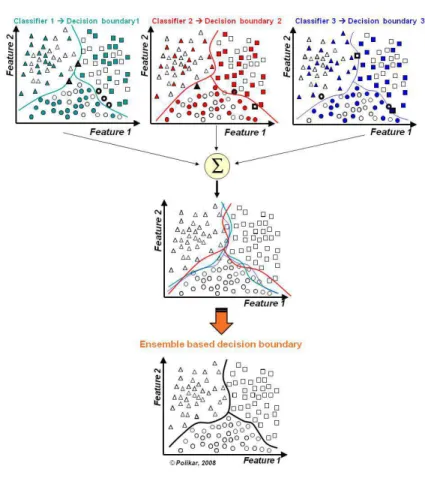
2.3 Combining classifiers with different decision boundaries to reduce error and/or model selection . . . 28
3.1 Visual data association in a signal camera using multiple classifiers 44
3.2 Motivation of learning competitive classifiers . . . 46
3.3 The framework of fast structural representation . . . 47
3.4 Two short videos to show the difference between the trivial case and drift case . . . 50
3.5 Statistical analysis of the two situations in object tracking: “con-cept drift” and the trivial case. . . 51
3.6 Signoidal weights . . . 57
3.7 The success plots and AUC rankings of 10 tracking methods. . . . 59
3.8 The success plots and AUC rankings on different challenging se-quences. . . 62
3.9 More plots and rankings on different challenging sequences . . . . 63
3.10 Screenshots of top 9 tracking methods on challenging sequences . 64
3.11 The parameter setting . . . 65
3.12 Comparsion of tracking results on three more challenging sequences 66
3.13 The weights for the optimal classifier . . . 66
LIST OF FIGURES
4.2 Comparison of two trackers Struck and CT . . . 70
4.3 Four cases of challenges captured by the motion flow . . . 73
4.4 Screenshots of the 7 tracking methods . . . 79
4.5 Overlap success and distance precision plots over the benchmark using OPE. . . 80
4.6 Overlap success and distance precision plots for different challenges. 81 4.7 More plots for different challenges . . . 82
4.8 The parameter setting . . . 83
5.1 Visual data association in a cross-camera setting . . . 87
5.2 The motivation of learning cross-view identities . . . 89
5.3 Some image samples of the two datasets . . . 97
5.4 The Hamming distance between four images of two persons . . . . 100
5.5 The CMC rankings of the methods using the ELF feature on the VIPeR . . . 102
5.6 The CMC rankings of the state-of-the-art methods on the VIPeR datasets . . . 103
5.7 The CMC rankings on the CUHK01 datasets with #100 test persons104 5.8 The CMC rankings on the CUHK01 datasets with #486 test persons105 5.9 Comparison with four multi-modal hashing methods using ELF feature on the VIPeR dataset . . . 106
5.10 Comparison with four multi-modal hashing methods using SCNCD feature on the VIPeR dataset . . . 107
5.11 Comparison with four multi-modal hashing methods using LOMO feature on the VIPeR dataset . . . 109
5.12 The optimisation analysis . . . 111
6.1 Visual data association in a cross-modal setting . . . 115
6.2 A hetero-manifold with three modalities . . . 118
6.3 Cross-modal similarity . . . 121
6.4 Some image examples of the two person re-identification datasets 129 6.5 The CMC rankings of the compared methods on the VIPeR dataset130 6.6 The CMC rankings of five methods on the CUHK01 dataset . . . 133
6.7 Precision recall curves on Wiki by varying the Hamming distance. 135 6.8 MAP performance for each category at 32 bits. . . 136
6.9 Some image examples of the FG-NET dataset . . . 137
6.10 Overall performance comparison . . . 138
List of Tables
1.1 The general challenges in object tracking . . . 9
3.1 The discrepancy between the two distributions . . . 53
3.2 The precision rankings of 14 tracking methods on challenging se-quences . . . 61
4.1 The properties of selected trackers . . . 78
4.2 Comparison with the state-of-the-art methods . . . 83
4.3 Component analysis . . . 84
4.4 Precision comparison of tracking results on 7 long-term challenging sequences. S1 and S2 are collected from [1], S3 are from [2] and the last 4 sequences are from [3]. Precision is defined as the centre distance between the truth rectangle and the detected rectangle is less than 20 pixels. . . 84
4.5 Fail comparison of tracking results on 7 long-term challenging se-quences. The number denotes which number of frames the centre distance of one tracker is larger than 20 pixels. . . 85
5.1 Time comparison of computing the similarities between one probe sample and all the gallery samples (316) using the compared methods. 99 5.2 Ranking accuracy comparison at ranks 1, 5, 10, 15 and 20 and overall AUC performance comparison, using ELF feature on VIPeR dataset. . . 108
5.3 Ranking accuracy comparison at ranks 1, 5, 10, 15 and 20 and overall AUC performance comparison, using SCNCD feature on VIPeR dataset. . . 108
5.4 Ranking accuracy comparison at ranks 1, 5, 10, 15 and 20 and over-all AUC performance comparison, using LOMO feature on VIPeR dataset. . . 108
5.5 Ranking accuracy comparison at ranks 1, 5, 10, 15 and 20 and over-all AUC performance comparison, using ELF feature on CUHK01 dataset. . . 110
LIST OF TABLES
5.6 Ranking accuracy comparison at ranks 1, 5, 10, 15 and 20 and overall AUC performance comparison, using LOMO feature on
CUHK01 dataset. . . 110
6.1 Ranking accuracy comparison . . . 131
6.2 AUC Comparison on CUHK01 . . . 132
6.3 MAP Comparison on Wiki. . . 134
6.4 Rank 1 performance of cross-age retrieval on the FG-NET face dataset with 6 modalities. . . 136
6.5 Rank 10 performance of cross-age retrieval on the FG-NET face dataset with 6 modalities. . . 139
6.6 Rank 20 performance of cross-age retrieval on the FG-NET face dataset with 6 modalities. . . 139
Chapter 1
Introduction
As there is a rapid development of diverse informational platforms, such as the Internet and surveillance systems and electronic devices, such as the smartphone and intelligent devices, enormous amounts of visual data are generated, shared and transferred. These data are huge assets and beneficial to improve the quality of our daily life. To that end, building intelligent systems capable of associating these visual data at diverse locations and different times is absolutely essential and will significantly facilitate the understanding of the behaviours and principals behind the data. Simply speaking, this thesis will fully identify where an object came from and where it is going.
However, due to the inherent challenges, such as ambiguity, heterogeneity, noisy data, large-scale property and unknown variations, the intrinsic structures within the multimedia data and relationships between them have not been fully discovered up to now. To address these difficulties, from the perspective of infor-mation sources, this thesis will comprehensively investigate three problems: single camera object tracking, cross-camera re-identification and cross-modal retrieval. By fully exploring the algorithms for the three situations, an integrated trace of a moving object anywhere can be definitely discovered, see Fig. 1.1. Thus, the estimated traces of motions or changes increasingly make it feasible to imple-ment advanced algorithms to real-world applications, including human-computer interaction, robotic navigation, security in surveillance, biological characteristics association and civil structure vibration detection.
1.1
Visual Data Association
Data association is a fundamental tool for the research of natural science. In fact, since humans started to record data to represent natural things and phenomena in the real world, data association has become the significant component of human
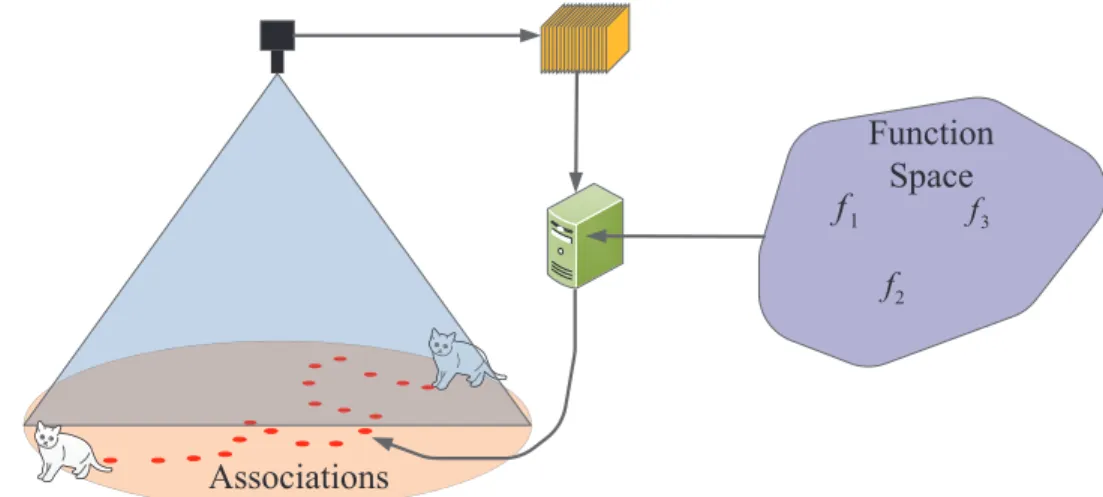
Figure 1.1: The general cases of visual data association studied in this thesis. Considering different types of information sources, these cases can be classified into three levels and several related tasks can be realised. Firstly, motions in a view of a moving ( 3) or a stationary camera ( 1, 2, 4) can be detected. Secondly, if one subject first goes though the view of camera 2 and then goes thought the view of camera 3, the movement between the two cameras can also be estimated. Finally, the activities in a real world ( 1, 2, 3, 4) could be connected to some contents or activities on Internet or some other types of data ( 5).
living, the development of human intelligence and environmental exploitation, etc. The principal tasks of data association are to find the relationships, connect the traces, and deduce the semantic concepts between the data collected at diverse locations and different times. Generally, the most popular forms of data used by humans to describe the diversity of the world include signs, texts, signals, images, voice and video, which are generated by various sensors. On the one hand, according to the research conducted by the 3M corporation1, 90% of information
transmitted to the brain is visual. On the other hand, due to the advancement of the Internet and the availability of many imaging sensors, a huge amount of multimedia data are being generated every day in the form of images or video.
Thus, we can conclude that visual contents are the most important cues for the understanding and reasoning of humans in the real world. Therefore, in this thesis, we will focus on the visual data association.
We are experiencing an era of visual information explosion where the contents of visual data play a part in daily life everywhere. Firstly, according to the report from Worldwide Quarterly Mobile Phone Tracker in the International Data Cor-poration (IDC)1, a total of 334.9 million smartphones were shipped worldwide in
the first quarter of 2016 alone. Nowadays, a digital image sensor is a necessary configuration for almost all users and it is still a very important factor to evaluate a smartphone. Using these devices, hundreds of thousands of images and videos are generated, uploaded and shared by the users from all over the world. Sec-ondly, from the research report released by IHS technology2, 245 million worth of
video surveillance cameras were installed globally in 2014 alone. These cameras, which are placed in public spaces ranging from transport infrastructures, shop-ping centres, and sport arenas to residential streets, are consistently producing huge numbers of videos. Moreover, for the Internet, the DMR3 statistics report
demonstrates that the multimedia data are the very important contents of daily life in modern society. As reported in April 2014, 300 hours of new videos were uploaded to YouTube every minute and 6 billion hours of videos were watched per month on YouTube. Up to July 2015, about 10 billion images were shared on Flickr, to name just two.
As a result, we can see that these large numbers of users mean that visual information is now a very important part of daily life and it is also a huge asset.
1.1.1
Potential Applications
By using the visual data, we have opportunities to discover the intrinsic struc-tures, bridge the gap and associate the objects in different environments and plat-forms, then to create exciting and interactive applications. In fact, in general, methods of visual data association, including tracking, identifying and retrieval, have many potential applications. In this thesis, several examples of promising applications will be briefly introduced in the following, from the perspective of the three levels of research.
Vehicle and robotic navigation: The visual object tracking based intelli-gent system can be developed to automatically navigate and control the vehicles and robotics [4]. By utilising the extracted trace of targets around the automatic machines, the visual system can help the drivers of vehicles or robotics plan an effective path to pass through every area and avoid potential threats of collision.
1http://www.idc.com/ 2https://technology.ihs.com 3http://expandedramblings.com/
Moreover, the intelligence visual system can also provide assistance to human drivers by alerting of the potential collisions and dangers.
Human-computer interaction: The gestures and motion of the human body can be exploited as the input signals in computers, mobiles or other in-telligent devices for natural communicating between humans and equipment [5]. Due to the recent prevalence of low-cost Kinect, recently, visual object track-ing algorithms have attracted many attentions from researchers from the Human Computer Interaction (HCI) community. Various methods have been proposed for tracking the poses or gestures of the human body or its parts, including the eye [6], head [7] and hand [8, 9].
Security in surveillance: Closed Circuit TeleVision (CCTV) cameras are common in commercial, industrial, and residential environments [10]. The fun-damental task of visual surveillance is to track and identify the object, which has appeared in the view of a single camera or across multiple cameras [11]. Apart from the physical space, very recently, the association between images captured in surveillance and activities (texts, voices and images) in virtual space on the Internet, termed as cross-modal retrieval [12], has attracted much attention from researchers in both the computer vision and machine learning communities. By associating the images across cameras, or other types of contents on the Inter-net, the traces and activities of a suspect can be fully tracked and accurately identified. Moreover, some potential security threats can be found before taking action.
Biological characteristics association: Age estimation [13, 14] and kin-ship verification [15] using visual features in images are two general biological characteristic related topics in the computer vision community. Starting from these tasks, two more challenging but interesting applications, which will be dis-cussed in the Chapter 6, can be implemented by associating the biological char-acteristics. The first one is cross-age face image retrieval, which can be used to search for an image of a person of a certain age in a large-scale dataset. The second one is to discover kinship links in which, using an image of a person, one can search the images of the kinship group of that person. The two tasks, which need to find age or heredity invariant features, could be very interesting and used in social platforms or websites.
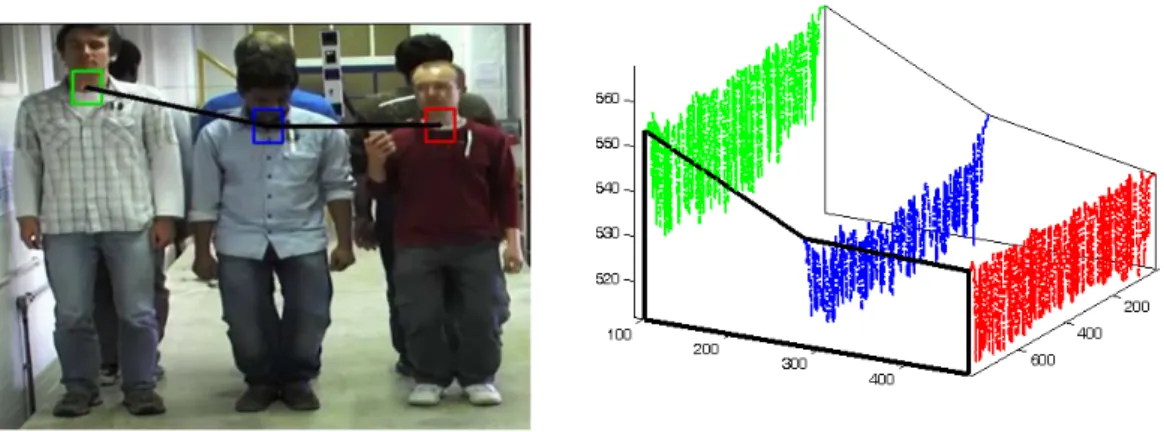
Human-induced vibration detection: In addition to these popular appli-cations of visual data associations including robotics, HCI, surveillance and biol-ogy, recently some researchers [16] have adopted a vision-based motion tracking method to detect the human-induced vibration of a civil structure. An example of experimental setting is given in Fig. 1.2. Compared to marker based systems and inertial acceleration sensors, vision motion tracking methods have the fol-lowing advantages: 1) it is possible to measure people in outdoor environments; 2) the number of tracking individuals is not limited; 3) people are not aware of
Figure 1.2: Vision based human-induced vibration detection. Left: experimental setting; Right: the detected signals of three subjects.
being recorded; 4) it is a cheap, remote and long-term monitoring system. Visual data association has extensive applications, which are not only limited to the above examples but also in the experimental investigation of physics and chemistry, cell tracking in biomedicine and heavenly body motion tracking in as-tronomy. By associating the visual features, the relationship between samples, or the changes over time and locations, can be discovered and identified. There-fore, visual data association plays an important role in the social development, economy and research of science.
1.1.2
Definition of Problems
Basically, the general problems in computer vision include: 1) recognising what the object is and 2) determining where it is going. In recent years, for object detection and recognition, remarkable progress has been made by using the deep neural networks related algorithms. However, determining the traces or associat-ing the samples at diverse locations and different times is still a very difficult task and far more than being established, because of the inherently challenging factors. Generally, these visual data are generated by a single camera, multiple cameras or shared in other platforms. From the perspective of data sources, the tasks or problems to associate samples can be divided into three parts: single-camera object tracking, cross-camera person re-identification and cross-modal searching. An overview of the main studies and the latent structure of the research carried out in this thesis are given in Fig. 1.3. To put it simply, the basic problem to be considered in this thesis is to determine where the object is going by using visual
Visual Data Association Single Camera Cross Cameras Cross Modalities
An ensemble system for object tracking
Chapter 3
A winner-take-all strategy for object tracking
Chapter 4
Hetero-manifold regularisation for cross-modal retrieval
Chapter 6
Learning cross-view identities for person re-identification
Chapter 5 Same Function Space Different Function Space Diversity Source Source
Figure 1.3: An overview of the main studies and the latent structure of the researches carried out in this thesis.
data association, no matter whether they are in a single view, across multiple cameras or active on other platforms.
Single-camera object tracking.
The aim of object tracking is todetect a moving predefined target and associate its locations in the image space across frames.
• From the perspective of machine learning, what is the essential problem in object tracking? In general, in most cases, the target would be merely labelled by experts or detected by other classification methods in the first frame. Due to limited knowledge of a predefined target, the numbers of negative and positive samples are not balanced. In addition, the more important factor is that following changes of the environment around the target and the target itself are unpredictable when the classifiers are trained at the first frame.
• How can we balance the efficiency and robustness to overcome the “drift” problem for object tracking? Normally, to address the complicated chal-lenges, complex algorithms will achieve better results but be more compu-tationally expensive. In the real-world applications, most systems require less computation and real-time properties to reduce cost.
• How can we integrate the existing methods processing diverse properties to improve both the performance and efficiency? A large number of object tracking methods are proposed to consider diverse aspects of problems. It is very difficult to say which one is the best or which one can track targets in any conditions. However, they are all valuable and it is necessary to integrate them with a suitable strategy.
Cross-camera person re-identification.
Person re-identification(Re-ID) has been defined as the recognition of an individual across non-overlapping camera views at diverse locations and different times. Solving such inter-camera people association problems involves tracking individuals across disjointed mul-tiple camera views and enables consistent labelling of a person from diverse dis-connected scenes.
• Similarity computing is quite important for data association and sample pair verification. Then, how is it possible to compute the similarity between the images captured by disjointed multiple cameras to identify people? Due to the difference of views and locations, the appearance of people changes a lot, leading to difficulties to capture the view-invariant features.
• How can we efficiently find the exact matches across views? A large number of surveillance cameras have been installed in public spaces where there may be tens of thousands of people assembled, even in a day. Thus, hundreds of thousands of images are generated and, therefore, it is very computationally expensive to search for an image in such a large-scale dataset. However, in real-world applications, real-time performance is generally required.
Cross-modal searching.
Given a sample, the algorithm of cross-modalsearching is used to search the most matched samples captured in other modalities or in other information sources. The task is normally achieved by learning cross-modal similarity. With the help of the learned similarity, it will enable us to realise image-document retrieval, heterogeneous face recognition (i.e., sketches and photos), kinship verification and cross-age face retrieval, etc.
• Compared with classical retrieval methods, in most cases of cross-modal searching, the samples are not in the same feature space. Then, how is it possible to compute the similarity between samples with different dimen-sions and diverse physical meanings? The key component is to overcome the heterogeneity between samples, then to learn the cross-modal similarity between them.
• How is it possible to connect and integrate all the information from data in different modalities to describe the diversity of the world? Although the
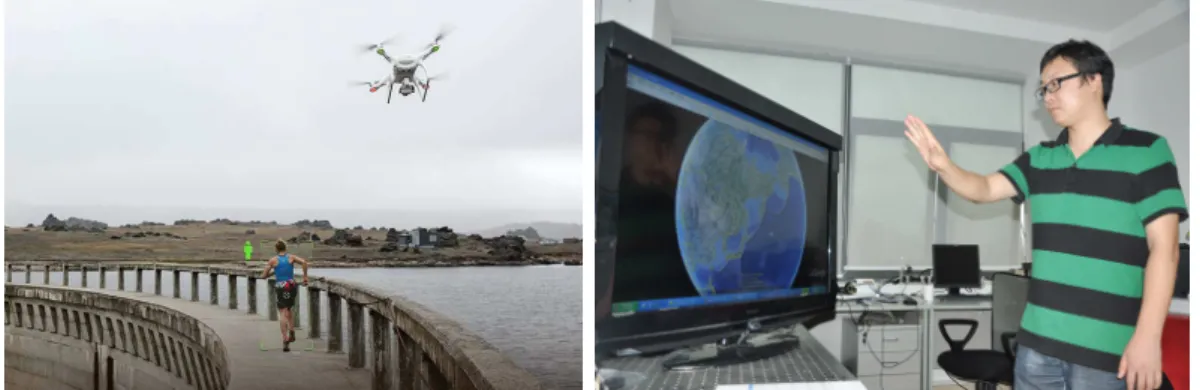
Figure 1.4: Two application examples of signal camera object tracking. Left: Automatically tracking and imaging by unmanned air vehicle; Right: non-touched human-computer interaction by hand gesture tracking.
data from different modalities have diverse forms and meanings, it is all connected in some relationships and reflects certain aspects of things and laws of nature.
• How is it possible to efficiently search the most matched samples in a very large dataset? In the cross-modal setting, due to the rapid development of the Internet and hardware, enormous volumes of multimedia data are generated. Thus, algorithmic efficiency is very prominent for real-world applications.
1.2
Challenges, Hypotheses, and Solutions
However, to date, visual data association is still very challenging. This section will further detail the discussions at three levels for each task: the inherent challenges, the hypothesis behind the proposed methods and the general framework to solve the problems. Two application examples are shown in Fig. 1.41.
1.2.1
Single Camera Object Tracking
From the perspective of development history, the research of object tracking un-dergoes four stages when we consider the different challenges and hypotheses. In the first stage, most methods generally supposed that the target moves smoothly and some of them also assumed that the cameras keep stationary. Thus, the image patch matching for two consecutive frames, such as Lucas-Kanade tracker
[17] can be directly used. After that, some researchers thought object tracking as a dynamic system [18] to incorporate historical information by constructing the posterior probability density function. Then, about ten years ago, classification methods started to be used in object tracking [19,20], in which the problem was considered as a detection and the classifiers would be updated to be adaptive to the changes. Recently, due to the limitations of the single model, multi-expert systems have been used to improve the diversity of trackers. The methods de-veloped from a simple model to complex algorithm and the hypotheses are more relaxed and more challenges have been addressed.
Challenges:
As in other areas in computer vision, a variety of challengesaffect the performance of a tracking algorithm [21]. The general factors include: illumination, deformation, scale variation, rotation, occlusion, motion blur, clut-ters, disappearance, low resolution, fast motion and moving camera. Moreover, some algorithms have considered to solve more complex difficulties including spec-ularity, transparency, long duration, low contrast and confusion etc. [3]. More details about the challenges are given in Table 1.1.
Table 1.1: The general challenges in object tracking
Illumination the illumination in the target region is significantly changed Deformation non-rigid object deformation
Scale variation the bounding box of the target is significantly changed Rotation the target rotate in or out of the image plane
Occlusion the target is partially occluded
Motion blur the target region is blurred due to the motion of target or camera Clutters the background has a similar colour or texture as the target Disappearance the target are fully occluded or move out of view
Low resolution the number of pixels of the target is less than a certain small value Fast motion the motion of the target is larger than a certain large value Moving camera hand-held cameras
Specularity specular highlights on the surface of the target
Transparency being clear and transparent of the surface of the target Low contrast the variance of all pixels is less than a small value Confusion some similar objects are in the same view
Beyond these challenges, the following more complex difficulties are also con-sidered in this thesis.
• In most cases, the varied challenges detailed in Table 1.1 may occur simul-taneously. For example, when a running car is going across a curve, it is possible that the car will make a rotation in a certain angle in the image space and also be occluded by other cars or trees. Thus, it results in more difficulties in designing features and models to overcome the two challenges simultaneously.
• The total number of frames, which need to be tracked, is larger than a very large value. In this case, various challenges occur in the same video, thus, the tracker maybe updated by wrongly labelled samples. At present, normally, most methods are explored to solve the problems in short videos (only hundreds of frames) and seldom can be robust in a long duration tracking (more than 10 minutes).
• The proposed algorithms could be run in real time on a low-cost machine. In addition to performance, efficiency is also a significant factor in real-world applications, but most existing methods focus on performance only. In general, improving the performance will make more computation whist implementing a real-time system tries to reduce the computational expense as much as possible. Thus, it is difficult to balance the efficiency and per-formance on a low-cost platform.
Hypotheses:
In this study, the hypotheses, which were used to base theproposed solutions for object tracking, include:
• Given a dataset with ground truth locations, the empirical analysis about the changes of the sample distribution can be discovered. Moreover, the empirical investigations can be used to reveal the nature of object tracking then to guide the design of more powerful trackers.
• By training on the different groups of samples, the classifiers could be rela-tively independent with each other and then be utilised to deal with different difficulties.
• It is assumed that, for a particular application, a set of trackers owning diverse properties can be selected from existing methods. Furthermore, a relationship between the performance of these selected trackers and motions (challenges) of a target can be modelled off-line on a large labelled dataset.
Solutions:
To address the above complex problems, two models at differentlevels were proposed in this thesis, with considering the diversity of the models in different function spaces.
On the one hand, by introducing a method Learn++ into the object tracking, a set of Bayesian classifiers in a same function space was considered. In this model, the “concept drift” problems in object tracking was firstly empirically investigated. Then, according to the discoveries, a Learn++ (LPP) tracker was proposed to dynamically samplecompetitiveclassifiers for robust and long-term object tracking. To increase the efficiency and stability for the model, a compet-itive strategy was adopted to separately solve various “concept drift” challenges, which appeared in the same video sequence. Learn++ is a new group of machine
learning methods used to learn additional information from new data, without accessing the original samples and it can be used for recognition tasks in very complex situations where new classes would join in. Moreover, Learn++ can address a set of databases in which the samples are generated by different distri-butions. To increase the diversity of the model, Learn++ keeps all the classifiers as long as they can achieve good performance on a subset. In Learn++, the weights of samples are updated using the ensemble performance. The subsets of basic classifiers are independent of each other and can be specified to solve certain different sub-problems, which occur in a non-stationary environment. Thus, for every challenge, an optimal classifier can be approximated in a subspace spanned by the selected competitive classifiers which can address the current problem according to the distribution of the samples and recent performance. As a re-sult, the LPP tracker can efficiently address the various “concept drift” problems, which occur together in a long video sequence. Due to the use of sparse weights for the competitive classifiers, the LPP tracker can keep the balance between the efficiency and the performance.
On the other hand, to further improve the diversity of a system, a winner-take-all strategy was exploited to select a winner tracker, which is the most suitable and efficient to tackle the current challenge, according to the motion features extracted from the current environment and an efficiency factor. To fast extract features in a tracking environment, a dense trajectories-based motion fea-ture was designed to describe the characteristics and challenges of the movement of an object and its surroundings. Based on a large public dataset, a prediction model of performance for different trackers on various challenges can be obtained off-line. Then, the learned structural regression model can be directly used to efficiently select the winner tracker online. To increase the flexibility of all mem-bers, the tracked results of the winner will be used to update other trackers. WTA is useful for two reasons: 1) by eliminating the non-maximal models, it re-duces computation; 2) it provides additional robustness. The recently proposed tracking methods with multiple components generally achieve better results than other single models but most of them are far from real-time. In fact, the most computationally expensive part of every tracker is the procedure for image patch representation and state searching. However, to fuse the results from different components, all the components of most methods have to be run. In this thesis, the WTA strategy was exploited to select a winner tracker without running all members. Thus, not only will the performance be improved by incorporating multiple trackers, but also the average efficiency will be boosted.
?
√
Camera 2 Camera 1Camera
3
Figure 1.5: A schematic diagram to show that the general purpose of Re-ID is to detect the trace of a person for security or missing people. In this environment, a person walked though the view of camera 1 and then went into the view of camera 2. Using the person re-identification, the system can automatically match the images of the same person in the views of camera 1 and 2 efficiently and it will be at the same time, because we need not investigate the view of camera 3.
1.2.2
Cross-camera Person Re-identification
Cross-camera person re-identification (Re-ID) is a fundamental solution for au-tomated video surveillance [22]. It has been defined as the recognition of an individual across non-overlapping camera views at diverse locations and different times. Solving such inter-camera people association problems involves tracking individuals across disjointed multiple camera views and it enables consistent la-belling of a person from diverse disconnected scenes. Therefore, an effective Re-ID system is able to accelerate understanding of crimes, advance conventional fingerprints/DNA and contribute to all levels of policing and forensic science ap-plications. A schematic diagram to show the general purpose is given in Fig.
1.5.
Challenges:
Re-ID is a difficult vision problem because of the diversevisual appearance variations, visual ambiguity and spatial-temporal uncertainty and it possesses very challenging machine learning issues because of the high intra-class and low inter-class variations and limited/imbalanced image samples.
• Cross-camera variation: As there is a large difference in the camera views, which are installed in different locations, the appearances of same person can change significantly while different persons can look alike across camera views. Thus, this creates a typical problem of inter- and intra-class variation in the machine learning area.
• Long-term re-identification: At present, most person Re-ID methods are only limited to deal with the problems in a setting where the two cameras are not far from each other. However, re-identification in open environments can potentially scale to arbitrary levels, covering huge spatial areas spanning not just different buildings, but also different cities, or countries. In these cases, the greater change will be made due to some people wearing diverse clothes or a variety of carried objects will be taken by some persons in different camera views.
• Limited resources: To discover the relationship between any two views with a huge time and space separation, a large-scale dataset, which offers suffi-cient structural information and captures variability, is definitely required. However, in general, only one image or several images for each person can be offered in most cases. This then formulates a one-shot or multi-shot learning which is more complex than classical recognition tasks. Moreover, collecting sufficient labelled data from every camera to build a supervised model would be prohibitively expensive as well.
• Scalability: In general, the efficiency of matching mainly depends on two aspects: (1) the number of samples stored in the gallery set; (2) the def-inition of similarity. Considering the rapidly increasing usage of cameras in surveillance, it is impossible to reduce the number of samples. Recently, several metric learning methods have been exploited for associating people across views. However, these existing approaches generally cause a heavy computational burden when searching in a large dataset.
Hypothesis:
To associate the persons at diverse locations and differenttimes, it is assumed that some invariant features about the appearance and struc-ture of a human body can be learned to represent individuals. Even if these meaningful features can be discovered by some heuristic methods or learning al-gorithms, it is still difficult to directly compute the similarity between the images captured in different views, because of the problem of ambiguity and uncertainty. Therefore, the general ways to compare the features suppose that a common fea-ture space, in which a certain effective metric will be used, could be explored by some linear or kernel-based methods.
Solutions:
In this thesis, to address the above problems, we accomplishfact, hashing has been widely used for nearest neighbour search in computer vision areas, such as image retrieval, object recognition and image matching, but it has seldom been used in re-identification. Using the hash functions, various special properties can be preserved in the learned codes, such as locality, variance and affinity. From the feature learning perspective, CBI learns a discriminative binary representation for each person. Furthermore, from the metric learning perspective, a more efficient distance metric in the Hamming space is learned for matching. Thus, similar binary codes can be found for images of a same person captured at different views by embedding the images into the Hamming space. Therefore, person re-identification can be solved by efficiently computing and ranking the Hamming distances between the images. Moreover, compact binary codes are extremely economical for large-scale data storage.
Specifically, in real-world applications, once an image of one person in one view is obtained, the projections are used to learn the on-line identity (ID) of that person. In fact, it is likely that the images of that person in other views somewhere else have also been captured and the ID has been obtained off-line. Then, the on-line ID can be used to search the corresponding person in another view by computing the Hamming distance between two sets of bits (IDs).
1.2.3
Cross-modal Retrieval
The nearest neighbour search across heterogeneous data has attracted consider-able attention in recent years, due to the explosion of large-scale multimedia data in different modalities on the Internet and various devices, but it remains a very challenging problem. In a cross-media retrieval system, the query examples and retrieval results need not be of the same media type. For example, by submitting either a text or an image as a query, related audios can be searched. A sample to describe the kind of animal elephants using text, image and voice is given in Fig. 1.6. To speed up the nearest neighbour search, cross-modal hashing, which incorporates hashing techniques into cross-modal retrieval, has recently attracted much attention.
Challenges
Cross-modal hashing has attracted considerable attention inrecent years. However, despite the progress made by existing methods, it remains a very challenging task because of the integration complexity and heterogeneity of the multi-modal data.
• Semantic gap: In computer vision, low-level features, no matter whether they were designed by handcraft or learned automatically, are generally insufficient to directly represent the semantic meaning of data, such as labels, identities or classes. There is a big difference between these high-level tasks and computational representations.
Elephants are large mammals of the family Elephantidae and the order Pro-boscidea. All elephants have several distinctive features, the most notable of which is a long trunk or proboscis, used for many purposes, particularly breath-ing, lifting water and grasping objects. Their incisors grow into tusks, which can serve as weapons and as tools for moving objects and digging. Elephants’ large ear flaps help to control their body temperature. Their pillar-like legs can carry their great weight. African elephants have larger ears and concave backs while Asian elephants have smaller ears and convex or level backs.
Figure 1.6: A sample of multi-modality to describe a kind of animal elephant using text (first row), image (left in second row) and voice (right in second row). It should be noticed that the sequential oscillogram is just used to de-note the real voice of the elephant. The contents of text and image come from the free encyclopaedia, Wikipedia, and the real voice comes from a website: www.soundbible.com/.
• Heterogeneity: Compared with other tasks, the heterogeneity is the most distinctive characteristic in cross-modal searching, because the query sam-ple and the retried dataset are collected in different conditions and even using different sensors. No matter what level of representation there is, dif-ferences between modalities are very obvious so that it is difficult to build an effective model to both capture the differences and reveal the common factors between different modalities. For example, computing the similarity between two representations with different dimensions is very challenging.
• Efficiency: Like other tasks of information retrieval, the efficiency of search-ing is also a very significant factor in real-world applications. In fact, the number of samples in cross-modal retrieval is much more than the number of samples in a uni-modal setting; because more sensors are used, then more samples are generated. In addition, what is more important is that the computation of similarities between the samples from different modalities is more complex.
Hypothesis:
In this study, the principal aim is to connect and integrate all the information contained in different modalities into a uniform framework. Then, based on the integrated structure, a set of projections can be learned and the samples from different modalities can be embedded into a common space. The hypotheses behind this, which are used to support the solution in this thesis include:• High dimensional data tend to lie in the local structure of a low dimensional manifold. This is a basic assumption for the classical manifold learning in a uni-modal setting, but it is still useful in cross-modal tasks. Based on this point, a sub-manifold can be modelled for each modality to capture the intrinsic structure of intra-manifold.
• The sub-manifolds in different modalities could be connected by some su-pervised information, or latent variables, which can be defined in diverse forms, considering the specificity of the problems. This is a basic assump-tion to support the connectivity and integrity of hetero-manifold in this work.
• The information could be propagated on an integrated framework in the cross-modal setting. Only when the information can be diffused in a certain pattern, can a global view be built based on these sub-manifolds so that it enables to cross-modal retrieval.
Solutions:
In this thesis, by integrating the supervision information andthe local structure of heterogeneous data, a novel method, termed hetero-manifold regularisation (HMR), is proposed to learn the hash functions for efficient cross-modal searching. Three significant advantages are made in the proposed frame-work. Firstly, a hetero-manifold well describes the local information by represent-ing homogeneous data on the sub-manifolds. The data in different modalities are represented by different sub-manifolds, which model the relationship well between the homogeneous data. Secondly, the hetero-manifold emphasises the global in-formation of multi-modal data as well, by modelling theinformation propagation
across modalities with three-order random walks. It is clear that any pair of points could be connected via two steps on homogeneous sub-manifolds and one step crossing two different sub-manifolds. Thus, the samples across modalities can be compared by integrating the information from all related homogeneous sub-manifolds. Lastly, the hetero-manifold is flexible and can be extended to model any number of modalities. As far as we know, existing cross-modal searching algorithms are limited to only two modalities.
Taking advantage of the hetero-manifold, the similarity between each pair of heterogeneous data could be naturally measured by three order random walks
on this hetero-manifold. Furthermore, a novel cumulative distance inequality, defined on the hetero-manifold, is introduced to avoid the computational difficulty induced by the discreteness of hash codes. By using the inequality, cross-modal hashing is transformed into a problem of hetero-manifold regularized support vector learning. Therefore, the performance of cross-modal searching can be significantly improved by seamlessly combining the integrated information of the hetero-manifold and the generalization of the support vector machine.
1.3
Contributions
The contributions made in this thesis are summarised below:
• Chapter 3: In sampling competitive classifiers for robust object tracking, we make the following three contributions: (1) Empirical analysis, which concludes that object tracking is a non-i.i.d. sampling and small dataset problem, is given to guide the design of the proposed tracker. (2) A new framework of Learn++ (LPP), particularly for object tracking, is proposed. Unlike classical Learn++ methods, a competitive subset of classifiers, which consists of the ones that are more adaptive to the current environment, is maintained, a constraint (motion) is added to guide the learning and new samples are only used to update these classifiers trained in similar situa-tions. (3) As far as we know, the LPP tracker is the first tracking method that designs an explicit model for each sub-problem (i.e., challenge) and the models can be automatically altered according to the environment. The most distinctive merit of the LPP tracker is that, even when a target moves out of view and then comes back with totally different locations and appear-ances, the tracker can still lock the target, as long as the appearances ever appeared in the past. Because of training a relatively large set of classifiers, the LPP tracker keeps its diversity so as to improve the generalization and performance, no matter what concept drifts occur. Despite the complexity of the model, due to the sparsity of the competitive set, the LPP tracker is still a real-time method.
• Chapter 4: In the winner-take-all (WTA) strategy for improved object tracking, the main contributions of this work are as follows: 1) As far as we know, we are the first to build a structural regression model trained on a large dataset, to fast predict the probabilities of the performance for existing methods. 2) Both the effectiveness and efficiency of trackers are integrated into auniform winner-take-all framework. Only one representa-tive tracker needs to be executed at any time, but the results can reflect the strengths of all trackers. 3) The proposed WTA framework is tested on a
large dataset and our evaluation results demonstrate that WTA can hugely improve the performance, without sacrificing the efficiency.
• Chapter5: In learning cross-view identities (CBI) for fast person re-identification, our contributions are three-fold. (1) By learning the compact binary codes, each person has a similar identity across different views. Due to the ef-ficiency of binary codes, person re-identification in a huge dataset can be realised. For the VIPeR [23] dataset, which contains only 316 samples in the gallery, CBI is at least 2200 times faster than the non-hashing state-of-the-art methods. However, if there are millions of samples, CBI will be also millions of times faster. (2) In CBI, variances of learned bits, cross-covariance and margin of learned hash codes are simultaneously maximised and an efficient iterative optimisation solution is introduced. (3) Moreover, in CBI, a theoretical proof is given to guarantee the transfer from Hamming space to Euclidean space. Unlike most methods, which directly relax the sign function, such as [24], we consider the theoretical reason behind when it is safe to relax the sign function.
• Chapter 6: In the Hereto-Manifold Regularisation (HMR) for cross-modal hashing, the novelties conclude that, firstly, the hetero-manifold is a well-defined platform to capture both local information of sub-manifolds cor-responding to homogeneous data and global information of the manifold corresponding to multi-modal data. Secondly, the proposed hetero-manifold support vector hashing, taking advantage of the hetero-hetero-manifold in representing the information of multi-modal data and the support vector machine in generalisation, can generate more effective hash functions for the cross-modal search. Finally, comprehensive experimental results show the effectiveness and efficiency of the proposed hetero-manifold regularisation-based hashing algorithm to tackle the problems of cross-camera person re-identification, cross-modal image retrieval and cross-age face retrieval.
1.4
Thesis Outline
The rest of this thesis is organised as follows:
Chapter
2
contains a full literature review of basic learning methods andthe previous works relevant to visual data association. First of all, the basic knowledge of machine learning, including classification, regression and ranking are introduced. These methods construct the basis of our solutions for visual data association, considering different aspects of the essential problems. Then, the related work about single-camera object tracking, cross-camera person
re-identification and cross-modal retrieval will be described and analysed sequen-tially.
Chapter
3
presents a Learn++ (LPP) tracker which used to dynamicallysample competitive classifiers for robust and long-term object tracking. In par-ticular, an efficient descriptor which can be selected by classifiers is firstly given. Then, an empirical analysis of “concept drift” problems is used to guide the design of tracker. Next, the Learn++ based tracker is proposed to overcome the challenges in the non-stationary environment for object tracking. Finally, extensive experiments show that LPP tracker yields state-of-the-art performance under various challenging environmental conditions and, especially, can overcome several challenges simultaneously.
Chapter
4
describes a winner-take-all (WTA) strategy to select awinnertracker (considering both accuracy and efficiency) from a set of prevailing methods to tackle the current challenge, according to features extracted from the present environment and an efficiency factor. To this end, firstly, a structural regression model to characterise the trackers is discussed. Then, this chapter introduces how to select the most suitable tracker, the ways to locate the target and how to update the trackers. The proposed WTA framework is tested on a large benchmark dataset and extensive experimental results illustrate that WTA can significantly improve both the performance and the efficiency.
Chapter
5
proposes a method to learn cross-view binary identities (CBI)for fast person re-identification. To achieve this, three aspects, including min-imising the distance in the Hamming space, maxmin-imising the cross-covariance and maximising the margin are considered simultaneously. This chapter gives a the-oretical proof for when it is safe to transfer the problem in Hamming space to a problem in Euclidean space and what constraints need to be considered, as well. Extensive experiments are conducted on two public datasets to show CBI produces comparable results as state-of-the-art re-identification approaches, but is at least 2200 times faster than these non-hashing methods.
Chapter
6
provides a novel method termed hetero-manifoldregulariza-tion (HMR) to supervise the learning of hash funcregulariza-tions for efficient cross-modal searching. Hetero-manifold integrates multiple sub-manifolds, defined by homo-geneous data, with the help of cross-modal supervised information. In this chap-ter, at first, various definitions of hetero-graphs for different conditions are fully discussed. Next, a novel cumulative distance inequality, defined on the hetero-manifold, is introduced. Then, cross-modal hashing is transformed into a problem of hetero-manifold regularized support vector learning and solved by a sequen-tial optimisation method. Lastly, comprehensive experiments on four datasets show the proposed HMR achieves advantageous results over the state-of-the-art methods in several challenging cross-modal tasks.
To facilitate the understanding of the contents and structures in a holistic view for this thesis, an overview of main developments is given in Fig. 1.7.
An ensemble system for object tracking
Chapter 3
A winner-take-all strategy for object tracking
Chapter 4
Hetero-manifold regularisation for cross-modal retrieval
Chapter 6
Learning cross-view identities for person re-identification
Chapter 5 Chapter 1 Introduction Chapter 2 Literature review Chapter 7 Conclusion
A set of Bayesian classifiers in a same function space is considered. For every challenge, an optimal classifier can be approximated in a subspace spanned by the selected competitive classifiers which can address the current problem according to the distribution of the samples and recent performance.
To further improve the diversity of a system, a winner-take-all strategy is exploited to select a winner tracker which is most suitable and efficient to tackle the current challenge, according to motion features extracted from the current environment and an efficiency factor.
To address the problems in cross-camera person
re-identification, a set of hash functions for each view is learned to project all samples captured in different views into a common Hamming space. Then, person re-identification can be solved by efficiently computing and ranking the Hamming distances between the images.
By integrating the supervision information and the local structure of heterogeneous data, a novel method termed hetero-manifold regularisation (HMR) is proposed to learn hash functions for efficient cross-modal search. Thus, the similarity between each pair of heterogeneous data could be naturally measured by three order random walks on this hetero-manifold.
i
Chapter 2
Literature Review
This chapter will firstly provide a broad review of basic knowledge and concepts including classification, regression and ranking, which are used to support our solutions and discoveries in the following chapters and then introduce extensive backgrounds of present research in visual data association from the three levels: signal-camera setting, cross-camera setting and cross-modality setting.
2.1
General Learning Framework
Machine learning primarily focuses on the development of computer programs to deal with extensive problems with respect to some kinds of tasks and theoretical research of computational learning in artificial intelligence. The essential element of learning is to provide computers with the ability to iteratively learn from data (experience) and make decisions according to their learning and understanding, without explicitly being programmed. A dataset of observations is given:
X ={x1, x2,· · · , xi,· · · , xN, xi ∈X}, (2.1)
and the corresponding latent variable:
Y ={y1, y2,· · · , yi,· · · , yN, yi ∈Y}. (2.2)
The purpose of learning is to build a model from a hypothesis space f ∈ F to bridge the input x and output y, where the hypothesis space has F = {f|y = f(x)} and N is the number of samples. In general, the samples x could be the data captured by any sensor and have diverse structural forms, including vector, matrix and tensor. For example, an image is denoted by a matrix and captured by a camera. The outputygenerally refers to the supervised information, such as labels, clusters or other high-level semantic variables. The output has a variety of forms ranging from two values {+1,−1}, numbers and real values to more
Learning Sample Dataset Hypothesis Space Latent Sample Distribution Making Decision
( , )
x y
x
k kf
y Task: Classification Regression Clustering Representation ĂĂF
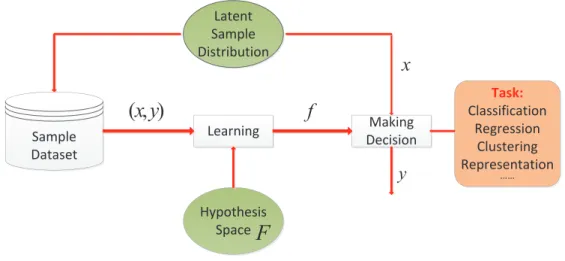
Figure 2.1: The general learning flow for classical tasks including classification, regression and clustering etc..
complex structures including vectors, matrices and tensors which derive from the complicated structural output learning. The general flow of learning to detail the procedure of training and making decisions is shown in Fig. 2.1.
In taxonomy of machine learning, most criteria depend on the output variable y. Firstly, if considering the presence status ofy, most of machine learning meth-ods can be classified into supervised learning in which all samples are given labels, semi-supervised learning in which a part of the samples (generally a little portion) are given labels and rest of the samples are unlabelled, and un-supervised learning in which all samples are unlabelled. Secondly, if considering the forms of output y, most of methods can be categorised into classifications in which latent variable is only from {+1,−1}, clustering in which latent variable denotes the index of clusters and regression in which latent variable is a real value. Finally, if consid-ering the functional forms in hypothesis space, most of machine learning methods can be grouped into linear, non-linear and kernel-based methods. For example, neural networks in which a non-linear activation function has been adopted are non-linear methods. In fact, there are some other types of taxonomies, e.g., depending on the size of the hypothesis or the searching strategy.
In simple terms, classical machine learning methods seem to be uncorrelated to the task conducted in this thesis: data association. However, in fact, data association could be achieved if we consider these classical learning tasks as a transition procedure. Then, the straightforward strategy is that samples can be
associated by grouping the latent variable y in a certain way or by defining a similarity measurement for the latent variable. The next subsection will bridge the gap between the classical tasks and the task of data association.
2.2
Learning to Data Association
This subsection will introduce what the data association is and how to associate the samples using leaning strategies. Learning recognition or prediction has a relatively long history of research and has an explicit definition of what is machine learning. However, leaning data association has rarely been discussed because it is more complicated and, in many cases, it is only considered as a straightforward extension of learning. In fact, data association which, to some extent, includes the classical learning method is a more general concept in the areas of data mining and artificial intelligence. Given a dataset of observations:
X ={x1, x2,· · · , xi,· · · , xN, xi ∈X}, (2.3)
and the corresponding associations:
A={a1, a2,· · · , aj,· · · , an, aj ∈A}, (2.4)
where aj = {xj1,· · · , xjn} ⊆ X and jn is the number of samples in the jth association, the purpose of data association is to build a model from a hypothesis space f ∈F to verify whether all the samples in a new setaj ={xj1,· · · , xjn} ⊆
X belong to a same association (group) with a certain semantic meaning or not? Thus, simply, the hypothesis space can be defined as:
F ={f :{xj1,· · · , xjn} ⇒ {+1−1}} (2.5)
where +1 denotes all the samples in the set, which belong to same group, whilst
−1 denotes that they do not. The final best hypothesis will be the one, which achieves the best results on the training sets and obtains the highest generalisation ability for the future set.
To seamlessly connect the learning procedure and data association, the first important thing is to investigate the difference between the general learning framework and the above scheme of data association. Generally, there are three major differences:
• Feature space X: The definition of feature space is very broad and gener-alised. In the classical learning methods, the representation of samples is required to be in the same space, have the same dimensions and describe same physical knowledge. In this thesis, this limitation is extremely relaxed and the samples could be captured by different sensors, be endowed diverse physical meanings and collected in different locations or times.