National Louis University
Digital Commons@NLU
Dissertations12-2017
Standards-Based Grading within a School District
Using Personalized Learning
Dywayne Hinds
Follow this and additional works at:https://digitalcommons.nl.edu/diss
Part of theCurriculum and Instruction Commons, and theEducational Leadership Commons
This Dissertation - Public Access is brought to you for free and open access by Digital Commons@NLU. It has been accepted for inclusion in Dissertations by an authorized administrator of Digital Commons@NLU. For more information, please [email protected]. Recommended Citation
Hinds, Dywayne, "Standards-Based Grading within a School District Using Personalized Learning" (2017).Dissertations. 262. https://digitalcommons.nl.edu/diss/262
STANDARDS-BASED GRADING WITHIN A SCHOOL DISTRICT USING PERSONALIZED LEARNING:
A POLICY ADVOCACY DOCUMENT
Dywayne B. Hinds
Educational Leadership Doctoral Program
Submitted in partial fulfillment of the requirements of
Doctor of Education
in the Foster G. McGaw Graduate School
National College of Education National Louis University
Copyright by Dywayne B. Hinds, December 2017 All rights reserved
Document Origination Statement Digital Commons @ NLU
This document was created as one part of the three-part dissertation requirement of the National Louis University (NLU) Educational Leadership (EDL) Doctoral Program. The National Louis Educational Leadership EdD is a professional practice degree program (Shulman et al., 2006). For the dissertation requirement, doctoral candidates are required to plan, research, andimplement three major projects, one each year, within their school or district with a focus on professional practice. The three projects are:
• Program Evaluation
• Change Leadership Plan
• Policy Advocacy Document
For the Program Evaluation candidates are required to identify and evaluate a program or practice within their school or district. The “program” can be a current initiative; a grant project; a common practice; or a movement. Focused on utilization, the evaluation can be formative, summative, or developmental (Patton, 2008). The candidate must demonstrate how the evaluation directly relates to student learning.
In the Change Leadership Plan candidates develop a plan that considers organizational possibilities for renewal. The plan for organizational change may be at the building or district level. It must be related to an area in need of improvement, and have a clear target in mind. The candidate must be able to identify noticeable and feasible differences that should exist as a result of the change plan (Wagner et al., 2006).
In the Policy Advocacy Document candidates develop and advocate for a policy at the local, state or national level using reflective practice and research as a means for supporting and promoting reforms in education. Policy advocacy dissertations use critical theory to address moral and ethical issues of policy formation and administrative decision making (i.e., what ought to be). The purpose is to develop reflective, humane and social critics, moral leaders, and
competent professionals, guided by a critical practical rational model (Browder, 1995). Works Cited
Browder, L.H. (1995). An alternative to the doctoral dissertation: The policy advocacy concept and the policy document. Journal of School Leadership, 5, 40-69.
Patton, M. Q. (2008). Utilization-focused evaluation (4th ed.). Thousand Oaks, CA: Sage.
Shulman, L.S., Golde, C.M., Bueschel, A.C., & Garabedian, K.J. (2006). Reclaiming education’s doctorates: A critique and a proposal. Educational Researcher, 35(3), 25-32.
Wagner, T., et al. (2006). Change leadership: A practical guide to transforming our schools. San Francisco: Jossey-Bass.
i
ABSTRACT
This policy advocacy document, as part of my study, focused on my desire to implement a new grading practice within the district. This change will result in moving to a standards-based grading system from a traditional grading system. Although this would be a new practice within the district, many districts throughout the nation are making similar changes. The reason for my policy is associated with the need to measure more accurately student performance and to determine if students have mastered content specific standards within a course of study. Educators must place emphasis on the mastery of content specific standards that include related skills. I found that
implementing a standards-based grading system in a school district will provide students the opportunity to be evaluated and measured more objectively to learn as individuals driven by their needs and interest.
ii
PREFACE
This was a topic of high interest to me for various reasons. The first reason is associated with the district’s implementation of the personalized learning program during the 2015-2016 academic school year. The philosophy of personalized learning aligns perfectly with the concept of standards-based grading. It allows the needed flexibility associated with that approach to teaching and learning it. This flexibility lends itself to grading practices that account for a student’s ability to master content specific standards throughout a course of study. The second reason for selecting this topic, is to move to a grading system that accurately evaluate and measure what students are able to do.
It is no secret the grades should accurately report what students can do or have learning overtime. However, through the use of the traditional grading system it is difficult to determine what students have learning. The grades assigned in using the traditional method of grading are often times comprise of a variety of factors that are not associated with the outlined content specific standards of the course. Needless to say, within the traditional grading system there are many factors which promotes
inconsistencies in grading.
The focus of the policy advocacy document is to communicate critical aspects of the process that will be used to advocate for a change in grading practices within the district. The overarching goal was to promote a policy that is focused on improving student learning. While researching and writing this policy advocacy document, nothing caused me to question my decision to implement the standards-based grading system within the district. Based on the research, it appears to be a sound decision, and this document will help reassure the reader that the district is heading in the right direction.
iii
While working on this document, I learned several leadership lessons that have enhanced my skills as a district leader. Most importantly, I learned how important it is to listen to the perspectives of all stakeholders and to value their input. I also found that when attempting to implement this type of change, you cannot take people’s feelings and experiences for granted. Simply stated, it is necessary to put yourself in the shoes of others and lead with empathy.
Additionally, as a leader you must be patient and trust the process. Change doesn’t happen overnight, it takes time. Having a clear vision for change and developing a plan that accounts for all aspects associated with any adaptive change is essential. Overall, I learned that it takes the involvement of all stakeholders to implement sustained change. Developing this policy advocacy document has been a rewarding experience.
iv TABLE OF CONTENTS ABSTRACT ... i PREFACE ... ii TABLE OF CONTENTS ... iv LIST OF TABLES ... vi
LIST OF FIGURES ... vii
SECTION ONE: VISION STATEMENT ... 1
Introduction to the Problem ... 1
Critical Issues ... 4
Recommended Policy and Envisioned Effect ... 7
SECTION TWO: NEEDS ANALYSIS ... 8
Education Analysis ... 8
Social Analysis... 10
Political Analysis ... 13
Economic Analysis ... 17
Moral/Ethical Analysis ... 20
SECTION THREE: ADVOCATED POLICY STATEMENT ... 22
Goals and Objectives of the Policy ... 22
Stakeholders Related to the Policy ... 24
Rationale for the Validity of the Policy ... 27
SECTION FOUR: POLICY ARGUMENT ... 31
Arguments for the Policy ... 33
Arguments Against the Policy ... 36
Challenge 1: Clarifying the Purpose ... 37
Challenge 2: Differentiating Grading Criteria ... 38
Conclusion ... 40
SECTION FIVE: POLICY IMPLEMENTATION PLAN ... 41
Rationale ... 44
Planning for Implementation ... 46
Stakeholders Involved ... 48
Establishing District Policy... 50
Conclusion ... 53
SECTION SIX: POLICY ASSESSMENT PLAN ... 55
v
Policy Accountability Plan ... 58
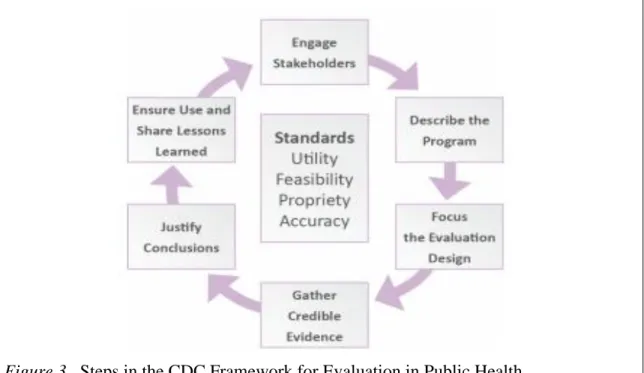
Steps in Program Evaluation ... 61
Step 1: Engaging Stakeholders ... 61
Step 2: Describing the Program ... 62
Step 3: Focusing the Evaluation Design ... 62
Step 4: Gathering Credible Evidence ... 62
Step 5: Justifying Conclusions ... 62
Step 6: Ensuring Use and Sharing Lessons Learned ... 63
Conclusion ... 64
SECTION SEVEN: SUMMARY IMPACT STATEMENT ... 65
Appropriateness of the Policy ... 65
Vision Supporting the Policy ... 68
What and Whose Values are at the Center of Standards-Based Grading? ... 69
How the Policy Serves Stakeholders ... 70
Conclusion ... 73
vi
LIST OF TABLES
Table 1. Differences between the Traditional and Standards-based grading systems ... 29 Table 2. Comparing Traditional and Standards-Based Grade Books ... 34
vii
LIST OF FIGURES
1
SECTION ONE: VISION STATEMENT Introduction to the Problem
In this chapter, I will provide the readers with a definition of critical terms that will be used throughout my policy advocacy document. This will include providing the readers with information regarding the historical perspective of my topic. Also, I will describe the critical aspects associated with my policy advocacy document. Additionally, I will communicate how I became aware of this policy issue and my vision for how this policy will address the problem.
During the 2015-2016 academic school year, the district in my study implemented personalized learning within several schools. This instructional approach was designed to tailor the learning experiences to each student’s individual needs, skills, and interests. The goal was to engage students in their own learning and provide them with the skills needed to be successful in college, careers, and life. To accomplish this goal,
personalized learning uses a variety of tools to help students identify their individual skills, strengths, weaknesses, interests, and aspirations (Rickabaugh, 2016). Students are empowered to work with teachers to develop specific learning experiences and goals based on standards within the curriculum. As a result of this personalization of
instruction and learning, there is a need to develop a requirement specific to how grades are assigned to students who are enrolled in personalized learning programs. Currently, students within the district are graded using the traditional method of grading. This method of grading does not allow for the flexibility needed in schools using the personalized learning method of grading. Additional information regarding the traditional grading method will be explained in the following section. Because this
2
method of grading doesn’t provide the level of detail needed to truly determine the student’s ability to master content specific standards, I am recommending that the district develop and implement a policy to account for the needed flexibility associated with personalized learning. This flexibility would specifically target grading practices that account for student’s ability to master content specific standards for the courses they are enrolled.
Specifically, I am recommending a policy that will allow for standards-based grading (SBG). Based on research, the purpose of SBG is to ensure that grading
practices align with content specific standards and testing (Tomlinson & McTighe, 2006). This approach to grading differs from the traditional grading practices that are commonly used within schools. The traditional approach to grading is made up of an average score, which is calculated by combining teacher determined grades for such items as class assignments and tests. Based on my experiences as a professional educator, grades within the traditional grading system consist of assignments that do not reflect students’ ability to master content specific standards. For example, grades assigned to students for having or not having a parent signature on documents, classroom expectations,
homework assignments, and tests do not reflect students’ ability to master content specific standards. Consequently, students are penalized for compliance related issues, such as having a late assignment and missing or incomplete assignments. This
penalization is applied despite the student’s ability to demonstrate mastery or understanding of the content.
Unlike the traditional grading system, SBG provided detailed information to stakeholders, who are the students, parents, and teachers, about the students’ individual
3
performance on content specific standards. This form of grading allowed students and parents the opportunity to monitor and track progression of learning for content specific course standards (O’Connor, 2009). Additionally, standards-based grading provided teachers with the opportunity to adequately determine student’s performance on content specific standards. Guskey and Jung (2006) emphasized that the greatest benefit of standards-based grading is that it provides vital information about student’s achievement and performance.
Based on my understanding of standards-based grading, I believe that this method of grading would provide the district with the flexibility needed to enhance the
implementation of personalized learning. As indicated earlier, personalized learning consists of innovative learning opportunities, differentiated learning approaches, and individualized support systems that are designed to meet the unique and specific needs of individual learners. This alternative approach to learning is focused on student centered learning. Learning is not a one size fits all (Rickabaugh, 2016).
I became familiar with the concept of personalized learning during the summer of 2015 when the district worked to complete an application for a grant sponsored by the Bill and Melinda Gated Foundation. This grant focused on the Next Generation of
Learning. It challenged school districts to create innovative approaches to learning and to develop ways to address the needs of student learners beyond the usage of traditional educational approaches used within schools.
Thus, the district’s design team purposed to develop a system of learning that would provide students with a personalized approach. Upon completion of a very tedious screening process, which consisted of completing a comprehensive application and
4
presenting the plan to the Gates foundation, the district was awarded nearly $2.8 million dollars to implement the personalized learning initiative. Again, this initiative was designed to transform the educational approach used to educate students throughout the district. This instructional approach was designed to empower students to take ownership of their learning and to account for how students learn best.
Since the implementation of personalized learning within several schools, there is a need to re-examine the current grading policies to ensure proper alignment, which is why this policy problem needs to be addressed. One of the major principles associated with personalized learning is to enable students to move at their own pace and receive credit upon demonstration of mastery of content specific standards. It is necessary to utilize a grading practice that is flexible and accounts for the mastery of content specific standards. Standards-based grading would provide the needed flexibility so students could learn at their own pace and receive credit upon mastery of standards. Therefore, the policy that I am recommending would require the usage of standards-based grading to evaluate students in schools using the method of personalized learning. I envision that this policy will provide the flexibility needed to allow schools to effectively use personalized learning. Additionally, this system of grading would allow professional educators, parents, and students to closely monitor students' mastery of course standards.
Critical Issues
The development of a standards-based grading policy would allow teachers to be more focused on curriculum that guides classroom instruction and assessments. This method of grading can be used to assess and identify where students are in the process of learning and understanding their level of mastery of course specific standards. The
5
concept of assessing student performance has been a part of educational practices for centuries. However, recognizing obstacles associated with the assessment of student performance has required changes in practice over time. Guskey (1994) reported that in the late 1800s, teachers maintained records of grades by simply recording which skills had been mastered by students. Students were moved between levels as they
demonstrated mastery of skills. Additionally, in the early 1900s, the United States experienced an increased number of public high schools. Teachers within high school settings introduced the usage of percentages to grade student performance. During this time, the usage of percentages to record student performance appeared to be a natural shift for high school teachers. However, in 1912, several authors published a study that would challenge the usage of percentages to assess student performance. The challenge was associated with the need to determine a reliable measure of student performance. In the 1930s, the concept of grading students on a curve became increasingly popular. Middleton (1933) reported that the usage of grading on a curve appeared to be equitable and fair to students. Despite Middleton’s belief, several researchers advocated for a system that determined mastery of skills and assessed students on their ability to truly master the skills. The desire to transform grading practices led to an investigation by author Ellis Page (1958), who conducted research to evaluate how specific feedback and comments could impact students within classrooms. The outcome of his research suggested that when accompanied with targeted and specific feedback from the
classroom teacher grades can have a positive impact on student performance. Needless to say, the battle associated with grading and reporting of student learning continues to be a challenge for educational institutions today.
6
With the implementation of personalized learning within the school district, it appears that the stage is set to engage in dialogue about the need to change the grading policy from the traditional grading model to the standards-based grading model. Reeves (2008) reported that schools need to move beyond traditional grading practices to reduce the failure rates within schools and to encourage students to take ownership of learning. In the traditional grading system, teachers often include nonacademic factors in their gradebooks that impact students’ final course grades. The usage of standards-based grading provides more information than a summary letter grade, and it will require teachers to remove nonacademic factors from student’s grades. Standard-based grading would clearly identify areas of strength and the academic needs of students.
Additionally, it would allow students to take ownership of their learning.
When taking actions to implement new initiatives, it is imperative that one carefully consider methods to communicate change. Kotter (2012) indicated that while gaining a commitment and understanding from stakeholders is never easy, it is something that must be done to ensure successful implementation of change. Failure to clearly communicate the vision and to ensure stakeholders understand the change could result in disaster. Therefore, another critical issue associated with the implementation of
standards-based grading within the district is the need to ensure that stakeholders (parents, students, teachers, administrators, and community members) have a true understanding of the policy and its impact on student achievement and performance. This includes getting them to understand how the usage of a standards-based grading policy could benefit students.
7
Recommended Policy and Envisioned Effect
I am recommending a policy that would require the usage of a standards-based grading system within schools. This method of grading would be a new concept used within the district as all schools are currently using the traditional method of grading. While preparing for the implementation of the standards-based grading system, the initial plan is to pilot this method of grading within schools using the personalized learning model that was implemented during the 2015-2016 school year. Again, personalized learning includes a variety of instructional approaches designed to account for the individual aspirations, interests, needs, and cultural backgrounds of students throughout the learning process. Since the general goal of personalized learning is to focus on the individual learning needs of students, it can be best summarized as student-centered learning (Rickabaugh, 2016). As a result of implementing a standards-based grading system in schools using the personalized learning method will be given the flexibility needed to account for student-centered learning. Additionally, this system of grading would allow professional educators, parents, and students to monitor closely students' mastery of course standards. This form of monitoring will provide a clear picture of areas of strengths and opportunities for growth for individual students. Ultimately, this method of grading would empower stakeholders (teachers, parents and students) to develop specific learning experiences and goals based on standards within the curriculum.
8
SECTION TWO: NEEDS ANALYSIS
In this chapter, I will show through careful analysis why there is a need to develop a policy to account for standards-based grading to enhance our implementation of
personalized learning within specific schools. To provide a comprehensive
understanding of the problem and the recommended policy to resolve it, I will explore five disciplinary areas: educational, social, political, economic, and moral/ethical. These areas will be used to provide information regarding the development of a policy that will be embraced by critical educational stakeholders such as superintendents, school board members, district leaders, administrators, teachers, parents, and students.
Education Analysis
The educational aspects of this policy would change the way students are graded. Currently, all schools within the district use a traditional grading system that combines elements such as tests, quizzes, homework, classroom participation, and extra credit projects to determine the student’s grade. These elements are averaged together to determine the student’s quarter and/or semester final letter grade. Since these items are averaged together to determine a percentage that correlates to a letter grade, students and parents do not know if content specific standards have been mastered. The usage of standards-based grading (SBG) systems would provide a clearer picture of a student’s ability to master content specific standards. This grading system also would give parents specific information about the standards in which their child needs to improve. The implementation of this policy would require teachers to re-evaluate instructional practices being used within classrooms, and it will result in teachers determining alternative ways to evaluate students as they work to demonstrate mastery of content specific standards.
9
This level of change could be unsettling for stakeholders (teachers, parents, and students). However, through the creation of professional development platforms, the challenges associated with this policy could be addressed.
Brookhart (2005), reported that the traditional grading systems present two major drawbacks: 1) teachers must combine evidence from multiple sources to determine a single letter grade for a student in each subject area, and 2) it is impossible to interpret and determine the true meaning or values of the assigned grades. Unlike the traditional grading system, standards-based grading would provide stakeholders (students, parents, and teachers) with detailed information about the mastery of specific course standards. Given the nature of this topic, Guskey (2006) commented on the benefits of SBG, which are in the following list.
• SBG provides more meaning and value to grades for both students and parents
• SBG communicates specific information about a student’s ability to master course
specific standards
• SBG provides students with the opportunity to track their own progress and take ownership of learning
• SGB allows school districts to control more effectively grading practices
• SGB empowers teachers to make instructional adjustments to better meet the
needs of students
Brookhart (2011) reported that within the standards-based grading system, grades reflect what students learned within courses. These grades allow stakeholders to evaluate students based on their ability to master content specific standards. Given the increased levels of accountability within the educational arena, professional educators are
10
responsible for ensuring that students learn and master standards. Moving to a system that allows stakeholders to track the progression of learning and the mastery of content specific standards could help ensure appropriate interventions and supports are put in place to meet the unique and specific needs of each and every student learner.
Social Analysis
The social aspect associated with this policy involves teachers, students, and parents knowing where students are academically as they work towards the mastery of content specific standards. This overall approach to learning could be the change needed to increase student engagement and improve student achievement. Providing students with information about where they are in the learning process helps them track their own progress to determine areas of strength and need. Additionally, it provides teachers with information that can be used to help them plan and deliver classroom instruction to meet the unique and specific needs of learners. Standards-based grading adds value and meaning to grades assigned to students, and this value and meaning promotes self-awareness within students. Unlike the traditional grading system, which penalize students for not getting it right the first time, standards-based grading provides students with additional opportunities to demonstrate mastery of content specific standards. For example, within the traditional grading system, students are given one opportunity to successfully complete a task. Once this task is submitted and graded, the results are final and are reflected in the teacher’s gradebook. Giving students multiple opportunities to achieve at higher levels before assigning a final grade is a critical component of
standards-based grading. As stated earlier, this method of grading could increase student engagement and improve student achievement for all learners despite their background,
11
ethnicity, and experiences. Similar to the thinking behind the usage of standards-based grading, personalized learning requires a different approach to learning. This approach to learning has major implications for professional educators as it leads to a paradigm shift within classrooms.
Beyond the social aspects mentioned previously, Ryan and Deci (2000) identified the following elements of associated with personalized learning that contribute to
increased levels of student engagement:
• Student autonomy: giving students the power to take ownership of their learning and to determine what they are doing and how they will demonstrate mastery of content specific standards.
• Student self-efficacy: this occurs when students are given the necessary skills to complete the assigned task successfully.
• Student relatedness: this occurs when students are given opportunities to develop close relationships with those whom they like and/or respect.
• Student relevance: this occurs when students perceive things as having meaning or purpose; getting students to clearly see how things connects to them (self-interest).
Ferlazzo (2017) indicated that, although every lesson taught within classrooms may not contain a high concentration of the above elements, it is essential that teachers work to integrate these elements into daily lessons. As noted, these elements were designed to increase student engagement within classrooms. Based on my professional experiences as an educator, I don't believe it is too much to ask teachers to incorporate these elements into their daily lesson plans. When these elements (autonomy,
self-12
efficacy, relatedness, and relevance) are combined, the impact on student achievement is increased. Students take ownership of learning and they feel that they can proactively determine their life paths.
Consequently, the thinking behind standards-based grading is to provide teachers with specific information about the progression of learning as students work towards the mastery of course standards. Fowler (2009) reported that there is great value in creating fraternal networks in which group members have a sense of belonging and purpose. The use of standards-based learning is designed to build networks of support for all involved. The standards-based system accounts for the multiple challenges educators face when attempting to educate students. The method of grading works for students with diverse backgrounds, students with disabilities, students from low social economic backgrounds, and students who lack the motivation to succeed using the traditional grading practices. Standards-based grading provides students with the opportunity to prove that they have mastered content specific standards. Additionally, students are encouraged to
demonstrate mastery of those standards using the method that works best for them. Guskey (2006) indicated that this approach to learning creates a fair and equitable system of grading that benefits all learners. He further reported that this system of grading distinguishes three types of learning criteria: product, process, and progress. Product is described as what students can do and what they know at a specific time. Process describes the student’s attitude, belief, and motivation towards learning.
Progress refers to the progression of learning over time. These three learning criteria can provide stakeholders with specific feedback about student achievement. This information can be used to develop personalized learning plans for students.
13
Political Analysis
As indication is section one of this policy advocacy document, the district within this study has worked extensively with the Bill and Melinda Gates Foundation to
implement personalized learning within schools. Based on this level of commitment and my interaction with district leaders, I believe that there is a healthy appetite to align grading practices to enable schools to truly implement all components of personalized learning. This level of alignment would result in a shift from the traditional grading system to a standards based grading system.
Therefore, based on my professional experiences within the education profession, politics plays a huge role in determining who has the power to make and control
decisions. Additionally, politics often determine how educational systems are governed. When planning to implement the standards-based grading systems one must carefully consider the following as potential political barriers: 1) getting educational stakeholders, such as school board members, district leaders, administrators, teachers, parents, and students, to understand what is meant by learning mastery and its connection to the proposed student grading policy change and to get the school board to accept and approve it as sound policy and 2) ensuring they also understand, accept, and support the notion that the latter assessments are designed to report more meaningfully and accurately the standards that students master or need to further develop. Both political hurdles become more difficult because many stakeholders (school based administrators, teachers, parents, and students) are very accepting and comfortable with the current use of only letter grades to determine students’ academic progress and rankings. The focus seems to be on
14
where students stand in terms of other students in terms of their GPA, weighted or unweighted.
The first political issue mentioned, ensuring stakeholders have a clear understanding of what is meant by learning mastery, is a critical notion that must be considered. Slavin (1987) defined mastery of learning as an instructional approach that uses ongoing feedback to improve learning. This approach to learning examines instructional methods that clearly determine performance outcome measures that all student learners must master prior to moving to the next learning standard. Benjamin Bloom is credited with determining the meaning of learning for mastery. His thoughts about learning for mastery aligns with the thinking behind standards-based grading and personalized learning. Bloom (1971) emphasized that students should be required to demonstrate mastery of standards prior to moving forward. Using this approach to learning allows students to work at their own pace. There are great benefits in providing students with the time to master standards.
Additionally, this approach to learning helps teachers make instructional adjustments to meet the unique and specific needs of students. Bloom (1971) reported that if teachers are given the opportunity to provide students with additional time to demonstrate mastery of learning, students could reach higher levels of achievement. The failure to build a common language around this concept could result in major confusion between educational stakeholders. Working to get educational stakeholders to truly understand what is meant by learning mastery is essential.
Within any given school or district, students arrive in the classroom with different levels of experiences and background knowledge. These differences impact the pace at
15
which students demonstrate mastery of course specific content. Students learn at different rates and they respond differently based on their experiences and background. When students are graded on course specific standards, all parties (teachers, students, and parents) can determine the specific skills they have been mastered and what skills need additional attention. In other words, one can determine the progression of learning and make instructional adjustment to improve overall performance. Teachers will need to prepare for students who are at multiple levels and may need to group students based on their level of mastery. This progression of learning affords students with the opportunity to take ownership of their learning. More importantly, students are not penalized for needing additional time to demonstrate mastery of standards.
The second political issue that must be addressed is the need to ensure that assessments are designed to accurately report what students know and can do. Morris (1996) defined assessment as a term used to describe the actions associated with the collection of data about what the students have learned. Based on research, the implementation of formative assessments within schools has encountered many challenges, such as the need to ensure alignment of standards, performance outcome measures, and professional development for teachers. Within our educational system, students’ performance on assessments is used to determine the effectiveness of the teacher’s ability to teach. Assessment is at the center of effective teaching and learning practices within schools. To enhance the quality of education and to improve learning, students must be regularly and accurately assessed.
The alignment of content specific standards and student assessment is an ongoing challenge for professional educators. Performance outcomes are designed to define the
16
knowledge and skills students are expected to master during the progression of learning. In a perfectly aligned system, the curriculum objectives outlined in the standards match what students are expected to learn at the end of the unit. If the assessments do not align with the curriculum and standards, then the data collected will be pointless as no true judgement could be made about a student’s performance. Therefore, it is imperative to ensure that accurate measures are in place to determine the mastery of content specific standards against student performance on both formative and summative assessments. And they must be used effectively.
Assessments must have a high degree of validity and reliability. Additional teachers must be given the necessary professional development to build their capacity to design assessments for the mastery of learning. Assessments should be aligned to the learning objectives/standards and with teaching and learning practices used within the classroom. To meet the unique and specific needs of diverse learners, a variety of teaching, learning, and assessment methods must be used.
The political challenge associated with standards-based grading is that this form of grading makes it difficult to assign an overall grade to the students. Moving from assigning an overall letter grade to a student is problematic as parents and students see value in the current grading system. Letter grades make sense for parents because that is what they received when they were in school. Getting parents to buy into this new way of grading may lead to many complaints as standards-based grading systems remove class ranking and the concept of honor roll within schools.
Finally, the ultimate political challenge is getting the superintendent and school board to adopt the policy and be willing to support the staff in putting the policy into
17
practice. As with the implementation of policies and practices within any school district, obtaining buy-in and support from both the superintendent and school board members is essential and necessary for the successful implementation of the policy or practice. Patience and understanding must prevail during the initial phases of implementation. As indicated earlier, based on my experiences and involvement with leaders within this district, there is a healthy appetite to engage in conversations specific to shifting to a standards based grading system. This method of grading would provide schools using the personalized learning approach with the flexibility to assess students based on the
mastery of course specific standards.
Economic Analysis
In a society which emphasizes the need for educational institutions to provide students with the needed skills to compete within our global society, it is imperative that measures are in place to ensure that students graduating from high schools are prepared for college, career and life. Therefore, as a professional educator, I believe it is my responsibility to help enhance our local economy by ensuring that students have access to resources and tools needed to be productive members of society. Fowler (2009) reported that a highly skilled workforce is one of the most important factors when planning for economic growth. Skills such as having the ability to communicate, problem solving, and thinking at higher levels is essential. Wagner (2008) indicated that, “due to the world’s demand for a global knowledge economy, educational systems must ensure that students learn the skills of the future: critical thinking and problem-solving, collaboration across networks and leading by influence, agility and adaptability, initiative and
18
information and curiosity and imagination” (pg. 67). Without these essential skills students, will not be able to compete for jobs within our global society nor contribute effectively to job creation. Therefore, educational institutions must ensure that these opportunities are embedded in the fabric of curriculum frameworks and instructional practices. Without a doubt, this means implementing new ways to teach and assess student learning.
As indicated in Chapter 1, the district is using a different approach to learning in the form of personalized learning. Students are encourage to take ownership of their learning using this approach to learning. Specifically, it includes a variety of
instructional approaches which were designed to address the individual learning needs, interests and cultural backgrounds of students. This approach to learning aligns to the thinking behind the usage of standards-based grading. Additionally, many of the critical skills reported by Tony Wagner are embedded in the thinking associated with
personalized learning.
There would be no economic impact for the district as a result of the implementation of the standards-based grading policy; however, there may be an economic impact for students if the policy is not implemented. The economic aspect associated with standards-based grading is twofold: 1) the need to better understand the overall quality of the work produced by students, and 2) the need to develop assessments that determine the mastery of content specific standards. When reflecting on our current world, having the ability to measure one’s capacity to produce high quality work is essential. As it stands, everything in our current job market can be considered a
19
can translate into negative consequences. These consequences often are displayed in the inability of individuals to continue their education and compete in our global society for higher paying jobs. Professional educators must work to ensure that critical standards are explicitly being taught and mastered by students. They must ensure quality of instruction always. This includes making the necessary teaching adjustments to meet the needs of students who fail to demonstrate mastery of standards. Educators can help students understand the ideal of quality by working to ensure that grades are based on course specific standards (Tomlinson & McTighe, 2006).
On the other hand, when reflecting on the need to develop assessments that determine the mastery of content specific standards, one must note that the
implementation of the No Child Left Behind (NCLB) Act called for greater levels of accountability for school districts. This forced educational institutions to pay close attention to the role of curriculum and assessment alignment. La Marca (2001) defined alignment as the degree to which there is a match between the standards and what is assessed. As one can imagine, this is a great accountability issue that must be addressed.
Within educational systems, assessment plays a critical role in determining whether a student meets or exceeds course specific standards. Additionally, these assessments were used to hold teachers, schools, and districts accountable for improving student performance. The Common Core State Standards (CCSS) were released in 2009. They provided states and districts the opportunity to revamp assessment systems to ensure alignment. In fact, the states did make significant improvements to assessment systems. One improvement was to make it possible to develop assessment systems that have the capacity to measure students’ demonstrated mastery of standards.
20
Moral/Ethical Analysis
In my professional opinion, the moral and ethical aspect of standards-based grading is a factor that school districts can control. Based on what researchers are reporting there are multiple ways to assess student learning. Therefore, school districts have a moral responsibility to change practices to better meet the needs of student learners. Currently, teachers take ownership of grades and factors associated with assigning grades to students. In most cases, the grades given in the traditional grading system have very limited value and do not reflect the students’ mastery level of standards. In fact, the current system of grading does not provide teachers with the necessary information to change instructional practices to help individual students increase their own learning and certainly does now give parents a clear picture of what their children or youth know and don’t know. The need to develop a system that accurately reflects a students’ level of mastery of standards and what they still need to learn with the guidance of their teachers is essential. Additionally, it is an ethical and moral imperative to mitigate the subjectivity found within the traditional grading system.
Reeves (2008) indicated that cultural biases found in the traditional grading system is a major moral and ethical issue. For example, the meaning of a word can take on many different forms depending on aspects such as a students’ background and culture. Too often students are penalized with low grades for not knowing the correct answer when clearly there is evidence of cultural biases in assessments.
I believe assessing student performance against a standard provides a more accurate diagnosis of strengths and areas of academic concern. Guskey (2009), reported that SBG practices allow educators to remove barriers associated with cultural biases. It
21
provides specific information regarding where student learners are in the process of demonstrating mastery of standards.
In conclusion, the usage of the traditional grading system raises the moral question of whether it is fair to give students extra work to increase low grades. It is no secret that if a student has a pattern of consistent low performance, dropping a low grade or providing extra credit may raise the average. In this case, the final grade does not tell us about the student’s performance and level of mastery of course standards. Teachers using such strategies as removing “bad” assignments, throwing out low test grades, shifting the weights of assignments, and padding grades with nonacademic task do not help improve students’ learning. Unfortunately, this distortion of the truth is a common practice taking place within classrooms and it must be challenged.
22
SECTION THREE: ADVOCATED POLICY STATEMENT
The topic of grading practices has been a long standing controversial issue within the education profession. The biggest controversy is centered on the meaning associated with grades given to students. Do these grades communicate a student’s performance on multiple tasks or do they communicate a student’s ability to demonstrate mastery of content specific standards? Grading practices, which were designed to communicate student performance in several areas, now includes nonacademic factors such as good or bad behavior, high or low motivation and/or consistent or inconsistent compliance with general rules and expectations. Many believe that grades should be reflective of what students know and can do. The focus on determining what students know and can do provides educational stakeholders (students, parents, and teachers) with specific feedback on a student’s ability to demonstrate mastery of required standards.
In this chapter, I will share the goals and objectives associated with the usage of standards-based grading systems within school districts. Additionally, I will
communicate why there is a need for a policy that supports the usage of standard-based grading verses the traditional grading practices used within this district. Finally, I will provide a rationale to support this policy change that will include valid reasons and evidence to support my position.
Goals and Objectives of the Policy
My goal is to implement a grading practice that provides educational stakeholders with specific information about student’s ability to master course specific standards. Based on research, my goal can be accomplished through the implementation and usage of a standards-based grading system. As indicated in section one, SBG provides
23
information to stakeholders (students, parents, and teachers) about student’s performance on content specific standards. O’Connor (2009) reported that this form of grading allows students to monitor and track their progression of learning. Furthermore, SGB grading does not penalize students for failure to comply with subjective rules that are set by classroom teachers. Scriffiny (2008) reported that this form of grading is known to communicate what individual students know and have learned. Additionally, this method of grading removes subjectivity, which is often found within grading systems. Lastly, it gives meaning and adds value to grades given to students.
The shift from the traditional practices associated with grading to what is known as standards-based grading has proven to be a rewarding yet challenging process. Several districts have engaged in work to change grading practices to better determine and
evaluate learning outcomes for students. These districts understood the vital role that grading practices play within the educational arena. In my professional opinion,
standards-based grading practices embrace high expectations and personalize learning for all students.
Unlike traditional grading practices, which average several components to determine a final grade, SBG focuses solely on proficiency (what students know and can do). When classroom teachers use traditional grading practices, many factors are
included in a student’s grade, factors such as homework, effort, behavior, and every form of assessment used within the classroom. Given the wide range of factors commonly found within a traditional grading system, this method of grading cannot be converted to the standards-based method. Thus, I suggest that standards-based grading could be implemented and would provide stakeholders, parents, students, and teachers with
24
meaningful data regarding student’s capacity to master content specific standards. Marzano (2010) outlined the following four criteria required of a uniform grading system:
• Accuracy: Looks at the specific skills that the students have learned
• Consistency: Looks at the process for measuring student learning uniformly • Meaningful: Looks at what has taken place during the learning process. It is
designed to communicate what learning has occurred
• Supportive of Learning: This form of learning focuses on student’s ability to demonstrate proficiency. Additionally, it provides opportunities for professional educators to determine interventions and enrichments for students needing additional support
The criteria outlined by Robert Marzano (2010) enables districts that implement a standards-based grading system to understand accurately the learning components needed to ensure student success. Upon reflection on these components, I concluded that each of them provide students, parents, and teachers with the opportunity to determine what students know and can do. This format of grading demands high quality teaching. Additionally, it promotes an environment where students are held accountable for demonstrating mastery of standards and where teachers use information to change instructional practices to better support student learning.
Stakeholders Related to the Policy
When reflecting on the needs, values, and preferences associated with this policy, there are many interested stakeholders. They include district and school staff members, parents, and community persons that benefit from better educated student graduates.
25
When there are so many different persons with various expectations and desires, it is difficult to find common interests; however, students’ learning and their future success would be two jointly held values and preferences. They also represent the learning needs of every community. However, the key stakeholder in my policy proposal is the students.
For this reason, my focus is on their needed learning outcomes. In this regard, I believe the usage of learning outcome measures is essential and should communicate clearly the skills and knowledge that students must be able to master and demonstrate. When expectations are clearly communicated, students know what to expect and they tend to achieve at higher levels of performance. Dale (2016) reported that professional educators must shift their thinking from focusing on what is taught to what is learned. Beyond focusing on what is learned, professional educators can examine the condition for learning within the classroom and ensure that student centered approaches to learning are embedded in the fabric of the learning environment. Wagner (2014) indicated that one of the most effective ways to promote student ownership of learning is to connect the work with the real world – simply put make it matter. For classroom teachers, this can feel like a risky move, but it can promote more engagement within the classroom and increased levels of student achievement.
As indicated by Guskey (2011), SBG provides stakeholders with a wealth of knowledge about a student’s capacity to demonstrate mastery of content specific
standards. This wealth of knowledge can be used by professional educators to determine alternative ways to meet the needs of student learners. Additionally, students who fail to demonstrate mastery of standards can be given additional time and multiple opportunities
26
to demonstrate mastery of standards. This additional time and practice can truly benefit students who struggle to master a concept within a pre-determined amount of time.
Fowler (2009) used the term efficiency to describe the need for educational systems to obtain the best possible return on investment. This return on investment (ROI) is critical since the main purpose of the education system is to produce citizens who can compete in our global society. Tracking the academic return on investment for student learners is a mandatory task. This can help educators identify areas of strength and weakness within our educational system. Therefore, several stakeholders would be involved in the implementation of this policy. The above stakeholders would consist of teachers, parents, and students. When reflecting on the needs, values, and preferences of the above stakeholders, the first task would be to use research and data to drive my actions. Too often, schools and districts implement change efforts without truly taking the time to build a case for why the change is necessary and how the change impacts student performance outcomes. Again, building the case for why the change is necessary is essential. Frontier and Rickabaugh (2015) identified four important questions to consider when planning to implement change:
• Why is the change necessary?
• How much change needs to occur?
• Where should the change occur?
• Who will participate in the change process?
The alignment of the answers to the above questions can be used to guide one through the process of setting the stage for change. Using the questions outlined by Frontier and Rickabaugh (2015), I will engage in collaborative conversations with
27
stakeholders. Information obtained during these conversations will be used to determine my course of action. Additional information regarding specific implementation actions will be outlined in section four of this policy advocacy document.
Rationale for the Validity of the Policy
In the traditional grading system, student evaluation criteria depend on individual teachers’ interests and views. Therefore, they are inconsistent for students and often non-aligned to the knowledge and skills actually needed for them to meet continuing
education needs or employment in our emerging global workforce. Symonds, Schwartz, and Ferguson (2011) indicated that students without a postsecondary education will be left without jobs in the late twentieth century. This outcome would have a significant impact on the economy.
This leads me to believe that our educational teaching and assessing systems need to be redesigned to include both mastery of skill and content specific standards. As stated earlier, it is not enough for educators to say they taught the content. They must ensure that students have learned the content to prepare them well for postsecondary education and/or work. It is my belief that shifting one’s focus on essential content standards and a grading practice that addresses whether or not students have mastered them is essential. Additionally, this change in practice can help educators determine alternative ways to support student learning based on multiple assessments.
The goal of this policy is to implement a grading practice that would provide educational stakeholders with specific information about how well students have mastered course specific standards. As indicated earlier, SBG is designed to allow students to take ownership of learning outcomes. It empowers them to chart their own
28
learning progression and to determine ways to demonstrate mastery of content. It forces the use of standards to develop an individualized driven approach to curriculum and instruction.
As I have noted on several occasions, the SBG method of grading differs from the traditional method commonly used within schools. The major difference between
traditional grading practices and standards-based grading practices is that in SBG systems students are assessed against a set of course specific standards. On the other hand,
traditional grading practices assign grades to students based on multiple components which can be subjective in nature. These components are then averaged to determine a student’s final grade. The final grade does not communicate anything specific about a student’s level of mastery of content specific standards.
Rothman (2012) reported that 39 percent of students graduating from high school were unprepared to enter the workforce. In a survey conducted by Education Trust in 2010, it was determined that more than one in five students graduating from high school lacked the skills needed to pass successfully the test used to determine entry into the military (Theokas, 2010). The military entrance exam is a test designed to measure basic knowledge in problem solving, reading, mathematics, and science. After reviewing these data, it makes me wonder why so many students graduating from high school do not have the skills necessary to enter the workforce, or enter college without having to take
remedial courses. Why weren’t systems in place to determine areas of deficiency before graduation? Could this be associated with pitfalls within the traditional grading system? Again, the traditional method of grading does not communicate specific details about the progression of learning for students in various content areas is very limited.
29
Tomlinson and McTighe (2006) indicated that standards-based
grading determines a student’s level of proficiency by measuring them on their performance on well-defined course specific standards. This form of evaluation adds value and meaning to grades assigned to students. The chart below illustrates the
differences between the traditional grading system and standards-based grading practices. Table 1.
Differences between the Traditional and Standards-based grading systems
Traditional Grading System Standards-Based Grading System
1. Based on assessment methods (quizzes, tests, homework, projects, etc.). One grade/entry is given per assessment.
1. Based on learning goals and performance standards. One
grade/entry is given per learning goal.
2. Assessments are based on a percentage system. Criteria for success may be unclear.
2. Standards are criterion or proficiency-based. Criteria and targets are made available to students ahead of time.
3. Use an uncertain mix of assessment, achievement, effort, and behavior to determine the final grade. May use late penalties and extra credit.
3. Measures achievement only OR separates achievement from
effort/behavior. No penalties or extra credit given.
4. Everything goes in the grade book – regardless of purpose.
4. Selected assessments (tests, quizzes, projects, etc.) are used for grading purposes.
5. Include every score, regardless of when it was collected. Assessments record the average – not the best – work.
5. Emphasize the most recent evidence of learning when grading.
Adapted from O’Connor K (2002). How to Grade for Learning: Linking grades to standards (2nd ed.). Thousand Oaks, CA: Corwin Press.
In conclusion, when reflecting on the goals outlined in this policy advocacy document and the research associated with this topic, the focus must be on the need to prepare students for life beyond high school. As a result, I have concluded that steps must be taken to implement standards-based grading within the school district in my
30
study. Implementing a grading practice would provide educational stakeholders with specific information about a student’s level of mastery of course specific standards. Grading practices that clearly communicate learning targets and assess a student’s
demonstrated level of mastery of course standards will provide students and teachers with specific information about the progress of learning. This in turn can help prepare
students for post-secondary opportunities in continuing education and/or work. This was one of the purposes of the implementation of the Common Core State Standards.
Rothman (2012) reported that the Common Core State Standards are set of standards and expectations that clearly articulates the knowledge and skills students need in English language arts and mathematics at each grade level. The purpose of these common goals and expectations is to ensure that students are prepared to succeed in college, career, and life. Additionally, the importance of high-quality academic standards is emphasized within the Common Core State Standards. Specific learning outcomes are clearly stated within each standard so stakeholders (professional educators) can determine what a student should know and can demonstrate at the end of each grade. Given that level of clarity outlined for each standard, it is imperative that professional educators determine ways to identify when a student masters content specific standards.
31
SECTION FOUR: POLICY ARGUMENT
As indicated in section one of this policy advocacy document, the implementation of a standards-based grading policy would allow stakeholders to assess and know where students are in the process of learning as they work to demonstrate mastery of content specific standards. The information obtained would allow for the personalization of instruction to meet the unique and specific needs of students. Additionally, standards-based grading would allow teachers to focus more on curriculum that guides classroom instruction and assessments.
It is my belief that the accountability movement has forced schools/districts to examine grading practices to ensure that outcome measures accurately reflect student performance on content specific standards. Grades assigned to students that measure levels of proficiency on content specific standards can be connected to the value of efficiency. The values of efficiency mean “obtaining the best possible return on an expenditure or
investment” (Fowler, 2009, p. 114). As indicated by several researchers, there have been debates over what to teach since the start of public education. Additionally, the concept of measurement of learning has been widely debated. A key question in all these discussions is: How do we know if students have mastered a set of skills?
As a professional educator, I believe moral leadership is needed to ensure that students are provided with high quality educational opportunities and they are assessed in ways that truly highlight areas of strengthens and opportunities for growth. Wagner (2008) reported that educational systems must ensure that they are producing student learners who have the skill set to compete in our global society. Additionally, he indicated that
32
traditional education. Simply stated, students must develop the knowledge and skills necessary to work in an increasingly more knowledge based global society. To create these types of environments, Wagner (2008) suggested the following seven survival skills:
• Critical thinking and problem solving
• Collaboration across networks and leading by influence
• Agility and adaptability
• Initiative and entrepreneurialism
• Effective oral and written communication
• Accessing and analyzing information
• Curiosity and imagination
It is essential that students master these seven survival skills to become productive members of our society who will contribute to solving issues faced within the twenty-first century. The goal is to ensure students can thrive in the new world of work. Achieving this goal is not optional as educational institutions must equip all students with the tools to be successful.
In this section of my policy advocacy document, I intend to highlight the pros and cons of implementing of a standard based grading policy. Communicating the pros and cons is essential as it will provide the stakeholders (parents, students, teachers, and professional educators) with information that can be used to make informed decisions about how learning is assessed. As communicated in section one of this policy advocacy document, this method of grading is relatively new and it was designed to determine alternative ways to evaluate a student’s ability to master content specific standards.
33
Arguments for the Policy
Tomlinson and McTighe (2006) reported that the purpose of SBG is to align grading practices with content specific standards and testing. This approach to grading differs from the traditional grading practices that are commonly used within schools. The traditional approach to grading is made up of an average score which is calculated by combining teacher determined grades for such items as class assignments and tests.
The U.S. Department of Education (1994) expressed concerns regarding the
traditional method of grading. Specifically, these concerns were associated with the lack of correlation between taught standards and assessed standards. As one might imagine, there are many educational stakeholders (teachers and school leaders) who are in support of the use of standards-based grading. In fact, this method of grading has been implemented throughout the nation based on the advocacy of many researchers and educational leaders. These researchers and educational leaders noted a variety of advantages that support the continued usage of and implementation of standards-based grading. One of the most
notable advantages of standards-based grading is that students are given specific information about what they are expected to learn and how they will be assessed (Scriffiny, 2008). When students are assessed on their ability to master content specific standards, learning is then about the individual’s ability to demonstrate mastery of standards. Guskey (2011) said this results in students being judged on what they have learned and can demonstrate.
Marzano and Heflebower (2011) determined that standards-based grading results in a more accurate assessment of learning outcome. They indicated that through the use of SBG, students are assigned grades based on their individual level of achievement and performance on a set of targeted standards. This allows educators to communicate a true
34
picture of a student’s ability to master standards. Classroom instruction can be adjusted to meet the specific yet unique needs of students (O’Connor & Copper, 2008).
Classroom teachers have access to information that can help them determine what instructional adjustments are needed to ensure that all students are able to achieve.
Another advantage of standards-based grading is that stakeholders are provided with specific and targeted information about a student’s ability to master content standards. McGee (2012) reported that, unlike traditional grading systems that do not reveal specific areas of strength and weakness, SBG provides detailed information about the progression of learning. For example, Table 2 compares student performance or ability when measured with a traditional assessment method and a standards-based method.
Table 2
Comparing Traditional and Standards-Based Grade Books Traditional Grade Book
Name Homework Average Quiz 1 Chapter 1 Test
Kyle 75 55 92
Jason 72 60 75
Bernard 100 45 65
Ray 50 95 82
Standards-Based Grade Book
Name MAFS.6.EE.3: Represent
and analyze quantitative relationships between dependent and independent variables
MAFS.6.G.1: Solve real-world and
mathematical problems involving area, surface area, and volume.
MAFS.6.RP.1: Understand ratio concepts and use ratio reasoning to solve problems
Kyle Partially proficient Proficient Partially proficient
Jason Proficient Proficient Partially proficient
Bernard Advanced Partially proficient Partially proficient
35
When reflecting on Table 2, which method of grading clearly illustrates the standards students know and the standards they still need to learn? Using a standards-based grading system provides a wealth of information to help teachers make
instructional adjustments. Based on Table 2, the teacher would need to provide additional instruction and support to students in standards MAFS.6. G.1 and MAFS.6.RP.1 for them to reach mastery. However, using the traditional grading practices, it is difficult to determine exactly which standards must be retaught. As indicated in section one of this document, the traditional form of grading simply reports where students are in meeting the standards, without any indication of how they are doing during the progression of learning or what instructional modifications are needed to ensure successful achievement.
In addition to the most notable advantages of an SBG system, Scriffiny (2008) reported the following benefits:
• SBG students can demonstrate what they know
• SBG allows educators to use data to drive actions
• SBG allows students to track and monitor learning progression
• SBG adds value and meaning to grades
Through the use of standards-based grading, students are strongly encouraged to take ownership of their learning. This level of ownership motivates students to track their progression of learning. Researchers have indicated that this method of grading can be used to help close the achievement gap that exists among low-income and minority students. On a larger scale, regardless of ethnicity, gender, socio-economic status, and/or background, equitable outcomes are often evident because through standards-based