DOI 10.1007/s00204-014-1387-3
MEETING REPORTS
Workshop report: Identifying opportunities for global integration
of toxicogenomics databases, 26–27 June 2013, Research Triangle
Park, NC, USA
Diana M. Hendrickx · Rebecca R. Boyles · Jos C. S. Kleinjans · Allen Dearry
Received: 16 September 2014 / Accepted: 8 October 2014 / Published online: 19 October 2014 © The Author(s) 2014. This article is published with open access at Springerlink.com
may guide the prioritization of steps to be taken for enhanc-ing integration of toxicogenomics databases.
Keywords Databases · Data sharing · Hazard
identification · Human · Omics technologies · Risk assessment
Background
Traditional approaches for the assessment of toxicologi-cal properties of compounds rely heavily on animal testing (Chen et al. 2012). Several issues related to animal experi-ments have led to the need for alternative experimental methods. Ethical issues concerning animal welfare have resulted in new legislation limiting animal testing, e.g. the Directive on Cosmetic Products (European Commis-sion 2010b). Registration, Evaluation, Authorization and restriction of Chemicals (REACH; European Commission
2007) provides recommendations to limit animal experi-ments. Furthermore, studies have shown that the results of multiple animal models for evaluating chemical safety are not reliably applicable to humans and vice versa (Hartung
2009).
The consequent need for alternatives to animal testing has led to the expansion of toxicogenomics, e.g. a subfield of toxicology that applies—omics technologies for risk assessment, as a part of the broader application of ‘omics’ technologies for testing toxicity (Sycheva et al. 2013).
The report ‘Toxicity Testing in the 21th Century: A Vision and Strategy’ of the National Research Council (NRC) in the USA (National Research Council (NRC)
2007) states that understanding adverse outcomes of com-pounds requires a large amount of data, which have to be made publicly available. However, to date, existing public
Abstract A joint US-EU workshop on enhancing data
sharing and exchange in toxicogenomics was held at the National Institute for Environmental Health Sciences. Currently, efficient reuse of data is hampered by prob-lems related to public data availability, data quality, data-base interoperability (the ability to exchange informa-tion), standardization and sustainability. At the workshop, experts from universities and research institutes presented databases, studies, organizations and tools that attempt to deal with these problems. Furthermore, a case study show-ing that combinshow-ing toxicogenomics data from multiple resources leads to more accurate predictions in risk assess-ment was presented. All participants agreed that there is a need for a web portal describing the diverse, heterogene-ous data resources relevant for toxicogenomics research. Furthermore, there was agreement that linking more data resources would improve toxicogenomics data analysis. To outline a roadmap to enhance interoperability between data resources, the participants recommend collecting user stories from the toxicogenomics research community on barriers in data sharing and exchange currently hampering answering to certain research questions. These user stories
D. M. Hendrickx (*) · J. C. S. Kleinjans
Department of Toxicogenomics, Maastricht University, Universiteitssingel 40, 6229 ER Maastricht, The Netherlands e-mail: [email protected]
D. M. Hendrickx · J. C. S. Kleinjans
P.O. Box 616, 6200 MD Maastricht, The Netherlands R. R. Boyles · A. Dearry
Department of Health and Human Services, National Institute of Environmental Health Sciences, National Institutes of Health, 111 T.W. Alexander Drive, Research Triangle Park, NC 27709, USA
databases for toxicogenomics and other toxicity data only exist to a small extent compared to what is envisioned in the report. Here, several issues are of concern:
• Many toxicogenomics and other toxicity data have been generated, of which large amounts are now stored in separate databases (or not at all, for that matter). How-ever, problems related to public data availability, data quality, interoperability (the ability to exchange infor-mation), standardization and sustainability hamper effi-cient use of these data.
• Reasons for not making data publicly available are related to confidentiality, personal privacy and intellec-tual property (Briggs et al. 2012). Furthermore, not all funding agencies and journals require that data are made publicly available (Woodall and Goldberg 2008). There is a lack of support for data collection and deposition, and facilities for local data storage in individual labo-ratories have to be increased (Waters and Yauk 2007). Moreover, data are pre-processed and normalized fol-lowing a specific protocol from a particular laboratory, instead of having standardized pre-processing and nor-malization workflows (Woodall and Goldberg 2008). Furthermore, complex datasets are often fragmented across different databases, because databases are often limited to only capturing specific data types (Sansone et al. 2012).
• It has been observed that some datasets in public data-bases are of low quality due to insufficient data curation (Waters and Yauk 2007). Moreover, experimental design and protocols are often poorly explained (Benfenati et al. 2010; Christensen et al. 2011; Waters and Yauk
2007). Another common issue is that data are often not well organized, so that they can be difficult to find (Berg et al. 2011).
• In addition, datasets are frequently deposited in separate databases in different formats and with different anno-tations (Sansone et al. 2012), which hampers interoper-ability between databases. Furthermore, there are insuf-ficient bioinformatics tools to integrate the various data (Berg et al. 2011; Briggs et al. 2012).
• Overall, there is a lack of standardization among dif-ferent databases because each field uses its own agree-ments (Benfenati et al. 2010; Sansone et al. 2012). Fur-ther, disparate laboratories have their own experimental protocols, preprocessing and normalization procedures (Berg et al. 2011), which makes it difficult to compare and combine data from different laboratories.
• Problems with creating a sustainable data infrastruc-ture are complicated by the lack of available funding in proportion to the increase in amount and complexity of data (Christensen et al. 2011; Waters and Yauk 2007).
Moreover, people are often not aware of the existence of current databases and their optimal usage, due to insuf-ficient communication, dissemination, education and training (Berg et al. 2011; Waters and Yauk 2007). To discuss these and other challenges in toxicogenomics data management, a joint EU-US workshop was organized, sponsored by Research Data Alliance (RDA) Europe and the National Institute of Environmental Health Sciences (NIEHS; NC, USA), which focused on the identification of opportunities for global integration of toxicogenomics databases. Contributions from universities and research institutes helped to get insight in current data sharing and exchange in toxicogenomics. Gaps and needs were identi-fied, and opportunities for improvement were discussed. This report summarizes the workshop presentations, dis-cussions and resulting recommendations.
Workshop presentations and discussion
Currently, there are increasing demands on chemical risk assessment (Jos Kleinjans, Maastricht University). Because of the high failure rate of new drug candidates due to unmanageable toxicity, there is a need for improved approaches for human risk assessment. Further, the EU REACH programme on industrial chemicals requires that existing and new substances should be subject to the same toxicity testing procedure under a single system. At pre-sent, thousands of industrial chemicals are placed on the market without proper safety dossiers. As a consequence, large amounts of additional tests are required. Addition-ally, in light of the EU-wide ban on animal use in cosmetics development [Council Directive 92/32/EEC (7th Amend-ment)], there is a need for alternative toxicity tests that are not based on animal experimentation. Other EU regula-tions, e.g. on food chemicals, are directed towards reducing animal testing.
In the amendment to the latest consolidated version of the REACH legislation, approaches based on toxicogenom-ics are suggested as alternatives to animal testing. Toxic-ity testing based on high-throughput ‘omics’ data would involve inference of toxicity pathways from large amounts of data [National Research Council (NRC) 2007]. In this context, several reports provide recommendations on the storage and use of big data in toxicogenomics. The NRC report “Toxicity Testing in the 21th Century” [National Research Council (NRC) 2007] mentions the need for central repositories for—omics data. In “A digital agenda for Europe” (European Commission 2010a), the European commission points out that the scientific community has to make use of existing data as much as possible, instead of
reproducing data that have already been generated before. Against this background, the Blue Ribbon Task Force on Sustainable Digital Preservation and Access indicates that there is a risk that data get lost and that preservation actions need to be taken to assure that data will be available in the future (Blue Ribbon Task Force on Sustainable Digital Preservation and Access 2010).
The amount of toxicity data is expected to increase in the future. Microarray, proteomics, metabolomics and epi-genomics require several megabytes of storage per experi-ment. Next-generation sequencing (NGS) will require several terabytes of storage per experiment. Furthermore, the application of chemoinformatics is expanding, yield-ing an increasyield-ing number of data resources. For instance, eChemPortal (http://www.echemportal.org) already cap-tures more than 25 databases on chemical, physical and toxicity information.
Data are driving solutions to complex science and soci-etal challenges (Beth Plale, Indiana University). Sharing and exchange of data will lead to an acceleration of inno-vation. However, integrating data requires infrastructure development, including common metadata standards, an integration framework, data access and preservation policy and practice, harmonized standards, a common economic model for sustaining data, digital object identifiers and tools for data discoverability. A number of organizations are addressing this need. One of these is the Research Data Alliance (RDA) (https://rd-alliance.org/), a global community-driven organization launched in March 2013 to accelerate data-driven innovation. The focus is on build-ing the infrastructure necessary to enhance data sharbuild-ing and exchange. Furthermore, the RDA aims to accelerate the development of a coordinated global data infrastruc-ture. The RDA operates through its interest and work-ing groups. RDA interest groups focus on the infrastruc-ture needed for data sharing and exchange. RDA working groups focus on short-term deliverables enhancing data sharing and exchange, which can be achieved in a period of 12–18 months.
The RDA Europe project (https://europe.rd-alliance. org/), the European plug-in of RDA, focuses on coordi-nating a series of cross-infrastructure experiments, called prototypes, on global interoperability with a selected group of projects and communities. Each prototype identifies solutions and the remaining challenges for enhancing data sharing and exchange in a particular field of research. One prototype focuses on global connections between toxicog-enomics databases and other toxicity data resources, with the main focus on connecting EU and US databases. The workshop was organized in the framework of RDA Europe, in collaboration with NIEHS, in order to discuss available EU and US data resources and to identify gaps and needs that hamper interoperability.
Toxicogenomics data repositories accepting data submissions
Chemical Effects in Biological Systems (CEBS) (Jennifer Fostel, NIEHS)
The Chemical Effects in Biological Systems (CEBS) (http://cebs.niehs.nih.gov) is a curated, relational, public database of data sets from universities, industry and gov-ernmental institutes developed by the National Toxicology Program (NTP). The database houses data from a number of different experiment types, including animal studies, cellular assays [histopathology, clinical pathology, genetic toxicology, immunotoxicology, polymerase chain reaction (PCR)] and microarray data. Metadata describe the bio-logical context, study design, time line, protocols and par-ticipant characteristics. Conclusions like trial/trend results, fold changes and activity calls are also deposited in the database. Data from CEBS can be queried and integrated across studies. Furthermore, CEBS provides tools for visual data mining of all data in a domain (an assay or a chemical).
Data are uploaded into the database into a unified mat: the SIFT (Simple Investigation Formatted Text) for-mat (Waters et al. 2008). The syntax of SIFT is based on the SOFT (Simple Omnibus Format in Text) format used in the Gene Expression Omnibus (GEO) database (www. ncbi.nlm.nih.gov/geo/). The SIFT format is used to capture study metadata, study data and data transformation. SIFT uses Microarray Gene Expression-Tabular (MAGE-TAB) for microarray data, a format compliant with the Minimal Information About a Microarray Experiment (MIAME). Scientists willing to deposit their data into CEBS can cre-ate a SIFT file incorporating their data and metadata using the CEBS DataBuilder, a java tool that can be down-loaded from the CEBS website. The CEBS data dictionary (CEBS-DD) is a compendium of toxicological terms and their synonyms used in a variety of toxicological sources. Several repositories for toxicogenomics and other toxicity data, exchange formats for toxicity data and Lab Informa-tion Management Systems (LIMS) were studied in order to ensure a comprehensive data dictionary that is consist-ent with other efforts (Fostel et al. 2005). The CEBS data dictionary was originally text based, but is now in Extensi-ble Markup Language (XML) format. Currently, the CEBS data dictionary is aligned with Standards for Exchange of Nonclinical Data (SEND, http://www.cdisc.org/send) and Ontology for Biomedical Investigations (OBI, http://bio-portal.bioontology.org/ontologies/OBI). When scientists deposit data into CEBS, curators verify manually that the studies contain biologically sensible information. Further-more, individuals depositing data into CEBS have to con-firm that the study is correctly presented. When importing
data from other sources, automated scripts are used to check whether the studies are imported correctly. CEBS works with pathologists and ontologists on the consolida-tion of ontology terms. Currently, CEBS is working on a project toward linked data (structured and computer-reada-ble data that can be interlinked).
The diXa data infrastructure (Ugis Sarkans, EBML-EBI) The diXa infrastructure (http://www.dixa-fp7.eu/) consists of a central data warehouse containing data from toxicog-enomics project repositories and public databases. Apart from data from European projects, diXa also includes the public data from the National Project of Toxicogenomics in Japan, named Open TG-GATES (Toxicogenomics Project-Genomics Assisted Evaluation System, see below for more details).
The diXa data warehouse connects multi-omics studies, deposited in EBI resources [ArrayExpress for transcrip-tomics (http://www.ebi.ac.uk/arrayexpress/), PRIDE for proteomics (http://www.ebi.ac.uk/pride/archive/), Metabo-Lights for metabolomics ( http://www.ebi.ac.uk/metabo-lights/)] and provides a single interface for search and retrieval of “omics” data. In this way, data can be reused in cross-platform projects.
The diXa data warehouse is connected to a chemicals database portal and a human diseases database portal. Data from external sources are integrated in the chemicals data-base portal via InChI/Keys (textual identifiers for chemical substances). The chemicals database portal provides cross-links to other databases with chemicals and their activities. In the human diseases database portal, molecular data on human diseases are retrieved from public data sources.
All data submitted to the diXa warehouse are subjected to quality control using Genedata Expressionist® (https://
www.genedata.com/products/expressionist/) quality con-trol pipelines. When a data set is submitted to diXa, the diXa staff checks whether the data and metadata are in an acceptable format. They also examine whether the meta-data are complete and that the meta-data can correctly be read in the specified format. Furthermore, the diXa staff dou-ble-checks with submitters that the information accurately reflects the experimental procedures performed. Moreover, the data have to pass a minimum of quality control pro-cedures. Finally, requirements that have to be fulfilled so that data can be properly analysed (e.g. control samples for comparisons, enough samples) are checked.
Data and metadata have to be uploaded in ISA-TAB for-mat (Rocca-Serra et al. 2010). The ISA-TAB format pro-vides fields for the metadata and links to the external files containing the data.
To keep researchers up to date on the development of the diXa infrastructure, training courses and workshops
are organized on a regular basis at different locations in Europe. Stakeholders are engaged in the diXa project by conducting a survey of other EU toxicogenomics projects, in order to understand data and user expectations and to build trust.
Toxicogenomics databases primarily intended as information resources
Comparative Toxicogenomics Database (CTD) (Caroline Mattingly, North Carolina State University)
Currently, more than 60,000 toxic substances are on the market, and ~2,000 substances are added each year. Approximately 8,000 chemicals are carcinogens. For ~40 % of the 3,300 chemicals that are produced in high amounts, no toxicity data are available. Moreover, full tox-icity data are available for only 25 % of the chemicals that are found in consumer products. This hampers obtaining insight in how chemicals affect our health. The Compara-tive Toxicogenomics Database (CTD) (http://ctdbase.org/) is a manually curated repository of chemicals, genes, dis-eases and their interactions from the curated scientific lit-erature, which has the aim to improve the understanding of the adverse effects of chemicals on our health. CTD pro-vides tools for visualizing the interactions and to perform enrichment analysis on a set of genes or chemicals.
CTD includes over 12,000 chemicals, over 30,000 genes and over 6,000 diseases. Furthermore, CTD contains more than 860,000 curated chemical–gene interactions, more than 27,000 curated gene–disease relationships and more than 180,000 curated chemical–disease relationships. Over 300 manuscripts use CTD data, and more than 30 public databases incorporate CTD data.
CTD uses several ontologies, including EntrezGeneID, Medical Subject Headings (MeSH; Davis et al. 2009) and CTD’s merged disease vocabulary (MEDIC; Davis et al.
2012). Gene ontology (GO) and pathways from KEGG (Kyoto Encyclopedia of Genes and Genomes) and Reac-tome are integrated into CTD (Davis et al. 2013). CTD is also developing exposure ontology (ExO) and will inte-grate exposure and phenotypic data with the other informa-tion in the database in order to infer relainforma-tionships between chemicals, phenotypes and diseases (Mattingly et al. 2012). Library of Integrated Network Based Cellular Signatures (LINCS) (Aravind Subramanian, Broad Institute)
The Library of Integrated Network Based Cellular Sig-natures (LINCS) (http://www.lincsproject.org/) aims to serve as a source for improving the understanding of cellular activity and is based on Connectivity Map (CMap). CMap (https://www.broadinstitute.org/cmap/) is
a database that uses mRNA expression signatures from cultured human cells treated with bioactive small mole-cules to connect diseases, genes and drugs. The database includes 453 Affymetrix profiles for 164 drugs. CMap has more than 16,000 users and is cited in more than 900 publications (Lamb et al. 2006). LINCS expands CMap by including more small molecules, genomic perturba-tions, cellular contexts and treatment parameters. The representation of the human transcriptome is reduced tak-ing advantage of correlation in gene expression. A set of 1,000 landmark genes is selected that captures approxi-mately 80 % of the correlations in gene expression pro-files. The complete list of landmark genes is available on http://www.lincscloud.org/l1000/. Currently, LINCS contains expression profiles for 5,178 compounds and 15 cell types for the 1,000 landmark genes and 21,000 inferred genes. Furthermore, LINCS contains data from gene knockdown experiments (3,712 genes). Data quality is checked by calculating Spearman correlation between biological replicate signatures.
Toxicogenomics Genomics-Assisted Toxicity Evaluation system: Open TG-GATEs (Florian Caiment, Maastricht University)
Open TG-GATEs (http://toxico.nibio.go.jp/english/index. html) is a public database consisting of in vivo (rat) and in vitro (human and rat) clinical, pathological and expres-sion data for approximately 170 toxic compounds from the National Projects of Toxicogenomics in Japan, generated from liver and kidney. The database contains more than 20,000 Affymetrix microarray profiles. The experimental design is the same for each compound. In vivo (liver and kidney) data consist of three biological replicates, meas-ured at eight time points and four dose levels. The in vitro (rat and human hepatocyte) data consist of two biological replicates, measured at three time points and four dose lev-els. Microarray profiles are stored as CEL files. Clinical data are displayed as tables, and pathological data as both images and tables.
Data quality is checked by evaluating inter- and intra-laboratory reproducibility of biological replicates by clustering, Spearman correlation and determining the overlap in lists of differentially expressed genes (Nori-yuki et al. 2012). Further quality control is performed using the ArrayAnalysis Quality Control pipeline (www. arrayanalysis.org/). Toxygates (http://toxygates.nibio. go.jp/toxygates/) is a platform for analysing the TG-GATEs data (Nystrom-Persson et al. 2013). Given a list of genes or probes, the following tools can be used to analyse the data: KEGG pathway analysis, GO analysis, analysis of ChEMBL or DrugBank targets and compound ranking.
DrugMatrix (Scott Auerbach, NIEHS)
DrugMatrix (https://ntp.niehs.nih.gov/drugmatrix/index. html) is a public, comprehensive, database of gene expres-sion profiles, pathology assays and pharmacology assays hosted as a resource to researchers by the National Toxi-cology Program (NTP). DrugMatrix contains data from expression studies for over 600 compounds, including ~4,000 dose time–tissue combinations, ~2 million dosed tissue samples, ~18,000 microarrays, ~127,000 histopathol-ogy measurements and ~100,000 haematolhistopathol-ogy and chemis-try measurements. Furthermore, more than 800 compounds were profiled across 130 in vitro pharmacology assays. The database also provides links to the drug literature (Fielden and Halbert 2007). Currently, the TG-GATEs data are added to DrugMatrix. All data in DrugMatrix are gener-ated through a standardized experimental protocol utiliz-ing rats or primary rat hepatocytes systematically treated with therapeutic, environmental and industrial chemicals at both toxic and non-toxic doses (Ganter et al. 2006). Unpro-cessed and normalized Affymetrix microarray data can be downloaded from the FTP site (ftp://anonftp.niehs.nih.gov/ drugmatrix). DrugMatrix contains hundreds of drug signa-tures (biomarkers) for liver, heart, kidney, muscle and pri-mary hepatocytes. The DrugMatrix Toolbox and ToxFX provide tools for data analysis (Fielden and Halbert 2007).
The DrugMatrix Toolbox allows users to upload their data or mine the DrugMatrix data. The following data anal-ysis tools are available: finding similar expression profiles, hierarchical clustering, finding consistently changed genes, differentially expressed genes (DEGs) analysis, pathway analysis and gene ontology (GO) analysis. Furthermore, expression profiles can be visualized on pathways. Expres-sion profiles for more than 50 phenotypes can be scored with drug signatures. Expression patterns for putative biomarker sets can be constructed, and the performance of biomarker sets for detecting phenotypes can be tested. Moreover, the DrugMatrix Toolbox provides tools to mine the literature and to identify enriched literature annotations in groups of expression profiles.
ToxFX (https://ntp.niehs.nih.gov/toxfx/) is a rapid, auto-mated toxicogenomics analysis tool including quality con-trol, scoring of expression profiles with drug signatures, DEGs analysis and pathway analysis. ToxFX generates a detailed toxicogenomics report in five minutes.
Chemoinformatics databases ChEMBL (Anne Hersey, EMBL-EBI)
ChEMBL (https://www.ebi.ac.uk/chembl/) is an open-access database of bioactivity data for drug discovery maintained by the European Bioinformatics Institute (EBI).
The database, originally developed by a biotechnology company, consists of data manually extracted from the lit-erature, a subset of data from PubChem (https://pubchem. ncbi.nlm.nih.gov/) and deposited data. Bioactivity data are associated with a biological target and a chemical structure. Compounds are stored in a structure-searchable format. Protein targets are linked to protein sequences in UniProt (http://www.uniprot.org/). ChEMBL is updated regularly with new data. ChEMBL covers about 1,300,000 drug-like molecules, over 10,000,000 activities, over 700,000 assays, about 10,000 targets and links to more than 50,000 documents.
For each compound, compound details, assay details, target details and literature references are provided (Gaulton et al. 2012). Several types of targets are included in ChEMBL: proteins, protein complexes, protein fami-lies, nucleic acids, cell lines, tissues, sub-cellular fractions and organisms. ChEMBL contains binding, functional and ADMET (Absorption, Distribution, Metabolism, Excretion and Toxicity) assays.
ChEMBL data can be accessed by downloads or web services that allow to search by compound or target. ChEMBL provides links to other public resources, e.g. compound and protein databases (Warr 2009). Additionally, ChEMBL provides tools and resources for data mining.
Currently, ChEMBL is working on importing data from DailyMed (http://dailymed.nlm.nih.gov/dailymed/about. cfm), a database with medication information.
Unified Chemical Identifier System (UniChem) (Anne Hersey, EMBL-EBI)
Multiple resources hold compound data, and maintaining the links between all these databases is time-consuming. Furthermore, rules for constructing identifiers are not con-sistent among databases.
UniChem (Unified Chemical Identifier system) tries to cope with these problems by providing important links between databases that contain compound structures [e.g. DrugBank (http://www.drugbank.ca/), ChEMBL]. InChiKeys are used as a unified chemical identifier. UniChem contains data from 16 sources on more than 31,000,000 structures. UniChem provides web services for identifier searching or source mapping between databases (Chambers et al. 2013).
Microarray and Sequencing Quality Control (Weida Tong, FDA)
The US Food and Drug Administration’s (FDA) Micro-Array Quality Control project (MAQC) (http://www. fda.gov/ScienceResearch/BioinformaticsTools/Microar-rayQualityControlProject/) focuses on microarrays and
next-generation sequencing technology in three phases. MAQC I assesses the reliability, repeatability and repro-ducibility of microarray data (Shi et al. 2006). A total of 137 participants from 51 organizations were involved. MAQC II studies the reliability of microarray-based bio-markers in clinical studies and toxicology (Shi et al. 2010). A total of 202 participants from 97 organizations were involved. MAQC III, also called Sequencing Quality Con-trol (SEQC), assesses the reliability of next-generation sequencing (NGS) experiments and compares them with microarrays (Wang et al. 2014). A total of 180 participants from 73 organizations were involved. During the SEQC study, over 10 terabytes of more than 100 billion reads were generated.
Cross-site and cross-platform reproducibility of NGS data were compared to microarrays and quantitative poly-merase chain reaction (qPCR). NGS data were more simi-lar to qPCR data than microarrays. Moreover, the iden-tification of differentially expressed genes (DEGs) was compared between NGS and microarrays. When the treat-ment response was strong, NGS detected more DEGs than microarrays. When the treatment response was weak, Affy-metrix microarrays detected more DEGs than NGS. Fur-ther, the strength of the treatment response determined the degree of overlap between microarrays and NGS.
Furthermore, samples were randomly split into a train-ing set and a test set with approximately the same size. Classifiers were developed with the training set, and the reliability of these classifiers was examined with the test set. Performance of the classifiers was compared between NGS and microarray data. No significant differences were found between the two platforms.
Finally, 278 pipelines for analysing NGS data were evaluated in order to make a pipeline selection guide for decision-making.
MAQC and SEQC datasets are publicly available from the MAQC website or from another public data resource (GEO, ArrayTrack or CEBS; Shi et al. 2006, 2010).
WikiLIMS: A Laboratory Information Management System for Toxicogenomics (Stephen Edwards, EPA) An adverse outcome pathway (AOP) is a series of key events describing how exposure to an environmental stressor leads to an adverse outcome. At the systems biol-ogy level, three types of networks are involved in an AOP: the molecular network, the key event network and the pop-ulation network (Edwards and Preston 2008). To enable systems’ biology approaches, data management systems need to be capable of handling large amounts of heteroge-neous data.
WikiLIMS (http://bioteam.net/tag/wikilims/) is a Lab-oratory Information Management System (LIMS) for
toxicogenomics, developed at the United States Environ-mental Protection Agency (EPA). The goal of WikiLIMS is to enhance human health risk assessment through data integration within EPA. WikiLIMS is a non-public system that can handle many different data types and is easy to update when more data become available. WikiLIMS cur-rently only handles non-public data within the Office of Research and Development (ORD) at the EPA. WikiLIMS provides links to US EPA public databases (ACToR, DSS-Tox, ExpoCastDB, ToxCastDB and ToxRefDB, see http:// actor.epa.gov/).
Proof of principle of meta-analysis in toxicogenomics (Florian Caiment, Maastricht University)
To demonstrate the strength of combining data from differ-ent resources for improving toxicological risk assessmdiffer-ent in humans, within the diXa project, a follow-up work on the integration of human disease data with molecular toxico-logical data derived from human in vitro models was con-ducted. The research focused on hepatocellular carcinoma (HCC), which is the fifth most common cancer worldwide and the third most common cause of cancer mortality. HCC accounts for approximately 90 % of primary liver cancers and is induced either by hepatic viral infections or hepatic cirrhosis.
Connectivity Map, data from Open TG-GATEs and pub-licly available data on liver carcinogens [from the Interna-tional Agency for Research on Cancer (http://www.iarc. fr/), the US EPA, the NTP and the Carcinogenic Potency Project (http://toxnet.nlm.nih.gov/cpdb/)] were integrated with data derived from human HCC (among others from ArrayExpress) to allow better classification of carcinogenic compounds. The results demonstrated that combining data from different sources increased the accuracy of liver carci-nogenicity predictions (Caiment et al. 2014).
General discussion
Data sharing and exchange in toxicogenomics: gaps and needs
The general discussion after the presentations focused mainly on non-confidential data that can be made publicly available without coping with privacy issues. Four types of problems hampering data sharing and exchange in toxicog-enomics were discussed: communication problems, lems related to the quality of the data, sustainability prob-lems and need for training and support.
Communication problems occur between partners of dif-ferent disciplines. Researchers involved in toxicogenomics
projects are often from different disciplines, including toxi-cologists, data managers and technological persons. Each discipline developed terminologies, reporting guidelines, data formats and metadata formats that are in agreement with a specific set of needs. As a consequence, it is diffi-cult to define standards in the field of toxicogenomics. The best-case scenario would be that scientists from differ-ent disciplines define consensus terminologies, standards and formats for toxicogenomics. If it appears not possible to reach consensus, an alternative may be to make exist-ing terminologies, standards and formats interoperable. This can be accomplished by establishing dictionaries with synonyms (e.g. the CEBS data dictionary) and/or mapping between standards.
Reuse of public data in new projects requires that the users have to be certain that the data are of good quality. Problems related to data quality can consist of mistakes in the data and metadata, insufficient metadata and poor qual-ity of the data themselves (in terms of reliabilqual-ity, repro-ducibility and repeatability). Therefore, data deposited in public repositories have to be subjected to thorough quality control before making it public. Several public databases already fulfil this requirement, but quality control work-flows are not harmonized across different data repositories containing data from the same measurement technology. An evaluation of quality control pipelines for each plat-form, like the one conducted for NGS data in the SEQC study, can guide harmonization of quality control by identi-fying best practices.
Data infrastructures have to be sustainable, taking into account the evolution of the field. Because data infrastruc-tures and services are not often cited, their impact is under-estimated by funding agencies. This leads to problems regarding the funding for extending the databases accord-ing to new developments in the field, as well as mainte-nance of existing resources. The participants of the work-shop recommend defining a persistent identifier for the use of data infrastructures. A persistent identifier would enable better citations of the infrastructures, which hopefully would have a positive effect on available funding. Further-more, in this way, the number of studies per year using a particular database, and thus a measure of impact, can be better reflected by mining the literature.
Generally, data infrastructures have been insufficiently supported. Beyond the infrastructure itself, people involved in using, developing and maintaining data infrastructures, need appropriate training and support. This includes help with implementation, offering courses on e-infrastructures and organizing forums to ask questions and discuss topics.
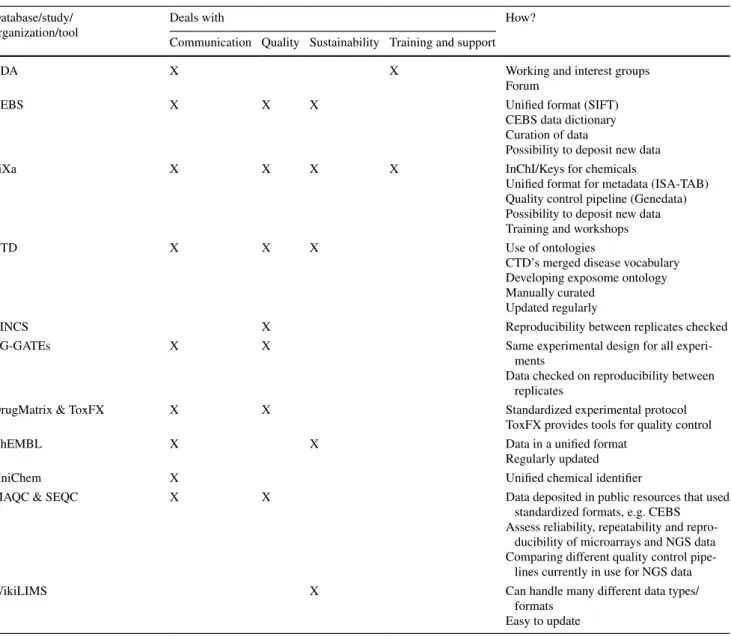
Table 1 summarizes how the different databases, studies, organizations and tools presented at this workshop attempt to deal with the problems outlined above.
Generating a roadmap to enhance interoperability of existing data infrastructures
With a number of issues brought forth during the course of the workshop, any roadmap towards improvement would be a first step. There was agreement that the roadmap should include the structure of the RDA to further advance a number of key issues.
The case study presented at the workshop showed that combining data from different sources increased the accu-racy of predictions in risk assessment. Some of the data resources presented at the workshop are already linked (see Fig. 1). The workshop participants agreed that providing more links between the different resources will facilitate toxicogenomics research.
Table 1 Summary of the databases, studies, organizations and tools presented at the workshop and how they deal with problems regarding com-munication, quality of the data, sustainability and education
Database/study/ organization/tool
Deals with How?
Communication Quality Sustainability Training and support
RDA X X Working and interest groups
Forum
CEBS X X X Unified format (SIFT)
CEBS data dictionary Curation of data
Possibility to deposit new data
diXa X X X X InChI/Keys for chemicals
Unified format for metadata (ISA-TAB) Quality control pipeline (Genedata) Possibility to deposit new data Training and workshops
CTD X X X Use of ontologies
CTD’s merged disease vocabulary Developing exposome ontology Manually curated
Updated regularly
LINCS X Reproducibility between replicates checked
TG-GATEs X X Same experimental design for all
experi-ments
Data checked on reproducibility between replicates
DrugMatrix & ToxFX X X Standardized experimental protocol
ToxFX provides tools for quality control
ChEMBL X X Data in a unified format
Regularly updated
UniChem X Unified chemical identifier
MAQC & SEQC X X Data deposited in public resources that used
standardized formats, e.g. CEBS Assess reliability, repeatability and
repro-ducibility of microarrays and NGS data Comparing different quality control
pipe-lines currently in use for NGS data
WikiLIMS X Can handle many different data types/
formats Easy to update
Fig. 1 Links between the different data sources presented at the workshops. Dashed lines indicate ongoing efforts
Across the existing landscape, resources need to be made easier to find. The workshop participants agreed that there is a need for a web portal that provides links to all databases relevant for toxicogenomics and that gives a description of the information and experimental data that are deposited in each database.
When considering an approach to these issues, it became obvious that any roadmap must be grounded in the needs of potential users. User stories highlighting research currently limited due to a lack of interoperability of data resources would need to be collected. By analysing user stories, more use cases can be defined that are limited by the current sci-entific gaps due to the lack of data exchange. These use cases can be utilized to support the prioritization of steps that need to be undertaken for linking data resources.
Acknowledgments This report is based on the “Workshop on Iden-tifying Opportunities for Global Integration of Toxicogenomics Data-bases”, 26–27 June 2013, hosted at the National Institute of Environ-mental Health Sciences (NIEHS) and sponsored by Research Data Alliance (RDA) Europe (the European Union’s Seventh Framework Programme) and the NIEHS. The paper reflects a consensus view of the participants of the workshop. This work was supported in part by the NIH, National Institute of Environmental Health Sciences. The views in this article are those of the authors and do not necessarily reflect the views of the NIEHS or the European Union. The authors like to thank the other participants of the workshop: Beth Plale (Indi-ana University, USA), Jennifer Fostel (NIEHS, USA), Ugis Sarkans (EMBL-EBI, UK), Caroline Mattingly (North Carolina State Uni-versity, USA), Aravind Subramanian (Broad Institute, USA), Florian Caiment (Maastricht University, The Netherlands), Weida Tong (FDA, USA), Stephen Edwards (EPA, USA), Scott Auerbach (NIEHS, USA) and Anne Hersey (EMBL-EBI, UK).
Conflict of interest The authors declare they have no actual or potential competing financial interests.
Open Access This article is distributed under the terms of the Crea-tive Commons Attribution License which permits any use, distribu-tion, and reproduction in any medium, provided the original author(s) and the source are credited.
References
Benfenati E, Gini G, Hoffmann S, Luttik R (2010) Comparing in vivo, in vitro and in silico methods and integrated strategies for chemical assessment: problems and prospects. Altern Lab Anim 38(2):153–166
Berg N, De Wever B, Fuchs HW, Gaca M, Krul C, Roggen EL (2011) Toxicology in the 21st century—working our way towards a visionary reality. Toxicol In Vitro 25(4):874–881
Blue Ribbon Task Force on Sustainable Digital Preservation and Access (2010) Sustainable economics for a digital planet: ensur-ing long-term access to digital information. In: Rumsey AS (ed) Blue Ribbon Task Force on Sustainable Digital Preservation and Access, p 110
Briggs K, Cases M, Heard DJ et al (2012) Inroads to predict in vivo toxicology—an introduction to the eTOX project. Int J Mol Sci 13(3):3820–3846
Caiment F, Tsamou M, Jennen D, Kleinjans J (2014) Assessing com-pound carcinogenicity in vitro using connectivity mapping. Car-cinogenesis 35(1):201–207
Chambers J, Davies M, Gaulton A et al (2013) UniChem: a unified chemical structure cross-referencing and identifier tracking sys-tem. J Cheminform 5(1):3
Chen MJ, Zhang M, Borlak J, Tong WD (2012) A decade of toxicog-enomic research and its contribution to toxicological science. Toxicol Sci 130(2):217–228
Christensen SW, Brandt CC, McCracken MK (2011) Importance of data management in a long-term biological monitoring program. Environ Manag 47(6):1112–1124
Davis AP, Murphy CG, Saraceni-Richards CA, Rosenstein MC, Wiegers TC, Mattingly CJ (2009) Comparative Toxicogenom-ics Database: a knowledgebase and discovery tool for chem-ical-gene-disease networks. Nucleic Acids Res 37(Database issue):D786–D792
Davis AP, Wiegers TC, Rosenstein MC, Mattingly CJ (2012) MEDIC: a practical disease vocabulary used at the Comparative Toxicog-enomics Database. Database (Oxford) 2012:bar065
Davis AP, Murphy CG, Johnson R et al (2013) The comparative toxi-cogenomics database: update 2013. Nucleic Acids Res 41(Data-base issue):D1104–D1114
Edwards SW, Preston RJ (2008) Systems biology and mode of action based risk assessment. Toxicol Sci 106(2):312–318
European Commission (2007) REACH—Registration, Evaluation, Authorisation and Restriction of Chemicals. http://ec.europa.eu/ enterprise/sectors/chemicals/reach/index_en.htm. Accessed 12 Sept 2013
European Commission (2010a) A digital agenda for Europe. Commu-nication from the Commission
European Commission (2010b) EU Council Directive (76/768/ EEC). http://ec.europa.eu/consumers/sectors/cosmetics/docu- ments/directive/#h2-consolidated-version-of-cosmetics-direc-tive-76/768/eec. Accessed 12 Sept 2013
Fielden MR, Halbert DN (2007) Iconix Biosciences, Inc. Pharmacog-enomics 8(4):401–405
Fostel J, Choi D, Zwickl C et al (2005) Chemical effects in biologi-cal systems–data dictionary (CEBS-DD): a compendium of terms for the capture and integration of biological study design descrip-tion, conventional phenotypes, and ‘omics data. Toxicol Sci 88(2):585–601
Ganter B, Snyder RD, Halbert DN, Lee MD (2006) Toxicogenomics in drug discovery and development: mechanistic analysis of com-pound/class-dependent effects using the DrugMatrix database. Pharmacogenomics 7(7):1025–1044
Gaulton A, Bellis LJ, Bento AP et al (2012) ChEMBL: a large-scale bioactivity database for drug discovery. Nucleic Acids Res 40(Database issue):D1100–D1107
Hartung T (2009) Toxicology for the twenty-first century. Nature 460(7252):208–212
Lamb J, Crawford ED, Peck D et al (2006) The connectivity map: using gene-expression signatures to connect small molecules, genes, and disease. Science 313(5795):1929–1935
Mattingly CJ, McKone TE, Callahan MA, Blake JA, Hubal EA (2012) Providing the missing link: the exposure science ontology ExO. Environ Sci Technol 46(6):3046–3053
National Research Council (NRC) (2007) Toxicity testing in the 21th Century: a vision and a strategy. National Academy Press, Washington
Noriyuki N, Igarashi Y, Ono A, Yamada H, Ohno Y, Urushidani T (2012) Evaluation of DNA microarray results in the Toxicogenomics Pro-ject (TGP) consortium in Japan. J Toxicol Sci 37(4):791–801 Nystrom-Persson J, Igarashi Y, Ito M et al (2013) Toxygates:
interac-tive toxicity analysis on a hybrid microarray and linked data plat-form. Bioinformatics 29(23):3080–3086
Rocca-Serra P, Brandizi M, Maguire E et al (2010) ISA software suite: supporting standards-compliant experimental annotation and enabling curation at the community level. Bioinformatics 26(18):2354–2356
Sansone SA, Rocca-Serra P, Field D et al (2012) Toward interoper-able bioscience data. Nat Genet 44(2):121–126
Shi L, Reid LH, Jones WD et al (2006) The MicroArray Quality Control (MAQC) project shows inter- and intraplatform reproducibility of gene expression measurements. Nat Biotechnol 24(9):1151–1161 Shi L, Campbell G, Jones WD et al (2010) The MicroArray Quality
Control (MAQC)-II study of common practices for the develop-ment and validation of microarray-based predictive models. Nat Biotechnol 28(8):827–838
Sycheva LP, Zhurkov VS, Rakhmanin YA (2013) Actual problems of genetic toxicology. Russ J Genet 49(3):255–262
Wang C, Gong B, Bushel PR et al (2014) The concordance between RNA-seq and microarray data depends on chemical treatment and transcript abundance. Nat Biotechnol 32(9):926–932
Warr W (2009) ChEMBL—an interview with John Overington, team leader, chemogenomics at the European Bioinformatics Insti-tute outstation of the European Molecular Biology Laboratory (EMBL-EBI). J Comput Aid Mol Des 23(4):195–198
Waters M, Yauk C (2007) Consensus recommendations to promote and advance predictive systems toxicology and toxicogenomics. Environ Mol Mutagen 48(5):400–403
Waters M, Stasiewicz S, Merrick BA et al (2008) CEBS—Chemical Effects in Biological Systems: a public data repository integrating study design and toxicity data with microarray and proteomics data. Nucleic Acids Res 36:D892–D900
Woodall GM, Goldberg RB (2008) Summary of the workshop on the power of aggregated toxicity data. Toxicol Appl Pharmacol 233(1):71–75