International Journal of Emerging Technology and Advanced Engineering
Website: www.ijetae.com (ISSN 2250-2459, ISO 9001:2008 Certified Journal, Volume 7, Issue 9, September 2017)
588
Moisture Dependent Electrical Parameter as an Indicator of
Germination of Seed: A Case Study of Aizon Rice Seed
Pooja Mishra
1, Bharat Mishra
2, Vishal Singh Chandel
3, Rajiv Manohar
41,2Department of Physics, MGCG Vishwavidyalaya Chitrakoot, Satna, M. P., India 3Department of Physics, Integral University, Lucknow, U.P., India 4
Department of Physics, Lucknow University, Lucknow, U.P., India
Abstract— The moisture dependent electrical properties of
nutritionally important aizon rice seeds have been reported in the present paper. The dielectric constant, dielectric loss and conductivity have been measured for Indian aizon rice seed over the temperature range 150 C- 450C at varying frequency i.e. from 5 kHz to 10 MHz. The measurements have been carried out using impedance analyser. The electrical properties were found to increase with increase in moisture content. The electrical properties for non-viable seed (dead seed) have also been measured and compared with the properties of viable seeds for different moisture levels. This comparison suggests that dielectric constant could be taken as an indicator of viability of seeds also.
Keywords — Dielectric constant, Dielectric loss, Moisture
content, Germination.
I. INTRODUCTION
Nelson [1] reported the importance of dielectric properties of grains, seeds and their dependence on moisture content because of their application in the moisture content measurement. The moisture content measurement of the seeds is important for the preservation of stored seeds and their protection from insects. This preservation and protection can be achieved by dielectric heating [2]. In view of this therefore a lot of research works have been done on cereals, grains. Factors that affect, the electrical parameters i.e. dialectic constant, dielectric loss and conductivity have been evaluated. Knowledge of these data are also important in various applications like non distractive test of internal fruit quality [3], improvement of germination of seed [4], dielectric cleaning and separation of seeds by seed separator [5] and improvement of nutritional qualities [6].
The Dielectric properties of seeds are also helpful in studying the viable test [7], metabolic mechanism of seed [8], hydration mechanism in seed [9] as well as in the designing of equipments for sensing and monitoring of moisture using electrical methods. The electrical parameters for many agricultural materials are influenced by ionic conductivity [10], and water retention of cell [11].
Aizon rice seeds are the main variety of rice in India. Drying of aizon rice seed to an optimum moisture level is a pre-requisite for their safe quality storage before germination. Therefore present investigations have been undertaken as a comparative study of electrical properties of aizon rice seeds at different moisture level i.e. the dielectric constant (), dielectric loss () and a. c. conductivity
(
0
"
)
, where o permittivity offree space and is angular frequency. Study has also been done to identify the viable and non-viable seeds and to analyze their dependence on moisture level for Indian aizon rice seeds. The measurements have been done in temperature range of 150C to 450C and with the varying frequency from 5 kHz to 10 MHz.
II. MATERIAL AND METHOD
A. Material
The aizon rice seeds were procured from certified seed, sellers of Lucknow, India.
B. Experimental Method
The capacitances (Cp) and dissipation factor (Dp)
measurements have been done with the help of computer controlled impedance /gain phase analyzer (HP 4194 A) in the frequency range of 5 kHz to 10 MHz, using a specially designed open ended coaxial probe for permittivity measurement of agricultural product [12]. The sample holder has been silver plated to reduce dissipation losses. It is calibrated for error removal in measurements using standard liquid C6H6 and CCl4 and the error was found to
be less than 1% .The dielectric parameters and conductivity have been calculated with the help of following formula, they have also been published in our earlier reports [13-19]
1 C
) C C ( '
g 0 P
……….(1)
' " tan
International Journal of Emerging Technology and Advanced Engineering
Website: www.ijetae.com (ISSN 2250-2459, ISO 9001:2008 Certified Journal, Volume 7, Issue 9, September 2017)
589 0 0 0 " C C D C D C p p p …………..(3) and
"
0
………(4)Where Cp is the capacitance of the sample holder with
sample, Co is the capacitance of empty sample holder, Cg is
the geometrical capacitance of sample holder
f
a
b
h
v
q
C
eg
1
.
463
)
/
(
log
2
0where h is height of the sample holder, a and b are the internal and external radii respectively, o is the permittivity
of free space, Dp is the dissipation factor for sample holder
with sample and Do is the dissipation factor for empty
sample holder, Temperature of aizon rice seed has been varied by placing the sample holder in a specially designed double walled glass jacket through which heated oil has been circulated using a refrigerated circulator of Julabo (F-25, Germany). The accuracy of the temperature measurement is ±0.010C. The experiments have been performed at laboratory in Physics Department, Lucknow University, Lucknow, India, during 2016-17.
C. Moisture Content
The most important part of the experiment was to prepare the samples at different moisture levels. The initial percentage of moisture content in 20 grams of sample were determined using a standard oven-drying method in which the moisture contents were determined gravimetrically after drying at for 1 hour [20]. Then by adding distilled water to samples and by frequent agitation to aid uniform distribution of moisture sample was prepared at certain moisture level and sealed with Para film and with a plastic cap in the jar which was stored at 40C for 20 hours [21] to allow complete water uptake and seed moisture equilibration. For moisture level lower than initial level, the sample were dried in open air for several hours to reach the lower desired moisture content. The sample is kept in this condition for about 48 hours before the measurements were made.
The moisture contents of the sample have been determined by approved oven method [22] and we have prepared sample in two parts one of them for measurement of dielectric properties and other is for germination of seed.
D. Germination of seed
We have taken 10 gram of prepared sample having moisture content 5%, 10%, 20%, 30% of dead seeds and normal seeds and kept in the 5 labelled disks and placed it into the seed germinator at 250C temperature for approximate 30 days.
III. RESULTS AND DISCUSSION
The experimentally determined values of dielectric constant (), dielectric loss () and electrical conductivity (σ) of Aizon Rice seed over the frequency range of 5KHz to 10MHz at different discrete frequencies of 5KHz, 10KHz, 50KHz, 100KHz, 500KHz, 1MHz ,5MHz and 10MHz and for moisture levels 5% to 30% between the temperature range 150C to 450C has been analysed in the present paper. The mean temperature coefficient per unit moisture content for dielectric parameter is calculated as per definitions given below:
Mean temperature coefficient per unit moisture content at given frequency
= [(value of parameter at T2 – value of parameter at T1)/
(T2 – T1)]f / (M2 – M1)f
Where, f is a selective frequency, and T, M are the temperature and moisture content, respectively.
A. Frequency dependence
International Journal of Emerging Technology and Advanced Engineering
Website: www.ijetae.com (ISSN 2250-2459, ISO 9001:2008 Certified Journal, Volume 7, Issue 9, September 2017)
[image:3.612.59.278.130.316.2]590
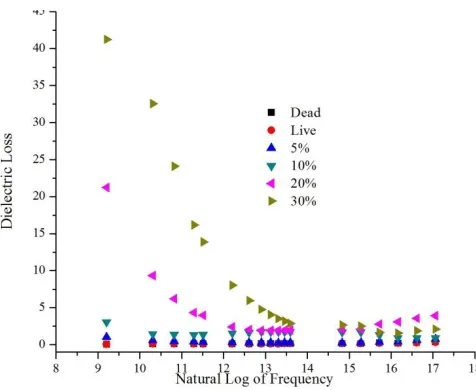
[image:3.612.49.287.345.540.2]Fig. 1: Frequency dependence of dielectric properties of aizon rice at indicated moisture content and 250C.
Fig.-2: Frequency dependence of dielectric properties of aizon rice at indicated moisture content and 250C.
0 i d
0 i d
f
2
"
"
"
As we go towards the lower frequency side the ionic loss (
i/
2
f
0) is inversely proportional to frequency and it becomes almost absent at higher frequencies due to the dipolar energy dissipation, which is the predominant loss and ionic loss become almost absent. The dielectric properties of the seeds and other food materials can be represented as combination of ionic and dipolar polarization losses.The change in dielectric constant and corresponding variation in dielectric loss at indicated frequencies showed that the changes in loss factor are less regular than the change in dielectric constant. The similar behaviour in corn for the moisture range 5 to 10 percent and frequency range 1 to 11 GHz have been reported by Nelson [25]. In other studies [26]on wheat, corn and soybean over the frequency range 1 to 200 MHz range similar types of behaviour has also been reported. The complex dielectric relaxation and dispersion phenomena may be one of the causes in the irregularity in loss factor.
From the figure 1 it can be observed that the curves divers and the separation increases between the curves for different moisture levels as we move to the lower end of the frequency range but no change in the curves have been observed for the dead seed and it shows nearly a straight line.
B. Moisture dependence
[image:3.612.322.557.435.619.2]International Journal of Emerging Technology and Advanced Engineering
Website: www.ijetae.com (ISSN 2250-2459, ISO 9001:2008 Certified Journal, Volume 7, Issue 9, September 2017)
591
Fig.-4: Moisture dependence of dielectric loss of aizon rice seed at indicated frequencies content and 250C temperature.
It is clear from figure 3, figure 4 that the complex dielectric permittivity increases with increase in the moisture content at a given frequency and temperature. It can be observed that the rate of increase in and is high at 5 KHz and 10 KHz. The reason is that water dipoles easily follow the applied field variations, at high moisture level and more water dipoles contribute to the polarization, due to high water mobility. At low moisture content, particularly below 5% both and of the complex permittivity are small because the distance between the water molecule and cell wall is very small and force of attraction is very large in the case of strong bound water state (monolayer). Therefore, the dielectric constant and dielectric loss both are small.
When the moisture content increases beyond 8%, bound water changes state from first (monolayer) to second (multilayer) type and add to the complex permittivity, which shows a sharp increase in and for the moisture content over 10% for all the frequencies. At high moisture content, particularly 30% and frequency below 10 KHz, only live seeds give high values of and . This behaviour could be attributed to transition of bound water state second (multilayer) to third state due to osmotic tension [11]or free state of water at high moisture level. At low frequency the ionic conductivity is high therefore, for such moisture level and low frequencies, the dielectric losses are considerably high.
C. Temperature Dependence
Fig.-5:Temperature dependence of dielectric constant of aizon rice seed at indicated frequencies and moisture content.
Fig.-6: Temperature dependence of dielectric loss aizon rice seed at indicated frequencies and moisture content.
International Journal of Emerging Technology and Advanced Engineering
Website: www.ijetae.com (ISSN 2250-2459, ISO 9001:2008 Certified Journal, Volume 7, Issue 9, September 2017)
592
The nature of the slope of the linear curve decreases with the increasing frequency and is becoming insignificant as we go to the higher end of the frequency range. The similar variations are also seen in a recent study on temperature dependence of dielectric properties of pecan [27]and fruits [28] in the range of 00C – 400C.
The energetic status of the molecules and their aptitude to rotate with electric field [11] changes to the permittivity due to the increase in the temperature and hence change in effective complex permittivity results in increase or the decrease of the water molecules contribution to the polarization of the medium.
As the temperature increases the molecular mobility increases and relaxation frequency, which is strongly related to the molecular mobility, increases [29]. Therefore, the peaks of both, the dielectric constant () and dielectric loss () shifts to higher frequency. Increase in temperature also increases to the ionic conduction, leading to increase in dielectric loss. Thus, as temperature increases both dielectric constant and increases. The increase in dielectric parameters with temperature at lower frequency and higher moisture content indicate the predominant effect of ionic conduction as well as molecular mobility. Therefore, under these conditions rate of increase of and
[image:5.612.325.561.129.305.2] with temperature are high and might be non-linear. The dielectric constant is less affected by the temperature than that of the dielectric loss because of increase in ionic conduction gives additional effect on dielectric loss factor, whereas dielectric constant is less or not at all affected by the ionic conduction.
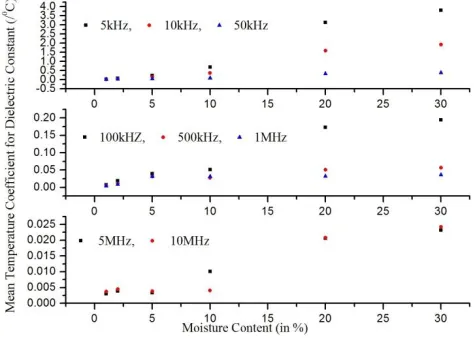
[image:5.612.50.287.490.659.2]Fig.-7: Moisture dependence of mean temperature coefficient for dielectric constant of aizon rice seed at indicated frequencies.
Fig.-8: Moisture dependence of mean temperature coefficient of dielectric loss for aizon rice seed at indicated frequencies.
Figure 7 and figure 8 show mean temperature coefficients for both and increases with increasing moisture content at a given frequency and decreases with increase in frequency. The magnitude of mean temperature coefficient is comparatively high at higher moisture content. This indicates that moisture has an appreciable influence on the mean temperature coefficient. In general it can be assumed that the mean temperature coefficients of dielectric constants are positive at all moisture level and frequencies. These results are in agreement with the finding of Nelson [24], he reported positive temperature coefficients at radio frequencies for wheat, corn and soyabean over temperature range of 20C - 400C.
International Journal of Emerging Technology and Advanced Engineering
Website: www.ijetae.com (ISSN 2250-2459, ISO 9001:2008 Certified Journal, Volume 7, Issue 9, September 2017)
593
D. Dependence of dielectric constant on Germination
[image:6.612.49.295.131.372.2]period
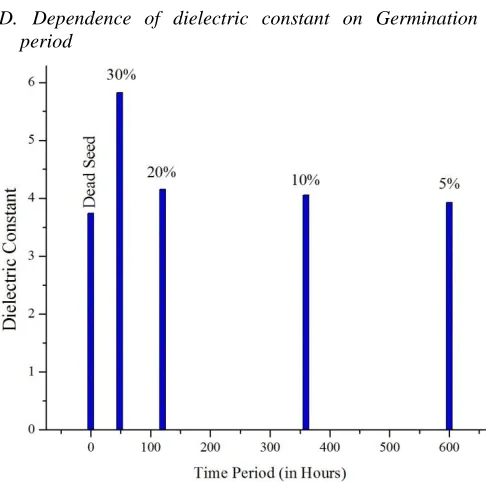
Fig.- 9: Dielectric constant verses time period of germination of aizon rice seed at 250 C temperature.
Figure 9 shows a bar diagram of germination period verses dielectric constant for viable and non viable seeds (dead seed). The observed fact is that for non viable seed the dielectric constant is least in comparison to dielectric constant of viable seed at different moisture content. The germination period is maximum for 5% moisture level and minimum for the 30% moisture level whereas the dielectric constant is extreme for 30% and minimum for 5% .Thus we can conclude that the electrical parameters are definitely an indicator of germination period as well as viability of seeds [30] in the case of aizon rice. A general theory can be derived by studying a number of seeds.
IV. CONCLUSIONS
It can be concluded that moisture level affects the electrical properties of seeds up to a large extent. The electrical properties can be used to measure moisture level, which is directly related with germination of seeds and their viability. Hence we can say that dielectric properties can be used to determine the seed quality and germination period. The outcome of the present investigation may be very useful to enhance the quality of many seeds.
REFERENCES
[1] Nelson S.O., 1977. Use of electrical properties of grain moisture measurement J. Microwave power 12(1): 67-72.
[2] Nelson S.O., Charity L.F., 1972. Frequency dependence of energy absorption by insects and grains in electric fields. Transactions of ASAE 15(6): 1099-1102.
[3] Luigi Ragni, and Libin Zhang, 2001 Project no.18 - based on dielectric properties methodologies to determine nondestructively the fruit internal quality, .
[4] Nelson S.O., Netile. G. E. & Stetson. L. E., 1970 Effect of Radio frequency electrical treatment on germination of vegetable seeds. J. Amer. Soc. Hort. Sci. 95: 359-366.
[5] Kazimirchuk, D.A. and R.K.H. Kahiretidionov, 1995 Dielectric device for sorting and cleaning seed. Sakharnaya Sveka, 6: 12-12. [6] Norris, K.H. and Brant. A.W., 1952. Radio frequency TAS a means
of grading eggs. Food Tech. 6(6): 204-208.
[7] Wendell Q. Sum., 2000 Dielectric relaxation of water and water-plasticized bimolecular in relation to cellular water organization, cytoplasmic viscosity and desiccation tolerance in recalcitrant seed tissues. Plant Physiology 24: 1203-1216.
[8] Hunt, W.H., 1952 A rapid dielectric method for determining the oil content of soyabeans. J. Am. Oil Chem. Soc., 29: 258-261 . [9] Elena. M., Gonalez-Bento and Felix Perez-Garcia., Cryo. 2001
Letter 22:135-140.
[10] Richard Gerhard 1959. Water and ions in metabolism. Plant metabolism: 280-283.
[11] Bennet-Clark. T. A. Plant in Relations to Water and Solute. Plant physiology-A Treatise- volume 2: 105-190.
[12] N. I. Sheen and I. M. Woodhed, 1999. An open ended co-axial probe for permittivity measurement of agriculture product. J. Aggri. Engg. Research. 74:193-202.
[13] P. Mishra; B. Mishra; V.S. Chandel; R. Manohar, 2017. Effect of fungicide treatment on dielectric properties of a coarse- cereal (Indian rice variety), International research journal of engineering and technology, 4(8).
[14] Khan, M. S., Chandel, V. S., Manohar, R., Shukla, J. P., 2012. Plant Breeding and Seed Science, 66, 17.
[15] Chandel, V. S., Khan, M. S., Manohar, R., 2012. Asian Journal of Phy. Sci., 1(2), 1.
[16] Khan, M. S., Chandel, V. S., Manohar, R., 2012. Journal of Sci. and Arts, 2(19), 205.
[17] Chandel, V. S., Rahman, A., Manohar, R., Shukla, J. P., 2012. Walailak Journal of Science and Technology, 9(3), 217.
[18] Chandel, V. S., Rahman, A., Shukla, J. P., Manohar, R., Khan, M. S., 2014. SAMRIDDHI: A Journal of Physical Sciences, Engineering and Technology, 5, 101.
[19] Khan, M. S., Chandel, V. S., 2011. J. Pure Appl. and Ind.Phys. 1(2), 153.
[20] ISTA, 1996. International rules for seed testing. International Seed testing Association. Seed Science and technology 24, supplement. [21] Nelson S. O., and Stetson. L. E., 1976. J. Agri. Engg. Research.
[image:6.612.313.565.156.681.2]International Journal of Emerging Technology and Advanced Engineering
Website: www.ijetae.com (ISSN 2250-2459, ISO 9001:2008 Certified Journal, Volume 7, Issue 9, September 2017)
594 [22] USDA, 1971. Owen methods for determining moisture contents of
Agricultural commodities Equipments manual. GR Instruction, 916-6, Grain Division, Consumer and Market Ser.
[23] Konsta A. A., P. Pissis, A. and Ratkovie , 1996. S. Journal, J. Bio-Physical, 70:1485-1495.
[24] Magario, K. and Yamuna. I., 1988. Temperature dependence of microwave dielectric properties in saline. Denki -Juoho -Tushin Gakkai Gihou. EMCJ 88(11): 21-26.
[25] Nelson S.O., 1979b. Trans Of ASE 22(6): 1451-1457.
[26] Jones, R.N. 1978. Electrical characteristics of corn wheat and soya in the 1-200 MHz range. NBSIR. 78-897, US Department Commerce, Nationals Bureau of Standard, U.S. Department Commerce. [27] Lawrence, K.C., 1992. Temperature Dependence of the dielectric
properties of pecans. Trans. ASAE, 35: 1559-1562.
[28] Sipahioglu, O., 2003. Dielectric properties of vegetables and fruits a function temperature ash and moisture content. J. Food Sci., 68: 234-239.
[29] Barrow, G.M., 1988. Physical Chemistry. 5th Edn.
[30] Repo, 2003. T.,Electrical impedance spectroscopy in relation to seed