i
PROJECT PERFORMANCE DIAGNOSTICS: A
MODEL FOR ASSESSING CONSTRUCTION
PROJECT PERFORMANCE IN NIGERIA.
By
Wasiu Adeniran Bello
BSc (Hons), MSc, MNIQS, RQSA thesis submitted in partial fulfilment of the requirements for the
Degree of Doctor of Philosophy
School of the Built Environment,
University of Salford, Manchester, UK.
ii
Table of Contents
Contents
TABLE OF CONTENTS ... II
LIST OF FIGURES ... X
LIST OF TABLES ... XIV
ACKNOWLEDGEMENT ... XVI
DECLARATION ... XVIII
DEDICATION ... XIX
LIST OF ABBREVIATIONS ... XX
ABSTRACT ... XXI
CHAPTER ONE ... 1
INTRODUCTION ... 1
1.1 Background to the Study ... 1
1.2 Statement of the Research Problem ... 6
1.3 Need for the Research ... 9
1.4 Research Questions ... 11
1.5 Research Aim and Objectives ... 12
1.6 Scope and Delimitation of the Study ... 13
iii
1.8 Significance of the Study ... 19
1.9 Structure of the Thesis ... 20
CHAPTER TWO ... 23
CONSTRUCTION PROJECT PERFORMANCE ... 23
2.1 Overview of the Chapter... 23
2.2 Significance of the Construction Industry ... 23
2.3 Construction Industry and the Nigeria Economy ... 25
2.4 The Construction Project Delivery Process ... 27
2.4.1 Traditional Procurement ... 27
2.4.2 Design and Build Procurement ... 31
2.4.3 Management Procurement ... 33
2.5 Performance of Construction Project ... 34
2.5.1 Success of construction projects ... 35
2.5.2 Critical success factors for construction projects ... 36
2.5.3 Critical success factors for construction projects in Nigeria ... 37
2.6 Theoretical Background to the Study ... 44
2.7 Project Performance Indicators Reviewed from the Literature ... 48
2.8 Performance Indicators for Construction Project ... 51
2.9 Key Performance Indicators: Cost, Time, Quality and, Health and Safety ... 56
2.9.1Cost ... 56
2.9.2 Time... 59
2.9.3 Quality ... 61
2.9.4 Health and Safety ... 63
iv
2.11 Summary of the Chapter ... 67
CHAPTER THREE ... 62
THE DYNAMICS CONSTRUCTION PROJECT PERFORMANCE: FACTORS AND INDICATORS ... 62
3.1Overview ... 62
3.2 Construction Project Performance ... 62
3.3 Critical Success Factors for Construction Projects ... 63
3.4 Review of Critical Success Factors from Literatures ... 64
3.4.1 Methodology of the Review ... 66
3.4.2 Inclusion and Exclusion Criteria ... 66
3.5 Reviewed Critical Success Factors in Construction Project ... 70
3.5.1 Project Management Factors ... 70
3.5.2 Procurement Factors ... 71
3.5.3 Project Participants-Related Factors ... 72
3.5.4 External Factors ... 74
3.5.5 Project-related Factors ... 75
3.6 Performance Forecasting Variables ... 75
3.7 Relationship between Project Performance Indicators ... 79
3.8 The Variables of CSF for Cost, Time, Quality and, Health and Safety ... 81
3.8.1 CSF for Cost Performance Indicator ... 82
3.8.2 CSF for Time Performance Indicator ... 84
3.8.3 CSF for Quality Performance Indicator ... 85
3.8.4 CSF for Health and Safety Performance Indicator ... 87
3.9 Existing Diagnostic Models for Construction project Performance ... 89
v
3.11 Construction Project as a Dynamic System ... 99
3.12 Construction Projects as a Complex System Requiring System Dynamics ... 99
3.13 Complexity and Multiple Interdependence of Construction Projects ... 101
3.13.1 Construction Projects Highly Dynamic ... 102
3.13.2 Construction Projects Involve Multiple Feedback Processes ... 102
3.13.3 Construction Projects Involve Nonlinear Relationships ... 102
3.14 General Application of System Dynamics - Background ... 103
3.15 Application of System Dynamics in Built Environment ... 104
3.15.1 System Dynamics as applied to Construction Project Management ... 105
3.15.2 System Dynamic Model as a Diagnosing Tool ... 106
3.15.3 Use of System Dynamics to Model Forecasting Construction Project Performance ... 107
3.16 Summary of the Chapter ... 111
CHAPTER FOUR ... 113
RESEARCH PARADIGMS AND METHODOLOGY ... 113
4.1 Introduction ... 113
4.2 Aspects of Research ... 114
4.3 Research Philosophy ... 118
4.4 Research Approaches ... 122
4.5 The Research Methods ... 125
4.5.1 The Data Collection Technique ... 126
4.5.2 Data Analysis Tools ... 129
4.5.3 Evaluation of the Data ... 129
vi
4.5.5 Research Design and Strategy ... 130
4.6 Summary of the Chapter ... 134
CHAPTER FIVE ... 135
ANALYSES OF CRITICAL SUCCESS FACTORS INFLUENCE ON KEY PERFORMANCE INDICATORS ... 135
5.1 Introduction ... 135
5.2 Data Analysis and Presentation ... 136
5.2.1 Highest Educational Qualification ... 136
5.2.2 Professional Qualification... 137
5.2.3 Level of Professional Membership ... 138
5.2.4 Professional Experience in Practice ... 139
5.2.5 Status in the Organization ... 139
5.2.6 Age/Experience of Organization in Operation ... 140
5.2.7 Form of Ownership of your Organization ... 141
5.2.8 Size of Organization ... 142
5.2.9 Type of Client ... 142
5.2.10 Position of Organization on Project ... 143
5.2.11Type of Project ... 143
5.2.12 Form of Contract used on Project ... 144
5.2.14 Bidding System adopted for Project ... 145
5.2.15 Delivery Methods for Project ... 146
5.3 AN EVALUATION OF CRITICAL SUCCES FACTORS FOR KEY PERFORMANCE INDICATORS ... 147
5.3.1 STATISTICAL PROCEDURES AND ANALYSES ... 147
vii
5.3.3 Mean Score of Critical Success factors for Time Performance ... 150
5.3.4 Kruskal-Wallis test... 152
5.3.5 Exploratory Factor Analysis of CSFs for Time Performance. ... 153
5.3.6 Labelling the Components ... 161
5.4 Reliability Test for CSF for Cost Performance Indicator ... 164
5.4.1 Mean Score of Critical Success factors for Cost Performance... 166
5.4.2 Kruskal-Wallis test... 169
5.4.3 Exploratory Factor Analysis for Cost Performance. ... 170
5.4.4 Labelling the Components of CSFs for Cost KPI ... 177
5.4.5 Contractor’s Management Capacity ... 177
5.5 Reliability Test for CSF for Quality Performance ... 180
5.5.1 Mean Score of Critical Success factors for Quality Performance ... 182
5.5.2 Kruskal-Wallis test... 185
5.5.3 Exploratory Factor Analysis for Quality Performance. ... 186
5.5.4 Labelling the Components of CSFs for Quality KPI ... 192
5.6 Reliability Test for CSF for Health and Safety ... 195
5.6.1 Mean Score of Critical Success factors for Health and Safety ... 197
5.6.2 Kruskal-Wallis test... 200
5.6.3 Exploratory Factor Analysis. ... 201
5.6.4 Labelling the Components of CSFs for Health and Safety KPI ... 207
5.7 SUMMARY OF FINDINGS ... 209
5.8 DISCUSSION OF FINDINGS ... 210
CHAPTER SIX ... 216
viii
6.1 Overview of the Chapter ... 216
6.2 Data Collection Strategy for Building the Models ... 217
6.2.1 Literature review ... 219
6.2.2Case study projects ... 219
6.2.3 Focus Group Interview ... 219
6.2.4 Questionnaire ... 220
6.3 Modelling Process... 221
6.3.1 Reference Modes and Time Horizon ... 222
6.3.2 Time Horizon Causal loop diagrams and Stock and flow maps ... 223
6.4 Model Structure and Assumptions ... 223
6.5 Model Testing and Validation ... 225
6.5.1 Structure Verification Test of Models ... 225
6.5.2 Dimensional Consistency Test ... 226
6.5.3 Parameter assessment test... 226
6.5.4 Extreme Condition Test ... 227
6.6 KPIs Model in Stock and Flow Diagram ... 227
6.6.1 Cost Performance Forecasting Variables ... 228
6.6.2 Time Performance Forecasting Variables ... 231
6.6.3 Quality Performance Forecasting Variables ... 235
6.6.4 Health and Safety Performance Forecasting Variables ... 238
6.7 The Project Performance Diagnostic Model of the four KPIs ... 242
6.8 Loading the Vensim model for Equation ... 249
6.9 Dynamic Impact of the Four Key Performance Indicators on Construction Project Performance ... 250
ix
6.11 Case Study: Data Collection and Analysis for Model Validation ... 271
6.12 Mathematical Equation for Model Simulation ... 273
6.13 Case Study: Evaluating the Dynamic Performance of Project ... 278
6.14 Further Deductions from the Model Analysis ... 283
6.15 Summary of the Chapter ... 284
CHAPTER SEVEN ... 286
CONCLUSIONS AND RECOMMENDATIONS ... 286
7.1 Introduction ... 286
7.2 Conclusions ... 289
7.3 Contributions of This Research ... 305
7.4 Limitations of This Research ... 309
7.5 Future Directions of Research ... 310
REFERENCES ... 313
x
LIST OF FIGURES
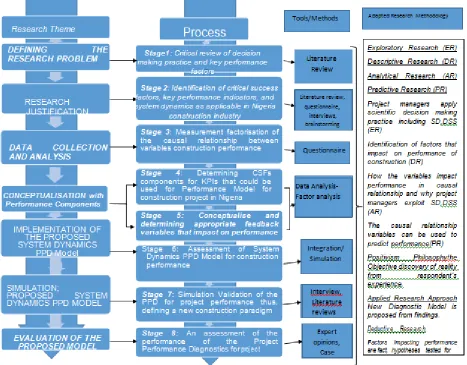
Figure 1. 1: Schematic Stage Breakdown of Research Design ... 14
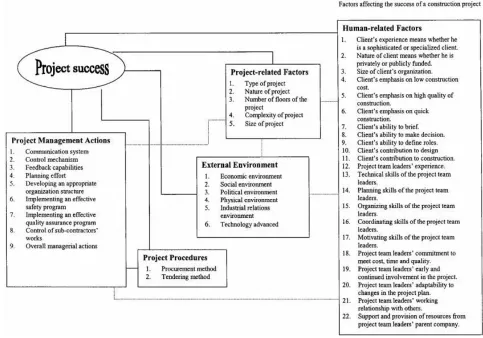
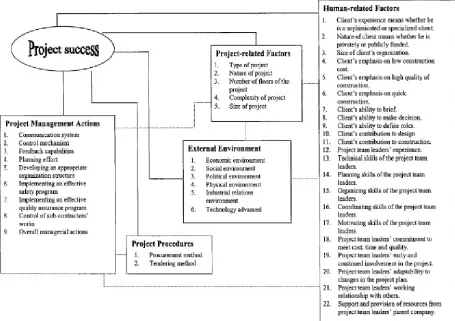
Figure 2. 1: New conceptual framework for factors affecting project success ... 45
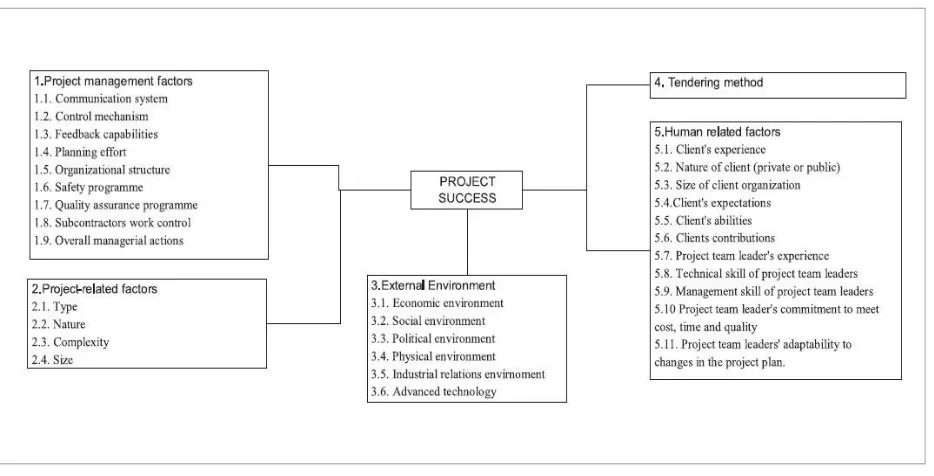
Figure 2. 2: Framework for critical success factors and variables ... 46
Figure 3.1: Framework for factors affecting project success ... 78
Figure 3.2: Success factors, cause and effect relationship ... 79
Figure 3.3: Critical success factors model for constructionprojects ... 93
Figure 3.4: The Relationship between Success Factors, Project Performance & Project Success ... 94
Figure 3. 5: Critical Success Factors and Key Performance Indicators - Theoretical Model. ... 95
Figure 3.6: Conceptual Framework for the Research ... 98
Figure 3.7: Close-loop system (Forrester, 2009) ... 108
Figure 3. 8:. Causal Loop Diagram (Meadows 2012; adapted from Sterman, 2001) .... 109
Figure 3. 9: Causal Loop Diagram for Construction Project Performance ... 110
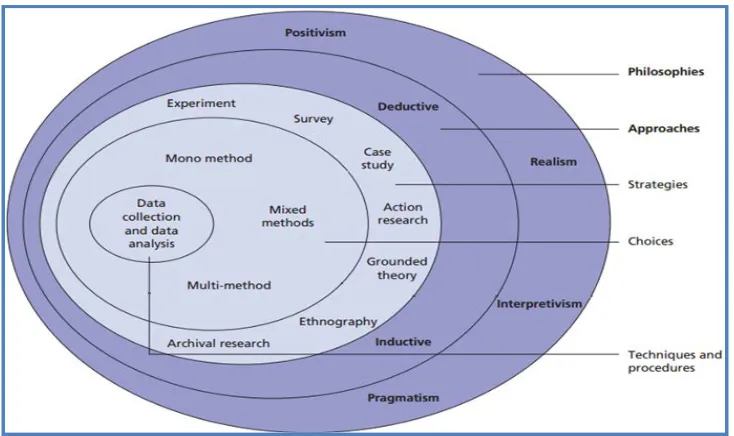
Figure 4. 1: The research ‘onion’ ... 118
Figure 4. 2: Schematic Stage Breakdown of Research Design ... 134
Figure 5. 1: Scree plot of the Eigenvalue for Establishing Time Components ... 155
Figure 5.2: Scree plot of the Eigenvalue for Establishing Cost Components ... 172
Figure 5.3: Scree plot of the Eigenvalue for Establishing Quality Components ... 188
Figure 5.4: Scree plot of the Eigenvalue for Establishing Health and Safety Components ... 203
Figure 6.1: Feedback flow Map for Construction Project Performance ... 223
Figure 6. 2: Causal Loop Diagram for Construction Project Performance ... 224
Figure 6. 3a: System Dynamic Model of Cost Performance of Construction Projects ... 230
Figure 6.4a: System Dynamic Model of Time Performance of Construction Projects ... 234
xi
Figure 6.7: System Dynamic Model of the four KPIs of Time, Cost, Quality, and Health and Safety using their Component Factors for Construction Projects Performance. .... 243 Figure 6.8: Project Performance Diagnostic Model (PPDM) for Construction Project
Performance ... 244 Figure 6.9a: Project Performance Diagnostic Model (PPDM) for Construction Project Performance Dimensional Consistency Check. ... 245 Figure 6. 10: Simulation Run of the Project Performance Diagnostic Model (PPDM) at 100% Extreme test for Construction Project Performance ... 247 Figure 6. 11: Graph of the Simulation Run of the (PPDM) at 100% Extreme Test ... 248 Figure 6.12: Simulation Run of the Project Performance Diagnostic Model (PPDM) at 0% Extreme test for Construction Project Performance ... 248 Figure 6.13 Graph of the Simulation Run of the (PPDM) at 0% Extreme Test ... 249 Figure 6.14: Graph of the Dynamic Impact of Cost@0%& Time@0% on Time
Performance. ... 251 Figure 6.15: Graph of the Dynamic Impact of Cost@0% & Time@0% on Cost
Performance. ... 252 Figure 6. 16: Graph of the Dynamic Impact of Cost@0% & Time@0% on Quality
Performance. ... 253 Figure 6.17: Graph of the Dynamic Impact of Cost@0% & Time@0% on Health/Safety Performance. ... 254 Figure 6. 18: Graph of the Dynamic Impact of Cost@0% & Time@0% on Project
Performance. ... 255 Figure 6. 19: Graph of the Dynamic Impact of Quality@0% on Time Performance. ... 256 Figure 6.20: Graph of the Dynamic Impact of Quality@0% on Cost Performance. ... 257 Figure 6. 21: Graph of the Dynamic Impact of Quality@0% on Quality Performance. . 258 Figure 6.22: Graph of the Dynamic Impact of Quality@0% on Health/Safety
xii
Figure 6.25: Graph of the Dynamic Impact of Health/Safety@0% on Cost Performance ... 262 Figure 6. 26: Graph of the Dynamic Impact of Health/Safety@0% on Quality
Performance ... 263 Figure 6.27: Graph of the Dynamic Impact of Health/Safety@0% on Health/Safety Performance ... 264 Figure 6. 28: Graph of the Dynamic Impact of Health/Safety@0% on Project Performance ... 265 Figure 6. 29: Graphs of the Dynamic Impacts within the two extremes for Time
Performance ... 266 Figure 6. 30: Graphs of the Dynamic Impacts within the two extremes for Cost
Performance ... 267 Figure 6. 31: Graphs of the Dynamic Impacts within the two extremes for Quality
Performance ... 268 Figure 6. 32: Graphs of the Dynamic Impacts within the two extremes for Time
Performance ... 269 Figure 6.33: Graphs of the Dynamic Impacts within the two extremes for Time
Performance ... 270 Figure 6.34: Equation input Window in Vensim showing the Platform for Auxiliary (Rate) ... 275 Figure 6. 35: Equation input Window in Vensim showing the INTEG (Integral) Platform for Level ... 276 Figure 6.36: Graphs of the Dynamic Impacts of Case Study Experiment (Experiment Case%) for Time Performance ... 278 Figure 6. 37: Graphs of the Dynamic Impacts of Case Study Experiment
(ExperimentCase%) for Cost Performance ... 279 Figure 6. 38: Graphs of the Dynamic Impacts of Case Study Experiment
(ExperimentCase%) for Quality Performance ... 280 Figure 6.39: Graphs of the Dynamic Impacts of Case Study Experiment
xiii
Figure 6.40: Graphs of the Dynamic Impacts of Case Study Experiment
xiv
LIST OF TABLES
Table 2. 1: Critical Success Factors by various authors for Nigeria Construction Industry
... 38
Table 3. 1: Review of Critical Success Factors by Different Authors ... 67
Table 4. 1Table 4.1 Classification of different types of Research ... 116
Table 4. 2: Choice of Research Methodology ... 121
Table 4. 3: A Comparison of Nomothetic and Ideographic Methods ... 125
Table 5. 1: Highest Educational Qualification ... 136
Table 5. 2: Professional Qualification ... 137
Table 5. 3: Professional Association ... 137
Table 5. 4: Level of Professional Membership ... 138
Table 5. 5: Post Qualification Professional Experience in Practice... 139
Table 5. 6: Status in the Organization ... 140
Table 5. 7: Age/Experience of Organization in Operation ... 141
Table 5. 8: Form of Ownership of your Organization ... 141
Table 5. 9: Size of Organization ... 142
Table 5. 10: Type of Client ... 143
Table 5. 11: Position of Organization on Project ... 143
Table 5. 12: Type of Project ... 144
Table 5. 13: Form of Contract used on Project ... 145
Table 5. 14: Bidding System adopted for Project ... 145
Table 5. 15: Delivery Methods for Project ... 146
Table 5. 16: Reliability Test Statistics ... 148
Table 5. 17: Mean Score of Critical Success factors Time Performance ... 151
Table 5.18: Summary Item Statistics ... 152
Table 5. 19: Summary Item Statistics ... 154
Table 5. 20: Pattern/Structure Coefficient of Extracted Components of CSF for Time Performance ... 157
xv
Table 5. 22: Pattern and Structure Matrix for CSF with Oblimin Rotation of Four Factor
Solution of Positive and Negative Affect Scale (PANAS) Items ... 160
Table 5. 23: Reliability Test Statistics for CSFs for Cost Indicator ... 165
Table 5. 24: Mean Score of Critical Success factors Cost Performance ... 168
Table 5. 25: Summary Item Statistics ... 169
Table 5. 26: The Kruskal-Wallis Test for Cost KPI ... 170
Table 5. 27: Pattern/Structure Coefficient of Extracted Components of CSF for Cost Performance ... 174
Table 5. 28: Pattern and Structure Matrix for CSF for Cost with Oblimin Rotation of Three Factor Solution of Positive Affect Scale Items ... 175
Table 5. 29: Reliability Test Statistics ... 181
Table 5. 30: Mean Score of Critical Success factors Quality Performance ... 184
Table 5. 31: Summary Item Statistics ... 185
Table 5. 32 The Kruskal-Wallis Test for Cost KPI ... 187
Table 5. 33: Pattern/Structure Coefficient of Extracted Components of CSF for Quality Performance ... 190
Table 5. 34: Pattern/Structure Coefficient of Extracted Components of CSF for Quality Performance ... 191
Table 5. 35: Reliability Test Statistics for CSFs for Health and Safety Indicators ... 196
Table 5. 36: Mean Score of Critical Success factors for Health and Safety Performance ... 199
Table 5. 37: Summary Item Statistics ... 200
Table 5. 38: Kaiser-Meyer-Olkin (KMO) Measure of Sampling Adequacy ... 202
Table 5. 39: Pattern/Structure Coefficient of Extracted Components of CSF for Health and Safety Performance... 205
Table 5. 40: Pattern/Structure Coefficient of Extracted Components of CSF for Health and Safety Performance... 206
xvi
Acknowledgement
All praises, adorations, glorifications and worship belong to Almighty Allah. I praise Him, adore Him and glorify His names for His help, guide and honour throughout my PhD research journey. The journey of a thousand years starts with a step. I am very grateful to many individuals who have been instrumental to this achievement in one way or the other by guidance, inspiration and support on the long journey from the scratch to a complete thesis.
My profound appreciation goes to my supervisor, Professor Arif Mohammed who provided the needed support, guidance and encouragement throughout the course of this dissertation. Much is credited to his tolerance and understanding in making the whole research journey an exciting, rewarding and enjoyable experience. The supports and encouragement from my earlier supervisor, Professor Charles Egbu and my later first supervisor Dr. Yusuf Arayici (now Professor) is acknowledged, their foresight and hindsight direction into the research with simplifying approach to research problems are greatly appreciated. I continue to appreciate my mentor and local supervisor Professor Odusami for being there for me anytime. I sincerely thank you all for making the whole process a successful training exercise.
xvii
I also acknowledge the supports and encouragement from other members of staff at the University of Salford, Greater Manchester. I am particularly indebted to Dr Chaminda Pathirage, Professor McDermott, Dr Jayson Underwood and Dr Paul Tracey. The familial response and support from Jill Porter and Mort Moira is highly appreciated. Dr Musa, University of Salford faith house, I thank you for your familial advice and support when it was becoming tough. Professors Iyagba, Oyediran, Nubi and other senior colleagues, I am grateful for your support. To my colleagues in Environmental Sciences, University of Lagos - too numerous to mention and especially you – as you read this, thank you for your love and well wishes. Very special thanks to my fellow research students, Lukman Toriola-Coker, Mohammed Agbali, Abubakar Ali, my roommate in Manchester Moshood Bello. My UWE friends, Gbenga, Dayo Hafiz, and Bilal. I appreciate your collegiality in making the journey less stressful and highly rewarding.
I acknowledge the prayers and foundation laid by my parents, Mr Sule Gbadegesin Bello and Alhaja Misturah Bello (Nee Hamzah), my siblings, Fatimah, Wahid, Rabiu, Falilah, Ramat and Taofeeq for their love, encouragement and supports throughout the research. My family members Alh. Bashir, Alh. Tajudeen, Brothers Nasir, Ibrahim and their families. I am especially grateful to my wife T. Bolaji Bello, for providing an atmosphere that is supportive of the research process. Much is credited to her understanding, tolerance and prayers. I also appreciate my lovely children; AbdulRahman, Najat, Maryam, ‘A’ishah and Zainab for tolerating my usually long weeks of staying away from home. It would have been much harder to complete the research without the support and cooperation from you all.
xviii
Declaration
I declare that this thesis represents my own work carried out by me, except where due acknowledgement has been made in the text, and that it has not been
submitted either in part or full for any other award than the degree of
Doctor of Philosophy in Built Environment, University of Salford,
Manchester, UK. Materials from other sources have been duly acknowledged and referenced in line with ethical standards.
Signed: WASIU ADENIRAN BELLO
Signature ………
xix
Dedication
Dedicated
To my Children –
AbdulRahmah, Najat, Maryam, ’A’ishat & Zainab To my well wishers,
And
xx
LIST OF ABBREVIATIONS
AVE: Average Variance Extracted
BIM: Building Information Modelling
CFA: Confirmatory Factor Analysis
CSF: Critical Success Factor
DSS: Decision Support System
FM: Facility Management
JCT: Joint Contract Tribunal KPI: Key Performance Indicator
PPD: Project Performance Diagnostics
PPDM: Project Performance Diagnostics Model
PPP: Public-Private-Partnership
SD: System Dynamics
SPSS: Statistical Package for Social Sciences
xxi
ABSTRACT
Construction Projects are notorious for demonstrating poor performance and under achievement as usually indicated by project objectives. Project managers in the construction industry are faced with many research suggestions in literatures to improve performance but there are confusion in the implementation of these recommendations. These could be attributed to dearth of literatures that comprehensively treat critical success factors; CSFs as drivers of key performance indicators; KPIs for assessing construction project performance. KPIs are measure of indication of the workings of CSFs for project performance thus, both are present on projects and useful in exploring the underlying dynamic structure of complexity inherent in construction projects. The study determine CSFs for KPIs of cost, time, quality and health/safety which were used to develop a dynamic Project Performance Diagnostic Model which gives feedback for improved decision making in the context of diagnosing project performance in the Nigeria construction industry.
xxii
the interplay and effects of different CSF components for aiding decision making of project managers.
1
CHAPTER ONE
INTRODUCTION
1.1 Background to the Study
The complicated nature of construction projects has challenged researchers in the construction industry to research, design and develop models and mechanisms to ameliorate the situation and to solving the complexity associated with construction works. Several reports have demonstrated poor performance of construction projects (Davis, Ledbetter and Buratti, 1989; Georgy, Chang and Walsh, 2000; Nitihamyong and Skibniewski, 2006) and under achievement (Carpenter, 1981; Egan, 1998). According to Reichelt and Lyneis (1999) projects are notorious for failing to achieve cost and schedule budgets, in spite of considerable effort over the years toward improving project management for successful performance. There had been lamentations on performance of projects among countries as evidenced by number of failure being reported on construction project performance.
2
successfully adopted a new public management concept. Ahmadu, Aminu and Tukur, (2005) have also lamented the gap in evidenced based research in the Nigeria performance environment. This would mean assessing the Nigeria situation in consideration of its peculiarities to improving project performance relative to what operates in other economies of the world.
Measurement of progressive project performance is very important in predicting the outcome of construction project whether success or failure. Omran, AbdulRahman & Pakir (2012a) submitted that the success of a construction project is dependent on its performance. This performance is measured based on timely completion, expected quality standard, within cost estimates and client satisfaction. Failure to fulfil the project objectives within budget and on time is quite common (Fleming and Koppelman, 2002; Ford and Sterman, 2003; Jung and Kang, 2007) and the two common terms used in measuring performance of construction projects are Critical Success Factors, CSF (Omran,
3
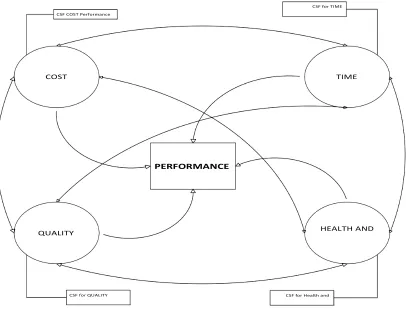
According to BSC Designer Team (2013) CSFs are the critical issues that decide the success of an organization whose high performance or success is important and these are actually the steps taken to succeed while KPIs on the other hand only indicate what the success rate or level is and thus are defined as the tools to measure performance. However, the ultimate means of measuring project success is through the satisfaction of the project client (Leong, et. al, 2014). Achieving client satisfaction depends on how well the projects perform against other key performance indicators such as cost, time and quality (Idrus, et. al, 2011). Wanberg, Harper, Hallowell and Rajendran (2013) emphasised the establishment of the project cost, quality, safety, and duration as the four critical elements that contribute to project success.
4
fare against the aforementioned indicators especially cost, time and quality (Chan, 2003; Omran, et. al., 2012a) and health and safety. Shibani & Arumugam (2015) concluded that certain critical success factors are essential for theperformance of construction projects and these factors also affect the budget, quality and time objectives of project performance. This raise a question on what determines performance and what does the project objectives measure?
The aforementioned approaches assume that a project is controlled once each factor element of the project is understood, this assertion failed to understand the relationship between the factors as they affect the individual objectives and the project performance. According to Rodrigues and Bowers (1996) experience suggests that the interrelationships between the project's components are more complex than is suggested by the traditional work breakdown structure of project network. The emphasis of complexity of construction project is a common knowledge in the industry requiring a concerted effort to resolve. Reichelt and Lyneis (1999) argued that the failure to improve project performance results majorly from models which do not treat projects as the complex dynamic systems which they are including Amaratunga, Sarshar, and Baldry, (2002); Chan and Chan (2004); Tsoukas (2005); Du Plessis and Hoole (2006); Meng, (2011); and the UTS-Helmsman(2016) and thus there is a dearth of research in developing project performance models that captures the dynamics of construction projects. Tupenaite, Kanapeckiene and Naimaviciene (2008) emphasised that construction projects have been more complicated, dynamic with interactive scenario that constantly requires Project managers to speed-up reflective decision-makings on time.
under-5
achievement of the industry. This would include the concern on the different background of the stakeholders involved in delivery process of construction project. Poon (2004) asserted that the situation is generally two-folds: the inefficient construction process and the temporary organizational management structure. Managing the fragmented construction process coupled with the temporary organisational process requires the study of the underlying factors within the structure to improve achievement of success in project performance.
The success of a construction project depends on a number of factors, such as project participants, the competence of project managers, and the abilities of key project members. Construction project decision makers are always concerned about those terms that are used to indicate their performance including budget, schedule, quality, and health and safety which are the outcome of the process and the management structure. A construction project is considered successful if it is handed over to the client on time, within the budget and to the required quality standards (Takim and Akintoye, 2003). Indeed, a project control effort is devoted to ensuring that the actual cost does not deviate from the planned cost and that the project is completed on schedule.
6
with the misconstrued understanding of CSFs and KPIs and the dynamics of their relationship.
Factors that affect decision making are crucial to the planned success of a project thus, understanding critical success factors and their relationship with key performance indicators is a gap in the construction project research and this would enhance decision making particularly on feedback. The effect and interrelationship of these factors are very important in making conclusion on a particular decision to be made. System dynamics as a tool would be appropriated for investigating the interconnected issues of a system due to its ability in providing a holistic view of the system. In their work Bajracharya, Pradhan and Shrestha (2008) posited that the modelling framework provided by system dynamics allowed the integration of the social and ecological processes in order to understand behaviour of complex mountain ecosystem.
Just as a manager modifies the recommended optimal decisions to take care of real life exigencies, a system dynamics model treats optimal decisions as desired values of policy variables and modifies them in the light of local constraints to obtain realistic values of policy variables (Mahanty and Mohapatra, 1994). This research therefore aims to provide a System Dynamic Project Diagnostic Model which will help project managers check feedback on performance of their projects and implement timely corrective action during the duration of the construction phases of building projects in Nigeria.
1.2 Statement of the Research Problem
7
variables that are interrelated in a complex system that critically affect project success. In Nigeria, construction professionals are usually unwary to adopt scientific models that could improve performance as reported in the works of as they are glued to the conventional thump rule in the administration of construction contract (Bello & Odusami; 2008, 2012). This cannot continue as construction projects become more complex and dynamic. General performance of a construction project is affected due to an oversight or failure to take certain decisions and thus; there is limit to what an individual can process within mental model to achieving performance coupled with the misconstrued understanding of CSFs and KPIs and the dynamics of their relationship.
Project performance could mean different things to different people whether in terms of function, aesthetics, attractiveness, profit, sustainability or satisfaction. The list could be endless based on different requirements and objectives. The requirements of construction clients are hinged to the following four key factors: Time, Cost, Quality and Safety Performance. Poon (2004) asserted that inefficient design and construction process are usually criticized as some of the main causes of poor performance, due to fragmentation. Successful project delivery requires the concerted effort of the project team to carry out the various project activities, but it is the project manager who is responsible for orchestrating the whole construction process (Bayliss, 2002).
8
veritable tool for project managers. There is need for a common platform in treating these concepts in the construction world and simplifying management for managers. Providing construction managers with information about and insight into the existing data so as to make decision more efficiently without interruption is a problem during the management of construction process.
The management of project by avoiding failure in time, budget, and other project objectives is paramount on the mind of the project manager. How to analyse the factors of successes and failures of finished projects and how to use the existing data to analyse patterns and feedbacks of underlying relationships for projects are the problems requiring research attention in the industry, thus modelling the CSFs that would enhance decision making for construction project performance.
9 1.3 Need for the Research
Providing construction managers with information and insight into the existing data for efficient decision making without interruption is a problem during the management of construction process which eventually leads to performance failure. According to Chau, Cao, Anson and Zhang (2002) a decision support system is required to assist construction managers in monitoring the construction process in progress. In solving the problem, this research proposes a performance diagnostic framework for timely check within the dynamic of the construction process to assist and support project managers in taking timely decision in the management of the performance of the construction project.
Past studies had established that construction projects failed to keep to project objectives. Existing researches have not been able to exhaust the available research solutions to the problem of poor performance. Available research tools are yet to completely address the failure of the performance of construction projects. This is evident from lamentations on performance of projects from researches that are country specific with evidence of failure being reported on construction project performance. Developing countries including Nigeria have evidence of this with mismanagement and corruption report established on such failed projects. Therefore, many of these countries and particularly Nigeria clamour for improved performance (Ahmadu, et al., 2005; Bello & Odusami, 2008, 2012; National Technical Working Group Report, 2009; Ojeifo and Alegbeleye, 2015; and Budget & National Planning, 2017).
10
situation. The report of Ahmadu, et al., (2005) asserted that there is a yawning gap between theory and evidence in Nigeria. Government plan to improving business environment and promoting digital-led growth would require researches in this area to developing tools that could be used to assess performance which will be useful for project managers of construction facilities. To develop such tools, proper understanding of concepts and terms that will be used in the analyses and modelling of such tools must be established.
The current literature in construction project performance including the works of Humphreys, et al (2004); Mian, et al (2004); and Tsoukas (2005) have not been able to adequately treat the critical success factors as drivers of key performance indicators. The key performance indicators are elements to measure the workings of the CSFs whereas researchers either address CSFs directly for project performance without relating it to KPIs or misconstrue the CSFs as the same as KPI and thus, creating a cloudy situation in the solution that is being proffer to solving the problems in an industry having a complex dynamic system. This confusion was also criticised by Jaafari (2007).
11
and their quantum and also influences the selection of mathematical methods
(Sigitas and Trinkūniene, 2008) and or framework to be adopted.
A performance diagnostic framework will provide information for users to make decisions and do their jobs more effectively. A System Dynamic Project Performance Diagnostic Framework is therefore required and thus proposed as an interactive system that provides the inter-relationship and dependencies of critical success factors in the construction project delivery for the users to have easy access to decision models and data. The user is typically a manager or a professional staff. The system contains models that are used to analyze data through simulation for robust and reliable results.
1.4 Research Questions
In order to tackle the research problem, the following research questions are raised:
1. What are the key success factors having underlying measures that
contribute to timely, safe, quality and cost-effective delivery of construction projects in Nigeria?
2. What underlying relationships exist to determine the component factors
of CSFs for each KPIs in determining construction project performance?
3. How could project variables diagnose the construction process and
predict project performance?
4. What project information model is appropriate for diagnosing
12 1.5 Research Aim and Objectives
The aim of this study is to assess and model successes of finished projects and how to use the existing data to develop a framework based on information developed by actual performances during project executions.
1.5.1Research Aim
To develop a System Dynamic Project Diagnostic Framework, primarily for improved decision making in the context of diagnosing/predicting construction project performance in the Nigeria construction industry.
1.5.2 Research Objectives
1. To investigate critical success factors (CSF) and underlying measures for key performance indicators (KPI) in terms of cost, time, quality and health/safety for construction project performance.
2. To establish component factors of CSFs with their underlying relationship for each KPIs (Cost, Time, Quality, and Health/Safety) for effective project performance.
3. To evaluate the dynamic interrelationship between project variables of CSFs for individual KPI for its suitability as model for construction project performance diagnostic for effective project delivery in Nigeria.
4. To develop and validate a System dynamics Project Performance
13 1.6 Scope and Delimitation of the Study
The research was limited to the construction consultants’ firm and construction managers who have records of their construction activities. Since there are several factors considered for the effective management of a construction projects, the factors considered for this research were those found in literature which were considered by construction participants that were interviewed. The extent of knowledge acquisition was limited by time constraint. It is important to note that the title reflect a broad concept but the focus is limited to the four popular key performance indicators for construction project performance including time, cost, quality, and health and safety.
The construction experience and professional judgment of the construction practitioners who supplied the relevant information can be relied upon and the judgment will be considered to be sound. It was assumed that data on original or initial project cost, schedule and quality which served as basis for developing models were prepared on sound professional logic and were accurate and reliable. Can we possibly model the performance of managers in the construction industry like we see the model analysis of football games in assessing the performance of teams? This is not impossible and of course the future to explore in construction project performance diagnosis.
1.7 Research Approach Methodology
14
[image:36.612.77.544.260.625.2]The study involved the use of literature review, focus group discussions with experts and questionnaire survey for its data collection. Data analyses include statistical analysis with the aid of Statistical Packages for Social Scientists (SPSS) version 24 and dynamic relationship evaluation using a dynamic modelling tool called VENSIM. Figure 1.1 shows a methodological flow chart for the study. Appendix 1 presents a copy of the questionnaire used for data collection. Methodological approaches used in achieving each of thestudy’s objectives are briefly explained in the following sub-sections.
15
The research design flow chart is broken down to different stages of clarity as developed for this research; illustrated in Figure 1.1. The figure itself depicts how the embedded processes that were carried out throughout this study overlap with the research themes in addition to the methods/tools engaged with each stage of the process. The figure also clarifies and demonstrates the research methodology after a comprehensive literature review about the research, adopted research philosophy, approach and method deployed in the study. The different stages are as discussed in the following section.
1.7.1 Research Approach Methodology: Objective One
To investigate critical success factors (CSF) and underlying measures for key performance indicators (KPI) in terms of cost, time, quality and health/safety for construction project performance.
The objective 1 was carried out by exploring CSFs in literatures most of which are addressing project directly and few ones from factor influencing performance of cost, time, quality, and health and safety as KPIs for project performance as conceptualized in this research. The process include:
1) Literature review of relevant literature to identify the critical success factors that enables performance to be achieved through the measure indicated by the KPIs for project performance
2) To achieve a comprehensive collection of the identified factors, a systematic review of literature style was employedwith effort to see to the classification of the CSFs under their individual KPIs which they drive.
16
4) Design of questionnaire from the results of literature review and the interviews for subsequent survey. The questionnaire was pilot tested and administered.
5) The individual KPI of cost, time, quality, and health and safety were separately analysed with descriptivestatistics, reliability and Kruska walis analyses were carried out for the purpose determining the CSFs and data validation.
6) Factor analysis was carried out using SPSS version 24 in order to determine the underlying measures for key performance indicators.
1.7.2 Research Approach Methodology: Objective two
To establish component factors of CSFs with their underlying relationship for each KPIs (Cost, Time, Quality, and Health/Safety) for effective project performance.
Extensive review of literature on CSFs and KPIs as they determine performance of construction projects were carried out with series of focus group discussions used for achieving objective one and through the use of the designed questionnaire. The process of achieving specific objective are as follows:
1) Questionnaires were distributed to solicit the opinion of practitioners and managers on typical project they manage as a case study data.
2) The questionnaires were analysed with the aid of SPSS 24 using various data screening techniques, reliabilityanalysis, Kruskal Wallis test and descriptive statistics.
17
1.7.3 Research Approach Methodology: Objective Three
To evaluate the dynamic interrelationship between project variables of CSFs for individual KPI for its suitability as model for construction project performance diagnostic for effective project delivery in Nigeria
This objective was fulfilled by identifying the factors that were grouped under each components of CSF for KPIs of cost, time, quality, and health and safety. This resulted in each components having their sub-group of the unit CSF as determinedby factor analysis. The process is as follows:
1) Factor analysis were carried which ensure that only relevant factors that hang together were retained for further analysis. The factor analysis has component loading for each of the items. The individual loadings were subsequently used for the weightings of the CSFs under their components for KPIs’ measure for project performance.
2) Based on the confirmatory factor analysis, dynamic relationship between all the CSFs for KPIs was modelled with VENSIM System Dynamic softwareModelling tool. This provided a user interface with loop diagram for stock and flow mathematical representation developed by the interaction of the components of KPIs for project performance. user to carry out simulation a graphical cause and effect diagrams, representing the interplayof various waste preventive measures.
18
1.7.4 Research Approach Methodology: Objective four
To develop and validate a System dynamics Project Performance Diagnostic Model from the KPI models for diagnosing project performance based on the project variables.
As an overarching objective, this was achieved by building on previous objectives. The
following steps were involved:
1. The stock and flow diagram developed with the relevant CSFs which were analysed reliable and suitable for the KPI components was loaded with the CSF variables weighted by the component loadings for simulation as quantitative analysis of the System Dynamic Model - PPDM. Necessary checks to validate the model and its units were carried out before running the simulation using Vensim software. The model simulation was successfully run and confirmed okay.
2. A case study of a building project construction at completion was used to obtain data on theadoption rate of the different critical success factors for key performance indicators for project performance.
3. Relationships between various elements of the model were represented through mathematical equation modelling, which enhances simulation of the dynamic impacts of the different CSFs as they impact one another in the performance model.
19
graphical presentation of results of the simulation. This provides information on decision making on the performance of construction project.
1.8 Significance of the Study
Previous studies on success factors for construction project performance have been carried out at unitary level expressing a relatively narrow idea on the subject of construction performance while success factors of performance indicators are dynamic and multiplicity in nature. This study contributes to existing body of knowledge by building on existing studies, using System Dynamic Modelling, to determine interplay between various CSFs for KPI measures to determine performance of construction project. Project managers seek to find construction research models and systems on how to make effective decisions and forecast the performance of a project with a view of ensuring certainty in the success of construction projects. They are under pressure to meet deadlines for client satisfaction, without sacrificing cost or quality under conditions of uncertainty and complex dynamic systems of construction projects.
20
suggests that better management of these resources become critical to project success.
The successful performance of construction projects is the main concern of managing a project whereas the degree of varying impacts or dynamics critically influence the effectiveness of management. Therefore, managers of construction projects need to understand both the degree of dynamics project success factors for the key performance indicators for effective overall project performance. The need to propose a diagnostic framework in the Nigeria construction industry is novel, and considering the importance of construction performance, project and construction managers require such a system for improving their decision making. The government also clamour for tools to improve performance. Therefore, it is essential to wave flag informing practitioners particularly in Nigeria that there is a way of doing things – ‘a new angle’ – of tackling management of construction projects. The project performance diagnostics is an attempt to simplify the analysing process and to reduce the time needed in thought process, understanding project dynamics and preparing precise reports. The study will be of benefit to the consultants and client organisations including contractors and other parties involved in construction projects. The proposed framework will assist a decision maker (e.g. project manager) in determining a better management plan in order to satisfactorily complete a construction project.
1.9 Structure of the Thesis
21
Chapter 1; Introduction: This chapter introduces the research title with its underlying background of the idea of the knowledge that is being explored in this dissertation. Thus, the research problem, research questions, aim and objectives, scope of the research, significance of the research and the structure adopted in this thesis are discussed.
Chapter 2; Construction Project Performance - a Literature Review: This is a review of literature in construction project performance generally and particularly in Nigeria by looking at literature with a view to establish existing knowledge and develop variables for this research. Therefore, literatures in construction performance were discussed with their critical success factors. The first objective of the dissertation was achieved through these literature reviews with expert panels that are well grounded in Nigeria construction experience as per the research methodology.
Chapter 3, The Dynamics of Construction Project Performance: Factors and Indicators – a second literature review chapter: This chapter explores further the CSFs and KPIs as they are established from literature to clarify their underlying misconceptions and relationship. By exploring relationship between the factors, the need to review literature on complexity of construction projects as requiring system Dynamics as a tool to resolving the construction complexity is explored.
22
Chapter 5, Analyses of Critical Success factors influence on Key Performance Indicators: This chapter presents the analyses of responses and findings from the questionnaire survey to establishing the critical success factors for Key Performance Indicators. Important underlying hypotheses were analyzed in establishing the CSFs for the four KPIs considered in this dissertation that subsequently drive the Project Performance Diagnostic Model.
Chapter 6, Project Performance diagnostics: A System Dynamics Model. This Chapter presents the conceptualization of the System Dynamics Model for the Project Performance Diagnostics tool for the construction industry from the Nigeria perspective as established in the research. It includes the loop diagram of Stock and flow simulation models for the diagnostic tool.
23
CHAPTER TWO
CONSTRUCTION PROJECT PERFORMANCE
2.1 Overview of the Chapter
This chapter presents the review of literatures on construction project performance. The focus of the chapter is on identifying the significance of the construction industry in terms of its contribution to the economy especially, the Nigerian economy, the processes involved in construction project delivery, factors determining project performance and evaluating relationships between project performance indicators. Also, the conceptual framework for this research is presented with the theoretical background and introduction to system dynamics with its application to construction project management.
2.2 Significance of the Construction Industry
24
industry participants like the clients, investors, and contractors operate determine the quality of outputs of the industry.
Major participants in the construction industry are the architects, engineers (civil, mechanical, electrical, acoustic, etc.), cost consultants, management consultants, contractors, subcontractors, construction materials suppliers, clients and users. Depending on the complexity and the contractual arrangement employed on a project, the services of some auxiliary professionals such as lawyers, building finance and insurance agencies, real estate brokers, land developers, etc., are usually required (Isa, et. al., 2013).
25
2.3 Construction Industry and the Nigeria Economy
“When the construction industry prospers everything prospers.” (Haseeb, Lu, Bibi, Dyian & Rabbani, 2011). That is a French dictum which attests to the importance of the construction industry and its contribution to national economies. The prosperity of the industry spells boom for national and international economies as well as the industry participants such as contractors, workers, financiers, designers, etc. The economic impacts of construction industry on national economies can be well felt with increased number of successful projects. A project is said to be successful if the desired objectives set for the project are met within time and budget constraints with minimal or no adverse health, safety and environmental impacts (Haseeb, et. al., 2011). Therefore, all parameters to enhance cost performance should be put in place in other to improve the industry’s contribution to GDP. Since independence, the Nigerian economy has remained narrow, weak and externally-oriented with dependency on primary production activities of agriculture and mining of mainly crude oil and gas. These two sectors of the economy accounts for about 65% of the GDP, over 80% of Nigerian government proceeds, over 90%.of foreign exchange earnings and 75% of employment (NBS, 2011).
26
independence in 1960 and oil boom of the 1970s increased construction activities such that most available construction organizations were “over- stressed”. The problem of high time and cost overruns, low quality and abandonment surfaced and was attributed to poor project conception, careless planning and poor execution. Main causes of cost overruns in Nigeria according to the works of Mansfield, et al., 1994; Elinwa and Buba, 1993; and Okpala and Aniekwu, 1988 include Shortage of materials, Finance and payment for completed works, Poor contract management, Price Fluctuations, Fraudulent practices, Cost of materials, High cost of machineries, Inaccurate estimates leading to delays, Lack of geotechnical studies before starting the construction and delays caused by the involvement of complicated rules.
The contributions of the manufacturing and construction sectors of the Nigerian economy, which have been said to have greater potential for generation of employment opportunities and sustainable foreign exchange earnings and government revenues, account for meagre 4.14 and 2.00% of gross output respectively. This is an indication that the construction sector of the Nigerian economy is still battling with challenges hindering it from reaching its full potential which consequently, limits its contribution to the national gross output (Oluwakiyesi, 2011). The small percentage of foreign exchange earnings and government revenues attributed to the construction industry in Nigeria is not a true reflection of the potential or contributory capacity of the industry to the economic development of the country.
27
architect, quantity surveyor, structural engineer and services engineer (electrical and mechanical). The construction team, on the other hand, usually consists of a major constructor and a number of sub-contractors who are selected on the basis of lump sum competitive tender, undertaken after completion of most of the design activities. (Babatunde, Opawole and Ujaddughe, 2010, Mbamli and Okotie, 2012, Isa, Jimoh and Achuenu, 2013). Therefore, effort directed at growing the construction in Nigeria is, by implication, an effort to grow the national economy as a whole.
2.4 The Construction Project Delivery Process
Procurement is a combination of activities undertaken by a client in bringing about the construction or refurbishment of construction projects. Effective procurement method is usually preceded by devising a project strategy, which involves weighing up the benefits, risks and financial constraints which might confront the project execution and, which eventually will be reflected in the choice of contractual arrangements. In every project, time, cost, and quality performance, among other criteria, in relation to both design and construction of the building, are usually top on the list of considerations in choosing a procurement method. (JCT, 2011). Although every construction project is unique in its own way, the set of procurement methods chosen from, in executing them, remain the same.
The Joint Contract Tribunal (JCT) (2011) divided construction procurement into three (3) broad options namely: Traditional Procurement (Conventional Procurement), Design and Build Procurement, and Management Procurement
2.4.1 Traditional Procurement
28
project brief and calling for tender from interested contractors (Brook, 2004). The contract stage is simply the actual construction of the project and its commissioning. This is usually termed the traditional method of procurement.
The traditional method of project delivery is divided into five (5) detailed stages: Project conception, design, tender, construction and, commissioning. At the project conception stage, construction projects activities start with client’s decision to build. The client, which can be an individual or a corporate organisation, on deciding to invest on a construction project, employs the services of a lead consultant which may be the architect, civil engineer or project manager depending on the scale and type of the proposed project, and discusses the proposals with the lead consultant and subsequently, assemble the design team (Cartlidge, 2009).
What happens at the design stage is simply the preparation of all contract documents, necessary to call for bids from interested contractors, by the appointed designers. Such documents include architectural drawings, engineering drawings, bills of quantities, conditions of contract, specifications, etc. in accordance with the brief submitted by the project client (Cartlidge, 2009).
The next stage on the procurement route, tendering, is mainly focused on the selection of the most qualified contractor to execute the project. This still remains one of the most critical issues to achieve successful project delivery (Bolpagni, 2013). Principles of ‘equal treatment, the principle of non-discrimination, the principle of mutual recognition, the principle of proportionality and the principle of transparency’ are usually taken serious in selecting contractor and the process involved can be outlined as follows:
29
• Invitation to the tender
• Submission of the tender documents by the bidders
• Evaluation of tenders • Selection of contractor
After the contract has been awarded to the chosen contractor, what is left is for the contractor to move into site and commence actual construction activities with the aim of achieving success in terms of quality, cost, time and minimal health, safety and environmental adverse effects. Commissioning and handing over of the completed project is the last phase of construction project deliver process. A construction project can only be termed successful if the handing over is achieved without trading quality for timely completion or cost overruns (Idrus, Sogandi & Husin, 2011).
In Joint Contracts Tribunal Limited (JCT) practice note of 2011, Traditional method of procurement is mainly characterised by the separation of contracting firms from independent client consultant hence, the distinct separation of design process from construction. Also, full documentation is required before tender is invited from interested and qualified contractors.
Traditional method can be in three (3) types – lump sum, measurement and cost reimbursement methods. Irrespective of the type chosen on a construction project, the following are the general characteristics of traditional procurement method:
• Contractors awarded such contract are commonly appointed via
30
• Adequate time is required to prepare full documentation necessary for tendering processes.
• The client, through his appointed consultants, controls design in
accordance with specified quality standards. The contractor is usually free from design responsibility.
• The separate and sequential processes of design and construction usually elongate the project duration.
• A clear but, adjustable in accordance with contractual provisions, budget for the project is usually known from the onset.
• Despite some levels of inflexibility that are usually experienced due to
decision making before the commencement of works, changes and variations are still effected usually, at a price in terms of direct and related costs.
• Appointed consultants manage administrative issues relating to
valuations, payments and other related post-contract management (JCT 2011).
The popular forms of traditional procurement contracts are:
2.4.1.1 Lump Sum Contract
31
quantities’ are priced onthe basis of drawings and another document — usually a specification or work schedules (JCT, 2011).
2.4.1.2 Measurement Contract
In this type of contract, the contract sum is not finalised until the project is completely executed. The contract sum is reached by re-measurement of executed works and valued with previously agreed work rates. This type of contract is usually employed in situations where works cannot, for reasonable reasons, be measured accurately before tenders are invited. This arrangement is also, usually characterised with reasonably complete designs and; a clear and accurate picture of project requirements. There are two (2) variants of this contract one is based on drawings and bills of approximate quantities while the other one is based on drawings and schedule of rates or prices (JCT, 2011).
2.4.1.3 Cost Reimbursement Contracts
This is sometimes referred to as Cost-plus or Prime cost contract. The contract sum is arrived at by adding the prime (actual) costs of labour, plant, materials and other inputs to an amount, previously agreed to by parties to the contract, to cover overheads and profit. The added overheads and profit can be a fixed sum, a percentage, or on some other agreed reimbursement basis. This is a relatively high-risk option for client here the full extent of the work is not known or cannot be designed pre-tender, the use of this method rest on the presence of circumstances that make the adoption of other alternatives difficult (JCT, 2011).
2.4.2 Design and Build Procurement
32
responsibilities of a contractor for a fee, under a contract based on standards provided by the client (JCT, 2011). A single entity may perform all of the design and construction or it may subcontract to other companies and periodic maintenance is commissioned separately or performed by the client (Bolpagni, 2013). The main steps involved are:
• Defining the need to build and the scope of the work;
• Defining the client’s requirements of the technical proposals; • Selecting and inviting bidders to tender;
• The contractor or contractors preparing their technical, scheduled and price proposals;
• Selection and acceptance of a tender which then becomes a contract. A selection criterion, in addition to price, may be also the quality of the design solution (qualifications-based and/or cost-based);
• Design and construction of the building.
The various options of this procurement method available depend on the degree of inclusion of initial design in client’s requirement. The three main (3) types of contracts under this procurement method are:
2.4.2.1 Packaged Deal or Turnkey Contract
33
2.4.2.2 Design and Build Contract
The contract documents for this type of arrangement are written with the contractor’s design obligations relating to the whole of the works in mind. The fundamental difference between this contract type and traditional ‘work and materials’ contracts is in itsexplicit provision for contractor’s design obligations. However, the wording used in describing the contracts which require a material level of design input from the contractor is often the same as in those which are used for a ‘develop and construct’ approach (JCT, 2011).
2.4.2.3 Contractor’s design for specific elements only
Simply, unlike design and build contract, this is traditional ‘work and materials’ contract which include for limited design provision relating to an identified portion of the work (JCT, 2011).
2.4.3 Management Procurement This is broadly divided into two:
2.4.3.1 Construction Management (CM)
In this procurement arrangement, the client still hires a design team to handle the design of the construction project and acontractor to construct but, another party, the construction manager, is hired to manage the overall project. Implementation of the construction is usually carried out either by several subcontractors or trade contractors, in contract with the client only but, under the supervision of the construction management. Contractually, the trade contractors are the client’s risk (Brook, 2004; JCT, 2011
2.4.3.2 Management Contract
34
any default by a works contractor so long as the management contractor is not in default with the particular requirements of the management contract (JCT, 2011; Bolpagni, 2013).
Whichever method is adopted between the two types of construction management, one advantage of the method is the opportunity to experience early starts on large-scale and complex projects (Brook, 2004).
The construction manager monitors of cost, time, quality, safety and other performance parameters of the project but does not take responsibilities for them while the management contractor is responsible for construction methods, quality and cost of constructed projects. The construction manager bares no risk while the management contractor bares risks associated with the delivery of the project (Bolpagni, 2013).
2.5 Performance of Construction Project
35
such as safety, functionality and satisfaction were said to be attracting increasing attention. The uncertainties in budgets, processes and technology that are being faced constantly in construction industry make it dynamic (Chan, et al., 2004). In light of the above quoted authors, it is safe to conclude that the concept of project performance depends on the perspective of the measurer among the project stakeholders. Generally, literatures review shows that construction project performance is measured under the following broad groups: cost, time, quality, health and safety, client satisfaction, environmental factors, productivity, people factors, regular and community satisfaction, and innovation and learning (Chan, 2003; Enshassi, Mohamed, & Abushaban, 2009; Omran, et. al., 2012a; Abdul Rahman & Alzubi, 2015). The most important performance indicator on a project depends on the requirements of the client. Cost, time and quality performance are the major criteria of measuring project success as cost and time overrun on construction project is responsible for abandonment of most construction projects.
2.5.1 Success of construction projects
36
success to suit their requirement and thus, lack of a unique definition of project success (Pinto and Mantel, 1990; Chan, et al.,2004).
In this research, measuring project performance success has been based on appropriate criteria that are majorly embraced in the built environment from previous studies. Sanvido (1992) considered that cost, time and quality are an essential part of these objectives and therefore posited that success of a project is defined as meeting the objectives of the project for a given participant as each participant will have a different point of view. In the report of Chan (2003) in an attempt to develop a framework for measuring success of construction projects, carried out by reviewing eight (8) leading journals on project success, the contents of the ‘golden/iron’ triangle – cost, time and quality, were confirmed as the basic and the most important parameters to measure project success. It was, however established that other indicators such as safety, functionality, satisfaction, environmental performance, etc. are attracting increasing attention. Therefore, this research includes health and safety indicator as part of the objectives of project success.
2.5.2 Critical success factors for construction projects
There are many different factors that influence project performance to varying degrees, with certain factors more critical to a project's success than others. Critical success factors are linked to project success directly (Chan et. al., 2004) yet, project success cannot be measured without key performance indicators such as cost, time, quality and, health and safety performance amongst others (Mahmoud & Scott, 2002; Enshassi, et. al., 2009; Babu, 2015). According to Sanvido et al. (1992) focus on these key factors is important for project managers in order to make reasonable resource allocation.