DEVELOPMENT OF REPETITIVE CURRENT CONTROLLER USING RASPBERRY PI FOR 3 PHASE ACTIVE POWER FILTER FOR NONLINEAR
LOAD IMPROVEMENT
NUR NA’IMAH BINTI SULAIMAN
A report submitted in
fulfilment of the requirement for the award of the Degree of Master of Electrical Engineering
Faculty of Electrical and Electronics Engineering University Tun Hussein Onn Malaysia
ABSTRACT
ABSTRAK
CONTENTS
TITLE II
DECLARATION III
DEDICATION IV
ACKNOWLEDGEMENT V
ABSTRACT VI
CONTENTS VIII
LIST OF TABLES X
LIST OF FIGURES IX
LIST OF SYMBOLS AND ABBREVIATIONS XIV
CHAPTER 1 INTRODUCTION 1
1.1Research Background 1
1.2Problem Statement 2
1.3Research Objective 3
1.4Limitations / Scope of study 3
1.5Outline of the thesis 3
CHAPTER 2 LITERATURE REVIEW 5
2.2 Three phase active power filter 6
2.3 Controller 10
2.4 Raspberry Pi 13
CHAPTER 3 METHODOLOGY 16
3.1 Introduction 16
3.2 Nonlinear Load Design 19
3.3 Three phase APF design 22
3.4 Gate Driver 23
3.5 Repetitive Current Controller Design 25
3.6 Current sensor 27
CHAPTER 4 RESULT AND ANALYSIS 29
4.1 Introduction 29
4.2 Simulation Result and Analysis 30
4.2.1 Linear Load 30
4.2.2 Nonlinear Load 31
4.2.3 Repetitive Controller and PWM 33
4.2.4 Active Power Filter (APF) 35
4.3 Hardware Result and Analysis 38
4.3.1 Linear Load 38
4.3.2 Nonlinear Load 40
4.3.3 Repetitive Controller and PWM 42
4.3.4 APF with structure for Nonlinear system 46
CHAPTER 5 CONCLUSIONS AND RECOMMENDATIONS 50
5.1 Conclusion 50
REFERENCES 52
LIST OF TABLES
2.1 Switching state for three phase inverter 7
2.2 Specification of Raspberry Pi 12
LIST OF FIGURES
1.1 Block diagram of the project 2
2.1 Model of nonlinear load 6
2.2 Model of APF 7
2.3 Active power filter for power distribution system 8
2.4 Low pass filter 10
2.5 Generator of periodic signal 11
2.6 Repetitive controller system 12
2.7 Feedforward repetitive controller 12
2.8 Repetitive current controller 13
2.9 Hardware design of Raspberry Pi 15
3.1 Flowchart on project 16
3.2 Block diagram of the project 17
3.3 Three phase power supply 18
3.4 Linear load design 19
3.5 Nonlinear load design 19
3.6 Universal bridge rectifier 20
3.7 Hardware of nonlinear load 20
3.8 Three phase APF design 21
3.9 Hardware of three phase APF 22
3.10 Schematic diagram of the gate driver circuit 24
3.11 Hardware of gate driver 25
3.12 repetitive current controller for single phase 26
3.13 PWM generator by using relay 27
3.15 Current sensor (SN_ACS712) 28
4.1 Current flow in the system 30
4.2 Voltage and current for linear load 31
4.3 The voltage and current of nonlinear load 32
4.4 Linear load current and nonlinear load current 32
4.5 (a) Supply current, Is; (b) Load current, IL; (c) Compensated current 33
4.6 Current waveform before and after controller 34
4.7 Current waveform after compensation and PWM 34
4.8 APF design 35
4.9 Three phase current after inverter, IA 35
4.10 FFT analysis for current after inverter before filter, IA 36 4.11 Three phase current after inverter after filter, IF 37 4.12 FFT analysis for current after inverter after filter, IF 37
4.13 Three phase current for linear load 38
4.14 Current and voltage for linear load 39
4.15 Three phase current for nonlinear load separated waveform 41 4.16 Three phase current for nonlinear load combined waveform 41
4.17 Modified Load 42
4.18 Simulink for open loop test for Raspberry Pi 43
4.19 Open loop test for Raspberry Pi 43
4.20 Three phase PWM from controller for 50 ms time/div 44 4.21 Three phase PWM from controller for 10ms time/div 44
4.22 Gate driver signal for Phase A 45
4.23 Gate driver signal for Phase B 45
4.24 Gate driver signal for Phase C 46
4.25 Three phase current after APF, IA 47
4.26 Three phase current after APF after filtering, IF 48
LISTOFSYMBOLSANDABBREVIATIONS
APF - Active power filter
LPF - Low pass filter
PWM - Pulse width modulation THD - Total harmonics distortion
MOSFET - Metal oxide semiconductor field effect transistor IGBT - Insulator gate bipolar transistor
FFT - Fast fourier transform
PID - Proportional integral derivative PCB - Printed circuit board
AC - Alternating current
CHAPTER 1
INTRODUCTION
The introduction chapter consists of research background, problem statement, research objectives, limitations or scope of study and lastly the outline of this project report.
1.0 Research Background
+ +
Figure 1.1: Block diagram of the project
Then, the Raspberry Pi board is needed to inject the digital signal to the APF as in Figure 1.1. Raspberry Pi board is a new technology which enables the user to run a program language into it such as Phyton, Scratch, Java, and C+/C++. In this project, the design of the repetitive current controller by using Simulink Matlab software will be downloaded into the Raspberry Pi board.
1.2 Problem Statement
The rectifier which is connected to the resistor will become the source of nonlinear load and as the result, harmonics current will occur [2]. Harmonics have many disadvantages to a system such as power loss where rising heat of the system as well as the system can be damaged [3]. This power loss will make the cost of running this system with nonlinear load likely become higher than usual [4]. In this modern day, the usage of three phase APF is widely used in industry because it can reduce power loss due to switching frequency [5]. But the design of APF cannot stand alone since it must have PWM to control the transistor in order to achieve the desired output. So, this project is mainly for designing the PWM of the APF by using repetitive current controller. Many have used traditional way of controlling such as low cost microcontroller. Even though the cost is cheaper, but the programming part is very tricky, because it has its own programming language. So, without powerful knowledge about programming the microcontroller, the project will become difficult to achieve. This project is important since there are not many people have used Raspberry Pi board as a controller in their
project since it is just launched into the market. So there are limited paper researches about Raspberry Pi.
1.3 Research Objective
The aim of this project is to design the repetitive current controller for 3 phase APF for nonlinear load improvement. There are 3 main objectives to achieve this as proposed below:
(i) To design the repetitive current controller by using Matlab.
(ii) To integrate between Simulink in Matlab and Raspberry Pi controller. (iii) To develop and testing the APF system.
1.4 Limitations / scope of the study
The limitations of the project have been set as below so that the area of project can be focused to achieve the objectives above. The scope of study proposed as below:
(i) Repetitive current controller will be used as the control application for APF mitigation.
(ii) The controller only compensate current for nonlinear load (iii) The controller will be designed by using Simulink in Matlab (iv) Raspberry Pi will be used as the signal generator to APF
1.5 Outline of the thesis
The first chapter is only the introduction of this thesis. The chapter covers the brief idea about the project that has to be done generally.
The second chapter will cover all the literature review about the project that has been done before. It will cover all the fundamental principles, commercial product and the previous work that has been researched on.
Chapter 3 will cover the methodology of this project. The methodology is on the works that must be done in order to achieve the objectives given before.
Chapter 4 covers the results acquired while doing the simulation by using Matlab. Other than that, the results after constructed the circuit physically must be done in this this chapter. Then the analysis will be done based on the results gained.
CHAPTER 2
LITERATURE REVIEW
This chapter will introduce the previous research or works done before about nonlinear load, 3 phase APF, as well as the controller used to compensate the current shortage in the nonlinear system. The research including the usage of Matlab and Raspberry Pi for testing and the results acquired. Other than that, this chapter will emphasize the importance of this project, and the differences between it with other works.
2.1 Nonlinear load
line and distorted. This nonlinearity will decrease the power factor by increasing the total harmonics distortion (THD)[3][9].
[image:16.612.278.394.219.278.2]There is a paper which talked about voltage source nonlinear load and current source nonlinear load [9]. The nonlinear load comes from the rectifier and the resistor-capacitor or resistor inductor. The configuration in this proposal is rectifier with resistor and inductor connected in series as shown in Figure 2.1.
Figure 2.1: Model for nonlinear load [9]
2.2 3 phase active power filter
In this modern day, 3 phase APF has been widely used due to the upgrading system in electric and electronics applications. Many high end applications have been using 3 phase rectifiers such as arc welding, 3 phase ac induction motors are the nonlinear load that will contribute to the non-sinusoidal current. This non-sinusoidal current will generate harmonics in the system and the power quality of the system will reduce [5][10]. So, in order to reduce this harmonics, the 3 phase APF is used.
Figure 2.2: Model of APF
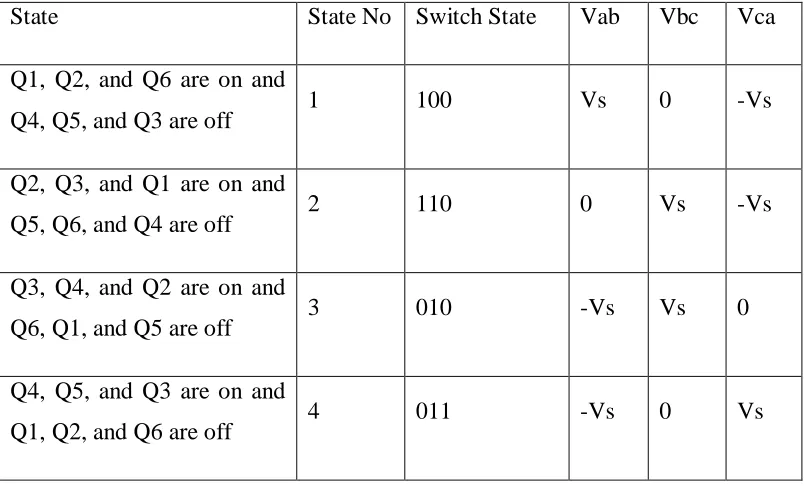
There are also switching state for the inverter as shown in Table 2.1. From the switching state, we can see the switches that are connected in series (Q1 and Q4, Q3 and Q6, Q5 and Q2) cannot be turned on at the same time. If the switches on at the same time, there will be short circuit of the voltage supply, Vs.
Table 2.1: Switching state for three phase inverter
State State No Switch State Vab Vbc Vca
Q1, Q2, and Q6 are on and
Q4, Q5, and Q3 are off 1 100 Vs 0 -Vs
Q2, Q3, and Q1 are on and
Q5, Q6, and Q4 are off 2 110 0 Vs -Vs
Q3, Q4, and Q2 are on and
Q6, Q1, and Q5 are off 3 010 -Vs Vs 0
Q4, Q5, and Q3 are on and
[image:17.612.127.529.472.715.2]Q5, Q6, and Q4 are on and
Q2, Q3, and Q1 are off 5 001 0 -Vs Vs
Q6, Q1, and Q5 are on and
Q3, Q4, and Q2 are off 6 101 Vs -Vs 0
Q1, Q3, and Q5 are on and
Q4, Q6, and Q2 are off 7 111 0 0 0
Q4, Q6, and Q2 are on and
Q1, Q3, and Q5 are off 8 000 0 0 0
[image:18.612.116.546.450.642.2]Then in designing the active power filter, which is the inverter to compensate the current one design is used for APF by using this paper [11] where the APF has been designed for power distribution system as Figure 2.3. This is the general idea of the whole system that can be implemented in this project where there is three phase power supply connected to the nonlinear load, and there is three phase APF to compensate the current distortion in the system.
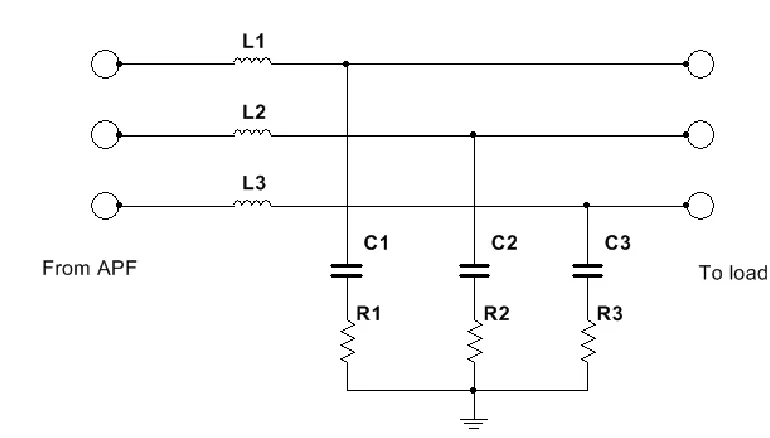
Then, there are cases where the output from the APF has a lot of noise and harmonics due to the fast switching from the MOSFET [9][10][12]. So the low pass filter (LPF) must be added to reduce the noise from the APF. The design for LPF varies depends on the APF and the load used. The traditional way of doing this is to calculate and compensate the individual harmonics separately [8][10][13]. Other than this the compensation can be made by modelling the overall APF by using impedance analysis [9]. The impedance analysis is easier if we use single phase power supply, but in this paper, I have been using three phase power supply and the nonlinearity of the load must be in three phase. So the design as in paper [14][15] have been adapted where the LPF is shown in Figure 2.4. From the figure, the LPF that implemented is inductor, capacitor and resistor with common ground. Other than that, there is LPF which consists of inductor and capacitor only [12] where the switching harmonics currents can be removed from the APF by using this method.
2.3 Controller
Many researches have been done on designing the optimal controller for solving the nonlinear load. There are several controller methods for 3 phase APF such as hysteresis-band PWM current controller, one cycle controller, and lastly the repetitive current controller [1][11][16][17][18][12]. This project will emphasize on repetitive current controller only.
The hysteresis-band PWM current controller used to compensate the harmonics in the circuit research has been done in this paper [12]. In this paper, there are signals from supply voltage which generate three sinusoidal waveforms as reference. Then, there are reference voltage and actual voltage which is used to determine the difference between them. This difference will act as an error and can be compensated by using PI controller. The PI controller will compared the error with the actual voltage to generate current references. The hysteresis-band current controller then is used to generate the pulse for the APF and compensate the current lag.
One cycle current controller has been proposed and researched [1]. This paper is mainly about how to develop one cycle current controller for APF. This paper has two types of unbalanced system which are the unbalanced line voltage and unbalanced nonlinear load. The unbalanced line voltage will still produce the sinusoidal current waveform, but unbalanced nonlinear load will produce the harmonics in line current.
Figure 2.5: Generator of periodic signal
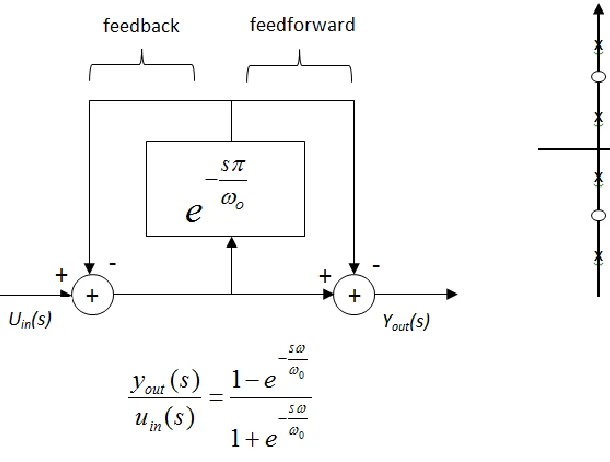
Figure 2.6: Repetitive controller system
[image:21.612.143.501.240.401.2]Figure 2.7: Feedforward repetitive controller
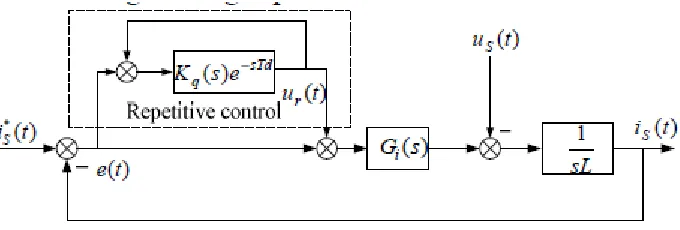
Figure 2.8: Repetitive current controller
2.4 Raspberry Pi
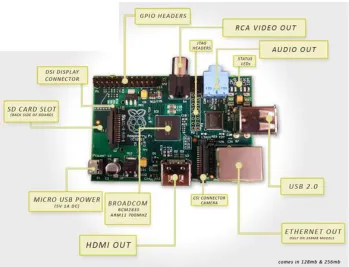
The main focus of running the controller designed is by using Raspberry Pi. This Raspberry Pi has launched its product widely in 2012. It is single-board computer which is only as big as the credit card, developed in United Kingdom by the Raspberry Pi Foundation. Its ultimate purpose in producing this board is as teaching aids in the school for computer science. But this board has stolen much attention from the researchers around the world for its distinguished design and usage, so then it becomes the trend now to develop system by using this Raspberry Pi [21].
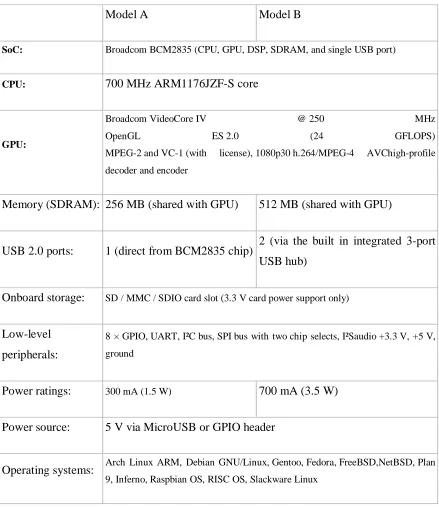
Table 2.2: Specification of Raspberry Pi Retrieve from Wikipedia
Model A Model B
SoC: Broadcom BCM2835 (CPU, GPU, DSP, SDRAM, and single USB port)
CPU: 700 MHz ARM1176JZF-S core
GPU:
Broadcom VideoCore IV @ 250 MHz
OpenGL ES 2.0 (24 GFLOPS)
MPEG-2 and VC-1 (with license), 1080p30 h.264/MPEG-4 AVChigh-profile decoder and encoder
Memory (SDRAM): 256 MB (shared with GPU) 512 MB (shared with GPU)
USB 2.0 ports: 1 (direct from BCM2835 chip) 2 (via the built in integrated 3-port USB hub)
Onboard storage: SD / MMC / SDIO card slot (3.3 V card power support only)
Low-level peripherals:
8 × GPIO, UART, I²C bus, SPI bus with two chip selects, I²Saudio +3.3 V, +5 V, ground
Power ratings: 300 mA (1.5 W) 700 mA (3.5 W)
Power source: 5 V via MicroUSB or GPIO header
Operating systems: Arch Linux ARM, Debian GNU/Linux, Gentoo, Fedora, FreeBSD,NetBSD, Plan 9, Inferno, Raspbian OS, RISC OS, Slackware Linux
HDMI and GPIO pins enable the Raspberry Pi to act as a mini computer. So in this design, the repetitive current controller will be designed on this board and it will shoot the PWM to the APF as mentioned before.
CHAPTER 3
METHODOLOGY
In this chapter, the methodology of the doing this project has been outlined so that the satisfied results will be acquired. This methodology will include methodological approach in detail, data analysis, and lastly the summarization of this chapter.
3.1 Introduction
Figure 3.1: Flowchart on project
Figure 3.2: Block diagram of the project
After the project has been sure to finalize, this project has been started by developing the three phase power supply from the main source. In this stage, step-down transformer is used to step down the voltage source from 240V to 24V as shown in Figure 3.3. The important thing to do this type of wiring is to make sure the safety by using fuse and the grounding to avoid electric shock.
Figure 3.3: Three phase power supply
3.2 Nonlinear load design
Figure 3.4: Linear load design
Then, the nonlinear load is designed as shown in Figure 3.5 which is the rectifier connected to R load. The value of R is same with the linear load design which is 10Ω. This passive components and the bridge rectifier will produce the double hump current waveform instead of pure sine wave. The universal bridge used is three phase rectifier as shown in Figure 3.6.
[image:30.612.150.505.485.677.2]Figure 3.6: Universal bridge rectifier
After designing, the nonlinear load has been fabricated as shown in Figure 3.7. The bridge rectifier by using diode and a 10 ohm resistor has been soldered into the Printed Circuit Board (PCB) board.
[image:31.612.164.493.341.672.2]3.3 3 phase APF design
[image:32.612.137.515.284.438.2]The three phase APF is used to compensate the current in the system. The APF is consists of inverter, which convert DC voltage to AC voltage as shown in Figure 3.8. In this design, the switch used is Insulated Gate Bipolar Transistor (IGBT) and the signal pulse to run this inverter is obtained by the PWM. In this design, IGBT is the best choice over MOSFET because the MOSFET is a voltage control device and a low power capability but fast switching speed, while IGBT has medium power capability and medium switching speed [22].
Figure 3.8: Three phase APF design
Figure 3.9: Hardware of three phase APF
3.4 Gate driver
The gate driver is important in order to amplify the output voltage from the Raspberry Pi to the APF as well as for isolation circuit.
Raspberry Pi and damage the board. Other than that, the series switch in the inverter cannot turn on at the same time because it will short the voltage supply.
Figure 3.10: Schematic Diagram of the gate driver circuit
REFERENCES
[1] T. Jin, K. M. Smedley, and S. Member, “Operation of One-Cycle Controlled Three-Phase Active Power Filter With Unbalanced Source and Load,” vol. 21, no. 5, pp. 1403–1412, 2006.
[2] R. Griñó, R. Cardoner, R. Costa-castelló, S. Member, and E. Fossas, “Digital Repetitive Control of a Three-Phase Four-Wire Shunt Active Filter,” vol. 54, no. 3, pp. 1495–1503, 2007.
[3] M. H. Rashid, Power Electronics Circuits, Devices and Applications, Third Edit. Prentice-Hall International, 2004.
[4] Q.-N. Trinh and H.-H. Lee, “An Enhanced Current Control Strategy for Three- Phase Shunt Active Power Filters with Repetitive Controllers,” 2013, pp. 1543– 1548.
[5] C. Cai, L. Wang, and G. Yin, “A Three-phase Active Power Filter Based on PARK Transformation,” pp. 3519–3522, 2009.
[6] Z. Yao and L. Xiao, “Control of Single-Phase Grid-Connected Inverters With Nonlinear Loads,” IEEE Trans. Ind. Electron., vol. 60, no. 4, pp. 1384–1389, Apr. 2013.
[7] H. Yi, J. Dai, and J. Wu, “Research on modeling and control of the single-phase inverter system with a nonlinear load,” Intell. Control Autom. 2008. …, pp. 6095– 6100, 2008.
[8] W. Abbas and M. Saqib, “Effect of nonlinear load distributions on total harmonic distortion in a power system,” Electr. Eng. 2007. ICEE’07. …, pp. 1–6, Apr. 2007.
[9] K. Dai, C. Liu, K. Duan, and Y. Kang, “Harmonic compensation characteristics of active power filters to nonlinear loads based on impedance analysis,” 2012 IEEE Int. Symp. Ind. Electron., pp. 340–347, May 2012.
[11] W. Jian, H. Na, and X. Dianguo, “A 10KV shunt hybrid active filter for a power distribution system,” 2008 Twenty-Third Annu. IEEE Appl. Power Electron. Conf. Expo., pp. 927–932, Feb. 2008.
[12] J. Ying, L. Xu, B. Lu, and M. Huang, “An improved control method for three-phase active power filter,” in Proceedings of the IEEE 1999 International Conference on Power Electronics and Drive Systems. PEDS’99 (Cat. No.99TH8475), 1999, no. July, pp. 905–909 vol.2.
[13] T. Hornik and Q. Zhong, “H ∞ repetitive current controller for grid-connected inverters stabilizing,” pp. 554–559, 2009.
[14] Y. Y. Tzou, S. L. Jung, and H. C. Yeh, “Adaptive repetitive control of PWM inverters for very low THD AC-voltage regulation with unknown loads,” IEEE Trans. Power Electron., 1999.
[15] T. Hornik and Q. Zhong, “Repetitive current controller for grid - connected inverters.”
[16] G. Escobar, R. E. Torres-Olguin, A. a. Valdez, M. F. Martinez-Montejano, and P. G. Hernandez-Briones, “Practical modifications of a repetitive-based controller aimed to compensate 6l+1 harmonics,” 2008 11th IEEE Int. Power Electron. Congr., pp. 90–95, 2008.
[17] G. Escobar and P. Mattavelli, “A Repetitive-based controller for UPS using a combined capacitor / load current sensing,” pp. 955–961.
[18] G. Escobar, M. Hernández-Gómez, P. R. Martínez, and M. F. Martínez-Montejano Misael F., “A repetitive-based controller for a power factor precompensator,” IEEE Trans. Circuits Syst. I Regul. Pap., vol. 54, no. 9, pp. 1968–1976, 2007.
[19] S. Hara, Y. Yamamoto, T. Omata, and M. Nakano, “Repetitive control system: a new type servo system for periodic exogenous signals,” IEEE Trans. Automat. Contr., vol. 33, no. 7, pp. 659–668, Jul. 1988.
[20] X. Tang, Y. Ma, and H. Li, “Current control of active power filters assisted by repetitive controller,” Proc. - Int. Conf. Intell. Comput. Technol. Autom. ICICTA 2008, vol. 1, pp. 327–331, Oct. 2008.
[21] C. Edwards, “Not-so-humble Raspberry Pi gets big ideas,” Eng. Technol., vol. 8, no. 3, pp. 30–33, Apr. 2013.

![Figure 2.1: Model for nonlinear load [9]](https://thumb-us.123doks.com/thumbv2/123dok_us/8765673.896287/16.612.278.394.219.278/figure-model-for-nonlinear-load.webp)
![Figure 2.3: Active power filter for power distribution system [11]](https://thumb-us.123doks.com/thumbv2/123dok_us/8765673.896287/18.612.116.546.450.642/figure-active-power-filter-power-distribution.webp)