Open Access
Vol 7 No 3Research article
The active metabolite of leflunomide, A77 1726, interferes with
dendritic cell function
Bernhard M Kirsch
1, Maximilian Zeyda
2, Karl Stuhlmeier
3, Johannes Grisar
4, Josef S Smolen
4,5,
Bruno Watschinger
1, Thomas M Stulnig
2,5, Walter H Hörl
1, Gerhard J Zlabinger
6and
Marcus D Säemann
11Department of Internal Medicine III/Clinical Divisions of Nephrology and Dialysis, Medical University of Vienna, Vienna, Austria 2Department of Internal Medicine III/Clinical Divisions of Endocrinology and Metabolism, Medical University of Vienna, Vienna, Austria 3Ludwig Boltzmann Institute of Rheumatology, Vienna, Austria
4Department of Internal Medicine III/Clinical Division of Rheumatology, Medical University of Vienna, Vienna, Austria 5CeMM – Center of Molecular Medicine, Austrian Academy of Sciences, Vienna, Austria
6Institute of Immunology, Medical University of Vienna, Vienna, Austria
Corresponding author: Marcus D Säemann, [email protected]
Received: 16 Dec 2004 Revisions requested: 21 Jan 2005 Revisions received: 23 Feb 2005 Accepted: 1 Mar 2005 Published: 1 Apr 2005
Arthritis Research & Therapy 2005, 7:R694-R703 (DOI 10.1186/ar1727) This article is online at: http://arthritis-research.com/content/7/3/R694 © 2005 Kirsch et al; licensee BioMed Central Ltd.
This is an Open Access article distributed under the terms of the Creative Commons Attribution License (http://creativecommons.org/licenses/by/ 2.0), which permits unrestricted use, distribution, and reproduction in any medium, provided the original work is properly cited.
Abstract
Leflunomide, a potent disease-modifying antirheumatic drug used in the treatment of rheumatoid arthritis (RA), exhibits anti-inflammatory, antiproliferative and immunosuppressive effects. Although most of the beneficial effects of leflunomide have been attributed to its antimetabolite activity, mainly in T cells, other targets accounting for its potency might still exist. Because of mounting evidence for a prominent role of dendritic cells (DCs) in the initiation and maintenance of the immune response in RA, we analyzed the effect of the active metabolite of leflunomide (A77 1726; LEF-M) on phenotype and function of human myleloid DCs at several stages in their life cycle. Importantly, DCs differentiated in the presence of LEF-M exhibited an altered phenotype, with largely reduced surface expression of the critical co-stimulatory molecules CD40 and CD80. Furthermore,
treatment of DCs during the differentiation or maturation phase with LEF-M aborted successful DC maturation. Exogenous addition of uridine revealed that DC modulation by LEF-M was independent of its proposed ability as an antimetabolite. In addition, the ability of DCs to initiate T-cell proliferation and to produce the proinflammatory cytokines IL-12 and tumour necrosis factor-α was markedly impaired by LEF-M treatment. As a molecular mechanism, transactivation of nuclear factor-κB, an transcription factor essential for proper DC function, was completely suppressed in DCs treated with LEF-M. These data indicate that interference with several aspects of DC function could significantly contribute to the beneficial effects of leflunomide in inflammatory diseases, including RA.
Introduction
Dendritic cells (DCs) are the most potent antigen-presenting cells in the immune system [1,2]. They represent a heteroge-neous population of bone-marrow-derived cells located in lym-phoid as well as in nonlymlym-phoid organs. In peripheral tissues these antigen-presenting cells are immature and are function-ally equipped to capture and process antigens. DCs are acti-vated by pathogen-associated microbial patterns such as lipopolysaccharide (LPS) or by proinflammatory cytokines
such as tumour necrosis factor (TNF)-α, and via the interaction of CD40 with its ligand (CD154), which is expressed on acti-vated T cells [3]. Mature DCs possess optimal immunostimu-latory properties because of maximal expression of their antigen-presenting and co-stimulatory molecules (i.e. CD40, CD80 and CD86) and their increased production of proinflam-matory cytokines, including IL-12 and TNF-α. In contrast to the central role played by mature DCs in the initiation of primary immune responses, immature DCs stimulate T-cell responses
only weakly or they may even induce tolerance to potential autoantigens [4].
Pharmacological modulation of DC activation has been dem-onstrated to prevent disease progression in several T-cell-mediated diseases [5], and it may therefore represent a prom-ising approach to specific treatment of immunological disor-ders [6,7]. Notably, corticosteroids and another well known antirheumatic drug, namely gold thiomalate, significantly inhibit DC function, which may contribute to their clinical effective-ness [8,9].
Leflunomide is a novel disease-modifying antirheumatic drug that exerts its effects after metabolic opening of the isoxazole ring via its active metabolite A77 1726 (LEF-M). Its major tar-get is supposed to be dihydro-orotate-dehydrogenase (DHODH) [10], which is a key enzyme in de novo pyrimidine synthesis. Leflunomide reversibly inhibits DHODH activity with subsequent depletion of nucleotides, leading to cell cycle arrest in proliferating lymphocytes [11]. This effect can be reversed to a certain degree by supplying the product of DHODH activity (i.e. uridine) to target cells. Other targets of LEF-M are tyrosine kinases such as Lck or JAK3 in activated T and B cells [12]. Immunosuppressive effects of leflunomide have been described including, inhibition of T cells and anti-body production [13]. Furthermore, it was demonstrated that leflunomide blocks activation of nuclear factor-κB (NF-κB), which is a central proinflammatory transcription factor in sev-eral cell lines [14], and impairs transendothelial migration of peripheral blood mononuclear cells [15]. Apart from its well established beneficial effects in the treatment of rheumatoid arthritis (RA) [16,17], leflunomide is also effective in treatment against chronic allograft rejection [18,19].
DCs were postulated to play an important role in RA patho-genesis because they may perpetuate the disease by present-ing self-antigen(s) [20,21]. Thus, DCs could represent an interesting target for dampening the disease process in RA. Moreover, DCs also play a fundamental role in allograft rejec-tion [22].
Because the effect of leflunomide on DC function has not yet been investigated, we analyzed the influence of leflunomide on the complete DC life cycle in vitro. We found that LEF-M potently altered the phenotype and function of DCs, independ-ent of its well known antimetabolite activity, revealing a novel immunomodulatory activity of this agent with potential clinical implications for the treatment of RA and other immune cell mediated disorders.
Materials and methods
Media and reagents
RPMI 1640 (GIBCO BRL, Grand Island, NY, USA) supple-mented with 2 mmol/l L-glutamine, 100 µg/ml streptomycin, 100 U/ml penicillin and 10% foetal calf serum (FCS; Hyclone,
Logan, UT, USA) was used as culture medium. LPS (Escherichia coli 0111:B4) and uridine were purchased from Sigma Chemie GmbH Co. (Deisenhofen, Germany). Recom-binant human (rh) granulocyte–macrophage colony-stimulat-ing factor (GM-CSF) was obtained from Schercolony-stimulat-ing-Plough (Kenilworth, NJ, USA) and rh-IL-4 was from Strathmann Bio-tech GmbH (Hannover, Germany). Plasma concentrations in RA patients of A77 1726 (the active metabolite of leflunomide) achieved with a leflunomide maintenance dose of 20 mg/day are 46 ± 31 µg/ml (approximately 150 ± 100 µmol/l [23]). Therefore, we chose concentrations from 75 to 150 µmol/l of A77 1726 (kindly provided by Aventis, Strasbourg, France) for DC treatment. A77 1726 is referred to as 'LEF-M' throughout the report. In some experiments uridine was added to test the reversibility of the observed effects of LEF-M.
Cell preparation and culture
Peripheral blood mononuclear cells were obtained from buffy coats of healthy blood donors (courtesy of the Austrian Red Cross) by density gradient centrifugation over Ficoll-Paque PLUS (Amersham Biosciences, Uppsala, Sweden). For isola-tion of monocytes, peripheral blood mononuclear cells were depleted of T cells by sheep erythrocyte-rosetting overnight.
Monocytes (>85% CD14+) were cultured in six-well plates (Costar, Cambridge, MA, USA) at a cell density of 5 × 10⁵ cells/ml in RPMI 1640/10% FCS medium in a humidified atmosphere containing 5% carbon dioxide. For induction of DC differentiation, the culture medium was supplemented for 5 days with 50 ng/ml rh-GM-CSF and 10 ng/ml rh-IL-4. For ini-tation of maturation, LPS (100 ng/ml) was added for an addi-tional 48 hours. For the DC differentiation and maturation experiments, different concentrations of LEF-M, or medium as control, were added either at the beginning of the culture or 6 hours before the addition of LPS. Cell viability was assessed by staining with propidium iodide (PI; Sigma, Saint Louis, MO, USA) and subsequent flow cytometric analysis of the cells.
Surface marker expression
FITC-conjugated anti-CD40 (IgG1; clone LOB7/6) was purchased from Serotec (Oxford, UK). R-PE-labelled anti-major histocom-patibility complex (MHC) class I antibody (IgG2a; clone 3F10) was obtained from Ancell (Bayport, MN, USA).
Morphological cell analysis
Microscopy was performed in parallel to all other analyses to assess cell morphology by using a light optical microscope (Olympus Corporation, Tokyo, Japan).
Assessment of T-cell stimulatory capability
Stimulator cells were irradiated (3000 rad, 137Cs source) and added at increasing cell numbers to 1 × 10⁵ allogeneic T cells in 96-well culture plates in RPMI 1640 medium supplemented with 10% FCS (total volume 200 µl/well). After 4–5 days, cells were pulsed with 1 µCi [3H]thymidine (ICN Pharmaceuticals, Irvine, CA, USA). After another 18 hours the cells were har-vested on glass-fibre filters (Packard, Meriden, CT, USA) and DNA-associated radioactivity was determined using a micro-plate scintillation counter (Packard, Meriden, CT, USA). DNA synthesis was expressed as mean counts/min of triplicate cultures.
Measurement of cytokine production
DCs were differentiated and subsequently activated (100 ng/ ml LPS) in the presence or absence of different concentra-tions of LEF-M. Cell-free supernatants were harvested 48 hours after cell activation. Cytokines were measured by sand-wich enzyme-linked immunosorbent assays using matched pair antibodies. Capture as well as detection antibodies to human IL-12p40 were obtained from R&D Systems (Minneap-olis, MN, USA). Antibodies to human TNF-α were from PharMingen (San Diego, CA, USA). Standards consisted of human recombinant material from R&D Systems. Assays were set up in duplicate and were performed in accordance with recommendations from the manufacturers. The lower limit of detection was 20 pg/ml for all cytokines.
Analysis of nuclear factor-κB activation
NF-κB activation was assessed using an electrophoretic mobility shift assay (EMSA).
Nuclear extracts from DCs were prepared as described pervi-ously [24]. Oligonucleotides resembling the consensus bind-ing site for NF-κB (5'-AGTTGAGGGGACTTTCCCAGGC-3') and activator protein-1 (5'-CGCTTGATGACTCAGCCG-GAA-3') were purchased from Santa Cruz Biotechnology (Santa Cruz, CA, USA). The double-stranded oligonucleotides used in all experiments were end-labelled using T4 polynucle-otide kinase and [γ-32P]-ATP. After labelling, 5 µg nuclear extract was incubated with 120,000 counts/min labelled probe in the presence of 3 µg poly(dI-DCs) at room tempera-ture for 30 min. This mixtempera-ture was separated on a 6% polyacr-ylamide gel in Tris/glycine/EDTA buffer at pH 8.5. Control experiments were performed as described previously [25].
The specificity of NF-κB binding was proven using excess, unlabelled NF-κB probe that competed successfully for NF-κB binding, whereas an unrelated competitor (activator protein-1 oligonucleotide) did not (data not shown).
Statistical analysis
Comparisons were performed using two-tailed paired Stu-dent's t-tests. P < 0.05 was considered statistically significant.
Results
LEF-M impairs differentiation of monocyte-derived dendritic cells
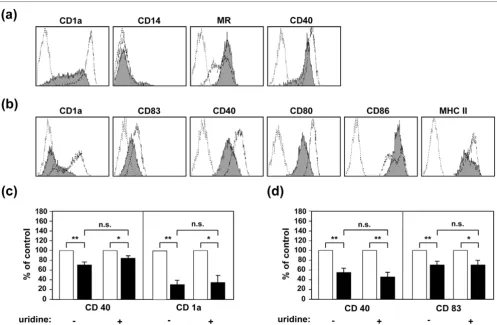
In the first set of experiments we sought to determine whether leflunomide influences the differentation of freshly isolated monocytes into immature DCs. Therefore, we added GM-CSF and IL-4 to freshly isolated monocytes for 5 days to differenti-ate them to immature DCs in the presence or absence of LEF-M. Subsequently, we assessed surface marker expression using fluorescence-activated cell sorting analysis and found profound phenotypical differences between these differenti-ated cells. In the absence of LEF-M we found the typical imma-ture DC phenotype, including high levels of MHC class II and high levels of CD1a, and a distinct profile of co-stimulatory molecules (Fig. 1a); neither the monocyte lineage marker CD14 nor the typical DC maturation marker CD83 was expressed. In contrast, LEF-M-treated DCs exhibited a differ-ent phenotype, with profoundly suppressed surface expres-sion of CD40 and CD80 (Fig. 1a). Importantly, LEF-M markedly prevented the induction of the Langerhans cell-asso-ciated marker CD1a, which is a marker of successful DC dif-ferentiation, whereas expression of CD86, mannose receptor and MHC class I and II molecules remained unaffected by LEF-M (Fig. 1a). Of note, LEF-M did not interfere with the char-acteristic disappearance of the monocyte marker CD14. Fur-thermore, we found no difference in cell viability between LEF-M-treated and control cells, as determined by PI staining. As calculated from eight independent experiments, the percent-age PI positivity was 13.8 ± 4.5% in untreated cells versus 14.3 ± 1.4% in cells treated with 150 µmol/l LEF-M (mean percentage ± standard error of the mean).
Addition of uridine did not rescue DC differentiation from the effects of LEF-M, indicating that inhibition of DHODH did not underlie the observed effects (Fig. 1c).
Importantly, CD83 expression was abolished in LEF-M pre-treated cells (Fig. 1b). Again, addition of uridine did not reverse the inhibitory effects of LEF-M on DC maturation (Fig. 1d). Again, the effects of LEF-M on DC phenotype were not simply a consequence of cellular cytotoxicity, as indicated by unchanged cell morphology and viability (percentage PI posi-tivity was 9.0 ± 2.9% in untreated cells versus 15.3 ± 0.5% in cells treated with 150 µmol/l LEF-M; data expressed as mean percentage ± standard error of the mean, calculated from eight independent experiments).
LEF-M impaires cytokine production and the
allostimulatory capacity of monocyte-derived dendritic cells
DCs are typically characterized by their ability to produce large amounts of predominantly T-cell modulatory cytokines [26]. Analyzing cytokine production of cells that were differentiated and subsequently maturated in the presence of LEF-M, we found dose-dependent inhibition of IL-12p40 and TNF-α and of IL-10 production (Fig. 2).
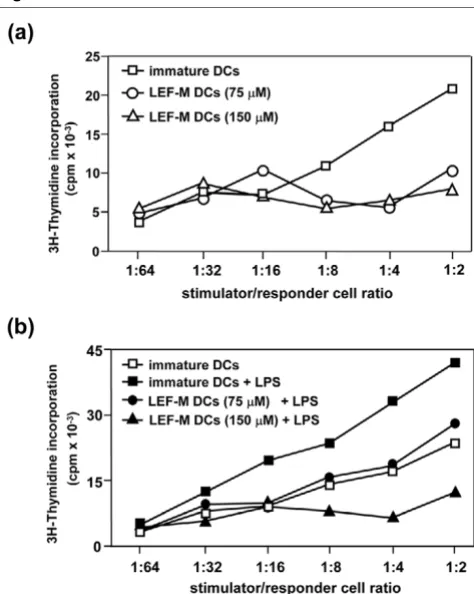
[image:4.612.59.556.94.419.2]In addition to the observed distortion in DC phenotype after differentiation and maturation, we found profound impairment of the allo-stimulatory function of LEF-M pretreated DCs. As Figure 1
LEF-M interferes with DC differentiation
shown in Fig. 3a, immature control DCs exhibited poor stimulatory capacity of allogeneic T-cells. DCs differentiated in the presence of LEF-M were even less potent stimulators in the mixed leukocyte culture (Fig. 3a). LPS exposure dramati-cally increased the stimulatory capability of control DCs, but DCs differentiated in the presence of LEF-M and subsequently exposed to an activation stimulus were as ineffective as imma-ture control DCs in supporting T-cell proliferation (Fig. 3b).
LEF-M interferes directly with maturation of dendritic cells
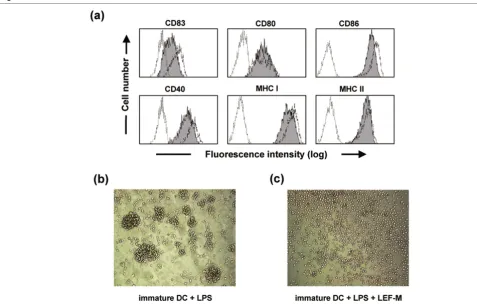
We then analyzed whether LEF-M affects DC maturation when the drug was added to immature DCs (i.e. after completion of DC differentiation). Although immature control DCs responded readily, with increased expression of co-stimulatory and antigen-presenting molecules, LEF-M markedly interfered with the activation-induced upregulation of CD40 and CD86 but not that of CD80 (Fig. 4a). Importantly, neo-expression of CD83 – an indicator of proper DC maturation [27] – was sig-nificantly impaired in LEF-M-treated DCs (Fig. 4a). A further striking feature of mature DCs is the development of promi-nent cell clusters a few hours after addition of the maturation stimulus. On analyzing LEF-M-treated DCs, we detected com-plete abrogation of this clustering response (Fig. 4b,c). Another typical hallmark of mature DCs is their exceptional T-cell stimulatory capacity. As shown in Fig. 5, mature DCs exhibited optimal T-cell stimulatory capability. In contrast, the presence LEF-M solely during the maturation period of already
differentiated DCs abrogated their stimulatory capacity in a concentration-dependent manner.
Effect of LEF-M on nuclear factor-κB activation in dendritic cells
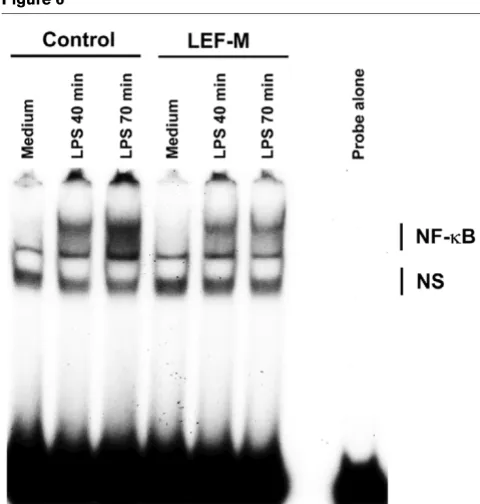
[image:5.612.317.554.92.389.2]Activation of the transcription factor NF-κB is essential for DC function [28,29]. DCs readily respond to diverse stimuli such as microbial products, cytokines and tissue damage, all of which converge on the NF-κB pathway [30]. Our findings of an impaired DC function in LEF-M-treated cells prompted us to analyze the effect of LEF-M on the activation of this central transcription factor in DCs. As shown in Fig. 6, employment of electrophoretic mobility shift assays revealed a clear time-dependent increase in nuclear binding of the NF-κB consen-sus site upon LPS stimulation in DCs. The specificity of NF-κB Figure 2
LEF-M abrogates cytokine production in DCs
LEF-M abrogates cytokine production in DCs. Dendritic cells (DCs) were differentiated and subsequently activated (100 ng/ml lipopolysac-charide [LPS]) in the presence or absence of the indicated concentra-tions of the active metabolite of leflunomide (LEF-M). Cell-free supernatants were collected 48 hours after addition of LPS and then analyzed using enzyme-linked immunosorbent assay. Shown are mean percentage of control responses ± standard error of the mean for IL-12, tumour necrosis factor (TNF)-α and IL-10, calculated from at least 10 independent experiments. Student's t-tests were calculated for control DCs versus LEF-M-treated DCs. *P < 0.05, **P < 0.01. Mean cytokine levels (± standard deviation) in stimulated control cultures were 793 ± 343 pg/ml (IL-10), 23.6 ± 7.6 ng/ml (IL-12) and 2.9 ± 1.1 ng/ml (TNF-α).
Figure 3
DCs differentiated in the presence of LEF-M exhibit reduced T-cell stim-ulatory capacity
binding was indicated by competition with unlabelled probe and an unrelated competitor (activator protein-1 oligonucle-otide; data not shown). Strikingly, treatment of immature DCs with LEF-M profoundly suppressed nuclear translocation of NF-κB in LPS-stimulated DCs after both 40 and 70 min (Fig. 6).
Discussion
This study reveals a novel aspect of the immunomodulatory action of leflunomide, namely the profound interference of LEF-M (A77 1726) with DC function. Using human monocyte-derived DCs as a model system, we demonstrated that LEF-M disrupts differentiation of DCs from uncommitted monocytic precursor cells, resulting in maturation-insensitive DCs. Fur-thermore, we showed that the maturation process of uncom-mitted immature DCs was markedly impaired by LEF-M. The metabolite LEF-M differentially affected the expression of critical surface molecules, inhibited the production of proin-flammatory cytokines and, at the functional level, profoundly
impaired the T-cell stimulatory capacity of DCs. As a molecular basis for the ability of LEF-M to interfere with several aspects of DC function, the activation-driven nuclear transmigration of the essential transcription factor NF-κB was markedly impaired by LEF-M. These findings have substantial implica-tions for our understanding of the effects of leflunomide as a disease-modifying antirheumatic drug, because the initiation of an immune response critically depends on proper DC tion. Furthermore, interference with DC maturation and func-tion could also be involved in the beneficial effects of leflunomide on chronic allograft rejection [18], which is not shared by most other currently used immunosuppressive drugs such as calcineurin inhibitors.
[image:6.612.57.534.92.396.2]The observation that DCs could play a pivotal role in the for-mation and maintenance of joint inflamfor-mation in RA [31] was confirmed by the finding reported by Balanescu and cowork-ers [32] of a correlation between co-stimulatory molecule expression of synovial DCs and disease activity in RA patients. Figure 4
Treatment with LEF-M during maturation of immature DCs leads to a differentially affected phenotype
Moreover, mature DCs might be central in the development of perivascular aggregates in synovial inflammation areas, the formation of organized lymphoid structures, and in the perpet-uation of inflammatory and erosive activity [20,21]. Although there is sufficient evidence for an impact of leflunomide on synoviocytes, chondrocytes and osteoclasts [33-36], our data suggest that the potent inhibition of DC function by LEF-M might contribute to the beneficial effects of leflunomide treat-ment in patients with RA.
Exposure of DCs to LEF-M led to an alteration in the surface marker profile. Our findings concerning the impact of LEF-M on critical co-stimulatory molecules might be especially important in RA because the expression level of co-stimulatory molecules on DCs correlates with disease activity in patients with RA [32]. Another important finding in the present study was the observed disruption by LEF-M of the DC differentiation process. Interestingly, neo-expression of CD1a – the classic Langerhans cell-associated marker – was strongly inhibited in LEF-M-treated DCs. This finding is accordance with observations of significant efficacy of lefluno-mide in psoriasis [37], in which CD1a is highly overexpressed in involved skin [38]. Importantly, CD14 – a classic monocyte/ macrophage marker – was downregulated, indicating that LEF-M does not subvert the DC differentiation programme toward macrophages as has been shown for IL-6, IL-10 and corticosteroids [39,40].
A central observation in our study was the functional alteration of DCs differentiated in the presence of LEF-M; these cells exhibited a marked reduction in their T-cell stimulatory capac-ity upon activation. These data indicate that LEF-M, by block-ing the differentiation of monocytic precursors into mature DCs, potentially impairs proper DC function and might therefore modulate immune responsiveness against potential autoantigens and other antigens. Our finding of markedly decreased production of TNF-α and IL-12 by LEF-M-treated DCs, in conjunction with insufficient co-stimulatory molecule expression of DCs, may be of interest for further DC studies with LEF-M, because recent reports demonstrated this pheno-type to be potentially tolerogenic [41,42].
[image:7.612.56.296.85.286.2]Interestingly, we found the effects of LEF-M on DCs to be mediated independent of its inhibition of DHODH. As shown for several other leflunomide-mediated effects on other cell types, such as osteoclasts in the RA joint [43], memory T-cell lines in an autoimmune encephalomyelitis model [44] and in articular chondrocytes [34], or on functional effects such as repression of viral replication [45,46], the inhibitory effects of LEF-M in the present study are clearly independent of pyrimi-dine synthesis.
Figure 5
Functional impairment of DCs matured in the presence of LEF-M
[image:7.612.315.555.89.341.2]Functional impairment of DCs matured in the presence of LEF-M. Imma-ture dendritic cells (iDCs) were exposed to lipopolysaccharide (LPS; 100 ng/ml) in the absence or presence of the indicated concentrations of the active metabolite of leflunomide (LEF-M). Then, the cells were extensively washed, irradiated (3000 rad) and subsequently co-cultured with 1 × 10⁵ purified allogeneic T cells at the indicated ratios. DNA syn-thesis was assessed after 5 days and was measured in triplicate. The standard deviation of triplicates was generally below 20%. The data shown are expressed as mean counts/min (cpm) of four independent experiments.
Figure 6
LEF-M suppresses LPS-induced NF-κB activation in DCs
The transcription factor NF-κB plays a decisive role in proper DC function. NF-κB translocation is essential to the ability of mature DC to present antigen to naïve T cells [28,29]. Recently reported data demonstrate that LEF-M inhibits
TNF-α-induced NF-κB activation in several cell lines [14,47]. Inter-estingly, we found a profound suppression of NF-κB transac-tivation in activated DCs by LEF-M. These results are in accordance with our findings showing impaired expression of maturation markers and reduced allo-stimulatory capacity of leflunomide-treated DCs, because selective inhibition of
NF-κB activity has been shown to impair maturation of DCs [48]. Our findings concerning cytokine production are also consist-ent with NF-κB inhibition, because the human IL-12 promoter contains crucial NF-κB binding sites and TNF-α production is also NF-κB dependent [49]. Although the mechanisms under-lying this profound NF-κB inhibitory activity of LEF-M on DCs are currently unknown, it is tempting to speculate that lefluno-mide may interfere with phosphorylation/dephosphorylation events in the LPS-triggered signalling program. Apart from the possibility that LEF-M might directly induce the transcription of distinct IκB family members, LEF-M could also induce particu-lar phosphatases to inhibit the IκB-inactivating kinase IKK. Fur-thermore, recent studies have shown that leflunomide acts at the level of IκB-α phosphorylation via interference with IKK-α activation, ultimately leading to defective IκB-α phosphoryla-ton. Although further studies are required to unravel the detailed molecular mechanisms of suppressed NF-κB transac-tivation in LEF-M-treated DCs, our findings indicate that
NF-κB inhibition is a central feature of the molecular actions of LEF-M on DCs.
Importantly, the results from the present study were obtained with monocyte-derived DCs generated from healthy volunteers. Hence, further studies will be necessary to clarify the effects of LEF-M on peripheral and synovial DCs in exper-imental models of arthritis and on DCs obtained from RA patients. Nevertheless, our finding of DC inhibition induced by LEF-M reveals a novel view of the disease-modifying effects of this drug, which appear to act on both T cells and DCs. In fact, the involvement of DC–T cell interactions in the pathways leading to and perpetuating RA and the effects of inhibiting this process are supported by recent findings on the signifi-cant clinical effects of interference with CD80/86–CD28 co-stimulation [50].
Conclusion
The present study shows that monocyte-derived DCs are sen-sitive targets of LEF-M, possibly by inhibitory effects on NF-κB. DCs are affected by LEF-M at all major stages in their life cycle, ultimately leading to an impairment in DC function. In addition to a direct inhibitory action on specific T-cell responses, modulation of the immune system may therefore also be explained through the effects of leflunomide on DCs rendering these cells less able to support immunoinflammatory responses. Thus, the versatile role played by leflunomide as an
immunomodulatory agent in vitro and in vivo is further sup-ported by its effect on DCs. These findings reveal a novel mode of action of the active leflunomide metabolite during induction of cellular immune responses, which may contribute to the clinical effectiveness of leflunomide in diseases that involve exaggerated immune responsiveness.
Authors' contributions
BK performed all flow cytometric and proliferation experi-ments, wrote the draft version of the manuscript and compiled the figures. MZ performed the uridine experiments. KS per-formed the electrophoretic mobility shift assays. JG analyzed the statistical data. JSS provided substantial input into the study design and helped in writing the manuscript. BW helped with statistical analysis and with finalizing the manuscript. WHH provided substantial input into the study design and helped with finalizing the manuscript. TMS was involved in all phases of the experimental process. GJZ performed the cytokine measurements. MDS designed the experiments, con-trolled all experimental steps and finalized the manuscript. All authors read and approved the final manuscipt.
Acknowledgements
We thank Bianca Weissenhorn and Margarethe Merio for expert techni-cal assistance.
This study was supported in part by grants of the Austrian Jubilee Fund (ÖNB 10282; to MDS), the Austrian Science Fund (P16788-B13; to TMS) and the Center of Molecular Medicine, a basic research institute within the companies of the Austrian Academy of Sciences (to TMS and JSS).
References
1. Steinman RM: The dendritic cell system and its role in immunogenicity. Annu Rev Immunol 1991, 9:271-296. 2. Banchereau J, Steinman RM: Dendritic cells and the control of
immunity. Nature 1998, 392:245-252.
3. Banchereau J, Bazan F, Blanchard D, Briere F, Galizzi JP, van Kooten C, Liu YJ, Rousset F, Saeland S: The CD40 antigen and its ligand. Annu Rev Immunol 1994, 12:881-922.
4. Jonuleit H, Schmitt E, Steinbrink K, Enk AH: Dendritic cells as a tool to induce anergic and regulatory T cells. Trends Immunol 2001, 22:394-400.
5. Thompson AG, Thomas R: Induction of immune tolerance by dendritic cells: implications for preventative and therapeutic immunotherapy of autoimmune disease. Immunol Cell Biol 2002, 80:509-519.
6. Roelen DL, Schuurhuis DH, van den Boogaardt DE, Koekkoek K, van Miert PP, van Schip JJ, Laban S, Rea D, Melief CJ, Offringa R, et al.: Prolongation of skin graft survival by modulation of the alloimmune response with alternatively activated dendritic cells. Transplantation 2003, 76:1608-1615.
7. Menges M, Rossner S, Voigtlander C, Schindler H, Kukutsch NA, Bogdan C, Erb K, Schuler G, Lutz MB: Repetitive injections of dendritic cells matured with tumor necrosis factor alpha induce antigen-specific protection of mice from autoimmunity. J Exp Med 2002, 195:15-21.
8. Wang ZY, Morinobu A, Kawano S, Saegusa J, Wang B, Kumagai S: Gold sodium thiomalate suppresses the differentiation and function of human dendritic cells from peripheral blood monocytes. Clin Exp Rheumatol 2002, 20:683-688.
10. Davis JP, Cain GA, Pitts WJ, Magolda RL, Copeland RA: The immunosuppressive metabolite of leflunomide is a potent inhibitor of human dihydroorotate dehydrogenase. Biochemis-try 1996, 35:1270-1273.
11. Fairbanks LD, Bofill M, Ruckemann K, Simmonds HA: Importance of ribonucleotide availability to proliferating T-lymphocytes from healthy humans. Disproportionate expansion of pyrimi-dine pools and contrasting effects of de novo synthesis inhibitors. J Biol Chem 1995, 270:29682-29689.
12. Xu X, Williams JW, Bremer EG, Finnegan A, Chong AS: Inhibition of protein tyrosine phosphorylation in T cells by a novel immu-nosuppressive agent, leflunomide. J Biol Chem 1995, 270:12398-12403.
13. Siemasko KF, Chong AS, Williams JW, Bremer EG, Finnegan A: Regulation of B cell function by the immunosuppressive agent leflunomide. Transplantation 1996, 61:635-642.
14. Manna SK, Aggarwal BB: Immunosuppressive leflunomide metabolite (A77 1726) blocks TNF-dependent nuclear factor-kappa B activation and gene expression. J Immunol 1999, 162:2095-2102.
15. Grisar J, Aringer M, Koller MD, Stummvoll GH, Eselbock D, Zwolfer B, Steiner CW, Zierhut B, Wagner L, Pietschmann P, et al.: Leflu-nomide inhibits transendothelial migration of peripheral blood mononuclear cells. Ann Rheum Dis 2004, 63:1632-1637. 16. Smolen JS, Kalden JR, Scott DL, Rozman B, Kvien TK, Larsen A,
Loew-Friedrich I, Oed C, Rosenburg R: Efficacy and safety of leflunomide compared with placebo and sulphasalazine in active rheumatoid arthritis: a double-blind, randomised, mult-icentre trial. European Leflunomide Study Group. Lancet 1999, 353:259-266.
17. Emery P, Breedveld FC, Lemmel EM, Kaltwasser JP, Dawes PT, Gomor B, Van Den Bosch F, Nordstrom D, Bjorneboe O, Dahl R, et al.: A comparison of the efficacy and safety of leflunomide and methotrexate for the treatment of rheumatoid arthritis. Rheumatology (Oxford) 2000, 39:655-665.
18. Hardinger KL, Wang CD, Schnitzler MA, Miller BW, Jendrisak MD, Shenoy S, Lowell JA, Brennan DC: Prospective, pilot, open-label, short-term study of conversion to leflunomide reverses chronic renal allograft dysfunction. Am J Transplant 2002, 2:867-871.
19. Williams JW, Mital D, Chong A, Kottayil A, Millis M, Longstreth J, Huang W, Brady L, Jensik S: Experiences with leflunomide in solid organ transplantation. Transplantation 2002, 73:358-366. 20. Thomas R, MacDonald KP, Pettit AR, Cavanagh LL, Padmanabha J, Zehntner S: Dendritic cells and the pathogenesis of rheuma-toid arthritis. J Leukoc Biol 1999, 66:286-292.
21. Santiago-Schwarz F, Anand P, Liu S, Carsons SE: Dendritic cells (DCs) in rheumatoid arthritis (RA): progenitor cells and solu-ble factors contained in RA synovial fluid yield a subset of myeloid DCs that preferentially activate Th1 inflammatory-type responses. J Immunol 2001, 167:1758-1768.
22. Morelli AE, Thomson AW: Dendritic cells: regulators of alloim-munity and opportunities for tolerance induction. Immunol Rev 2003, 196:125-146.
23. Schmidt A, Schwind B, Gillich M, Brune K, Hinz B: Simultaneous determination of leflunomide and its active metabolite, A77 1726, in human plasma by high-performance liquid chromatography. Biomed Chromatogr 2003, 17:276-281. 24. Johnson DR, Levanat S, Bale AE: Direct molecular analysis of
archival tumor tissue for loss of heterozygosity. Biotechniques 1995, 19:190-192.
25. Stuhlmeier KM, Tarn C, Csizmadia V, Bach FH: Selective sup-pression of endothelial cell activation by arachidonic acid. Eur J Immunol 1996, 26:1417-1423.
26. Everson MP, McDuffie DS, Lemak DG, Koopman WJ, McGhee JR, Beagley KW: Dendritic cells from different tissues induce pro-duction of different T cell cytokine profiles. J Leukoc Biol 1996, 59:494-498.
27. Zhou LJ, Tedder TF: Human blood dendritic cells selectively express CD83, a member of the immunoglobulin superfamily. J Immunol 1995, 154:3821-3835.
28. Pettit AR, Quinn C, MacDonald KP, Cavanagh LL, Thomas G, Townsend W, Handel M, Thomas R: Nuclear localization of RelB is associated with effective antigen-presenting cell function. J Immunol 1997, 159:3681-3691.
29. Yoshimura S, Bondeson J, Foxwell BM, Brennan FM, Feldmann M: Effective antigen presentation by dendritic cells is NF-kappaB
dependent: coordinate regulation of MHC, co-stimulatory mol-ecules and cytokines. Int Immunol 2001, 13:675-683.
30. Koski GK, Lyakh LA, Cohen PA, Rice NR: CD14+ monocytes as dendritic cell precursors: diverse maturation-inducing path-ways lead to common activation of NF-kappab/RelB. Crit Rev Immunol 2001, 21:179-189.
31. Pettit AR, Thomas R: Dendritic cells: the driving force behind autoimmunity in rheumatoid arthritis? Immunol Cell Biol 1999, 77:420-427.
32. Balanescu A, Nat R, Regalia T, Radu E, Bojinca V, Ionescu R, Pre-descu V, Popescu E, Predeteanu D: Correlation between the immunophenotypical presentation of dendritic cells and the clinical response to anti-rheumatic treatment in rheumatoid arthritis. Rom J Intern Med 2003, 41:255-267.
33. Burger D, Begue-Pastor N, Benavent S, Gruaz L, Kaufmann MT, Chicheportiche R, Dayer JM: The active metabolite of lefluno-mide, A77 1726, inhibits the production of prostaglandin E(2), matrix metalloproteinase 1 and interleukin 6 in human fibrob-last-like synoviocytes. Rheumatology (Oxford) 2003, 42:89-96. 34. Palmer G, Burger D, Mezin F, Magne D, Gabay C, Dayer JM,
Guerne PA: The active metabolite of leflunomide, A77 1726, increases the production of IL-1 receptor antagonist in human synovial fibroblasts and articular chondrocytes. Arthritis Res Ther 2004, 6:R181-R189.
35. Cutolo M, Sulli A, Ghiorzo P, Pizzorni C, Craviotto C, Villaggio B: Anti-inflammatory effects of leflunomide on cultured synovial macrophages from patients with rheumatoid arthritis. Ann Rheum Dis 2003, 62:297-302.
36. Urushibara M, Takayanagi H, Koga T, Kim S, Isobe M, Morishita Y, Nakagawa T, Loeffler M, Kodama T, Kurosawa H, et al.: The antirheumatic drug leflunomide inhibits osteoclastogenesis by interfering with receptor activator of NF-kappa B ligand-stimulated induction of nuclear factor of activated T cells c1. Arthritis Rheum 2004, 50:794-804.
37. Kaltwasser JP, Nash P, Gladman D, Rosen CF, Behrens F, Jones P, Wollenhaupt J, Falk FG, Mease P: Efficacy and safety of leflu-nomide in the treatment of psoriatic arthritis and psoriasis: a multinational, double-blind, randomized, placebo-controlled clinical trial. Arthritis Rheum 2004, 50:1939-1950.
38. Cauli A, Pitzalis C, Yanni G, Awad M, Panayi GS: CD1 expression in psoriatic and rheumatoid arthritis. Rheumatology (Oxford) 2000, 39:666-673.
39. Buelens C, Verhasselt V, De Groote D, Thielemans K, Goldman M, Willems F: Interleukin-10 prevents the generation of dendritic cells from human peripheral blood mononuclear cells cultured with interleukin-4 and granulocyte/macrophage-colony-stim-ulating factor. Eur J Immunol 1997, 27:756-762.
40. Chomarat P, Banchereau J, Davoust J, Palucka AK: IL-6 switches the differentiation of monocytes from dendritic cells to macrophages. Nat Immunol 2000, 1:510-514.
41. Van Parijs L, Perez VL, Biuckians A, Maki RG, London CA, Abbas AK: Role of interleukin 12 and costimulators in T cell anergy in vivo. J Exp Med 1997, 186:1119-1128.
42. Penna G, Adorini L: 1 Alpha, 25-dihydroxyvitamin D3 inhibits differentiation, maturation, activation, and survival of dendritic cells leading to impaired alloreactive T cell activation. J Immunol 2000, 164:2405-2411.
43. Kobayashi Y, Ueyama S, Arai Y, Yoshida Y, Kaneda T, Sato T, Shin K, Kumegawa M, Hakeda Y: The active metabolite of lefluno-mide, A77 1726, inhibits both the generation of and the bone-resorbing activity of osteoclasts by acting directly on cells of the osteoclast lineage. J Bone Miner Metab 2004, 22:318-328. 44. Korn T, Magnus T, Toyka K, Jung S: Modulation of effector cell functions in experimental autoimmune encephalomyelitis by leflunomide: mechanisms independent of pyrimidine depletion. J Leukoc Biol 2004, 76:950-960.
45. Schlapfer E, Fischer M, Ott P, Speck RF: Anti-HIV-1 activity of leflunomide: a comparison with mycophenolic acid and hydroxyurea. Aids 2003, 17:1613-1620.
46. Waldman WJ, Knight DA, Lurain NS, Miller DM, Sedmak DD, Wil-liams JW, Chong AS: Novel mechanism of inhibition of cytome-galovirus by the experimental immunosuppressive agent leflunomide. Transplantation 1999, 68:814-825.
48. Yoshimura S, Bondeson J, Brennan FM, Foxwell BM, Feldmann M: Role of NFkappaB in antigen presentation and development of regulatory T cells elucidated by treatment of dendritic cells with the proteasome inhibitor PSI. Eur J Immunol 2001, 31:1883-1893.
49. Murphy TL, Cleveland MG, Kulesza P, Magram J, Murphy KM: Reg-ulation of interleukin 12 p40 expression through an NF-kappa B half-site. Mol Cell Biol 1995, 15:5258-5267.