Nursing Dissertations (PhD) School of Nursing
Summer 6-7-2019
Factors Associated with Dietary Patterns for Stroke
Prevention among Young Adult African Americans
Stacy Perrin
Follow this and additional works at:https://scholarworks.gsu.edu/nursing_diss
This Dissertation is brought to you for free and open access by the School of Nursing at ScholarWorks @ Georgia State University. It has been accepted for inclusion in Nursing Dissertations (PhD) by an authorized administrator of ScholarWorks @ Georgia State University. For more information, please [email protected].
Recommended Citation
Perrin, Stacy, "Factors Associated with Dietary Patterns for Stroke Prevention among Young Adult African Americans." Dissertation, Georgia State University, 2019.
ACCEPTANCE
This dissertation, FACTORS ASSOCIATED WITH DIETARY PATTERNS FOR STROKE PREVENTION AMONG YOUNG ADULT AFRICAN AMERICANS by STACY MARIE PERRIN, was prepared under the direction of the candidate’s
dissertation committee. It is accepted by the committee members in partial fulfillment of the requirement for the degree of Doctor of Philosophy in Nursing in the Byrdine F. Lewis College of Nursing and Health Professions, Georgia State University.
Dawn Aycock, PhD, RN, ANP-BC, FAHA Committee Chairperson
Patricia Clark, PhD, RN, FAHA, FAAN Committee Member
Daphne Greenberg, PhD Committee Member
Date
This dissertation meets the format and style requirements established by the School of Nursing and Health Professions. It is acceptable for binding, for placement in the University Library and Archives, and for reproduction and distribution to the
scholarly and lay community by University Microfilms International.
Dawn Aycock, PhD, RN ANP-BC, FAHA Director, PhD Program
Byrdine F. Lewis College of Nursing and Health Professions
Regena Spratling, PhD, RN, APRN, CPNP
ii
In presenting this dissertation as a partial fulfillment of the requirements for an advanced degree from Georgia State University, I agree that the Library of the University shall make it available for inspection and circulation in accordance with its regulations governing materials of this type, I agree that permission to quote from, to copy from, or to publish this dissertation may be granted by the author or, in her absence, by the professor under whose direction it was written, or in her absence, by the Director of the Doctoral Program in Nursing, Byrdine F. Lewis College of Nursing and Health
Professions. Such quoting, copying, or publishing must be solely for scholarly purpose and will not involve potential financial gain. It is understood that any copying from or publication of this dissertation which involves potential financial gain will not be allowed without written permission from the author.
iii
NOTICE TO BORROWERS
All dissertations deposited in the Georgia State University Library must be used in accordance with the stipulations prescribed by the author in the preceding statement.
The author of this dissertation is:
Stacy Marie Perrin 1695 Fairway Hill Drive Atlanta, GA 30317
The director of this dissertation is:
Dr. Dawn Aycock Director, PhD Program Associate Professor
Byrdine F. Lewis College of Nursing and Health Professions Georgia State University
P.O. Box 4019
Atlanta, GA 30302-4019
Users of this dissertation not regularly enrolled as students at Georgia State University are required to attest acceptance of the preceding stipulations by signing below. Libraries borrowing this dissertation for the use of their patrons are required to see that each user records here the information requested.
NAME OF USER ADDRESS DATE TYPE OF USE
(EXAMINATION ONLY OR
iv
Stacy Marie Perrin
ADDRESS: 1695 Fairway Hill Drive
Atlanta, GA 30317
EDUCATION:
Ph.D. 2019 Georgia State University
Atlanta, Georgia
M.S. 1991 University of Michigan
Ann Arbor, Michigan
B.S.N. 1988 Medical College of Georgia
Augusta, Georgia
PROFESSIONAL EXPERIENCE:
2015 – Present Clinical Nurse Specialist, Marcus Stroke and
Neuroscience Center, Grady Health System
2010 – 2015 Clinical Nurse Specialist, Emergency Department,
Grady Health System
2008 – 2010 Healthcare Science Technology Education
Instructor, DeKalb County Board of Education
2006 – 2008 Healthcare Science Technology Education
Instructor, Atlanta Public School System
2003 – 2006 Clinical Nurse Specialist, Critical Care Nursing
Department, Grady Health System
2000 – 2003 Clinical Nurse Specialist, Cardiology Nursing,
Atlanta Medical Center
1998 – 2000 Clinical Nurse Specialist, Critical Care Nursing
Department, Grady Health System
1996 – 1998 Nursing Quality Management Specialist, Grady
Health System
1994 – 1996 Clinical Nurse Specialist, Medical Surgical Nursing
Department, Grady Health System
1993 – 1994 Graduate Student Teaching Assistant, School of
v
1991 – 1992 Staff Nurse, Saint Joseph Hospital
1988 – 1989 Staff Nurse, Northside Hospital
PROFESSIONAL ORGANIZATIONS:
2015- Present American Heart Association
2015- Present American Association of Critical Care Nurses
2015- Present American Association of Neuroscience Nurses
HONORS:
2016 – 2018 Jonas Scholar
2018 Kaiser Permanente Doctoral Student Award
2016 Recipient, Academy Awards for Nursing Excellence
— Advance Practice RN
2016 Nominee for March of Dimes — Advanced Practice
RN
1992 American Nurse Association — Ethnic/Racial
Minority Fellow
1989 The University of Michigan — Horace H. Rackham
School of Graduate Studies Fellow
1988 Medical College of Georgia — Honor Graduate
PRESENTATIONS:
Perrin, S. & Senter, C. (February, 2019). Inter-professional Process Improvement Initiative to Enhance In-hospital Stroke Alerts (Poster Presentation). American Heart Association, International Stroke Conference, Honolulu, Hawaii.
Bunting, H., Perry, K. Perrin, S. & Aycock, D.M. (April, 2018). A Comparison of
vi
Perrin, S. & Aycock, D.M. (August, 2017). Stroke Awareness Related to Dietary
Behaviors among Young Adult African Americans. (Poster Presentation) American Association of Neuroscience Nurses Advances in Stroke Care
Conference, Chicago, IL. Also presented at Graduate Research Day, Byrdine F. Lewis College of Nursing & Health Professions, Georgia State University (April, 2017).
Nichols, S., Russell, S., Perrin, S., DePriest, A., Calderon, J., Perdue, L. (February,
vii ABSTRACT
FACTORS ASSOCIATED WITH DIETARY PATTERNS FOR STROKE
PREVENTION AMONG YOUNG ADULT AFRICAN AMERICANS
by
STACY MARIE PERRIN
Hypertension, diabetes, and obesity have contributed to the increasing number of
strokes in young adults, and these risk factors are more prevalent among young adult
African Americans (YAAA). These traditional cardiovascular risk factors often result
from poor lifestyle choices (e.g., diet), and are therefore preventable, as with most
strokes. The purpose of this secondary data analysis was to explore relationships
between perceptions of stroke risk and competence to live a healthy lifestyle, health
literacy, and dietary patterns to reduce stroke risk in YAAA. A cross-sectional,
correlational analysis was conducted using baseline data from the Stroke Counseling for
Risk Reduction (SCORRE) study. Participants (N=116) had a mean age of 25 years,
were mostly female, college students, and averaged close to three modifiable risk factors
for stroke. Overall, participants had poor dietary patterns based on the American Heart
Association’s recommendations for cardiovascular risk reduction, perceived a low risk of
future stroke, and had both high health literacy levels and high perceived competence to
live a healthy lifestyle. When examining relationships between study variables, there was
no association in health literacy levels and accuracy of perceived stroke risk. In addition,
health literacy did not moderate the relationship between perceived competence to live a
healthy lifestyle and dietary patterns. However, a higher perceived risk of future stroke
viii
increase, the need for primary prevention interventions that focus on YAAA and dietary
behaviors is paramount, regardless of health literacy levels. Assessing the perceived risk
of future stroke and perceived competence to live a healthy lifestyle could help to identify
those YAAA who may need more education and resources to achieve dietary
recommendations for stroke risk reduction.
INDEX WORDS: Health Belief Model, Stroke, Health Literacy, Dietary Patterns, Risk
Factors, Perceived Competence, Perceived Risk of Future Stroke, Accuracy of Stroke
ix
FACTORS ASSOCIATED WITH DIETARY PATTERNS FOR STROKE
PREVENTION AMONG YOUNG ADULT AFRICAN AMERICANS
by
STACY MARIE PERRIN
A DISSERTATION
Presented in Partial Fulfillment of the Requirements for the Degree of Doctor of Philosophy in Nursing in the Byrdine F. Lewis College of Nursing and Health Professions, Georgia State University
x Copyright by
Stacy Marie Perrin
xi
ACKNOWLEDGEMENTS
“In three words, I can sum up everything I've learned about life: it goes on.”
Robert Frost
I am so thankful to my God for all the love and support that was provided to me.
God answered my many prayers for health, wellness, and a sharp mind to complete this
dissertation. There is no way I could have done this without God watching over me.
Looking back over this process, I can see the truly enormous, life changing effect
that one person can have on another person’s life. Dr. Ptlene Pender had that effect for
me. She guided my initial footsteps along this phenomenal journey by introducing me to
my research focus and to my Committee Chair, Dr. Dawn Aycock. I’m grateful that she
set me in the right direction in the beginning and without her, I would not be at this point
now.
To my committee chair, Dr. Dawn Aycock, you are a remarkable mentor, advisor
and friend. With your guidance and patient support, I have grown to be a nurse
researcher, who through research can improve the health of African Americans and
lessen disparities in stroke prevention. Thank you for sharing your research from the
Stroke Counseling for Risk Reduction (SCORRE) pilot study, as well as your scientific
knowledge and experience with me. As I worked on my dissertation research through
these years, I appreciate your dedication, time, conversations, emotional support, and
continuous encouragement you provided me. The life lessons learned from my
xii
for the substantial time, guidance, and support you provided me that helped develop my
ideas into this successful dissertation.
From the beginning, my friends have been there for me. They listened to me talk
about my ideas and watched them grow into this dissertation. I really cherish our
relationship.
I love my brothers Roland and Jonathan Perrin; sisters Phyllis Harris and
Courtney Davis; and niece Chasidy Perrin. You all have been amazing through this
endeavor. During good times, periods of self-doubt and worries, their support and
encouragement were exceptional and would lift my spirits, so I could continue with my
dissertation.
To my daughter, Diamond Perrin, you’re the reason for all that I do. This
dissertation has been a life-long dream of mine and your love, support, and understanding
through this process has meant the world to me. Thank you.
Lastly, to my parents Roland and Evelyn Perrin, I dedicate my life and this
dissertation to you. Both of you have been such incredible and influential forces in my
life. Your love, support, and encouragement have led me to complete this dissertation. I
xiii
TABLE OF CONTENTS
Section Page
List of Tables ... xvi
List of Figures ... xvii
List of Abbreviations ... xviii
Chapter I. INTRODUCTION ...1
Overview of Stroke ...1
Statement of Problem ...6
Significance of the Study for Nursing ...7
Theoretical Framework ...8
Specific Aims and Hypotheses ...14
II. REVIEW OF THE LITERATURE ...16
Dietary Patterns Among African Americans ...16
Health Literacy and Dietary Patterns ...17
Perceived Risk of Future Stroke and Dietary Patterns...21
Perceived Competence to Live a Healthy Lifestyle and Dietary Patterns ...23
Gaps in the Literature...27
III. METHODOLOGY ...28
Design ...28
Setting ...28
Sample...29
xiv
Data Collection for Original Study ...35
Procedures for Original Study ...35
Procedures for this Study ...36
Data Analysis ...36
Protection of Human Subjects ...38
IV. RESULTS ...41
Overview of the Data Analysis ...41
Sample Characteristics ...41
Life’s Simple 7® (LS7®) Stroke Risk Factors ... 43
Descriptive Statistics for Study Variables ... 44
Relationships Among Indicators of AHA Recommended Dietary Patterns ... 50
Hypotheses Testing ... 51
Summary ... 57
V. DISCUSSION ...59
Inadequate Dietary Patterns for Stroke Prevention ...59
Perceptions of Stroke Risk and Healthy Lifestyle Competence ...61
Health Literacy Among Young Adult African Americans ... 62
Stroke Risk Perceptions and Health Literacy ... 63
Theoretical Variables Associated with Dietary Patterns ... 65
Limitations of the Study... 69
Implications for Practice ... 70
xv
Section Page
REFERENCES ...72
APPENDICES ...101
Appendix A: Demographic Form ... 102
Appendix B: Perceived Stroke Risk ... 103
Appendix C: Stroke Risk Factor Assessment Form ... 105
Appendix D: Perceived Competence Survey ... 108
Appendix E: Newest Vital Sign Survey... 110
Appendix F: Targeted Behaviors LS7 Diet Questions ... 112
Appendix G: Nutrition Quest-Block Brief 2000 Food Frequency Questionnaire ... 114
xvi
Table Page
1. Criteria for Scoring the Life’s Simple 7® Healthy Diet ...33
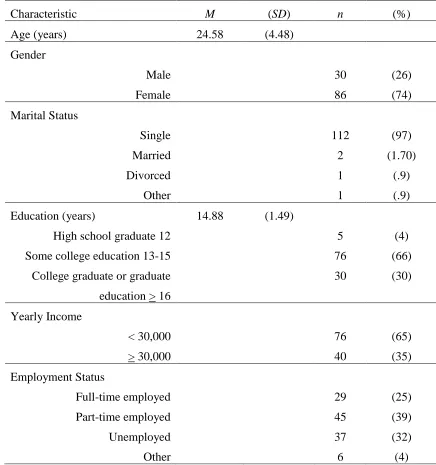
2. Characteristics of the Sample...42
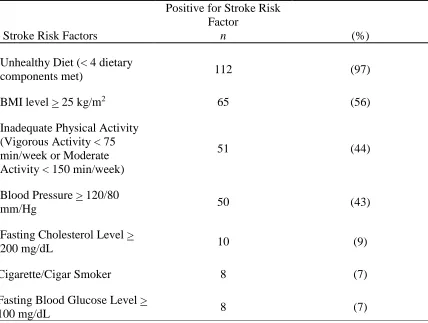
3. Participants’ LS7® Stroke Risk Factors ...43
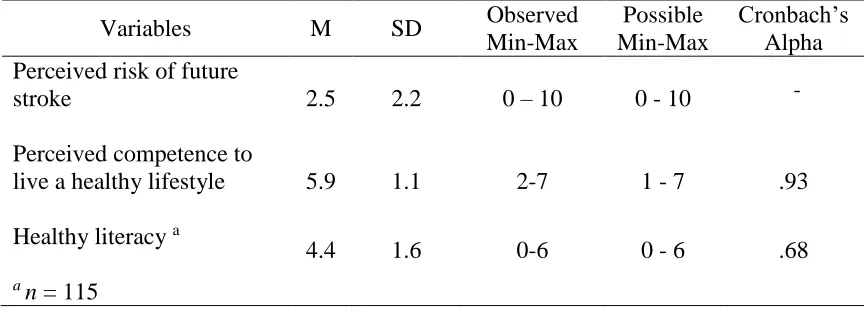
4. Descriptive Statistics for Theoretical Variables ...44
5. The Newest Vital Sign Correct Responses ...46
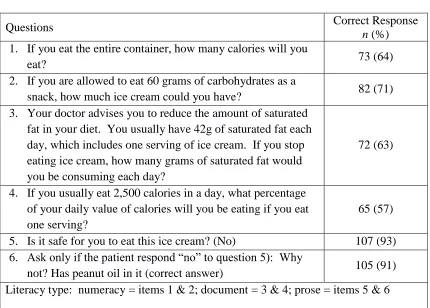
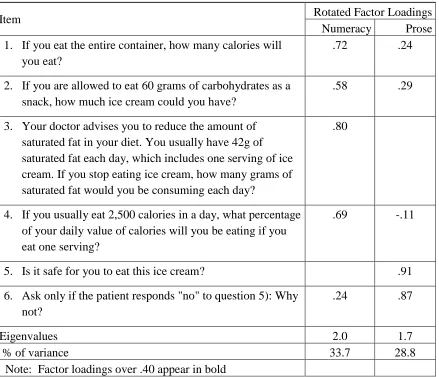
6. Summary of Exploratory Factor Analysis Results for the Newest Vital Sign ...47
7. Results of Life’s Simple 7® Dietary Components ...49
8. Results of NutritionQuest Survey - BBFFQ ...50
9. Correlations Among LS7® Dietary Components and Five Select BBFFQ Dietary Components ...54
10. Correlations Among Major Study Variables and BBFFQ Five Select Dietary Components ...55
xvii
LIST OF FIGURES
Figure Page
1. Modified Health Belief Model for Factors Associated with Dietary Patterns
xviii
AA African Americans
AHA American Heart Association
ASA American Stroke Association
BBFFQ Block Brief 2000 Food Frequency Questionnaire
CHD Coronary heart disease
CKD Chronic kidney disease
CRIP Coronary Risk Individual Perception
CVD Cardiovascular disease
CVH Cardiovascular health
DASH Dietary Approaches to Stop Hypertension
FV Fruits and vegetables
GCNKSS Greater Cincinnati/Northern Kentucky Stroke Study
GSU Georgia State University
HBI Health behavior index
HEI Healthy eating index
HBM Health Belief Model
KMO Kaiser-Meyer-Olkin
LA HANES II Los Angeles County Health and Nutrition Examination Survey
LS7® Life Simple 7®
NAAL National Assessment of Adult Literacy
NVS Newest Vital Sign
xix
REGARDS Reason for Geographic and Racial Differences in Stroke
SCORRE Stroke Counseling for Risk Reduction
S-TOFHLA Short-form Test of Functional Health Literacy in Adults
1
CHAPTER I
INTRODUCTION
This chapter provides an overview of stroke incidence, cost, and risk factors,
particularly poor diet among young adult African Americans (YAAA), with a discussion
of factors that impact dietary patterns among this group. A modified Health Belief
Model (HBM) was used to investigate relationships between perceived, actual, and
accuracy of stroke risk, health literacy, perceived competence to live a healthy lifestyle,
and dietary patterns among YAAA.
Overview of Stroke
Stroke incidence. Each year, approximately 610,000 people experience a new
stroke (Benjamin et al., 2017). For African Americans (AA) in all age groups, the
incidence of new and recurrent strokes is estimated to be 105,000 (AHA, 2017b). The
researchers in the Greater Cincinnati/Northern Kentucky Stroke Study (GCNKSS)
compared data from the 1990s to 2005 and found that Caucasians’ incidence rates for
first time ischemic stroke had decreased, while AA’s rates remained unchanged
(Kleindorfer et al., 2010).
Stroke disability and cost. Stroke is the leading cause of disability among adults
and the most preventable disability (Kulshreshtha et al., 2013; StrokeAssociation, 2016).
AA have more severe strokes compared to other racial and ethnic groups. Additionally,
2
AA report less independence in activities of daily living than Caucasians (Ellis et al.,
2015; Rodriguez, 2009).
The United States spends an estimated $34 billion each year on stroke-related
healthcare services, medications to treat strokes, and stroke survivors’ missed days at
work (StrokeAssociation, 2016). Based on data from 2013, the total direct cost of stroke
is expected to triple, from $71.6 billion to $184.1 billion by 2030 (Ovbiagele et al.,
2013). AA have the highest projected per capita estimated cost of stroke ($25,782),
exceeding both Hispanics ($17,201) and Caucasians ($15,597; Brown et al., 2006).
Stroke mortality. Stroke is the fifth leading cause of death in the United States
(Benjamin et al., 2017; J. Xu, Murphy, Kochanek, & Bastian, 2016). In 2014, the annual
stroke death rate was nearly 133,103, and the age-adjusted stroke death rate for AA (66.8
per 100,000) was higher than Caucasians (47.4 per 100,000) (Kochanek, Murphy, Xu, &
Tejada-Vera, 2016; Jiaquan Xu, 2016). Researchers have also found in adults aged 35 to
64 years death rates were three to four times higher for AA than Caucasians (V. J.
Howard, 2013).
Stroke in the young. Nearly 10% of ischemic strokes worldwide occur in young
adults (Putaala, 2016). When comparing the 2005 study period from the GCNKSS with
previous years, the incidence rate for first-time stroke among young adults between the
ages of 20 and 54 years increased (Kissela et al., 2012). Ramirez et al. (2016) also found
between 2000 and 2010, the age-specific hospitalization rates for acute ischemic stroke
increased from 16 to 23 per 100,000 for individuals between the ages of 25 and 44 years.
YAAA are 2.4 times more likely to experience a first-time stroke compared to
earlier age; the consequences of early-onset stroke can be catastrophic because of the
potential longevity of physical and cognitive disabilities, increased healthcare cost, threat
of future stroke, and loss of income over a lifetime.
Stroke risk factors. Researchers from the GCNKSS reported that the prevalence
of traditional cardiovascular risk factors such as hypertension (52%), obesity (44%), and
diabetes mellitus (20%) were major contributors to the increase of stroke among adults
ages 20 and 54 years (Kissela et al., 2012). Hypertension, obesity, and diabetes occur at
a greater frequency among YAAA, which may contribute to the racial/ethnic disparities
in stroke (Berry et al., 2012; Carnethon et al., 2017; Hozawa, Folsom, Sharrett, &
Chambless, 2007).
Dietary patterns and stroke. Poor diet is an independent risk factor for stroke,
which also contributes to other stroke risk factors (e.g., hypertension, diabetes, and
obesity/weight gain; Benjamin et al., 2017; Carnethon et al., 2017; Micha et al., 2017).
In 2005, researchers assessed the effect of five dietary factors on mortality rates and
estimated that 102,000 deaths were due to an excessive intake of salt, while nearly 55,000
deaths were attributed to a low consumption of fruits and vegetables (Danaei et al.,
2009). In 2010, another study examined the impact of modifiable risk factors on
morbidity and mortality and found the leading cause of both were diets low in fruits, low
in nuts and seeds, high in sodium, high in processed meats, low in vegetables, and high in
4
According to data from the National Health and Nutrition Examination Surveys
(1999-2002: N = 8104; 2009-2012: N = 8516), 53% of cardiometabolic deaths among AA were
associated with suboptimal diet (Micha et al., 2017).
In the Reasons for Geographic and Racial Differences in Stroke (REGARDS)
study, researchers assessed the association between diet and the incidence of stroke in
adults 45 years and older based on race and regions in the United States (Judd et al.,
2013). Researchers identified various dietary patterns among participants and found that
a Southern dietary pattern, characterized by added fats, fried food, eggs, organ meats,
processed meats, and sugar-sweetened beverages, was associated with a 39% increased
risk of stroke and mediated the Black-White risk of stroke by 63% (Judd et al., 2013).
Adherence to the Southern dietary pattern was consistent for AA regardless of their
location in the United States (Judd et al., 2013). These results indicate a need to improve
dietary patterns among AA because healthy dietary patterns are associated with a
significantly reduced risk of cardiovascular disease and its risk factors (Eckel et al., 2013;
Lichtenstein et al., 2006). Based on the current dietary guidelines from the American
Heart Association/American Stroke Association (AHA/ASA) and U.S. Dietary
Guidelines for Americans, the focus should be on improving the whole diet instead of
individual nutrients and foods (Eckel et al., 2013; Millen et al., 2015).
The Dietary Approaches to Stop Hypertension (DASH) and Mediterranean diets,
which are both high in fruits, vegetables, nuts, low-fat dairy products, and reduced
saturated fat, are recommended (Class I, Level of Evidence A) to reduce the risk of stroke
(Meschia et al., 2014). These dietary patterns promote increased intake of potassium and
the risk of stroke (Meschia et al., 2014). The AHA Life’s Simple 7 (LS7®) program
recommends the following dietary patterns to improve cardiovascular health (CVH):
high in fruits, vegetables, fish, fiber-rich whole grains; and low in sodium and
sugar-sweetened beverages (Rebholz et al., 2016).
Health literacy and stroke. Low health literacy has been associated with poorer
clinical outcomes, such as less frequent use of preventive services, poorer ability to
interpret labels, and difficulty understanding health messages (Berkman et al., 2011;
Health Literacy - Quick Guide to Health Literacy, 2017; Parker & Ratzan, 2010; U.S.
Department of Health and Human Services, 2010). According to results from the 2003
National Assessment of Adult Literacy (NAAL) survey, AA have lower health literacy
rates than Caucasian Americans (Kutner et al., 2006), and low health literacy may
influence dietary patterns.
A recent statement from the AHA (2018) described limited health literacy as a
major barrier to improving healthy behaviors and preventing cardiovascular disease and
stroke (Magnani et al., 2018). Individuals with limited health literacy are less likely to
recognize abnormal blood pressure readings and more likely to develop complications
from diseases, have misperceptions about weight, have difficulty quantifying sodium
intake and trouble interpreting nutrition labels (Magnani et al., 2018). The authors’
recommendations were to assist healthcare providers with ensuring their patients
understand their conditions and treatments. Therefore, considering health literacy in
cardiovascular disease and stroke prevention is key to improving lifestyle behaviors that
6
Statement of Problem
Hypertension, diabetes, and obesity have contributed to the increasing number of
strokes in young adults, and these risk factors are more prevalent among YAAA
(Carnethon et al., 2017; G. Howard et al., 2011; V. J. Howard, 2013). These traditional
cardiovascular risk factors often result from poor lifestyle choices; therefore, are
preventable as with most strokes. One prominent health behavior associated with these
risk factors and with stroke is a poor diet. Promoting healthy lifestyle behaviors
(e.g., healthy dietary patterns) may reduce the risk of cardiovascular disease (CVD) (e.g.,
stroke) over time (Hozawa et al., 2007; Liu et al., 2012; Mirmiran, Noori, Zavareh, &
Azizi, 2009). However, consuming a healthy diet can be challenging, especially for
young adults. No studies have examined dietary patterns in relation to stroke prevention
among YAAA. Young adults may not give much thought to their dietary patterns in
relation to stroke risk, because stroke has typically been a disease of older adults. As
stated earlier, health literacy has been identified as a major barrier to improving healthy
behaviors because individuals with limited health literacy are less likely to recognize vital
changes in their health (e.g., blood pressure reading) or understand or interpret health
information (e.g., food labels or medication instructions). Given the importance of health
literacy to modifying healthy behaviors, it was the major concept of interest for this
study. In addition to health literacy, there are select attitudes or beliefs (e.g., perceived
risk of future stroke, accuracy of perceived risk of future stroke, and perceived
competence to live a healthy lifestyle) that may help to explain dietary patterns among
Researchers have found that YAAA often underestimate or overestimate their
stroke risk, which could hinder behavior change (Aycock & Clark, 2016; Aycock, Clark,
& Araya, 2017). Another concept that could inhibit eating a healthy diet is perceived
competence to live a healthy lifestyle, which has not been studied for stroke risk
reduction behaviors, but has been found to predict diabetes self-care behaviors and
maintenance of glycemic control over time (Williams, McGregor, King, Nelson, &
Glasgow, 2005; Williams, McGregor, Zeldman, Freedman, & Deci, 2004). In another
study, college students (N = 131) discerning that autonomous exercise behavior was
supported by health care professionals predicted 36% of the variance in perceived
competence (Martin, Byrd, Wooster, & Kulik, 2017). Health literacy and perceived risk
of future stroke, accuracy of perceived risk of future stroke, and perceived competence to
live a healthy lifestyle have been understudied in YAAA. Having a better understanding
of the factors that influence YAAA dietary choices may help in developing age- and
culturally-relevant interventions that promote healthy dietary patterns to reduce the risk
of future strokes.
Significance of the Study for Nursing
Interventions that occur early in life to promote healthy dietary patterns could be
beneficial. Primordial prevention is action taken to avoid the initial development of risk
factors and primary prevention is the focus on individuals known to be at risk for disease
and development of interventions to prevent a CVD event (Lloyd-Jones et al., 2010;
Weintraub et al., 2011). Primordial and primary prevention interventions started in
YAAA to promote healthy dietary patterns may have enduring positive effects later in
8
implement primordial and primary prevention strategies in the community, government,
and clinic arenas with a focus on assessment of stroke risk factors and tailored education
and resources for healthy dietary patterns.
Theoretical Framework
According to the Health Belief Model (HBM), people are more likely to change
behaviors if they perceive the benefits of change outweigh the cost of the behavioral
change (Janz & Becker, 1984). The HBM has been used to explain why individuals
change or do not change health behaviors in response to a perceived threat (Janz &
Becker, 1984). The HBM is in a class of theories known as expectancy-value which
considers the cost to benefit ratio for changing behavior (DiClemente, Salazar, & Crosby,
2013).
There are three dimensions of the HBM: individual perceptions, modifying factors,
and likelihood of action. The model consists of six constructs: perceived severity,
perceived susceptibility, perceived benefits, perceived barriers, self-efficacy, and cues to
action (Abraham & Sheeran, 2015; Janz & Becker, 1984; Rosenstock, Strecher, &
Becker, 1988). The constructs of the HBM by themselves or in combination may be
influenced by modifying factors which may lead to changes in health behaviors
(Abraham & Sheeran, 2015).
The HBM has been used to explore relationships among its constructs and dietary
behaviors (Deshpande, Basil, & Basil, 2009; Rahmati-Najarkolaei, Tavafian, Gholami
Fesharaki, & Jafari, 2015). Rahmati-Najarkolaei et al. (2015) used the HBM to identify
factors that could predict nutritional behaviors in relation to cardiovascular disease
participants (age M = 24.9 years, SD = 4.55), knowledge (0.145B, 0.06 S.E., p = .023)
was positively associated with nutrition behavior, and perceived barriers
(-0.182B, 0.06 S.E., p = .004) was negatively associated with nutrition behavior
(Rahmati-Najarkolaei et al., 2015).
In another study using the HBM, Deshpande et al. (2009) examined factors which
influenced healthy eating habits among college students. In this study (N = 194),
researchers found several independent variables—dietary status, perceived severity,
perceived susceptibility, and cues to action—were significant predictors of the likelihood
to eating a healthy diet (Deshpande et al., 2009). Researchers also found barriers to
eating healthy had a significant and negative influence on likelihood to eating healthy
(Deshpande et al., 2009).
Individual perception in the HBM. Perceived threat is the synergy of perceived
severity and perceived susceptibility to a disease or illness. For the purpose of this study,
only perceived susceptibility/perceived stroke risk was examined.
Perceived susceptibility/risk. Perceived susceptibility is defined as a person's
perception of the likelihood of contracting a disease/illness and can prompt people to
change their health behavior (Abraham & Sheeran, 2015; Janz & Becker, 1984;
Rosenstock et al., 1988). Risk perception is a concept similar to perceived
susceptibility that has been used widely to assess individuals’ perceived risks of stroke
(Aycock et al., 2017). Risk perception is defined as a person’s subjective assessment of
his/her chances of becoming ill (Hay et al., 2007). There is a positive association
between risk perception and taking actions to reduce that risk, such that the higher the
10
behaviors to address the condition (Hayden, 2013). In contrast, having a low perceived
risk can have the opposite effect on health behaviors, leading to no or little action to
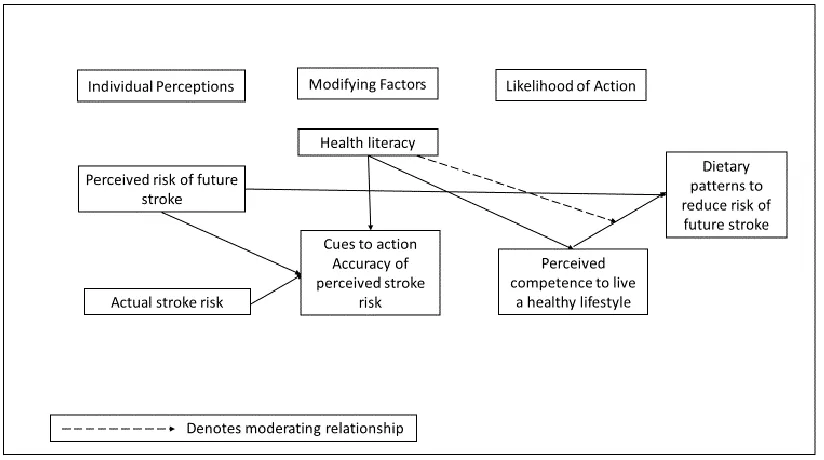
address the disease/illness. For this study, the perceived risk of future stroke will be
used. See Figure 1 for more details about the modified HBM.
Cues to action. Acue to action is an internal or external trigger, such as
accuracy of perceived risk of future stroke, that begins the process of action and
influences the decision-making process for behavioral change (Abraham & Sheeran,
2015; Janz & Becker, 1984; Rosenstock, 1974; Rosenstock et al., 1988). Individuals
can have an accurate or inaccurate perception of their stroke risk. Research has
demonstrated that individuals tend to underestimate or overestimate their perceived
stroke risk, which could hinder behavior change (Aycock et al., 2017).
[image:30.612.117.529.391.621.2]Underestimation of a health risk
Figure 1. Modified Health Belief Model for Factors Associated with Dietary Patterns for
may lead to an optimistic viewpoint that the risk of a disease/illness is minimal
(Aycock et al., 2017; Strecher, Kreuter, & Kobrin, 1995; Weinstein, 1980). While an
overestimation may cause a pessimistic viewpoint, thereby increasing fear and anxiety
about a disease/illness, which could lead to paralysis to act (Asimakopoulou, Skinner,
Spimpolo, Marsh, & Fox, 2008; MyHealthPortal, 2013; Strecher et al., 1995).
Therefore, the accuracy of individuals’ risk perception is important as a cue to action
for behavior change. Accurate risk perception occurs when individuals’ perceived risk
of a disease/illness is the same or similar to their actual risk of the disease/illness.
Actual stroke risk factors are non-modifiable, such as age and race or modifiable risk
factors include hypertension, diabetes, poor dietary patterns, and obesity. The accuracy
of perceived risk of future stroke can be determined by comparing an objective measure
of actual stroke risk (e.g., the number of actual stroke risk factors) to a subjective
measure of the perceived stroke risk (e.g., Visual Analogue Scale; Aycock & Clark,
2016; Aycock, Clark, & Hayat, 2016). According to the HBM, people are more likely
to take action to reduce their risk of a disease or illness (e.g., stroke) if they know they
are at risk of the disease/illness; therefore, having an accurate perception is important
(Aycock & Clark, 2016).
Modifying factors. Modifying factors are defined as individual characteristics
such as demographic, psychosocial, and structural variables that heighten or diminish any
relationship among variables in the HBM (Abraham & Sheeran, 2015; Hayden, 2013;
Rosenstock, 1974). Health literacy is a potential modifying factor that was explored in
this study. Health literacy is defined as the degree to which individuals have the ability
12
decisions (Berkman, Davis, & McCormack, 2010; Nielsen-Bohlman, 2004; U.S.
Department of Health and Human Services, 2010; Zoellner et al., 2011). Modifying
factors such as health literacy could transform accuracy of perceived risk of future stroke
and perceived competence to live a healthy lifestyle, and therefore will be examined.
Likelihood of action. Likelihood of action is considered a preferred path of action
and is defined as an individual’s belief that a specific health action will decrease the
threat of disease/illness (Janz & Becker, 1984; Rosenstock, 1974). The likelihood of
action for this study will be based on self-efficacy or the perceived competence to live a
healthy lifestyle.
Self-efficacy. Self-efficacy is the confidence in one’s capability to produce a
given feat (Bandura, 2011; Rodgers, Markland, Selzler, Murray, & Wilson, 2014). An
individual’s ability to change behavior is more likely to occur when self-efficacy levels
for that given behavior are high as opposed to low (Bandura, 2011). People with a high
sense of self-efficacy typically set higher goals, work harder at goals, and put more
effort into changing that behavior than those with a lower sense of self-efficacy
(Bandura, 2004). Self-efficacy is not a general trait; it varies based on the situation
(Bandura, 2011), such as dietary behaviors. Self-efficacy, a strong predictor of
behavioral change, may affect a person’s behavior both directly and indirectly by
influencing other variables (Bandura, 2004, 2011).
For this study, perceived competence to live a healthy lifestyle is comparable to
self-efficacy and was used to conceptualize and measure self-efficacy (Bortoli,
Bertollo, Comani, & Robazza, 2011; Hughes, Galbraith, & White, 2011; Martin et al.,
ability to satisfy the psychological need to master a personally challenging task
(Rodgers et al., 2014), such as reducing one’s risk of a stroke through lifestyle behavior
change (e.g., healthy dietary patterns). Individuals who feel competent that they can
reduce their stroke risk by changing eating habits are more likely to engage in activities
that lead to healthy dietary patterns. This premise supports goal attainment and
perception of a need for personal satisfaction (Martin et al., 2017). Perceived
competence can be operationalized two ways. Perceived competence to live a healthy
lifestyle can be a global (e.g., to live a healthy lifestyle) or a more specific (e.g., to eat a
healthy diet) measure (Martin et al., 2017).
Dietary patterns. The health behavior of interest for this study was dietary
patterns and is based on the current dietary guidelines from the American Heart
Association/American Stroke Association (AHA/ASA). The DASH and Mediterranean
diets, which are both high in fruits, vegetables, nuts, low-fat dairy products, and
reduced saturated fat are recommended (Class I, Level of Evidence A) to reduce the
risk of stroke (Meschia et al., 2014). In 2010, the AHA produced the Life’s Simple 7
(LS7®) program, including three ideal health factors (untreated total cholesterol <200
mg/dl, untreated blood pressure <120/<80 mm HG, and fasting blood glucose <100
mg/dL) and four ideal lifestyle behaviors (nonsmoking, body mass index <25 kg/m2,
physical activity at least 150 minutes (moderate) or 75 minutes (vigorous) each week,
and a diet consistent with current guideline recommendations) that promote ideal
cardiovascular health (Lloyd-Jones et al., 2010). Ideal scores on the LS7® have been
associated with better health outcomes (Lloyd-Jones et al., 2006) and decreased
14
There are five dietary components and the recommendations are based on an
intake of 2,000 calories a day: 1) 4.5 cups of fruits and vegetables per day; 2) two or
more 3.5-ounce (1 gm) servings a week of fish; 3) less than 450 kcal a week of
sugar-sweetened beverages; 4) three or more 1-ounce serving a day of whole grains; and 5)
less than 1,500 mg of sodium a day (Lloyd-Jones et al., 2010). For the purpose of this
study, healthy dietary patterns were defined according to the LS7® dietary
recommendations. Examining dietary patterns in the context of the HBM will provide
a better understanding of this behavior based on modifying factors, attitudes, and
beliefs of YAAA. Health literacy was the major theoretical concept of interest in this
study as reflected in the following specific aims and hypotheses.
Specific Aims and Hypotheses
Among African Americans 20-35 years of age.
Specific aim #1. To compare health literacy between individuals who have an
accurate perception of future stroke risk to those who have an inaccurate perception of
future stroke risk.
Hypothesis. Participants with an accurate perception of future stroke risk will have
significantly higher health literacy levels than those with an inaccurate perception of
future stroke risk.
Specific aim #2. To explore the association between health literacy, individual
perceptions of stroke risk, perceived competence to live a healthy lifestyle, and dietary
Hypothesis. Higher health literacy, higher perceived risk of future stroke, and
higher perceived competence to live a healthy lifestyle will be associated with healthy
dietary patterns.
Specific aim #3. To determine whether health literacy moderates the relationship
between perceived competence to live a healthy lifestyle and dietary patterns.
16 CHAPTER II
REVIEW OF THE LITERATURE
This chapter presents an overview of the literature regarding dietary patterns,
health literacy, perceptions of future stroke risks, and perceived competence as used
within this study and how they relate to stroke risk factors and AA.
Dietary Patterns Among African Americans
The power of following the DASH or Mediterranean diet to reduce the risk of
stroke and lower blood pressure has been well established (Baker, Barnidge, Schootman,
Sawicki, & Motton-Kershaw, 2016; Epstein et al., 2012; Fung et al., 2009; Goetz et al.,
2016; Hu, Huang, Wang, Zhang, & Qu, 2014; Judd et al., 2013). However, fruit (12.2%)
and vegetable (9.3%) consumption among adults in the United States remains low
(Lee-Kwan, Moore, Blanck, Harris, & Galuska, 2017). Adherence to the DASH diet has been
difficult for AA compared to Caucasians (Epstein et al., 2012). Many factors—
individual (Hargreaves, Schlundt, & Buchowski, 2002), psychosocial (Fuemmeler et al.,
2006; Satia, Galanko, & Siega-Riz, 2004; Thomson, Zoellner, & Tussing-Humphreys,
2014; Watters, Satia, & Galanko, 2007), cultural (Ahye, Devine, & Odoms-Young, 2006;
James, 2004), and environmental (Grigsby-Toussaint, Zenk, Odoms-Young, Ruggiero, &
Moise, 2010; Hargreaves et al., 2002; Zenk et al., 2005)—affect AA’ dietary patterns.
Examining factors that influence dietary patterns among AA is important because they
50% of this racial disparity due to traditional risk factors and socioeconomic factors (G.
Howard et al., 2011). The purpose of this review of the literature is to describe the
relationships between the major study variables—health literacy, perceived risk of future
stroke, accuracy of perceived risk of future stroke, perceived competence to live a healthy
lifestyle—to identify how they relate to healthy dietary patterns to reduce risk of future
stroke. The majority of the studies identified were with Caucasian Americans or older
AA, which indicates a need for more research among YAAA.
Health Literacy and Dietary Patterns
In 2013, nearly 80 million people in the United States reported having difficulty
understanding and acting on health information due to low health literacy (Berkman et
al., 2011). Low health literacy is associated with less frequent use of preventive
services, poorer ability to interpret food labels or health messages, increased healthcare
cost, more emergency room visits, and poorer clinical outcomes (Berkman et al., 2011;
Health Literacy - Quick Guide to Health Literacy, 2017; Parker & Ratzan, 2010; U.S.
Department of Health and Human Services, 2010). According to the most current
results from the National Assessment of Adult Literacy (NAAL) survey, only about
12% of all Americans have a proficient health literacy level with AA (2%) having
lower proficient health literacy rates than Caucasian Americans (14%; Kutner et al.,
2006).
Currently, limited data exist on health literacy’s impact on stroke risk reduction
behaviors (e.g., healthy dietary patterns), perceived risk of future stroke, accuracy of
perceived risk of future stroke, and perceived competence to live a healthy lifestyle
18
(Zoellner et al., 2011), dietary adherence (Hutchison, Warren-Findlow, Dulin, Tapp, &
Kuhn, 2014), and food label use (Cha et al., 2014) among AA. Additionally, there are
several studies concerning health literacy in different patient populations, such as
diabetes (Al Sayah, Majumdar, Egede, & Johnson, 2015; Bohanny et al., 2013;
McCleary-Jones, 2011) and hypertension (Boulware, Carson, Troll, Powe, & Cooper,
2009) among AA.
Researchers explored the relationship between health literacy and diet quality in
Rural Lower Mississippi Delta respondents aged 18 to 84 years (N = 376) as measured
by the Healthy Eating Index (HEI) and sugar-sweetened beverage consumption (Zoellner
et al., 2011). The majority of respondents (74%, n = 278) scored in the two lowest
categories on the Newest Vital Sign (NVS) scale—high likelihood of limited health
literacy (n = 195) and possibility of limited health literacy (n = 83; Zoellner et al., 2011).
When comparing participants with adequate health literacy to those with inadequate
health literacy and limited health literacy, participants with adequate health literacy had
higher diet quality and scored four points higher on the HEI than participants in the other
two categories (Zoellner et al., 2011). Sixty-eight percent of 254 AA participants had
significantly lower health literacy scores (M = 1.6, SD = 1.5); higher mean
sugar-sweetened beverage intake 224, SD = 396 than Caucasians
(30.9%, n = 116; health literacy = 3.1, SD = 2.2; and sugar-sweetened beverage = 129,
SD = 253; p < .01) (Zoellner et al., 2011).
Using the NVS to measure health literacy, investigators explored the relationship
between health literacy adherence to a low salt, DASH diet among primary care patients
(78%, n = 156) to Caucasian Americans (22%, n = 43), a smaller percentage of AA had
adequate health literacy (22% vs. 56%) and adhered to a low-salt, DASH diet
(8.3% vs. 34.9%).
Cha et al. (2014) studied the relationship between health literacy assessed with the
NVS, food label use, and dietary quality in young adults (N = 103) and found AA
respondents’(68%) average health literacy scores (3.79, SD = 1.88) were significantly
lower than scores of Caucasian Americans’ (5.47, SD = 0.90; p = .001). In addition,
self-efficacy and health literacy were found to predict food label use behavior and food label
use behavior was found to predict dietary quality.
Researchers have also explored relationships among health literacy and other
relevant concepts that may influence dietary patterns – knowledge, self-efficacy, and
perceived risk. McCleary-Jones (2011) explored relationships among health literacy
assessed by the Rapid Estimate of Adult Literacy in Medicine (REALM) scale, diabetes
knowledge, self-efficacy, and general diet self-management behavior among AA with
diabetes (N = 50) and found significant associations between health literacy and diabetes
knowledge (r = .51, p < .001); diabetes knowledge and general diet self-care activities
(r = .30, p < .05); and self-efficacy and general diet self-care activities
(r = .511, p < .001). In a similar study, Al Sayah et al. (2015) found inadequate health
literacy among low-income AA with diabetes (83%, n = 278); a significant association
with less diabetes knowledge (r = -.34, p < .05) and less self-efficacy
(r = -.16, p < .05); and no association between the health literacy summative scale and
20
relationship may be related to the researchers’ decision to use a non-standardized tool to
measure health literacy.
Bohanny et al. (2013) examined the relationship among health literacy measured
with the Short-form Test of Functional Health Literacy in Adults (S - TOFHLA),
self-efficacy, and self-care behaviors in patients with diabetes and found no relationship
between health literacy and care behaviors, but efficacy in diabetes
self-management was associated with self-care behaviors (r = .39, p < .01). Bohanny et al.
(2013) argued that although health literacy did not have a direct effect on self-care
behaviors, it may mediate the effect of care behaviors for diabetes through
self-efficacy in diabetes self-management.
Using the REALM, researchers investigated the association between health
literacy, perceived susceptibility to chronic kidney disease (CKD), and adherence to high
blood pressure management among primary care patients with hypertension and found
participants had lower perceived risk for CKD compared to their perceived risk for other
chronic disease. Low health literacy, AA race, and diabetes were found to be
independent predictors of low perceived risk of CKD (Boulware et al., 2009).
In summary, health literacy has been found to be lower in AA compared to
Caucasian Americans (Cha et al., 2014; Hutchison et al., 2014; Zoellner et al., 2011); AA
had higher sugar-sweetened beverage intake and lower diet quality (Zoellner et al., 2011);
and lower adherence to low salt diet (Hutchison et al., 2014). In several studies, health
literacy as a predictor of health-related behavior changes was inconsistent (Al Sayah et
al., 2015; Bohanny et al., 2013; Boulware et al., 2009; Cha et al., 2014; McCleary-Jones,
dietary patterns, perceived risk of future stroke, accuracy of perceived risk of future
stroke, and perceived competence to live a healthy lifestyle) especially among YAAA.
The use of various tools to measure health literacy (e.g., NVS, S -TOFHLA, REALM,
and investigator developed tool) limits the ability to compare research studies and the
generalizability of the results. There is an opportunity to increase the understanding of
the relationship among health literacy and other study variables by conducting this study.
Perceived Risk of Future Stroke and Dietary Patterns
Risk perception, a fundamental concept of the HBM, is individuals’ beliefs about
their odds of becoming ill. Theoretically higher levels of perceived risk motivate
individuals to change their health behaviors (Hay et al., 2007; Janz & Becker, 1984;
Kraywinkel, Heidrich, Heuschmann, Wagner, & Berger, 2007; Lucas-Wright et al.,
2014). Studies exploring the perceived stroke risk in AA have found that AA of all
ages tend to perceive their risk as no risk or low risk (Aycock & Clark, 2016; Aycock et
al., 2017; Aycock et al., 2016; Aycock et al., 2015; Powers et al., 2011; Powers,
Oddone, Grubber, Olsen, & Bosworth, 2008), which may help to explain the lack of
healthy dietary patterns to reduce the risk of stroke.
None of the studies above explored the relationship of the perceived risk of
future stroke to healthy dietary patterns. However, one study examining the association
of the perceived stroke risk and exercise (another lifestyle behavior) found no
relationship between perceived stroke risk and current exercise or intentions to exercise
in the future (Aycock & Clark, 2016).
Since cardiovascular disease shares some of the same lifestyle prevention
22
disease and dietary patterns were examined (Barnhart et al., 2009; Imes, Novosel, &
Burke, 2016; Tran et al., 2017). In the first study, researchers examined the perceived
risk of coronary heart disease (CHD) and dietary behaviors in middle-aged Hispanic
and AA adults (Barnhart et al., 2009). Barnhart et al. (2009) used the Coronary Risk
Individual Perception (CRIP) scale to assess the perceived risk of CHD and found a
significant inverse association with healthy eating behaviors (r = -.17; p = .007) and
participants with a high risk of CHD who tend to perceive a lower risk of CHD.
Tran et al. (2017) conducted a study with a sample of college students (N = 158),
majority Caucasian Americans (n = 99, 63.1%), with an age range of 19 to 39
(M = 24.33, SD = 4.6 years) to assess their knowledge and perception of cardiovascular
risk factors, as well as identify their cardiovascular risks. Researchers found 32.3%
(n = 51) of the respondents had a family history of heart disease which was associated
with higher 30-year risk of heart disease in females (p = .001) but not in males (p =
.87). On average, respondents had high knowledge level of cardiovascular risk factors
(M = 13.9, scores ranged 6 to 16) on the Heart Disease Fact Questionnaire. However,
their perceived risk for CVD, assessed with the Health Beliefs Related to
Cardiovascular Disease tool, was low to moderate.
Imes et al. (2016) described the relationship among sociodemographic
characteristics, CHD risk factors, perceived risk of CHD, and self-efficacy to eat a
heart-healthy low-fat, low-salt diet in overweight and obese adults (N = 151).
Participants were majority females (91%, n = 137) and Caucasian Americans
(81.5%, n = 123) with a mean age of 51.3, SD = 10.4 years. Respondents with a family
of CHD (75.8, SD = 18.1 vs. 63, SD = 21.5, p < .01). Also, the number of CHD risk
factors were positively associated with perceived risk of CHD (B = 7.08, p < .001) and
progressively increased as the number of risk factors increased. Perceived risk of CHD
was not significantly associated with age or race.
Overall, there were no studies that examined the relationship between perceived
risk of future stroke and healthy dietary patterns among YAAA. After reviewing the
literature, it appears that an individual’s perceived risk of CVD or CHD may vary based
on age, race or ethnicity. In one study, young adult Caucasian Americans with high
knowledge of their cardiovascular risk factors reported their perceived risk of CVD as
low to moderate (Tran et al., 2017). Some studies showed that AA or Hispanic
participants who have high risks of CVD or CHD may perceive their risk for those
diseases to be low or no risk (Aycock & Clark, 2016; Aycock et al., 2017; Aycock et
al., 2016; Aycock et al., 2015; Barnhart et al., 2009; Powers et al., 2011; Powers et al.,
2008). Whereas in another study, Caucasian American participants reported their level
of perceived risk of CHD to be positively associated with the number of risk factors and
increased as the number of risk factors increased (Imes et al., 2016). There is a need
for more research in this area and an opportunity to examine the relationships between
perceived risk of future stroke and other study variables.
Perceived Competence to Live a Healthy Lifestyle and Dietary Patterns
Perceived competence is an individual’s perception that he or she is capable of
mastering a challenging task and is believed to be closely related to self-efficacy
(Bortoli et al., 2011; Martin et al., 2017; Mokhtari et al., 2017). A literature review was
24
a healthy lifestyle in AA. Because few studies have examined the concept of perceived
competence, the similar concept of self-efficacy for diet behaviors in AA was also
reviewed.
Two studies were found that examined perceived competence for healthy
behaviors in non-AA samples (Bachmann et al., 2016; Mokhtari et al., 2017).
Bachmann et al. (2016) examined the effect of perceived health competence, described
as a patient’s belief in his or her ability to achieve health-related goals on the health
behavior index (HBI) consisting of six domains—medication adherence, resilient
coping, smoking, alcohol consumption, diet, and exercise—in patients with
cardiovascular disease in a sample of 2063 patients hospitalized with acute coronary
syndrome, congestive heart failure, or both. Perceived health competence had a strong
positive association with the HBI (Bachmann et al., 2016).
In a recent study, Mokhtari et al. (2017) examined types of motivation and levels
of perceived competence for healthy diet in a sample of 100 adolescents,
(Age M = 15.9, SD = 1.9 years) with 82% Latino/Hispanic origin. Researchers
hypothesized that overweight and obese adolescents would demonstrate lower
perceived competence for healthy eating compared to adolescents with normal weight;
however, they found opposite results. Overweight/obese participants reported higher
scores of perceived competences for healthy eating than normal weight participants
(median and 25-75% interquartile range 22.5 [19.0-26.0] versus 20.0 [15.5-25.0];
Mokhtari et al., 2017). Researchers speculated that overweight/obese adolescents’
higher level of controlled motivation (23.8, SD = 9.3, p < .01) may result from peer
adolescents (18.12, SD = 8.1); thus, influenced their reporting of a higher perceived
competence for healthy eating (Mokhtari et al., 2017). Additionally, researchers
explored relationships between perceived competence for healthy eating and
self-reported eating behaviors and found inverse relationships with higher perceived
competence for healthy eating and lower amount of eating fast food
(r = - .37, p < .01) and lower soda consumption (r = - .37, p < .01).
Four studies of AA of varying ages were found, two examining self-efficacy and
dietary patterns (Gase, Glenn, & Kuo, 2016; Stephens, Resinicow, Latimer-Sport, &
Walker, 2015) and two examining self-efficacy and hypertension self-care activities
that included dietary paterrns (Mansyur, Pavlik, Hyman, Taylor, & Goodrick, 2013;
Warren-Findlow, Seymour, & Brunner Huber, 2012). In a large sample, 1,011 AA
from 14 churches in Georgia participated in a study to examine the extent to which
self-efficacy mediated fruits and vegetables (FV) intake behavior (Stephens et al., 2015).
Stephens et al. (2015) found that higher self-efficacy significantly predicted increases
in FV intake (B = .606, r2 = .027; p < .001).
Gase et al. (2016) examined the influence of self-efficacy for healthy eating on
the relationship between perceived food environment and healthy eating from Los
Angeles County Health and Nutrition Examination Survey (LA HANES II). The 1440
sample participants were majority AA and Latino Americans from low income areas of
Los Angeles County with an average age of 35 years, ranging from 18 to 84 years
(Gase et al., 2016). Researchers found that self-efficacy accounted for 23% of the
mediated effect (mediated effect = 0.010; 95% CI 0.002, p = .020) of the relationship
26
Warren-Findlow et al. (2012) conducted a cross-sectional study in a sample of
188 AA with hypertension, (M = 53 years) ranging from 22 to 88 years, to assess
chronic illness self-care behaviors, such as adherence to low-salt diet. Individuals with
good self-efficacy had 64% higher prevalence of adhering to low salt diet strategies
(PR = 1.64, 95% CI: 1.07-2.20).
Brouwer-Goossensen et al. (2016) examined self-efficacy for health-related
behavior change in individuals with TIA or ischemic stroke
(N = 100, Age M = 64, SD = 12 years). Researchers found in a multivariable regression
analysis that self-efficacy, fear, and response efficacy were independently associated
with the intention to change diet and patients with higher intentions to change their diet
were more likely to have actual health-related behavior change.
Mansyur et al. (2013) examined the relationship between self-efficacy and
behavior change, such as low sodium diet, in low-income AA with hypertension
(N = 185, Age M = 53.9, SD = 5.7 years). Researchers reported no relationship
between higher self-efficacy and low sodium diet, indicating that, for this population,
education about low sodium diet may be difficult to do or these individuals could find
changing their behavior to consume foods low in sodium difficult to perform.
There is empirical support for a relationship between self-efficacy/perceived
competence for health-related behaviors, including dietary patterns, such that higher
self-efficacy influences dietary patterns which were measured in varying ways
(e.g.,low salt/sodium diet, self-reported eating behaviors, increased FV consumption,
diet, adherence to low-salt diet, and HBI; Bachmann et al., 2016; Brouwer-Goossensen
al., 2015; Warren-Findlow et al., 2012). Only one study reported no relationship
between self-efficacy and dietary patterns (Mansyur et al., 2013). The limitation of
these studies is the lack of studies that address perceived competence to live a healthy
lifestyle among YAAA. More research is needed to explore these relationships as
perceived competence to live a healthy lifestyle is a factor that can be improved.
Gaps in the Literature
With the increase of strokes in young adults, examining factors that may influence
healthy dietary patterns to reduce risk of future strokes among YAAA is important. The
literature exploring these concepts is very limited. Many of the studies include
Caucasians, older AA, and individuals with a health problem which makes the findings
from these studies less generalizable to YAAA. With this research proposal, there is an
opportunity to explore the relationships among health literacy, perceived risk of future,
perceived competence to live a healthy lifestyle, and dietary patterns. Findings from this
study will add to the body of knowledge for primary prevention of stroke and healthy
28 CHAPTER III
METHODOLOGY
This chapter provides an overview of the methodology that was used to conduct
this study. The chapter sections that follow are design, setting, sample, variable and
measures, data collection, procedures, plan for data analysis, protection of human
subjects, and instruments.
Design
This secondary analysis, a cross-sectional, correlational design was conducted
using baseline data from the Stroke Counseling for Risk Reduction (SCORRE) pilot
study (Aycock, 2015). The purpose of the pilot study was to test the efficacy of a
stroke risk reduction intervention on improving accuracy of perceived risk of future
stroke and increasing lifestyle behavior change (e.g., diet, physical activity, and
smoking cessation) to reduce stroke risk in AA ages 20 to 35 years. Baseline data were
analyzed to describe the study variables of interest (e.g,, health literacy, perceived risk
of future stroke, actual stroke risk, accuracy of perceived risk of future stroke,
perceived competence to live a healthy lifestyle, and dietary patterns) and to address
hypotheses.
Setting
The SCORRE pilot study took place at Georgia State University (GSU), in
surrounding community. The initial screening, informed consent and data collection
were conducted in a private room in the School of Nursing at GSU.
Sample
Participants were recruited using flyer advertisements that were placed on the
GSU campus, at local businesses (e.g.,hair and nail salons, barber shops, and eateries),
on Craigslist and mailed to churches. Word of mouth was also used and encouraged.
Potential participants contacted the principal investigator (Dr. Aycock) via information
on the flyers to be screened for the study. Once screened and scheduled for their first
study visit, participants were given instructions for fasting eight hours before
performing a fasting blood glucose and cholesterol test. Inclusion criteria for the pilot
study were: 1) self-identified as AA/Black; 2) ages between
20 and 35 years; 3) able to read, write, and speak English; 4) no prior history of stroke;
5) have at least one modifiable risk factor for stroke; and 6) willing to participate for
8-weeks. The criteria met and used for this secondary analysis were criteria 1-4,
therefore, all participants completing the baseline visit with and without modifiable risk
factors for stroke were included. At baseline of the SCORRE study, there were 116
participants that were used for this secondary analysis.
For this non-experimental study, to calculate the sample size needed to address
the specific aims of this study, a power analysis was performed using an apriori
statistical power calculator for hierarchical regression analysis from the online website
http://www.danielsoper.com/statcalc/calculator.aspx?id=16 (Soper, 2018). For a
30
level of 0.80 and five predictor variables, a sample size of 96 participants was needed.
The baseline sample was 116, thus there was adequate power to test the hypotheses.
Variables and Measures
Researchers collected participant characteristics including demographic data
using a investigator developed (Dr. Aycock) form which included age, education,
gender, employment status, marital status, and income to describe the sample
(Appendix A).
Perceived risk of future stroke. Perceived risk of future stroke was measured
using a single item for participants to rate their risk level for having a stroke in the next
10 to 20 years on a scale from 0-10 (Appendix B; Aycock & Clark, 2016; Aycock
et al., 2016). Zero indicated no risk and 10 indicated high risk. This method has been
used in several studies to measure stroke risk perception (Aycock et al., 2017),
including samples of YAAA (Aycock & Clark, 2016; Aycock et al., 2017).
Actual stroke risks. Actual stroke riskwas collected using a Stroke Risk
Factor Assessment form (Appendix C; Aycock & Clark, 2016; Aycock et al., 2016).
This form was adapted from the AHA’s Stroke Risk Assessment form and Life’s
Simple 7® (LS7®) assessments and was used to collect both subjective and objective
data about modifiable and nonmodifiable stroke risk factors (Aycock et al., 2016). In a
previous study, the Stroke Risk Factor Assessment form was reviewed for content
validityby nursing experts in acute stroke care and nursing measurement (Aycock &
Clark, 2016). Data from this form were used to identify the results of seven modifiable
risk factors (i.e., physical activity, diet, cigarette smoking, blood pressure, glucose,
LS7® program to obtain the total cardiovascular risk score which is associated with
stroke risk (Kulshreshtha et al., 2013). The reversed cardiovascular risk score,
ranging from 0 to10 with 0 being no risk and 10 being high risk was used to estimate
actual stroke risk (Aycock et al., 2016).
Accuracy of perceived risk of future stroke. Accuracy of perceived risk of
future stroke was measured by comparing perceived risk of future stroke with actual
stroke risk (Aycock & Clark, 2016). A participant can either be accurate, overestimate
or underestimate his/her future stroke risk. If a participant accurately comes near to
his/her future stroke risk, the perceived risk score was within 2 points (+/- 0 to 2) of the
actual LS7® score. When a participant underestimates his/her future stroke risk, the
perceived stroke risk score was 0 or less than 2 points below the actual LS7® score. For
a participant that overestimates his/her future stroke risk, the perceived stroke risk score
was more than 2 points above the actual LS7® score. This estimation of the accuracy of
perceived risk of future stroke is guided by prior research (Aycock et al., 2016).
Perceived competence to live a healthy lifestyle. The Perceived Competence
to Live a Healthy Lifestyle survey was adapted from the Perceived Competence Scale,
a 4-item questionnaire used to assess constructs from social determination theory,
specifically feelings of competence (Appendix D; (Williams & Deci, 1996; Williams,
Freedman, & Deci, 1998). The scale can be adapted to the relevant behavior or domain
being studied. In the SCORRE pilot study, the behavior of interest was living a healthy
lifestyle which encompasses healthy eating. The four-items scale represents the degree
to which participants feel they can live a healthy lifestyle. Participants respond on a