BIROn - Birkbeck Institutional Research Online
Jenkins, M. and Grubert, Anna and Eimer, Martin (2018) Category-based
attentional guidance can operate in parallel for multiple target objects.
Biological Psychology 135 (211), p. 219. ISSN 0301-0511.
Downloaded from:
Usage Guidelines:
Please refer to usage guidelines at or alternatively
1
Category-based attentional guidance can operate in parallel for multiple target objects
Michael Jenkins1, Anna Grubert2, & Martin Eimer1*
*Corresponding Author
1
Department of Psychological Sciences, Birkbeck, University of London,
Malet Street, London, WC1E 7HX, UK
2
Department of Psychology, Durham University,
Queen’s Campus, Stockton-on-Tees, TS17 6BH, UK
Phone: 0044 20 76316358
2
Abstract
The question whether the control of attention during visual search is always feature-based
or can also be based on the category of objects remains unresolved. Here, we employed the
N2pc component as an on-line marker for target selection processes to compare the
efficiency of feature-based and category-based attentional guidance. Two successive
displays containing pairs of real-world objects (line drawings of kitchen or clothing items)
were separated by a 10 ms SOA. In Experiment 1, target objects were defined by their
category. In Experiment 2, one specific visual object served as target (exemplar-based
search). On different trials, targets appeared either in one or in both displays, and
participants had to report the number of targets (one or two). Target N2pc components
were larger and emerged earlier during exemplar-based search than during category-based
search, demonstrating the superior efficiency of feature-based attentional guidance. On
trials where target objects appeared in both displays, both targets elicited N2pc
components that overlapped in time, suggesting that attention was allocated in parallel to
these target objects. Critically, this was the case not only in the exemplar-based task, but
also when targets were defined by their category. These results demonstrate that attention
can be guided by object categories, and that this type of category-based attentional control
can operate concurrently for multiple target objects.
Keywords: visual attention; attentional control; visual search; category search;
3
In visual search, observers have to find target objects that are defined by particular
features and appear among other task-irrelevant distractor objects. The allocation of
attention to candidate target objects during the search process is guided by mental
representations of known target-defining features (attentional templates; e.g., Duncan &
Humphreys, 1992; Olivers, Peters, Houtkamp, & Roelfsema, 2011). These target templates
can be activated during the preparation for a particular search episode, and are assumed to
bias attentional selection processes towards objects with template-matching features
(Wolfe, 1994, 2007; Desimone & Duncan, 1995). There are many different types of search
tasks where targets are defined by different sets of features. It is obvious that not all target
attributes are equally capable in guiding attention (e.g., Wolfe & Horowitz, 2004). Simple
visual features such as stimulus colour, shape, or orientation are effective guiding attributes.
In contrast, it is often assumed that higher-level attributes such as an object’s category are
unable to contribute to the guidance of attention during visual search. In line with this
hypothesis, several studies have demonstrated that search for category-defined targets is
much less efficient than search for targets that are defined by specific visual features (e.g.,
Malcolm & Henderson, 2009; Yang & Zelinsky, 2009). However, there is also behavioural
evidence that object categories can affect the allocation of attention during search. For
example, nontarget objects that are semantically related to a current target attract
attention during visual search even when these objects share no visual features with the
target (e.g., Moores, Laiti, & Chelazzi, 2003; Belke, Humphreys, Watson, Meyer, & Telling,
2008; Telling, Kumar, Meyer, & Humphreys, 2010).
The question whether and to what degree object categories are involved in the
guidance of attention during visual search is unlikely to be resolved on the basis of
behavioural measures alone. Template-based control processes result in attentional biases
of visual processing in favour of objects with template-matching features. Because such
attentional biases can emerge early and develop gradually over time (see Eimer, 2014, 2015,
for reviews), their presence may be revealed by event-related brain potential (ERP) markers
of attentional selectivity, which can track these biases on a millisecond-by-millisecond basis.
The N2pc component has been employed in many studies of visual attention and visual
search as an electrophysiological marker for attentional object selection. The N2pc is an
enhanced negativity elicited at posterior electrodes contralateral to the visual hemifield of a
4
displays. It is generated in extrastriate areas of the ventral visual processing stream (Hopf et
al., 2000), and is assumed to reflect the allocation of spatial attention to objects with
target-matching properties (e.g., Woodman & Luck, 1999, 2003; Eimer, 1996; Luck & Hillyard,
1994). Although the N2pc often emerges at about 200 ms after search display onset, its
onset latency is variable and is determined by how effectively a target object can be
discriminated from distractors in the same display. In visual search tasks where target
objects are defined by simple visual features such as a particular colour or shape, these
targets trigger N2pc components (e.g., Luck & Hillyard, 1994; Eimer, Kiss, & Nicholas, 2011)
that are reliably present from about 180 ms post-stimulus. Such results demonstrate that
when feature-specific attentional templates for target colours or shapes are activated,
template-matching objects trigger rapid spatially selective biases of visual processing. To
determine whether object categories play a role in the control of attention, it is important
to investigate whether similar N2pc components will also be elicited in response to target
objects in search tasks where these targets are defined not by basic visual features, but by
the object category to which they belong. If categories cannot guide attention, no N2pc
should be found for category-defined targets.
This question was addressed in a recent study from our lab (Nako, Wu, Smith, &
Eimer, 2014) where search displays contained line drawings of kitchen and clothing objects.
In different blocks, participants either searched for a particular target object (e.g., frying
pan; exemplar-based search) or for any of 11 possible objects from the same category
(kitchen objects or items of clothing; category-based search). In the exemplar-based search
task, target objects triggered large N2pc components that emerged early (at 190 ms
post-stimulus), confirming that attention was allocated effectively to target objects when this
process was guided by a search template for specific visual target features. Critically, reliable
target N2pc components were also found in the category-based search task. However, these
N2pcs were smaller in amplitude than those found during exemplar-based search, and were
delayed by about 50 ms. These findings suggest that in contrast to previous claims (e.g.,
Wolfe & Horowitz, 2004), attentional allocation processes can be guided by object
categories, and that this type of guidance can result in modulations of relatively early stages
of visual processing. On the other hand, they also demonstrate that category-guided
attentional selection processes are considerably slower and less efficient relative to the
5
The goal of the current study was to provide further insights into the similarities and
differences of category-based versus exemplar-based attentional control processes during
visual search for real-world target objects. Do these two types of attentional guidance
processes differ only quantitatively (with category-based guidance operating more slowly
than feature-based guidance, e.g., Nako et al., 2014), or are there more fundamental
qualitative differences between them? More specifically, we investigated the ability to
allocate attention rapidly and in parallel to two different target objects in exemplar-based
and category-based search tasks. The distinction between parallel and serial mechanisms is
central to theories of visual search, such as Feature Integration Theory (e.g., Treisman &
Gelade, 1980) and Guided Search (Wolfe, 1994, 2007), and this dichotomy is usually based
on behavioural measures. Serial search is inferred when reaction times (RTs) increase with
the number of objects in a search display, while search is described as parallel when target
RTs are not affected by display set size. However, the question whether attentional target
selection processes operate in a serial or parallel fashion can also be addressed with
electrophysiological markers such as the N2pc component.
Evidence for parallel attentional selection processes in tasks where target objects
were defined by physical features (a specific colour or shape) comes from a series of recent
studies from our lab that used a rapid sequential visual presentation procedure. Two
displays that each contained a target and a nontarget object on opposite sides were
presented in rapid succession, with stimulus onset asynchronies (SOAs) varied between 10
and 100 ms. To measure N2pc components separately for targets in the first and second
display, one of these displays contained a stimulus pair on the horizontal midline and the
other a pair on the vertical midline, with display order varied randomly across trials.
Because the N2pc is a lateralised component that is only elicited by lateralised target
objects but not by targets on the vertical midline, it will only reflect the attentional selection
of horizontal but not of vertical targets (see Eimer et al., 2011; Hickey, Di Lollo, & McDonald,
2009; Hickey, McDonald, Theeuwes, 2006; Woodman & Luck, 1999, 2003, for previous N2pc
studies that employed this logic). When target objects were defined by their colour (Eimer &
Grubert, 2014; Grubert & Eimer, 2015), N2pc components of equivalent size were elicited by
horizontal targets in the first and second display. Importantly, when the SOA between the
displays was very short (10 ms), these two N2pc components overlapped in time, and their
6
These results demonstrate that multiple colour-guided attentional target selection
processes can be triggered concurrently, with each selection process following its own
independent time course. Further studies obtained analogous findings when both
target-colour objects appeared simultaneously in a single display (Grubert & Eimer, 2016), when
targets were defined by their shape (Jenkins, Grubert, & Eimer, 2016, Exp.1), and also when
they were defined by a colour/shape conjunction (Jenkins, Grubert, & Eimer, 2017).
These results demonstrate that feature-based attentional guidance can operate
rapidly, flexibly, and in parallel for different feature-defined target objects at different
locations in the visual field. The goal of the present study was to find out whether such
parallel attentional selection processes are only triggered when targets are defined by basic
visual features such as their colour or shape, or whether they are also elicited during search
for category-defined targets. If category-based attentional guidance is slower and less
efficient than feature-based guidance (e.g., Nako et al., 2014), it may be impossible to
allocate attention simultaneously to multiple category-defined target objects that appear in
rapid succession. We first tested this hypothesis in a task that employed the same rapid
sequential presentation procedure as the studies reported above, except that target objects
where now defined by their alphanumerical category (letters or digits; Jenkins et al., 2016,
Exp.2). In this task, lateral target objects in the first and second display again triggered
temporally overlapping N2pcs, with onset delays that closely matched the objective SOA
between the two displays. However, the overall size of these N2pc components was smaller
than the N2pcs elicited by shape-defined targets in the same study (Jenkins et al., 2016,
Exp.1). Although these findings provide initial evidence for rapid parallel target selection
processes with category-defined target objects, the guidance of attention by alphanumerical
category might be a special case that is not representative of other types of category-based
search. Classifying items as letters or digits is a well-practiced skill, and it has been
suggested that alphanumerical category is already extracted during the early parallel
processing of visual input (e.g., Duncan, 1980). In line with this hypothesis, numerous
studies have shown that letter/digit search is very efficient (Duncan, 1980; Egeth, Jonides, &
Wall, 1972), even when the physical similarity between and within these two categories is
matched (Dixon & Shedden, 1987).
In the present study, we investigated the guidance of multiple-target selection by
7
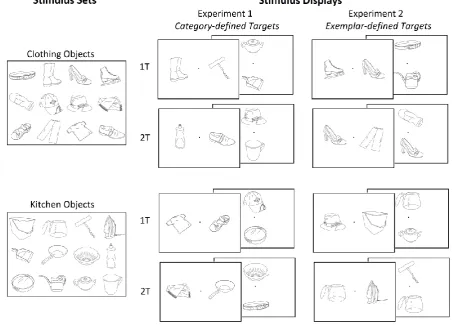
categories used in everyday search tasks. Participants saw line drawings of real-world target
objects from two categories (kitchen objects and items of clothing). The set of objects was
identical to the set used by Nako et al., 2014, except that these images were now shown in
the context of a rapid sequential presentation procedure (see Figure 1). On each trial, two
stimulus pairs (one on the horizontal and the other on the vertical midline) appeared in
rapid succession. Each display was presented for 200 ms, and the onset of the first display
preceded the onset of the second display by 10 ms. Display sequence (vertical following
horizontal or vice versa) varied randomly across trials. Two experimental sessions with
different tasks were conducted on separate days with the same participants. In the
category-based search task (Experiment 1), targets were defined by their category
membership (kitchen or clothing items), and each of the 11 possible objects from the target
category was equally likely to appear on each trial. Participants’ task was to decide on each
trial whether the two successively presented displays contained one or two target-category
objects. In one-target (1T) trials, one display contained a target-category and a
nontarget-category object, and the other display two nontarget-nontarget-category objects. In two-target (2T)
trials, both displays contained one object from the target and one from the nontarget
category. Experiment 2 was identical to Experiment 1, except that search was now
exemplar-based, as participants searched for one particular object (e.g., the frying pan).
To assess and contrast the efficiency of feature-guided and category-guided
attentional target selection, we measured behavioural performance and N2pc components
to lateral target objects in the first and second display, separately for the exemplar-based
and category-based search tasks. Since feature-guided attentional object selection can
operate concurrently for multiple target objects, the temporal pattern of target N2pc
components during exemplar-based search (Experiment 2) should resemble the pattern
found previously for colour or shape targets (e.g., Eimer & Grubert, 2014; Jenkins et al.,
2016, Exp.1), with temporally overlapping N2pc components of similar size to target objects
in the first and second display on 2T trials. Furthermore, performance levels should be high
in this task. The critical new question was whether a qualitatively different pattern of
behavioural and electrophysiological results would be found for the category-based search
task in Experiment 1. On 1T trials, single category-defined target objects in the first or
second display should trigger N2pc components in this task, demonstrating category-based
8
search, confirming that category-based guidance operates more slowly than feature-based
guidance (e.g., Nako et al., 2014). If it is not possible to allocate attention in parallel to two
target objects when these objects are defined by their category, clear differences between
Experiments 1 and 2 should be found for 2T trials. Performance on these trials should be
strongly impaired during category-based search, reflecting the difficulty of attending to and
reporting two category-defined targets that appear in rapid succession. If parallel guidance
was unavailable, category-based target selection processes would need to operate in a
serial fashion, for one target object at a time. This should be reflected by clear differences in
the pattern of target N2pc components on 2T trials between Experiment 1 and 2. One
possibility is that attention is always allocated to the target object in the first display before
it is re-directed to the target in the second display. In this case, the N2pc to this second
target should be delayed, without any temporal overlap with the N2pc to the first target. As
display durations were short (200 ms), such serial attention shifts may often be too slow to
reach the second target before display offset, and this should be reflected by strongly
attenuated or entirely absent N2pc components to the second target. Alternatively,
attention may be allocated randomly either to the first or second target object on 2T trials,
resulting in a strong attenuation of N2pc amplitudes to both targets. Furthermore, such a
random selection strategy should also increase the temporal variability of attentional biases
across trials, resulting in a delayed onset of target N2pc components. The alternative
hypothesis is that similar to feature-defined targets, category-defined target objects can be
selected in parallel. In this case, target objects in the first and second display in the 2T trials
of Experiment 1 should both trigger temporally overlapping N2pc components of similar
size, analogous to what was predicted for the exemplar-based search task (Experiment 2).
Experiment 1
Methods
9
Twelve participants, aged 25-38 years (M = 30.58 years, SD = 4.44), were paid to take
part in Experiment 1. Seven participants were female, three were left-handed, and all had
normal or corrected-to-normal vision.
Stimuli and Procedure
Stimuli were presented on a 22-inch Samsung wide SyncMaster 2233 LCD monitor
(resolution of 1280 x 1024 pixels, 100 Hz refresh rate; 16ms black-to-white-to-black
response time, verified using a photodiode). Participants were seated in a dimly lit cabin and
viewed the screen from an approximate distance of 100 cm. Stimulus presentation, timing,
and response recollection were controlled by a LG Pentium PC operating under Windows
XP, using the Cogent 2000 toolbox (www.vislab.ucl.ac.uk/Cogent/) for MATLAB (Mathworks,
Inc.). Stimuli were black line drawings (12 clothing objects and 12 kitchen objects; angular
size: 4.5° x 4.5°; see Figure 1) from the Bank of Standardised Stimuli (Brodeur,
Dionne-Dostie, Montreuil, & Lepage, 2010). The same set of stimuli was used previously by Nako et
al. (2014). All stimuli were presented at an eccentricity of 4.0° from central fixation (with
respect to the object centre) against a white background (see Figure 1). A central black
fixation point (0.2° x 0.2°) remained continuously present for the duration of each
experimental block.
In each trial, two successive stimulus displays were each presented for 200 ms. Each
stimulus display contained two objects on opposite sides of fixation. One stimulus pair was
presented on the horizontal midline (left and right of fixation), and the other pair was
presented on the vertical midline (above and below fixation). In half of all trials, the
horizontal stimulus pair preceded the vertical stimulus pair (horizontal display first: H1 trial).
In the other half of trials, this horizontal/vertical display presentation order was reversed
(horizontal display second: H2 trial). These two display sequences were randomly
intermixed in each block. The onset of the first display preceded the onset of the second
display by 10 ms. The interval between the offset of the second display and the onset of the
first display on the next trial was 1900 ms.
Participants’ task was to find category-defined target objects. Each participant was
assigned one of the two possible target categories (clothing or kitchen objects) for the first
half of the experiment, and then assigned the other target category for the second half. Six
10
There were three different trial types: In one-target (1T) trials, one display contained one
object from the target category and one object from the nontarget category, and the other
display contained two different nontarget category objects. In two-target (2T) trials, each
display contained one object from the target category and one from the nontarget category.
Each block also contained infrequent catch trials without targets, where both displays
contained two different nontarget category objects. Target and nontarget category objects
were randomly selected on each trial, and no objects were repeated within a trial. The
horizontal and vertical positions of the target object/objects (left or right; top or bottom)
were randomly and independently determined on each trial. Participants were instructed to
report the number of target-category objects (one or two) on each trial by pressing one of
two purpose-built vertically aligned response keys, and to refrain from responding on catch
trials without targets. Response-to-key and hand-to-key mappings were counterbalanced
across participants.
The experiment contained 16 blocks of 80 trials. In each block, there were 48
one-target (1T) trials and 24 two-one-target (2T) trials. 1T trials were twice as likely as 2T trials
because on half of these 1T trials, the target appeared on the vertical midline, and no N2pc
could be computed. Doubling the number of 1T trials ensured that an equal number of trials
was available for computing N2pc components on both types of trials. As a result, trials
requiring “one target” responses were twice as likely as trials requiring “two target”
responses. In addition, there were 8 catch trials in which no target appeared. Each block
contained three 1T trials for each combination of display sequence (H1 trial, H2 trial), target
display (first, second) and target position (left, right, top, bottom), and three 2T trials for
each combination of display sequence, position of horizontal target (left, right) and position
of vertical target (top, bottom). Participants completed one practice block prior to the
experiment, and another practice block after 8 experimental blocks (when the target
category assignment was changed).
EEG recording and data analyses
The continuous EEG was DC-recorded from 27 scalp electrodes at standard positions
of the extended 10/20 system, sampled at a rate of 500 Hz, and digitally low-pass filtered at
40 Hz. No other offline filters were applied. All channels were online referenced to the left
11
artifacts (eye movements exceeding ±30 µV in the HEOG channels; eye blinks exceeding ±60
µV at Fpz; muscular movements exceeding ±80 µV in all other channels), and trials with
incorrect, anticipatory (faster than 200 ms), very slow (slower than 1500 ms), or missing
responses were excluded from EEG analyses. This led to an exclusion of an average of 11.5%
of all trials (9.4% and 15.5% of 1T and 2T trials, respectively). For the remaining trials, EEG
was segmented into epochs ranging from 100 ms prior to 500 ms after the onset of the first
stimulus display, and was baseline corrected relative to the 100 ms interval prior to the
onset of the first display. EEG was averaged separately for each of the eight combinations of
display sequence (H1, H2), trial type (1T, 2T) and position of horizontal target (left, right;
excluding 1T trials where the target appeared on the vertical midline).
N2pc components were quantified on the basis of ERP waveforms measured at
lateral posterior electrodes PO7 and PO8. N2pc mean amplitudes were computed within a
100 ms time interval between 220-320 ms after the onset of the horizontal display. This
time window is later than the typical 200-300 ms N2pc time interval used in search tasks
with feature-defined targets. It was informed by the N2pc results found in our previous
study of category-based search that employed the same set of stimuli (Nako et al., 2014),
and showed delayed N2pcs when targets were defined by their category. The same time
window was employed for 1T and 2T trials. N2pc onset latencies were measured based on
difference waveforms, computed by subtracting ipsilateral from contralateral ERPs at PO7
and PO8. Onset latencies were determined with a jackknife-based procedure (Miller,
Patterson, & Ulrich, 1998; Ulrich & Miller, 2001). Twelve grand-average difference waves
were computed for each experimental condition, each excluding one different participant
from the original sample. N2pc onset latency was defined as the point in time when each
subsample difference wave reached an absolute onset amplitude of -1 µV. Differences in
N2pc onset latencies between different combinations of display sequence and number of
targets were assessed with repeated-measures ANOVAs and t-tests, with F- and t-values
corrected according to the formulas described by Ulrich and Miller (2001) and Miller et al.
(1998), respectively. The corrected statistical values are indicated with Fc and tc,
respectively. All t-tests were two-tailed and Bonferroni corrected where necessary. To
measure effect sizes, Cohen’s d (Cohen, 1988) was computed for all t-tests, and partial
eta-squared (labelled ηp2) was computed for all ANOVAs. In order to correct individual group
12
obtained through the jackknife procedure were fed into repeated-measures ANOVAs from
which the error variance was corrected according to the formula described by Ulrich and
Miller (2001). For this reason, effect sizes from N2pc latency analyses are reported as ηp2c.
Results
Behavioural performance
The removal of trials with anticipatory or exceedingly slow RTs resulted in the
exclusion of 1.1% of all trials. A repeated-measures ANOVA with the factors trial type (1T
versus 2T trials) and display sequence (H1 versus H2 trials) was run separately for RTs on
trials with correct responses and for error rates. RTs were numerically faster on 2T trials
relative to 1T trials (855 ms versus 878 ms), but this difference was not significant (main
effect of trial type, F(1,11) = 2.10, p = .175, ηp2 = .16). There was also no effect of display
sequence on RTs, F(1,11) = .04, p = .842, ηp2 = .00, and no interaction between these two
factors, F(1,11) = .44, p = .175, ηp2 = .04. Errors were more frequent in 2T relative to 1T trials
(9.1% versus 3.1%; main effect of trial type: F(1,11) = 39.41, p < .001, ηp2 = .78). There was
no effect of display sequence on error rates, F(1,11) = 1.50, p = .247, ηp2 = .12, and no
interaction, F(1,11) = .85, p = .375, ηp2 = .07. On catch trials, the rate of False Alarms was
4.9%.
N2pc components
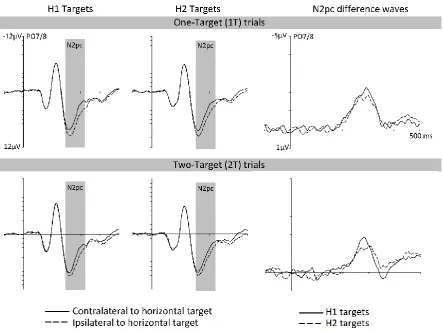
Figure 2 (left and middle panels) shows ERPs at posterior electrodes PO7/8
contralateral and ipsilateral to the side of the horizontal target for trials where this target
appeared in the first display (H1 targets) or in the second display (H2 targets). The right
panel of Figure 2 shows N2pc difference waveforms obtained by subtracting ipsilateral from
contralateral ERPs for H1 and H2 targets. ERPs are shown separately for 1T (top) and 2T
(bottom) trials. It is obvious that clear N2pc components were elicited not only on 1T trials
where a single category-defined target object was presented, but also on 2T trials by
horizontal target objects that were accompanied by another vertical category-defined target
object in the other display. In addition, N2pc components of similar size were elicited by H1
and H2 targets. A repeated-measures ANOVA of N2pc mean amplitudes with the factors
13
(electrode contralateral versus ipsilateral to the side of the horizontal target) confirmed
these observations. There was a main effect of laterality, F(1,11) = 41.71, p < .001, ηp2 = .79,
demonstrating that N2pc components were reliably triggered by category-defined
horizontal target objects. Display sequence did not interact with laterality, F(1,11) = 1.00, p
= .340, ηp2 = .08, indicating that N2pc components of similar size were elicited by horizontal
target objects in the first and second display. However, there was an interaction between
trial type and laterality, F(1,11) = 8.58, p < .05, ηp2 = .44, as N2pc components were larger on
1T trials than on 2T trials (mean amplitudes -1.56 µV and -1.15 µV, respectively). However,
follow up t-tests comparing contra- with ipsilateral activity in response to H1 and H2 targets
separately for 1T and 2T trials confirmed that N2pc components were reliably present not
only on 1T trials but also on 2T trials, all t(11) > 4.39, p < .01, d > .24. Mean N2pc amplitudes
for H1 and H2 targets were -1.65 µV and -1.47 µV on 1T trials, and -1.20 µV and -1.10 µV on
2T trials.
A repeated-measures ANOVA was run on N2pc onset latency values determined with
a jackknife-based procedure (see Methods) with the factors trial type and display sequence.
Even though there was a tendency for N2pc components to emerge earlier on 1T trials than
on 2T trials (234 ms versus 250 ms), the main effect of trial type only approached
significance, Fc(1,11) = 3.42, p = .092, ηp2c = .24. There was no main effect of display
sequence, Fc(1,11) = .00, p = .926, ηp2c = .00, indicating that there was no onset latency
difference between N2pc components to H1 and H2 targets that reflected the objective 10
ms SOA between the two displays.
Experiment 2
Methods
Participants
The same twelve participants that took part in Experiment 1 were tested in
Experiment 2. The two experiments took place in separate sessions on different days.
14
Stimuli were identical to Experiment 1. Participants were now assigned a specific
target object from one category (one particular exemplar of clothing or kitchen objects) for
the first half of the experiment, and a different target object from the other category for the
second half of the experiment. Six participants searched for a specific kitchen object first,
and the other six searched for a specific clothing object first. The assignment of task order
across participants was random, and independent of the individual task order assignment in
Experiment 1. To ensure that target selection in Experiment 2 was exemplar-based rather
than category-guided, all target objects were accompanied by a nontarget object from the
same category on the opposite side. On 1T trials where one of the two displays contained
two nontarget objects, one of these objects was drawn from the same category as the
target and the other from the other category. Objects were randomly selected on each trial,
and no nontarget objects were repeated within a trial. All other aspects of stimulus
presentation and procedure were identical to Experiment 1.
EEG recording and data analyses
EEG recording, analysis and trial exclusion procedures were identical to Experiment
1. On average 11.5% of all trials were excluded from analysis (10.9% and 12.6% of 1T and 2T
trials, respectively). For all remaining trials with horizontal targets, EEG was averaged
separately for each of the eight combinations of display sequence (H1, H2), trial type (1T,
2T) and position of horizontal target (left, right). Based on the results of our previous study
(Nako et al., 2014), target N2pc components were expected to emerge earlier in the
exemplar-based selection task of Experiment 2 than in the category-based task of
Experiment 1. For this reason, an earlier N2pc time window (200-300 ms after the onset of
the horizontal display) was employed in Experiment 2.
Results
Behavioural performance
Exclusion of anticipatory and slow responses removed less than 0.1% of trials. Mean
RTs on trials with correct responses were 515 ms on 1T trials and 526 ms on 2T trials. A
repeated-measures ANOVA on RTs with the factors trial type (1T versus 2T trials) and display
15
all F(1,11) < 1.79, p > .256, ηp2 < .14. The same analysis of error rates also revealed no main
effects and no interaction, all F(1,11) < 3.84, p > .076, ηp2 < .26 (error rates on 1T and 2T
trials: 1.2% and 2.9%). The False Alarm rate on catch trials was 1.1%.
N2pc components
Figure 3 shows ERPs for trials with horizontal targets, separately for H1 and H2
targets on 1T and 2T trials, with the corresponding N2pc difference waveforms. Clear N2pc
components were triggered by H1 and H2 targets in both types of trials. As expected, these
N2pcs to visually defined exemplar targets were larger in amplitude and emerged earlier
than the N2pcs to category-defined target objects in Experiment 1 (Figure 2; see below for
formal comparisons). A repeated-measures ANOVA examined mean N2pc amplitudes with
the factors trial type (1T versus 2T), display sequence (H1 versus H2), and laterality
(electrode contralateral versus ipsilateral to the side of the horizontal target). A main effect
of laterality, F(1,11) = 44.47, p < .001, ηp2 = .80, confirmed the presence of N2pc
components in response to horizontal targets. There was an interaction between trial type
and laterality, F(1,11) = 9.33, p < .05, ηp2 = .46. In contrast to Experiment 1, N2pc amplitudes
on 1T trials were now smaller than on 2T trials (mean amplitudes -2.46 µV and -3.21 µV,
respectively). The interaction between display sequence and laterality approached
significance, F(1,11) = 4.13, p = .067, ηp2 = .27, reflecting a tendency towards larger N2pc
components for H2 targets (see Figure 3). There was no three-way interaction between trial
type, display sequence, and laterality, F(1,11) = .32, p = .584, ηp2 = .03. Follow up t-tests
comparing contralateral with ipsilateral ERPs in response to H1 and H2 targets, separately
for 1T and 2T trials, confirmed that reliable N2pc components were present in all four task
conditions, all t(11) > 5.28, p < .001, d > .51. Mean amplitudes in 1T trials were -2.37 µV and
-2.55 µV for H1 and H2 trials, respectively. In 2T trials, these mean amplitudes were -3.04 µV
and -3.38 µV.
For N2pc onset latencies, a repeated-measures ANOVA with the factors trial type
and display sequence revealed no main effect of trial type, Fc(1,11) = 1.50, p = .247, ηp2c =
.12 and no main effect of display sequence, Fc(1,11) = 3.09, p = .107, ηp2c = .22. However,
there was an interaction between these two factors, Fc(1,11) = 5.36, p < .05, ηp2c < .33.
There was no N2pc onset latency difference between H1 and H2 targets on 1T trials (210 ms
16
delayed by 12 ms relative to the N2pc to H1 targets on 2T trials (201 ms versus 213 ms),
tc(11) = 2.35, p < .05, ηp2c = .33, mirroring the objective 10 ms SOA between the two
successive displays.
Comparisons across experiments
Because the same participants were tested in Experiments 1 and 2, additional
within-participant comparisons of behavioural performance and N2pc components were
conducted to assess differences between the category-based and exemplar-based selection
of one or two target objects.
Behavioural performance. Repeated-measures ANOVAs with the factors trial type (1T
versus 2T trials), display sequence (H1 versus H2 trials) and selection task (category
selection in Experiment 1 versus exemplar selection in Experiment 2) were conducted for
RTs and error rates. As expected, RTs were much slower for the category-based selection
task (Experiment 1) than with exemplar-based selection in Experiment 2 (866 ms versus 521
ms; main effect of selection task: F(1,11) = 166.03, p < .001, ηp2 = .94). There were no
significant interactions involving the factor selection task for RTs, all F(1,11) < 2.93, p > .115,
ηp2 < .21. Errors were more frequent during category selection than during exemplar
selection (6.2% versus 2.1% in Experiments 1 and 2, respectively; main effect of selection
task: F(1,11) = 15.90, p < .01, ηp2 = .59). Apart from an interaction between selection task
and trial type, F(1,11) = 10.33, p < .01, ηp2 = .48, reflecting the fact that errors were more
frequent on 2T relative to 1T trials in Experiment 1 but not in Experiment 2, no other
interactions involving the factor selection task were present for error rates, all F(1,11) <
1.67, p > .223, ηp2 < .14.
N2pc components. N2pc components were much larger when targets were specific
exemplar objects (Experiment 2; mean amplitude: -2.84 µV) than when they were defined
by object category (Experiment 1; mean amplitude: -1.36 µV). This difference was confirmed
by an interaction between selection task and laterality, F(1,11) = 10.97, p = .01, ηp2 = .50.
There was also a three-way interaction between selection task, trial type, and laterality,
17
1T than on 2T trials in Experiment 1, but larger on 2T relative to 1T trials in Experiment 2.
N2pc components were also triggered more rapidly by exemplar targets in Experiment 2
than by category-defined targets in Experiment (209 ms versus 242 ms post-stimulus). This
was confirmed by a significant main effect of selection task in the analysis of N2pc onset
latencies across both experiments, Fc(1,11) = 19.65, p < .01, ηp2c = .64.
Discussion
The question whether object categories are able to guide selective attention during
visual search remains disputed, and existing behavioural evidence is inconclusive (e.g.,
Malcolm & Henderson, 2009; Moores et al., 2003). In the current study, we investigated the
speed and the parallel versus serial nature of category-based and exemplar-based
attentional target selection processes with electrophysiological markers. We employed a
task where two successive displays were separated by an SOA of 10 ms, and either one or
both displays contained a target object. In Experiment 1, participants had to find one or two
category-defined target objects (one of 11 possible kitchen or clothing items) that appeared
together with a nontarget-category distractor in the same display. Experiment 2 used
identical procedures, except that one specific object now served as target, so that
attentional selection processes could be based on known physical target features. In both
experiments, N2pc components to lateral target objects were measured as
electrophysiological markers of category-guided versus feature-guided target selection
processes.
Previous N2pc studies that used analogous rapid sequential target presentation
procedures in tasks where targets were defined by a particular colour or shape (e.g., Eimer
& Grubert, 2014; Jenkins et al., 2016) found temporally overlapping N2pcs of similar size for
lateral target objects in the first and second display, demonstrating that feature-guided
attentional selection processes were triggered concurrently and independently for different
target objects in the visual field. Experiment 1 investigated whether such parallel target
selection processes would also be elicited in a task where target objects were not defined by
specific features, but by their category, or whether qualitatively different serial selection
18
N2pc components observed in Experiment 1 was very similar to the pattern found in
previous experiments with feature-defined targets. On 2T trials where both displays
contained a target object, lateral targets in the first and second display (H1 and H2 targets)
both triggered clear N2pc components that overlapped in time and did not differ
significantly in terms of their amplitudes, suggesting that attention was allocated
concurrently to both target objects, in spite of the fact that targets and nontargets could
only be distinguished on the basis of their category. Importantly, the temporal pattern of
N2pc components observed in Experiment 1 during category-based search was similar to
the pattern found in the exemplar-based search task of Experiment 2. Here, H1 and H2
targets again elicited temporally overlapping N2pc components, indicating that they were
selected concurrently. This confirms earlier observations in tasks with simple geometrical
stimuli and colour- or shape-defined targets, and shows that parallel feature-guided target
selection processes also operate in contexts where targets and distractors are more
complex real-world objects. Overall, these results show that there are no fundamental
qualitative differences in the guidance of attention towards feature-defined and
category-defined target objects. When these objects appear in rapid succession at different locations,
they can be selected in parallel, regardless of whether these selection processes are
controlled by feature or by category templates.
While the overall pattern of N2pc components was similar in Experiment 1 and 2,
there were also systematic differences. Target N2pc components emerged about 30 ms
earlier and N2pc amplitudes were about twice as large during exemplar-based search
(Experiment 2) relative to category-based search (Experiment 1). Furthermore, RTs were
much faster in the exemplar-based search task. As all participants completed the
category-based search task (Experiment 1) prior to the exemplar-category-based task (Experiment 2), this RT
difference could to some degree reflect attention-independent practice effects, such as
familiarity with the stimuli and with spatial and temporal task parameters. However, such
carry-over effects cannot account for the fact that RTs were more than 300 ms faster in
Experiment 2. In line with previous behavioural and electrophysiological findings, the RT and
N2pc differences between Experiments 1 and 2, and in particular the fact that target N2pc
components were delayed in Experiment 1, show that the guidance of attention by physical
target features is more effective than the guidance of categories (see also Yang & Zelinsky,
19
trials in Experiment 2 was sensitive to the objective 10 ms SOA between the two displays.
The N2pc to H1 targets preceded the N2pc to H2 targets by 12 ms, in line with similar
observations for colour-guided search (e.g., Eimer & Grubert, 2014). In contrast, there was
no such N2pc onset latency difference between H1 and H2 targets in Experiment 1. This
presumably reflects increased temporal variability in the onset of category-guided
attentional selection processes across trials (see also Jenkins et al., 2016, Exp.2, for an
analogous absence of N2pc latency differences during the rapid parallel selection of two
target objects that were defined by their alphanumerical category). This factor may also be
partially responsible for the fact that target N2pc amplitudes were considerably smaller in
Experiment 1 relative to Experiment 2.
Although the N2pc results found in Experiment 1 suggest that category-based
attentional control mechanisms can operate in parallel for different objects at different
locations in the visual field, alternative interpretations have to be considered. One
possibility is that the selection of two successively presented category-defined targets
operates serially, and that attention is always first directed to the target in the first display
before it is re-allocated to the second target. In this case, the N2pc to H2 targets should
have been strongly attenuated and delayed relative to the N2pc to H1 targets on 2T trials in
Experiment 1, which was clearly not the case. Alternatively, participants may have randomly
selected either the first or the second target on any given 2T trial. In this case, N2pc
components to H1 and H2 target should both be strongly attenuated (by 50%) on 2T relative
to 1T trials where only a single target object was presented. N2pc components to H1 and H2
targets in Experiment 1 were indeed reliably smaller on 2T trials relative to 1T trials.1 However, this attenuation was considerably smaller (-1.15 µV versus -1.56 µV, reflecting a
reduction of 25%) than predicted by a random single-target selection account. This strongly
suggests that both targets were selected concurrently on at least a substantial proportion of
all 2T trials, which is sufficient to conclude that parallel category-based attentional guidance
is possible. It should also be noted that participants incorrectly reported the presence of a
single target on only 9% of all 2T trials in Experiment 1. These error trials, which are likely to
1 Unexpectedly, the opposite pattern was found in Experiment 2 during exemplar-based search, with larger
20
be the result of a failure to attend to both target objects, were not included in the N2pc
analysis. On trials with correct responses, there were no significant RT differences between
1T and 2T trials (and even a trend towards faster RTs on 2T trials), suggesting that
participants were equally confident in reporting two targets as compared to a single target.
Given these observations, it is very unlikely that only one of the two target objects was
selected on all 2T trials in Experiment 1. Alternatively, the reduction of N2pc amplitudes on
2T trials in Experiment 1 may be the result of competitive interactions between two
simultaneously activated category-based target selection processes.
In Experiment 2, target objects were always accompanied by a nontarget from the
same category in the same display, to ensure that the guidance of target selection was
exemplar-based. Even though categories had to be ignored, it is possible that the category
of the current target object was still included in the search template. Initial evidence for an
automatic activation of object categories during exemplar-based search was found by Nako
et al. (2014). In this experiment, target-absent displays could contain a “foil” object (i.e., a
nontarget object that belonged to the same category as the target). These foils triggered a
small but reliable N2pc, indicating that they were able to attract attention. To assess
whether a template for the target category was also activated during the exemplar-based
task of Experiment 2, we computed N2pc components elicited on 1T trials with a vertical
target/nontarget pair and a horizontal pair of nontarget objects. Because one of the
horizontal nontargets matched the category of the current target, any residual activation of
this category should result in an N2pc to this category-matching object. As can be seen in
Figure 4 (which shows ERP waveforms collapsed across H1 and H2 trials, time-locked to the
onset of the horizontal display on these trials), this was indeed the case. An analysis of ERPs
elicited at PO7/8 in the 200-300 ms post-stimulus time window confirmed that a small but
reliable N2pc was elicited by category-matching distractors (main effect of laterality: F(1,11)
= 5.77, p < .05, ηp2 = .34), demonstrating that these objects attracted attention on at least
some trials. This provides new evidence that when observers search for a specific real-world
target object, the category of this object is activated even when this is not helpful for
dissociating targets and distractors. Although this activation was involuntary, it may not be
entirely automatic: Because all participants were first tested in the category-based search
task of Experiment 1, prior practice with category-based selection might have facilitated the
21
The question whether such involuntary activation processes can also be triggered without
being primed by a prior category selection task will need to be investigated in future
research.
If attention can be allocated independently and concurrently to two
category-defined target objects, as suggested by the present N2pc results, the question arises how
this type of category-guided attentional control might be implemented at the neural level.
The N2pc itself represents visual processing biases in extrastriate cortex that are elicited in a
spatially selective fashion by target objects. These biases are likely to be triggered by
top-down input from higher-level attentional control regions that signal the location of objects
that match the current target template. When targets are defined by their category, as in
Experiment 1, attentional control needs to include brain regions that are sensitive to object
categories. Several areas in the inferior temporal cortex have been found to be involved in
object categorisation (e.g., Miller, Nieder, Freedman, & Wallis, 2003), and these areas are
known to be directly linked to the ventrolateral prefrontal cortex (e.g., Kravitz, Saleem,
Baker, Ungerleider, & Mishkin, 2013). Thus, the attentional biases for category-defined
target objects reflected by N2pc components could be the result of signals that are initially
generated in category-sensitive temporal areas, are transmitted to prefrontal attentional
control regions, and then via recurrent feedback loops back to visual cortex. While the exact
details of their cortical implementation remain to be determined, the current results
demonstrate that category-selective control processes are involved in the guidance of
attention. Although they operate more slowly than the processes involved in the guidance
of attention by visual target attributes, they can still be activated concurrently for multiple
category-defined target objects at different locations.
Acknowledgement: This research was supported by Grants ES/K006142/1 and
22
References
Belke, E., Humphreys, G. W., Watson, D. G., Meyer, A. S., & Telling, A. L. (2008). Top-down
effects of semantic knowledge in visual search are modulated by cognitive but not
perceptual load. Perception & Psychophysics, 70, 1444-1458.
Brodeur, M.B., Dionne-Dostie, E., Montreuil, T., LePage, M. (2010). The bank of standardized
stimuli (BOSS), a new set of 480 normative photos of objects to be used as visual
stimuli in cognitive research. PLoS ONE, 5, e10773.
Cohen, J. (1988). Statistical power analysis for the behavioral sciences (2nd ed.). Hillsdale,
NJ: Lawrence Earlbaum Associates.
Desimone, R., & Duncan, J. (1995). Neural mechanisms of selective visual attention. Annual
Review of Neuroscience, 18, 193-222.
Dixon, P., & Shedden, J. M. (1987). Conceptual and physical differences in the category
effect. Attention, Perception, & Psychophysics, 42, 457-464.
Duncan, J. (1980). The locus of interference in the perception of simultaneous stimuli.
Psychological Review, 87, 272.
Duncan, J. & Humphreys, G. (1992). Beyond the search surface: Visual search and
attentional engagement. Journal of Experimental Psychology: Human Perception and
Performance, 18, 578-588.
Egeth, H., Jonides, J., & Wall, S. (1972). Parallel processing of multielement displays.
Cognitive Psychology, 3, 674-698.
Eimer, M. (1996). The N2pc component as an indicator of attentional selectivity.
Electroencephalography and Clinical Neurophysiology, 99, 225-234.
Eimer, M. (2014). The neural basis of attentional control in visual search. Trends in Cognitive
Sciences, 18, 526-535.
Eimer, M. (2015). EPS Mid-Career Award 2014: The control of attention in visual search:
Cognitive and neural mechanisms. The Quarterly Journal of Experimental Psychology,
68, 2437-2463.
Eimer, M., & Grubert, A. (2014). Spatial attention can be allocated rapidly and in parallel to
23
Eimer, M., Kiss, M., & Nicholas, S. (2011). What top-down task sets do for us: An ERP study
on the benefits of advance preparation in visual search. Journal of Experimental
Psychology: Human Perception and Performance, 37, 1758-1766.
Grubert, A., & Eimer, M. (2015). Rapid parallel attentional target selection in single-color
and multiple-color visual search. Journal of Experimental Psychology: Human
Perception and Performance, 41, 86-101.
Grubert, A., & Eimer, M. (2016). Rapid attentional selection processes operate
independently and in parallel for multiple targets. Biological Psychology, 121,
99-108.
Hickey, C., Di Lollo, V., & McDonald, J. J. (2009). Electrophysiological indices of target and
distractor processing in visual search. Journal of Cognitive Neuroscience, 21, 760-775.
Hickey, C., McDonald, J. J., & Theeuwes, J. (2006). Electrophysiological evidence of the
capture of visual attention. Journal of Cognitive Neuroscience, 18, 604-613.
Hopf, J. M., Luck, S. J., Girelli, M., Hagner, T., Mangun, G. R., Scheich, H., & Heinze. H. J.
(2000). Neural sources of focused attention in visual search. Cerebral Cortex, 10,
1233-1241.
Jenkins, M., Grubert, A., & Eimer, M. (2016). Rapid Parallel Attentional Selection Can Be
Controlled by Shape and Alphanumerical Category. Journal of Cognitive
Neuroscience, 28, 1672-1687.
Jenkins, M., Grubert, A., & Eimer, M. (2017). Target objects defined by a conjunction of
colour and shape can be selected independently and in parallel. Attention,
Perception, & Psychophysics, 79. 2310=2326.
Kravitz, D. J., Saleem, K. S., Baker, C. I., Ungerleider, L. G., & Mishkin, M. (2013). The ventral
visual pathway: An expanded neural framework for the processing of object quality.
Trends in Cognitive Sciences, 17, 26-49.
Luck, S. J., & Hillyard, S. A. (1994). Spatial filtering during visual search: Evidence from
human electrophysiology. Journal of Experimental Psychology: Human Perception
and Performance, 20, 1000-1014.
Malcolm, G. L., & Henderson, J. M. (2009). The effects of target template specificity on visual
search in real-world scenes: Evidence from eye movements. Journal of Vision, 9,
24
Miller, E. K., Nieder, A., Freedman, D. J., & Wallis, J. D. (2003). Neural correlates of
categories and concepts. Current Opinion in Neurobiology, 13, 198-203.
Miller, J. O., Patterson, T., & Ulrich, R. (1998). Jackknife-based method for measuring LRP
onset latency differences. Psychophysiology, 35, 99-115.
Moores, E., Laiti, L., & Chelazzi, L. (2003). Associative knowledge controls deployment of
visual selective attention. Nature Neuroscience, 6, 182-189.
Nako, R., Wu, R., Smith, T. J., & Eimer, M. (2014). Item and category-based attentional
control during search for real-world objects: Can you find the pants among the pans?
Journal of Experimental Psychology: Human Perception and Performance, 40,
1283-1288.
Olivers, C. N. L., Peters, J., Houtkamp, R., & Roelfsema, P. R. (2011). Different states in visual
working memory: When it guides attention and when it does not. Trends in Cognitive
Sciences, 15, 327-334.
Telling, A. L., Kumar, S., Meyer, A. S., & Humphreys, G. W. (2010). Electrophysiological
evidence of semantic interference in visual search. Journal of Cognitive
Neuroscience, 22, 2212-2225.
Treisman, A., & Gelade, G. (1980). A feature-integration theory of attention. Cognitive
Psychology, 12, 97–136.
Ulrich, R., & Miller, J. O. (2001). Using the jackknife-based scoring method for measuring LRP
onset effects in factorial designs. Psychophysiology, 38, 816–827.
Wolfe, J. M. (1994). Guided Search 2.0: A revised model of visual search. Psychonomic
Bulletin and Review, 1, 202-238.
Wolfe, J. M. (2007). Guided Search 4.0: Current progress with a model of visual search. In W.
Gray (Ed.), Integrated Models of Cognitive Systems (pp. 99-119). New York: Oxford.
Wolfe, J., & Horowitz, T. (2004). What attributes guide the deployment of visual attention
and how do they do it? Nature Reviews Neuroscience, 5, 495-501.
Woodman, G. F., & Luck, S. J. (1999). Electrophysiological measurement of rapid shifts of
attention during visual search. Nature, 400, 867-869.
Woodman, G., & Luck, S. (2003). Serial deployment of attention during visual search. Journal
of Experimental Psychology: Human Perception & Performance, 29, 121-138.
Yang, H., & Zelinsky, G. J. (2009). Visual search is guided to categorically defined targets.
26
27
[image:28.595.77.521.70.403.2]28
29